‘Rolls’ Royce was surprise Christmas presence at QPR

IN THE DAYS before wall-to-wall media coverage of all things football, I can remember turning up at Loftus Road to watch a Boxing Day match between QPR and Brighton and wondering who on earth was in goal for the Albion.

It was in the Second Division days when Michel Kuipers was an almost permanent fixture between the sticks for the Seagulls (he’d played 46 consecutive games). But, on 26 December 2001, there was a stranger behind Danny Cullip and Simon Morgan.

He was certainly a stranger to the players, who’d only met him a few hours before kick-off, but, thankfully, he was well known to manager Peter Taylor.

It turned out, Kuipers had pulled a thigh muscle in the previous Saturday’s 2-2 draw at home to Chesterfield and, rather than chance rookie Will Packham, Taylor opted for an experienced ‘keeper who he’d signed twice before.

Taylor had hastily gone back to his previous employer, Leicester City, on Christmas Eve, to sign Simon Royce on loan to cover the period Kuipers was indisposed.

Royce did well to keep a clean sheet in what finished a 0-0 draw, having not had a chance to train with his new teammates.

It transpired Royce had only met them a few hours earlier, at Reigate, en route to Shepherd’s Bush, as the Argus reported, having spent Christmas Day with his family at his Essex home.

Royce managed to pull off decent saves in each half of the encounter at Loftus Road, stopping a goalbound Danny Shittu header in the first half and dealing with a 20-yard shot from crowd favourite Doudou in the second.

Albion’s Paul Watson hit the bar with one of his trademark free-kicks early in the second half while Cullip went close to breaking the deadlock from a Watson corner, only for his header to be cleared off the line by Karl Connolly.

Taylor knew what he was getting with Royce having signed him for both Southend United and the Foxes, where, under Taylor’s successor, Dave Bassett, the ‘keeper had slipped down the pecking order following a bout of laryngitis.

“I had been second choice all season at Leicester, but the way Dave Bassett works, if you are ill or injured he changes it and you have to work your way back,” Royce told the Argus. “I did so well last year, but, when you don’t play, you get forgotten just as quickly.”

He added: “I had been ill a couple of weeks before, so I had lost my place on the bench at Leicester.

“I’d not really played much reserve team football for three or four weeks, so when Peter asked me if I fancied playing a few games I jumped at the chance. It’s nice to keep yourself match fit.”

Royce admitted knowing the manager certainly helped him to drop down two divisions for the chance to play, but the main reason was to get some games under his belt.

“Dropping down a couple of divisions doesn’t bother me at all,” he said. “It’s still a decent standard and Brighton are flying high.

“There are some very good teams in the Second Division, like QPR and Blackpool, so it’s not a problem. I’ve played in the Second Division before with Southend and I quite enjoyed it.

“This is a perfect opportunity for me to get some games in and let people know I am still around.”

Royce was delighted to start his spell with a clean sheet – but that was as good as it got because he conceded 13 goals in the other five matches he played.

Three days after his debut, he let in two but saved a penalty in a 2-2 draw at Blackpool. Albion’s 10-game unbeaten away league record shuddered to a halt in a 3-0 defeat at Wigan, during which Royce needed treatment after being clattered by a Latics striker.

Physio Malcolm Stuart tends to the clattered Royce at Wigan

When Royce finally got to make his Withdean debut, against Cambridge United, he spoiled the occasion with a gaffe, pushing a long-range shot from Paul Wanless into the path of Luke Guttridge for an easy tap-in. Thankfully a Bobby Zamora hat-trick meant the Seagulls prevailed 4-3.

Royce’s penultimate game was a 2-1 win away to Chesterfield but three days later he bowed out in ignominy as Albion were thumped 4-0 by Steve Coppell’s Brentford in a live ITV Digital match, Ivar Ingimarsson and Steve Sidwell scoring two of the Bees goals.

Born in Forest Gate, London, on 9 September 1971, Royce began his football career with non-League Heybridge Swifts while working as a painter and decorator. At the age of 20, a £35,000 fee took him to Southend, signed by former Chelsea defender David Webb, who was managing the Shrimpers back then.

He made his debut for Southend in a 3-1 home win over Grimsby Town in March 1992.

In seven seasons at Roots Hall, Royce made 169 appearances in Divisions One and Two, a couple of them under Taylor, before getting a move to Premier League Charlton Athletic on a Bosman free transfer.

Addicks boss Alan Curbishley briefly promoted him from third to first choice when Andy Petterson was loaned out to Portsmouth and Sasa Ilic lost form. He kept four clean sheets in a row in eight Premier League matches in the 1998-99 season, but injury issues then sidelined him. He didn’t feature at all in the 1999-00 season and, with the arrival of Dean Kiely at The Valley, decided to link up again with Taylor at Leicester, again moving on a Bosman ‘free’.

“I couldn’t have asked for a better move,” Royce told the Daily Gazette. “I played under Peter at Southend and I can’t wait to work with him again because he’s a great coach.

“He had a hard time at Roots Hall, but Peter has matured into an excellent manager in recent years, picking up valuable experience with both the England under-21 side and Gillingham.

“I owe Peter a lot. He knew I was out of contract at Charlton this summer, but he promised me that he would take me to whatever club he was at this year.

“At the time we spoke, Peter was still with Gillingham and I’d have been happy to play for him there in the First Division. But Peter got the Leicester job and he has remained true to his word and brought me on board.”
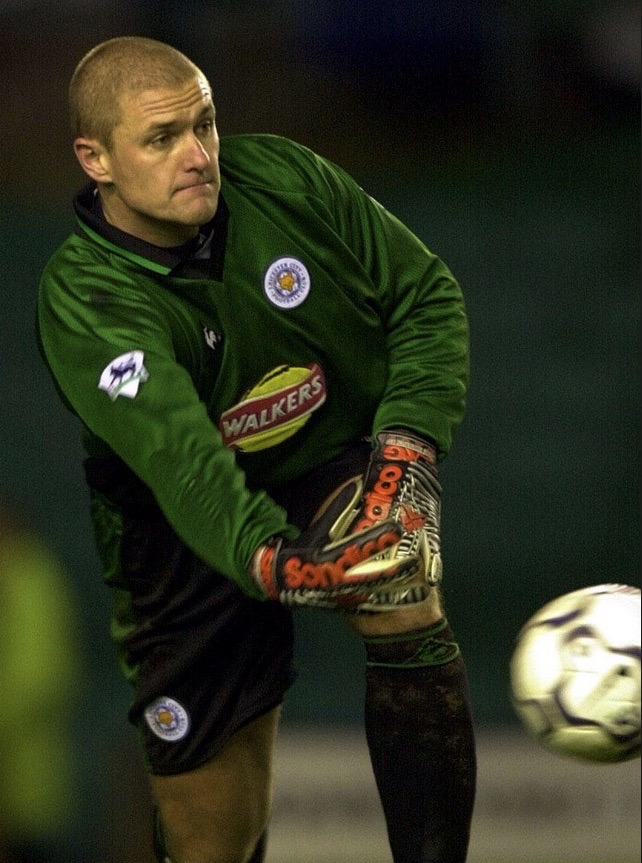
Initially an understudy to Tim Flowers, Royce had a run of 19 Premier League matches in the second half of the 2000-01 season, keeping clean sheets on seven occasions.

David Lacey, the renowned football writer for The Guardian, even hinted at international recognition for him, after newly installed England manager Sven-Goran Eriksson had been to watch Ipswich Town beat Leicester 2-0 at Portman Road.

“Eriksson was here primarily to run an eye over Richard Wright, Ipswich’s once capped goalkeeper, although, since Wright had so little to do, he must have gone away more impressed by Simon Royce, whose saves kept alive Leicester’s hopes of a point,” wrote Lacey. “Royce, back in the Leicester side because of another injury to Tim Flowers, showed excellent agility and anticipation in keeping out headers from Alun Armstrong and Matt Holland as Ipswich increasingly dominated the match.”

Taylor told the journalist: “Simon Royce’s goalkeeping was the only positive thing to come out of our own performance.”

Any hopes Royce had of taking over the no.1 shirt permanently at Leicester were dashed when Taylor paid £2.5m to install Ian Walker as his first choice ‘keeper.

After his loan spell at Brighton, he went on a similar arrangement to Manchester City later that same season, although he didn’t play any first team games.

The following season he went on loan to QPR, where he featured 17 times.

On his release from Leicester, he moved back to Charlton on a two-year contract, but made only one Premier League appearance in 2003-04.

He was quite literally a loan Ranger in 2004-05, initially playing a couple of games for Luton Town and then returning to QPR, making 13 appearances in their Championship side.

He made a permanent move to Loftus Road in 2005 and, in an away game at Stoke City, was in the news when caught up in a crowd invasion, although manager Ian Holloway said his ‘keeper was fine: “Simon Royce is a big lad and he can look after himself.”

Royce recounted the incident in an interview for brentfordfc.com. “We’d won the game 2-1. I always kept a towel and a water bottle by my left-hand post, so I bent down to pick them up and felt someone jump on my back.

“At first, I assumed it was a team-mate because we’d won the game, but then I looked down and saw a pair of trainers and felt a blow to the back of my head. It was a Stoke supporter who’d run on to the pitch, shouting ‘I’m going to do you, Roycey!’

“I had my hand on the post so managed to pick him up and throw him in the net. After that the stewards rushed on and we had more supporters on the pitch – it was complete mayhem. The fan in question was sentenced to four months in prison for assault.”

Royce managed to hold down a regular starting berth for the first time in several years during his time in west London, playing 32 games in 2005-06 and 22 in 2006-07.

However, he was back on the loan circuit, briefly, when in April 2007 he moved to League One Gillingham to play in their last three games of the season.

During the summer break, he signed for the Kent club on a permanent basis. He featured in 36 matches in the 2007-08 season, and was named Supporters’ Player of the Year, although the Gills were relegated.

When Royce penned a new one-year deal in the summer of 2008, manager Mark Stimson told the club website: “I’m delighted with Simon’s decision.  He’s going to be a vital player for us next season and one that we will need to help get this club back to where we want to be.”

He was first-choice ‘keeper throughout the 2008-09 season, making 49 appearances as Gills were promoted back to League One via the League Two play-off final at Wembley. Royce, by then 38, said keeping a clean sheet as Gillingham beat Shrewsbury Town 1-0 was one of his career highlights. Former Seagulls Albert Jarrett and Mark McCammon were on the Gillingham subs bench that day.

Unfortunately, in December 2009, Royce sustained several injuries in a car accident.

Stimson told BBC Radio Kent: “His knee is in a bad way and he has a bad neck. He’s going to be out for a couple of weeks. He’s had a scan on his knee, we should get the results of that this week.

“He’s also had X-rays on his neck. I’m praying it’s just a couple of weeks because he’s a big player for us. Until we get the scan results we have to wait and see. He’s been a big part of it. He’ll be missed.”

As it turned out, Royce never regained the no.1 spot from Alan Julian, who’d stepped in to replace him, and he left Gillingham at the end of the season to take up a goalkeeper coaching job at Brentford, during which time former Albion no.2 David Button was among the goalkeepers he helped to develop.

Royce eventually left Griffin Park in the summer of 2018 after eight seasons with the Bees.In thanking him for his contribution, Phil Giles, Brentford’s co-director of football, told the club website: “He leaves behind a fantastic legacy, having developed some top goalkeepers during his time here, including Simon Moore, David Button, Dan Bentley, Jack Bonham and Luke Daniels.”

He returned to Gillingham as goalkeeper coach for the 2019-20 season, working with Bonham once again, and on 28 September 2019, at the age of 48, suddenly found himself on the substitute’s bench for Gills’ away game against Oxford United when reserve goalkeeper Joe Walsh suffered an injury just before kick-off. His previous involvement in a competitive match had been more than eight years earlier, for Brentford, in a 4-1 defeat to Dagenham & Redbridge.

Royce remained on the bench as Oxford won 3-0 and, at the season’s end, he left Priestfield as part of a Covid-related cost-cutting measure.

Pictures from various online sources.
John Humphrey – unsung hero of 1997 great escape

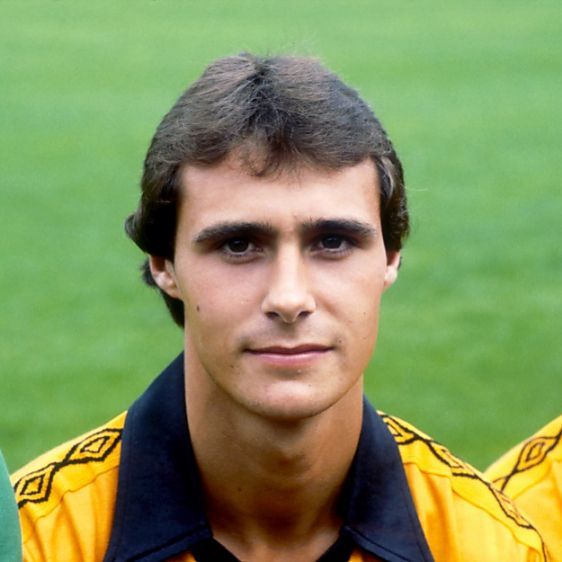
John Humphrey in Wolves colours

ONE OF the unsung heroes of Albion’s last-gasp survival feat in 1997 knew a thing or two about playing for clubs in precarious circumstances.

John Humphrey’s first club was Wolverhampton Wanderers during a bleak period in their history: they dropped into the basement division under the controversial ownership of the Bhatti brothers.

The right-back later played ‘home’ games for Charlton Athletic at Selhurst Park and Upton Park when the football authorities deemed The Valley unfit to stage matches.

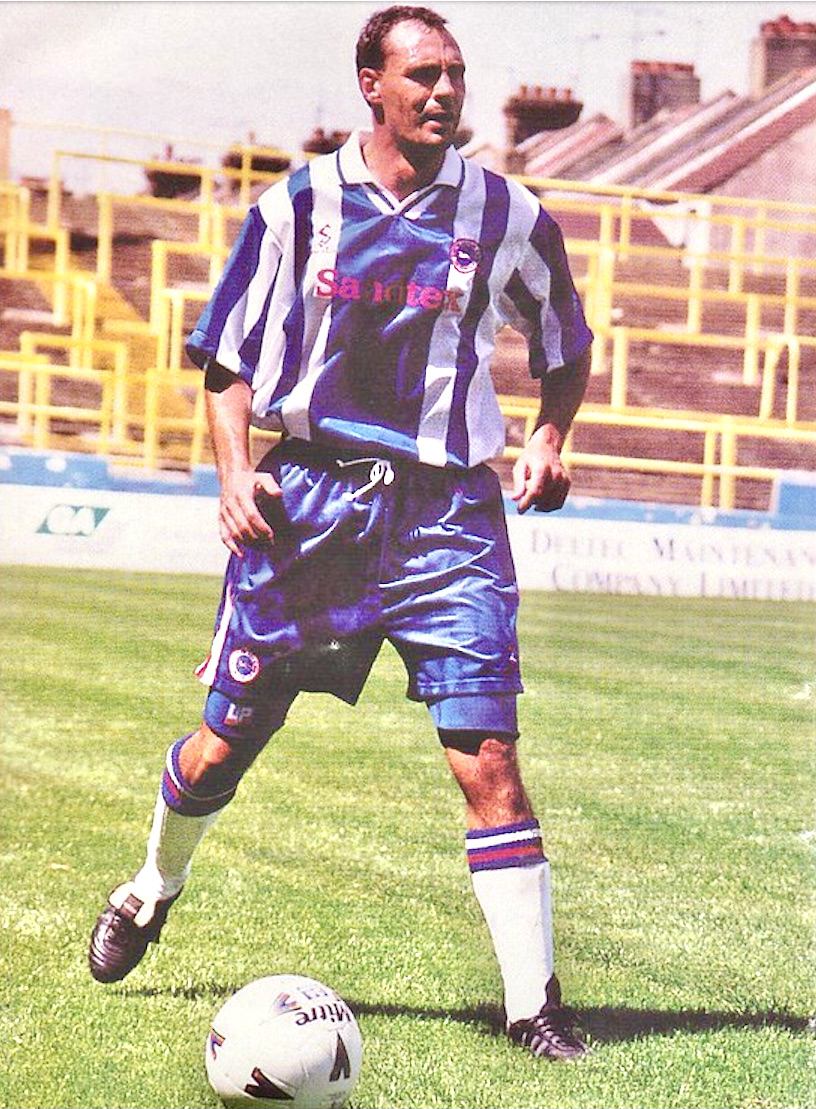
And he ended his professional playing days turning out for Brighton in ‘home’ games at Gillingham’s Priestfield Stadium (as pictured above).

Humphrey came to Brighton’s rescue in the autumn of his career.

With Albion’s very existence under threat as 1996 turned to 1997, Albion handed the managerial reins to Steve Gritt, and former Charlton teammate Humphrey was his first signing: a free transfer from Gillingham, who were playing in the division above.

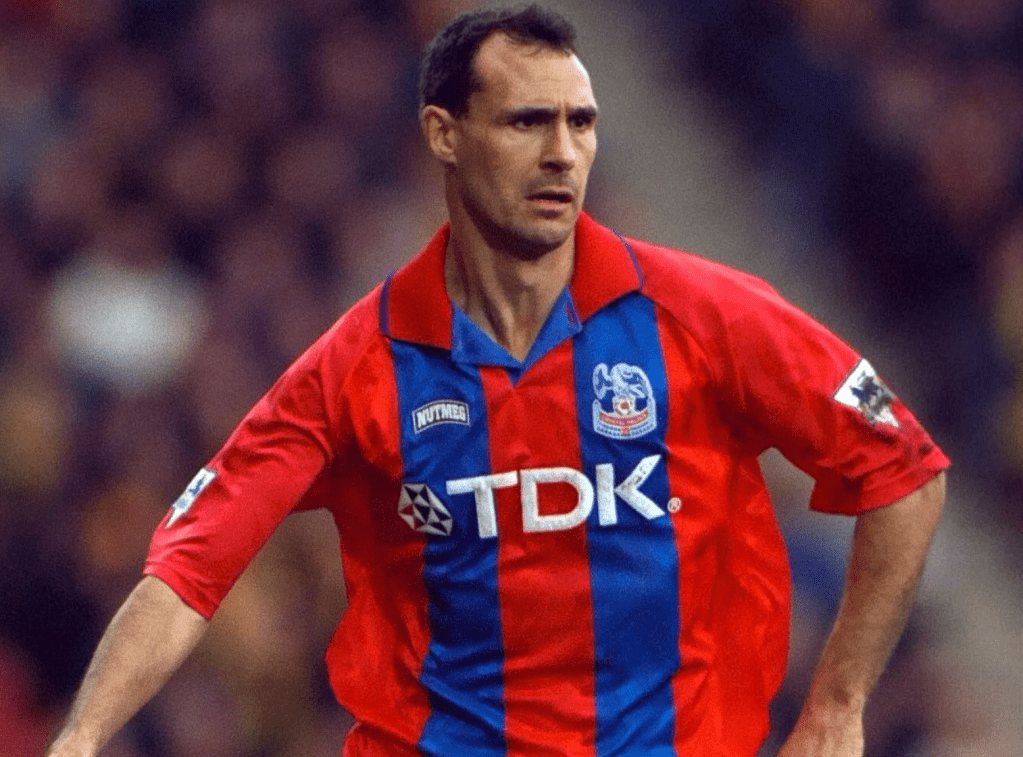
Humphrey was 36 at the time with nearly 650 professional matches behind him, including a good many in the top-flight with Wolves, Charlton and Crystal Palace. Indeed, he was Charlton’s player of the year in 1988, 1989 and 1990.

After four matches on the bench, Humphrey replaced Peter Smith at right back and played in Albion’s last 11 games of that 1996-97 season, only ending up on the losing side three times. wearebrighton.com said his impact made him “a seriously underrated piece of the Great Escape jigsaw”.

“Steve wanted me because I was experienced, could get the players organised and was able to talk them through matches,” Humphrey told the Argus. “He knew I was steady, reliable and dependable, that nine games out of ten I’d play pretty well and that I would give 100 per cent.

“It was a lot of pressure but I’d been through a few promotions (three) and relegations (six) with Wolves, Charlton and Crystal Palace.” He continued: “The stressful situations I had gone through with those other clubs had given me experience of how to try and keep a season alive.

“I could do a job for Brighton and I felt I did that and the team turned out to be good enough to hang on. It was one of the biggest achievements of my career.”

Humphrey remembered the pressure going into the Hereford match was “horrible” because of the media focus but he added: “It might have been going out of the frying pan of Gillingham into the fire at Albion but I’m glad I made the jump.”

Unfortunately, then chief executive David Bellotti tried to renege on a deal Gritt had agreed verbally with Humphrey that he’d get a new one-year contract if Albion stayed up.

“When I was told I was being released, I thought it was a pretty poor show. But Steve, to his credit, then fought my corner and I stayed on.”

With the Goldstone sold, and Albion forced to play ‘home’ games at Gillingham,  Humphrey retained his place in the side and played in 13 matches but, along with other senior players, such as Craig Maskell, Paul McDonald, Denny Mundee and Ian Baird, he was let go to save money on wages.

Humphrey accepted the package he was offered, called time on his long professional career, and dropped into the non-league scene, playing initially for Chesham, then Carshalton, Dulwich Hamlet and Walton and Hersham.

He got a break into a new career as a teacher at Whitgift School in Croydon courtesy of former Albion defender, Colin Pates, who’d played with Humphrey at Charlton.

“I knew Colin from Charlton when we roomed together,” Humphrey told the Argus. “I was aware he was at the school and he said he needed help for after-school sessions and asked me to come along. So I did and the football took off at the school and I got involved in other sports like rugby and basketball and got a full-time job there.”

After leaving Whitgift School, Humphrey became head of football at Highgate School in north London.

Born in Paddington, west London on 31 January 1961, Humphrey was picked up by Wolves after he played against their junior team for a North London club called Bourne Hall.

He recounted how events unfolded in an interview with wolvesheroes.com: initially signing schoolboy forms, then progressing to coaching in school holidays, before earning an apprenticeship.

He signed as a professional in 1979 and made his first-team debut in the old top- flight in a 3-0 Easter Monday win at Southampton in 1980. His second game ended in a 3-0 defeat to Brighton.

They came under John Barnwell and, by the time Humphrey left the club in 1985, he’d served under three other managers; the last being former Manchester United boss Tommy Docherty.

Although the side was relegated in 1981-82, Humphrey embarked on what was a 78-game unbroken spell in the side. He was ever-present when they were promoted in 1982-83.

“I loved my time at Wolves,” he told wolvesheroes.com. “I only left because we went down again in 1984-85 and I didn’t fancy playing in the Third Division. Charlton came in for me and they took John Pender from Wolves a few weeks later as well.”

Wolves under the Bhatti brothers were in freefall and a lack of investment in the side saw them suffer three consecutive relegations – in 1984, 1985 and 1986 – ending up in the old Fourth Division for the first time in the club’s history.

Humphrey joined an Addicks side newly-promoted to the elite and, although Lennie Lawrence’s side often struggled to retain their status, they remained in the top-flight until 1990, and many supporters thought the right-back was good enough for international selection.

On charltonlife.com in September 2012, Queensland Addick recalled his impressive level of fitness, and said: “The number of times he ran the right wing at great pace during a game was quite incredible.”

By the time he left Charlton in August 1990, he’d played 231 games and it was said his £400,000 transfer to top-flight Crystal Palace was linked to the fact that at the time Charlton were playing home matches at Selhurst Park.

In a five-year stay at Selhurst, Humphrey played 192 games (plus 10 as sub). Known principally for his defending, Humphrey was delighted to mark his 150th appearance for Palace with a 35-yard equaliser for the Eagles against his old club, Wolves, in a 1993 1-1 home draw.

Between December 1993 and May 1994, while Palace were winning promotion from the second tier under Alan Smith, Humphrey was out on a six-month loan at Reading, playing nine games for Mark McGhee’s Second Division side.

He then returned to second-tier Charlton on a free transfer for the 1995-96 season, playing in 36 matches, after Alan Curbishley had taken sole charge.

Next stop was Gillingham, for the first part of the 1996-97 season, but he confessed he didn’t see eye to eye with manager Tony Pulis, so he was happy to answer the call from Gritt to aid basement Brighton’s cause.

The multi-million pound striker who scored on his Albion debut

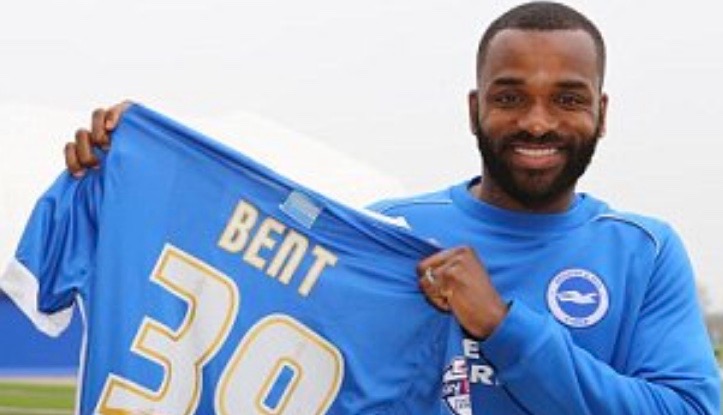
STRIKER Darren Bent spent the last month of 2014 with Championship-struggling Brighton as the hapless Sami Hyypia tried to bring a halt to a dismal run of form.

Unable to command a regular starting spot at Aston Villa, Bent made an encouraging enough start, scoring on his debut against Fulham.

But the game ended in a 2-1 defeat and his only other goal came at Molineux two days before the axe fell on Hyypia’s time in the hotseat as Albion drew 1-1 with Wolves.

Bent told BBC Radio Sussex he’d reached “boiling point” in his frustration at the lack of starts under Paul Lambert at Villa. Previous boss Gerard Houllier had smashed Villa’s transfer fee record to take Bent from Sunderland for an initial £18m in January 2011, but, after Lambert became manager in 2012, he made just 13 Premier League appearances.

albion D BentAt the time he headed to the Amex, Bent had scored 184 goals in 464 career appearances, not to mention scoring four while winning 13 caps for England.

“I hope he will score plenty of goals for us during his time with us,” Hyypia had told the club website. “His record speaks for itself. He is a top-class striker with more than 100 Premier League goals with Charlton, Spurs, Sunderland and Aston Villa.

“Three years ago, he was a regular in the England squad under Fabio Capello; there is no doubting his ability to score goals.

“He also wants to play regular games and that is evident in his willingness to step down from the Premier League to the Championship.”

Bent told the matchday programme: “It doesn’t bother me that I’ve had to drop down a division to play football. Anyone who knows me knows that all I care about is football.

“It has never been about money or anything like that. It has always been about playing football. I’m always at my happiest when I’m playing.”

At least Bent found some familiar faces in the Albion dressing room in fellow Villa loanees Joe Bennett and Gary Gardner and former Fulham teammates David Stockdale and Aaron Hughes.

“Brighton felt like the perfect place to come and play football, especially for someone like Sami Hyypia, who I’ve played against many times over the years,” Bent added. “As a manager, I think he is the right man. He is the kind of guy I want to play for.”

Bent goalBent returned to Villa after playing in five games and although new boss Chris Hughton indicated a willingness to bring him back, the striker was soon on his way to Derby County for the remainder of the season.

He scored 12 in 17 games for Steve McLaren’s Rams and subsequently joined them on a permanent basis in the summer of 2015. After two seasons in the Championship with Derby, scoring 14 in 67 matches, a hamstring injury sidelined him for the start of the 2017-18 season and in January 2018 he went on loan to Championship strugglers Burton Albion.

Having been without a club since released by Derby in the summer of 2018, he announced his retirement at 35 in July 2019.

Since then, he has joined the football pundit circuit, although not everyone is convinced he’s making that good a job of it!

pundit D BentNevertheless, Talksport and Sky Sports are happy to give him a platform and, in an interview with Metro, he suggested what might be the most difficult aspect of it. “I played with some of these guys and regard them as friends so, when they have had a bad game, will I be able to dig them out? It’s finding the line between being objective and respectfully constructive.”

Only in January 2020, Bent could be found arguing the case for Lewis Dunk to be recalled by England. The former striker is also active on Twitter with @DarrenBent attracting just short of 492,000 followers.

Born in Tooting, south London, on 6 February 1984, Bent was probably destined to be a footballer because his dad Mervyn had been on the books of Wimbledon and Brentford as a youngster.

The family moved to Cambridgeshire when the young Bent was only 10 and his early football career was nurtured at Godmanchester Rovers.

Ipswich Town picked him up as a 14-year-old and nurtured him through their youth ranks until he eventually made it to the first team in November 2001.

In four seasons with Ipswich, he scored 56 goals in 141 appearances before then Premier League Charlton Athletic paid a fee of £2.5m to take him to The Valley.

After two successful seasons in which he bagged 37 goals in 79 games for the Valiants, he made another big money move, this time to North London to join Spurs.

It was in June 2007 they paid a club record £16.5m and he scored 25 in 79 games for them before a similar fee saw him move to Sunderland, then in the Premier League, in the summer of 2009.

After 18 months in the North East, Bent put in for a transfer and Aston Villa paid £24m to sign him on a four-and-a-half year contract. He marked his debut with the only goal of the game in a win over Manchester City.

In his second season with Villa, Bent took on the captaincy for a while but managerial changes meant his face didn’t always fit and he spent the whole of the 2013-14 season on loan to Fulham, where he scored six in 30 matches.

Mike Bailey took the Seagulls to their highest-ever finish

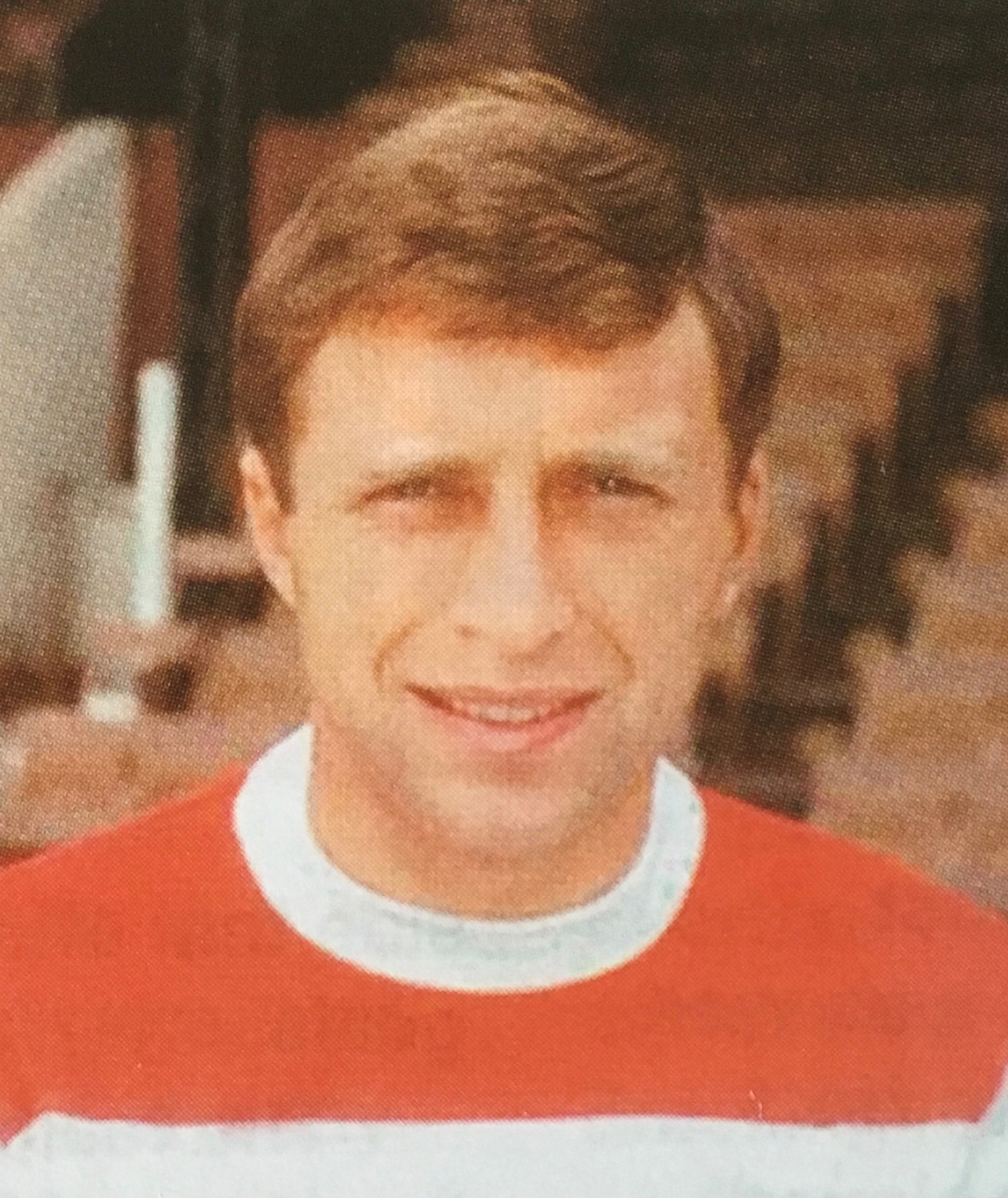
ONE OF the all-time greats of Wolverhampton Wanderers led Brighton & Hove Albion to their highest-ever finish in football.

Midfield general Mike Bailey played for Wolves for 11 seasons between 1965 and 1976, leading the team to promotion from the Second Division in 1966-67, helping them to top-flight positions of fourth and fifth in 1971 and 1973, getting to the final of the UEFA Cup in 1972, and lifting the League Cup at Wembley in 1974.

MB WWFCLgeCupMike Bailey holds aloft the League Cup after Wolves beat Manchester City 2-1 at Wembley.

It was perhaps a hard act to follow Alan Mullery as manager of Brighton, particularly as the former Spurs and Fulham captain had led the club from Third Division obscurity to the pinnacle of English football within three years.

But Bailey had just got Charlton Athletic promoted from the Third Division and in the 1981-82 season led Albion to a 13th place finish, a record which was only threatened in 2017-18 by Chris Hughton’s side, who eventually ended up 15th.

Unfortunately, although Bailey’s team was relatively successful, the style of play he adopted to achieve that position was a turn-off to the fans who deserted the Albion in their hundreds and thousands.

Eventually, chairman Mike Bamber felt he had to address the slump in support by sacking Bailey in December 1982. “He’s a smashing bloke, I’m sorry to see him go, but it had to be done,” said Bamber. There are plenty – in particular Bailey! – who feel he acted a little too hastily.

Bailey shared his feelings in an interview he gave to the News of the World’s Reg Drury in the run-up to the 1983 FA Cup Final.

Mike Bailey talks to the News of the World; his often frank programme notes; his assistant, John Collins, a former Luton Town player.

“It seems that my team has been relegated from the First Division while Jimmy Melia’s team has reached the Cup Final,” he began.

Wanting to put the record straight having been hurt by some of the media coverage he’d seen since his departure, he explained: “I found the previous manager Alan Mullery had left me with a good squad, but, naturally I built on it and imposed my own style of play.”

Bailey resented accusations that his style had been dull and boring football, pointing out: “Nobody said that midway through last season when we were sixth and there was talk of Europe.

“We were organised and disciplined and getting results. John Collins, a great coach, was on the same wavelength as me. We wanted to lay the foundations of lasting success, just like Bill Shankly and Bob Paisley did at Liverpool.

“The only problem was that winning 1-0 and 2-0 didn’t satisfy everybody. I tried to change things too soon – that was a mistake.

“When I left, we were 18th with more than a point a game. I’ve never known a team go down when fifth from bottom.”

It was clear from the outset of Bailey’s reign that he didn’t suffer fools gladly and there were numerous clashes with players, notably Steve Foster, Michael Robinson and Neil McNab, the displaced Gordon Smith and Mickey Thomas, a Bailey signing who repeatedly went missing because his wife didn’t like it in the south.

Bailey would vent his feelings quite overtly in his matchday programme notes; he was not afraid to hit out at referees, the football authorities and the media, as well as trying to explain his decisions to supporters, urging them to get behind the team rather than criticise.

Happier times as Mike Bailey becomes Albion manager and signs Tony Grealish to replace outgoing stalwart midfielder and skipper, Brian Horton.

Attempting to shine a light on the comings and goings associated with his arrival, he explained: “The moves we have been making are designed to provide Brighton with a better football team and one that can consolidate its position in the First Division, rather than struggle, such as in the last two seasons.”

By Christmas, the team were comfortably in the top half of the table and in an interview with the Argus, Bailey said: “I must admit that as a player and captain of Wolves I was a bit of a bastard, slagging others off, and that sort of thing. But being a manager, one sees everything in a different light. I am still trying to learn as a manager, especially now that I am with a First Division club.”

Three months later, shortly after he had appeared at a fans forum at the Brighton Centre, he very pointedly said: “It is my job to select the team and to try to win matches.

“People are quite entitled to their opinion, but I am paid to get results for Brighton and that is my first priority.

“Building a successful team is a long-term business and I have recently spoken to many top people in the professional game who admire what we are doing here at Brighton and just how far we have come in a short space of time.

“We know we still have a long way to go, but we are all working towards a successful future.”

As he assessed his first season, he said: “Many good things have come out of our season. Our early results were encouraging and we quickly became an organised and efficient side. The lads got into their rhythm quickly and it was a nice ‘plus’ to get into a high league position so early on.”

He had special words of praise for Gary Stevens and said: “Although the youngest member of our first team squad, Gary is a perfect example to his fellow professionals. Whatever we ask of him he will always do his best, he is completely dedicated and sets a fine example to his fellow players.”

Meanwhile, in his own end of season summary, Argus Albion reporter John Vinicombe maintained: “It is Bailey’s chief regret that he changed his playing policy in response to public, and possibly private, pressure with the result that Albion finished the latter part of the season in most disappointing fashion.

“Accusations that Albion were the principal bores of the First Division at home were heaped on Bailey’s head, and, while he is a man not given to altering his mind for no good reason, certain instructions were issued to placate the rising tide of criticisms.”

Vinicombe recorded that the average home gate for 1981-82 was 18,241, fully 6,500 fewer than had supported the side during their first season amongst the elite.

“The Goldstone regulars, who are not typical of First Division crowds (but neither is the ground) grew restless at a series of frustrating home draws, and finally turned on their own players,” he said.

At the beginning of the following season, off-field matters brought disruption to the playing side. Arsenal’s former FA Cup winner Charlie George had trained with the Seagulls during pre-season and senior players Foster, Robinson and McNab publicly voiced their disappointment that the money wasn’t found to bring such a player on board permanently.

McNab in particular accused the club of lacking ambition and efforts were made to send him out on loan. Similarly, Robinson was lined up for a swap deal with Sunderland’s Stan Cummins, but it fell through.

Meanwhile, Albion couldn’t buy a win away from home and suffered two 5-0 defeats (against Luton and West Brom) and a 4-0 spanking at Nottingham Forest – all in September. Then, four defeats on the spin in November, going into December, finally cost Bailey his job. Perhaps the writing was on the wall when, in his final programme contribution, he blamed the run of poor results on bad luck and admitted: “I feel we are somehow in a rut.”

It would be fair to say Bailey the player enjoyed more success than Bailey the manager. So, where did it all begin?

Born on 27 February 1942 in Wisbech, Cambridgeshire, he went to the same school in Gorleston, Norfolk, as the former Arsenal centre back Peter Simpson. His career began with non-league Gorleston before Charlton Athletic snapped him up in 1958 and he spent eight years at The Valley.

M Bailey charltonDuring his time there, he was capped twice by England as manager Alf Ramsey explored options for his 1966 World Cup squad. Just a week after making his fifth appearance for England under 23s, Bailey, aged 22, was called up to make his full debut in a friendly against the USA on 27 May 1964.

He had broken into the under 23s only three months earlier, making his debut in a 3-2 win over Scotland at St James’ Park, Newcastle, on 5 February 1964.He retained his place against France, Hungary, Israel and Turkey, games in which his teammates included Graham Cross, Mullery and Martin Chivers.

England ran out 10-0 winners in New York with Roger Hunt scoring four, Fred Pickering three, Terry Paine two, and Bobby Charlton the other.

Eight of that England side made it to the 1966 World Cup squad two years later but a broken leg put paid to Bailey’s chances of joining them, even though he got one more chance to impress Ramsey.

Six months after the win in New York, he was in the England team who beat Wales 2-1 at Wembley in the Home Championship. Frank Wignall, who would later spend a season with Bailey at Wolves, scored both England’s goals. Many years later, Wignall was playing for Burton Albion when a certain Peter Ward began to shine!

In 1965, Bailey broke his leg in a FA Cup tie against Middlesbrough and that was at a time when such injuries could be career-threatening.

“I was worried that may have been it,” Bailey recalled in his autobiography, The Valley Wanderer: The Mike Bailey Story (published in November 2015). “In the end, I was out for six months. My leg got stronger and I never had problems with it again, so it was a blessing in disguise in that respect.

“Charlton had these (steep) terraces. I’d go up to them every day, I was getting fitter and fitter. But it was too late to get in the 1966 World Cup side – Alf Ramsey had got his team in place.”

 Bailey missed out on the 1966 England World Cup squad but he won Football League representative honours and enjoyed success as captain of Wolves.

During his time with the England under 23s, Bailey had become friends with Wolves’ Ernie Hunt (the striker who later played for Coventry City) and Hunt persuaded him to move to the Black Country club.

Thus began an association which saw him play a total of 436 games for Wolves over 11 seasons, leading a side with solid defenders like John McAlle, Francis Munro and Derek Parkin, combined with exciting players like forwards Derek Dougan and John Richards, plus winger Dave Wagstaffe.

However, when coach Sammy Chung stepped up to take over as manager, he selected Kenny Hibbitt ahead of Bailey so the former skipper chose to end his playing days in America, with the Minnesota Kicks, who were managed by the former Brighton boss Freddie Goodwin.

Nevertheless, Bailey’s contribution to the team famous for their old gold kit saw him inducted into the Wolves Hall of Fame in 2010.

On his return to the UK, Bailey became manager of Hereford United, then he returned to The Valley as manager of Charlton and, immediately after getting them promoted to the third tier, took over at Brighton in the summer of 1981.

A somewhat extraordinary stat I discovered about Bailey’s management career in England through managerstats.co.uk was that he managed each of those three clubs for just 65 games. At Hereford, his record was W 32, D 11, L 22; at Charlton W 21, D 17, L 27; at Brighton, W 20 D 17, L 28.

In 1984, he moved to Greece to manage OFI Crete, and he later worked as reserve team coach at Portsmouth. Later still, he did some scouting work for Wolves.

Pictures from various sources: Goal and Shoot! magazines; the Evening Argus, the News of the World, and the Albion matchday programme.