

FIKAYO TOMORI couldn’t have had a worse debut for Brighton.
The teenage defender on loan from Chelsea was booked on 37 minutes and scored an own goal in the 62nd as Brighton were humiliated 3-1 in the FA Cup by non-league opponents, National League Lincoln City.
Tomori, playing at right back, sliced Nathan Arnold’s cross past a startled Casper Ankergren who’d only just come on as a sub for the injured Niki Mäenpää.
In fact, Tomori wasn’t on the winning side in any of the three matches he started for the Seagulls.
However, he saw plenty of action when making seven appearances off the bench. For example, he played an hour in Albion’s 3-1 home win over Birmingham City when sickness forced off Lewis Dunk on the half-hour mark and slotted in alongside Uwe Huenemeier, who himself was deputising for injured Shane Duffy.

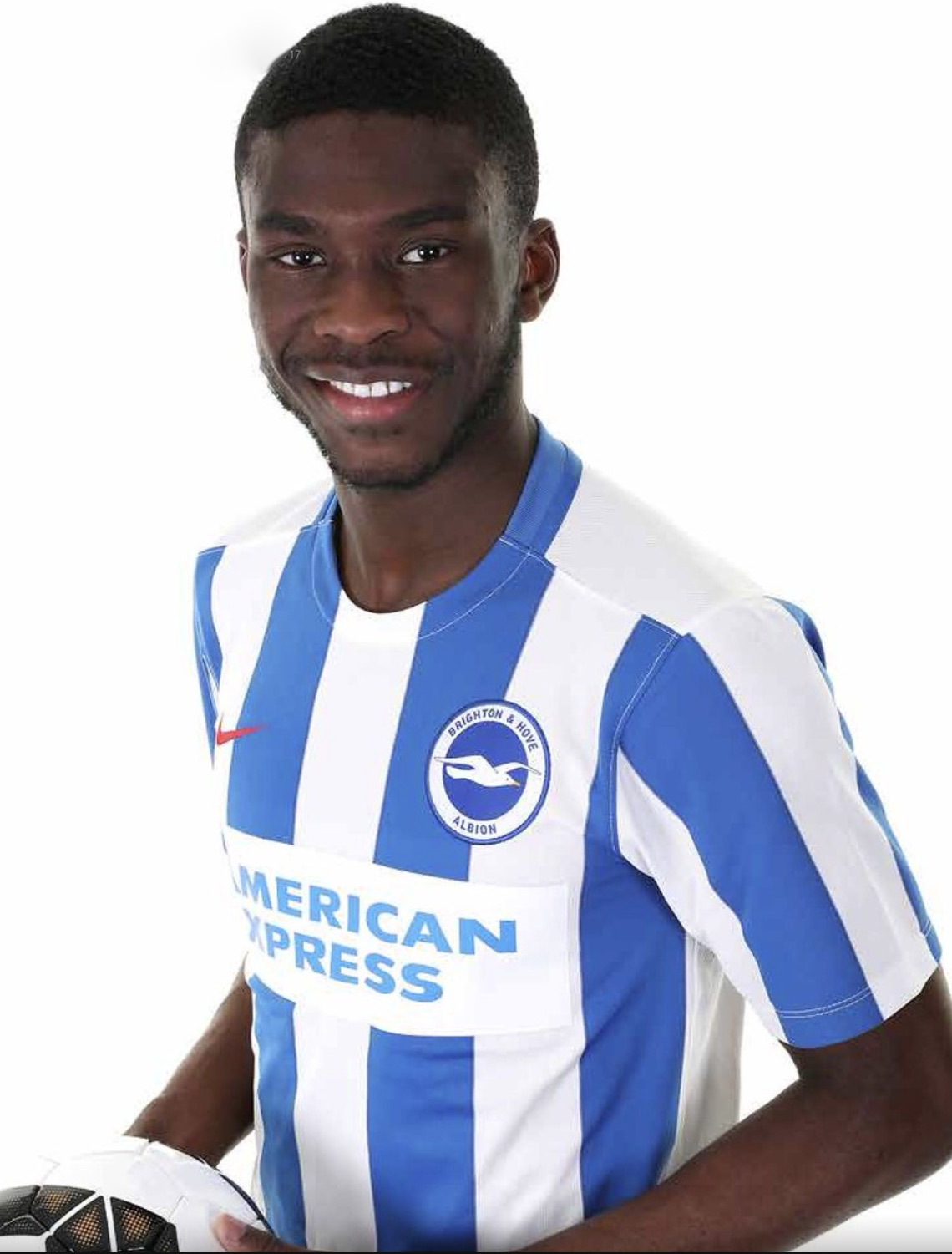
“We knew Lewis wasn’t quite right before the game and everyone had told me to be ready,” he said later. The matchday programme observed: “Tomori looked as if he’d been playing all season alongside Uwe, such was their understanding.”
The two were also paired together in the second half of the 2-1 win away to QPR when Tomori replaced Dunk at half-time. And Tomori lined up alongside Dunk in the centre of defence for the last game of the season at Villa Park when Jack Grealish’s last-minute equaliser denied Albion the Championship title.
Nevertheless, the talented youngster, who went on to be capped by England, was recognised as having played his part in the Albion winning promotion that 2016-17 season.
“I would have liked to play more football but this team’s pushing for promotion and I knew before I came here that getting in the side was going to be difficult,” he said in a matchday programme interview.
“I’ve had to be make sure I’ve been ready when called upon and take any opportunities that have come my way. It’s a challenge I’ve embraced. The manager has been really good to me and I’ve taken a lot of confidence from the fact that when we have had injuries in defence, I’m pretty much the first player to come on.
“I’ve really enjoyed it here. Being involved with a club that’s going for promotion has been a different sort of challenge to what I’ve been used to.”

Reflecting on that period a few years later, Tomori said: “It was a big part of my development, playing every day with professionals who have been playing the game for 10, 15 years.
“That focus, will to win and need to be at the top of your game every game was something I had to learn, and it was really important for my development.”

He added: “They were trying to get their first promotion to the Premier League. The team was really together and focused, and when the games came, they were really on it.
“It was my first taste of senior football and being in a senior changing room and being part of a matchday and stuff like that. It was a great learning experience and obviously we got promoted which was great.”
Born in Calgary, Canada, on 19 December 1997 to wealthy Nigerian parents, Yinka and Mo, who originate from Osun in the south west region of Nigeria, Tomori was less than a year old when the family moved to England.
The family home was in Woolwich and he enjoyed a kickabout with his friends from the age of five or six before starting organised football with Riverview United. The youngster admitted he modelled his game on Thierry Henry.
“I wore my socks above my knees like him, I wore gloves like him even if it wasn’t cold, and I celebrated like him,” he said. “I loved everything about him. Back then it was all about having fun and never did I think that one day I would end up playing for Chelsea.”
Tomori was taken on by the Chelsea academy as a seven-year-old but it wasn’t all about football and, after passing his 11+ exams, he attained 10 GCSEs (six As, three Bs and a C) at Gravesend Grammar School, where he was a pupil between 2009 and 2014.
Assistant head James Fotheringham told The Sun Tomori was the first Gravesend pupil to “really make it” as a footballer, pointing out: “We’ve had a number of boys promised the world by different football clubs and then they get dropped and end up nowhere.
“I asked Chelsea, ‘What makes Fikayo different?’ The guy said, ‘Because he’s got all the attributes of a footballer’s skills but he’s incredibly bright and he just reads the game. He’s got a couple of yards on people because he’s so bright’.”
At Chelsea, Tomori bonded with Tammy Abraham from an early age. They became good friends and made their way through the ranks and were part of the team that recorded back-to-back wins in the UEFA Youth League and the FA Youth Cup in 2015 and 2016.

The 2015-16 season saw Tomori named the Chelsea Academy Player of the Year and he rounded it off by making his first team debut as a substitute against Leicester City on the final day. He described it as “the proudest moment of his career” and explained: “To be out there playing with the likes of Eden Hazard and Willian was a fantastic feeling for me and my family.”
As Albion adjusted to the demands of the Premier League, Tomori remained in the Championship having gone on loan to a Hull City side battling to avoid the drop – a very different experience to his time with the Seagulls.
“My first full season on loan was at Hull and it was my first time away from home too,” he said. “We were hovering over the relegation zone for the whole season, so that was a different kind of challenge mentally.
“You weren’t sure if you were going to be in the team the next week if we had lost the game, because the club needed the points to stay up.
“Those loans really gave me a good outlook on football. Coming from Chelsea, you’re winning a lot of games and trophies, and are protected in a way. Those loans were what moulded me as a person and as a man and made me grow up a lot quicker.”
Tomori’s rapid progress earned him England international recognition and, in 2017, he was in the England under 20 team who won the World Cup in South Korea and in 2018 was with the under 21s when they won the Toulon tournament.
As a forerunner to his breakthrough at Chelsea, Tomori spent the 2018-19 season on loan at Derby County, where Frank Lampard had taken over as manager.
Fikayo played a total of 55 league and cup matches as County made it all the way to the play-off final where their tilt for promotion to the Premier League was finally quashed when Aston Villa beat them 2-1 at Wembley.
Nevertheless, the young defender was named as Derby’s Player of the Year, and perhaps it was no surprise that when Lampard’s next move was to become manager of Chelsea, he was quick to put Tomori into the first team at Stamford Bridge.
The majority of his 27 matches for Chelsea came in that 2019-20 season, and, although defending might have been his priority, he popped up with a couple of goals. A long-range screamer he scored against Wolves was voted Chelsea Goal of the Year.
The same season, Tomori stepped up to the full England side and made his debut as an 84th-minute substitute for Trent Alexander-Arnold in the 4-0 away win against Kosovo in a Euro 2020 qualifier in November 2019. In doing so, he became the 50th Chelsea player to be capped by England.
However, it was another two years before Gareth Southgate selected him again, by which time he had moved to AC Milan.
After falling out of contention at Chelsea, he joined the Italian side on loan initially in January 2021 but then made the move permanent in June 2021, signing a four-year deal.
In a lengthy interview with Sky Sports, he spoke about how his career had turned round after the disappointment of losing his place at Chelsea.
“It was a difficult time – every footballer wants to play, and every footballer wants to show themselves on the pitch,” he said.
“When you are not able to do that, it is difficult – and being able to overcome and forget about that is part of the reason why it is now going so well.
“I didn’t really dwell on it and just moved on and put it as part of football, part of life.
“I had a really good support system with my family and my friends – and now I’ve overcome that I want to take it further and keep progressing.”
On 9 October 2021, Tomori was a 60th minute substitute for John Stones in England’s 5-0 thrashing of Andorra, when his good friend Abraham was among the scorers.
The pair were up against each other 22 days later when Tomori’s Milan beat Abraham’s AS Roma 2-1 in a Serie A clash. Zlatan Ibrahimovic scored his 400th league goal (and 150th in Italian football).
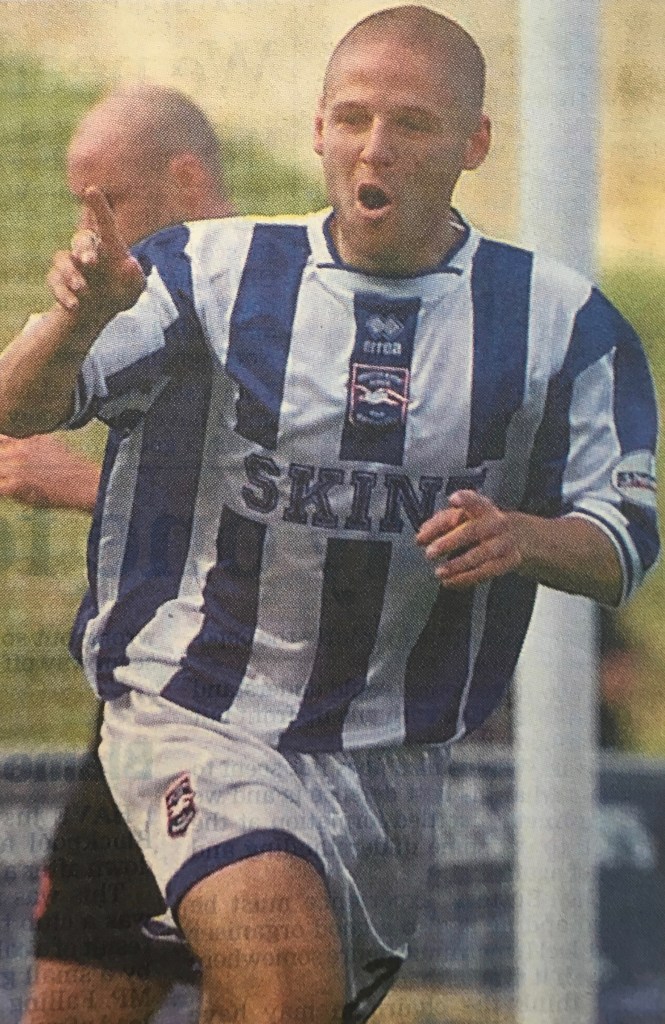
 Born in Dublin on 6 October 1981, Barrett was one of several Irish youngsters who began their football careers with Arsenal having been spotted by ex-Albion boss, and fellow Irishman, Liam Brady, playing in an Ireland U15s game against England at Blackburn.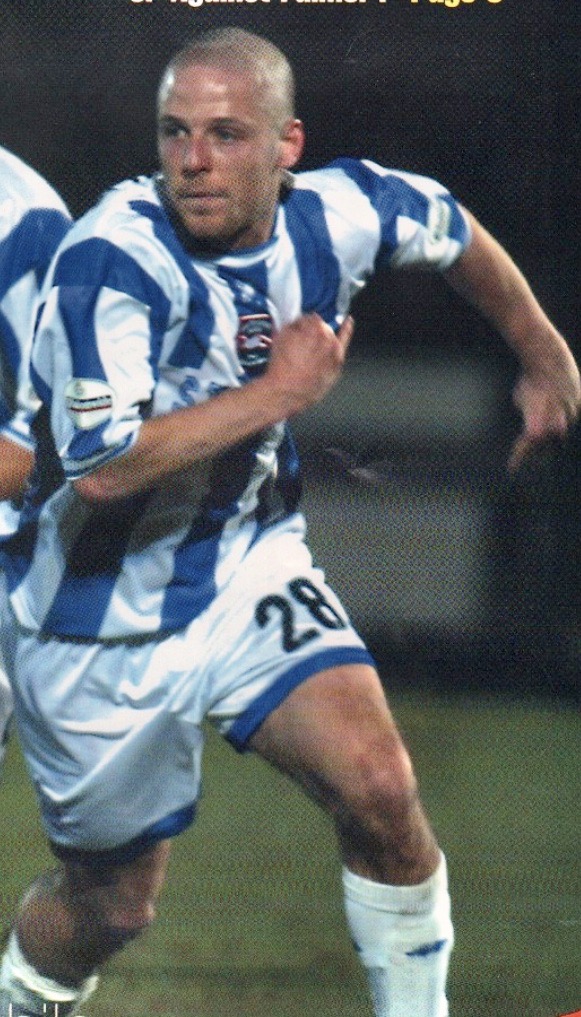

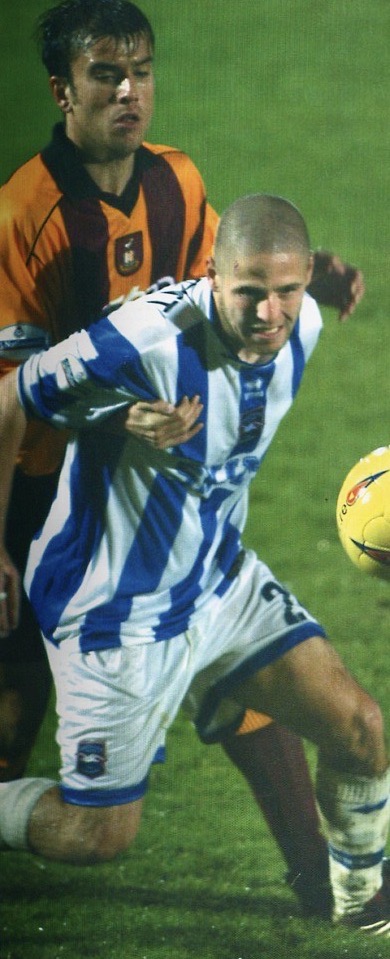
 Although he made 32 league starts plus 23 as a sub, ex-Albion boss
  In parallel lines