Bees and Seagulls milestones on Michael Bennett’s wellbeing journey

IT ALMOST certainly wouldn’t have occurred to the loyal few Albion fans who followed the basement division Seagulls in exile in 1998-99 that one of the men in stripes would go on to make a difference to the lives of hundreds of footballers.

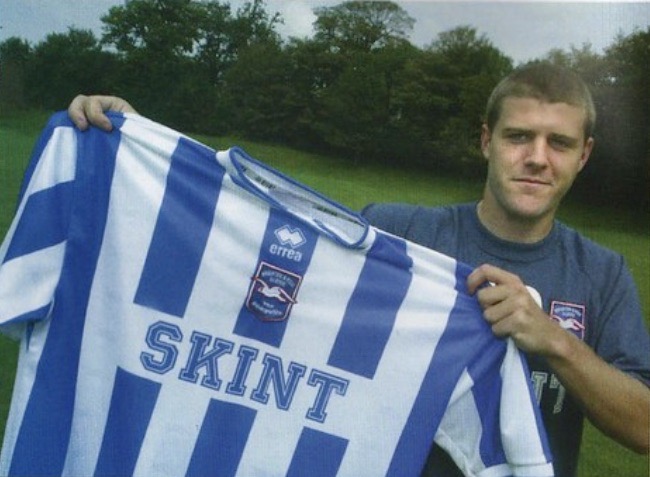
Brighton was the eighth and last league club Michael Bennett played for over the course of 12 years in which he discovered all the highs and lows that footballers can experience.

Since packing up playing, those personal insights helped him to begin a journey that led him to help huge numbers to cope with the game’s often-unseen stresses and strains.

Bennett became a psychotherapist, gained a degree and led the setting up of a counselling and mental health and wellbeing support network for the Professional Footballers’ Association, where he worked for 15 years, latterly as director of player wellbeing. In that role, he was frequently a media spokesman for the PFA.
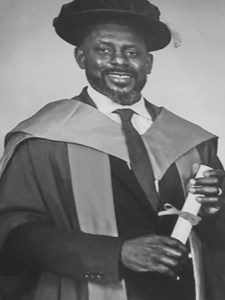
Dr Michael Bennett

Now running his own counselling business it’s all a far cry from the days when his league playing career ended filling a variety of positions in Brian Horton’s fourth-tier Brighton team, playing home games in exile at Gillingham. In one game, he was racially abused by a Swansea City fan who ran onto the pitch to confront him (more of which, later).

It was quite a fall from career highlights that saw him play for England at under-20 level alongside the likes of Matt Le Tissier, David Batty, Neil Ruddock and Tim Sherwood, make his debut at 17 in the top division for Charlton Athletic alongside John Humphrey, Colin Pates and Steve Gritt, and feature for Brentford (with Chris Hughton and Neil Smillie) when the Bees played second-tier football for the first time in 38 years.

While Addicks fans remember Bennett fondly, Bees supporters are a lot less generous and mainly recall a training ground incident in which the player broke a teammate’s jaw with a single punch.

The internet can be – and is – many things and unfortunately for people like Dr Bennett, such past incidents are still recorded for all to read about.

Thankfully, all the excellent work he has achieved in the health and wellbeing field is also documented and, in October 2021, Andy Naylor of The Athletic did an in-depth piece which examined his journey in detail.

“The story of his rise to prominence as a leader in his field is inspirational, a demonstration that with application, determination and drive you can build a career in the game that extends well beyond playing football,” wrote Naylor.

Bennett eschewed a coaching career (even though he passed his UEFA B licence) and at college, while studying Maths and English, was urged to take up counselling. As Naylor reported: “By 2004, Bennett had his degree in it and the following year he set up his own company, Unique Sports Counselling.”

Three years later, he joined the PFA as southern region education adviser aiming to get players to prepare for life after football. He also invited attendees to his workshops to speak to him privately about emotional issues – and he discovered there were plenty who took up the offer.

Eventually he persuaded then PFA chairman Gordon Taylor of the need for a designated wellbeing department dealing with the welfare of players.

In 2015, Sam Wallace of The Independent interviewed Bennett for an article about troubles ex-Arsenal and England full-back Kenny Sansom was facing. He discovered the year before the PFA had requests for support from 197 of its members.

“That is some caseload for Bennett, a man who talks in the careful, measured tones of someone used to dealing with problems that must seem intractable,” wrote Wallace. “Last year, the PFA established a 24-hour telephone helpline for members. Safe to say, it is not underused.”

The problem, Bennett told Wallace, is that the elite-level game prepares footballers physically but not emotionally. “What we realise is players often don’t get asked how they are. They get asked about football. When they get asked about their emotions, they tend to open up.”

After a 2017 presentation by Bennett to first and second-year scholars at Norwich City, Canaries’ assistant head of education and welfare Mike Macias told Press Association Sport: “When they see it and hear it coming from someone like Mickey, who has been there, done it and bought the T-shirt, they will think: ‘This impacts me and there is someone there to help me’.”

When Bennett left the PFA earlier in 2025, he said: “I am proud of the work we have done within the department which has grown into a vital and impactful part of the PFA’s mission, ensuring that wellbeing remains at the heart of everything we do.”

Among dozens of messages of thanks for his contribution left on his LinkedIn account was one from former Albion and West Ham midfielder George Parris, who wrote: “A great stint Dr Bennett, thanks for all your help, support and encouragement not just to myself, but loads of other people along the way during your time at the PFA.”

Born to Jamaican parents in Camberwell on 27 July 1969, Bennett was raised in a block of flats near Millwall’s old ground, The Den, and it was only when he was spotted by Charlton playing Sunday League football that thoughts of a professional career in the game arose.
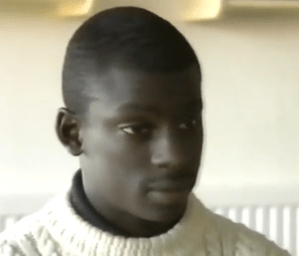
Young Mickey at Charlton

He went straight into the Addicks academy at 16 and made his debut in Charlton’s first team a year later. In his interview for The Athletic, he said: “You move from a youth team changing room to a first-team changing room. People don’t talk about that transition but that, for me, was pressure. I’ve gone from having jokes and banter with the boys in the youth team to the first team.

“The pressure intensifies. You put it on yourself more than anything else, because you don’t want to let anyone down.”

He continued: “The first well-being issues came when I signed for Charlton. I went from parks football, having fun, to going into a pressurised environment where results are key and you know if you have one or two bad games there’s somebody behind you waiting to take your spot.

“So, the pressure for me was constant. I wasn’t able to deal with that, I didn’t know who to talk to about it. I’d already formed my personality going into the game. I’m a very talkative person and I like to talk about stuff. There wasn’t anyone to do that with.”

Addicks action

On top of the various issues he was facing as a young player, he then ruptured his anterior cruciate ligament and crushed the cartilage in his knee against QPR in December 1988 which sidelined him for nine months. By his own admission, when he eventually returned to action he was not the same player, concerned over whether the injury would happen again.

On the fans forum Charlton Life: ‘Amos on the wing’ wrote: “One of the good guys Mickey Bennett. Good player, but was never quite the same player after his bad injury against OPR in 1988.”

Another poster, Leroy Ambrose, said: “One of my favourite players from the ‘Sellout’ era (ed: Charlton played ‘home’ games at Selhurst Park at the time). Good bloke – my mate was a mascot back when he was playing and he and his parents were thrilled at how nice he was, and how much time he took with them during the pre-match kickabout and after the game.”

And Ormiston_Addick added: “Started brilliantly for us, great pace and drive but never the same player after doing his knee. Great little period in 88-89 with our ‘Black Magic’ front line of Bennett – Leaburn – Williams – Mortimer.”

‘Home’ continued to be Selhurst Park between 1990 and 1992 after Bennett switched to then top division Wimbledon, who rented Palace’s stadium because their own Plough Lane wasn’t up to scratch for the top division. But Bennett was never a regular for the Dons and he and Detzi Kruszynski were used as makeweights in the transfer of Dean Holdsworth from Brentford to Wimbledon.

He joined just as Brentford began playing second tier football for the first time since 1954 but the elevation didn’t last long. They were relegated in bottom place come May 1993 although Bennett was a fixture in the side, playing a total of 43 league and cup matches plus six as a sub, and scoring four goals.

The Brentford fans forum bfctalk declared: “Despite losing Chris Hughton in December to a career ending injury, no real replacement was signed until March by which time the rot had well and truly set in. Mickey Bennett flattered to deceive and was a one game in four merchant, Detzi Kruszynski had an aversion to training and hard work.”

In another post, the forum said Bennett had “started out like a house on fire as a direct and goal hungry right winger and we thought we had discovered a new star, but he too flattered to deceive”.

It was what happened in November 1993 that many Bees fans of a certain vintage remember. Bennett had his contract terminated by manager David Webb after breaking transfer-listed teammate Joe Allon’s jaw in three places with one punch in a training ground incident.

But the PFA backed Bennett’s version of the incident and took Brentford to a Football League commission of appeal which decided the player should be reinstated. However, Bennett knew his position in the Griffin Park dressing room was untenable, and he was released by mutual consent.

The incident was back in the spotlight five years later when the media was pondering what fate awaited John Hartson for his infamous West Ham training ground kick in the head of teammate Eyal Berkovich.
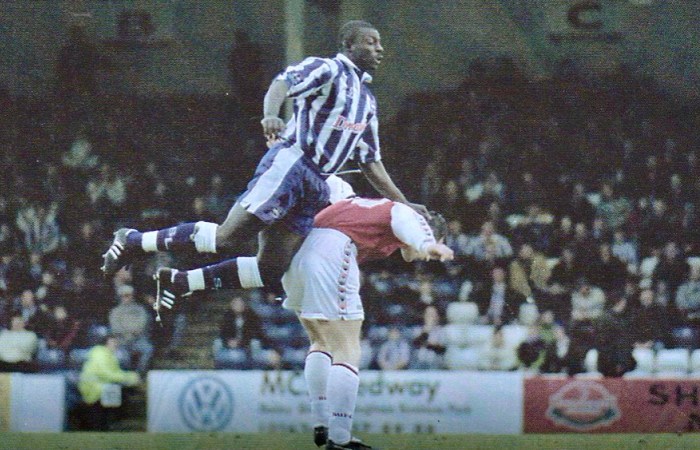
Rising high for the Albion

Bennett, by then playing for Brighton, told a reporter: “Obviously you can’t do that sort of thing to a teammate and I would prefer to leave that memory where it belongs – in the past.”
He added: “You have to get on with life, and I have no complaints. What happened between me and Joe Allon was little more than handbags at six paces – that’s why the PFA got involved and stood my corner.”

Bennett also said: “What happened to me at Brentford was way back. Right now, I’ve got other things on my mind, like trying to score my first goal of the season for Brighton.”

However, when an enterprising journalist caught up with Allon, he said: “Mickey broke my jaw in three places with a single punch in an unprovoked attack. There had been no history of ill-feeling between us and something inside him must have snapped.

“He just flipped, I collected a punch on the chops and got carted off to hospital, where they operated on me and wired up my jaw. I was in hospital for about 10 days and out of football for three months.

“The funny thing is that Mickey was supposed to be a born-again Christian, and I couldn’t work out how such a religious bloke could just clock one of his teammates.”

For all Bennett’s desire to steer clear of headlines for the wrong reason, it was while playing for Brighton away at Swansea City on 5 February 1999 that he was in the spotlight again when he was racially abused by a home supporter who ran onto the pitch.
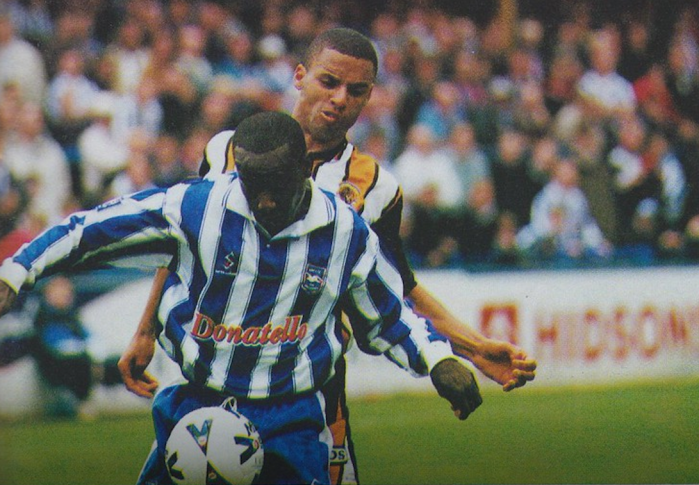
“I was shocked by it,” he told Naylor of The Athletic in 2021. “I knew it was bad because I couldn’t function in the game after that, my head had gone.

“The police came to me and asked what I wanted to do. For a split second I remember thinking, ‘I just want to get on the bus and go home’. The other side of me thought, ‘If I don’t do something, that person could do something to another player’.”

The case went to court and the 29-year-old assailant, who admitted racially abusing Bennett and invading the pitch, was sent to prison for a year and banned from watching in a football league ground for three years.

The player told The Argus: “All of a sudden, I turned around and saw this fan running towards me. He was coming closer and closer.

“I remember thinking to myself should I just take a punch or what do I do? Then a steward and one of their players jumped in front of him when he was about a foot away from me and hauled him off.

“For five minutes I was a bit shaky. He could have done anything to me.

“After that I just got on with the game and tried to cancel it out, but when the police came to me after the game to take a statement it brought it all back again.”

By the time of that match, Jeff Wood had succeeded Horton, the manager who’d taken on Bennett after he’d impressed enough on trial in pre-season games against Lewes and Crawley to be awarded a one-year contract.
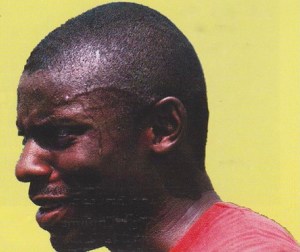
Introduced in match programme

The matchday programme introduced him as “a versatile right sided player who can operate at anywhere down the right side or in the centre of midfield”.

He started off in central midfield alongside Jeff Minton and later was used as a central defender. That autumn, he clocked up his 150th League appearance in a 2-0 defeat to Cardiff City, where he’d spent the opening three months of the 1996-97 season. Having left Brentford, he’d gone back to Charlton briefly before barely featuring in the 1995-96 season at Millwall. On leaving south Wales, he spent a year at non-league Cambridge City, and at Christmas 1997 returned to the league at Orient under Tommy Taylor.

Before facing the Os in a first round FA Cup tie in 1998, Bennett told The Argus: “I knew Tommy Taylor from my time at Charlton and I figured in one game away to Exeter, then four or five more as a sub before I was eased out.

“I’ve got another chance to face them now because I missed the league game away with a groin injury. It’s a nice tie, but I’ve got nothing to prove to Tommy or anyone else.” (Albion lost 4-2).

Bennett in Albion’s change kit in the 1998-99 season

Bennett found himself playing for a third Albion manager when Wood’s brief and unsuccessful reign at the Albion helm was brought to an end and, although he featured under Micky Adams, he was one of eight players released at the end of the season.

His league career at an end, he continued to play at non-league level for Canvey Island and in the 2003-04 season was part of a Canvey Island squad that also included former Brighton players Junior McDougald, Peter Smith, and the aforementioned Minton.
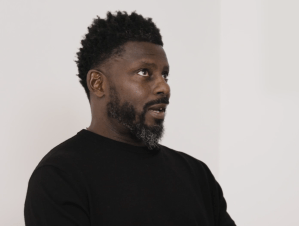
Meanwhile, he transitioned into a mental health and wellbeing counsellor, saying: “I identified the value of offering to the side of the game that rarely grabs the headlines but is just as affecting to the people it helps.”

On his LinkedIn profile, he points out: “Playing at all levels of the football league has provided me with an invaluable knowledge of the inner workings and operational structure of football in this country, experience that I have endeavoured to apply for the benefit of my fellow pros since my retirement.”
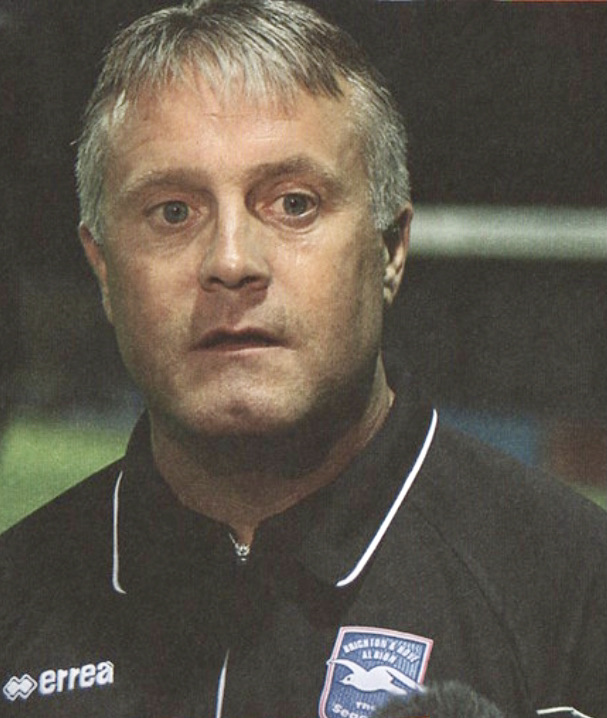
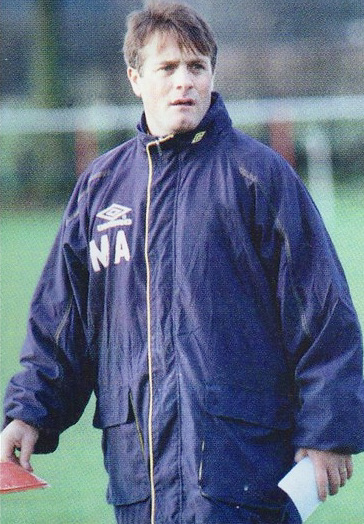
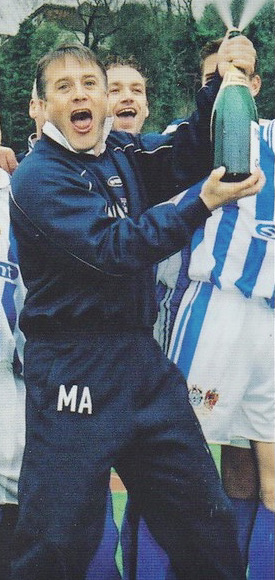
Confrontation was seldom far away in Micky Adams’ career

THE FIRST player ever to be sent off in a Premier League game managed Brighton twice.

Fiery Micky Adams saw red playing for Southampton when he decked England international midfielder Ray Wilkins.

“People asked me why I did it. I said I didn’t like him, but I didn’t really know him,” Adams recalls in his autobiography, My Life in Football (Biteback Publishing, 2017).

It was only the second game of the 1992-93 season and Adams was dismissed as Saints lost 3-1 at Queens Park Rangers.

Adams blamed the fact boss Ian Branfoot had played him in midfield that day, where he was never comfortable.

“He (Wilkins) was probably running rings around me. I turned around and thumped him. I was fined two weeks’ wages and hit with a three-match ban.”

It wasn’t the only time he would have cause not to like Wilkins either. The former Chelsea, Manchester United and England midfielder replaced Adams as boss of Fulham when Mohammed Al-Fayed took over.

His previously harmonious relationship with Ray’s younger brother, Dean, turned frosty too. When Adams first took charge at the Albion, he considered youth team boss Dean “one of my best mates”. But the two fell out when Seagulls chairman Dick Knight decided to bring Adams back to the club in 2008 to replace Wilkins, who’d taken over from Mark McGhee as manager.

“He thought I had stitched him up,” said Adams. “I told him that I wanted him to stay. We talked it through and, at the end of the meeting, we seemed to have agreed on the way forward.

“I thought I’d reassured him enough for him to believe he should stay on. But he declined the invitation. He obviously wasn’t happy and attacked me verbally. I did have to remind him about the hypocrisy of a member of the Wilkins family having a dig at me, particularly when his older brother had taken my first job at Fulham.

“We don’t speak now which is a regret because he was a good mate and one of the few people I felt I could talk to and confide in.”

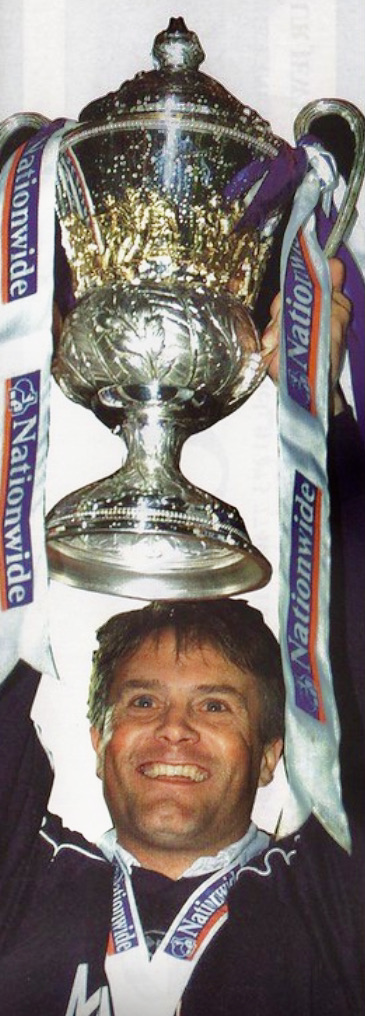
With the benefit of hindsight, Adams also regretted returning to manage the Seagulls a second time considering his stock among Brighton supporters had been high having led them to promotion from the fourth tier in 2001. The side that won promotion to the second tier in 2002 was also regarded as Adams’ team, even though he had left for Leicester City by the time the Albion went up under Peter Taylor.

Adams first took charge of the Seagulls when home games were still being played at Gillingham’s Priestfield Stadium.  Jeff Wood’s short reign was brought to an end after he’d failed to galvanise the side following Brian Horton’s decision to quit to return to the north. Horton took over at Port Vale, where Adams himself would subsequently become manager for two separate stints.

Back in 1999, though, Adams had been at Nottingham Forest before accepting Knight’s offer to take charge of the Albion. He’d originally gone to Nottingham to work as no.2 to Dave Bassett but Ron Atkinson had been brought in to replace Bassett and Adams was switched to reserve team manager.

The Albion job gave him the opportunity to return to front line management, a role he had enjoyed at Fulham and Brentford before regime changes had brought about his departure from both clubs.

On taking the Albion reins, Adams said: “For too long now this club has, for one reason and another, had major problems. The one thing that has remained positive is the faith the supporters have shown in their club.

“The club has to turn around eventually and I want to be the man that helps to turn it around.”

The man who appointed him, Knight, said: “Micky is a formidable character with a proven track record. He knows what it takes to get a club promoted from this division. But, more than that, Micky shares our vision of the future and wants to be part of it. That is why I have offered him a four-year contract and he has agreed to that commitment.”

Not long after taking over the Albion hotseat, he was happy to say goodbye to the stadium he’d previously known as home when a Gillingham player in the ‘80s and it was a revamped squad he assembled for the Albion’s return to Brighton, albeit within the confines of the restricted capacity Withdean Stadium.

Darren Freeman and Aidan Newhouse, two players who’d played for Adams at Fulham, scored five of the six goals that buried Mansfield Town in the new season opener at the ‘Theatre of Trees’.

Considering he was only too happy to be photographed supporting the campaign to build the new stadium at Falmer, it’s disappointing to read in his autobiography what he really thought about it.

“My mates and I nicknamed it ‘Falmer – my arse’ although I never said this to Dick’s face,” he said. “There was always so much talk and we never felt like it was going to get done.”

The turning point in his first full season in charge was the arrival of Bobby Zamora on loan from Bristol Rovers. “The first time I saw him he came onto the training ground; he looked like a kid. But he was tall and gangly with a useful left foot; there was potential there.”

Interestingly, considering Adams makes a point of saying he usually ignored directors who tried to get involved on the playing side, he took up Knight’s suggestion that the side should switch to a 4-4-2 formation – and the Albion promptly won 7-1 at Chester with Zamora scoring a hat-trick!

After a so-so first season back in Brighton, not long into the next season Adams was forced to replace his no.2, Alan Cork, with Bob Booker because Cork was offered the manager’s job at Cardiff City, at the time owned by his former Wimbledon chairman, Sam Hammam. Adams reckoned Booker’s appointment was one of the best decisions he ever made.

Surrounded by players who had served him well at Fulham and Brentford, together with the additions of Zamora, Michel Kuipers and Paul Rogers, Adams and Booker steered Albion to promotion as champions. Zamora was player of the season and he and Danny Cullip were named in the PFA divisional XI.

Not long into the new season, the lure of taking over as manager at a Premier League club saw Adams quit Brighton, initially to become Bassett’s no.2 at Leicester City, but with the promise of succeeding him.

“While I thought I had a shot at another promotion, it wasn’t a certainty,” Adams explained. “I knew I had put together a team of winners, and I knew I had a goalscorer in Bobby Zamora, but football’s fickle finger of fate could have disrupted that at any time.”

He admitted in the autobiography: “Had I been in charge at the age of 55, rather than 40, then I perhaps would have taken a different decision.”

While Albion enjoyed promotion under Taylor, what followed at Leicester for Adams was a lot more than he’d bargained for and, to his dismay, he is still associated with the ugly shenanigans surrounding the club’s mid-season trip to La Manga, to which he devotes a whole chapter of his book, aiming to set the record straight.

On the pitch, he experienced relegation and promotion with the Foxes and he doesn’t hold back from lashing out about ‘moaner’ Martin Keown, “one of the worst signings of my career”. Eventually, he’d had enough, and walked away from the club with 18 months left on his contract.

After a break in the Dordogne area of France, staying with at his sister-in-law and her husband’s vineyard, he looked for a way back into the game. He was interviewed for the job of managing MK Dons but was put off by a Brighton-style new-ground-in-the-future scenario. Then Peter Reid, a former Southampton teammate, was sacked by Coventry City. He put his name forward and took charge of a Championship side full of experienced players like Steve Staunton and Tim Sherwood.

The side’s fortunes were further boosted by the arrival of Dennis Wise, but, in an all-too-familiar scenario Adams had encountered elsewhere, the chairman who appointed him (Mike McGinnity) was replaced by Geoffrey Robinson. It wasn’t long before it was obvious the relationship was only going to end one way. As Adams tells it, Robinson was influenced by lifelong Sky Blues fan Richard Keys, the TV presenter, and it was pretty much on his say-so that Adams became an ex-City manager after two years in the job.

With an ex-wife and three children to support as well as his partner Claire, Adams couldn’t afford to be out of work for long and fortunately his next opportunity came courtesy of Geraint Williams, boss of newly promoted Colchester United, who took him on as his no.2.

However, it only got to the turn of the year before he was out of work once again, although, from what he describes, he wasn’t enjoying his time with the U’s anyway because Williams kept him at arm’s length when it came to tactics and team selection.

He was amongst the ranks of the unemployed once again when Albion chairman Knight gave him a call, but, with the benefit of hindsight, he said: “Going back turned out to be one of the biggest mistakes of my life.”

Adams blamed the backdrop of “the power struggle” between Knight and Tony Bloom on the lack of success during his second stint in the hotseat, and he reckons it was Bloom who “demanded my head on a platter”. The fateful meeting with Knight, when a parting of the ways was agreed, famously took place in the Little Chef on the A23 near Hickstead.

Looking back, Adams conceded he bowed to pressure from Knight to make certain signings – namely Jim McNulty, Jason Jarrett and Craig Davies in January 2009 – who didn’t work out. He reflected: “I shouldn’t have taken the job in the first place. I’d let my heart rule my head but, in fairness, I didn’t have any other offers coming through and it seemed like a good idea at the time.

“I wouldn’t ever say he (Knight) let me down, but he had his idea about players. I did listen to him, and maybe that’s where I went wrong.”

He added: “Going back to a club where success had been achieved before felt good, yet, the second time around, the same spark wasn’t there no matter how hard I tried.”

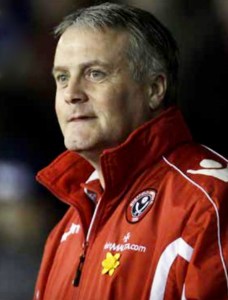
Born in Sheffield on 8 November 1961, Micky was the second son of four children. It might be argued his penchant for lashing out could have stemmed from seeing his father hitting his mother, which he chose to spoke about at his father’s funeral. Adams is obviously not sure if he did the right thing but he felt the record should be straight.

The Adams family were always Blades rather than Wednesdayites and, at 15, young Micky was in the youth set-up at Bramall Lane having made progress with Sunday league side Hackenthorpe Throstles.

While he thought he had done well under youth coach John Short during (former Brighton player) Jimmy Sirrel’s reign as first team manager, Sirrel’s successor, Harry Haslam, replaced Short and, not long afterwards, Adams was released.

However, Short moved to Gillingham and invited the young left winger to join the Gills. Adams linked up with a group of promising youngsters that included Steve Bruce.

In September 1979, he had a call-up to John Cartwright’s England Youth side, going on as a sub in a 1-1 draw with West Germany, and starting on the left wing away to Poland (0-1), Hungary (0-2) and Czechoslovakia (1-2) alongside the likes of Colin Pates, Paul Allen, Gary Mabbutt, Paul Walsh and Terry Gibson.

Adams honed his craft under the tutelage of a tough Northern Irishman Bill ‘Buster’ Collins and began to catch the attention of first team manager Gerry Summers and his assistant Alan Hodgkinson, who had played 675 games in goal for Sheffield United.

He made his debut aged just 17 against Rotherham United but didn’t properly break through until Summers and Hodgkinson were replaced by Keith Peacock (remember him, he was the first ever substitute in English football, in 1965, when he went on for Charlton Athletic against John Napier’s Bolton Wanderers) and Paul Taylor.

“Keith saw me as a full-back and that was probably the turning point of my career,” Adams recalled.

Once Adams and Bruce became regulars for the Gills, scouts from bigger clubs began to circle and at one point it looked like Spurs were about to sign Adams. That was until he came up against the aforementioned Peter Taylor, who was playing on the wing for Orient at the time (having previously played for Crystal Palace, Spurs and England).

“He nutmegged me three times in front of the main stand and, to cut a long story short, that was the end of that. Gillingham never heard from Spurs again,” Adams remembered.

Even so, Adams did get a move to play in the top division when Bobby Gould signed him for Coventry City. Managerial upheaval didn’t help his cause at Highfield Road and when John Sillett preferred Greg Downs at left-back, Adams dropped down a division to sign for Billy Bremner’s Leeds United (pictured below right with the legendary Scot).

“He had such a big influence on my career and life that I wouldn’t have swapped it for the world,” said Adams. But life at Elland Road changed with the arrival of Howard Wilkinson, and Adams found himself carpeted by the new boss after admitting punching physio Alan Sutton for making what an injured Adams considered an unreasonable demand to perform an exercise routine even though he was in plaster at the time.

Nevertheless, Adams admits he learned a great deal in terms of coaching from Wilkinson, especially when an improvement in results came about through repetitive fine-tuning on the training pitch.

“It is the one aspect of coaching that is extremely effective, if delivered properly,” said Adams. “I learnt this from Howard and took this lesson with me throughout my coaching and managerial career.”

However, Adams didn’t fit into Wilkinson’s plans for Leeds and he was transferred to Southampton, managed by former Aston Villa, Saints and Northern Ireland international Chris Nicholl. Adams joined Saints in the same week as Neil ‘Razor’ Ruddock and the pair were quickly summoned by Nicholl to explain the large size of the hotel bills they racked up.

Adams moved his family from Wakefield to Warsash and he went on to enjoy what he reflected on as “the best few years of my playing career”. He was at the club when a young Alan Shearer marked his debut by scoring a hat-trick and the “biggest fish in the pond at the Dell” was Jimmy Case.

Adams described the appointment of Branfoot in place of the sacked Nicholl as a watershed moment in his own career. “Overall he was decent to me and I found his methods good,” he said. And he pointed out: “I was getting older, I’d started my coaching badges and I already had one eye on my future.”

Adams recalled an incident during a two-week residential course at Lilleshall, after he had just completed his coaching badge, when he dislocated his shoulder trying to kick Neil Smillie.

“I was left-back and he was right-wing, and he took the piss out of me for 15 minutes. The fuse came out and I decided to boot him up in the air,” Adams recounted. “The only problem was that I missed. I fell over and managed to dislocate my shoulder hitting the ground. It was the worst pain I’ve ever had.”

If life was sweet at Southampton under Branfoot, that all changed when he was replaced by Alan Ball and the returning Lawrie McMenemy. Adams and other older players were left out of the side. Simon Charlton and Francis Benali were preferred at left-back. Eventually Adams went on a month’s loan to Stoke City, at the time managed by former Saints striker Joe Jordan, assisted by Asa Hartford.

On his return to Southampton, and by then 33, Adams was given a free transfer.

Former boss Branfoot came to his rescue, inviting him to move to League Two Fulham as a player-coach in charge of the reserve team. Branfoot also signed Alan Cork and he and Adams began a longstanding friendship that manifested itself in becoming a management pair at various clubs.

On the pitch, Branfoot struggled to galvanise Fulham and, with the team second from bottom of the league, he was sacked – and Adams replaced him. He kept Fulham up by improving fitness levels and introducing more of a passing game.

But he knew big changes were needed if they were going to improve and he gave free transfers to 17 players, despite clashing with Jimmy Hill, who had different ideas.

An admirer of what Tony Pulis was doing at Gillingham, Adams signed three of their players: Paul Watson, Richard Carpenter and Darren Freeman. He also got in goalkeeper Mark Walton and centre back Danny Cullip. Simon Morgan was one of the few who wasn’t let go, and Paul Brooker emerged as a skilful winger. All would later play under him at Brighton.

Promotion was secured and Adams was named divisional Manager of the Year but after all the celebrations had died down Mohamed Al-Fayed bought the club and things changed dramatically.

“The club was in a state of flux as it tried desperately to come to terms with its new status as a billionaire’s plaything,” Adams acerbically observed. “From having nothing, we had everything.”

Before too long, in spite of being given a new five-year contract, Adams was out of the Craven Cottage door, replaced by Wilkins and Kevin Keegan.

But he wasn’t out of work for long because Branfoot’s former deputy, Len Walker, introduced him to the chairman of Swansea City, who were on the brink of relieving Jan Molby of his duties as manager.

Various promises were made regarding funds that would be made available to him but when they were not forthcoming he realised something was not right and he quit, leaving Cork, the deputy he’d taken with him, to take over.

By his own admission, if he hadn’t been sitting on the £140,000 pay-off he’d received from Fulham, he probably would have stayed. As it was, he was out of work once again…..until he had a ‘phone call from David Webb, the former Chelsea and Southampton defender who was the owner of Brentford, but in the process of trying to sell the club.

His brief was to keep the side in the league and to make it attractive to potential purchasers. It was at Griffin Park that he first met up with the aforementioned Bob Booker, who was managing the under 18s at the time. “He is one of the most loyal and trustworthy friends I have ever known,” said Adams. “He would do anything for you.”

However, although he signed the likes of Cullip and Watson from Fulham, he wasn’t able to stop the Bees from being relegated. During the close season, former Palace chairman Ron Noades bought the club and announced he was also taking over as manager.

Once again, Adams was out of a job but his next step saw him appointed as no.2 to Dave Bassett at Nottingham Forest.

Which brings us almost full circle in the Adams career story, but not quite.

After the debacle of his second stint in charge of Brighton, he was twice manager at Port Vale, each spell straddling what turned out to be a disastrous period in charge of his family’s favourite club, Sheffield United.

It was Adams who gave a league debut to Harry Maguire during his time at Bramall Lane, but the side were relegated from the Championship on his watch, and he was sacked.

Adams took charge of 249 games as Vale boss but quit after a run of six defeats saying he’d fallen out of love with the game.

It didn’t prevent him having another go at it, though. He went to bottom of the league Tranmere Rovers and admitted in his book: “It was arrogance to think I could turn round a club that had been relegated twice in two seasons.”

In short, he couldn’t and he ended up leaving two games before the end of what was their third successive relegation.

“It was a really poor end to a career that had started so promisingly at Fulham,” he said.

The Harry Hotspur youngster who went west

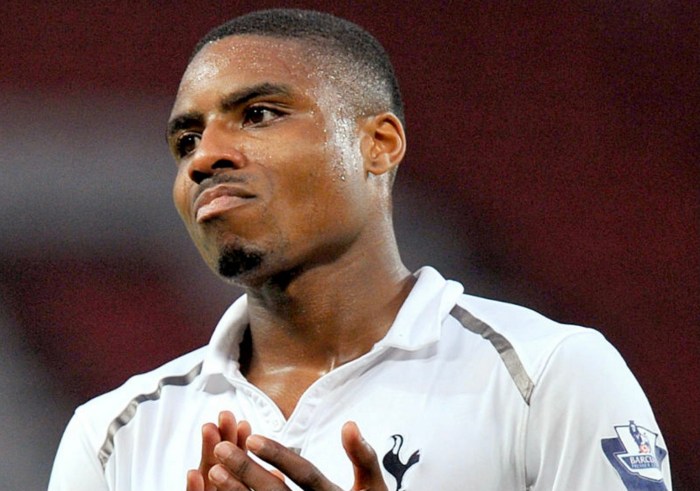
MULTIPLE loans away from parent club Tottenham Hotspur didn’t succeed in laying a path to a top level football career for striker Jonathan Obika.

One of the last such arrangements saw the young forward spend three months with the Seagulls in the 2013-14 season.

Nathan Jones, no.2 to Brighton head coach Oscar Garcia, had seen what Obika could do when the young striker had been under him as a coach on loan at Yeovil and Charlton Athletic.

Unfortunately, his impact with the Seagulls was underwhelming even though he scored on his first (and, ultimately, only) full start in a 3-1 win away to Port Vale in the fourth round of the FA Cup.

Obika salutes his one and only goal for Brighton

Albion’s other goals that day, from Rohan Ince and Solly March, were also their first for the club – generating the statistic that it was the first Albion game in 110 years in which three players had scored their first goal in the same league or cup match.

It had been an amazing goalscoring performance for Spurs reserves that prompted Albion to make a move for Obika as cover for first choice Leonardo Ulloa, especially with Craig Mackail-Smith and Will Hoskins sidelined by injury and Ashley Barnes on the brink of a move to Burnley.

The Argus reported that Obika had previously been a target but a move had been put on ice because he’d been injured. His return to fitness saw him net a double hat-trick in a friendly for Tottenham against Charlton’s under-21s, watched by Jones.

“The report coming back on him after the game was one word – lethal!” former Seagulls goalkeeper Ben Roberts, then on the coaching staff at Charlton, told the Argus.

“Like Nathan, I worked with Jon at Yeovil and then at Charlton and he’s a really good pro,” said Roberts. “He is guaranteed to score goals. He is a real predator around the box.

Obika in action for Yeovil

“I’ve been waiting for his career to really kick off. When he came to us at Charlton it took him a couple of weeks to get up to speed. But he was brilliant for us. The end of the season came too soon for us.

“He is a great signing for Brighton and he will suit the way they play.”

However, Garcia also brought in Spaniard David Rodriguez at the same time and Obika found himself down the pecking order, especially when Manchester United loanee Jesse Lingard was added to the forward options.

The Vale cup game aside, Obika made just seven appearances as a substitute but didn’t add to the lone goal and was eventually recalled by Spurs and sent out on loan to Charlton again until the end of the season.

Nevertheless, Garcia said: “He came in to give us forward cover and, while he may not have played as much as he would have liked, he has been a great professional and a pleasure to work with.”

Obika’s long association with Tottenham finally came to an end in September that year when he headed west to League One Swindon Town, where he played for three years, scoring 28 times in 108 games for the Robins.

In 2017, he switched to Town’s rivals Oxford United on a two-year deal before then trying his luck in Scotland, playing in the Scottish Premier League for St Mirren.

On the expiry of that contract, Obika moved to League One Morecambe and, in January 2022, found himself back in the news ahead of this year’s FA Cup third round when Morecambe travelled to North London to take on the club who nurtured his early career for 13 years.

Although Morecambe took a shock first half lead against Spurs through defender Antony O’Connor, it wasn’t a fairytale ending as the Premier League side eventually won the tie 3-1 with three goals in the last 16 minutes of the game.

Obika had to watch from the bench until the 58th minute when he replaced Jonah Ayunga – a Brighton reserve player between 2016 and 2018 – with Morecambe still clinging on to their slim lead.

Born in Enfield on 12 September 1990, of Nigerian parents, Obika grew up in Edmonton and it was while playing football for his primary school, St Paul’s & All Hallows, that he was scouted by Tottenham.

“I lived five minutes from the stadium, so I used to walk to training as a 10, 11-year-old,” he said. “That was my only focus back then.” He later attended Bishop Stopford School in Enfield and left with seven GCSEs.

Originally a left winger, Spurs’ under 18s coach Alex Inglethorpe was responsible for moving him to play as a central striker and in the 2007-08 season he was top scorer for the Spurs academy side.

Those goals caught the attention of first team boss Harry Redknapp and he signed his first professional contract at 18, while a second-year trainee in the academy, and earned a call-up to the first team squad.

Wearing the number 80, he made his debut off the bench in a UEFA Cup game in Holland against NEC Nijmegen on 28 November 2008. A few weeks later, he made his first senior start in front of the White Hart Lane faithful, playing against Shakhtar Donetsk in the same competition.

“I didn’t know I was starting at the beginning of the game, there were a few injuries so a lot of the youth team players trained that week and we were in the squad,” Obika remembered.

When announcing the team, Redknapp actually read out his name as John Utaka, his former player at Portsmouth, amid much hilarity. “That broke the ice,” said Obika. “I was less nervous after that. I was more relaxed and actually ended up having a good game. To play at the Lane, having grown up down the road, was a great feeling and I had all my family and friends there that night.”

Along with Inglethorpe, the coaches who most influenced his development at Spurs were John McDermott and, when he progressed to the reserves, Tim Sherwood, Les Ferdinand and former Albion full-back Chris Ramsey.

Obika and fellow Spurs youngster Andros Townsend were sent out on loan to Yeovil – it was the first of four loan spells there for Obika – as recalled by Jones in an interview with coachesvoice.com: “A host of other clubs wanted them, but I think Harry saw two young kids who wanted to play, and he saw something in us as a coaching team.

“Townsend clearly had huge drive and ambition, and Obika scored the goals that kept us in League One that season – so we will always be thankful to Harry for that.”

Obika recalled: “While I was at Yeovil, Nathan Jones was my coach and I built up a good relationship with him. He would stay behind with me while I did extra shooting: he didn’t need to, I could have done it with other teammates, but he wanted to be there and help me progress and I really appreciated that. He is a good man. He also took me to Charlton for a loan spell and, of course, to Brighton.”

Obika also had loan stints at Millwall, Crystal Palace, Peterborough and Swindon although in the 2012-13 season he did manage to get two more games for the Spurs first team, featuring in the League Cup and the FA Cup.

He went on as a 75th minute substitute for Clint Dempsey when André Villas-Boas’ Spurs side beat Carlisle United 3-0 in the League Cup in September 2012, and was a 59th-minute substitute for Gylfi Sigurdsson when Leeds dumped Spurs out of the FA Cup 2-1 in a fourth round tie at Elland Road in January 2013.

Determined Joe pursued his dream to the top

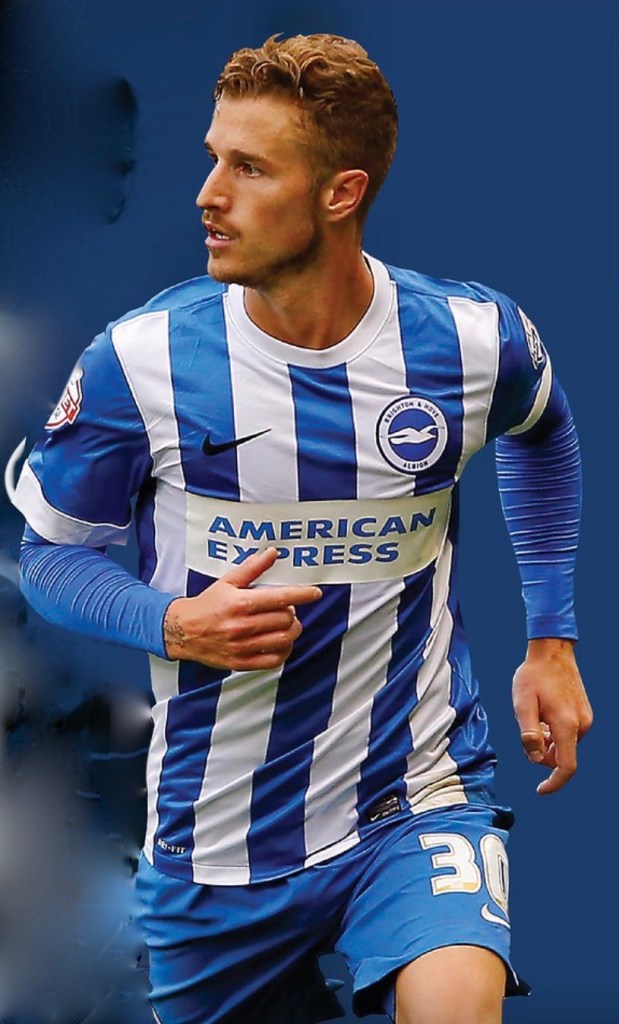
JOE BENNETT played more league matches (41) than any other outfield Brighton player during the 2014-15 season.

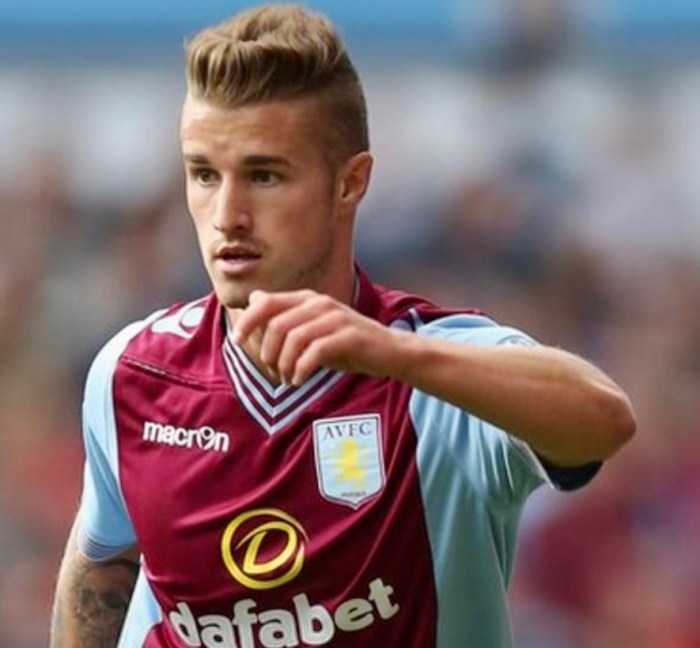
Not bad for a loan signing who’d been edged out at Aston Villa after a season in their first team.

Bennett’s appearance record for the Seagulls was perhaps even more noteworthy in that it spanned the reigns of three managers.

Brought in by Sami Hyypia, the defender retained the left-back berth during Nathan Jones’ temporary spell in charge right through to the end of the season after Chris Hughton had taken over.

Bennett hasn’t been afraid to travel the length and breadth of the country plying his trade as a footballer.

It all began in his home town, Rochdale, where he was born on 28 March 1990. His early promise with a football saw him join up with the under-eights at their centre of excellence.

When he was 10, his parents separated and he moved to the north east to live with his mum and stepdad in Swainby, eight miles north east of Northallerton.

He quickly got fixed up with Sunday league side Northallerton Town. One of their coaches, Gary Ramsbotham, also scouted for Middlesbrough and through him Bennett went for a trial and got taken on.

His progress suffered a setback when he was 15. He was de-registered by Boro and had a year away from the club, during which time he worked hard on his fitness and strength before being taken back on.

“The year away really helped me focus on my football and I realised then how badly I wanted to make it,” he told Tony Higgins in an interview for gazettelive.co.uk.

As he progressed through the youth ranks, Bennett, who’d originally been a striker, was converted to a left-back by Boro coach Steve Agnew.

He also had a perfect work experience stint from school when he got to go training with Boro’s under 18 side, and he relished the opportunity of being a ballboy at Riverside home games.

Eventually, he made it to the first team, Gareth Southgate giving him his debut as a substitute in the final game of the 2008-09 Premier League season against West Ham, although Boro had already been relegated by then.

Bennett thought he’d get chances to play in the Championship, but new boss Gordon Strachan turned to more experienced players, and Bennett only made 13 appearances in 2009-10.  

It was a different story following the arrival of Tony Mowbray and the young full-back was a regular over the following two seasons, eventually starting 84 matches for Boro and going on as a sub eight times.

He earned the club’s young player of the year title at the end of the 2010-11 season and the North East Football Writers’ Association’s young player of the year accolade in 2011-12.

2011 was a good year for him because he also caught the eye of the international selectors and won three caps for England under-21s.

His debut came in a 1-0 defeat away to Italy on 8 February 2011, he was a sub for Ryan Bertrand in England’s 2-1 home defeat to Iceland on 28 March, and he started the 5 September game against Israel at Barnsley’s Oakwell ground which England won 4-1, with Jonjo Shelvey and Ross Barkley pulling the strings in midfield.

In August 2012, Premier League Aston Villa paid £3m to take him to Villa Park. Boss Paul Lambert told avfc.co.uk: “Joe’s a really good player, young and hungry to succeed and he’s exactly the type of player we want here at the football club.

“There’s no doubt in my mind that he will thrive in this environment and he fits in exactly with what we are trying to build here.

“His energy level is really high and he can get up and down the pitch really well, which will be important for the team and important in terms of how we want to play as a team.

“He’s an exciting signing for the club and I’m really pleased we’ve been able to take him here.”

While Bennett made 30 appearances for Villa in his first season, increased competition and back and knee injuries restricted his involvement in 2013-14 to only seven matches.

At the start of the 2014-15 season, Albion had been expecting Irish international Stephen Ward to join permanently after his season on loan from Wolves. But his last-minute u-turn en route to putting pen to paper on the deal meant the Seagulls were in the market for a new left-back because new boss Hyypia wanted someone more experienced than Adam Chicksen.

With playing time at Villa again looking like only being sporadic, Bennett went along to Elland Road on 19 August 2014 and liked what he saw as Albion won 2-0 in what would turn out to be one of the few decent performances under Hyypia.

“I went to watch them against Leeds and I think that just made me realise what a good team they are,” said Bennett. “They just kept the ball really well, from the back to the front, defended well and they looked like they had a lot of energy.

“The full-backs like to go forward as well which is part of my game as I like to go forward and get involved a bit more up the pitch, so it was nice to see.

“I spoke to the manager and he told me a bit about how he likes the team to play and how I could fit in to that, and hopefully I can.”

After the Hyypia reign came to an early end, Bennett remained suitably diplomatic in interviews and in a matchday programme feature spoke about the positive influence on his game of former full-back Hughton.

“Obviously it’s good for me on a personal level having a former defender as manager,” he said. “He knows his stuff and is there to give me plenty of advice, especially in the left-back role. Since the gaffer came in he’s been working hard on defensive shape and being more compact as a team.”

He spoke about Hughton’s greater emphasis on defending compared to Hyypia’s desire for the full-backs to push up. “I’ve got a more defensive role now but I’m really enjoying my football under Chris. I feel I’m learning all the time,” he said.

At one point it looked like Bennett might join Albion on a permanent basis, but when Tim Sherwood took over from Lambert, he indicated the full-back may yet have a future at Villa Park.

The new Villa boss ran his eye over the defender and said: “Joe has done very, very well. I am now looking forward to seeing him in pre-season.”

He did enough to earn a one-year contract extension and scored his first goal for the club in a 5-3 League Cup win over Notts County. But, with Aly Cissokho still ahead of him in the pecking order, and with only an hour to go before the end of the August transfer window, Bennett was loaned to newly-promoted AFC Bournemouth.

Ostensibly he was signed as cover for Tyrone Mings and Charlie Daniels, but he hoped the move would give him the opportunity to play regularly in the Premier League.

“I’m really excited about the prospect of playing for Bournemouth and hopefully helping them perform well this season,” he told Villa’s website. “They’ve already made a positive start to the new season and, like everyone else, I’ve been really impressed with the fantastic job Eddie Howe has done. They have a really good side.”

Unfortunately, it didn’t unfold how Bennett had hoped. He didn’t make any appearances for Bournemouth and returned early to Villa Park after suffering an achilles tendon injury.

Recovered from the injury, Bennett joined Sheffield Wednesday on loan in mid-January 2016 until the end of the season. Again, a permanent move looked on the cards, especially when new Villa boss Roberto Di Matteo indicated he wouldn’t be part of his first-team plans.

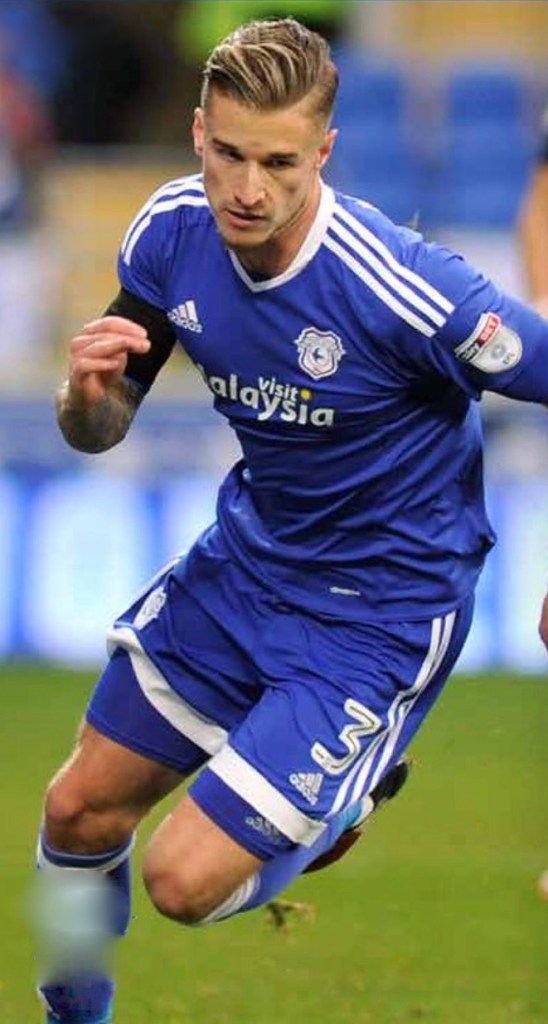
Villa chairman Tony Xia blocked the move, not wishing to sell to a Championship rival, but, within a fortnight, Bennett moved on a free transfer to fellow Championship side Cardiff City. A calf injury meant he had to wait two months before making his debut, but he went on to spend an eventful five years in South Wales, riding a rollercoaster emotionally, on and off the field.

Nevertheless, his popularity with the Bluebirds was perhaps best encapsulated by chairman Mehmet Dalman who described him as “the best left back in the league”.

Bennett endured a somewhat turbulent relationship with boss Neil Warnock, although he admitted in an extended interview with Oscar Johnson: “He is a nice, genuine and down-to-earth guy. He was really good to me during his time here.

“At first, I don’t think he really fancied playing me to be honest, but I was the only left-back at the club, so he didn’t have a choice.

“Our relationship got better as it went along and he was really good for me both personally and as a player.”

That didn’t seem to be the case in January 2018 when Bennett was in the headlines for the wrong reason. He escaped what looked like a straight red card for a bad foul on Leroy Sane in a FA Cup tie against Manchester City but eventually saw red for a second booking, which incurred Warnock’s wrath.

“I was disappointed he got sent off at the end,” said Warnock. “Obviously he doesn’t want to go to Leeds next weekend, because it was an absolutely pathetic challenge when on a booking. To do something like that I think is disrespectful to teammates.”

Even so, Bennett was a regular fixture in defence during Cardiff’s brief spell in the Premier League, playing 30 of the 38 matches.

“Being relegated after one season was obviously gutting, but nobody had given us a chance of staying up before the season began, so to battle as long and hard as we did was definitely something to be proud of,” he said.

“We had a really good team and got some really good results over the course of the season. I think that, with a little bit of luck, we could maybe have stayed up. If VAR had been in use, we might have done it because we had some horrible decisions go against us.”

In March 2019, Bennett opened up to Dominic Booth about how it felt playing against the backdrop of losing the father who had first urged him to pursue his dream of becoming a professional footballer.

He remained with Cardiff and was enjoying a new lease of life after Mick McCarthy’s appointment as manager when he suffered an anterior cruciate knee ligament injury in March 2021 that put him out of the game for the rest of the season.

After surgery, he made a swift-than-expected recovery and, even though he’d been given a free transfer at the end of his contract, he continued his recovery by training with the Bluebirds.

“The club had a duty of care to aid the player’s rehabilitation and, as such, Bennett has been at the club’s Vale of Glamorgan HQ gradually working his way back to fitness,” reported walesonline.co.uk.

McCarthy explained that a new deal had been in the offing before the injury, but it never got signed. “I was quite sad about it because I spoke to Benno when I came in, I knew his contract was running out,” he said. “I discussed with him about staying, then injury comes and it changed it all.”

Bennett was not the only departure at the end of the season, and a statement on the club website read: “We would like to place on record our sincerest thanks and best wishes to Sol Bamba, Joe Bennett and Junior Hoilett who will be moving on this summer upon the expiration of their current deals.

“The three players joined us in 2016 and would go on to become key figures in our 2017-18 promotion squad. Between them they made a total of 478 appearances across a five-year period, representing a significant contribution to the club’s recent progress and history.”

Bennett subsequently moved north and signed a two-year deal with Wigan Athletic.

Illness put paid to John Piercy’s promising career

A FIVE-YEAR professional football career bookended by 3-1 results against Crewe Alexandra almost certainly wouldn’t have been the path John Piercy would have chosen for himself.

One saw him make a promising debut for Tottenham Hotspur on 13 October 1999, subbed off to a terrific ovation from a 25,000 crowd at White Hart Lane on 74 minutes as they progressed in a League Cup game against the lower league opposition.

The other was a League One defeat for Brighton & Hove Albion at humble Withdean Stadium on 6 November 2004, subbed off ignominiously only 12 minutes into the second half with many in the crowd of 6,163 unaware that the hereditary bowel disease afflicting him was putting paid to his hopes of a football career.

Born in Forest Gate, east London, on 18 September 1979, Spurs first spotted Piercy as a stand-out 12-year-old, talented enough to represent England Schoolboys.

He became a trainee with Spurs at the age of 16 and signed as a professional in July 1998.

It was George Graham who gave him his first team debut for Spurs in that game against Crewe, starting him up front alongside Chris Armstrong in a side that featured future Brighton player and assistant manager Mauricio Taricco in defence.

The Spurs goals were scored by Oyvind Leonhardsen, David Ginola and Tim Sherwood, but spursodyssey.com was full of praise for the young Piercy.

“One young man who will remember this night more than most is 20-year-old debutant John Piercy, who won the home fans’ hearts with two terrific efforts on goal, and an eye-catching performance all round,” it said. They even went as far as to suggest he might be ‘the new Ginola’.

The performance was good enough to earn him a place on the bench for the following Saturday’s Premier League game away to Derby County and he was called into action in the second half to replace Armstrong as Spurs won 1-0.

He made two more league appearances that season and an excellent Spurs archive website said of him: “The solidly built East Londoner had the ability to lead the line and to make chances for his team-mates, by going wide and taking people on.

“Some work was needed on his first touch and his pace, but he was strong, direct and knew where the goal was.  Preferred to play wide on the left of midfield, but was deployed at full back in the reserves to good effect.”

Chris Hughton was the Spurs reserve team manager at the time and said of Piercy: “John is able to adapt well to different roles which is why we’ve played him at full-back in pre-season when we’ve been stretched in those areas.  But I’d say his best position is definitely right or left of midfield.”

On 4 April 1999, he started for England under 20s against the USA in the World Youth Championships in Nigeria, but was subbed off in a game England lost 1-0. His teammates that day included future full international Ashley Cole, and the side was managed by former Albion full-back Chris Ramsey.

john piercyFrustrated by the lack of first team opportunities at Spurs, Piercy, by then based in Eastbourne, opted to join Brighton in September 2002 during Martin Hinshelwood’s brief reign as manager.

Hinshelwood told the BBC: “He’s a player who can play in a variety of positions. That will give us plenty of options.”

A first team breakthrough at Brighton was slow to happen, however, with Hinshelwood’s successor, Steve Coppell, opting for experience in the ultimately unsuccessful battle to avoid relegation from the second tier. Piercy top-scored for the reserves that season, netting 13 goals from midfield.

However, shortly after Mark McGhee’s appointment, he did get some game time and in December 2003 also registered his first league goal in a 1-0 win at home to Wrexham.

Later the same month, he went one better playing up front in place of the suspended Leon Knight and scored twice in a resounding 4-0 home win over Wycombe Wanderers.

More often than not, though, he was brought on as a substitute rather than starting games. He made just eight league starts and in six of them was subbed off.

His other appearances (16) were all from the bench and that was the role he found himself in at the 2004 play-off final at the Millennium Stadium in Cardiff, although his contribution was certainly effective.

Piercy replaced Nathan Jones in the 77th minute. “He (McGhee) made a change with just over 10 minutes left and we went on to win the game, so no one is going to complain, are they?” Jones told walesonline.co.uk.

Reports also recorded how Brighton threatened Steve Phillips’ goal moments after Piercy replaced Jones, Iwelumo glancing the substitute’s cross wide of the far post.

Sadly for Piercy, while he showed promise on the football pitch, he began to suffer the horribly debilitating effects of colitis, as he described in an interview with the Argus.

He praised the support he got from McGhee and reserve team boss Dean White but it reached a point where it was evident the illness was simply sapping too much energy from him to continue a full-time professional football career.

That defeat at home to Crewe proved to be his last game for the Albion and he announced his retirement aged 25 shortly afterwards.

“He knows his capabilties and I know his capabilities,” said McGhee in a matchday programme article. “He’s a player that could easily cope with the standard of the Championship but this illness has just affected him in a way that he just can’t get fit enough to do himself justice.”

Chairman Dick Knight added: “It is a great shame that such a skilful player, with such tremendous natural ability, has seen his career curtailed in such a cruel way. All at the club are devastated for him to be hanging up his boots at the relatively young age of 25.”

Piercy subsequently regained sufficient fitness to play a season with non-league Eastbourne Borough and then took up a coaching role with the club.

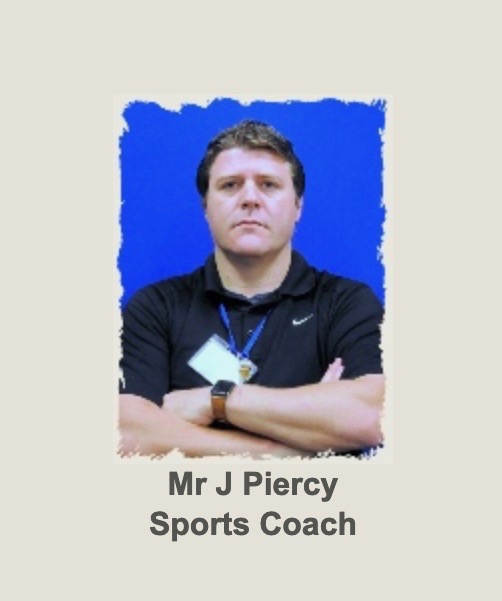
Nowadays he is a sports coach at Ocklynge Junior School in Eastbourne where he teaches youngsters football and PE, and is also a coach at CACL Sports in the town.

Piercy Ocklynge Sch

Did Chris Ramsey’s injury alter outcome of 1983 FA Cup Final?

2-near-post-guardBRIGHTON & HOVE Albion’s May 1983 FA Cup Final clash with Manchester United was historic for the club and for their 21-year-old right back it was even more eventful.
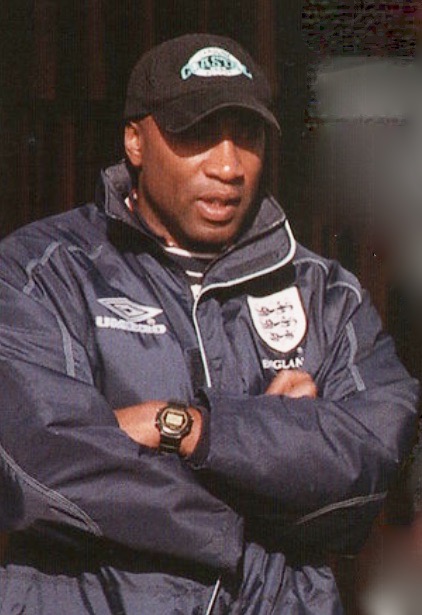
Who would have known that former Bristol City apprentice Chris Ramsey’s ignominious departure from the field in a firemen’s lift on Glen Wilson’s shoulder would more or less be the end of an all-too-brief playing spell in the top echelons of the English game?

Might the match – and Ramsey’s career – have panned out differently if it hadn’t been for that diabolical tackle by Norman Whiteside?

Trouble had been brewing in the weeks leading up to the final and the national media, looking for every possible angle to pick at, had singled out Ramsey for criticism. Did that stoke the fire?

Let’s rewind a little and explore what happened.

Born in Birmingham on 28 April 1962 , Ramsey, whose father came to the UK from St Lucia, was one of two boys and five girls. Rejected by Charlton Athletic as a schoolboy, he became an apprentice at Ashton Gate but was then released and, after a successful trial, Brighton took him on.

The 1980-81 season was Albion’s second in the top division and, as it drew towards its close, it was looking increasingly likely they were heading for relegation.

Manager Alan Mullery was openly criticising his players for their efforts and his big ally off the field, vice-chairman Harry Bloom (current chairman Tony Bloom’s granddad) had died of a heart attack on the team coach on an away trip to Stoke.

Something had to change and, at the tender age of 19, Ramsey was called up from the reserves and plunged in at the deep end.

In three of the last four games, he took over the no.2 shirt after Mullery switched John Gregory from right back into midfield. Ramsey’s debut came in a crucial Easter Saturday clash away to rivals Crystal Palace when, released from the shackles of defending, Gregory scored twice in a 3-0 win. Ramsey also played in the wins over Sunderland away and Leeds at home.

The Seagulls stayed up by the skin of their teeth and Evening Argus reporter John Vinicombe said in his end of season analysis that Ramsey had been “a revelation” in those three games.

Within a matter of weeks, Mullery quit as manager in the furore over chairman Mike Bamber selling Mark Lawrenson to Liverpool (after Mullery had already agreed a deal to sell him to Manchester United).

Gregory was sold to QPR for £300,000 but, far from that move opening up an opportunity for Ramsey, Mullery’s replacement Mike Bailey brought in on a free transfer from Loftus Road the experienced Don Shanks, who was immediately installed as the first choice right back.

Indeed Bailey froze out Ramsey for the following 19 months! At one point he was transfer listed but it was Bailey who departed the Goldstone first – his sacking working to the advantage of the young defender.

When George Aitken and Jimmy Melia took over in December 1982, Ramsey was instantly promoted from the reserves and seized his opportunity.

In a profile in an Albion matchday programme in February 1983, Ramsey told Tony Norman: “Like any other young apprentice, my dream was to play in the First Division. I must admit that even after coming to Brighton, I had times when I wondered if I’d make it. But now I’ve got my chance and I’m keen to make the most of it.”

In one of the most comprehensive profiles on Ramsey, former Brighton teammate, Andy Ritchie, told Adam Ellis of The Football League Paper: “He was quite a shy lad back then but he had everything you want in a full back. Aggression, pace, agility – and he could tackle like a demon.”

These were the attributes that Melia appreciated too. In a Daily Mail preview of the Norwich quarter final, Melia told reporter Brian Scovell: “The other players love playing with him. He’s a great competitor, tackles well and uses the ball with a bit of style.

“I’m pleased he’s taken his chance. He deserves to play at Wembley if we manage to get there.”ramsey + mel

As it turned out, Ramsey’s place was in jeopardy because of two sendings off in the league in April which led to him being banned for the semi-final against Sheffield Wednesday at Highbury.

After being sent off in a 2-1 home win over Spurs, Terry McNeill reported in the News of the World: “Ramsey was lucky to stay on earlier after bringing down Mark Falco in a probable scoring position. When he took the striker again from behind, there was no escape.”

The 20-year-old Ramsey was fairly phlegmatic about the situation and told Alex Montgomery of The Sun: “Whatever I did, I did for the club. You can’t think about Cup games when you are struggling for points at the bottom of the First Division.”

His second dismissal, along with Coventry’s Steve Jacobs (who later played for the Albion under Chris Cattlin) after a scuffle in a 1-0 win at the Goldstone, was lambasted by one of the pre-eminent football writers of the day, Frank McGhee of the Daily Mirror.

“Can Brighton afford to field at Wembley a man who by then won’t have been able to play for 19 days?” he intoned. “And can they trust Ramsey not to sully soccer’s great state occasion by a moment of blind madness?”

Nevertheless, after Wednesday were beaten, Melia was happy to restore his first-choice right back to the starting line-up but one wonders now whether Ramsey had a sense of foreboding about how the big occasion would unfold.

Reflecting on those dismissals in the build-up to the final, he told The Sun’s Montgomery: “I just hope people aren’t looking for me. I’ll certainly be careful. I honestly don’t think I deserve the reputation which I’ve been saddled with in the last few weeks.

“The dismissals were just coincidences – nothing more than that. I know I am an aggressive type of player but that is my game. I always want to give 100 per cent for the club. The last thing I want is trouble at Wembley.”

After Albion had taken a shock lead through Gordon Smith’s header, United piled on the pressure and Ramsey headed a goalbound Gordon McQueen effort off the line.

But then came a pivotal moment early in the second half. Tim Carder and Roger Harris record it thus in their excellent Seagulls! The Story of Brighton & Hove Albion FC: “Whiteside went in high on Ramsey’s shin as the Albion full back cleared, and then trod on his ankle. The referee had a strong word with the United forward but did not signal a foul.”

The tackle had rendered Ramsey lame and while he tried in vain to carry on, two minutes later he wasn’t able to challenge for a ball to the far post which Frank Stapleton duly dispatched to equalise.

Those of us watching in the stadium, together with millions glued to TV screens around the world, saw Ramsey carried from the Wembley turf and, in those days of only one substitute, wondered how Albion would cope with a makeshift defender in the shape of Gerry Ryan.

After United took the lead through Ray Wilkins, Ramsey’s friend – and fellow England under-20 teammate – Gary Stevens’ equalised to send the game into extra time and ultimately a replay. Stevens was adamant about the impact Whiteside’s challenge had on the game.

In Match of My Life, edited by Paul Camillin, he said: “It was a bad tackle and perhaps cost us the game. In those days we only had one substitute and Gerry Ryan came on and did a great job at right back, even though he was a midfield player, but we did miss Chris because he had been having a great game.”

Whiteside was unapologetic about the challenge but Ramsey fumed to The Sun’s Montgomery: “It could have broken my leg. If I’d done it, I’d have been off. I just can’t understand how Whiteside got away with it.”

The injury deprived Ramsey of the chance to play in the replay five days later and, after that sad exit, his playing career never reached similar heights again.

Indeed he actually only played 37 games for the Albion, most of those coming in that 1982-83 season. He played only a handful of games in the following season and in August 1984 went on loan to Swindon Town before joining them permanently four months later.

There, he played alongside the likes of Sky Sports reporter Chris Kamara and one-time Albion assistant manager Colin Calderwood and clocked up over 120 appearances, including being part of Lou Macari’s Fourth Division champions in 1986 and Third Division play-off winners in 1987.

In August 1987, he joined Southend United but played just 13 games for them before persistent back injuries forced his early retirement at the age of just 26.

Some business ventures he embarked on didn’t work out and former Albion right back rival Shanks set him up with a trial for a team in Malta, Naxxar Lions, where he made a playing comeback.

Eventually the ongoing injury problems made him look to other ways of making a living. He coached in the United States but also started studying like crazy.

Amongst lots of qualifications, he got a Master’s degree at the University of North London in Health, Physical Education and Recreation (a qualification which enabled him to become a primary school teacher) and simultaneously obtained his UEFA coaching badges.

That Football League Paper piece records: “With an MSc, ten diplomas and myriad other qualifications, Ramsey is so highly educated that he actually sets the test for pro licence candidates.”

ramsey EngA stint in charge of youth development at Leyton Orient and coaching Newham Ladies was followed by an FA appointment as coach to the England under-20 side in the 1999 FIFA World Youth Championship when among the players under his direction were Ashley Cole, Peter Crouch, Matthew Etherington and John Piercy, who later played for the Albion. At the FA he learned from the likes of Les Reed and one-time Albion winger Howard Wilkinson.

He had a short and unsuccessful three-month spell as assistant to Ricky Hill at Luton Town, and he said: “Ricky Hill was a massive inspiration to me.”

Just when it appeared new offers had dried up, Ramsey got the chance to manage Charleston Battery in the USA, where he stayed for three years.

Winning the USL A-League (second division) with Battery in 2003 brought him to the attention of Spurs, and, as head of player development, many of the young players he coached in tandem with Les Ferdinand and Tim Sherwood were Harry Kane, Ryan Mason, Danny Rose, Nabil Bentaleb, Andros Townsend, Steven Caulker and Jake Livermore.

“He was massive for all of us,” French midfielder Bentaleb told The Football League Paper. “He believed in us, he encouraged us. He told the manager we were ready when everyone else believed we were not. He was not shy or scared of anybody and he knew exactly what he wanted.”

chris ramsey (spurs)In the Evening Standard in 2012, Spurs and England centre back, Ledley King, said: “He is one of the best coaches in the country. The youngsters love the way he works and they have really bought into his methods.”

Ramsey left Spurs in 2014 to take up a coaching role at QPR, and when Harry Redknapp left the floundering Hoops in February 2015, Ramsey stepped up to become a fully-fledged Premier League manager.

He was not able to halt Rangers’ relegation from the elite, though, and lasted only until November in charge of the side as they struggled to come to terms with life back in the Championship.

However, in January 2016, he was appointed technical director at QPR to oversee the club’s academy coaching and player development.

The club’s director of football, Ferdinand, told The Guardian: “While we were disappointed things didn’t work out with Chris at first team level, we were determined to retain his services. As such, we actually put a clause in his contract which allowed us to retain Chris’s services in a player-development role should things not work out for him as head coach.”

Ramsey finally left QPR in January 2024. By then 61, the head of coaching and technical director told the club website: “I have had a fantastic nine years at QPR and the club will always have a special place in my heart.”

The club’s chairman Lee Hoos said: “Chris has been a great servant to the club. I cannot thank him enough for his incredible hard work, dedication and guidance.

“However, as we thoroughly rationalise everything we do, and following very amicable discussions with Chris, it is felt this move is in the best interests of all parties. He will always remain a friend of the club.”

  • Shootthedefence.com did a face-to-face interview with Ramsey on 23 September 2016 which is well worth a listen as he talks in detail about his whole career.
  • In pictures from my scrapbook, Ramsey graces the cover of an Albion matchday programme; (top) he defends the near post during the 1983 FA Cup Final with Gordon McQueen in attendance; he is photographed by Tony Norman outside the Goldstone and criticised in the Daily Mirror by Frank McGhee.