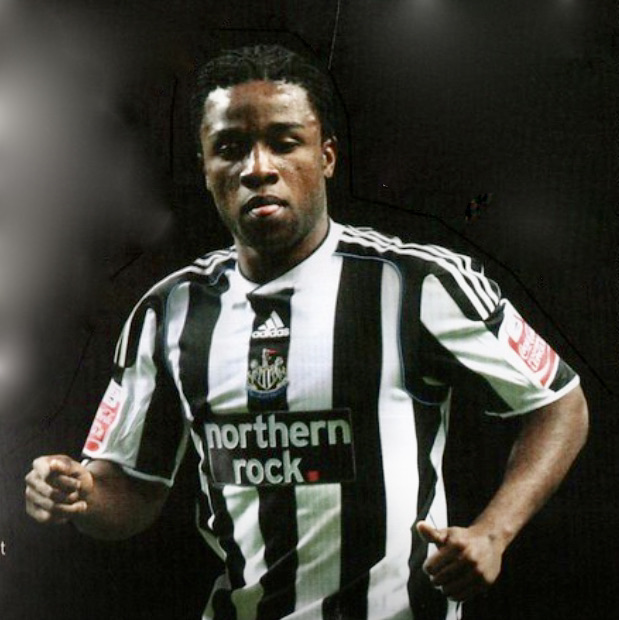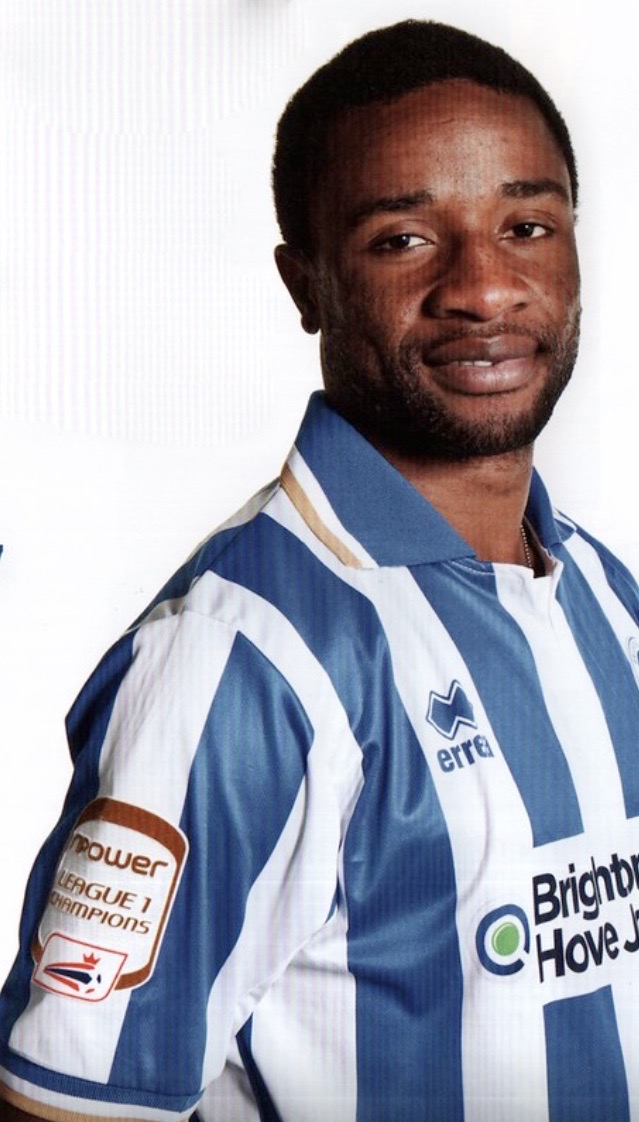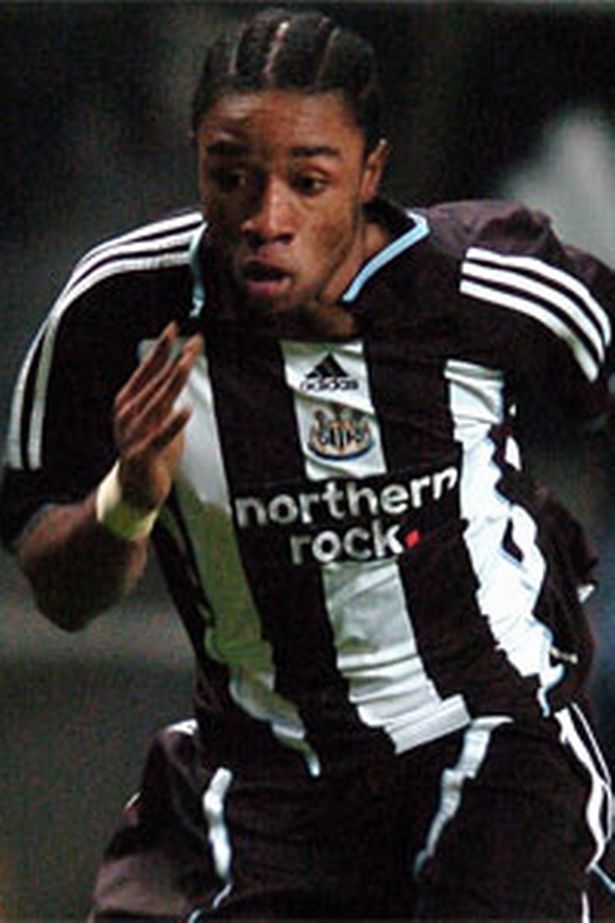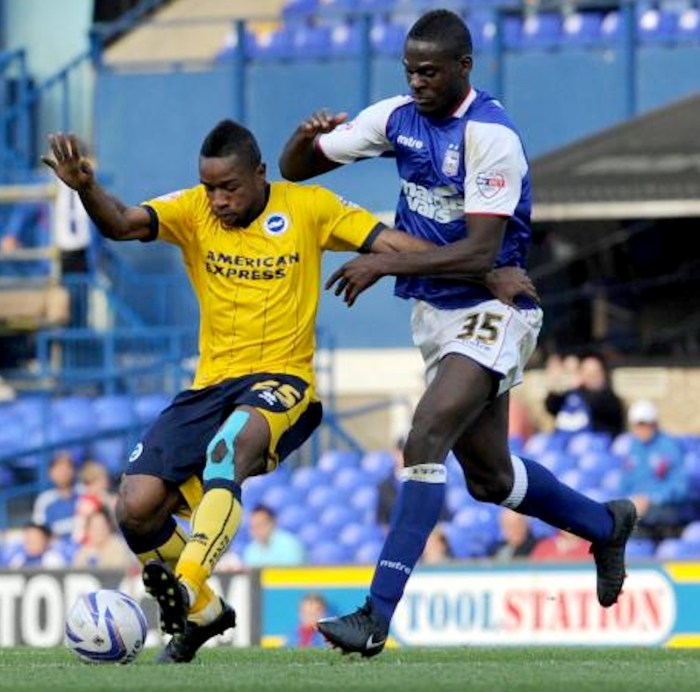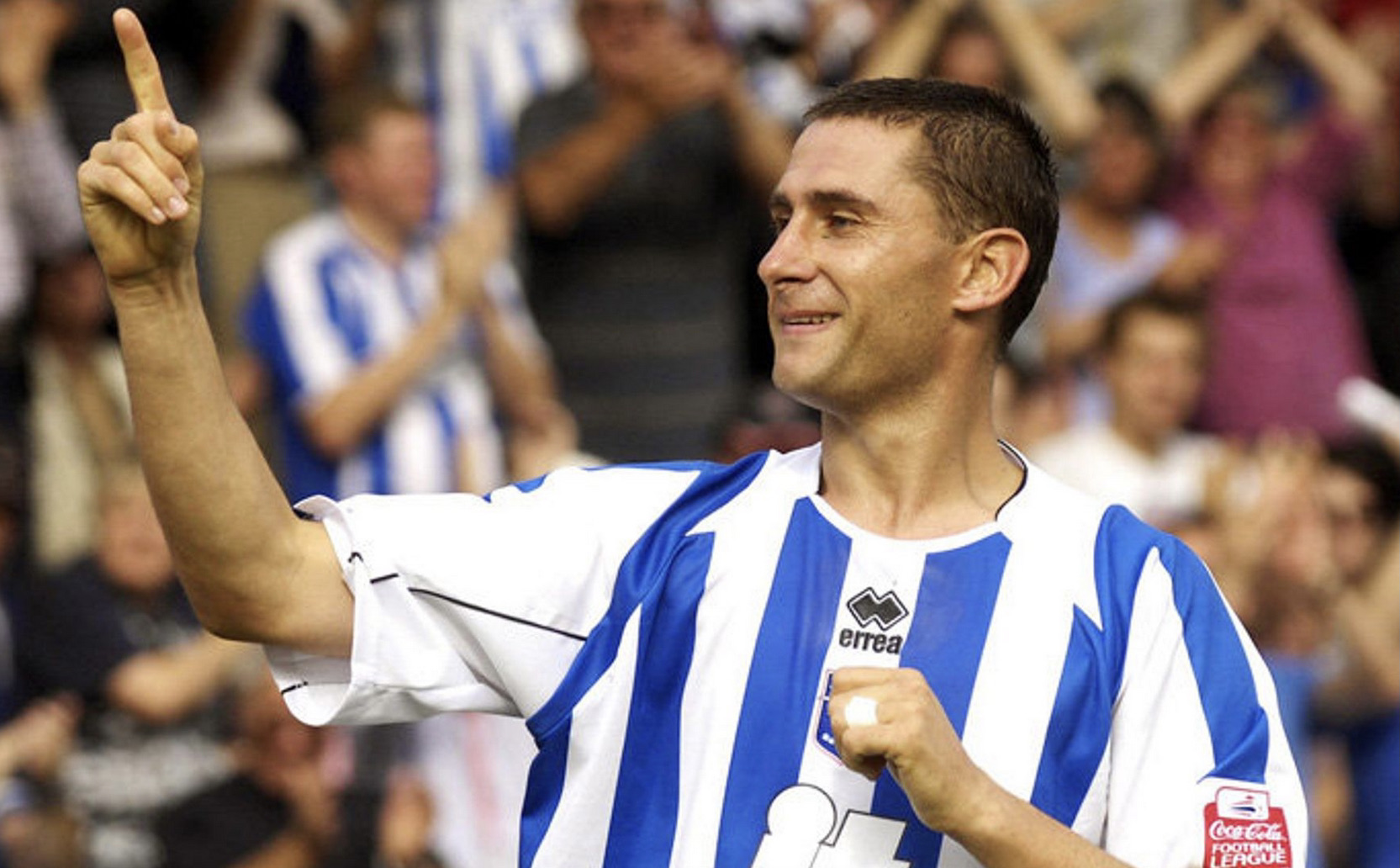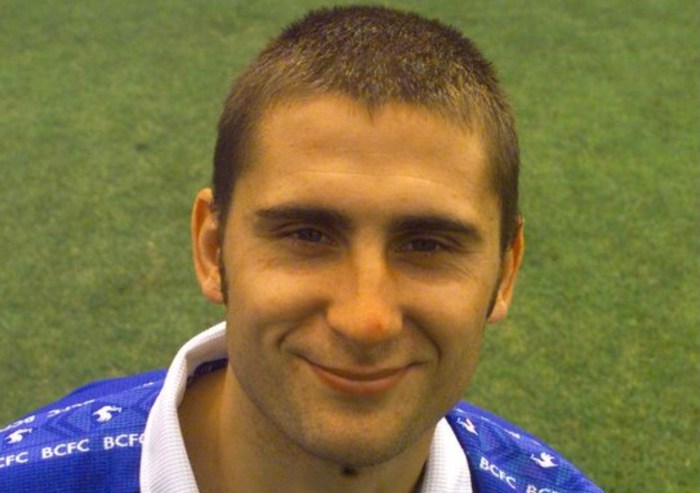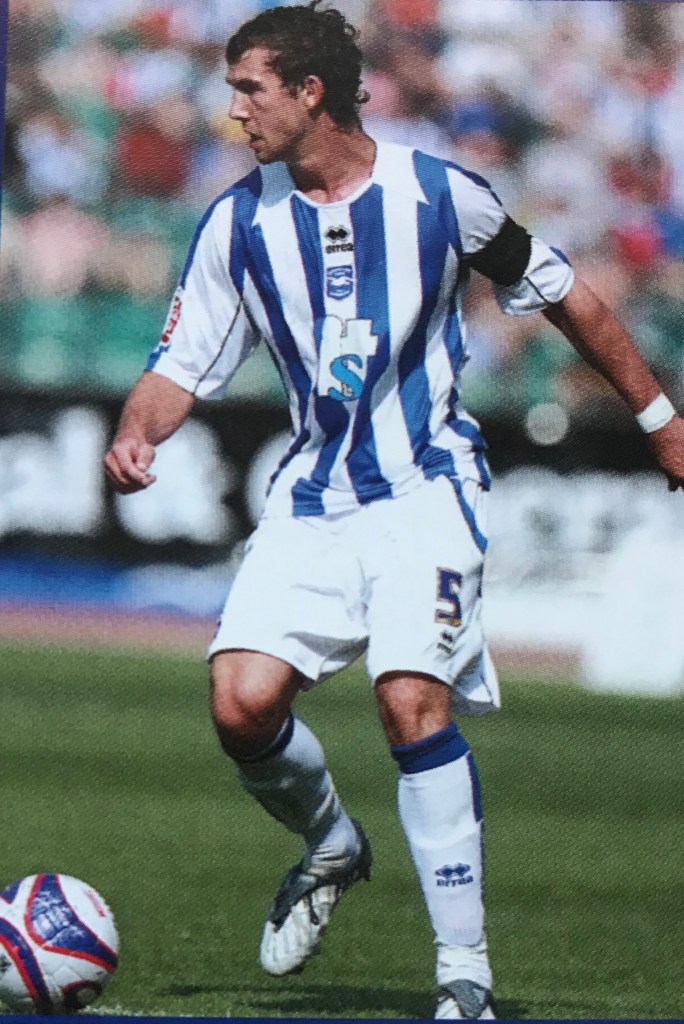
Coach Dean Wilkins fumed after falling out with Knight 

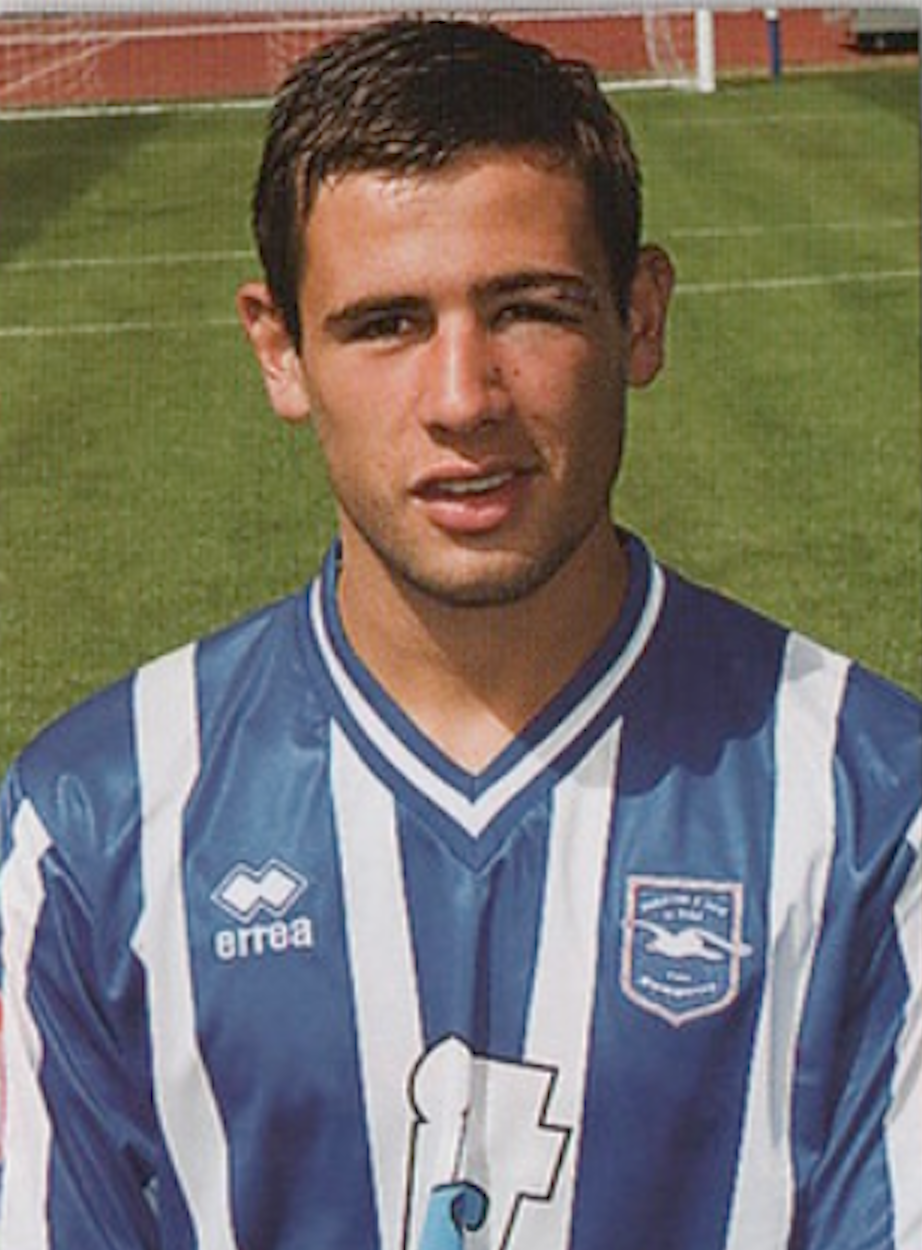
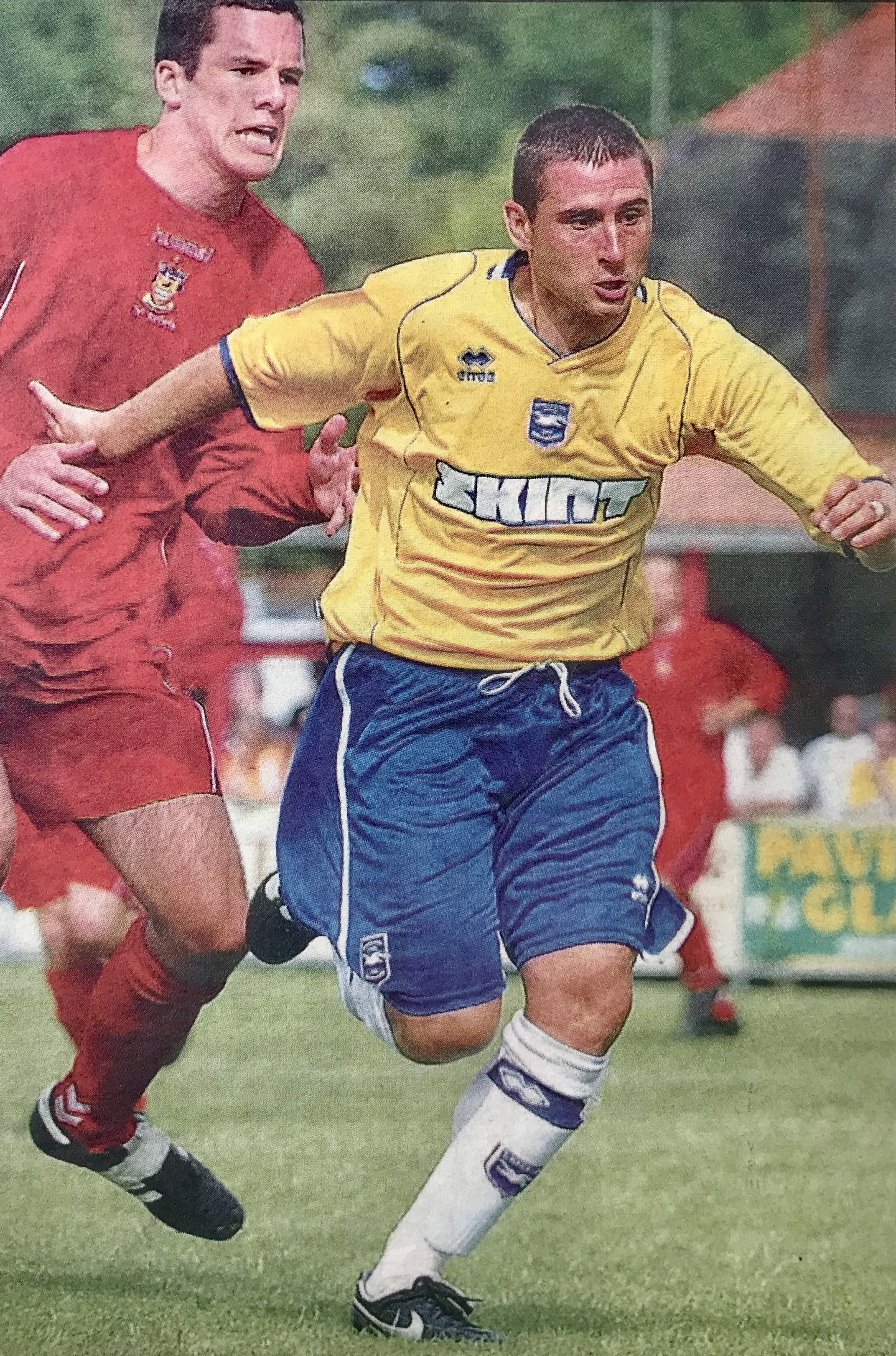
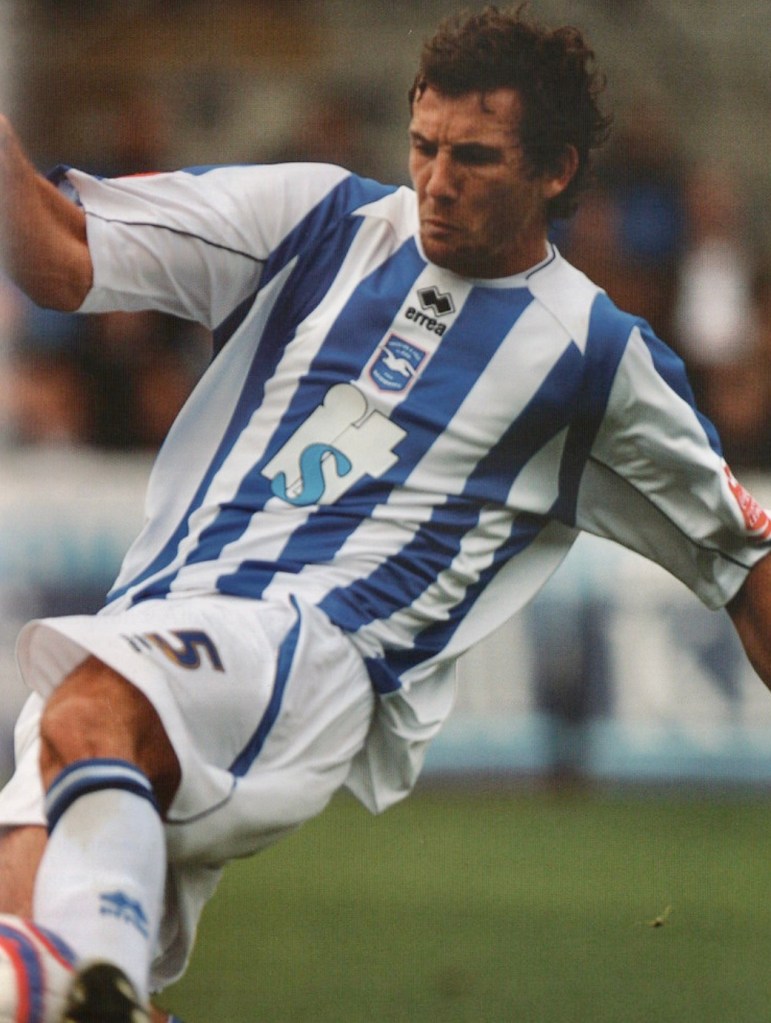
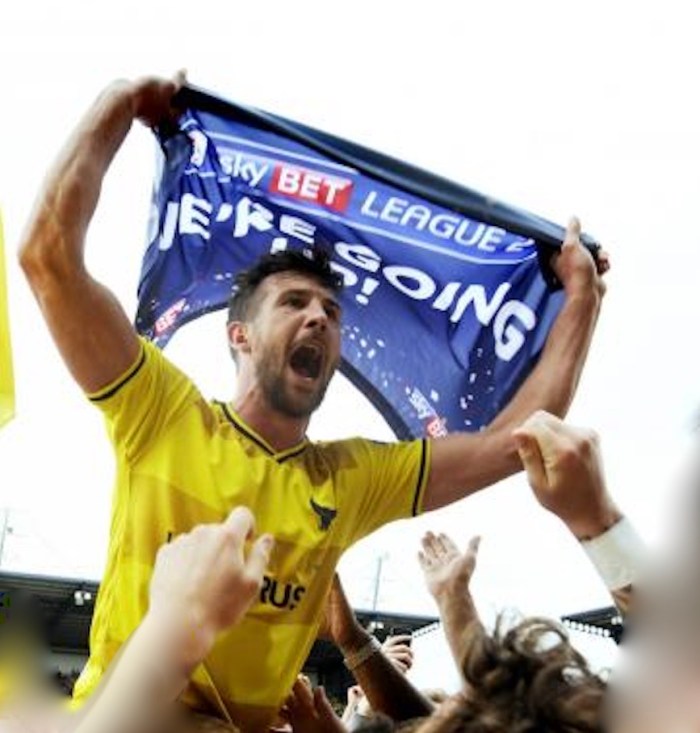
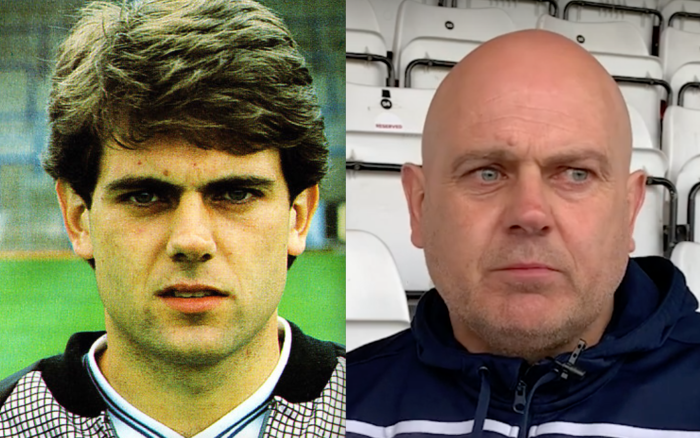
DEAN WILKINS might have lived in the shadow of his more famous elder England international brother Ray but he certainly carved out his own footballing history, much of it with Brighton.

Albion fans of a certain vintage will never forget the sumptuous left-footed free-kick bouffant-haired captain Wilkins scored past Phil Parkes at the Goldstone Ground which edged the Seagulls into the second-tier play-offs in 1991.

Supporters from the mid-noughties era would only recall the balding boss of a mid-table League One outfit at Withdean comprising mainly home-grown players who Wilkins had brought through from his days coaching the youth team.

After Dick Knight somewhat unceremoniously brought back Micky Adams over Wilkins’ head in 2008, he quit the club rather than stay on playing second fiddle and subsequently went west to Southampton where he worked under Alan Pardew and his successor Nigel Adkins as well as taking caretaker charge of the Saints in between the two reigns.

Wilkins’ initial association with the Seagulls went back to 1983, when Jimmy Melia brought him to the south coast from Queens Park Rangers shortly after Albion’s FA Cup final appearances at Wembley.

Melia’s successor Chris Cattlin only gave him two starts back then and although he pondered a move to Leyton Orient, where he’d had 10 matches on loan, he opted to accept to try his luck in Holland when his Dutch Albion teammate Hans Kraay set him up with a move to PEC Zwolle. Playing against the likes of Johann Cruyff, Marco Van Basten and Ruud Gullit proved to be quite the footballing education for Wilkins.
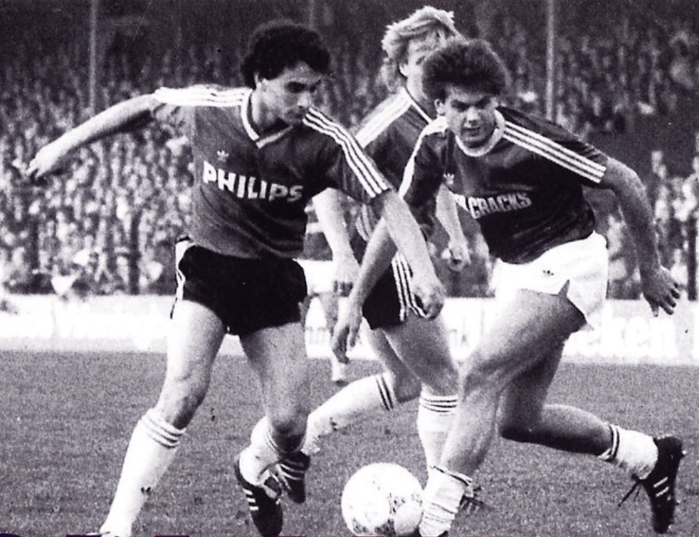
Wilkins in the thick of it in Dutch football for PEC Zwolle

After two years in the Netherlands, 25-year-old Wilkins rejoined the relegated Seagulls in the summer of 1987 as the club prepared for life back in the old Third Division under Barry Lloyd.

Relegation had led to the sale for more than £400,000 of star assets Danny Wilson, Terry Connor and Eric Young but more modest funds were allocated to manager Lloyd for replacements: £10,000 for Wilkins, £50,000 for Doug Rougvie, who signed from Chelsea and was appointed captain, Garry Nelson, a £72,500 buy from Plymouth and Kevin Bremner, who cost £65,000 from Reading. Midfield enforcer Mike Trusson was a free transfer.
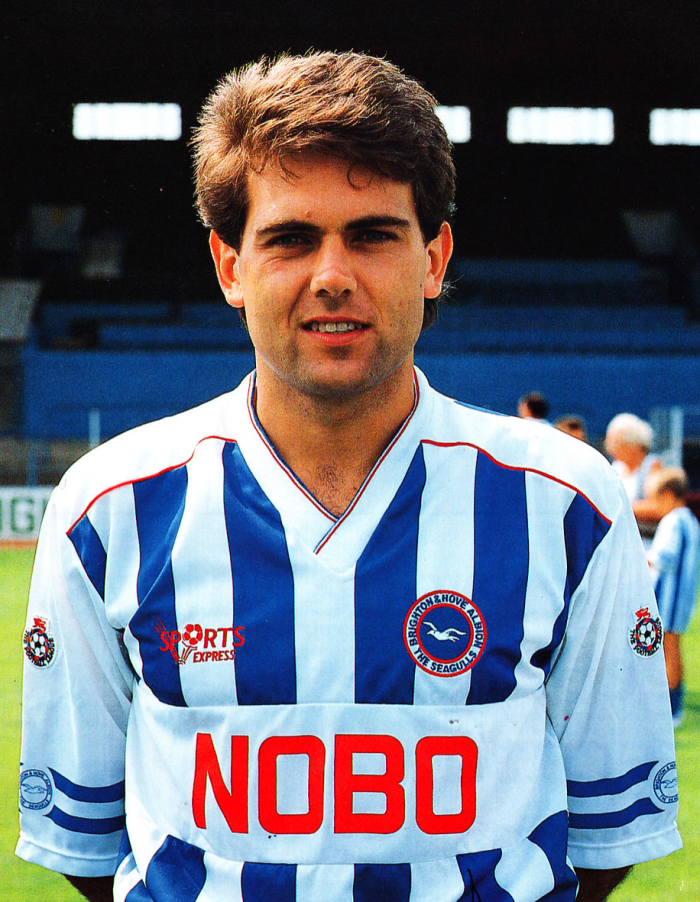
The refreshed squad ended up earning a swift return to the second tier courtesy of a memorable last day 2-1 win over Bristol Rovers at the Goldstone.

At the higher level, Wilkins had the third highest appearances (40 + two as sub) as Albion finished just below halfway in the table. The following season Wilkins was appointed captain and was ever-present as Albion made it to the divisional play-off final against Notts County at Wembley, having made it to the semi-final v Millwall courtesy of the aforementioned spectacular free kick v Ipswich.

Wilkins scored again at Wembley but it turned out only to be a consolation as the Seagulls succumbed 3-1 to Neil Warnock’s side.

As the 1992-93 season got underway, Wilkins, having just turned 30, was the first matchday programme profile candidate for the opening home game against Bolton Wanderers (a 2-1 win) when he revealed the play-off final defeat had been “the biggest disappointment of my career”.

The 1993-94 season was a write-off from October onwards when he damaged the medial ligaments in both his knees after catching both sets of studs in the soft ground at home against Exeter City.

Although injury plagued much of the time during Liam Brady’s reign as manager, the Irishman acknowledged his ability saying: “He is a very fine footballer and a tremendous passer of the ball and he possesses a great shot.”

Ahead of the start of the 1995-96 season, Wilkins was granted a testimonial game against his former club QPR, managed at the time by big brother Ray. But at the end of the season, when the Seagulls were relegated to the basement division, he was one of six players given a free transfer.

Born in Hillingdon on 12 July 1962, Wilkins couldn’t have wished for a more football-oriented family. Dad George had played for Brentford, Leeds, Nottingham Forest and Hearts and appeared at Wembley in the first wartime FA Cup final. While Ray was the brother who stole the limelight, Graham and Steve also started out at Chelsea.

In spite of those older brothers who also made it as professionals, Wilkins attributed his development at QPR, who he joined straight from school as an apprentice in 1978, to youth coach John Collins (who older fans will remember was Brighton’s first team coach under Mike Bailey).

He made seven first team appearances for Rangers, his debut being as a substitute for Glenn Roeder in a 0-0 draw with Grimsby Town on 1 November 1980. After joining the Albion in August 1983, he had to wait until 10 December that year to make his debut, in a 0-0 draw at Middlesbrough, in place of the absent Tony Grealish. He started at home to Newcastle a week later (a 1-0 defeat), this time taking the midfield spot of injured Jimmy Case.

Perhaps the writing was on the wall when Cattlin secured the services of Wilson from Nottingham Forest, initially on loan, and although Wilkins had a third first team outing in a 2-0 FA Cup third round win at home to Swansea City, boss Cattlin didn’t pick him again. Instead, he joined Orient on loan in March 1984.

A long career in coaching began when Wilkins was brought back to the Albion in 1998 by another ex-skipper, Brian Horton, who had taken over as manager. With Martin Hinshelwood as director of a new youth set-up, Wilkins was appointed the youth coach – a position he held for the following eight years.

Return to the Albion as youth coach

His charges won 4-1 against Cambridge United in his first match, with goals from Duncan McArthur, Danny Marney and Scott Ramsay (two).

That backroom role continued as managers came and went over the following years during which a growing number of youth team products made it through to the first team: people like Dan Harding and Adam Virgo and later Adam Hinshelwood, Joel Lynch, Dean Hammond and Adam El-Abd.

At the start of the 2006-07 season, with Albion back in the third tier after punching above their weight in the Championship for two seasons, Wilkins was rewarded for his achievements with the youth team with promotion to first team coach under Mark McGhee.

By then, more of the youngsters he’d helped to develop were in or getting close to the first team, for example Dean Cox, Jake Robinson, Joe Gatting and Chris McPhee.

After an indifferent start to the season – three wins, three defeats and a draw – Knight decided to axe McGhee and loyal lieutenant Bob Booker and to hand the reins to Wilkins with Dean White as his deputy. Wilkins later brought in his old teammate Ian Chapman as first team coach.
Into the manager’s chair

Tommy Elphick, Tommy Fraser and Sam Rents were other former youth team players who stepped up to the first team. But, over time, it became apparent Knight and Wilkins were not on the same page: the young manager didn’t agree with the chairman that more experienced players were needed rather than relying too much on the youth graduates.

Indeed, in his autobiography Mad Man: From the Gutter to the Stars (Vision Sports Publishing, 2013), Knight said Wilkins hadn’t bothered to travel with him to watch Glenn Murray or Steve Thomson, who were added to the squad, and he was taking the side of certain players in contract negotiations with the chairman.
“In my opinion, his man-management skills were lacking, which was why I made the decision to remove him from the manager’s job,” he said. It didn’t help Wilkins’ cause when midfielder Paul Reid went public to criticise his man-management too.

Knight felt although Wilkins hadn’t sufficiently nailed the no.1 job, he could still be effective as a coach, working under Micky Adams. The pair had previously got on well, with Adams saying in his autobiography, My Life in Football (Biteback Publishing, 2017) how Wilkins had been “one of my best mates”.

But Adams said: “He thought I had stitched him up. I told him that I wanted him to stay. We talked it through and, at the end of the meeting, we seemed to have agreed on the way forward.

“I thought I’d reassured him enough for him to believe he should stay on. But he declined the invitation. He obviously wasn’t happy and attacked me verbally.

“I did have to remind him about the hypocrisy of a member of the Wilkins family having a dig at me, particularly when his older brother had taken my first job at Fulham.

“We don’t speak now which is a regret because he was a good mate and one of the few people I felt I could talk to and confide in.”

Youth coach

Knight knew his decision to sack the manager would not be popular with fans who only remembered the good times, but he pointed out they weren’t aware of the poor relationship he had with some first team players.

Knight described in his book how a torrent of “colourful language” poured out from Wilkins when he was called in and informed of the decision in a meeting with the chairman and director Martin Perry.

“He didn’t take it at all well, although I suppose he felt he was fully justified,” wrote Knight. “He was fuming after what was obviously a big blow to his pride.”

Reporter Andy Naylor perhaps summed up the situation best in The Argus. “The sadness of Wilkins’ departure was that Albion lost not a manager, but a gifted coach,” he said. “Wilkins was not cut out for management.”

Saints coach

One year on, shortly after Alan Pardew took over as manager at League One Southampton, he appointed Wilkins as his assistant. They were joined by Wally Downes (Steve Coppell’s former assistant at Reading) as first team coach and Stuart Murdoch as goalkeeping coach.

Saints were rebuilding having been relegated from the Championship the previous season and began the campaign with a 10-point penalty, having gone into administration. The club had been on the brink of going out of business until Swiss businessman Markus Liebherr took them over.

A seventh place finish (seven points off the play-offs because of the deduction) meant another season in League One and the following campaign had only just got under way when Pardew, Downes and Murdoch were sacked. Wilkins was put in caretaker charge for two matches and then retained when Nigel Adkins, assisted by ex-Seagull Andy Crosby, was appointed manager.

It was the beginning of an association that also saw the trio work together at Reading (2013-14) and Sheffield United (2015-16).

Adkins, Crosby and Wilkins were in tandem as the Saints gained back-to-back promotions, going from League One runners up to Gus Poyet’s Brighton in 2011, straight through the Championship to the Premier League. But they only had half a season at the elite level before the axe fell and Mauricio Pochettino took over.

When the trio were reunited at Reading, Wilkins, by then 50, gave an exclusive interview to the local Reading Chronicle, in which he said: “This pre-season has given me time to learn about the characters of the players we’ve got at Reading and find out what makes them tick.

At Reading with Crosby and Adkins

“It’s my job then to make sure every player maximises his potential. That’s what I see my role as, to bring out the very best of them from now on and make them strive to attain new levels of performance.

“I will always keep working toward that goal. If we can do that with every individual and get maximum performances out of them, I believe we will be in for a great season.

“We’re back together now and it’s going fantastically well. I have loved every minute of it. I’m used to working with Nigel and Andy and we are carrying out similar work to what we’ve done in the past.”

The Royals finished seventh, a point behind Brighton, who qualified for the play-offs, and the trio were dismissed five months into the following season immediately following a 6-1 thrashing away to Birmingham City.

Six months later the trio were back in work, this time at League One Sheffield United, but come the end of the 2015-16 season, after the Blades had finished in their lowest league position since 1983, they were shown the door.

Between January 2018 and July 2019, Wilkins worked for the Premier League assessing and reporting on the accuracy, consistency, management and decision-making of match officials.

In the summer 0f 2019, he was appointed Head of Coaching at Crystal Palace’s academy, a job he held for 15 months.

A return to involvement with first team football was presented by his former Albion player Alex Revell, who’d been appointed manager of League Two Stevenage Borough. Glad to support and mentor Revell in his first managerial post, Wilkins spent a year as assistant manager at the Lamex Stadium.

Tall Tunnicliffe’s tilt at the top fell short and he quit at 24

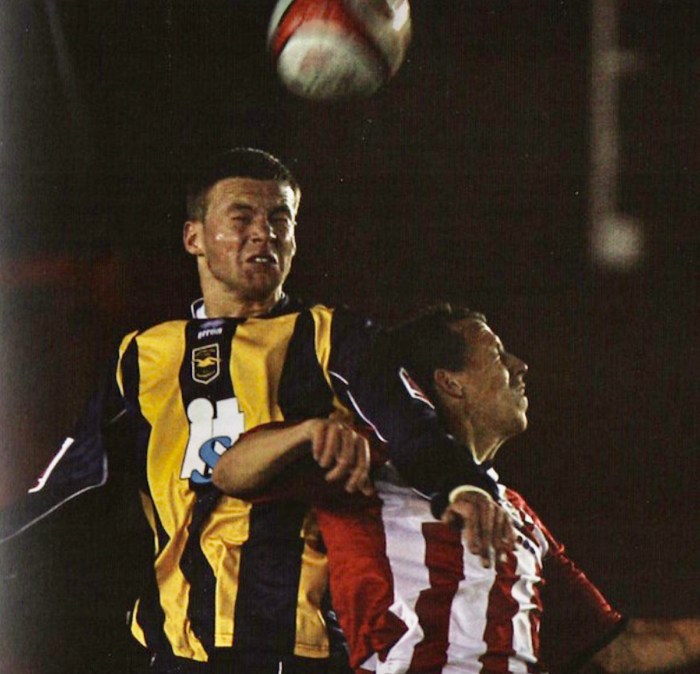
ONE-TIME Liverpool triallist James Tunnicliffe quit playing football at 24.

When he was only 16, a £750,000 move from Stockport County to the ‘mighty’ Reds was on the cards.

But Liverpool’s then boss, Rafa Benitez, gave the young hopeful the thumbs down and his subsequent short playing career petered out in the lower leagues.

Tunnicliffe – a Russell Slade signing for Brighton in June 2009 – was at the heart of League One Albion’s defence for Gus Poyet’s first game as Seagulls manager.

But there was plenty of competition in that area of the team and, before long, the 6ft 4in centre half struggled to hold down a place. Initially Adam Virgo, Tommy Elphick, Jake Wright and Adam El-Abd were all competing in that position and, although Wright moved on, Gordon Greer – instantly appointed captain – and homegrown Lewis Dunk steamed ahead of him in the pecking order.

Slade had signed him on a three-year deal, declaring at the time: “He’s 20 and one or two other clubs were looking at the situation higher up, Championship clubs.

“We’ve kept everything quiet and gone about the business in the right manner and we’ve got our man.”

Slade told the Argus: “He has got huge potential. He’s a decent athlete for his size, handles the ball very well and hopefully will be a threat for us in the box. There’s lots more to come from him. He’s a really good, positive signing.”

Midfielder Gary Dicker, a former Stockport teammate who made the same move, added: “He’s a good tall, strong athlete and a good player.”

The player himself admitted it was a good word put in by another former Stockport teammate, Jim McNulty, that influenced his move.

“We’re good friends and used to live a couple of doors apart in Manchester and travelled into training together at Stockport,” he told the matchday programme. “He absolutely loves it here and that helped sway my decision to come.”

Albion watcher Andy Naylor had a mainly favourable first impression although he was less sure about the tactic of using the central defender to launch long throws. In an Argus comment piece, Naylor wrote: “He looks composed, comfortable in possession and has good pace for one so tall. The jury is out, though, on just how much Albion should try to exploit Tunnicliffe’s long throw.

“It has more of a loop than Rory Delap’s torpedo-like delivery and has caused opposing defences few problems so far. Albion would arguably be better served exploiting Tunnicliffe’s 6ft 4ins frame in the goalmouth for set pieces.

“His throw remains a potentially useful weapon, for example during the closing stages of the game if the Seagulls are chasing an equaliser, but it should perhaps be used more sparingly.”

Somewhat ironically, while not starting the first four games of the season, he made his first league start at home to his old club Stockport – when Albion were on the wrong end of a 4-2 scoreline.

Tunnicliffe scored the first goal of his career in a 1-1 draw at Bristol Rovers in September 2009 after captain Adam Virgo had been sent off. He said: “I am doing everything I can to keep my shirt. I don’t want to lose that and hopefully I can contribute a few more goals this season as well.”

His performance alongside Elphick drew the admiration of Richie Morris, who wrote in the matchday programme: “Tunnicliffe not only bulleted his first goal for the club with a well taken header, but diverted a Carl Rogan shot over and cleared what looked like a late winner off the line.”

Tunnicliffe scored again – this time just a consolation goal – in a 4-1 defeat at Norwich that was Poyet’s fourth game in charge. But he was cast aside after playing in the FA Cup against Torquay at the turn of the new year and, before long, was sent out on loan to MK Dons.

Any hoped-for restoration to the first team on his return was dashed when at the start of the following season he was shipped out on a season-long loan to Bristol Rovers. Eventually, with a year still left on his contract, he agreed an early end to his Seagulls deal and joined Wycombe Wanderers in the summer of 2011.

Despite it all, he told seagulls.co.uk: “It’s been frustrating for me over the last 18 months but I loved being here and I haven’t got a bad word to say about the club. I made a lot of good friends and I’m sure the team will have a very good season in the Championship.

“I’m a bit disappointed with how it worked out but I’m now focusing on working hard over the summer to try and secure first-team football with Wycombe.

“I’ve watched Wycombe a lot and I know plenty about the manager, Gary Waddock, who looks to play good football, so it’s an attractive club for me to move to.

“I’ve done a lot of thinking about what is going to be best for me and Wycombe is a good club, recently promoted to League One and on the up, so it’s hopefully going to be a good move for me.

“I’m now excited about a new challenge and I feel like I’ve got a lot of things to prove to myself and the other clubs. I want to show that I am a good player.”

Waddock pointed out: “James is a talented young centre-back with experience of playing at this level.

“He’s a footballing defender who can play out from the back. A lot of clubs were interested in him.”

And Tunnicliffe told the Bucks Free Press: “I’m more than just a defender who kicks it, I like to pass it at the right time. I’m looking forward to being in the team next year and doing well in League One.”

Born in Denton, Manchester, on 17 January 1989, Tunnicliffe went to a particularly sporty school, Audenshaw High in Manchester, and, as well as playing a lot of football, he was also good at golf and cricket as well as being a decent 100-metres hurdler.

It was at Stockport’s school of excellence that he honed his football skills: his grandad, John Bishop, was the club’s kitman at the time, and later a masseuse.

In October 2005 the young Tunnicliffe was sent on a two-week trial to European Champions Liverpool and the pound signs were already beginning to form in the eyes of his parent club: a £750,000 deal was said to have been agreed for the youngster.

Unfortunately, Benitez was unable to watch the 16-year-old because he was away with the first team for a Champions League match with Anderlecht.

Tunnicliffe was handed an extra week with the Reds to give Benitez the chance to cast his eye over the youngster, but he but did not do enough to convince the Spaniard and the proposed deal collapsed.

He returned to the League Two Hatters where manager Chris Turner reckoned the youngster’s time at Anfield had helped to develop their promising player.

“It has been a fantastic experience for him and I’m sure it’ll benefit both the player and Stockport County,” he said. “He trains with our first team at the moment and doesn’t look out of place at the age of 16 so you can imagine how highly we regard him.”

As predicted by Turner, Tunnicliffe made his first team debut as a substitute in a 2-0 defeat at Notts County and he went on to make 50 appearances for them. He also had a brief loan spell with Northwich Victoria in 2007 and, perhaps bitten by his Liverpool experience, turned down the offer of a move to Southampton because he felt he would be better served staying put.

If the move from Brighton to Wycombe was an opportunity for a fresh start, he couldn’t have wished for a better start, scoring on his debut in a 1-1 draw against Scunthorpe.

But after beginning as a regular, he was dropped after a 3-1 Johnstone’s Paint Trophy defeat at home to Cheltenham Town in October and only made a handful of appearances after that.

His final Wanderers game was in a 6-0 tonking by Huddersfield at Adams Park in January 2012, after which he was dropped in favour of youngster Anthony Stewart.

The following month he joined League Two side Crewe Alexandra on a 30-day loan, citing homesickness as a reason for wanting away from Wycombe.

Injury curtailed his spell at Gresty Road and in the summer of 2012 he rejoined Stockport, who by then were playing in the Conference National. The following year he made eleven appearances on loan for Stalybridge Celtic before returning to County.

He took the decision to retire from football aged just 24 and, on his LinkedIn profile, says: “The experiences I endured in my eight-year professional career, filled with some highs and many lows, were a catalyst that inspired me to step into the football intermediary world.”

Indeed, he cropped up as a ‘representative’ for former teammate Glenn Murray when he was involved in negotiations with Brighton over a new contract.

Tunnicliffe says of himself: “I am a people’s person and my current role enables me to advise, support, empower and challenge clients, whilst providing opportunities where they can excel and get the best out of their abilities.

“In addition, the role has provided a platform to grow a worldwide network and converse with people from various organisations and backgrounds.”

He says that in September 2022 he enrolled onto the Masters In Sports Directorship programme at Manchester Metropolitan University.

“This course has presented me with an opportunity to enhance my self-awareness and existing knowledge, whilst developing areas of deficiency.

“I am embracing this academic challenge and look forward to learning more about the commercial and business functions of a sporting organisation over the remaining duration of the course.”

The moment Lee Hendrie felt ten feet tall at Brighton

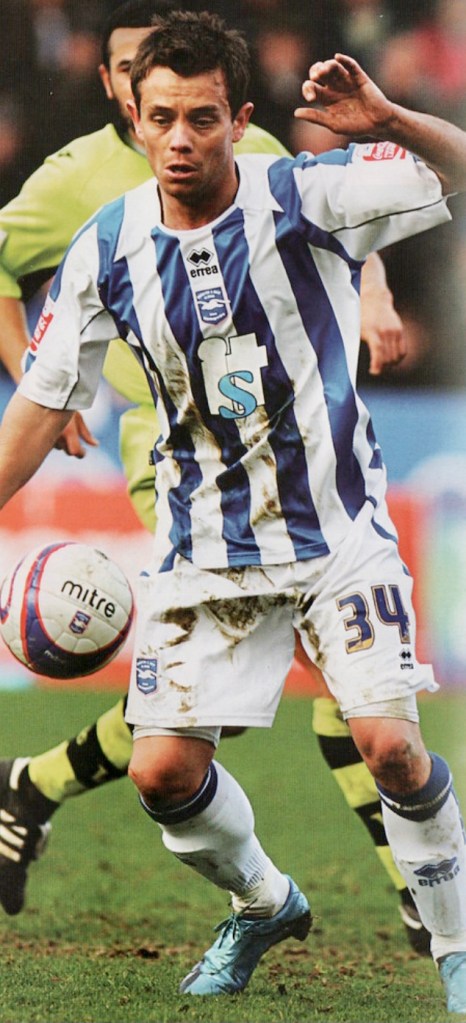
SKY SPORTS pundit Lee Hendrie has reached heights and plumbed depths in a life that saw him stop off at third-tier Brighton in 2010 after 17 years with Aston Villa.

Hendrie was something of a forgotten man of football when Gus Poyet snapped him up for the Seagulls on loan from Derby County in March 2010.

Hendrie featured in eight Albion games in the last six weeks of the season: four wins, two draws and two defeats.

Turning out in League One was quite a fall for a player Glenn Hoddle selected for England, but he told the matchday programme: “The main thing is to play football. If you’re not playing then you tend to get forgotten but hopefully I can get some game time between now and the end of the season.”

And he later said to football.co.uk: “I went to Brighton to get my face back out there. Gus Poyet was brilliant. He got the lads together in a circle and said, ‘******* hell, we’ve got Lee Hendrie here’. Let me tell you, after feeling so unwanted I suddenly felt 10 feet tall.”
Hendrie made his debut as a 75th minute substitute for Sebastien Carole in a 3-0 home win over Tranmere Rovers, and he told the matchday programme: “We could have had more than three goals and I should have scored.”

But Hendrie was bubbling after his involvement and said: “Listening to the gaffer in the changing room, you can see why the lads are playing with a lot of confidence and have improved so much.

“I’ve played under a few managers, but not many, can I say, are like Gus, who is so enthusiastic and tells the players to go and enjoy themselves. There is nothing a player wants more than a gaffer telling you to enjoy your game.”

Of Albion’s midfield triumvirate of Gary Dicker, Alan Navarro and Andrew Crofts, it tended to be Dicker who was edged out by Hendrie’s arrival.

However it was in Crofts’ place that the loanee got his first start, in a 2-0 Easter Monday defeat at Hartlepool in which former Albion loanee ‘keeper Scott Flinders prevented the visitors from leaving with a point. Hendrie was subbed off on 58 minutes when Kazenga LuaLua took over.

Hendrie went on as a sub for Dicker in the following home game against Carlisle United and it was his cross that set up what looked like a late equaliser by Tommy Elphick, only for Gary Madine to nick all three points with a second for United two minutes from the end.

Hendrie started in place of Dicker away to Gillingham but gave way to the Irishman in the 79th minute and the game ended 1-1. Hendrie started once again in the 1-0 win away to Southend, but Dicker replaced him on 65 minutes.

Hendrie’s third successive start in place of Dicker came at home to Bristol Rovers, when Albion won 2-1, but once again he didn’t last the 90 minutes as Dicker took over on 74 minutes.

In the penultimate game of the season, away to MK Dons, the game finished goalless although Alex Rae and Diego Arismendi were red carded for brawling. Hendrie started and Dicker replaced him on 58 minutes.

The on-loan midfielder’s only full 90-minute appearance came in the last game of the season when Yeovil were beaten 1-0 at the Withdean Stadium; Elliott Bennett scoring the only goal of the game a minute before half-time.

The chances of a permanent deal for Hendrie looked unlikely with Poyet admitting: “We were very pleased with him and he was pleased to be here. We will wait to see if, when we start putting the squad together, there is a possibility of it happening. It’s not an easy one, because of the wages.”

Born in Solihull on 18 May 1977, football was in Hendrie’s blood: Scottish dad Paul had played for Villa’s arch rivals Birmingham City and he was playing professionally for Portland Timbers at the time his son was born. He later played for Bristol Rovers, Halifax Town and Stockport County.

For someone who became Villa through and through, Hendrie admitted to the Birmingham Mail that he had actually been at city rivals Birmingham’s school of excellence before ‘Big’ Ron Atkinson snapped him up as a teenager.

As well as his dad having played for them, his nan was a City season ticket holder and his uncle also supported them. “Villa didn’t come and scout me at the time and Blues were the first club that did. It was an opportunity for me to get myself into the pro ranks and see what it was all about. Dad said it would be good to go and have a feel for it, which I did.”

But ever since he’d scored two goals in a schools’ cup final victory for his school, Washwood Heath, against Hodge Heath at Villa Park, he had dreamed of playing for Villa.

The dream came closer when Hendrie signed on the dotted line as a 14-year-old at Villa’s Bodymoor Heath training ground, although he remembers his dad tempering his excitement.

“When we came out after I’d signed, I’d got given a load of training clobber and I thought this was it, I’d made it,” he said. “My dad said: ‘Take a step back, you, you ain’t got anywhere yet, this is the start of a long road. Just because you’ve got all the kit it doesn’t mean you’re a professional footballer and an Aston Villa player – relax yourself’.”

Hendrie and his best mate Darren Byfield, who had been strike partners in Erdington Star and Erdington & Saltley district team as kids, developed a reputation as a dynamic duo on and off the pitch, and soon became Atkinson’s ‘teacher’s pets’.

Atkinson converted Hendrie from a centre forward to left winger (even predicting he’s one day play for England in that position) and the duo continued to do well for the Villa youth team.

As it turned out, it was Atkinson’s successor, Brian Little, who ended up giving Hendrie his first team debut – although it was memorable for all the wrong reasons!

It came two days before Christmas in 1995 when he went on as a 33rd minute substitute for Mark Draper away to Queens Park Rangers. He collected a yellow card for kicking the ball away and was red carded in stoppage time; a second booking for an innocuous foul on Rufus Brevett. Into the bargain, Villa lost 1-0.

A devastated Hendrie revealed it was the opposition player-manager, Ray Wilkins, rather than Little, who put a comforting arm round him. “Someone who I’ve seen play football, a legend of the game, to come and console me and say: ‘This is football, welcome to football, these are the ups and downs you’re going to have in your career’.

“He said there’s lot of people who are talking highly of you, you’ve got a big future in the game, kid. As he got up, he tapped my shoulder and said: ‘Keep that up’.”

Few subsequent chances were given to him under Little but, when John Gregory took over, he became more established.

He would go on to make a total of 308 appearances for Villa (243 league and cup starts), scoring 32 goals, with his best performances coming in Gregory’s tenure. He wasn’t quite the same player under Graham Taylor or David O’Leary.

It was on November 18 1998 that he won his one and only England cap, sent on by Glenn Hoddle as a 77th minute substitute for Villa team-mate Paul Merson in a 2-0 win over the Czech Republic at Wembley. Two other Villa teammates, Dion Dublin and Gareth Southgate, were also part of Hoddle’s squad.

Unfortunately for Hendrie, Hoddle was sacked two months later and no subsequent England bosses called on him. “It’s a regret that I didn’t go on and make more of my England career,” he said. “It’s great that I’ve got a cap and it’s something you can’t take away from me, but I hate being classed as a one-cap wonder.”

Hendrie’s days at Villa came to an end in August 2006, his last involvement being from the bench in Martin O’Neill’s first match in charge, a 1-1 Premier League draw at Arsenal on the opening day of the 2006-07 campaign.

While Hendrie, by then 30, was excited about playing for O’Neill, the new boss had other plans and told him he was not part of them.

Initially he joined Stoke City under Tony Pulis on a season-long loan but Bryan Robson at Sheffield United outbid the Potters for his services on a permanent basis, and he signed a three-year deal at Bramall Lane at the start of the 2007-08 season.

Unfortunately, when Robson swiftly parted company with the Blades, Hendrie didn’t see eye to eye with his successor, Kevin Blackwell, who accused the player of being a money-grabber.

“Sheffield United was just the worst thing I could have done,” he told the Claret & Blue podcast.

“Kevin Blackwell was one of the worst managers I have ever, ever been under. He put the nail in the coffin for (my career).”

Blackwell sent him on loan to Leicester City, where he played nine games, and he later went to Blackpool too. United moved him on to Derby County but when he struggled for games there, he joined Brighton.

If the spell at Brighton was a temporary relief from his mounting problems, he revealed in a Guardian interview with Donald McRae that 2010 turned out to be one of the worst years of his life, and he attempted suicide on several occasions.

A property empire he had built up amassed insurmountable debts which even saw his mother’s home repossessed. He lost his own house as well, and it sent him into depression. Divorce and bankruptcy made the situation even worse.

“The football was almost over and my head was gone. I’d been trying to sell property, but the housing market crashed,” he said. “I got to the stage where I just wanted to end it all. I’d hit rock bottom.”

The ups and downs of Hendrie’s colourful life have featured in various media interviews.

The rise and fall tale was charted by the sporting.blog and Hendrie’s spoken about his troubles on Sky Sports, where he later became a pundit.

He was in tears on Harry’s Heroes: Euro Having A Laugh discussing his depression struggles with Vinnie Jones. The BBC radio programme You and Yours highlighted his plight in a March 2013 episode.

On the footballing front, a brief spell at Bradford City was followed by a host of short stopovers at Bandung (2011), Daventry Town (2011), Kidderminster Harriers (2011-12), Chasetown (2012), Redditch United (2012) and Tamworth (2012-13) before he retired as a professional.

He then played for Corby Town (2013), Highgate United (2013), Basford United (2013 – 2015), Montpellier (2016-17), Redditch United (2016), Nuneaton Griff (2019) and Highgate United (2019) on a non-professional basis.

As he tried to find a new purpose in life, alongside his media work, Hendrie set up FootieBugs, a football academy for kids aged from three to 12.

Hendrie chats on TV with Dion Dublin, a former Villa teammate

That’s the way Cookie crumbled for Hastings-born defender

WHEN IT comes to home-grown talent, Brighton have had particular success with central defenders.

Lewis Dunk is the prime example, staying with the club from humble beginnings through to Europe. Others had to move on to make the most of their careers.

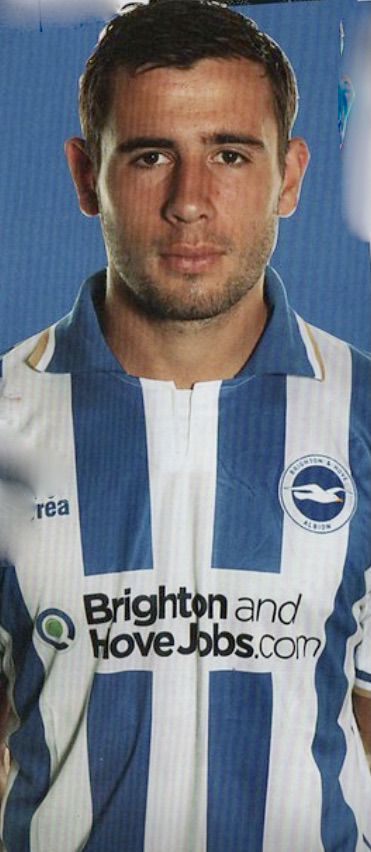
For example, Steve Cook joined the club aged nine and made it through the different age levels into Albion’s first team. But to get regular football, he moved along the coast to Bournemouth.

If moving from Championship Brighton to League One Bournemouth seemed like a backward step in 2012, two promotions later saw him laughing on the other side of his face when the Cherries made it to the Premier League (in 2015) a season before the Seagulls.

Cook spent 10 years with the Cherries, making more than 350 appearances (168 of them in the Premier League), and after the departure of fellow ex-Albion defender Tommy Elphick, he took over as their captain.

Cook first got a taste of the big time in 2008, when he was a second year scholar on £60 a week, aged just 17. He was sent on by Micky Adams as an 85th-minute substitute in the famous League Cup game against Manchester City that League One Albion won on penalties.

Two months later, he once again replaced right-back Andrew Whing, this time in a FA Cup first round replay defeat to Hartlepool United, and picked up a booking into the bargain.

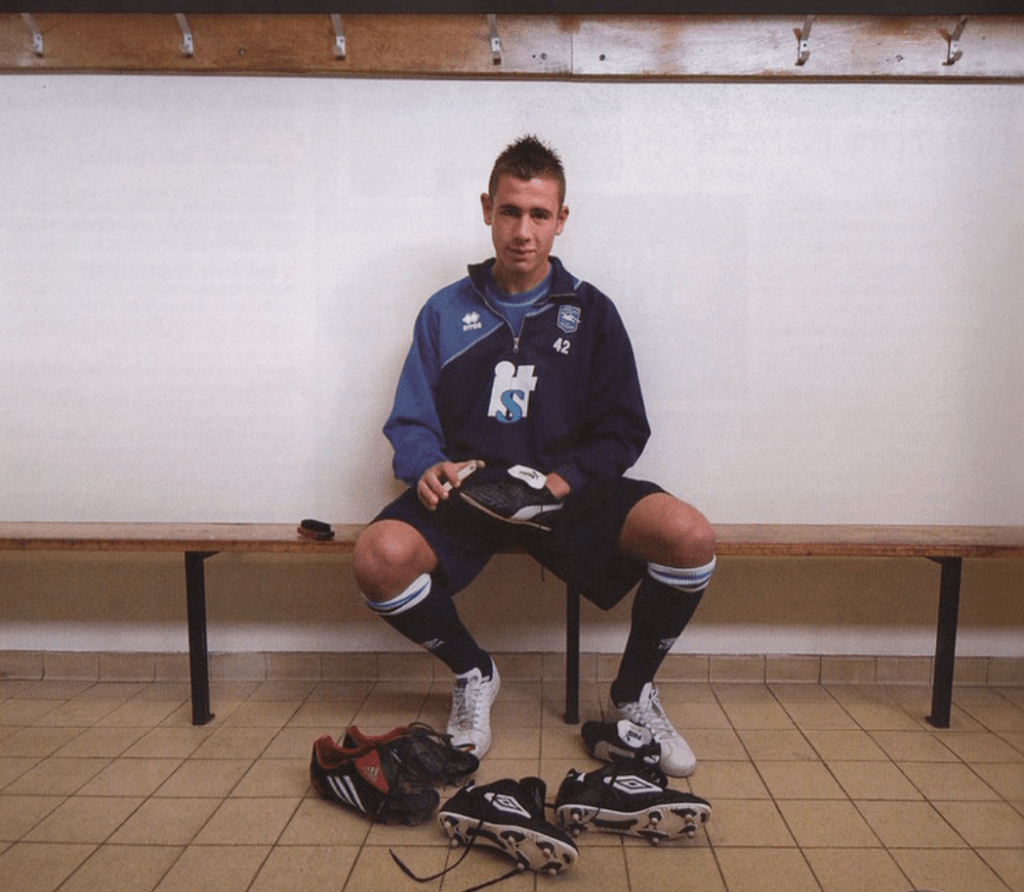
Boot cleaning duties for young Steve Cook

To gain more experience, in December that year, Cook went west to spend six weeks with Conference South Havant & Waterlooville. On his return, he once again had a first team look-in, going on as a 77th-minute sub for Calvin Andrew in the Johnstone’s Paint Trophy southern final defeat at Luton Town that marked the end of the second coming of Adams.

Before the appointment of Russell Slade, Cook went on for the second half as a sub for injury-plagued sub Adam Hinshelwood (who’d been an 18th-minute sub for Elphick) in a 4-0 home defeat against Crewe Alexandra.

Slade marked his arrival by bringing in plenty of old hands in what eventually proved to be a successful skin-of-the-teeth survival battle against relegation. Cook didn’t get another chance in the first team until some time after Gus Poyet had taken charge.

His development continued on loan with the likes of Eastleigh and Eastbourne Borough and in November 2010 he moved away from home to join former league club Mansfield Town on a three-month loan.

“Mansfield play very different to Eastbourne but it’s more like playing for Brighton where they like to keep the ball and play out from the back, which you don’t get in the Conference very often,” he told the matchday programme. “I see it as a great opportunity to prove myself and try to earn another contract at Brighton.”

He added: “Playing Conference football helped me grow up, physically and mentally, so by the time I returned I felt I was ready to challenge for a first team place.”

Cook up against Suarez

After a handful of non-playing appearances on the first team subs bench, when he did get his first ever start, it could not have been a bigger match: Liverpool at home in the third round of the Carling Cup with Luis Suarez, Dirk Kuyt and Craig Bellamy in the opposition forward line.

“It was a real confidence boost knowing the manager had faith putting me into the side for such a big game, but I really enjoyed the experience and got a great deal out of it,” he said.

“While I had a good pre-season, I’ve not played a lot of games since then. It was one in two months before the Liverpool game, but I’d been working hard in training and got my reward.”

Cook only found out 90 minutes before kick-off that he would be taking the place of fellow academy graduate Dunk, with both Elphick and Adam El-Abd out injured.

“It was a real baptism of fire though because for the first 20 minutes Liverpool were brilliant. Suarez, Bellamy, they were all excellent going forward, the pace of them as a team was unbelievable and in that opening spell I think we were in awe of them.”

Cook thought his involvement that night would lead to more chances, but he said: “Later that month we had Ipswich away, Dunky was suspended but instead of playing me, Gus put Romain Vincelot – a midfielder – in alongside Gordon Greer. From that point on, my mind was made up; I knew I had to look elsewhere if I wanted to kick on in my career.”

That autumn, Cook initially joined Bournemouth on loan, featuring in eight games, but he was recalled by the Seagulls when a shortage of defenders meant he was needed for a crucial New Year game at home to table-topping Southampton.

Having lost four games on the bounce, the odds were stacked against a positive result, but Albion remarkably won the game 3-0 (two cracking goals from Matt Sparrow and another from Jake Forster-Caskey).

Nevertheless, within 24 hours of the game ending, Cook finally took the tough decision to leave the Albion permanently. The fee was a reported £150,000.

He told the matchday programme: “I have loved my time at Brighton but this is a chance to play regular football and I can’t turn that down. It was nice to go out on such a high – not many players get that chance.”

Cook reckoned he might have got the odd game or two if he’d stayed at Brighton but he didn’t rate his chances of becoming a regular when everyone was fit. “I could play close to 30 games for Bournemouth and that is massive for a young footballer,” he said.

In a later interview, he said: “It was always going to be a tough decision to leave the Albion as I had been at the club since the age of nine.

“I had a decision to make: do I stay and fight for my place, despite being a fair way down the pecking order, or do I leave and try to continue my career elsewhere?

“It wasn’t easy because I was leaving a club on the rise; the Amex is one of the best stadiums in the country, the team was establishing itself in the Championship and there was a new training ground on the way.

“But having been at Bournemouth on loan, I could also see a hugely ambitious club and a talented squad which I believed was going places.

“So, I decided to leave and it’s been the best decision I could ever have made. I’ve moved away from my parents, so have grown up off the pitch, while on it I’ve been playing regularly and have really enjoyed my football.”

Much of that time he partnered Elphick in the middle of the Cherries defence and it wasn’t long before the pair were emulating the Albion’s achievement of promotion from League One.

“Tommy arrived a year after me but of course I told him about the club, the town and knew it would be a good move for him as it was for me,” he said. “We’d obviously played alongside each other before, had known each other a long time, and so we soon built up a good partnership.

“He had those leadership qualities he displayed at Brighton and was soon made captain. We had a terrific three years together and remain good friends off the pitch.”

In a subsequent Albion matchday programme, when he was once again visiting with the Cherries, he said: “Lovely stadiums and training facilities are great, but only if you’re playing in them and I can now look back on nearly 300 appearances for Bournemouth, where I’ve had some fantastic moments, played regularly in the Premier League and really developed my game. It’s a move that couldn’t have gone better.”

Although Cook held his own in the Premier League, he admitted the transition from the Championship was hard. “The gulf with the Championship is huge,” he said. “The intensity and pressure, in particular, are massive and the first six months were a real learning curve.

“Once I’d adapted and dealt with the expectations placed on me, I could relax and start to enjoy myself.”

Born in Hastings on 19 April 1991, Cook joined the Albion as a schoolboy following a six-week trial under the auspices of Martin Hinshelwood, the head of the youth set-up at the time.

“Initially, I was only training Tuesday evenings in the Eastbourne centre of excellence but, when I reached 13, we were training twice a week with a game on the Sunday,” he recalled.

“I remember I had a choice to make: Hastings Town, my local team, or Brighton and obviously I was swayed by the facilities, the coaching and being associated with a professional club.”

After Bournemouth lost their top tier status in 2020, Cook captained the side through to the Championship play-off semi-finals in 2021 where they were beaten by eventual winners Brentford.

There was plenty of emotion when Cook finally left the club in January 2022 with manager Scott Parker saying: “I know too well what someone like Steve Cook has done for this football club and the journey he has been on with the club. He has been paramount and done everything, really. I wish him all the best.”

And in an open letter to the club’s fans, Cook wrote: “I’ve been lucky enough to captain the team in League One, the Championship and Premier League and writing this just fills me with immense pride.

“The time has come for me take the next step in my career but I will never forget the staff that helped me improve as a player and person.

“The players that I shared a dressing room with and, and most importantly, the fans that supported and cheered for all those games.

“The journey that we have had is one that will never be beaten, and the relationship we had was undeniably strong. Thanks for everything.”

Upon signing for Nottingham Forest, Cook declared: “You can see the progress the club is making and I’m excited for the new challenge. 

“I thought it was the perfect time in my career to make this move to hopefully come and contribute and help get this club back to where it wants to be.

“The history of the club speaks for itself and I know how passionate the fans are. I’ve played at the City Ground in the past and it’s always been electric.”

Manager Steve Cooper said: “Steve is a fantastic player and brings a good level of experience, both in the Championship and the level above.

“He’s played in a team that has won a lot of games and I think that that’s important. We want our group to be young and hungry along with players of experience that can drive the team forward and that’s what we’re building.”

Having been part of the Forest side promoted to the Premier League in May 2022, his involvement back in the elite division was restricted to 12 games and he was omitted from Forest’s 25-man Premier League squad for the second half of the 2022-23 season.

In the summer of 2023, he switched to Queens Park Rangers in the Championship, telling the club’s website: “Playing football is the most important thing for me but I also pride myself on being a good character around the group.”

He went on: “My time in the Championship has been quite successful, and that success is something I want to bring here. 

“I don’t want my career to peter out, I still really want to be successful and to contest. I still have aims and targets I want to achieve and I’m hoping that the success I’ve had in my career so far continues so that I can help push QPR forward.” 

It was tough for Gardner to grow in Sami’s barren patch

A GARY GARDNER goal ended a winless Albion run of 12 league matches under Sami Hyypia in the autumn of 2014.

Just 54 seconds of the game against Wigan Athletic on 4 November had passed when the Aston Villa loanee netted for the Albion.

He got on the end of a Sam Baldock cross to give the Albion an early lead which they managed to hold onto for the entire match, in spite of several close shaves as the former Premier League opponents tried to salvage a point.

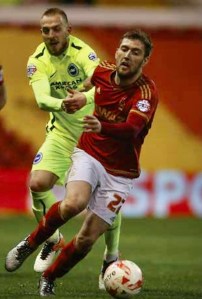
Gardner in action for Forest with Albion’s Jiri Skalak

The game also saw the return of Elliott Bennett, on loan from Norwich City, a first match (as sub for Bennett) for Greg Halford, on loan from Nottingham Forest, and a home debut in goal for teenage stopper Christian Walton.

It wasn’t the first time Gardner had scored at the Amex, though. That had come three years earlier, on his professional debut, when on loan at Coventry City a game which saw Albion beat the Sky Blues 2-1.

Gardner was no stranger to loans away from parent club Villa: he’d already been to Coventry and Sheffield Wednesday, and after Brighton he had temporary moves to Nottingham Forest, Barnsley and Birmingham City.

Indeed by the time Albion took on Forest at the Amex on 7 February 2015, Gardner was on the opposing side as the visitors gave new boss Dougie Freeman a winning start, edging it 3-2.

Gardner’s early development had encountered major setbacks caused by two cruciate knee ligament injuries.

Although he had made his Premier League debut for Villa in the 2011-12 season, the 15 starts and five sub appearances he made for Brighton was the first real regular run of football he’d enjoyed – and he was still only 22 at the time.

He scored again for Albion only four days after that Wigan winner, when the Seagulls were held 1-1 by Blackburn Rovers at the Amex. But with the brief Hyypia reign having come to an end, his appearance in the home Boxing Day 2-2 draw against Reading was his last in a Brighton shirt.

Inigo Calderon salvaged a point with a last-minute equaliser against a Royals side who had gone 2-0 up in 26 minutes courtesy of goals from on loan striker Glenn Murray!

Gardner had been Albion’s tenth new signing of the summer back in August, following in the footsteps of Villa teammate Joe Bennett, who’d joined on a season-long loan a week earlier.

“Gary is a quality midfielder who we have been aware of for some time,” said Hyypia, who explained the club was keen to have more options in that area of the side, especially with Dale Stephens out with a long-term injury.

“More importantly, given the considerable demands of the Championship, I want to be able to rotate the squad,” he said.

“Gary has had a tough couple of seasons due to injury, but he showed during a spell with Sheffield Wednesday last season that he is over those problems. We hope this loan spell will benefit everyone: Gary, us and Aston Villa.

“He is the type of midfielder who is active and mobile, but very importantly he has real quality on the ball – and is also capable of producing things from set pieces.”

Another midfield slot opened up during his time with the Albion when fellow midfielder Andrew Crofts suffered a cruciate injury against Watford.

“I am absolutely gutted for him. Having gone through exactly the same injury as him, with the two cruciate operations, I know exactly how he is feeling,” he said. “I know he will come through this.

“He is a strong guy, a model pro and he’ll be extra determined to get back playing for the club.”

Born in Solihull on 29 June 1992, Gardner was one of six brothers, and in a programme article he said the football-daft family had divided loyalties between Villa and Birmingham.

Just as well, because both Gary and eldest brother Craig ended up with the Blues having started off at Villa. Craig made 80 league and cup appearances for Villa, but later played for Sunderland, West Brom and Birmingham, where he became technical director after his playing days ended.

Gary was on Villa’s books from the age of seven and progressed all through the ranks until Alex McLeish gave him his first team debut as a substitute in a 3-1 win away to Chelsea. He made a total of five starts and 11 appearances off the bench in that 2011-12 season.

But it wasn’t until Villa were back in the Championship in the 2016-17 season that he had his longest run of games for his parent club, making 19 starts and eight appearances off the bench.

That squad, led by former Albion centre-back Tommy Elphick, thwarted already-promoted Albion’s hopes of winning the title in the final games of the season at Villa Park when a late, speculative long-range Jack Grealish shot squirmed through David Stockdale’s grasp to gain Villa a draw.

Gardner was a non-playing sub that day and when he fell down the pecking order in 2017-18, he spent the season at Barnsley.

Gardner followed his brother to Birmingham City

After spending the entire 2018-19 season on loan at Birmingham, he then made the switch permanently (in a swap with Spaniard Jota) and has been there since.

In July 2021 he signed a new deal to extend his stay at St Andrews until June 2024.

Gardner earned international recognition at various levels and made his England under 21 debut as a substitute in a 4-1 win over Israel at Barnsley on 5 September 2011 and the following month replaced Ross Barkley as England won 2-1 in Norway.

A month later he scored twice in a 5-0 win over Iceland after going on as a sub for Jason Lowe at Colchester. Four days on, his involvement was once again off the bench when young England were beaten 2-1 by Belgium in Mons.

His last appearance was against the same opponents the following February when England exacted revenge at the Riverside Stadium, Middlesbrough. In a 4-0 win, Henri Lansbury scored twice before Gardner replaced him.

His contemporaries in the side at that time included the likes of Jack Butland, Jordan Henderson and Alex Oxlade-Chamberlain.

‘Outstanding pro’ Wes Fogden was Cherries pick after Albion

WES FOGDEN is still playing the game he loves despite injuries blighting much of a career that might never have got off the ground.

Being told he might not play again when undergoing an operation to remove a benign tumour on his spine as an 18-year-old at Brighton made him even more determined to enjoy every moment of being able to step out onto a football pitch.

Although he eventually broke through to Albion’s first team, it was at AFC Bournemouth that he got regular league football as the Cherries began their rise through the football pyramid.

Brighton-born Fogden has stayed in Dorset and now plays part-time for Poole Town while working as head of football for Branksome-based Elite Skills Arena, a business owned by former Bournemouth chairman Eddie Mitchell.

“Bearing in mind the amount of time injured, I’ve missed out on about five seasons of football,” Fogden told The News, Portsmouth’s Neil Allen in an interview published on 1 December 2022.

“I’ve had pretty much every injury going. Cruciate ligament damage to both knees, hamstrings, ankles, I’ve broken my nose four or five times, I fractured my cheekbone when going up for a header in the FA Youth Cup against Andy Carroll.

“There was even the time when the ball smacked me in the private regions, requiring an operation and putting me out for four or five weeks. A real variety of injuries.

“But I wouldn’t have it any other way. As long as I’m fit, I want to be playing every game, especially after what happened at Brighton.”

Fogden was never short of admirers for the way he bounced back from the devastating blow of being told he might never be able to play football again.

Tommy Elphick, who also went through Brighton’s youth ranks before moving to Bournemouth, said: “One thing with Wes is that you know he is going to dig in for you. He is a very good player; a footballer who can play at right-back, right wing or in central midfield.”

The player himself told the Albion matchday programme: “When I was told that I might not play again was the worst moment of my life but to come through it is a great achievement.”

After surgery to remove the tumour from his spine was thankfully successful, Fogden had to spend three months in a body cast before slowly recovering throughout the 2006-07 season.

He was grateful to the support of physio Malcolm Stuart, fitness coach Matt (‘Stretch’) Miller and physio Kim Eaton in aiding his return to fitness.

Albion sent him out on loan to Dorchester Town to gain experience but when Dean Wilkins’ squad was hit by ‘flu, the midfielder, who had previously been part of Wilkins’ successful Albion youth team, was recalled.

He made his first team debut at right-back in a Johnstone’s Paint Trophy tie against Swansea City when he was up against future Albion player Andrea Orlandi.

Fogden kept the shirt for the following Saturday’s league game at Oldham but was unfortunate to be sacrificed early in a reshuffle Wilkins was forced to make after wantaway Dean Hammond had got himself sent off early in the game. Nathan Elder went on as a substitute and scored a last-ditch equaliser for the Seagulls.

After that, Fogden’s involvement was a watching brief from the subs bench although he did get on in the 64th minute of a game at Cheltenham, replacing Albion’s goalscorer Jake Robinson in a 2-1 defeat.

Fogden subsequently went back out on loan, this time to Bognor Regis Town, and when Micky Adams was brought back to the Albion over Wilkins’ head that summer, he preferred to select more experienced players.

Fogden returned to Dorchester on loan initially and made the move permanent in October 2008. “Dropping out of league football wasn’t a tough decision,” he told afcb.co.uk. “Dorchester Town offered me a good deal, they were the only professional club in the Conference South at the time and it was a good opportunity to play first team football week-in-week-out.”

A cost-cutting exercise early in 2009 saw Fogden let go and he joined Havant & Waterlooville, who were in the same division. He was voted the Supporters’ Player of the Season in 2009-10 and 2010-11.

Having contemplated a career outside of football, he enrolled to take a degree in sports coaching and PE at Chichester University but Bournemouth boss Lee Bradbury gave him a second chance to build a career in league football.

“It was a difficult decision to put my studies on hold when Bournemouth approached me,” he said. “I was a year and a half in and I wasn’t expecting that call.

“After speaking to my family and the university, I decided to give the professional game one last shot.”

With the three-year deal done, Fogden said: “I’m really pleased to get back here at this level.

“It is a big jump for me. I was only young when I made my few appearances for Brighton and the pace was a lot quicker so hopefully I can just adapt as soon as I can.”

Bradbury told BBC Radio Solent: “Wes is a young prospect, who has a good grounding from his time at Brighton. He can play on either wing and can also play up front or in behind the strikers.

“He’s well thought of in the non-league circuit, and I saw it as a good opportunity to get him down here and integrate him into our squad.”

After three substitute appearances, Fogden produced an eye-catching performance on his full debut in a 1-1 draw at Colchester United in October 2011, Bournemouth’s Daily Echo observing that he “showed some neat touches in a lively display” playing just behind the striker in an attacking midfield role.

“I thought Wes Fogden was probably the best player on the park for us,” said Bradbury. “He was different class. He had great energy levels and worked really hard. He set the standard for the rest of the team.

“He has played off the striker quite a lot. He can play on either wing or up front in a partnership.

“He has got a lot of uses. He showed on Tuesday night what great quality he has, what a great professional he is and the fitness he has as well.”

The following March, after Fogden struck a 20-yard winning goal in a 1-0 victory over Brentford, Bradbury was once again full of praise for his signing. “I’m delighted for him. It was a terrific strike,” he said. “His energy levels are fantastic and he works so hard for the team. He’s very durable and a pleasure to work with.”

Fogden was part of a group of players who shared a close bond through meeting up at the Cotea coffee shop in Westbourne. The group included Ryan Fraser, Marc Pugh, Benji Buchel and Shaun MacDonald.

MacDonald, who joined Cherries two months before Fogden, told the Glasgow Times: “Just before I left, we all started going to Cotea in Westbourne. The food was always perfect, the coffee really nice and the people who own it are lovely.”

Fogden remained part of the set-up during Paul Groves’ brief reign after taking over from Bradbury, and then the return from Burnley of Eddie Howe and Jason Tindall. “Eddie and Jason gave the whole club a lift, the fans, the staff and the players, and we went on a roll that didn’t stop,” said Fogden.

Howe’s appreciation of Fogden was demonstrated in an interview with the Daily Echo, when he said: “Wes is a hard worker and a real team player but has got ability as well. He is a very good footballer, he has quality on the ball and you can`t underestimate that.”

Describing him as a valued member of the squad, the manager added: “Wes has certainly got the fire inside him to want to improve and to keep his place and I have been very impressed with him.”

Having made 59 appearances for the Cherries, including 32 League One starts, Fogden didn’t make any appearances in the Championship during the first half of the 2013-14 season and moved on to Portsmouth in January 2014.

Ahead of the move, Howe told BBC Radio Solent: “He’s been a really good servant to the club in his time here, he’s been an outstanding professional and someone who we have really enjoyed working with.

“But it’s been difficult to give him, although he has been injured this season, as much game time as he wants.”

Looking back on it a couple of years later, Fogden said: “I still had 18 months on my contract but decided that moving to Pompey was right for me.

“It was sad to leave, but it was time for a new chapter in my career. After the injuries I had when I was young it made me realise that, ultimately, I just love playing; if you’re not in that starting eleven on a matchday it’s very difficult.”

Born in Brighton on 12 April 1988, Fogden started playing football from an early age. “I was four or five years old, playing with boys a couple of years above me in my older brother’s team, which was run by my dad,” he said. “I signed for Brighton at 11 years old and played right the way through my school years.”

That senior school was Patcham High and in 2001 Fogden was in a Sussex under-14s squad alongside the likes of Richard Martin, Joel Lynch, Tommy Elphick, Tommy Fraser, Scott Chamberlain and Joe Gatting who all went on to play for the Albion.

He was part of the hugely successful Albion youth team of 2006 who, against all the odds, beat the youth sides of Premier League clubs Chelsea and Blackburn Rovers in the FA Youth Cup before losing on penalties to Newcastle United (managed by Peter Beardsley) in the quarter finals.

It was only after he had signed on as a professional at 18 in 2006, that he found out about his spine tumour.

“Initially I was told I would never play football again,” he recalled. “A diagnosis like that definitely changes the way you think about things; you take each day as it comes and enjoy it for what it is.”

Fogden’s time at Portsmouth was disrupted by a serious knee injury and he was only able to make 29 appearances in 19 months at Fratton Park. He later suffered a similar injury while playing for Dorking Wanderers and, in a March 2022 interview with Surrey Live, said: “With both of my ACL injuries I gained a lot of experience in the exercises I’d need to do,” he said.

“With the first ACL I had, I had a great physio at Portsmouth, Sean Duggan, who gave me a step-by-step plan. It was an unbelievable plan and I’ve used a lot of that into what I’ve done this season.

“Every minute of every game is a bonus now. I’m one of those that likes to play every minute anyway because of the injuries I’ve had. You cherish the moments you are out there.”

Fogden’s last professional league action came at League Two Yeovil Town where he was the 12th of 19 new signings made by Paul Sturrock ahead of the 2015-16 season.

He scored two goals in 17 appearances (plus one as sub) but was released in the summer of 2016 by Sturrock’s successor Darren Way.

He returned to Havant & Waterlooville in the Isthmian Premier League, helping them to promotion to the National League South and over four seasons made 154 appearances, scoring 23 goals.

For the 2020-21 season, Fogden switched to National League South outfit Dorking Wanderers, where he was once again dogged by injuries, including a nasty head injury that required hospital treatment.

He dropped back down to football’s sixth tier with Poole Town for the 2022-23 season because of the travel requirements playing and training for Dorking entailed.

There had been times when it clashed with his day job demands and taking on more at Elite Skills Arena had also influenced the decision. ESA owner Mitchell was chairman at Dorchester way back when the player went there on loan from Brighton.

“I’ve been working for Eddie Mitchell for a while now and have known him going back 15 years. He’s been really good to me,” he said.

As regards continuing to play, Fogden told The News: “All the time I can move about the pitch and be involved, playing as well as I can, then I’ll stay in the game. I’m still playing central midfield, right in the action, attacking and defending. I’m still going.

“When you’re a footballer, injuries are going to happen, the way I play is always twisting and turning, being involved, action packed. Freak injuries occur for me because of that – I can’t change my playing style.

“Considering I’m a bit shorter than a lot of players and at elbow height, it doesn’t help with my facial area. The same for dead legs, my thighs are knee-height compared to most players, it’s just one of those things.

“As I’ve got older, I’ve learnt to get away from some of the injuries which maybe I could have avoided previously. I’m still all-action, but sometimes it’s a case of pulling out of tackles I know I haven’t got any chance of winning.

“Are my injuries connected with the back? I don’t think anyone can really know, there might be a bit of a lack of mobility in that area, which could cause hamstring injuries and give less knee support, and perhaps a pelvic imbalance. I don’t know, I’m not really sure.

“It has been 16 years since that back operation and I’m still playing. Without football I wouldn’t be anywhere near the person I am. It’s strange thinking back to how it could have been, had it not been for a fantastic surgeon.”

Flipping winger Kazenga LuaLua followed brother to Toon

EXPLOSIVE pace, a feint of the shoulder, and a thunderbolt shot were trademarks of Kazenga LuaLua’s contribution to Brighton’s rise from the third tier.

Not to mention a somersault flipping goal celebration that delighted supporters but gave managers kittens as they could only see an injury in the making.

Sadly, that explosive pace came at a price — hamstrings that were all too often easily damaged, resulting in lengthy spells on the treatment table and in recovery. Ankle, knee and groin injuries also sidelined the pacy winger for long periods.

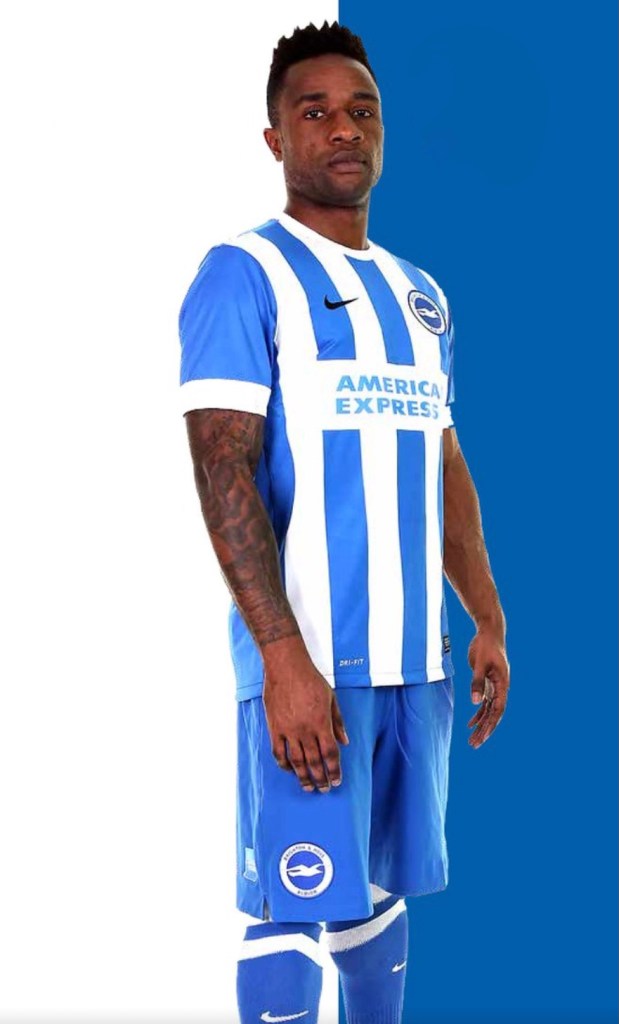
Left-sided LuaLua had three spells on loan to Brighton from Newcastle United before joining permanently, and his six seasons in Brighton colours were rarely dull. He was undoubtedly a crowd-pleaser when he was on top of his game, leaving full backs trailing in his wake to lay on chances or cutting inside and netting some memorable goals.

However, he invariably made most impact when entering the fray from the substitutes’ bench, although the ‘supersub’ moniker frustrated him.

“You don’t just want to come on as a sub,” he told the matchday programme. “Obviously it’s good in one respect as it means the team needs you, but as a footballer you want to be in the starting 11 in every game.

“I don’t view myself as just an impact player and I know that I can play 90 minutes of football.”

Albion fans first saw the Congolese game-changer in February 2010. Manager Gus Poyet had been tipped the wink about LuaLua by his former Swindon and Leeds managerial partner, Dennis Wise, who had been executive director at Newcastle.

Ashley Barnes celebrates with Albion’s speedy loanee winger

LuaLua started nine games (and went on as a sub twice) as Albion consolidated their position in League One. His impact on the side was appreciated by his teammates, as defender Tommy Elphick explained to the Argus in March 2010. After the 19-year-old winger had run Exeter full-back Steve Tully ragged, Elphick said: “He’s unbelievable for us. He really does stretch the game for you.

“It’s that raw pace and power which I personally think we have been missing for the last two years. Benno (Elliott Bennett) gives you something totally different. He is more technical. Kaz reminds me of Bas Savage in the sort of job he used to do for us in stretching the game and getting us up the pitch.

“It gives the defenders a chance to get to the halfway line and defend a bit higher.”

When Poyet secured his services for a second loan spell for the opening half of the 2010-11 season, he was delighted. “Kazenga is unique. He is pure power and speed,” said the manager. “That nowadays in football is very important and we didn’t have that.

“I don’t think there is another player like him in the division. He gives us something totally different.

“We are very pleased to have him. We know what we are getting and that is the key. He will fit in as a player, and in the dressing room.”

Poyet added: “He made a very big impact during his time here last season and I am hoping he can do the same and add a few goals to his game this time around.”

No sooner said than done; LuaLua marked his second debut with a 25-yard rocket of a free-kick to give Albion the lead in a 2-0 home win over MK Dons.

LuaLua departs the action injured

Sadly, after just seven starts plus four appearances off the bench, his involvement in that promotion season came to an end in November 2010 when a bad tackle in a 3-1 away defeat at Hartlepool left him with a broken ankle.

Born in Kinshasa, Zaire (now the Democratic Republic of the Congo), on 10 December 1990, LuaLua came to England as a small child with his father and famous older brother, Lomana.

It was from Lomana that he perfected the thunderbolt shot — and the celebratory somersault.

“I have always had a hard shot on me,” he told the Albion matchday programme. “I think a lot of it comes from when I was a boy back in Newcastle and I would play with my brother.

“He would always strike a ball hard and I would try to copy him.”

It was football all the way from a young age, LuaLua recalled. “When I was growing up in Kinshasa, I remember skipping school to play football with my friends,” he said. “We were football mad and, as my brother had already moved to England, I wanted to follow in his footsteps.

“Lomana got me in at Newcastle. He moved to London with our dad some time earlier, but once he’d broken into football and moved from Colchester United up to Newcastle, then the rest of the family came over from our homeland.

“I had only been in the country a couple of months when Lomana arranged for me to have a trial at Newcastle and I was taken on straight away. It was fantastic for me and also for him; we’d go into training together and he was always there for advice when I needed it. He has been a massive influence on my career.”

The winger continued: “It was tough to begin with; I was in a new country and had to go to a new school, which was hard in itself given where I’d come from, and then I was brought into a professional football club and one of the biggest in the country.

“But Newcastle were very helpful. All the coaching staff were great towards me, and helped me find my feet. I learned such a lot from them and I quickly made new friends. I was close to Nile Ranger, Sami Adjei, Sami Ameobi, many players, and I learnt so much in terms of coaching and how to conduct myself as a professional.”

Kazenga progressed through the Toon academy and was part of the Toon youth team that reached the semi-finals of the FA Youth Cup in 2005-06. He even earned a first-team squad call-up while still only 16, although he didn’t get to play.

LuaLua’s Newcastle chances were limited

Eventually, he got his first team chance as a substitute for Damien Duff in a 0-0 FA Cup third round match at Stoke in January 2008, right at the end of Sam Allardyce’s reign on Tyneside. It was Michael Owen’s first FA Cup game for Newcastle.

The game was being shown live on TV so LuaLua’s extended family back home in the DR Congo were able to see the moment. “I was one of the club’s youngest debutants at 17,” he said.

He also went on (for Charles N’Zogbia) in the replay at St James’s Park which Toon, under caretaker boss Nigel Pearson, won comfortably 4-1. “To play in front of 52,000 people took my breath away,” he said.

He made his Premier League debut three days later, going on as an 80th-minute sub for Duff at St James’s Park, in Kevin Keegan’s first match back in charge — a disappointing 0-0 draw with Bolton Wanderers.

Although a non-playing sub on other occasions, he got on in the last game of the season, replacing Jose Enrique in the 79th-minute as United went down 3-1 to Everton at Goodison Park.

Against the backdrop of the tumultuous 2008-09 season, when Toon were relegated from the Premier League after a veritable managerial merry-go-round, LuaLua made just four substitute appearances (three in the league and one in the FA Cup), and in January 2009 he was sent out on loan to Doncaster Rovers, then in the Championship, where he played four matches in six weeks under Sean O’Driscoll.

Once Toon settled on Chris Hughton to get them promoted from the Championship, LuaLua found chances hard to come by.

He started in a Carling Cup second round match at home to Huddersfield Town, when Toon edged it 4-3, but picked up a groin injury playing in the next round, a 2-0 defeat at Peterborough in September 2009 (future Brighton teammate Craig Mackail-Smith was one of the Posh scorers).

Three months later, with his fitness restored, he was itching to be given a first team chance and told the Chronicle: “I want to be part of this team. My aim has always been to play for the first team at Newcastle United.

“I’ve been here a long time, and last season I was involved in the first team before going out on loan.”

“I have been playing for the reserves for a while now, and I’m keen to play football at first team level.

“I would go out on loan if they let me.”

That opportunity finally came a couple of months later when Hughton sanctioned the move to Brighton. LuaLua told Albion matchday programme reporter Luke Nicoli: “They are a big club and are using a lot of experienced players at the moment, so it’s been difficult for me to break into the team.

“I’ve been playing reserve team football a lot and I just want to be playing games that mean something again. I want to be playing for points and I want to be learning all the time. I want to be in a position where I can return to Newcastle a better player.”

Immediately before re-joining the Seagulls for his second loan spell, LuaLua made only his second start for Newcastle in a 3-2 Carling Cup win over Accrington Stanley and was selected by Sky Sports as the Man of the Match.

After that broken ankle at Hartlepool had taken him back to Newcastle to recuperate, he recovered to make a Premier League appearance in the penultimate game of the season, a 2–2 draw away to Chelsea. Hughton’s successor, Alan Pardew, sent him on as a 69th minute substitute for Shane Ferguson and it was LuaLua’s run and cut inside around Branislav Ivanovic that won Toon a corner from which Steven Taylor scored a late equaliser.

Nevertheless, Poyet wasn’t giving up on taking LuaLua back to the Seagulls once more and, in July 2011, he took him on another six-month deal with a view to a permanent move.

Poyet told the club website at the time: “Kazenga was one of our main summer targets and I am delighted we have finally come to an agreement with Newcastle. I am sure the fans will be equally delighted to see him back at the club.”

The permanent move went through a month before the loan was due to expire and LuaLua told the club website: “Since I came to the club it has always been my intention to sign a permanent deal so this is a really happy day for me.

“When you are on loan you are never quite sure what the future will hold, but now I’ve signed this contract I can put my mind at rest and focus completely on my football.

“I have come here because I feel Brighton is the place where I can really kick on with my career. At Newcastle I wasn’t really involved in the first-team squad and at my age I want to start playing regular football.

“From the first day I came to the club on loan, everyone was so friendly and that helped me settle very quickly. Now I want to pay that back with my performances on the pitch.”

Albion famously suffered an ignominious 6-1 drubbing in the fifth round of the FA Cup at Anfield in February 2012, but it was LuaLua who temporarily gave the Seagulls parity after Martin Skrtel’s early opener for Liverpool.

LuaLua unleashed an unstoppable 25-yard shot past ‘keeper Pepe Reina and BBC Sport’s Neil Johnston said: “It was a goal worthy of winning a Wembley FA Cup Final.”

Few doubted LuaLua’s ability but inconsistency was one of his demons which often led to him being introduced as an impact substitute rather than starting games.

Poyet wasn’t afraid to explain his selection policy and in March 2012, when he gave the winger a start against high-flying Derby County, he was rewarded with a 2-0 win at the Amex.

“I thought it was the game for Kazenga,” Poyet told the Argus. “I know he played well in his first spell and my first season here, but I don’t remember a better performance from Kazenga for Brighton.

“It was his best performance against a team that has been in the Premier League and in the top ten in the Championship. That shows what he can do. It was his game and he’s a happy boy.

“He has probably been a little annoyed not to be playing, but that is natural and he is always very respectful and always talking to me.”

A troublesome knee affected LuaLua’s involvement

LuaLua ended up playing under four different Albion managers and Oscar Garcia quickly realised the limitations he faced when in September 2013 he told the Argus: “Kaz has a problem on his knee and he cannot play many minutes in all the games. We knew before if he had played for the whole game then maybe on Tuesday we cannot use him.

“Sometimes he has pain, sometimes not, but, if he plays many minutes, he has pain. He’s had this from the start of the season,” he said. “Sometimes he has to rest, he cannot train. We have to manage this.”

The following February, LuaLua was still troubled by knee tendon soreness but was contributing as a substitute.

For example, he went on to set up Leonardo Ulloa to score the only goal of the game at home to Leeds and Garcia told the Argus: “We thought in this game he could come off the bench and make an immediate impact and he did it.

“He is a player who can change a game. We are very happy with him, because every game when he has to come off the bench he comes on with the right attitude and plays really well.”

Happy days with Beram Kayal and Joe Bennett

Even though Sami Hyypia’s time in charge was short-lived, the winger impressed the new boss until a knee injury sidelined him in November 2014.

“He has the ability to hurt people one v one and maybe one v two as well sometimes,” said Hyypia. “He’s done well this season, he has been very concentrated all the time.”

By the time LuaLua returned to fitness, his old Newcastle coach and manager, Hughton, was at the helm.

LuaLua told the matchday programme: “It was difficult for me when he first came here because I was injured, but he was great with me, always stopping to talk to me about the injury, making sure I was okay, and he told me not to rush things. That’s what I’ve done and hopefully I can now show him what I can do on the pitch now that I’m fully fit.”

Although it was a few months before that happened, arguably LuaLua’s best spell with the club came at the start of the 2015-16 season, which coincided with a change of squad number for the player.

The returning Bobby Zamora resumed the no.25 that he’d worn during his first spell at Brighton, and at other clubs, and LuaLua admitted: “I had to give the number 25 to Bobby. There was no way I was going to refuse. He’s a legend at the club and it’s nice to have him back in the squad.”

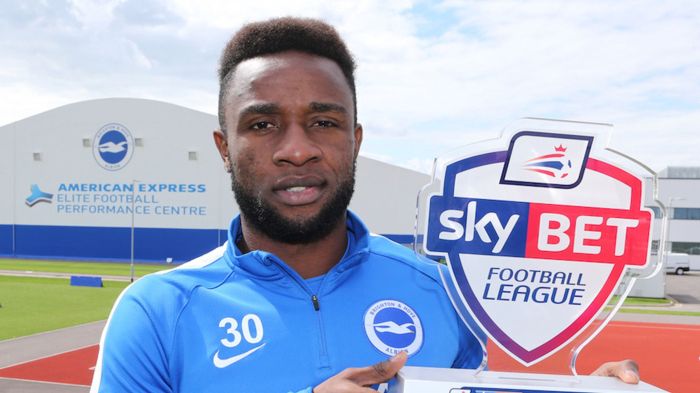
With 30 on his back, LuaLua scored four goals in the opening seven games and won the Championship Player of the Month award (above). Hughton was simultaneously Manager of the Month and said: “Kaz thoroughly deserves his award, he’s had a wonderful start. The area where he has excelled in his game is where he has got on the ball and provided an end product.”

Once again, though, injury brought the purple patch to an end. LuaLua sustained a groin injury in training that eventually needed surgery. Coach Nathan Jones told the Argus in December: “There is no real timescale on it because someone like Kazenga is so important to the squad and what we do. You can’t rush him and he is such a potent athlete, that’s the problem.”

Hughton also lost Solly March to injury that autumn but Rajiv van La Parra was brought in as a temporary solution. He already had Jamie Murphy as a wide option and then Anthony Knockaert and Jiri Skalak were added, so, by the time LuaLua had recovered, competition for places was intense.

The run-in to the end of the season saw him mainly in a watching brief from the bench, although he did play in successive matches in April – 2-1 wins away to Birmingham and Nottingham Forest.

LuaLua’s Albion days were clearly numbered as the 2016-17 season got under way. He started two League Cup games in August – the 4-0 win over Colchester United and the 4-2 victory over Oxford United, when he scored Albion’s second goal. But he only managed three league appearances as a substitute. By January, it was time for a change of scene, and he was sent on a half-season loan to QPR.

At least he got some games in Ian Holloway’s Championship side, appearing 11 times and scoring once. Having missed out on Albion’s promotion to the Premier League at the end of that season, it was no surprise that he returned on loan at Loftus Road at the start of the 2017-18 season.

However, he left west London at the beginning of December 2017, Rangers boss Holloway telling the Argus: “I don’t feel he was doing as well as some of my lads who I’ve brought here.

“Unless he rips it up and shows me – and he’s trying to – I think the loss of confidence and loss of his father has really hit him.”

In January 2018, LuaLua finally cut his ties with the Albion when he joined Chris Coleman’s Sunderland on a free transfer on a deal until the end of the season. By then 27, the winger told the Sunderland website: “I’m excited to be here and get back out on to the pitch because it’s been a long time without playing football.

“I know the North East well and I know Sunderland are one of the big clubs, not just in the North East but England, so I’m really excited to get started.”

An unfortunate turn of phrase because he didn’t start a game as Sunderland fell through the Championship trapdoor. He made just six substitute appearances.

Released at the end of that season, his former Brighton coach Jones revitalised what looked like a flagging career by signing him for promotion-chasing League One side Luton Town.

Jones told the club website: “He’s a fantastic talent. He has something that not many have, totally different from what we have here.

“He’s a quick, powerful, potent attacking player which is something that is in rare supply – and is something we felt we needed.

“The fact that we’ve been able to get him in and persuade him to come here is a good coup for us.”

And the player said: “I know Nathan from Brighton, and he’s a very good coach. He’s good at what he does, so it made it so easy for me to come in and train with the boys here.”

LuaLua spent three years at Kenilworth Road and clearly enjoyed a good relationship with their supporters. After he signed a new deal with the club following their promotion to the Championship, he told the club website: “The supporters have made me feel welcome since the moment I arrived here.

“When they get behind you, like they did since I have arrived, it gives you a massive buzz. It’s a really nice feeling. It was a really special season. I think they liked the way I play, they got behind me and I really appreciated it.”

Once again, though, his involvement was more as a substitute than a starter (37 starts plus 50 appearances off the bench) and when his contract came to an end in the summer of 2021, he decided to continue his career in Turkey, once again following in the footsteps of brother Lomana, who played for a number of Turkish clubs.

Kazenga signed a two-year deal with second tier side Gençlerbirliği in Ankara and, in November 2021, Argus reporter Brian Owen caught up with him.

“It was the right time for me to move on with my football career,” he said. “I always wanted to go abroad before I stopped playing football.

“Before signing, I was worried. I’ve never played abroad before. But it has been good. There’s a lot of boys here who speak English, including the manager, which helps a lot. I’m enjoying it.”

LuaLua then switched from Turkey to Greece and spent 18 months with Levadiakos before returning to the UK in March 2024 when Nathan Jones signed him for Charlton Athletic on a short-term deal, although he made just five substitute appearances for the League One side.

It was back to the north east for a third time in November 2024 when he signed for National League Hartlepool United under Brighton-born Lennie Lawrence, a former Luton and Charlton manager.

Nicky Forster was the definition of a goalscoring thoroughbred

NICKY FORSTER played for and managed Brentford as well as captaining Brighton and scoring a vital relegation-saving goal into the bargain.

The Surrey-born striker, who played alongside David Beckham for England under-21s, scored more than 200 goals in 700 games and it always seemed a shame that his time with the Seagulls didn’t come sooner in his career.

He built a reputation for finding the back of the net at first club Gillingham and was prolific in his first spell with the Bees but he viewed his six years leading the line for Reading as his most successful time in the game.

Forster plundered 67 goals in 179 games (plus 35 as a sub) in six years with the Royals, mostly playing under Alan Pardew and Steve Coppell, but he left for pastures new before they reached the Premier League.

A free transfer took him to Ipswich Town, where Joe Royle’s side were competing in the Championship, and, although Forster top-scored for the Tractor Boys, his total of seven typified a rather lacklustre campaign. One of those goals came against Brighton on Easter Saturday when the relegation-bound Seagulls pulled off a shock 2-1 win courtesy of goals from on-loan Gifton Noel-Williams and young Joel Lynch.

Forster scored in each of the three remaining games that season but they were his last for Town because he moved to link up with his former Reading teammate, Phil Parkinson, at Hull City, who paid £250,000 for the striker’s services. Forster scored six times for City as the side battled to retain their tier two status. Albion tried to sign Forster in January, but Parkinson’s successor Phil Brown wanted to keep him, and they rejected Albion’s £100,000 bid.

Albion finally got their man for £25,000 less in the summer that year, and, in a side largely made up of promising youngsters, in Forster they gained more than just an experienced striker.

Brighton fans were given an idea of what to expect from the new signing when his former Reading teammate Bas Savage told the Argus: “I played a few games with him in the first team and he will definitely bring goals. He is proven wherever he has been.

“He is also a very intelligent player. He makes good runs, works hard, has got very good pace and he can finish, so he will be an asset to Brighton, especially in League One. I think he will really shine.

“He will fit in easily to the dressing room as well. He was a joker at Reading, very funny and a good, bubbly character to have around.”

Savage added: “He was one of the top strikers at Reading and I learnt off all of them.

“I was a young boy at the time and, whoever it is that plays, Alex Revell, Nathan (Elder), Gatts (Joe Gatting), I can see them working well with Fozzy.

“It will be good to link up with him again and hopefully show our stuff together. I know Fozzy’s strengths and I will be looking to help him along in the same way that he can help me along. He brings experience to the team.”

Emerging defender Tommy Elphick was certainly appreciative of the new arrival. “Apart from in games, he brings a competitive edge to training,” he said. “In my eyes he is a bit of a legend really, the model pro on and off the pitch.”

When interviewed by Mike Ward for the matchday programme later that season, Forster declared: “I really am enjoying it here at Brighton. I like being on the training ground and I enjoy playing.

“I am now getting old in football terms, but I have got as much enthusiasm and energy for the game now as I had when I started. I feel that I am a better player now and I am enjoying my football as much as ever.”

Sure enough, with 19 goals in 48 appearances in the 2007-08 season, there was no question Forster proved a great addition to Dean Wilkins’ squad, and he took over as captain when Dean Hammond left the club under a cloud.

In the second half of the season, after Glenn Murray was signed from Rochdale for £300,000, manager Wilkins declared to the Argus: “I think we have got one of the best strike pairs in the division, one of the most threatening.

“When we have got possession and play with a bit of quality they are a really potent pair. If you have got a pair that score 20 goals a season you would expect to be quite successful.”

Unfortunately, seventh place in League One (seven points off the play-off places) was not quite successful enough for chairman Dick Knight, who turned to former boss Micky Adams to steer Albion’s fortunes in the 2008-09 season (a furious Wilkins declining the offer of continuing as first team coach).

While Forster got off to a great start under Adams, scoring a last-minute goal to seal a 2-1 win for the Seagulls in the season-opener at Crewe Alexandra, the Albion’s fortunes gradually unravelled as Adams chopped and changed the side with what, on reflection, were too many loan signings.

For a while, things didn’t look too clever after Russell Slade had been parachuted in to try to stave off the threat of relegation.

At a time when the new boss could really have done with Forster and Murray firing on all cylinders, both were sidelined with injuries. Forster missed eight matches with what was thought might be an anterior cruciate ligament injury in his knee.

Thankfully another former Brentford striker, Lloyd Owusu, stepped into the breach to score some vital goals, together with loan signing Calvin Andrew and the rejuvenated Gary Hart.

Nevertheless, going into the last game of the season, at home to Stockport County at Withdean, Albion still needed to win to avoid the relegation trapdoor.

When Hart left the action early and his replacement Andrew had to be withdrawn at half-time with what turned out to be a bad ACL injury, Slade had no option but to turn to the by-no-means-fit Forster to enter the fray from the bench for a crucial second half.

Fortunately, after County ‘keeper Conrad Logan could only parry a shot from Gary Dicker, Forster was on hand to stab in the only goal of the game from six yards, sparking massive celebrations.

Forster later conceded in an Argus interview: “It wasn’t quite right but I got through the game and the goal was a gift. I didn’t have to be particularly mobile to score it.

“I dosed up on tablets and rehabbed and was really determined to be involved in that game. Thankfully it worked out for me and for Brighton. But I wasn’t 100 per cent. I still had that niggling feeling.”

In a subsequent exploratory operation, it turned out that torn cartilage had been Forster’s problem and he underwent surgery during the close season, somewhat ironically the procedure being delayed a little while because the surgeon involved was operating on Andrew!

“When they took me down to the anaesthetist’s room, there was a guy in there before me,” said Forster. “I had to wait ten or 15 minutes and they said it was an ACL reconstruction going on. I didn’t realise it was Calvin.”

Tony Bloom took over from Dick Knight as Albion chairman that summer and, when the new season got under way, Slade had decided to give the captain’s armband to defender Adam Virgo (Forster remained club captain).

The opening part of the season went horribly wrong and, with only three wins in their first 15 matches, Slade was replaced by effervescent Uruguayan Gus Poyet.

By the end of January, Forster had scored 15 times in 27 matches (plus three as sub), but the beginning of the end of his time with the Albion was nigh when a contractual dispute went public.

The player, by then 36, wanted to know whether he was going to be offered a contract the following season, but that commitment wasn’t forthcoming. Forster aired his dissatisfaction in the media and Poyet left him out of the side.

Forster subsequently clarified his position in a statement on the club website, saying: “I have thoroughly enjoyed my playing years with Brighton and genuinely hoped – and still do – that I would remain at Brighton until the end of my playing days, hopefully with the opportunity to take up a training role.

“The decision to delay the offering of contracts makes life very difficult, particularly for players of my age. I have always been totally committed to Brighton and will continue to be so.”

While the air was cleared, and he was restored to the line-up for a 1-1 draw away to Leeds, that turned out to be his last start for the Albion. Only a matter of weeks later he was sent out on loan to Charlton Athletic until the end of the season, once again linking up with former teammate Parkinson.

Nevertheless, his 51 goals across two and a half seasons at the club were the best measure of his contribution and he was later a more than interested onlooker of Brighton’s fortunes when his stepson, Jake Forster-Caskey forced his way into Poyet’s Championship side.

Born in Caterham, Surrey, on 8 September 1973, Forster was comparatively late into the game, staying on at school to take A-levels.

But he had a lucky break when he played for non-league Horley Town against Gillingham in a friendly. “It was a real right-place-at-the-right-time scenario,” he told Ward in another Albion matchday programme interview.

Gillingham offered him the chance to become a professional and after impressive displays for their youth and reserve sides, he duly signed professional terms in May 1992 when Damien Richardson was in the manager’s chair.

The Gills sent him out on loan to Southern League Margate and Hythe Town. Forster’s career stats are comprehensively recorded by the Margate history website, even though he only played one game for them, when he scored with a clever lob after three minutes of his debut.

Back with the Gills, Forster made his first team debut in September 1992, going on as sub in a 4-1 home win over Wrexham. He went on to establish himself in the side under former Charlton striker Mike Flanagan in the 1993-94 season, top scoring with 18 goals. It was an achievement which prompted Brentford to pay a fee of £320,000 to take him to Griffin Park in June 1994.

The 1994-95 season is firmly etched in the annals of Brentford’s history because David Webb’s side were denied promotion to the elite when a one-off organisational blip meant the fledgling Premier League only took one promoted side from the division below – and the Bees finished second!  

Forster had proved a major hit at his new club alongside strike partner Robert Taylor, with the pair netting 47 goals between them (Forster got 26 of them). But automatic promotion was denied when Brentford “choked” in the last month of the season and their agony was compounded when they lost on penalties to Neil Warnock’s Huddersfield in the play-off semi-finals.

For Forster personally, however, his goalscoring prowess brought him to the attention of the international selectors and in June 1995 he earned four England under 21 caps at the Toulon tournament in France, making his debut in a 2-0 defeat against Brazil in a team featuring future full internationals Beckham and Phil Neville.

Forster scored England’s only goal in his third match for Ray Harford’s side, as they beat Angola. He also played in the 2-0 win over Malaysia and in the semi-final against France, when they lost 2-0.

The Bees failed to follow up their near miss the following season, finishing 15th and, although at one point there was talk of Crystal Palace preparing a £2m bid for Forster’s services, it came to nothing. The striker damaged knee ligaments in October 1995 and managed to find the net just the eight times by the season’s end.

It promised to be a different story in 1996-97, though. With Carl Asaba and Marcus Bent supplementing the Forster and Taylor strikeforce, Brentford got off to a flyer and topped what is now the Championship courtesy of an 11-match unbeaten run at the start of the season.

However, the bcfctalk blog was incredulous at what happened next. “We were coasting at the top of the league when the quite staggering decision was taken in January to sell Nicky Forster to arch-nemesis Birmingham City for a mere £700,000.

“He was never replaced, the prolific Carl Asaba was mysteriously shifted out wide to the left wing and the remaining 17 league matches produced a mere 18 points. We failed to score in ten of our last fourteen games and won only once at home after Christmas.”

Forster’s desire to progress his career didn’t play out well with the supporters of Brentford or Gillingham.

“I get booed every time I go there,” he told Brighton’s matchday programme. “It’s sad because I feel I did well for both clubs. And what they paid for me wasn’t a huge amount, so value-for-money wise I feel I did very well for them. It’s not something I worry greatly about, but I do think it’s time they learnt to forgive and forget.

“I don’t think they can really begrudge a player wanting to move on and better himself, better his career. Sometime fans can be a bit fickle!”

While Forster hoped to establish himself at Birmingham, he struggled to get a starting berth in a side managed by former Blues playing legend Trevor Francis. Paul Furlong and Peter Ndlovu were preferred up front, and later Dele Adebola. Forster invariably had to be content with involvement of the bench. Indeed, 46 of his 75 Blues appearances were as a substitute and, when he left for Reading in June 1999, he’d got just 12 goals to his name.

That all changed once he’d made the switch to the Madejski Stadium. The goals flowed (in 2002-03 there were two hat-tricks included in his season’s tally of 17) and in his six seasons with the Royals he notched 67 goals in 214 appearances (35 of which were as a sub).

His form tailed off in his final season with Reading and he began to look elsewhere because he wanted a longer contract than the club were prepared to offer.

Nevertheless, he respected manager Coppell and, when later in his career he took over as boss at Brentford, he said: “I was with Steve Coppell at Reading and I like his manner and demeanour. He is not a ranter and raver. I just like the way he goes about his business.

“He is quite a subdued guy when he speaks, but he speaks a lot of sense. When he talked to me, whether I liked it or not, I couldn’t really argue because it made a lot of sense.”

When Forster returned to Griffin Park as a player at the start of the 2010-11 season, he reflected: “The club holds many happy memories for me. Both the club and I have moved on over the years but I still have the hunger and the mobility to give a good account of myself.”

Manager Andy Scott added: “His goalscoring is a major attraction as that is an area where we have struggled to compete with other teams.

“His ambitions match those of the management team. He is a very dedicated footballer who will add experience, competition and, more importantly, goals to the team.”
Sadly, it didn’t pan out well with Forster only making 12 starts and scoring once. After a topsy turvy six months, Scott and his assistant Terry Bullivant were dismissed and Forster took over as caretaker boss, assisted by Mark Warburton.

When the Bees collected 14 points from six games, the temporary stint was extended until the end of the season.

Remarkably during his brief tenure, Forster took charge of Brentford at Wembley for the final of the Johnstone’s Paint Trophy, which they lost 1-0 to Carlisle United.

Brentford centre back Leon Legge said later: “Growing up, Wembley was always a sacred ground that not many people get to play at. I wanted to win so bad but it was just a shame we came second-best, especially against Carlisle, who we’d played just over a week earlier and beaten 2-1. Everything went for them that day.

“I know the gaffer at the time [Nicky Forster] made a few changes and I don’t think many agreed with it – for example, Marcus Bean didn’t play when he’d been such a good player leading up to that game. I think that made a difference.

“I still remember looking at the crowd of 40,000 and to play in such a sacred ground in front of that many fans, whether we won or lost, it was a good experience.”

Despite leading Brentford to a mid-table finish, Forster was told he was not in the running for the job on a permanent basis, and Uwe Rösler was appointed instead.

Nonetheless, Forster decided management was his next step and announced an end to his playing days.

“I have had a fantastic career, but the time has come to cross over into management,” he said.

“I’ve scored 200 goals in 700 games and haven’t got anything left to achieve as a player, so I want to concentrate on management.”

The eloquent Forster popped up on Sky Sports, covering Football League matches, and also brought his boots back out to play for Sussex County League side Lingfield.

Then, in September 2011, Forster was appointed player-manager of Blue Square Bet South club Dover Athletic, whose chairman Jim Parmenter said: “Nicky has had an impressive playing career at some big clubs and did very well during his time as manager at Brentford.

“As well as having both UEFA ‘A’ and ‘B’ licences, he is also a great man manager and motivator. Nicky is totally enthused by the prospect of managing the club and we look forward to a very successful future.”

Among his signings were former Brighton teammates Steven Thomson and young goalkeeper Mitch Walker.

Forster said: “I am delighted get Thommo down here at Crabble, especially as his signature was being chased by a number of other clubs both in our league and above. He is an experienced professional who is still hungry for success.”

Sadly, after a run of five successive defeats, his time in charge at Dover was brought to an end in January 2013 when he was replaced by the club’s former manager Chris Kinnear.

Two years later, Forster gave management another go taking charge of Conference South side Staines Town. But he quit after a year, telling getsurrey.co.uk: “I enjoyed every moment even though we had some low times, but it’s a learning experience and I left on good terms with the chairman and the fans who were great to me.”

In September 2016, Forster set up his own gym – The Spot Wellness Centre – in Godstone. As well as running that, he is now self employed and, on LinkedIn, describes himself as a goal setting coach and keynote speaker.

• Pictures from the Argus, Albion’s matchday programme and online sources.

Wright player, wrong place but Jake was United with Wilder

LEFT-SIDED centre back Jake Wright had limited chances to show his mettle for Brighton but Chris Wilder liked what he saw – and was his manager at three different clubs.

Wright played for Wilder at Halifax Town, Oxford United and Sheffield United so was in a good position to assess the terrific job the Blades boss had done at Bramall Lane for a BBC Sport article on 10 January 2020.

“He’s not changed at all,” said Wright. “I don’t think his training sessions or his intensity have changed. As he’s progressed, he’s got better players in, so the quality’s changed. But how he goes about the day-to-day running of a football club hasn’t really changed.

“He’s always been hands-on. He’s always taken a lot of sessions himself. He knows what it takes to win and he knows how to motivate his players to be ready for a game.

“He’s ruthless. He’s got no qualms about dropping a player – no matter how long you’ve known him or how well you’ve done for him – he makes decisions to benefit the club.”

The article featured a number of players who played for Wilder over the years, and Wright added: “His CV’s incredible – one of the best in the country for how well he’s done at certain teams.

“I can’t compliment him enough as a manager. I’ve probably played more games for him than any other player and he hasn’t changed the way he is. He’s kept his philosophy.”

Born on 11 March 1986 in Keighley, Wright began his footballing journey eight miles away at Bradford City. Former England and Derby defender Colin Todd was manager at the time, and he awarded Wright his first professional contract, but it was away from Valley Parade that he gained first team experience.

Wilder was cutting his managerial teeth at Halifax and took Wright and fellow Bantam Danny Forrest to The Shay, initially on loan. The pair eventually joined on a permanent basis and Wright made 88 appearances for them but opted to move on when financial issues saw them demoted two divisions.

He moved to Crawley Town, then in the Conference Premier, and some solid performances at that level drew attention from various league clubs, including nearby Albion, who had recently narrowly escaped relegation to the fourth tier.

Manager Russell Slade took him on a trial basis for a pre-season friendly against Torquay United in July 2009, and, although Albion lost the game 1-0, Wright did enough to earn himself a two-year deal.

Slade said: “He has done very well, both in training and in the game at Torquay. He is a left-sided defender who can play at full-back or centre-half. He is also an excellent athlete, a good talker and I am expecting that he will prove himself as a quality player.”

Wright started the season in the no.5 shirt in the centre of the back four alongside Tommy Elphick but there was plenty of competition for places and Adam El-Abd and James Tunnicliffe were drafted in as Slade tried to address a four-game winless start.

He had a couple more starts in October but, with Brighton struggling towards the foot of the table, Slade was axed as boss that autumn, and Wright didn’t feature in new manager Gus Poyet’s plans.

On 31 December 2009, he was allowed to join Oxford United on loan until the end of the season. He’d only made eight appearances for the Seagulls.

“I wasn’t playing at Brighton and I want to be playing games,” Wright told the BBC. “I am coming to a club that is basically a league club and is going in the right direction. I want to be playing football.”

Wilder said: “I had Jake at Halifax and took him out of Bradford City reserves and he was superb for me.”

By the end of that season, Oxford had won promotion back into the league and Wright’s move was made permanent, courtesy of a free transfer.

The following summer he was appointed Oxford’s captain, and his stay at the Kassam Stadium extended to six seasons over which he made a total of 278 appearances.

After leading the U’s to promotion from League 2 as runners-up in the 2015-16 season, Wright left the club that summer having been told he wouldn’t be guaranteed his place in the higher division.

“Michael Appleton said I wasn’t in his plans and he’d give me the opportunity to move on,” Wright told the Oxford Mail. “It was a shock to be told, especially after we got promoted with the best defensive record in the league.”

Wright wasn’t without a club for long, moving back to Yorkshire to link up with Wilder once more, this time at Sheffield United.

“Jake brings a calmness to the team,” Wilder told the Sheffield Telegraph. “He’s one of those players I enjoy watching because he wants to win. In training and in games.

“He’s never played at this level and, with respect, he views this as an opportunity to do something at the back end of his career. I love players like that. People who get the maximum out of their careers. It’s not been a glittering career with medals littered all over the place. But every manager he’s had will tell you what Jake is like.”

He featured in 30 matches as they gained promotion from League One and played a further 22 games in their 2017-18 season in the Championship. Not involved in United’s Premier League side, in 2019-20 Wright switched on loan to League One Bolton Wanderers, where he played 12 matches.

Wright signed for Hereford at the start of the current season, with manager Josh Gowling saying: “Jake is a very big signing for us, he’s a very commanding centre half.

“He’s got a great attitude; he’s got hunger and desire and he still wants to push on and win things.”

Leicester lad Matt Heath plugged Albion defensive gap

Heath celebratesDUCK-loving Matt Heath didn’t shirk a challenge and came to Brighton’s rescue in 2009 when injury and suspension decimated Albion’s available defenders.

Albion were fighting for their League One lives and were in between managers when Heath arrived in March to plug a gap caused by Tommy Elphick, Adam Hinshelwood and Adam Virgo all being sidelined.

Experienced former Leicester City central defender Heath joined on loan from Colchester United, signed at the same time as striker Lloyd Owusu, who undoubtedly made more of a noteworthy contribution with some vital goals and his famous ‘raising the roof’ goal celebration.

As well as defensive problems, Albion also had Nicky Forster, Glenn Murray and loan signing Calvin Andrew out injured as they approached a period of games vital to their chances of staying in the division.

On signing the pair, caretaker manager Dean White told the Argus: “The injury situation meant it was vital to bring players in and Matt and Lloyd are two good additions. They certainly strengthen the squad and both have good experience at this level and higher.”

The 6ft 4ins Heath had made 11 appearances for Colchester that season but only one start since the turn of the year.

He played in six games and scored on his debut away to Leyton Orient on 8 March, the game which marked the beginning of Russell Slade’s period in charge of the Seagulls. Ultimately a recurrence of groin trouble brought an end to his brief Albion career.

Ironically, it was Slade’s predecessor at the Withdean, Micky Adams, who’d been Heath’s manager at Leicester, Coventry City and Colchester.

Born in Leicester on 11 January 1981, Heath came through the Foxes academy, made his debut in the 2001-02 season and went on to play 60 first team games for the club, including 17 Premier League games alongside Ricardo Scimeca. During the 2003-04 season, he had an eight-game loan spell with Stockport County.

Heath scors 4 Leic

In 2005, Adams went back to his old club to take Heath to Coventry City for a £45,000 fee. He played 26 games for the Sky Blues in 2005-06 but only eight games the following season and, in November 2006, was loaned out to Leeds United who made the move permanent in January 2007.

Heath relished his time playing under manager Dennis Wise and his assistant Gus Poyet but after playing 50 games for Leeds, Wise’s successor Gary McAllister deemed him surplus to requirements at Elland Road and Heath once again went to play for Adams, this time at Colchester.

He initially joined on loan but then spent five seasons on the Us’ books, making a total of 106 appearances, albeit during his time with them he had a couple of spells out on loan.

One of those was that brief stint at Brighton and the following season he played four games for Southend United.

When his contract was up at Colchester, he switched to Northampton Town, where the manager was one of his old Colchester bosses, Aidy Boothroyd, but he didn’t make any first team appearances and left the club to join non-league Harrogate Town in January 2008 where he made 29 appearances. Next up was Harrogate Railway FC.

However, Heath simultaneously pursued an education role in sport, and he became a course manager and lecturer at Askham Bryan College in York having studied football coaching at the University of East Anglia.

In March 2019, Askham Bryan College announced it was becoming a sports hub for Leeds United, with Heath playing a prominent role.

Heath talked about the importance of former professional players having a plan for life after football in an interview with Non-League Yorkshire.

He said: “I’ve had so many good friends in the pro game and they’re all five years younger than me and I’ve told all of them to do something because you have so much time on your hands when you’re playing pro football.

“I’ve said: ‘Get a qualification or do something because when it all finishes, you either get lucky and fall into something like myself or you’ll be in a place where you’re not sure what to do’.

“I think most of the lads in the pro game don’t realise that it just stops like that.”

In 2015, Heath combined his day job with captaining Northern League – North West Division side Tadcaster Albion and then became assistant manager for two years, working under Billy Miller, who was his boss (head of sports and public services) at Askham before being promoted to a director.

Heath subsequently became a teacher-coach in Leeds’ education department, working with a group of would-be footballer students in Nottingham.

“The kids finish their GCSEs and want to carry on in education and the college provide a programme where they carry on with their education, get a Level 3 BTEC-extended Diploma and we link it alongside training every day and play in the National League as well, ” he explained to Jonathan Waldron of the Colchester Gazette, in a February 2021 interview.

“So the kids get the training, the education and luckily I’ve got a role there where I’m part of both of it, in the classroom and out on the training field as well and matchdays for our college.”

Telling the reporter that he still looks out for the results of all the clubs he used to play for, he added: “It’s nice to reminisce but my family just tell me to shut up if I go on about it!

“I was lucky; dedication and hard work gets you a long way in football and you have to have a bit of a rub of the green, along the way and managers and coaches who take an interest in you and see something and then roll with it a little bit.

“I’m proud of what I achieved.”

Heath college coach