Coach Dean Wilkins fumed after falling out with Knight 

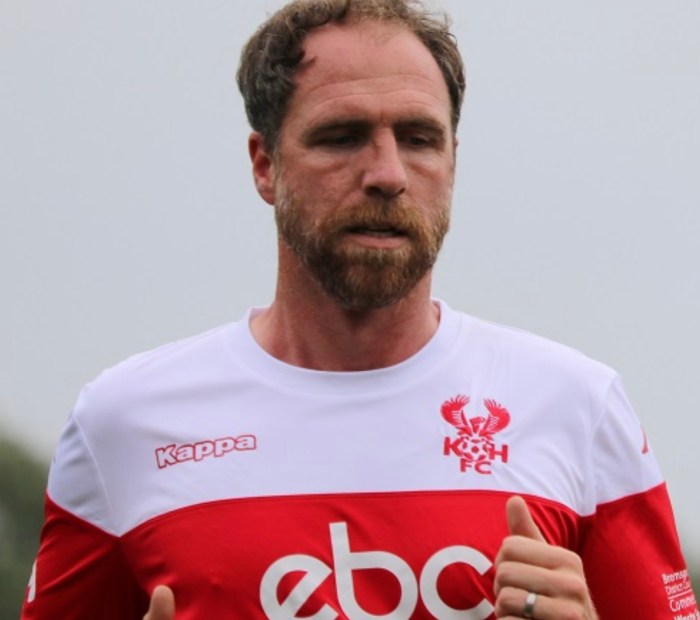
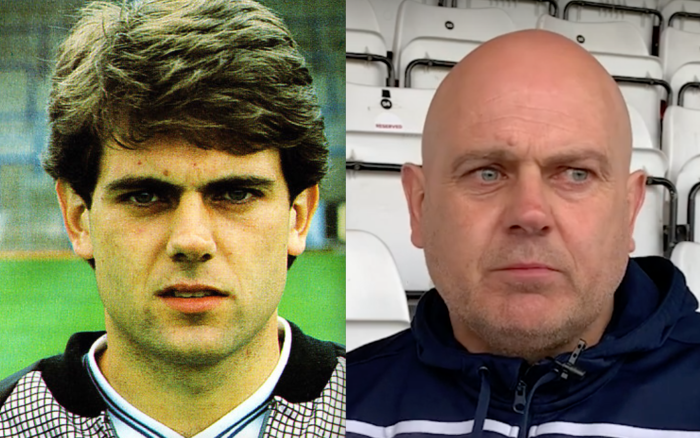
DEAN WILKINS might have lived in the shadow of his more famous elder England international brother Ray but he certainly carved out his own footballing history, much of it with Brighton.

Albion fans of a certain vintage will never forget the sumptuous left-footed free-kick bouffant-haired captain Wilkins scored past Phil Parkes at the Goldstone Ground which edged the Seagulls into the second-tier play-offs in 1991.

Supporters from the mid-noughties era would only recall the balding boss of a mid-table League One outfit at Withdean comprising mainly home-grown players who Wilkins had brought through from his days coaching the youth team.

After Dick Knight somewhat unceremoniously brought back Micky Adams over Wilkins’ head in 2008, he quit the club rather than stay on playing second fiddle and subsequently went west to Southampton where he worked under Alan Pardew and his successor Nigel Adkins as well as taking caretaker charge of the Saints in between the two reigns.

Wilkins’ initial association with the Seagulls went back to 1983, when Jimmy Melia brought him to the south coast from Queens Park Rangers shortly after Albion’s FA Cup final appearances at Wembley.

Melia’s successor Chris Cattlin only gave him two starts back then and although he pondered a move to Leyton Orient, where he’d had 10 matches on loan, he opted to accept to try his luck in Holland when his Dutch Albion teammate Hans Kraay set him up with a move to PEC Zwolle. Playing against the likes of Johann Cruyff, Marco Van Basten and Ruud Gullit proved to be quite the footballing education for Wilkins.
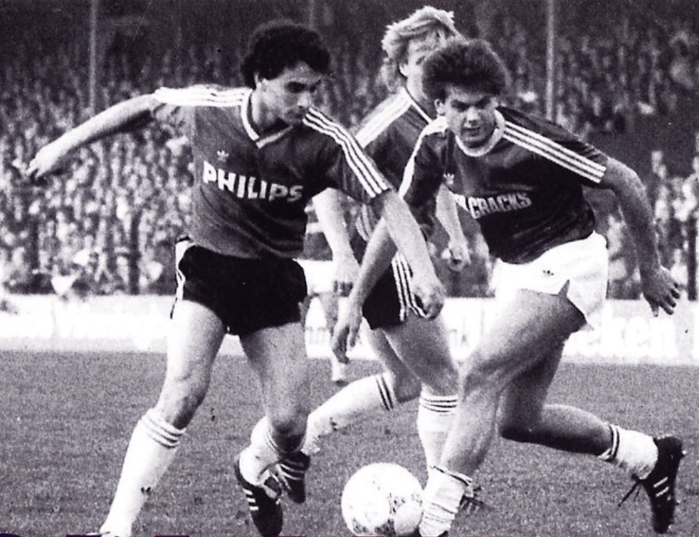
Wilkins in the thick of it in Dutch football for PEC Zwolle

After two years in the Netherlands, 25-year-old Wilkins rejoined the relegated Seagulls in the summer of 1987 as the club prepared for life back in the old Third Division under Barry Lloyd.

Relegation had led to the sale for more than £400,000 of star assets Danny Wilson, Terry Connor and Eric Young but more modest funds were allocated to manager Lloyd for replacements: £10,000 for Wilkins, £50,000 for Doug Rougvie, who signed from Chelsea and was appointed captain, Garry Nelson, a £72,500 buy from Plymouth and Kevin Bremner, who cost £65,000 from Reading. Midfield enforcer Mike Trusson was a free transfer.
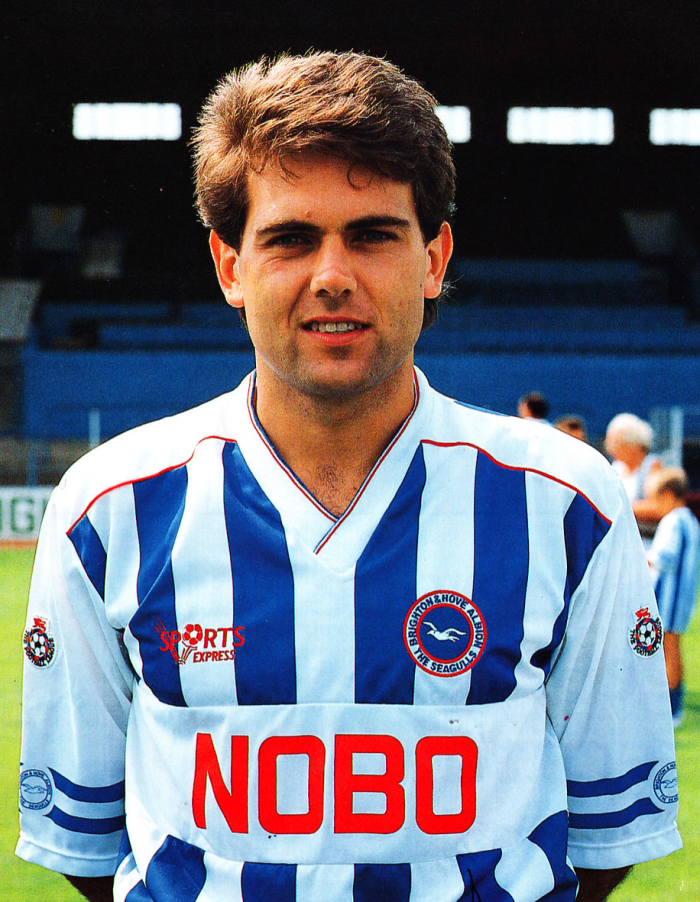
The refreshed squad ended up earning a swift return to the second tier courtesy of a memorable last day 2-1 win over Bristol Rovers at the Goldstone.

At the higher level, Wilkins had the third highest appearances (40 + two as sub) as Albion finished just below halfway in the table. The following season Wilkins was appointed captain and was ever-present as Albion made it to the divisional play-off final against Notts County at Wembley, having made it to the semi-final v Millwall courtesy of the aforementioned spectacular free kick v Ipswich.

Wilkins scored again at Wembley but it turned out only to be a consolation as the Seagulls succumbed 3-1 to Neil Warnock’s side.

As the 1992-93 season got underway, Wilkins, having just turned 30, was the first matchday programme profile candidate for the opening home game against Bolton Wanderers (a 2-1 win) when he revealed the play-off final defeat had been “the biggest disappointment of my career”.

The 1993-94 season was a write-off from October onwards when he damaged the medial ligaments in both his knees after catching both sets of studs in the soft ground at home against Exeter City.

Although injury plagued much of the time during Liam Brady’s reign as manager, the Irishman acknowledged his ability saying: “He is a very fine footballer and a tremendous passer of the ball and he possesses a great shot.”

Ahead of the start of the 1995-96 season, Wilkins was granted a testimonial game against his former club QPR, managed at the time by big brother Ray. But at the end of the season, when the Seagulls were relegated to the basement division, he was one of six players given a free transfer.

Born in Hillingdon on 12 July 1962, Wilkins couldn’t have wished for a more football-oriented family. Dad George had played for Brentford, Leeds, Nottingham Forest and Hearts and appeared at Wembley in the first wartime FA Cup final. While Ray was the brother who stole the limelight, Graham and Steve also started out at Chelsea.

In spite of those older brothers who also made it as professionals, Wilkins attributed his development at QPR, who he joined straight from school as an apprentice in 1978, to youth coach John Collins (who older fans will remember was Brighton’s first team coach under Mike Bailey).

He made seven first team appearances for Rangers, his debut being as a substitute for Glenn Roeder in a 0-0 draw with Grimsby Town on 1 November 1980. After joining the Albion in August 1983, he had to wait until 10 December that year to make his debut, in a 0-0 draw at Middlesbrough, in place of the absent Tony Grealish. He started at home to Newcastle a week later (a 1-0 defeat), this time taking the midfield spot of injured Jimmy Case.

Perhaps the writing was on the wall when Cattlin secured the services of Wilson from Nottingham Forest, initially on loan, and although Wilkins had a third first team outing in a 2-0 FA Cup third round win at home to Swansea City, boss Cattlin didn’t pick him again. Instead, he joined Orient on loan in March 1984.

A long career in coaching began when Wilkins was brought back to the Albion in 1998 by another ex-skipper, Brian Horton, who had taken over as manager. With Martin Hinshelwood as director of a new youth set-up, Wilkins was appointed the youth coach – a position he held for the following eight years.

Return to the Albion as youth coach

His charges won 4-1 against Cambridge United in his first match, with goals from Duncan McArthur, Danny Marney and Scott Ramsay (two).

That backroom role continued as managers came and went over the following years during which a growing number of youth team products made it through to the first team: people like Dan Harding and Adam Virgo and later Adam Hinshelwood, Joel Lynch, Dean Hammond and Adam El-Abd.

At the start of the 2006-07 season, with Albion back in the third tier after punching above their weight in the Championship for two seasons, Wilkins was rewarded for his achievements with the youth team with promotion to first team coach under Mark McGhee.

By then, more of the youngsters he’d helped to develop were in or getting close to the first team, for example Dean Cox, Jake Robinson, Joe Gatting and Chris McPhee.

After an indifferent start to the season – three wins, three defeats and a draw – Knight decided to axe McGhee and loyal lieutenant Bob Booker and to hand the reins to Wilkins with Dean White as his deputy. Wilkins later brought in his old teammate Ian Chapman as first team coach.
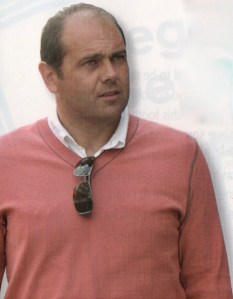
Into the manager’s chair

Tommy Elphick, Tommy Fraser and Sam Rents were other former youth team players who stepped up to the first team. But, over time, it became apparent Knight and Wilkins were not on the same page: the young manager didn’t agree with the chairman that more experienced players were needed rather than relying too much on the youth graduates.

Indeed, in his autobiography Mad Man: From the Gutter to the Stars (Vision Sports Publishing, 2013), Knight said Wilkins hadn’t bothered to travel with him to watch Glenn Murray or Steve Thomson, who were added to the squad, and he was taking the side of certain players in contract negotiations with the chairman.
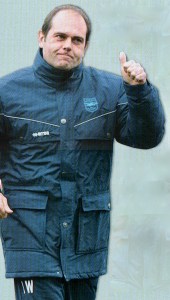
“In my opinion, his man-management skills were lacking, which was why I made the decision to remove him from the manager’s job,” he said. It didn’t help Wilkins’ cause when midfielder Paul Reid went public to criticise his man-management too.

Knight felt although Wilkins hadn’t sufficiently nailed the no.1 job, he could still be effective as a coach, working under Micky Adams. The pair had previously got on well, with Adams saying in his autobiography, My Life in Football (Biteback Publishing, 2017) how Wilkins had been “one of my best mates”.

But Adams said: “He thought I had stitched him up. I told him that I wanted him to stay. We talked it through and, at the end of the meeting, we seemed to have agreed on the way forward.

“I thought I’d reassured him enough for him to believe he should stay on. But he declined the invitation. He obviously wasn’t happy and attacked me verbally.

“I did have to remind him about the hypocrisy of a member of the Wilkins family having a dig at me, particularly when his older brother had taken my first job at Fulham.

“We don’t speak now which is a regret because he was a good mate and one of the few people I felt I could talk to and confide in.”

Youth coach

Knight knew his decision to sack the manager would not be popular with fans who only remembered the good times, but he pointed out they weren’t aware of the poor relationship he had with some first team players.

Knight described in his book how a torrent of “colourful language” poured out from Wilkins when he was called in and informed of the decision in a meeting with the chairman and director Martin Perry.

“He didn’t take it at all well, although I suppose he felt he was fully justified,” wrote Knight. “He was fuming after what was obviously a big blow to his pride.”

Reporter Andy Naylor perhaps summed up the situation best in The Argus. “The sadness of Wilkins’ departure was that Albion lost not a manager, but a gifted coach,” he said. “Wilkins was not cut out for management.”

Saints coach

One year on, shortly after Alan Pardew took over as manager at League One Southampton, he appointed Wilkins as his assistant. They were joined by Wally Downes (Steve Coppell’s former assistant at Reading) as first team coach and Stuart Murdoch as goalkeeping coach.

Saints were rebuilding having been relegated from the Championship the previous season and began the campaign with a 10-point penalty, having gone into administration. The club had been on the brink of going out of business until Swiss businessman Markus Liebherr took them over.

A seventh place finish (seven points off the play-offs because of the deduction) meant another season in League One and the following campaign had only just got under way when Pardew, Downes and Murdoch were sacked. Wilkins was put in caretaker charge for two matches and then retained when Nigel Adkins, assisted by ex-Seagull Andy Crosby, was appointed manager.

It was the beginning of an association that also saw the trio work together at Reading (2013-14) and Sheffield United (2015-16).

Adkins, Crosby and Wilkins were in tandem as the Saints gained back-to-back promotions, going from League One runners up to Gus Poyet’s Brighton in 2011, straight through the Championship to the Premier League. But they only had half a season at the elite level before the axe fell and Mauricio Pochettino took over.

When the trio were reunited at Reading, Wilkins, by then 50, gave an exclusive interview to the local Reading Chronicle, in which he said: “This pre-season has given me time to learn about the characters of the players we’ve got at Reading and find out what makes them tick.

At Reading with Crosby and Adkins

“It’s my job then to make sure every player maximises his potential. That’s what I see my role as, to bring out the very best of them from now on and make them strive to attain new levels of performance.

“I will always keep working toward that goal. If we can do that with every individual and get maximum performances out of them, I believe we will be in for a great season.

“We’re back together now and it’s going fantastically well. I have loved every minute of it. I’m used to working with Nigel and Andy and we are carrying out similar work to what we’ve done in the past.”

The Royals finished seventh, a point behind Brighton, who qualified for the play-offs, and the trio were dismissed five months into the following season immediately following a 6-1 thrashing away to Birmingham City.

Six months later the trio were back in work, this time at League One Sheffield United, but come the end of the 2015-16 season, after the Blades had finished in their lowest league position since 1983, they were shown the door.

Between January 2018 and July 2019, Wilkins worked for the Premier League assessing and reporting on the accuracy, consistency, management and decision-making of match officials.

In the summer 0f 2019, he was appointed Head of Coaching at Crystal Palace’s academy, a job he held for 15 months.

A return to involvement with first team football was presented by his former Albion player Alex Revell, who’d been appointed manager of League Two Stevenage Borough. Glad to support and mentor Revell in his first managerial post, Wilkins spent a year as assistant manager at the Lamex Stadium.

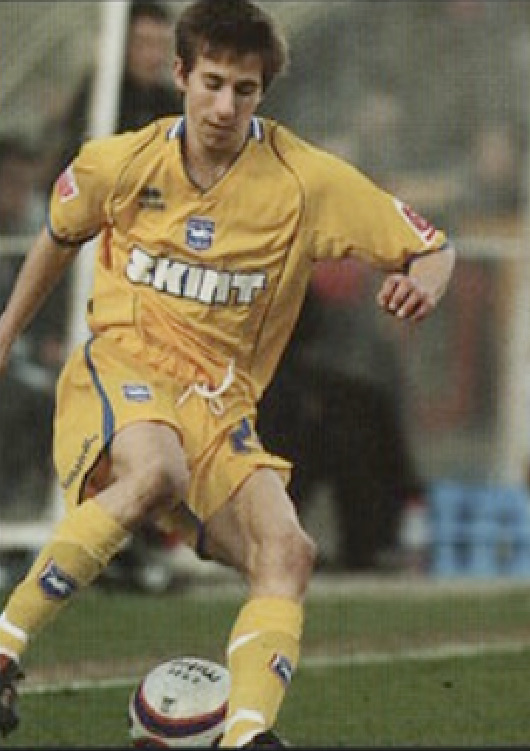
‘Outstanding pro’ Wes Fogden was Cherries pick after Albion

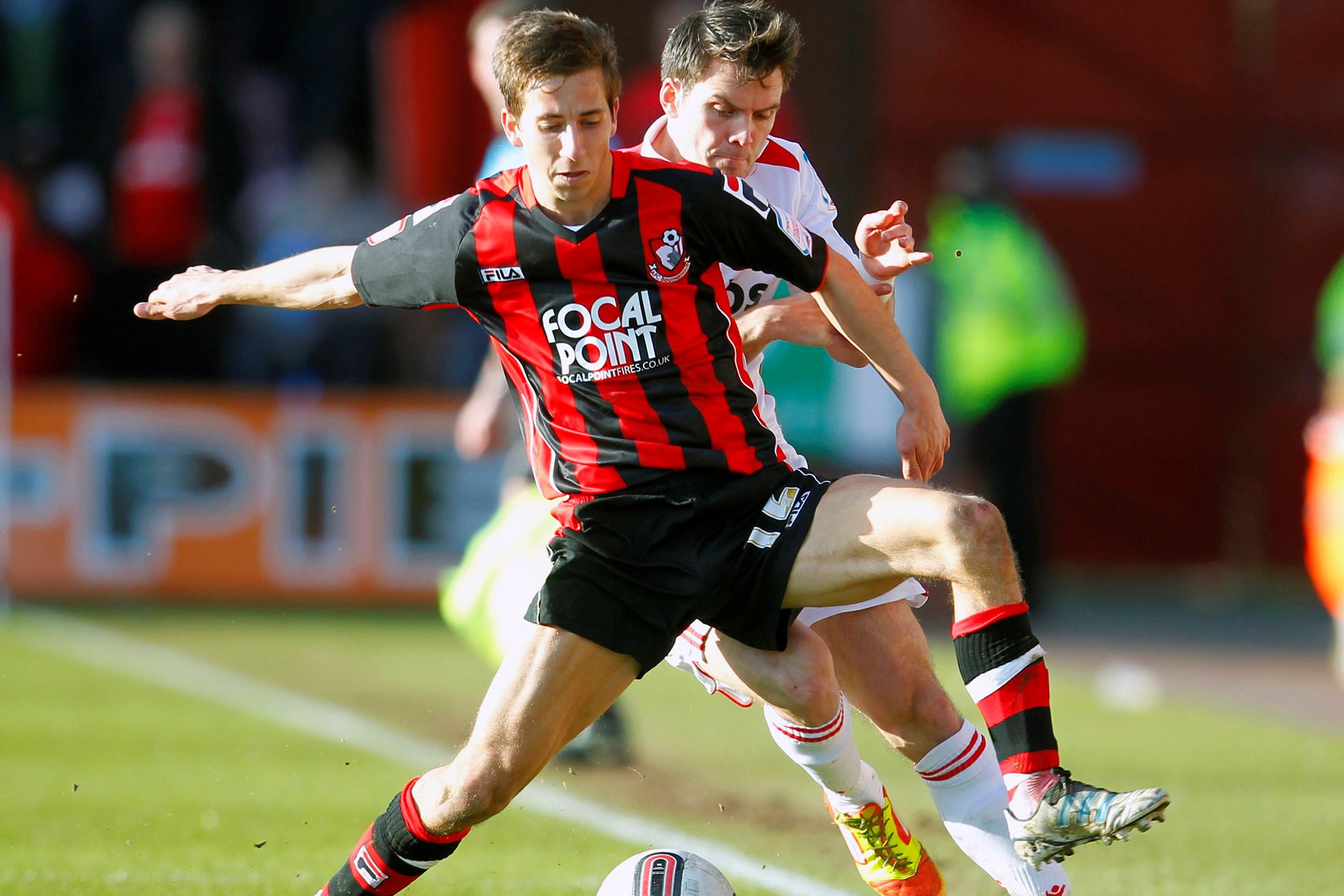
WES FOGDEN is still playing the game he loves despite injuries blighting much of a career that might never have got off the ground.

Being told he might not play again when undergoing an operation to remove a benign tumour on his spine as an 18-year-old at Brighton made him even more determined to enjoy every moment of being able to step out onto a football pitch.

Although he eventually broke through to Albion’s first team, it was at AFC Bournemouth that he got regular league football as the Cherries began their rise through the football pyramid.

Brighton-born Fogden has stayed in Dorset and now plays part-time for Poole Town while working as head of football for Branksome-based Elite Skills Arena, a business owned by former Bournemouth chairman Eddie Mitchell.

“Bearing in mind the amount of time injured, I’ve missed out on about five seasons of football,” Fogden told The News, Portsmouth’s Neil Allen in an interview published on 1 December 2022.

“I’ve had pretty much every injury going. Cruciate ligament damage to both knees, hamstrings, ankles, I’ve broken my nose four or five times, I fractured my cheekbone when going up for a header in the FA Youth Cup against Andy Carroll.

“There was even the time when the ball smacked me in the private regions, requiring an operation and putting me out for four or five weeks. A real variety of injuries.

“But I wouldn’t have it any other way. As long as I’m fit, I want to be playing every game, especially after what happened at Brighton.”

Fogden was never short of admirers for the way he bounced back from the devastating blow of being told he might never be able to play football again.

Tommy Elphick, who also went through Brighton’s youth ranks before moving to Bournemouth, said: “One thing with Wes is that you know he is going to dig in for you. He is a very good player; a footballer who can play at right-back, right wing or in central midfield.”

The player himself told the Albion matchday programme: “When I was told that I might not play again was the worst moment of my life but to come through it is a great achievement.”

After surgery to remove the tumour from his spine was thankfully successful, Fogden had to spend three months in a body cast before slowly recovering throughout the 2006-07 season.

He was grateful to the support of physio Malcolm Stuart, fitness coach Matt (‘Stretch’) Miller and physio Kim Eaton in aiding his return to fitness.

Albion sent him out on loan to Dorchester Town to gain experience but when Dean Wilkins’ squad was hit by ‘flu, the midfielder, who had previously been part of Wilkins’ successful Albion youth team, was recalled.

He made his first team debut at right-back in a Johnstone’s Paint Trophy tie against Swansea City when he was up against future Albion player Andrea Orlandi.

Fogden kept the shirt for the following Saturday’s league game at Oldham but was unfortunate to be sacrificed early in a reshuffle Wilkins was forced to make after wantaway Dean Hammond had got himself sent off early in the game. Nathan Elder went on as a substitute and scored a last-ditch equaliser for the Seagulls.

After that, Fogden’s involvement was a watching brief from the subs bench although he did get on in the 64th minute of a game at Cheltenham, replacing Albion’s goalscorer Jake Robinson in a 2-1 defeat.

Fogden subsequently went back out on loan, this time to Bognor Regis Town, and when Micky Adams was brought back to the Albion over Wilkins’ head that summer, he preferred to select more experienced players.

Fogden returned to Dorchester on loan initially and made the move permanent in October 2008. “Dropping out of league football wasn’t a tough decision,” he told afcb.co.uk. “Dorchester Town offered me a good deal, they were the only professional club in the Conference South at the time and it was a good opportunity to play first team football week-in-week-out.”

A cost-cutting exercise early in 2009 saw Fogden let go and he joined Havant & Waterlooville, who were in the same division. He was voted the Supporters’ Player of the Season in 2009-10 and 2010-11.

Having contemplated a career outside of football, he enrolled to take a degree in sports coaching and PE at Chichester University but Bournemouth boss Lee Bradbury gave him a second chance to build a career in league football.

“It was a difficult decision to put my studies on hold when Bournemouth approached me,” he said. “I was a year and a half in and I wasn’t expecting that call.

“After speaking to my family and the university, I decided to give the professional game one last shot.”

With the three-year deal done, Fogden said: “I’m really pleased to get back here at this level.

“It is a big jump for me. I was only young when I made my few appearances for Brighton and the pace was a lot quicker so hopefully I can just adapt as soon as I can.”

Bradbury told BBC Radio Solent: “Wes is a young prospect, who has a good grounding from his time at Brighton. He can play on either wing and can also play up front or in behind the strikers.

“He’s well thought of in the non-league circuit, and I saw it as a good opportunity to get him down here and integrate him into our squad.”

After three substitute appearances, Fogden produced an eye-catching performance on his full debut in a 1-1 draw at Colchester United in October 2011, Bournemouth’s Daily Echo observing that he “showed some neat touches in a lively display” playing just behind the striker in an attacking midfield role.

“I thought Wes Fogden was probably the best player on the park for us,” said Bradbury. “He was different class. He had great energy levels and worked really hard. He set the standard for the rest of the team.

“He has played off the striker quite a lot. He can play on either wing or up front in a partnership.

“He has got a lot of uses. He showed on Tuesday night what great quality he has, what a great professional he is and the fitness he has as well.”

The following March, after Fogden struck a 20-yard winning goal in a 1-0 victory over Brentford, Bradbury was once again full of praise for his signing. “I’m delighted for him. It was a terrific strike,” he said. “His energy levels are fantastic and he works so hard for the team. He’s very durable and a pleasure to work with.”

Fogden was part of a group of players who shared a close bond through meeting up at the Cotea coffee shop in Westbourne. The group included Ryan Fraser, Marc Pugh, Benji Buchel and Shaun MacDonald.

MacDonald, who joined Cherries two months before Fogden, told the Glasgow Times: “Just before I left, we all started going to Cotea in Westbourne. The food was always perfect, the coffee really nice and the people who own it are lovely.”

Fogden remained part of the set-up during Paul Groves’ brief reign after taking over from Bradbury, and then the return from Burnley of Eddie Howe and Jason Tindall. “Eddie and Jason gave the whole club a lift, the fans, the staff and the players, and we went on a roll that didn’t stop,” said Fogden.

Howe’s appreciation of Fogden was demonstrated in an interview with the Daily Echo, when he said: “Wes is a hard worker and a real team player but has got ability as well. He is a very good footballer, he has quality on the ball and you can`t underestimate that.”

Describing him as a valued member of the squad, the manager added: “Wes has certainly got the fire inside him to want to improve and to keep his place and I have been very impressed with him.”

Having made 59 appearances for the Cherries, including 32 League One starts, Fogden didn’t make any appearances in the Championship during the first half of the 2013-14 season and moved on to Portsmouth in January 2014.

Ahead of the move, Howe told BBC Radio Solent: “He’s been a really good servant to the club in his time here, he’s been an outstanding professional and someone who we have really enjoyed working with.

“But it’s been difficult to give him, although he has been injured this season, as much game time as he wants.”

Looking back on it a couple of years later, Fogden said: “I still had 18 months on my contract but decided that moving to Pompey was right for me.

“It was sad to leave, but it was time for a new chapter in my career. After the injuries I had when I was young it made me realise that, ultimately, I just love playing; if you’re not in that starting eleven on a matchday it’s very difficult.”

Born in Brighton on 12 April 1988, Fogden started playing football from an early age. “I was four or five years old, playing with boys a couple of years above me in my older brother’s team, which was run by my dad,” he said. “I signed for Brighton at 11 years old and played right the way through my school years.”

That senior school was Patcham High and in 2001 Fogden was in a Sussex under-14s squad alongside the likes of Richard Martin, Joel Lynch, Tommy Elphick, Tommy Fraser, Scott Chamberlain and Joe Gatting who all went on to play for the Albion.

He was part of the hugely successful Albion youth team of 2006 who, against all the odds, beat the youth sides of Premier League clubs Chelsea and Blackburn Rovers in the FA Youth Cup before losing on penalties to Newcastle United (managed by Peter Beardsley) in the quarter finals.

It was only after he had signed on as a professional at 18 in 2006, that he found out about his spine tumour.

“Initially I was told I would never play football again,” he recalled. “A diagnosis like that definitely changes the way you think about things; you take each day as it comes and enjoy it for what it is.”

Fogden’s time at Portsmouth was disrupted by a serious knee injury and he was only able to make 29 appearances in 19 months at Fratton Park. He later suffered a similar injury while playing for Dorking Wanderers and, in a March 2022 interview with Surrey Live, said: “With both of my ACL injuries I gained a lot of experience in the exercises I’d need to do,” he said.

“With the first ACL I had, I had a great physio at Portsmouth, Sean Duggan, who gave me a step-by-step plan. It was an unbelievable plan and I’ve used a lot of that into what I’ve done this season.

“Every minute of every game is a bonus now. I’m one of those that likes to play every minute anyway because of the injuries I’ve had. You cherish the moments you are out there.”

Fogden’s last professional league action came at League Two Yeovil Town where he was the 12th of 19 new signings made by Paul Sturrock ahead of the 2015-16 season.

He scored two goals in 17 appearances (plus one as sub) but was released in the summer of 2016 by Sturrock’s successor Darren Way.

He returned to Havant & Waterlooville in the Isthmian Premier League, helping them to promotion to the National League South and over four seasons made 154 appearances, scoring 23 goals.

For the 2020-21 season, Fogden switched to National League South outfit Dorking Wanderers, where he was once again dogged by injuries, including a nasty head injury that required hospital treatment.

He dropped back down to football’s sixth tier with Poole Town for the 2022-23 season because of the travel requirements playing and training for Dorking entailed.

There had been times when it clashed with his day job demands and taking on more at Elite Skills Arena had also influenced the decision. ESA owner Mitchell was chairman at Dorchester way back when the player went there on loan from Brighton.

“I’ve been working for Eddie Mitchell for a while now and have known him going back 15 years. He’s been really good to me,” he said.

As regards continuing to play, Fogden told The News: “All the time I can move about the pitch and be involved, playing as well as I can, then I’ll stay in the game. I’m still playing central midfield, right in the action, attacking and defending. I’m still going.

“When you’re a footballer, injuries are going to happen, the way I play is always twisting and turning, being involved, action packed. Freak injuries occur for me because of that – I can’t change my playing style.

“Considering I’m a bit shorter than a lot of players and at elbow height, it doesn’t help with my facial area. The same for dead legs, my thighs are knee-height compared to most players, it’s just one of those things.

“As I’ve got older, I’ve learnt to get away from some of the injuries which maybe I could have avoided previously. I’m still all-action, but sometimes it’s a case of pulling out of tackles I know I haven’t got any chance of winning.

“Are my injuries connected with the back? I don’t think anyone can really know, there might be a bit of a lack of mobility in that area, which could cause hamstring injuries and give less knee support, and perhaps a pelvic imbalance. I don’t know, I’m not really sure.

“It has been 16 years since that back operation and I’m still playing. Without football I wouldn’t be anywhere near the person I am. It’s strange thinking back to how it could have been, had it not been for a fantastic surgeon.”

Lowe and behold, the centre back who couldn’t get a game

KEITH LOWE is one of those curious cases of a player who joined the Albion on loan but didn’t kick a ball in anger!

He played one game for the reserves and sat on the first team bench for five matches without getting on.

Lowe was just 20 and well down the centre half pecking order at Wolves when Mick McCarthy had just taken charge.

At the beginning of the 2006-07 season, Albion’s first choice centre backs, Adam Hinshelwood and Guy Butters, were both out injured, and Joel Lynch was a doubt after picking up a niggle in a pre-season game. So, manager Mark McGhee took the opportunity to get Lowe on loan for a month.

Candid former Wolves manager McGhee told the Albion matchday programme how the club had done its homework on the youngster, who he described as a “no frills central defender who gets in where it hurts to head it and boot it. Obviously, that’s something we need – a big lad in our box to head it away. With the absence of Guy Butters, we’ve missed that sort of height in pre-season so I hope he will do well for us.

“Obviously I know people well at Wolves, so we don’t think for a minute that we are signing Rio Ferdinand, but we’ve signed a steady young player who’s determined to make a career for himself and wants to do well.”

For his part, Lowe told the Argus: “I’ve found out that there are a few injuries in the defence here so hopefully I’ll get into the team as soon as possible and play as much football as I can.”

Born in Wolverhampton on 13 September 1985, Lowe had progressed through the Wolves academy and was given a first team debut by Dave Jones in the League Cup at the beginning of the 2004-05 season, three weeks before his 19th birthday. Two months later Lowe was awarded a three-and-a-half-year contract and he said:“My family are all Wolves supporters so it’s a bit of a dream come true.”

Although he made 13 appearances at either right-back or centre-back that season, he only played three matches for them under Glenn Hoddle the following season although he gained experience out on loan, at Burnley (under Steve Cotterill), and QPR in the Championship, and Swansea in League One.

“A lot of people have left Wolves but the one thing they have got is a lot of defenders and they have scrapped their reserve team now so it was best to go and play somewhere else,” Lowe told Andy Naylor of the Argus. “I’m looking to play as many games as I can. I wasn’t getting the opportunity I would have liked at Wolves so I jumped at the chance to come and play some football.”

Lowe said that even though McCarthy had not long been in charge, he had already got his starting eleven in mind. “I hadn’t asked to go out on loan yet, but from what I can gather the manager here ‘phoned up our manager and it seemed like the ideal place to come,” he said. “I’ve not been down to Brighton before but my first impressions, even from the drive in, were it seems really nice and I’m really looking forward to it.”

He added: “My aim is to get noticed at Wolves but I’m open to anything that happens. If it’s not going to happen for me at Wolves then I’ll stay here as long as the management staff want me.”

Unfortunately for Lowe, Lynch recovered from a pre-season thigh injury in time to make the starting line-up for the season opener at Rotherham, and he never did manage to force his way into the side.

By mid-August, he confessed in another Argus interview: “I’m very disappointed. I came down here to play football but it hasn’t happened. You’ve got to be professional about it, keep working hard and hopefully it will come.

“We kept clean sheets in our first two games and, when things like that happen, you can’t really go knocking on the gaffer’s door and say: ‘Why am I not in the team?’ The lads have done really well but I’ll just keep working hard in training and hopefully he’ll take note.”

Lowe pressed his claims for a place by scoring on his debut for the Reserves, heading an equaliser from a Tommy Fraser corner on 54 minutes, in front of McGhee, in a 2-1 win away to QPR. He said: “It was nice to get 90 minutes under my belt and it was a good performance and result, so I was pretty pleased.

“Hopefully I’ve caught the gaffer’s attention. I thought I did well enough and I’m just trying to push to get into the team.”

It didn’t happen, though, and McGhee was at pains to point out the circumstances. “We brought him here to play but then Joel got fit and suddenly looked absolutely fine.

“By the time we got Keith down here we weren’t sure he had trained with us enough and done enough work with us. Joel was there and we decided not to gamble with Keith but to play Joel, who has then played so well, so things have conspired against him a wee bit.”

McGhee added: “He did fine at QPR. In the second half, particularly, when we pushed them up the park and asked them to defend in behind, he did it well.”

Lowe might have got a chance in the Carling Cup against Boston United but Wolves were only prepared to allow him to be cup-tied if Albion intended keeping him longer – and McGhee had decided to add to his defensive options by signing veteran Georges Santos.

Lowe headed back to the Black Country, but the following month he went on loan to Cheltenham Town, where he finally saw some league action, playing in 18 matches. It sowed the seed for a later period in his career: he played 133 games for League Two Cheltenham between 2010 and 2014 in a career that ultimately embraced 617 appearances for 13 different clubs.

Lowe spent the final season of his Wolves contract on loan at League One Port Vale. Signed by Martin Foyle, Lowe also featured under his successors Dean Glover and Lee Sinnott, playing in 31 matches. But Vale were relegated in 23rd spot and the defender finally bade farewell to his boyhood club in May 2008.

He dropped out of the league for the 2008-09 season, appearing in 52 games for Conference Premier League side Kidderminster Harriers.

Budget issues meant he was released at the end of the season and the following campaign he was back in the league with Hereford United, playing 26 games for the League Two Bulls under John Trewick and former Wolves boss Graham Turner. That spell at Cheltenham came next.

During two years at York City, Lowe collected no fewer than four Player of the Year awards in 2014-15 – three from supporters’ groups and one from local newspaper The Press.“Keith deserves the awards for his consistency,” City boss Russ Wilcox told the newspaper. “To play every league game is always an achievement. It shows you are doing things right on and off the pitch. It means you look after yourself, train properly and are a good professional.”

Released by new York boss Jackie McNamara, Lowe returned to Kidderminster, by then in the National League, where he spent another 18 months, much of it as club captain.

National League Macclesfield Town was his next port of call and he played in all of their matches as they won promotion back into the league in 2017. However, it ended on a sour note in 2019 when he was one of six players to issue the club with a winding up order for unpaid wages.

The 2019-20 season saw him turn out for three different clubs: Southern League Nuneaton Borough, National League North side Bradford Park Avenue and latterly (until the Covid pandemic called a halt to the league) Kidderminster for a third spell.

At the end of the 2021-22 season, he announced his intention to concentrate on developing a career as a teaching assistant. He told the Kidderminster club website: “I’m not ready to stop yet and am very much planning to play part-time next year, but it feels like now is the time to move away from the full-time game and think about the future and the career I’ve been building in schools.”

Krul luck as Ryan kept Dutch penalty ‘master’ at bay

AN international goalkeeper whose prowess at saving penalties took his country through to the World Cup semi-finals barely got a look-in between the sticks for Brighton.

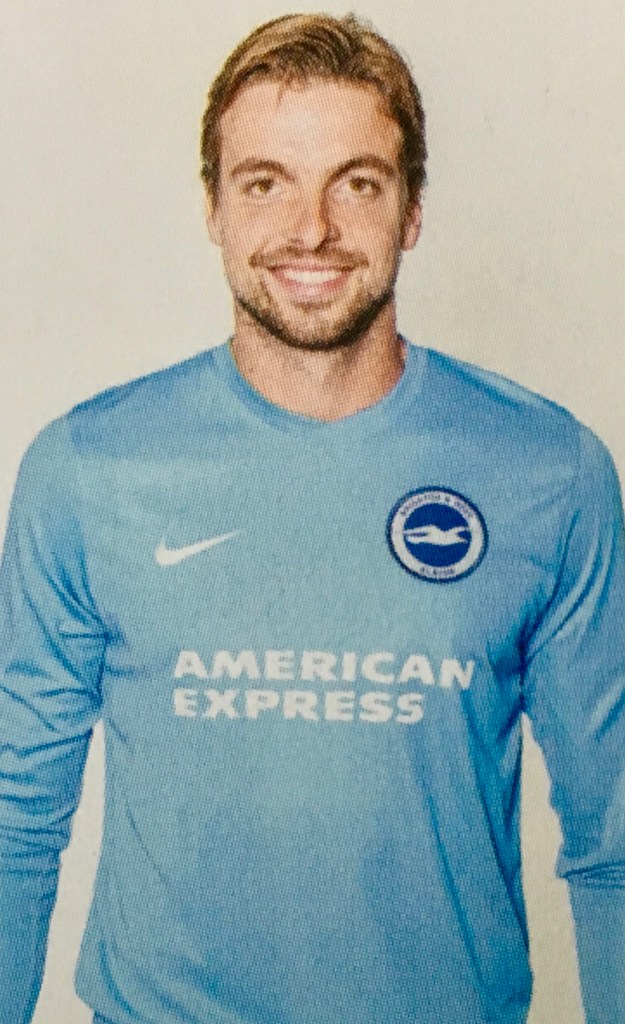
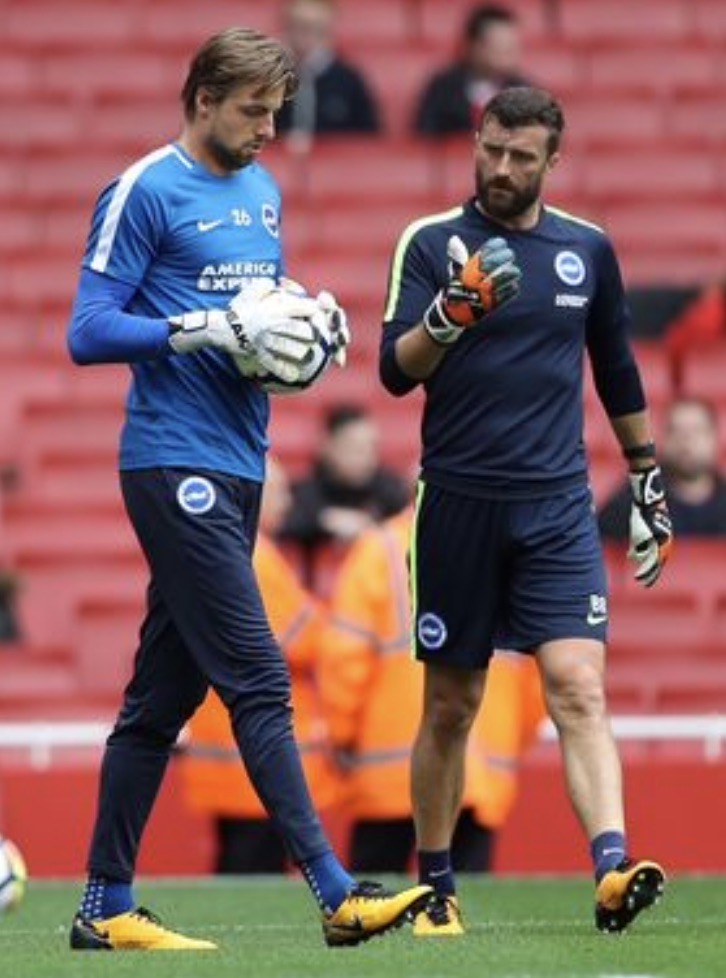
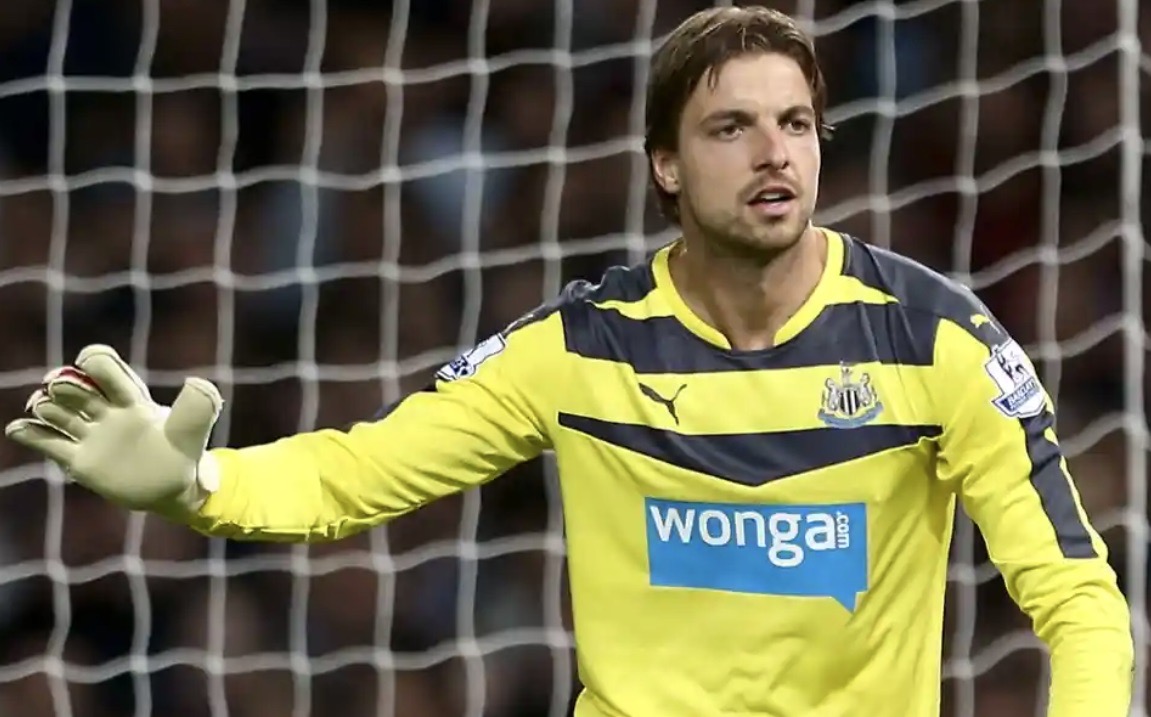
Experienced Dutchman Tim Krul, who played 184 games for Newcastle United over 12 years, kept goal for the Seagulls on only five occasions during the 2017-18 season.

The form of Mat Ryan, himself an Australian international, meant Krul’s involvement was restricted to cup matches and a watching brief from the substitute’s bench.

Krul initially signed on a season-long loan deal on deadline day in August 2017 but the move was made permanent the day after he made his Albion first team debut in a 1-0 League Cup defeat at Bournemouth.

Manager Chris Hughton said: “I know Tim from my time at Newcastle and he is an excellent professional that has a vast amount of experience at both club and international level.

“He’s played an extensive amount of games in the Premier League, as well as playing in the Europa League and his experience will also help benefit the other keepers in the squad.”

Having experienced some in and out spells during his time on Tyneside, Krul understood the situation when interviewed by The Argus in November 2017.

“I’m working hard every day to push Mat Ryan. He’s done great so far and we’re picking up points, that’s what it’s all about.

“If the gaffer needs us or Mat got injured, I need to be ready and literally it can happen any second.”

Krul admitted: “It’s a different position for myself, because I’m used to playing week in, week out.”

The move to Albion had been the chance to reignite his career after a long spell on the sidelines having suffered a cruciate knee ligament injury on international duty in 2015.

Krul is powerless to stop Romelu Lukaku’s winning goal for Manchester United in Brighton’s FA Cup fifth round tie at Old Trafford

Before he made the move, he consulted Steve Harper, who’d been on loan at Brighton during the Gus Poyet era. Harper told the matchday programme: “I told him it woud be a great move for him and it will also be a great signing for the club. He was outstanding in the season Newcastle finished fifth in the Premier League and he’s an international ‘keeper for the Netherlands who has played at the World Cup.”

After he’d played in Albion’s FA Cup fifth round defeat to Manchester United at Old Trafford, Krul told The Argus: “Obviously when I came, I was hoping to get a bit more (game time) maybe, but at the time I walked through the door Maty’s performances went up a level, so that is testament to him.

“The level we are training at with Ben Roberts every day is really high. He has been showing that in the games. I’ve been around long enough to see when a goalkeeper is playing well you take that. I’m 29, I’m back fit, I’m feeling better than I’ve ever done so I’m ready to play. I just have to be patient again.

“I had to be patient at the start of my career and you have to do that again now. But my chance will come. There’s a lot of years left.”

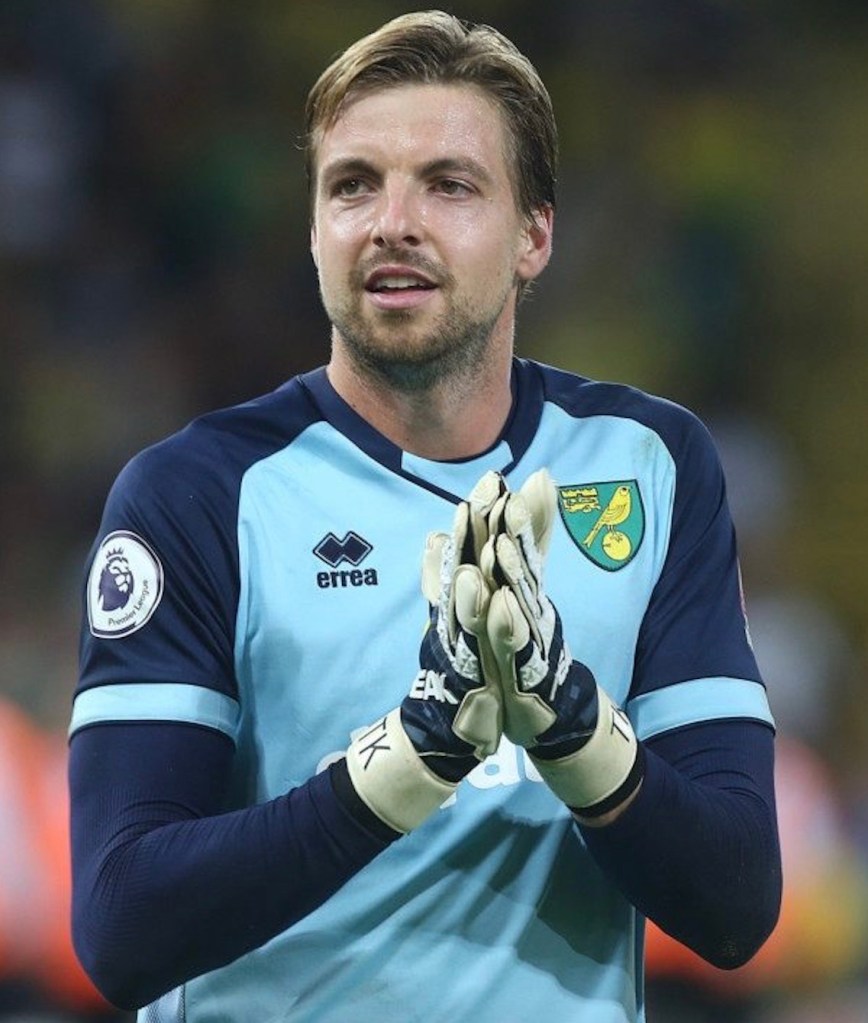
Krul finally got regular playing time again when he moved to Norwich City

Unfortunately, that didn’t happen with the Albion but Krul certainly resurrected his career with Norwich City and, after signing an initial two-and-a-half-year deal in the summer of 2018, earned a further three-and-a-half-year contract in December 2020.

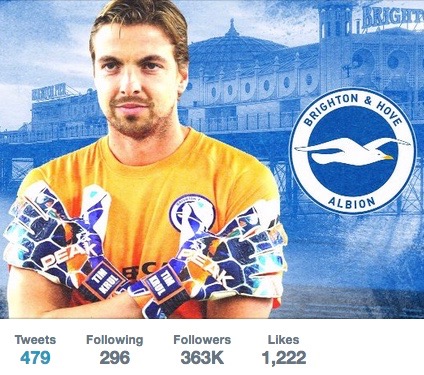
He then contracted Covid-19, announcing it on Twitter, where he has a huge following of more than 349,000. “I feel under the weather and fatigued,” he wrote. “It’s an important reminder to stay safe, this virus is not a hoax.”

Thankfully, by the end of January, he had recovered and returned to the side to clock up 100 appearances for the Canaries.

Born in The Hague, Holland, on 3 April 1988, from a young age Krul played for his hometown club RAS and was with ADO Den Haag between the ages of 12 and 17. Graeme Souness was still boss when Krul joined Newcastle in the summer of 2005. Shay Given and Steve Harper were the established ‘keepers in those days.

Shortly after making his debut in a UEFA Cup match in November 2006, he suffered injuries which ruled him out of action for six months. After returning to playing in the spring of 2007, he earned a new four-year deal with Newcastle.

An eventful loan spell in Scotland followed as Krul sought to gain league experience at Falkirk. He conceded 11 goals in two games early on (four to Celtic, seven to Rangers), he was sent off in a game on 2 January 2008, and then dislocated a shoulder in a cup match against Aberdeen, bringing the loan to a premature end.

When Given left St James’ Park for Manchester City, Krul was no.2 behind Harper in Newcastle’s 2009-10 season in the Championship. He deputised if Harper was injured and was given starts in cup matches. By the season’s end, when the Toon had won promotion back to the Premier League, Krul was awarded a new four-year deal and made his debut at that level when replacing the injured Harper in a 1-0 win away at Everton in September 2010.

He ended that campaign having played 25 first team matches, and the following season, established himself as the no.1, with Rob Elliot as his deputy. Out-in-the-cold Harper was allowed to spend a month on loan with the Albion.

Under Alan Pardew, Krul was the preferred first choice ‘keeper, and he signed a five-year contract with the Magpies in 2012. Several different injuries in 2012-13 restricted him to 30 appearances.

Another six-week injury lay-off over Christmas 2014 interrupted a period when there was yet another managerial change on Tyneside and the 2015-16 season under Steve McLaren was only a couple of months old before Krul was ruled out for the remainder of the season when he ruptured an anterior cruciate ligament in his right knee playing in the Netherlands’ 2-1 European Qualifiers win in Kazakhstan.

McLaren was sacked in March 2016 and his replacement Rafa Benitez couldn’t prevent them from being relegated. Krul signed a one-year contract extension in the summer of 2016 but, with Elliot and Karl Darlow ahead of him, he was sent on loan to Ajax as Newcastle successfully bounced back to the elite, pipping Albion to the Championship title.

Meanwhile, things didn’t work out as planned for Krul. He only got a handful of games for the Ajax reserve side and he spent the second half of the season at AZ Alkmaar instead.

Krul has played for his country at every age level and made his full international debut in a friendly against Brazil in 2011. Maarten Stekelenburg and Jasper Cillessen have normally been ahead of him but he has won 11 caps, including three in 2020 after a five-year absence from the side. However, it was what happened at the 2014 World Cup in Brazil that most fans will remember.

Head coach Louis van Gaal took off Cillessen in the final seconds of extra time with the Dutch still drawing 0-0 with Costa Rica and sent Krul on because of his reputation for saving penalties. Sure enough, he made two saves in the subsequent shoot-out and Holland went through to the semi-finals (where they went out 4-2 on penalties to Argentina).

The story behind the decision emerged in an article by Michael Bailey for The Athletic on 5 March 2020. The Dutch goalkeeping coach at the tournament, Frans Hoek, explained how Krul had responded best of the three ‘keepers to special training he put them through.

“When we came together with the national team, the three goalkeepers were more or less at the same level in stopping penalties. And that level was low,” Hoek told The Athletic. “We decided to do things in a different way and when you do that you have to believe in it, practice it and then show it. Basically, Tim responded best to that.

“He had some advantages. He’s very big, he has an enormous reach. He is impressive when you’re standing the other side of him and maybe because he’s from Den Haag area, he can be a little bit provocative. Michel Vorm is too nice a guy, so is Cillessen. But Tim can get away with it. It’s just something he has.”

A look back through the archives reveals Krul was displaying his prowess saving penalties as far back as his youth playing days. In an FA Youth Cup match for Newcastle against Brighton, he made saves from Tommy Fraser and Scott Chamberlain as Toon edged it 3-2 on penalties.

Albion goalkeeper coach Roberts was full of praise when asked about the big Dutch ‘keeper. “He has an aura about him and the self-belief to think he will save everything,” said Roberts. “I’m delighted for him as lots wrote him off when he had his bad knee injury. He’s since shown how much his hard work and dedication has paid off.”

After putting pen to paper on his new Norwich contract, Krul told the club website: “Proud is the big word. I’m excited to commit my future to Norwich and have had an amazing two and a half years already at this club, so I’m excited to add another three and a half years to that.

“The plan the club has got for the next few years is exciting and there’s some young, exciting talent coming through the ranks as well. From top to bottom, it’s a club I want to be at; one that’s run really well from Michael and Delia to the kitman. It’s an exciting time for the club, for sure.

“As a player, you want to be loved and I’ve got a great relationship with the fans. The club giving me this three-and-a-half-year contract shows the belief they’ve still got in me.”

Manager Daniel Farke added: “It’s fantastic news for us to have a player of Tim’s quality and personality. He’s by far the best goalkeeper in this league and was impressive in the Premier League.

“He’s still in a really good age for a goalkeeper and can play many more years. It’s good news he was willing to sign a long-term contract because there is lots of interest in a player of his quality and experience.”

Krul was a key part of Norwich’s Championship-winning sides of 2018-19 (when he was ever-present) and 2020-21. But in August 2023 he returned to the Premier League when he was signed by newly-promoted Luton Town.

Town boss Rob Edwards said: “Tim’s a leader and a top goalkeeper who is still very and ambitious and very hungry. He wants to play.

“It’s great to have someone of his level in the group with that ambition and to be that driven, and it’s going to add great competition to the goalkeeper department, which is what we’ve wanted.”

Pictures from online sources and matchday programmes.