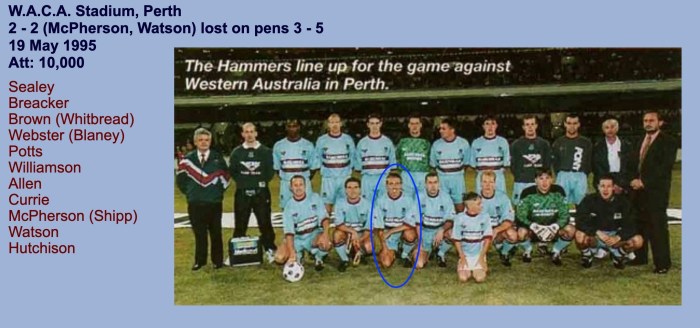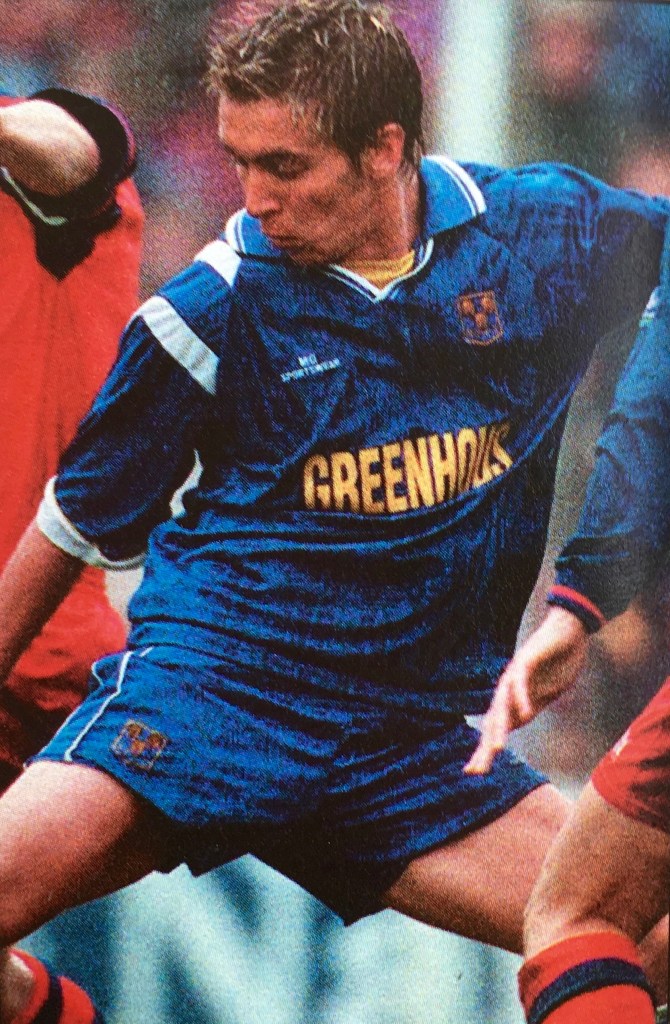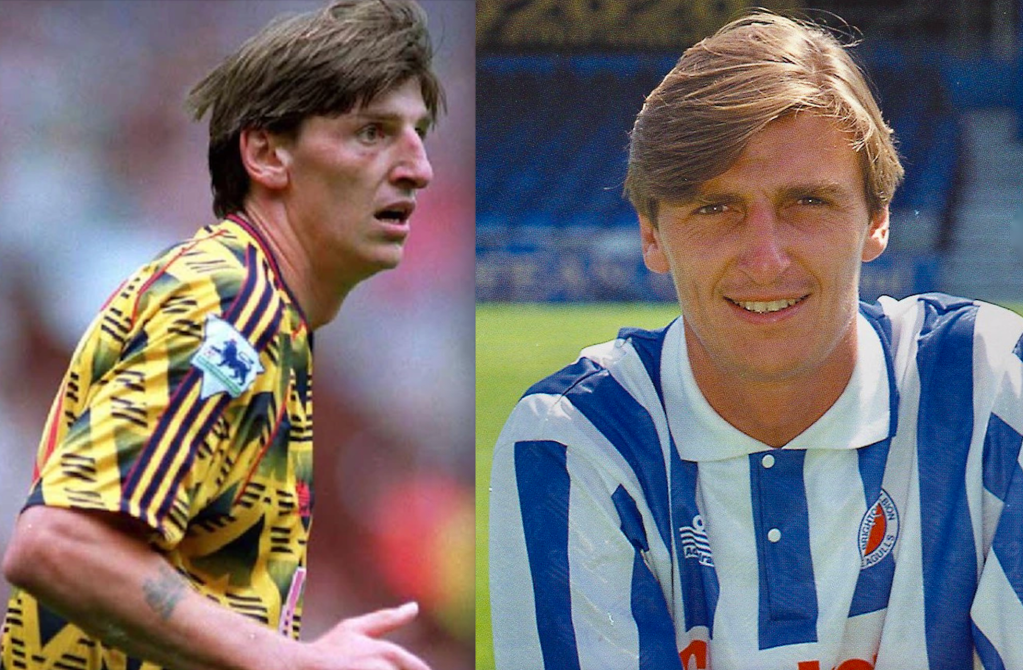
Why Colin Pates is forever grateful to Liam Brady

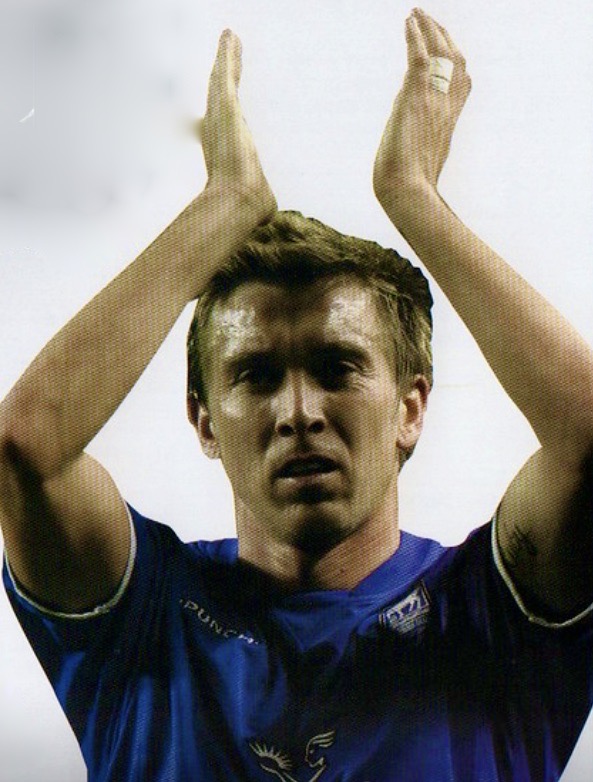
ONE-TIME Arsenal back-up defender Colin Pates had a Gunners legend to thank for persuading him to quit the game before he did any life-altering damage.

Thankfully, Pates took Liam Brady’s advice to bring his professional playing days to an end at Brighton in January 1995 and he went on to have a long and successful career coaching at an independent school in Croydon where he introduced football to what was previously a rugby-only establishment.

“Liam told me that I should think of my health before my playing career and that I would be a fool to myself if I carried on playing,” Pates told the Argus in a 2001 interview.

“My knee had fallen apart and it was the right advice. If I’d ignored it, I could well have ended up not being able to walk.

“Footballers need to be told when it is the end. I’ll always be grateful to Liam for that.”

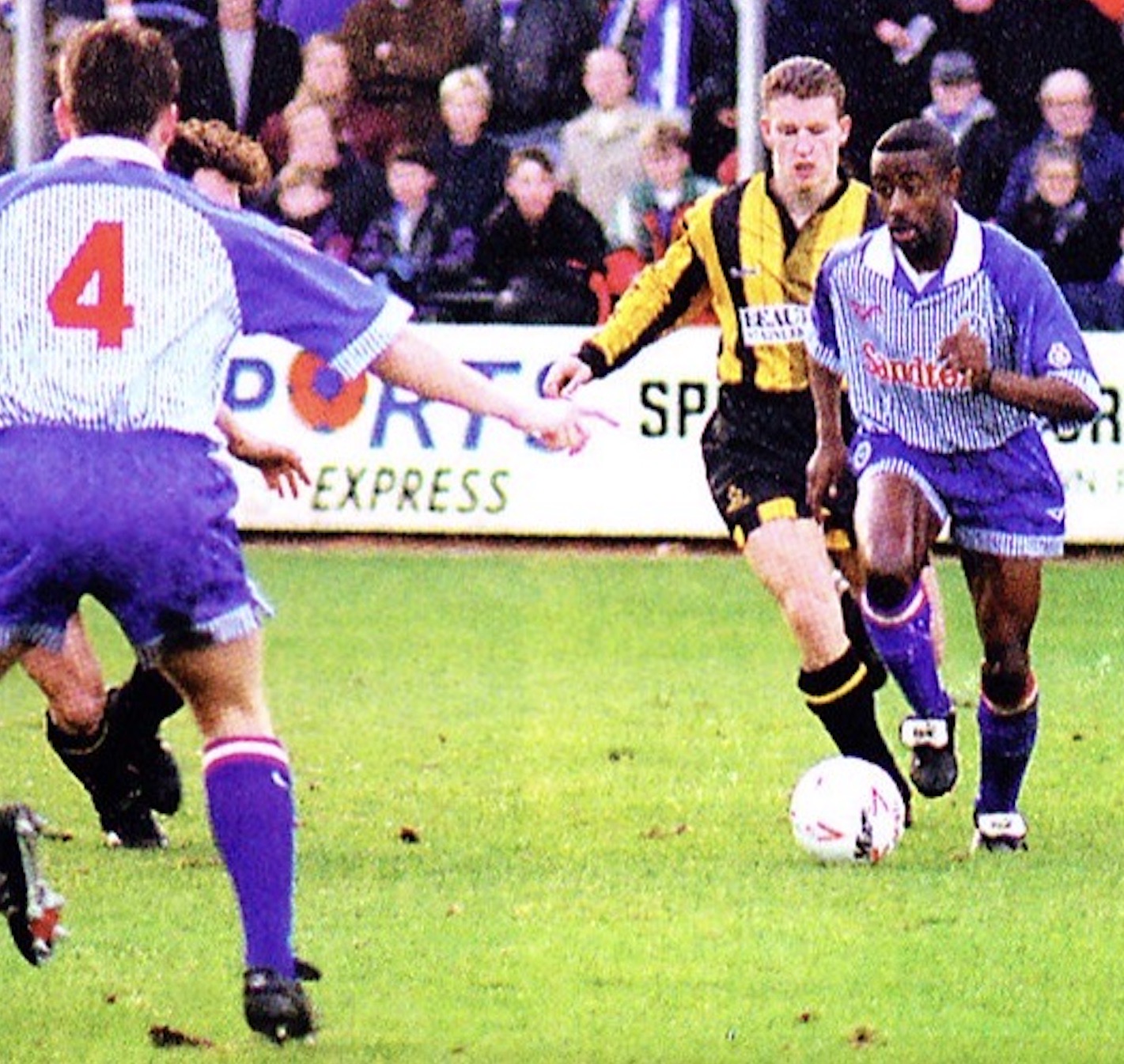
Pates had played the last of 61 games in the stripes (a 0-0 home draw against Bournemouth) only six weeks after he was presented with a silver salver by former England manager Ron Greenwood to mark his 400th league appearance (on 24 September 1994, a 2-0 home win over Cambridge United).

In the matchday programme of 17 December, Brady confirmed that Pates and fellow defender Nicky Bissett, (who’d twice broken a leg and then sustained a knee injury) would be ruled out for the rest of the season. Neither played another game for the Seagulls.

It brought to an end Pates’ second spell with the Seagulls, having originally spent a most productive three months on loan in 1991 helping to propel the club to a Wembley play-off final. If Albion had beaten Notts County that May, Pates may well have made a permanent move to the south coast. As it was, he said: “Unfortunately, the club couldn’t meet Arsenal’s asking price for me that summer so I returned to Highbury.

“But when my contract expired in 1993, there was only one club I wanted to be at… Brighton.”
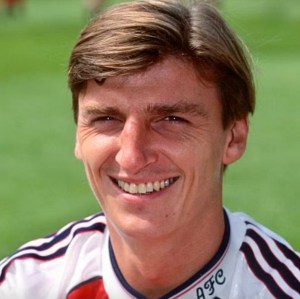
Pates had plenty of competition for the centre back berth at Arsenal

As if Tony Adams, Andy Linighan, David O’Leary and Steve Bould weren’t enough centre back competition at Arsenal, manager George Graham had also taken Martin Keown back to the club from Everton for £2m – six and a half years after selling him to Aston Villa for a tenth of that amount.

So, it was no surprise that Pates found himself surplus to requirements at Highbury and given a free transfer. Graham’s old Chelsea teammate, Barry Lloyd, eagerly snapped up the defender for a second time, this time on a permanent basis.

Goalkeeper Nicky Rust, still a month short of his 19th birthday, who’d also been given a free transfer by Arsenal, made his Albion league debut in the season-opener at Bradford City behind the returning Pates, who had just celebrated his 32nd birthday four days before the game.

After starting the first 10 matches alongside the aforementioned Bissett, Pates suffered an abductor muscle injury early on in a 5-0 drubbing away to Middlesbrough in the League Cup which necessitated a spell on the sidelines. He missed nine matches – only one of which was won.

These were the dying days of the seven-year Lloyd era and, even with Pates back in the side, one win, two draws and four defeats brought the sack for the manager.

Any doubts new manager Brady had about Steve Foster and Pates were swiftly dispelled, as he wrote about in his autobiography (Liam Brady: Born To Be A Footballer).

“Fossie was 36. I feared he might be going through the motions at this stage in his career and it would have been hard to blame him,” said Brady. “Colin Pates was a few years younger, but he’d been at Chelsea and Arsenal and could have been winding down.

“I appealed to them to give me a dig out, to lead this rescue mission. And they responded just as I hoped.”

Together with the even older Jimmy Case, who was brought back to the club from non-league Sittingbourne, they “brought on” the younger players in the new man’s first few weeks and months.

Under Brady, young Irish centre-back Paul McCarthy played alongside Foster in the middle, with Pates at left-back. And Pates saw the arrival of some familiar faces in the shape of young Arsenal loanees, first Mark Flatts and then Paul Dickov, whose successful spells helped Brady to steer the Seagulls to safety by the end of the season.

“I really enjoyed it, playing mainly at left-back,” said Pates. “It was a great family club and I made a lot of friends there along the way.”

At the time Pates had to call it a day, Albion were a third-tier side but the bulk of his career had been played at the top of the English game for two of its leading lights in Chelsea and Arsenal, and briefly Charlton Athletic.

Albion’s ex-Arsenal trio Liam Brady, Raphael Meade and Colin Pates

The player’s move to Arsenal from Charlton for £500,000 in January 1990 raised more than a few eyebrows because he was 28 at the time and none of Arsenal’s back four – Lee Dixon, Bould, Adams and Nigel Winterburn – looked like giving way.

“People asked me why I went there,” said Pates. “But when a club is paying that money and that club is Arsenal who wouldn’t go and take the chance?

“I knew this was going to be the last opportunity to have a move like this in my career and although I knew I was only being signed as cover, I couldn’t turn it down.”

He continued: “I’d joined a team that had just won the league, that would do so again in 1990-91 and they had the fabled back four – the best defensive unit in world football at the time.”

The website upthearsenal.com acknowledged: “Pates had built a solid reputation at Chelsea as a dependable defender who was strong in the air and no slouch on the deck.”

Pates added: “When I first met George (Graham) in his office at Highbury, he was honest and straight talking. He told me I’d have to work hard to get into the side.”

However, within a month he made his Gunners debut at left back in place of the injured Nigel Winterburn in a 1-0 defeat to Sheffield Wednesday. It turned out to be his only first team appearance that season.

Although he found it difficult to motivate himself for reserve team football, he pointed out: “I still enjoyed the training sessions with the first team and I did learn a lot about defending from George, even at that late stage in my career.”

However, after his return from the loan spell at Brighton, he saw action as a sub in three pre-season friendlies ahead of the 1991-92 season and that autumn had his best run of games in the first team.

He featured in eight games on the trot between October and November 1991 and memorably scored his one and only goal for Arsenal in a European Cup match at Highbury against a Benfica side managed by Sven-Göran Eriksson. He also played in the February 1992 1-1 North London derby against Spurs and made two appearances off the bench that season.

It was a similar story in the 1992-93 campaign when he went off the bench on five occasions although he had two starts: in a 2-0 win at Anfield (Anders Limpar and Ian Wright the scorers) and a 3-2 defeat away to Wimbledon.

“I was a bit-part player but it was a good time to be at the club with the cup finals and being part of the squads,” said Pates.

On his release from Brighton, Pates had a spell as player-manager of Crawley, played a handful of games for non-league Romford, and coached youngsters in various places including Mumbai in India and the Arsenal School of Excellence.

Pates told The Guardian in a 2002 interview how a sense of history and continuity was the first thing he had noticed when he signed for Arsenal.

Brady, Paul Davis, Bould and other former Arsenal players were all invited to the Arsenal academy, and Pates told the newspaper. “Young players need people like Stevie Bould to tell them how proud they should be to pull the shirt on and to show them what’s expected of them. “When I joined Arsenal, everyone was kind and considerate. You were left in no doubt about how you were supposed to conduct yourself. For the way it’s run, it’s the best club in the country.”

By then though, Pates had begun a new career as a coach getting football off the ground at the independent Whitgift School in Croydon. He was to stay 24 years at the school having been invited to introduce football by its headmaster, Dr Christopher Barnett.

The story has been told in depth in several places, notably in London blog greatwen.com by Peter Watts, among others. Watts wrote: “A posh school in the suburbs is not where you’d expect to find a hard-bitten former pro, and Pates admits: ‘Whitgift is quite alien to some of us, because we had state school educations. It was intimidating, and not just for the boys.’ But he jumped at the opportunity.

At first, he took a sixth-form team on Wednesday afternoons, but there were no goalposts, pitches, teams or even footballs! “We didn’t have anything. So, we had to start from scratch, pretty much teach them the rules,” he said.

“They were rugby boys playing football, so these were quite aggressive games. But after three years we introduced fixtures and we’ve never looked back,” said Pates.

In an interview with the Argus in October 2001, Pates added: “We went over the local common for our first training session with some under-18s after finding a ball that looked like the dog had chewed it up.

“I had to go right back to basics. All they had known was rugby, so it was a case of going through the rules of football to start with, like the ball we use is round!

“I was told that in 300 years football had never been considered. But a lot of the boys and their parents expressed an interest.

“It might be an independent school but you can forget the black and white filmed images of public school kids. Most are from working class backgrounds and they love their football.

“It grew a lot quicker than the head thought and he told me I should take over as master in charge of football.”

As the sport grew, he recruited his former Charlton teammate (and ex-Brighton, Wolves and Palace full-back) John Humphrey and Steve Kember, the former Chelsea and Palace midfielder to help with the coaching.

Asked about it on the chelseafancast.com podcast Pates delighted in recounting how from time to time he would show Humphrey a video clip of a rare goal he scored for Chelsea against Wolves when he flicked the ball over Humphrey’s head in the build-up to it – however Chelsea lost that 1983 match 2-1!

More seriously, Pates spoke at length to Watts about the benefits of a good education in case things didn’t pan out.

“You have to be an exceptional footballer to make it these days. So, we want to give them the best opportunity to be a footballer, but also give them a magnificent education so if they don’t sign scholarship forms they have something to fall back on. It works for us, it works for the academies and it works for the families.”
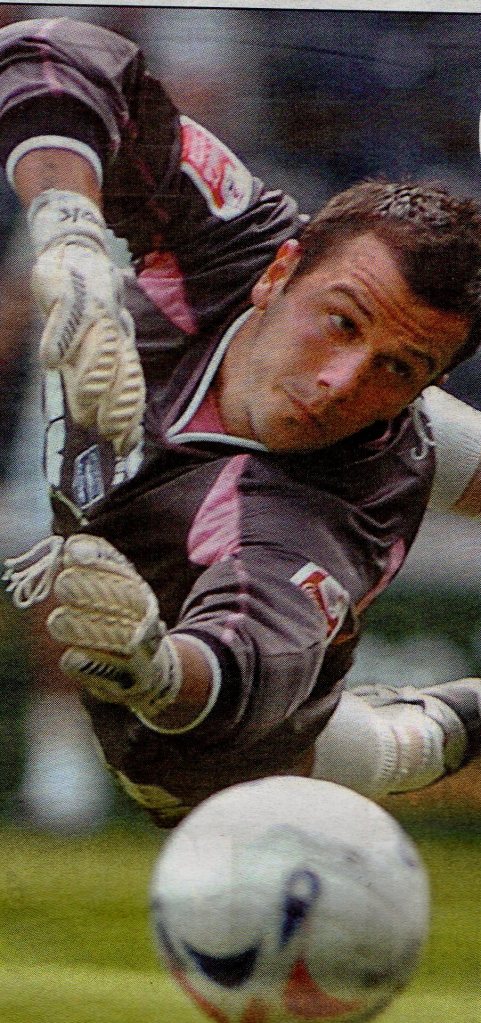
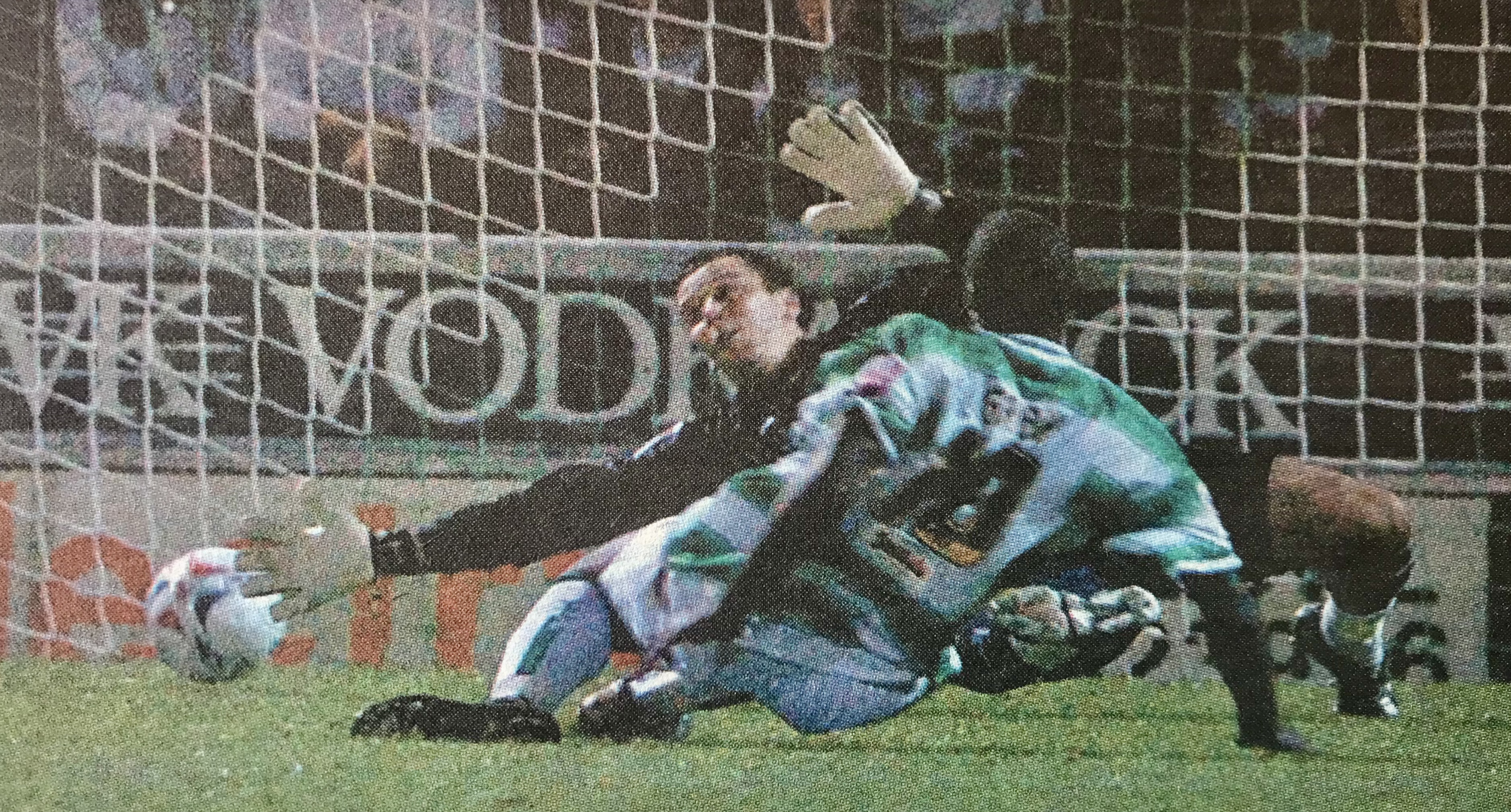
Boo boys saw off international ‘keeper Wayne Henderson

DISGRUNTLED former Albion goalkeeper Wayne Henderson helped Grimsby Town keep their place in the Football League.

The Republic of Ireland international stopper, forced away from Brighton by a section of voluble supporters, was on loan to the Mariners in 2009 as they desperately tried to avoid the drop.

Although there were Grimsby grumbles on his debut, Henderson’s mission was a success, Town avoiding the drop by four points. But it was only a stay of execution because they finally fell out of the league for the first time in 100 years in 2010.

By then, Henderson was back at parent club Preston North End, who had bought him from the Seagulls for £150,000 on deadline day in January 2007.

He managed only 10 appearances for the Lancashire club – his last game coming in the final match of the 2009-10 season – and in March 2011, when only 27, he was forced to quit the game after two years plagued with spinal injuries.

Much had been expected of the young Irishman at Brighton after an initial loan spell from Aston Villa, where he had been coached by former Seagulls ‘keeper Eric Steele. He made his Albion debut away to Derby County, together with fellow countryman Paul McShane (on loan from Manchester United), in the opening game of the 2004-05 season.

Manager Mark McGhee said the youngster hadn’t put a foot wrong. “His kicking really took the pressure off us,” he said. “He was composed and took a couple of crosses towards the end which also helped relieve the pressure.”

McGhee had first hoped to sign Henderson in January 2005 to help solve a goalkeeping crisis created by a serious shoulder muscle injury to Michel Kuipers in a home match against Nottingham Forest.

Youngster Chris May, son of former Albion defender Larry May, had come off the bench to replace Kuipers in the match but McGhee didn’t see him as experienced enough in the battle to stay in the Championship. The previous season’s first choice ‘keeper, Ben Roberts, was a long-term absentee with a back injury, so McGhee had few options.

The Seagulls hoped a contractual hitch relating to Henderson’s previous loan spell at Notts County could be resolved in time to enable him to make his debut for the Albion at Elland Road. But it couldn’t and Brighton turned to Blackburn’s David Yelldell instead. That was the game where the loan goalkeeper famously wore a bright pink goalkeeper jersey and predictably suffered abuse from the Leeds crowd.

Although Clarke Carlisle put Leeds ahead just before half time, Yelldell had the last laugh when defender Guy Butters prodded home an equaliser in the 81st minute.

When McGhee didn’t see Yelldell as a long-term option, he turned to one-time Arsenal ‘keeper Rami Shabaan, who hadn’t played a competitive game for two years, but he let in 13 goals in six games. The manager brought in Southampton’s Alan Blayney, and he was between the posts for the last seven games of the season when Albion just managed to cling on to their tier two status.

McGhee finally managed to bring in Henderson ahead of the new season and, perhaps mindful of the goalkeeping headache he’d had the previous season, found he suddenly had an embarrassment of riches in that department.

Promising youngster Richard Martin appeared as a back-up on the bench, as did season-long French loanee Florent Chaigneau. In September, Southampton’s Blayney also returned for another loan spell and eventually took over the gloves when Henderson’s three-month loan from Villa came to an end.

Intriguingly, Henderson’s penultimate game on loan was a 1-1 draw with Ipswich at the Withdean when another Villa loanee, Stefan Postma was in goal for the visitors.

It had been Henderson’s understanding that a permanent move would follow soon after he’d featured in a 1-1 draw at home to Wolves on 1 November. But a two-month on-off saga began which, according to McGhee and chairman Dick Knight, was largely down to demands made by Henderson’s agent.

Albion agreed a fee with Villa of £20,000, plus £15,000 if he helped avoid relegation from the Championship. He didn’t.

The Argus sought the opinion of former Albion no. 1 Steele who felt Henderson had a chance to make a name for himself with the Seagulls.

“With Thomas Sorensen as the no. 1 and Stuart Taylor bought in from Arsenal, Wayne’s route in terms of playing first team football was always going to be limited,” Steele told the paper. “Our problem is that we only need one goalkeeper to play in one position and it’s just been a question of what level he would make his mark.

“He’s 22 now and he really had to be looking to move on and I wish him all the best. I’ve worked with him now for four and a half years and always thought he would make a good living from the game.

“I think that’s summed up by the fact that Brighton are going to pay a small fee and we’ll also get sell-ons. He’s the same height, he’s got the same build and he has got the same attributes as Shay Given (Newcastle and Republic of Ireland). And he just needs the chance to go and play.

“He’s been away at Wycombe and been away at Notts County, who would have signed him had they had the money. He’s done it in the Second Division and the First, now he’s got the chance to do it in the Championship.”

Even if supporters of the club he’d just joined had doubts about his merits, the Republic of Ireland selectors were confident enough to give him a first senior call up in February 2006, and he made his full international debut on 1 March 2006, as a second half substitute in a 3–0 win over Sweden.

After the Albion had forfeited their tier two status that season, and the omitted Kuipers had been transfer-listed after falling out with McGhee, Henderson opened his heart to the Argus.

“Michel is liked by the fans and hopefully one day I will get the respect of the fans I feel I deserve,” he told Andy Naylor. “Michel has that because he has been at the club for a long time. I have mixed feelings about him being on the transfer list because it’s good to have someone with his reputation at the club pushing me, but sadly he fell out with the manager.

“Hopefully, I can prove the fans who are criticising me wrong but if they are set in their ways there is nothing I can do about that. It’s a shame if that is the way they feel but I couldn’t care less. I am not going to worry about it.

“I know myself how well I have done, and I am an international player because of that.”

Although he started the new season as first choice ‘keeper, three defeats on the spin saw McGhee sacked and Kuipers back in the starting line-up.

New boss Dean Wilkins restored the Irishman to the team in October which was enough to convince Eire manager Steve Staunton, a former Aston Villa colleague, to put him into a Euro 2008 qualifier against the Czech Republic, when first choice Shay Given and back-up Paddy Kenny were unavailable.

“I knew Stan from Villa, yes, but I like to think I’m being picked on merit not just because he knows what I’m capable of,” said Henderson. “I’ve got a long way to go in all aspects but being at Brighton and playing first-team football means I’m developing under pressure and getting a chance to show Stan (Staunton) what I can do.”

The Irish drew 1-1 and, having been to Dublin to watch the match, Albion goalkeeping coach John Keeley believed Henderson could be Albion’s ‘keeper for 10 years.

“I’m so pleased for Wayne. It proves what a good goalkeeper he is,” said Keeley. “He has taken some stick but people should appreciate him.”

The coach praised his handling at Lansdowne Road, the way he had made himself available for back-passes from his full-backs, and his composure. Highlighting a fine one-handed save he made to deny Milan Baros, Keeley said: “The save that he made just before half-time was world class.”

He added:“I honestly believe that Wayne is a better ‘keeper than Paddy Kenny. His all-round game is more suited to international football.”

Henderson makes his Eire debut, replacing Shay Given

Keeley reckoned: “He’s 22 and we’ve got a world-class player. With Wayne being so young we’ve got a goalkeeper now for the next ten years. That’s the way I look at it.”

The following month, Henderson even made the headlines when he wasn’t playing! Injury ruled him out of Albion’s side to face Bradford City at Valley Parade on 4 November and he decided to watch from the seats behind the goal.

When Dean Bowditch scored an 89th-minute winner for the Seagulls, the exuberant ‘keeper jumped over the hoardings – and was promptly escorted out of the ground by a steward!

“It was over-zealous stewarding,” he said afterwards. “Alex Revell made the goal and he was celebrating right in front of where I was sitting in the front row of the stand.

“The natural thing was to go and celebrate within him but one of the Bradford stewards – who knew I was one of the non-playing squad members – took exception to my celebration.

“I think he was a Bradford supporter and perhaps he thought I was trying to rub his nose in it – but I wasn’t. I was just pumped up to see the lads score a last-minute winner.

“The next thing I was being grabbed by a steward and then I was marched out of the ground where the police took my name and address, but I think they saw the funny side of it.”

Henderson wasn’t laughing a few weeks later. He’d returned from injury but the side was on a losing streak in December. Away to Bournemouth on New Year’s Day, it looked like Albion might come away with a point but in stoppage time the ‘keeper lost his footing and gifted the Cherries a win, and a section of Brighton supporters booed him off the pitch.

After a 3-0 defeat to West Ham in the FA Cup third round, the Seagulls entertained Millwall at Withdean and a mix-up between Henderson and Joel Lynch led to the visitors winning by the only goal of the game.

Manager Dean Wilkins dropped him and it was the last time he played for the club. The barracking had got to him to the extent he had submitted a second transfer request of the season and, referring to the fans who’d got on his back, he told the Argus: “They love their football as much as anyone else but the way they reacted was pathetic really.”

After securing a deadline day move to Preston, he said: “It was disappointing the way it finished. I was devastated at being left out of the team. The mistake I made against Bournemouth could have happened to anybody and the Millwall game was a mistake by someone else that caught me out.”

Now free to air his feelings about the series of events, he said: “A lot of fans have certain opinions of players. For me the whole experience at Brighton was more like the X Factor.

“It just seemed to be a personality contest and I couldn’t enjoy my football.”

He continued: “I’ve never felt welcome at the club, except by the coaching staff and the players. The coaching staff have been magnificent, and I wish them all the best, because, if anyone is going to get anything out of the kids, it is Dean (Wilkins) and Dean (White), so I hope they are given a fair crack of the whip.

“Outside of them and the lads, a handful of fans have backed me lately and I really respect that but there were an awful lot of fans who didn’t and other people at the club who, for some reason, made it more difficult than it should have been.”

Within the tight confines of the small capacity Withdean Stadium, perhaps it was always going to be a tall order for Henderson to supplant crowd favourite Kuipers.

The ‘former Dutch marine – chef’ Kuipers, as he was serenaded by the singing section, had endeared himself to the Albion crowd after Micky Adams brought the previously unknown shot-stopper to the club in 2000. Subsequent managers brought in their own alternatives but Kuipers, always a reliable shot-stopper, had a habit of bouncing back.

If Henderson was perturbed by unfavourable crowd opinion at Brighton, it seems there was similar mood music when he made his debut for Grimsby.

Manager Mike Newell brought him in along with three other loan players (Joe Widdowson, Peter Sweeney and Barry Conlon) and, in 14 games he played through to the end of the season, five wins and three draws were enough to give them a finish four points above the relegation trapdoor (Chester City and Luton Town went out of the league).

The excellent Cod Almighty fans website observed some fans booed and jeered Henderson on his home debut because the gale force wind kept blowing his goal kicks into touch.

Pete Green, on the same website, later wrote: “These temporary Mariners have played an enormous part in preserving the club’s status in the Football League – even as repeated mistakes by experienced, longer-term Town players such as Phil Barnes and Tom Newey continued to jeopardise it. Henderson has already gone back to Preston, and we stand no chance of signing him permanently.”

While the other three loan players did sign permanently, Newell brought in another Irish international goalkeeper in Nick Colgan the following season.

Born in Dublin on 16 September 1983, Henderson followed in the goalkeeping footsteps of his father and brothers. Dad Paddy played for Shamrock Rovers; brothers Dave and Stephen played in the League of Ireland. Even his nephew, Stephen, was a goalkeeper – most notably for Portsmouth, Charlton and Nottingham Forest after also going through the youth ranks at Villa.

Wayne played for the same Cherry Orchard club in his home city that also spawned the likes of Mark Yeates, Dave Langan, Andy Reid and Stephen Quinn.

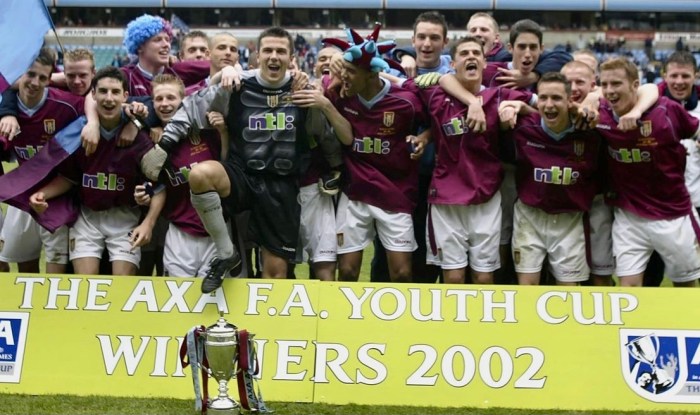
John Gregory was in charge at Villa Park when Henderson joined Aston Villa in July 2001. A year later, he was in goal when Villa won the FA Youth Cup (below), beating Everton – with Wayne Rooney playing up front – 4-2 on aggregate over two legs. Also in the Villa side that day was Liam Ridgewell, who later had a brief loan spell at Brighton, and Peter Whittingham, who went on to play more than 500 professional games and died in tragic circumstances aged just 35.

Joy for Henderson as Aston Villa win the 2002 FA Youth Cup

Although Henderson was chosen on Villa’s first team bench occasionally, he didn’t play any competitive fixtures for the first team. Those opportunities came via loans.

After a month at non-league Tamworth in the spring of 2004, he spent a month on loan at Second Division Wycombe Wanderers under Tony Adams towards the end of the 2003-04 season, when their last place finish meant they were relegated to the newly formed League Two.

The following season he joined Notts County, another of the clubs who’d been relegated with Wycombe, and had two loan spells, three months under Gary Mills and then a month under his successor, caretaker boss Ian Richardson.

Paul Simpson signed Henderson for Preston but when injuries forced him to retire at just 27, he told skysports.com: “I’ve decided to actually step out of football and give my body time to heal for once.

“It is exciting for me though because I’m looking to go into a completely different environment from playing but stay within football at the same time.

“I’ve been trying to get back fit for a few years now with injections and operations, but I’ve decided that rest is the way forward for it now.

“I’ve not signed anything yet, but there are a good few options for me to choose from, which I am really excited about.”

Henderson, who married 2010 Apprentice winner Liz Locke, now works as a licensed intermediary for agency YMU, who, among plenty of other elite footballers, represent Albion’s Evan Ferguson and Andrew Moran.

How the career of high rise Flatts came tumbling down

MARK FLATTS was destined for a glittering career after breaking into Arsenal’s first team when only eighteen.

It was the season when George Graham’s side finished in a disappointing 10th place in the league but won the League Cup and the FA Cup, beating Sheffield Wednesday in both competitions.

Flatts got seven starts plus four appearances off the bench and the following season, after he’d been troubled with a few injuries, Graham sent him out on loan to get some games under his belt.

His first loan was at Cambridge United, then in January 1994 Flatts joined forces with former Gunners legend Liam Brady at Brighton.

The former midfield maestro who’d graced the game at the highest level as a player had not long arrived at the Goldstone Ground, creating a buzz of anticipation amongst the largely disillusioned Albion faithful.

Brighton were bumping along around the foot of the third tier table when he arrived and it augured well that Brady could use his connections with his former club to secure the services of a prodigious young talent who’d already played a handful of matches in the Premier League.

He made his debut in a cracking 4-1 New Year’s Day home win over Cambridge United when Kurt Nogan scored a hat-trick and he was only on the losing side twice during his two months at the club, helping the Albion move away from the relegation zone.

Brady wrote about it in his autobiography Born To Be A Footballer, describing how “livewire” Flatts had heated up “a freezing Goldstone” on that debut day. “He’s a lovely young kid off the field but on the park there’s a strut about him. That’s exactly what we need. He’s full of tricks.”

Flatts started nine matches, came on as a sub once, and scored one of Albion’s goals in a 3-2 home win over Blackpool, but it was his skill on the ball and pace that fans enjoyed most.

After he had returned to Highbury, Brady thanked him for his contribution and said in his programme notes: “He gave the place a tremendous lift. He’s a very confident lad and he did us a real favour and hopefully he’s got something out of it as well. I think he has and I think he enjoyed his time with us.”

Flatts confirmed as much recently. Although he has kept a low profile for many years, in 2020, online from his home in Norfolk, he appeared in two podcasts talking about his career.

On the Shoot the Defence podcast in April 2020, Flatts talked admiringly of his time under Brady at Brighton – “He still had it in training” – as well as the experience of playing alongside senior pros Jimmy Case and Steve Foster at the Goldstone Ground.

“Loyal fans as well. It was a good time,” he said. “I got on well with the fans and a few of them still text me, so that’s nice. Liam Brady and Jimmy Case had seen me in a few games, said they wanted me on loan, and I went there and enjoyed it.”

Born in Islington on 14 October 1972 and brought up in Wood Green, Flatts played for Haringey Borough and Middlesex County school teams and he was playing for Enfield Rangers when he caught the eye of professional clubs.

He spent time training with Watford and West Ham, but his mum and older brother were Arsenal fans so, when they invited him to join them, it was no contest. The scout responsible for picking him up for the Gunners was the former Brighton wing-half, Steve Burtenshaw.

Flatts was one of the country’s top talented 14-year-olds who went through the FA National School of Excellence at Lilleshall before becoming a trainee at Highbury after graduating.

In the first edition of a new fans’ podcast Over and Over and Over Again on 20 August 2020, Flatts talked about how he, Andy Cole and Paul Dickov up front, Ray Parlour and Ian Selley in midfield, Scott Marshall at the back and Alan Miller in goal were all going through from youth team to reserves at the same time. “It was a good strong youth team,” he said. “Pat Rice was the youth team manager who brought us through. He was a good coach.”

Flatts signed professional in December 1990 and he progressed to the reserve side who were managed by another Arsenal legend, George Armstrong.

One particular reserve match stands out as memorable – but not because Flatts scored a goal in a 2-2 draw. Ordinarily, Flatts was accustomed to playing in front of a few hundred supporters for the second string, but on 16 February 1991 it’s reckoned more than 10,000 turned up.

The Ovenden Papers Football Combination game against Reading was originally scheduled to be an away fixture but freezing conditions meant the game was swapped to Highbury because it had undersoil heating.

The reason for the surge of interest was the match saw the return to playing of Tony Adams after his release from prison, having served half of his four-month sentence for drink driving. The amazing response of the Arsenal faithful was remembered in this football.london article in February 2018.  

Often niggled by injuries, Flatts was sidelined by one he hadn’t even been aware of, other than what felt like a small discomfort. “I got a stress fracture on my ankle and was playing on it for a month without realising,” he said.

Physio Gary Lewin arranged for him to see a Harley Street specialist and it was only after he was put through tests on a running machine that the problem was diagnosed. The injury required surgery that put him out of action for over a year.

Flatts got his first real involvement with the first team on a pre-season tour of Norway ahead of the 1992-93 season, getting on as a substitute against Stabaek and Brann Bergen. He was a non-playing sub in two subsequent pre-season friendlies away to Wolves and Peterborough.

It was back to reserve team football at the start of the season but Graham selected him to travel with the squad for an away game at Sheffield United on 19 September and he made his competitive debut as a 71st minute substitute for Anders Limpar, shortly before Ian Wright netted an equaliser for the Gunners.

His next involvement came in a third round League Cup encounter with Derby County. He was a non-playing sub in the away tie but started in Limpar’s place for the replay on 1 December 1992, when Arsenal edged it 2-1.

Flatts (right) celebrates Arsenal’s League Cup win with some familiar faces

He kept his place for the league game which followed four days later but was subbed off as Arsenal lost 1-0 at Southampton.

At one point, the Islington Gazette declared Flatts, Neil Heaney, Parlour and Dickov as the “next crop of Arsenal starlets who will take the club forward”.

As the year drew to a close, on 19 December, Flatts earned rave reviews for his showing in a 1-1 home draw against Lennie Lawrence’s Middlesbrough.

“It’s very unusual to have a quick player with a brain,” said manager Graham. “Mark has skill but he also has the application to go with it.”

Writing about how brightly Flatts shone in the game, Trevor Haylett, of the Independent, said: “He possesses an easy and deceptive running style which frequently carried him away from markers, and has a confidence that few of his colleagues shared in a desultory first 45 minutes.”

Haylett observed: “The problem for Graham is that his most productive line-up, with Merson in the ‘hole’ to distribute and ghost into scoring areas, leaves no room for Flatts, who amply justified his manager’s contention that he has a ‘very big future in the game’.”

Flatts kept his place for the following match, a goalless Boxing Day home draw against Ipswich Town, and was back on the bench away to Aston Villa three days later but came on for the second half in a game Arsenal lost 1-0.

The game he remembers most fondly came just over a fortnight later away to Manchester City at Maine Road. He sped past two players and crossed it for Paul Merson to score with a near post header that gave Arsenal a 1-0 win.

But competition for places was intense and he didn’t next get a start until 1 March against Chelsea at Stamford Bridge, another game that finished goalless.

He had to wait until May for his next involvement, as a sub in a 1-0 defeat away to Sheffield Wednesday, who his teammates would play twice in the space of five days later that month to win the FA Cup on penalties, both games having ended in draws.

With the first of those matches only four days away, Graham put out a young side to face Spurs in the last league game of the season, and Flatts was part of a side who lost the north London derby 3-1, Dickov getting the Arsenal goal.

After his loan spell at Brighton, Flatts got back into the first team picture at Arsenal towards the end of the 1993-94 season, featuring in three successive league games: as a sub in a 1-1 draw with Wimbledon and starting in a 2-1 win at Villa and a 1-1 home draw against QPR.

While he travelled to Copenhagen with the squad for the European Cup Winners’ Cup Final on 4 May 1994, he didn’t play in the Gunners’ 1-0 win.

Flatts wasn’t back in the Arsenal first team set-up until December 1994, when he had a four-game spell, starting in a 2-2 draw away to Nottingham Forest, being a non-playing sub away to Manchester City and then coming on as a sub in a 3-1 defeat at home to Leeds on 17 December and in the goalless Boxing Day home match with Aston Villa.

He came off the bench in a third round FA Cup replay defeat to Millwall on 18 January 1995 but the following month the manager who had supported his development was sacked, and the young wideman went out on loan to Bristol City.

Flatts didn’t reckon much of the man management skills of Graham’s temporary successor, Stewart Houston, but it was the manager who eventually succeeded him who showed the youngster the door.

“Bruce Rioch took over, and said: ‘No, you’re not good enough’ and that was it,” Flatts recalled. He had another short loan spell, this time at Grimsby Town, in the 1995-96 season, but when his contract was up in 1996, he was given a free transfer.

When Flatts left the famous marble halls of Highbury, all that early promise rapidly evaporated and despite a handful of trials at several clubs, his career fizzled out, the player admitting he fell out of love with the game.

Initially, he headed off to Italy to try his luck with Torino in Serie B. He said while he enjoyed his few months there, a limit on the number of foreign players who could play at any one time edged him out of the picture.

According to arseweb.com, back in the UK he had trial periods with Manchester City (September 1996) and Watford (October 1986), although the scathing Hornets fans website, Blind, Stupid and Desperate has a less than flattering summary of his efforts to impress at Vicarage Road. He was briefly at Kettering Town in December 1996, then Barnet (1997-98 pre-season) and Colchester United (1999-00 pre-season) but none of them took him on.

Former Arsenal striker Martin Hayes, manager at Ryman League Division One side Bishop’s Stortford, signed him during the 1999-00 season.

And his last appearance on a team-sheet was as an unused substitute for Queens Park Rangers in a 2000-01 pre-season 4-2 away defeat at Dr Martens League Premier Division side Crawley Town.

Flatts told host Richie Wakelin on Over and Over and Over Again that he kept on picking up niggling injuries too regularly. “With fitness concerns, I just lost interest,” he said. “I ain’t got no regrets. I loved it at Arsenal. I loved playing football. George Graham had faith in me and he gave me a go.”

He said his teenage son and daughter both play football and he has done some coaching at a local level and has considered setting up his own coaching school. He has also done some scouting work for Cambridge United and Norwich City.

Flatts looks back at his football career during a 2020 podcast

Pictures from Albion’s matchday programmes and various online sources.

Set-piece expert Darren Currie earned Uncle Tony’s approval

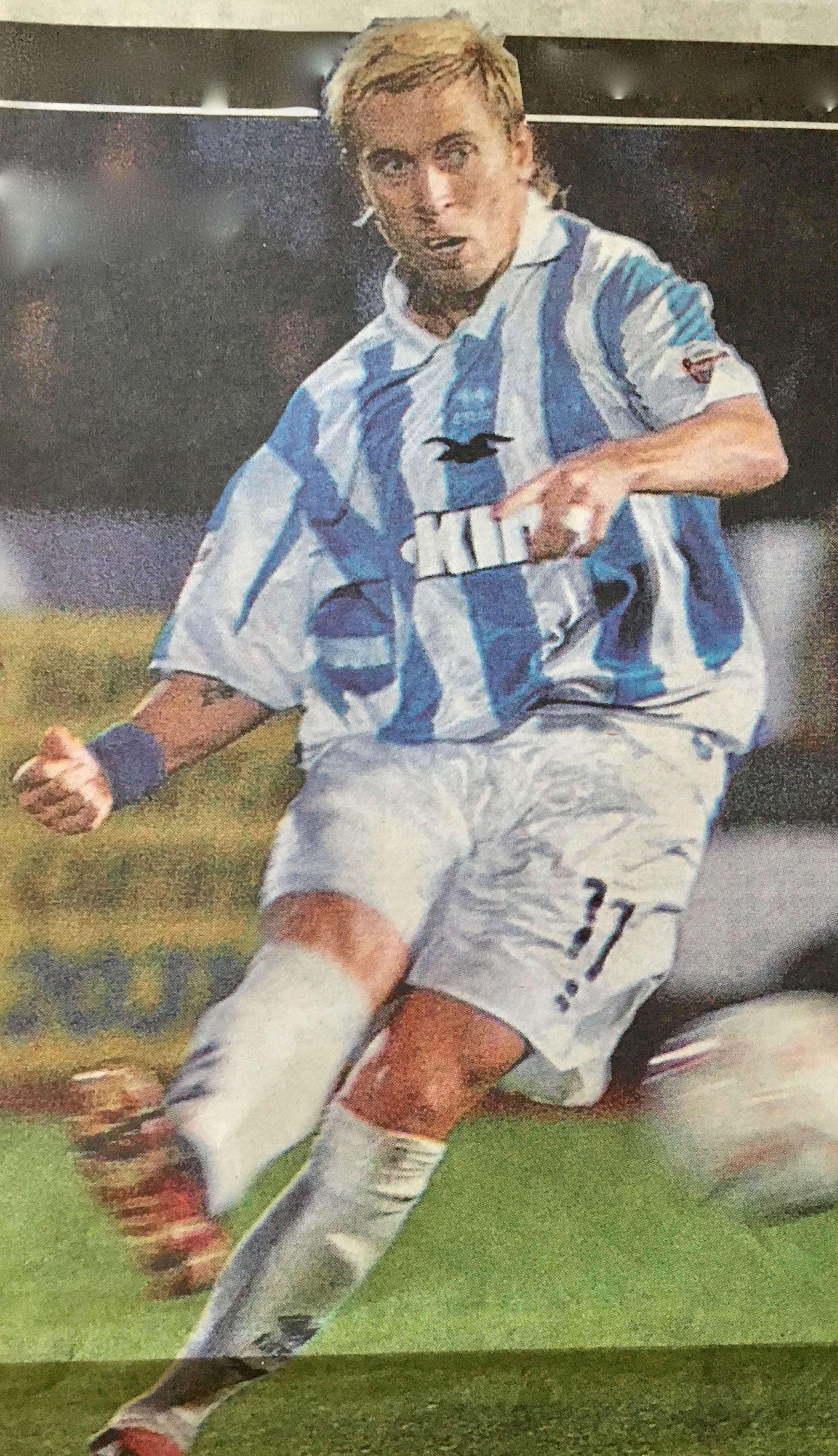
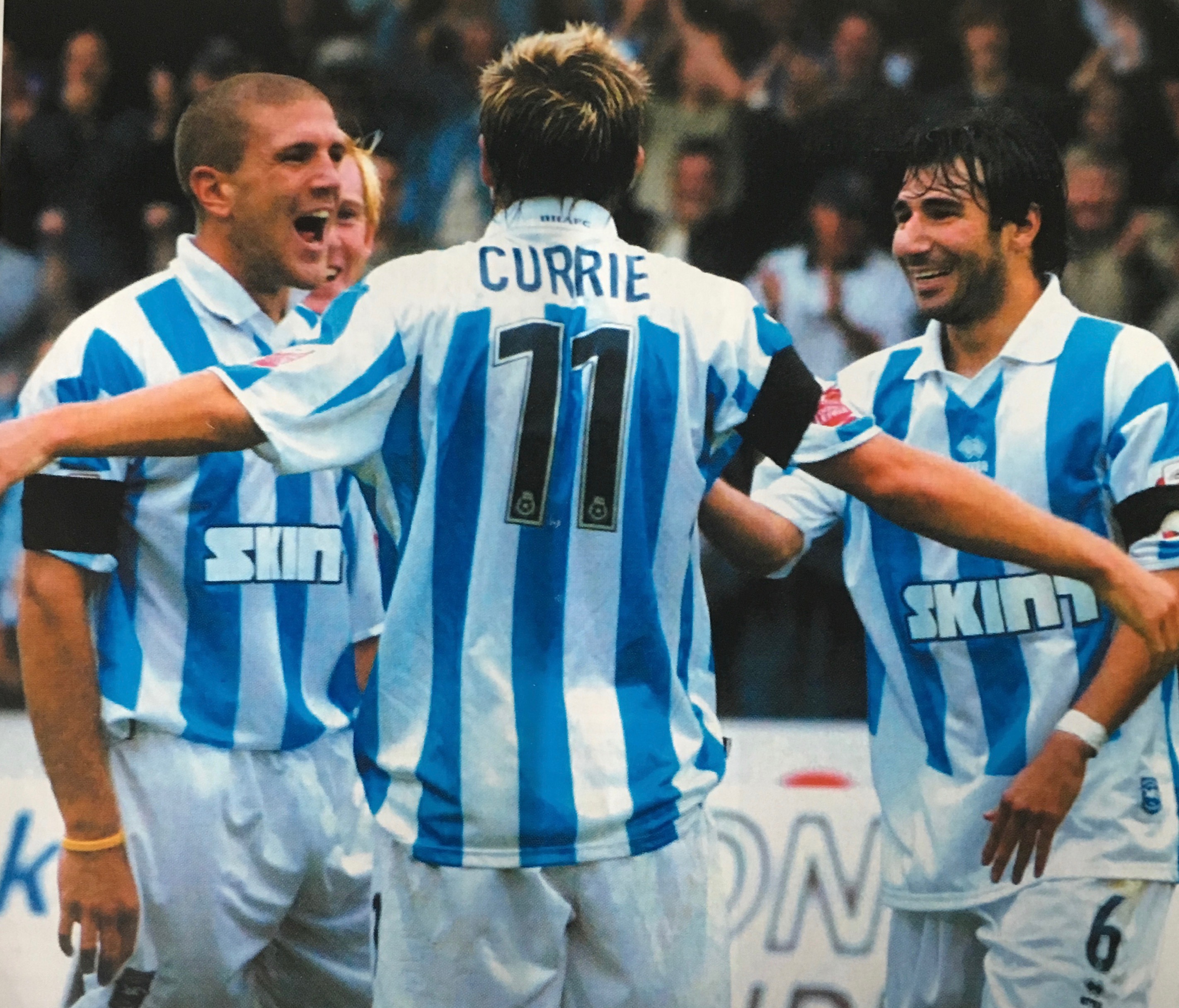
THE PINPOINT accuracy of Darren Currie’s passing and shooting was a joy to watch, even though a lack of pace stopped him being as good a player as his famous uncle.

Currie was a decent player in his own right, making nearly 700 appearances for 15 different clubs, but wherever he went he was always known as the nephew of the former Sheffield United, Leeds, QPR and England creative midfielder Tony Currie.

Perhaps with a hint of family bias, Uncle Tony said in an interview for ITV Digital: “Darren is, without doubt, the best crosser of the ball, after Beckham, in the country. He’ll produce nine times out of ten, right foot or left foot.”

The young Currie attributed his crowd-pleasing skills to the start he was given in the game by West Ham. After 10 years stuck in the lower leagues, Currie was given a platform to perform in the Championship by Brighton, and he very nearly made it to the top when transferred for £250,000 to high-flying Ipswich Town.

As if by a cruel twist of fate, Ipswich lost to the Hammers in the 2004-05 Championship play-off semi-finals having just missed out on automatic promotion.

“Playing for West Ham at youth and reserve levels was a terrific way to start a career,” Currie told the Ipswich Star. “They gave me everything but my debut.”

He certainly came close though, featuring alongside recognised first-teamers like Lee Chapman and Frank Lampard in friendlies and testimonials, but he had to move elsewhere to gain competitive first-team action.

Initially he had loan spells with Shrewsbury Town and Leyton Orient, and when the Shrews bid £70,000 for him in 1996, he chose to drop down a couple of divisions to get regular football.

“The difference in money was only about £50. The then West Ham manager Harry Redknapp called me in and said that I was an adult and had to think about continuing to play regular first team football,” Currie explained. “I was given the opportunity to have a new contract at West Ham or moving permanently to Shrewsbury.

“I was a young pro at West Ham and I had been out on loan a couple of times and I got the buzz for playing at three o’clock on a Saturday afternoon. There was no other feeling like it.

“I thought to myself I’ll go to Shrewsbury and I’ll play really well for a year and I’ll get a move back up to the top.

“My naivety kicked in then because it didn’t quite happen. I thought I’d done OK and I was linked with a couple of moves but the route back to the top wasn’t as simple as I thought it would be in my head.”

Indeed, it was a decade in which, after three seasons with the Shrews, he moved on briefly to Plymouth Argyle, then to Barnet (three seasons) and Wycombe Wanderers (three seasons).

Currie said it got to a point where Wycombe couldn’t afford to keep him, and boss Tony Adams made it clear he was free to look elsewhere.

Mark McGhee invited him to Brighton for a trial and was impressed with the way he knuckled down in training to get himself fit following a programme devised by McGhee’s deputy, Bob Booker.

Currie was offered a 12-month contract but it was more about the opportunity to play at a higher level that prompted him to sign.

“It wasn’t a fantastic offer – put it this way, Peterborough offered me three years – but it wasn’t about the money,” Currie told Spencer Vignes in an Albion matchday programme article.

“It was about the football and playing in the Championship. I was determined to do well and to prove myself, which I did. That’s when people began to sit up and take notice.”

Currie’s ability on the ball carved him out to be a crowd-pleaser and the first of two goals for the Albion typically came from a free kick in a 3-2 home defeat to QPR that left Argus reporter Andy Naylor purring over its execution.

“Currie, having shaved a post and hit the bar with two earlier free-kicks, made it third time lucky from 20 yards just before the break. It was a sumptuous effort from the set-piece expert which rendered Rangers’ keeper Chris Day motionless.”

His other goal came in a 1-1 draw at home to Sheffield United, more noted for Albion wearing the limited-edition Palookaville strip to help publicise backer Fatboy Slim’s latest album.

Injury-hit Albion considered it a point gained rather than two dropped and Naylor complimented Leon Knight for “superbly crafting” Currie’s goal by evading his marker and threading a square pass through the legs of Leigh Bromby.

“Currie, with time as well as room, picked his spot to score, which meant even more to him because of the opposition,” wrote Naylor, informing readers that the Yorkshire side had rejected him as a 16-year-old following a fortnight’s trial.

Unfortunately for Currie, he was only on the bench when the Albion travelled to Upton Park on 13 November 2004. After three successive defeats, McGhee confessed he set the side up not to lose rather than go for a win.

Somewhat ironically, the Seagulls blagged a 1-0 win courtesy of a Guy Butters goal, in a real backs-to-the-wall match, with veteran striker Steve Claridge ploughing a lone furrow up front.

It was only in the 90th minute of the match that McGhee introduced Currie in place of Claridge to play out the final few minutes of the game.

Currie only played 22 games for Brighton over four months but the fee they received for him from Ipswich gave a vital boost to club funds when they were struggling to compete in the division because of the restricted crowd numbers at Withdean. Having signed him on a free transfer, the deal was a no-brainer for the Albion hierarchy, even if it weakened a squad who subsequently only avoided relegation back to the third tier by a single point.

McGhee wasn’t that surprised to see Currie go, telling the Argus: “He was obviously happy here, but I thought he was doing so well that he would keep his options open.

“I cannot see Darren being a regular for Ipswich in the Premiership if they are promoted, but his skills and touch are good enough to justify him making a contribution to a squad in the Premiership.”

It didn’t pan out like that, but Currie was nonetheless grateful to the Albion, and told Vignes: “I am so pleased I had the chance to be a part of it all down there, to see what the support is like and to play with a group of lads who stick together through thick and thin.

“I played at the Goldstone when I was a kid, playing youth team football with West Ham, so I know how important the stadium issue is for everyone. I always will be extremely grateful to the Brighton fans and Mark McGhee because without a doubt without their help this opportunity wouldn’t have come along.”

Currie explained in a matchday programme article how McGhee had helped to develop his game and to add other dimensions which improved him. “I owe a helluva lot to Mark and Bob Booker,” he said.

Currie became an instant hit with the Tractor Boys fans earning the man of the match accolade in two of his first four games.

“I tend to build up a rapport with supporters wherever I go,” he told the Ipswich Star. “I am my own biggest critic and I know when I have done well, and I am very satisfied with my contribution so far.”

After his brief cameo for the Seagulls at West Ham, he got the chance to play against his boyhood club three times that season with Ipswich.

He was in the Town side that lost 2-0 at home to the Hammers on New Year’s Day 2005. Then, in the first leg of the play-off semi-final, Currie and Matt Richards (later a loanee with the Albion) were half-time substitutes who helped Ipswich to recover a deficit to draw 2-2.

Currie started the second leg and had Ipswich’s best opportunities with a shot straight at James Walker, then a long-range drive 10 minutes before the interval which the goalkeeper hopelessly misjudged but fumbled to safety. But they failed to make the final when Bobby Zamora scored two second half goals for West Ham to earn them a 2-0 second leg win. West Ham beat Preston in the play-off final.

Born in Hampstead on 29 November 1974, Currie’s early footballing talent drew interest from Watford and Chelsea, but he decided to join West Ham’s academy.

“The facilities were great, the training for us there as kids was first class and I really enjoyed my time there,” Currie said.

“A lot of the player I became was what I was taught as a kid at West Ham,” he told twtd.co.uk. “It was all about the ball and all about the technical skill and how to manipulate the ball. It was a way I enjoyed playing anyway so it was a really good fit for me.”

After signing professional in 1993, he was a regular in the West Ham reserve side and a trawl through the excellent archive website whu-programmes.co.uk records show he played in a Football Combination game away to Brighton on 1 April 1994, and later the same month was up against Guy Butters in Portsmouth’s reserve side at the Boleyn Ground. Mark Flatts and Paul Dickov were in opposition when the Hammers stiffs entertained their Arsenal counterparts at home on 11 May.

In an Avon Insurance Combination match at the Goldstone Ground on 30 November 1994, Currie scored the only goal of the game from the penalty spot in a West Ham side also featuring Lee Chapman and Frank Lampard.

The following summer, Currie played in four matches when he was part of West Ham’s squad on a centenary tour of Australia.

Shrewsbury boss Fred Davies, a former playing colleague of Redknapp’s at Bournemouth, took Currie on full time after his two loan spells at Gay Meadow.

He moved on to Plymouth Argyle in 1998 but only played five matches in three months, then switched to Barnet where he made 136 appearances, plus seven as a sub, in three years.

Wycombe Wanderers paid £200,000 to sign him in the summer of 2001 and manager Lawrie Sanchez told BBC Three Counties Radio: “He’s obviously a quality player. He gets crosses in and that’s an area where we weren’t very good last year. He’s come to add that to our game and his free kicks will trouble the ‘keeper as well.

“It was quite a lot of money for our club to spend but I’ve got to back my judgement. I’d looked at him for a while and quite liked him. He gives us something we haven’t got, he’s a great technician. He hasn’t got particularly great pace but what he does with the ball is tremendous. We’re hoping he does all the things he was doing at Barnet and a little bit more for us.”

Sanchez added: “A lot of people looked at him for a long time. He’s always been considered one of the best players in the Third Division and hopefully we’ll give him the stage where he can prove he’s one of the best players in the Second Division.”

After Currie’s flirtation with promotion to the Premier League ended in disappointment, Joe Royle left Portman Road and his replacement Jim Magilton axed Currie from the side in the 2006-07 season. He was sent on loan to fellow Championship sides Coventry City and Derby County, for whom he made a play-offs appearance as a substitute, although he wasn’t involved in the final when County beat West Brom 1-0.

That summer, on the expiry of his Ipswich contract, Currie moved on a free transfer to League One Luton Town. He made 38 appearances for the Hatters but when they went into administration, were deducted 10 points and relegated, he was among several players given a free transfer.

Micky Adams, back in the hotseat at the Albion, was hopeful of getting Currie back to Brighton for a second spell, telling BBC Southern Counties Radio on 11 July: “He’s a player I’ve admired for a long, long time. We want him, and he wants to come back. He’d offer competition for places and fantastic delivery from set pieces.”

But at the end of the month the player rejected the terms on offer and took up a three-year contract at Chesterfield instead.

While the first year at Saltergate went OK, in the second season, the manager who signed him, Lee Richardson, had been replaced by John Sheridan, and Currie was out of the picture. He went on loan to fellow League Two side Dagenham & Redbridge and the deal was made permanent in January 2010. Currie played in 16 matches as the Daggers won promotion to League One.

They went straight back down the following season, and Currie departed for Conference South outfit Borehamwood as player assistant manager. He was there less than three months before moving to Isthmian League Hendon for a year as a player.

In October 2012, Currie returned to Dagenham & Redbridge, initially as a development coach and later as assistant manager under John Still.

In June 2018, Currie was appointed assistant manager at National League side Barnet, working under Still. He succeeded Still in December 2018, initially as caretaker, before landing the role permanently in January 2019.

Currie, assisted by former Albion loanee midfielder Junior Lewis, came close to getting Barnet promoted to League Two but, having missed out, and the club struggling financially because of the Covid-related lack of fan revenue, both left the club in August 2020.

Relegation scrap was chicken feed for troubled Bangura

IN THE TUMULTUOUS days after Albion dispensed with the services of Micky Adams in early 2009, virtually half the side was made up of loan players.

Away to Leyton Orient on 7 March 2009, five loanees were involved, including Al Bangura, a 21-year-old midfielder from Watford.

Goalkeeper Mikkel Andersen was on loan from Reading, QPR’s Gary Borrowdale was left-back and Lloyd Owusu, released by Cheltenham, was up front.

Colchester United’s Matt Heath scored Albion’s only goal in a 2-1 defeat, as well as conceding a penalty, while Bangura was considered fortunate to escape with just a yellow card for a high challenge on Charlie Daniels.

The game saw new boss Russell Slade take charge for the first time, inheriting signings authorised by caretaker manager Dean White, who said of Bangura: “Al is someone we have been aware of for some time. He is a lively, energetic and tenacious midfielder.”

Bangura was just grateful to be playing in the UK having come close to being deported back to his native Sierra Leone the previous year.

Six years later, he revealed to the BBC that he was originally brought to Europe from Guinea by a human trafficker in order to be used as a male prostitute.

He had a lucky escape but the experience prompted him to take action to work with the Premier League to prevent other vulnerable young people being similarly caught up.

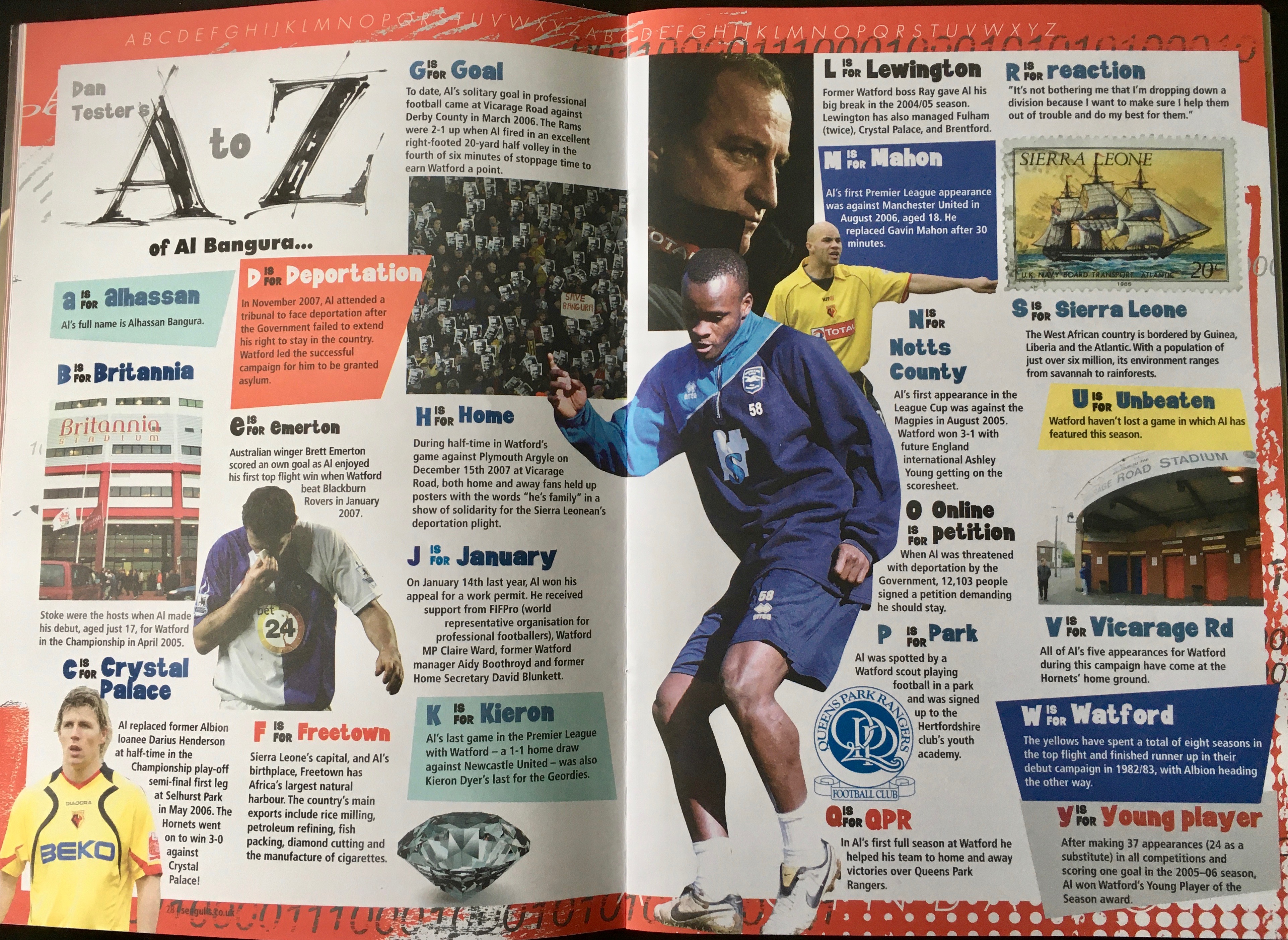
prog spreadBangura was profiled in the matchday programme

Bangura started six games for the Albion, and he said: “It’s not bothering me that I’m dropping down a division because I want to make sure I help them out of trouble and do my best for them.”

In his third game, he was alongside Jason Jarrett in the centre of midfield when Albion thrashed Yeovil Town 5-0 at Withdean, threading through a pass for Nicky Forster to score.

However, at the expiry of his loan, he returned to Watford but was released at the end of the season and joined Blackpool who were in the Championship at the time.

Limited to just 10 games for the Tangerines, Bangura headed for Turkey to play for Mersin Idmanyurdu and then played five games for Azerbaijani team Gabala, managed by the former Arsenal captain Tony Adams.

Hockaday w Al BHis former youth coach at Watford, Dave Hockaday (left, who briefly managed Leeds United) signed him for Conference Premier outfit Forest Green Rovers in 2011, and he completed 91 appearances for them before getting a chance to return to league action with Coventry City.
The aforementioned Hockaday had become under 21 manager at the Sky Blues and Bangura won a short-term contract after a successful trial, although he didn’t feature in Tony Mowbray’s league side.

After spending time working with the Premier League on the issue of the growing number of African boys being tricked into leaving their home for the promise of a football career in Europe, he returned to playing in the National League, initially with St Albans City and then Nuneaton Town.

Bangura talksIn October 2016, Bangura spoke to the Santa Marta Group – an alliance of international police chiefs, bishops, religious communities and NGOs – at an international conference in Rome to tackle human trafficking and modern slavery.

Born in Freetown, Sierra Leone, on 24 January 1988, Alhassan Bangura sensed trouble when his family expected him to get involved in some kind of secret society at the age of 14 so he ran away to Guinea where he met a Frenchman who promised to help him realise his dream of pursuing a football career in the UK.

That dream very nearly turned into a nightmare when he realised on arrival in England aged only 15 that he was being lined up as a male prostitute. Luckily, he screamed out, escaped the room where he was being held, and pleaded for help from a Nigerian passer-by who directed him towards the Home Office to get official assistance.

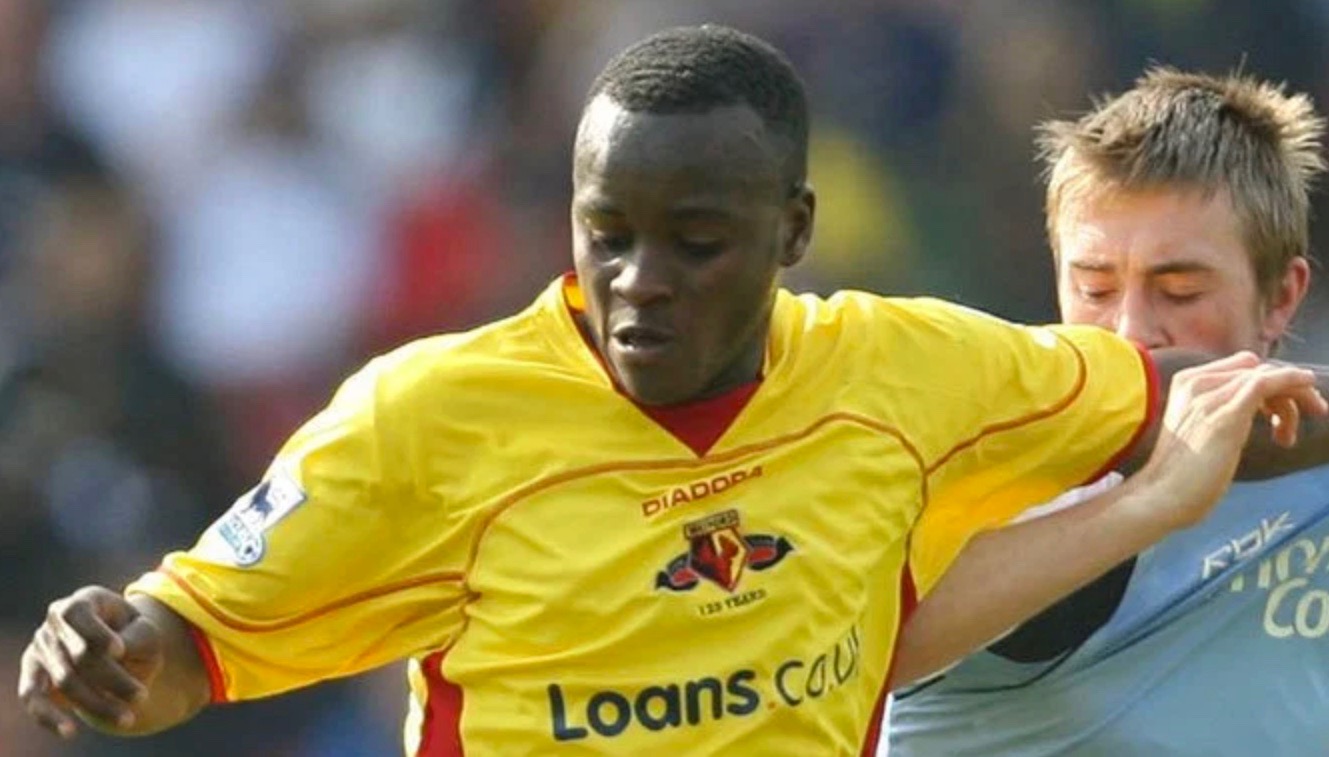
Bangura WatThe ’system’ thankfully came to his aid and before long a Watford scout spotted him playing football in a park and signed him up to the Hertfordshire club’s youth academy, where he was nurtured by assistant academy director Chris Cummins, who was also recognised for helping Hameur Bouazza, Adrian Mariappa and Lloyd Doyley to make it through to the first team.

Bangura was just 17 when then Watford boss Ray Lewington, better known as Roy Hodgson’s loyal assistant, gave Bangura his first team debut in April 2005, away to Stoke City at the Britannia Stadium.

Eleven months later he scored his first goal. It came at Vicarage Road v Derby County – a right-footed 20-yard half-volley in the fourth of six minutes of stoppage time to earn Watford a point in a 2-2 draw.

Bangura was voted Watford’s Young Player of the Season in 2005-06, a year in which he made 37 appearances (24 of them as substitute).

After Watford won promotion in May 2006, Bangura made his first Premier League appearance against Man Utd in August 2006. He was still only 18, and came on as a sub for Gavin Mahon on 30 minutes.

While everything seemed to be going well, Bangura faced a bombshell in November 2007 when a deportation tribunal failed to extend his right to stay in the country.

Al B on TV

Watford led a successful campaign for him to be granted asylum and, on 14 January 2008, Bangura won his appeal for a work permit, receiving support from FIFPro (world representative organisation for pro footballers), Watford MP Claire Ward, Sir Elton John, former Watford manager Aidy Boothroyd and former Home Secretary David Blunkett.

Seagulls gave Martin Keown first team football opportunity

MARTIN KEOWN, who was born in Oxford six days before England won the World Cup in 1966, made his breakthrough into what became an illustrious playing career with Brighton.

The TV pundit football fans see today was famously a stalwart defender for Arsenal, Everton and Aston Villa, not to mention England.

But as an emerging player yet to break through at the Gunners, he got the chance of first team football courtesy of Brighton boss Chris Cattlin, who negotiated with Arsenal boss Don Howe to secure his services on loan.

“He is a young player with plenty of potential,” Cattlin wrote in his Albion matchday programme notes. “He is still learning and will make the odd mistake, but these are all part of learning and I feel he will be a very good player in the very near future.”

MK BWHe made his debut away to Manchester City in February 1985 and, in two spells, stayed a total of six months with the Seagulls, making 23 appearances. It wasn’t long before he earned the divisional young player of the month award and Cattlin said: “Martin has done very well and done himself great credit in coming into the heat and tension of a promotion battle and coping well.”

He made such a great impression, it wasn’t long before the Albion matchday programme went to town with a somewhat gushing feature about the young man.

“Fans and Albion players alike have been impressed by the character and maturity displayed by the 18-year-old English Youth International,” said Tony Norman. “No less a judge than former England manager Ron Greenwood was instrumental in Martin’s recent Robinson Young Player of the Month award.

Keown prog front“So, the young man from Oxford must have something special going for him. On the field he is a sharp, decisive player, but away from the game he is quietly spoken and unassuming.”

Some things obviously changed!

“His progress in football has not gone to his head and he is quick to thank the special people who have helped him find success,” Norman continued.

Keown told him: “Going back to the early days in Oxford, I think my parents were the greatest help of all. I played for several different teams, so there was never a particular coach who helped me. But my family were always there giving me their full encouragement and support.”

At Highbury, he credited the scout who took him to Arsenal, Terry Murphy, as his greatest help in his early years, helping him to settle into the professional game.

“He was very good to me,” said Keown. “I was only 15 when I joined Arsenal as an apprentice. I was in digs in North London and it was all quite a change from life in Oxford. It took a bit of getting used to.”

The former Chelsea midfield player John Hollins, who played for Arsenal between 1979 and 1983, was also an influence.

“He always had a word of encouragement for the youngsters,” said Keown. “He is the kind of man who can make a club happier just by being there. I liked and respected him a great deal. He was a model professional.”

During his time with Brighton, young Keown lived with physiotherapist Malcom Stuart and his family. “They have made me feel very much at home,” he said. “It has been a happy time for me.”

M Keown ArseUnfortunately for Brighton, Keown returned to Highbury and it wasn’t long before Howe, the former coach who’d become Arsenal manager, gave him his first team debut on 23 November 1985 in a 0-0 draw away to West Brom.

In much the same way he has become something of a Marmite pundit on the TV, Keown wasn’t every manager’s flavour. When George Graham was appointed Arsenal boss in 1986, Keown didn’t figure in his plans and he sold him to Aston Villa (see picture below) for £200,000.

M Keown villaThree years later, he became what Colin Harvey described as his best signing during his time as boss of Everton. A fee of £750,000 took him to Goodison.

In an interview with the Liverpool Echo back in 2013, Keown declared: “I thoroughly enjoyed my time at Everton. The only disappointment was that I couldn’t contribute to the club winning anything tangible in my four years there.

“I played under Colin Harvey and Howard Kendall and I was eternally grateful to them for the opportunity to play at a club like Everton.

“Looking back, in hindsight it was probably a bit much to ask a young lad, which I was then, to step into the boots of a club legend like Kevin Ratcliffe. But I always gave absolutely everything.”

Keown added: “The atmosphere was always superb at Goodison. Even though I played a lot of my career at Highbury, I loved Goodison.”

It was during his time at Everton that he won the first of his 43 England caps, getting the call-up from Graham Taylor to join the squad in 1992 to replace Mark Wright. When Terry Venables took over, he didn’t get a look-in.

But Glenn Hoddle restored him to the squad in 1997 and, although he was part of the 1998 World Cup squad, he didn’t get a game. He was a regular under Kevin Keegan and, in a game against Finland, had the honour of captaining the side. Age began to count against him by the time Sven-Goran Eriksson took charge of England and, although he was part of the 2002 World Cup squad, he wasn’t selected for any games.

His return to Arsenal in February 1993 meant he was the first player since the days of the Second World War to rejoin the Gunners, and it went on to become a 10-year spell in which he helped the club to win three Premier League titles and the FA Cup three times.

Arsenal paid a £2m fee to bring back their former apprentice and he and Andy Linighan were more than able deputies who kept established first choices Steve Bould and Tony Adams on their toes.

“Martin was deployed most frequently at centre-half where his formidable pace and thunderous tackling combined to thwart both target men and strikers running in behind,” declared an article on arsenal.com, lauding the merits of the ‘50 greatest Arsenal players’. “It meant, too, that he was vastly capable in an anchoring midfield role; something utilised by his manager.”

While not always a regular, Keown became an integral part of Arsene Wenger’s double-winning sides of 1998 and 2002 and remained a part of the set-up through to the winning of the FA Cup against Southampton in Cardiff in 2003.

The following season included the much-repeated TV moment when Keown mocked Ruud van Nistelrooy for missing a late penalty in a 0-0 draw at Old Trafford, an incident still being discussed only last summer.

Although Arsenal went on to win the title, Keown played only 10 league games and was given a free transfer at the end of the season.

He joined Leicester City, where he played 17 games but moved on to Reading six months later, ending his league career with five games at the Madejski.

Since calling time on his playing career, Keown has, of course, become known for his TV punditry with both the BBC and BT Sport, as well as being a newspaper columnist and contributor to many different media.

On Twitter, @martinkeown5 has 278,000 followers! He has also coached back at Arsenal and been a regular on the football speaker circuit.

Matthew Upson was a class act in Albion’s defence

ARTICULATE pundit Matthew Upson was deservedly player of the season after starring in Brighton & Hove Albion’s back line during the 2013-14 season.

Earlier, in a career spanning eleven clubs, he played more times (144 plus once as sub) for West Ham United than any of his other clubs. He also won 21 England caps.

Upson initially joined the Seagulls during the second half of the 2012-13 season, signing on loan from Premier League Stoke City, where, in two years, he’d only managed 21 games (plus four as sub) following four years with the Hammers.

On signing him for Brighton at the age of 33, manager Gus Poyet told seagulls.co.uk, “When we had the chance to bring a player with the quality of Matt until the end of the season we went for him.

“He’s experienced, he’s been a regular Premier League player and there were no doubts about it. He has presence, he’s a leader as well and it’s a good opportunity for us to use him the right way and for him to play football.”

Upson joined a side already blessed with the on-loan presence of another former England international in the shape of left-back Wayne Bridge, but unfortunately the side couldn’t get past arch rivals Crystal Palace in the play-offs to gain promotion from the Championship.

Although Poyet departed, Upson decided to make his move to Brighton permanent and played 41 games, mainly alongside skipper Gordon Greer. Unfortunately, Oscar Garcia’s squad also stumbled in the play-offs.

Hampered by an ankle injury towards the end of the season, although Upson played in the first leg 2-1 home defeat to Derby County – when he conceded a penalty with a clumsy foul – he was one of several players to miss out through injury in the away leg, when the Rams prevailed 4-1.

At the season’s end, Upson declined a new contract offer with the Albion and decided to seize the opportunity to return to Premier League football with newly-promoted Leicester City.

As it turned out, injury delayed his debut by seven months and he made just six appearances for the Foxes before ending his playing days with MK Dons, where he was limited to four full appearances plus three as a sub.

Upson is now a regular pundit on our TV screens, displaying verbally the sort of calm assuredness he demonstrated out on the pitch.

So where did it all begin? Born on 18 April 1979 in Eye, a small Suffolk market town, Upson went to Diss High School, over the border in Norfolk, and his football ability first shone at Diss Town FC. He went on to the Ipswich Town Centre of Excellence but it was Luton Town who took him on as a trainee after his Ipswich coach, Terry Westley, had switched to the Hatters.

It was to be a lucrative decision by Luton because, after signing him as a professional in April 1996, a year later they sold him to Arsenal for £2million. He only ever made one first team appearance for Luton and that was as an 88th minute substitute against Rotherham United in August 1996.

Unfortunately, his time with the Gunners was dogged by injury and lack of opportunity because of the solid form of the likes of Tony Adams, Steve Bould and Martin Keown.

Just as he was beginning to make a breakthrough in the 2001-02 season, taking the ageing Keown’s place, he broke his leg and missed out on the Gunners’ end-of-season League and FA Cup double, although he earned a league winners’ medal. At the season’s end, he’d made 16 appearances plus six as a sub.

While waiting for his chance at Arsenal, he had gone out on loan, to Nottingham Forest and Crystal Palace, then Reading after his return from the leg break. But after a total of 39 appearances, plus eight as a sub, for Arsenal spanning five and a half years, he made a £1m move to Birmingham City in January 2003.

City were halfway through their first season in the Premier League, under Steve Bruce, and Upson made 14 appearances as the side finished in 13th place.

Upson told the dailystar.co.uk: “I had a good four and a half years under him at Birmingham. We had quite a successful period there.”

It was during his time with the Blues, during which he made 127 appearances plus one as sub, that his form was recognised with a call up to the England squad.

He had played at youth level and 12 times for the under 21 side but his first call-up for the senior squad came in February 2003, when he was an unused sub for England’s 3-1 win over Australia.

Three months later, coach Sven-Göran Eriksson gave him his debut when he came on for the second half In England’s 2-1 win over South Africa in Durban on 22 May 2003.

His final international appearance also came in South Africa – when he scored in England’s 4-1 defeat to Germany which brought about their exit from the 2010 World Cup. His involvement in the tournament was keenly followed by relatives and the whole community back in Diss.

He was involved in the squad for two subsequent games in September that year, but didn’t get to play. In total, he won seven caps while with Birmingham and 14 under Fabio Capello, after he had moved to West Ham. Of his 21 England appearances, 16 were as a starter, five as a sub.

Birmingham boss Bruce was reluctant to lose him but, on the final day of the transfer window in January 2007, the recently appointed Hammers boss, Alan Curbishley, paid £6million to take him to Upton Park, where enjoyed the longest spell of his playing career.

As he’d experienced at previous clubs, injury hampered him early on but eventually he got a regular spot in the side and subsequently took on the captaincy after the departure of Lucas Neill in August 2009.

It was after relegation from the Premiership during Sam Allardyce’s tenure as manager that Upson finally left the Hammers at the end of the 2010-11 season.

studio upson