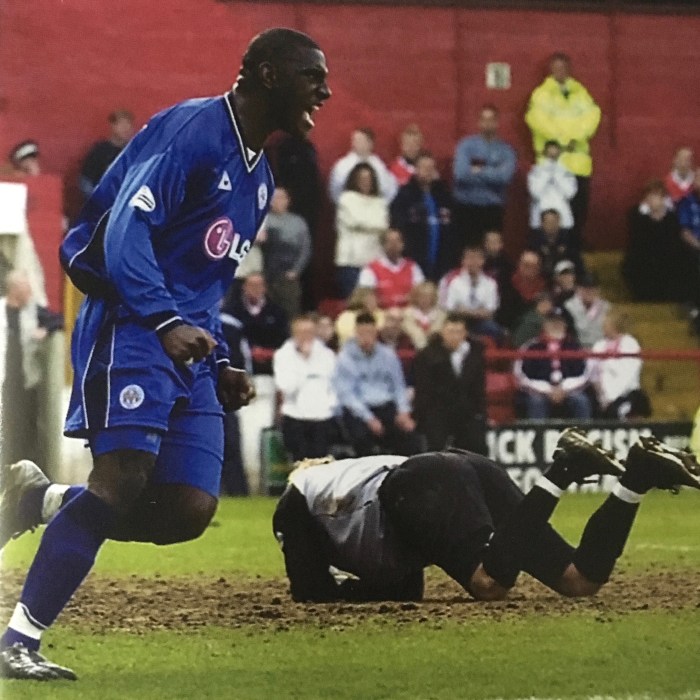
Great strike rate at Brighton but journeyman Benjamin had 29 clubs!

T Benj BTNSELDOM in his remarkable 29-club career did Trevor Benjamin enjoy such a successful spell as the 10 games he spent on loan at Brighton.

The bustling striker who had thrived under Micky Adams at Leicester City the season before scored five times for Mark McGhee’s promotion-chasing side in 2004.

McGhee was keen to keep him through to the end of the season but because of the timing of the three-month deal he wouldn’t have been eligible to play in the play-offs.

As a result, he went back to Leicester and McGhee brought in Chris Iwelumo instead, and, with a goalscoring debut in an away win at Chesterfield, there was no looking back.

Born on 8 February 1979 in Kettering, Benjamin was brought up in Wellingborough, Northants, and, having done well for Wellingborough Colts, was picked up by Kettering Town, playing for their youth team and reserves.

Cambridge United took him on as a trainee and he made his first team debut aged only 16 against Gillingham and went on to score 46 goals in 146 appearances.

Such a scoring record caught the eye of Leicester boss Peter Taylor and, on 12 July 2000, Benjamin joined the Foxes for a fee of £1.3 million.

However, he managed only a single goal in the 2000-01 season and the following season was sent out on loan to Crystal Palace, Norwich City and West Bromwich Albion.

He returned to Leicester for the whole of the 2002-03 season, including playing against the Albion at Withdean.

He said in a matchday programme article for that season’s return match against Brighton on 19 April 2003: “Brighton are a very similar team to ourselves. They have got a good work ethic and never give up.

“I came on as a substitute for the last 10 minutes when we played against them at the Withdean Stadium just before Christmas and that was a tough night.

TBenj Lei action“The conditions were terrible and both sides had to work hard to beat the elements. But I think our quality shone through on the night.” (Leicester won 1-0).

The following season, Benjamin was back on his travels, initially to Gillingham, then Rushden & Diamonds and, in January 2004, to Brighton.

Benjamin’s first Brighton goal came after just 12 minutes of Albion’s home game against Plymouth Argyle, who were then top of the league table. Leon Knight added a second goal before a jubilant celebration in front of the Sky cameras and Albion prevailed 2-1.

He followed that up by netting Albion’s goal in a 1-1 draw away to Wycombe Wanderers, and was again on the scoresheet in the 2-1 away defeat to Grimsby Town.

A 3-0 home win over AFC Bournemouth saw Benjamin score the second of Albion’s three goals at Withdean. When Tranmere Rovers were dispatched by the same score, he once again scored the second goal.

Back at Leicester, when Craig Levein was installed as boss, he cancelled Benjamin’s contract in January 2005. Benjamin initially dropped down a couple of divisions to play for Northampton but, three months later, his old Leicester boss, Adams, took him to Championship side Coventry City. He helped to set up both goals on his debut for the Sky Blues as they beat Reading 2-1.

In Coventry’s matchday programme for their home game against Brighton on 2 April 2005, he talked about how he had been settling in and the efforts he’d been making to try to improve his game.

“I’ve been training quite hard with Alan Cork on my finishing since I got here and he’s great to work with. He’s trying to get me to focus on what I am best at and hopefully when the games start again the practice will pay off.”

Benjamin’s arrival at Coventry may have seen him make a leap of two divisions but he was by no means unfamiliar with football at that level having played with Leicester for five years in both the Premiership and the Championship.

David Antill wrote: ‘During his time with the Foxes he was loaned out to no fewer than seven clubs before eventually signing permanently with Northampton Town but he is delighted to be back in a league he enjoys playing, for a manager he believes can get the best out of him.

“I’ve always believed in my own ability and thought I could play at this level and it was great to be given the chance to return to this league with Coventry,” said Benjamin. “My confidence never really slipped – I never had a doubt about coming here and being able to deliver the goods.

“I know what Micky Adams is all about and he knows what I’m all about so I enjoy working with him. What he’s brought here is exactly what he brought to Leicester and that’s what brought him success there. He’s a hard-working manager and he wants exactly the same thing from all of his players and I think he’s getting that.”

After scoring only once for the Sky Blues, in the summer of 2005 the burly forward linked up with Peterborough United, where he signed a three-year deal. However, he was loaned out several times, appearing for Watford, Swindon Town, Boston United and Walsall.

There was some stability and a return to goalscoring when he moved to Hereford United. He scored 10 in 34 games for the Bulls but was released in May 2008 and ended up drifting across the non-league scene for the next four years, popping up at no fewer than 13 different clubs.

It was all a far cry from the heady days of 2001 and 2002 when he briefly reached the international arena.

He went on as a substitute for Howard Wilkinson’s England under 21s as they beat Mexico 3-0 in a friendly at Filbert Street on 24 May 2001. Because he hadn’t played in a competitive fixture, he was then able to swap allegiances and played two matches for the full Jamaica international side in 2002.

Ex-Baggie Georges Santos sparked notorious Bramall Lane battle

Santos stripesTHE REVENGE exacted by Frenchman Georges Santos against an opponent who had inflicted serious injuries to him sparked one of the most notorious football incidents of the modern era.

Four years later, the 6’3” former West Bromwich Albion, Sheffield United and QPR player joined the Seagulls on a one-year deal.

Born in Marseilles on 15 August 1970, Santos began his football career as a 16-year-old trainee with his local club.

After 10 years playing in France, he moved to the UK in 1998, signing for Tranmere Rovers, who, at the time, played in the Championship and were managed by former Liverpool striker John Aldridge.

A centre-half who also liked to play as a defensive midfielder, Santos became something of a cult hero to Rovers fans. He described his time at Prenton Park in an interview with Total Tranmere in 2011, and also spoke about it as a guest on the A Trip to the Moon podcast.

A contractual dispute led to a messy end to his time at Rovers and he was one of five players new West Brom boss Gary Megson recruited in March 2000 to help halt the Baggies’ slide towards relegation from the First Division.

The mission succeeded, Albion scraping into 21st place, but Santos’ stay at The Hawthorns was a brief one. Having been involved in just eight games, he moved on to Sheffield United in the summer of 2000.

It was on 16 March 2002 that the so-called Battle of Bramall Lane took place between Neil Warnock’s Blades and Megson’s Baggies, for whom current boss Darren Moore was playing.

There were three goals, three United red cards, and, when two Blades players hobbled off injured, the game had to be abandoned because they only had six players left on the pitch!

It was the only time in the history of professional football in England that a match had to be abandoned because one team no longer had enough players to be able to continue.

The background to what unfolded perhaps explains – but certainly couldn’t excuse – what followed.

Just over a year before, when Welsh international midfielder Andy Johnson had been playing for Nottingham Forest against Sheffield United, Santos had suffered a fractured cheekbone and a seriously damaged eye socket following an elbow by Johnson.

There had been no apology forthcoming from Johnson while Santos had to have a titanium plate inserted. He was sidelined for over four months amid fears he could lose his sight in the damaged eye.

With Megson having been a Sheffield Wednesday player, there was added friction in the air at Bramall Lane, not helped by Blades skipper Keith Curle having also captained West Brom’s neighbours, and promotion rivals, Wolves. Striker Paul Peschisolido had also been a Baggie.

Possibly recognising the volatility that might be unleashed if Santos had started the game v West Brom, Warnock only chose him as a substitute, but when the Baggies went 2-0 up, Santos and Patrick Ruffo were sent on.

“Santos launched himself at Johnson at the first opportunity,” according to skyysports.com, recalling the incident some years later. “It was a shocking tackle that could easily have badly injured his opponent and the red card was inevitable.”

The West Brom website, highlighting the contribution Santos had made in helping the club to avoid relegation in 2000, also reflected on the explosive controversy some years later.

Not only had Santos launched two-footed into Johnson, in the melee that followed Ruffo headbutted striker Derek McInnes, so both were shown the red card. Then, after two United players were unable to continue because of injury, referee Eddie Wolstenholme had no alternative but to abandon the game.

Santos and Ruffo received six-game bans, were transfer-listed by the Blades and neither played for the club again.

Santos was without a club until December 2002, but that didn’t stop him making his international debut – lining up for Cape Verde, where both his parents came from, in an Africa Cup of Nations match against Mauritania in September 2002. He subsequently won three more caps.

His club career was rescued when he signed a deal with Grimsby Town as emergency cover for the injured Steve Chettle. Although he couldn’t help the Mariners avoid relegation from League One in 2003, he was voted their Player of the Season.

But, because he didn’t fancy dropping down a division, he rejected a new deal at Blundell Park and moved to Ipswich Town in the summer of 2003. Playing under the experienced Joe Royle, he said: “I always had a lot of respect for Joe. If the team had a bad game, he’d come in and say for everyone to go home. He never said things he might regret and always took time to cool down.”

After a season at Portman Road, Santos then switched to Ian Holloway’s Queens Park Rangers where he spent two seasons, completing 77 appearances.

It was in August 2006, aged 36, that Santos pitched up at Brighton’s Withdean Stadium and Mark McGhee signed the experienced defender-midfielder on a one-year contract.

The player told BBC Southern Counties Radio: “I had clubs in Scotland and England interested, but Brighton looks the good option – I like the challenge.

“The manager wants me to bring my experience to a young team. My ambition is for us to make the top two.”

Having made a substitute appearance in a 2-1 defeat at Nottingham Forest, Santos made his first start at home to Boston United in the Carling Cup.

McGhee said: “I was delighted with Georges Santos’ full debut. He won his headers and it makes a hell of a difference to see the ball go back over the heads of our midfielders – instead of dropping down between them and the back four.”

Santos Alb action

Unfortunately, McGhee’s services were dispensed with in early September 2006 and former youth coach Dean Wilkins took over the reins.

Wilkins was always keen to give as many opportunities as he could to the emerging young talent he had nurtured through Albion’s youth team so the ageing Santos didn’t really fit into the picture.

Thus, after only half a season with the Albion, and having featured in only 12 games for the Seagulls, he was sent on loan to Jim Smith’s Oxford United – his ninth club.

On being released by the Albion at the end of his one-year deal, he linked up with Chesterfield, but he didn’t get any games at Saltergate and left the club in November 2007.

He then dropped into the non-league arena, appearing briefly for Alfreton Town and Farsley Celtic before finishing his playing career with Fleetwood Town at the age of 38.

Santos is now a scout for Olympique Marseille covering the UK, Italy and Switzerland. He frequently visits Sheffield to catch up with family and stays in touch with his old friend John Achterberg, the former Tranmere ‘keeper.

Left back Harry Wilson “something of a fire-eater”

BRIGHTON boss Brian Clough turned up at Burnley to capture the signings of two of their fringe first team players – and ended up having pie and chips with the groundsman!

When Clough arrived at Turf Moor, he found manager Jimmy Adamson, chairman Bob Lord and secretary Albert Maddox were nowhere in sight, it being lunchtime.

In their absence, as recounted to respected writer Dave Thomas, groundsman Roy Oldfield made the famous visitor a cup of tea, popped to a nearby chippy to get them both pie and chips and chatted all things football until the office re-opened after lunch.

Although Clough hadn’t got quite what he expected on arrival, his journey did bear fruit. In exchange for £70,000, he secured the services of left-back Harry Wilson, a 20-year-old who had made 12 appearances for the Clarets, and midfielder Ronnie Welch, 21, who had played one game.

At the time, Clough was desperately trying to bring in new recruits to a beleaguered Brighton side that he and sidekick Peter Taylor had taken on in October 1973, a period covered in detail in a recent book, Bloody Southerners, by author and journalist Spencer Vignes.

The man who only the season before had led unfashionable Derby County to the First Division Championship, couldn’t quite believe what he had inherited at Third Division Albion.

The players seemed bewildered by what the new celebrity boss expected of them.

Heavy defeats – 4-0 to non-league Walton and Hersham in the FA Cup; 8-2 at home to Bristol Rovers and 4-1 away to Tranmere Rovers in the league – reflected the disarray.

Clough and Taylor weren’t slow in pointing the finger. Their only solution was to find replacements – and quickly.

Former Manchester United reserve Ken Goodeve was first to arrive, from Luton Town, although he failed to impress and made only a handful of appearances before joining Watford at the end of the season.

Goalkeeper Brian Powney was axed in favour of former England under 23 international, Peter Grummitt, initially on loan from Sheffield Wednesday.

Experienced left-back George Ley never played for the Albion again after the defeat at Tranmere, while utility man and former captain, Eddie Spearritt, also lost his place (although he eventually forced his way back into the side briefly).

Lammie Robertson, who knew the pair from his early days at Burnley, was asked to introduce them to their new teammates in the dressing room before an away game at Watford (they’d not been signed in time to play).

Robertson told Spencer Vignes in a matchday programme interview how Wilson was sporting a rather loud checked suit at the time and, in his own inimitable style, Clough boomed out: “Flipping hell, I never want to see that suit again.”

Needless to say the players laughed out loud, only for Clough to say: “What the hell are you all laughing at? They’ll be in the team next week.” And sure enough, they were.

Wilson and Welch made their debuts against Aldershot in a home game on Boxing Day when a crowd of 14,769 saw Albion slump to their fifth successive defeat, although at least the deficit this time was only 1-0.

A win finally came in the next game, a 1-0 success at home to Plymouth Argyle – Ken Beamish scoring the solitary goal.

In a 2010 matchday programme article, Wilson said: “I really didn’t want to go to Brighton. No disrespect but I loved it up at Burnley.

“The people there had been so friendly and helpful when I arrived from the North East so it broke my heart to leave. That said, I thoroughly enjoyed my time at Brighton and met some fantastic people, so, looking back now, I’m glad that Jimmy Adamson let me go.”

In the Evening Argus, reporter John Vinicombe purred about the impact of the new recruits from Burnley, saying Wilson “is looking something of a fire-eater. He has a rare zest for the game and relishes the close, physical contact that is synonymous with his position.

“He knows how to destroy and create, and does both in a manner befitting a five-year background at the academy of fine footballing arts (editor’s note: at the time, Burnley had a reputation for producing highly-talented young players).

“His colleague from Turf Moor, Ronnie Welch, is not so completely extrovert, but is no less involved in midfield, and has a fine turn of speed. He made one mistake through trying to play the ball instead of hoofing it away, but this can only be described as a ‘good’ fault.”

Further signings followed and the ship was steadied. Wilson kept the no.3 shirt through to the end of the season. But Welch made only 36 appearances for Albion before Taylor, by then under his own steam, traded in him and fellow midfielder Billy McEwan as a makeweight in the transfer that brought full-back Ken Tiler to the Goldstone from Chesterfield.

Wilson, meanwhile, became a mainstay in Albion’s left-back spot for three years, including being ever-present in the 1975-76 season.

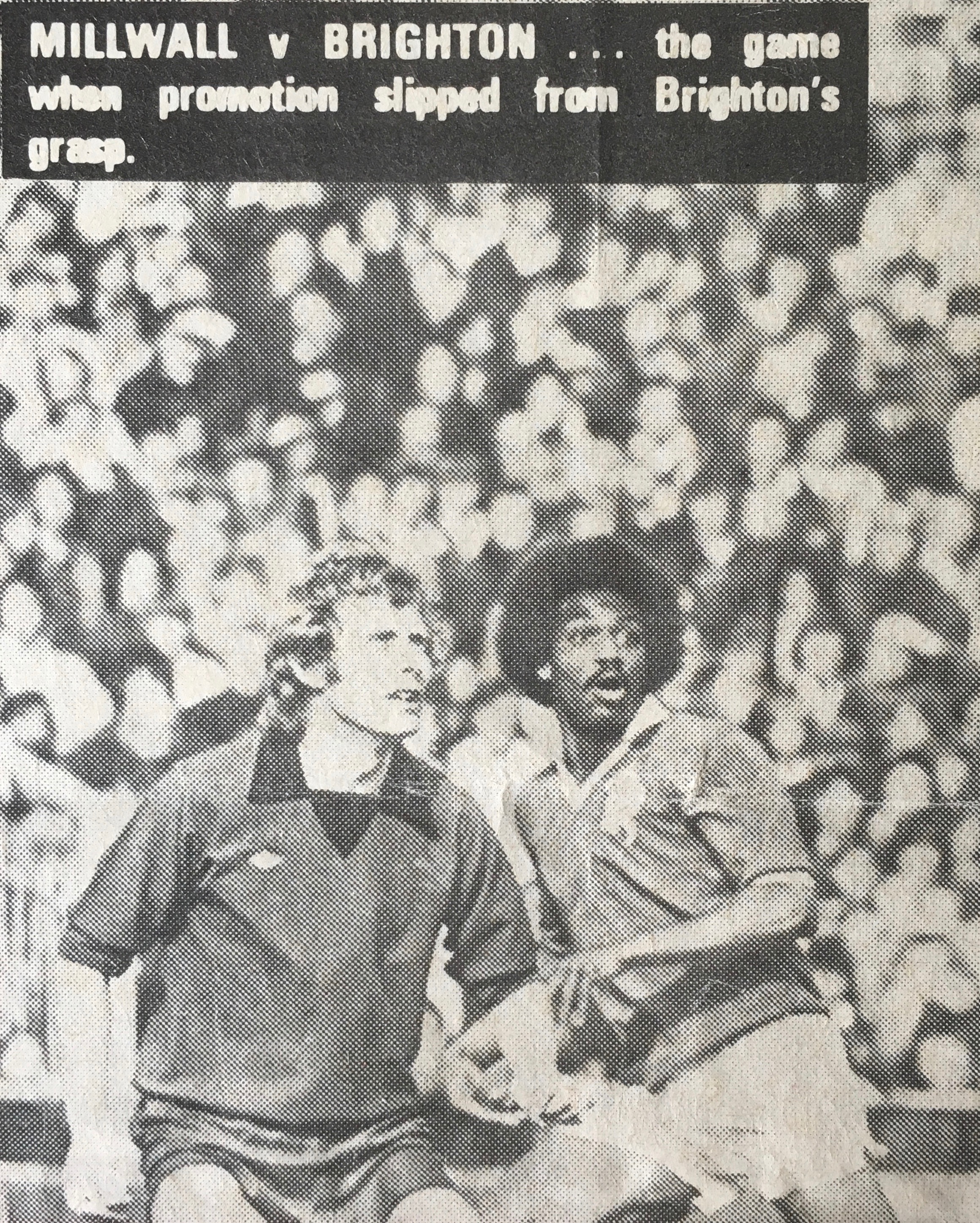
5 HW action v MillwallEver-present Wilson in action against Millwall at The Den

Suited for England!

Born in Hetton-le-Hole, near Durham, on 29 November 1953, Wilson played for Durham County Schools and made four appearances for England schoolboys (under 15s) in the 1968-69 season. He was taken on as an apprentice at Burnley before signing professional forms in December 1970.

In 1971, he earned an England Youth cap going on as a sub for Coventry’s Alan Dugdale in a 3-2 defeat against Spain in Pamplona. Don Shanks also played in that game.

He made his first-team debut at home to Chelsea on 26 April 1971 and the last of his 12 appearances for the Clarets was on 3 April 1972: away to Sunderland.

Young apprentice Wilson with experienced pros John Angus and Colin Waldron

He was part of Alan Mullery’s Third Division promotion-winning squad in 1976-77, although he was restricted to 22 appearances. The arrival of the experienced Chris Cattlin meant he was no longer first choice left-back, although in several games they both played – the versatile Cattlin being equally at home as right-back.

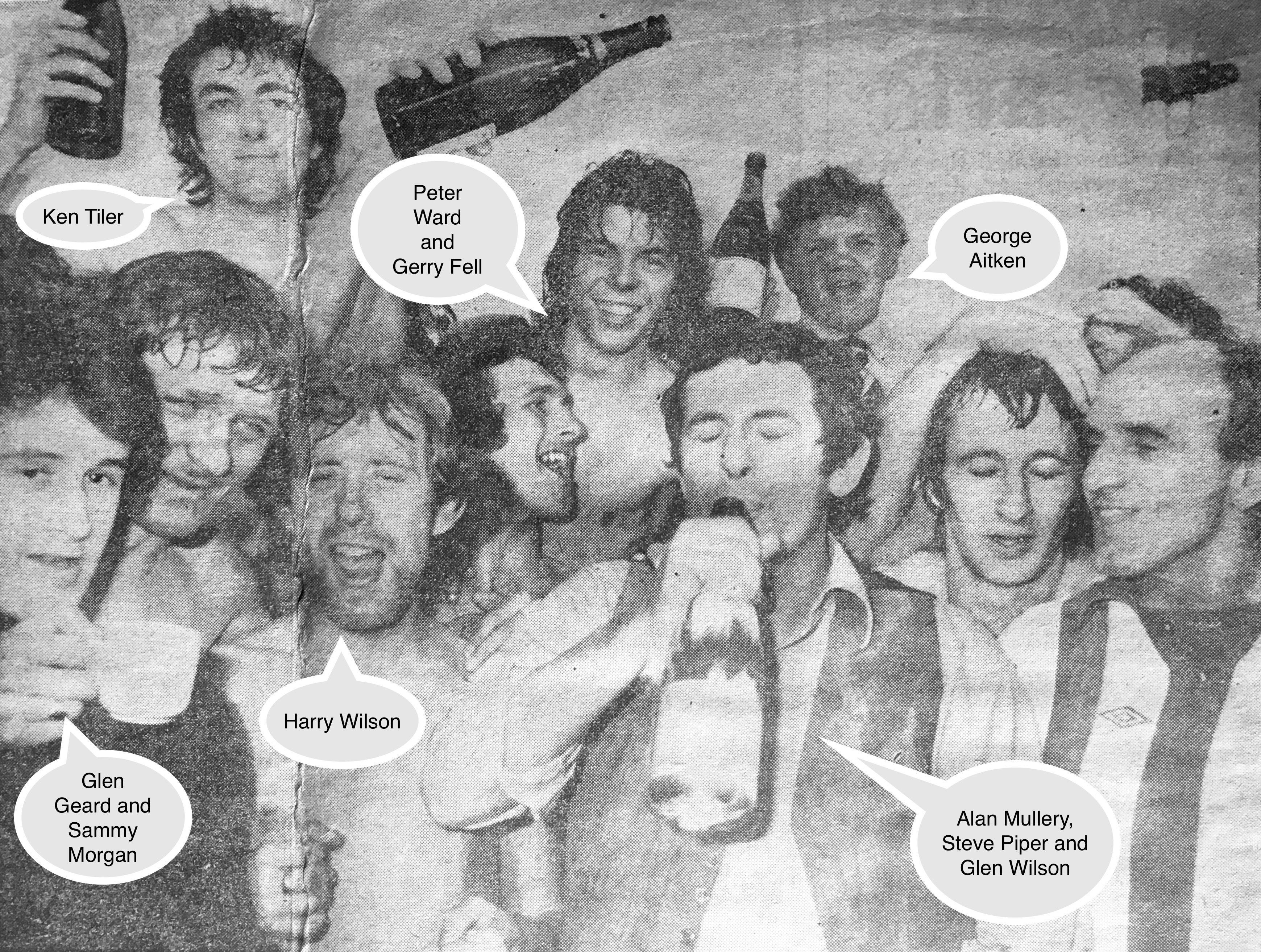
6 HW promotionA bare-chested Wilson was pictured (above) in the Albion dressing room alongside Mullery enjoying the celebratory champagne after promotion was clinched courtesy of a 3-2 win over Sheffield Wednesday on 3 May 1977. But that game was his Goldstone swansong.

He’d made a total of 146 appearances for the Albion – as well as chipping in with four goals – but when Mullery signed Mark Lawrenson and Gary Williams from Preston that summer, Wilson went in the opposite direction along with Graham Cross.

Only six months after arriving at Preston, Wilson was badly injured in a road accident after his car skidded on black ice and collided with a transit van. He suffered a punctured lung and damage to his knees. Doctors told him he wouldn’t play again, but he proved them wrong and ended up spending three years at Preston, playing 42 games.

“I suppose I was lucky to be alive,” he said in an Albion matchday programme article. “I lost a couple of yards of pace, but then again I ws never exactly the quickest of players.”

With his best days behind him, he moved back to his native north-east in 1980 to play for Darlington, making 85 appearances in three years.

He stayed in the north east in 1983, switching to Hartlepool for a season, but only played 16 times for them before dropping out of the league to play for Crook Town.

According to The Football League Paper, Wilson stayed in the game as manager of Seaham Red Star and, in 1988-89, Whitby Town.

He then worked as a community officer for Sunderland before joining the coaching staff at Burnley in the 1990s.

When Chris Waddle took over as manager, Wilson was sacked but he took the club to an industrial tribunal, which found in his favour.

He later worked for his long-term friend, Stan Ternent, at Bury, and as a monitor for the Football League, a job that saw him checking that the right procedures were being followed by the youth development set-ups of clubs in the north-west.

Wilson was in the news in 2007 when Ternent appeared at Lancaster Crown Court accused of assaulting Wilson’s son, Greg, on the steps of Burnley Cricket Club (a venue familiar to visiting supporters as a popular watering hole before games at the neighbouring football ground).

Greg Wilson required hospital treatment for a deep cut above his left eyebrow and needed nine stitches in his forehead.

Ternent said he had accidentally clashed heads, denied causing actually bodily harm, and was cleared by a jury.

4 HW colour laugh w WardWilson in an Albion line-up alongside Peter Ward

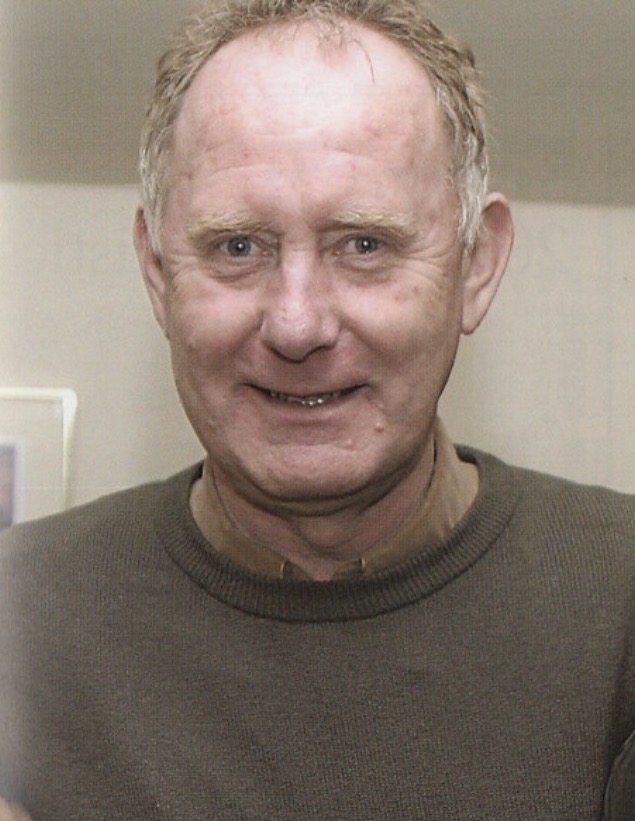
Wilson pictured in 2010

Fans took Alan Duffy to their hearts after debut goal

TWENTY-year-old Alan Duffy couldn’t have wished for a better start to his Brighton career than scoring a belter on his debut.

A £10,000 signing from Newcastle United, he was quickly off the mark on 17 January 1970 in a 2-1 Third Division win over Bradford City.

He appeared to be “the Third Division answer to George Best by beating two Bradford players and smashing a ferocious shot in off the crossbar” according to Seagulls TV, which recounted he was a “stocky striker with a robust style”.

Fan Mo Gosfield, posting on North Stand Chat in January 2011, described the goal as “one of my top 10 Albion moments, because it took your breath away”.

Mo added: “He had all the makings of a cult figure at Brighton. The swagger, the shock of hair, the slight beer belly. I loved him, but he never quite lived up to that sensational start.”

The fans in the old North Stand adapted the Hare Krishna chant to incorporate his name and, after that promising debut, the young striker kept his place in the starting line-up through to the end of the season.

He repaid manager Freddie Goodwin’s faith in him with five more goals. Particularly memorable were Duffy’s two goals in Albion’s 2-1 win over Reading on Good Friday when a huge crowd of 32,036 packed into the Goldstone.

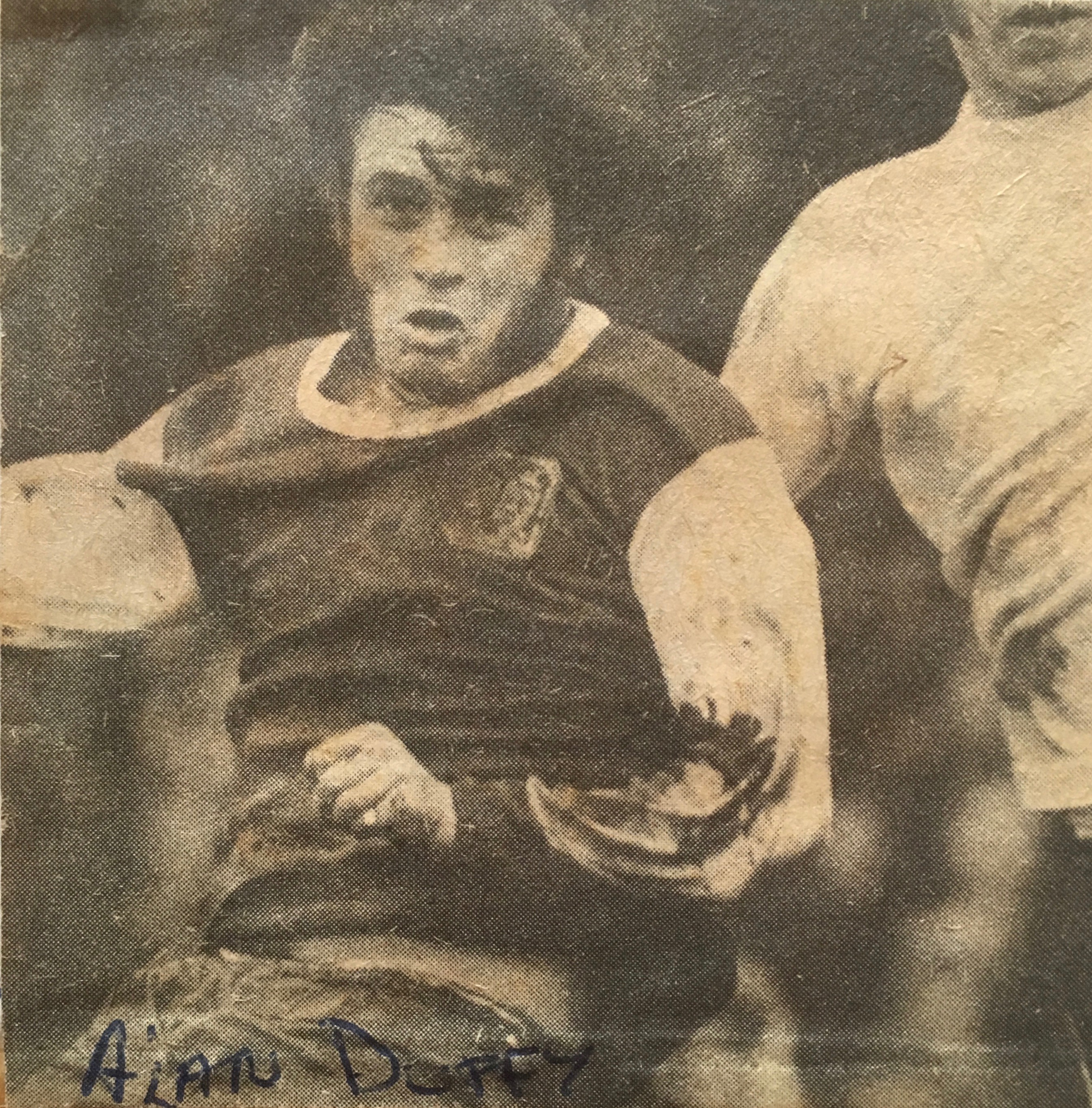
2 AD action BW.jpg

Brighton were top of the league going into the game and looking a good bet for promotion.

Former goalkeeper Brian Powney discussed that game – and Duffy – when he was interviewed by Brian Owen for an article in the Argus on 20 February 2017.

There were question marks over both Duffy’s goals – a suspicion of handball for one, the other possibly offside – but, while both stood, a seemingly good goal from the youngster was ruled out later on.

Looking back on the game was a painful reminder for Powney, who dislocated a finger which physio Mike Yaxley had to put back while out on the pitch, it being the era long before substitute goalkeepers were available.

Unfortunately, too, Albion blew their promotion chances by losing four of the last five games after that Easter win over the Royals.

The only other points collected came in the penultimate game, a 2-1 home win over Rotherham, when Duffy again scored twice – one a penalty.

Asked about Duffy in that 2017 interview, Powney said: “Alan was hit and miss, a bit madcap.

“He had a lot of talent and, had he applied himself, he would have had a longer career. He was a good player but not such a good pro.”

Like many a player before and since, a change of manager in that World Cup summer of 1970 didn’t help Duffy’s progress at Brighton although, according to Seagulls TV: “Weight issues and injury woes, starting with a thigh problem on the opening day, marred his 1970-71 campaign.”

Duffy began in the no.8 shirt for the opening two games of that season under Goodwin’s replacement,Pat Saward, but a thigh injury picked up away to Bristol Rovers proved more problematic than first thought and he missed a large part of the first half of the season.

Duffy was out of the side from mid-October to February and, on his return to the starting line-up, was involved in one of the most curious incidents I ever saw at the Goldstone.

On 27 February 1971, against Preston North End, Albion won a controversial penalty at the south stand end of the pitch after Duffy somewhat unconvincingly tumbled in the area.

Centre forward Kit Napier took the spot-kick;  ‘keeper Alan Kelly saved it, but referee Tom Reynolds ordered a retake because of encroachment. As Napier steadied himself for the retake, Duffy stepped forward, pushed his teammate out of the way, took the penalty himself – and missed!

In the Argus, reporter John Vinicombe wrote: “Napier watched aghast as the ball thudded against the bar. Duffy hung his head, as well he might.” The game finished in a disappointing 0-0 draw.

“The manager went mad at him afterwards,” Powney recalled, and Saward promptly dropped Duffy to the bench for the next two matches.

In the meantime, the manager brought in the experienced Bert Murray and Willie Irvine on loan to add some nous and quality. Although Duffy did get back in the side for six games, the rest of the time he was on the bench.

One time when he entered the fray from the bench against Aston Villa, a BBC radio commentator described him as “a square little man – an oddity” but he was soon singing his praises for a through ball that set up Napier to score.

His only goals of the season came in the same match – against Bradford City, in a 3-2 win at Valley Parade on Easter Monday. Duffy struck twice in the second half as Albion came back from being 2-1 down at half-time.

By the season’s end, he had made just 15 starts, and was subbed off on five occasions. There were seven appearances off the bench, plus three occasions when he was a non-playing sub.

In 1971-72, he made just one start – in a league cup match – and was only ever a substitute in the league, coming on 12 times and not being used on 10 other occasions.

A Brighton & Hove Gazette special publication noted that shortly after coming on as a substitute in a second round FA Cup game at home to Walsall in December 1971, he was booked for fighting with the Saddlers’ goalkeeper, Bob Wesson.

A subsequent post-match incident with the goalkeeper led to Duffy being suspended for six weeks. His final appearance saw him come on for Murray in a 4-2 win away to Oldham Athletic in mid-January 1972.

Saward clearly didn’t see Duffy as a long-term part of his plans and when he plunged into the transfer market on deadline day in March, the Geordie was used as a makeweight in the deal which brought Tranmere Rovers striker Ken Beamish to the Goldstone for a fee of £25,000. On the same day, Wolves’ Irish international Bertie Lutton returned to the Albion following a loan spell earlier in the season.

In two years at Prenton Park, Duffy made 33 appearances and scored just twice, before heading back to the north east in 1973 to join Darlington.

In the 1973-74 season, he played 24 games for Darlington without getting on the scoresheet and the following season drifted into non-league football, playing for Consett.

It was quite some fall from that glorious day on 21 September 1968 when he had made his Newcastle first team debut against Manchester United at Old Trafford in a 3-1 defeat.

Born on 20 December 1949 in Stanley, Co Durham, Duffy joined Newcastle in 1966 and on 7 April 1968 won an England Youth international cap when he featured in a 0-0 draw away to Bulgaria.

The game took place in Nimes, France, and was part of the UEFA Youth tournament. Amongst his teammates were Burnley’s Dave Thomas and Steve Kindon and fellow Magpie Alan Foggon.

After that debut at Old Trafford, Duffy didn’t play for the first team again until 9 August 1969, coming on as a sub in a 1-0 defeat v West Ham.

His next chance came on 20 September 1969 when he came on as a sub in a 1-1 draw with Southampton.

A week later, he got a start in another 1-1 draw, this time against Wolverhampton Wanderers. But Toon1892.com recounted: “In his time at Newcastle he was always considered to be Pop Robson’s deputy rather than a first team choice.”

When the Toon decided to let him join Brighton, Duffy had to admit he’d never previously ventured that far south before. At least there was a familiar face waiting for him when he arrived: at the time, Albion had a young Newcastle goalkeeper, Martin Burleigh, on loan.

The matchday programme revealed how manager Goodwin and club secretary Alan Leather had quite a journey travelling to the North East to clinch the deal for Duffy because bad weather caused them to alter their train and plane arrangements.

Leather then had to dash from Newcastle to the Football League headquarters at St Annes on the Lancashire coast to register the paperwork ahead of the 48-hour deadline for new signings so that Duffy would be eligible to play in Albion’s away game at Barrow. He managed it…..but then the match was postponed!

Pictures from my scrapbook either originated in the matchday programme or were published in the Evening Argus. Also featured, a special publication produced by the Brighton & Hove Gazette.

Steve Coppell not the first ex-Man U player to quit the manager’s chair

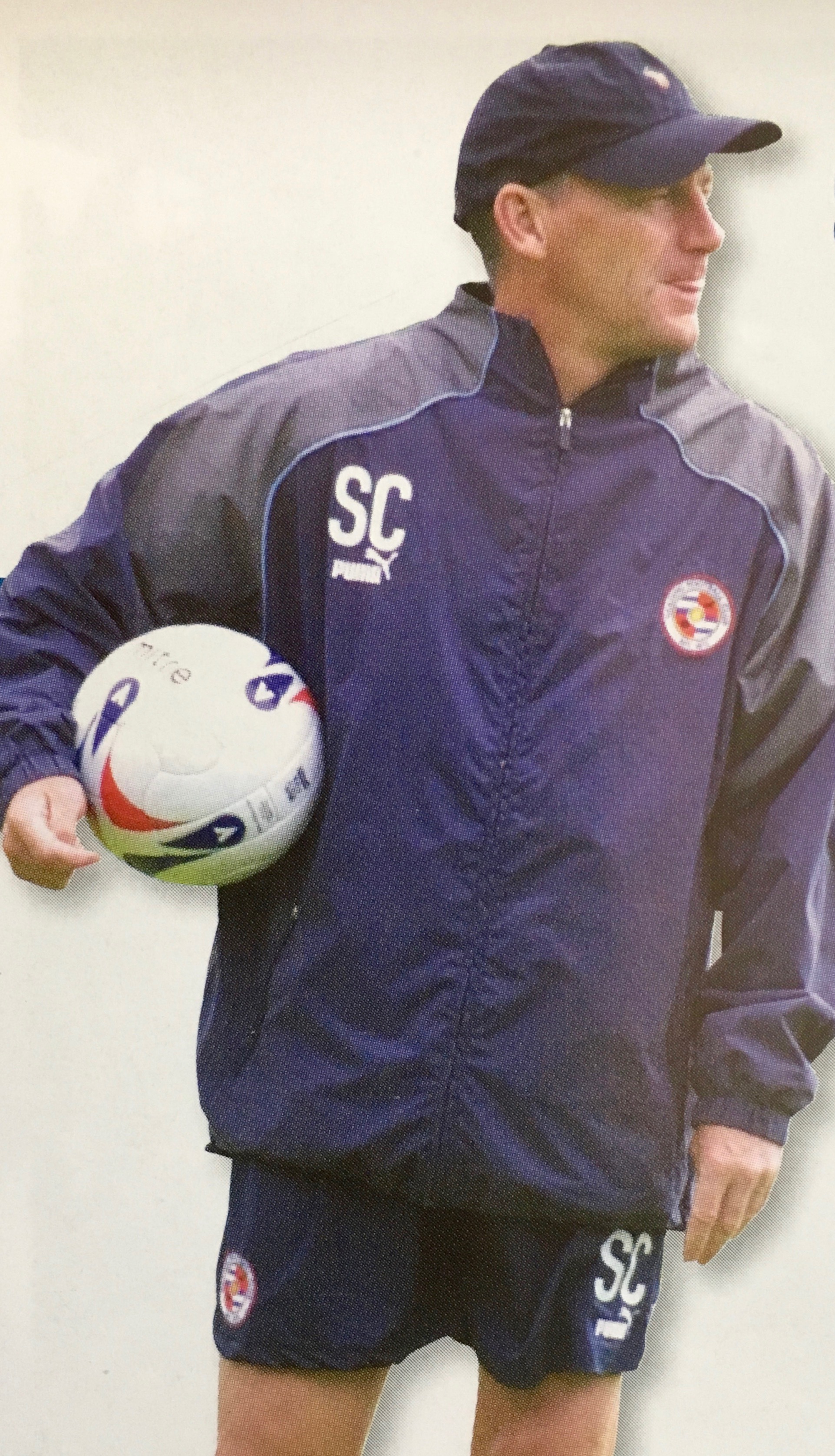
coppell cropSTEVE Coppell was not the first former Manchester United player I saw become manager of Brighton. More than 30 years previously Busby Babe Freddie Goodwin had been at the helm when my Albion-watching passion began.

Unfortunately, there was a parallel in their outcomes: both were wooed by better opportunities elsewhere (Goodwin to Birmingham; Coppell to Reading). One other parallel to record, though, is that each of their successors (Pat Saward and Mark McGhee) got Albion promoted.

Hindsight is a wonderful thing, but, if Coppell hadn’t been jet lagged the first time chairman Dick Knight interviewed him for the Brighton job, the 2002-03 season may have panned out differently…and Kolo Touré, a future Premier League winner with Arsenal and Manchester City, might have spent a season helping the Seagulls to retain their recently-won second tier status. Let me explain.

Coppell had been out of the country in Thailand during the summer of 2002 and, although Knight wanted to interview him with a view to appointing him as Peter Taylor’s successor, when the meeting in London eventually came about, Coppell began to nod off with the effects of his long-distance travel.

A frustrated Knight, under pressure on several fronts that summer (as told in his autobiography Mad Man: From the Gutter to the Stars, the Ad Man who saved Brighton) left him to it and took the decision to appoint third choice Martin Hinshelwood instead. (Knight had also considered German Winfried Schäfer, who had just managed Cameroon at the World Cup, but his poor command of English went against him).

As the opening to the season drew closer, Knight went with Hinshelwood to watch an Arsenal under 23 side in a friendly at Barnet. He was running the rule over Steve Sidwell with a view to taking him on a season-long loan but the stand-out player who caught his eye was Touré, and Albion’s cheeky chairman said he’d take the pair of them.

To his delight, Arsène Wenger and Liam Brady agreed…but astonishingly Hinshelwood said they weren’t needed because, in his opinion, they weren’t any better than Albion’s own youngsters, who he had been coaching, and who he was now intending to blood in the first team. An incredulous Knight kept schtum, believing he needed to support his new manager.

When they started the season with a 3-1 win at Burnley, it seemed maybe Hinshelwood had a point. But, after a disastrous run of 12 defeats, leading to the inevitable sacking of Hinshelwood, Knight reverted to Plan A and succeeded in attracting Coppell to manage the side.

He then swiftly went back to Arsenal to secure the loan services of Sidwell (who’d played for Coppell at Brentford the previous season). But he was too late as far as Touré was concerned. He’d already played his way into first team contention for the Gunners and was no longer available.

coppell + booker

With Albion at the foot of the table, Coppell had a rocky start at the helm of the Seagulls, including an embarrassing 5-0 defeat to Palace, but he quickly brought in some quality players such as Dean Blackwell and Simon Rodger, and, together with Bobby Zamora up front and the busy Sidwell in midfield, they put together some decent results that dared to suggest a great escape was possible.

Albion notched up some surprise results, including a 1-0 Boxing Day win at Norwich and a 4-1 home win over Wolves, who ended up in the play-offs. There was also a memorable 2-2 draw at Ipswich, a 4-0 home win over Watford and a 2-1 win at Reading, most notable for a rare appearance and goal from former Premiership striker Paul Kitson, who had been injured for much of the season.

Sadly, it wasn’t quite enough to keep the Seagulls in the division and they went down second from bottom, five points adrift of 21st placed Stoke City.

The following season was in its infancy when West Ham decided to sack Glenn Roeder as their boss. The Hammers were determined to replace him with Reading’s Alan Pardew; and Reading, once they realised their fight to keep Pardew was fruitless, turned to third tier Albion’s Coppell as his replacement.

Chairman Knight knew Reading could offer Coppell the opportunities that were still some way in the distance if he’d stayed at the Albion, so he did the next best thing which was to get a healthy sum in compensation which went a long way to funding that season’s wage bill.

Knight was a big fan of Coppell and admired his meticulous preparation for games through in-depth viewing of opponents.

In an interview with The Guardian, Knight said: “He is probably the most analytical mind brought to football management for many a year. His preparations are detailed to the point of fastidious. His briefings are second to none. He spent hours with the video in the afternoons breaking down moves in slow-mo to work out how the opposition operate. He is very perceptive.”

Knight added: “People say he’s cold and uncaring, but he came to one of our marches on the seafront to campaign about the new stadium at Falmer long after he left for Reading. That’s Steve. He left a big impression on us.”

coppell at reading.jpg

Coppell left the Albion with a 36.7 per cent win ratio over his 49 games in charge, just over three percentage points behind his first spell as Palace manager, but higher than his other three spells at Selhurst.

To avoid this blog post turning into War and Peace, I’m not going to cover the whole of Coppell’s career but, in the circumstances, it is worth touching on how he came to be a star on the wing for Manchester United and England.

The Liverpool lad went to the same Quarry Bank Grammar School that produced Joe Royle and Beatle John Lennon, but head teacher William Pobjoy ensured football mad Coppell stuck to his studies.

It didn’t deter Coppell from having a trial with Liverpool and playing for an Everton junior side a couple of nights a week. But both rejected him as too small and his dad Jim told playupliverpool.com: “He lost faith in ever becoming a footballer and took up golf and became quite good.” He still played football for a local side but that was just for pleasure.

A Tranmere Rovers scout made several approaches but Steve wasn’t interested, and decided he was going to go to Liverpool University to take a degree in economics and social history.

Ron Yeats, the famous colossus around who Bill Shankly built his Liverpool team in the 1960s, became Tranmere manager in the early 1970s. He remembered of Coppell: “We signed him so he could combine it with university.”

Around the same time, Coppell shot up from 4ft 11in to 5ft 7in in a year, and went on to play 38 times for Tranmere, scoring 10 goals.

Word reached Manchester United boss Tommy Docherty who paid a £35,000 fee to take him to Old Trafford. He was playing for United in the old second division while still completing the third year of his degree course. United’s deal with Tranmere had it built in that they’d pay an extra £20,000 if Coppell made it to 50 appearances. They paid it after only two games, such was the impact Docherty knew he was going to have.

Indeed, he went on to make 373 appearances for United and scored 70 goals; and the 207 games he played between 1977 and 1981 broke the record for the most consecutive appearances for an outfield Manchester United player, and still stands to this day.

coppell utd action

He played in three FA Cup Finals for United, in 1976, 1977 and 1979, only ending up with a winners’ medal when Liverpool were beaten 2-1 in 1977.

Coppell was still at United in 1983, and had been United’s top scorer on the way to the Milk Cup Final that season, but he was recovering from a cartilage operation on his damaged left knee so was unable to play in the FA Cup Final against Brighton.

He told Match magazine: “I was always fighting a losing battle against time to get fit for the final. In my heart of hearts, I knew when I had the cartilage operation that five weeks wasn’t enough time to get fit for a match of this importance. I was struggling to make it from the off.”

Coppell told Amy Lawrence of The Guardian: “’I had nine wonderful years there and I still remember running on at Old Trafford for the first time. It was a real heart-in-the-mouth moment, an incredible experience for a 19-year-old whose biggest crowd before then was probably about 5,000.”

He also won 42 caps for England and Sir Trevor Booking, one of his contemporaries in the England team, spoke in glowing terms about Coppell the player in his book My Life in Football (Simon & Schuster, 2014).

England international

“He was a winger at a time when wingers were unfashionable,” he said. “He had the pace to reach a 30-yard pass, the skill to wriggle past a defender and send over the perfect cross. But he also had the energy to run back and provide cover for his defensive team-mates down the right flank that set him apart from so many other wingers at that time.

“When his team lost possession, Steve didn’t hang about on the flank waiting for someone to win it back. He wanted to win it back himself. He was involved all the time – a quality that is a prerequisite for today’s wide players.”

Coppell made his England debut under Ron Greenwood against Italy at Wembley in 1977 in a very exciting line-up that saw him play on the right, Peter Barnes on the left, and Bob Latchford and Kevin Keegan as a twin strikeforce. It was a favoured foursome for Greenwood and when they all played together against Scotland in 1979, Coppell, Keegan and Barnes all scored in a 3-1 win.

It was while on England duty that Coppell picked up the injury that would eventually lead to a premature end to his career. Brooking recalled: “A tackle by the Hungarian József Tóth at Wembley in November 1981 damaged his knee and although he played on for a year or so more, the knee condition worsened.

“He was able to play in the first four games of the 1982 World Cup but the problem flared up after the goalless draw with West Germany and he had to miss the decisive match against Spain.”

From 2016, Coppell spent three years as a manager in India. Amongst the players he worked with at Kerala Blasters (owned by cricketing great Sachin Tendulkar) in 2016-17 was Aaron Hughes, who had a season with Albion.

The following season Coppell became the first head coach of newly-formed Jamshedpur, owned by Tata Steel, and for the 2018-19 season he took charge of Indian Super League club ATK, once part-owned by Atletico Madrid. Among its owners were former Indian cricket captain Sourav Ganguly.

thoughtful coppell

Spanish TV star Michael Robinson followed in dad’s footsteps to play for Brighton

Robinson v WBA

WHEN Michael Robinson died of cancer aged 61 on 28 April 2020, warm tributes were paid in many quarters to the former Brighton, Liverpool and Republic of Ireland international who became a big TV celebrity in Spain.

“We have lost a very special guy, a lovely person and someone I’m proud to have known both on and off the pitch,” his former teammate Gordon Smith told Spencer Vignes. “He was one of the boys, one of the good guys.”

It seemed like half a world away since Robinson had charged towards Gary Bailey’s goal in the dying moments of the 1983 FA Cup Final only inexplicably to pass up the opportunity of scoring a Wembley winner to lay the ball off to Smith.

“With Michael bursting forward and having turned the United defence inside out, I was genuinely expecting him to shoot and had put myself in a position to pick up any possible rebound,” Smith recounted. “Instead he squared it to me and we all know what happened next.”

Robinson’s next two competitive matches also took place at Wembley:

  • He once again led the line for Brighton when the Seagulls were crushed 4-0 by Manchester United in the cup final replay on 26 May. It turned out to be his last game for the Albion.
  • Three months later he was in the Liverpool side who lost 2-0 to United in the FA Charity Shield season-opening fixture between league champions and FA Cup winners, following his £200,000 move from relegated Brighton.

It was hardly surprising Robinson didn’t hang around at the Goldstone: the Seagulls had given him a platform to resurrect a career that had stalled at Manchester City, but the striker had several disputes with the club and the newspapers were always full of stories linking him with moves to other clubs.

robbo livPerhaps it was surprising, though, that champions Liverpool were the ones to snap him up, particularly as Ian Rush and Kenny Dalglish were in tandem as first choice strikers.

But at the start of the 1983-84 season, Joe Fagan’s Liverpool had several trophies in their sights and Robinson scored 12 times in 42 appearances as the Merseyside club claimed a treble of the First Division title, the League Cup, and the European Cup.

It took him a while to settle at the Reds because by his own admission he was in awe of the players around him but advice from Fagan to play without the metal supports he’d worn in his boots for six years previously (to protect swollen arches) paid off.

“It made a hell of a difference,” he said. “I felt a lot sharper and so much lighter on my feet.” In the first game without them, Robinson scored twice in a European game at Anfield, then he got one in a Milk Cup tie versus Brentford and scored a hat-trick in a 3-0 league win at West Ham.

robbo semi hatNevertheless, asked many years later to describe his proudest moment in football, he maintained: “Scoring the winning goal in the FA Cup semi-final that meant that a bunch of mates at Brighton were going to Wembley in 1983.”

One of two sons born to Leicester publican Arthur Robinson on 12 July 1958, Michael followed in his father’s footsteps in playing for Brighton. Arthur played for the club during the Second World War when in the army, and also played for Leyton Orient.

When he was four, Robinson moved to Blackpool where his parents took over the running of a hotel in the popular seaside resort. The young Robinson first played football on Blackpool beach with his brother.

After leaving Thames Primary School, it was at Palatine High School that he first got involved in organised football, and, before long, he caught the eye of the local selectors and represented Blackpool Schools at under 15 level, even though he was only 13.

Amongst his teammates at that level was George Berry, who ironically was Robinson’s opponent at centre half in his first Albion match, against Wolverhampton Wanderers.

The young Robinson also played for Sunday side Waterloo Wanderers in Blackpool and when still only 13 he was invited for trials at Chelsea, by assistant manager Ron Suart, who had played for and managed Blackpool.

Although he was asked to sign schoolboy forms, Robinson’s dad thought it was too far from home. Coventry, Blackpool, Preston and Blackburn were also keen and the North West clubs had the edge because he wouldn’t have to leave home.

Eventually he chose Preston and on his 16th birthday signed as an apprentice. At the time, Mark Lawrenson was also there, training with the youngsters, and Gary Williams was already on the books.

After two years as an apprentice, he signed professional and began to push for a first team place with the Lillywhites. With former World Cup winner Nobby Stiles in charge, in 1978-79, Robinson scored 13 goals in 36 matches, was chosen Preston fans’ Player of the Year and his form attracted several bigger clubs.

In a deal which shocked the football world at the time, the flamboyant Malcolm Allison paid an astonishing £756,000 to take him to Manchester City. It was a remarkable sum for a relatively unproven striker.

The move didn’t work out and after scoring only eight times in 30 appearances for City, Robinson later admitted: “I’d never kicked a ball in the First Division and the fee was terrifying. If I had cost around £200,000 – a price that at that time was realistic for me – I would have been hailed as a young striker with bags of promise.”

It was Brighton manager Alan Mullery, desperate to bolster his squad as Albion approached their second season amongst the elite, who capitalised on the situation.

“I received the go ahead to make some major signings in the summer of 1980,” Mullery said in his autobiography. Mullery, had the support of vice-chairman Harry Bloom – current chairman Tony Bloom’s grandfather – even though chairman Mike Bamber was keener to invest in the ground.

“I could see he’d lost confidence at City and I made a point of praising him every chance I got,” said Mullery. “I asked him to lead the line like an old-fashioned centre forward and he did the job very well.”

Robinson told the matchday programme: “When Brighton came in for me, I needed to think about the move…12 months earlier I had made the biggest decision of my life and I didn’t want to be wrong again.”

In Matthew Horner’s authorised biography of Peter Ward, He shot, he scored, Mullery told him: “When I signed Michael Robinson it was because I thought Ward was struggling in the First Division and that Robinson could help take the pressure off him. Robinson was big, strong, and powerful and he ended up scoring 22 goals for us in his first season.”

The first of those goals came in his fourth game, a 3-1 league cup win over Tranmere Rovers, and after that, as a permanent fixture in the no.9 shirt, the goals flowed.

With five goals already to his name, Robinson earned a call up to the Republic of Ireland squad. Although born in Leicester, his mother was third generation Irish and took out Irish citizenship so that her son could qualify for an Irish passport. It was also established that his grandparents hailed from Cork.

He made his international debut on 28 October 1980 against France. It was a 1982 World Cup qualifier and the Irish lost 2-0 in front of 44,800 in the famous Parc des Princes stadium.

Nevertheless, the following month he scored for his country in a 6-0 thrashing of Cyprus at Lansdowne Road, Dublin, when the other scorers were Gerry Daly (2), Albion teammate Tony Grealish, Frank Stapleton – and Chris Hughton!

In April 1982, Robinson, Grealish and Gerry Ryan were all involved in Eire’s 2-0 defeat to Algeria, played in front of 100,000 partisan fans, and for a few moments on the return flight weren’t sure they were going to make it home. The Air Algeria jet developed undercarriage problems and had to abort take-off. Robinson told the Argus: “I thought we were all going to end up as pieces of toast. But the pilot did his stuff and we later changed to another aircraft.”

Although not a prolific goalscorer for Ireland, he went on to collect 24 caps, mostly won when Eoin Hand was manager. He only appeared twice after Jack Charlton took charge.

But back to the closing months of the 1980-81 season…while only a late surge of decent results kept Albion in the division, Robinson’s eye for goal and his never-say-die, wholehearted approach earned him the Player of the Season award.

As goal no.20 went in to secure a 1-1 draw at home to Stoke City on 21 March, Sydney Spicer in the Sunday Express began his report: “Big Mike Robinson must be worth his weight in gold to Brighton.”

However, the close season brought the shock departure of Mullery after his falling out with the board over the sale of Mark Lawrenson and the arrival of the defensively-minded Mike Bailey.

Bailey had barely got his feet under the table before Robinson was submitting a written transfer request, only to withdraw it almost immediately.

He said he wanted a move because he was homesick, but after talks with chairman Bamber, he was offered an incredible 10-year contract to stay, and said the club had “fallen over themselves to help me”.

Bamber told the Argus: “I have had a very satisfactory talk with Robinson and now everybody’s contracts have been sorted out. It has not been easy to persuade him to stay.”

Even though Bailey led the Seagulls to their highest-ever finish of 13th, it was at the expense of entertainment and perhaps it was no surprise that Robinson’s goal return for the season was just 11 from 39 games (plus one as sub).

The 1982-83 season had barely got underway when unrest in the club came to the surface. Steve Foster thought he deserved more money having been to the World Cup with England and Robinson questioned the club’s ambition after chairman Bamber refused to sanction the acquisition of Charlie George, the former Arsenal, Derby and Southampton maverick, who had been on trial pre-season.

Indeed, Robinson went so far as to accuse the club of “settling for mediocrity” and couldn’t believe manager Bailey was working without a contract. Bamber voiced his disgust at Robinson, claiming it was really all about money.

The club tried to do a deal whereby Robinson would be sold to Sunderland, with Stan Cummins coming in the opposite direction, but it fell through.

Foster and Robinson were temporarily left out of the side until they settled their differences, returning after a three-game exile. But within four months it was the manager who paid the price when he was replaced in December 1982 by Jimmy Melia and George Aitken.

Exactly how much influence the managerial pair had on the team is a matter of conjecture because it became a fairly open secret that the real power was being wielded by Foster and Robinson.

On the pitch, the return of the prodigal son in the shape of Peter Ward on loan from Nottingham Forest had boosted crowd morale but didn’t really make a difference to the inexorable slide towards the bottom of the league table.

Ward scored a famous winner as Manchester United were beaten 1-0 at the Goldstone a month before Bailey’s departure, but he only managed two more in a total of 20 games and Brian Clough wouldn’t let him stay on loan until the end of the season.

Albion variously tried Gerry Ryan, Andy Ritchie and, after his replacement from Leeds, Terry Connor, to partner Robinson in attack. But Connor was cup-tied and Ryan bedevilled by injuries, so invariably Smith was moved up from midfield.

Robinson would finish the season with just 10 goals to his name from 45 games (plus one as sub) – not a great ratio considering his past prowess.

The fearless striker also found himself lucky to be available for the famous FA Cup fifth round tie at Liverpool after an FA Commission found him guilty of headbutting Watford goalkeeper Steve Sherwood in a New Year’s Day game at the Goldstone.

The referee hadn’t seen it at the time but video evidence of the incident was used and the blazer brigade punished him with a one-match ban and a £250 fine. Robinson claimed it had been an accident…but it was one that left Sherwood needing five stitches. The ban only came into effect the day after the Liverpool tie, and he missed a home league game against Stoke City instead.

In the run-up to the FA Cup semi-final with Sheffield Wednesday, Robinson was reported to be suffering with a migraine although he told Brian Scovell it was more to do with tension, worrying about the possibility of losing the upcoming tie.

Nevertheless, he told the Daily Mail reporter: “When I was with Preston, I suffered a depressed fracture of the skull and have had headaches ever since. This week it’s been worse with the extra worry about the semi-final.”

Manager Melia, meanwhile was relieved to know Robinson would be OK and almost as a precursor to what happened told John Vinicombe of the Evening Argus: “Robbo is a very important member of our team and he’s the man who can win it for us.

“It is Robbo who helps finish off our style of attacking football and I know he’ll do the business for us on the day.”

Reports of the semi-final were splashed across all of the Sunday papers, but I’ll quote the Sunday Express. Under the headline MELIA’S MARVELS, reporter Alan Hoby described the key moment of the game.

“In a stunning 77th minute breakaway, Case slipped a beauty forward to the long-striding Gordon Smith whose shot was blocked by Bob Bolder.

“Out flashed the ball to Smith again and this time the cultured Scot crossed for Mike Robinson to rap it in off a Wednesday defender.”

Other accounts noted that defender Mel Sterland had made a vain attempt to stop the ball with his hand, but the shot had too much power.

When mayhem exploded at the final whistle, a beaming Robinson appeared on the pitch wearing a crumpled brown hat thrown from the crowd to acknowledge the ecstatic Albion supporters.

In one of many previews of the Final, Robinson was interviewed by Shoot! magazine and sought to psyche out United by saying all the pressure was on them.

“That leaves us to stride out from that tunnel with a smile and a determination to make everyone proud of us,” he said.

“Nobody seems to give us a prayer. They all seem glad that ‘little’ Brighton has reached the Final, but only, I suspect, because they expect to see us taken apart by United.”

Everyone knows what happened next and quite why the normally-confident Robinson didn’t take on his golden opportunity to win the game for Brighton in extra time remains a mystery.

However, as mentioned earlier, within months ‘little’ Brighton was a former club and Robinson had taken to a much bigger stage. This is Anfield reflected on his short time at Anfield as “a golden opportunity for him” and recalls that it turned out to be “the best and most successful season of his career”.

RobFozBWHe had yet more Wembley heartache during a two-year spell with Queen’s Park Rangers, being part of their losing line-up in the 3-0 league cup defeat to Oxford United in 1986.

The move which would lay the foundations for what has become a glorious career on TV arose in January 1987 when Robinson moved to Spain to play for Osasuna, scoring 12 times in 59 appearances before retiring through injury aged 31.

Robinson completely embraced the Spanish way of life, learned the language sufficiently to be an analyst for a Spanish TV station’s coverage of the 1990 World Cup, and took Spanish citizenship.

His on-screen work grew and the stardom Robinson achieved on Spanish TV attracted some of the heavyweight English newspapers to head out to Spain to find out how he had managed it.

For instance, Elizabeth Nash interviewed him for The Independent in 1997 and discovered how he had sold his house in Windsor and settled in Madrid.

Meanwhile, in a truly remarkable interview Spanish-based journalist Sid Lowe did with Robinson for The Guardian in 2004, we learned how that FA Cup semi-final goal was his proudest moment in football and that Steve Foster was his best friend in football.

In June 2017, his TV programme marked the 25th anniversary of Barcelona’s first European Cup win at Wembley, with some very studious analysis. On Informe Robinson (‘Robinson Report), he said: “Wembley was a turning point in the history of football. Cruyff gave the ball back to football.”

Neil McNab: Brighton fans ‘worst crowd I’ve played for’

FIERY SCOT Neil McNab left Brighton for a sizeable loss on their initial outlay and went on to be voted Manchester City’s Player of the Year twice.

No stranger to brushes with the football authorities, McNab joined Brighton in the second half of their first-ever season in the top flight.

In his autobiography, manager Alan Mullery said: “Neil McNab was a Scottish whippet, a fierce competitor in midfield who never stopped running or competing.

“I bought him halfway through the season from Bolton Wanderers and he gave us the extra edge we needed.”

The player to give way at the time was Republic of Ireland international Gerry Ryan, and it would be fair to say the football writers were impressed by the tenacious Scot’s early impact.

After watching a 5-1 drubbing against Southampton from the subs bench, McNab made his debut at home to West Brom in a game that finished goalless. “McNab showed some touches of class in his home debut but scarcely as much as the home crowd expected from their £230,000 capture,” said Harold Palmer in the Sunday Express.

The News of the World’s Peter Jarman was slightly more effusive and described it as “impressive” and John Vinicombe in the Evening Argus said: “McNab, on his home debut, impressed with his industry and general involvement.”

Of his second game, a 1-1 draw away to Leeds, the Sunday People’s Keith Ray observed: “McNab looked light years from the off-key young man that Bolton sold. His prompting coupled nicely with Lawrenson’s hard work, and Ward had two chances to hit the target before he made the vital strike.”

A demonstration of his appetite came in the next game, another 1-1 draw, at home to Coventry, when he ran 25 yards to stop Peter O’Sullivan from taking a corner that he fancied for himself. He whipped the ball in and Ray Clarke thumped a header past Jim Blyth in the Coventry goal.

Gordon Smith, another Albion player who moved to Manchester City, remembered McNab’s quick wit in his autobiography, And Smith Did Score.

When it looked like Brighton were heading for relegation, Mullery, in fear of losing his job, famously threatened the players that he’d run them down in his car if that happened.

Smith recounted how the players were huddled round trying not to laugh at the astonishing outburst. “I almost fell off my chair when Neil leant over and whispered, ‘If he loses his job, he’ll no’ have a f****** car!’”

It was no laughing matter for player or club, though, when the tenacious McNab was suspended for four matches for pushing a referee. In the following season, he was up before the FA again after a skirmish with World Cup winner Alan Ball at the end of a 5-a-side tournament at the Brighton Centre.

Charged with bringing the game into disrepute, Ball was fined £100 but McNab was given a £250 fine and a two-game ban.

Manager Mike Bailey was clearly relieved and told the Daily Mail’s Brian Scovell: “Neil was expecting more but the last instance was entirely different. It was on the field of play when he touched the referee.

“We got a fair hearing. We’re not complaining. Both were guilty but the crimes were different as Neil’s part was unfortunately physical while Ball’s was verbal.”

McNab had the third highest number of appearances (44 plus two as sub) in the 1981-82 season, which saw Brighton’s highest ever finish of 13th, and all four of the goals he scored were from the penalty spot.

However, the safety-first style of play adopted by Bailey created a disconnect between players and fans. In the final home game of the season (a 1-0 defeat to Ipswich), McNab was substituted in the 62nd minute and the crowd booed him off.

The often-obtuse Vinicombe reported in the Argus: “When McNab was withdrawn, 30 minutes from time, his gestures to the crowd were capable of only one interpretation.” In the Daily Mail, McNab told Brian Scovell: “They are the worst crowd I’ve played for. When you do something good on the ball they don’t clap and if you make a mistake they give you stick.”

Worse was to follow after the row at the beginning of the 1982-83 season when Steve Foster and Michael Robinson slapped in transfer requests in protest at chairman Bamber refusing to sanction the acquisition of Charlie George, the former Arsenal, Derby and Southampton maverick, who had been on trial pre-season.

In what was supposed to have been a clear-the-air meeting, McNab let his feelings be known in no uncertain terms.

McNab still had five of six years left on his contract. They tried to offload him on loan to Newcastle, but the midfielder refused to budge. Instead, he made a bitter personal attack on the chairman, accusing him of picking the team, and slapped in his own transfer request.

McNab blasted: “The club is petty and small-minded, and players are treated disgracefully.” McNab made it clear he didn’t see his future at the club and after a few months eventually went to Leeds for a six-game spell and also to Portsmouth.

That came after Bailey had been sacked and his replacements, Jimmy Melia and George Aitken, gave the team a big shake-up, dropping McNab and adopting a more adventurous approach (which ultimately led to relegation).

Although completely out of the first team picture from early December 1982 onwards, McNab was to play one last game nearly five months later.

With Melia struggling to field a team because of injuries and suspensions, McNab got the nod for an away game at Notts County on 30 April 1983.

But he was unable to join in the FA Cup run to Wembley because he had been cup tied during his spell at Leeds. The 1-0 defeat to County was the Scot’s last ever Seagulls appearance.

Relegation led to the release of some of the high earners, and while Robinson and Gary Stevens were sold for sizeable fees, McNab was sold to Manchester City – who had been relegated with Albion – for just £35,000.

Born on 4 June 1957 in Greenock, McNab went to the town’s Highlanders Academy and he was in his primary school team at the age of eight. By the time he was 10, he was playing for the Greenock and District Under 12 representative side.

He moved on to Mount Secondary School, playing for the school team at all age groups, and at 14 was selected for the Scotland Schools side.

He played against England at Ibrox Park, against Ireland at Stranraer, and even travelled to Frankfurt to play against West Germany. All the attention alerted various scouts but he had already signed schoolboy forms for his local club, Greenock Morton.

He actually left school before he was 15 to join Morton as a professional and when he made his first team debut aged 15 in September 1972 he was the youngest outfield player ever to play in the Scottish League. McNab ended that season having played 11 matches and appeared a a sub on three occasions.

McNab SpursHe made 14 appearances for them before being snapped up for £40,000 by Tottenham Hotspur in 1974 and made his first team debut for Spurs while still only 16. A former teammate at that time, Andy Keeley said in a recent interview: “I’ll never forget how he played in a friendly match; first team v reserves. He controlled the game from start to finish. He was outstanding. He had a very good career but I never understood how he didn’t become a superstar.”
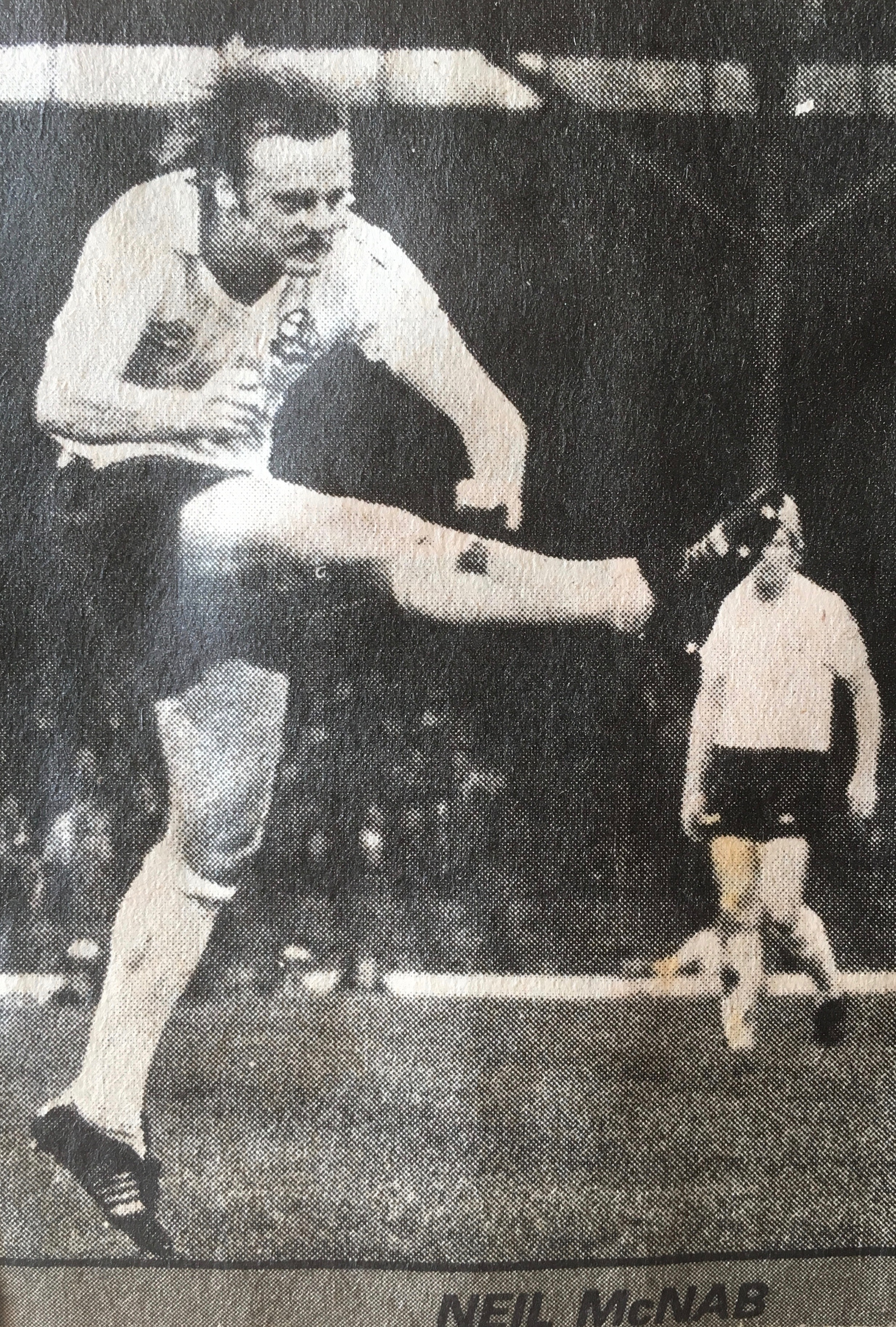
In four years at White Hart Lane, McNab played 72 matches and was selected by Scotland at under 15, under-18 and under-21 level, but never made it to the full Scotland team.

McNab - BoltonIn November 1978, Bolton Wanderers paid £250,000 for him but after only 35 appearances for the Trotters, in February 1980, Mullery signed him for Brighton.

When the former Scotland and Celtic captain Billy McNeill captured McNab’s signature in the summer of 1983, he began what would be a long association with Manchester City and he turned out to be a bargain buy considering in 1986-87 and 1988-89 he was voted City’s Player of the Year.

“Combative and always willing to stick a boot in, McNab was a key figure in City’s drive to promotion on more than one occasion,” was how manchestercity-mad.co.uk described him, while mancity.com, looking back at past players of the year, said: “Like a fine wine, got better as time went on.”

McNab w HartfordAcknowledging his initial signing failed to excite the City faithful, it added: “McNab developed into a skilful, combative midfielder who became a huge crowd favourite. Not unlike Asa Hartford (pictured above with McNab), McNab was a schemer who could pick a pass and kept the team’s tempo ticking over.”

McNab scored 19 goals in 261 league and cup games (plus five as sub) for City  but when Mel Machin’s successors at Maine Road (caretaker Tony Book and Howard Kendall) discarded him, he continued his playing career at Tranmere Rovers who paid £125,000 to take the 33-year-old to Prenton Park.

The combative midfielder added nous, steel and no little skill to the Rovers midfield, ending his first season in Birkenhead with two appearances at Wembley including the Leyland Daf Cup victory over Bristol Rovers,” said the Liverpool Echo.

He played 105 games for Tranmere, scoring six goals, and was part of the squad that secured promotion to English’s football’s second tier. He also earned the dubious distinction of being the first and thus far only Tranmere player to be sent off in a European game – a 2-1 win over Cosenza in the Anglo-Italian Cup.McNab HS

Determined to carry on playing, McNab had an 11-game loan spell at Huddersfield Town, returned to his native Scotland to turn out for Ayr United, appeared briefly for Darlington, played 13 games in Northern Ireland for Derry City, went non-league with Witton Albion (12 games) before finally calling it a day with Long Island Rough Riders in the States.

In 1994, he returned to Maine Road as youth team coach, when his old Albion teammate, Brian Horton, was City manager, and kept the position even when the aforementioned Alan Ball replaced Horton. But eventually he lost his job during another managerial upheaval in 1997 and took up a similar position at Portsmouth, once again working with Ball.

In October 2002, he finally landed a managerial position when he took the helm of League Two Exeter City. The reign was shortlived, though, and with only six wins in 26 matches (eight draws, 12 defeats) he was relieved of his duties.

McNab’s twin sons, Neil junior and Joe, who were born in Brighton, followed in their dad’s footsteps and were part of the young age group sides at Man City and Portsmouth. But after struggling to make the breakthrough, they moved to Wilmington, North Carolina, and have played for various sides in America.

Neil senior followed them to the States and in 2008 became director of coaching at Chiefs Futbol Club in Atlanta, Georgia, with Neil junior the club’s executive director.

In August 2017, it was reported Neil senior had suffered a severe stroke which left him fighting for his life.

On 2 March 2018, a message was sent via freelance writer Spencer Vignes to say that McNab had finally managed to return home after five months in hospital and in rehabilitation. “He has made tremendous progress, but still has a long way to go,” his son said.

Flamboyant Frank Worthington’s career included a brief Brighton stopover

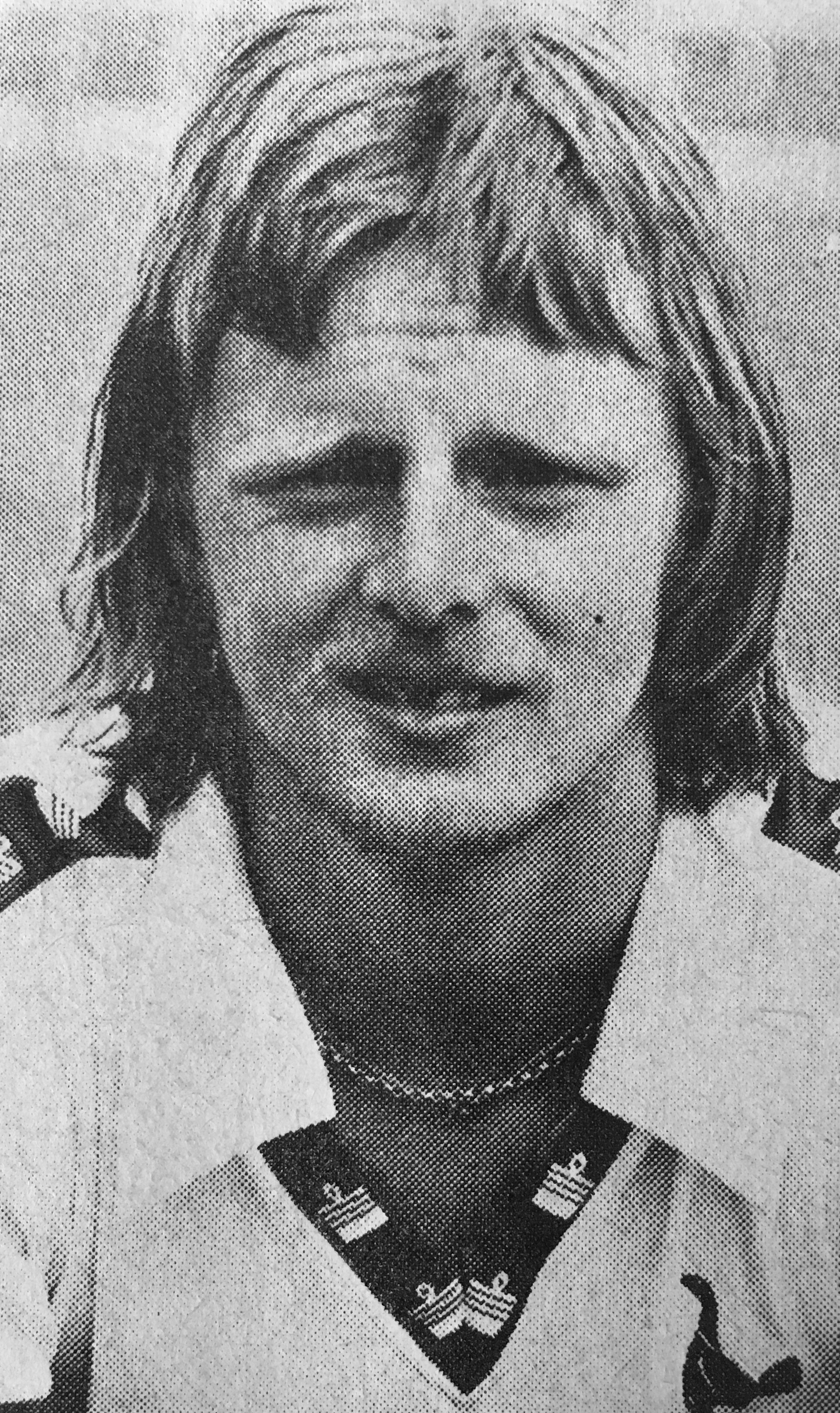
3-fw-albionFRANK Worthington was one of football’s genuine entertainers and it was a privilege to witness his season at The Goldstone between 1984 and 1985.
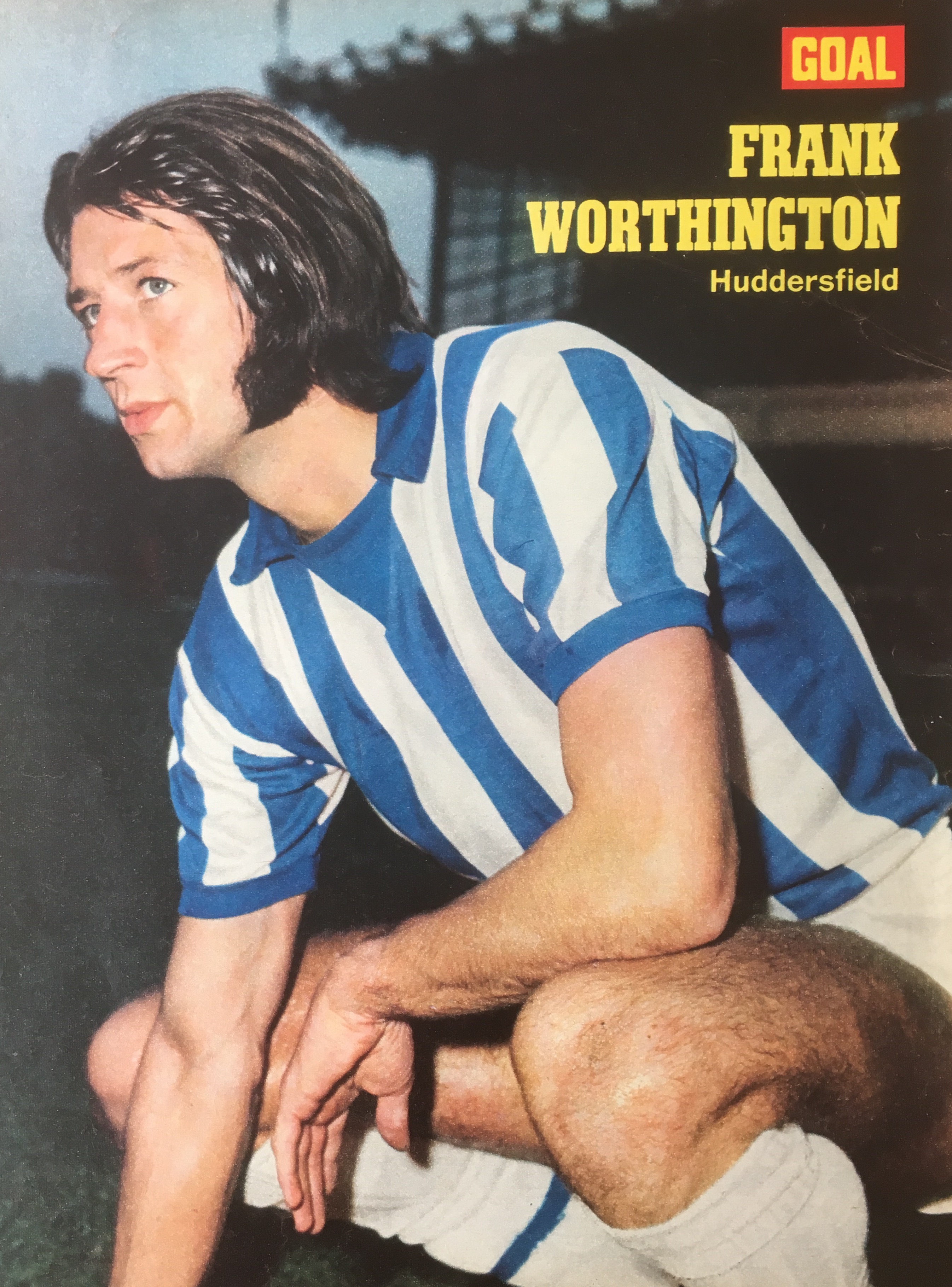
An all-too-brief England career which saw him win eight caps in 1974 was a long way behind him by the time his former Huddersfield Town teammate Chris Cattlin secured his signature for Brighton, but what the legs could no longer do, the brain more than made up for.

He was on the scoresheet in only his second game, a bruising encounter when Notts County were beaten 2-1, even though Albion played the second half with only 10 men – centre backs Eric Young and Jeff Clarke having been hospitalised by clashes with Justin Fashanu.

Worthington went on to make 30 appearances (plus five as sub) scoring eight times in total. Two of the goals came in his penultimate match against Wolverhampton Wanderers, one being a penalty struck so hard that it broke the hand of their ‘keeper Tim Flowers.

In June 2013, in the Huddersfield Examiner, Cattlin told interviewer Doug Thomson: “He did a good job for me. Frank wasn’t only a great player, but a great bloke as well, a dedicated trainer and a great bloke to have around a club.”

Worthington reflected on his time at the club in a matchday programme interview with Spencer Vignes in 2003. “I’d known Chris since my early days at Huddersfield,” he said. “I’d liked him so when he asked whether or not I’d be prepared to come to Brighton, I didn’t really have to think too long about it. They were a good side that hadn’t long been out of the First Division, so it sounded attractive.”

He continued: “We had some good players and certainly had no problems finding the net. I felt as though I was playing OK and the fans seemed to like me. But Chris did have this thing where he would chop and change the team around quite a bit, even if we were winning. He never really seemed sure what his best side was, and I think our form began to suffer because of it.”

Worthington reckoned it led to disharmony in the dressing room, and, for his own part, while he was good friends with Jimmy Case and Hans Kraay, he couldn’t say the same for Chris Hutchings or Kieran O’Regan. Albion finished sixth in the table, three points off automatic promotion and, although he was offered a new one-year contract, he decided to move on to try his hand at management.

So Brighton was only a brief stop-off in a 20-year career which saw Worthington score 236 goals in 757 league games. Add in games he also played in the United States with Philadelphia Fury and Tampa Bay Rowdies, in South Africa, Sweden and in English non-league, and the games total amounts to an amazing 828.

Halifax-born Worthington’s father was a pre-war professional and his two brothers, David and Bob, were also professionals. Unlike his brothers, the hometown club dithered over signing Frank and Huddersfield jumped in and secured his signature.

After manager Ian Greaves selected him for the opening fixture of the 1969-70 season, he clocked up 100 consecutive appearances for the Terriers.

The flamboyant Worthington famously almost joined Liverpool in 1972 but the deal was called off when he failed a medical due to a reported high blood pressure reading.

Liverpool signed John Toshack instead while Worthington went to Leicester City for £85,000.

Having made nearly a quarter of a million pounds from the sale of David Nish to Derby County, Leicester boss Jimmy Bloomfield had a useful kitty which he splashed on Worthington, Dennis Rofe, Keith Weller, Jon Sammels and Alan Birchenall.

Worthington scored on his Leicester debut at Old Trafford and in an article with Goal magazine on 21 October 1972, he said: “It’s different playing for Leicester City compared with Huddersfield. At Huddersfield the emphasis was on hard running and effort – here it is on skill, and there is a hell of a lot of skill in this side.”

In the same publication two years later, he had finished the 1973-74 season with 25 goals to his name and he was full of compliments for Bloomfield.

“Basically I am a player who relies on skill and that fits perfectly into Jim’s plans,” he said. “I always think that teams reflect the style and outlook of their managers. That’s why Leicester’s philosophy is that there is no substitute for skill.”

His time at Leicester lasted five years and spanned more than 200 appearances before he switched to Bolton Wanderers – where one audacious goal he scored against Ipswich remains a YouTube favourite – and then Birmingham City, helping both sides to promotions.

In 1982 he played for Leeds, the following season Sunderland and the next, Southampton, before pitching up at The Goldstone.

Worthington’s first go at management, while continuing to play, came with two years at Tranmere – and his first signing was Albion’s Ian Muir. He told Vignes: “Ian Muir was a fantastic forward with great touch. He did things in training you just wouldn’t believe, yet he wasn’t even making the side at Brighton under Chris.”

Muir became a hero on Wirral, scoring 141 goals as Rovers won promotion twice and won the Associate Members Cup at Wembley in 1991. By then, Worthington was long gone, having moved on to Preston, then Stockport County, and, after a succession of brief stays with various non-league clubs, ended up with hometown club Halifax Town, where he was briefly joined by Case.

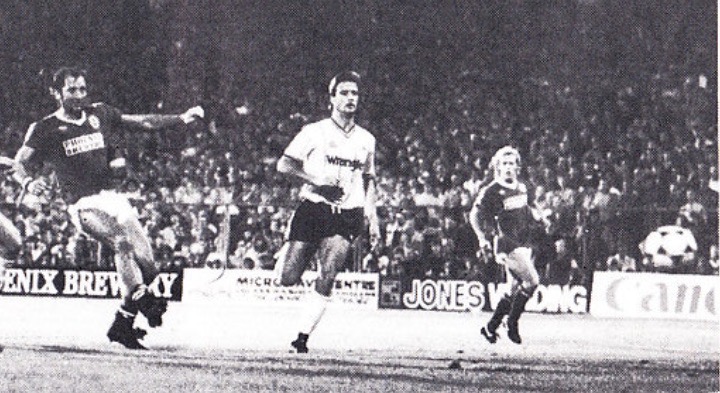
Albion’s shirt sponsor during his season with the club was Phoenix Brewery. Quite apt for a player who was famously quoted as saying: “I’ve squandered fortunes on booze, birds and gambling – it’s better than wasting it!”

Tellingly, his autobiography, published in 1995, entitled One Hump or Two, was a classic tell-all romp of a colourful career on and off the pitch.

Worthington died aged 72 on 22 March 2021 and, in a statement, his wife Carol said: “Frank brought joy to so many people throughout his career and in his private life. He will be greatly missed by everyone who loved him so much.”

The great man’s lifestyle spawned many eye-catching headlines over the years and there is no shortage of stories about him to be found on the internet.

Follow the links for just three examples.

https://www.theguardian.com/football/2016/may/06/frank-worthington-denies-being-diagnosed-with-alzheimers-disease

http://www.90min.com/posts/26691-england-s-wasted-talent-1-frank-worthington

http://www-users.york.ac.uk/~sph2/lufc/mag/worthing.htm

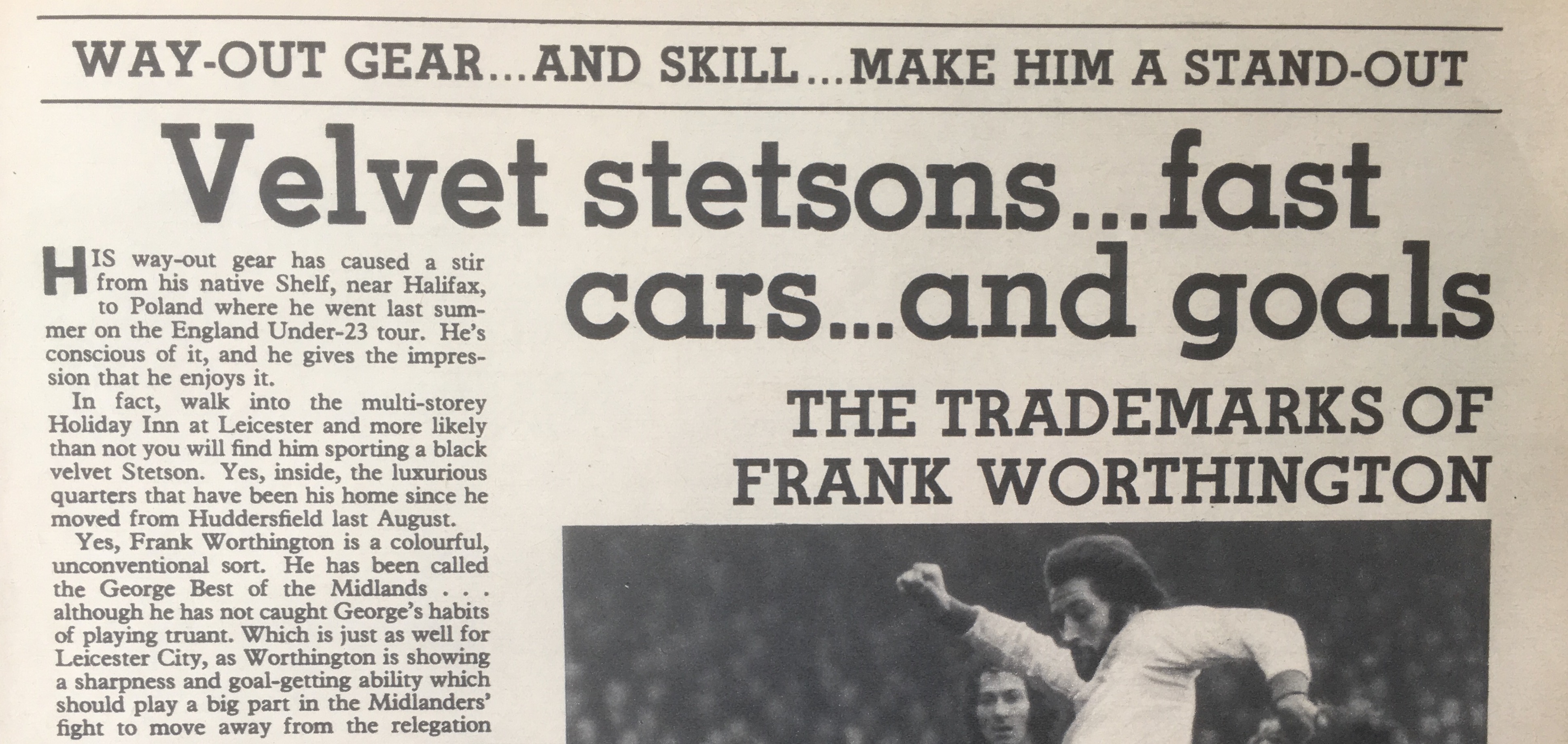
1-fw-hudd2-fw-leic4-fw-headline

Pictures from my scrapbook show Worthington in Goal magazine in Huddersfield and Leicester’s colours, in Albion’s Phoenix Brewery-sponsored shirt and a classic headline. Pictures also from the Albion matchday programme.

Ken Beamish dumped by Clough without a word

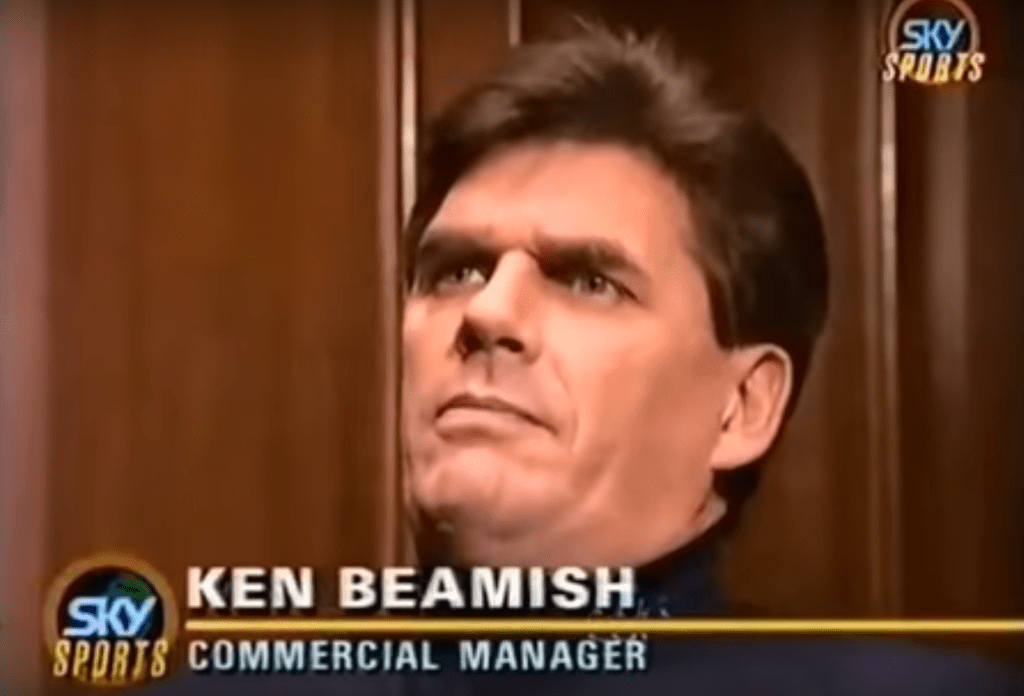
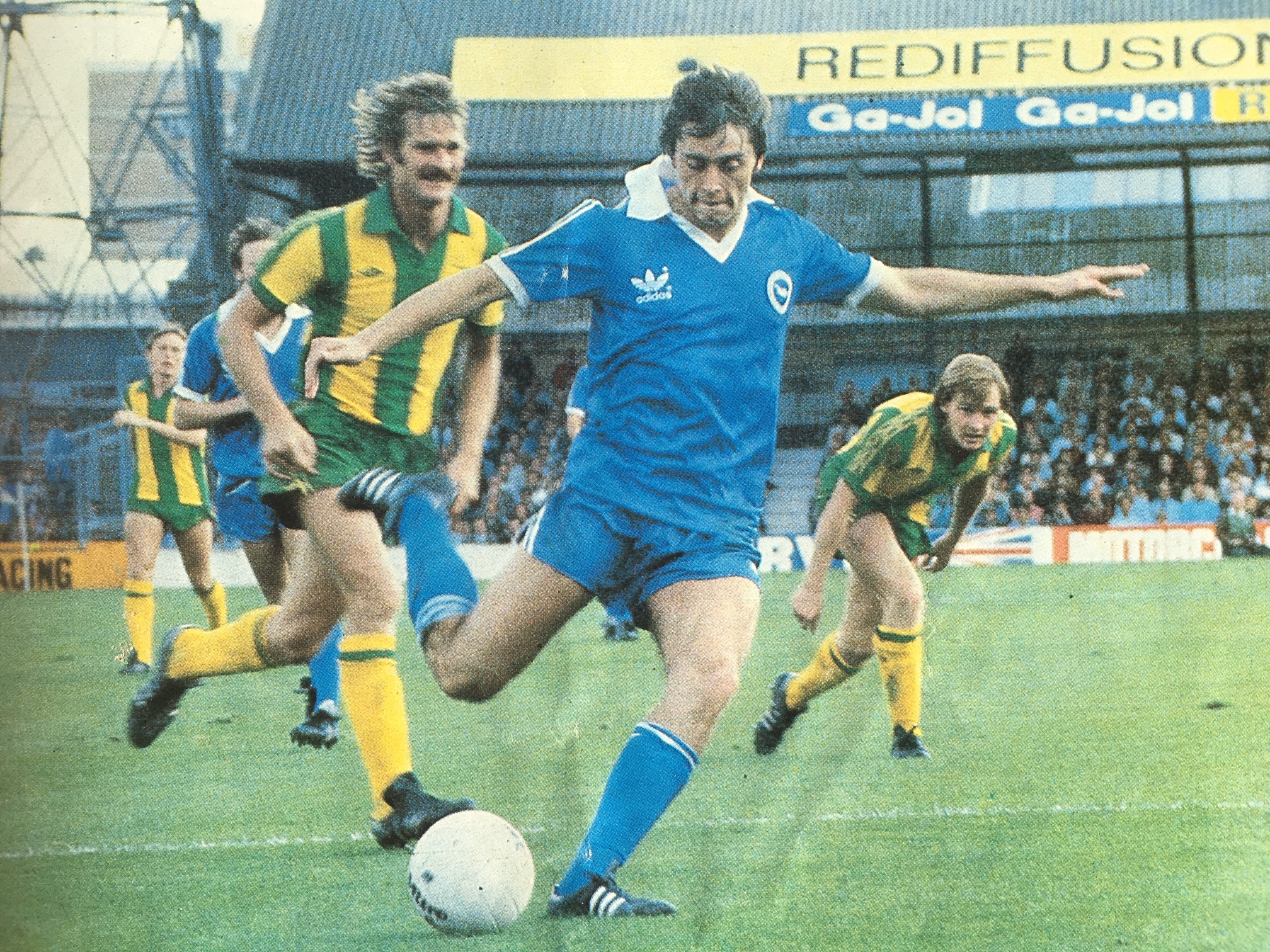
1-k-beamish-btn-goalSWASHBUCKLING Ken Beamish was a good old fashioned centre forward who crowds appreciated for his never-say-die attitude in pursuit of goals.

He mostly played in the third tier but had three seasons at the next level up (one was Brighton’s disastrous 1972-73 season and he had two with Blackburn).

He twice won promotion from the old Third Division – with Brighton in 1972 and Blackburn in 1975 – and scored 198 goals in 642 league and cup games between 1965 and 1982.

Born in Bebington on 25 August 1947, Beamish started his career with nearby Fourth Division Tranmere Rovers in the 1965-66 season and was top scorer in two of his six seasons with the club, helping them to promotion to the Third Division in 1966-67.KB Tran

He joined Brighton on transfer deadline day on 9 March 1972; manager Pat Saward having set off for the north west from Sussex at 5am to ensure he captured his man before the 5pm deadline that existed at the time.

When Beamish signed for £23,000 (plus the surplus-to-requirements Alan Duffy), Albion had just scored 13 goals in three games so supporters were baffled as to why he was needed.

After two substitute appearances, Beamish made his full debut in the oft-talked about televised game v Aston Villa and then got off the mark in the 3-1 Good Friday win over Torquay United (see picture).

He contributed six goals in 14 games, including last minute winners in two games in the same week, against Rotherham and Rochdale.

In an interview in Goal magazine after promotion was clinched,  Saward explained why he had signed him when the team was already riding high and looking a good bet for promotion.

Aiming a bit of a sideswipe at the incumbents Willie Irvine and Kit Napier, Saward said: “We had plenty of skilful players up front but none had the devil in him. We wanted more thrust. Beamish gave us it.”

Reporter David Wright wrote: “He added the final spark to an ever-improving Brighton side that, after promising a great deal for two-thirds of the season, finally showed their true force in the last two months of the season when they enjoyed a marvellous run of 12 games without defeat.”

Saward was delighted with his signing and said: “Ken shows great courage and has an insatiable appetite for scoring goals. He would die in the box for you. He goes in where angels fear to tread. The whole side never know when they’re beaten – something they proved over and over again – and Beamish epitomises this. He battles away from the first whistle to the last.”

There was clearly mutual admiration because Beamish reflected in an Albion matchday programme how Saward had helped him to become a better player. “He really put in the work with me on the training pitch,” he said. “My ball control was never the best but he worked hard with me to make sure it improved. He was a good man.”

In Brighton & Hove Albion Supporters’ Club’s official souvenir handbook, produced to celebrate the promotion, coach Ray Crawford, the former England international striker who was part of Saward’s backroom team, said: “I don’t like to single out players because football is a team game, but I must on this occasion. Ken Beamish added the final bite up front, and those vital goals that he scored helped us into Division II. What a player this boy is – he never gives up!”

Unfortunately for Beamish, the goals were harder to come by in the division above, particularly in a struggling side and with a new strike partner in the shape of experienced Barry Bridges. Beamish’s scoring ratio dropped to one in four during 1972-73 and, back in the third tier the following season, it didn’t get much better.

He kept his place in the side after Brian Clough’s arrival in October 1973 but 12 goals in 45 games didn’t impress a manager used to better things and he found himself part of the former Derby manager’s huge clear-out of players – and he was none too happy at the manner of it.

A contributor to Jonathan Wilson’s biography about Clough, Nobody Ever Says Thank You, Beamish spoke about how most of the players failed to get any rapport going with the manager because he was seldom around. “I played most of the games but we never saw much of Clough,” he said. “We saw him on matchday and Friday.”

Clough didn’t help matters when he missed a game altogether so he could go to America to watch a Muhammad Ali-Joe Frazier fight. That left him open to criticism but Clough was not remotely bothered. Instead he went on the front foot and openly criticised the players for lacking moral courage and declared: “There is a gale blowing through this club and the players concerned are about to feel the draught.”

That one of them was Beamish appeared harsh at the time and the manner of his departure clearly left a nasty taste in the mouth.

Beamish told Simon Levenson in his interview for Match of My Life (Know The Score Books Ltd): “I knew my time was up when I wasn’t included in the end of season tour to Torremolinos. We’re all grown men and there are ways of telling people that you’re not part of their future plans. He could have told me face to face, but instead I discovered I’d been transfer listed when my neighbour told me he’d heard it on the radio.”

A subsequent Albion matchday programme interview revealed his dismay at the circumstances, which understandably made it easy for him to leave.

“I never spoke to anyone at Brighton between the end of the season and signing for Blackburn,” he said. “That was the disappointing thing because I’d enjoyed my time at Brighton and made some good friends there.

“It was a sad ending to a happy period in my life.”

Clough’s loss was Gordon Lee’s gain. Lee, who would go on to manage Everton, paid £26,000 to take Beamish to Blackburn Rovers – the start of an association which continues to this day.

After scoring 19 goals for Blackburn in 86 appearances between 1974 and 1976, including promotion in 1975, he then had two years at Port Vale – where he was the player of the year in 1977-78 – a year at Bury and a second spell at Tranmere. He ended his playing days at Swindon Town, where he originally went to become assistant manager to long-serving John Trollope – father of former Albion assistant manager, Paul.

When Trollope senior left Swindon, Beamish ended up taking over as boss for 15 months (as pictured below), from March 1983 to June 1984, but 1983-84 proved to be a nightmare season in Swindon’s history with them finishing 17th in the old Fourth Division, the lowest finishing position in their history.Beam Swin mgr

Beamish subsequently became commercial manager at Blackburn from 1986 until his retirement in 2012. He then became vice chairman of the Blackburn Rovers Former Players Association.

  • Pictures from my scrapbook show a great action shot of Beamish scoring against Torquay, as featured in a Brighton & Hove Gazette end of season publication, a portrait of him in Goal magazine. Dig the hairstyle, pear drop collar shirt and tank top in this Goal picture of him with his son. The Argus captured Ken’s elation as he celebrated Willie Irvine’s goal against Aston Villa. And the man himself signed the photo of him being interviewed. Below, interviewed in 1992 by Sky Sports.