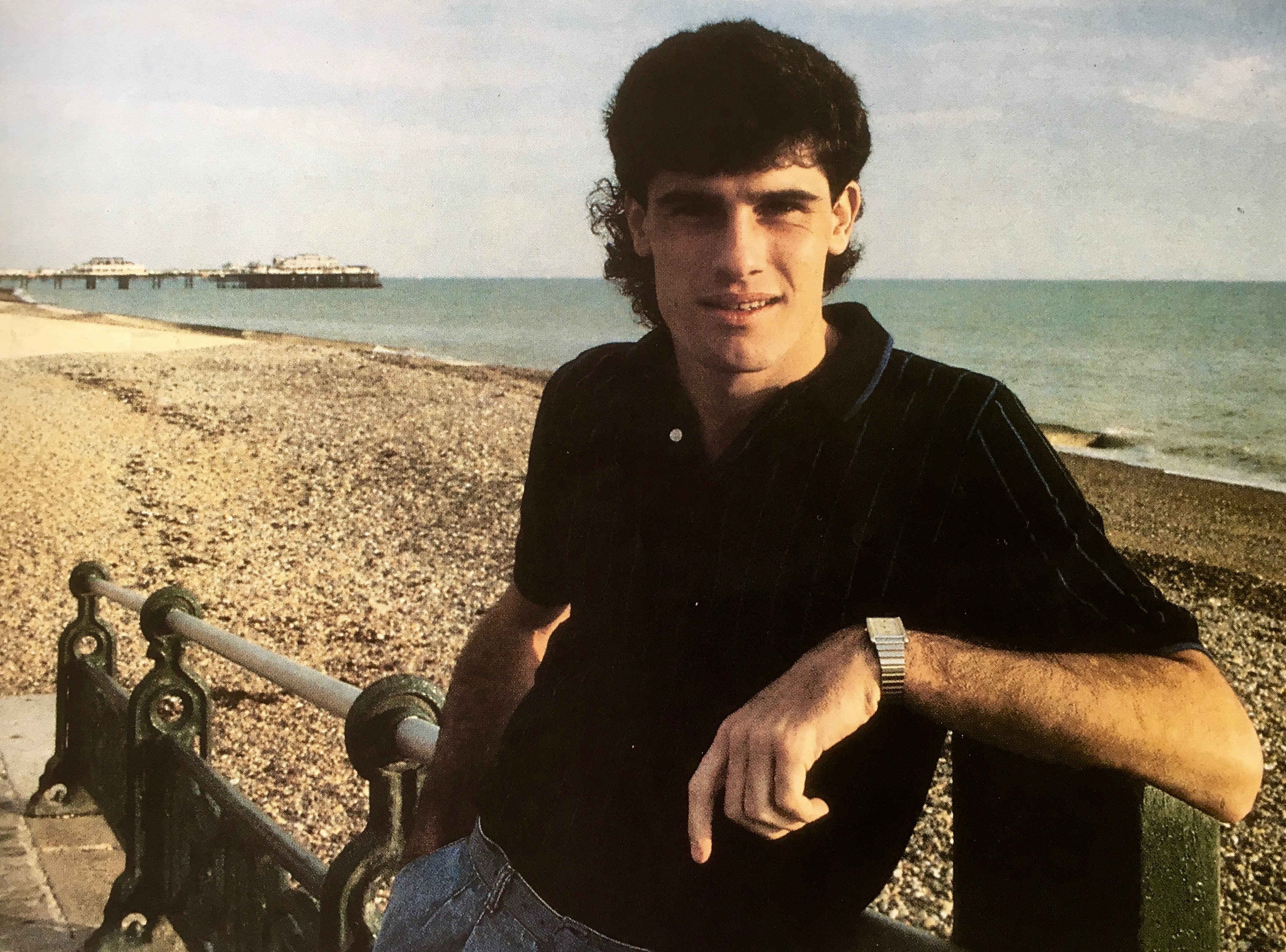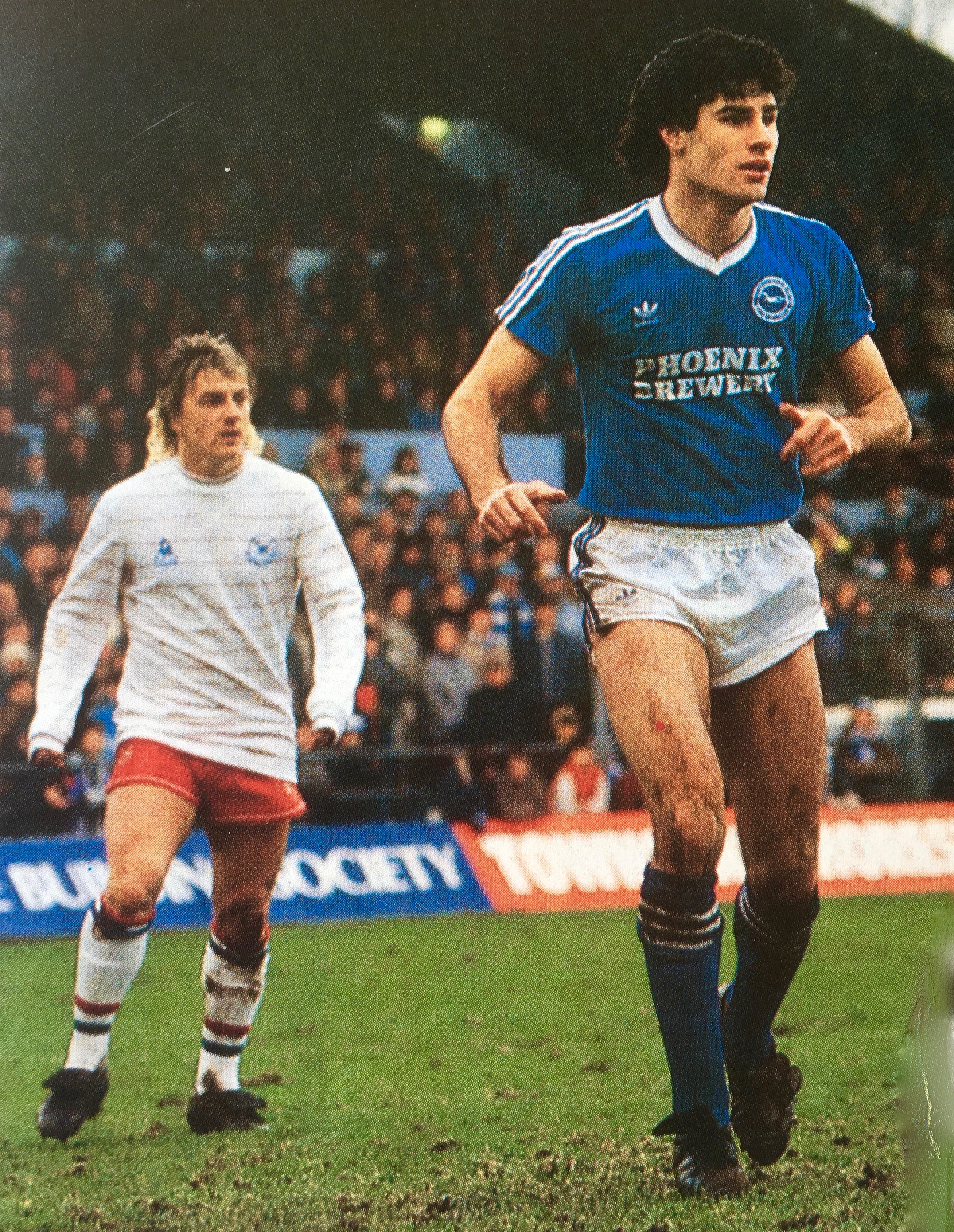
Northern Irish legend Aaron Hughes was talk of the Toon

AH red blackVETERAN Northern Irishman Aaron Hughes only brought down the curtain on his lengthy playing career in June 2019 at the age of 39.

On 12 June he finally confirmed his playing days were over in an emotional speech to his Northern Ireland team-mates in the Borisov Arena after the country’s 1-0 victory over Belarus.

Remarkably, Hughes had first been called up to the Northern Ireland squad at the age of 17, before he’d even broken through at Newcastle United.

“Having known Aaron Hughes for nearly 25 years, it was an honour to be present to witness his typically classy speech to all of the Northern Ireland players and staff to announce his retirement from the game after an amazing career,” former Newcastle keeper and current Northern Ireland coach Steve Harper told the Belfast Telegraph.

Amongst many others paying tribute, former international Paddy McCourt added: “Without doubt the best professional I encountered during my football career. I was fortunate enough to play alongside Aaron Hughes at Brighton and we also spent many years together with Northern Ireland. A true gentleman and brilliant player.”

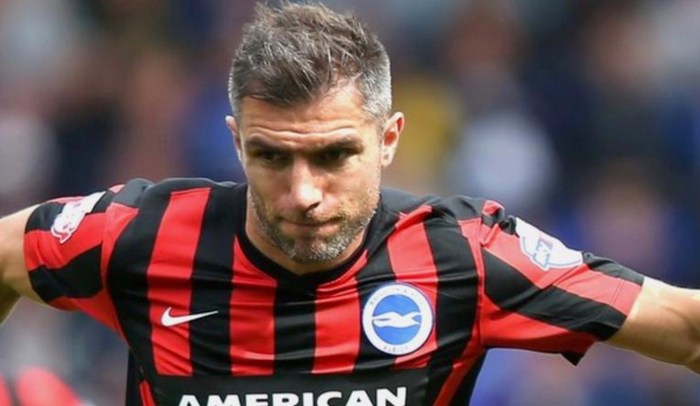
He had just the one season with Brighton & Hove Albion – in 2014-15. Mainly a central defender, Hughes could also play comfortably in either full-back position or midfield.

He was the first Brighton signing of Sami Hyypia’s ill-fated spell as manager, and Hyypia told the club website: “We wanted to bring another experienced defender, and Aaron fits the bill – having played at Premier League, Champions League and international level.

“I have played against Aaron a few times during my time at Liverpool and also for Finland, and I know his qualities and what he will give us.

“He has a very good footballing pedigree, is an intelligent player, and he has a great mentality and good approach to the game.

“He has that experience I wanted to bring into the squad, which alongside our other senior players, will help our younger players continue to develop and progress in the first-team squad.”

As it turned out, Hughes was only used as cover and during his season with the Seagulls made only 13 appearances.

Nevertheless, Hughes’ stay on the south coast clearly left an impression and fellow Northern Ireland international Oliver Norwood described how Hughes played a part in persuading him to join the Seagulls in 2016.

“I spoke to Hughesy about his time here and he spoke so highly of the club, mentioning the facilities, the stadium and that it’s set up to go to the Premier League,” Norwood told the club website. “He’s a wonderful person that’s achieved so much.

“I know he didn’t get the game time he would have liked here, but if I have half the career he has, then I’ll be very happy.”

Born in Cookstown, County Tyrone, on 8 November 1979, Hughes joined Newcastle United’s youth ranks at 17 and, over eight years, he made 279 appearances for the Magpies.

A Hughes superb footy picsEyebrows were raised when former Northern Ireland manager Bryan Hamilton took Hughes to Portugal for a World Cup qualifier in October 1997, when he was still only 17, but Hamilton told the Belfast Telegraph: “There was something special in him, even at a young age, and I wanted him in the squad. I felt he could be an outstanding player for Northern Ireland and I knew that coming in early wouldn’t affect or faze him.”

Hughes had to wait until Lawrie McMenemy succeeded Hamilton to make his international debut the following March, and by then he’d made a memorable debut for Newcastle in November 1997 against Barcelona at the Nou Camp. Selected by manager Kenny Dalglish, despite the 1-0 defeat, the 18-year-old showed tremendous promise against the likes of Figo, Ronaldo and Stoichkov. He eventually held down a regular first team place under Dalglish’s successor Ruud Gullitt before Bobby Robson took the helm.

Hughes made his name at St James’s Park in the centre of Newcastle’s defence, playing alongside Sylvain Distin in a side also featuring Craig Bellamy, Gary Speed and Alan Shearer. He spoke about his time playing under Dalglish and Robson in an interview with the Guardian.

Discerning followers of Toon were quick to join in the tributes paid to Hughes when he announced his retirement. Elsewhere they have vented their spleen at the decision Graeme Souness took to sell him to Aston Villa.

Hughes had three seasons at Villa, having been signed by David O’Leary in the 2005-06 season. But Villa fans are a tough lot to please and, despite his previous success at Newcastle, it seems they expected more. “Hughes, despite filling his role admirably as a centre back, never felt integral to our defence as he found himself chopped and changed with (Olof) Melberg, and fellow signing Wilfried Bouma,” declared readastonvilla.com.

Eventually with injury-hit defender Martin Laursen returning to the side under new manager Martin O’Neill, Hughes became more of a squad player at Villa Park. He was allowed to leave to join Fulham and was signed by a former Northern Irish international teammate, Lawrie Sanchez.

hughes fulhamAt Fulham, he formed a formidable defensive partnership with Brede Hangeland and fulhamfc.com said: “The pair worked brilliantly together, with the fans soon referring to them as our very own Thames Barrier. Their styles complemented each other perfectly, and while Hughes wasn’t the tallest of centre-backs, his leap and reading of the game more than made up for it.”

Hughes was one of three ever-presents – with Mark Schwarzer and Danny Murphy – when Fulham finished seventh in the Premier League in 2008-09, which led to European qualification.

He was part of the side captained by Murphy, with Bobby Zamora up front, who went on a gloriously unexpected UEFA Cup journey in 2010, only to be pipped to the trophy in extra time by Atletico Madrid.

“The way we lost, right at the end of extra-time, still grates with me, so the final is a bitter-sweet memory,” Hughes reflected in a 2014 interview for Albion’s matchday programme. “The Juventus game stands out more, where we came back from 3-1 down from the first leg in Italy to win 4-1 at Craven Cottage.”

On transfer deadline day in January 2014, Hughes signed a short-term deal for Harry Redknapp’s Queens Park Rangers for whom he made 11 Championship appearances.

After his season with Brighton, even at the age of 36 Hughes had no intention of packing up playing. Instead, he headed to Australia and played for Melbourne City and then linked up with India’s Kerala Blasters before he joined Hearts for his final two seasons.

His last club game saw Hearts bring him on in the 68th minute of their final league game of the season, a 2-1 defeat to Celtic at Celtic Park. Upon replacing John Souttar, the 39-year-old Hughes took the captain’s armband for the final few minutes of a career stretching across an impressive 22 years.

Hughes won an amazing 112 caps for his country across 20 years – a record for an outfield player. He was second only to the legendary Pat Jennings as most-capped player and was captain of his country for eight years. Small wonder, then, that he should be so grateful to so many at the Irish FA for the longevity of his international career.

hughes NI

  • Pictures from various online sources.

Former Gunner Raphael Meade a damp squib for the Seagulls

Meade best

ISLINGTON-born Raphael Meade joined Arsenal as a schoolboy and made it through the ranks to play more than 50 times for the Gunners.

A rather eclectic career saw him play in Portugal, Spain, Scotland, Denmark, Hong Kong and back in England.

Brighton boss Barry Lloyd had something of a penchant for picking up players from these shores who’d rather lost their way playing abroad and, while forwards Mike Small and John Byrne would count as great successes of that genre, Meade was largely a disappointment.

He played 40 times and scored 12 goals in the 1991-92 season, but the Albion were relegated to the third tier, so it was memorable for all the wrong reasons.

Born on 22 November 1962, Meade was on the Gunners’ books from June 1977 to the summer of 1985.

The superb thegoldstonewrap.com unearthed the Arsenal annual for 1981 in its research; it said of the young Meade: “He’s got a hell of a lot of pace and is fantastically brave in the box. He’s got all the makings of a top player. However, he’s another one who has got to work on his control like Brian McDermott with tighter controls and lay-offs. But with his type of pace he will always be a threat.”

The reality was that with the likes of initially Alan Sunderland and John Hawley ahead of him in the pecking order, then Tony Woodcock and Lee Chapman, followed by the arrival of Charlie Nicholas and former Ipswich striker Paul Mariner, his first team chances at Highbury were restricted.

While he was prolific in the Reserves (24 goals in 27 league games in 1983-84), his first team appearances over four years were somewhat sporadic.

Manager Terry Neill handed him his debut in a 3-0 UEFA Cup away win against Panathinaikos on 16 September 1981 and he scored a spectacular goal with his very first kick! His league debut came a month later – and he scored again, netting the only goal in a 1-0 win at home to Manchester City. The 1981-82 season saw the majority of his first team involvement: he played a total of 22 games, scoring five times.

A cartilage injury sidelined him for a large part of the 1982-83 season but when he did return in February 1983 he scored twice against Brighton in a 3-1 win.

CN + RM braces v SpursThe following season, Meade scored a hat-trick in the 3-1 win over Watford, which began Don Howe’s tenure as Arsenal manager, and he also earned a special place in Gunners’ fans hearts when scoring twice (pictured celebrating above with Charlie Nicholas, who also got two) in Arsenal’s 4-2 victory over arch-rivals Spurs on Boxing Day 1983.

Unfortunately, they were sporadic highlights and, in the summer of 1985, he was sold to Sporting Lisbon.

“Sporting Lisbon provided me with a great experience. I really enjoyed myself because the climate was great and, as well as finishing third in the league one season, we also reached the quarter finals of the UEFA Cup,” Meade said in a Shoot/Goal article.

He said it was the arrival of former Spurs boss Keith Burkinshaw that precipitated the end of his time in Portugal because he wanted him to play in an unfamiliar right midfield role.

Thus he was loaned to Spanish side Real Betis towards the end of his three-year contract, and, on his return, was transferred to Dundee United where he made 16 starts, plus six substitute appearances, scoring seven goals.

However, United boss Jim McLean made public his dissatisfaction with the striker and questioned his fitness. Meade hit back saying he was fit but being played out of position on the wing.

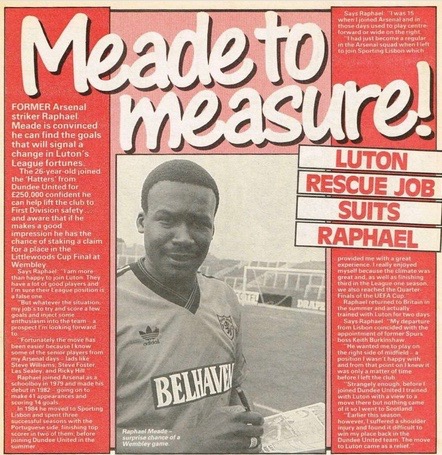
Subsequently a shoulder injury saw him sidelined and unable to regain his place and he joined a struggling Luton Town side for a £250,000 fee.

luton moveBut after only four games for the Hatters he was on his way again, this time to Odense BK in Denmark.
During two years on their books, he had loan spells back in the UK, playing once for Ipswich Town and five times for Plymouth Argyle.

As the 1991-92 season got under way, cash-strapped Brighton were forced to sell the previous season’s successful strike duo of Small (to West Ham) and Byrne (to Sunderland).

Byrne’s departure didn’t happen until October, and it was while playing alongside the popular Republic of Ireland international that Meade scored his first goal for the Seagulls, in a 3-1 home win over Port Vale.

He had found himself in the right place at the right time in only the fourth game of the season when an injury sidelined Bryan Wade, who had started the first three games alongside Byrne. smart Meade

Lloyd had watched the former Arsenal striker score in a 2-0 win for the reserves against Fulham and pitched him in against Wolves – a 3-3 thriller in which Mark Barham, Gary O’Reilly and John Robinson netted for the Albion.

“Ideally, I needed one or two games to get match fit but it was great to get the chance in the first team and I wasn’t going to waste it,” said Meade.

Meade in action with another former Gunner, and ex-Albion defender, Steve Gatting (in Charlton’s colours), and a man of the match award for a brace against Grimsby Town.

After Byrne’s departure to the north east, there was seldom a regular strike partner for Meade. The busy and bustling Mark Gall, signed from non-league Maidstone United for £45,000, managed 14 goals but was some way short of Byrne or Small’s quality. And another of Lloyd’s overseas ‘finds’- Mark Farrington from Feyenoord – was an almighty flop.

Meade cover boy

Meade popped up with the occasional goal and one of those rare glimmers of light in an otherwise dark season came in a game I went to see at Vicarage Road on 31 March 1992.

Although Albion were ultimately headed back to Division 3, a brief respite from that tumble came against the Hornets courtesy of a howler by David ‘Calamity’ James in their goal. James came to the edge of his area to collect a routine-looking through ball, spilled it rather than gathering it cleanly and Meade was on hand to pick up the loose ball, round the stranded ‘keeper and slot what turned out to be the only goal of the game.

Meade scored twice more before the season’s end but Albion lost four of the final six games and were relegated along with Port Vale and Plymouth. Meade elected to leave the club and head for Hong Kong.

After a season with Sea Bee, he returned to England and rejoined Brighton but only featured in three games. He moved on to Crawley Town in 1995-96, where he ended his playing days.

Pictures from various sources including the matchday programme, Shoot/Goal, and online.

Eagles’ Cup Final scorer Gary O’Reilly had two Seagulls spells

GARY O’REILLY was one of those rare players who had two different spells with Brighton – and played for rivals Crystal Palace in between.

Indeed, his career highlight came when he played – and scored – in the 1990 FA Cup Final for Crystal Palace against Manchester United.

It was from Phil Barber’s free-kick on the right that O’Reilly put Palace ahead after 18 minutes, his header looping over goalkeeper Jim Leighton.

United recovered to lead 2-1 before Ian Wright, only six weeks after breaking his leg, came on to score twice, in the 72nd minute and again at the start of extra-time. But Mark Hughes got an equaliser for United seven minutes from the end of extra-time, and, just as they had against Brighton in 1983, United went on to win the replay.

Born in Isleworth on 21 March 1961, O’Reilly started to make a name for himself with the Essex Boys team and, as a schoolboy, played for both England and the Republic of Ireland because his father was from Dublin and his mother English.

Arsenal wanted him on associate schoolboy forms, but it was Spurs who snapped him up at the age of 13. His youth team-mates at White Hart Lane included Kerry Dixon and Mick Hazard.

O’Reilly also had the offer of a sports scholarship at Columbia University before signing for Spurs as a professional. Among a total of 45 first-team appearances in five seasons at Tottenham were games in the Charity Shield at Wembley against Liverpool and a quarter-final victory in the UEFA Cup over German giants Bayern Munich.

Ironically it was the arrival of Gary Stevens from Albion shortly after the 1983 FA Cup Final that began to signal the end of his time at White Hart Lane, together with the emergence of Danny Thomas.

Even though he still had two years of his contract remaining, O’Reilly requested a transfer and, in August 1984, he became part of Chris Cattlin’s Albion squad after signing for a fee of £45,000.

Cattlin recalled: “I watched him eight times before signing him, and six times with Tottenham Reserves he had stinkers. But I thought then he had great potential.”

O’Reilly made his debut at right-back in a notorious home game against Notts County which saw centre-backs Jeff Clarke and Eric Young both hospitalised after clashes with County’s Justin Fashanu, meaning the new arrival hastily shifting into his more familiar position in the centre.

In what was an eventful first few weeks, he also joined that illustrious list of players to score a winning goal AGAINST Palace. That came on 15 September 1984 when 15,044 at the Goldstone Ground saw O’Reilly score the only goal of the game.

His centre-back partner that day – and for most of his time at the Goldstone – was Young, who also later joined the Eagles, having left Brighton for Wimbledon.

O’Reilly made 79 appearances in three seasons with Albion, scoring three goals, and was virtually an ever-present for the first two seasons.

GO'R by the pierOff the field, he became a popular figure with a social conscience, leading a campaign to help youngsters fight drug addiction and becoming president of the Junior Seagulls.

Unfortunately, injuries, including a worrying hamstring condition, restricted him to just eight games in the ill-fated 1986-87 season.

Then, on 3 January 1987, manager Alan Mullery reluctantly sold him to Palace for £40,000. Mullery later recounted: “I remember Gary O”Reilly coming in the day before we were going up to Grimsby. I asked him: ‘Do you want your wages next month?’ He thought it was some kind of quiz question, but I said ‘If you do, you are going to have to leave the club’. That’s how bad it was. We couldn’t afford the wages.” Albion won 2-1 at Grimsby but two days later, Mullery was gone himself – his second spell as manager ending in a sacking.

O’Reilly played 70 times in his first four seasons at Selhurst Park but he did not figure in Steve Coppell’s plans in the 1990-91 season and had just one game on loan with Birmingham City.

At the age of 30, the versatile defender returned to the Seagulls and was given a two-year contract by Barry Lloyd.

“There’s no substitute for first-team football,” he said. “There is nothing like playing regularly to give a player the right degree of confidence.”

Although he made 31 appearances in the 1991-92 season, he was unable to prevent Albion’s relegation back to the third tier and, after a series of unsuccessful knee operations, he was forced to retire from the game in April 1993.

After hanging up his boots, he embarked on a successful broadcasting career for Sky Sports, BBC, ART Prime in Dubai and Trans World International’s Premier League international feed.

On Twitter, with the handle @mythreeleftfeet, he describes himself as “global TV presenter, co commentator, ex professional football player all round sports broadcaster, writer, amateur photographer & someone you might just like…”

worldsoccertalk.com caught up with him in May 2017 to discuss a new venture in which O’Reilly is joint host (alongside stand-up comedian Chuck Nice) of a weekly podcast in America Playing With Science, which explores fascinating topics linking sport and science.

Phoenix O'R w Pompey's Biley

Pictures mainly from the matchday programme.

Above, defending against Portsmouth’s Alan Biley, who later played alongside him.

Mike Bailey took the Seagulls to their highest-ever finish

ONE OF the all-time greats of Wolverhampton Wanderers led Brighton & Hove Albion to their highest-ever finish in football.

Midfield general Mike Bailey played for Wolves for 11 seasons between 1965 and 1976, leading the team to promotion from the Second Division in 1966-67, helping them to top-flight positions of fourth and fifth in 1971 and 1973, getting to the final of the UEFA Cup in 1972, and lifting the League Cup at Wembley in 1974.

MB WWFCLgeCupMike Bailey holds aloft the League Cup after Wolves beat Manchester City 2-1 at Wembley.

It was perhaps a hard act to follow Alan Mullery as manager of Brighton, particularly as the former Spurs and Fulham captain had led the club from Third Division obscurity to the pinnacle of English football within three years.

But Bailey had just got Charlton Athletic promoted from the Third Division and in the 1981-82 season led Albion to a 13th place finish, a record which was only threatened in 2017-18 by Chris Hughton’s side, who eventually ended up 15th.

Unfortunately, although Bailey’s team was relatively successful, the style of play he adopted to achieve that position was a turn-off to the fans who deserted the Albion in their hundreds and thousands.

Eventually, chairman Mike Bamber felt he had to address the slump in support by sacking Bailey in December 1982. “He’s a smashing bloke, I’m sorry to see him go, but it had to be done,” said Bamber. There are plenty – in particular Bailey! – who feel he acted a little too hastily.

Bailey shared his feelings in an interview he gave to the News of the World’s Reg Drury in the run-up to the 1983 FA Cup Final.

Mike Bailey talks to the News of the World; his often frank programme notes; his assistant, John Collins, a former Luton Town player.

“It seems that my team has been relegated from the First Division while Jimmy Melia’s team has reached the Cup Final,” he began.

Wanting to put the record straight having been hurt by some of the media coverage he’d seen since his departure, he explained: “I found the previous manager Alan Mullery had left me with a good squad, but, naturally I built on it and imposed my own style of play.”

Bailey resented accusations that his style had been dull and boring football, pointing out: “Nobody said that midway through last season when we were sixth and there was talk of Europe.

“We were organised and disciplined and getting results. John Collins, a great coach, was on the same wavelength as me. We wanted to lay the foundations of lasting success, just like Bill Shankly and Bob Paisley did at Liverpool.

“The only problem was that winning 1-0 and 2-0 didn’t satisfy everybody. I tried to change things too soon – that was a mistake.

“When I left, we were 18th with more than a point a game. I’ve never known a team go down when fifth from bottom.”

It was clear from the outset of Bailey’s reign that he didn’t suffer fools gladly and there were numerous clashes with players, notably Steve Foster, Michael Robinson and Neil McNab, the displaced Gordon Smith and Mickey Thomas, a Bailey signing who repeatedly went missing because his wife didn’t like it in the south.

Bailey would vent his feelings quite overtly in his matchday programme notes; he was not afraid to hit out at referees, the football authorities and the media, as well as trying to explain his decisions to supporters, urging them to get behind the team rather than criticise.

Happier times as Mike Bailey becomes Albion manager and signs Tony Grealish to replace outgoing stalwart midfielder and skipper, Brian Horton.

Attempting to shine a light on the comings and goings associated with his arrival, he explained: “The moves we have been making are designed to provide Brighton with a better football team and one that can consolidate its position in the First Division, rather than struggle, such as in the last two seasons.”

By Christmas, the team were comfortably in the top half of the table and in an interview with the Argus, Bailey said: “I must admit that as a player and captain of Wolves I was a bit of a bastard, slagging others off, and that sort of thing. But being a manager, one sees everything in a different light. I am still trying to learn as a manager, especially now that I am with a First Division club.”

Three months later, shortly after he had appeared at a fans forum at the Brighton Centre, he very pointedly said: “It is my job to select the team and to try to win matches.

“People are quite entitled to their opinion, but I am paid to get results for Brighton and that is my first priority.

“Building a successful team is a long-term business and I have recently spoken to many top people in the professional game who admire what we are doing here at Brighton and just how far we have come in a short space of time.

“We know we still have a long way to go, but we are all working towards a successful future.”

As he assessed his first season, he said: “Many good things have come out of our season. Our early results were encouraging and we quickly became an organised and efficient side. The lads got into their rhythm quickly and it was a nice ‘plus’ to get into a high league position so early on.”

He had special words of praise for Gary Stevens and said: “Although the youngest member of our first team squad, Gary is a perfect example to his fellow professionals. Whatever we ask of him he will always do his best, he is completely dedicated and sets a fine example to his fellow players.”

Meanwhile, in his own end of season summary, Argus Albion reporter John Vinicombe maintained: “It is Bailey’s chief regret that he changed his playing policy in response to public, and possibly private, pressure with the result that Albion finished the latter part of the season in most disappointing fashion.

“Accusations that Albion were the principal bores of the First Division at home were heaped on Bailey’s head, and, while he is a man not given to altering his mind for no good reason, certain instructions were issued to placate the rising tide of criticisms.”

Vinicombe recorded that the average home gate for 1981-82 was 18,241, fully 6,500 fewer than had supported the side during their first season amongst the elite.

“The Goldstone regulars, who are not typical of First Division crowds (but neither is the ground) grew restless at a series of frustrating home draws, and finally turned on their own players,” he said.

At the beginning of the following season, off-field matters brought disruption to the playing side. Arsenal’s former FA Cup winner Charlie George had trained with the Seagulls during pre-season and senior players Foster, Robinson and McNab publicly voiced their disappointment that the money wasn’t found to bring such a player on board permanently.

McNab in particular accused the club of lacking ambition and efforts were made to send him out on loan. Similarly, Robinson was lined up for a swap deal with Sunderland’s Stan Cummins, but it fell through.

Meanwhile, Albion couldn’t buy a win away from home and suffered two 5-0 defeats (against Luton and West Brom) and a 4-0 spanking at Nottingham Forest – all in September. Then, four defeats on the spin in November, going into December, finally cost Bailey his job. Perhaps the writing was on the wall when, in his final programme contribution, he blamed the run of poor results on bad luck and admitted: “I feel we are somehow in a rut.”

It would be fair to say Bailey the player enjoyed more success than Bailey the manager. So, where did it all begin?

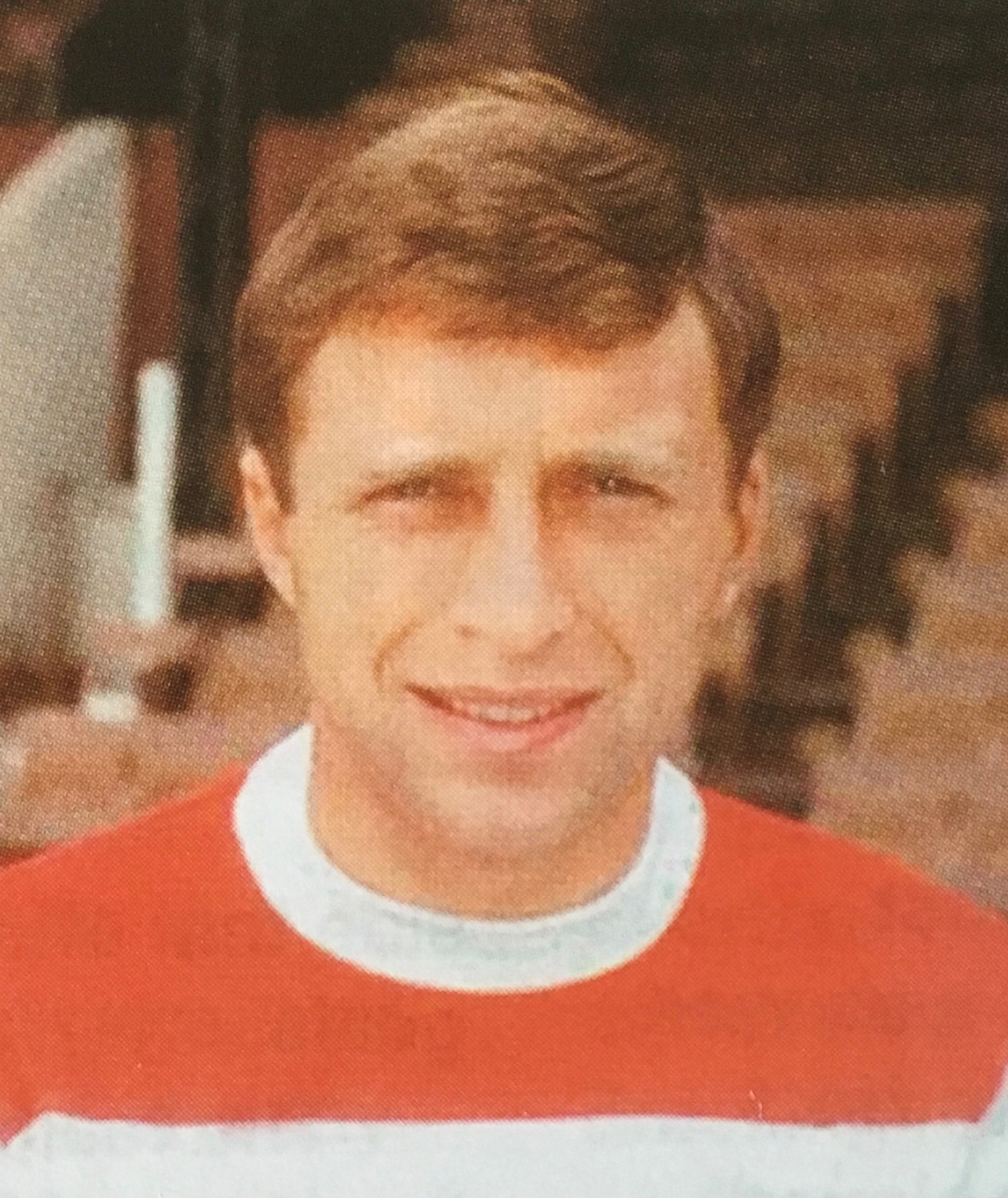
Born on 27 February 1942 in Wisbech, Cambridgeshire, he went to the same school in Gorleston, Norfolk, as the former Arsenal centre back Peter Simpson. His career began with non-league Gorleston before Charlton Athletic snapped him up in 1958 and he spent eight years at The Valley.

M Bailey charltonDuring his time there, he was capped twice by England as manager Alf Ramsey explored options for his 1966 World Cup squad. Just a week after making his fifth appearance for England under 23s, Bailey, aged 22, was called up to make his full debut in a friendly against the USA on 27 May 1964.

He had broken into the under 23s only three months earlier, making his debut in a 3-2 win over Scotland at St James’ Park, Newcastle, on 5 February 1964.He retained his place against France, Hungary, Israel and Turkey, games in which his teammates included Graham Cross, Mullery and Martin Chivers.

England ran out 10-0 winners in New York with Roger Hunt scoring four, Fred Pickering three, Terry Paine two, and Bobby Charlton the other.

Eight of that England side made it to the 1966 World Cup squad two years later but a broken leg put paid to Bailey’s chances of joining them, even though he got one more chance to impress Ramsey.

Six months after the win in New York, he was in the England team who beat Wales 2-1 at Wembley in the Home Championship. Frank Wignall, who would later spend a season with Bailey at Wolves, scored both England’s goals. Many years later, Wignall was playing for Burton Albion when a certain Peter Ward began to shine!

In 1965, Bailey broke his leg in a FA Cup tie against Middlesbrough and that was at a time when such injuries could be career-threatening.

“I was worried that may have been it,” Bailey recalled in his autobiography, The Valley Wanderer: The Mike Bailey Story (published in November 2015). “In the end, I was out for six months. My leg got stronger and I never had problems with it again, so it was a blessing in disguise in that respect.

“Charlton had these (steep) terraces. I’d go up to them every day, I was getting fitter and fitter. But it was too late to get in the 1966 World Cup side – Alf Ramsey had got his team in place.”

 Bailey missed out on the 1966 England World Cup squad but he won Football League representative honours and enjoyed success as captain of Wolves.

During his time with the England under 23s, Bailey had become friends with Wolves’ Ernie Hunt (the striker who later played for Coventry City) and Hunt persuaded him to move to the Black Country club.

Thus began an association which saw him play a total of 436 games for Wolves over 11 seasons, leading a side with solid defenders like John McAlle, Francis Munro and Derek Parkin, combined with exciting players like forwards Derek Dougan and John Richards, plus winger Dave Wagstaffe.

However, when coach Sammy Chung stepped up to take over as manager, he selected Kenny Hibbitt ahead of Bailey so the former skipper chose to end his playing days in America, with the Minnesota Kicks, who were managed by the former Brighton boss Freddie Goodwin.

Nevertheless, Bailey’s contribution to the team famous for their old gold kit saw him inducted into the Wolves Hall of Fame in 2010.

On his return to the UK, Bailey became manager of Hereford United, then he returned to The Valley as manager of Charlton and, immediately after getting them promoted to the third tier, took over at Brighton in the summer of 1981.

A somewhat extraordinary stat I discovered about Bailey’s management career in England through managerstats.co.uk was that he managed each of those three clubs for just 65 games. At Hereford, his record was W 32, D 11, L 22; at Charlton W 21, D 17, L 27; at Brighton, W 20 D 17, L 28.

In 1984, he moved to Greece to manage OFI Crete, and he later worked as reserve team coach at Portsmouth. Later still, he did some scouting work for Wolves.

Pictures from various sources: Goal and Shoot! magazines; the Evening Argus, the News of the World, and the Albion matchday programme.