Tommy Elphick’s cherry picking ride to coaching

MEADOW LANE, Nottingham, is probably not one of Tommy Elphick’s favourite grounds. When he left the pitch on a stretcher in the 53rd minute on 7 May 2011, it was a great opportunity for the youngster who replaced him – Lewis Dunk – but for Elphick it was a turning point in a fledgling, promising career with his hometown club.

League One champions Brighton drew 1-1 with Notts County that day but, as they looked forward to playing Championship football in the shiny new American Express Community Stadium at Falmer, Elphick was sidelined for the whole of the following season with a ruptured Achilles tendon injury.

Unsurprisingly, others made the most of his absence. Although he briefly returned to first team action in a pre-season friendly v Lewes in August 2012, the level of competition by then made him realise he would need to move elsewhere to get back in the groove.

That’s when he began an association with AFC Bournemouth that continues now as first team coach, retained by the club in spite of the man who appointed him (Gary O’Neil) being replaced as manager.

As a player, Elphick took a step back to make a stride forward, dropping down a division to join the Cherries and ended up reaching the ‘promised land’ of the Premier League before the Albion.

“To say it worked out well for me was an understatement,” Elphick told Nick Szczepanik in an Albion website interview in 2020. Little wonder he is hailed as “the most successful captain in the history of AFC Bournemouth” having led them to promotions from League One in 2013 and the Championship in 2015, when he was ever-present and named Cherries supporters’ player of the season.

En route to that achievement, he finally got to play at the Amex – on 1 January 2014 – but it was in the red and black stripes of the Cherries in a 1-1 Championship draw.
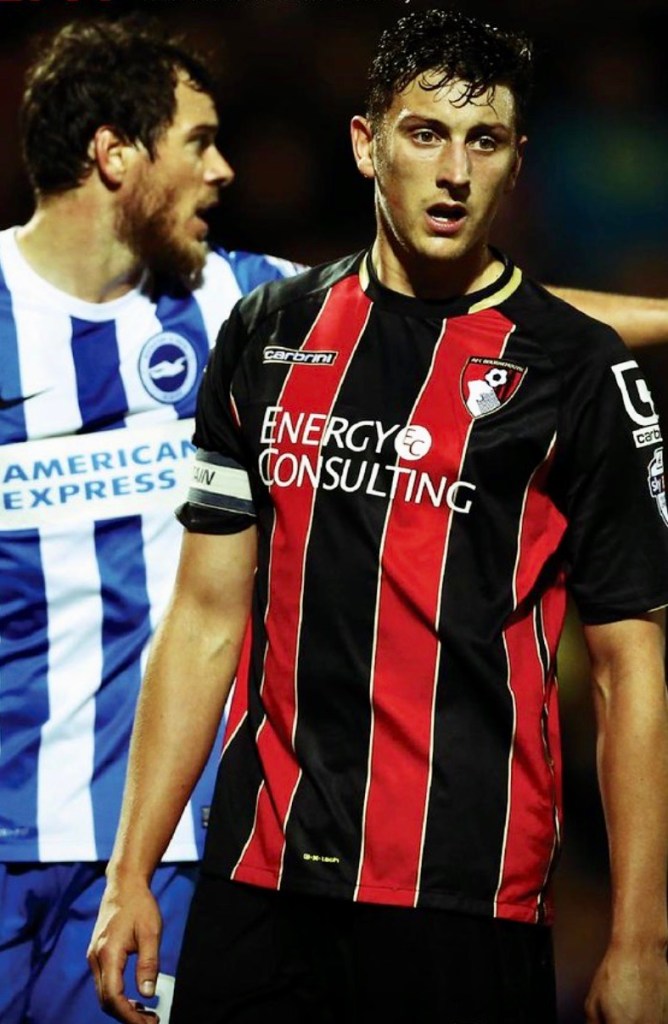
At the Amex in Bournemouth’s red and black stripes

Interviewed in that game’s matchday programme, he admitted: “I’m buzzing for it. I was the first Brighton player contracted to play at the Amex but obviously my Achilles injury conspired against me and I never got the opportunity.

“Having been with the club since a kid, as we went through all the struggles the dream was always to run out at the new stadium at Falmer. It was disappointing that it never happened for me.”

Born in Brighton on 7 September 1987, Elphick played locally for Woodingdean FC before linking up with the Albion academy at the age of 11 after impressing head of youth Martin Hinshelwood.

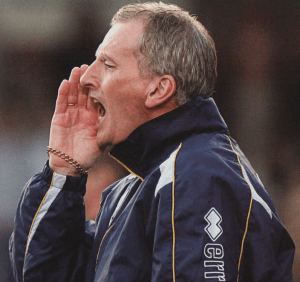
In his early days with Brighton, he came under the influence of Vic Bragg who he described as “a very astute tactician” whose “coaching drills were excellent and kept us on our toes”.

In a matchday programme article, he said of Bragg: “While he has a heart of gold and is genuinely a nice guy, you didn’t want to cross him on a bad day – but if he did have a word in your ear, it was always constructive.”
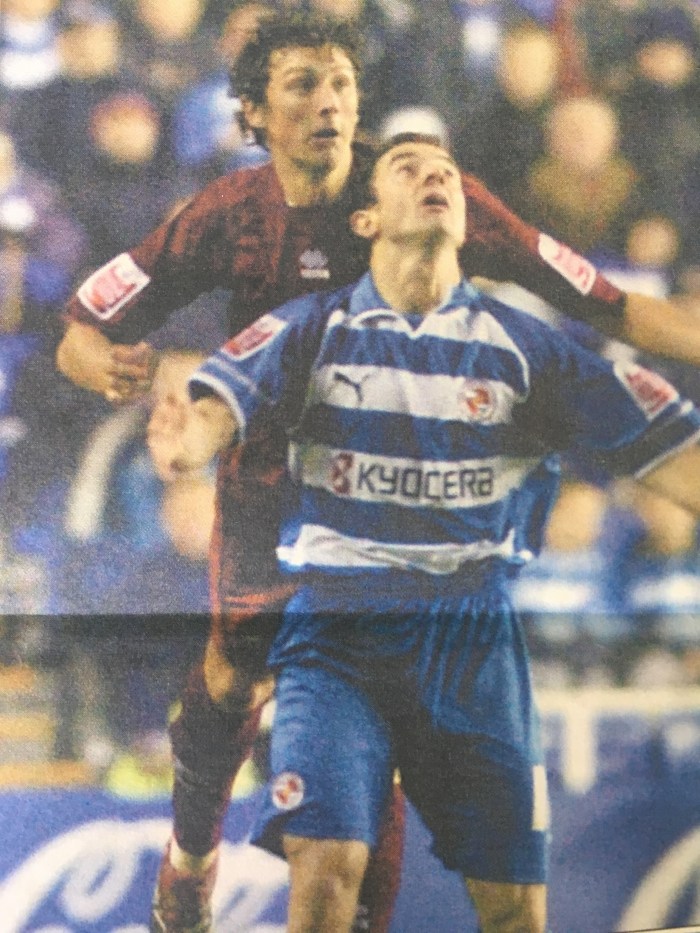
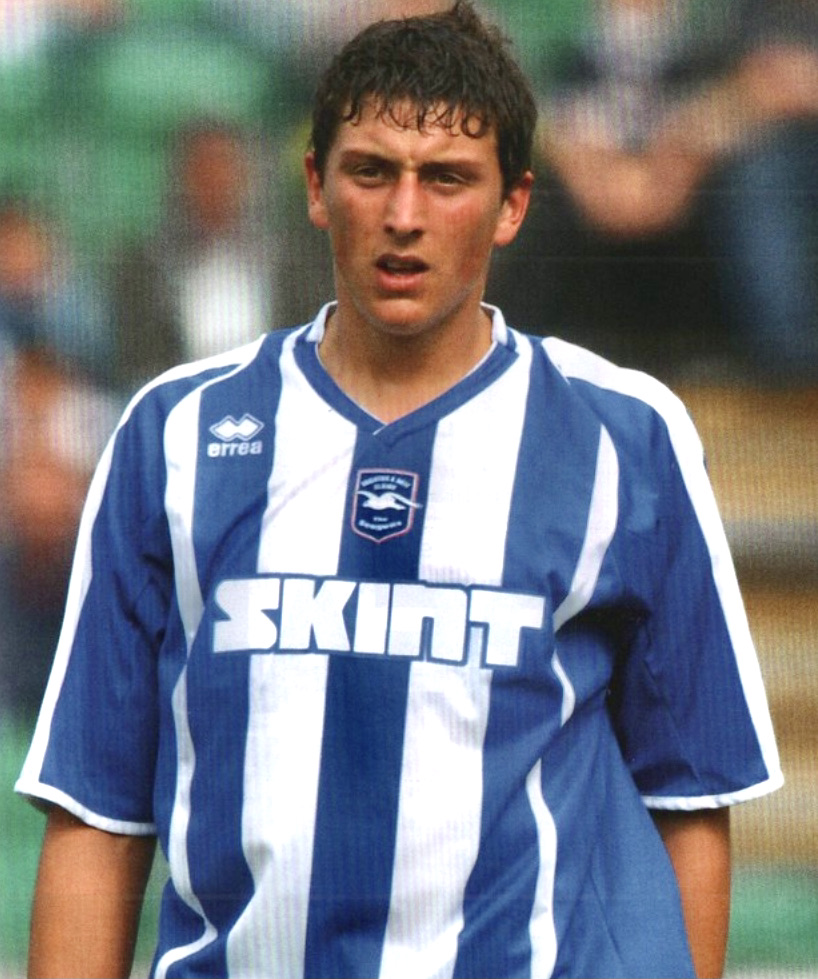
It was under Mark McGhee that Elphick made his first team debut (above) in December 2005, going on as a 73rd minute sub away to Reading in a 5-1 mauling after his older brother Gary had earlier been sent off on his full debut.

“I’m Brighton born and bred, I was a fan at Withdean before I played, and even remember doing a bucket collection on the touchline at Priestfield (when Albion were in exiled at Gillingham) in a bid to raise money for some new jumpers for us youth-team players.

“To then go on and make my debut, having come through the system under Dean Wilkins, well it doesn’t get any better than that.

“That was the highlight for me; being one of seven players from the youth-team set-up to make it to the first team.”

Gary didn’t play for the Seagulls again and Tommy had to wait until April 2007 to make his first start, by which time his old youth team coach Wilkins was in charge of the first team. That game also ended in a defeat, 2-0 to Doncaster, and it was only the following season that he established himself as a starter, initially playing alongside Guy Butters and Joel Lynch and later Adam El Abd and Gordon Greer.

A personal highlight was winning the Player of the Season accolade at the end of his first full season (2007-08), and he went on to captain the side on many occasions, as well as being part of the team that won the League One title.

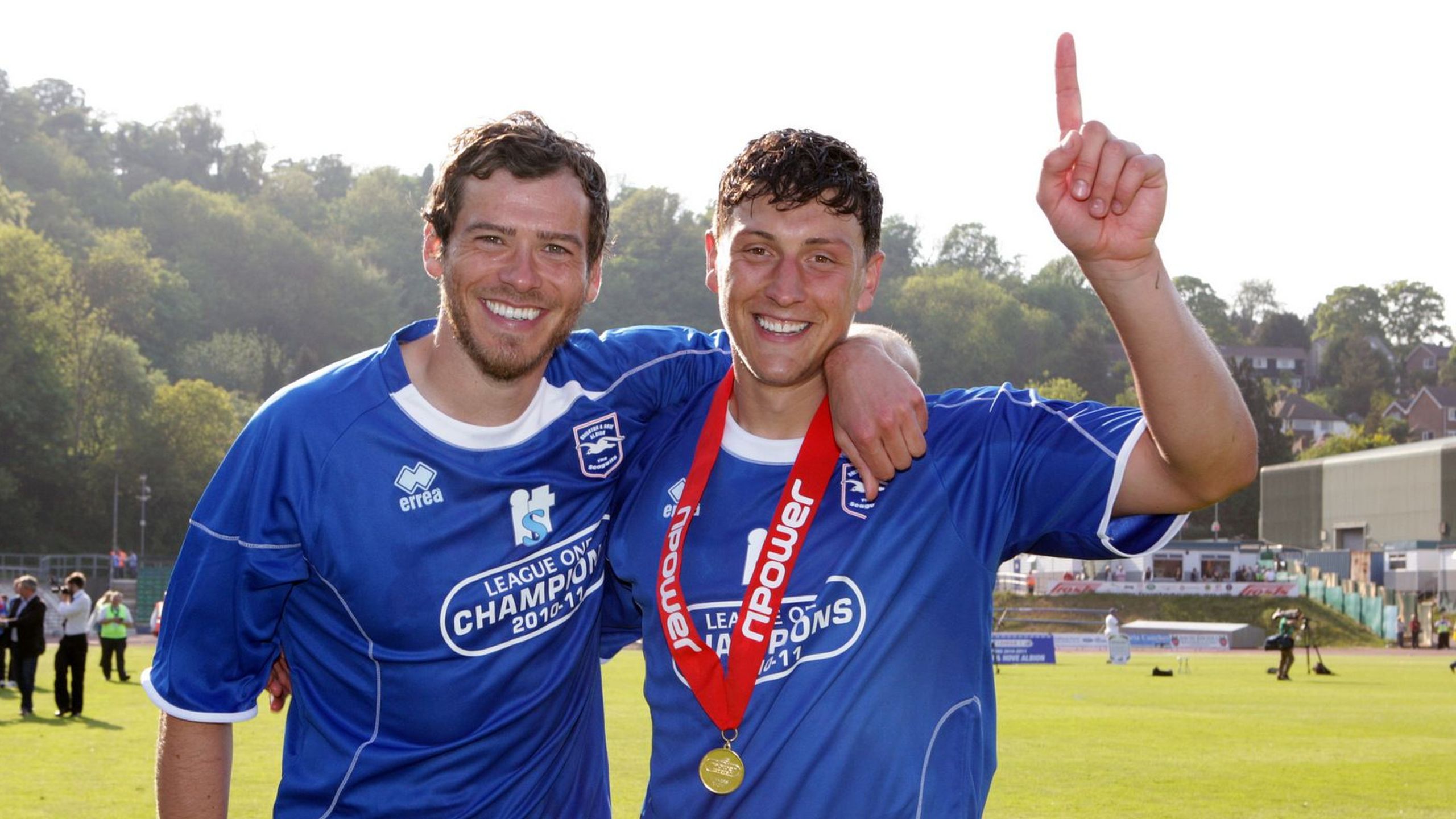
“Brighton are the club who gave me my chance in the game, who shaped me as a footballer and a person,” he said.

As well as McGhee and Wilkins, Elphick’s 182 Seagulls appearances also spread across the reigns of Micky Adams, Russell Slade and Gus Poyet.

The changes introduced by Poyet really struck home with Elphick, who told Spencer Vignes: “From day one there was absolute clarity in terms of what he expected from us, with a few simple rules to start with, which he built on week by week.

“We were in the lower reaches of the table and flirting with relegation, so for him to come in and demand that we play the way he saw the game was unbelievable really.

“A lot of managers would’ve tried to tighten the ship and play a more basic brand of football, but his football was based around possession.

“The style he produced, the football we played and what we went on to do for the next two or three years was phenomenal.”

But Elphick appreciated others too, saying: “I had such a good grounding as a kid and I’m so lucky to have played under some great managers and coaches.”

As a pointer to how things have panned out, he said: “I definitely want to stay in the game, coach, and hopefully manage one day.”

Reflecting on the League One title-winning campaign, Elphick told Szczepanik: “I relished the way we played in that season. I was brought up to play that way in the youth teams under Vic Bragg, Martin Hinshelwood and Dean Wilkins, who all wanted the game played in the right way.

“We lost our way a little after Dean left and we didn’t really have any style until Gus Poyet came to the club and revolutionised it. It was something I was enjoying until I got that injury. But if I hadn’t been injured, would I have ended up at Bournemouth?”

Elphick had signed a new contract with Albion when the move to Bournemouth in League One came up. “In theory it was a step down, but for me it was important to get back playing again,” he said.

The 2011-12 season had been a wipe-out as far as he was concerned because an infection and a repeat of the initial injury ruled out any chance of a swift comeback. He was operated on in Finland by the same surgeon (Professor Sakari Orava) who had performed similar surgery on David Beckham.

It was fully 16 months between the initial injury and playing 45 minutes of a pre-season friendly at Lewes in July 2012. “The idea had been to go out on loan and there were four or five different options, but Bournemouth were looking to have a right go at getting promoted and when I went down to meet the manager, Paul Groves, and the chairman, I was taken by the plans they had for the club,” said Elphick.

“Paul’s assistant, Shaun Brooks, was quite close to Dean Wilkins, and used to come and watch the Brighton youth team, so there was a connection there. Unfortunately, it didn’t quite work out for Paul and Shaun but that led to Eddie Howe coming back to the club.”

After making 145 appearances for Bournemouth, in 2016 Elphick moved on to Aston Villa, who he had scored against for Brighton at Villa Park in a 3-2 FA Cup defeat three years earlier (below left).

In the summer of 2016, Villa, under Roberto di Matteo, had just been relegated to the Championship and wanted Elphick as their captain as they aimed to bounce straight back to the Premier League.

He was di Matteo’s first signing as Villa manager – and he can thank a very understanding wife that the move went through smoothly.

Elphick cut short his honeymoon to get cracking with his new club, telling the Birmingham Mail: “As soon as I heard about Villa’s interest it’s something that turned my head straight away.

“To be able to come here and represent such a great club with such great history is going to be a real honour for me.”

However, it wasn’t long before Steve Bruce took over from di Matteo and he preferred a different centre-back pairing, meaning Elphick spent most of the second half of the season on the subs bench. I recollect him going on for Villa in the last game of the season when Albion hoped to clinch the Championship title only to concede a late equaliser when a shot from Jack Grealish squirmed through David Stockdale’s grasp.

On loan at Hull City

In January of the following year, Elphick went out on loan to Reading for half a season (but only played four games) and he began the first half of the 2018-19 season on loan at Hull City, playing 18 games under Nigel Adkins.

Because of injuries to others, he was recalled to Villa at the start of 2019 by Bruce’s replacement Dean Smith. He played 14 matches but was not involved in the end-of-season play-off final when they finally earned promotion back to the Premier League (beating Derby County 2-1).

Interviewed by the Birmingham Mail about his three years at Villa, Elphick replied: “Tough, unbelievable, disappointing, anger – I had every emotion but I wouldn’t change it for the world because it’s created who I am now.

“What I saw and experienced at Villa was mental, good and bad. A big club brings different pressures and different pitfalls and you have to experience that to know what you could be dealt with further down the line.

“It was really troubled and there was poison in the brickworks to start with. Steve Bruce did the most unbelievable job at weeding that out and bringing it all together.

A challenging time at Villa

“He wasn’t a manager I particularly took a shine to in the way he coached or managed but he taught me a lot about how to bring people together and how to create a group.

“I experienced working under Roberto di Matteo, a Champions League-winning manager, and Steve Bruce, one of the most successful managers in the Championship. Dean Smith was a bit of a trailblazer and did some powerful stuff.”

After two injury-ravaged seasons at Huddersfield Town, when he managed just 14 games for the Terriers, Elphick quit playing to embark on a coaching career that always seemed to be his destination.

He reckoned it was that long spell out injured while at Brighton that helped his move into coaching because he had time to watch and understand football in a way that wouldn’t have happened if he’d been playing every weekend.

He returned to Bournemouth as coach of their development squad, explaining to premierleague.com: “I was delighted to work alongside Shaun Cooper with the 21s. I was very, very lucky to work with such an outstanding coach, and I learned so much. That period also opened my eyes to the time and effort required to do this job properly.  

“In truth, academy football probably had a lifespan for me, but it was an invaluable year.” 

When Parker lost his job in the wake of a 9-0 humbling by Liverpool, Cooper and Elphick were promoted to work alongside new boss Gary O’Neil.

“There are benefits and negatives to being thrust into that situation,” admitted Elphick. “I would love to have spent more time coaching, experimenting, and finding out who I really am on the grass before going into such a high-pressure situation, but it was an opportunity which had to be grabbed with both hands.”

Elphick told Adrian Clarke: “At the outset, none of us had coached at Premier League level before, but we went in, took the handbrake off and went for it. Thankfully, the three us had a nice blend.”  

Elphick absorbed plenty from O’Neil’s way of working and observed: “Premier League football is such a high-level now that as a coach, if you’re put on the spot you need to be able to answer questions or offer advice on all aspects of the game. My intention is to become as well-rounded as possible.” 
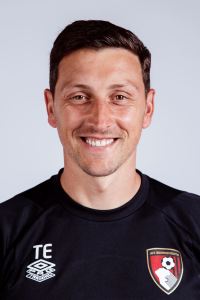
After helping Andoni Iraola settle in as new head coach, Elphick has relished his supporting role although he confessed: “I’ve always wanted to manage, and down the line I’d like to put my principles and ideas into practice. It’s an itch I will need to scratch, but there is no rush.  

“Right now, I just feel so lucky to have experienced contrasting styles in O’Neil and Iraola, and I have learned an incredible amount from both men. I really resonate with Andoni, and the way he wants his team to play with emotion, and he places a lot of emphasis on spirit. 

“What I have learned so far is that to be a successful coach you firstly need strong beliefs. Then, you must deliver your messages with consistency and confidence, and of course be authentic, true to yourself.”

Martin Hinshelwood went down with Palace and up with Albion

REGARDLESS of the often overblown ‘bitter rivalry’ between Brighton and Crystal Palace, many people have served both clubs with equal distinction, none more so than Martin Hinshelwood.

A player at Palace until injury curtailed his career when only 27, he went on to have a long career in the game, much of it with Brighton; more often in youth development as a coach and briefly as the no.1.

In the summer of 2002, his appointment as Albion boss 11 weeks after his former Palace teammate Peter Taylor had quit came as something of a surprise considering chairman Dick Knight declared he had interviewed seven candidates for the post.

In more recent times, Albion have had a Uruguayan, a Spaniard, a Finn and an Italian as head coach, back in 2002 it looked a strong possibility Knight might appoint wild-haired German coach Winfried Schafer, who had just managed Cameroon at the World Cup, but the chairman suspected his lack of command of English might be too big a hurdle to get over.

A terrific start

A clear favourite had been Steve Coppell but when the ex-Palace manager fell asleep during his conversation with Knight, apparently fatigued after a long-haul flight, the chairman was suitably unimpressed and, with time running out before the 2002-03 season got under way, Hinshelwood was appointed instead.

A 3-1 win away to Burnley looked like a terrific start but after a 0-0 home draw with Coventry, the side went on a disastrous 10-game losing spell (a 2-1 League Cup win over Exeter City the only bright spot amid the gloom).

Knight had already publicly signalled he would take decisive action after the sixth defeat in a row – a 4-2 home reverse to nine-man Gillingham!

He told the Argus: “If the team went ten matches losing every one, then you have got to do something about it.

“It’s very easy to criticise him (Hinshelwood). Obviously, he is a manager under pressure because we have just lost six games.

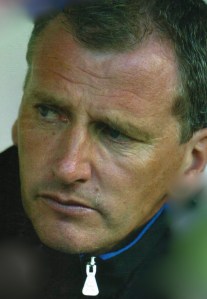
Getting his message across

“To suggest we should instantly sack him puts out the wrong message. Most people right now will think it was the wrong decision to appoint him, but I am not going to panic. I am going to monitor the situation.”

Of course, that monitoring didn’t take long to reach an inevitable conclusion – four more defeats and Hinshelwood was relieved of first team duties. He was made ‘director of football’ and Knight went back to Coppell to try to keep the Albion in the division. He very nearly managed it, too, but such a bad run of defeats had taken their toll on the points total.

As it happened, it wasn’t the first time Hinshelwood had found himself in the Albion hotseat: he was caretaker manager on three occasions: in 1993 (before Liam Brady’s appointment), in 2001 (after Micky Adams left for Leicester) and again in 2009, when he was in charge for a 4-4 FA Cup first round tie at Wycombe Wanderers after Russell Slade had been sacked and before Gus Poyet’s arrival.

When researching backgrounds of any number of players for this blog, Hinshelwood’s name is often cited as the one who either made the approach to bring them to Brighton or who was a major influence in their development.

For example, when Hinshelwood first joined the Albion in 1987, from Chelsea, he was instrumental in bringing from Stamford Bridge to the Goldstone Doug Rougvie and Keith Dublin, who both played their part in getting Albion promoted straight back to the second tier in 1988.

Hinshelwood had been reserve team manager at Chelsea for two years during the managerial reign of John Hollins, after first team coach Ernie Walley, his former Palace youth team coach, put in a good word for him.

His long association with Brighton began with a ‘phone call to Barry Lloyd to congratulate him on landing the Albion manager’s job. The former Fulham captain asked Hinshelwood to join him at the Goldstone – and he stayed for the next six and a half years.

He returned to the club in the summer of 1998, when Brian Horton had taken over, and was appointed Director of Youth, with Dean Wilkins as youth team coach.

Pensive Hinsh

An interview with the matchday programme pointed out that across the following 14 years, he oversaw a youth system that produced 31 players who made it through to the first team, although he said such success had very much been a team effort, name-checking Wilkins, centre of excellence managers Vic Bragg and John Lambert, scouting chief Mark Hendon and physio Kim Eaton.

Dean Hammond, Adam Hinshelwood, Adam Virgo, Adam El-Abd, Dean Cox, Jake Robinson, Dan Harding and later Lewis Dunk, Jake Forster-Caskey and Solly March all graduated from that period. “To have been a part of their journeys makes me immensely proud,” he said.

Hinshelwood left the Albion for a second time in 2012 and worked variously for Crawley, Portsmouth, Stoke City and Lewes. He returned to the Seagulls once again when the former head of academy recruitment at Stoke, Dave Wright, who had joined Brighton in 2019, invited him to take on a role of scouting 13 to 16-year-olds.

When Hinshelwood himself was that age, he had visions of following in his dad Wally’s footsteps. He had been a professional for Fulham, Chelsea, Reading, Bristol City and Newport County, and, although born in Reading (on 16 June 1953), young Martin had become accustomed to an unsettled childhood, moving around the country to wherever dad’s next club took him.

The family finally settled in New Addington, near Croydon, with Wally playing non-league football in Kent and Martin played representative football for Dover Under 15s, Croydon Boys and Surrey Under 16s.

He was on schoolboy terms at Fulham when Bobby Robson was manager but they didn’t think he would make it. It was while he was playing for Surrey Schools that former Spurs and Palace manager Arthur Rowe scouted him for Palace and he was taken on as an apprentice in 1969.

Hinshelwood playing for Palace, up against Stoke’s George Eastham

Hinshelwood was given his first team debut by Bert Head in 1972. He played in midfield in the old First Division for a dozen matches but the side were relegated in his first season. The flamboyant fedora-wearing Malcolm Allison took over as manager and he was later replaced by Terry Venables.

Martin’s younger brother Paul (Jack Hinshelwood’s granddad) played in the same side at full-back and the brothers were alongside the likes of Kenny Samson and Peter Taylor. In 1975-76, when still a Third Division side, they shook the football world by making it to the semi-finals of the FA Cup, where they lost to eventual winners Southampton, although Martin missed the game through a right knee injury. It eventually forced him to quit playing in 1978, after he’d made 85 appearances for Palace in five years.

Venables appointed him as youth team coach at Selhurst Park and although he spent 18 months as player-manager of non-league Leatherhead, he then resumed his Palace role under Steve Kember.

Alan Mullery dispensed with Hinshelwood’s services during his brief managerial reign at Palace but he kept his hand in at coaching with non-league clubs Kingstonian, Barking and Dorking.

Selsey-based Hinshelwood then had a spell as manager of Littlehampton before the Chelsea job came up.

‘Genuine football man who turned people’s lives around’

George Petchey twice stepped up from backroom man to Albion caretaker manager

THE FORMER Orient and Millwall manager who introduced Laurie Cunningham to the football world was twice caretaker boss of Brighton ten years apart.

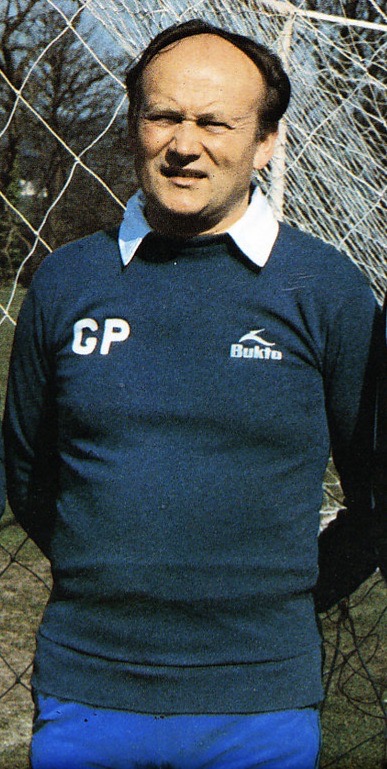
George Petchey, once a player then coach at Crystal Palace, was assistant manager to Chris Cattlin in the mid ‘80s and returned to Brighton in the ‘90s as youth development manager under Liam Brady, before becoming no.2 to Jimmy Case.

Working for the Albion was certainly geographically convenient for Petchey because, even when he played, coached or managed in London, he lived in Southwick.

Petchey first arrived at the Albion in 1983 to take charge of youth development and, as described by wearebrighton.com, was the man responsible for introducing Ian Wright on trial, having been impressed when the future Arsenal and England star had tried to begin his career at Millwall, where Petchey was manager between January 1978 and November 1980.

It’s now part of football folklore that Albion rejected Wright and Cattlin opted to take on another triallist, Steve Penney, instead. Meanwhile, in November 1984, Petchey was promoted to assist the relatively inexperienced Cattlin with the first team.

Although he was seen as a figure in the background, a profile article in the matchday programme gave a little insight into his approach.

“I can’t understand people who earn a living from football and still criticise the game,” he told interviewer Tony Norman. “I’ve been involved with it since the age of 14 and I wouldn’t change a thing.

“Molly (his wife) and I have met a lot of good people. We’ve loved the game and it has been good to us. No complaints.”

When Cattlin was sacked in April 1986, Petchey stepped up to manage the side for the final game of the season (a 2-0 defeat away to Hull City) before Alan Mullery returned as boss.

Petchey’s second stint at the Albion began in January 1994, shortly after Brady had been appointed as manager. With finances perilous during that time, bringing through youngsters was seen as an important route and Petchey was appointed to oversee that side of things.

In explaining the appointment, Brady wrote in his programme notes: “I don’t think there are many better in their field than George Petchey.

“He has had a lot of experience at management level and he has always been able to develop young players and this is something we are determined to do here.”

Brady had been to watch the youth team progress in the FA Youth Cup and he added: “There are several outstanding prospects in the side and I am sure George will guide them in the right direction.”

Within a couple of months, Brady had given a first team debut to one of them in Mark Fox.

The Argus later noted how Gareth Barry was among the young players who came through Albion’s centre of excellence under Petchey, Vic Bragg and Steve Avory.

Petchey became no.2 to Jimmy Case, pictured with George Parris in an Albion line-up

When Brady couldn’t stomach the shenanigans of the Bill Archer-David Bellotti regime any longer, Case took charge and promoted Petchey to be his deputy, but with the background interference affecting performances on the field, Case was relieved of his duties in early December 1996.

Petchey stepped forward once again to take temporary charge, although he made it clear he didn’t want the job on a permanent basis. Indeed, he recommended two of his former Orient players be considered for the post.

“I was asked for my suggestions and I recommended Dennis Rofe and Glenn Roeder,” said Petchey, who was 65 at the time. “Hopefully, it will be one of them.”

It was perhaps par for the course that the hierarchy decided to choose someone else, and, within a week, Steve Gritt was appointed.

When Petchey – the first English coach to complete his UEFA coaching qualifications – died aged 88 on 23 December 2019, the tributes paid to him reflected the impact this highly respected football man had on a good many people.

The football writer Neil Harman said: “We often overlook the genuine, honest people, who made football what it is, who went the extra mile, who turned people’s lives around. RIP the great Leyton Orient manager George Petchey who set Laurie Cunningham and many others on the road to stardom.”

David Gipp, a Brighton player in the late ‘80s, tweeted: “took me from London at 14; taught me so much” and John Sitton, who played under Petchey at Millwall, described him as “one of the best managers in the game”.

Born on 24 June 1931 in Whitechapel, London, Petchey’s early footballing experience was in Essex with the Romford and Hornchurch Schools teams. The excellent theyflysohigh.co.uk website details his career, revealing how, on leaving school he played for Upminster Minors and Juniors from 1945 to 1947 before joining West Ham United as an amateur in August 1947.

He signed professional on August 31, 1948, and two days later made his first appearance as a professional against Chelsea ‘A’ at Upton Park in the Eastern Counties League.  

The website explains how National Service interrupted Petchey’s career, although he was still able to play fairly regularly for the Hammers’ ‘A’ team and Football Combination side. It wasn’t until 1 September 1952 that he made his senior debut at the age of 21, playing alongside Ernie Gregory, Malcolm Allison and Frank O’Farrell in a goalless Second Division draw with Hull City at the Boleyn Ground.

Wearing the no.10 shirt, Petchey kept his place for the next game, a 2-1 home defeat by Birmingham City, but he only made one other first-team appearance, on 13 November that year, starting alongside Allison, Noel Cantwell and debuting forward Tommy Dixon in a 3-2 Essex Professional Cup win at Colchester United.

A wing-half, he was described by whufc.com as “a tough-tackling, hard-working defensive midfielder who could also pass the ball with vision and accuracy”.

In July 1953, Petchey moved on to Queens Park Rangers, scoring on his league debut in a 2-1 win at Bristol City on 22 August. Even then, he was commuting to London from Portslade.

QPR supporter Steve Russell spoke fondly of Petchey in an article for indyrs.co.uk, remembering a “tough-tackling, fearless, dynamic” player who took no prisoners.

Petchey scored 24 goals in 278 league and cup appearances for QPR, in the days when they were a Third Division side.

He dropped down to the old Fourth Division to sign for Palace in June 1960 but helped them to promotion in his first season at Selhurst Park.

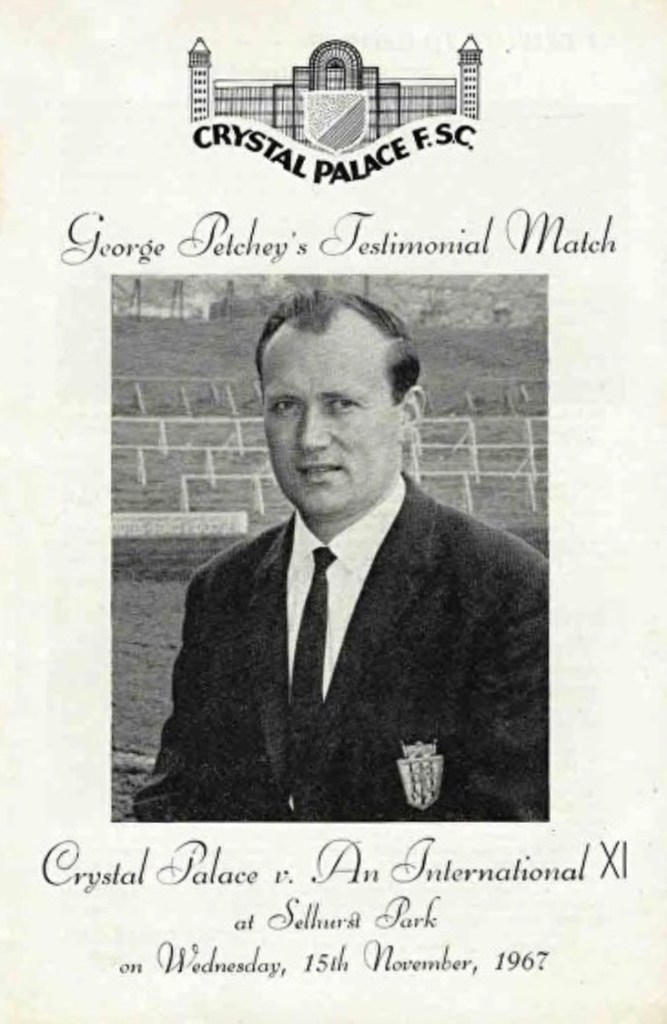
Petchey’s playing days at Palace came to an early conclusion due to a serious eye injury but the esteem in which he was held was reflected in the quality of players on show at his testimonial match at Selhurst Park on 15 November 1967.

Palace took on an international XI which featured West Ham’s World Cup winning trio of Bobby Moore, Geoff Hurst and Martin Peters, together with the likes of Chelsea’s Peter Osgood and Manchester City’s Colin Bell in front of a crowd of 10,243.

Petchey turned to coaching at Palace, initially under Arthur Rowe and then Bert Head, under whom Palace won promotion to the old First Division in 1969. That side’s goalkeeper, John Jackson – who subsequently followed Petchey to Orient, Millwall, and the Albion as a coach – attributed his achievements to Petchey, telling cpfc.co.uk: “He used to work me hard but the harder you worked at your game the more you learned and the better you would become.

Petchey the Crystal Palace coach

“He made me a more confident player which led to me being more vocal behind the back four, and I always remember Thursday being called shooting practice day so it would become a session where I would put in a massive shift!”

When Jimmy Bloomfield was lured from Brisbane Road to manage Leicester City in 1971, the Os turned to Petchey to continue to build the side the former Arsenal player had developed.

He did just that over six Second Division seasons between 1971 and 1977, Petchey recruiting a number of players who’d previously played under him at Palace; the likes of goalkeeper Jackson, John Sewell, David Payne, Bill Roffey, Alan Whittle and Gerry Queen.

They came agonisingly close to winning promotion to the elite, missing out by a single point in 1973-74, and they took some notable scalps as cup giant-killers.

It was during his reign at Brisbane Road that Petchey discovered Tony Grealish playing on Hackney Marshes and unearthed the raw talent of the mercurial Cunningham, who he would later reluctantly sell for big money to West Bromwich Albion.

Petchey and his assistant Peter Angell carefully nurtured the young Cunningham, hoping his obvious talent would outweigh some of the demons in his life.

“We had one or two problems with him in the early days,” admitted Petchey, as told here. “There was a time when Peter Angell and I wondered if we could win Laurie over. He had to struggle in life and was the sort of youngster who was used to living on his wits.

“He was suspicious of people outside his own circle. He took a long time to trust other people. He often turned up late for training, the eyes flashed when we fined him, but for all that I loved the spark that made him tick.”

Cunningham later admitted: “It was George Petchey and Peter Angell who showed me that the only person who could make my dreams come true was, in fact, myself.”

Petchey gave 18-year-old Cunningham his first-team debut in the short-lived Texaco Cup tournament against West Ham at Upton Park on 3 August 1974. Although Orient lost 1–0, Petchey said afterwards: “It took him a little time to get adjusted to the pace of the game but I was delighted with the way he played from then on. He has a natural talent. He has the speed and agility to take on men. He never gives up. There’s a big future ahead for him.”

Cunningham’s rise to playing for England and Real Madrid was told in the 2013 documentary film First Among Equals and Petchey was a prominent interviewee featured.

Petchey talks about Laurie Cunningham for First Among Equals

When eventually Orient couldn’t resist big money offers for him any longer, the winger went to West Brom for £110,000 plus two players (Joe Mayo and Allan Glover) on 6 March 1977.

“I did not want to sell him, but we were over our limit at the bank and West Brom were ready with a cheque,” said Petchey at the time. “Obviously I’m very disappointed at losing a player who I have seen progress from the age of 15 and I think he was as reluctant to leave as we were to see him go. But it was an offer of First Division football which he could not refuse.”

Petchey enjoyed less success at Millwall. Although he managed to stave off relegation after succeeding Gordon Jago in early 1978, the Lions were relegated from the second tier the following season.

It was during that term he bought Brighton winger Tony Towner for £65,000 after the Sussex lad had lost his place to new signing Gerry Ryan. It wasn’t all doom and gloom though because Millwall’s youngsters won the FA Youth Cup in 1979, beating Manchester City 2-0 (over two legs).

After he’d left the Albion for a second time, Petchey continued to work in football, appointed chief scout at Newcastle United by Sir Bobby Robson, and he later took on a coaching role.