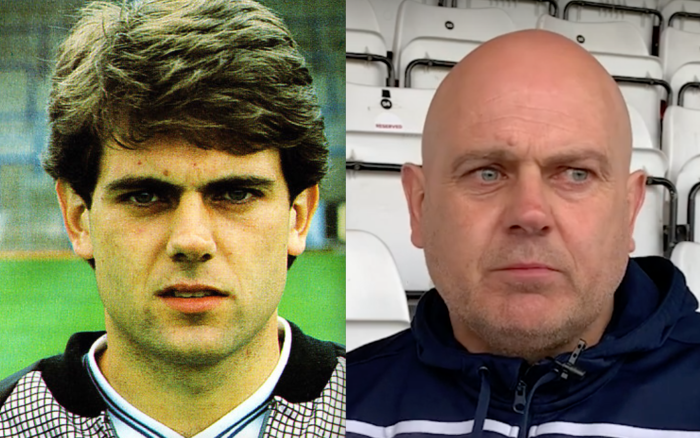
Coach Dean Wilkins fumed after falling out with Knight 

DEAN WILKINS might have lived in the shadow of his more famous elder England international brother Ray but he certainly carved out his own footballing history, much of it with Brighton.

Albion fans of a certain vintage will never forget the sumptuous left-footed free-kick bouffant-haired captain Wilkins scored past Phil Parkes at the Goldstone Ground which edged the Seagulls into the second-tier play-offs in 1991.

Supporters from the mid-noughties era would only recall the balding boss of a mid-table League One outfit at Withdean comprising mainly home-grown players who Wilkins had brought through from his days coaching the youth team.

After Dick Knight somewhat unceremoniously brought back Micky Adams over Wilkins’ head in 2008, he quit the club rather than stay on playing second fiddle and subsequently went west to Southampton where he worked under Alan Pardew and his successor Nigel Adkins as well as taking caretaker charge of the Saints in between the two reigns.

Wilkins’ initial association with the Seagulls went back to 1983, when Jimmy Melia brought him to the south coast from Queens Park Rangers shortly after Albion’s FA Cup final appearances at Wembley.

Melia’s successor Chris Cattlin only gave him two starts back then and although he pondered a move to Leyton Orient, where he’d had 10 matches on loan, he opted to accept to try his luck in Holland when his Dutch Albion teammate Hans Kraay set him up with a move to PEC Zwolle. Playing against the likes of Johann Cruyff, Marco Van Basten and Ruud Gullit proved to be quite the footballing education for Wilkins.
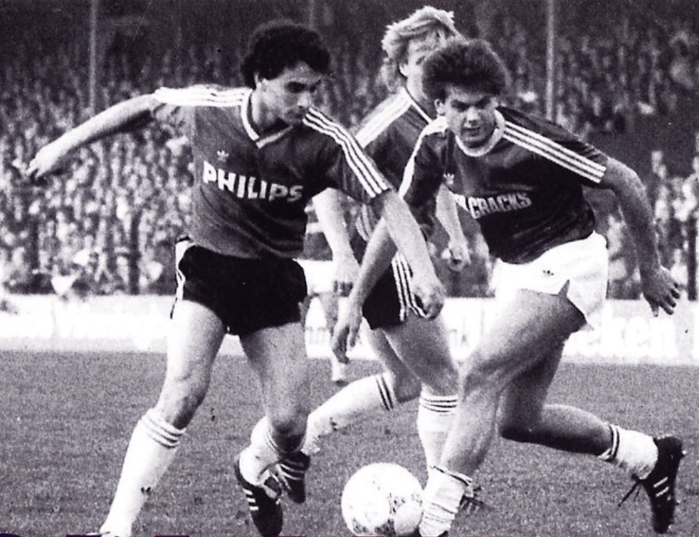
Wilkins in the thick of it in Dutch football for PEC Zwolle

After two years in the Netherlands, 25-year-old Wilkins rejoined the relegated Seagulls in the summer of 1987 as the club prepared for life back in the old Third Division under Barry Lloyd.

Relegation had led to the sale for more than £400,000 of star assets Danny Wilson, Terry Connor and Eric Young but more modest funds were allocated to manager Lloyd for replacements: £10,000 for Wilkins, £50,000 for Doug Rougvie, who signed from Chelsea and was appointed captain, Garry Nelson, a £72,500 buy from Plymouth and Kevin Bremner, who cost £65,000 from Reading. Midfield enforcer Mike Trusson was a free transfer.
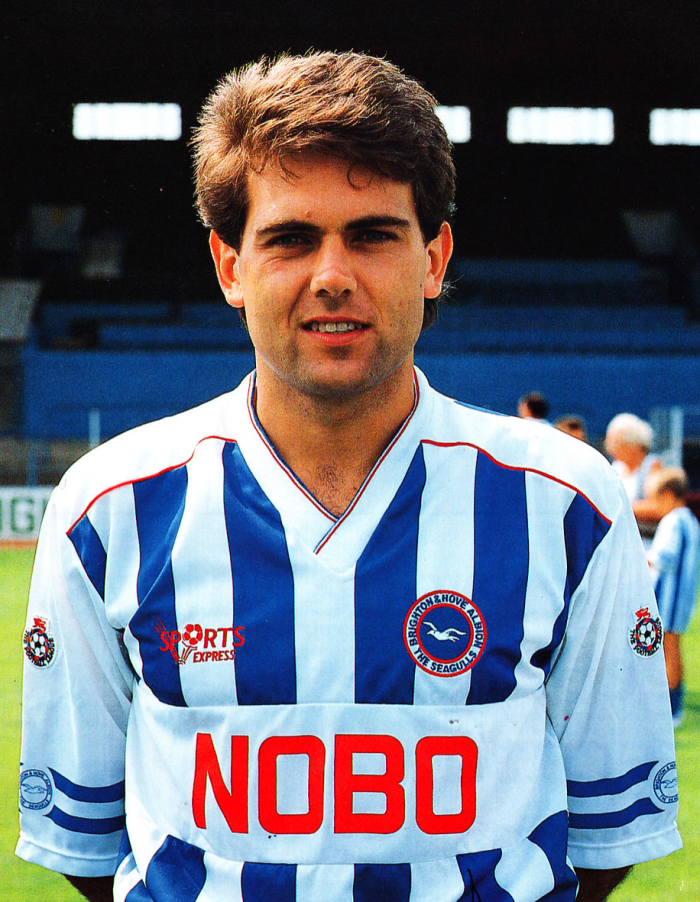
The refreshed squad ended up earning a swift return to the second tier courtesy of a memorable last day 2-1 win over Bristol Rovers at the Goldstone.

At the higher level, Wilkins had the third highest appearances (40 + two as sub) as Albion finished just below halfway in the table. The following season Wilkins was appointed captain and was ever-present as Albion made it to the divisional play-off final against Notts County at Wembley, having made it to the semi-final v Millwall courtesy of the aforementioned spectacular free kick v Ipswich.

Wilkins scored again at Wembley but it turned out only to be a consolation as the Seagulls succumbed 3-1 to Neil Warnock’s side.

As the 1992-93 season got underway, Wilkins, having just turned 30, was the first matchday programme profile candidate for the opening home game against Bolton Wanderers (a 2-1 win) when he revealed the play-off final defeat had been “the biggest disappointment of my career”.

The 1993-94 season was a write-off from October onwards when he damaged the medial ligaments in both his knees after catching both sets of studs in the soft ground at home against Exeter City.

Although injury plagued much of the time during Liam Brady’s reign as manager, the Irishman acknowledged his ability saying: “He is a very fine footballer and a tremendous passer of the ball and he possesses a great shot.”

Ahead of the start of the 1995-96 season, Wilkins was granted a testimonial game against his former club QPR, managed at the time by big brother Ray. But at the end of the season, when the Seagulls were relegated to the basement division, he was one of six players given a free transfer.

Born in Hillingdon on 12 July 1962, Wilkins couldn’t have wished for a more football-oriented family. Dad George had played for Brentford, Leeds, Nottingham Forest and Hearts and appeared at Wembley in the first wartime FA Cup final. While Ray was the brother who stole the limelight, Graham and Steve also started out at Chelsea.

In spite of those older brothers who also made it as professionals, Wilkins attributed his development at QPR, who he joined straight from school as an apprentice in 1978, to youth coach John Collins (who older fans will remember was Brighton’s first team coach under Mike Bailey).

He made seven first team appearances for Rangers, his debut being as a substitute for Glenn Roeder in a 0-0 draw with Grimsby Town on 1 November 1980. After joining the Albion in August 1983, he had to wait until 10 December that year to make his debut, in a 0-0 draw at Middlesbrough, in place of the absent Tony Grealish. He started at home to Newcastle a week later (a 1-0 defeat), this time taking the midfield spot of injured Jimmy Case.

Perhaps the writing was on the wall when Cattlin secured the services of Wilson from Nottingham Forest, initially on loan, and although Wilkins had a third first team outing in a 2-0 FA Cup third round win at home to Swansea City, boss Cattlin didn’t pick him again. Instead, he joined Orient on loan in March 1984.

A long career in coaching began when Wilkins was brought back to the Albion in 1998 by another ex-skipper, Brian Horton, who had taken over as manager. With Martin Hinshelwood as director of a new youth set-up, Wilkins was appointed the youth coach – a position he held for the following eight years.

Return to the Albion as youth coach

His charges won 4-1 against Cambridge United in his first match, with goals from Duncan McArthur, Danny Marney and Scott Ramsay (two).

That backroom role continued as managers came and went over the following years during which a growing number of youth team products made it through to the first team: people like Dan Harding and Adam Virgo and later Adam Hinshelwood, Joel Lynch, Dean Hammond and Adam El-Abd.

At the start of the 2006-07 season, with Albion back in the third tier after punching above their weight in the Championship for two seasons, Wilkins was rewarded for his achievements with the youth team with promotion to first team coach under Mark McGhee.

By then, more of the youngsters he’d helped to develop were in or getting close to the first team, for example Dean Cox, Jake Robinson, Joe Gatting and Chris McPhee.

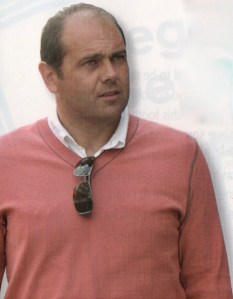
After an indifferent start to the season – three wins, three defeats and a draw – Knight decided to axe McGhee and loyal lieutenant Bob Booker and to hand the reins to Wilkins with Dean White as his deputy. Wilkins later brought in his old teammate Ian Chapman as first team coach.
Into the manager’s chair

Tommy Elphick, Tommy Fraser and Sam Rents were other former youth team players who stepped up to the first team. But, over time, it became apparent Knight and Wilkins were not on the same page: the young manager didn’t agree with the chairman that more experienced players were needed rather than relying too much on the youth graduates.

Indeed, in his autobiography Mad Man: From the Gutter to the Stars (Vision Sports Publishing, 2013), Knight said Wilkins hadn’t bothered to travel with him to watch Glenn Murray or Steve Thomson, who were added to the squad, and he was taking the side of certain players in contract negotiations with the chairman.
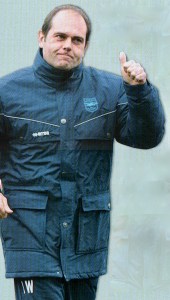
“In my opinion, his man-management skills were lacking, which was why I made the decision to remove him from the manager’s job,” he said. It didn’t help Wilkins’ cause when midfielder Paul Reid went public to criticise his man-management too.

Knight felt although Wilkins hadn’t sufficiently nailed the no.1 job, he could still be effective as a coach, working under Micky Adams. The pair had previously got on well, with Adams saying in his autobiography, My Life in Football (Biteback Publishing, 2017) how Wilkins had been “one of my best mates”.

But Adams said: “He thought I had stitched him up. I told him that I wanted him to stay. We talked it through and, at the end of the meeting, we seemed to have agreed on the way forward.

“I thought I’d reassured him enough for him to believe he should stay on. But he declined the invitation. He obviously wasn’t happy and attacked me verbally.

“I did have to remind him about the hypocrisy of a member of the Wilkins family having a dig at me, particularly when his older brother had taken my first job at Fulham.

“We don’t speak now which is a regret because he was a good mate and one of the few people I felt I could talk to and confide in.”

Youth coach

Knight knew his decision to sack the manager would not be popular with fans who only remembered the good times, but he pointed out they weren’t aware of the poor relationship he had with some first team players.

Knight described in his book how a torrent of “colourful language” poured out from Wilkins when he was called in and informed of the decision in a meeting with the chairman and director Martin Perry.

“He didn’t take it at all well, although I suppose he felt he was fully justified,” wrote Knight. “He was fuming after what was obviously a big blow to his pride.”

Reporter Andy Naylor perhaps summed up the situation best in The Argus. “The sadness of Wilkins’ departure was that Albion lost not a manager, but a gifted coach,” he said. “Wilkins was not cut out for management.”

Saints coach

One year on, shortly after Alan Pardew took over as manager at League One Southampton, he appointed Wilkins as his assistant. They were joined by Wally Downes (Steve Coppell’s former assistant at Reading) as first team coach and Stuart Murdoch as goalkeeping coach.

Saints were rebuilding having been relegated from the Championship the previous season and began the campaign with a 10-point penalty, having gone into administration. The club had been on the brink of going out of business until Swiss businessman Markus Liebherr took them over.

A seventh place finish (seven points off the play-offs because of the deduction) meant another season in League One and the following campaign had only just got under way when Pardew, Downes and Murdoch were sacked. Wilkins was put in caretaker charge for two matches and then retained when Nigel Adkins, assisted by ex-Seagull Andy Crosby, was appointed manager.

It was the beginning of an association that also saw the trio work together at Reading (2013-14) and Sheffield United (2015-16).

Adkins, Crosby and Wilkins were in tandem as the Saints gained back-to-back promotions, going from League One runners up to Gus Poyet’s Brighton in 2011, straight through the Championship to the Premier League. But they only had half a season at the elite level before the axe fell and Mauricio Pochettino took over.

When the trio were reunited at Reading, Wilkins, by then 50, gave an exclusive interview to the local Reading Chronicle, in which he said: “This pre-season has given me time to learn about the characters of the players we’ve got at Reading and find out what makes them tick.

At Reading with Crosby and Adkins

“It’s my job then to make sure every player maximises his potential. That’s what I see my role as, to bring out the very best of them from now on and make them strive to attain new levels of performance.

“I will always keep working toward that goal. If we can do that with every individual and get maximum performances out of them, I believe we will be in for a great season.

“We’re back together now and it’s going fantastically well. I have loved every minute of it. I’m used to working with Nigel and Andy and we are carrying out similar work to what we’ve done in the past.”

The Royals finished seventh, a point behind Brighton, who qualified for the play-offs, and the trio were dismissed five months into the following season immediately following a 6-1 thrashing away to Birmingham City.

Six months later the trio were back in work, this time at League One Sheffield United, but come the end of the 2015-16 season, after the Blades had finished in their lowest league position since 1983, they were shown the door.

Between January 2018 and July 2019, Wilkins worked for the Premier League assessing and reporting on the accuracy, consistency, management and decision-making of match officials.

In the summer 0f 2019, he was appointed Head of Coaching at Crystal Palace’s academy, a job he held for 15 months.

A return to involvement with first team football was presented by his former Albion player Alex Revell, who’d been appointed manager of League Two Stevenage Borough. Glad to support and mentor Revell in his first managerial post, Wilkins spent a year as assistant manager at the Lamex Stadium.

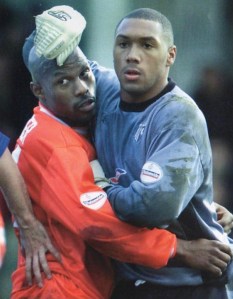
Tony Rougier couldn’t have wished for a better Albion start

A GOAL by Tony Rougier three minutes into his debut as a substitute gave Brighton a glimmer of hope in their battle to avoid relegation.

His strike against Mark McGhee’s mid-table Millwall side at Withdean Stadium on 22 February 2003 was the only goal of the game and lifted Albion out of the bottom three of the Championship.

When Bobby Zamora dummied Kerry Mayo’s pass to allow Arsenal loanee Graham Barrett to turn and move the ball goalwards, Rougier nipped in to complete a neat finish past Tony Warner in the Millwall goal.

Manager Steve Coppell had sent on the Reading loanee as a 61st minute substitute for winger Paul Brooker although he admitted to Stuart Barnes of The Guardian: “I honestly didn’t know if Tony would make a difference, but I felt he would pep up everybody else because we were starting to lose our grip.

“Getting out of the bottom three will give the players a lot of self-esteem. For a long time this season they have questioned whether they belonged at this level.”

Trinidad and Tobago international Rougier joined the Seagulls having been sidelined by Alan Pardew at Reading who paid £325,000 when signing him from Brian Horton’s Port Vale.

Horton gave the Argus an insight of what Albion fans might expect when he said in an interview: “Tony has a great build and he is a threat with his pace and strength.

“We had to sell him because we needed the money and he was one of our major earners.”

He had been Vale’s leading goalscorer with eight goals in 38 games when they were relegated from the First Division in 2000 before moving to Reading that August.

Rougier made a total of 84 appearances for Reading, scoring six goals, and in his first season helped them to the Division Two play-off final where they lost 3-2 to Walsall (and Rougier scored an own goal after going on as a substitute). But a year later, he made 20 starts and 13 appearances off the bench as Reading were promoted in second place – behind the Albion!

He had scored twice in 12 outings for Pardew’s high-flying Royals in 2002-03, including in a 1-0 win against Albion at Withdean. But competition for places was fierce, with the likes of Nicky Forster, Darius Henderson, John Salako and Nathan Tyson.

Coppell told the Argus: “I speak with Alan fairly regularly but this came totally out of the blue when I phoned him up.

“Tony is a big, strong lad and he gives us options. He can play as a wide man or down the middle and the move suits Reading, the player and me.”

Getting to grips with Jason Brown of Gillingham

Coppell needed forward cover because Gary Hart was about to start a four-match suspension, Zamora was banned for the next away game at Gillingham, Paul Kitson was still injured and Barrett was struggling for form and goals.

The following matchday programme observed Rougier had not been signed for his goalscoring prowess, but rather for his “power, direct running, and causing havoc that others can exploit”.

But the goal was very welcome in a season that might well not have ended in relegation if Coppell had started the season in charge rather than joining after so many games had already been lost under Martin Hinshelwood.

Rougier made his first start in a 3-0 defeat away to Gillingham playing up front with Barrett when Zamora and Hart were suspended.

He featured in home wins over Rotherham United (2-0) and Nottingham Forest (1-0) as well as an away defeat at Stoke City (0-1), but he missed the 2-1 defeat at Sheffield United after twisting his right ankle against Forest.

He bowed out in style in his final appearance, making one goal and scoring a second in a memorable 2-2 draw away to Ipswich Town.

I took my then 14-year-old son Rhys to the clash at Portman Road and the lively midfielder-cum-striker in the no.34 shirt, who had been taken to the hearts of the Albion faithful, was suitably serenaded with the chant ‘Ra-ra-ra Rougier’ to the tune of the popular vaudeville and music hall song Tarara Boom-de-ay.

His first significant involvement saw him go up for a header from Hart’s cross and Town goalkeeper Andy Marshall diverted the ball into his own net to gift Albion an equaliser.

Future Albion loanee striker Darren Bent missed a penalty that would have put Ipswich back in front, and then, with 10 minutes to go, Albion fans were buoyant with expectation when Rougier slammed the ball into the roof of the net after Ipswich had failed to clear their lines.

Unfortunately for Brighton, a 30-yard thunderbolt from Martin Reuser flew past Dave Beasant to put the home side level and Albion had to be content with a point, which ultimately wasn’t enough to avoid making an immediate return to the division they’d left the previous season.

While the player was keen to extend his stay, Pardew wanted him back to help with Reading’s promotion run-in, although thankfully he wasn’t involved in Brighton’s shock 2-1 win at the Madejski Stadium on 4 April (and Steve Sidwell, who had been on loan at the Albion earlier that season was an unused sub). Goals from Brooker and sub Kitson took the spoils for the Albion, Cureton netting for the home side.

The Royals finished fourth in the league before losing 3-1 on aggregate to Wolves in the play-off semi-finals, and Rougier was released on a free transfer having scored three times in 13 starts and nine appearances off the bench.

Rougier told the Argus he would be interested in returning to the Albion, but nothing came of it and he joined Brentford instead. Manager Wally Downes believed the player had “real quality” although Brentford fans seemed to have divided opinions on what he brought to the side.

‘Snappy’ on The Griffin Park Grapevine reckoned: “The guy is a huge asset, especially in the last 10 minutes of a game when he can hold the ball up and dance his way around players like they were statues and relieve the pressure on the defence.”

‘West Ealing Bee’ agreed: “He is an asset to the club and a very important part of the team.” But ‘Boston Bee’ had a totally different take on the player:Even when he actually tried (15min/match) he looked like he wasn’t trying. His lack of interest in the game going on around him drove me crazy.”

Rougier made 34 appearances for the Bees, scoring five goals but when Martin Allen took over as manager in March 2004, Rougier was one of five players he allowed to leave Griffin Park as part of a squad overhaul that ultimately helped them to a last-day escape from relegation.

Meanwhile, Rougier linked up with another ex-Albion captain, Danny Wilson, at Bristol City on a free transfer. Indeed, Rougier appeared for the Robins when they lost 1-0 to McGhee’s Albion in the divisional play-off final in Cardiff on 30 May.

But when Wilson lost his job that summer, Rougier followed him out of the exit and he returned to Trinidad, where he won the last of 67 international caps for Trinidad and Tobago.

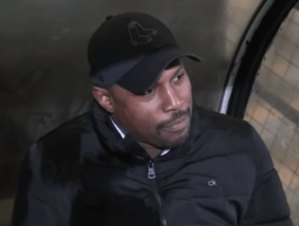
Rougier stepped into coaching

He has since turned to coaching, becoming a UEFA A licensed coach, and attained a degree in sports development. On his LinkedIn profile, he describes himself as the founder, president and technical director of FC South End, and, in 2014, among his past coaching experiences was a spell working with his nation’s under 20 squad.

Four years later, he had moved to the United States to coach the New England Revolution academy team.

Born on 17 July 1971 in Sobo, a village in south west Trinidad, his footballing career was initially confined to his home country.

Tom Lunn, writing for Reading fan website thetilehurstend.sbnation.com in 2019, profiled Rougier describing how the player began his senior footballing career in his home country with La Brea Angels. His Wikipedia page says he also played for Trintoc, United Petrotrin, and Trinity Pros.

An Albion matchday programme article said Rougier then moved to New York where he spent a year working in the baggage department at John F Kennedy airport before heading to the UK.

After overcoming work permit issues, he was taken on by Raith Rovers where, over the course of two years, he became something of a cult hero. In 2018, he returned to Fife to be inducted into the club’s Hall of Fame.

“This is where it all started,” he said in an interview with the club’s TV channel. “It never felt the same whichever club I went to afterwards. The Fife people gave me respect and it’s something I’ll never forget.”

Rougier welcomed back in Fife

During the interview, Rougier remembered fondly an occasion when he man-marked Paul Gascoigne, playing central midfield against Rangers.

His stand-out moment was a UEFA Cup second round tie in Munich’s Olympic Stadium on 30 October 1985 when Raith only narrowly lost 2-1 to Bayern Munich who boasted the likes of Oliver Kahn in goal and Jurgen Klinsmann up front.

His performances for Raith earned him a £250,000 move to Hibernian. He scored four times in 45 matches for Alex McLeish’s Edinburgh outfit but in January 1999 joined Port Vale, signed by Horton’s predecessor John Rudge for £175,000.

By then, he had established himself in the Trinidad and Tobago national side, a teammate of Dwight Yorke, and often being chosen as captain.

In his own words, he describes himself as: “A highly experienced football coach and former professional player with a career in the game spanning more than 25 years, I has successfully made the transition into coaching, management and club operations through a consistent focus on long term player and team development.

“A former national team captain with Trinidad & Tobago and a promotion winner in both England and Scotland, I have been able to effectively apply my on-field experience to guide team success and coaching strategy at professional, grassroots and school level.

“I am a positive, dynamic and passionate professional who is committed to my continued progression as a coach. I am always open to opportunities in which I can develop while positively impacting a football club or organisation, and would relish the opportunity to work with elite players within an ambitious environment.”

Cherries legend Mark Morris and the memorable Storer moment

mark morris bw bourne

STUART Storer is rightly remembered as the scorer of the vital winner against Doncaster Rovers in the last ever match at the Goldstone Ground.

Few remember exactly how the ball fell kindly to him that rain-lashed afternoon on 26 April 1997, but close scrutiny of the much-played clip before games at the Amex (also available on YouTube) shows it was from a rebound off the bar following a header by centre back Mark Morris.

Although defending was his priority, Morris had chipped in with a fair few goals over the years – including getting the winner for the Albion on his debut in a 3-2 win at Hartlepool on 2 November 1996.

Morris was a seasoned pro who had captained Bournemouth and Wimbledon and been part of a promotion-winning side at Sheffield United.

He had answered the call to join Brighton when his old Bournemouth teammate Jimmy Case was manager, as he told The Argus in a 2001 interview. The Seagulls were struggling at the foot of the bottom division with the trapdoor to oblivion gradually creaking open.

Maybe if the Morris header had gone in rather than rattling the bar, a different name would have been etched into the annals of Albion history.

Of the vital last-ditch game at Hereford, Morris told The Argus: “As a player, we were playing for the future of a club steeped in tradition. It was one of the biggest games in my career and the result was paramount.

“I was about 35 then. It was getting to be close to the end of my career and I wanted to end on a decent result. Hopefully I played some part in keeping the club up.” Continue reading “Cherries legend Mark Morris and the memorable Storer moment”

Oatway took off with Bluebirds and soared with Seagulls

CHARLIE Oatway had not long earned his break in professional football with Cardiff City before he found himself behind bars in Pentonville Prison.

Up on a charge of GBH for his part in a fight, when an Afro-Caribbean friend was racially abused, Oatway didn’t expect to get incarcerated but ended up serving two months of a four-month sentence.

Before he headed off to court in London on a Monday morning, he had told Cardiff’s general manager, the former Leeds and Wales international Terry Yorath (broadcaster Gabby Logan’s dad), to expect him for training on the Tuesday morning!

The story is explained in detail in Tackling Life, the book Oatway published about how he turned his life round to become captain of Brighton and part of three promotion-winning sides.

The tale reveals how imprisonment was just one of the hurdles Oatway had to overcome in a life that’s taken many colourful twists and turns.

It was sadly ironic that his career as a player with Brighton was cut short in a Boxing Day clash against Queens Park Rangers, the team he followed home and away from an early age.

The family lived a stone’s throw from Loftus Road and Charlie – a nickname given to him by an aunt – was named by his Rs-daft dad after the whole of the promotion-winning 1973 QPR team: Anthony, Phillip, David, Terry, Frank, Donald, Stanley, Gerry, Gordon, Steven, James.

He was even starstruck at an Albion Legends event when he saw John Byrne who had been a hero of his during his days playing up front for the Rs alongside Gary Bannister.

Albion reaching the Division 2 play-off final in Cardiff in 2004 was the highlight of Oatway’s career – but a feature in the match programme was angled on the disappointment he had suffered the year before, when he had gone as a spectator with all his family to see QPR lose to Cardiff.

“Everything about the day was perfect apart from the result,” Oatway told reporter Alex Crook. “Being a QPR fan at heart, I felt the pain of the defeat just as much as the other 35,000 fans. But this time I am going up there as a player and not as a fan and I am determined our supporters will not go through what I did last season.”

The youngest of five kids, Oatway grew up in Shepherd’s Bush and even though he started to struggle in school from an early age, he displayed quite a talent for football.

“I knew by the time I was eight that I was as good as any of the eleven-year-olds I was playing with,” he recalls in Tackling Life. He had trials for the West London District schools team and played for Harrow Boys Club and Bedfont Eagles.

Oatway reveals how it was Wally Downes, the former Wimbledon player and later loyal assistant manager to Steve Coppell, who helped to get him noticed, along with his cousin, Terry Oatway.

The young Oatway joined up with Wimbledon in the year they won the FA Cup – 1988 – and played for the youth team, but he was let go at the end of the 1989-90 season because they thought he was too small. He went to Sheffield United on trial but was homesick so he returned to London and joined non-league Yeading on semi-professional terms. Off the field, life was by no means straightforward. “By the age of 19, I had two children with two different mothers,” he said.

After helping to get Yeading promoted in 1993-94, Oatway found a pathway back into the professional game when a community worker (Ritchie Jacobs) on the estate where he lived organised a trial at Cardiff City for him and two pals.

He was the only one of the three invited back and he said: “When Cardiff asked me back for another month, I knew it was the chance I’d been waiting for, and I was going to grab it with both hands.”

Not surprisingly, the two months he spent in Pentonville didn’t greatly help his cause but remarkably he was welcomed back to the club and accepted by the fans. However, in his absence there was a change in team management and ownership and, before long, new team manager Kenny Hibbitt was instructed to send Oatway out on loan to Coleraine in Northern Ireland.

On his return to Cardiff the following season, they had by then been relegated to the Fourth Division. Still he was unable to get back in the first team and he happened to play a reserve team game against Torquay United, who were managed by his old Cardiff boss, Eddie May. May asked if he fancied a move for first team football and, although he only joined just before Christmas in 1995, by the end of the season he had been voted Player of the Year.

When May moved on to become manager of Brentford, he put in a bid for the combative midfielder and took him back to west London to play in the Bees’ third tier side.

In 1998, Oatway had a brief loan spell with Lincoln City but on his return to Griffin Park he came under the managership of Micky Adams for the first time.

Adams had taken over the manager’s chair at Griffin Park but he was sacked when owner Ron Noades thought he could make a better job of running the team. Oatway was sent on a month’s loan to Lincoln, somewhat against his wishes, but on his return to the Bees he forced his way into the side and worked well with coach Ray Lewington.

Adams then took the reins at Brighton and, as the Albion began life back in Brighton & Hove after the two-year exile in Gillingham, Oatway and Bees teammate Paul Watson joined the Seagulls for a combined fee of £30,000.

Adams wanted the pair to join a nucleus of players who’d all played under him previously at Brentford and Fulham.

In an Albion matchday programme profile of Oatway to coincide with the visit of his former club, Torquay, on 2 September 2000, it noted: “Despite getting sent off rather stupidly in one of his earliest games for the Seagulls – he bit a Darlington player’s face – he soon became a great favourite with the Brighton crowd, who hadn’t seen a midfield scrapper like him since Jimmy Case retired.”

oatway prog cover

He went on to be a vital midfield cog in the back-to-back league title winning sides of 2001 and 2002. Although he was in the team that was relegated from the second tier in 2003, he was full of praise for the effort made to avoid the drop. “Steve Coppell was one of the best managers I’ve ever played under because of his attention to detail,” he said. “Steve’s team talks on the day before a game were brilliant.”

When the departed Coppell was replaced by Mark McGhee, Oatway remained a cornerstone of the Albion line-up and described that 2004 play-off final at the Millennium Stadium as “the best day of my career”.

But at one point it was touch and go whether he was going to be able to carry on. In October 2003, he underwent major back surgery to repair a slipped disc and trapped nerve.

He was out for nearly three months and he admitted in an Argus interview: “There was a good chance I wouldn’t play again.”

When the Albion cashed in on captain Danny Cullip in December 2004, selling him to Sheffield United, Oatway took over the skipper’s armband full-time, a role he had previously embraced as a stand-in.

The following season’s Boxing Day clash with QPR at Withdean was only two minutes old when Marcus Bean tackled Oatway from behind and escaped without even a booking.

Oatway was stretchered off and McGhee later told the mirror.co.uk: “Charlie has been a tremendous leader and captain and this is a huge blow. I’m very upset about it.”

Oatway had four different operations to try to fix the ankle injury, but he never recovered sufficiently to return to the required level to play league football.

“I tried to get back to playing again but by the pre-season of 2007 I had to call it a day,” he said.

However, even when he was out injured, Oatway was always a strong influence on the dressing room.

Stand-in skipper Dean Hammond said in an Argus interview in November 2006: “Charlie has been out injured but he has been fantastic for everyone. He comes in, he gets everyone up for it, he’s always laughing and joking. He’s got the enthusiasm and he is still determined, even though he is not playing.

“His personality is fantastic for everyone and I think he deserves a massive pat on the back.”

He also used the time productively, studying how the coaches worked with the youth team players and starting to take his coaching badges. When it was clear he wouldn’t be able to return to play full-time professional football again, he got involved with the Albion in the Community scheme as a community liaison manager.

Rather than give up the game completely, Oatway took the opportunity to become player-coach at Havant and Waterlooville and, in January 2008, he found himself in the national media spotlight when the Blue Square South minnows played away to Liverpool in the fifth round of the FA Cup.

Oatway wasn’t fit to start the game but he got on as a substitute in the 74th minute and later recounted how his former teammate Bobby Zamora fixed it for him to swap shirts with Liverpool’s Yossi Benayoun, who scored a hat-trick in the Reds’ 5-2 win that day.

Then, in 2009-10, Oatway began helping Brighton manager Russell Slade to coach the first team and, after Slade’s departure, continued in the role under Gus Poyet.

When Poyet left the Seagulls to join Sunderland, Oatway went with him and he was also in the dug-out alongside Poyet and his assistant Mauricio Taricco at Chinese Super League team Shanghai Greenland Shenhua, AEK Athens and Seville-based Real Betis.

Pictures: matchday programme; The Argus; Tackling Life (Quick Reads, 2011).