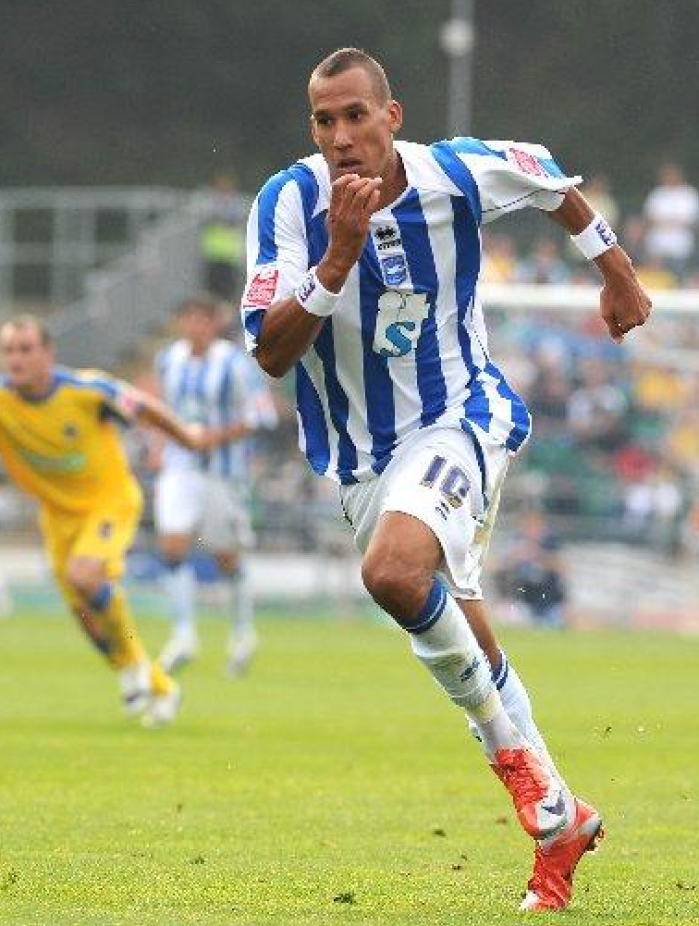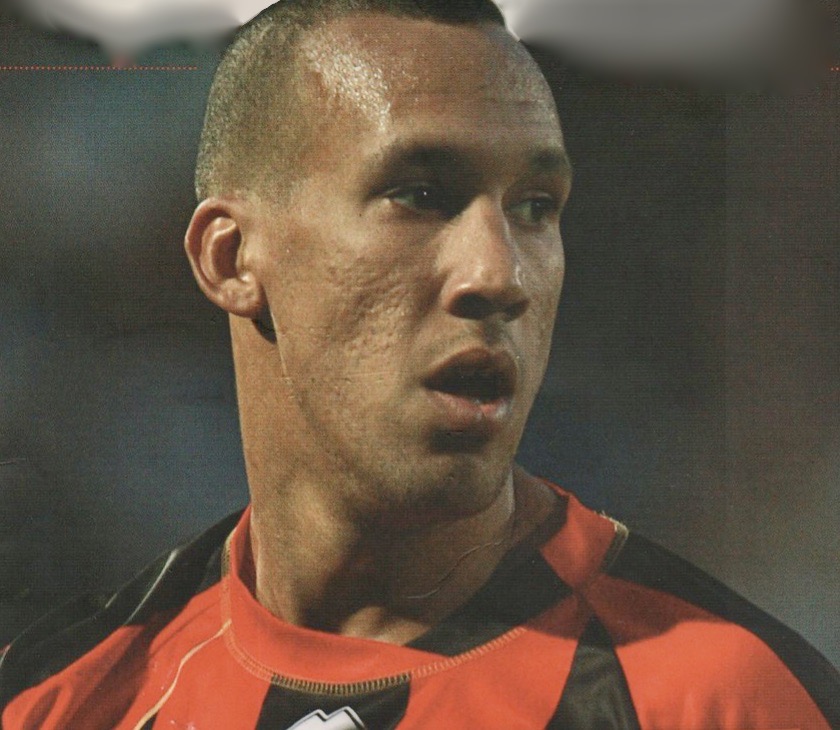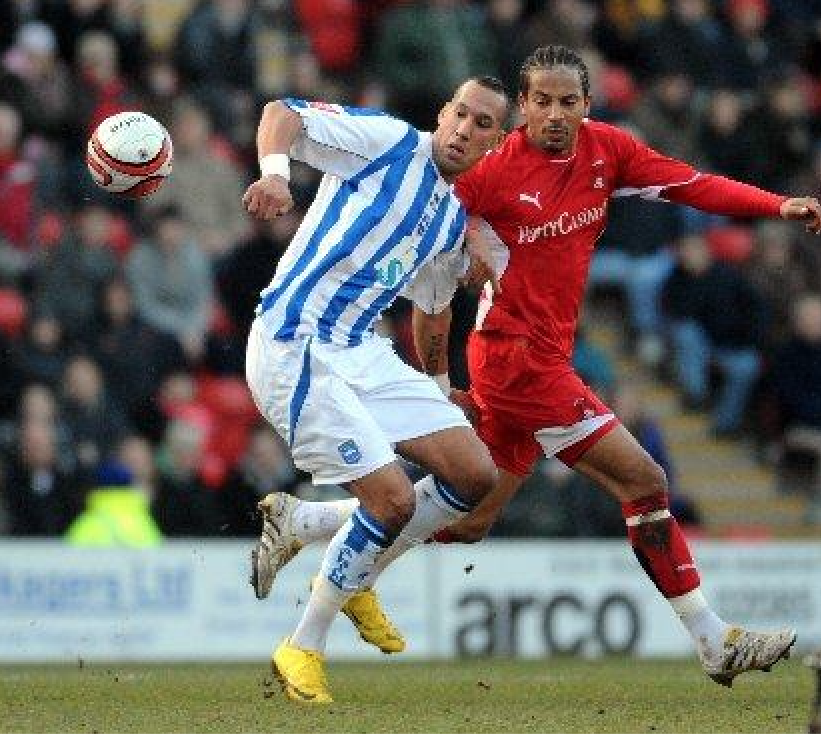
Wembley hero Liam Dickinson’s nomadic football journey

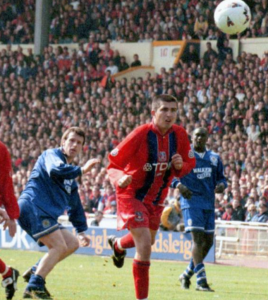
HE’D SCORED a decisive play-off final goal at Wembley for Stockport County but a subsequent £750,000 move to Derby County didn’t work out for Liam Dickinson and Brighton signed him for £300,000 only a year after the Rams had shelled out that big money.

Dickinson didn’t even get a game for the Rams, instead being sent out on loan to Huddersfield Town, Blackpool (where he’d begun his career in their school of excellence) and Leeds United.  He was a player who didn’t stay in the same place for long; in total he featured for 23 different clubs.

Like many before and since, changes of manager were often the cause of him moving on. At Derby, for instance, he was signed by Paul Jewell, recalled from his loan at Blackpool by caretaker manager Chris Hutchings and eventually let go by Nigel Clough.

It had been intended he’d join Leeds in January 2009 but the necessary paperwork didn’t arrive until 14 minutes after the deadline! Further discussions led to a revised deal, but the move was called off because he was injured. He eventually joined up with United in the second week of March and although he scored in a behind-closed-doors friendly against Sheffield United (1-1), he didn’t get on the scoresheet in eight League One games (four starts, four as a sub) under Simon Grayson.

His first start was in a 3-2 win at Crewe and he managed three successive starts, in a 2-2 draw at Leyton Orient, a 1-0 win over old club Stockport and a 1-0 defeat at Leicester but he was not involved in the end-of-season play-offs when Leeds (with Casper Ankergren in goal) lost out to Millwall in the semi-finals.

An enclave of former Stockport teammates – James Tunnicliffe, Jim McNulty, Gary Dicker and Craig Davies – helped Dickinson to choose Brighton as his next club

After Brighton boss Russell Slade welcomed the 6’4” forward to Withdean on a three-year contract, he told the club website: “He brings something different to the table. His goalscoring record is very good and he has a good goals-per-game ratio, and like one or two of the other signings I have made this summer, he is hungry to get his career back on track. I’m sure there is a lot more to come from him.”

He scored in his third and fourth games for the Albion, but both came in defeats against former clubs: the first in a 7-1 capitulation to Huddersfield and the next in a 4-2 defeat to Stockport.

He was on the scoresheet in the home 3-3 draw against Hartlepool (Nicky Forster scored Albion’s other two goals) that spelled the end of Slade’s tenure as manager. But it is what happened two days later that many will remember him for.

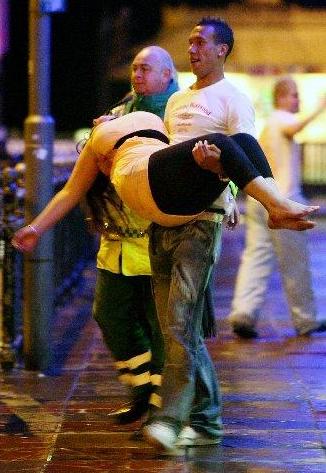
Unluckily for him, he was pictured carrying a seemingly comatosed young woman in his arms in the middle of Brighton at 1am. The Sun newspaper was covering a renowned student pub crawl ritual at the time and didn’t realise who they’d snapped.

Eagle-eyed Albion supporters did, though, and, after discussion about the incident on fans’ forum North Stand Chat, The Argus picked up the story, running an article headlined ‘Samaritan Brighton and Hove striker scores an own goal’.

For his part, Dickinson told reporter Ben Parsons how he was on his way home after a meal out in the city when he helped a girl to a car waiting to pick her up.

He said it was simply a coincidence that he was helping the girl when the photos were taken, adding: “I saw two girls holding another girl up. She collapsed in front of us. Her mum or her auntie picked her up in a car. I picked the girl up and put her in the car.

“I didn’t want to just leave her. Anybody else would have done the same thing.”

Albion said they would deal with the matter internally. Dickinson was omitted from the squad for the following game, a 4-4 FA Cup draw with Wycombe Wanderers with caretaker manager Martin Hinshelwood in charge, but he was back in the fold for Gus Poyet’s first game as Slade’s replacement.

In the televised away game at Southampton, he went on as a sub for Forster in Albion’s 3-1 win at St Mary’s. Dan Harding, Dean Hammond and Adam Lallana were in the Saints side.

Dickinson got occasional starts under Poyet but more often than not was sent on as a sub to replace either Glenn Murray or Forster.

Given a start in the FA Cup second round win over Rushden and Diamonds, he scored twice, in the third and 86th minutes, as Albion edged the tie 3-2. He was preferred to Murray in a Boxing Day clash with Leyton Orient that finished goalless but, perhaps to prove a point, two days later the restored Murray hit four at Wycombe in a 5-2 Seagulls win.

Dickinson was back on familiar territory at Edgeley Park in January 2010, but only got a half an hour run-out as a sub against his old club (replacing another former County man in Dicker) as the game finished 1-1, Andrew Crofts salvaging a point with a 90th minute equaliser.

In a 1-1 draw at Leyton Orient, Dickinson started the game and, when he was denied a penalty, incandescent Poyet was sent from the dug-out for protesting.

“If you ask anyone, they will tell you it was a penalty and a red card,” Poyet maintained afterwards. “The referee is 10 yards away and he doesn’t give it. You’ve got a chance to score a penalty and it’s 2-0. It’s a different game.”

Dickinson took to the field against another of his former clubs in Huddersfield wearing distinctive ‘banana yellow’ boots. “I don’t like dull, boring colours. I like to brighten the pitch up a bit. I’ve had a bit of stick off the lads,” he told The Argus.
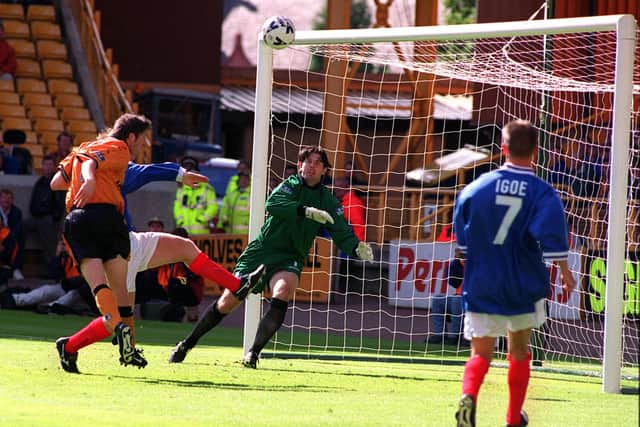
The striker, who’d scored six goals in 13 games for the Terriers while on loan, didn’t manage to get on the scoresheet and was replaced by Murray as the game petered out to a 0-0 draw.

At that stage, Dickinson was deputising for Forster who was out of favour with Poyet over a contract dispute.

As the Uruguayan began to bring in his own selections, such as on-loan Kazenga LuaLua, Dickinson chose to go on loan to Championship strugglers Peterborough United, who were managed by his former Stockport boss Jim Gannon. Dickinson scored three in nine games for Posh. On his return to Brighton, he was sold to Barnsley, who were in the Championship at the time, for reportedly half the fee paid out for him just a year earlier.

Tykes boss Mark Robins declared: “He is different to the strikers we have here already and will give us something else up front.

“He is only 24 and still has room for improvement. He has a decent scoring record both in the Championship and in the lower leagues.

“Liam fits in to what we are trying to do here both in terms of on the pitch and within our budget.”

But he made just one start, in a League Cup match, and three sub appearances in the league for Barnsley when his old Derby caretaker manager, Hutchings, took him on loan to Walsall. He didn’t find the net in seven League One games.

Next stop, from January to the end of the season, was Rochdale, the side against which he had scored that 2008 League Two play-off final winner.

But a goalless run of 14 games (seven starts and seven off the bench) prompted this comment from AtThePeake on fansnetwork.co.uk in 2021: “In terms of expectation versus reality, few signings can have disappointed Rochdale fans quite like the loan signing of Liam Dickinson in January 2011.”

The supporter wrote: “Dale were looking for someone to become the fulcrum of an attack that included Chris O’Grady drifting in from the left and the emerging Matt Done playing as a second striker.

“Having seen first-hand the threat Dickinson could be with his aerial prowess, strength and touch in front of goal, Dale fans were reasonably excited that the answer to their striker problem had been found, but it quickly became apparent that the struggles with Derby and Barnsley had affected Dickinson’s confidence.

“During his spell, Dickinson was all too easy to defend against, struggled to hold the ball up and lacked any cutting edge when it came to finishing the chances he did manage to fashion for himself.”

A projected move to Plymouth Argyle was called off after just eight days, with personal reasons being cited, but the nomadic striker’s next stop was League Two Southend United under Paul Sturrock, where he netted 12 goals in 37 matches (33 starts plus four as a sub).

Dickinson scored a dozen times for Southend United

Not for the first time, he found himself in the headlines for the wrong reason when he and two others were reprimanded for a breach of club discipline over an unspecified incident at a hotel the evening before a match at Morecambe.

A broken ankle brought a premature end to his season with the Shrimpers, and it proved problematic in trying to continue his league career elsewhere.

He trained with Port Vale but even his agent Phil Sproson was quoted as saying: “Liam will admit he has been no choirboy in the past.

“He has had quite a few clubs and that’s probably because he has been no angel.

“He is loud and vocal and has had too many nights out over the years – but he has matured.

“He realises he will have to change and toe the line because he has a darker side that has dragged him down in the past.”

As it turned out, he was eventually out for a year because his broken ankle didn’t heal properly. He played two pre-season friendlies for Vale in 2013 but manager Micky Adams didn’t take him on because of ongoing problems with the ankle.

Born in Salford on 4 October 1985, Dickinson was originally a centre-half when he was on the youth books of Blackpool, Bolton and Blackburn. He stepped away from professional football at 16 and studied to be a graphic artist but continued to play in non-league sides. He appeared for Irlam, Swinton, Trafford and Woodley Sports before he was taken on as a pro by Stockport in 2005 after a successful trial.

He scored on his County debut, only five minutes after going on as a 71st-minute sub against Cheltenham Town at Edgeley Park. In three years under Jim Gannon, he hit 33 goals in 94 appearances.

The 2007-08 season was his most prolific term as a league player, netting 21 times from 32 starts and six games from the bench. It also earned him Stockport’s Player of the Year award.

It was to Stockport, then in the Conference North league, that he returned in 2013, but he only managed one goal in 13 games before returning to the non-league arena.

Between 2014 and 2019, he turned out for Stalybridge Celtic, Guiseley, Bradford Park Avenue, FC United of Manchester and finally Droylsden before calling it a day.

In an online chat with Stockport County Live towards the end of the Covid lockdown, in August 2020, Dickinson opened up about his mental health, admitting he’d been through a period when he was suffering with depression.

Post playing, he told his interviewer, he was working installing signage for a print company.

‘Model professional’ Stephen Ward loved his season at Brighton

STEPHEN WARD’S view from the bench as Brighton sealed Wolves’ relegation fate at the Amex on 4 May 2013 was enough to convince him it was a place he’d like to get to know better.

Rather than drop down to the third tier with Kenny Jackett’s side, Ward switched from Molineux to the Albion to join Oscar Garcia’s promotion hopefuls.

Having won the Championship with Wolves in 2009, Republic of Ireland international left-back Ward brought ideal experience to a Brighton set-up looking to mount another tilt at promotion after missing out at the play-off semi-finals stage the season before.

The defender made 47 appearances, chipped in with four goals, and was runner-up in the player of the season awards as Albion once again fell at the play-off semi-finals hurdle.

Nonetheless, it looked like Ward would make his stay permanent – until newly-promoted Burnley stepped in and offered him a more immediate return to Premier League football.

Convinced that Brighton had clinched the deal for Ward, boss Jackett told the local press: “The clubs have agreed and now it’s down to Brighton and the player. It is a good move for him, he did well last year, they got into the top six and he was part of it. They have wanted him all along.

“All of us thank him for what he’s done and wish him all the best. He got a club reasonably quickly last season which shows the standard of the player.

“He didn’t let them down. He’s got a good reputation in the Championship and has been professional here. He had been good enough to get a good move last year and he has got a good one now.”

According to the player’s agent, if Albion’s head of football David Burke hadn’t dithered over a deal, Ward would have signed on the dotted line for the Seagulls.

But his prevarication opened the door to Sean Dyche’s Clarets and Ward headed to Turf Moor instead, returning to play at the elite level at which he’d previously made 94 appearances for Wolves between 2009 and 2012.

Ward had also played 128 times at Championship level for Wanderers having joined them aged 21 in 2007, moving over from his native Ireland, where he had spent four years with League of Ireland side Bohemians.

After making his Albion debut in a 1-0 win at Birmingham, Ward told BBC Radio Sussex: “From watching them last year and playing against them, it is a team I admire for how they play the game.

“Every footballer wants to play in a team that likes to pass the ball and keeps the ball. On the last day of the season, they played us (Wolves) off the park. It was one of the reasons I was really excited about the move.”

Although he had enjoyed success at Wolves, he had also been part of back-to-back relegations and he said: “I felt I needed a fresh start and I am thankful Brighton gave me that. I hope I can repay their faith. Hopefully I can help the team go one better than last year.”

Reflecting on his time with the Albion in a matchday programme article, Ward was complimentary about Garcia, saying: “I loved the mentality of the manager, the environment, and I learnt a lot as a result.

“He wanted to play out from the back, he wanted us to be really expansive, and that allowed me to get forward, which I really enjoyed doing.

“I learnt a lot from the manager and would speak to him about his time at Barcelona.

“I was lucky that I also had experienced players around me in defence like Matty Upson, who was great for me, and Bruno. He’s one of the best guys I’ve met in football – he was so welcoming to me and my family.”

Although principally in the side to defend, Ward also scored four times for the Seagulls, one coming in the impressive 4-1 win at Leicester and another in the crucial 2-1 win at Nottingham Forest that helped to clinch a spot in the play-offs.

“Going to Brighton was great for me; I had a fantastic year, a really enjoyable time, and I don’t have a single bad word to say about the club or the city,” he said. “I enjoyed every minute.”

After five years at Turf Moor, Ward went on to play for Stoke City (when Nathan Jones was boss), Ipswich Town and Walsall, hanging up his boots in 2022. He also made 50 appearances for Republic of Ireland, playing for the national side at the Euro 2012 and 2016 finals.

At the end of a 19-year playing career, Ward had clocked up 570 senior appearances.

Disappointed to see the player retire, Walsall manager Michael Flynn told BBC Radio WM: “He’s somebody I’d love to have worked with for a longer period. He’s a breath of fresh air. But, unfortunately, he’s at the age where he thinks his body’s had enough.

“I’ve got nothing but praise for Stephen Ward. He’s had a fantastic career and is still working hard day in, day out and he’s a model professional.

“The way he’s handled himself has been exemplary and I don’t expect anything else from someone who’s had the career he’s had because it’s been an unbelievable career.”

During the 2022-23 season, Ward was part-time assistant manager to former Wolves teammate Roger Johnson at National League North side Brackley Town.

His next steps were in football administration and he achieved a Masters degree in sports directorship through the University of East London while serving as director of football at National League side Solihull Moors. Head coach from June 2023 to January 2025 was Andrew Whing, who played more than 100 games for the Albion between 2006 and 2011.

Stepping down from the role in August 2025 to spend more time with his family, Ward said: “We shared some great moments together most notably watching our club appear at Wembley Stadium in the play-off final.”

Moors missed out on the chance to gain a first ever promotion to the Football League in May 2024, beaten in a penalty shootout by Bromley after twice coming from behind to take the game to extra time and then penalties.

Agonisingly, a week later, Moors lost on penalties again, this time in the FA Trophy final at Wembley, Gateshead edging it 5-4 after the sides were level on 2-2.

“It’s a brilliant club and a very special place to work but it’s time to step away and recharge the batteries,” said Ward. “Football is a fast-moving industry and it can be tough to find the right balance.”

The Foxes hero who led Albion’s line in an hour of need

STEVE CLARIDGE became a Leicester City hero long before briefly coming to Brighton’s rescue.

He scored the winner in a play-off final at Wembley to take the Foxes up to the Premier League at the expense of Crystal Palace, who’d discarded him at an early age.

Both sides had been relegated from the top flight the year before and Claridge’s right-foot strike past Nigel Martyn in the 120th minute meant it was an immediate return for Martin O’Neill’s side.

“The high is not equal to anything,” Claridge told Leicestershire Live.

Scoring play-off winner v Palace

It came in 1996 and a year later he scored the only goal of the game (past Ben Roberts) in the 100th minute of a replay against Middlesbrough to win Leicester the League Cup, leading to him being named FourFourTwo’s ‘Cult Hero of 1997’.

Claridge had only completed a £1.2m move from Birmingham City two months before that play-off and he labelled it the most important goal of his life coming after a worrying period in which he wasn’t sure he’d ever be able to play again.

A mystery illness had ravaged his form and in only his fifth Leicester game he was taken off after 15 minutes. “Pins and needles from my knees down were so extreme, I could not even feel the ball,” he recalled.

It turned out a drug prescribed for a thyroid problem he’d had since the age of 12 was destroying his thyroid gland. “The main energy provider of my body was no longer functioning,” said Claridge.

However, once on the right medication, he made an almost unbelievable recovery, was restored to the side and helped to secure a play-off place.

After beating Stoke City in the semi-finals, they went a goal down to Palace in the final but pulled it back through a Garry Parker penalty before Claridge seized his chance in the dying moments of extra time.

Wembley winners for Leicester: Garry Parker and Steve Claridge

He collected a quick free kick from Parker and took aim, his shot from distance kissing the stanchion with goalkeeper Martyn motionless.

“The crowd is just really stunned in disbelief, I don’t know if that was because I’d hit it,” laughed Claridge. “It was so far out, and everybody was used to me scoring goals inside the six-yard box.”

He reflected: “To finish off after the lows I went through, the absolute lows where you’re thinking, ‘my career is over I can’t see a way out of this,’ to doing that and taking you to the ultimate high – winning that game of football. It’s unparalleled.”

Albion cover ‘boy’

Such experience was exactly what Championship strugglers Albion required when, on the back of three defeats, they faced the daunting prospect of promotion-seeking West Ham away on 13 November 2004.

Manager Mark McGhee, who’d previously signed Claridge when he was at Wolves and Millwall, was desperate to stem a tide which had seen eight goals conceded and no points on the board.

“He is one of the fittest players I’ve worked with and I had no doubt that after 18 months away from this level he would be able to perform,” said McGhee.

Claridge’s professional career looked to have run its course after he left Millwall in 2003 and became player-manager of Southern League side Weymouth.

But the disappointment of missing out on promotion had seen him and chairman Ian Ridley leave the club and Claridge, at the age of 38, was keen to give league football another go.

In what turned out to be a real backs-to-the-wall smash and grab raid, Albion earned the unlikeliest of 1-0 wins courtesy of a Guy Butters header from Richard Carpenter’s free kick.

Albion held firm despite a relentless wave of attacks by the home side and afterwards McGhee said: “We approached the game differently. Whereas before we thought we could win, today we did not, and played to make sure we didn’t get beaten.

“We kept the ball up front more which is important. Steve Claridge was key to that.”

Unfortunately, Brighton were not able to build on the win at the Boleyn Ground and there was only one more win (1-0 at home to Rotherham) during Claridge’s month with the club.

His fifth and final game for the Seagulls came away to his old club Millwall on 11 December 2004, when Albion lost 2-0.

In a programme feature about him that day, Claridge likened the circumstances of both clubs. “The club has no money and it is tough just to survive, but everyone is in it together,” he said. “At Millwall we had a great team spirit and togetherness, and that is very much the case here.”

McGhee’s tight budget prevented Claridge’s stay at Albion being extended and, after his deal was over, rather than it being one last hurrah, he went on to continue his league playing days at Brentford, Wycombe Wanderers, Gillingham, Bradford City and Walsall.

And, at the age of 40, and with him needing just one more game to fulfil the landmark of 1,000 professional games, his old club Bournemouth – where he’d started out as a professional in 1984 – gave him a match against Port Vale on 9 December 2006. No fairy tale, though, as they lost 4-0.

Born in Portsmouth on 10 April 1966, Claridge was brought up in Titchfield and began his football career at nearby Fareham Town in 1983. His initial foray into the pro game at Bournemouth only amounted to seven games before he moved to Weymouth for three years.

Crystal Palace offered him a route back to the full professional game in 1988 but he didn’t make their league side and after three months moved on to fourth tier Aldershot Town.

Two spells with Cambridge United followed between 1990 and 1994 for whom he scored 46 goals in 132 games. A falling out with manager John Beck saw him sold to Luton Town in 1992, but he was then bought back after Beck’s departure.

Birmingham City paid £350,000 to take Claridge to St Andrews and he became one of the club’s most prolific goalscorers, netting 35 in 88 games, and was top scorer with 25 goals when part of Barry Fry’s Blues side that won the Second Division title and the Auto Windscreens Shield (Football League Trophy) in the 1994-95 season.

After spending two years at Leicester, he went on a two-month loan to his hometown club, Portsmouth, but, in March 1998, McGhee signed him for the first time – and it didn’t go well.

The Scot, who had controversially left Leicester to take over at Wolves, took Claridge to Molineux for a £350,000 fee. But Wolves fans were not impressed, as Levelle revealed in this 2012 piece, and after just six games and no goals in the famous old gold shirt, he was sold to Portsmouth for £250,000 at the end of the season.

Even more galling for Wolves followers was that no sooner had Claridge made the switch to Portsmouth, he scored all three in a 3-1 win at Fratton Park!

David Miller in The Telegraph wrote: “The 34-year-old Steve Claridge, who had failed to score in five months when previously with Wolves, now gave sun-blessed Portsmouth a bank holiday funfair with a first- half hat-trick that was as easy as licking an ice-lolly.”

On the ball for Pompey

The goals and games came thick and fast for Claridge back on home turf – 34 in 104 – but his reign as player-manager at Fratton Park in 2000 was curtailed after just 25 games by the quirky chairman Milan Mandarić.

Remembering the player he’d seen only briefly a couple of years earlier, McGhee, by now in charge at Millwall, offered the striker a lifeline with the Lions, initially on loan and then as a permanent signing.

Going through the pain barrier at Millwall

Over two seasons in south east London, he became something of a fans’ favourite, scoring 26 in 85 matches, his efforts summed up by writer Mark Litchfield. “His style was unconventional, to say the least: shirt untucked, one sock down and no shin pads, any naïve defender probably thought they could eat him for breakfast. But hard work was a pre-requisite for Claridge – he wouldn’t give any opposition player a moment’s rest and would more often than not always get the better of them, too.”

Claridge had a less happy association with Millwall too when in July 2005 he was sacked after just 36 days as manager when the chairman who appointed him, Jeff Burnidge, was replaced by  Theo Paphitis, who wanted Colin Lee instead.

Even after achieving the 1,000-game landmark courtesy of Bournemouth, Claridge couldn’t resist the lure of another game, turning out for Worthing, Harrow Borough, Weymouth and Gosport Borough.

He was one of a group of five that formed Salisbury FC at the end of 2014, and as team manager was involved in gaining two promotions in the Southern League before leaving in October 2022.

Although he had officially hung up his boots in 2012 after helping Gosport to promotion to the Southern League Premier Division, in 2017 he played in a friendly defeat to Portsmouth in July and then put himself on against Paulton Rovers in the league a few weeks later.

His final ever game as a player came in a 3-2 victory over Fareham Town, when he was a remarkable 51, but he had to go off in the 71st-minute after picking up an injury. 

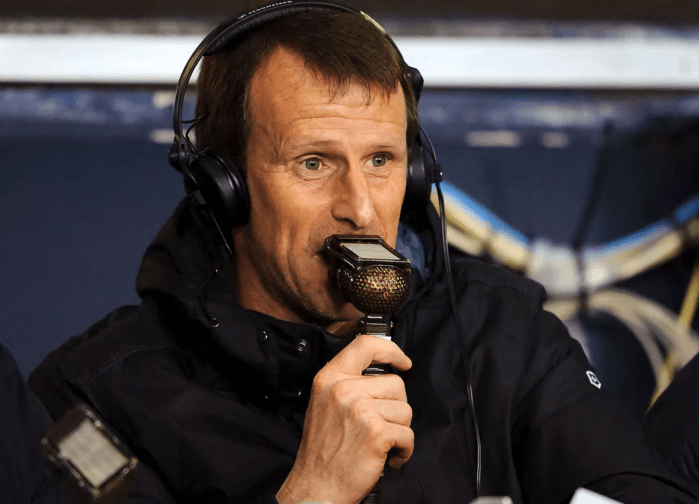
Pundit Claridge contributed his thoughts on radio and TV

Claridge also became a familiar face and voice working as a pundit for the BBC on TV at Football Focus and Final Score and on BBC Radio 5 Live. He also wrote scouting reports on promising players for The Guardian, numbering future Brighton signing Matt Sparrow among them.

“He is easy on the eye, links well with his forwards but also protects and helps his defenders by tackling from the wrong side and makes sure he tracks his runner whenever he threatens to get goal-side,” wrote Claridge of the then Scunthorpe United player in 2007.

Claridge later set up his own coaching scheme for youngsters in Salisbury and Warsash.

In 2023, he took over as manager of Gosport-based Wessex League Division One side Fleetlands FC for the 2023-24 season. In August 2024 they announced he was stepping down from the role “due to personal reasons”.  
On its website, a statement added: “The club would like to place on record our huge thanks to Steve for taking up the role in our hour of need and taking us to a fantastic 5th place finish last season.”

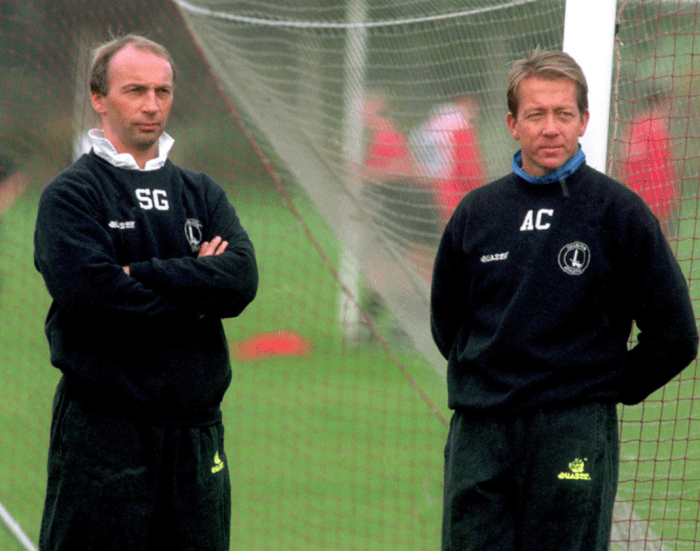
When Steve Gritt took on the ‘worst job in football’

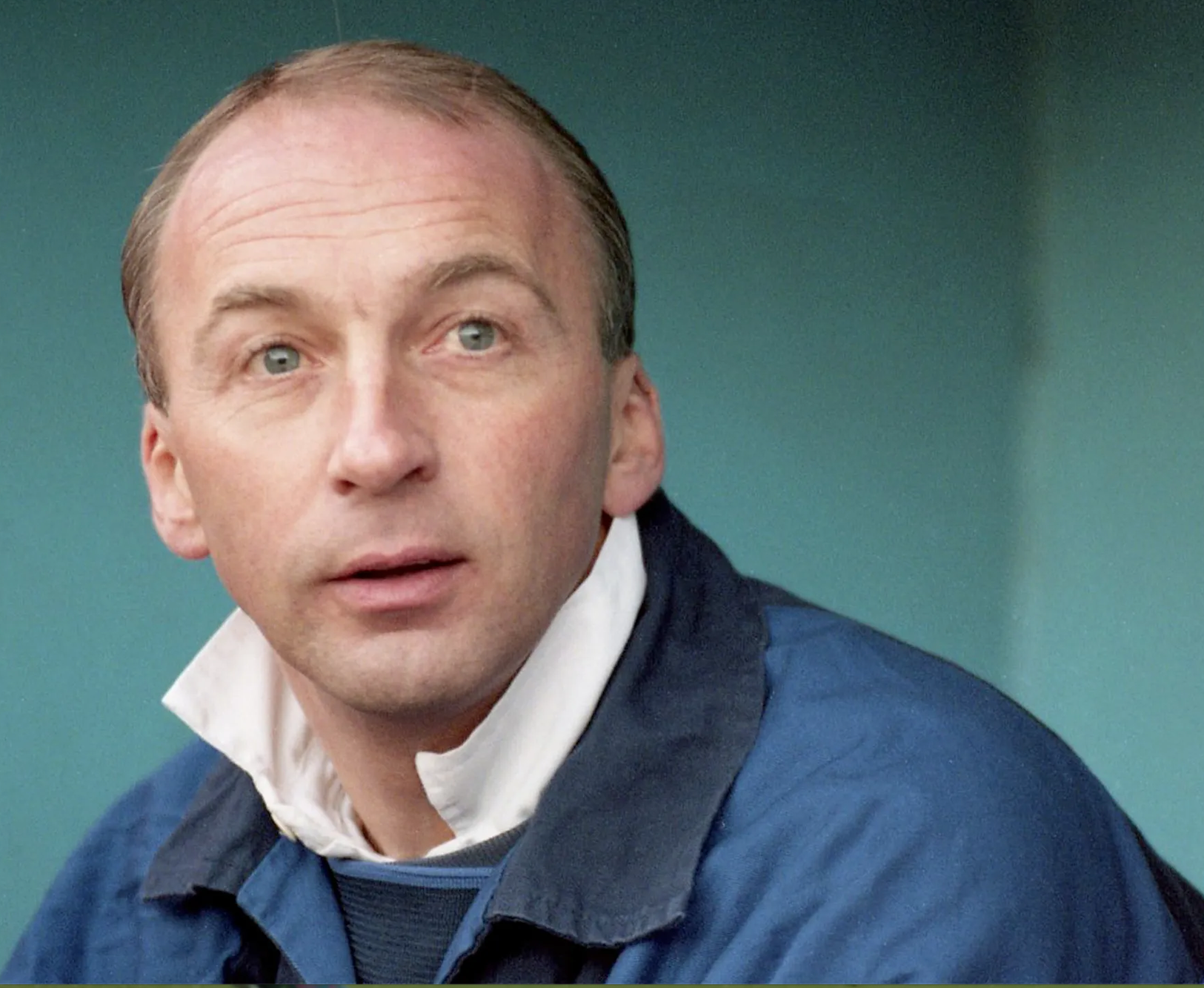
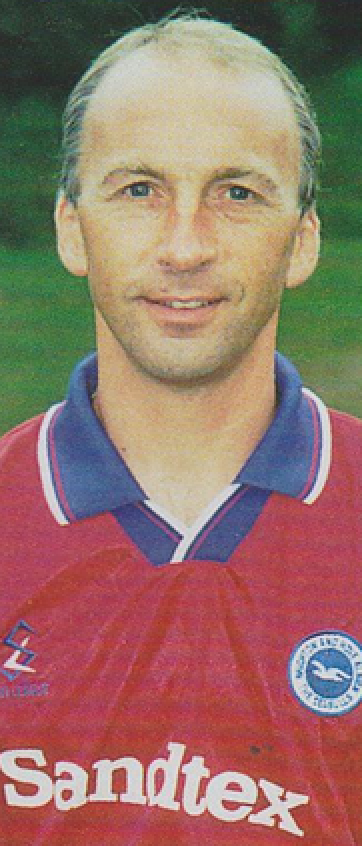
BOURNEMOUTH-BORN Steve Gritt is synonymous with Brighton & Hove Albion’s darkest hour because he was in the almost scalding managerial hotseat at the time the club nearly went out of the league.

The mastermind behind Albion’s ‘Great Escape’ in 1997 grew up in the Dorset coastal resort and began his footballing career with his local club in the 1970s. He later worked as the Cherries chief scout, although, apart from etching his part in Brighton’s footballing folklore, most of his more memorable days in the game came at Charlton Athletic.

Somehow, against all the odds, he managed to keep the Seagulls up when most doomsters could only see the club losing its status – and possibly going out of business as a result.

Gritt, who had been out of work for 18 months having been cast adrift by a new chairman at Charlton, took over from the beleaguered Jimmy Case in December 1996 with Albion 12 points adrift at the bottom of the fourth tier.

“I was delighted when Brighton offered me the chance to return,” he wrote in his matchday programme notes. “I know a lot of people were calling it the ‘worst job in football’ but when you love football as I do then you don’t always see things that way.”

Gritt was certainly an old hand when it came to football’s vicissitudes: rejected by AFC Bournemouth as a teenager, he went on to enjoy the elation of promotion as well as enduring the despair of relegation during his time with the Addicks.

Quite what would have become of Albion if they’d lost their place in the league is now only speculation – thankfully it wasn’t a bridge Gritt had to cross.

“I’d spent 18 years at Charlton as player and joint-manager, with just six months away from it, at Walsall. Then a new chairman, Richard Murray, came in and he didn’t like the joint-manager situation, so he put Alan Curbishley in sole charge, and I left,” Gritt explained.

Without a full-time job in the game, he stayed in touch by doing some scouting work for Tony Pulis at Gillingham, Brian Flynn at Wrexham and a couple of stints for West Brom. He even pulled his boots back on to play for Welling and Tooting & Mitcham.

Eager not to continue to have to queue at the benefit office for dole money, he applied for the vacant Albion manager’s job and got it after an interview in Crewe with the despised chairman Bill Archer and his ‘henchman’ chief executive David Bellotti.

“I knew very little about what was going on at the club,” Gritt told Roy Chuter in a retrospective programme piece. “I’d read bits in the papers, but my only interest was in the football. I wasn’t going to get involved.

“The place was very low. Some of the senior players filled me in on what was happening. In my first few days, there was graffiti on the walls saying I was a stooge, a whistle protest, a fan chained himself to the goal at half-time at my first match – that bothered me as we were winning at the time and went on to beat Hull 3-0.

“Then the next week I had to go onto the pitch with a megaphone at Leyton Orient to get the supporters to leave after the match – and they already hated me! I thought ‘What is going on?’ but my job was to get some sunshine back into the fans’ Saturday afternoons.”

After familiarising himself with the issues at a fans’ forum – “It helped me understand that the fans had to do what they had to do” – he devoted himself to improving the football and although the budget was tight, brought in the experienced defender John Humphrey and Robbie Reinelt, who would go on to score one of the most crucial goals in Albion’s history.

Puzzled by the plight of a side that contained good players in the likes of Craig Maskell, Ian Baird and Paul McDonald, Gritt maintained: “I never thought we’d go down.”

He recalled: “There was such a lot of experience. If I could organise them, we’d have a chance.”

Looking back years later

Ultimately, the club’s fate was decided in the final two games of the season – at home to Doncaster Rovers and away to Hereford United.

“We knew we could beat Doncaster,” he said. “There was a big crowd and a tremendous atmosphere – very tense. Maybe that got to the players – we didn’t play as well as we had done, but once we were 1-0 up, we weren’t going to get beat. We had a great defence.”

Gritt recalled: “I was beginning to think that there wasn’t going to be any goals in the game as there hadn’t been too many chances during the game that I can remember.

“Suddenly we had a corner from which Mark Morris eventually hit the bar, confirming my thoughts. But suddenly the ball fell to Stuart (Storer) who struck it into the net to spark off unbelievable celebrations on the pitch, off the pitch and in the dugout.

“Could we now keep our composure and see the game out to a memorable 1 nil win? We did! What a day and what a memory.”

And so to Hereford, who needed to win to avoid dropping out of the league. Albion only needed a draw to stay up. Everyone knows the story. A goal down at half-time when Kerry Mayo put through his own net, Gritt reminded the players at half-time that their jobs were on the line.

Relief at Hereford

He sent on Reinelt as a sub and in the 62nd minute he slotted a second half equaliser to send the Albion faithful into ecstasy and condemn the Bulls to their fate.

“I think if it had been Brighton, we could have faded into obscurity,” he said. “Most of the players would have left, and I don’t think we could have coped.”

As things subsequently transpired, it was Gritt who would soon be on his way.

It’s perhaps a bit of a cliché to say there is no sentiment in football but when Gritt’s side had managed only four league wins up to February in the 1997-98 season, and were second bottom of the table, chairman Dick Knight wielded the axe.

“No one who cares about the Albion will forget Steve’s tremendous contribution to our survival last season,” said Knight. “This season, given our difficult circumstances, feasibly we were only seeking to preserve our league status by a safe margin, but to date that comfort zone has eluded us.”

Thankfully you can’t keep a good man down for long, though, and within two weeks of getting the Brighton bullet, Gritt was back in the saddle as assistant manager to Billy Bonds at Millwall.

Although Bonds was sacked by the Lions only six weeks after Gritt’s arrival, successors Keith Stevens and Alan McLeary kept him on, working with the reserve team. Then Mark McGhee took charge and got Gritt back involved with the first team to take on organisational work such as set plays.

After McGhee took charge at Brighton, Gritt switched across south London back to Charlton, where he ran their academy for the next six years.

He returned to his hometown club in 2011 to become chief scout, initially under Lee Bradbury and then his successor, Paul Groves.

But he was disappointed to be let go in September 2012, telling theEcho: “They have changed the way they are doing their recruitment so there wasn’t really any need for me to be there.”

Bournemouth chairman Eddie Mitchell explained: “We have got analysts on board now and all games are available on DVD. We are trying to build a database from these clips.

“We felt it was impractical to send somebody all over the country to watch games every day when we can get DVDs of games and players.

“It was a role which diminished for us. Whether it is the right way to go remains to be seen but we have got to look at effectiveness and costs.”

Gritt said: “It was a big thing last year for me to come back to the club where I grew up. I am disappointed it has come to an end like this, but life goes on.

“I have lost jobs in the past and, hopefully, I will bounce back. I am looking forward to the next chapter in my career and will just have to wait and see what comes up.”

Born in Bournemouth on 31 October 1957, Gritt’s early footballing ability was first seen in the Kings Park First School football team of 1969, as the Echo discovered when readers were asked to send in their old sports photos.

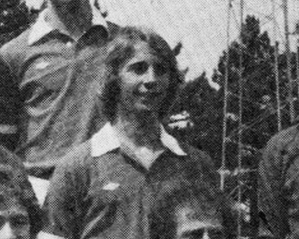
A rare sight: young Gritt with hair!

Gritt, a forward, was taken on as an apprentice by the Cherries and played a handful of games for the first team under John Benson before being released at the age of 18.

Colin Masters remembered on the Where Are They Now? website (in an October 2020 post) how Gritt linked up with non-league Dorchester who paired him up front with Ron Davies, the former Welsh international centre-forward who’d played for Southampton, Man Utd and Portsmouth.

“They were an exciting pair to watch at that level,” said Masters. “After three matches I was so impressed with Steve that I went and found the Dorchester club secretary and asked if he had signed Steve Gritt on a contract.

“The reply was ‘No’. Within two weeks, Charlton Athletic came in and took him (presumably for nothing) and he went on to have a very successful career for many years. Dorchester’s loss was Charlton’s gain!”

Between 1977 and 1993, Gritt played a total of 435 matches for the Addicks, including a relegation to the old Third Division in 1980 and two promotions – to the Second Division in 1981 under Mike Bailey and the First Division under Lennie Lawrence in 1986. He had a six-month spell with Walsall in 1989 before returning and experiencing another relegation in 1990.

Gritt became joint player-manager with Curbishley in 1991 and, under their stewardship for the next four years, the likes of Lee Bowyer, John Robinson, Richard Rufus and Shaun Newton established themselves as mainstays of the side.

When Charlton decided in 2021 to re-name their East Stand in Curbishley’s honour, a generous Gritt told londonnewsonline.co.uk it was a fitting tribute to his former colleague.

“We had our trials and tribulations but I’ve always judged that we did what was required to keep the club going. We had to steady the ship.

Joint Charlton manager with Alan Curbishley

“We would have loved to have kept Rob Lee, for example, but we had to do things for the well-being of the club so we could keep it going and give the fans something to shout about.

“It was a great time when we got back to The Valley (they’d spent several years sharing Selhurst Park with Crystal Palace).

“Then the club made a decision which I was never going to agree with. But when I look back to see what Alan did – he went on to do a significant job – I cannot complain. Ultimately what he achieved he thoroughly deserved.”

Gritt said: “When I was there we had to make sure we weren’t seen to be having disagreements although I cannot recall us having too many anyway.

“When we were on the training ground, we each knew what the other one would be doing during the sessions. We both had jobs to do on the day.

“I was more of a player than he was at that time – so the management side was more in his hands. It was fairly straightforward, until the club decided that they wanted one man in charge. That was obviously disappointing for me at the time but I have thoroughly enjoyed my career.

“Alan gave the club a massive block to build on – but no one could have envisaged how the club went after he left. It was a massive disappointment.”

After he left Bournemouth in 2012, Gritt dropped out of league football and spent five years as assistant manager at Ebbsfleet United, working with his former Charlton teammate (and ex-Albion youth team manager) Steve Brown and then Daryl McMahon, who he subsequently followed to League Two Macclesfield Town, Conference side Dagenham & Redbridge and Isthmian League Hornchurch.

Hailed as a hero at the Amex

Petterson the fall guy during disastrous winless run

ANDY PETTERSON conceded two goals in the first seven minutes of his Albion debut but still picked up the man of the match award when managing to deny visitors Walsall any further goals in a 2-0 defeat.

He pulled off a brilliant point-blank save on the stroke of half-time to deny goalscorer Jorge Leitao a second goal and later blocked the same player’s angled drive. Steve Corica had opened the scoring for the Saddlers.

The game on August Bank Holiday Monday in 2002 was part of a disastrous run under new manager Martin Hinshelwood. In only eight games as a stand-in for injured Michel Kuipers, Petterson conceded eighteen goals, including four against his old club, Portsmouth, in only his second game.

He shipped another four in a game at home to Gillingham, one of which the matchday programme described as “the most embarrassing moment of Petterson’s long career”.

With the score 3-2, and Albion committing everyone forward, including the goalkeeper, in search of an equaliser, when 10-man Gillingham broke on a counter attack, backpedalling Petterson fell over giving Gills striker Kevin James an open goal to notch a fourth for the visitors.

Petterson only appeared once under Hinshelwood’s successor, Steve Coppell, when Kuipers had been sent off in the 89th minute of a home game against Bradford City. Paul Brooker was withdrawn and the sub goalie went between the sticks, although his first involvement was to pick the ball out of the net, Andy Gray having scored from the penalty kick awarded for the infringement that saw Kuipers dismissed.

In pouring rain, Albion – and Petterson – clung on throughout five added minutes for a 3-2 win, bringing to an end a 14-game winless league run. Bobby Zamora scored two penalties for the Seagulls and new arrival Simon Rodger, a loyal Coppell lieutenant, curled in a beauty from outside the area.

Although he was a non-playing sub on two further occasions, Petterson was let go. In a recent interview, he said he had been nursing a recurring calf injury during his time with the Albion.

Albion were the 12th of a remarkable 21 clubs the Aussie ‘keeper joined on loan or permanently.

Wolverhampton Wanderers were another stopping off point for the perennial back-up ‘keeper from Fremantle and it was one of his regrets that he only had a four-month loan spell at Molineux, having previously spurned a two-year deal with the Black Country side to make what turned out to be a career-damaging move to Pompey.

Instead of building on a career that had shown signs of promise at Charlton Athletic, Petterson flitted from club to club without ever putting down roots.

Born in Fremantle, Western Australia, on 26 September 1969, he was still only a teenager when he arrived in the UK and signed for Luton Town, where he spent four seasons.

The Hatters Heritage website recalls: “Andy was so desperate to make a name for himself in the English professional game that he paid his own passage to take up a trial at Luton. Fortunately, his gamble paid off as he was offered a contract at Kenilworth Road in 1988 although he had to wait until the start of the 1992-93 season before making his League debut.

“Impressing in pre-season with his shot stopping ability and quick reflexes, Andy was ever present for the first 14 games but a calamitous performance during a 3-3 draw at Cambridge effectively put paid to his Luton career.”

Petterson joined Alan Curbishley’s Addicks for £85,000 in July 1994, was their player of the season in 1996-97 in the First Division and played for them in the Premier League.

But he was generally no. 2 to Sasa Ilic, and subsequently dropped down to third choice behind Simon Royce, another goalkeeper who spent time with the Seagulls. The situation prompted Petterson to join struggling Portsmouth on loan in November 1998.

“Portsmouth were in financial trouble and down at the bottom of the table,” he recalled in an interview with the Argus. “I went there for three months and everything went very well. Then in the summer I was out of contract at Charlton.

“Portsmouth were one of three clubs in for me and they offered me quite a good deal, so I decided to sign for them. Everything went well under Alan Ball for the first six months, but he got the sack and it was downhill for me from there.

“We had another four managers (Tony Pulis, Steve Claridge, Graham Rix and Harry Redknapp) in the three years I was there and my face never fitted really. It was just unfortunate I went there. I was happy with the way it started, and it was a good club to be at, but it just wasn’t meant to be for me.”

In an extended interview with Neil Allen of The News, Portsmouth, in June 2020, Petterson reflected on his missed opportunity to join Wolves instead of Pompey, when he had been released by Charlton.

“Wolves’ boss Colin Lee was interested,” he said. “I was in Australia and flew back to England ahead of signing at Molineux on a two-year deal on the Monday afternoon.

“Then, late Sunday, my agent called. Milan Mandaric had taken over Pompey and they wanted to talk on Monday morning.

“That was the club I wanted to join, I had familiarity there. I signed a three-year deal. If the club had been taken over 24 hours later, the move would never have happened and I would have ended up at Wolves.”

Petterson told The News: “It was the beginning of the end when I went back to Pompey. My career never really recovered. I was kind of a journeyman before that, but at least was signed to a parent club and sent on loan to places.

“After moving to Pompey permanently it was six months here, three months there. It was the beginning of the end for my career. I guess everything happens for a reason – and for some reason it happened to me.”

Ipswich (three times), Swindon, Bradford, Plymouth, Colchester, Wolves, Torquay and West Brom were all temporary moves for the Australian stopper. After his short stint in Sussex, he also went to Bournemouth, Rushden and Diamonds, Southend, Walsall and Notts County.

“I always had belief in my ability and always wanted to play,” he said. “I think I was a good goalkeeper, although maybe mentally didn’t have the belief in myself enough.

“I’m a bit of a laid-back, casual sort of guy. Sometimes you have to be that pushy arrogant sort of person for the coach to take notice of you a bit more. I tried to do it, as a footballer you have to be a bit of an actor, but it just wasn’t in my nature.”

Referring to the fact he had 16 years as a professional footballer in the UK, he added: “That’s what gives me the belief that I was a decent goalkeeper. But something wasn’t quite there for me to go to the next level, I guess.”

He eventually only got a run of regular games when he returned to Australia and played for Newcastle Jets and then ECU Joondalup.

After his playing days were over, he became a goalkeeper coach for several clubs, including Bali United in Indonesia for a while. In August 2022, he was appointed goalkeeper coach at East Bengal FC.

“I have experienced the highs, the lows, all that kind of stuff, so can relate to goalkeepers,” he told Allen. “I’ve been through plenty.”

The FA Cup semi-final hat-trick hero who wore red and blue

ALEX DAWSON was even younger than Evan Ferguson when he scored a FA Cup semi-final hat-trick.

The bull-like centre forward who broke through at Manchester United in the wake of the Munich air crash wrote his name in football record books on 26 March 1958.

Dawson was just 18 years and 33 days old when he netted three goals in United’s 5-3 win over Fulham in front of 38,000 fans at Highbury, north London. No-one that young has ever repeated the feat.

Eleven years later, Dawson scored twice for Brighton in a Third Division match against Walsall. It was my first ever Albion game. He followed up the two he got in that game with six more in four other games I saw that 1968-69 season. They were enough to sow the seeds of a lifetime supporting the Albion and the burly Dawson, wearing number 9, became an instant hero to an impressionable 10-year-old.

Dawson scored twice v Walsall in 1969

Dawson is no longer with us but the memory of his goalscoring exploits live on amongst those fans of a certain vintage who had the pleasure of seeing him in action.

A man who played alongside him at Wembley in 1958 – Freddie Goodwin – made Dawson his first signing for Brighton, for £9,000, not long after he had taken over as manager in the winter of 1968.

By then, he was plying his trade with Bury. He had left United in 1961 after scoring a remarkable 54 goals in 93 games, including one on his debut aged just 17 (in a 2-0 win over Burnley).

After losing 2-0 to Bolton Wanderers in 1958, another losing Wembley appearance followed six years later. He scored a goal for Preston North End but the Lancastrian side lost 3-2 to West Ham United.

United pair Freddie Goodwin and Alex Dawson were reunited at Brighton

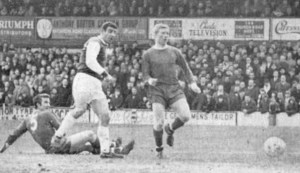
Nevertheless, Dawson was prolific for Preston scoring 132 goals in 237 league and cup games over six years. The purple patch I saw him have for Brighton saw him find the net no fewer than 17 times in just 23 games, including three braces and four in an away game at Hartlepool. That was only one behind top scorer Kit Napier whose 18 came in 49 matches.

Alex Dawson in snow action at the Goldstone Ground

In a curtain-raiser to the 1969-70 season, Dawson scored four times as Albion trounced a Gibraltar XI 6-0 at the Goldstone. But the signing of Allan Gilliver and, in the New Year, young Alan Duffy, began to reduce his playing time. He got 12 more goals in 28 appearances (plus three as sub) but, when Goodwin left the club, successor Pat Saward edged him out.

Even in a loan spell at Brentford he scored seven in 11 games. Greville Waterman, on bfctalk.wordpress.com in July 2014, recalled: “He was a gnarled veteran of thirty with a prominent broken nose and a face that surely only a mother could love, but he had an inspirational loan spell at Griffin Park in 1970.”

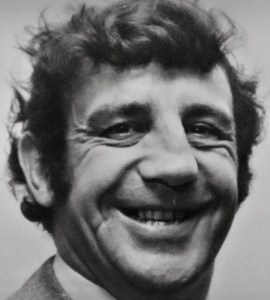
Still smiling and scoring goals at Corby

Released by the Albion at the end of the 1970-71 season, Dawson’s final footballing action was with non-league Corby Town, where he didn’t disappoint either.

In his first season at Occupation Road, he finished top scorer with 25 goals in 60 appearances and by the time he retired from playing on 4 May 1974, his tally for the Steelmen was 44 in 123 appearances.

When the curtain came down on his career, Dawson had scored 212 goals in 394 matches – more than one every two games. A true goalscorer.

It was in the wake of the decimating effect of the Munich air disaster that Dawson found himself thrust into the limelight at a tender age.

The crash claimed the lives of eight of United’s first choice team – Dawson’s pals. Youngsters and fringe players had to be drafted into the side to fulfil the remaining fixtures that season. One was Dawson, another was Goodwin.

Thirteen days after the accident, Dawson took his place beside survivors Bill Foulkes and Harry Gregg and scored one of United’s goals as they beat Sheffield Wednesday 3-0 in the fifth round of the Cup.

He scored again as United drew 2-2 with West Brom in the sixth round, before winning through 1-0 in a replay to go up against Fulham in the semi-final.

Dawson told manutd.com: “In our first game with Fulham (played at Villa Park), Bobby Charlton scored twice in a 2-2 draw, and I was put on the right wing. I was a centre-forward really and, when we played the replay at Highbury four days later, I was back in my normal position.

“Jimmy (Murphy) said before the game: ‘I fancy you this afternoon, big man. I fancy you to put about three in.’ I just said: ‘You know me Jim, I’ll do my best,’ but I couldn’t believe it when it happened.

“The first was a diving header, I think the second was a left-footer and the third was with my right foot.

“It was a long time ago, of course, and it’s still a club record for the youngest scorer of a hat-trick in United’s history. Records are there to be broken and I’m surprised that it’s gone on for over half a century.

“I’m a proud man to still hold this record. Even when it goes, nobody can ever take the achievement away from me.”

While Dawson was my first Albion hero, when he died in a Kettering care home at the age of 80 on 17 July 2020 the esteem in which he was held by others also came to the fore in the tributes paid by each of the clubs he played for.

Born in Aberdeen on 21 February 1940, Dawson went to the same school as United legend Denis Law, but his parents moved down to Hull and Dawson joined United straight from Hull Schoolboys.

Dawson and future Preston and Brighton teammate Nobby Lawton were both on the scoresheet as United beat West Ham 3-2 in the first leg of the 1957 FA Youth Cup Final and Dawson scored twice in the 5-0 second leg win. West Ham’s side included John Lyall, who later went on to manage them.

On redcafe.net, Julian Denny recalled how Dawson once scored three hat-tricks in a row for a United reserve team that was regularly watched by crowds of over 10,000.

After that goalscoring first team debut against Burnley in April 1957, he also scored in each of the final two matches that season (a 3-2 win at Cardiff and a 1-1 draw at home to West Brom) to help United win the title and secure their passage into Europe’s premier club competition.

Obviously, circumstances dictated Dawson’s rapid rise but, with the benefit of hindsight, some say his United career may have panned out differently if he hadn’t been thrust into first team action at such a young age.

He was just short of his 18th birthday when the accident happened. In an interview with Chris Roberts in the Daily Record (initially published 6 Feb 2008 then updated 1 July 2012), he recalled: “I used to go on those trips and had a passport and visa all ready but the boss just told me I wasn’t going this time.

“I had already been on two or three trips just to break me in. I know now how lucky I was to be left in Manchester. The omens were on my side.”

Dawson went on to describe the disbelief and the feelings they had at losing eight of the team, including Duncan Edwards several days later.

“We were all so close and Duncan was also a good friend to me before the accident,” said Dawson. “Duncan was such a good player, there is no doubt about that. He was a wonderful fellow as well as a real gentleman.

“I will never, ever forget him because he died on my birthday, 21 February, and before that he was the one who really helped me settle in.”

Dawson gradually became an increasingly bigger part of the first-team picture at United, making 11 appearances in 1958-59 and scoring four times. The following season he scored 15 in 23 games then went five better in 1960-61, scoring 20 in 34 games.

He was at the top of his game during the last week of 1960 when he scored in a 2-1 away win at Chelsea on Christmas Eve, netted a hat-trick as Chelsea were thumped 6-0 at Old Trafford on Boxing Day, and then scored another treble as United trounced neighbours City 5-1 on New Year’s Eve.

A fortnight later he had the chance to show another less well-known string to his footballing bow…. as a goalkeeper!

It was recalled by theguardian.com in 2013. When Tottenham were on their way to the first ever double and had an air of near-invincibility about them, they arrived at Old Trafford having lost only once all season, and had scored in every single game.

Long before the days of a bench full of substitutes, when ‘keeper Harry Gregg sustained a shoulder injury, Dawson had to take over in goal.

Dawson excelled when called upon, at one point performing, according to the Guardian’s match report, “a save from Allen that Gregg himself could not have improved upon”.

The article said: “Tottenham’s attempts to get back into the game came to nought and Dawson achieved what no genuine goalkeeper had all season: keep out Tottenham’s champions-elect. In the end, there were only two games all season in which Spurs failed to score, and this was one of them.”

Scoring for Preston North End

Tottenham’s north London neighbours, Arsenal, finished a disappointing 25 points behind Spurs in 11th place, but United manager Matt Busby had been keeping tabs on the Gunners’ prolific centre forward David Herd (Arsenal’s top scorer for four seasons), and in July 1961 took him to Old Trafford for £35,000. It signalled the end of Dawson’s time with United.

When the new season kicked off, Dawson had a new apprentice looking after the cleaning of his boots….a young Irishman called George Best. In his 1994 book, The Best of Times (written with Les Scott),

Best said: “Alex Dawson was a brawny centre forward whose backside was so huge he appeared taller when he sat down. To me, Alex looked like Goliath, although he was only 5’10”. What made him such an imposing figure was his girth.

“He weighed 13st 12lbs, a stone heavier than centre half Bill Foulkes who was well over 6ft tall. What’s more, there wasn’t an ounce of fat on Alex – it was all muscle.”

Best’s responsibilities for Dawson’s boots didn’t last long, however, because in October that year, Busby sold the centre forward to Preston for £18,000.

In 1967, Dawson took the short journey to Bury FC where his goalscoring exploits continued with 21 goals in 50 appearances, before he joined Goodwin’s regime at Brighton.

What a career to look back on: Alex Dawson recalling his goalscoring exploits

Great strike rate at Brighton but journeyman Benjamin had 29 clubs!

T Benj BTNSELDOM in his remarkable 29-club career did Trevor Benjamin enjoy such a successful spell as the 10 games he spent on loan at Brighton.

The bustling striker who had thrived under Micky Adams at Leicester City the season before scored five times for Mark McGhee’s promotion-chasing side in 2004.

McGhee was keen to keep him through to the end of the season but because of the timing of the three-month deal he wouldn’t have been eligible to play in the play-offs.

As a result, he went back to Leicester and McGhee brought in Chris Iwelumo instead, and, with a goalscoring debut in an away win at Chesterfield, there was no looking back.

Born on 8 February 1979 in Kettering, Benjamin was brought up in Wellingborough, Northants, and, having done well for Wellingborough Colts, was picked up by Kettering Town, playing for their youth team and reserves.

Cambridge United took him on as a trainee and he made his first team debut aged only 16 against Gillingham and went on to score 46 goals in 146 appearances.

Such a scoring record caught the eye of Leicester boss Peter Taylor and, on 12 July 2000, Benjamin joined the Foxes for a fee of £1.3 million.

However, he managed only a single goal in the 2000-01 season and the following season was sent out on loan to Crystal Palace, Norwich City and West Bromwich Albion.

He returned to Leicester for the whole of the 2002-03 season, including playing against the Albion at Withdean.

He said in a matchday programme article for that season’s return match against Brighton on 19 April 2003: “Brighton are a very similar team to ourselves. They have got a good work ethic and never give up.

“I came on as a substitute for the last 10 minutes when we played against them at the Withdean Stadium just before Christmas and that was a tough night.

TBenj Lei action“The conditions were terrible and both sides had to work hard to beat the elements. But I think our quality shone through on the night.” (Leicester won 1-0).

The following season, Benjamin was back on his travels, initially to Gillingham, then Rushden & Diamonds and, in January 2004, to Brighton.

Benjamin’s first Brighton goal came after just 12 minutes of Albion’s home game against Plymouth Argyle, who were then top of the league table. Leon Knight added a second goal before a jubilant celebration in front of the Sky cameras and Albion prevailed 2-1.

He followed that up by netting Albion’s goal in a 1-1 draw away to Wycombe Wanderers, and was again on the scoresheet in the 2-1 away defeat to Grimsby Town.

A 3-0 home win over AFC Bournemouth saw Benjamin score the second of Albion’s three goals at Withdean. When Tranmere Rovers were dispatched by the same score, he once again scored the second goal.

Back at Leicester, when Craig Levein was installed as boss, he cancelled Benjamin’s contract in January 2005. Benjamin initially dropped down a couple of divisions to play for Northampton but, three months later, his old Leicester boss, Adams, took him to Championship side Coventry City. He helped to set up both goals on his debut for the Sky Blues as they beat Reading 2-1.

In Coventry’s matchday programme for their home game against Brighton on 2 April 2005, he talked about how he had been settling in and the efforts he’d been making to try to improve his game.

“I’ve been training quite hard with Alan Cork on my finishing since I got here and he’s great to work with. He’s trying to get me to focus on what I am best at and hopefully when the games start again the practice will pay off.”

Benjamin’s arrival at Coventry may have seen him make a leap of two divisions but he was by no means unfamiliar with football at that level having played with Leicester for five years in both the Premiership and the Championship.

David Antill wrote: ‘During his time with the Foxes he was loaned out to no fewer than seven clubs before eventually signing permanently with Northampton Town but he is delighted to be back in a league he enjoys playing, for a manager he believes can get the best out of him.

“I’ve always believed in my own ability and thought I could play at this level and it was great to be given the chance to return to this league with Coventry,” said Benjamin. “My confidence never really slipped – I never had a doubt about coming here and being able to deliver the goods.

“I know what Micky Adams is all about and he knows what I’m all about so I enjoy working with him. What he’s brought here is exactly what he brought to Leicester and that’s what brought him success there. He’s a hard-working manager and he wants exactly the same thing from all of his players and I think he’s getting that.”

After scoring only once for the Sky Blues, in the summer of 2005 the burly forward linked up with Peterborough United, where he signed a three-year deal. However, he was loaned out several times, appearing for Watford, Swindon Town, Boston United and Walsall.

There was some stability and a return to goalscoring when he moved to Hereford United. He scored 10 in 34 games for the Bulls but was released in May 2008 and ended up drifting across the non-league scene for the next four years, popping up at no fewer than 13 different clubs.

It was all a far cry from the heady days of 2001 and 2002 when he briefly reached the international arena.

He went on as a substitute for Howard Wilkinson’s England under 21s as they beat Mexico 3-0 in a friendly at Filbert Street on 24 May 2001. Because he hadn’t played in a competitive fixture, he was then able to swap allegiances and played two matches for the full Jamaica international side in 2002.

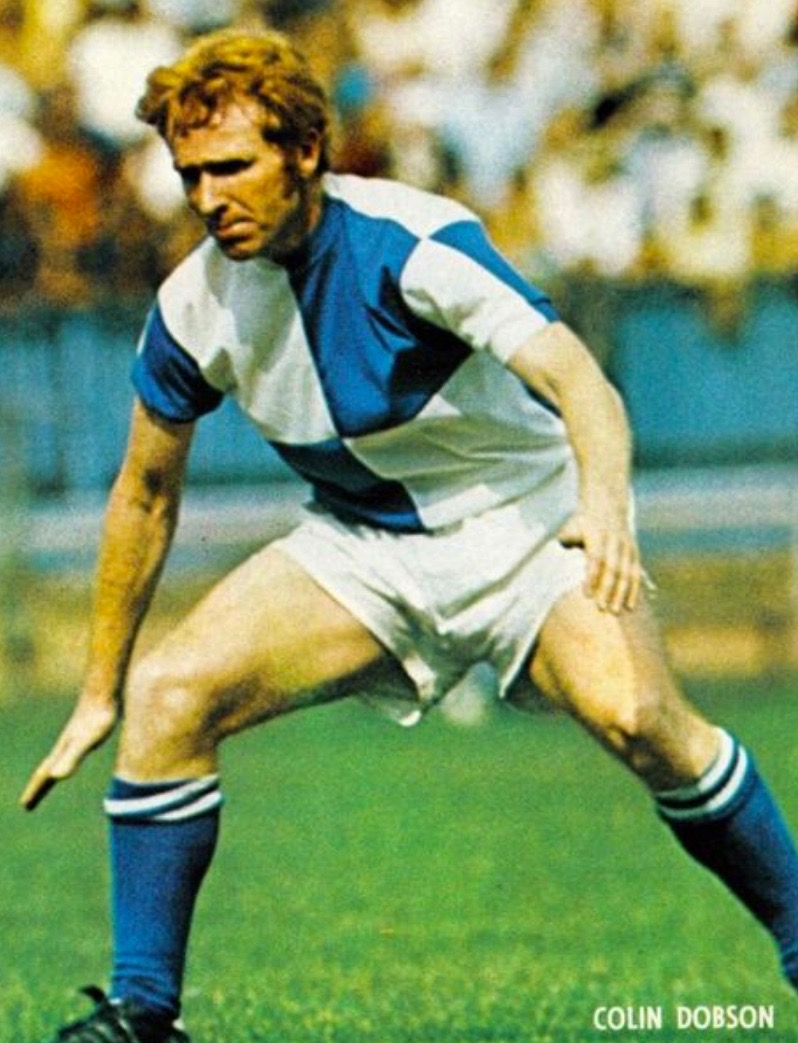
When football didn’t deliver the right break for Colin Dobson

THE architect of Brighton’s humiliating 8-2 home defeat to Bristol Rovers in 1973 was none other than a player who might have been wearing Albion’s stripes if injury hadn’t struck.

Goalscoring winger Colin Dobson turned goal provider the day Rovers were rampant at the Goldstone Ground. Twenty-one months earlier he’d left the same pitch on a stretcher, not certain that he’d ever be able to play again.

Dobson had joined Brighton on loan in January 1972, making his debut in a mid-season friendly against his parent club, Huddersfield Town, on 18 January.

Ironically, his first meaningful Albion action came against Rovers when he was a substitute in a 2-2 draw at Eastville on 22 January.

Dobson was also on the bench for the home 1-0 win over Swansea City the following Saturday. He was elevated to the starting line-up away to Wrexham on 5 February, when goals from Willie Irvine and Peter O’Sullivan sealed a vital 2-1 win.

It was during his full home debut against Walsall on 12 February that his short-lived Albion career came to a sudden halt. Albion lost 2-1 and Dobson suffered an ankle fracture.

It had been expected that Albion would sign him permanently, and he told the Evening Argus that he had been offered a good deal to do so, but the injury put paid to the transfer being completed.

With Pat Saward’s side heading towards promotion with Aston Villa, the Irish manager instead went back to Wolverhampton Wanderers to sign Bertie Lutton, who had been on loan earlier in the season.

Lutton duly played his part as the Seagulls acquired the necessary points to earn promotion, while Dobson nursed an injury which at the time threatened to end his playing days.

His six-year Huddersfield career at an end, in the summer of 1972 he accepted a role as player-coach at Bristol Rovers, working under his former Sheffield Wednesday teammate, Don Megson.

Dobson Rovers

Thus it was that he was part of a Rovers side who had gone 18 matches unbeaten when they showed up at the Goldstone on a cold winter’s day on the first day of December 1973 to tackle Brian Clough’s Albion in front of The Big Match television cameras.

The game was only five minutes old when Dobson played in Alan Warboys who beat Norman Gall before passing to his strike partner Bruce Bannister to open the scoring.

Seven minutes later, Dobson took Warboys’ pass and laid on a pinpoint centre for Gordon Fearnley to score with a header. The game was still six minutes short of half-time when another Dobson centre was met by Warboys to make the score 5-1 to the visitors.

John Vinicombe, Albion reporter for the Argus, declared in his summary: “To Colin Dobson, freed by Albion when a broken ankle looked like ending his career, the accolade for a thinking player.

“He masterminded the operation in unbelievably generous space. Bruce Bannister knifed through for the early, killing goals, and Alan Warboys, superbly balanced and fast on the slightly frozen pitch, looked the perfect striker, taking his four goals so cleanly.”

An incandescent Clough told the media: “I was ashamed for the town and the club that 11 players could play like that. I feel sick. We were pathetic. This side hasn’t got enough heart to fill a thimble.”

Rovers went on to win promotion to the second tier that season and Dobson eventually completed 63 league and cup games for them before retiring at the end of the 1975-76 season.

Born on 9 May 1940 in Eston, North Yorkshire, Dobson joined Sheffield Wednesday at 15, and made a name for himself with the Owls in the days when they played in the top tier of English football.

He earned a reputation as a goalscoring winger after making his debut in 1961 and scored 52 goals in 193 games over the next five years.

He was twice capped by England Under 23s: on 29 May 1963, he came on as a substitute for Alan Suddick as England beat Yugoslavia 4-2 in Belgrade. Alan Hinton scored a hat-trick for England and the other goal was a penalty by Graham Cross, then with Leicester but later a Brighton player. Future England World Cup winner George Cohen was the side’s right-back.

Four days later, with Ernie Hunt leading the line, Dobson started for England when they lost 1-0 to Romania in Bucharest.

In 1966, Dobson made the switch to second division Huddersfield for a £21,000 fee and he was Town’s top scorer in the 1967-68 season (with 14 goals) and 1968-69 (with 11).

Although full international honours eluded him, in the summer of 1968, he was selected for the Football Association Commonwealth tour of the USA, New Zealand, Malaysia and Hong Kong.

He was also part of the side Ian Greaves led to the 1969-70 Second Division title, but he only made a handful of top-flight appearances, and his last Huddersfield appearance was against Stoke City in an FA Cup fourth-round replay in January 1971.

Once his playing days were over, Dobson worked for a whole host of clubs in a coaching or scouting capacity, including Port Vale, Coventry City, Aston Villa, clubs in the Middle-East (Bahraini side West Riffa; Al Rayyan in Qatar; Kuwaiti side Al Arabi, and Oman’s Under-17s), Portugal’s Sporting Lisbon, Gillingham, Watford and Stoke, where he renewed his acquaintance with John Rudge, who he had known at Huddersfield and Bristol Rovers, who was director of football for the Potters.

It was during his time with Stoke that he discovered the future Manchester United and England goalkeeper Ben Foster, a chef playing part-time non-league football at the time.

Foster later told the Birmingham Mail: “There was a scout called Colin Dobson who worked for Stoke but was living in Warwick.

“One night he saw some floodlights, stopped off and had a watch of the game and I caught the eye. That was it. He made a note of it and came to watch me a few more times.

“I owe it all to him. Top man. Whether I’d still be working as a chef if he hadn’t spotted me, I don’t know.”

Dobson died in Middlesbrough aged 82 on 16 February 2023.

  • Pictures from my scrapbook. Originally sourced from the Evening Argus, Shoot! and Goal magazines.

‘Mad Dog’ Kennedy’s eyes weren’t always on the ball!

A Ken shot

IN A ‘10 worst Albion strikers you’ve seen’ list, Andy Kennedy would be a leading contender.

On the rare occasions he scored, he would celebrate with an exaggerated swagger befitting scoring the winning goal in a cup final – all rather out of place in a humdrum third tier league match!

The disdain in which the supporters of Watford hold him is hilariously summed up by Darren Rowe in an article on Blind, Stupid and Desperate.

“If an opposing team wanted to keep him under control, they did not need to mark him, merely make sure that he was offside, which, for long spells of the game, he would be,” opined Rowe. “Andy always seemed to have forgotten to put any studs in his boots. If ever he felt he could get away with it, his legs would give way at the edge of the box.”

In the same online title, author Chris Stride is a little more appreciative, before putting the knife in!

“He had good control, strength, ball skills and packed a powerful shot. In his early days at Blackburn, I saw him score a magnificent 25-yard curler and have an all-round blinding game against Aston Villa in the FA Cup.

andy kennedy - wat“When he signed for Watford I was hoping for more of the same. All we ever got was one long range effort away to Southend in the First Round of the Coca-Cola, and a couple of seasons of strolling around the pitch preserving his hairstyle and energy for (page three model girlfriend) Maria Whitaker.”
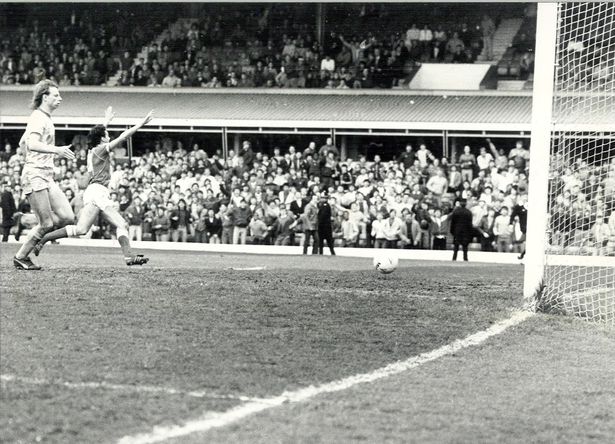
A Blackburn Rovers fan, posting in February 2018 under the name Drog on roversfans.com, also shared an amusing recollection of Kennedy’s time at his club.

“My main memories of Walsall though are from an occasion at homely former ground Fellows Park where Andy Kennedy netted a brace in a 2-1 win.

“My travelling companions and I managed to gain admission to the less than Babylonian splendour of something exotically named the Terry Ramsden Suite, after a colourful but ill-fated owner, where I was hoping to perhaps pass my congratulations on to Andy and his then-paramour, a lass named Maria Whittaker whom I greatly admired but sadly she had not made the trip to the Midlands.

“I can’t remember exactly what she looked like but the captions which accompanied her frequent newspaper appearances always made me think she’d make a sparkling conversationalist.”

It seems the shapely Ms Whitaker must have occupied Kennedy’s mind quite a lot. Non-League Paper contributor Liam Watson, once a player with Witton Albion, recalled in a 2013 article: “We also signed the striker Andy Kennedy – long dark hair, good looking fella – and he was knocking off the page three girl, Maria Whittaker, at the time. That was all he talked about.”

Born in Stirling on 8 October 1964 the son of an engineer father and beautician mother, Kennedy went to Wallace High School in the town and first gained football representative honours at under 13 level. It was his performances for Stirling Boys Club that caught the eye of Glasgow Rangers scout Davie Provan.

In those days he was a winger but after going through the ranks at Ibrox and signing professional at 17, he was converted into a central striker. He eventually broke through into the first team in 1982.

He mustered 20 games for the Scottish giants, scoring three times, but also spent some time on loan at Seiko in Hong Kong. Clearly it was time to move on from Glasgow!

In March 1985, Birmingham City were faltering as promotion candidates in the chasing pack at the top of the old Second Division when manager Ron Saunders took on the 20-year-old Kennedy at St Andrews.

Andy-Kennedy           Kennedy displays a more conventional goalscoring celebration for Birmingham

On 8 April, with regular striker David Geddis suspended and Blues trying to end a run that had seen just one win in the previous six games, Kennedy was called up for his debut at home to Sheffield United.

And what a start he made! Not only did he score with a header past former Villa ‘keeper John Burridge, he also set up Wayne Clarke to make it 3-0 and Blues went on to win 4-1.

Kennedy’s good form continued as he scored four in seven appearances and the stuttering Blues went from fourth to second and won automatic promotion back to the elite.

Kennedy was leading goalscorer the following season….but with just nine goals that didn’t say much, as the Blues went straight back down!

Throughout the course of his three-year contract with Birmingham he made 76 league appearances but scored just 18 goals and, in March 1987, was loaned to Sheffield United, where he scored once in nine games.

In the summer of 1988, he was on the move again, this time to Blackburn Rovers for a £50,000 fee. To be fair, the Ewood Park faithful probably saw the best of him as he netted 25 goals in 59 appearances during his two years at the club.

Watford were his next club and he joined for a fee of £60,000 in August 1990. But he failed to make an impact and was loaned out to Third Division Bolton Wanderers. Unfortunately, a back injury curtailed his time with the Trotters and he only managed one game before returning to Vicarage Road.

In his unhappy time with the Hornets, he made just 25 league appearances and scored only four goals.

A KenIt was a ‘phone call from Barry Lloyd‘s no.2 Martin Hinshelwood that heralded his arrival at the Goldstone. He joined Brighton for a nominal fee in September 1992, making his debut as a substitute for Steve Cotterill in a 1-0 home defeat to Reading on 26 September 1992.

“I am delighted to be here with a great bunch of lads and now I am determined to play my part in scoring goals and getting the club promotion,” he told the matchday programme.

A skip through recollections of Kennedy on North Stand Chat hardly stand as a ringing endorsement to his contribution in the stripes, the most complimentary coming from Austrian Gull, who maintained: “He wasn’t always that bad – we’d been spoilt by the beast that was Mike Small and Kennedy could never come close to reaching that level. Wasn’t the most hardworking but him and (Kurt) Nogan were okay. We certainly had a lot worse than Kennedy to come.”

Meanwhile backson reckoned: “Frustrating player. When we played United in the cup at Old Trafford, I seem to remember he was genuinely fouled in the box but went down so damn theatrically, like he’d been shot, it wasn’t given.”

Others recall him through that nickname ‘Mad Dog’ (first coined in a News of the World article about his affair with Ms Whittaker). Gwylan said: “Mad Dog wasn’t that bad – he was just lazy and looked unfit. If he had the attitude of Gary Hart, say, he’d have been an excellent player for us as he had a fair degree of ability.”

Pinkie Brown also observed: “Certainly had ability when he felt inclined. Sadly, as he had a bad attitude and was lazy, supporters saw little of that ability. One of those players who could have gone further had he been more focused.”

Several fans remember how he didn’t react well to observations from the terraces pointing out his shortcomings. Bladders was amused to recall: “One time, when he lazily chased a ball that went out of play, my old man told him to ‘put some bloody effort in Kennedy’. Kennedy then threatened to jump into the South Stand and smash his face in if he gave him any more lip.”

I must say on checking with the record books, I am staggered to discover he scored 10 times in 42 games for Brighton – although I do remember those over the top celebrations.

It’s said he left the club in 1994 after Liam Brady told him he wasn’t good enough to play for the reserves in the Sussex Senior Cup Final.

He ended his English league career with a cameo at Gillingham and at the age of 30 tried his luck in Hong Kong again, this time with Tsing Tao, before returning to the British Isles to play in Northern Ireland with Portadown and Shelbourne in Dublin.

As he was not the sort of player likely to be invited back to the club to reminisce over old times, he appears to have slipped below the radar in recent times.

However, Kennedy has linked up as a coach with the Rangers Soccer Schools programme at home and in North America. In 2005, Kennedy was part of a team of Rangers coaches who ran soccer schools in Canada. According to a Birmingham Mail report in 2015, Kennedy stayed in Canada at Ajax FC.

Horton’s place in the hearts of Brighton and Man City fans

IMG_5170ARGUABLY the finest captain in Brighton & Hove Albion’s history went on to have a far less successful spell as the club’s manager having also been a boss at the highest level, at Maine Road, Manchester.

The £30,000 signing of tenacious midfielder Brian Horton from Port Vale on the eve of transfer deadline day in March 1976 proved to be one of the most inspirational moments of Peter Taylor’s managerial tenure at the Albion and for such a fee was widely hailed as “an absolute steal”.

Even though Taylor didn’t hang around long enough to reap the benefit of the man he instantly installed as captain, his successor Alan Mullery certainly did.

In the early days after his appointment, there was some suggestion Mullery would be a player-manager but the former Spurs and England captain reassured a concerned Horton that wouldn’t be the case, admitting that he wouldn’t get in ahead of him anyway!

“Fortunately, that next year went really well. It was my best year without a doubt,” Horton told Evening Argus reporter Jamie Baker. “I’d never met Alan Mullery, and he’d probably never heard of me, so I was delighted and surprised when he made me his captain.”

It was the beginning of a strong bond between captain and manager and Horton added: “We had that relationship for all the five years I was with him.

“That first season was great. We went 20 odd games unbeaten and I was scoring left, right and centre, and I was very proud to be voted player of the year.

“Suddenly everything was coming right for me, although we were disappointed not to beat Mansfield for the championship because we felt we were far better than them.

“You’ve got to hand a lot of our success down to Alan Mullery. He was a terrific motivator of players. He was a bubbly character and it used to rub off on players.

“He was new to the game of management but he brought fresh ideas, and he’d been under some top managers as a player.

“The team spirit during those first three years was incredible. When you are winning games every week it makes a hell of a difference and we had that for three years. You just couldn’t describe how good the team spirit was.

“My treasured memory will always be of the day we beat Newcastle to clinch promotion to the First Division. It was even greater because I scored the first goal. It had always been my ambition to play in the First Division and now I had achieved it.”

In an inauspicious start, Horton found himself in the referee’s notebook as Albion were hammered 4-0 by Arsenal as the season opened at the Goldstone. After a narrower defeat away to Aston Villa, the next game was away to Man City – and Horton had the chance to earn the Seagulls their first top level point.

On 25 August 1979, Albion were trailing 3-2 when Horton had the chance to equalise from the penalty spot with only eight minutes of the game left. But the normally reliable spot-kick taker fluffed his lines, meaning Albion succumbed to their third defeat in a row.

While the superior opposition was clearly testing the Seagulls, it was testament to the resilient skipper that he was continuing to lead them having started out in the third tier and, on 20 December 1980, before a 1-0 home win over Aston Villa, he received a cut-glass decanter from chairman Mike Bamber to mark his 200th league appearance for the Seagulls.

As the 1980-81 season drew to a close, Albion were perilously close to the drop but four wins on the trot (3-0 at Palace, 2-1 at home to Leicester, 2-1 at Sunderland and 2-0 at home to Leeds) took them to safety. What Horton didn’t realise was the Leeds game would be his last for the Albion (as it also was for Mark Lawrenson, Peter O’Sullivan and John Gregory).

“I’d bought a house in Hove Park off Mike Bamber and I was sunbathing that summer when there was a knock at the door. It was Alan Mullery come to tell me he’d just resigned,” Horton told interviewer Phil Shaw in issue 26 of the superb retro football magazine, Back Pass.

Mullery told him how he’d quit over the proposed Lawrenson transfer, how O’Sullivan and Gregory were off as well, and that the club wanted to sell him too, for £100,000.

Although Mullery advised him to sit tight because he still had a year left on his contract, new boss Mike Bailey – with a swap deal involving Luton’s Republic of Ireland international, Tony Grealish, lined up – told him he’d have to fight for his place and would have the captaincy taken from him.

“I said I didn’t want to go, that I loved the club and the fans, that I’d bought a house, and, at 31 I thought I had two or three good years left.

“I spoke to Mike Bamber and he said: ‘I don’t want you to go but I have to back the manager’.” Horton felt he had no option but to make the move.

He chose the platform of the Argus to thank the supporters for the backing they’d always given him and said his one disappointment was that he didn’t get the chance to lead Albion at a Cup Final. “That I would have really loved.”

Looking ahead, he added: “The Luton move gives me a new challenge. You can get in a rut if you stay at one club too long. Six years at Port Vale and five and a half at the Albion is enough. It will probably put a little sparkle back into my game.”

And so, Horton went to Kenilworth Road and under David Pleat the Hatters won the 1981-82 Second Division championship by eight points clear of arch rivals Watford. Looking back in his interview with Back Pass, Horton reckoned two of his Luton teammates, David Moss and Ricky Hill, were up there alongside Lawrenson as the best players he’d played alongside.

An all-too-familiar tale of struggle in the top division saw Luton needing to win at Maine Road in the last game of the season to ensure their safety, and Raddy Antic scored a winner six minutes from time that preserved Town’s status and sent City down.

Television cameras memorably captured the sight of Pleat skipping across the turf at the end of the game and planting a kiss on Horton’s cheek.

After one more year at the top level, he began his managerial career as player-manager of Hull City in 1984, working for the mercurial Don Robinson, and steered them to promotion to the old Division Two at the end of his first season in charge. He is fondly remembered by Hull followers, as demonstrated in this fan blog.

When he parted company with the Tigers in April 1988, his old Brighton teammate Lawrenson, by then manager of Oxford United, invited him to become his assistant. United at the time were owned by Kevin Maxwell, son of the highly controversial Robert Maxwell.

When Dean Saunders, who Brighton had sold to Oxford for £70,000, was sold against Lawrenson’s wishes – astonishingly he went to Derby for £1million – Lawrenson quit. Horton took over as manager and stayed in charge for five years, during which time he recruited former Albion teammate Steve Foster to be his captain.

Horton’s managerial break into the big time came in August 1993 when Man City sacked Peter Reid as manager four games into the 1993-94 season. Horton didn’t need to think twice about taking up the role, even though City fans were asking ‘Brian who?’

In Neil McNab, Horton recruited to his backroom team a former playing colleague who’d been a City favourite. “I played with McNab at Brighton and knew his strengths and knew he was well liked here,” he told bluemoon-mcfc.co.uk.

Horton brought in Paul Walsh, Uwe Rossler and Peter Beagrie and City managed to stay up.

The new boss acquired the services of Nicky Summerbee (to follow in the footsteps of his famous father Mike) along with Garry Flitcroft and Steve Lomas and at one point City were as high as sixth in the table.

They eventually finished 17th but fans to this day still stop Horton (who lives in the area) and ask him about a terrific match which saw City beat Spurs 5-2.

It was Horton’s bad luck that when City legend Francis Lee took over the club from previous owner Peter Swales, he was always looking to install his own man in the hot seat, and Lee eventually got his way and replaced Horton with Lee’s old England teammate Alan Ball.

Ball took City down the following season while Horton embarked on a nomadic series of managerial appointments either on his own or in tandem with Phil Brown.

Initially he was boss of Huddersfield Town; then he was a popular appointment when he took over as Albion boss during their exile playing at Gillingham, but, because he wanted to live back in the north, he left in February 1999 to join another of his former clubs, Port Vale.

He led Vale for five years and pitched up next at the helm of Macclesfield Town, where, on 3 November 2004, he marked his 1,000th game as a manager. It was at Macclesfield where one of his players was the self-same Graham Potter whose stewardship of Swansea City came mightily close to upsetting City in the 2019 FA Cup quarter-finals.

A bad start to the 2006-07 season saw him relieved of his duties in September 2006 but, by the following May, he was back in the game as Brown’s no.2 at Hull City. In March 2010, he was briefly caretaker manager following Brown’s departure, until the Tigers appointed Iain Dowie.

Next stop saw him as no.2 to Brown at Preston North End; then a second brief spell as Macclesfield boss at the end of the 2011-12 season.

In June 2013, he was appointed assistant manager to Paul Dickov at Doncaster Rovers, a role he filled for two years before linking up with Brown once again during his tenure at Southend United. Horton was his ‘football co-ordinator’ but left the club in January 2018. He followed Brown to Swindon Town but, in May 2018, decided not to continue in his role as assistant manager.

Born in the Staffordshire coal-mining village of Hednesford on 4 February 1949, Horton went to its Blake Secondary Modern School. Spotted playing football for the Staffordshire Schools side and the Birmingham and District Schools team, the Wolves-supporting youngster was awarded a two-year apprenticeship at Walsall when he was 15.

But, at 17, his hopes of a professional career were dashed when he wasn’t taken on. He ended up finding work in the building trade while continuing his football with Hednesford Town in the West Midlands (Regional) League.

He played at that level for four seasons and it was there he acquired the moniker Nobby because he gained a reputation for World Cup winner Stiles-like aggression. It was a nickname that stuck.

At the time, he was playing up front and scoring a lot of goals so he caught the attention of a few league clubs, but only Gordon Lee at Port Vale made a move. Lee sealed the deal by buying the Town secretary a pint of shandy and promising to take Vale to play Hednesford in a friendly.

Vale had little money so the squad was made up of free transfer signings but Horton said it made them strong collectively with “a fantastic spirit” and it wasn’t long before he was made their captain.

Vale legend Roy Sproson took over from Lee as manager and in March 1976 the cash-strapped Potteries outfit were forced to sell their prize asset.

When Vale headed to Selhurst Park that month, Crystal Palace player-coach Terry Venables got a message to Horton before the game urging him to sit tight until the summer and they’d sign him then. But Albion stole a march on their rivals and Sproson told him: “I’m sorry but we’re selling you to Brighton for thirty grand. We need the money.”

Funnily enough, the previous summer Horton had a chance holiday encounter in Ibiza with Albion’s Peter O’Sullivan. He later told the Argus: “Sully asked me if I fancied a move. Little was I to know that I would be joining him soon after. There was a wealth of ability in the Albion side when I joined them and it was outrageous that we didn’t go up that year.

“I felt they had to go places and I wanted to be part of it. I’d never been in a promotion side but then to be made captain of it was really the icing on the cake.”

Albion’s gain was certainly a loss to two other clubs who’ve since encountered similar troubles in their past. Horton explained: “I knew clubs were interested although Roy Sproson said he wouldn’t let me go to another Third Division team. I think he released me to Brighton because at the time they looked certain for promotion.

“Also, it was the highest bid they’d had. Hereford and Plymouth had offered £25,000 and I would have been happy to have gone to either club.”

In November last year, Horton reflected on his long and varied career in an interview with The Cheshire Magazine.

Pictures mainly from my scrapbook, originally from the Argus, Shoot / Goal magazine, the matchday programme and various online sources.