‘Have boots, will travel’ striker Steve Claridge mixed it with Lions, Wolves, Foxes – and Seagulls

VETERAN striker Steve Claridge, who saw service with 22 professional and semi-professional clubs, helped Brighton to one of the most amazing smash-and-grab raid wins I’ve ever seen as an Albion fan.

The former Millwall forward answered a plea from his old Lions boss Mark McGhee in November 2004 which paid off big time when the Seagulls snatched a 1-0 win away to West Ham United.

It was the first of only five games Claridge played for second-tier Brighton after McGhee turned to a player who had delivered for him during his spell in charge of Millwall.

Albion went into the game at the Boleyn Ground on 13 November 2004 on the back of three defeats and McGhee was desperate to stem a tide which had seen eight goals conceded and no points on the board.

A trip to West Ham (who ended up being promoted via the play-offs that season) was a daunting prospect if the bad run was to be halted.

However, as McGhee pointed out: “We approached the game differently. Whereas before we thought we could win, today we did not, and played to make sure we didn’t get beaten.

“We kept the ball up front more which is important. Steve Claridge was key to that.

“He is one of the fittest players I’ve worked with and I had no doubt that after 18 months away from this level he would be able to perform.”
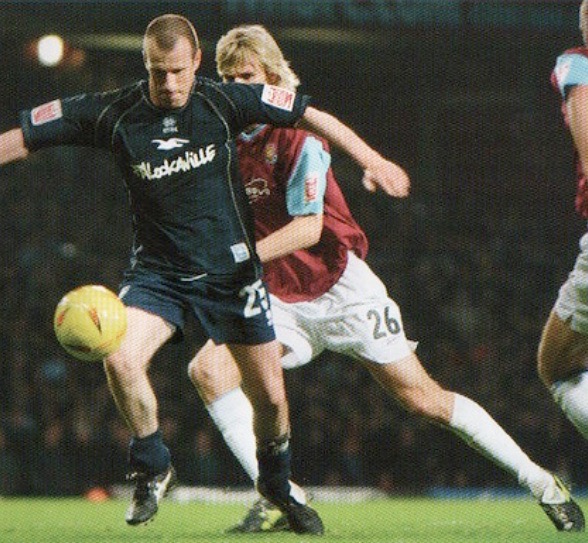
Claridge in action at Upton Park

Centre back Guy Butters headed the only goal of the game on 68 minutes from Richard Carpenter’s pinpoint pass and the Seagulls held out for an unlikely three points. Hammers boss Alan Pardew had to admit: “Technically they were perfect and obviously came here to play deep and try and nick it on a set piece, which is what they did.”

Claridge’s professional career looked to have run its course after he left Millwall in 2003 and became player-manager of Southern League side Weymouth.

But the disappointment of missing out on promotion had seen him and chairman Ian Ridley leave the club and Claridge, at the age of 38, was keen to give league football another go.

McGhee knew the qualities Claridge could bring to his ailing side having been a popular figure as Millwall came close to promotion from the second tier.

The West Ham success didn’t spark a great revival in Albion’s fortunes, however, and there was only one more win (1-0 at home to Rotherham) during Claridge’s month with the club.

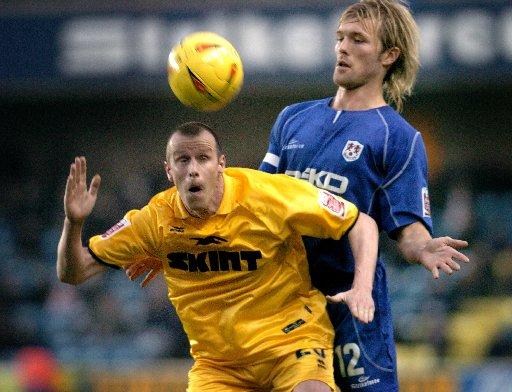
In one of those strange footballing quirks of fate, his fifth and final game for the Seagulls came away to Millwall (see Argus picture at top of article) on 11 December 2004, when Albion lost 2-0.

Claridge said all the right things in a programme feature about him that day, included likening the circumstances of both clubs. “The club has no money and it is tough just to survive, but everyone is in it together,” he said. “At Millwall we had a great team spirit and togetherness, and that is very much the case here.”

Unfortunately, it seemed money was the obstacle that precluded Claridge’s stay at Albion being extended and, after his deal was over, rather than it being one last hurrah, he went on to continue his league playing days at Brentford, Wycombe Wanderers, Gillingham, Bradford City and Walsall.

Then, at the age of 40, and with him needing just one more game to fulfil the landmark of 1,000 professional games, his old club Bournemouth gave him a match against Port Vale on 9 December 2006. No fairy tale, though, as they lost 4-0.

Born in Portsmouth on 10 April 1966, there aren’t many clubs in Hampshire and Dorset that Claridge has not had some kind of association with! Having been brought up in Titchfield, he started out with nearby Fareham Town in 1983. AFC Bournemouth took him on and gave him his debut in 1984 but he only played seven games before moving to Weymouth for three years.

Crystal Palace offered him a route back to the full professional game in 1988 but he didn’t make their league side, instead moving on to fourth tier Aldershot Town.

In two spells with Cambridge United, he scored 46 goals in 132 games. A falling out with manager John Beck saw him sold to Luton Town, and then bought back after Beck’s departure!

Nearly two years later, Birmingham City paid £350,000 to take Claridge to St Andrews and he became one of the club’s most prolific goalscorers, netting 35 in 88 games.

Such form eventually saw him switch to Leicester City and Claridge wrote himself into Foxes’ folklore, scoring winning goals in a play-off final to earn promotion to the elite level, and in the 1997 League Cup Final over Middlesbrough, the last time the competition staged a final replay. That, though, came after an ignominious beginning with Leicester.

McGhee’s successor as manager, Martin O’Neill, signed him for £1.2m in March 1996 and his early form was dreadful. Astonishingly, it seemed his poor start might well have been related to the wrong medication he had been taking for a heart defect for EIGHTEEN years, according to this official Leicester City website report.

In 1998, Leicester sent Claridge on loan to his hometown club, Portsmouth, but, in March 1998, McGhee, then boss at Wolves and seemingly at odds with more established strikers at the club, took Claridge to Molineux for a £350,000 fee. Only five months later he was sold to Portsmouth for £250,000.

Writer Dan Levelle said on an amusing Wolves’ fan website: “He was that amazing food blender you saw at your mate’s house, but you can’t get it to work at all for love nor money.”
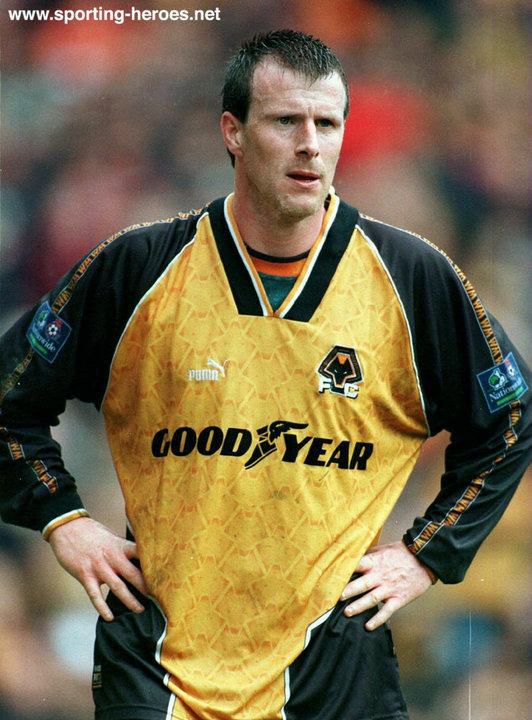
claridge Wolves1

Claridge’s time at Molineux was clearly not appreciated by the Molineux faithful, as Levelle revealed in this 2012 piece.

Even more galling for Wolves followers was that no sooner had Claridge made the switch to Portsmouth, he was scoring a hat-trick against them in a 3-1 win at Fratton Park!

The goals and games came thick and fast for Claridge back on home turf – 34 in 104 – but his reign as player-manager at Fratton Park in 2000 was curtailed after just 25 games.

Remembering the player he’d seen only briefly a couple of years earlier, McGhee, by now in charge at Millwall, offered the striker a lifeline with the Lions, initially on loan and then as a permanent signing.

He joined on a temporary basis to cover a period when current boss Neil Harris was banned following a sending off, but, after he hit the ground running, was then tied to a permanent deal, as this Millwall blog post described in 2016.

Writer Mark Litchfield summed him up brilliantly when he said: “His style was unconventional, to say the least: shirt untucked, one sock down and no shin pads, any naïve defender probably thought they could eat him for breakfast. But hard work was a pre-requisite for Claridge – he wouldn’t give any opposition player a moment’s rest and would more often than not always get the better of them, too.”

Few could doubt Claridge’s enthusiasm for the game, as he told the Bradford Telegraph & Argus during his time in Yorkshire.

Even after achieving the 1,000-game landmark courtesy of Bournemouth, Claridge couldn’t resist the lure of another game, turning out for Worthing, Harrow Borough, Weymouth, Gosport Borough and Salisbury.

Many younger readers will know Claridge as a pundit who worked extensively for the BBC on TV and radio and he now coaches youngsters in Salisbury and Warsash through his own scheme, the Steve Claridge Football Foundation.

Claridge

‘Dynamic and energetic’ international Keith Andrews wanted longer Brighton stay

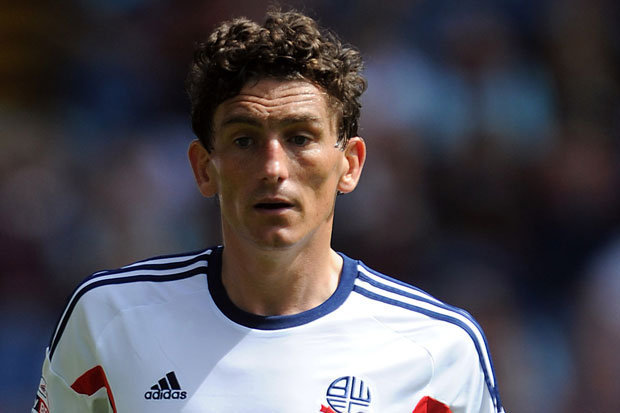
15486REPUBLIC of Ireland international midfielder Keith Andrews was something of a revelation during a season-long loan at Brighton & Hove Albion.

Now plying his trade as a pundit for Sky Sports, Andrews had previously played for the other Albion as well – West Bromwich – although his stay there was even briefer than his time with the Seagulls.

With the looming expectation that back-to-back Player of the Season Liam Bridcutt would shortly follow old boss Gus Poyet to Sunderland (which eventually happened in January 2014), Brighton turned to Andrews to cover the defensive midfield slot in 2013-14.

Arriving at the Amex in August 2013 just short of his 33rd birthday on a season-long loan from Bolton Wanderers, Andrews was not at all happy with the way the Trotters ‘disposed’ of him, telling bbc.co.uk: “Nobody really had the decency to even phone me as I was leaving.

“I think I deserve a little bit more respect than that, I suppose. I always felt I’d done things well at that club, been very professional and treated people like I like to be treated.

“To end on that note was a bit sour but you can’t be surprised by anything in football.”

Even if Seagulls supporters viewed his signing as somewhat underwhelming, Andrews himself was delighted and excited, saying: “If it wasn’t the right move, I certainly wouldn’t have gone and I didn’t feel any pressure to leave.

“It was a move that genuinely excited me. To come to a club that plays in the fashion and style that Brighton do was something that really appealed to me.

“I have still got a huge appetite for the game and I feel I can have a big impact here. I have come into a squad that has a wealth of experience and ability that will make me be the player I know I can be.”

And boss Oscar Garcia sought to dispel any doubts, telling bbc.co.uk: “He is a player with experience at the top level of the English game and international football – including World Cups and European Championships.

“Keith is a player who I know will enjoy the way we like to play. He is a dynamic and energetic player.”

It wasn’t long before supporters began to be pleasantly surprised by Andrews’ contribution on the pitch, and off it the new signing also began to show his aptitude for handling the media.

As early as September 2013, Andrews was speaking eloquently about his teammates, for example telling BBC Radio Sussex his views about striker Leonardo Ulloa.

“He is a handful and has got a bit of everything,” he said. “He is a big player for us at the moment as he is really leading the line on his own. He allows us to bring other players, such as Bucko [Will Buckley] and Ashley Barnes, into play.

“He is very effective and I’ve seen first hand in training how strong he is and what a handful he is to deal with. I have only been here a few weeks but I have been very impressed by the mix we have got in the dressing room. We’ve got experience, youth, foreign, English and Irish.

“It is a good atmosphere and if we hold onto what we have got I am more than confident we can have a very successful season.”

As the months progressed, Andrews became an established part of the side which Garcia ultimately led to the play-offs. In December 2013, Andrews made use of the platform offered by the Daily Mail’s Footballers’ Football Column to expand on his enjoyment of his time at the Amex.

“The club made a big impression on me when I played against them for Bolton last season, in terms of their style of football and their new stadium, and when they came in for me it was a very easy decision in footballing terms,” he said. “It’s not an easy decision, moving 250 miles away from your home in the north-west, but Brighton made it very clear they wanted me and Bolton made it clear they didn’t.

“It came out of the blue, but I felt it was a chance to be a part of something really exciting.”

Garcia’s decision to quit after the failure to get past Derby County in the play-off semi-finals was the catalyst for a number of changes in the playing personnel, although Andrews hankered to make his move to Sussex permanent having been involved in 37 appearances since his temporary move.

keith ands v sheff wedHe registered one goal during that time, an 89th minute equaliser at home to Sheffield Wednesday in October.
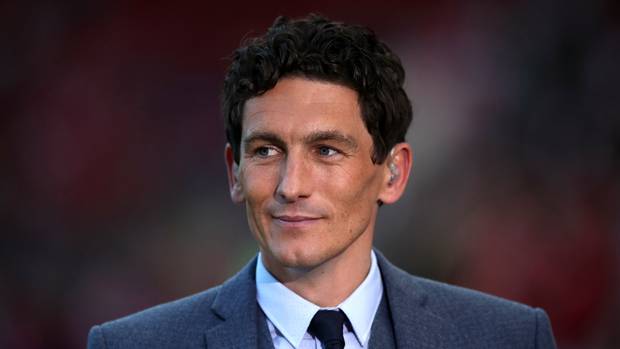
In a May 2014 interview with the Bolton News, he said: “It would be something I’d be interested in. When the people are so good to you and make you feel so welcome, the fans have been fantastic, it’s a one-club town.

“No-one supports anyone else and the attendances are something that I haven’t experienced in football for a long, long time. We’ve got the best attendances in the whole league although other clubs in the league are supposedly bigger.

“It’s a club I would like to stay involved in but contract-wise I’m contracted to a different club next season, I’m only here on loan. These things are not always in your hands and you can’t always dictate where you go and how your career pans out.

“But I would certainly like to stay on at Brighton into the future because I have thoroughly enjoyed it this year.”

The midfielder also reflected positively on his time at the Amex in a blog post for Sky Sports, pointing out: “Although I was only at the Amex for one season I have a lot of affection for the club as I think they try to do things in the right manner for the club to evolve with real sustainability for years to come.

“There are good people involved behind the scenes there, none more so than in the academy. Last season I worked closely with the academy manager John Morling and the development coach Ian Buckman as I was in the middle of my UEFA ‘A’ licence and they couldn’t have done any more to help me.

“It was a great experience to work with them as they prepared weekly and monthly schedules with the rest of the coaches and sports scientists to ensure the young lads had the best chance of developing their games, both technically and physically.

“I was amazed at the schedule a 14-year-old at the club had and a little envious to be honest as it certainly wasn’t like that in my day!”

Born in Dublin on 13 September 1980, Andrews came through the ranks of Drumcondra side Stella Maris before being picked up as a junior by Wolverhampton Wanderers, where he stayed for six years.

He made his first team debut on 18 March 2000 in a 2-1 win at Swindon and at 21 was Wolves’ youngest ever captain in a game against QPR, but he was sent out on loan on three separate occasions, playing briefly for Oxford United, Stoke City and Walsall.

After 72 appearances for the Molineux side, in 2005 he moved on to Hull City, where injury blighted his only season with them He then had a two-year spell with Milton Keynes Dons, where he had a productive midfield partnership with Alan Navarro, and he assumed the captaincy of Paul Ince’s side.

His second season was a huge success as the Dons won promotion to League One; Andrews scoring the goal which secured the success. He also scored in the club’s 2-0 win over Grimsby Town in the Football League Trophy at Wembley.

Andrews was chosen in the PFA Team of the Year, won the League Two player of the Year Award and was listed 38th of FourFourTwo magazine’s top 50 Football League players.

The Irishman followed his old Dons boss Ince to Premier League Blackburn Rovers in September 2008 and, two months later, at the comparatively late age of 28, made it onto the international scene with Ireland, making his debut as a substitute in a 3-2 friendly defeat against Poland.

It was the first of 35 international caps. He was involved in Ireland’s 2010 World Cup qualifying campaign and although the country was winless at the 2012 European Championship in Poland and Ukraine, Andrews was named FAI Player of the Year for 2012.

Meanwhile, Andrews’ third season at Blackburn (2010-11) had been curtailed by injury, restricting him to just five Premier League appearances, and in August 2011 he went on a half-season loan to Ipswich Town.

A permanent switch looked on the cards but on deadline day of the January 2012 transfer window he ended up joining West Brom on a six-month deal. After 14 Premier League appearances for the Baggies, his contract came to an end and his next port of call was newly-relegated Bolton Wanderers, who he joined on a three-year contract in the summer of 2012.

Owen Coyle was the manager at that time but his tenure came to an abrupt end in October that year. Although Andrews played 25 times under his successor, Dougie Freedman, the following season he was edged out by the signing from Liverpool of Jay Spearing.

After his loan season with Brighton, Andrews had a similar arrangement at Watford but he didn’t enjoy the same success there and ended up curtailing the deal and going back to MK Dons on loan for the latter part of the season.

When the curtain came down on his playing career at the end of the 2014-15 season, he’d completed 413 career appearances and scored 49 goals.

He became first team coach at MK Dons and harboured ambitions of becoming manager when Karl Robinson departed, but he was overlooked and began working as a coach with the junior Irish international teams, and turned to punditry with Sky Sports.

ipanews_045350c2-6dc7-4ca9-82e8-cb2036cb6b94_1

Paul McShane wrote his name in Albion’s history in one season

McShane

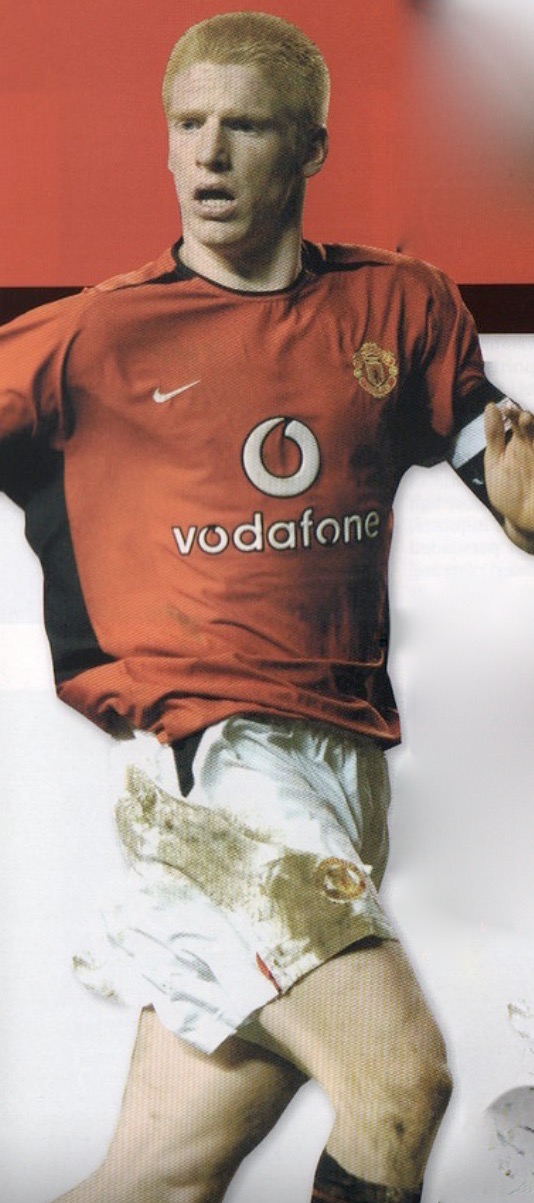
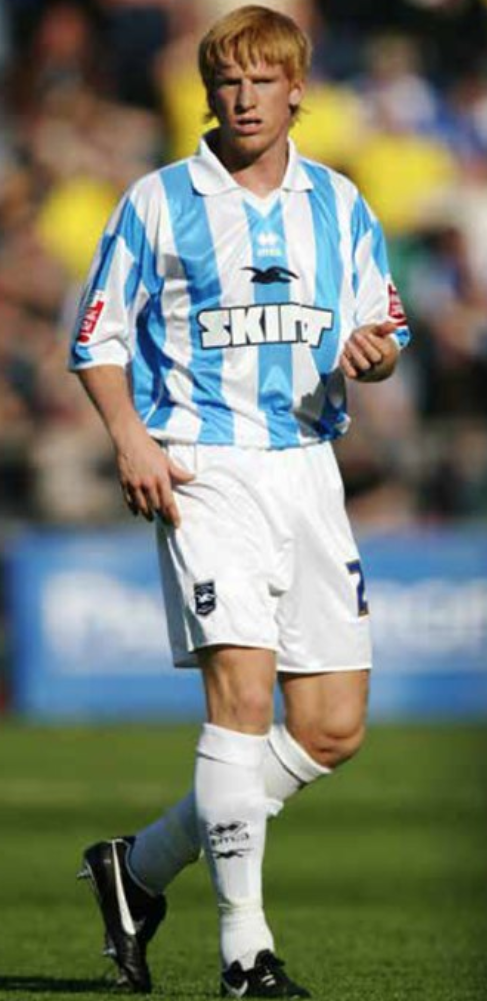
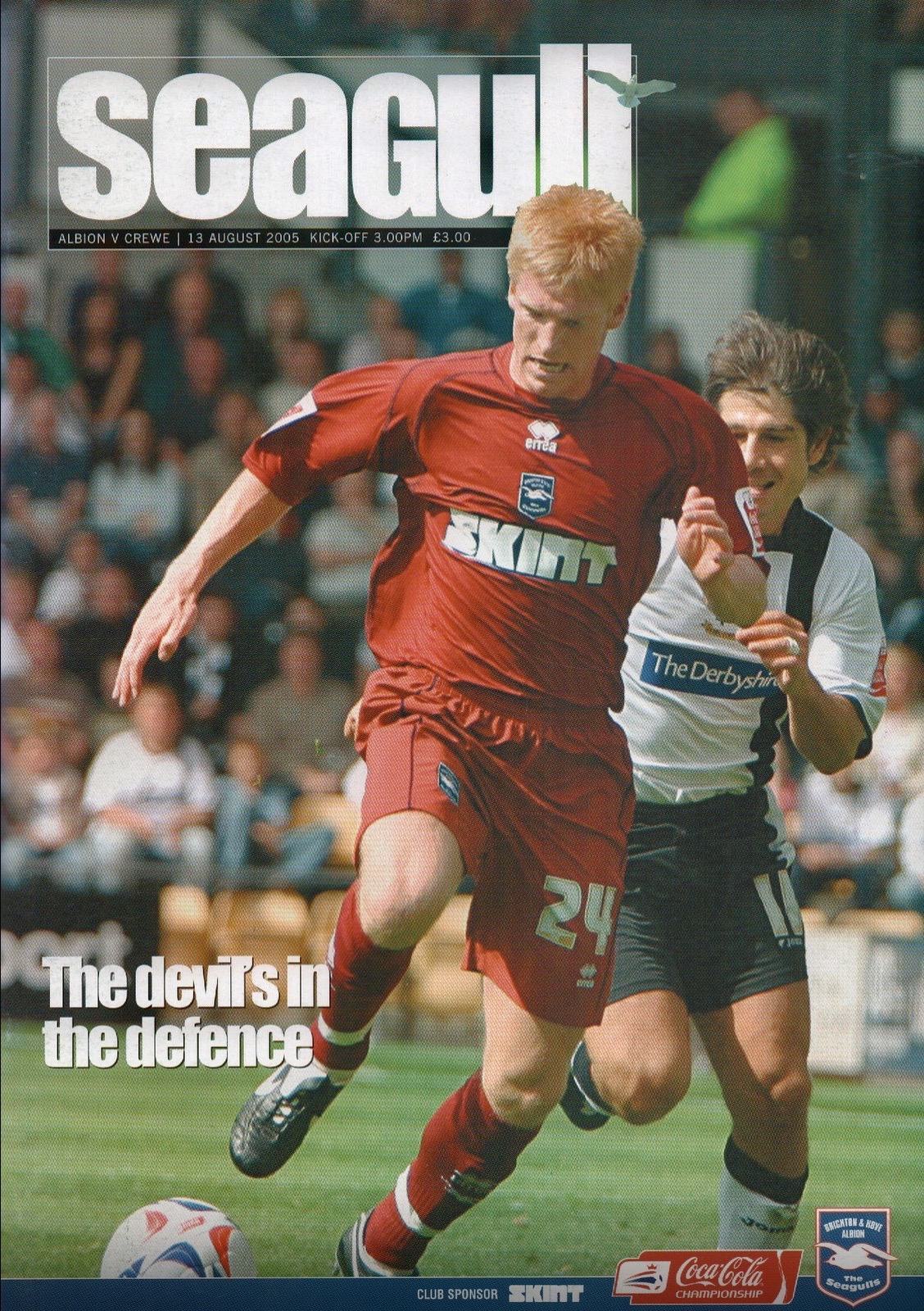
FLAME-HAIRED Irish centre back Paul McShane was a complete revelation during a season on loan to Brighton from Manchester United.

The 2005-06 season ended ingloriously for the Seagulls but McShane was imperious, given a platform to launch a career which saw him play most of it in the second tier of English football, and almost 100 times at the top level, together with earning him 33 full caps for his country.

Although he was given a squad number by United, and had been selected by Sir Alex Ferguson for pre-season matches, McShane didn’t get the chance to play any proper competitive football for United’s first team.

United reserve team manager, Brian McClair, a former Celtic teammate of Albion manager, Mark McGhee, could see the benefit of giving McShane first team football at a decent level and an initial half-season loan was agreed, then, in January, it was extended to the season’s end.

Brighton were missing the long-term injured Adam Hinshelwood and although veteran Jason Dodd had been signed to add experience to the defence, his season was to be plagued by injury, so McShane was a near permanent fixture alongside Guy Butters in the centre of the back four.

The young defender shared a flat in Hove with fellow Republic of Ireland international Wayne Henderson and in an early season profile article, Butters was quick to acknowledge the quality of the youngster. “He is an excellent player. He’s only 19 but you see he’s got that Premiership quality about him,” said Butters. “He’s very confident; he likes to bring the ball down and play.”

The former Spurs and Portsmouth defender said he reminded him of Richard Gough, a former teammate at Tottenham. “He’s strong; not the tallest, but makes up for that with his great leap. Very good on the ball, quick and great in deep positions.”

McShane coverHis passion and aggression sometimes got the better of him and the only reason he wasn’t ever present was a penchant for bookings – 12 over the course of the season – which earned suspensions, and a couple of injury-induced absences. And he was missed when he wasn’t available.

After he’d picked up an ankle injury that required him to return to Old Trafford for treatment, the matchday programme put together an article extolling the merits of the young defender in which it said: “Paul’s cool reading of the game and his ability to overcome some of the most effective attacking players in the division marked him out as a fine prospect, and he proved competitive in the air and on the ground, his pace and positional sense being a real asset.”

In their end-of-season player ratings, the Argus summed up his contribution thus: “Talent and determination in abundance. Rash in the tackle at times but that is a product of his insatiable hunger. Will be sorely missed next season.”

Such was the impact of McShane’s outstanding performances over the course of the season that he was selected as the Player of the Season, the first time a loan player had ever been given the honour.

Butters was convinced it was the right choice and told the Argus: “He’s done really well for us. He’s scored some vital goals. Obviously the one away to Palace springs to mind.

“He has been solid all-round. He is very aggressive, ultra-competitive and hates losing, even in training.”

It’s perhaps inevitable that any player who scores a winning goal against arch rivals Crystal Palace earns a place in Albion folklore. McShane’s scruffy effort, which appeared to go in off his shoulder, at Selhurst Park on 18 October 2005 proved to be the only goal of an intense scrap but how it went in became irrelevant as time passed.

“Crystal Palace was a special night, because of the rivalry,” said McShane. “It was a great atmosphere and scoring that goal was brilliant.”

He scored three other goals over the season, including a crucial opener in a 2-0 win away to Millwall as the Seagulls put up a valiant, but hopeless, fight to avoid the drop, but it will always be the goal at Selhurst that fans remember most.

McShane confessed in an interview with Andy Naylor in the Argus that relegation had hurt, but the season for him had been “brilliant” and “a great experience”.

He said: “It has given me a chance to get out there and make my name in the Championship and I think I have done that well enough.

“It has given me a great opportunity to get the experience I need to take back to Manchester and hopefully give it a good crack there, because I’ve learnt so much this season.

“Brighton have been brilliant to me. They’ve treated me really well. They’ve made me feel very welcome, the fans and the people around. That has helped a lot. It has been great.”

In conclusion, he told Naylor: “The club is part of me now. You never know what will happen in the future but Brighton will always have a place in my heart.”

Perhaps rather presciently, Naylor commented: “McShane’s fierce commitment is unlikely to be seen in an Albion shirt again. If he does not make it at Manchester United, there are sure to be Championship clubs interested in signing him.”

With Rio Ferdinand and Nemanja Vidić United’s regular centre back pairing, and Wes Brown as back-up, it was always going to be a difficult ask to dislodge them, and in August 2006 McShane left Old Trafford together with goalkeeper Luke Steele as makeweights in the deal that took goalkeeper Tomasz Kuszczak to United.

mufcmcshaneMcShane and Steele had both been members of United’s winning FA Youth Cup team of 2003, a side which also included Kieran Richardson and Chris Eagles, who went on to make names for themselves in the game.

McShane, born in Wicklow on 6 January 1986, played hurling, Gaelic football, rugby and badminton (his dad, Sean, and uncle played Gaelic football for Dublin) in his early years in Ireland but eventually began to demonstrate his soccer prowess with junior clubs and was playing for St Joseph’s Boys AFC in Dublin when United snapped him up in 2002.

“I was 16 when I signed; I wasn’t going to until I went to Old Trafford with my mum and dad,” McShane said. “It was so down to earth for such a big club. I would be getting the best coaching and training, also playing with some of the best players in the world.”

He added: “Alex Ferguson has been brilliant to me and my family; a very nice man. He just cracks jokes all the time.”

After his success with United’s Youth Cup team, McShane’s first senior football came in 2004 during a brief loan spell with Walsall, where he played four games and scored once.

At Championship West Brom, McShane played 42 games in the 2006-07 season as the Baggies finished fourth and agonisingly lost to Derby County in the play-off final.

Before the new season got underway, McShane was one of 12 new signings manager Roy Keane made for Sunderland, newly-promoted to the Premier League.

He scored an own goal in only his second league game but Sunderland salvaged a 2-2 draw at Birmingham and he went on to make 21 appearances (plus one as sub) as the Black Cats finished just three points clear of the drop zone.

In the following season, McShane went on loan to Premier League new boys, Hull City, and having played 19 games for the Tigers made the move permanent the following season. The KFC Stadium would be his home for the next six years, although he was sent out on loan twice, to Barnsley in 2011 and Crystal Palace in 2012.

In the final game of the 2012-13 season, McShane scored a vital goal for Hull which guaranteed them promotion back to the Premier League, and he earned a new two-year contract from manager Steve Bruce.

However, with Curtis Davies, Alex Bruce and James Chester ahead of him, his appearances were limited, although he did get on as a substitute in Hull’s 3-2 FA Cup Final defeat to Arsenal.

McShane featured 23 times as Hull relinquished their Premier League status in 2015, and he was among six players released by the club, including Liam Rosenior, who moved to Brighton, of course, and goalkeeper Steve Harper, who’d had a short loan spell at Brighton from Newcastle.

McShane wasn’t without a club for long, and joined Reading in July 2015, with manager Steve Clarke telling the club website: “I knew that Paul’s contract with Hull City was due to expire and was always monitoring the situation. When we met up earlier in the summer for a chat I knew that Paul would be a good signing for Reading FC and I’m pleased that we managed to get the deal completed.

“As well as his obvious talents as an experienced defender who is aggressive both in the air and on the ground, I felt that he was a good character to bring into our squad.
“Paul has gained good experience at many clubs and, like Stephen Quinn, was an important part of a promotion-winning team. He has a winning mentality and it will be good for our two young central defenders, Michael Hector and Jake Cooper, to train and play alongside Paul.”

After four years at Reading, over which he played 103 games, in 2019 McShane switched to League One Rochdale.

In July 2021, McShane returned to Man Utd as player-coach for the under 23 side and made two appearances for the under 21s in the EFL Trophy as an over-age player. When he retired from playing at the end of the 2021-22 season he took up the role of professional development phase coach (covering under 18s through to under 23s).

“I’m calling it a day playing now,” he told manutd.com .”I’ve had 20 years playing and I’ve come back into the club as a player-coach in the under 23s. It’s been a great year and great experience but now it’s time to fully focus on the next stage of my career, which will be in coaching.

“It’s amazing how things work out. It’s a great way to end my career, to come back here and help the future generation with their careers. It was perfect, to be honest with you, when this role came about, and I’m grateful to the people who made it happen. I think it’s a great way to end my playing days.”

Goalscoring Busby Babe Alex Dawson my first Brighton hero

ALEX DAWSON remains the youngest player to have scored a hat-trick in a FA Cup semi-final.

He was just 18 years and 33 days on 26 March 1958 when his perfect treble (header, right foot and left foot shots) for a makeshift post-Munich Manchester United helped to secure a 5-3 win over Fulham in a replay in front of 38,000 fans at Highbury.

Eleven years later he scored twice for Brighton & Hove Albion in what for many might have been a meaningless Third Division match against Walsall.

But for me, it was the beginning of a lifelong journey supporting the Albion. It was the very first Brighton game I saw and the burly Dawson, wearing number 9, became an instant hero to an impressionable 10-year-old.

Little did I know then of the famous background of the man who played a big part in Brighton’s 3-0 win over the Saddlers that afternoon.

What I’ve learned since makes him even more of a hero, and it’s evident that fans of other sides he played for remembered him with great fondness when learning of his death at the age of 80 on 17 July 2020.

Returning to that 1958 match, it was just six weeks after the Munich air disaster that claimed the lives of eight of United’s first choice team – Dawson’s pals – so youngsters and fringe players had to be drafted into the side to fulfil the remaining fixtures that season.

Thirteen days after the accident, Dawson took his place beside survivors Bill Foulkes and Harry Gregg and scored one of United’s goals as they beat Sheffield Wednesday 3-0 in the fifth round of the Cup. He scored again as United drew 2-2 with West Brom in the sixth round, before winning through 1-0 in a replay to go up against Fulham in the semi-final.

Dawson told manutd.com: “In our first game with Fulham (played at Villa Park), Bobby Charlton scored twice in a 2-2 draw, and I was put on the right wing. I was a centre-forward really and, when we played the replay at Highbury four days later, I was back in my normal position.

“Jimmy (Murphy) said before the game: ‘I fancy you this afternoon, big man. I fancy you to put about three in.’ I just said: ‘You know me Jim, I’ll do my best,’ but I couldn’t believe it when it happened.

“The first was a diving header, I think the second was a left-footer and the third was with my right foot.

“It was a long time ago, of course, and it’s still a club record for the youngest scorer of a hat-trick in United’s history. Records are there to be broken and I’m surprised that it’s gone on for over half a century.

“I’m a proud man to still hold this record. Even when it goes, nobody can ever take the achievement away from me.”

Also in the United side that day was Freddie Goodwin….and he was the manager of that Brighton side I watched for the first time v Walsall in February 1969.

Born in Aberdeen on 21 February 1940, Dawson went to the same school as United legend Denis Law, but his parents moved down to Hull where he went to Westbourne Street School. Dawson joined United straight from Hull Schoolboys.

Dawson and future Preston and Brighton teammate Nobby Lawton were both on the scoresheet as United beat West Ham 3-2 in the first leg of the 1957 FA Youth Cup Final and Dawson scored twice in the 5-0 second leg win. West Ham’s side included John Lyall, who later went on to manage them.

On redcafe.net, Julian Denny recalled how Dawson once scored three hat-tricks in a row for a United reserve team that was regularly watched by crowds of over 10,000.

He scored on his United first team debut against Burnley in April 1957, aged just 17, and in each of the final two matches that season (a 3-2 win at Cardiff and a 1-1 draw at home to West Brom) to help win the title and secure United’s passage into Europe’s premier club competition.

They were the first of 54 goals in 93 United appearances, but was it all too much too soon? Some say Dawson’s career with United may have panned out differently if he hadn’t been thrust into first team action at such a young age.

Was he mentally scarred by the loss of those teammates, in the knowledge he could well have been with them on that fateful journey?

Let’s not forget he was just short of his 18th birthday when the accident happened. In an interview with Chris Roberts in the Daily Record (initially published 6 Feb 2008 then updated 1 July 2012), he recalled: “I used to go on those trips and had a passport and visa all ready but the boss just told me I wasn’t going this time. I had already been on two or three trips just to break me in. I know now how lucky I was to be left in Manchester. The omens were on my side.”

Dawson went on to describe the disbelief and the feelings they had at losing eight of the team, including Duncan Edwards several days later.

A Daws MU BW“We were all so close and Duncan was also a good friend to me before the accident,” said Dawson. “Duncan was such a good player, there is no doubt about that. He was a wonderful fellow as well as a real gentleman.

“I will never, ever forget him because he died on my birthday, 21 February, and before that he was the one who really helped me settle in.”

Dawson gradually became an increasingly bigger part of the first-team picture at United, making 11 appearances in 1958-59 and scoring four times. The following season he scored 15 in 23 games then went five better in 1960-61, scoring 20 in 34 games.

He was at the top of his game during the last week of 1960 when he scored in a 2-1 away win at Chelsea on Christmas Eve, netted a hat-trick as Chelsea were thumped 6-0 at Old Trafford on Boxing Day, and then scored another treble as United trounced neighbours City 5-1 on New Year’s Eve.

A fortnight later he had the chance to show another less well-known string to his footballing bow…. as a goalkeeper!

It was recalled by theguardian.com in 2013. When Tottenham were on their way to the first ever double, and had an air of near-invincibility about them, they arrived at Old Trafford having lost only once all season, and had scored in every single game.

Long before the days of a bench full of substitutes, when ‘keeper Harry Gregg sustained a shoulder injury, Dawson had to take over in goal.

Dawson excelled when called upon, at one point performing, according to the Guardian’s match report, “a save from Allen that Gregg himself could not have improved upon”.

The article said: “Tottenham’s attempts to get back into the game came to nought and Dawson achieved what no genuine goalkeeper had all season: keep out Tottenham’s champions-elect. In the end, there were only two games all season in which Spurs failed to score, and this was one of them.”

Tottenham’s north London neighbours, Arsenal, finished a disappointing 25 points behind Spurs in 11th place, but United manager Matt Busby had been keeping tabs on the Gunners’ prolific centre forward David Herd (Arsenal’s top scorer for four seasons), and in July 1961 took him to Old Trafford for £35,000. It signalled the end of Dawson’s time with United.

When the new season kicked off, Dawson had a new apprentice looking after the cleaning of his boots….a young Irishman called George Best. In his 1994 book, The Best of Times (written with Les Scott), Best said: “Alex Dawson was a brawny centre forward whose backside was so huge he appeared taller when he sat down. To me, Alex looked like Goliath, although he was only 5’10”. What made him such an imposing figure was his girth.

“He weighed 13st 12lbs, a stone heavier than centre half Bill Foulkes who was well over 6ft tall. What’s more, there wasn’t an ounce of fat on Alex – it was all muscle.”

Best’s responsibilities for Dawson’s boots didn’t last long, however, because in October that year, Busby sold the centre forward to Preston for £18,000.

During a prolific time at Preston, Dawson scored 114 goals in 197 appearances, and became known as The Black Prince of Deepdale. In the 1964 FA Cup Final at Wembley, Dawson scored in the 40th minute but Preston lost 3-2 to a Bobby Moore-led West Ham United.

The Preston captain that day was his former Man Utd teammate Lawton, who he subsequently joined at Brighton.

Lawton, now no longer with us, mentioned “that great striker Alex Dawson” in an interview he gave to the Lancashire Evening Post, published in May 2004.

“I’d known Alex since we were both on the groundstaff at Old Trafford,” Lawton recalled. “He was a bull of a centre-forward and was a Deepdale hero.

“He’s a lovely man and I was best man at his wedding. He hasn’t changed at all, and we are still great friends.

“Alex and the rest of the team would have graced any Premiership side today.”

Clearly Preston fans felt the same way. ‘Albertan’ on pne.net in 2012 said: “Alex Dawson was a super player … He was the complete centre forward – powerful, mobile and lethal with either foot or his head. He was also brave, committed and characterful.”

While ‘sliper’ on the same forum added: “In his prime Dawson was a powerhouse and great to watch. I can safely say I’ve never seen a better header of a ball at Deepdale.”

‘Curlypete’ recalled: “You could literally see goalkeepers tremble when Dawson was running at them, it was either the ball, ‘keeper or more likely both who ended up in the net.”

In 1967, Dawson took the short journey to Bury FC where his goalscoring exploits continued with 21 goals in 50 appearances. I was intrigued to see in a team photo of the Bury squad before the 1968-69 season, a young Lammie Robertson sitting at Dawson’s feet.

In December 1968, the aforementioned Freddie Goodwin had just taken over as Brighton manager and he paid Bury £9,000 to make his old United teammate his first signing at the Goldstone. An early programme profile revealed the surprising news that Dawson also had a sideline as a men’s hairdresser.

He certainly added a cutting edge to Albion’s attack, finding the net no fewer than 17 times in just 23 games, including three braces and four in an away game at Hartlepool. Dawson was no mean cricketer, either. An all-rounder who used to play for the Newton Heath club, as well as a collection of half-centuries to his credit, he once took eight wickets for 35 runs as a lively fast-medium bowler.

The following season, Goodwin added Allan Gilliver to the strikeforce and he outshone Dawson in the scoring stakes, although the Scot still scored 12 in 36 games.

As is so often the case, it was a change of manager that marked the end of his time with the Albion. With Goodwin departed for Birmingham, replacement Pat Saward didn’t give the old-timer much of a look-in and he went out on loan to Brentford where he showed he could still find the back of the net with familiar regularity.

Greville Waterman, on bfctalk.wordpress.com in July 2014, recalled: “He was a gnarled veteran of thirty with a prominent broken nose and a face that surely only a mother could love, but he had an inspirational loan spell at Griffin Park in 1970 scoring seven times in eleven games including the winner in that amazing late, late show FA Cup victory against Gillingham.

“Typical of the times at Griffin Park, he departed after his loan spell as apparently the club was unable to agree terms with him. A classic example of both parties suffering given that Dawson never played another Football League game and Brentford lacked a focal point in their attack until the arrival of John O’Mara later that same season.”

Released by the Albion at the end of the 1970-71 season, Dawson’s final footballing action was with non-league Corby Town.

Nevertheless, he could look back on a fantastic career as a goalscorer, with a strike rate the envy of many a modern day forward.

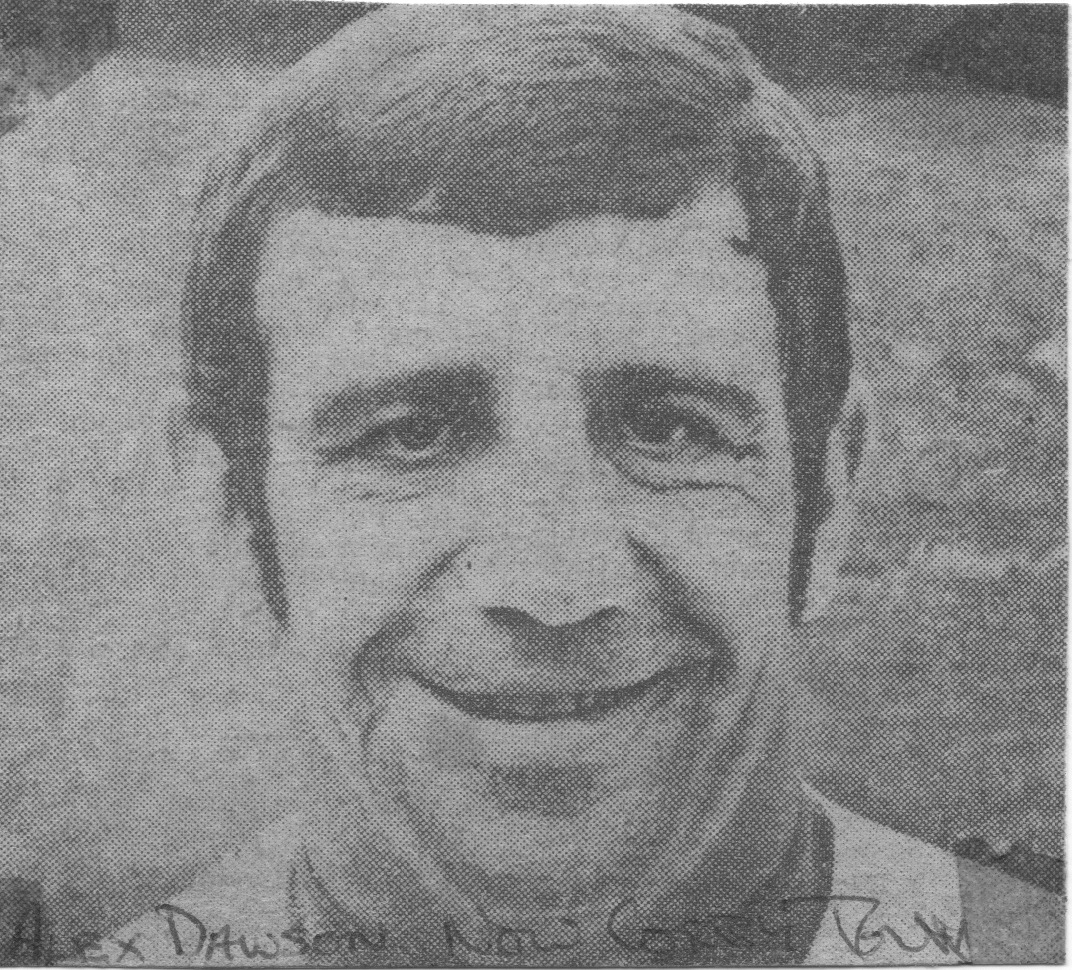
Pictures: Top: Alex Dawson portraits – in the 1969-70 and 1970-71 kits.

  • A montage showing Dawson:
    • scoring the first of his goals in the 1958 FA Cup semi final
    • in a Bury line-up (from the Bury Times) with future Albion forward Lammie Robertson also encircled.
    • powering a header for the Albion.
    • in a portrait from pnefc.net.

Eire captain Tony Grealish swapped one Albion for another

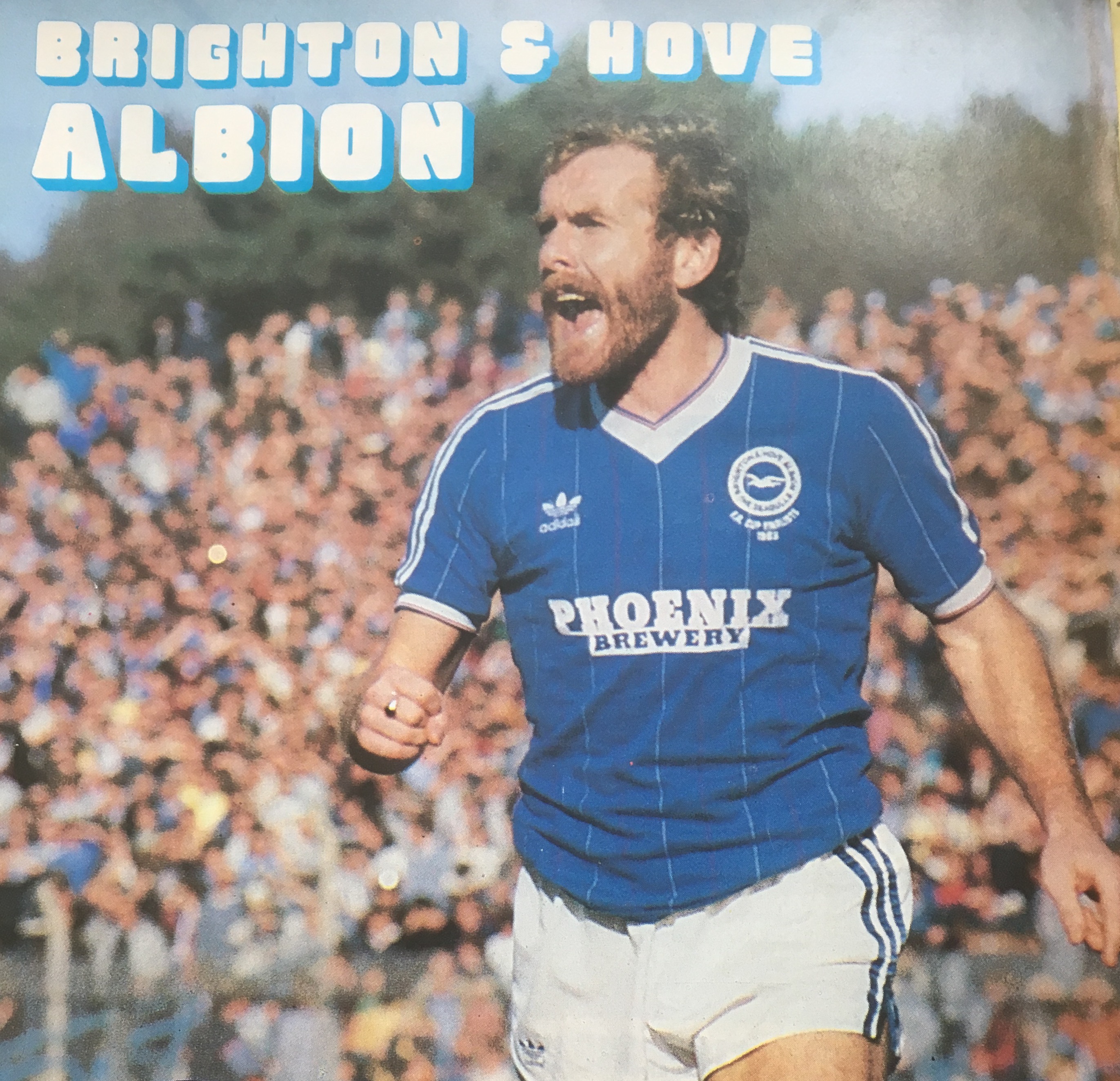
1 main pic TG cover boyTHE PLAYER who led out Brighton at Wembley for the 1983 FA Cup Final against Manchester United was an experienced Republic of Ireland international who went on to play for West Bromwich Albion.

Tony ‘Paddy’ Grealish, sadly no longer with us having died of cancer aged only 56 in 2013, was given his international debut against Norway in 1976 by the legendary Johnny Giles, who knew a thing or two about midfield play.

In fact it was Giles, in his second spell as WBA manager, who took Grealish to The Hawthorns in 1984 as the break-up of the Brighton cup final squad continued.

After his untimely death, Giles told the Irish Times: “I obviously knew him at that stage from the Ireland set-up and knew what to expect.

“He wasn’t the classiest of players but he was one of the most hard working and you knew exactly what you were going to get.

“He was a great lad; a social animal who liked a drink after a game but gave you absolutely everything during it.”

Born in Paddington, London, on 21 September 1956, Grealish qualified to play for the Republic through his father, Packie, who was born in Athenry, Galway, and his mother Nora’s parents, both from Limerick.

He began his career across the other side of London, at Orient, and played 171 games for the Os, one of the last being the memorable 3-3 draw against Brighton in 1979 which featured on The Big Match. One of his teammates that day was Henry Hughton, brother of subsequent Brighton manager, Chris.

The previous year Grealish had been part of the Orient side that made it through to the FA Cup semi final against Arsenal, played at Stamford Bridge, but they were beaten 3-0 (the Gunners lost 1-0 to Ipswich in the final).

In 1979, David Pleat paid £150,000 to take him for Luton Town for whom he played 78 games in two seasons.

The managerial upheaval at the Goldstone Ground in the summer of 1981 saw the arrival of Mike Bailey in place of Alan Mullery, and one of his first moves was to bring in Grealish as part of a swap for Brian Horton, the ageing, inspirational captain who led Brighton from the old Third Division to the First.

Grealish was definitely what you’d call a players’ player, someone who did the hard work in the engine room of the team to enable players with more flair to shine.

He talked about just that scenario in an interview with the Daily Mail after Brighton had beaten Sheffield Wednesday at Highbury in that 1983 cup semi-final.

Referring to an incident when he’d charged down a free kick, he told Brian Scovell: “That’s my job. I’m the bloke with the ugly mug so they get me to do it.”

It was Grealish who rolled the ball to Jimmy Case to smash home that memorable opening goal and he relished his teammate’s strike, saying: “It wasn’t just the power, it was the way the ball swerved away from the ‘keeper that did it.”

After the disappointment of missing out in 1978, reaching the cup final was extra special for Grealish and he found himself thrust centre stage as a result of usual captain Steve Foster’s suspension from the first match.

Even all this time later, people remember how Grealish wore the trademark Foster headband as he led Brighton out. “It was a small protest over Steve’s exclusion from the final,” he told the media after the game.

In the News of the World, Fred Burcombe began his report: “Tony Grealish, Brighton’s stand-in skipper, yesterday entered the Wembley arena with a gesture of defiance and left for home in a blaze of confidence.”

In fact, Grealish was involved in both Brighton’s goals in the 2-2 draw. James Mossop reported in the Sunday Express: “Brighton stayed on the attack after a corner. Tony Grealish collected the ball and his teammates began to fan out, all eager for a pass. He chose Neil Smillie on the right. Smillie gave young Gary Howlett the chance to centre – and as the ball curved in Smith met it ideally, sending his header over the ‘keeper’s outstretched forearm and into the net.”

And with the clock ticking down, United by now 2-1 up, it was Grealish who drilled the ball hard into the penalty box where Gary Stevens controlled it and fired the ball past Gary Bailey to net the equaliser.

Grealish lived in Peacehaven during his time with the Seagulls and clearly enjoyed the social life with his teammates.

“The atmosphere at Brighton is particularly good,” he told Tony Norman in a club programme feature. “There’s always plenty going on. I enjoy our Wednesday golf games. There’s often as many as 10 of the players there. That’s always a laugh.”

Following relegation to the second tier, the Seagulls squad was broken up bit by bit; Gary Stevens and Michael Robinson going first. Grealish lasted a little longer and played two thirds of the 1983-84 season before being sold to West Brom in March.

It didn’t stop him being selected alongside teammate Case in the PFA representative side that season (the centre half selection was Mick McCarthy and the forwards included Kevin Keegan and Mark Hateley).

In total, Grealish played 116 games plus five as a sub for Brighton, and his last game for the Seagulls saw him score in a 1-1 home draw with Manchester City, who he would subsequently join in 1986-87. He played 65 games for West Brom, and 11 times for City, who also had former Seagull Neil McNab in their line-up.

In August 1987, Grealish moved to Rotherham United and played 110 games for the Millers before moving to Walsall (36 appearances).

During his time at Rotherham, in 1988-89, he once again found himself in the PFA representative selection, this time for Division Four. Grealish then did the rounds of various non-league clubs in the Midlands: Bromsgove Rovers, Moor Green, Halesowen Harriers, Sutton Coldfield and Evesham United.

He returned to Bromsgrove Rovers as player-manager before calling it a day, and then worked in the scrap metal business. His career record showed he played a total of 589 league games, plus 45 for the Republic of Ireland; 17 of them as captain.

Little surprise, then, that when he died in 2013, the Football Association of Ireland paid a warm tribute. FAI president Paddy McCaul said: “He will be remembered as a great servant of Irish football who was part of the international set-up under John Giles and Eoin Hand that came so close to qualifying for major tournaments and helped change Ireland’s fortunes at that level of the game.”

FAI chief executive John Delaney added: “Tony Grealish was one of my footballing heroes when I was a child and I always remembered him as a great competitor who always gave his all for Ireland.”

It was during Alan Kelly’s brief reign in charge, in 1980, that Grealish was first made Eire skipper – against Switzerland – and he was a central figure in successor Eoin Hand’s team.

“He was a great character,” said Hand. “I don’t think I ever selected a team during my time in charge that didn’t have him in it.

“I think it’s fair to say he raised his game when he was playing international football. I’d say he was a great club player but the commitment he gave for Ireland; he just couldn’t have given that on a twice weekly basis playing club football. He gave absolutely everything.

“He contributed so much (including eight international goals), had an infectious enthusiasm for it all. If ever there was someone who showed how proud he could be to represent his country then Tony was it. He was very much part of it all; a great ambassador; very generous.”

Hand added: “He was a great example to others in the way he dealt with people; other players, supporters, kids….a really wonderful guy. I was very lucky to have him around when I was manager.”

3.TG shoot cover2 Football Past on Twitter

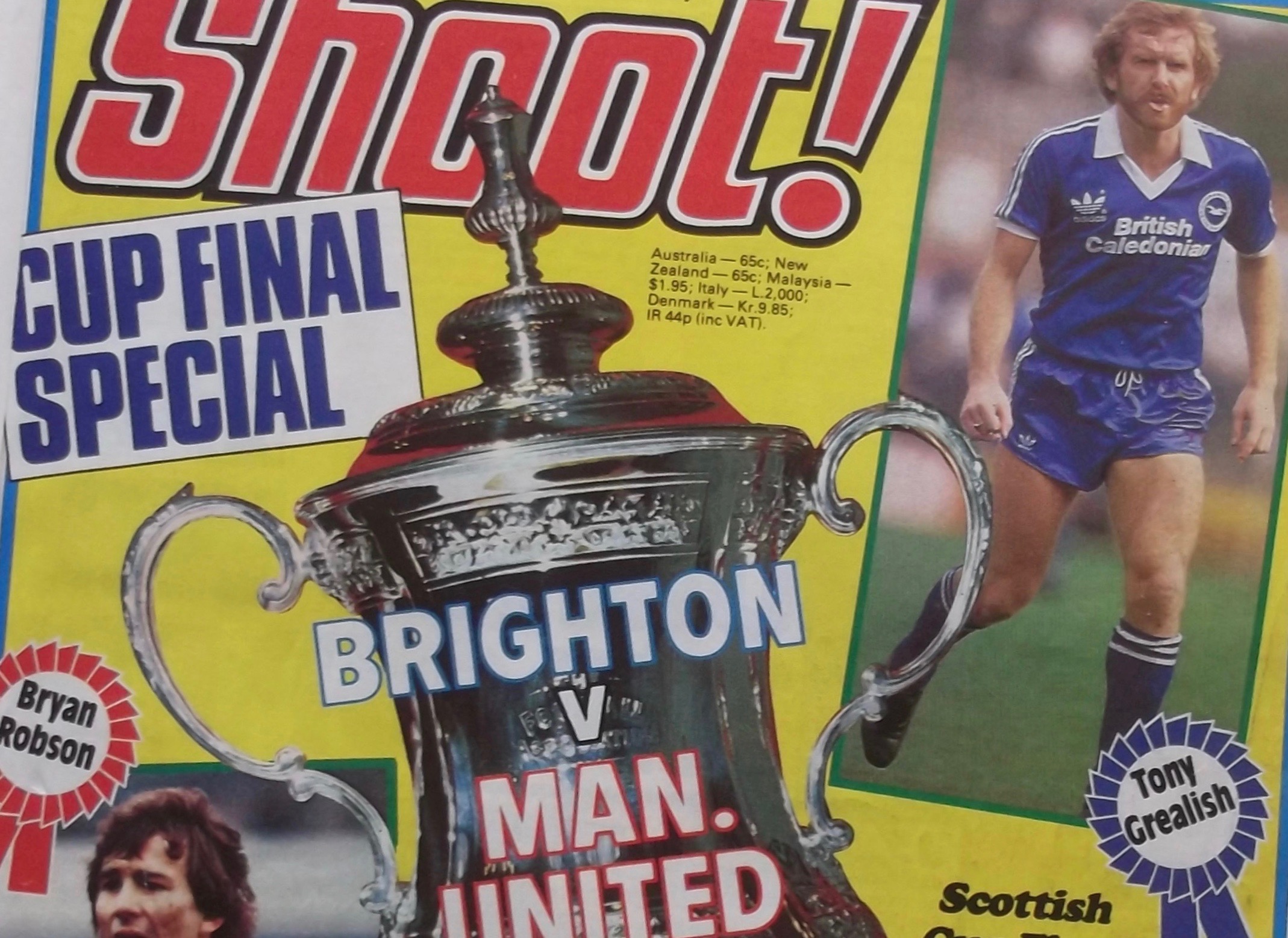
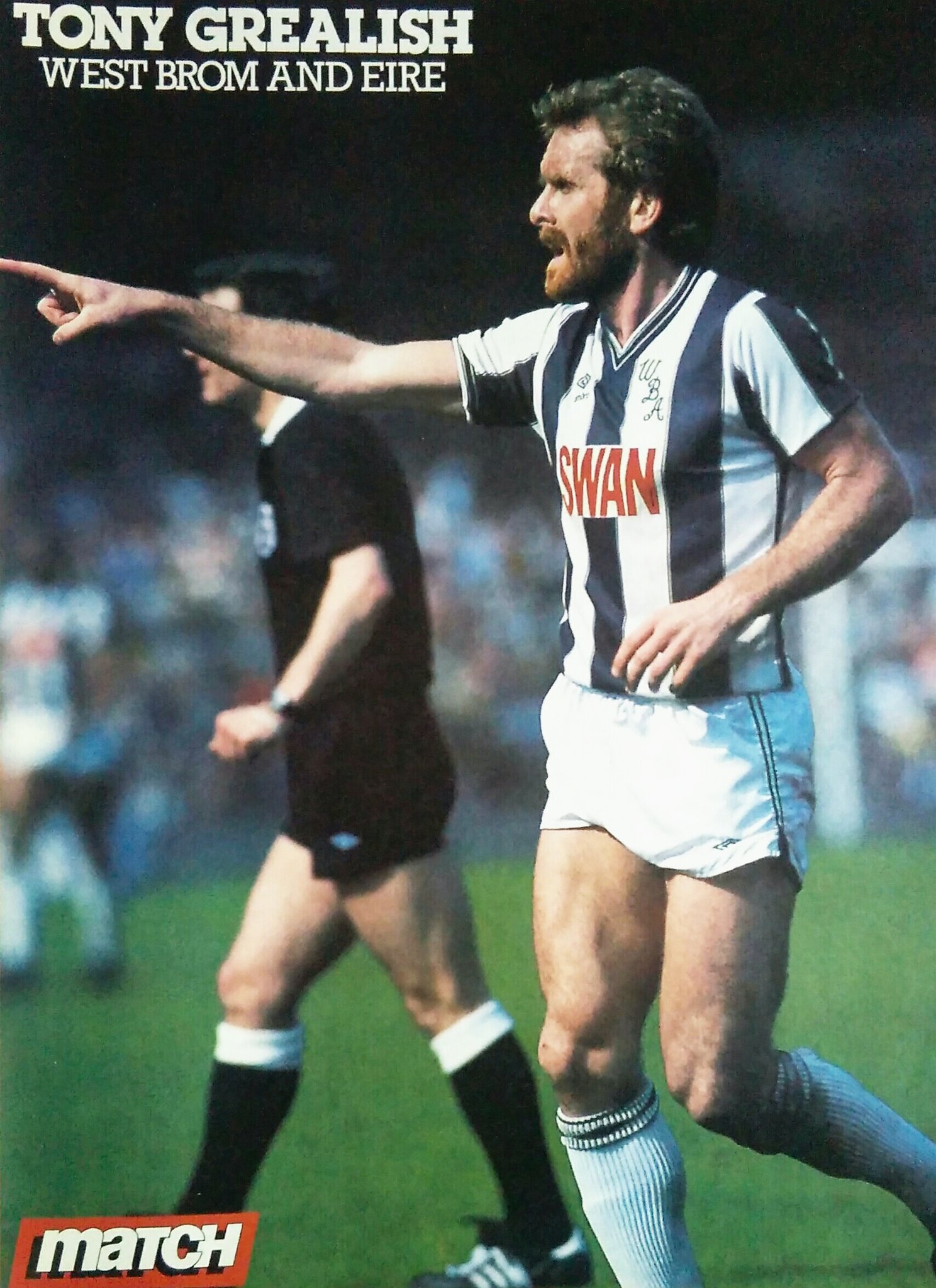
  • Pictures from my scrapbook show Grealish on an Albion matchday programme cover, a Match magazine pic of him in WBA colours via Football Past on Twitter, on the front of the 1983 FA Cup Final preview edition of Shoot!, and, below, a montage of various headlines and images.

Why centre forward Alex Dawson’s boots were kept spotless by George Best

Dawson BHAThe mercurial footballing genius George Best used to clean the boots of the centre forward who scored twice in the very first Albion game I saw.

By the time of that 3-0 win v Walsall in 1969, Alex Dawson was on his way down the footballing pyramid, just over a decade after he came mighty close to perishing with some of his Manchester United teammates in the Munich air disaster.

Only five years earlier the swashbuckling centre forward had scored twice in the FA Cup Final at Wembley as his Preston North End side lost 3-2 to a Bobby Moore-led West Ham United.

The former Manchester United centre forward arrived at the Goldstone through a connection made at Old Trafford in that post-Munich era. Freddie Goodwin, another pitched from the United reserves into the first team as a consequence of the tragedy, made Dawson his first signing when he took over as Brighton manager in December 1968. A £9,000 fee brought him to Sussex from Bury.

At the Albion, he linked up with another familiar face in Nobby Lawton, a tenacious midfield player who had also been at Man U with him and then captained Preston in the aforementioned cup final.

Lawton, now sadly no longer with us, mentioned “that great striker Alex Dawson” in an interview he gave to the Lancashire Evening Post, published in May 2004.

“I’d known Alex since we were both on the groundstaff at Old Trafford,” Lawton recalled. “He was a bull of a centre-forward and was a Deepdale hero.

“He’s a lovely man and I was best man at his wedding. He hasn’t changed at all, and we are still great friends.

“Alex and the rest of the team would have graced any Premiership side today.”

Dawson certainly arrived with a bang on the south coast finding the net no fewer than 17 times in just 23 games, including three braces and four in an away game at Hartlepool.

The following season, Goodwin added Alan Gilliver to the strikeforce and he outshone Dawson in the scoring stakes, although the Scot still scored 12 in 36 games.

As is so often the case, it was a change of manager that marked the end of his time with the Albion. With Goodwin departed for Birmingham, replacement Pat Saward didn’t give him much of a look-in and he went out on loan to Brentford where he showed he could still find the back of the net with familiar regularity.

Greville Waterman, on bfctalk.wordpress.com in July 2014, shared a great magazine front cover featuring Dawson and recalled: “He was a gnarled veteran of thirty with a prominent broken nose and a face that surely only a mother could love, but he had an inspirational loan spell at Griffin Park in 1970 scoring seven times in eleven games including the winner in that amazing late, late show FA Cup victory against Gillingham. Typical of the times at Griffin Park, he departed after his loan spell as apparently the club was unable to agree terms with him. A classic example of both parties suffering given that Dawson never played another Football League game and Brentford lacked a focal point in their attack until the arrival of John O’Mara later that same season.”

Released by the Albion at the end of the 70-71 season, Dawson’s final footballing action was with non-league Corby Town.

Nevertheless, he could look back on a fantastic career as a goalscorer, with a strike rate the envy of many a modern day forward.

To this day, he is still the youngest player (at 18 years and 33 days) to have scored a hat-trick in a FA Cup semi-final (in Man U’s 5-3 1958 win over Fulham) and he is one of only nine players to score in each of his first three Man U games.

Originally from Aberdeen (he went to the same school as that United legend Denis Law), his parents had moved down to Hull and Dawson joined United straight from Hull Schoolboys. He made his United debut in April 1957 aged just 17.

On redcafe.net, Julian Denny recalled how Dawson once scored three hat-tricks in a row for a Man U reserve team that was regularly watched by crowds of over 10,000!

In researching for this piece, I’ve read some views that Dawson’s career with United may have panned out differently if he hadn’t been thrust into first team action at such a young age.

But that was one of the consequences of the Munich air disaster, which he has spoken about in several interviews since, usually around notable anniversaries of the tragedy.

It’s difficult to tell whether there were mental scars from the trauma of the crash but Dawson was just short of his 18th birthday when several of his close mates died. In an interview with Chris Roberts in the Daily Record (initially published 6 Feb 2008 then updated 1 July 2012), he recalled: “I used to go on those trips and had a passport and visa all ready but the boss just told me I wasn’t going this time. I had already been on two or three trips just to break me in. I know now how lucky I was to be left in Manchester. The omens were on my side.”

Dawson went on to describe the disbelief and the feelings they had at losing eight of the team, including Duncan Edwards several days later. “We were all so close and Duncan was also a good friend to me before the accident,” said Dawson. “Duncan was such a good player, there is no doubt about that.

“He was a wonderful fellow as well as a real gentleman.

“I will never, ever forget him because he died on my birthday, February 21, and before that he was the one who really helped me settle in.”

Just 13 days after the accident, Dawson took his place beside survivors Bill Foulkes and Harry Gregg as United faced Sheffield Wednesday in the fifth round of the FA Cup – and won 3-0.

That 5-3 semi-final replay win against Fulham was not surprisingly an early career highlight and when talking about it in 2013 (on the 55th anniversary of the disaster), Dawson told manutd.com: “In our first game with Fulham, Bobby Charlton scored twice in a 2-2 draw, and I was put on the right wing. I was a centre-forward really and when we played the replay at Highbury four days later, I was back in my normal position. Jimmy (Murphy) said before the game: ‘I fancy you this afternoon, big man. I fancy you to put about three in.’ I just said: ‘You know me Jim, I’ll do my best,’ but I couldn’t believe it when it happened.

“The first was a diving header, I think the second was a left-footer and the third was with my right foot.

“Nobody can ever take that afternoon away from me. It was a long time ago, of course, and it’s still a club record for the youngest scorer of a hat-trick in United’s history. Records are there to be broken and I’m surprised that it’s gone on for over half a century.

“I’m a proud man to still hold this record. Even when it goes, nobody can ever take the achievement away from me – I’ll remember that afternoon for as long as I live.”

In the two seasons following Munich, Dawson became a more established first team player although it would be wrong to describe him as a regular.

Another Scot, David Herd had scored a hat-trick for Arsenal against United and Matt Busby took him to Old Trafford in July 1961. It signalled the end of Dawson’s time with United.

Nevertheless, by the time he was sold to Preston in October 1961 for £18,000, he’d scored 54 goals in 93 United appearances.

And what about Best and his boots? It was the job of apprentices to look after the footwear of United’s first team players, and it was the young Best, who became a United apprentice in August 1961, who was detailed to keep Dawson’s scoring boots in good order.

In his 1994 book, The Best of Times (written with Les Scott), Best said: “Alex Dawson was a brawny centre forward whose backside was so huge he appeared taller when he sat down. To me, Alex looked like Goliath, although he was only 5’10”. What made him such an imposing figure was his girth.

“He weighed 13st 12lbs, a stone heavier than centre half Bill Foulkes who was well over 6ft tall. What’s more, there wasn’t an ounce of fat on Alex – it was all muscle.”

During a prolific time at Preston, Dawson scored 114 goals in 197 appearances, with the highlight that FA Cup Final in 1964.

Albertan on pne.net in 2012 said: “Alex Dawson was a super player … He was the complete centre forward – powerful, mobile and lethal with either foot or his head. He was also brave, committed and characterful.” While sliper on the same forum added: “In his prime Dawson was a powerhouse and great to watch.. I can safely say I’ve never seen a better header of a ball at Deepdale.”

Curlypete recalled: “You could literally see goalkeepers tremble when Dawson was running at them, it was either the ball, ‘keeper or more likely both who ended up in the net.”

Pictures:

Top, pictured wearing the 1970-71 kit.

• Kneeling, from a 1969 Albion line-up.

• A magazine front cover.

• Brighton Herald’s black and white photograph in a 1969 Albion programme shows Dawson in goalmouth action watched by colleague John Napier (no.5).

100 goals in Scotland and England for Neil Martin

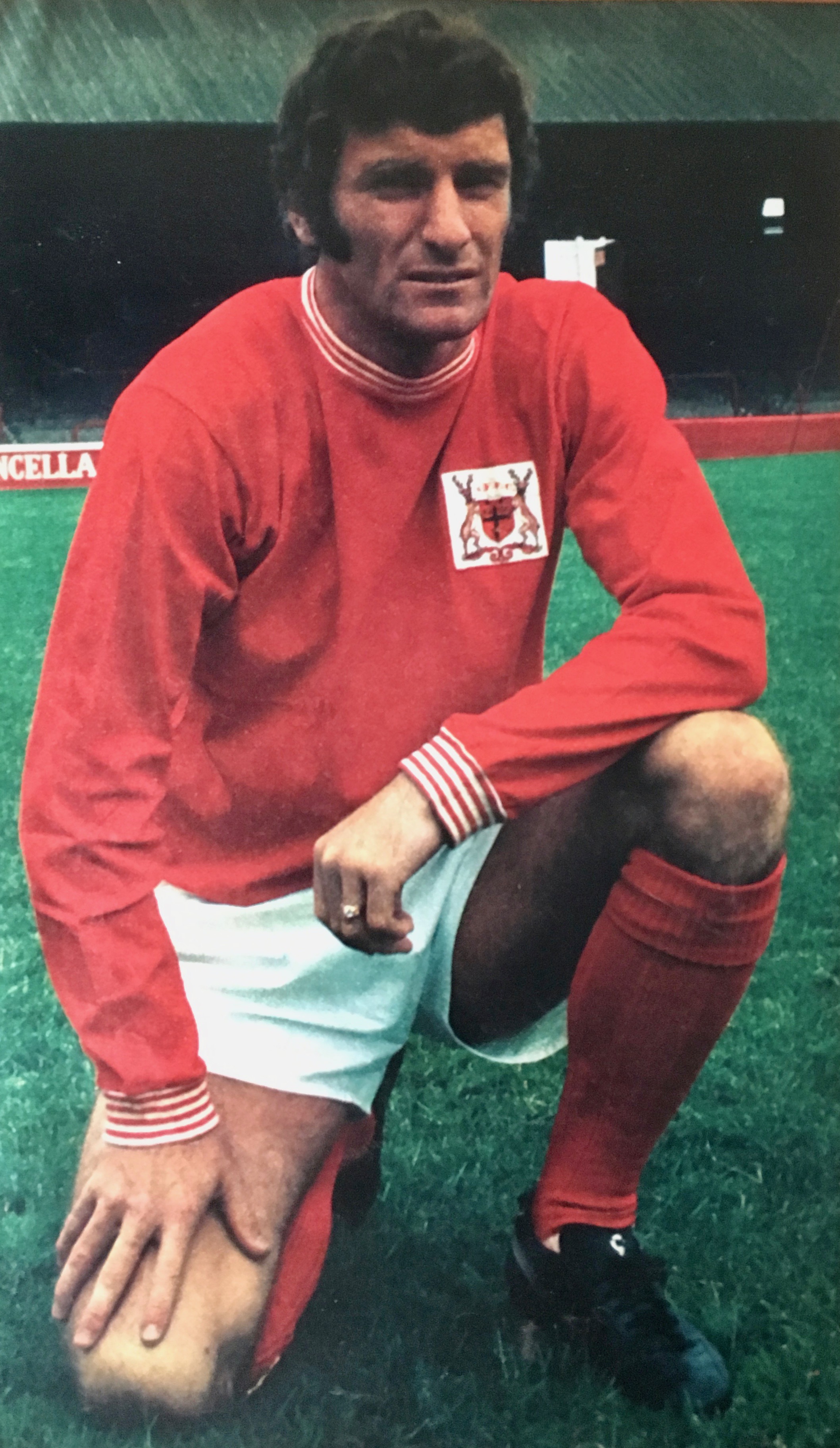
2 MartinSCOTTISH international Neil Martin remains a legend at one of his homeland clubs but his brief time at Brighton was more like a bad dream after a goalscoring start.
QoS Martin

The striker’s youthful picture can still be found on the legends section of Queen of the South FC’s website where it notes he was among the first players to score 100 league goals in both Scotland and England.

It was while playing for the Wearsiders that he gained three Scotland international caps, all in 1965.

IMG_5147Martin scored 28 goals in 119 games for Nottingham Forest having moved down from Scotland in the 1960s and begun his English league career with Sunderland.

Martin partnered the legendary Denis Law up front in World Cup qualifiers against Poland and Finland and his third and final cap was earned in a 1-0 win over Italy playing alongside Tottenham’s Alan Gilzean.

IMG_5146One of his most prolific spells was at Coventry City (above) where, in three years, between 1968 and 1971, he scored 40 goals in 106 appearances.

He was slightly less prolific for Forest (although he was on the scoresheet in Clough’s first game in charge) before Peter Taylor brought him to the Albion on 26 June 1975.

Four new players were presented to the assembled press that pre-season and standing alongside Martin was one Peter Ward.

Martin scored on his league debut for Brighton as Rotherham United were dispatched 3-0 but he didn’t stay in the side long because Taylor brought in loan signing Barry Butlin, also from Forest, for five games to play up front alongside Fred Binney and Gerry Fell.

Martin did get a run back in the side during the autumn, when he added to his goals tally. But Taylor obviously felt the attack needed something extra and the £30,000 arrival of Northern Ireland international Sammy Morgan from Aston Villa spelt the beginning of the end of Martin’s short spell at the club.

He scored eight league goals and one in the FA Cup in 18 starts (plus four substitute appearances) but it all ended somewhat acrimoniously.

The Argus reported on February 13 1976 that the 32-year-old former Scotland international had been transfer listed and banned from the Goldstone.

Words had evidently been exchanged after Martin had been subbed off in a reserves game and, try though he did, reporter John Vinicombe couldn’t find out exactly what had gone on.

Taylor was renowned for his tough stance with players. He suspended six players in the September that season and he had fallings out with Ian Mellor, Joe Kinnear and reserve ‘keeper Derek Forster.

Martin didn’t play for the club again, instead being moved on to Crystal Palace where he scored just the once in nine appearances.

At the end of the season, he joined what was a familiar exodus for ageing English league players at the time and played alongside England’s World Cup winning captain Bobby Moore, and ex-Arsenal full back Bob McNab, for San Antonio Thunder in America.

It wasn’t unfamiliar territory for Martin because, in the summer of 1967, he was part of the Sunderland contingent who played in the NASL as Vancouver Royal Canadians. The 16-man squad also included the above-mentioned Forster.

After Martin’s 1976 stint at San Antonio, he didn’t play in England again. His final playing days were in the Republic of Ireland, interestingly being given a lifeline by another former international striker who’d played for Brighton – Barry Bridges.

The former Chelsea, Birmingham, QPR and Millwall striker had a couple of seasons managing Dublin side St Patrick’s Athletic, where Martin joined him.

The Scot had a brief managerial foray with Walsall, mainly in tandem with Alan Buckley, but it didn’t end well and he left the club in 1982.

Born in Tranent, just east of Edinburgh, on 20 October 1940, Martin’s break into the professional game came at Alloa Athletic. His 25 league and cup goals in the 1960-61 season brought about a move to Queen of the South where he continued to score plenty of goals – 33 in 61 appearances.

A £7,500 transfer fee took him to Hibernian in 1963. He’d supported them as a boy and after Jock Stein took over as manager in 1964, Martin netted 29 league and cup goals in the 1964-65 season. He said later that Stein was the biggest influence on his career.

It was top-tier Sunderland who paid £45,000 to take Martin south of the border. His goalscoring in his first taste of English football wasn’t quite as prolific as it had been in Scotland, mainly due to the Wearsiders not being able to decide on the best strike partner for the Scot.

Eventually, in 1968, he moved on to Coventry City, newly-promoted to the old First Division. He spent three years at Highfield Road, developing good partnerships with Ernie Hunt and John O’Rourke, with the emerging talents of Willie Carr and Dennis Mortimer providing good service from midfield.

His switch to Nottingham Forest towards the end of the 1970-71 season helped them survive the drop, but they went down the following season and that was the last Martin saw of top-flight football.

1 Martin
3 Martin