Coppell’s Palace signing Humphrey knew all about ups and downs

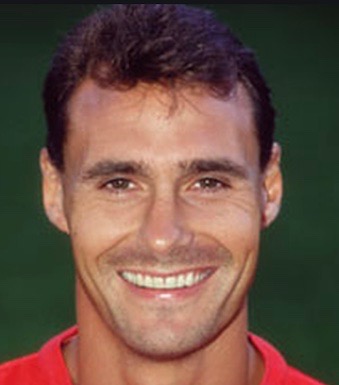
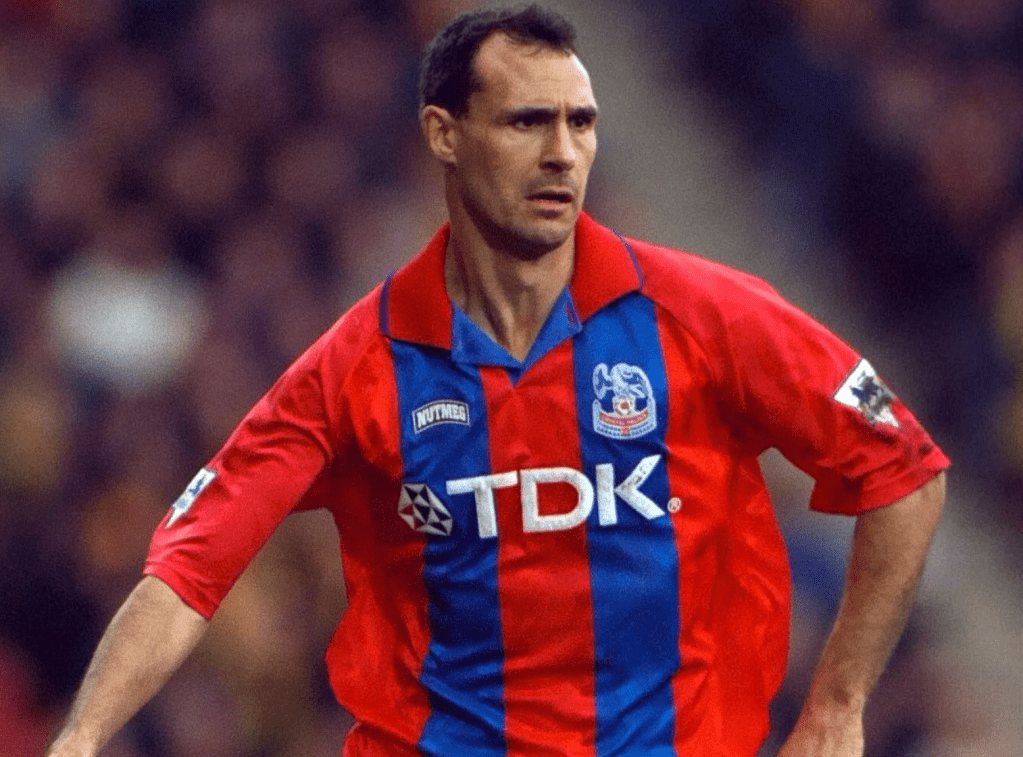
FULL-BACK John Humphrey signed for Crystal Palace in lieu of rent his previous club, newly-relegated Charlton Athletic, owed for playing home matches at Selhurst Park!

Humphrey was 29 and with more than 350 senior appearances behind him when Steve Coppell added him to an experienced defence to play alongside Eric Young and Andy Thorn in the old First Division.

It was a level Humphrey was well used to having started out there with Wolves (where he played in the same side as Tony Towner) and at Charlton in a defence that included  Colin Pates.

All that came before Humphrey came to Albion’s rescue in the dark days of the 1996-97 season, as I recounted in my 2020 blog post about him.

This time I’m highlighting his time at Selhurst Park, which he spoke about at length in a January 2023 interview with cpfc.co.uk.

“I saw myself as one of the senior players,” Humphrey remembered. “We had the likes of Richard Shaw coming through and Gareth [Southgate] coming through and we signed people like Chris Coleman and Chris Armstrong. Alongside that we had some experience with Eric Young and [Andy] Thorny, so I hoped I fitted in to part of the jigsaw.

“[The challenge] for me was getting used to the style of play, because at that time I know Stevie was not so much direct but he wanted to get the ball forward as early as possible because of the threat of [Ian] Wright and [Mark] Bright. So, it took me a while to get used to that.

“I do remember after a few games Stevie dropped me for a game to say: ‘This is what I want you to do.’ Then he put me back in… I was part of his restructuring and in that first year it worked out very well.”

So much so that at the end of his first year at the club Palace reached third – their highest league finish in history – and won the Zenith Data Systems trophy (otherwise known as the Full Members’ Cup) at Wembley, beating Everton 4-1.

Humphrey was still playing in the Premier League at the age of 34 and clocked up 203 appearances for the Eagles before briefly returning to Charlton for the 1995-96 season, moving on to Gillingham and then helping out his old Charlton teammate Steve Gritt in Brighton’s hour of need.

Revered at Charlton, chicagoaddick.com wrote of him: “In the five seasons he patrolled our right side of defence he missed only one league game and faced the best wingers and strikers playing in the country at that time: Barnes, Waddle, Le Tissier, Lineker, Rush, Aldridge, Beardsley, Fashanu.

“Maybe it was because we stood in the decrepit Arthur Wait Stand but Humphrey was fantastic to watch up close. Graceful, but strong in the tackle. He was a quick-thinker and a quick mover. He would glide down the right wing and put in some peaches of a cross.”

Humphrey won three consecutive player of the year awards (1988, 1989, 1990) – an honour no other Charlton player has received.

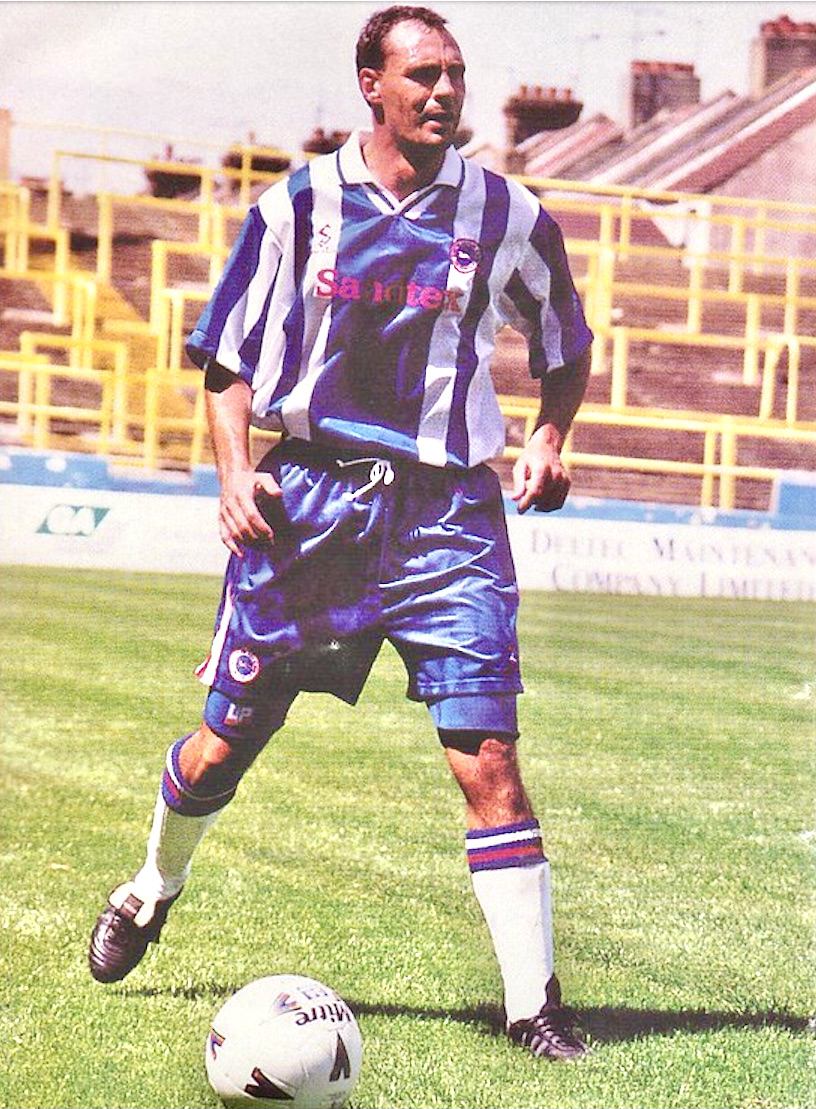
Humphrey in action for the Albion at Gillingham

By the time he arrived at Brighton, he was 36 and had played close on 650 professional matches.

“Steve wanted me because I was experienced, could get the players organised and was able to talk them through matches,” Humphrey told the Argus in a January 2002 interview. “He knew I was steady, reliable and dependable, that nine games out of ten I’d play pretty well and that I would give 100 per cent.

“It was a lot of pressure but I’d been through a few promotions (three) and relegations (six) with Wolves, Charlton and Crystal Palace.” He continued: “The stressful situations I had gone through with those other clubs had given me experience of how to try and keep a season alive.

“I could do a job for Brighton and I felt I did that and the team turned out to be good enough to hang on. It was one of the biggest achievements of my career.”

He added: “It might have been going out of the frying pan of Gillingham into the fire at Albion but I’m glad I made the jump.”

Humphrey looked back fondly on those difficult times and told the newspaper: “They have great fans and the Goldstone was always packed for the home games.

“You couldn’t help but be lifted by the crowd. The team couldn’t win away, but managed to win at home. So, one win every two games was decent and led to that eventful day at Hereford.”
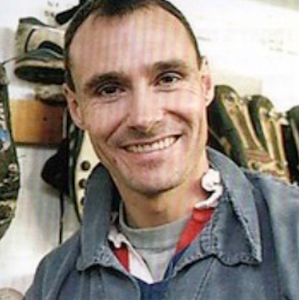
When he left the Albion as part of a cost-saving measure the following season, he turned semi-pro and played initially for Chesham in the Ryman League premier division, then Carshalton, Dulwich Hamlet and Walton and Hersham.

“Having come from the professional ranks to semi-pro it was difficult to adjust to the different standards like some of the attitudes of players to training for instance,” Humphrey said. “Also, I found the training itself wasn’t that enjoyable.

“I remember at Walton and Hersham turning up for a session, but we weren’t allowed on the pitch and had to do a road run. That was frustrating and I begun to think that maybe there were other things in life than just playing football.”

Former teammate Pates was his conduit to a new career as a teacher at Whitgift School in Croydon, where ex-Palace and Chelsea midfielder Steve Kember also joined them.

“I knew Colin from Charlton when we roomed together,” he explained. “I was aware he was at the school and he said he needed help for after-school sessions and asked me to come along.

“So I did and the football took off at the school and I got involved in other sports like rugby and basketball and got a full-time job there.”

He also retained his links with Charlton, coaching their under-15 team, and told the Argus in that 2002 piece: “I deal with privileged kids at Whitgift who may go on to be doctors, lawyers or solicitors while at Charlton the kids usually aren’t so privileged.

“To a lot of them, football is a way of making something of themselves. It gives me a great buzz when one of the Charlton youngsters makes positive progress.”

Humphrey later moved on to become head of football at Highgate School in north London.
City reject Graham Howell a victim of the ‘Clough clear-out’

FULL-BACK Graham Howell spent two and a half years as a professional at Manchester City but was released without making the first team.

Eighteen months after leaving Maine Road, he was one of several new signings made by manager Pat Saward in an effort to strengthen his newly-promoted Brighton side.

Recent players-of-the-season Stewart Henderson (1969-70) and Bert Murray (1971-72) had previously occupied the right-back berth but Saward believed a change was needed at the higher level.

At only 21, Howell was certainly a younger model who’d been trying to make his way at City when they won the league in 1968 and the FA Cup in 1969. After his release, he had played 43 games for Bradford City in the Third Division, which Albion had triumphantly left in runners-up spot in the spring of 1972.

Howell unveiled to the press by Pat Saward

A fee of £18,000 – the equivalent of just over £200,000 in today’s money – prised him from Valley Parade.

“Only 18 months ago, I was released by Manchester City. I thought the bottom had fallen out of my world,” Howell told the matchday programme shortly after signing that August. “I had no hesitation in deciding to join Brighton. It meant Second Division football and was just the chance I wanted.”

He said he’d thought Brighton were “a very useful outfit” in the two games he’d played against them for Bradford (he made his debut for the Bantams in the opening day fixture at the Goldstone when Albion won 3-1 and played in the Valley Parade match on 18 March 1972 when Bradford won 2-1) and said he was determined to prove City had been wrong to let him go.

“I am looking forward to helping Brighton move forward to the First Division. It has always been my ambition to play First Division football.

“I had hoped to achieve this with Manchester City, but it was not to be.”

He pointed out: “I could see that my way forward was limited because of Tony Book, Arthur Mann and several other youngsters like Willie Donachie.

“It was a tremendous blow when I had to leave Manchester City. But I can look back on that all now believing that it was all a blessing in disguise.

“I know that it made me try much harder at Bradford City. And I intend to go on playing it hard for Brighton.

“I am very ambitious, and I want to do really well in football.”

Unfortunately for Howell, Saward struggled to find the right formula for success in the higher division, chopping and changing the line-up and bringing in too many players on short-term loans.

Howell made his debut in a 2-2 home draw against Sunderland on 26 August but, after 15 games at right-back, Saward moved him into midfield and, according to my scrapbook of the time, he became “a destroyer in the Peter Storey mould”.

John Templeman, who’d started the season in the no.2 shirt, reverted to that position as Saward shuffled his pack trying to end a losing streak that eventually extended to 13 matches.

Howell was dropped to the subs bench for the home game against Luton Town on 10 February – and Albion promptly won 2-0, their first win since 14 October the previous year!

He continued as no.12 in the following two matches (both defeats) and was restored to the side at home to Huddersfield, a game which ended in a 2-1 win for the Albion.

In the final game of the season, by which time relegation was confirmed, Howell was once again selected at right-back as Brighton drew 2-2 with Nottingham Forest.

Stern-faced Howell in the pre-season line-up photo

He retained the shirt at the start of the following season back in the third tier but as Saward’s tenure of the hotseat moved into its final days, so did Howell’s game time.

He was out of the side when Brian Clough and Peter Taylor arrived at the Goldstone at the start of November although he has a somewhat unwitting claim to fame by appearing in an oft-used photo of Clough sitting on a park bench at the Stompond Lane ground of non-league Walton & Hersham.

Howell looks rather awkward next to the centre of attention!

Albion had been drawn away to them in the FA Cup first round and the park bench was the somewhat primitive and squashed pitchside seating arrangement for the visiting manager, trainer and substitute – who that day was Howell.

In the picture, he looks rather awkward to be sharing the perch next to the man who only a few months earlier had led Derby County to the top division title. The park bench image was ideal ‘fodder’ for the newspapers, depicting as it did how far from previous glory Clough had descended.

Howell didn’t get on in that game (Albion drew it 0-0 and ignominiously lost the replay at the Goldstone 4-0) and his first action under the dynamic duo came in the infamous 8-2 defeat to Bristol Rovers.

He was sent on as a substitute for left-back George Ley and got his first start under the pair when he took over from John Templeman at right-back in the following game, a 4-1 defeat at Tranmere Rovers.

That match proved to be Ley’s last game in an Albion shirt – and when Howell replaced the former Portsmouth player away to Watford (a 1-0 defeat), it would be his own last outing for Brighton.

By Boxing Day, Clough and Taylor had brought in young midfielder Ronnie Welch and left-back Harry Wilson from Burnley, and they both made their debuts against Aldershot. Howell was an unused sub that day and he didn’t feature for the first team again.

More new faces arrived at the Goldstone as Clough and Taylor brandished chairman Mike Bamber’s chequebook with abandon: the likes of Paul Fuschillo and Billy McEwan increasing the competition for places.

Come the end of the season, Clough made no apologies for clearing out a number of players signed by his predecessor along with long-servers like Brian Powney and Norman Gall. Howell was one of twelve players released.

Howell had made 40 appearances (plus four as sub) for Brighton and he moved on to Cambridge United where he played 71 matches between 1974 and 1976.

Born in Salford on 18 February 1951, Howell grew up a fan of Manchester United and hoped to play for them. “But when City showed interest in me while I was playing for Altrincham and Sale Boys I was happy enough to go on the Maine Road apprentice staff,” he said.

After signing as a professional, Howell spent two and a half seasons playing in City’s Central League side

There were certainly plenty of positive signs for Howell to think he might make it at City.

In January 1969, their matchday programme reported how he’d been for trials for the England Youth side with Tony Towers and Ian Bowyer but was unluckily left out when the squad was selected.

Elsewhere in the programme, a mid-season report on the progress of Dave Ewing’s reserve side declared: “Players like Graham Howell, Tony Towers and Derek Jeffries made great strides.”

It explained that because of injuries to more experienced reserves, several youth team players had been promoted to turn out for the Central League side.

Although they lost eight of their opening 11 matches, they’d turned things round and the report said: “By the end of September, the policy of putting faith and responsibility on the younger players began to pay off.”

While they were bolstered by the return of experienced goalkeeper Ken Mulhearn and George Heslop, youngsters like Bowyer and Stan Bowles were contributing to a turnround in fortunes.

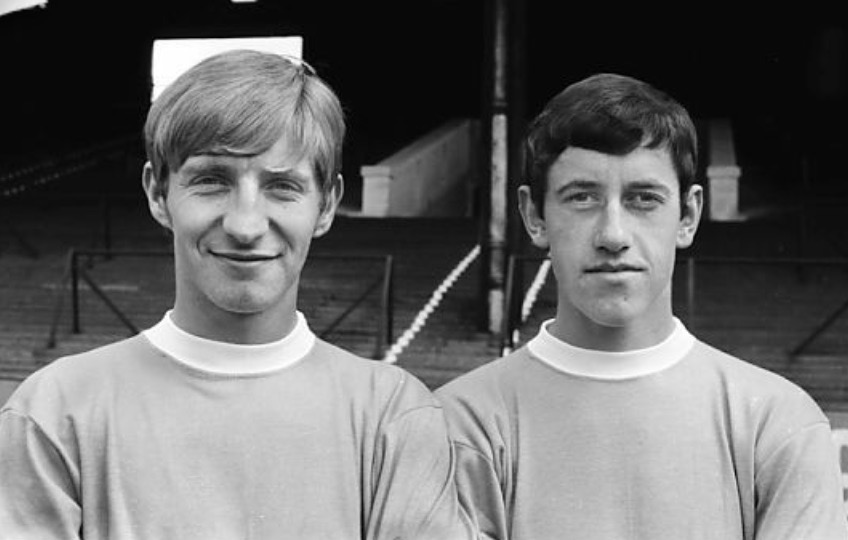
There’s a photo to be found on the internet (above, left) of a young Howell with Paul Hince who played a handful of games for City in 1967-68 and later reported on the side for the Manchester Evening News.

After leaving Cambridge, Howell quit the UK and continued his career in Sweden. He spent six seasons with Swedish club Västerås SK and also played for Irsta IF. He remained in Sweden after his playing career finished.

Pictures from my scrapbook and online sources.

John Humphrey – unsung hero of 1997 great escape

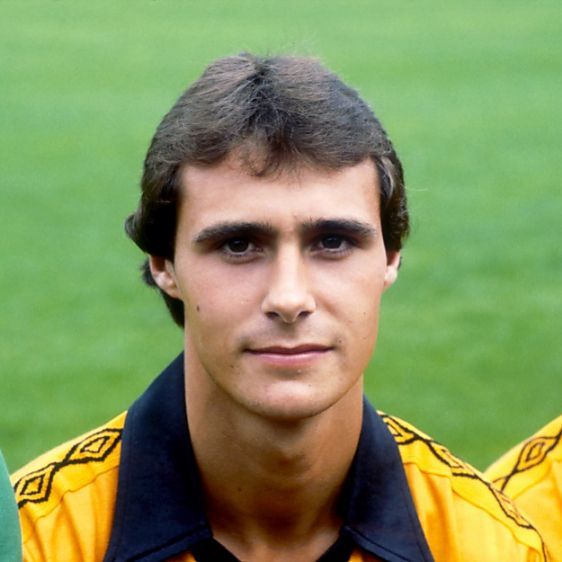
John Humphrey in Wolves colours

ONE OF the unsung heroes of Albion’s last-gasp survival feat in 1997 knew a thing or two about playing for clubs in precarious circumstances.

John Humphrey’s first club was Wolverhampton Wanderers during a bleak period in their history: they dropped into the basement division under the controversial ownership of the Bhatti brothers.

The right-back later played ‘home’ games for Charlton Athletic at Selhurst Park and Upton Park when the football authorities deemed The Valley unfit to stage matches.

And he ended his professional playing days turning out for Brighton in ‘home’ games at Gillingham’s Priestfield Stadium (as pictured above).

Humphrey came to Brighton’s rescue in the autumn of his career.

With Albion’s very existence under threat as 1996 turned to 1997, Albion handed the managerial reins to Steve Gritt, and former Charlton teammate Humphrey was his first signing: a free transfer from Gillingham, who were playing in the division above.

Humphrey was 36 at the time with nearly 650 professional matches behind him, including a good many in the top-flight with Wolves, Charlton and Crystal Palace. Indeed, he was Charlton’s player of the year in 1988, 1989 and 1990.

After four matches on the bench, Humphrey replaced Peter Smith at right back and played in Albion’s last 11 games of that 1996-97 season, only ending up on the losing side three times. wearebrighton.com said his impact made him “a seriously underrated piece of the Great Escape jigsaw”.

“Steve wanted me because I was experienced, could get the players organised and was able to talk them through matches,” Humphrey told the Argus. “He knew I was steady, reliable and dependable, that nine games out of ten I’d play pretty well and that I would give 100 per cent.

“It was a lot of pressure but I’d been through a few promotions (three) and relegations (six) with Wolves, Charlton and Crystal Palace.” He continued: “The stressful situations I had gone through with those other clubs had given me experience of how to try and keep a season alive.

“I could do a job for Brighton and I felt I did that and the team turned out to be good enough to hang on. It was one of the biggest achievements of my career.”

Humphrey remembered the pressure going into the Hereford match was “horrible” because of the media focus but he added: “It might have been going out of the frying pan of Gillingham into the fire at Albion but I’m glad I made the jump.”

Unfortunately, then chief executive David Bellotti tried to renege on a deal Gritt had agreed verbally with Humphrey that he’d get a new one-year contract if Albion stayed up.

“When I was told I was being released, I thought it was a pretty poor show. But Steve, to his credit, then fought my corner and I stayed on.”

With the Goldstone sold, and Albion forced to play ‘home’ games at Gillingham,  Humphrey retained his place in the side and played in 13 matches but, along with other senior players, such as Craig Maskell, Paul McDonald, Denny Mundee and Ian Baird, he was let go to save money on wages.

Humphrey accepted the package he was offered, called time on his long professional career, and dropped into the non-league scene, playing initially for Chesham, then Carshalton, Dulwich Hamlet and Walton and Hersham.

He got a break into a new career as a teacher at Whitgift School in Croydon courtesy of former Albion defender, Colin Pates, who’d played with Humphrey at Charlton.

“I knew Colin from Charlton when we roomed together,” Humphrey told the Argus. “I was aware he was at the school and he said he needed help for after-school sessions and asked me to come along. So I did and the football took off at the school and I got involved in other sports like rugby and basketball and got a full-time job there.”

After leaving Whitgift School, Humphrey became head of football at Highgate School in north London.

Born in Paddington, west London on 31 January 1961, Humphrey was picked up by Wolves after he played against their junior team for a North London club called Bourne Hall.

He recounted how events unfolded in an interview with wolvesheroes.com: initially signing schoolboy forms, then progressing to coaching in school holidays, before earning an apprenticeship.

He signed as a professional in 1979 and made his first-team debut in the old top- flight in a 3-0 Easter Monday win at Southampton in 1980. His second game ended in a 3-0 defeat to Brighton.

They came under John Barnwell and, by the time Humphrey left the club in 1985, he’d served under three other managers; the last being former Manchester United boss Tommy Docherty.

Although the side was relegated in 1981-82, Humphrey embarked on what was a 78-game unbroken spell in the side. He was ever-present when they were promoted in 1982-83.

“I loved my time at Wolves,” he told wolvesheroes.com. “I only left because we went down again in 1984-85 and I didn’t fancy playing in the Third Division. Charlton came in for me and they took John Pender from Wolves a few weeks later as well.”

Wolves under the Bhatti brothers were in freefall and a lack of investment in the side saw them suffer three consecutive relegations – in 1984, 1985 and 1986 – ending up in the old Fourth Division for the first time in the club’s history.

Humphrey joined an Addicks side newly-promoted to the elite and, although Lennie Lawrence’s side often struggled to retain their status, they remained in the top-flight until 1990, and many supporters thought the right-back was good enough for international selection.

On charltonlife.com in September 2012, Queensland Addick recalled his impressive level of fitness, and said: “The number of times he ran the right wing at great pace during a game was quite incredible.”

By the time he left Charlton in August 1990, he’d played 231 games and it was said his £400,000 transfer to top-flight Crystal Palace was linked to the fact that at the time Charlton were playing home matches at Selhurst Park.

In a five-year stay at Selhurst, Humphrey played 192 games (plus 10 as sub). Known principally for his defending, Humphrey was delighted to mark his 150th appearance for Palace with a 35-yard equaliser for the Eagles against his old club, Wolves, in a 1993 1-1 home draw.

Between December 1993 and May 1994, while Palace were winning promotion from the second tier under Alan Smith, Humphrey was out on a six-month loan at Reading, playing nine games for Mark McGhee’s Second Division side.

He then returned to second-tier Charlton on a free transfer for the 1995-96 season, playing in 36 matches, after Alan Curbishley had taken sole charge.

Next stop was Gillingham, for the first part of the 1996-97 season, but he confessed he didn’t see eye to eye with manager Tony Pulis, so he was happy to answer the call from Gritt to aid basement Brighton’s cause.

Left back Harry Wilson “something of a fire-eater”

BRIGHTON boss Brian Clough turned up at Burnley to capture the signings of two of their fringe first team players – and ended up having pie and chips with the groundsman!

When Clough arrived at Turf Moor, he found manager Jimmy Adamson, chairman Bob Lord and secretary Albert Maddox were nowhere in sight, it being lunchtime.

In their absence, as recounted to respected writer Dave Thomas, groundsman Roy Oldfield made the famous visitor a cup of tea, popped to a nearby chippy to get them both pie and chips and chatted all things football until the office re-opened after lunch.

Although Clough hadn’t got quite what he expected on arrival, his journey did bear fruit. In exchange for £70,000, he secured the services of left-back Harry Wilson, a 20-year-old who had made 12 appearances for the Clarets, and midfielder Ronnie Welch, 21, who had played one game.

At the time, Clough was desperately trying to bring in new recruits to a beleaguered Brighton side that he and sidekick Peter Taylor had taken on in October 1973, a period covered in detail in a recent book, Bloody Southerners, by author and journalist Spencer Vignes.

The man who only the season before had led unfashionable Derby County to the First Division Championship, couldn’t quite believe what he had inherited at Third Division Albion.

The players seemed bewildered by what the new celebrity boss expected of them.

Heavy defeats – 4-0 to non-league Walton and Hersham in the FA Cup; 8-2 at home to Bristol Rovers and 4-1 away to Tranmere Rovers in the league – reflected the disarray.

Clough and Taylor weren’t slow in pointing the finger. Their only solution was to find replacements – and quickly.

Former Manchester United reserve Ken Goodeve was first to arrive, from Luton Town, although he failed to impress and made only a handful of appearances before joining Watford at the end of the season.

Goalkeeper Brian Powney was axed in favour of former England under 23 international, Peter Grummitt, initially on loan from Sheffield Wednesday.

Experienced left-back George Ley never played for the Albion again after the defeat at Tranmere, while utility man and former captain, Eddie Spearritt, also lost his place (although he eventually forced his way back into the side briefly).

Lammie Robertson, who knew the pair from his early days at Burnley, was asked to introduce them to their new teammates in the dressing room before an away game at Watford (they’d not been signed in time to play).

Robertson told Spencer Vignes in a matchday programme interview how Wilson was sporting a rather loud checked suit at the time and, in his own inimitable style, Clough boomed out: “Flipping hell, I never want to see that suit again.”

Needless to say the players laughed out loud, only for Clough to say: “What the hell are you all laughing at? They’ll be in the team next week.” And sure enough, they were.

Wilson and Welch made their debuts against Aldershot in a home game on Boxing Day when a crowd of 14,769 saw Albion slump to their fifth successive defeat, although at least the deficit this time was only 1-0.

A win finally came in the next game, a 1-0 success at home to Plymouth Argyle – Ken Beamish scoring the solitary goal.

In a 2010 matchday programme article, Wilson said: “I really didn’t want to go to Brighton. No disrespect but I loved it up at Burnley.

“The people there had been so friendly and helpful when I arrived from the North East so it broke my heart to leave. That said, I thoroughly enjoyed my time at Brighton and met some fantastic people, so, looking back now, I’m glad that Jimmy Adamson let me go.”

In the Evening Argus, reporter John Vinicombe purred about the impact of the new recruits from Burnley, saying Wilson “is looking something of a fire-eater. He has a rare zest for the game and relishes the close, physical contact that is synonymous with his position.

“He knows how to destroy and create, and does both in a manner befitting a five-year background at the academy of fine footballing arts (editor’s note: at the time, Burnley had a reputation for producing highly-talented young players).

“His colleague from Turf Moor, Ronnie Welch, is not so completely extrovert, but is no less involved in midfield, and has a fine turn of speed. He made one mistake through trying to play the ball instead of hoofing it away, but this can only be described as a ‘good’ fault.”

Further signings followed and the ship was steadied. Wilson kept the no.3 shirt through to the end of the season. But Welch made only 36 appearances for Albion before Taylor, by then under his own steam, traded in him and fellow midfielder Billy McEwan as a makeweight in the transfer that brought full-back Ken Tiler to the Goldstone from Chesterfield.

Wilson, meanwhile, became a mainstay in Albion’s left-back spot for three years, including being ever-present in the 1975-76 season.

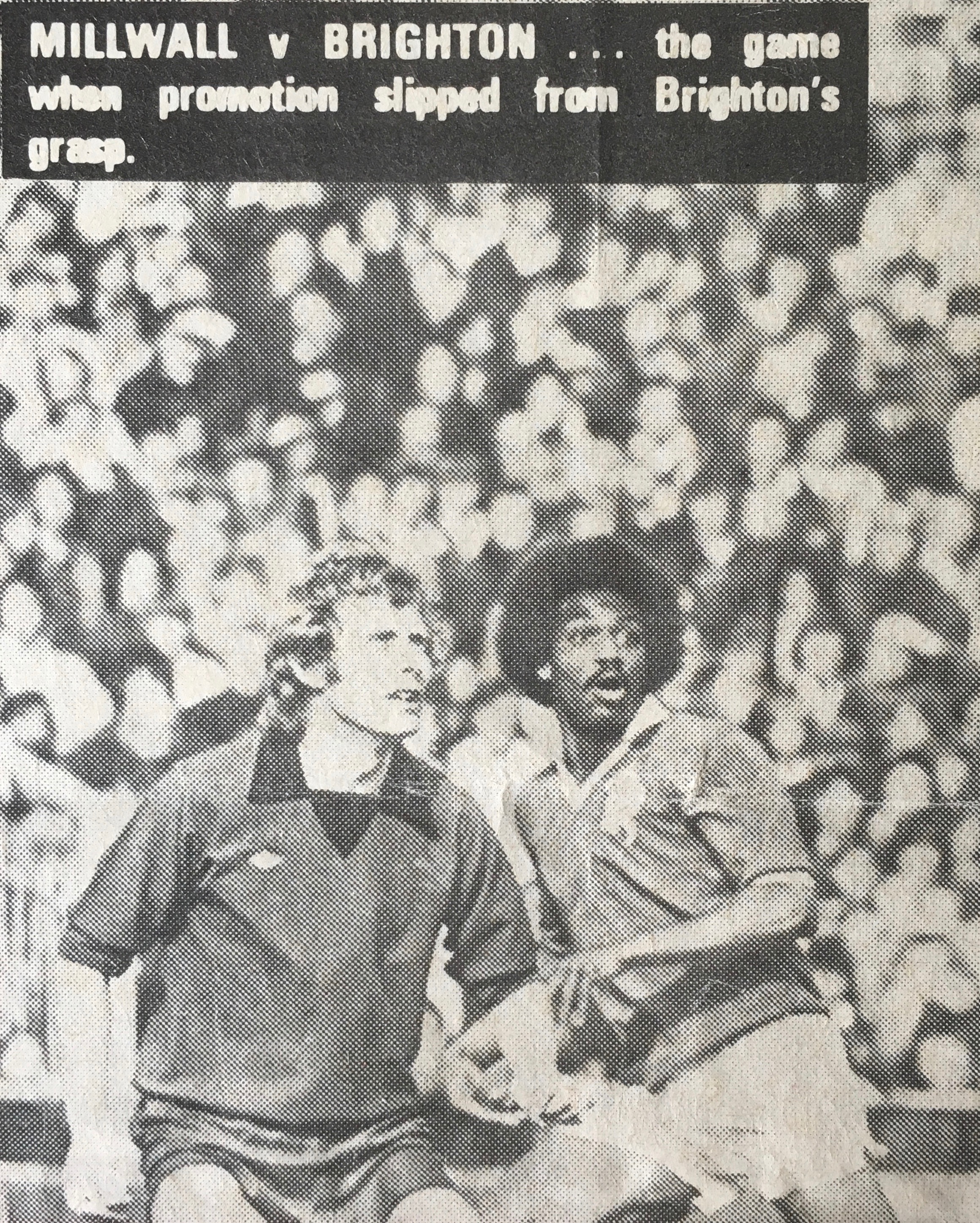
5 HW action v MillwallEver-present Wilson in action against Millwall at The Den

Suited for England!

Born in Hetton-le-Hole, near Durham, on 29 November 1953, Wilson played for Durham County Schools and made four appearances for England schoolboys (under 15s) in the 1968-69 season. He was taken on as an apprentice at Burnley before signing professional forms in December 1970.

In 1971, he earned an England Youth cap going on as a sub for Coventry’s Alan Dugdale in a 3-2 defeat against Spain in Pamplona. Don Shanks also played in that game.

He made his first-team debut at home to Chelsea on 26 April 1971 and the last of his 12 appearances for the Clarets was on 3 April 1972: away to Sunderland.

Young apprentice Wilson with experienced pros John Angus and Colin Waldron

He was part of Alan Mullery’s Third Division promotion-winning squad in 1976-77, although he was restricted to 22 appearances. The arrival of the experienced Chris Cattlin meant he was no longer first choice left-back, although in several games they both played – the versatile Cattlin being equally at home as right-back.

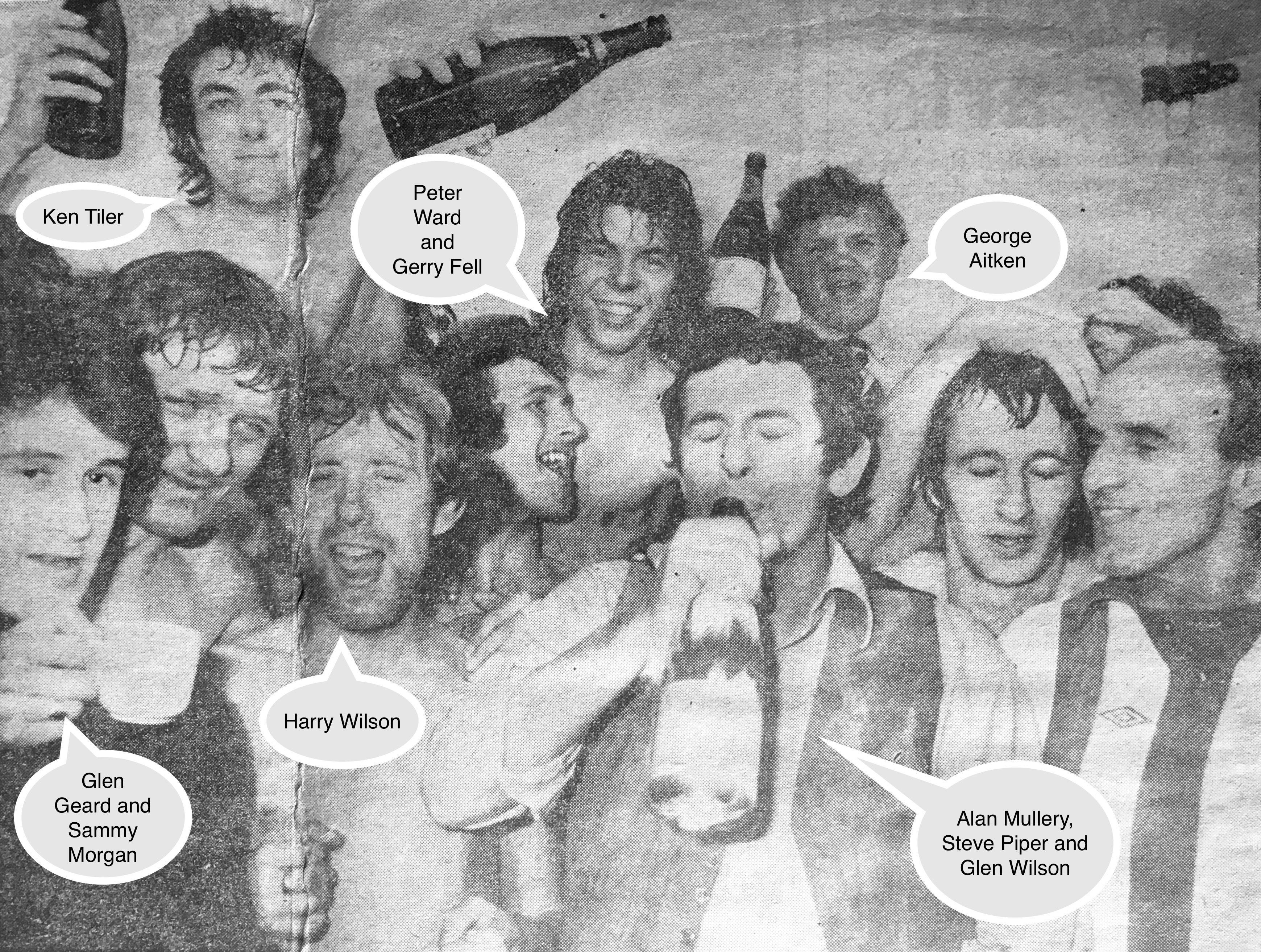
6 HW promotionA bare-chested Wilson was pictured (above) in the Albion dressing room alongside Mullery enjoying the celebratory champagne after promotion was clinched courtesy of a 3-2 win over Sheffield Wednesday on 3 May 1977. But that game was his Goldstone swansong.

He’d made a total of 146 appearances for the Albion – as well as chipping in with four goals – but when Mullery signed Mark Lawrenson and Gary Williams from Preston that summer, Wilson went in the opposite direction along with Graham Cross.

Only six months after arriving at Preston, Wilson was badly injured in a road accident after his car skidded on black ice and collided with a transit van. He suffered a punctured lung and damage to his knees. Doctors told him he wouldn’t play again, but he proved them wrong and ended up spending three years at Preston, playing 42 games.

“I suppose I was lucky to be alive,” he said in an Albion matchday programme article. “I lost a couple of yards of pace, but then again I ws never exactly the quickest of players.”

With his best days behind him, he moved back to his native north-east in 1980 to play for Darlington, making 85 appearances in three years.

He stayed in the north east in 1983, switching to Hartlepool for a season, but only played 16 times for them before dropping out of the league to play for Crook Town.

According to The Football League Paper, Wilson stayed in the game as manager of Seaham Red Star and, in 1988-89, Whitby Town.

He then worked as a community officer for Sunderland before joining the coaching staff at Burnley in the 1990s.

When Chris Waddle took over as manager, Wilson was sacked but he took the club to an industrial tribunal, which found in his favour.

He later worked for his long-term friend, Stan Ternent, at Bury, and as a monitor for the Football League, a job that saw him checking that the right procedures were being followed by the youth development set-ups of clubs in the north-west.

Wilson was in the news in 2007 when Ternent appeared at Lancaster Crown Court accused of assaulting Wilson’s son, Greg, on the steps of Burnley Cricket Club (a venue familiar to visiting supporters as a popular watering hole before games at the neighbouring football ground).

Greg Wilson required hospital treatment for a deep cut above his left eyebrow and needed nine stitches in his forehead.

Ternent said he had accidentally clashed heads, denied causing actually bodily harm, and was cleared by a jury.

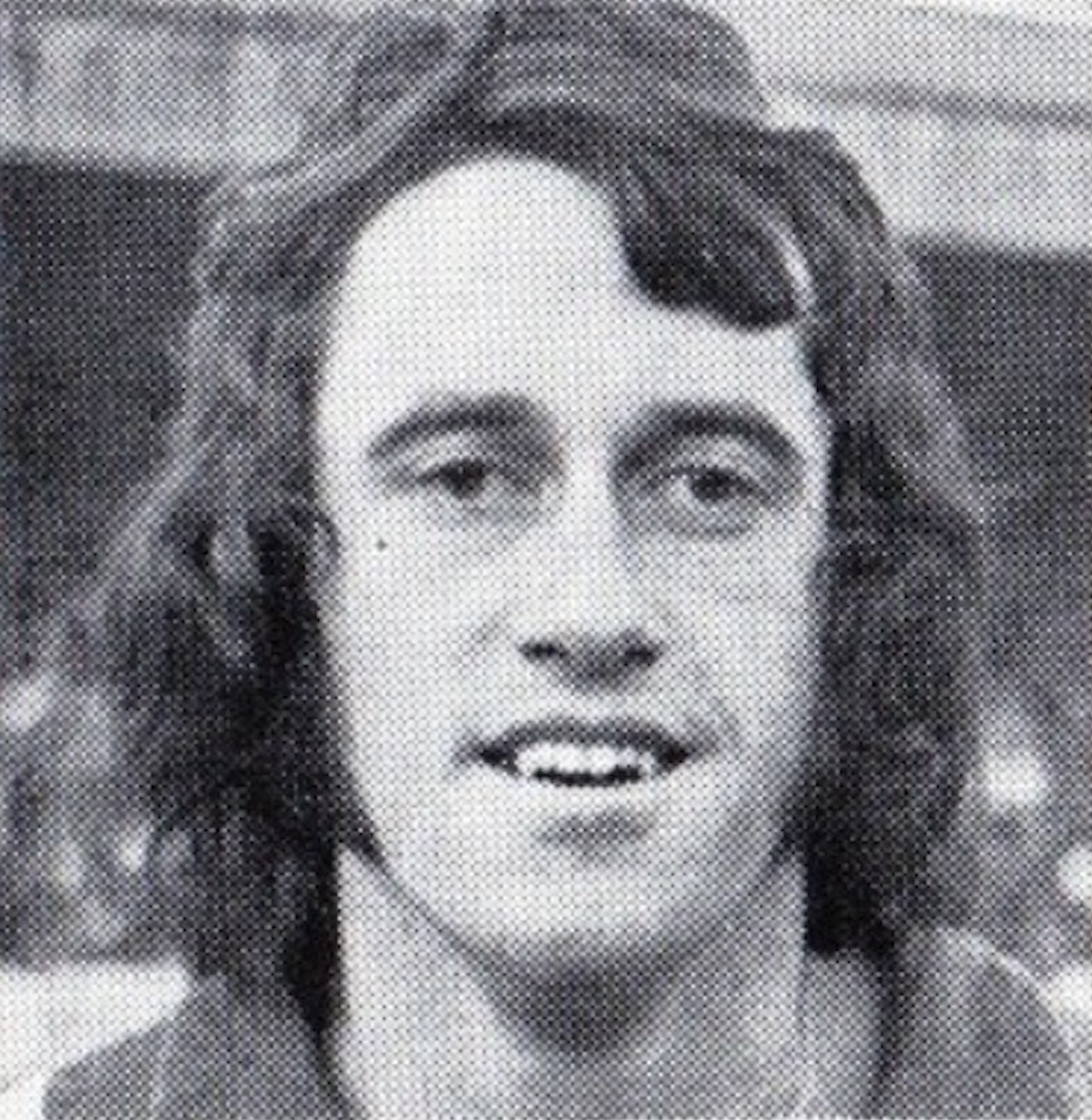
4 HW colour laugh w WardWilson in an Albion line-up alongside Peter Ward
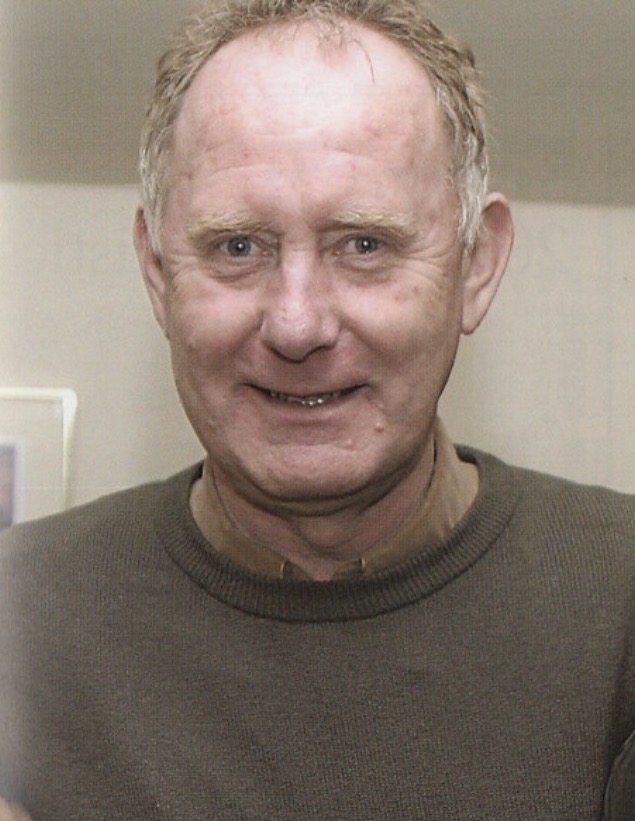
Wilson pictured in 2010