Managerial turnover played havoc with goalscorer Bent’s career

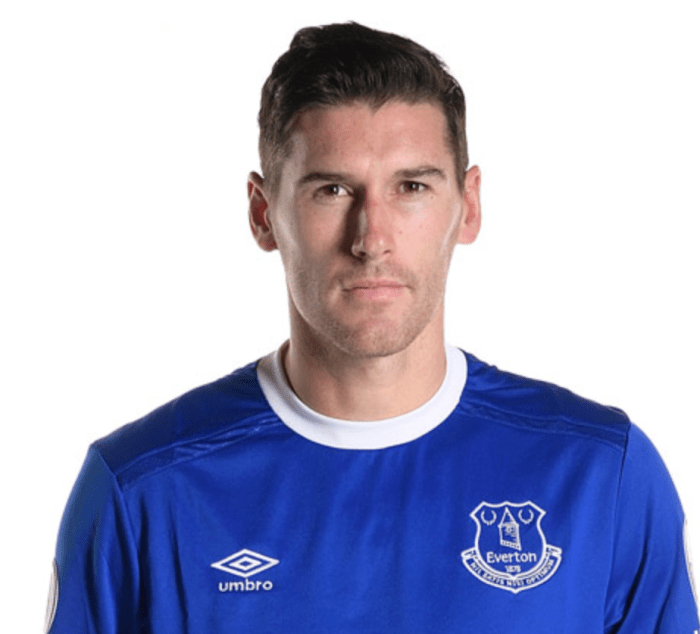
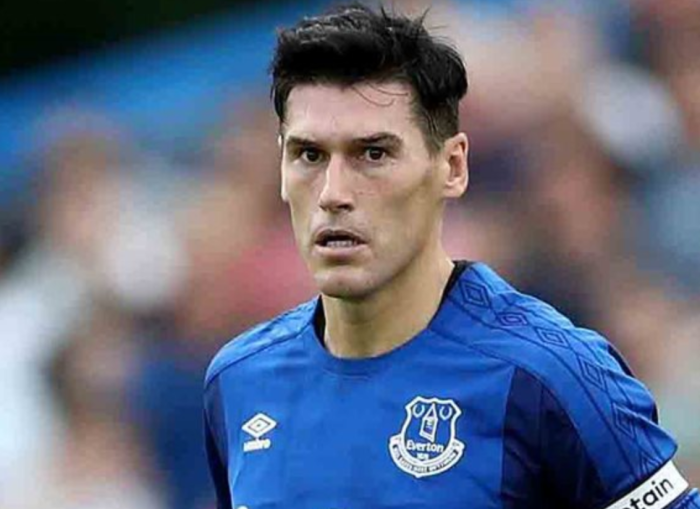
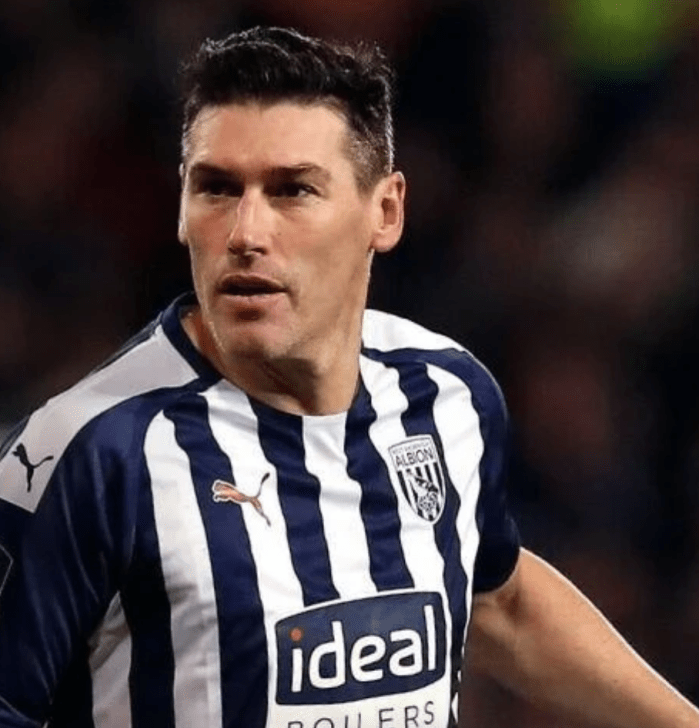
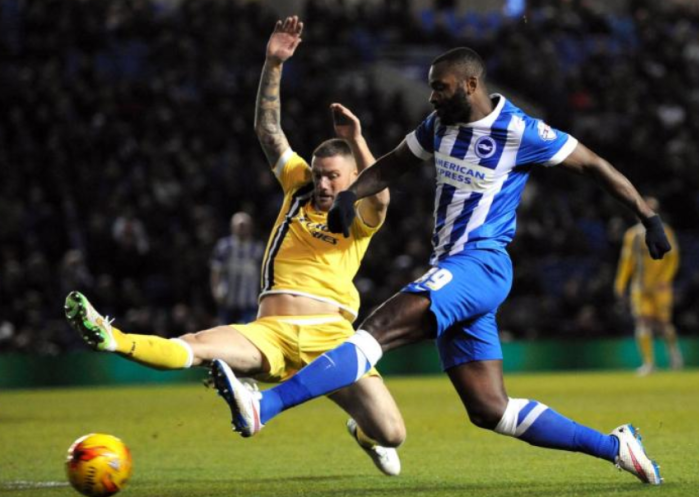
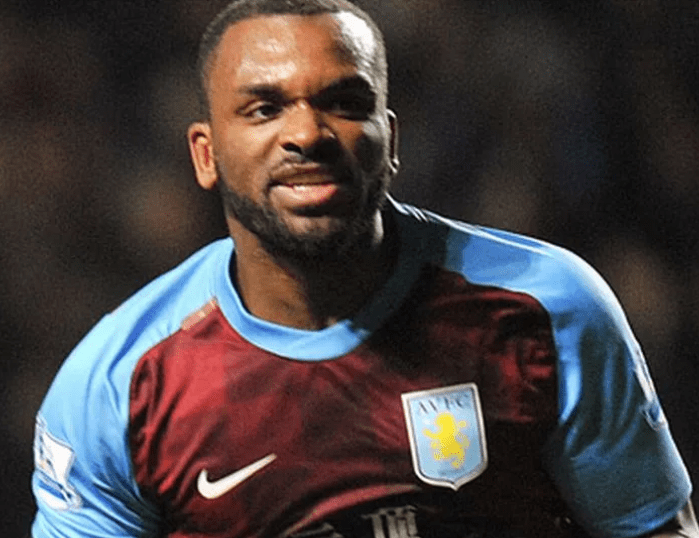
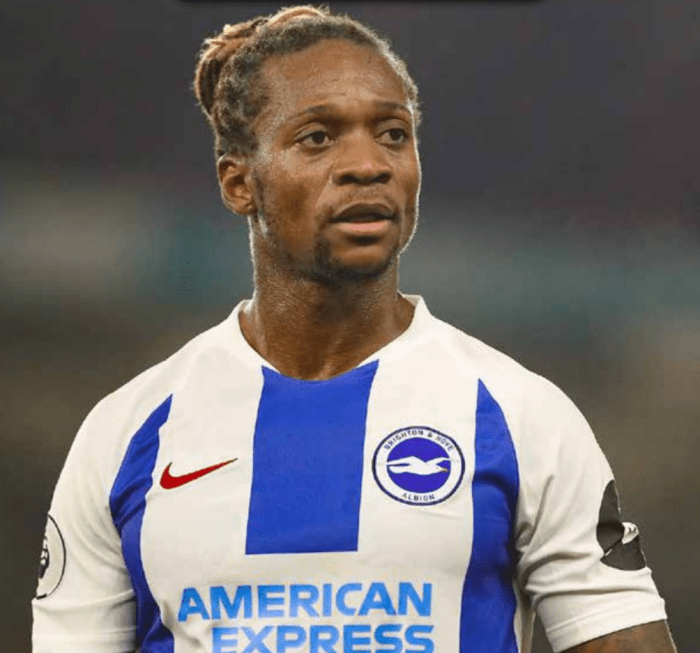
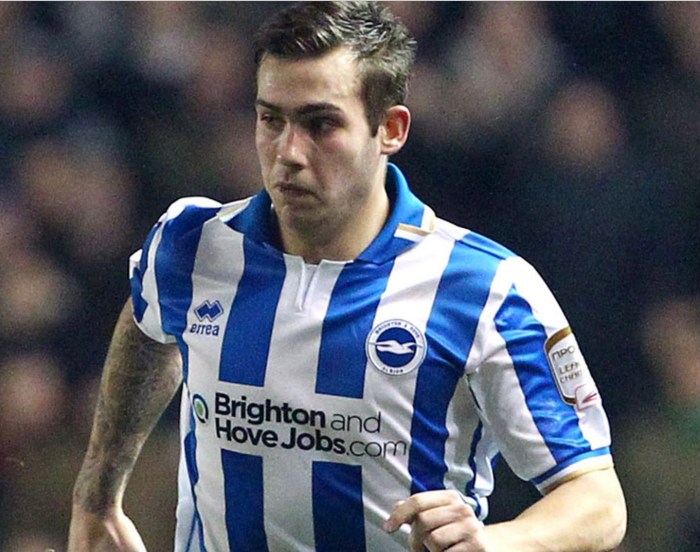
FORMER England striker Darren Bent, who now shares his opinion of the game with listeners to talkSPORT, was still only 30 when he pulled on the stripes of Brighton, one of nine clubs he represented in the Premier League and Championship.

He couldn’t have got off to a better start when he scored on his debut at the Amex, netting against one of his former clubs, Fulham. Unfortunately, the visitors turned the game on its head and won 2-1.

Timing is everything in football and perhaps if Bent had joined the Albion in happier circumstances, there may have been a better story to tell. The Seagulls were about the ditch the manager who brought him to the club – an all-too-familiar scenario Bent encountered on many occasions throughout an 18-year playing career.

At Spurs he played under three different managers – he later described it as “the worst two years of my career” – and his temporary move from Aston Villa to Brighton came about because he’d been frozen out by Paul Lambert even though Gerard Houllier had smashed Villa’s transfer fee record to sign Bent from Sunderland for £18m in January 2011.

Bent arrived at the Amex in November 2014 with 184 goals in 464 career appearances behind him, and only three years earlier had won the last of 13 caps for England, for whom he scored four goals.

“His record speaks for itself,” said Albion boss Sami Hyypia. “He is a top-class striker with more than 100 Premier League goals with Charlton, Spurs, Sunderland and Aston Villa. I hope he will score plenty of goals for us during his time with us.

“There is no doubting his ability to score goals. He also wants to play regular games and that is evident in his willingness to step down from the Premier League to the Championship.”

The player himself told the matchday programme: “Anyone who knows me knows that all I care about is football.

“It has never been about money or anything like that. It has always been about playing football. I’m always at my happiest when I’m playing.”

Bent added: “Brighton felt like the perfect place to come and play football, especially for someone like Sami Hyypia, who I’ve played against many times over the years.

“As a manager, I think he is the right man. He is the kind of guy I want to play for.”

It was a generous assessment in the circumstances because Brighton had managed only two wins in 16 matches before Bent’s arrival.

The experienced striker’s second goal for the Albion looked like it might have earned the beleaguered coach a reprieve from the inevitable. He scored in the 10th minute away at Wolves, stooping to head Inigo Calderon’s first-time cross past goalkeeper Carl Ikeme. It was a lead that lasted until the 88th-minute but was cancelled out by a Danny Batth equaliser after Albion had played 30 second half minutes with 10 men following a red card shown to Bruno. Brighton parted company with the big Finn shortly afterwards.

Bent played one more game, under caretaker Nathan Jones, when Albion fought back from 2-0 down (both scored by on-loan Glenn Murray against his old club) to earn a home draw against Reading, but he was forced off injured after less than half an hour and the knock kept him out of the next game at Fulham, when Brighton won 2-0.

Hyypia’s replacement, Chris Hughton, spoke at his first press conference of trying to keep the player, but Bent had the chance to join a side at the opposite end of the Championship and he moved to promotion-seeking Derby County instead, scoring 12 times in 13 starts as the Rams missed out on a play-off spot by one point.

Released by Villa at the end of the season, he subsequently joined the Rams on a permanent basis in the summer of 2015. He saw even more managerial churn at Pride Park – Paul Clement and Darren Wassall in 2015-16 and three – Nigel Pearson, Steve McLaren and Gary Rowett – in 2016-17. Across the two seasons in the Championship, Bent scored 14 in 67 matches, but a hamstring injury sidelined him for the start of the 2017-18 season.

In January 2018 he went on loan to Championship strugglers Burton Albion under Nigel Clough where he scored twice in 14 appearances (nine starts + five off the bench) including netting the equaliser against his old club Sunderland when Burton’s 2-1 win relegated the Black Cats to the third tier of English football for only the second time in the club’s history. Burton also went down.

Released by Derby in the summer of 2018, he announced his retirement at 35 in July 2019.

Funny that he should end his career at Derby County because it was against them that he scored his first competitive goal for Tottenham in a 4–0 home victory in August 2007.

Bent had previously scored 37 goals in 79 matches over two seasons at Premier League Charlton Athletic before making what at the time was a record £16.5m move to White Hart Lane, where Dutch boss Martin Jol greeted him enthusiastically.

On target for Spurs

Although he already had Robbie Keane, Dimitar Berbatov, Jermain Defoe and Mido as forward options, Jol said of the new signing: “Darren’s strength is his stamina. Normally players will make runs three or four times in 45 minutes, he will do it all the time and if you manage to play balls behind the defence, he will be there.

“He has pace, he links play well and can see a pass – he can exploit the space and play as well.”

What happened subsequently is covered superbly in a 2019 article by Jack Beresford on Planet Football, but, to fast forward a little, Jol was shown the White Hart Lane exit and his replacement, Spaniard Juande Ramos (assisted by Gus Poyet) was a lot less enamoured by the big money signing.

Indeed, Beresford writes: “Bent later recalled how Tottenham became ‘a horrible place to be’ under Ramos, who regularly lambasted players over a lack of professionalism in regards to training and nutrition, demoting several senior figures to the reserves.”

Although Bent struggled to cement a regular starting spot in his first season at White Hart Lane, he was Spurs’ top scorer at the end of the 2008-09 campaign with 17 goals.

While things initially looked good under Bent’s third Spurs boss, Harry Redknapp, the manager’s decision to publicly humiliate the striker eventually brought an unhappy spell to an end.

Bent missed a golden chance to score in a match against Portsmouth and Redknapp told reporters after the game: “You will never get a better chance to win a match than that. My missus could have scored that one.

“Bent did not only have part of the goal to aim for, but he had the entire net – and he put it wide. Unbelievable. I was just so frustrated.”

Bent put in a transfer request and said: “No one goes out to deliberately miss. When you miss a chance and your manager comes out and supports you rather than criticises you, it’s a big help.”

Ironically, circumstances meant Bent went on to make 12 more appearances for Tottenham, scoring five times and his 12 league goals made him the club’s top scorer.

Although Redknapp said Bent had a future at the club, he signed Peter Crouch and Beresford reported Bent later said: “I didn’t feel Redknapp wanted me there. It’s massive to have the support of your manager and that’s not been the case for the last two years.

“My career stood still at Tottenham. There’s a lot of politics going on there. I scored a lot of goals, but it was the hardest two years of my life.”

In those two years, he scored 25 goals in 79 games for Tottenham, but 36 of those appearances had been as a substitute.

Born in Tooting, south London, on 6 February 1984, Bent seemed always destined to be a footballer because his dad Mervyn had been on the books of Wimbledon and Brentford as a youngster.

The family moved to Cambridgeshire when the young Bent was only 10 and his early football career was nurtured at Godmanchester Rovers.

Ipswich Town picked him up as a 14-year-old and nurtured him through their youth ranks until he signed his first professional deal on 2 July 2001. George Burley gave him his debut five months later as a sub in a 3-1 UEFA Cup win away to Helsingborgs IF.

He scored twice in seven league and cup appearances that first season but the Tractor Boys were relegated from the top flight. Burley was soon replaced, temporarily by Tony Mowbray, then Joe Royle, under whom he cemented a regular starting berth in the second tier over the next three seasons.

By the time he left Ipswich in 2005, he’d scored 56 goals in 141 appearances. Former Brighton midfielder Alan Curbishley was at the helm of the Addicks when they paid a fee of £2.5m to take him to The Valley.

He scored five goals in Charlton’s first four league games (including two in the opening day 3-1 win over future employer Sunderland), finished his first season with 22 league and cup goals and was named Charlton’s Player of the Year.

Bent top scored again the following season, with 15, but under three different managers – Iain Dowie, Les Reed and Alan Pardew – they were relegated to the Championship along with Watford and Sheffield United.

As described earlier, Spurs presented the opportunity for him to continue playing in the Premier League, and he continued playing at that level when Sunderland bought him for £16.5million in the summer of 2009. Demonstrating the knack he had at several clubs, he scored on his debut, giving the Black Cats a 1-0 win at Bolton.

Bent went on to score 24 league goals for the Black Cats in his debut season at the club – and you can only imagine how delighted he was (pictured below) to net two in a 3-1 win over Spurs at the Stadium of Light!

The first came after just 34 seconds of the game on 3 April 2010, and a 29th-minute penalty gave him his 23rd goal of the season, although incredibly Bent also saw two other penalties saved by Spurs ‘keeper Heurelho Gomes. He had also missed a penalty in the reverse fixture at White Hart Lane the previous November, when Spurs won 2-0.

He obviously wasn’t the most reliable from 12 yards: I witnessed a Bent penalty miss myself back in 2003 when he’d gone on as a sub for Ipswich against Brighton at Portman Road. With the score at 1-1, Richard Carpenter’s foul on Chris Makin gave Bent the chance to restore the home side’s advantage from the spot. But he blasted the ball over without goalkeeper Dave Beasant needing to make a save. Tony Rougier then put Albion ahead but a Martin Reuser thunderbolt evened it up.

Bent’s 18-month stay with Steve Bruce’s Sunderland proved to be his most prolific goalscoring spell in football, netting 38 goals in just 52 appearances.

In the first half of the 2010-11 season, his partner up front was young Manchester United loanee Danny Welbeck, but in the January 2011 transfer window Bent was on the move again, this time to Villa.

Once again, he got off to a great start for a new club, marking his debut with the only goal of the game in a win over Manchester City. It was the first of nine goals in 16 league appearances which put him joint top scorer with Ashley Young, even though he’d only arrived at the club in January.

After health issues forced Houllier to step down as Villa boss, Alex McLeish took over for what was a tumultuous and under-performing season when relegation was only avoided by two points, although Bent was top scorer with 10.

McLeish’s successor Lambert not only took the captaincy off Bent, he also froze him out, only selecting him for 13 Premier League appearances. If he thought it was difficult enough to have three different managers in three seasons at Villa, when he spent the whole of the 2013-14 season on loan to Fulham, they had three different managers in one season!

Bent’s old Spurs boss Jol was in charge as the campaign got under way but, with only two wins in 14, he was replaced by former Man Utd no.2 René Meulensteen in December before Felix Magath took over in February. All the upheaval saw Fulham relegated with a team that included David Stockdale, Steve Sidwell, Aaron Hughes and Dan Burn. Bent scored six in 14 starts + 15 sub appearances.

If Bent was used to managerial change at club level, it wasn’t much better with the England national team: he played under three different managers in five years!

He had previously earned selection for his country at under 15, 16, 19 and 21 levels – he scored nine in 14 matches for the under-21s – and he was first called up to the full squad by Sven-Goran Eriksson shortly after he’d made the move from Ipswich to Charlton, although he didn’t play in a 4-1 defeat to Denmark.

“Making my Premiership debut for a new club, scoring my first brace in the Premiership and then to get the England call-up on the back of that was just a dream come true,” he told the FA website.

It was another six months before he made his full England debut, in a 2-1 win over Uruguay but he didn’t do enough to stake a claim for a place in the World Cup squad.

His next cap came as an 80th minute substitute for Joe Cole in the 3-2 defeat to Croatia in November 2007 that cost Steve McLaren his job when England failed to qualify for the Euro 2008 tournament.

By the time he made his second start for England, on 14 November 2009, Fabio Capello was in charge. England lost 1-0 in a friendly to Brazil in Qatar when Bent’s teammates included Matthew Upson, Wayne Bridge and James Milner.

“Bent was struggling to make an impact as he attempted to convince Capello of his worth, not helped by a lack of service that rendered his task almost impossible,” reported the BBC’s Phil McNulty. “He had one opportunity, but could not direct a header on target from Milner’s cross.”

He didn’t make the cut for the 2010 World Cup squad but in September was back in the fold and scored his first England goal after going on as a 70th minute sub for Jermain Defoe as England beat Switzerland 3-1 in Basle.

By now at Villa, it was the first of three goals in three games (he also netted against Denmark and Wales) after which he told the Birmingham Mail: “I’d love to be No 9 for as long as possible, there are a lot of top strikers about but Fabio keeps picking me and hopefully I can keep producing the goods.

“Even when the goals weren’t going in, I always believed I was good enough to score at this level and hopefully it’s showing now. I’m finally getting my chance and getting a good run in the side. I’m delighted with it.

“It has been years since my first chance and it’s certainly been a long, long wait but it’s finally come.”

He started the 2-2 Euro 2012 qualifier with Montenegro in October 2011 and the following month was in the side that beat World Cup holders Spain 1-0 at Wembley; it was his header from Milner’s cross that rebounded off a post for Frank Lampard to nod in.

Three days later, he played what turned out to be his – and Capello’s – last game for England as a 70th minute sub for Bobby Zamora when England beat Sweden 1-0 at Wembley.

Yet another man was at the helm when it came to selection for the Euro 2012 tournament and Roy Hodgson didn’t reckon Bent had recovered sufficiently from an injury to merit inclusion.

For all the highs and lows of a lengthy playing career, nothing came close to what he suffered in front of a nation of TV quiz viewers: he scored only three points over two rounds of Celebrity Mastermind and admitted to talkSPORT listeners: “Honestly? It was probably the worst experience of my life!”

He explained: “As a footballer you get nervous before games, when you take a penalty in front of thousands of people, when you join a new club, but when you’re sitting in that chair opposite John Humphrys, it’s pitch black in there and all you can see is him, his eyes looking at you and he’s asking you questions and you just go blank.”

An Albion promotion winner but Bong didn’t chime at Forest

IT WAS WHILE I was adding the DW Stadium, Wigan, to my list of grounds visited that I first noticed Gaetan Bong.

On the afternoon of 18 April 2015, Bong was playing AGAINST Brighton in one of 14 appearances for Wigan Athletic having moved to the UK on a short term contract from Greek side Olympiakos three months earlier.

Bong up against Inigo Calderon while playing for Wigan

Within three months, he was playing FOR Brighton, joining Chris Hughton’s side as a free agent.

The Cameroon international, who had played top flight football in France and Greece, became a regular in the left-back berth for four seasons, including being a Championship promotion winner in 2017, playing 102 times for Brighton, including 51 games in the Premier League.

Bong was the first permanent left-back Albion had signed since the days of Marcos Painter, having had three successive seasons of season-long loan players in that position: Wayne Bridge, Stephen Ward and Joe Bennett.

“Gaetan is a player that we were aware of while he was at Olympiakos,” said Hughton, on signing the player. “He is very athletic, he is a natural left-sided player and it is important to have that balance in the squad.”

Back to that bottom-of-the-table battle in April, though, and Bong was on the left of a back four that also included a certain Harry Maguire (on loan from Hull City).

It was former player Gary Caldwell’s first match in charge after the sacking of Malky Mackay and both sides were struggling to avoid the drop from the Championship.

I probably decided to go to that game anticipating a win for Brighton because Wigan hadn’t won at home since the previous August! But, as sure as eggs is eggs when watching the Albion, Athletic finally registered another win in front of their own supporters: 2-1. It’s always the hope that kills you!

Albion played Player of the Season full-back Inigo Calderon as a makeshift right-winger that day and he got so little change out of his attempts to get past Athletic’s left-back that he was eventually subbed off.

In spite of the result that day, Albion managed to stay up while Wigan went down with Blackpool and Millwall.

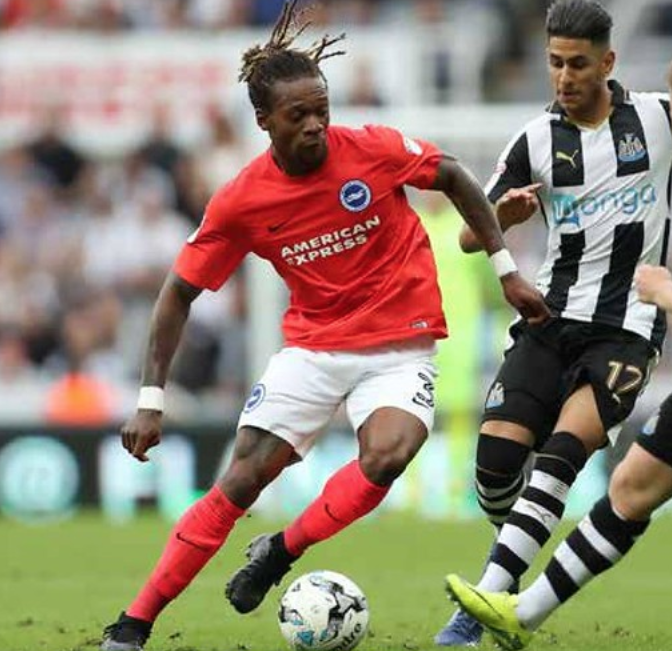
Bong made his Brighton debut in the season-opener at home to Nottingham Forest (a 1-0 win courtesy of a Kazenga LuaLua goal), the club he would join four and a half years later, after he’d lost his regular place at the Albion.

Introduced to Brighton fans in the programme for that match, Bong said: “Once I had spoken to the manager and learned of the plans for the club, then I wanted to be part of this adventure.

“I could have gone elsewhere, I had offers, but I was excited by coming to Brighton. Now I just want to get playing and show the fans what I am about.”
Hughton had problems at left-back in the 2015-16 season when Bong was out for four months with a thigh injury, and back-up Liam Rosenior was also sidelined. Inigo Calderon filled in on occasion and Liam Ridgewell was signed on a short-term deal from Portland Timbers. Although Bong returned to the squad in March, the rest of the season was mainly a watching brief from the bench as Rosenior played out the season in that position.

Back as first choice the following season, a knee injury robbed him of his place for several weeks – loan signing Sebastien Pocognoli filled in – but he still played in 28 matches as the Albion finally won promotion to the Premier League.

Born on 25 April 1988 in Sackbayeme, a suburb of Cameroon’s capital Yaounde, he moved to France as a teenager to join Metz, where he rose through their youth ranks before making his professional debut at 17.

Injuries meant his progress wasn’t as rapid as it might have been but he had a successful loan spell with French second tier side Tours, and then moved to Valenciennes in 2009.

Bong won an under-21 cap for France but went on to win 16 caps for Cameroon. He was in their 2010 World Cup squad but only played in their final group game against Holland. Not entirely happy with the country’s set-up, he briefly retired from international football but returned when renowned former Dutch international Clarence Seedorf was appointed head coach in 2018. Bong even captained his country in a 1-0 friendly defeat against Brazil played at MK Dons in November 2018.

Cameroon international Bong

Bong played for Valenciennes for four years (for the first two playing under former Forest boss Philippe Montanier) and made 117 appearances.

Greek club Olympiakos took him to Athens in August 2013 and he went on to establish himself as a first-team regular, including playing in four Champions League matches and featuring in their league title winning side of 2013-14, before falling out with a new head coach.

Asked by The Athletic to sum up Bong’s attributes, his former Brighton teammate, David Stockdale said: “He comes to win a game. Nothing else. He is strong, he is athletic, he is enthusiastic.

“He is a good person to have around a squad, because he is very professional, he always does his homework before games and generally just looks after himself. He is just strong — that is the word. He is strong, reliable and does what it says on the tin.”

Stockdale added: “He had that drive; that inner drive. He was always going off to do his own work in the gym, to make sure he was properly fit all the time.

“He is one who will say what he wants to say when he feels he needs to. He does know a lot about football, he certainly knows a lot about his position and what he needs to get out of the players around him.”

The goalkeeper pointed out that Bong always had a desire to do well for the team, pointing out: “He was very much a mainstay of the side when I was at Brighton. He is a player you can rely on.”

Unfortunately, a small part of Bong’s time playing in Albion’s colours will also be remembered for an unsavoury incident when he alleged he was racially abused by West Brom’s former Burnley striker Jay Rodriguez.

Rodriguez appeared to pinch his nose after the players clashed during WBA’s 2-0 win over the Seagulls in January 2018, and Bong spoke to the referee about what he said he heard.

A subsequent FA investigation into the matter said the allegation was “not proven” and added there was “no suggestion by any party involved in this case that this was a malicious or fabricated complaint”.

Nevertheless, Bong insisted he heard Rodriguez say: “You’re black and you stink.” The striker denied what he described as a “false allegation” – he claimed he had instead said “breath fucking stinks”.

The dispute led Bong to issue a statement in which he said: “Please let me be clear: I know what I heard and I did not mishear. My conscience in raising the complaint is therefore entirely clear.

“This was my first such experience in more than three years in this country and I would never seek to bring a false charge against a fellow professional. Those who have accused me of doing that do not know me.

“Equally those who have expressed an opinion were not there on the pitch at the time and only Mr Rodriguez and I know exactly what was said and I stand by my original complaint.”

If everyone involved thought that was the end of the matter, Burnley fans had other ideas and I was at Turf Moor in April that year when the home ‘support’ disgracefully booed Bong every time he got the ball.

Albion manager Chris Hughton described their reaction as “shameful” and said of the player: “He’s an incredibly disciplined and straight individual – as honest a person as you will meet. It’s something that happened, it’s not nice at all and of course he’s big enough and strong enough to cope with it. As showed by his performance (the game finished 0-0).”

The respect Albion held for the player was best demonstrated as his time at the club was coming to an end. Bong was going to be a free agent after four years with the club but was handed a one-year extension shortly before Hughton was replaced by Graham Potter.

Chief executive Paul Barber explained to The Argus: “We all felt Gaetan had earned another contract. It is a position we felt we had an opportunity with a player we know, who is a fantastic character.

“The supporters will see what Gaetan does on the pitch — solid, consistent, strong, difficult to get around — but what they won’t know is off the pitch he is a very high-quality person, someone who is very respected and liked throughout the club. Just a decent man, supportive of the young players.

“Those sort of attributes and qualities are so valuable in a club of our size and for the coaching staff and the players. You know whether he plays 10 games, 20 games or 38 games, he is going to be fit, reliable, positive, focused, enthusiastic, consistent and decent.

“All of those things, if you were going out to recruit a left-back, you would be looking for.”

Ultimately, Potter preferred Dan Burn or Bernardo in that position and Bong moved on having made 91 starts and 11 substitute appearances, but only four appearances from the bench in the Premier League under Potter.

His final appearance for Brighton came in the disappointing 1-0 FA Cup third round home defeat to Championship side Sheffield Wednesday. Sadly, when he was subbed off in the 71st minute, there was a chorus of ironic cheers from the home crowd.

Nevertheless, Potter said of the player: “I have only worked with Gaetan for six months or so, but I do know all about the part he played in helping the club get to the Premier League and then establish itself at this level. I’m sure his contribution over the last four years will not be forgotten by our supporters.”

Somewhat bizarrely, it appears that Bong’s move to Nottingham Forest (in the Championship) wasn’t exactly welcomed by head coach Sabri Lamouchi and Nick Miller for The Athletic was brutal in his description of the player’s debut.

“Bong lasted 59 minutes against Charlton, a harrowing hour in which he lost his man for the only goal in the first half, and his eventual removal felt more like an act of mercy than a substitution.”

He didn’t even make the bench for the rest of the season and it was only when his old boss Hughton arrived at the City Ground that he got back into the Forest first team. He played 11 matches under Hughton but only seven in 2021-22 when Hughton’s successor Steve Cooper got them promotion via a play-off final win over Huddersfield Town.

Even so, Cooper was appreciative of the defender’s contributions off the pitch. “We have a good mix of old players – good role models, like Gaetan Bong,” he told The Athletic.

“He doesn’t play much but is a positive influence and I’m sure has conversations with the younger players, which I encourage. The learning players do with each other is a powerful thing.”

After hanging up his boots, Bong set up Ballers & Family Consulting Ltd, a consulting agency which, according to his LinkedIn profile, helps aspiring players to optimise their potential, families to understand the demands of professional football and football clubs to manage/avoid issues concerning certain players.

How the gaffes of goalie González worked both ways

DAVID GONZÁLEZ might well have been an experienced international goalkeeper but conceding a soft goal on his debut didn’t go down well with the Albion faithful.

Brighton fans were a whole lot happier when the same player shipped five AGAINST the Seagulls four months later.

Columbian González, who’d spent two years as a Manchester City back-up ‘keeper, only played twice for the Seagulls during a short-term deal in 2012.

After signing him in January that year, manager Gus Poyet finally gave him a chance at the end of the season after Peter Brezovan had conceded six in a thrashing at West Ham. González was one of six changes to the line-up that had capitulated at the Boleyn Ground.

But, against Watford at the Amex three days later, there were only six minutes on the clock when the Colombian saw Sean Murray’s cracker of a free-kick sail over him into the net.

When González did make a routine save, supporters in the North Stand greeted it with sarcastic applause, which incensed Poyet. In his post-match interview with the Argus, he said: “If David had let a goal in through his legs I wouldn’t agree but I would understand that sometimes we take the mickey out of somebody, but it wasn’t like that so they need to be careful.

“I don’t like it because they are being unfair to an unbelievable group of players who are bringing plenty of joy to this football club and attacking any single person is attacking the whole club.”

The ‘keeper’s debut hadn’t got much better when Troy Deeney put Watford 2-0 up with a penalty a minute before half-time. Thankfully Albion hit back in the second half and forced a draw with goals from captain Inigo Calderon and former Hornet Will Buckley.

Ironically, the Watford ‘keeper that night, Tomasz Kuszczak, was brought in by Poyet that summer and González ended up at Barnsley – the side he made his only other Albion appearance against in the last game of the season.

González keeps goal for Albion at Barnsley and, below, sees five go past him when playing FOR the Tykes at the Amex at the start of the next season

At least he didn’t concede at Oakwell, although the 0-0 bore draw was a dire spectacle: a typical end-of-season encounter.

Almost the only things of note were that Barnsley included a young John Stones in their line-up together with David Button in goal and former Albion flop Craig Davies was up front.

In one of those strange quirks of football, González was back at the Amex at the end of August having been drafted in by the Tykes to cover a goalkeeping injury crisis.

It was not a happy return. As the Yorkshire Post reported: “Brighton were 2-0 up after only 14 minutes, with goals from Ashley Barnes and former England defender (Wayne) Bridge, with Barnsley goalkeeper David González at fault on both occasions.”

González dropped a free-kick by Craig Noone for Barnes to tap in after three minutes and the Colombian was “simply a bystander” when Bridge beat him to his left with a low drive from 25 yards. It was Bridge’s first league goal for nine years.

Ashley Barnes wheels away after scoring past Albion’s former ‘keeper

Barnsley pulled a goal back with a 36th-minute penalty from Davies after Andrew Crofts fouled Jacob Mellis, but Craig Mackail-Smith got the final touch on Barnes’s shot a minute later.

Mackail-Smith scored again four minutes after half-time with a close-range header and Barnes made it 5-1 10 minutes from time, slotting home Kazenga LuaLua’s cross.

Barnsley boss Keith Hill said afterwards: “We had 12 players out but I have no excuses whatsoever. It was inept and I include myself in that. The opposition were excellent and it could have been up to 10-1.”

Born in Medellín on 20 July 1982, González began his career at his hometown club Independiente Medellín and he played more games for them than any other club he subsequently joined (he returned for a four-year spell between 2015-19). And in June 2022 he was appointed their manager.

González also had two separate spells with another Columbian side, Deportivo Cali (he ended his playing career with them in 2020) and left South America for Turkey in 2007, spending two seasons with Çaykur Rizespor.

After failing to make an impression with Argentinian side Club Atlético Huracán he had a successful trial at Manchester City in late 2009 during Roberto Mancini’s reign. He wasn’t named in their 2010-11 Premier League squad but he was the reserve side’s regular ‘keeper until, in the second half of the season, he was sent on loan to Leeds, where he remained back-up behind Kasper Schmeichel and Shane Higgs.

He was unlucky not to get a chance back at City when he sustained an injury at the same time as Shay Given and no.2 Stuart Taylor. Marton Fulop was brought in on loan from Sunderland instead.

At the start of the following season, González was sent on a six-month loan arrangement to Aberdeen, where he hoped his performances would catch Mancini’s eye.

“I want to have a good spell at Aberdeen and to show Mancini that I should be considered for the team,” he told the Daily Record. “But Man City have so much money they can go out and buy just about any player they want.

“The way things are going they will become the best team in the world and I see that happening sooner than a lot of people think.”

The goalkeeper featured in 14 games for the Scottish Premier League club when first choice Jamie Langfield was sidelined following a seizure. On his return to Manchester, his contract was terminated by mutual consent and the free agent was taken on by Brighton, where Poyet had just dropped Casper Ankergren and installed Brezovan as his first choice ‘keeper.

Poyet told seagulls.co.uk: “David is an international with an excellent pedigree, playing over 300 senior games at the top level in South America, Turkey and Scotland. He has won the league in Colombia and has been capped by the national team.

“The idea is for David to compete with Peter and Casper to be first choice. Peter has come in recently and done very well, and is currently number one, but it’s now up to both David and Casper to put pressure on him to be first choice.”

That mauling at the Amex in August 2012 was one of only three Championship games González played for Barnsley and in Albion’s matchday programme he had admitted he saw his time with the Tykes as a shop window.

“I want people to come and have a look, to see what I’m capable of, but nothing else has been said really,” he said. “I’m just here for the time being while the boys are out with injury and suspension, so I’m just going to enjoy it and try to do the best I can.” Oops!

The following year he moved back to Columbia, initially playing for Deportivo Pasto, then Águilas Doradas before returning to Independiente Medellín in 2015.

Binned off by Baggies, Mattock welcomed Seagulls chance

FOR A FEW seasons, it seemed Brighton’s left back spot would always be occupied by a player on loan.

In the second half of the 2011-12 season, it was Joe Mattock who slotted in there, having been edged out by a change of management at West Bromwich Albion.

“I am delighted to come and play where I am wanted and for a manager who feels I can do a job for him,” Mattock declared in a matchday programme.

Mattock made his debut as a substitute in Brighton’s 4 February 1-0 home win over his former club, Leicester City, and he subsequently made 14 starts after Gus Poyet borrowed him from the Baggies.

Mattock’s signing was largely to cover a long term hamstring injury to Marcos Painter after Romain Vincelot and Gus Poyet’s assistant, Mauricio Taricco, had been temporary stand-ins.

Mattock made his debut in Albion’s 2-1 win away to Leeds United on 11 February with fellow West Brom loanee Gonzalo Jara Reyes occupying the right-back spot.

Unfortunately, Albion only registered three more wins through to the end of the season, so it wasn’t a particularly successful period.

Mattock was on the scoresheet once, netting Albion’s only goal in a 3-1 defeat away to Blackpool, and the side finished 10th in the Championship.

Mattock was given a free transfer by the Baggies at the end of the season and, while Poyet viewed signing him permanently as an option, the defender went instead to Sheffield Wednesday, putting pen to paper on a three-year deal.

It would be something of an understatement to say he wasn’t missed, bearing in mind the next loanee left back through the door was Wayne Bridge!

Born in Leicester on 15 May 1990, Mattock was a successful graduate of his hometown club’s academy system, initially as a forward, then as a midfield player before settling as a left-back from the age of 16. He was named Leicester’s academy player of the year in 2006-07.

Leicester caretaker boss Nigel Worthington gave him his first team debut as a substitute in his first game in charge, a 2-1 Championship defeat to Norwich City.

He was chosen at left-back for three more matches at the end of that season, a 2-1 defeat at home to Birmingham and 1-0 wins away to Preston and Barnsley.

Current day BBC pundit Dion Dublin was something of a guiding light to him as he was progressing. “He was a good bloke who spoke to all the young players,” Mattock told the matchday programme. “He was playing centre-back at the time, so taught me a few things about how to defend and how to be a professional footballer.”

While the 2007-08 season saw a veritable merry-go-round of managers as the side eventually lost their Championship status, Mattock’s performances attracted attention and it was said West Ham and Aston Villa had bids to buy him rejected.

After gaining England under 17 and under 19 caps, Mattock went on to win five England under 21 caps, making his debut in a 2-0 home win over Bulgaria in November 2007 alongside the likes of Joe Hart, James Milner and Theo Walcott.

He also played in a 1-1 draw away to Portugal, a 3-0 win over Republic of Ireland, he went on as a sub in a 0-0 draw at home to Poland and his last international action saw him start in the 3-2 defeat away to Ecuador in February 2009.

Although he was selected for the squad, Kieran Gibbs and Ryan Bertrand subsequently got the nod ahead of him.

In August 2009, unsettled Mattock finally got to follow former teammate Richard Stearman away from the Foxes when West Brom, newly relegated from the Premiership, paid a £1m fee to take him to The Hawthorns.

The manner of his exit didn’t go down well with Leicester boss Nigel Pearson, who said: “I like to deal with people straight up. I don’t like it when the player rings the chairman when we are playing a pre-season game to ask to leave when he is out of the country on international duty.

“That gives you a taste of the situation and we’ll wait and see what happens.”

Mattock made 29 starts plus five substitute appearances in Roberto di Matteo’s side as the Baggies were promoted back to the Premier League in runners up spot.

But he didn’t feature in West Brom’s elite side and instead was sent out on loan to Sheffield United where he met up with another loanee from the Black Country, Sam Vokes, who was later on loan with him at the Albion.

Di Matteo’s eventual successor, Roy Hodgson, didn’t fancy the defender either and, before he moved to Brighton, he spent time on loan at Portsmouth who were managed by his former West Brom coach, Michael Appleton.

After choosing to join Wednesday, Mattock barely got a look-in during his first season, when Dave Jones was Owls boss, and supporters were convinced he would be shipped out.

But he was selected for around half of the 2013-14 season’s fixtures under Stuart Gray, and played in 25 games, plus three as a sub, the following season.

“I didn’t have a great start at Wednesday,” Mattock told the Rotherham Advertiser. “I didn’t get on with the manager.

“Then Stuart Gray came in and played me all the time. I was told they thought they were going to offer me a new deal, but I got injured six weeks before the end of my third year and it didn’t happen.”

In the summer of 2015, he was one of 11 Owls players released and the left-back made the short South Yorkshire journey to Rotherham United.

Being settled in the area, he was keen not to have to up sticks and he was persuaded to join by then boss Steve Evans.

Evans was soon on his way from the AESSEAL New York Stadium but Mattock remained and has subsequently played under Neil Warnock, Alan Stubbs, Kenny Jackett and Paul Warne.

He is now in his seventh season with the Millers and has played more than 200 games for them in the Championship and League One.

“I was promoted from League One with Leicester when I was 19. The year after, I was promoted to the Premier League with West Brom,” he told the Rotherham Advertiser.

“When you’re young you don’t realise how much it should mean to you. You do when you’re older, so when we went to Wembley last season (2017-18) and won in the play-off final (they beat Shrewsbury Town 2-1), in front of all the family, in front of all the fans, it was a perfect day, one of the big highlights of my entire career.”

Why Roman’s roubles spelled bad news for Alexis Nicolas

A PROMISING young midfielder edging towards first team football at Chelsea had his dreams extinguished when Roman Abramovich arrived with lorry loads of cash.

Manager Claudio Ranieri had let Alexis Nicolas know that he was heading in the right direction after he’d broken through to the fringes of the first team.

But when Abramovich took over at Stamford Bridge, big name signings started to arrive and Nicolas was left way down the pecking order behind the likes of Juan Sebastián Verón, Claude Makélélé, Geremi and Scott Parker.

New boss Jose Mourinho informed the youngster he should look elsewhere to make progress, and Brighton, newly promoted to the Championship, offered a refuge for the talented London-born Cypriot under-21 international.

Albion’s midfield options were depleted at the beginning of the 2004-05 season with Simon Rodger a long-term absentee, stalwart Richard Carpenter recovering from close-season knee surgery, and Charlie Oatway also sidelined through injury.

It meant Nicolas had a chance to show what he was made of and he played 15 games on loan from the start of the season through to October.

Enthusiastic Albion boss Mark McGhee said: “He has brought energy and he has got quality. He is a certain type of player, similar in many ways to Charlie Oatway.

“He is not a box-to-box goalscoring midfielder but what he does brilliantly is that he is always in the area around the ball where you need him.

“He breaks things up quickly and, when we win possession, we go more quickly from defence into attack with Alexis in there than we did previously.”

Nicolas clearly relished the opportunity he’d been given and, as the prospects of a permanent move grew stronger, he told the Argus: “It’s flattering that Brighton want to keep me. I like it here. I am happy with the club and the manager and I don’t see why it can’t be permanent.

“If everything can come together, and I think it will be a good move, then I don’t see why it won’t go ahead.”

He added: “There is a lot of stuff to be sorted out with a lot of different people.

“All I can say is I am happy here and I like the club. They are good people and the fans are great. Anyone with an offer to come here has got to be chuffed with that, because it is a great set-up.”

McGhee made no secret of his admiration for the 21-year-old, saying: “He’s been a fixture in the team and that says it all. He is improving week in and week out and I think he has got a good future.

“He has a terrific little engine and attitude. He quietly goes about his job and he has been really important for us so far this season.

“The boy himself is modest and unassuming. He loves Chelsea, he loved being there and I am sure he will be very disappointed to leave, but he wants to be a footballer more than he wants to be a Chelsea player. That is the important thing for us.”

McGhee explained the difference Nicolas made to the side. “He has that knack of being in the right place at the right time; he seems to cover such a big area. For a physically small lad, he is everywhere.

“He anticipates where the next ball is going and gets there early, puts people under pressure, wins the ball back and activates us going forward. He wins it and, before you know it, we’re going forward.”

When he signed permanently, Nicolas said: “It feels great. You are always sad to leave a club and I have been at Chelsea for a while, but I am excited and glad that I have signed for Brighton.

“The role I play is similar to Claude Makélélé’s and I used to speak to Claude regularly. He used to give me a lot of good advice. I’ve learned from all of the players at Chelsea, but now it’s time for me to open another chapter in my life and learn some other stuff.”

Nicolas said breaking into the Chelsea first team had whetted his appetite to return to that level and he told the Albion matchday programme: “Having played in the Premiership, I would like to achieve it here at Brighton and I don’t see why one day Brighton can’t be a club in the Premiership.”

Unfortunately, he joined an injury and suspension hit squad that couldn’t compete with better-resourced clubs in the second tier because of crowd-restricted home gates at the Withdean Stadium.

While Nicolas impressed in his first season, playing in a further 19 games, McGhee was forced to sell star players Danny Cullip and Darren Currie to bolster the club’s perilous finances, and the side only just managed to avoid the drop.

The following season, with Dean Hammond and Carpenter the mainstays in central midfield, Nicolas too often watched on from the bench and missed several weeks because of ankle and knee injuries.

Asked about his watching brief from the sidelines, he said in a matchday programme article: “It’s been very frustrating for me this season and I’m upset about it. I’d like to think that a lot of the fans would like to see me out there. The manager can only pick eleven players and he’s the boss – what he says goes and I respect that.”

His frustration was barely disguised in an interview with the Argus on 23 Feb 2006, after a reserve match he was due to play in was called off.

“It seems impossible for me to get 90 minutes at the moment,” he said. “I was out for six weeks injured and have only managed 60 minutes football against Millwall in a reserve match since because of postponements.

“Before that I was mostly on the bench. I have hardly played this season.

“Even though I am not fully match fit, I have been training hard and have enough about me to be able to cope. I am not thinking of myself when I say this. I have put personal goals to one side.

“After all, I pulled out of international squads with Cyprus earlier in the season even if it meant I could just be on the bench for Brighton. I feel I have a lot to offer.”

The midfielder added: “What matters is Albion. I love the club, the lads and the fans and want to do my best for them.”

Unfortunately, after playing only 12 matches in 2005-06, he wasn’t kept on after the Seagulls were relegated on 30 April 2006, and he never played league football again.

Born in Westminster on 13 February 1983, Nicolas went to Trent CE Primary School in Cockfosters, where he first showed a talent with a football. He also enjoyed long distance running and tennis.

He played football for a decent Sunday League side in Colliers Wood alongside two other future professionals, Steve Sidwell and Leon Britton, and eventually became part of Arsenal’s youth set-up. But he ended up as an apprentice at Aston Villa, and got taken on as a professional. He was in the same under-19s squad as future Albion goalkeeper Wayne Henderson and defender Liam Ridgewell.

But in December 2001, he joined Chelsea on a free transfer, and with 24 starts plus one as a sub, he missed only one of the reserves side’s 26 matches in the 2002-03 season.

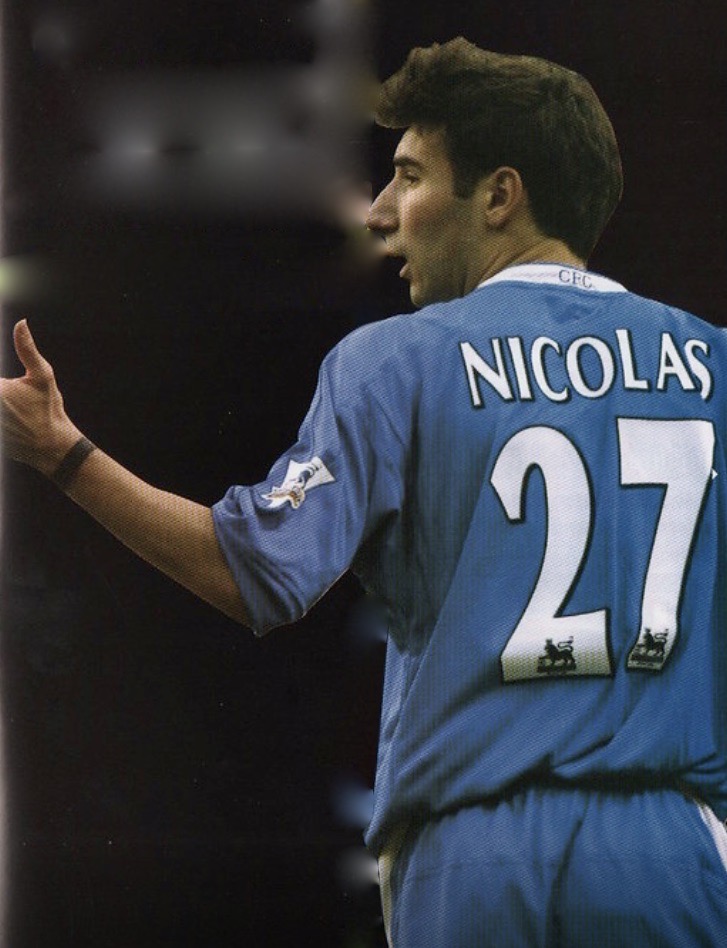
He was handed the no.27 shirt for the 2003-04 season and made his Chelsea first team debut in their 1-0 FA Cup win away to Scarborough on 24 January 2004.

John Terry scored the only goal of the game and Nicolas played in midfield alongside Frank Lampard and Emmanuel Pettit in a side also featuring Joe Cole and Wayne Bridge.

Guardian football reporter, Paul Wilson, noted: “Alexis Nicolas made an encouraging debut, but time and again Cole, in particular, would attempt something complicated when a simpler option was available.”

Nicolas made his Premiership debut a week later in a 1–0 win over Charlton Athletic. His only other appearance was as a 90th minute substitute for Lampard as the Blues rounded off the season with a 1-0 home win over Leeds United.

Nicolas spoke about those early years at Chelsea in an interview with Simon Yaffe of planetfootball.com.

“Ranieri called me into his office at the end of 2002-2003 and told me the club didn’t have a lot of money to invest and that he didn’t have too many midfielders at his disposal, so I would be in his plans for the following season,” Nicolas said.

Even as the oligarch’s takeover was going through in the summer of 2003, the youngster was part of Ranieri’s team which beat Newcastle United 5-4 on penalties in the final of the FA Premier League Asia Cup in front of a crowd of 41,500 in Kuala Lumpur’s national Bukit Jalil stadium. It was the first piece of silverware of the Abramovich era.

“It maybe wasn’t the most glamorous of trophies, but it was still the first of many under the new owner,” Nicolas said.

It wasn’t long before a flurry of big-name signings soon changed the picture for Nicolas; the arrival of five midfielders in particular being somewhat ominous.

“I had planned to go out on loan because I had fallen so far down the pecking order,” Nicolas added. “But some of the midfielders, like Makélélé and Petit, were picking up injuries, so I stuck around.

“Looking back, it was easy to think, ‘He’s signed, so that is why I am not playing,’ but it was really a turning point in Chelsea’s history, and it was nice to have been part of it.

“I was pleased for the club when Abramovich took over but also a little bit disappointed for myself.”

After relegated Brighton released him, Nicolas tried to continue his league career and had a trial with Bradford City, but after an unremarkable game for their reserves side, manager Colin Todd told the Bradford Telegraph & Argus: “At the moment I can’t guarantee him anything. His fitness levels aren’t the best but if he wants to continue to train with us and try to improve on that then it’s up to him.”

In fact, he decided to join St Albans City on 26 September 2006 and made his Nationwide Conference debut in a 2-1 defeat at Weymouth four days later.

On 12 November, the St Albans City website noted: “A knee injury restricted Alexis to just six appearances for St Albans City but, with a number of League One and League Two sides showing an interest, the player has decided to move on.”

Nicolas said he was grateful to manager Colin Lippiatt for giving him the opportunity and added: “I was not in the best of states when I joined the club but everyone has been a great help and when fully fit I hope to join one of the League One or League Two sides who are showing an interest in me.”

But it was a career in property investment that opened up for him instead and in 2012 he set up his own business in partnership with Ryan Springer.

He wasn’t completely done with football, though, and, also in 2012, Nicolas had a spell as player-manager of Hadley FC, a Spartan South Midlands League Premier Division side, and in 2014-15 he was part of the club’s management team under former Spurs and Chelsea player Micky Hazard.

Pictures as featured in the Albion matchday programme and from various online sources.

Irish defender Stephen Ward surprised Albion supporters

SWARDWHEN Wolverhampton Wanderers slipped into the third tier, they urgently needed to loan out some of their higher-paid players – hence, in August 2013, the arrival at Brighton of left-back Stephen Ward.

Most Seagulls supporters were not sure of his attributes having had the pleasure the previous season of watching the imperious Wayne Bridge shine in that position while on loan from Manchester City.

However, Albion fans were delighted to be proved wrong after Ward helped to shore up a defence that had leaked seven goals in the first eight days of the season. The Irish international defender went on to make a total of 47 appearances and was runner-up to Matt Upson as Albion’s 2013-14 player of the year.

Ward also chipped in with four goals, including the tide-turning equaliser at Nottingham Forest on the final day of the season.

Forest equaliser

Although injury-hit Albion failed to get past Derby County in the play-off semi-finals, it was thought Ward would sign permanently for the Seagulls that summer. But Burnley stepped in, offering Wolves and the defender more money, not to mention the more immediate chance of Premier League football.

Ward’s agent, Scott Fisher, later told the Argus that dithering or perhaps a bit of brinkmanship by then head of recruitment David Burke had scuppered the deal.

“We really tried our best to make Stephen Ward a permanent Brighton player. Had they done their business earlier this wouldn’t have happened,” he said.

Ward spoke more about the circumstances in an interview with the Argus in April 2016.

Previously, as the season drew to a close, Ward told the Argus: “If I’m going to move on, I don’t see why this wouldn’t be one of the better options for me. I’ve been here for a year; I’ve really enjoyed it.

SW Argus

“I couldn’t say one bad thing about the club. The crowd we get, the stadium we have is phenomenal, probably the best in the Championship, and with the new training ground the club is on a real up and a real high.

“If I was to move on from Wolves, Brighton would definitely be high on the list. It’s not in my hands, it’s going to be in other people’s hands to discuss the future, but it has been a great move for me. I’ve really enjoyed it. It’s a really good club and one people should be privileged to play for.”

Ward went on to spend five years at Turf Moor, making 110 appearances, but only featured 11 times in the 2018-19 season, and manager Sean Dyche told punditarena.com: “He (Ward) has been brilliant for us, absolutely brilliant, he’s done a fantastic job.”

SW BurnPerhaps it was no surprise that former Albion coach Nathan Jones stepped in to sign the experienced defender for Stoke City, where he’d taken on an often-perilous managerial hotseat.

Jones said: “He’s had a fantastic career, the only downside for him is his age, because he isn’t what we normally go for.

“But I feel we need to add certain things to the changing room and the environment and Stephen brings those.

“He’s a wonderful player, a great character, very experienced. He’s been promoted – won the Championship twice. He’s an Irish international, I worked with him, he’s technically very, very good so he ticks every box. It’s just the aging process is the only drawback.

“With Stephen, he’s a specialist in what we need and he will provide vital competition and good strength in that area.”

Unfortunately Ward couldn’t claim a regular starting place and in December 2019 picked up a calf injury which sidelined him for four months. Having made only 17 appearances for City, in August 2020 he switched to League One Ipswich Town on a free transfer.

After playing 29 games for them in the 2020-21 season, the club announced on 5 May 2021 he would be released at the end of the season (one more appearance would have triggered a 12-month extension to his contract).

Born in Dublin on 20 August 1985, Ward grew up in Portmarnock and, as a schoolboy, played football for Home Farm and Portmarnock before joining League of Ireland side Bohemians.

He attributed his eventual success in making it as a player to staying in Ireland when he was younger and continuing to live at home rather than going to play at a UK club’s academy.

In an excellent lengthy interview with the Irish Independent, he said: “I had a few trials – Leicester a couple of times, I went to Aston Villa a lot and Hibs for some reason – nothing worked out and I signed for Bohs. And the most important thing for me then was living at home and having my family around me.

“It does depend on the academy, but you are in a bubble from a young age. You train in a certain way, everything is done for you; I know you get your jobs, but not that many now, and sometimes there is a mentality that once you are in an academy, you’ve made it. I was 17 and played in a league where players were playing for their mortgages and to put food on the table.”

Originally a forward, he scored 26 goals in 93 appearances, and, having been looked at by Sunderland boss Mick McCarthy and deemed not quite ready, McCarthy kept tabs on him when he took over at Wolves.

“I signed for Wolves as a striker,” Ward told the Irish Independent. “I was not a typical number nine, scoring 20 or 30 a season, but an old-fashioned centre-forward running round, closing down.

“We signed a couple of strikers – Sylvan Ebanks-Blake and Chris Iwelumo – and I knew if I was going to play consistently it was probably not as a centre-forward. So, I went to left-wing for a bit.

“I played at left-back at Norwich for 30 minutes or so when we went down to nine men. We scraped a draw and afterwards Mick said, ‘You could make a career playing there.’ I thought, ‘Yeah, whatever’. Next season, three games in, and new left-back George Elokobi suffers an awful injury, the window was shut and Mick had no one else . . .”

On the international stage, Ward played through the age levels for the Republic of Ireland and had a dream full international debut in May 2011 as he scored in a 5-0 win over Northern Ireland.

He went on to play 50 times for his country before announcing his retirement from international football in March 2019.

Matthew Upson was a class act in Albion’s defence

ARTICULATE pundit Matthew Upson was deservedly player of the season after starring in Brighton & Hove Albion’s back line during the 2013-14 season.

Earlier, in a career spanning eleven clubs, he played more times (144 plus once as sub) for West Ham United than any of his other clubs. He also won 21 England caps.

Upson initially joined the Seagulls during the second half of the 2012-13 season, signing on loan from Premier League Stoke City, where, in two years, he’d only managed 21 games (plus four as sub) following four years with the Hammers.

On signing him for Brighton at the age of 33, manager Gus Poyet told seagulls.co.uk, “When we had the chance to bring a player with the quality of Matt until the end of the season we went for him.

“He’s experienced, he’s been a regular Premier League player and there were no doubts about it. He has presence, he’s a leader as well and it’s a good opportunity for us to use him the right way and for him to play football.”

Upson joined a side already blessed with the on-loan presence of another former England international in the shape of left-back Wayne Bridge, but unfortunately the side couldn’t get past arch rivals Crystal Palace in the play-offs to gain promotion from the Championship.

Although Poyet departed, Upson decided to make his move to Brighton permanent and played 41 games, mainly alongside skipper Gordon Greer. Unfortunately, Oscar Garcia’s squad also stumbled in the play-offs.

Hampered by an ankle injury towards the end of the season, although Upson played in the first leg 2-1 home defeat to Derby County – when he conceded a penalty with a clumsy foul – he was one of several players to miss out through injury in the away leg, when the Rams prevailed 4-1.

At the season’s end, Upson declined a new contract offer with the Albion and decided to seize the opportunity to return to Premier League football with newly-promoted Leicester City.

As it turned out, injury delayed his debut by seven months and he made just six appearances for the Foxes before ending his playing days with MK Dons, where he was limited to four full appearances plus three as a sub.

Upson is now a regular pundit on our TV screens, displaying verbally the sort of calm assuredness he demonstrated out on the pitch.

So where did it all begin? Born on 18 April 1979 in Eye, a small Suffolk market town, Upson went to Diss High School, over the border in Norfolk, and his football ability first shone at Diss Town FC. He went on to the Ipswich Town Centre of Excellence but it was Luton Town who took him on as a trainee after his Ipswich coach, Terry Westley, had switched to the Hatters.

It was to be a lucrative decision by Luton because, after signing him as a professional in April 1996, a year later they sold him to Arsenal for £2million. He only ever made one first team appearance for Luton and that was as an 88th minute substitute against Rotherham United in August 1996.

Unfortunately, his time with the Gunners was dogged by injury and lack of opportunity because of the solid form of the likes of Tony Adams, Steve Bould and Martin Keown.

Just as he was beginning to make a breakthrough in the 2001-02 season, taking the ageing Keown’s place, he broke his leg and missed out on the Gunners’ end-of-season League and FA Cup double, although he earned a league winners’ medal. At the season’s end, he’d made 16 appearances plus six as a sub.

While waiting for his chance at Arsenal, he had gone out on loan, to Nottingham Forest and Crystal Palace, then Reading after his return from the leg break. But after a total of 39 appearances, plus eight as a sub, for Arsenal spanning five and a half years, he made a £1m move to Birmingham City in January 2003.

City were halfway through their first season in the Premier League, under Steve Bruce, and Upson made 14 appearances as the side finished in 13th place.

Upson told the dailystar.co.uk: “I had a good four and a half years under him at Birmingham. We had quite a successful period there.”

It was during his time with the Blues, during which he made 127 appearances plus one as sub, that his form was recognised with a call up to the England squad.

He had played at youth level and 12 times for the under 21 side but his first call-up for the senior squad came in February 2003, when he was an unused sub for England’s 3-1 win over Australia.

Three months later, coach Sven-Göran Eriksson gave him his debut when he came on for the second half In England’s 2-1 win over South Africa in Durban on 22 May 2003.

His final international appearance also came in South Africa – when he scored in England’s 4-1 defeat to Germany which brought about their exit from the 2010 World Cup. His involvement in the tournament was keenly followed by relatives and the whole community back in Diss.

He was involved in the squad for two subsequent games in September that year, but didn’t get to play. In total, he won seven caps while with Birmingham and 14 under Fabio Capello, after he had moved to West Ham. Of his 21 England appearances, 16 were as a starter, five as a sub.

Birmingham boss Bruce was reluctant to lose him but, on the final day of the transfer window in January 2007, the recently appointed Hammers boss, Alan Curbishley, paid £6million to take him to Upton Park, where enjoyed the longest spell of his playing career.

As he’d experienced at previous clubs, injury hampered him early on but eventually he got a regular spot in the side and subsequently took on the captaincy after the departure of Lucas Neill in August 2009.

It was after relegation from the Premiership during Sam Allardyce’s tenure as manager that Upson finally left the Hammers at the end of the 2010-11 season.

studio upson

Saint Dean a sinner in some Albion fans’ eyes

HASTINGS-born Dean Hammond enjoyed two spells with the Albion having joined the club aged 11 and progressed from the school of excellence though the youth team and reserves to become a first team regular and captain of the side.

He also went on to captain Southampton as they rose from League One to the Premiership.

However, it’s a pretty surefire bet to say fans would be divided if asked to judge his contribution.

An over-the-top celebration in front of the Albion faithful after scoring for Southampton at Withdean made him public enemy number one in many people’s eyes.

The way he left the club under a cloud, suggesting they lacked ambition, was another catalyst for rancour.

Personally, I struggled with his penchant for missing some unbelievable, gilt-edged chances to score. There was one away at Leicester (one of his future employers) – a proverbial ‘easier to score than miss’ – that was particularly galling in a game that finished 0-0.

Putting all these things to one side, there is no denying that he ultimately enjoyed a decent career and, while his most successful years were spent in the second tier of English football, he also got to play at the highest level.

Albion have struggled for a good many years to bring through promising local talent from schoolboy level but Hammond was one of the few who made it.

Born a couple of months before Brighton’s 1983 FA Cup Final appearance, he made his Albion bow in December 2000 when former Saints full-back Micky Adams put him on as a substitute in a 2-0 Football League Trophy win over Cardiff, but it was only when former youth coach Martin Hinshelwood briefly held the first team manager’s role that he got his next chance.

That came as an 85th minute substitute for Nathan Jones in a 4-2 defeat at Gillingham in September 2002 and 10 days later he made his first start and scored his first Albion goal (celebrating below right) after only eight minutes in a 3-1 League Cup defeat to Ipswich.

When Hinshelwood was sacked, new boss Steve Coppell opted for experience over youth and Hammond’s next competitive action came during two spells out on loan in 2003 – at Aldershot (seven games) and Orient (eight games).

In an Argus interview in November 2006, Hammond said: “It’s been up and down for me at Brighton. I loved it when I came through the youth team and then broke into the first team at quite a young age.”

Hammond watched from the sidelines at the Millennium Stadium in May 2004 as the Albion won promotion to the Championship via play-off victory over Bristol City. A couple of months later, the Argus was reporting how he had been given three months to prove he had a future with the club.

He did enough in a handful of games to be offered a contract until the end of the season and, although he was mainly used from the bench between October and March, by the season’s end he was playing a pivotal role in helping to steer Albion clear of the drop zone, scoring the equaliser in a 1-1 draw away to Burnley and getting both goals in a vital 2-2 draw at home to West Ham.

Before the 2006-07 season got under way, manager Mark McGhee obviously felt players like Hammond needed toughening up and sent him and a few others to some boxing sessions with former world heavyweight title contender Scott Welch, from Shoreham, at his Hove gym.

Hammond told Andy Naylor of the Argus: “When the gaffer mentioned it, I think the boys were thinking ‘Boxing? How is that going to help us’. But he worked on the mental side, as well as the power and strength stuff.

“If we felt tired or felt we couldn’t go on, he was pushing us and he said it would help us in a game. I think he’s right. When we went back for pre-season training you tended to push yourself that bit more, so I think it will help in the long run.”

Unfortunately, it didn’t help enough because the season saw Albion relegated back to the third tier. It wasn’t long before former youth coach Dean Wilkins was installed as manager and youngsters were given a chance to flourish in the first team, with Hammond appointed captain.

“I would say it is the best time of my career and I am really enjoying it,” he told Naylor. “It’s brilliant at the moment.”

In the same interview, however, there were perhaps the first rumblings of his discontent with the progress of the club.

“I’ve been here since the age of 11. I’m like every other player. I’m ambitious and I want to do the best I can in my career and play as high as I can. Hopefully that will be with Brighton.”

A career-ending injury to Charlie Oatway and Richard Carpenter’s departure from the club in January 2007 led to Hammond taking over the captain’s armband and 2006-07 was undoubtedly his best Albion season. He finished with 11 goals from 39 appearances and the award of Player of the Season.

D Ham v W HamIt was in the 2007-08 season that it turned sour between player and club, even though before a ball had been kicked he told the Argus he thought Brighton had it in them to make the play-offs.

“We can beat anyone in the division. It’s just about being consistent. Realistically we can push for the play-offs,” he told Brian Owen.

Considering he had been at the club from such an early age, what happened next clearly rankled with chairman Dick Knight, who talked about it in his autobiography, Mad Man: From the Gutter to the Stars, the Ad Man who saved Brighton.

Knight accused Hammond’s agent, Tim Webb, of touting his client around Championship clubs while there was an offer on the table from the Albion that would have made him the highest paid player at the club.

“Hammond kept telling the local media that he wanted to stay and sign a contract, but I think he was being told to hold out for more money,” said Knight.

Because Hammond could have walked away from the club for nothing at the end of the season, the pressure was on to resolve the situation one way or another by the close of the January transfer window.
All the off-field stuff was clearly affecting Hammond’s head and I can remember a game at Oldham in the second week of January when he lunged into a reckless challenge after only nine minutes which certainly appeared to be a deliberate attempt to get himself sent off. That early dismissal was his last action for the Seagulls until his return to the club in 2012.

“I didn’t want to sell Dean but I was forced to,” said Knight, who persuaded Colchester United to buy him for £250,000, with a clause added in that Brighton would earn 20 per cent of any subsequent transfer involving the player. “In normal circumstances, I might have got more, but time was running out,” Knight added.

The move to Colchester wasn’t an unbridled success because his arrival couldn’t prevent them being relegated from the Championship, but, with Paul Lambert as manager, Hammond took over the captaincy in December 2008 and by the season’s end was voted Player of the Season.

Throughout the season there had been speculation that Southampton wanted to sign him and a deal duly went through in August 2009. At the time, Alan Pardew was the Saints manager and Hammond’s former Albion youth team coach and first team manager, Dean Wilkins, was Southampton first team coach, and played a part in him deciding to make the move. “His knowledge of the game and his passion for football is second to none and he was really good for Southampton – he had a good partnership there with Alan,” said Hammond.

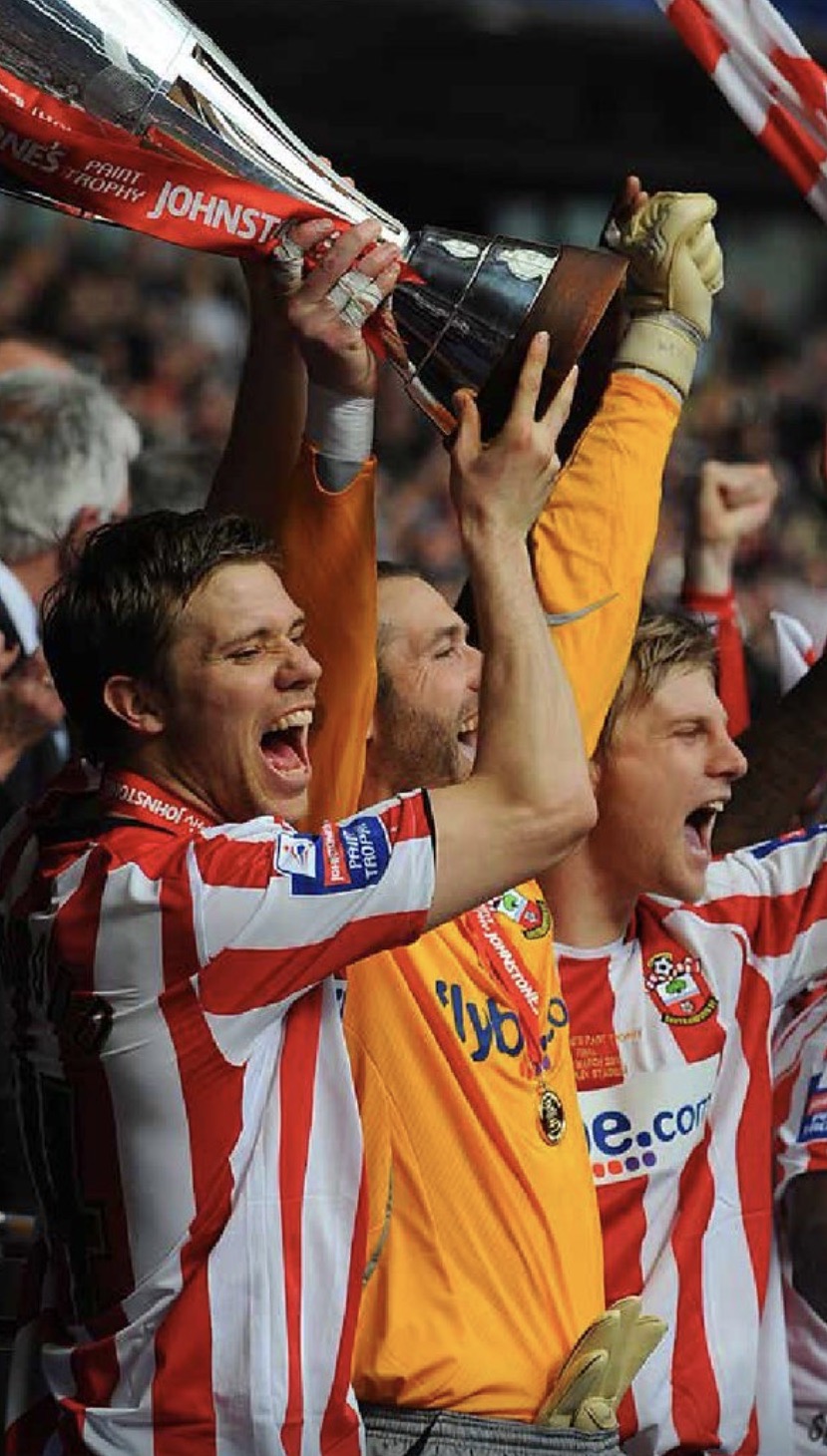
D hammo trophyAs had happened at his previous two clubs, it wasn’t long before Hammond was taking on the captaincy and he got to lift the Johnstone’s Paint Trophy at Wembley on 28 March 2010 (above) when Pardew’s team beat Carlisle United 4-1 – the first piece of silverware Saints had won since the 1976 FA Cup.
“I was really enjoying my football and it was like a new beginning for everyone connected with the club,” he said in an Albion matchday programme article. “Nicola Cortese came in off the field and a raft of new signings had been made, the likes of Rickie Lambert, Jason Puncheon, Lee Barnard, Radhi Jaidi, Dan Harding, Michail Antonio and Jose Fonte. When you add the likes of Morgan Schneiderlin and Adam Lallana, we had the makings of a really good team. It took us a little time to gel, but once we clicked we had a really good season.”

When Albion travelled to St Mary’s on 23 November 2010, the matchday programme inevitably featured their captain and former Seagull. It said: “Hammond was barely out of nappies when he first started supporting the Seagulls. He can even recall the days they played in front of 20,000 crowds at the old Goldstone Ground.

“The new Brighton stadium will hold just over 22,000 and the Saints midfielder said: ‘There’s no doubt they’ll fill it, certainly for their early games. That’s just about the size of their fan base and, if anyone deserved a bigger ground, it’s them’.”

Reflecting that he had certainly made the right career move, Hammond said: “I’ve developed as a player. I have a slightly deeper midfield role which means I pass the ball more and get involved in the game more.”

After two seasons in the third tier, Southampton famously finished runners up to Brighton in 2010-11 to regain their place in the Championship. Hammond was a regular throughout the 2011-12 season, although at times contributing from the bench, as Saints won promotion back to the Premier League, runners up behind Reading.

However, manager Nigel Adkins obviously didn’t see Hammond as top tier material and on transfer deadline day (31 August 2012) the midfielder agreed a season-long loan deal back at Brighton.

D Hammo 2By then 29, Hammond told the Argus: “It’s a different club now. The stadium is amazing and I can’t wait to get going.

“I saw the plans when I was 15 and it’s amazing to see it come to life. It will be a dream to play at this stadium as a Brighton player and I have been dreaming of that since a boy.”

Hammond made 33 appearances plus five as a sub during that season, alongside fellow loanees Wayne Bridge and Matt Upson, and said: “I loved my year back at the club. It was brilliant.

“I’d been sold the dream of the new stadium since I was 15 coming through the ranks, so to walk out of that tunnel for the first time as an Albion player was a fantastic feeling and one I’ll always cherish.”

Hammond reflected that the side did well to reach the play-offs but drew too many games. “We were only four points off automatic promotion and just didn’t do ourselves justice in that play-off game against Crystal Palace.

“Having drawn 0-0 at Selhurst Park, we really fancied finishing off the job at the Amex, but it just didn’t happen for us on the night. That has to rate as one of the biggest disappointments of my career.”

When manager Gus Poyet departed the Albion in the wake of the play-offs loss, Hammond returned to parent club Southampton, but, three months later he signed a two-year contract with Championship side Leicester City. Manager Nigel Pearson told the club’s website: “We’re really pleased to be able to add a player of Dean’s quality and experience to the squad.

“As well as having played a considerable number of games in his career, he also arrives with promotion credentials and will be a very positive influence on the squad both on and off the pitch.”

DHLCFC

Hammond added: “Once I knew of Leicester’s interest I wanted to come. My mind was made up. There was some interest from other clubs, but once Leicester was mentioned, and I spoke to the manager, I wanted to come here.

“It’s a massive football club. They came close last year in the play-offs and they’ve got a good history. It’s a club that’s going places and wants to push to the Premier League. It’s very exciting to be here.”

While facing midfield competition from Danny Drinkwater and Matty James, Hammond nevertheless played 29 games as Leicester were promoted and he finally got to play in the Premiership, albeit competition and injury restricted his number of appearances to 12.

Not all Saints fans felt it right that he had been abandoned as soon as the club reached the Premiership and, on the eve of his return to St Mary’s as a Leicester player, Saints’ fansnetwork.co.uk considered supporters might like to “thank him for his contribution to our resurgence in the game …. without Dean Hammond perhaps none of what they are enjoying in the Premier League would have been possible”.

Although Hammond earned a one-year extension to his contract in July 2015, he was not involved in the side that surprised the nation by winning the Premier League.

He had gone on loan to Sheffield United, then managed by his old Saints boss Adkins, and made 34 appearances for the Blades by the season’s end. However, he didn’t figure in new boss Chris Wilder’s plans and left the club in the summer of 2016.

Russell Slade gave him a trial at Coventry City in January 2017 but he didn’t get taken on and eventually he returned to Leicester to work with their under 23s. He later became loans manager for the Leicester City Academy.

Hammond opened up about his career, and some of the difficulties he’s faced since stopping playing, in an interview with James Rowe for The Secret Footballer.

  • Most photos from Argus cuttings; plus Southampton programme, Albion programme and Leicester City website.

Barça boy Orlandi twice denied promotion with the Seagulls

andrea-orlandi-brightonARTICULATE Andrea Orlandi would probably rank as one of my favourite Albion players of recent times. It was just a shame he seemed bedevilled by injuries which curtailed his contribution.

On his day, his technical ability definitely improved Brighton’s creativity going forward and I guess he’ll always be remembered for the goal he scored against Premier League Newcastle in the third round of the FA Cup on 5 January 2013 which he somehow guided in from what seemed an impossible angle.

On bbc.co.uk, the match report recorded: “A rejuvenated Wayne Bridge surged down the left flank, gathered Gordon Greer’s raking 50-yard pass and crossed for Orlandi, who flicked the ball up with his left foot and delightfully fired home with the outside of the same boot.”

Orlandi Newc goal

Orlandi was 28 when Gus Poyet signed him on a two-year contract on transfer deadline day in August 2012. “Andrea provides us with versatility and creativity across the midfield,” Poyet told the club’s official website.

“He can play as a typical winger, or more central in a number 10 role. He has played a lot of games in the Championship for Swansea, helping them win promotion, and he has played at the top level.”

It was crowd favourite Craig Noone’s departure to Cardiff that created the opening for Orlandi’s arrival, although they were very different players.

At Brighton, Orlandi had the chance to renew his great friendship with Seagulls legend Inigo Calderon, a former Alavés B side teammate, and there was quite a contingent of Spanish players at the club during that 2012-13 season.

As the Seagulls finished fourth and the Poyet era came to a close after the Palace play-off farce, Orlandi had played 30 games plus five as sub and added six league goals to that one in the FA Cup.

Under Poyet’s successor, Oscar Garcia, Orlandi picked up a knee injury in the opening game of the season, against Leeds, which required surgery.

“The doctor I went to see is regarded as one of the best in Europe so although it was disappointing that I had to undergo surgery, I was in the best hands,” he told the club website. “Although I was hoping rest would cure the problem, I was told I would risk further damage if I didn’t have surgery.”

As it turned out, he managed just 12 starts plus six as sub as the season culminated in yet more play-off heartache, this time at the hands of Derby County.

Orlandi played in both legs against the Rams and, although Garcia decided to quit, he recommended Orlandi be given a contract extension. As soon as Garcia had gone, though, head of football David Burke called him in to the club and told him he was being released.

Orlandi told the club website: “I’m sad. My youngest daughter was born here and I was hoping to stay here a lot longer but that is football.

“I really felt loved by everyone, especially the fans who were incredible to me whether I was on the pitch or off of it and that is something that nothing will ever take away from me.

“The city and all the people in it are wonderful and I wish everyone nothing but the best going forward and I hope the club can fulfil the dream of playing in the Premier League soon. I’m just sorry I couldn’t help to make that happen.

“It is a real shame that in my two years we got so close but we just couldn’t get over the finish line, but I will take away some magnificent memories with me.

“Once again I just want to pay tribute to the tremendous support I have felt during my time here.”

In a subsequent matchday programme article, Orlandi said: “Just running out at the Amex in front of a full house was an amazing experience – I loved every minute of my time at the club and loved playing for the fans.

“I will always hold Brighton close to my heart.”

Born in Barcelona on 3 August 1984 to Italian parents (a Juventus-supporting dad and an AC Milan-supporting mum), he played as a youth at Espanyol but at 17 moved to Alavés where he made 58 appearances for their B team between 2003 and 2005.

When loaned to Barcelona, he continued to be a B team player but he did play two first team games for the Catalan giants: as left back under Frank Rijkaard in a 3-1 defeat to Athletic Bilbao and a Copa Cataluyna win over Espanyol.

When Alavés released him in 2007, fellow Spaniard Roberto Martinez picked him up as a free agent and took him to Swansea City, where he stayed for five years.

Orlandi yellowManagerial changes at the Swans meant he wasn’t always first choice although on signing a contract extension in July 2011, chairman Huw Jenkins said: “He has grown into the squad over the past few years and his technical ability is well suited to the Premier League.”

He was part of Brendan Rogers’ squad promoted to the Premier League via a 4-2 play-off final win over Reading, appearing 24 times over the season, although he didn’t feature in the final at Wembley.

AO SwansIn one of his last Swansea games, on 28 April 2012, Orlandi scored after just 25 seconds of a Premier League game against already-relegated Wolves, but the game finished 4-4.

After his release from Brighton, he joined chaotic Championship side Blackpool, the day before the 2014-15 season started – with only a week to go, they had only eight registered professionals.

Under initially Jose Riga and then Lee Clark, Orlandi played 25 games plus five as sub, but the Tangerines finished rock bottom of the league, and the club was in disarray.

Orlandi revealed some of the strange goings-on in a weekly blog he wrote for Spanish website am14, including the time the goalkeeper Joe Lewis had to wear an autographed shirt intended for a presentation to a sponsor because there was no other top available.

In April 2015, Orlandi wrote: “When you first arrive in England in mid-April you imagine yourself spending your Sundays in the garden or having a drink on the terrace… you don’t imagine yourself stuck at home, listening to the wind and spending hours hiding from a hurricane.

“I have been living in England for almost eight years and the sun has always shone. This year is nothing like that, not in any sense. I will be patient and hopefully the nice weather will arrive before the end of the month. In terms of the football, the sun did not appear for Blackpool either.”

Orlandi also used the blog to talk about a defeat at Ipswich. “We started well, I scored a good goal thanks to a great assist from Cameron, and we lost. In part, this was thanks to my mistake which helped lead to their second goal.

“It was an error without explanation. ‘The pitch condition, the bounce of the ball, it came from a rebound’… excuses do not sit well with me. Unfortunately, sometimes we make inexplicable errors and that happened to me. I have to take responsibility, accept it and move on. The worst is that we equalised again and finally conceded 3-2 due to another silly play. It is the story of this season.

“When the league is finished, I will look at all the results and I shudder to think of the points that we have lost in, to put it mildly, a stupid fashion. Maybe we would not have avoided relegation but we would be in a different position, that is for sure.”

As the scorer of four goals, he was Blackpool’s second highest goalscorer for the season and, despite relegation, they hoped to keep him, but he invoked a release clause in his contract and became a free agent.

In August 2015, Orlandi signed for Cypriot First Division side Anorthosis Famagusta on a one-year deal but it didn’t sound like it was the greatest of experiences when Argus reporter Brian Owen caught up with him in February 2016, with Orlandi disappointed he hadn’t been able to find another English club in the Championship.

Orlandi switched clubs in Cyprus and joined APOEL but his one-year deal was terminated in January 2017 after he’d made 19 appearances.

He switched to Italy where he played 31 matches for Novara Calcio in Serie B and then joined his old pal Calde to spend half a season in the Indian Super League at Chennaiyin (under head coach John Gregory). On returning to Italy and signing for Serie C side Virtus Entella, during the medical a cardiologist discovered he’d got scarring in the left ventricle of his heart, and he was forced to retire without playing a game.

The popular Spaniard revealed in Richard Newman’s Football the Albion and Me podcast how he has gone on to become a scout for an agency as well as working as a TV pundit on La Liga and writing a column on that competition for the Evening Standard.Orlandi pundit

Pictures from various online sources and the Albion matchday programme

Tidy full back Stewart Henderson polished Saints diamonds

1 SH monoALBION’S right back when I first started watching them in the late 1960s was someone who would go on to make much more of a mark as a coach.

Gareth Bale, Theo Walcott and Adam Lallana were among the players developed by Stewart Henderson. Wayne Bridge and Chris Baird, too.

That was all to come for Stewart when I first saw him wearing the number 2 shirt in Freddie Goodwin’s Division 3 side.

hendo biog

Henderson, who shares the same June birthday as me, albeit he was born 11 years earlier, was only 5’6″ tall but he had noticeably muscular thighs. Hailing from Bridge of Allan in Scotland, his stature didn’t stop him earning Scottish schoolboy international honours and he was on the winning side in three matches.

The Scots beat Northern Ireland 5-1 at Windsor Park, Belfast – when future Albion teammate John Napier was playing for the home side – Wales at Ninian Park, Cardiff, and England at Ibrox Park where a 30,000 crowd watched.

That recognition followed his success playing for his school team, St Modans High School in Stirling, and Stirlingshire Schoolboys. It eventually took him to England at the age of 17 in 1964 to join Chelsea.

Tommy Docherty was their manager at that time and he obviously wasn’t convinced Henderson was good enough for the First Division, so he dropped down to the Third with Brighton where, for a couple of seasons, he had the unenviable task of trying to oust captain and Northern Irish international Jimmy Magill from the right back slot.


Stew Hendo blue

He made his debut on 3 May 1966 away to Exeter a month before his 19th birthday and didn’t make his home debut until 1 October that year, stepping up when Magill was injured and helping Albion to a 5-2 win over Peterborough.

It wasn’t until March 1968, though, that he eventually cemented his place in the side. But when he did, he became a near-permanent fixture for the next four years. He only scored once in 199 appearances, that coming in a 6-0 drubbing of Oldham Athletic on 24 August 1968.

Stew Hendo PoYIn the 1969-70 campaign, he missed only one game and the supporters chose him as player of the season. He played 36 league games in Pat Saward’s first season in charge and in the 1971-72 promotion campaign was a regular in the line-up right through until the famous televised Aston Villa home game in March 1972 when Saward made two shock changes and left out both Henderson and captain John Napier for the top of the table clash.

It was the beginning of the end for Henderson and he cuts a rather-forlorn looking figure in a picture of the newly-promoted team captured in the Goldstone dressing room after gaining the necessary point against Rochdale, standing fully-clothed alongside his team mates in their kit, taking a sip of champagne.

Saward made him available for transfer at the end of the season and although he stayed with the club, he played only two more league games, and a league cup game, in the following season before being transferred to Reading in June 1973.

Henderson had chalked up 198 league games and 14 cup games during his time with Brighton but the move to Berkshire was by no means a petering out of his career.

I am grateful to the website of the Reading FC Former Players Association (readingformerplayers.co.uk) to discover how, although manager Charlie Hurley signed Stewart initially as a full-back, in 1975 he pushed him into a midfield role with immediate success: Stewart scored twice in the first 17 minutes at Bradford City.

He went on to be an influential member of Reading’s 1976 Fourth Division promotion winning side. In May 1977, he was made club coach and worked closely with manager Maurice Evans helping the club win the 1978/79 Fourth Division Championship.

Amazingly Stewart was recalled to the playing squad at the beginning of the 1979/80 season, at the age of 32, and continued playing intermittently until May 1983 when he played the last of his 186 games for the Royals and became Reading’s first Centre of Excellence director.

Coaching became his new direction and he was at manager Ian Branfoot’s side when Reading beat Luton at Wembley to win the Simod Cup in 1988 (a game incidentally in which former Albion winger Neil Smillie was one of the goalscorers for the Royals and Steve Foster and Danny Wilson were playing for Luton).

Henderson left Elm Park in 1989 to take up the role of youth development officer at Southampton, where his work began helping to produce some of the finest footballing talent in the country.

He was to spend over 20 years at Southampton in various roles working with the youth and academy teams, the reserve side and even had a short spell as first team manager.

It’s worth quoting an article from the Mirror in October 2012, when Matt Law reckoned Southampton owed a £55million debt of gratitude to Malcolm Elias, Steve Wigley, Huw Jennings and Stewart ­Henderson who spotted and coached the incredible Southampton Fame Academy, which through transfer fees effectively saved the club from extinction.

Gareth Bale, Theo Walcott, Alex Oxlade-Chamberlain, Wayne Bridge, Kenwyne Jones, Adam Lallana, James ­Ward-Prowse and Luke Shaw were all named as coming under the influence of the quartet who, after being released by Southampton moved on together to Fulham.

Henderson was a guest at an Albion raceday in 2006 and met up with former teammate Ian Goodwin