O’Cearuill treated cruel on strange football odyssey

O’Cearuill given a run of games at Brighton

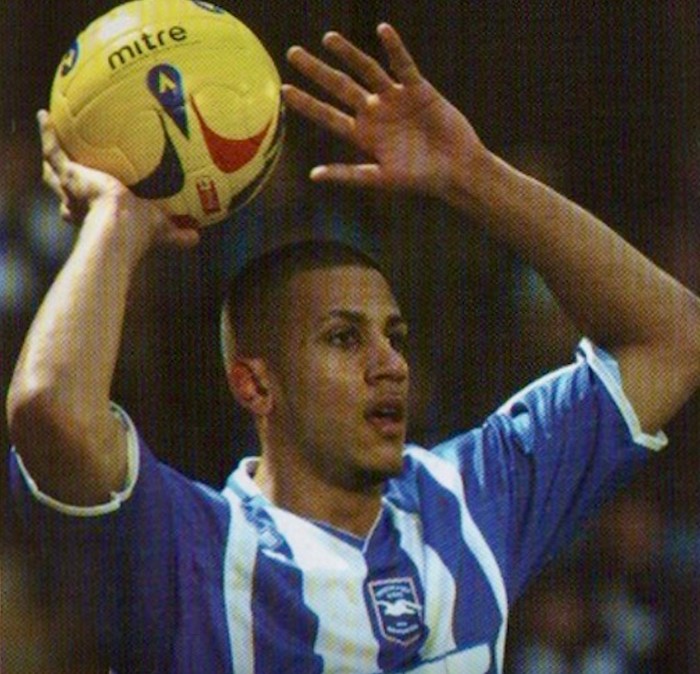
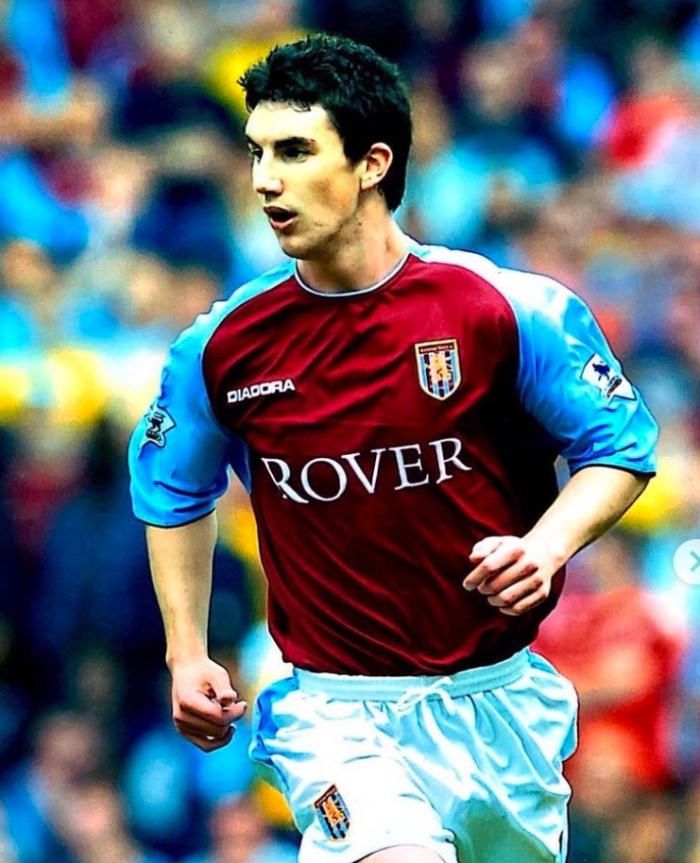
TEENAGE Arsenal defender Joe O’Cearuill certainly had a baptism of fire when he moved to the Albion on loan in early 2007.

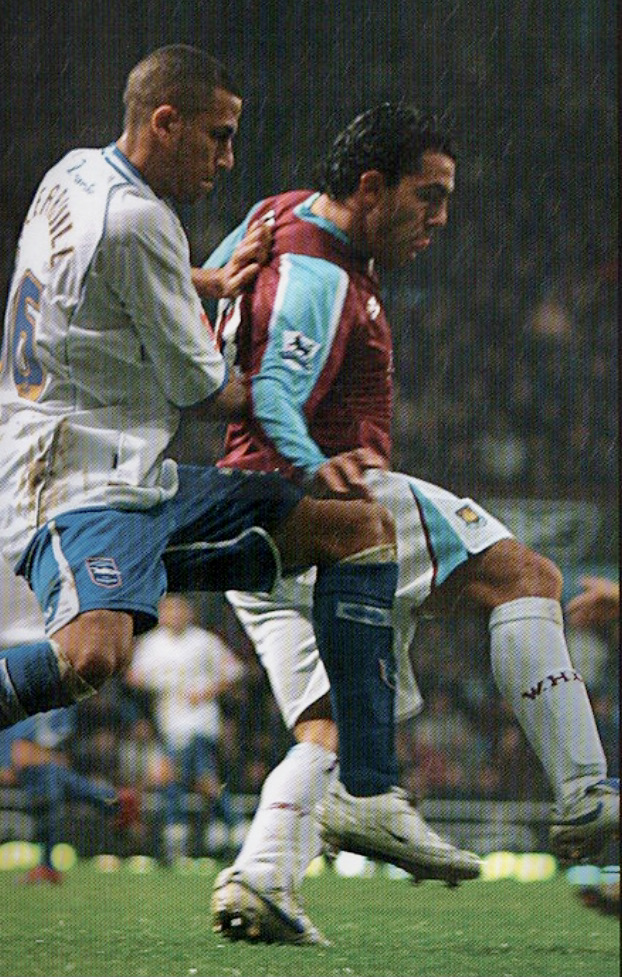
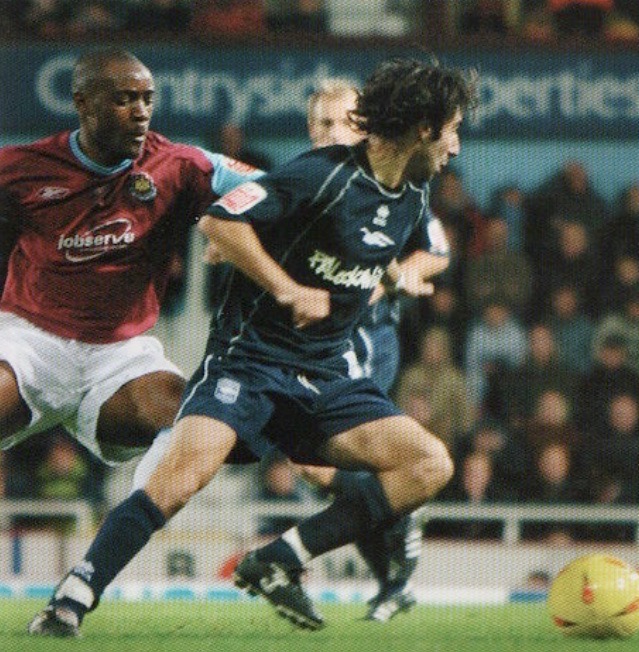
The youngster was played out of position at right-back in a third round FA Cup tie away to West Ham.

The match at the old Boleyn Ground on 6 January 2007 pitched the Premier League Hammers under Alan Curbishley up against his old Seagulls teammate Dean Wilkins, who had taken over the reigns at League One Brighton just four months previously.

West Ham, FA Cup finalists the previous season, were just too good for the mainly young lower league side on the day and, with big-money Argentine striker Carlos Tevez up front, comfortably won the tie 3-0 (Mark Noble, Carlton Cole and Haydn Mullins the scorers).

Albion put up a reasonable fight in a goalless first half although O’Cearuill was fortunate not to concede a penalty when he put in a clumsy challenge on debutant Luis Boa Morte which referee Mark Halsey chose not to penalise.

The second half was only four minutes old when Noble scored his first ever West Ham goal, Cole added a second nine minutes later before being replaced by former Albion favourite Bobby Zamora, and Mullins struck in injury time to round off the win.

Wilkins had turned to the Arsenal youngster when Jack Hinshelwood’s dad Adam suffered a cruciate ligament injury in a Boxing Day match against Yeovil that ruled him out for nine months.

O’Cearuill’s stay on the south coast lasted three months during which he made seven starts and three sub appearances. His final Seagulls match came in a 1-1 home draw against Scunthorpe United.

The Argus reckoned his form was “patchy” and at one point he was dropped to the bench “after a below-par performance” in defeat at Brentford.

Only on a couple of occasions did he get the chance to play in his favoured centre back position; those positions were occupied most of the time by Joel Lynch and Guy Butters.

But after he’d gone on for the injured Lynch in the centre away to Gillingham, he helped the visitors to a 1-0 win and Wilkins said: “I thought he fitted in well. He went into the game at a difficult period. There were a lot of high balls to deal with, which he coped with well.”

That first half of 2007 was pretty much the highlight of his career because on an end of season tour of America he won two full caps for the Republic of Ireland.

Although born in Edmonton on 9 February 1987, he elected to represent the Republic of Ireland and having played for them at under-17, under-19 and under-21 level,

A senior cap for the Republic of Ireland

His first senior cap came when he was one of six substitutes made by manager Steve Staunton in a 1-1 draw against Ecuador at the Giants Stadium, New Jersey, on 23 May 2007.

He replaced Stephen O’Halloran in the 73rd minute and managed to pick up a yellow card in his short time on the pitch. Kevin Doyle headed the Irish equaliser a minute before half time.

O’Cearuill then started at right-back three days later in the Republic’s 1-1 draw with Bolivia in Boston. Shane Long scored his first goal for his country and in the second half former Albion goalkeeper Wayne Henderson took over in goal from Barnsley’s Nick Colgan. The side was captained by Kevin Kilbane.

Curiously, O’Cearuill had been let go by both Leyton Orient and Watford before he was given a chance by Arsenal. He played 27 youth team games for the Os in 2004-05 but was released in August 2005.

Watford picked him up and he played for their youth and reserve teams for a season, but again found himself released. Then, in the summer of 2006, after impressing Arsenal’s reserve team coach Neil Banfield in a trial game against Watford, he joined the Gunners.

He made his debut in a goalless pre-season friendly at Barnet on 15 July and a week later played in half of Dennis Bergkamp’s testimonial against Ajax of Amsterdam.

On a tour of Austria, he played another half as Arsenal beat Mattersburg 2-1 and got 30 minutes as a sub when the Gunners trounced Schwadorf 8-1.

The closest he came to competitive first team action was when he was on the bench for Arsenal’s Carling Cup match away to West Bromwich Albion on October 24, 2006, although he did not get on in the 2-0 win in which Jeremie Aliadiere scored both the goals.

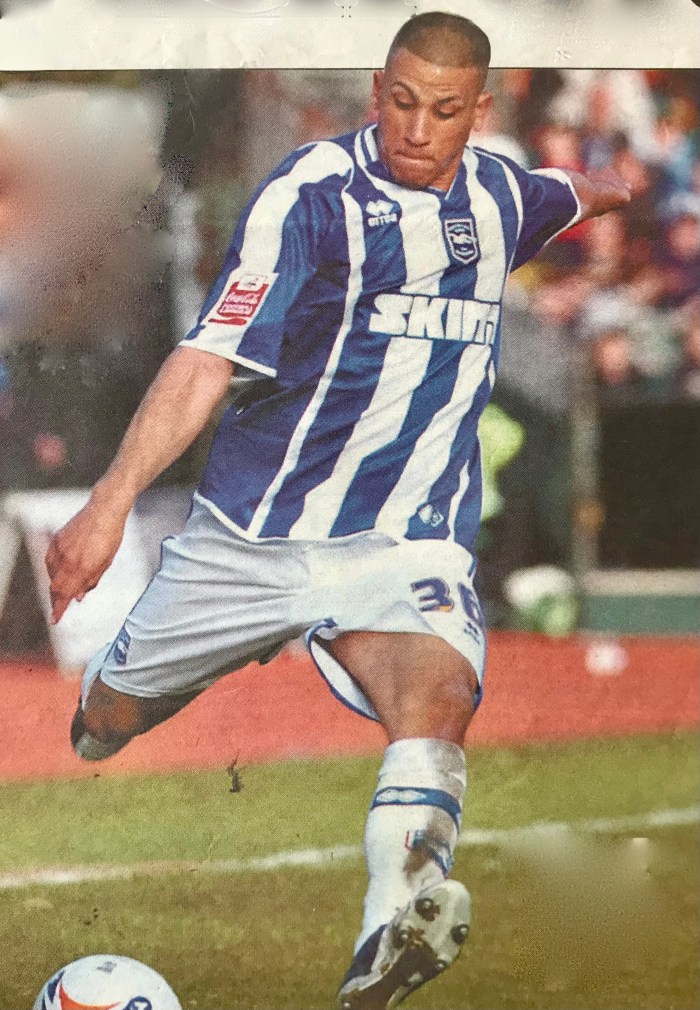
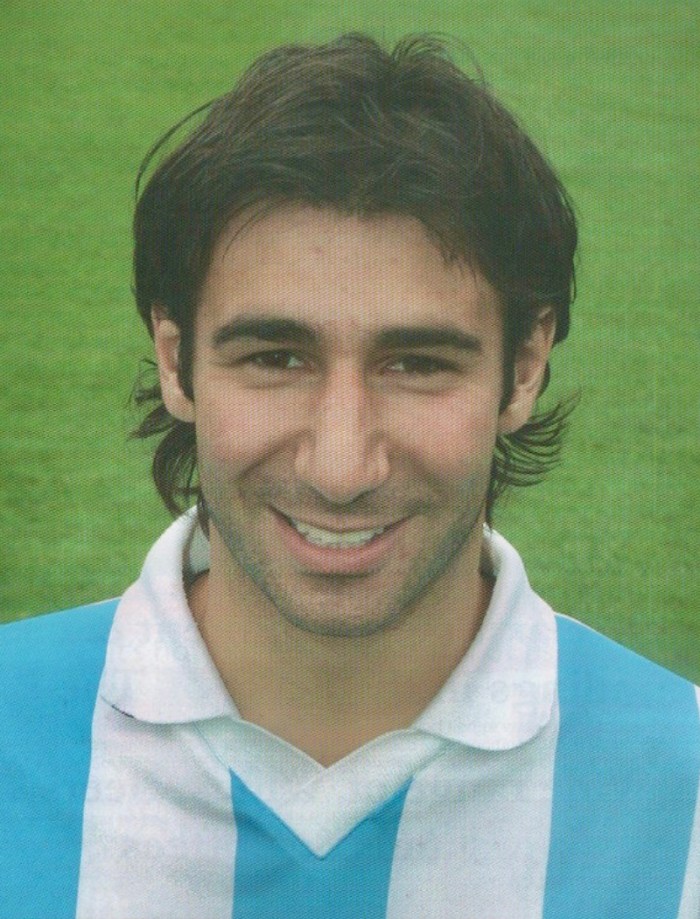
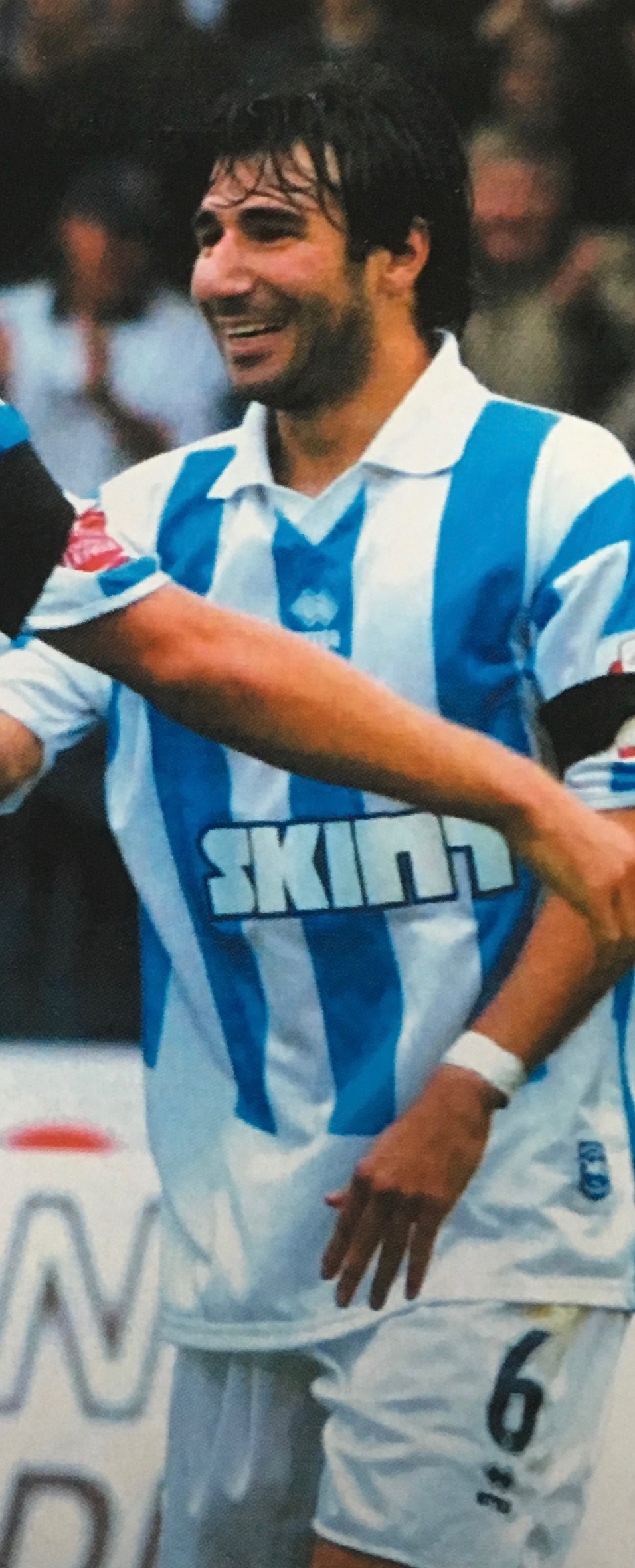
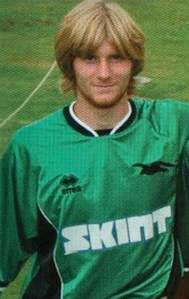
Released by Arsenal, O’Cearuill’s career then drifted from one non-league club to another: Barnet, St Patrick’s Athletic (Dublin), Harlow Town, Borehamwood, Forest Green Rovers (pictured left), Bishop’s Stortford, Tooting & Mitcham United, Haringey Borough, Enfield and Heybridge Swifts.

When he sought to resurrect his career with Conference Premier side Dover Athletic in 2015, he was suitably phlegmatic in an interview with Kent Online.

“It’s certainly been a journey,” he said. “From getting everything on a plate at Arsenal and then for Ireland, to then be washing your own kit and boots.

“I took being a professional for granted and I wasn’t really ready for it – I was too young to take it all in.

“When Arsenal released me, I discovered there was a lot more to life than playing football and I lost the motivation to play at a decent level. I even gave the game up for a while.

“I was then happy to play wherever and go with the flow. I had a couple of great years playing with my mates at Haringey Borough. But that’s all in the past now. The days for playing for fun are behind me.

“I am ready for the next chapter in my life because I’ve got the hunger and desire back to play the game at a level I know I am capable of.”

Released by Dover at the end of the season, former Albion striker Nicky Forster, by then manager of Staines Town, took him on for the Isthmian League Premier Division team.

“We are delighted to have secured the services of Joe this season, he has a great attitude for success and will sit well alongside Darren Purse at the back,” he told the club website.

His last port of call was back at Haringey in the summer of 2016 and he retired from playing in October that year.

In his LinkedIn profile, O’Cearuill describes himself as a senior manager for The Elms Sport in Schools programme.

‘Keeper Kuipers the crowd-pleasing former Dutch marine

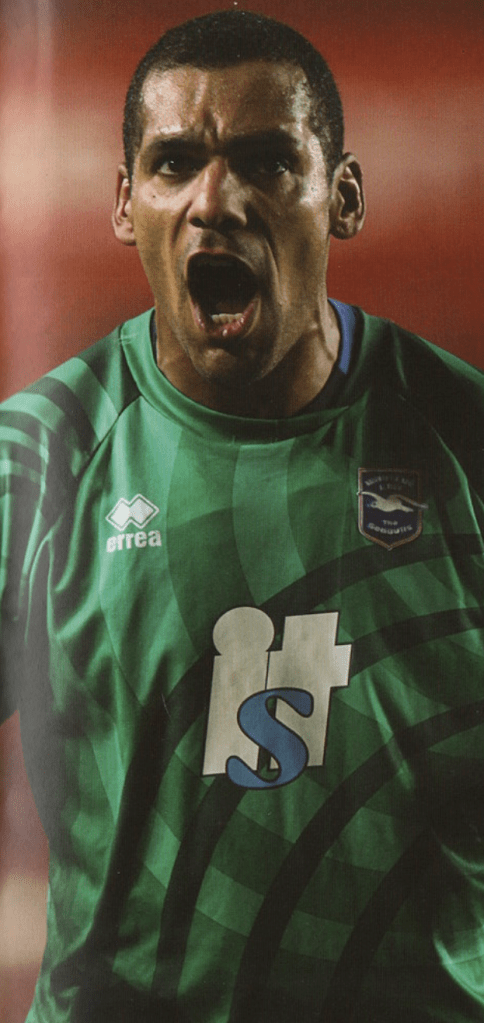
The ever-enthusiastic Michel Kuipers celebrates

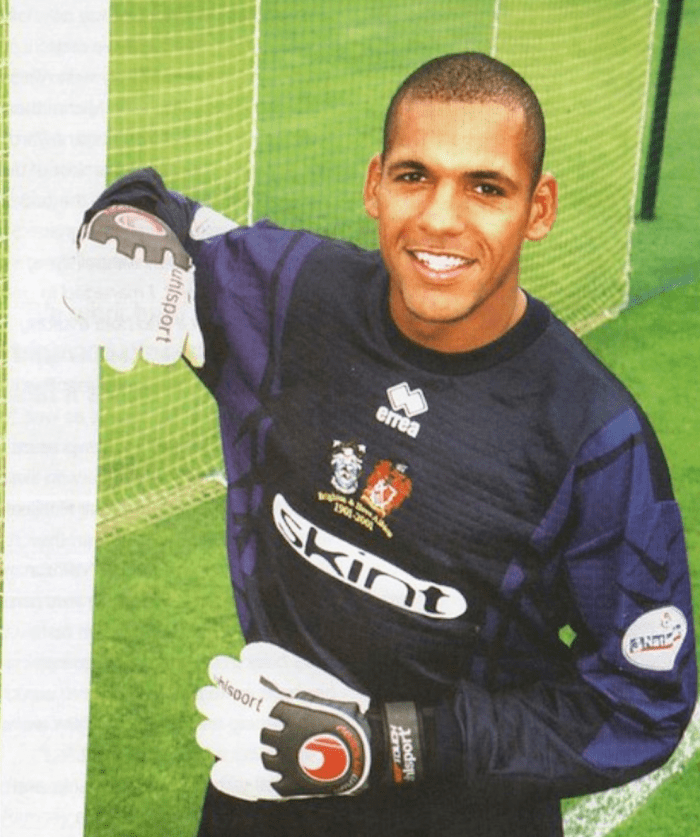
FORMER DUTCH MARINE Michel Kuipers earned back-to-back promotions with Brighton and Hove Albion and Crawley Town.

He was between the sticks for the Albion when they won promotion from the basement division in 2000-01 and the third tier in 2001-02.

And after 10 years with the Seagulls, during which he made a total of 287 appearances, he spent two years with Crawley where, over 49 matches, he won promotion from the Conference in 2011 and League Two in 2012.

Undeniably, it was Kuipers’ years with the Seagulls that defined his career after an inauspicious start when Micky Adams subbed him off at half-time on his debut away to Southend United. Replaced by Mark Cartwright in that match, he was left out of the next 11 matches before an injury to Cartwright enabled him to win back the shirt. He didn’t look back after that, though, and only missed three more matches as the Seagulls were crowned champions.

Early days between the sticks

Although there were to be plenty of ups and downs over the following years, when he wasn’t always first choice, Kuipers remained a crowd favourite for his agility as a shot stopper and his fanlike celebrations of goals and wins.

“I was a player but I also turned into a fan of the Albion,” he said in an interview with the matchday programme. “On the pitch I would celebrate each goal we scored like I was on the terraces with our supporters.

“After we had a good result in the game, I would celebrate with the players but always expressed my joy and gratefulness to the supporters.”

A sensational double-save in a televised game away to Wolves in November 2002 was a highlight for many and a one-handed reaction stop at Blackpool earned him a ‘save of the month’ award from sponsor Nationwide.

He didn’t always see eye to eye with Mark McGhee, who reckoned his kicking let him down, and the Scot said: “His desire to do well is unquestioned, but I had to make a decision and it was not always one he agreed with.”

McGhee was nonetheless full of admiration for the Dutchman and in a programme for Kuipers’ testimonial match v Reading in 2012, he recounted a specific role he played when Albion’s back-up goalie at the 2004 Second Division play-off final against Bristol City.

“I asked Michel to warm up, but in truth to get the supporters going. I remember him going down to the corner and waving with those huge arms – he absolutely galvanised the support.

“What was brilliant for me was that he did it despite his huge disappointment not to be playing himself – he did it for the team. The rest is history as the fans got behind the team. We got the penalty and went on to win the game.”

Later that evening, the trophy Albion won got bent when someone fell on it: with his bare hands, Kuipers straightened it!

Five years (from 19 to 24) in the Dutch Marines during which he’d parachuted from aeroplanes and learned to survive in harsh conditions, definitely left their mark. His training had taken him into jungles, deserts and the Arctic, but he said: “My love and passion for football was always there. In my spare hours I played for the Marines team.”

Born in Amsterdam on 26 June 1974, as a child Kuipers played football with his mates in front of some garages near the flats where he lived. He recalled they would be told off for hitting the ball against the garage doors, so he went in goal to try to save the ball from making loud bangs every time one of his friends scored.

“I was doing OK, so from that day onwards I played as a goalkeeper,” he said. He played for the local Blauw-wit under six team and went all the way through the age groups to the first team at 18.

A keen Ajax fan as a youngster, his idol was their goalkeeper Stanley Menzo – “one of the best goalkeepers of his generation” – and he also admired Menzo’s successor, Edwin Van Der Sar, who later played in England for Fulham and Manchester United.

Although Kuipers went straight from full-time education into the Marines, he also played part time for AFC Door Wilskracht Sterk (it means Strong Through Willpower) and Kuipers explained: “We won the Amsterdam regional league for the first time in 25 years and this brought me to the attention of Ian Holloway at Bristol Rovers.

“When I was offered a contract by him, I wasn’t sure I could leave the Army, but the officers knew I’d put 110 per cent into my job, so they were happy to release me.”

But in 18 months with Rovers, Kuipers only managed one first team appearance (against Bournemouth in March 1999). Indeed, it was while playing for Rovers Reserves against Brighton at Worthing that he caught the eye of Brighton boss Adams. He jumped at the chance when Albion offered him a trial and he played well enough in a Sussex Senior Cup semi-final against Langney Sports for Adams to persuade him to make a permanent move to the Seagulls with the intention of being back-up to Mark Walton.

When Walton suddenly upped sticks and joined Cardiff before the 2000-01 season had started, Kuipers found himself in the starting line-up for the opening game away to Southend.

Understandably, Kuipers was distraught at being taken off at half time but he knuckled down to try to win back the shirt and said: “If you’re mentally strong and you’ve got good self-confidence and belief then you just fight back and that’s the way I approached it in the following months.”

He credited the work he put in with goalkeeping coaches John Keeley and Mike Kelly, admitting: “They improved my technique and made me more professional.”

Even when Adams left for Leicester, Kuipers remained no.1 under Peter Taylor as the Seagulls soared to a second successive promotion.

Injury meant Kuipers missed the second half of the season when Steve Coppell’s side only just missed out on avoiding an immediate drop back to the third tier.

When Ben Roberts was preferred as first choice goalkeeper, Taylor, by then manager of Hull City, took Kuipers on loan in September 2003.

Albion rebuffed Hull’s attempt to sign him on a free transfer but shortly after his return to Sussex he was involved in a horror car smash on his way to training.

Remarkably, considering he was airlifted to hospital, he escaped serious injury although club physio Malcom Stuart reported: “Michel knows he was very lucky. There’s a degree of shock and he will need time for that to clear his system. Structurally there are no serious injuries, but he’s had several stitches and is very sore and uncomfortable muscularly.”

Manager McGhee added: “My God, we feared the worst. But in a sense it’s an absolute bonus, a miracle – they sent him home with a few cuts and bruises, a swollen face, a sore back and a sore neck, which in a week or two will be fine.”

Nevertheless, it was Roberts who kept his place as Albion won promotion via the aforementioned play-off final win in Cardiff. But in the first half of the 2004-05 Championship season, Kuipers was back in the saddle courtesy of injury to Roberts.

All was fine until a home game v Nottingham Forest on 22 January 2005 when Kuipers came off worse in a challenge with Kris Commons and the shoulder injury he sustained kept him out for the rest of the season. Former Arsenal ‘keeper Rami Shabaan and Southampton loanee Alan Blayney took over the gloves.

New competition arrived in the shape of Aston Villa loanee Wayne Henderson, who took over in goal at the start of the 2005-06 season and with the brief return of Blayney as well as Frenchman Florent Chaigneau as back-up, it seemed Kuipers’ Albion days might be over.

He was sent out on two loan spells at League Two Boston United – initially playing four times in December 2005, then 11 matches between February and April 2006.

With Brighton back in the third tier for the 2006-07 season, and another change of manager when McGhee gave way to Dean Wilkins, Kuipers found himself vying for the jersey with Henderson, who had been signed permanently. Local lad John Sullivan was beginning to emerge too. But there was no keeping a good man down and Kuipers was the ever-present first choice goalkeeper throughout the 2007-08 season.

At that time, he admitted he was still learning ways to improve thanks to goalkeeping coach Paul Crichton and told the matchday programme: “I am very pleased with the progress I have been making under Paul.

“My game has definitely improved and it is great to see the results of hard work on the training ground coming out in games.”

When Adams returned ahead of the 2008-09 season, Kuipers was still in pole position and he famously saved Michael Ball’s penalty when League One Albion beat Manchester City 5-3 on penalties in a second round League Cup tie at Withdean.

Although Sullivan had a run in the side, and Adams’ successor Russell Slade briefly turned to loanee Mikkel Andersen, Kuipers was once again in the box seat come the end of the season.

It wasn’t long after the arrival of Gus Poyet that Kuipers’ time at Brighton finally came to an end. A 2-1 home defeat to Norwich City in February 2010 was his last Albion start as Poyet turned instead to his ‘keeper of choice, Peter Brezovan.

The Dutchman continued his association with the Seagulls through involvement in the Albion in the Community programme and his long service was rewarded with a testimonial game at the Amex (a 1-1 draw v Reading when he played 15 minutes). He told BBC Radio Sussex: “Bar my family, this football club is the closest thing to my heart.

“I’ve been bleeding blue and white for the last 12 years so this is a very proud moment for me and my family.”

He added: “I love the Brighton supporters. They’ve been absolutely fantastic to me and a lot of the times when we had our backs against the wall, they were the 12th man.

“Especially as a goalkeeper, I really appreciate them backing the team. I think people appreciated me because I threw my body on the line for the club.”

Kuipers early days at Crawley saw him making headlines for all the wrong reasons – he was sent off twice in the first month, v Grimsby Town and v Forest Green Rovers – but he was in the Blue Square Bet Premier league side that had a terrific run in the FA Cup, only narrowly losing in the fifth round, 1-0 to Man Utd at Old Trafford in February 2011.

Kuipers’ loyalty was rewarded with a testimonial in 2012

On leaving Crawley in early 2013, he said: “When I joined, the club had finished mid-table in the Conference and I leave challenging for the play-offs in League One.

“The supporters have always backed me and I am really proud of the part I have played in raising the profile of Crawley Town with two successive promotions.

“It’s been a fantastic part of my career and I will always remember my time at the club.”

The final four months of his playing days were spent on the subs bench at Barnet, as back-up to first choice Graham Stack.

In 2020, Kuipers was behind the setting up of the PHX gym at Hollingbury.

Why Roman’s roubles spelled bad news for Alexis Nicolas

A PROMISING young midfielder edging towards first team football at Chelsea had his dreams extinguished when Roman Abramovich arrived with lorry loads of cash.

Manager Claudio Ranieri had let Alexis Nicolas know that he was heading in the right direction after he’d broken through to the fringes of the first team.

But when Abramovich took over at Stamford Bridge, big name signings started to arrive and Nicolas was left way down the pecking order behind the likes of Juan Sebastián Verón, Claude Makélélé, Geremi and Scott Parker.

New boss Jose Mourinho informed the youngster he should look elsewhere to make progress, and Brighton, newly promoted to the Championship, offered a refuge for the talented London-born Cypriot under-21 international.

Albion’s midfield options were depleted at the beginning of the 2004-05 season with Simon Rodger a long-term absentee, stalwart Richard Carpenter recovering from close-season knee surgery, and Charlie Oatway also sidelined through injury.

It meant Nicolas had a chance to show what he was made of and he played 15 games on loan from the start of the season through to October.

Enthusiastic Albion boss Mark McGhee said: “He has brought energy and he has got quality. He is a certain type of player, similar in many ways to Charlie Oatway.

“He is not a box-to-box goalscoring midfielder but what he does brilliantly is that he is always in the area around the ball where you need him.

“He breaks things up quickly and, when we win possession, we go more quickly from defence into attack with Alexis in there than we did previously.”

Nicolas clearly relished the opportunity he’d been given and, as the prospects of a permanent move grew stronger, he told the Argus: “It’s flattering that Brighton want to keep me. I like it here. I am happy with the club and the manager and I don’t see why it can’t be permanent.

“If everything can come together, and I think it will be a good move, then I don’t see why it won’t go ahead.”

He added: “There is a lot of stuff to be sorted out with a lot of different people.

“All I can say is I am happy here and I like the club. They are good people and the fans are great. Anyone with an offer to come here has got to be chuffed with that, because it is a great set-up.”

McGhee made no secret of his admiration for the 21-year-old, saying: “He’s been a fixture in the team and that says it all. He is improving week in and week out and I think he has got a good future.

“He has a terrific little engine and attitude. He quietly goes about his job and he has been really important for us so far this season.

“The boy himself is modest and unassuming. He loves Chelsea, he loved being there and I am sure he will be very disappointed to leave, but he wants to be a footballer more than he wants to be a Chelsea player. That is the important thing for us.”

McGhee explained the difference Nicolas made to the side. “He has that knack of being in the right place at the right time; he seems to cover such a big area. For a physically small lad, he is everywhere.

“He anticipates where the next ball is going and gets there early, puts people under pressure, wins the ball back and activates us going forward. He wins it and, before you know it, we’re going forward.”

When he signed permanently, Nicolas said: “It feels great. You are always sad to leave a club and I have been at Chelsea for a while, but I am excited and glad that I have signed for Brighton.

“The role I play is similar to Claude Makélélé’s and I used to speak to Claude regularly. He used to give me a lot of good advice. I’ve learned from all of the players at Chelsea, but now it’s time for me to open another chapter in my life and learn some other stuff.”

Nicolas said breaking into the Chelsea first team had whetted his appetite to return to that level and he told the Albion matchday programme: “Having played in the Premiership, I would like to achieve it here at Brighton and I don’t see why one day Brighton can’t be a club in the Premiership.”

Unfortunately, he joined an injury and suspension hit squad that couldn’t compete with better-resourced clubs in the second tier because of crowd-restricted home gates at the Withdean Stadium.

While Nicolas impressed in his first season, playing in a further 19 games, McGhee was forced to sell star players Danny Cullip and Darren Currie to bolster the club’s perilous finances, and the side only just managed to avoid the drop.

The following season, with Dean Hammond and Carpenter the mainstays in central midfield, Nicolas too often watched on from the bench and missed several weeks because of ankle and knee injuries.

Asked about his watching brief from the sidelines, he said in a matchday programme article: “It’s been very frustrating for me this season and I’m upset about it. I’d like to think that a lot of the fans would like to see me out there. The manager can only pick eleven players and he’s the boss – what he says goes and I respect that.”

His frustration was barely disguised in an interview with the Argus on 23 Feb 2006, after a reserve match he was due to play in was called off.

“It seems impossible for me to get 90 minutes at the moment,” he said. “I was out for six weeks injured and have only managed 60 minutes football against Millwall in a reserve match since because of postponements.

“Before that I was mostly on the bench. I have hardly played this season.

“Even though I am not fully match fit, I have been training hard and have enough about me to be able to cope. I am not thinking of myself when I say this. I have put personal goals to one side.

“After all, I pulled out of international squads with Cyprus earlier in the season even if it meant I could just be on the bench for Brighton. I feel I have a lot to offer.”

The midfielder added: “What matters is Albion. I love the club, the lads and the fans and want to do my best for them.”

Unfortunately, after playing only 12 matches in 2005-06, he wasn’t kept on after the Seagulls were relegated on 30 April 2006, and he never played league football again.

Born in Westminster on 13 February 1983, Nicolas went to Trent CE Primary School in Cockfosters, where he first showed a talent with a football. He also enjoyed long distance running and tennis.

He played football for a decent Sunday League side in Colliers Wood alongside two other future professionals, Steve Sidwell and Leon Britton, and eventually became part of Arsenal’s youth set-up. But he ended up as an apprentice at Aston Villa, and got taken on as a professional. He was in the same under-19s squad as future Albion goalkeeper Wayne Henderson and defender Liam Ridgewell.

But in December 2001, he joined Chelsea on a free transfer, and with 24 starts plus one as a sub, he missed only one of the reserves side’s 26 matches in the 2002-03 season.

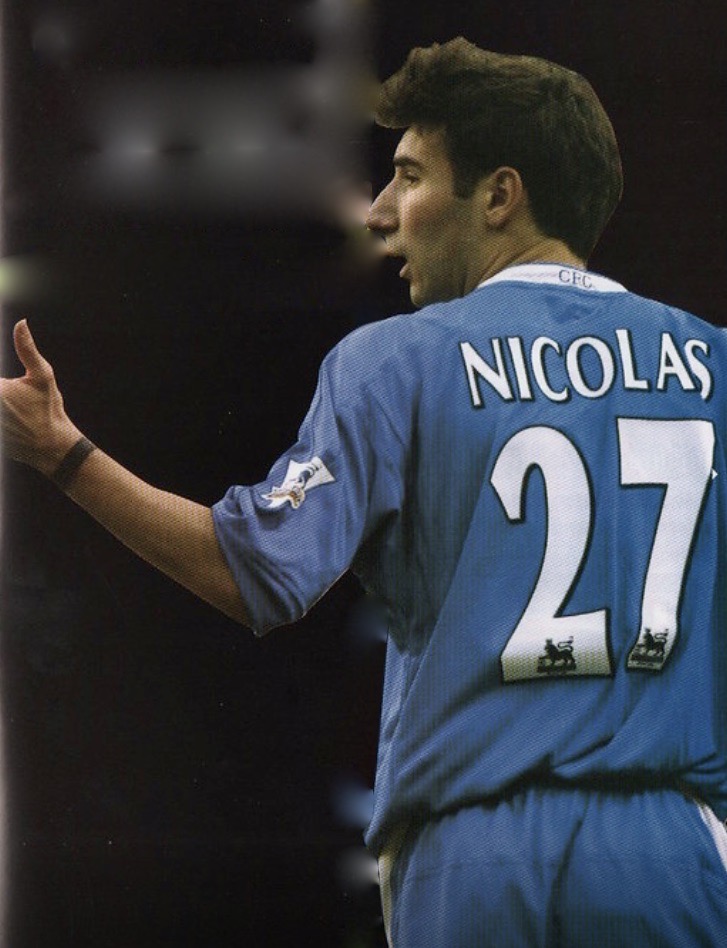
He was handed the no.27 shirt for the 2003-04 season and made his Chelsea first team debut in their 1-0 FA Cup win away to Scarborough on 24 January 2004.

John Terry scored the only goal of the game and Nicolas played in midfield alongside Frank Lampard and Emmanuel Pettit in a side also featuring Joe Cole and Wayne Bridge.

Guardian football reporter, Paul Wilson, noted: “Alexis Nicolas made an encouraging debut, but time and again Cole, in particular, would attempt something complicated when a simpler option was available.”

Nicolas made his Premiership debut a week later in a 1–0 win over Charlton Athletic. His only other appearance was as a 90th minute substitute for Lampard as the Blues rounded off the season with a 1-0 home win over Leeds United.

Nicolas spoke about those early years at Chelsea in an interview with Simon Yaffe of planetfootball.com.

“Ranieri called me into his office at the end of 2002-2003 and told me the club didn’t have a lot of money to invest and that he didn’t have too many midfielders at his disposal, so I would be in his plans for the following season,” Nicolas said.

Even as the oligarch’s takeover was going through in the summer of 2003, the youngster was part of Ranieri’s team which beat Newcastle United 5-4 on penalties in the final of the FA Premier League Asia Cup in front of a crowd of 41,500 in Kuala Lumpur’s national Bukit Jalil stadium. It was the first piece of silverware of the Abramovich era.

“It maybe wasn’t the most glamorous of trophies, but it was still the first of many under the new owner,” Nicolas said.

It wasn’t long before a flurry of big-name signings soon changed the picture for Nicolas; the arrival of five midfielders in particular being somewhat ominous.

“I had planned to go out on loan because I had fallen so far down the pecking order,” Nicolas added. “But some of the midfielders, like Makélélé and Petit, were picking up injuries, so I stuck around.

“Looking back, it was easy to think, ‘He’s signed, so that is why I am not playing,’ but it was really a turning point in Chelsea’s history, and it was nice to have been part of it.

“I was pleased for the club when Abramovich took over but also a little bit disappointed for myself.”

After relegated Brighton released him, Nicolas tried to continue his league career and had a trial with Bradford City, but after an unremarkable game for their reserves side, manager Colin Todd told the Bradford Telegraph & Argus: “At the moment I can’t guarantee him anything. His fitness levels aren’t the best but if he wants to continue to train with us and try to improve on that then it’s up to him.”

In fact, he decided to join St Albans City on 26 September 2006 and made his Nationwide Conference debut in a 2-1 defeat at Weymouth four days later.

On 12 November, the St Albans City website noted: “A knee injury restricted Alexis to just six appearances for St Albans City but, with a number of League One and League Two sides showing an interest, the player has decided to move on.”

Nicolas said he was grateful to manager Colin Lippiatt for giving him the opportunity and added: “I was not in the best of states when I joined the club but everyone has been a great help and when fully fit I hope to join one of the League One or League Two sides who are showing an interest in me.”

But it was a career in property investment that opened up for him instead and in 2012 he set up his own business in partnership with Ryan Springer.

He wasn’t completely done with football, though, and, also in 2012, Nicolas had a spell as player-manager of Hadley FC, a Spartan South Midlands League Premier Division side, and in 2014-15 he was part of the club’s management team under former Spurs and Chelsea player Micky Hazard.

Pictures as featured in the Albion matchday programme and from various online sources.

Ridgy rides in to shore up injury-ravaged defence

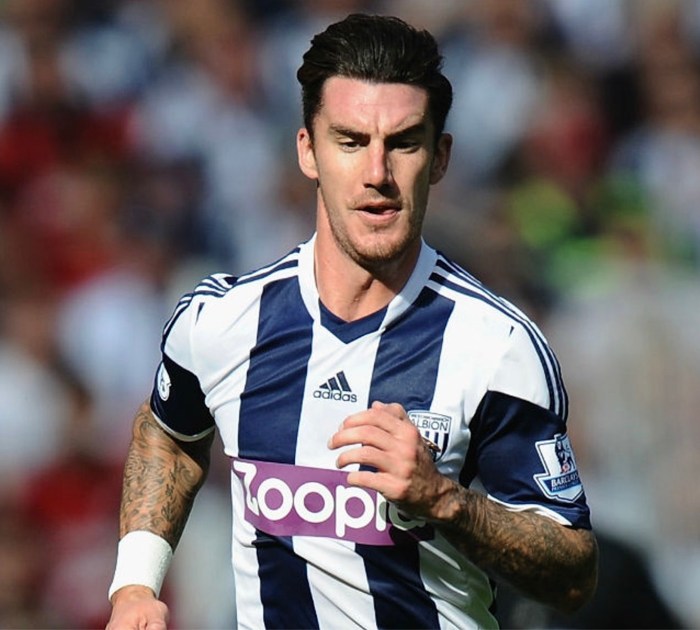
FORMER WEST BROM defender Liam Ridgewell played six games on loan for Brighton in the early part of 2016.

Ridgewell helped out when first choice left-back Gaetan Bong and deputy Liam Rosenior were both out injured.

He made six starts, starting in the FA Cup away to his old boss Steve Bruce’s Hull City, who won the tie with a single goal. His next game was also away, at Rotherham United, where Albion went down 2-0.

After that, he was on the winning side four times, as Albion beat Blackburn Rovers away and Huddersfield, Brentford and Bolton at home.

Albion’s matchday programme devoted a double-page spread to the loanee

Brighton wanted to extend the experienced defender’s loan but his parent club – MLS (Major League Soccer) outfit Portland Timbers – wouldn’t allow it and he returned to the States.

Albion manager Chris Hughton told The Argus: “He has certainly brought us a wealth of experience. We have to abide by the situation. In any way we could extend it for whatever, a further week or so, we’d be delighted to be able to do that, but I certainly can’t speak out of turn when he’s not our player.

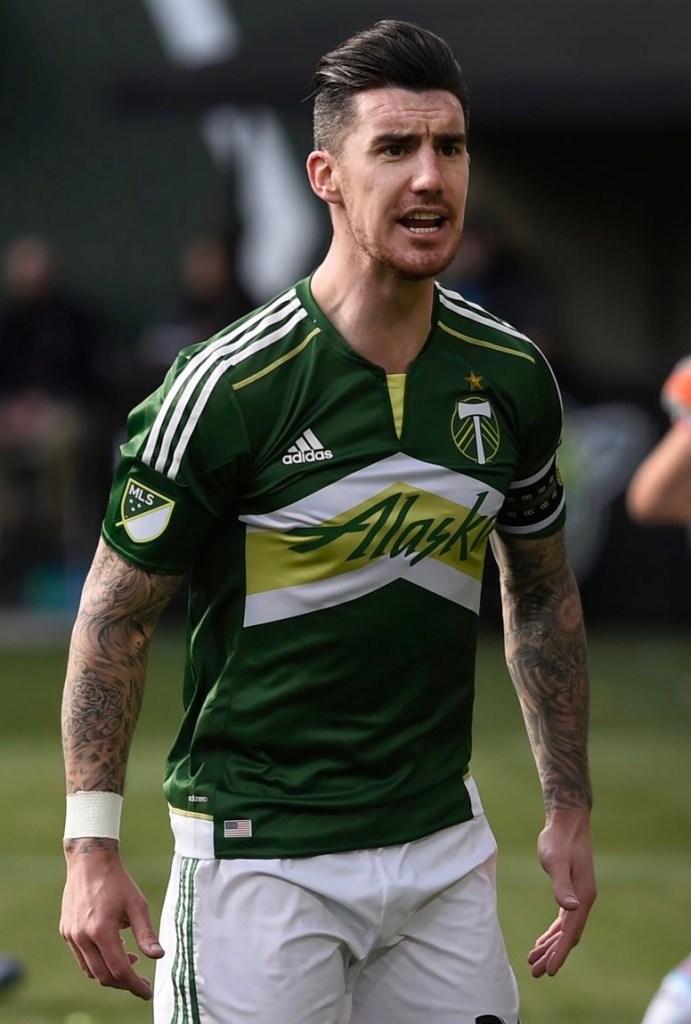
Ridgewell returned to Portland Timbers after his brief loan with the Seagulls

“We have to respect everything his parent club want. He has certainly fitted in very well.”

Ridgewell explained the background to joining the Seagulls in an Argus interview with Andy Naylor, and on clinching the deal, Hughton said: “I know Liam very well from my time as manager at Birmingham City, and he is an excellent and important addition for us.

“He will bring extra experience to our defence at a crucial time and will give me an option both in the centre of defence and at left-back.

“Liam has played the vast majority of his career in the Premier League with more than 350 senior appearances and he’s also got experience of the Europa League and Championship from his time at Birmingham.”

Born in Bexleyheath on 21 July 1984, Ridgewell went to Bexleyheath School and was on West Ham’s books for two years between 1999 and 2001.

After looking at the quality of players breaking through there, he took the bold decision to quit the Hammers and join Aston Villa’s youth set-up instead, which he spoke about in an interview with the Birmingham Mail.

“I had looked at what was already in the team – you had Michael Carrick coming through, Joe Cole, Rio Ferdinand, Richard Garcia – and I thought it might be time for a change.

“I was a south London boy, grew up around there and had all my friends there. But I thought if I got away it might focus me a bit more. It was a tough decision.

A youthful-looking Ridgewell made his breakthrough with Aston Villa

“I used to leave school early on a Friday afternoon to travel up to Villa for the weekends.

“I used to get the bus from my house to the train station, get a tube from Charing Cross to Euston and a train from London up to Birmingham all on my own.”

After joining Villa in February 2001, he was part of their 2002 FA Youth Cup winning side. They beat an Everton team featuring Wayne Rooney 4-2 over two legs. Villa’s goalkeeper was another Wayne – Henderson – who would later move to Brighton. The side also included Steven Davis, who went on to play for Southampton.

In the same year, Ridgewell was selected for the England under-19s and was sent out on loan to AFC Bournemouth, then in Division 3, where he made his league debut as part of a five-game loan spell.

Back at Villa Park, former England boss Graham Taylor gave him his first-team debut in a FA Cup tie against Blackburn in January 2003 when he came on as a substitute in a 4-1 defeat. He had to wait until December that year before getting his Premier League bow, again as a substitute, but this time in a 3-0 win over Fulham. He went on to make 11 appearances by the season’s end.

Under David O’Leary and, for a season, Martin O’Neill, Ridgewell made a total of 93 appearances for Villa before making what some fans would consider a controversial move.

In August 2007, Ridgewell became the first Villa player in 23 years to be transferred to bitter city rivals Birmingham. Des Bremner, brother of one-time Brighton striker Kevin, had been the last one, in 1984.

Steve Bruce’s £2m signing then found himself wearing the captain’s armband on his debut. “It’s one of the greatest achievements in my career,” Ridgewell told the Birmingham Mail. “It’s a real honour. I thank the gaffer for that. Hopefully I can continue as captain for a few more games before a few of the others come back in.

“It was fantastic to do it. I only found out before the game when we were on the pitch. The gaffer came up to me and asked would I have any problems doing it? I said none at all. It’s what I’m made for, it’s what I want to do. I want to captain sides and have a responsibility on me.”

Ridgewell subsequently played under Alex McLeish and Hughton for the Blues, winning promotion back to the Premier League in 2009 and the League Cup in 2011.

After a total of 175 appearances in four years, and on the back of a 6-0 win for Birmingham at Millwall, Ridgewell joined West Brom on deadline day in January 2012.

Ridgewell settled in quickly at West Brom

He couldn’t have wished for a better debut, as Albion recorded a memorable 5-1 win over Black Country rivals Wolverhampton Wanderers.

The Baggies were managed by Roy Hodgson at the time and, having initially been flirting with relegation from the Premier League, stayed up with results like a 4-0 victory over Sunderland and a 1-0 win over Chelsea that cost Andre Villas-Boas his job.

“Roy Hodgson was brilliant,” Ridgewell told The Athletic, in an interview in 2020.  “Roy knew how to make players feel and perform better than they were,” he said. “Everything was positional based. He let you do your own thing but he gave you the tools and the words to make sure you did it to the best of your ability in your own position. It was a clear message for me of how a manager gets the best out of players.”

When Hodgson left to manage England, Ridgewell continued as a Baggies regular for the next two seasons under Steve Clarke. Baggies escaped the drop by just three points in 2014, after Pepe Mel had taken over the managerial hotseat in January.

That summer, Ridgewell wanted to try something different and headed for the States to join Major League Soccer’s Portland Timbers.

In his five years with the Timbers, one of his highlights was captaining the side to a 2-1 MLS Cup win over Columbus Crew, a few weeks before his loan spell with Brighton during the American season’s winter break.

The previous season he’d returned to the UK in a similar arrangement to play six games on loan for Wigan Athletic in the Championship.

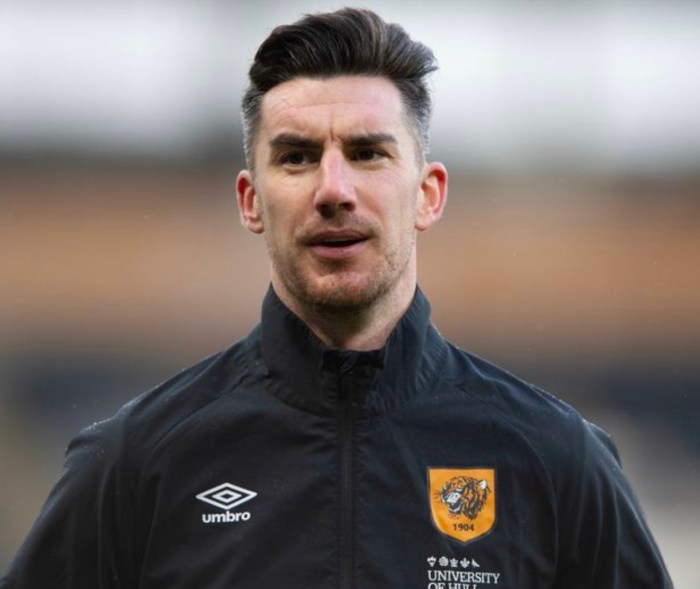
Ridgewell spoke about his time in the States on his return to the UK in January 2019, when he joined Hull City until the end of the season.

Back in the UK, Ridgewell spent half a season at Hull City

“I wanted to try something different and go out there with an open mind,” he told the Hull Daily Mail. “The league is completely different to what a lot of people expect. It’s grown bigger and stronger. I feel as fresh and as fit as when I first went there.”

To illustrate the point, he mentioned how he’d been up against the likes of Miguel Almiron, who subsequently joined Newcastle United for £20m.

“I loved it, it was great, really refreshing for me. It gave me another lease of life. It was something I needed to do, and I really loved it.”

In the summer of 2019, Ridgewell joined League One Southend United, but, having made only one appearance by December, quit playing to take up coaching.

He took to Instagram to reflect on his career, writing: “Football has given me the best life any little boy could wish for. There have been some massive highs and lows but now it’s time to hang up my boots and move on to the next chapter of my career.

“I’d like to say a massive thank you to all the coaches and managers who moulded me into the player I was. A special thank you to the late, great Graham Taylor for giving me my debut and the reason I was able to pursue my dream.”

In April 2020, Ridgewell spoke at length to Gregg Evans for an article on The Athletic, describing how lockdown had interrupted his plans to drop in on some of his old managers to gain knowledge and information in pursuit of his goal of becoming a manager.

“Moving into management has always been my aim,” he said. “I’ve always had a speaking role at every club I’ve been at. Whether it’s on the training pitch or during a game, I’ve always tried to help people out, too. With me being so vocal, I try to marshal teams in a certain way.”

He did some work with Aston Villa’s youngsters towards the end of 2020 but took on his first official coaching post in December 2020, as first team coach at Dover Athletic under former Gillingham boss Andy Hessenthaler.

It’s no surprise to discover Ridgewell (or Ridgy 6 as he’s known) has a veritable army of followers on Twitter – more than 42,000. Away from football, Ridgewell co-owns luxury swimwear business Thomas Royall, with fellow footballers John Terry and Sam Saunders.

Pictures from various online sources, and the Albion matchday programme.

Albion rookie Richard Martin became Sven goalie at City

RICHARD MARTIN could justifiably be dubbed ‘The Nearly Man’ of goalkeeping.

Once thought to have the potential to play 200 games for the Albion, he left the Seagulls having only ever warmed the first team bench.

In an unlikely turn of events, he went from back-up League One Seagulls ‘keeper to no.3 behind Kasper Schmeichel and Joe Hart at Premier League Manchester City, thanks to former England boss Sven-Goran Eriksson.

After two years at City, he went on loan to Burton Albion, then worked under Ben Roberts and Nathan Jones as back-up ‘keeper at Yeovil Town before enjoying fleeting fame on the Caribbean island of Puerto Rico.

Doubtless it wasn’t the career he expected when his teenage promise between the sticks led to him earning trials with Liverpool and Everton.

Born in Chelmsford on 1 September 1987, Martin spent part of his childhood in Liverpool but the family were living in Burgess Hill when the young goalkeeper was picked up by the Albion.

Martin was only 16 when Liverpool took him on a week-long trial and Albion manager Mark McGhee went public in the Argus on 4 February 2004, explaining why he thought the youngster should stick with the Seagulls.

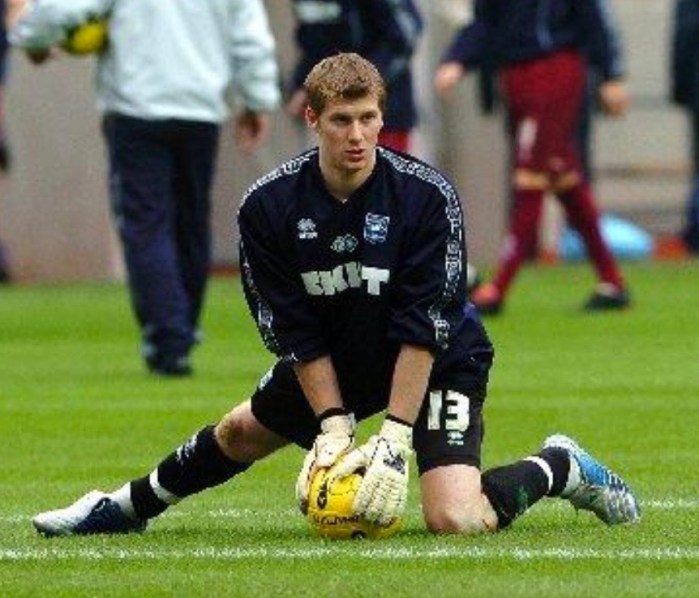
Warming up for the Albion (pictured by the Argus)

“We have put forward a reasonable argument to the boy and to his parents as to why we think he should stay here,” said McGhee. “The thing we can promise him at a club like ours, like any other young player in any other position, is that if he is good enough he will be fast-tracked into the first team or certainly onto the bench.

“If he goes to Liverpool there is no chance of that happening. At the very best he is going to spend two or three years at youth level, then at reserve level and in five years’ time he might start to make an impression in the first team squad.

“By that time, he would have played 200 games for us and be worth a lot of money and move to Liverpool under different circumstances.”

The Argus reckoned Albion could have got compensation of at least £200,000 if Martin, a Liverpool supporter, had ended up at Anfield. But Liverpool didn’t take him on, he remained an Albion scholar, progressed through the youth ranks and was awarded a two-year professional contract in the summer of 2005, before his scholarship was due to expire.

With Michel Kuipers sidelined by injury, Martin and fellow young ‘keeper John Sullivan shared opportunities to play for the first team in pre-season friendlies ahead of the 2005-06 season. Martin appeared against Le Havre, Oxford United and Bournemouth, as well as coming on as a sub in two other matches.

A sizeable Albion following went over to France to watch Albion’s 2-0 defeat to Le Havre when Martin began in goal in the absence of Michel Kuipers. The Argus reported: “Martin flew high to his right to brilliantly tip away a 12th-minute thunderbolt from Jean-Michel Lesage which was dipping and swerving towards the top corner from 25 yards.”

Goalkeeping coach John Keeley went further and told the matchday programme: “That was an absolute world-class save. I’m sure if Michel had made it people would still have been talking about it – it was that good..

“He can take big positives out of that and the other bits he had to do in the first half.”

When the season proper got under way, Martin found himself on the bench for 14 matches as Irish international Wayne Henderson, on loan from Aston Villa, was the established first choice. But then Frenchman Florent Chaigneau arrived on a year-long loan from Rennes.

In December 2005, Everton took Martin on trial and for a while there was speculation that a nice fat transfer fee from selling the youngster could be reinvested in signing a much-needed striker for the first team. But the move didn’t materialise because Everton boss David Moyes didn’t think Martin was big enough.

The Argus reported: “Martin impressed during a recent trial with the Merseyside giants but Goodison boss Moyes has decided not to sign the slimly-built 18-year-old from Burgess Hill due to his size.”

Instead of heading to Goodison, Martin went on loan to non-league Kingstonian, competition for the no.1 spot at Albion having increased with the permanent signing of Henderson from Villa.

Martin was part of the successful Albion youth side of 2006 from which six players went on to play first team football. But even at youth level he was competing with Sullivan, who eventually edged ahead of him and did manage to break through into the first team.

Competitive football game-time was considered the best option for Martin and the following season he went on a season-long loan deal to Conference South Dorchester Town. But his stay was cut short by injury. Once recovered, in the second half of the season, he joined Folkestone Invicta where he played 12 matches.

However, on his return to the Albion his contract wasn’t renewed, and he was without a club until the surprise opportunity arose at Manchester City, where the goalkeeping coach at the time was ex-Albion No. 1 Eric Steele.

Martin told the Argus: “This is completely unexpected. I’d like to think Brighton were wrong to let me go but these things happen.

“I went up to City initially just for a week to do a bit of training, because my agent knows Eric.

“(First choice Andreas) Isaksson and Joe Hart picked up injuries, they had a reserve game which I played in and then I carried on training.

“I don’t think I am in contention for the first team, I will just be in the reserves and go from there. Hopefully the month will be extended if I can keep on doing well.”

Sure enough, it was and boss Eriksson was happy to give Martin a season-long contract.

His only first-team action came on 22 May 2008 when replacing Schmeichel for the second half in an end-of-season charity match in Hong Kong against a South China Invitational XI.

Even after Steele switched allegiance to Manchester United and Eriksson had moved on, Martin had done enough to establish himself as third in line behind Hart and Schmeichel.

Mark Hughes took over as manager and Martin remained at the club working with ex-Chelsea ‘keeper Kevin Hitchcock, who Hughes had taken with him from Blackburn.

Martin was given the no.13 squad number for the 2008-09 Premier League and UEFA Cup campaign and it was an irresistible opportunity for the Argus to catch up with him ahead of Brighton’s home Carling Cup tie against City at Withdean in September 2008 when Albion sprung a big shock by winning the penalty shoot-out.

Reporter Andy Naylor discovered Martin had been philosophical, rather than disappointed, about the way things turned out with Albion. “When I look back at the situation at that time it was all about getting results and Michel (Kuipers) and Wayne (Henderson) were the two generally ahead of me,” he said. “I got a lot of good experience at Brighton and that set me in good stead for coming up to Manchester.”

Unfortunately, a knee injury Martin sustained shortly after sidelined him until the following March. Then in April, City allowed him to move temporarily to Burton Albion as cover because their first choice ‘keeper Kevin Poole was injured.

When released by City in the summer of 2009, more Albion connections provided him with his next opportunity, and finally the opportunity to play league football, at Yeovil Town.

Martin at Yeovil (picture by YTFC Digital)

In the Seagulls’ 2004 play-off winning season, Martin was a youth-teamer when Glovers assistant boss Jones was Albion’s left-back and goalkeeping coach Roberts was between the sticks.

Ahead of Brighton’s 2-2 draw at Huish Park on 10 October 2009, Martin told Brian Owen of the Argus: “I was fortunate I got the call from Yeovil in the summer and went down there for a trial. They liked what they saw. Of course, I know Nathan and Ben well and the fact they knew about me must have helped them make a decision.”

Martin was on the bench for the Albion fixture but had made his league debut shortly before as a substitute when first-choice Alex McCarthy (at the time on loan from Reading) was sent-off 20 minutes into a 2-2 draw with Stockport County. With McCarthy banned, Martin got his first start in a defeat at Southampton.

However, in total he made just three league and two cup appearances in that first half of the season and in January 2010 was loaned to Conference National bottom-placed side Grays Athletic – and within the space of a fortnight had conceded 11 goals in three matches!

Although he returned to Yeovil after a month, McCarthy’s fine form denied him any further first team action at Huish Park and he was released in July 2010. After brief spells with Havant & Waterlooville and Crawley Town, Yeovil re-signed him on 31 December 2010.

Plenty to say in goal for Puerto Rico Islanders

However, in March 2011 he had the opportunity to head to the Caribbean and play for Puerto Rico Islanders, who at the time were in the second tier of the North American Soccer League. He made his debut in May 2011 having initially been back-up ‘keeper and then signed for a second season, during which he established himself as first choice and played a total of 33 matches.

Talking on camera after the NASL player of the month award

In August 2012 he was named NASL player of the month, and he was interviewed about the experience of playing for the Islanders. There is an excellent montage feature in which the commentator purrs in this YouTube footage: “Richard Martin has the reflexes of a jungle cat.”  

Back in the UK in 2013, Martin played briefly for Whitehawk and Burgess Hill before retiring.

‘Save of the season’ one of few bouquets for goalkeeping florist Alan Blayney

blayney intenseGOALKEEPER Alan Blayney only played 15 games on loan to Brighton from Southampton but if finances had been better at the time he could have signed permanently and his career may have taken a different turn.

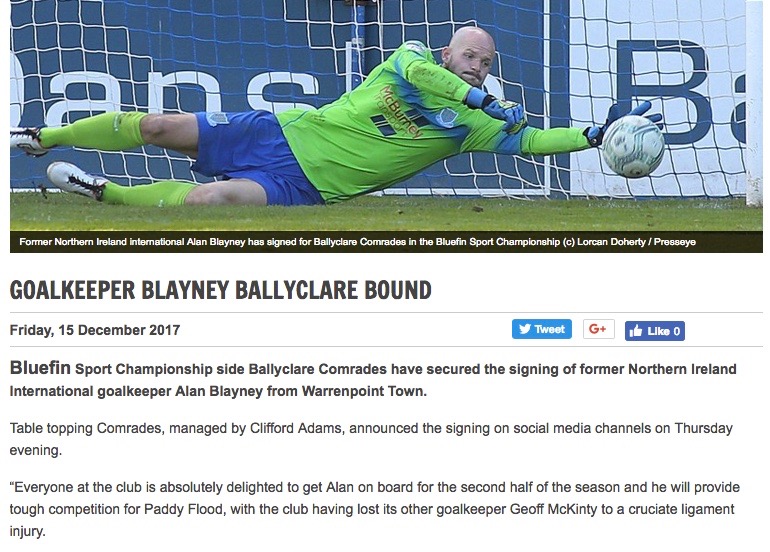
Blayney is still playing, nifootballleague.com reporting only in December 2017 a move to Ballyclare Comrades from Warrenpoint Town. He also runs a florist business with his wife Laura in Newtownabbey.

Only a month earlier he opened his heart to the belfasttelegraph.co.uk and talked about the demons he’s had to face during a career that rarely hit the heights in England but has seen him represent his country and enjoy success in his native Northern Ireland.

Born in Belfast on 9 October 1981, Blayney was picked up by the city’s Irish league side Glentoran at 16 before moving to the UK aged 19 to join Premier League Southampton.

Blayney was initially loaned out to Stockport County, but his time there was cut short by a broken finger.

He also had a couple of games along the coast at Bournemouth when he suffered one of his most embarrassing goalkeeping moments. In a Q and A for the Albion programme, Blayney told interviewer Dan Tester: “I’d rolled the ball outside the 18-yard box in readiness to kick it up field. The Rochdale striker, my former Northern Ireland under 21 teammate Lee McEvilly, was running away and it hit him on the head and flew over mine into the back of the net.”

Back at Southampton, the young ‘keeper finally got a first team chance in May 2004, a couple of months after Paul Sturrock had replaced Gordon Strachan as manager.

It was some debut because the game against Newcastle United finished 3-3 and a save Blayney made from an Alan Shearer header won him the accolade of Sky Sports save of the season.

The young Irishman kept his place for the following game, a 2-1 defeat at Charlton and he played twice more the following season, in a 2-2 league draw against West Bromwich Albion and a 5-2 League Cup defeat to Watford.

With future Albion goalkeeping coach Antti Niemi and Paul Smith ahead of him in the pecking order, Blayney went on loan to Rushden & Diamonds, where he played four games, before securing the first loan to Brighton in early 2005.

Albion’s regular ‘keeper Michel Kuipers had sustained a horrific shoulder injury in a home game against Nottingham Forest and the no.2 at the time, Chris May, had no experience so manager Mark McGhee needed emergency reinforcements.

Initially he obtained David Yeldell from Blackburn Rovers and also brought in Rami Shabaan from Arsenal, but Blayney, no doubt recommended by McGhee’s old pal Strachan, became the preferred option and played seven games at the end of the season.

Amongst several impressive displays was a game I went to with my son, Rhys, at Burnley, on 16 April 2005.

Against the odds, it finished 1-1 but the media was keener to focus on the post-match news that striker Mark McCammon had been ordered off the team bus by McGhee for his reaction to being substituted at half time.

Reporter Peter Gardner, on telegraph.co.uk, said: “The incident overshadowed a rousing second-half comeback to a game Brighton might ultimately have won, not least through the contribution of Jake Robinson, McCammon’s half-time replacement.

“However, McGhee’s men were equally fortunate not to have been overwhelmed by the home side in the opening 45 minutes when only splendid saves by Alan Blayney from Graham Branch (twice) and Mo Camara, plus Burnley’s own profligacy, prevented an avalanche of goals.”

Blayney was also between the sticks for the nail-biting final game of the season when a 1-1 draw with Ipswich Town kept the Seagulls in the Championship by the skin of their teeth.

Such had been Blayney’s contribution that McGhee was keen to sign him permanently, the manager telling skysports.com: “Alan did absolutely brilliantly here for us. We have to see how realistic an option that is, and whether they’re even prepared to consider letting him go, and what the conditions would be.”

The answer was that Brighton couldn’t afford the fee Southampton wanted so at the start of the following season Wayne Henderson was brought in instead on a three-month loan from Aston Villa.

When Henderson returned to Villa, McGhee was keen to buy him outright but in the meantime brought Blayney back for an eight-game stint.

Blayney told BBC Southern Counties Radio: “If I don’t perform they’ll end up going for Wayne instead of me. I have to come in and show I’m as good as Wayne, if not better. This first game at Stoke is really important.”

Unfortunately, the game at Stoke ended in a 3-0 defeat and a 3-2 reverse at home to Crystal Palace followed.

After a point was gained away at Cardiff City, Blayney saved a penalty from Inigo Idiakez in a 0-0 draw with Derby at Withdean on 26 November 2005, and the following week he helped earn another point, repeating the feat against Watford’s Marlon King.

The Watford Observer reported: “King passed up a glorious chance to fire Watford ahead on 58 minutes when he saw his penalty saved. King’s tame penalty was parried by Blayney, who dived low to his left, and the keeper then gathered the rebound.”

After a 5-1 hammering away to Reading, Blayney returned to Southampton in mid-December and within a matter of weeks Southampton’s technical support director, Sir Clive Woodward, informed him he had been sold to Doncaster Rovers for £50,000.

Blayney told the Belfast Telegraph in November 2017: “My response was, ‘Do I not have any say in this?’ He said the deal was done but I didn’t want to live in Doncaster. I loved it in Southampton. I didn’t settle in Doncaster, they gave me an apartment, but it was a tip. If I was getting those wages now I would bite your arm off but then it felt I wasn’t getting much and it was a terrible time.”

Although he started out as no.1, and made 24 appearances for Rovers, following an ankle injury he slipped to third choice behind Ben Smith and Jan Budtz, and came to an agreement to terminate his two and a half year contract early.

Blayney admitted in his Belfast Telegraph interview: “I do regret going out and drinking in my later career in England when I was at Doncaster. I was getting injuries and was a bit disillusioned with the game. I regret it because people had opinions of me at that club which is not the real me. They only saw me behave like that for a few months.”

He wasn’t quite done with England, though, and in February 2007 joined League One Oldham Athletic until the end of the season, after impressing in a reserve team match. However, he only played one first team game, in a 1-2 home defeat against Bournemouth.

There had been the possibility of a return to Brighton to replace Henderson, who had been sold to Preston, but the Argus reported on 2 February 2007: “Albion are not re-signing goalkeeper Alan Blayney after all. They have not been able to agree a length of contract with the former loan signing.”

On his return to Northern Ireland, he initially managed just three games as an understudy at Bohemians, but then he played 32 times for Ballymena United in 2008-09 as a prelude to what would turn out to be the most successful period of his career.

In five seasons with NIFL premiership side Linfield, he played 164 games and, in 2010-11, when Linfield won the league and cup double, he was named Ulster Footballer of the Year.

His form for Linfield also earned him a recall to the Northern Ireland squad. He had initially made his debut in 2006 under Lawrie Sanchez on a summer tour of the United States.

An appearance from the bench in a drawn friendly against Morocco in November 2010 saw Blayney concede an embarrassing goal as his clearance rebounded off Marouane Chamakh, then of Arsenal, to give the Africans the lead.

Manager Nigel Worthington put the incident into context after the game, telling the media Blayney had travelled to the ground just hours after his partner had given birth to a son.

“I was disappointed for Alan but it has been a terrific day for him and we have come out of the game unbeaten,” said Worthington. “He’s fine and I have given him every encouragement. It is one of those you learn from. You cannot take a split second to delay.”

Blayney said it was the worst moment of his career. He told the Belfast Telegraph: “I came on at half-time for Jonny Tuffey but took a terrible touch and Chamakh came in to challenge me. I kicked the ball off him and it went into the net.

“Everybody had welcomed me onto the pitch and you don’t forget moments like that. You aren’t used to playing against players who are as quick as that. I looked up and he was there. I wanted the ground to swallow me up but earlier that same day Phoenix was born. It was a bittersweet day.”

In May 2011 Blayney shared goalkeeping duties with Tuffey as an inexperienced Northern Ireland team endured an embarrassing Carling Nations Cup defeat to the Republic of Ireland. Although left exposed by a threadbare defence, Blayney was culpable in at least two of the goals in a 5-0 hammering, one of which was scored by debut-making Stephen Ward, a future left back loanee for the Seagulls. bbc.co.uk reported: “Blayney was badly at fault six minutes later as he spilled a tame Treacy cross which allowed Ward to poke home from close range.”

With Linfield, Blayney continued to rack up honours until they signed Tuffey in 2013, and he was no longer first choice. In January 2014, he joined Ards on loan but couldn’t help them avoid relegation.

After spending 2014-15 with Glenavon, he returned to Ballymena where he had two successful seasons, before losing his place. In January 2017, he dropped down to the Premier Intermediate League with Dundela. At the start of this season, he returned to the higher division with Warrenpoint Town but, in December, moved to be closer to home, with semi-professional Ballyclare.

Blayney savedec 17 blay cutBlayney cover

Further reading

https://www.not606.com/threads/whatever-happened-to-alan-blayney-part-5-of-many.126334/

https://www.belfasttelegraph.co.uk/sport/football/irish-league/footballers-lives-with-alan-blayney-why-ive-been-gripped-by-selfdoubt-and-how-i-almost-died-after-training-36284956.html

http://news.bbc.co.uk/sport1/hi/football/teams/b/brighton/4102810.stm

http://nifootball.blogspot.co.uk/2006/08/alan-blayney.html

Goalkeeping guru Eric Steele: a promotion talisman at Brighton

1 ES action v Mansfield

GOALKEEPER Eric Steele was involved in an incredible six promotions as a player before becoming one of the country’s top goalkeeping coaches.

Two of those promotions came in his three years with Brighton & Hove Albion and another during a five-year spell at Watford.

His penchant for coaching began during his time at Brighton who he joined in February 1977 for £20,000 from Peterborough United.

As a replacement for the injured Peter Grummitt, Steele made his debut in a 3-1 defeat away to Crystal Palace but the season was to end in triumph. With Peter Ward making the headlines at one end, Steele kept the ‘keeper’s jersey to the end of the season as Albion won promotion to the old Second Division in runners up spot behind Mansfield Town.

As Albion chased a second successive promotion in 1977-78, Steele’s terrific form meant new signing Graham Moseley had to wait five months to make his debut. Steele played 38 matches but Moseley took over for the final four games of the season, as Albion just missed out.

The following season, manager Alan Mullery opted for Moseley as his first choice but the accident-prone former Derby ‘keeper twice caused himself damage – once with a hedge trimmer and then by falling through a plate glass window – which opened the door for Steele, who, by the season’s end, played 27 times compared to Moseley’s 20.

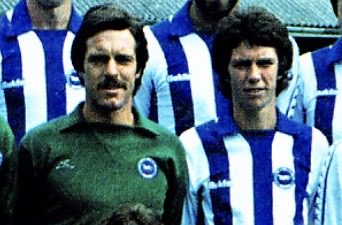
Steele 4 AlbionSteele was between the posts as the Seagulls won 3-1 at St James’ Park to win promotion to the elite for the first time in their history, a particularly sweet moment considering Newcastle had discarded him early on in his career.

“It was important to go back as part of something, to show that I should have been given a chance,” he said in a 2019 Albion matchday programme article. And rather than join the infamous promotion party train ride back to Brighton, after the match Steele stayed over in Newcastle.

“I wanted to be with my family,” he said. “They’d supported me all the way from when I was a kid. To actually do it at my hometown club as well was a bit special. It was a great day for me, a really great day.”

In Spencer Vignes’ excellent book A Few Good Men, it’s interesting to hear Moseley’s view about his rival for the shirt. “He was very dedicated, much more so than I ever was. He would train every day after everybody else had finished.”

Nevertheless, at the higher level, it was not long before Mullery decided to dispense with Steele’s services, and it came within a matter of days of an amazing incident at Old Trafford when Steele exchanged punches with his own defender, Gary Williams, in a 2-0 defeat.

Steele and Williams together in the 1979-80 Albion squad photo

Argus reporter John Vinicombe produced a book (Super Seagulls) to document the history of Albion’s memorable first season in the first tier and covered in detail Steele’s somewhat acrimonious departure.

“Mullery knew from the beginning that one day he would have to choose between the lightning-on-the-line reflexes of Steele and the aerial domination of his great rival, Moseley,” said Vinicombe.

Mullery told the reporter: “Eric is an exceptionally good goalkeeper on the line, there’s no doubting that. But I feel he is not as commanding in the air as Graham, especially on crosses.”

Steele’s departure was felt quite keenly by the fans who, as much as his contribution on the pitch, had applauded his coaching in local schools and support for Sussex charities, in particular Chailey Heritage.

Regardless of that, in October 1979, Mullery turned a sizeable profit on his original investment and sold Steele to Second Division Watford for £100,000.

The articulate Steele shared his thoughts with the readers of Shoot! magazine.

“I didn’t want to leave Brighton,” he said. “That’s the first and most important point. It wasn’t my decision, it was Alan Mullery’s. I think he was wrong and I’ll be proved right in time. Once he’d made up his mind, I had to resolve myself to leaving.

“But it hurt. It took me a long time to get to the First Division and I think that in the ten games I played, I proved I was good enough to keep my place at that level. But once I knew I was on the move, I wanted to get away as quickly as I could.

“I went on the list on a Thursday and Watford came straight in for me the next day. I’d signed for them within a week. I was very happy to join such a progressive club. I would never have come here if I didn’t believe we would be a First Division side in a couple of years.”

Steele maintained he was taking one step back to take two forward and must have remembered those thoughts when Watford won promotion to the top division for the first time in their history in 1981-82.

However, vying for the no.1 jersey with Steve Sherwood, he made just 65 appearances in five years and said it was when watching from the stands as Watford played in the 1984 FA Cup Final that he realised he needed to move on.

Born on 15 May 1954, Steele’s path to professional football was the one taken by many talented Geordies – via Wallsend Boys Club to Newcastle United.

He never made it to the first team at St James’ Park but put that right when he joined Peterborough, setting a record of 124 consecutive appearances, including being part of the side that won the Fourth Division championship in 1974.

After those spells with Brighton and Watford, he linked up with former Newcastle United boss Arthur Cox at Derby County, and was part of their promotions from the third tier through to the first.

When he retired in 1988, it was to run a pub, but he also set up Eric Steele Coaching Services and began an illustrious career in which he has been instrumental in the development of some of the country’s top goalkeepers, working with ‘keepers at Manchester City, Aston Villa, Leeds United, Derby County, and Barnsley, as well as overseas in Australia, Switzerland, Norway, Germany and the United States.

When another former Watford ‘keeper, Tony Coton, was forced to retire as Manchester United’s goalkeeping coach because of injury, he recommended Steele as his successor.

Coton told the Republik of Mancunia website: “Eric Steele was my goalkeeping coach when I was a player at Manchester City, and it soon became evident after just a couple of training sessions that Eric was a unique and talented coach.

“Eric was different due to his innovative teaching style. Every session was challenging and interesting, and his breadth and depth of knowledge was second to none. Because of this I decided to call Eric ‘The Guru’, a name that he is now known by throughout the Premier League.”

As well as former Brighton ‘keeper Wayne Henderson at Villa, Steele also coached Kaspar Schmeichel at Manchester City. And at Man Utd, he famously played a part in Ben Foster successfully saving a penalty in the 2009 League Cup Final penalty shoot-out after the game ended 0-0.

Foster explained: “We went into the shootout as well prepared as possible. We have had things to look at over the last couple of days and before the shootout you can see me looking at an iPad with Eric Steele.

“It had actual video on it and showed where players put things. It is a new innovation for us. Eric brought it when he came to the club. I have never seen anything like it. It is a fantastic tool for us.”

Steele was part of Sir Alex Ferguson’s team at United between 2008 and 2013 and helped to recruit long-standing no. 1 David de Gea.

When Ferguson stood down at Old Trafford, Steele returned to Derby – where he’d previously worked as a coach for four years – under Steve McLaren and then went on to coach young goalkeepers for the English FA. He’s also an ambassador for Evolution Goalkeeper Coaching.

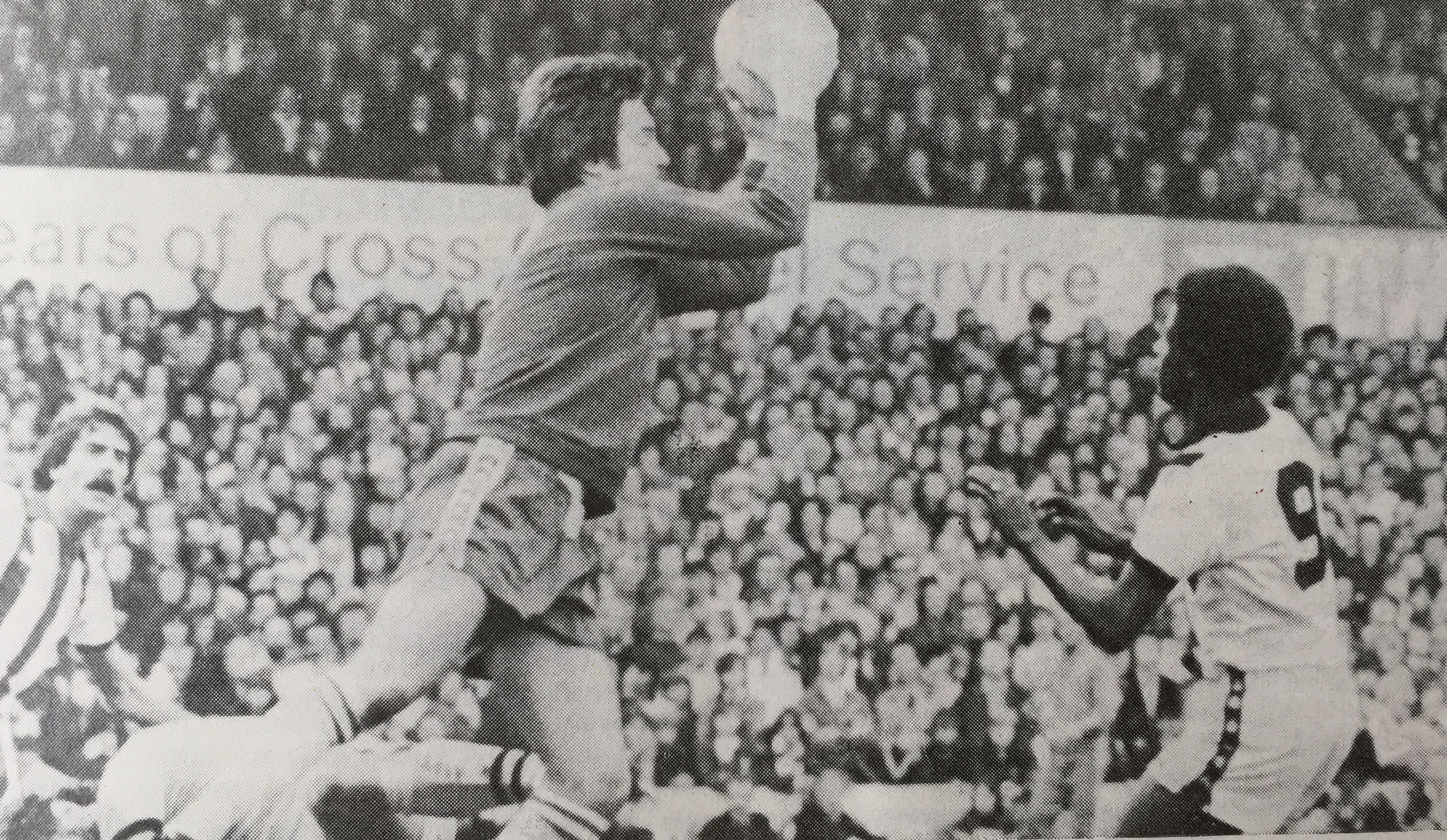
2 Steele claims v Palace
3 Steele Pat Partridge Pipes
4 steele farewell
5 Steele + De Gea
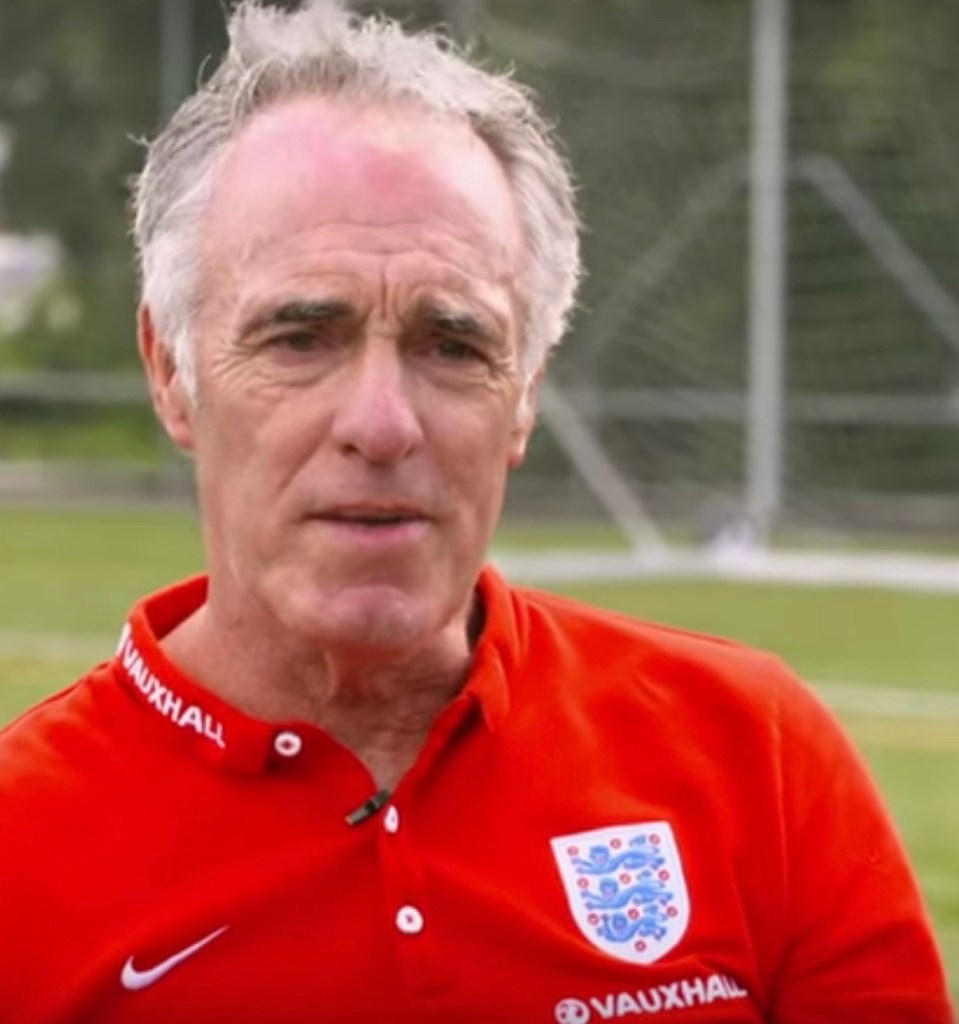
Steele has coached young England goalkeepers

Scrapbook photos from the Albion matchday programme, the Argus, and the republikofmancunia.com.

  • Top one shows Steele in action in one of his early Albion matches, a top-of-the-table clash against Mansfield Town in front of a packed Goldstone. I am one of those supporters crammed into that south west corner terrace!
  • Peter O’Sullivan (left) looks on as Steele claims a cross in a home game against Crystal Palace.
  • Steele and ref Pat Partridge see the funny side of it as spongeman Glen Wilson fixes a facial injury to Steve Piper.
  • A thumbs up to the crowd as Steele says his farewell at the Goldstone.
  • Steele working at Man Utd with David de Gea.

Booed on his Burnley debut, Gifton Noel-Williams was the centre forward Brighton craved

GNW DackFOR ALMOST the whole of Championship seasons 2004-05 and 2005-06, Albion manager Mark McGhee spoke about how the side desperately needed an old-fashioned hold-up centre forward.

In the first season, he converted defender Adam Virgo to the role with some degree of success, but after Virgo’s summer 2005 departure to Celtic, the problem returned, in spite of the occasional promise of the inexperienced Colin Kazim-Richards.

It wasn’t until March 2006 that McGhee finally landed his man in the shape of 6’ 3” Gifton Noel-Williams, on loan to the end of the season from Burnley.

The omens were good when he made his debut against Luton on 25 March because he had scored on his debut for both Burnley and previous club Stoke City. Sure enough, he did it again, netting with a brave diving header from an Adam Hinshelwood cross after 18 minutes.

It demonstrated only too emphatically what Albion had been missing for so long.

Unfortunately a glaring miss by midfielder Dean Hammond saw the chance to go 2-0 up squandered and Luton went straight back down the other end and equalised when ‘keeper Wayne Henderson could only parry Warren Feeney’s shot and the rebound went into the open net off on-loan defender Paul McShane running back.

Luton were destined to join Albion and Leeds as the fall-guys from the division but they hung on that afternoon on a quagmire of a pitch to earn a point.
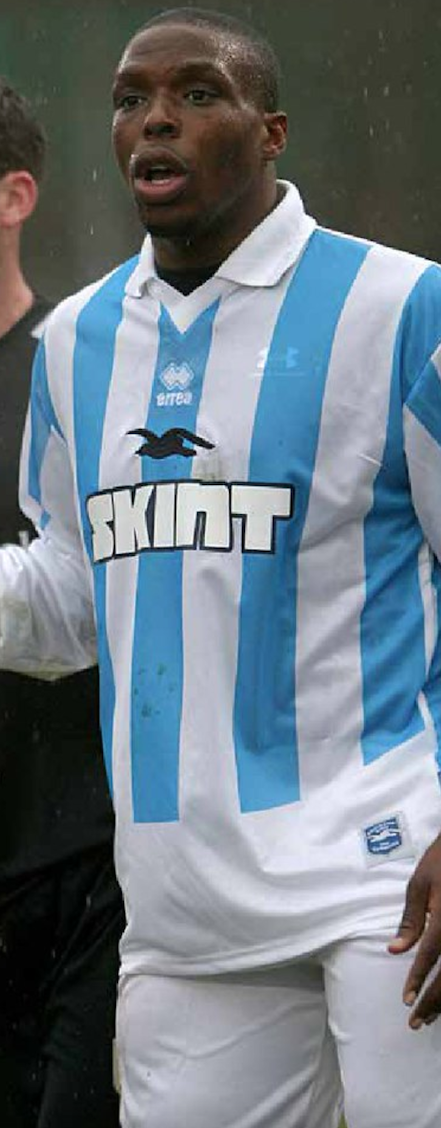
GNW BHAGary Hart came close to nicking it for the Albion with a volley that struck a post but the points were shared, which was no good for either side.

McGhee was philosophical after the game, recognising it would “take something astonishing” for Albion to stay up with only six games remaining. It would. They didn’t.

Nevertheless, before the inevitable happened, Noel-Williams scored again  – on Easter Saturday 2006.

Brittle old Ipswich, with Joe Royle in charge, stood in the way of Albion notching some desperately needed points, but somehow I just fancied their chances that day and I made a late decision only on the morning of the match to travel up to Ipswich with my son Rhys.

Wearing the all-burgundy away strip, Albion had a new-found confidence in their play thanks to the arrival of Noel-Williams, who, after scoring against Luton, had got an assist by laying on a goal for Paul Reid in a 2-0 win at Millwall two weeks before.

McGhee made an interesting choice in playing Hart at right back rather than Reid, who slotted in ahead instead. The decision was justified when Hart’s strong challenge on Alan Lee midway inside the Albion half enabled Hammond to release Kazim-Richards down the right.

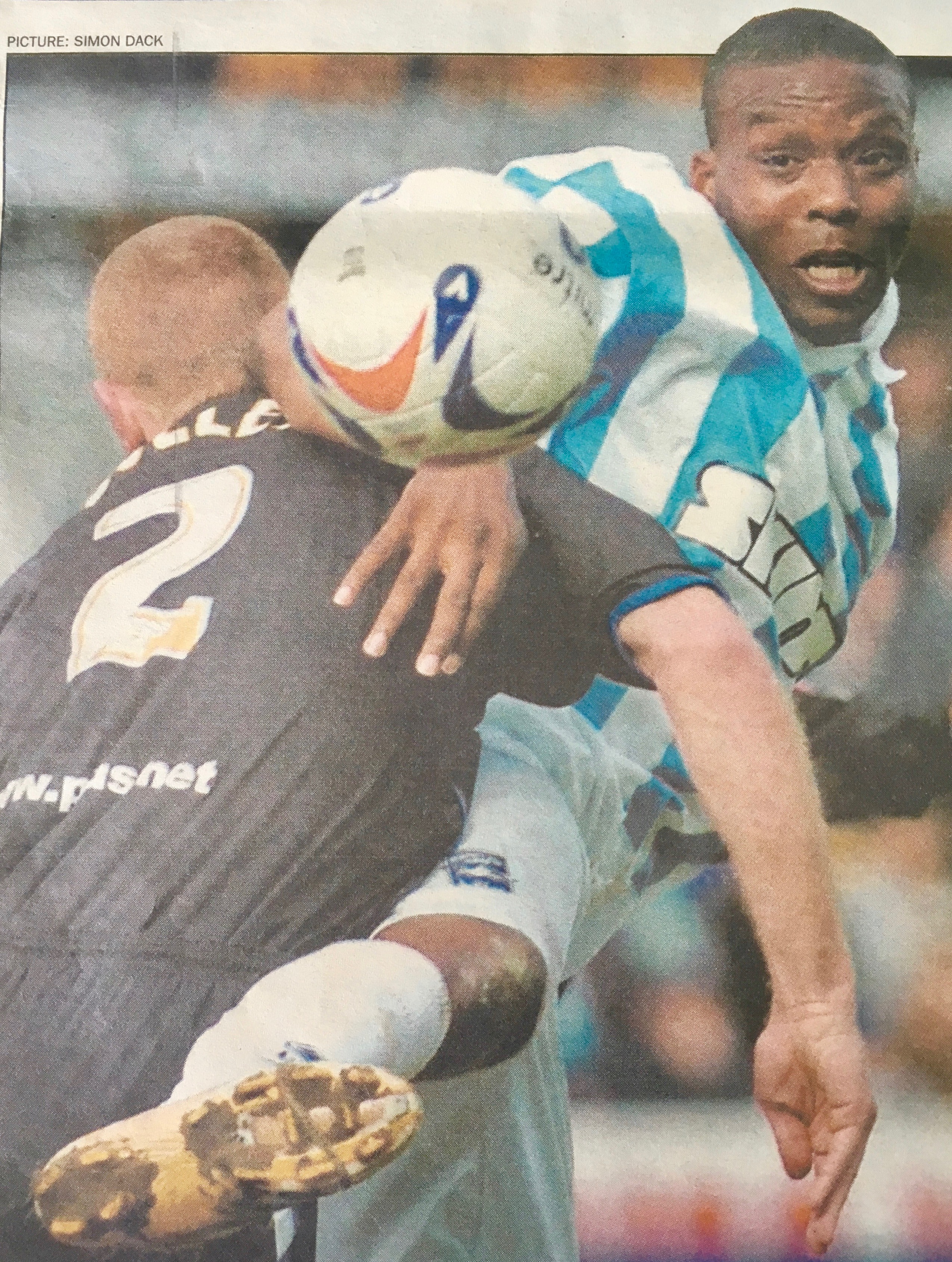
He crossed into the left back area, where the lurking Noel-Williams seemed to have acres of space to turn on the cross and drive the ball home from ten yards. Photographer Simon Dack captured the goal celebration for the front page of the Sports Argus (below).
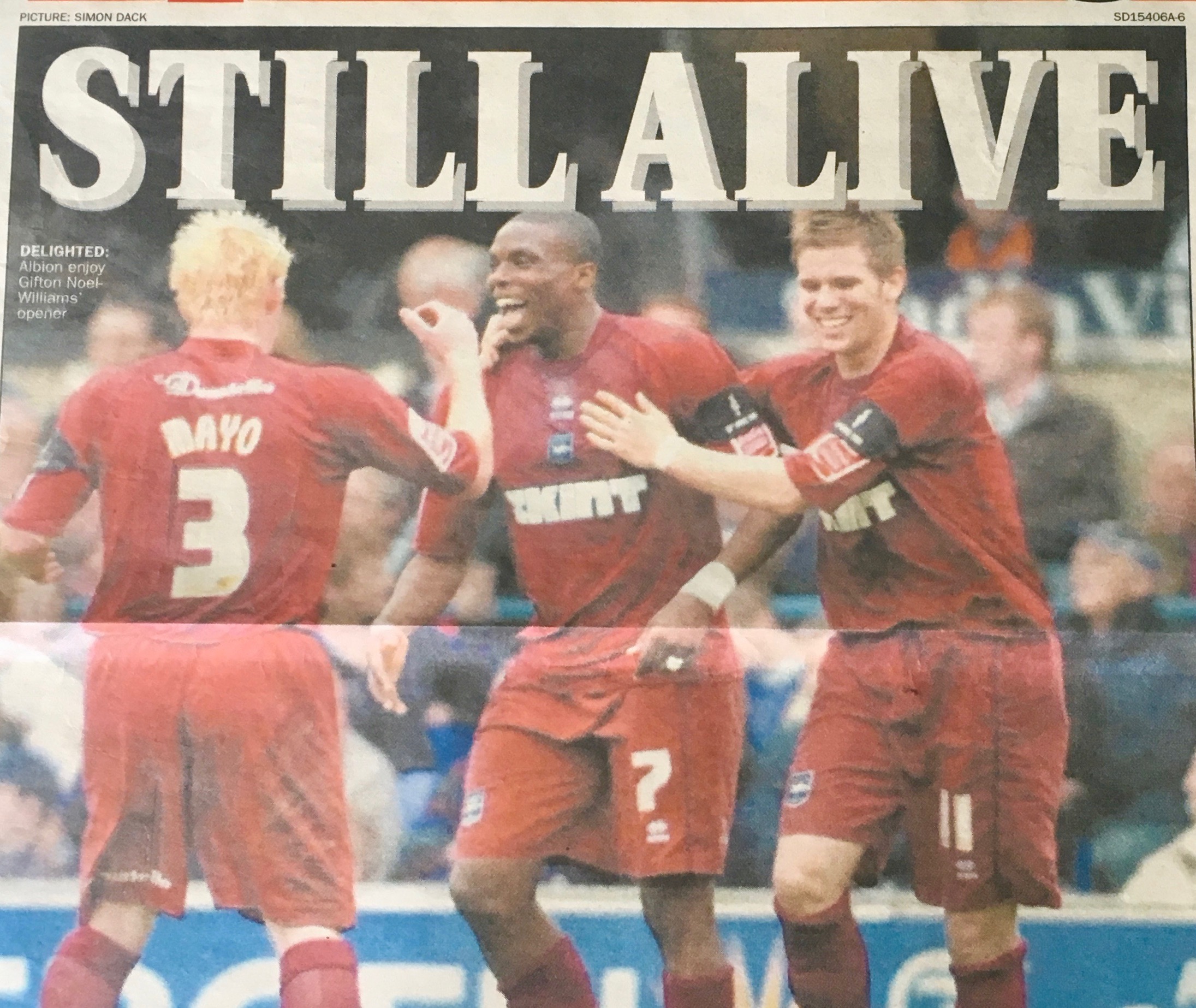
GNW IpsIf that delight was not enough, teenage defender Joel Lynch made sure our trip was a memorable one by scoring his first-ever goal for the club.

Albion, never wanting to make life too easy for themselves or their fans, allowed Ipswich to pull a goal back when Lee flicked on from former Seagull Darren Currie’s cross for substitute Nicky Forster – a future £75,000 signing for Albion – to score. But thankfully it was too late for Ipswich to salvage anything from the game.

It was all to turn pear-shaped on the Easter Monday at home to Sheffield Wednesday, but for a couple of days at least the Great Escape still seemed a possibility.

Nevertheless, Noel-Williams seemed to enjoy his brief time with the Seagulls, telling Andy Naylor in The Argus: “I like the way the team plays football. They play my type of football.

“It is not only in the air for me to flick it on, they get the ball on the deck and want to knock it about a bit as well. That suits me, that’s what I like.

“The manager hasn’t asked me to be tearing around the pitch, he’s asked me just to use my movement and get into the channels when I have to. I appreciate that, so I’m enjoying my football, and, when I’m enjoying my football, I think I’m not a bad player.”

The downside of not having played regularly at Burnley was a lack of match fitness, and he admitted: “I play all right for maybe the first hour and then that’s it, my legs are gone.”
Certainly a fascinating character, Noel-Williams was still only 26 when he pitched up at the Albion, and was already a father of six children.

But how did he end up at Brighton?

An article on the excellent Burnley supporters website,claretsmad.co.uk, gives a great insight into the background. Published in June 2013, Tony Scholes wrote: “There was heavy criticism of his signing and he was booed by his own fans during his league debut for us at Crewe on the opening day of the 2005-06 season.

“He was one of Steve Cotterill’s five summer signings during that 2005 summer, and the plan was to partner him up front with his old Stoke City team mate Ade Akinbiyi, a partnership people were quick to say hadn’t worked when they had played together for Stoke.”

Scholes continued: “He must have wondered what he’d come to when he was roundly booed in that first match of the season at Crewe. He scored our equaliser, then hit the woodwork in the last minute which would have earned us a point.”

A week later, he missed a penalty against Coventry, and, even though he scored in a home draw against Derby, the poor start to the season saw Cotterill tinker with the line-up, and he lost his place.

He was then a peripheral figure and, just before the end of the loan window in March, Cotterill, who had once been on loan to Brighton himself, loaned him to struggling Albion.

Burnley fans thought they had seen the last of him but, despite being placed on the transfer list, and missing the club’s pre-season trip to Italy, he was still a Burnley player when the season began.

Then, remarkably, he went from zero to hero during the space of a few days in September. When he came on as a substitute against Colchester, yet again he was met by a chorus of boos from the Burnley faithful.

Scholes said: “The booing that greeted him was shameful. How he could go on and play in those circumstances is hard to believe, but he did and by the end of the game he’d turned those boos to cheers. We lost, but he’d played well.

“Three days later we went 2-0 down against Barnsley and he was brought on to replace the injured Alan Mahon. This was without doubt Gifton’s night. He never turned in a better performance for Burnley, and after Jon Harley pulled one back to give us hope, he scored a hat trick as we ran out 4-2 winners.”

Taken off the transfer list, over the next couple of months he became one of the most influential players in the side as Burnley climbed to third in the table.

Sadly, it didn’t last. The team and player’s form dipped from November.

“As the results went against us, the rumblings of discontent about him were being heard in the stands again,” said Scholes.

Meanwhile, Akinbiyi returned to the club which further reduced the chances of his former strike partner getting games. As the January transfer window came to a close, Noel-Williams was sold to Real Murcia in Spain for £50,000.

“Burnley fans will remember him as a player who struggled with pace and movement, a player who didn’t score enough goals, and a player they just loved to criticise,” said Scholes.

How different it all was from the early promise he had shown when blooded in the Watford first team at the tender age of 16.

Born in Islington on 21 January 1980 to Jamaican parents, the young Noel-Williams played for district and county representative sides and Carl Dixon, a coach at his local Sunday side Apex Arvensdale, recommended him to Watford.

When he played in a national cup final fo Islington and Camden at Highbury, he scored a hat-trick in front of the Sky Sports TV cameras and Arsenal, Spurs and Chelsea all took an interest in him but he stuck with Watfod, and it paid off when, in 1996, Kenny Jackett gave him his first team debut at just 16.

A serious knee injury sustained in a tackle by Sunderland’s Paul Butler in 1999 put him out of the game for the best part of 18 months and he subsequently developed rheumatoid arthritis in both knees.

In an interview with itv.com on 4 April 2016, the striker revealed how he might never have had a career at all if it hadn’t been for former Watford chairman Elton John.
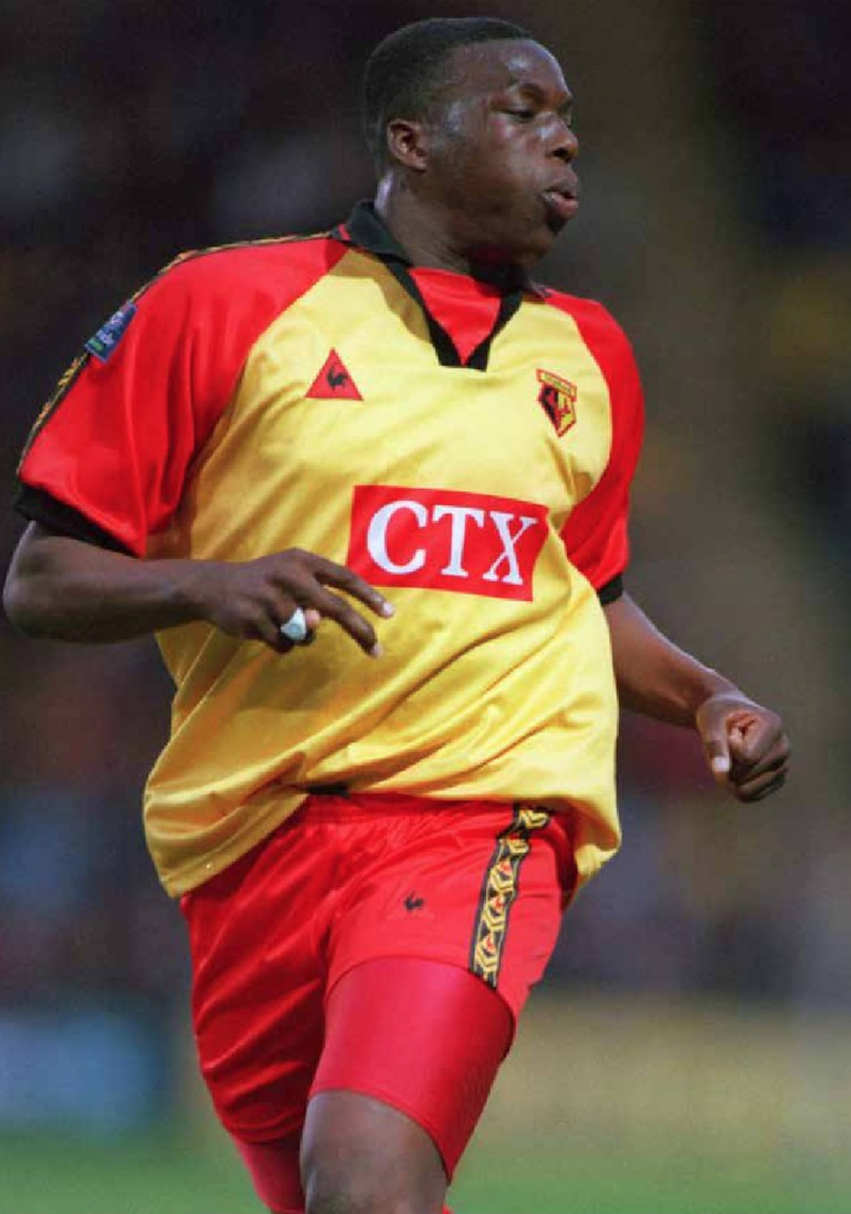
GNW WatHe was told he would have to give up the game, but Watford’s pop icon chairman was living in America at the time and saw an article about a drug that could save his career. He contacted Graham Taylor and they paid for him to get the necessary treatment.

The injury and illness came just as Noel-Williams had received a call-up to the England Under-21 squad. At 18, he had been playing in junior England teams alongside Michael Owen and Michael Bridges.

Noel-Williams told interviewer Will Unwin: “Even though I had rheumatoid arthritis I was still able to play at Championship level and abroad.”

After seven years and 33 goals in 169 appearances for Watford, Noel-Williams signed for Stoke City; Tony Pulis taking him on a Bosman free transfer in 2003.

Across two seasons, he scored 23 goals in 88 games for The Potters banishing all thoughts that he wasn’t fit to play.

Then, in 2005, he joined Burnley because he was encouraged to by his former Stoke teammate, Akinbiyi (another striker who had impressed on loan from Norwich to Brighton earlier in his career, when he scored four times in seven games).

As an aside, Akinbiyi had distinctly mixed fortunes throughout his career and after he completed a £600,000 move to Burnley was sent off on his debut within two minutes for head butting Sunderland’s George McCartney!

But back to Noel-Williams, who told itv.com: “I did not want to go to Burnley, to be honest. What happened was that Tony Pulis left Stoke at the end of the season, he went to Plymouth – so as he was leaving and a new manager coming in, I didn’t want to stay at Stoke.

“Ade Akinbiyi was at Burnley at the time and he was with me at Stoke so he kept phoning me, saying ‘come to Burnley, they want us to play up front together’, so that’s why I went to Burnley, but then six months later Ade left to go to Sheffield United, so my time at Burnley crashed a little bit and that’s why I didn’t stay there for so long.”

Noel-Williams said he didn’t really see eye-to-eye with Cotterill, which hastened his departure to Spain.

The Spanish lifestyle suited him but his game time was restricted mainly to substitute appearances and when Real Murcia were promoted he was told he would not be guaranteed a place.

So he switched to Elche, where he said he enjoyed his football but they didn’t pay him for a year because of financial issues. He ended up having to take action via FIFA to get the money he was owed, and left after just one season.

His old Watford mentor, Jackett, gave him a short-term contract with Millwall, but he played just the one game whilst Tresor Kandol and Neil Harris were unavailable. On 5th November 2008, he signed for Yeovil Town on a month’s loan.

He played eight times for Yeovil, the last coming on the Saturday before Christmas. But 2009 saw him once again without a club and on 8th January it was confirmed that he was signing a two-year deal with American USL club Austin Aztex, a club managed by former Burnley boss Adrian Heath.

He was released at the end of the 2009 season and signed for American fourth-tier side DFW Tornados (based in Dallas).

After he packed up playing in 2010, he became a coach at the Brentwood Christian School in Austin, Texas.

He returned to the UK and linked up with his former Watford teammate Allan Smart at Daventry Town and subsequently had various coaching and managing roles with non-league sides – Northwood, Burnham and Codicote. In November 2017, he was sacked after Hertfordshire-based Codicote, who play in the 10th tier of English football, lost 12 of their first 14 league matches.
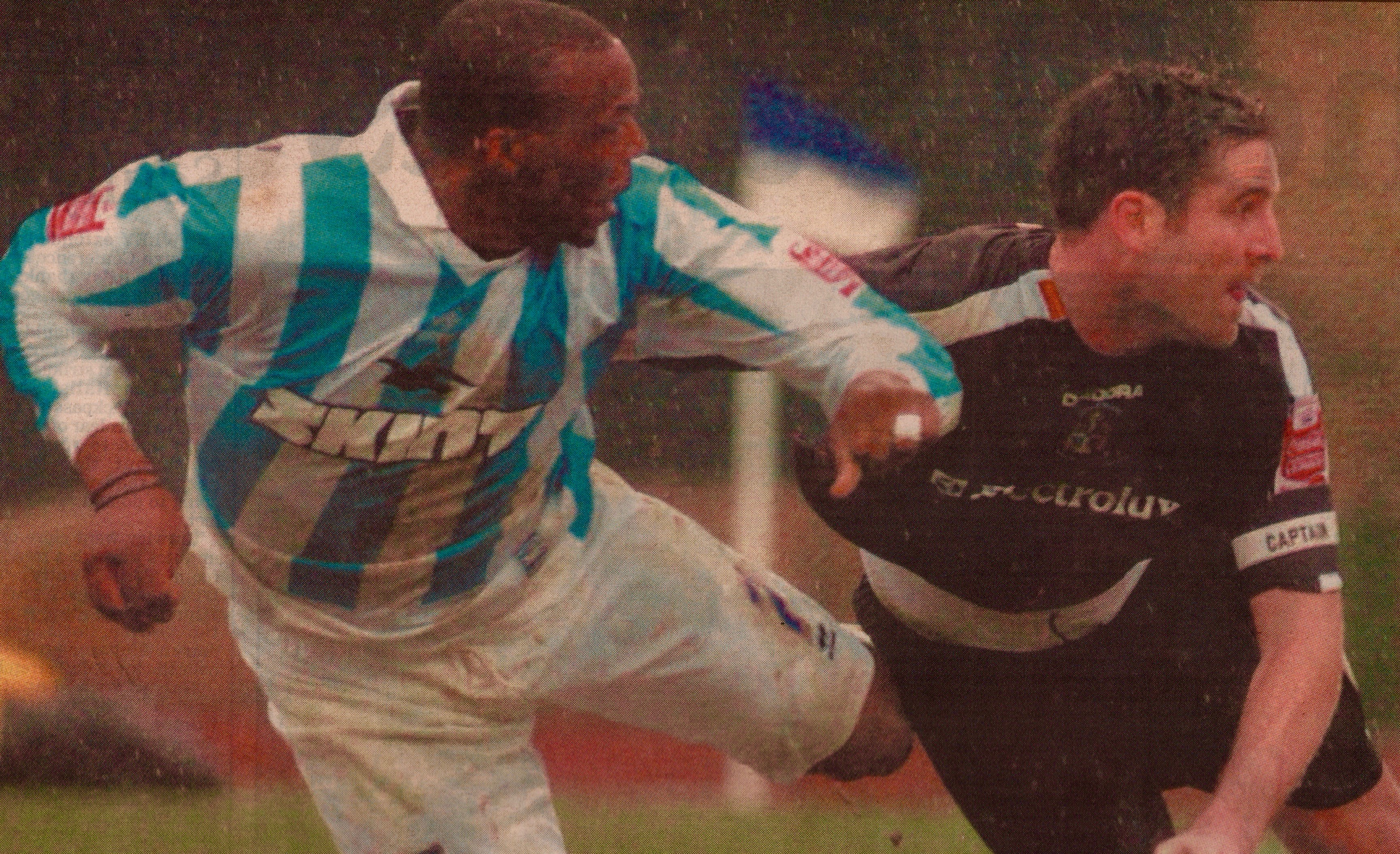
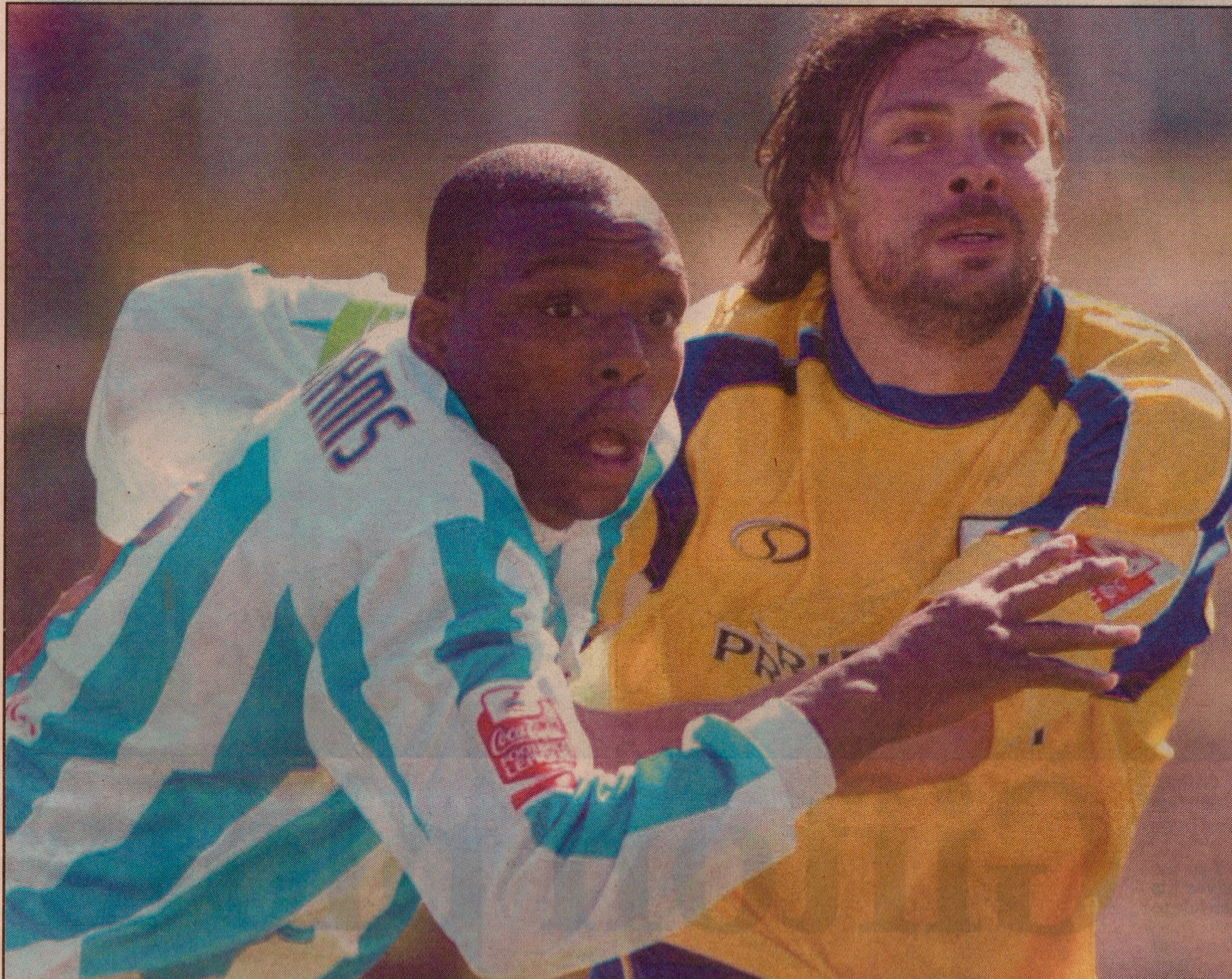
1 GN-W Argus2 GN-W Argus main3 G N-W PA (watford)

Pictures published by The Argus show THAT diving header to score on his Albion debut, and a study in determination to get to the ball. Also a Press Association image of a youthful Gifton in Watford colours.