The Foxes hero who led Albion’s line in an hour of need

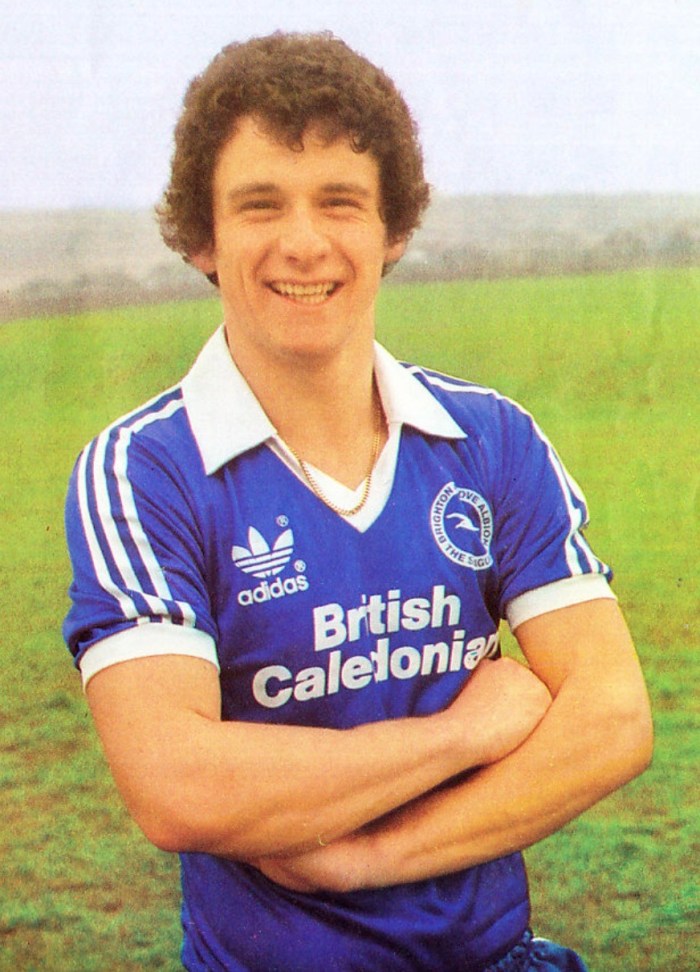
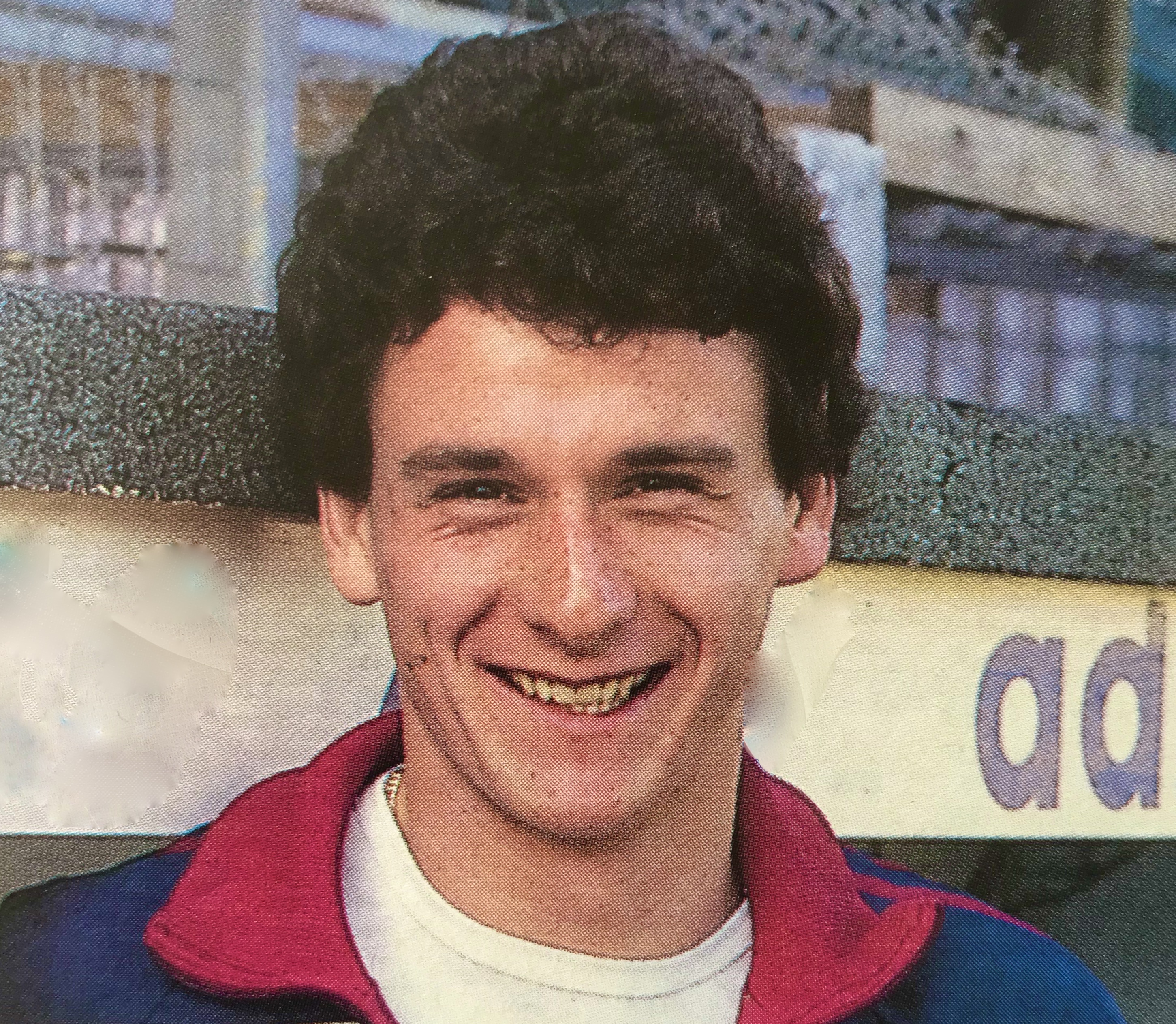
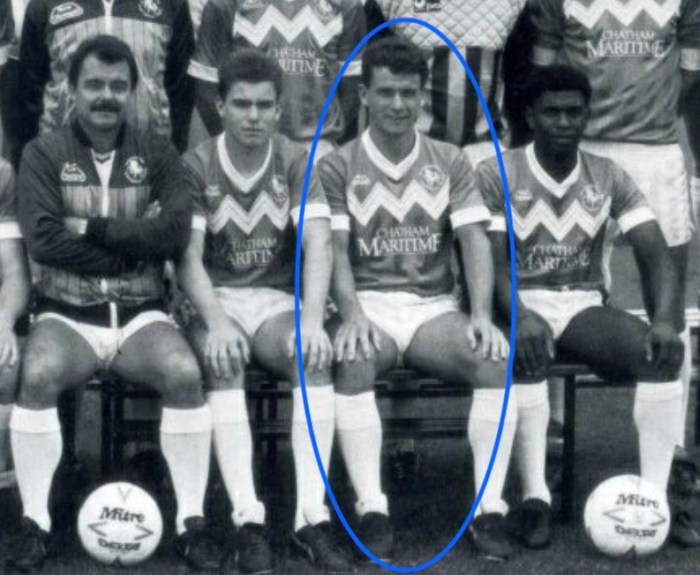
STEVE CLARIDGE became a Leicester City hero long before briefly coming to Brighton’s rescue.

He scored the winner in a play-off final at Wembley to take the Foxes up to the Premier League at the expense of Crystal Palace, who’d discarded him at an early age.

Both sides had been relegated from the top flight the year before and Claridge’s right-foot strike past Nigel Martyn in the 120th minute meant it was an immediate return for Martin O’Neill’s side.

“The high is not equal to anything,” Claridge told Leicestershire Live.
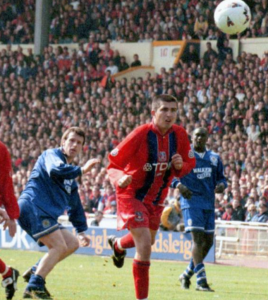
Scoring play-off winner v Palace

It came in 1996 and a year later he scored the only goal of the game (past Ben Roberts) in the 100th minute of a replay against Middlesbrough to win Leicester the League Cup, leading to him being named FourFourTwo’s ‘Cult Hero of 1997’.

Claridge had only completed a £1.2m move from Birmingham City two months before that play-off and he labelled it the most important goal of his life coming after a worrying period in which he wasn’t sure he’d ever be able to play again.

A mystery illness had ravaged his form and in only his fifth Leicester game he was taken off after 15 minutes. “Pins and needles from my knees down were so extreme, I could not even feel the ball,” he recalled.

It turned out a drug prescribed for a thyroid problem he’d had since the age of 12 was destroying his thyroid gland. “The main energy provider of my body was no longer functioning,” said Claridge.

However, once on the right medication, he made an almost unbelievable recovery, was restored to the side and helped to secure a play-off place.

After beating Stoke City in the semi-finals, they went a goal down to Palace in the final but pulled it back through a Garry Parker penalty before Claridge seized his chance in the dying moments of extra time.

Wembley winners for Leicester: Garry Parker and Steve Claridge

He collected a quick free kick from Parker and took aim, his shot from distance kissing the stanchion with goalkeeper Martyn motionless.

“The crowd is just really stunned in disbelief, I don’t know if that was because I’d hit it,” laughed Claridge. “It was so far out, and everybody was used to me scoring goals inside the six-yard box.”

He reflected: “To finish off after the lows I went through, the absolute lows where you’re thinking, ‘my career is over I can’t see a way out of this,’ to doing that and taking you to the ultimate high – winning that game of football. It’s unparalleled.”

Albion cover ‘boy’

Such experience was exactly what Championship strugglers Albion required when, on the back of three defeats, they faced the daunting prospect of promotion-seeking West Ham away on 13 November 2004.

Manager Mark McGhee, who’d previously signed Claridge when he was at Wolves and Millwall, was desperate to stem a tide which had seen eight goals conceded and no points on the board.

“He is one of the fittest players I’ve worked with and I had no doubt that after 18 months away from this level he would be able to perform,” said McGhee.

Claridge’s professional career looked to have run its course after he left Millwall in 2003 and became player-manager of Southern League side Weymouth.

But the disappointment of missing out on promotion had seen him and chairman Ian Ridley leave the club and Claridge, at the age of 38, was keen to give league football another go.

In what turned out to be a real backs-to-the-wall smash and grab raid, Albion earned the unlikeliest of 1-0 wins courtesy of a Guy Butters header from Richard Carpenter’s free kick.

Albion held firm despite a relentless wave of attacks by the home side and afterwards McGhee said: “We approached the game differently. Whereas before we thought we could win, today we did not, and played to make sure we didn’t get beaten.

“We kept the ball up front more which is important. Steve Claridge was key to that.”

Unfortunately, Brighton were not able to build on the win at the Boleyn Ground and there was only one more win (1-0 at home to Rotherham) during Claridge’s month with the club.

His fifth and final game for the Seagulls came away to his old club Millwall on 11 December 2004, when Albion lost 2-0.

In a programme feature about him that day, Claridge likened the circumstances of both clubs. “The club has no money and it is tough just to survive, but everyone is in it together,” he said. “At Millwall we had a great team spirit and togetherness, and that is very much the case here.”

McGhee’s tight budget prevented Claridge’s stay at Albion being extended and, after his deal was over, rather than it being one last hurrah, he went on to continue his league playing days at Brentford, Wycombe Wanderers, Gillingham, Bradford City and Walsall.

And, at the age of 40, and with him needing just one more game to fulfil the landmark of 1,000 professional games, his old club Bournemouth – where he’d started out as a professional in 1984 – gave him a match against Port Vale on 9 December 2006. No fairy tale, though, as they lost 4-0.

Born in Portsmouth on 10 April 1966, Claridge was brought up in Titchfield and began his football career at nearby Fareham Town in 1983. His initial foray into the pro game at Bournemouth only amounted to seven games before he moved to Weymouth for three years.

Crystal Palace offered him a route back to the full professional game in 1988 but he didn’t make their league side and after three months moved on to fourth tier Aldershot Town.

Two spells with Cambridge United followed between 1990 and 1994 for whom he scored 46 goals in 132 games. A falling out with manager John Beck saw him sold to Luton Town in 1992, but he was then bought back after Beck’s departure.

Birmingham City paid £350,000 to take Claridge to St Andrews and he became one of the club’s most prolific goalscorers, netting 35 in 88 games, and was top scorer with 25 goals when part of Barry Fry’s Blues side that won the Second Division title and the Auto Windscreens Shield (Football League Trophy) in the 1994-95 season.

After spending two years at Leicester, he went on a two-month loan to his hometown club, Portsmouth, but, in March 1998, McGhee signed him for the first time – and it didn’t go well.

The Scot, who had controversially left Leicester to take over at Wolves, took Claridge to Molineux for a £350,000 fee. But Wolves fans were not impressed, as Levelle revealed in this 2012 piece, and after just six games and no goals in the famous old gold shirt, he was sold to Portsmouth for £250,000 at the end of the season.

Even more galling for Wolves followers was that no sooner had Claridge made the switch to Portsmouth, he scored all three in a 3-1 win at Fratton Park!

David Miller in The Telegraph wrote: “The 34-year-old Steve Claridge, who had failed to score in five months when previously with Wolves, now gave sun-blessed Portsmouth a bank holiday funfair with a first- half hat-trick that was as easy as licking an ice-lolly.”

On the ball for Pompey

The goals and games came thick and fast for Claridge back on home turf – 34 in 104 – but his reign as player-manager at Fratton Park in 2000 was curtailed after just 25 games by the quirky chairman Milan Mandarić.

Remembering the player he’d seen only briefly a couple of years earlier, McGhee, by now in charge at Millwall, offered the striker a lifeline with the Lions, initially on loan and then as a permanent signing.

Going through the pain barrier at Millwall

Over two seasons in south east London, he became something of a fans’ favourite, scoring 26 in 85 matches, his efforts summed up by writer Mark Litchfield. “His style was unconventional, to say the least: shirt untucked, one sock down and no shin pads, any naïve defender probably thought they could eat him for breakfast. But hard work was a pre-requisite for Claridge – he wouldn’t give any opposition player a moment’s rest and would more often than not always get the better of them, too.”

Claridge had a less happy association with Millwall too when in July 2005 he was sacked after just 36 days as manager when the chairman who appointed him, Jeff Burnidge, was replaced by  Theo Paphitis, who wanted Colin Lee instead.

Even after achieving the 1,000-game landmark courtesy of Bournemouth, Claridge couldn’t resist the lure of another game, turning out for Worthing, Harrow Borough, Weymouth and Gosport Borough.

He was one of a group of five that formed Salisbury FC at the end of 2014, and as team manager was involved in gaining two promotions in the Southern League before leaving in October 2022.

Although he had officially hung up his boots in 2012 after helping Gosport to promotion to the Southern League Premier Division, in 2017 he played in a friendly defeat to Portsmouth in July and then put himself on against Paulton Rovers in the league a few weeks later.

His final ever game as a player came in a 3-2 victory over Fareham Town, when he was a remarkable 51, but he had to go off in the 71st-minute after picking up an injury. 
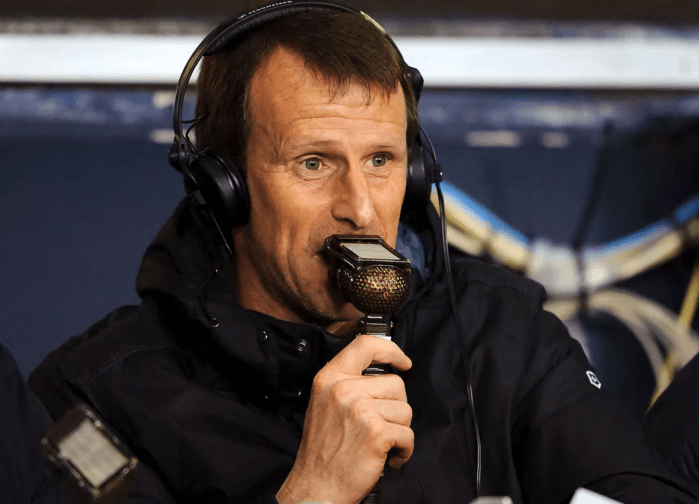
Pundit Claridge contributed his thoughts on radio and TV

Claridge also became a familiar face and voice working as a pundit for the BBC on TV at Football Focus and Final Score and on BBC Radio 5 Live. He also wrote scouting reports on promising players for The Guardian, numbering future Brighton signing Matt Sparrow among them.

“He is easy on the eye, links well with his forwards but also protects and helps his defenders by tackling from the wrong side and makes sure he tracks his runner whenever he threatens to get goal-side,” wrote Claridge of the then Scunthorpe United player in 2007.

Claridge later set up his own coaching scheme for youngsters in Salisbury and Warsash.

In 2023, he took over as manager of Gosport-based Wessex League Division One side Fleetlands FC for the 2023-24 season. In August 2024 they announced he was stepping down from the role “due to personal reasons”.  
On its website, a statement added: “The club would like to place on record our huge thanks to Steve for taking up the role in our hour of need and taking us to a fantastic 5th place finish last season.”

Albion promotion winner with a place in West Ham history

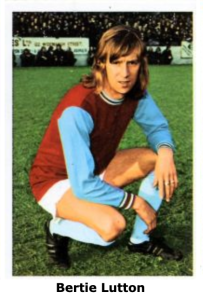
BERTIE LUTTON has a place in the West Ham history books even though he only made 13 appearances.

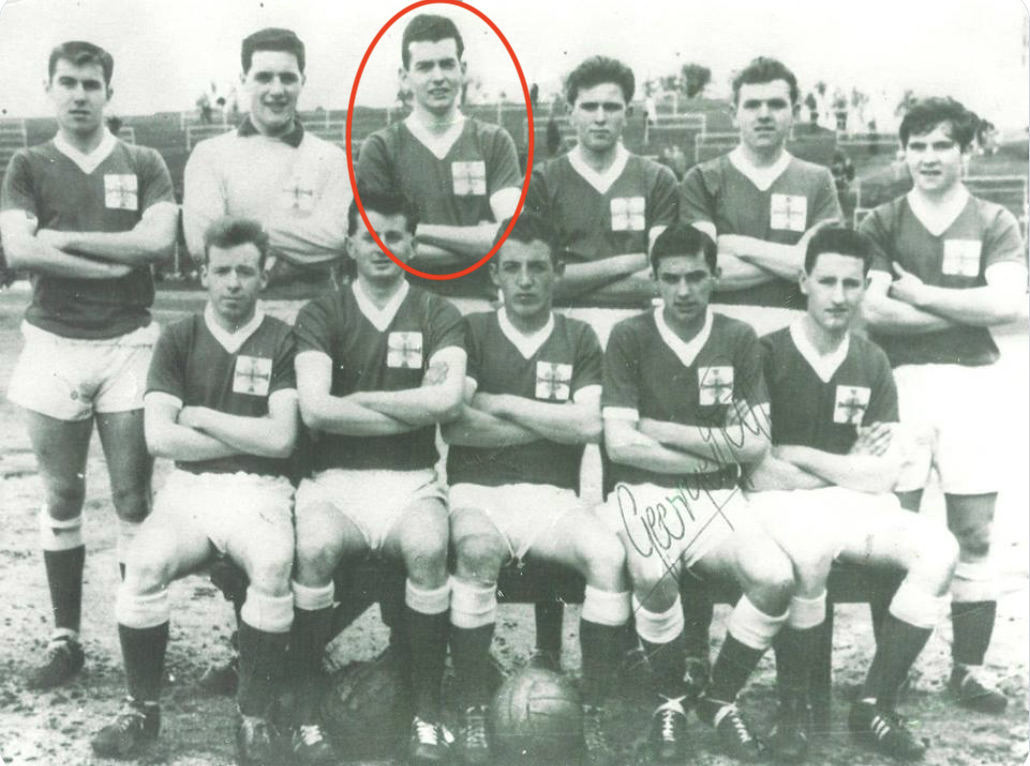
He was the first Hammer ever to play for Northern Ireland, winning four caps in 1973 (more on these later).

Lutton, frozen out at second tier Brighton less than a year after signing from Wolverhampton Wanderers, stepped back up a level to join Ron Greenwood’s side.

Although he had played at the elite level for Wolves, having been unable to hold down a regular first team spot at Molineux, he joined Pat Saward’s promotion-chasing Brighton in the 1971-72 season.

Lutton played his part in helping Albion go up from the old Third Division as runners up behind Aston Villa in the spring of 1972, as described in my 2016 blog post about his contribution.

But, when Brighton struggled to cope with the higher grade football, Saward questioned the commitment and attitude of certain players and Lutton was put on the transfer list.

It was certainly something of a surprise when, unable to get a start in a second tier side, he went on loan to First Division West Ham.

Lutton did well enough to secure a full-time switch to Upton Park. Almost a year to the day of his arrival at the Goldstone, he was London-bound and the shrewd Saward turned a £10,000 profit on the player.

The enigmatic Irishman made his Hammers First Division debut in a 1-0 away win against Norwich City on 10 February 1973, alongside the likes of Bobby Moore, Billy Bonds and Trevor Brooking, in front of a crowd of 32,597.

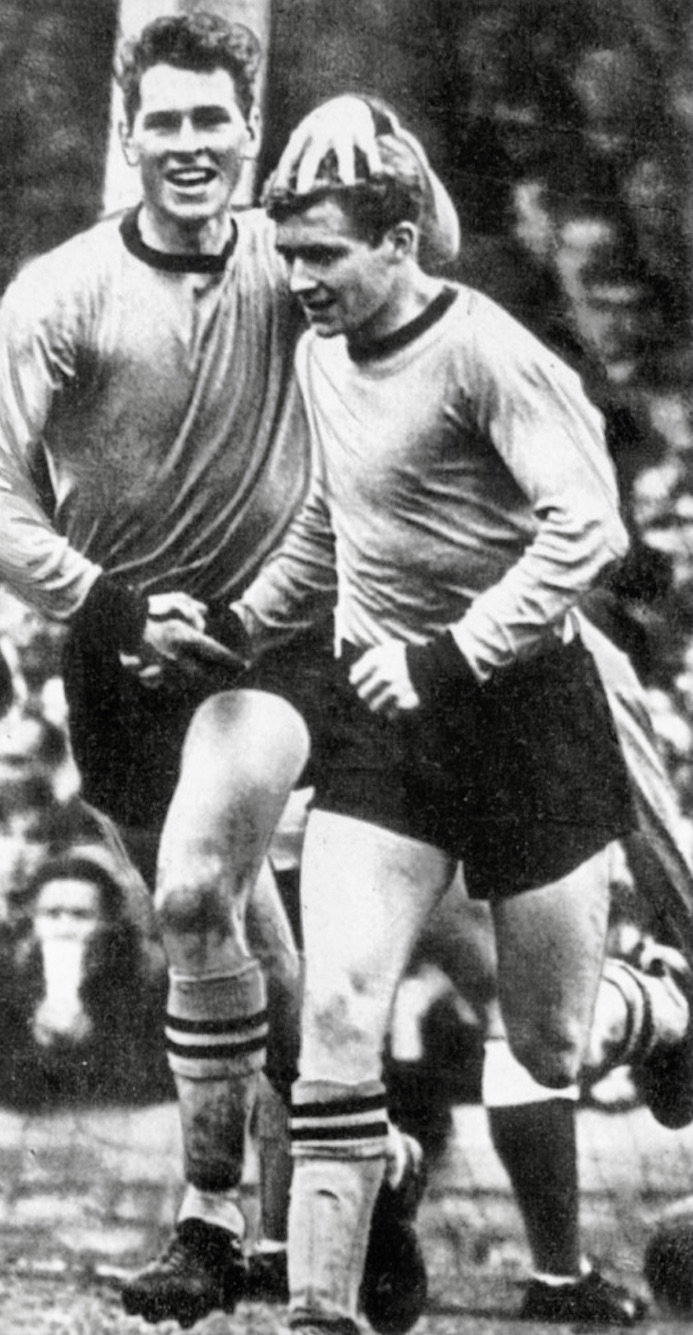
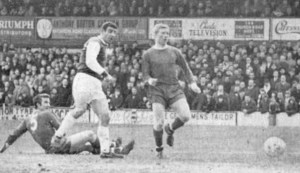
Bryan ‘Pop’ Robson scored the only goal of the game and finished the season as the club and League top goalscorer with 28 goals from 46 games. Lutton didn’t reappear until April when he went on as a sub in a 1-1 draw at home to Leeds and a 4-3 Good Friday win over Southampton at the Boleyn Ground (when George Herrington captured the action picture below of him).

Reviving his scoring feat for Brighton at Bournemouth a year previously, given a start on Easter Saturday, Lutton scored his only goal for the Hammers in a 1-1 draw away to Derby County. He then played in the last two games of the season, a 0-0 draw at Birmingham City, and a 2-1 defeat at home to Arsenal. West Ham finished the season in sixth place, though, which was the highest league position they’d achieved under Greenwood.

Lutton’s crucial equaliser for Brighton at Bournemouth on Easter Saturday 1972

Those league appearances earned Lutton a recall to the Northern Ireland squad and manager Terry Neill sent him on as a second half sub for Bryan Hamilton in a World Cup qualifier against Cyprus on 8 May 1973.

The game was played in front of a paltry 6,090 at Fulham’s Craven Cottage because of the troubles in Northern Ireland at the time. The Irish were already 3-0 up at half time and that’s how it finished: Sammy Morgan (later to play for Brighton) scored one and Man Utd’s Trevor Anderson hit two.

Eight days later, Lutton went on for goalscorer Anderson in Glasgow as the Irish succumbed to a 2-1 defeat to Scotland in the Home International tournament.

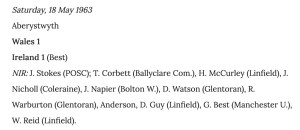
Three days after that, he saw action again when he once again replaced Ipswich Town’s Hamilton, who’d scored the only goal of the game as the Irish beat Wales 1-0 at Everton’s Goodison Park. Only 4,946 watched that one.

Back with West Ham at the start of the 1973-74 season and Lutton was in the starting line-up for home defeats to Newcastle United (2-1) and QPR (3-2) and was a sub in a 3-1 defeat away to Manchester United.

He started a 1-0 home defeat to Burnley, but was subbed off, as the Hammers’ torrid first half of the season continued. Previously imperious captain Bobby Moore was dropped and the side were bottom of the table at Christmas.

Lutton only re-appeared in the starting line-up in January when, in a FA Cup third round replay away to Third Division Hereford United, West Ham embarrassingly lost 2-1.

He retained his place three days later when, although the Hammers were missing Moore, Brooking, Kevin Lock, John McDowell and Robson, they made amends by beating Man Utd 2-1 at Upton Park. Billy Bonds and Pat Holland scored for the home side, Sammy McIlroy for United.

A week later, Lutton played his last Hammers match when appearing as a sub in a 1-1 draw at Newcastle United.

It came two months after he had made his last appearance for his country. That was in another World Cup qualifier, on 14 November 1973, when the Irish earned a 1-1 draw against Portugal in Lisbon. He played in midfield alongside Tommy Jackson and captain Dave Clements behind George Best, Anderson and Morgan up front.

Lutton had made his Northern Ireland debut three years earlier when his Wolves teammate Derek Dougan led the line in a 1-0 Home International defeat against Scotland in Belfast.

N Ireland training with George Best

Three days later, on 21 April 1970, he played the first half against England at Wembley when Best scored but the hosts won 3-1 (Lutton was replaced by sub John Cowan for the second half).

That was the game in which Bobby Charlton won his 100th England cap (and was made captain for the occasion) and his Man Utd teammate Brian Kidd made his debut. Ralph Coates also won his first England cap. Charlton, Martin Peters and Geoff Hurst scored the English goals.

Born in Banbridge, County Down, on 13 July 1950, Lutton’s brief footballing career began with his hometown club, Banbridge Town, and it’s reported just £50 exchanged hands to take him to Wolves in 1967.

At a time when Wolves were blessed with some outstanding players like Dougan, Hugh Curran, Dave Wagstaffe, Jim McCalliog and Mike Bailey, the young Irishman managed just 25 matches for Wolves between 1967 and 1971.

Although he may have only had a brief spell in the limelight, he seems to have had a penchant for earning a place in footballing history.

His one and only First Division goal for Wolves was also the club’s 2000th goal in that league to be scored at Molineux.

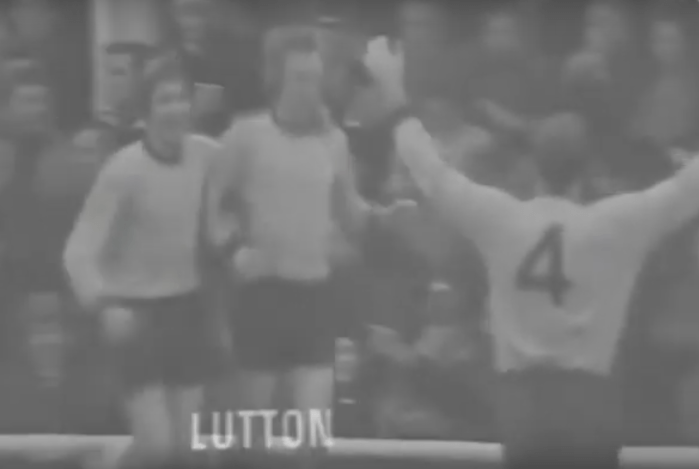
Goal v Arsenal in frront of the Match of the Day cameras

Arsenal were the visitors on 15 November 1969 and Lutton seized on a fortunate deflection off the aforementioned Terry Neill to net in the 47th minute past the Gunners’ back-up ‘keeper Geoff Barnett. The home side won 2-0 with Scottish international Curran scoring the second just two minutes after Lutton’s opener.

Not listed in the matchday programme line-up, Lutton played instead of the injured Mike O’Grady in the no.8 shirt (players didn’t wear a squad number shirt in those days).

The game was featured on Match of the Day with the legendary Kenneth Wolstenholme commentating and the rather grainy black and white coverage of the game can still be found on the internet wolvescompletehistory.co.uk/arsenal-h-1969-70/.

Lutton only made one start and one sub appearance in the 1970-71 season but was a regular in the Wolves reserve side in which the emerging John Richards was banging in the goals.

The pair were room-mates as teenagers with Wolves and were reunited after 37 years by the wolvesheroes.com website.

They hadn’t seen each other since 12 May 1973 at Goodison Park when Lutton was an unused sub for Northern Ireland in a Home International against England and Richards was playing up front for the English alongside two-goal Martin Chivers. (England won the game 2-1).

Lutton has popped up on the Wolves history site on several occasions over the years, often when he has returned from his home in Australia to the Black Country to see his son, Lee, who still lives in the area.

Brighton fans had first seen Lutton back in September 1969 when he played for them in a memorable third round League Cup match in front of a packed Goldstone Ground.

Two years later Saward, quite the specialist at using the loan market, acquired Bertie’s services on a temporary basis between September and November, 1971.

He made his debut in a 2-0 defeat at Aston Villa and scored twice in seven games (in a 2-2 draw at Torquay United and a 3-1 home win over Bristol Rovers) before returning to his parent club.

Celebrating a goal at the Goldstone for Brighton

Then, on 9 March 1972, with the clock ticking down to what in those days was the 5pm transfer deadline, Saward completed a double transfer swoop, securing Lutton’s permanent signing for £5,000 together with Ken Beamish from Tranmere for £25,000 (plus the surplus-to-requirements Alan Duffy).

A delighted Saward declared to Argus reporter John Vinicombe: “Bertie can do a job for us anywhere. This can’t be bad for us. At 21 and with two caps for Ireland he has a future and played very well for us while on loan.

“He can play right or left, up the middle, or midfield and Beamish can fit into a number of positions.”

It’s likely that versatility counted against him and, in the days of only one substitute, he was more often than not a sub, being able to go on in a variety of positions.

He was on the bench when Brighton began the 1972-73 season in the second tier and went on in three games. He then got four successive starts before going back to the bench.

Albion were finding life tough at the higher level and although Saward switched things around and brought in new faces, results went from bad to worse.

Lutton started three games in December which all ended in defeat and the 3-0 Boxing Day reverse at Oxford United turned out to be his last appearance for the Albion.

It fell in the middle of a spell of 12 successive defeats during which only five goals were scored. Saward couldn’t put his finger on the reason for the slump but Lutton found himself one of three put on the transfer list.

The West Ham move must have seemed ideal but sadly it was all over after just 13 games. Injury forced him to quit the professional game and he had a brief spell playing non-league for Horsham before emigrating to Australia.

There he played semi-professional football in the Australian Soccer League for a number of years before settling in Melbourne where he worked for the paint giant Dulux.

Coach Dean Wilkins fumed after falling out with Knight 

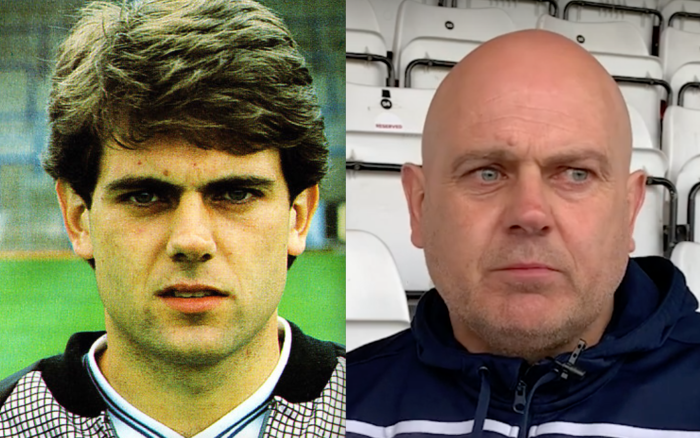
DEAN WILKINS might have lived in the shadow of his more famous elder England international brother Ray but he certainly carved out his own footballing history, much of it with Brighton.

Albion fans of a certain vintage will never forget the sumptuous left-footed free-kick bouffant-haired captain Wilkins scored past Phil Parkes at the Goldstone Ground which edged the Seagulls into the second-tier play-offs in 1991.

Supporters from the mid-noughties era would only recall the balding boss of a mid-table League One outfit at Withdean comprising mainly home-grown players who Wilkins had brought through from his days coaching the youth team.

After Dick Knight somewhat unceremoniously brought back Micky Adams over Wilkins’ head in 2008, he quit the club rather than stay on playing second fiddle and subsequently went west to Southampton where he worked under Alan Pardew and his successor Nigel Adkins as well as taking caretaker charge of the Saints in between the two reigns.

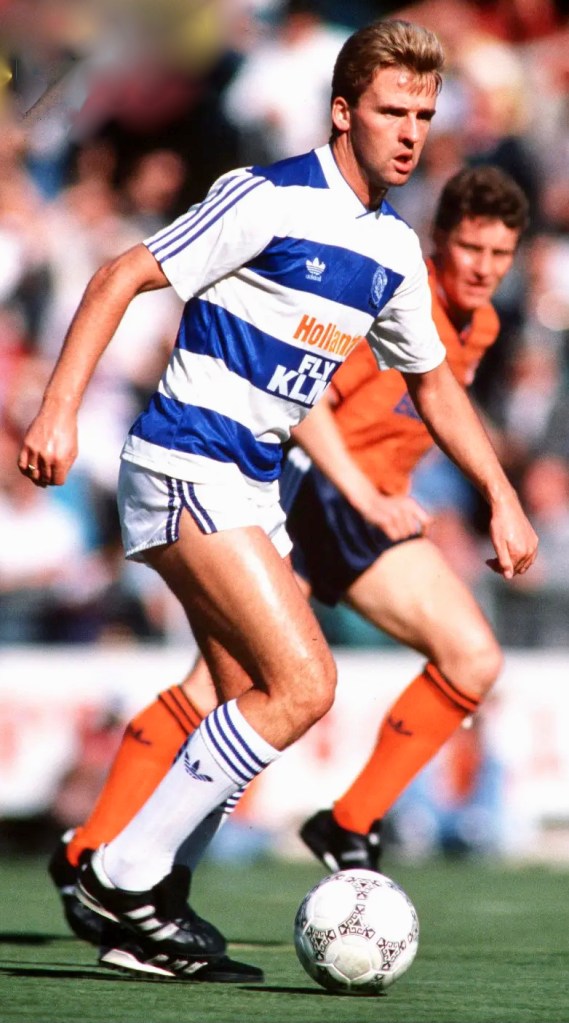
Wilkins’ initial association with the Seagulls went back to 1983, when Jimmy Melia brought him to the south coast from Queens Park Rangers shortly after Albion’s FA Cup final appearances at Wembley.

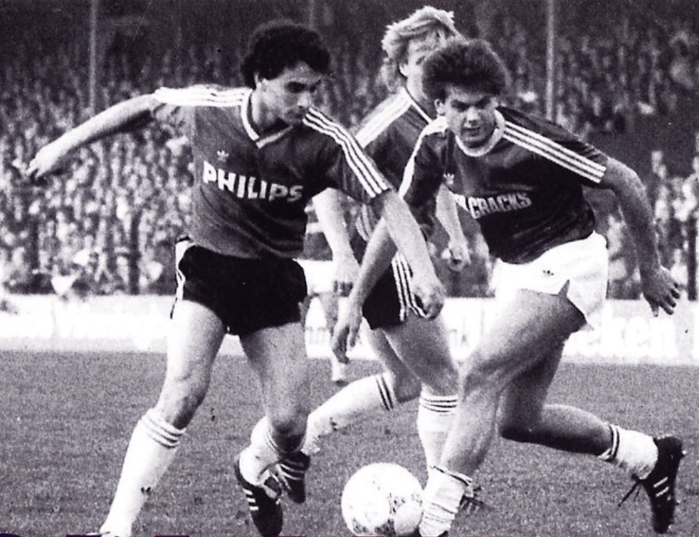
Melia’s successor Chris Cattlin only gave him two starts back then and although he pondered a move to Leyton Orient, where he’d had 10 matches on loan, he opted to accept to try his luck in Holland when his Dutch Albion teammate Hans Kraay set him up with a move to PEC Zwolle. Playing against the likes of Johann Cruyff, Marco Van Basten and Ruud Gullit proved to be quite the footballing education for Wilkins.

Wilkins in the thick of it in Dutch football for PEC Zwolle

After two years in the Netherlands, 25-year-old Wilkins rejoined the relegated Seagulls in the summer of 1987 as the club prepared for life back in the old Third Division under Barry Lloyd.

Relegation had led to the sale for more than £400,000 of star assets Danny Wilson, Terry Connor and Eric Young but more modest funds were allocated to manager Lloyd for replacements: £10,000 for Wilkins, £50,000 for Doug Rougvie, who signed from Chelsea and was appointed captain, Garry Nelson, a £72,500 buy from Plymouth and Kevin Bremner, who cost £65,000 from Reading. Midfield enforcer Mike Trusson was a free transfer.

The refreshed squad ended up earning a swift return to the second tier courtesy of a memorable last day 2-1 win over Bristol Rovers at the Goldstone.

At the higher level, Wilkins had the third highest appearances (40 + two as sub) as Albion finished just below halfway in the table. The following season Wilkins was appointed captain and was ever-present as Albion made it to the divisional play-off final against Notts County at Wembley, having made it to the semi-final v Millwall courtesy of the aforementioned spectacular free kick v Ipswich.

Wilkins scored again at Wembley but it turned out only to be a consolation as the Seagulls succumbed 3-1 to Neil Warnock’s side.

As the 1992-93 season got underway, Wilkins, having just turned 30, was the first matchday programme profile candidate for the opening home game against Bolton Wanderers (a 2-1 win) when he revealed the play-off final defeat had been “the biggest disappointment of my career”.

The 1993-94 season was a write-off from October onwards when he damaged the medial ligaments in both his knees after catching both sets of studs in the soft ground at home against Exeter City.

Although injury plagued much of the time during Liam Brady’s reign as manager, the Irishman acknowledged his ability saying: “He is a very fine footballer and a tremendous passer of the ball and he possesses a great shot.”

Ahead of the start of the 1995-96 season, Wilkins was granted a testimonial game against his former club QPR, managed at the time by big brother Ray. But at the end of the season, when the Seagulls were relegated to the basement division, he was one of six players given a free transfer.

Born in Hillingdon on 12 July 1962, Wilkins couldn’t have wished for a more football-oriented family. Dad George had played for Brentford, Leeds, Nottingham Forest and Hearts and appeared at Wembley in the first wartime FA Cup final. While Ray was the brother who stole the limelight, Graham and Steve also started out at Chelsea.

In spite of those older brothers who also made it as professionals, Wilkins attributed his development at QPR, who he joined straight from school as an apprentice in 1978, to youth coach John Collins (who older fans will remember was Brighton’s first team coach under Mike Bailey).

He made seven first team appearances for Rangers, his debut being as a substitute for Glenn Roeder in a 0-0 draw with Grimsby Town on 1 November 1980. After joining the Albion in August 1983, he had to wait until 10 December that year to make his debut, in a 0-0 draw at Middlesbrough, in place of the absent Tony Grealish. He started at home to Newcastle a week later (a 1-0 defeat), this time taking the midfield spot of injured Jimmy Case.

Perhaps the writing was on the wall when Cattlin secured the services of Wilson from Nottingham Forest, initially on loan, and although Wilkins had a third first team outing in a 2-0 FA Cup third round win at home to Swansea City, boss Cattlin didn’t pick him again. Instead, he joined Orient on loan in March 1984.

A long career in coaching began when Wilkins was brought back to the Albion in 1998 by another ex-skipper, Brian Horton, who had taken over as manager. With Martin Hinshelwood as director of a new youth set-up, Wilkins was appointed the youth coach – a position he held for the following eight years.

Return to the Albion as youth coach

His charges won 4-1 against Cambridge United in his first match, with goals from Duncan McArthur, Danny Marney and Scott Ramsay (two).

That backroom role continued as managers came and went over the following years during which a growing number of youth team products made it through to the first team: people like Dan Harding and Adam Virgo and later Adam Hinshelwood, Joel Lynch, Dean Hammond and Adam El-Abd.

At the start of the 2006-07 season, with Albion back in the third tier after punching above their weight in the Championship for two seasons, Wilkins was rewarded for his achievements with the youth team with promotion to first team coach under Mark McGhee.

By then, more of the youngsters he’d helped to develop were in or getting close to the first team, for example Dean Cox, Jake Robinson, Joe Gatting and Chris McPhee.

After an indifferent start to the season – three wins, three defeats and a draw – Knight decided to axe McGhee and loyal lieutenant Bob Booker and to hand the reins to Wilkins with Dean White as his deputy. Wilkins later brought in his old teammate Ian Chapman as first team coach.

Into the manager’s chair

Tommy Elphick, Tommy Fraser and Sam Rents were other former youth team players who stepped up to the first team. But, over time, it became apparent Knight and Wilkins were not on the same page: the young manager didn’t agree with the chairman that more experienced players were needed rather than relying too much on the youth graduates.

Indeed, in his autobiography Mad Man: From the Gutter to the Stars (Vision Sports Publishing, 2013), Knight said Wilkins hadn’t bothered to travel with him to watch Glenn Murray or Steve Thomson, who were added to the squad, and he was taking the side of certain players in contract negotiations with the chairman.

“In my opinion, his man-management skills were lacking, which was why I made the decision to remove him from the manager’s job,” he said. It didn’t help Wilkins’ cause when midfielder Paul Reid went public to criticise his man-management too.

Knight felt although Wilkins hadn’t sufficiently nailed the no.1 job, he could still be effective as a coach, working under Micky Adams. The pair had previously got on well, with Adams saying in his autobiography, My Life in Football (Biteback Publishing, 2017) how Wilkins had been “one of my best mates”.

But Adams said: “He thought I had stitched him up. I told him that I wanted him to stay. We talked it through and, at the end of the meeting, we seemed to have agreed on the way forward.

“I thought I’d reassured him enough for him to believe he should stay on. But he declined the invitation. He obviously wasn’t happy and attacked me verbally.

“I did have to remind him about the hypocrisy of a member of the Wilkins family having a dig at me, particularly when his older brother had taken my first job at Fulham.

“We don’t speak now which is a regret because he was a good mate and one of the few people I felt I could talk to and confide in.”

Youth coach

Knight knew his decision to sack the manager would not be popular with fans who only remembered the good times, but he pointed out they weren’t aware of the poor relationship he had with some first team players.

Knight described in his book how a torrent of “colourful language” poured out from Wilkins when he was called in and informed of the decision in a meeting with the chairman and director Martin Perry.

“He didn’t take it at all well, although I suppose he felt he was fully justified,” wrote Knight. “He was fuming after what was obviously a big blow to his pride.”

Reporter Andy Naylor perhaps summed up the situation best in The Argus. “The sadness of Wilkins’ departure was that Albion lost not a manager, but a gifted coach,” he said. “Wilkins was not cut out for management.”

Saints coach

One year on, shortly after Alan Pardew took over as manager at League One Southampton, he appointed Wilkins as his assistant. They were joined by Wally Downes (Steve Coppell’s former assistant at Reading) as first team coach and Stuart Murdoch as goalkeeping coach.

Saints were rebuilding having been relegated from the Championship the previous season and began the campaign with a 10-point penalty, having gone into administration. The club had been on the brink of going out of business until Swiss businessman Markus Liebherr took them over.

A seventh place finish (seven points off the play-offs because of the deduction) meant another season in League One and the following campaign had only just got under way when Pardew, Downes and Murdoch were sacked. Wilkins was put in caretaker charge for two matches and then retained when Nigel Adkins, assisted by ex-Seagull Andy Crosby, was appointed manager.

It was the beginning of an association that also saw the trio work together at Reading (2013-14) and Sheffield United (2015-16).

Adkins, Crosby and Wilkins were in tandem as the Saints gained back-to-back promotions, going from League One runners up to Gus Poyet’s Brighton in 2011, straight through the Championship to the Premier League. But they only had half a season at the elite level before the axe fell and Mauricio Pochettino took over.

When the trio were reunited at Reading, Wilkins, by then 50, gave an exclusive interview to the local Reading Chronicle, in which he said: “This pre-season has given me time to learn about the characters of the players we’ve got at Reading and find out what makes them tick.

At Reading with Crosby and Adkins

“It’s my job then to make sure every player maximises his potential. That’s what I see my role as, to bring out the very best of them from now on and make them strive to attain new levels of performance.

“I will always keep working toward that goal. If we can do that with every individual and get maximum performances out of them, I believe we will be in for a great season.

“We’re back together now and it’s going fantastically well. I have loved every minute of it. I’m used to working with Nigel and Andy and we are carrying out similar work to what we’ve done in the past.”

The Royals finished seventh, a point behind Brighton, who qualified for the play-offs, and the trio were dismissed five months into the following season immediately following a 6-1 thrashing away to Birmingham City.

Six months later the trio were back in work, this time at League One Sheffield United, but come the end of the 2015-16 season, after the Blades had finished in their lowest league position since 1983, they were shown the door.

Between January 2018 and July 2019, Wilkins worked for the Premier League assessing and reporting on the accuracy, consistency, management and decision-making of match officials.

In the summer 0f 2019, he was appointed Head of Coaching at Crystal Palace’s academy, a job he held for 15 months.

A return to involvement with first team football was presented by his former Albion player Alex Revell, who’d been appointed manager of League Two Stevenage Borough. Glad to support and mentor Revell in his first managerial post, Wilkins spent a year as assistant manager at the Lamex Stadium.

Byrne made Hoops happy before taking flight with the Seagulls

JOHN BYRNE, who had three different spells as a Brighton player, is viewed as an all-time-great by QPR fans where he scored 36 goals in 149 appearances.

Through his Irish father Jim, Wythenshawe-born Byrne qualified to play for the Republic of Ireland and he won 13 of his 23 Republic of Ireland caps while a QPR player playing in the old First Division.

His place in the annals of QPR’s history was etched courtesy of following two other greats (Rodney Marsh and Stan Bowles) into the no. 10 shirt.

“I was always conscious of the traditions at Rangers and so I was dead proud to wear the Number 10,” he told qprreport in 2008. “I think I did the shirt justice most of the time.”

In the same way Brighton fans remember his highly effective striking partnership with Mike Small in the 1990-91 season, so QPR supporters recall his combination up front with Gary Bannister.

Bannister and Byrne

“I enjoyed playing up front with ‘Banna’,” he said. “He was a great centre-forward, right out of the top drawer. I don’t know how our partnership worked but we just seemed to have a good understanding.

“He was more of a prolific goalscorer than I was. He also had superb quality and awareness for bringing people into the game.”

Byrne, who later became a familiar voice as an expert summariser for BBC Radio Sussex coverage of Albion matches, has always been happy to indulge requests from Rs writers to look back on his four years at Loftus Road.

As would become something of a pattern in his career, it was an impressive performance playing against QPR that led them to sign him. He featured in a two-legged League Cup game for York City against Rangers, and he recalled the game at Loftus Road when talking to qprnet.com in 2013:

“It was so brilliant to play in that stadium under the floodlights and coming from York to run out at QPR was something to remember.

“Afterwards I said to our assistant manager Viv Busby that I would love to play here every week. Lo and behold a couple of weeks later I was!”

The man who took him to west London was none other than Alan Mullery, the former Brighton manager, during his unhappy six months as QPR manager.

It’s now generally recognised that some of the senior pros at the club were none too pleased with Mullery taking over from Terry Venables, who had moved to Spain to manage Barcelona. Byrne admitted: “It was difficult for me to fully understand having been signed by Mullery but you could feel it with some of the senior pros.

“The likes of Terry Fenwick, John Gregory and Steve Wicks were big Venables men and, understandably, as he was obviously a great coach. You got a feeling that a few of them weren’t overly impressed with Mullers at the time.”

As it turned out, Mullery’s time in charge came to an abrupt end and Byrne remembered playing under caretaker manager Frank Sibley before Jim Smith got the job permanently.

Frank was lovely; he was a really nice man and probably too nice for football management,” said Byrne. “He really helped me a lot, he would always welcome a chat with you and put his arm round you to talk about your game. I had a lot of time for Frank.”

And of the former Birmingham and Oxford boss Smith, who went on to manage Newcastle and Portsmouth, among others, he said: “Smithy was brilliant. I loved playing for Jim. He loved you, he hated you but he would never ignore you or freeze you out.”

It was in 1986 when Byrne suffered the first of three losing experiences in Wembley finals. QPR went down 3-0 to Smith’s former club Oxford United

“Unfortunately we never turned up for the final,” Byrne told QPRnet. “I just remember that after we were introduced to the dignitaries I went off for the warm up and I had nothing in the tank. I had heavy legs before the game and I think a lot of the players felt like that.

“At the end of the day we didn’t perform and Oxford were better than us but there should be no excuses we were a better side on paper and we should have won.”

A far happier memory from that spring of 1986 happened three weeks previously when the Rs thrashed Chelsea 6-0 and Byrne scored twice (Bannister netted a hat-trick and Michael Robinson the other).

“I’ll never forget that day,” said Byrne. “It was just one of those occasions when everything went right for us.

“I remember one of my goals where I picked up possession on the halfway line. It was funny on that plastic pitch, because bodies would fall all around you if you got into your stride. So eventually I wriggled free and slotted a shot into the bottom corner.”

Another of his favourite QPR memories was scoring in two home games against Manchester United, the team he had supported as a boy. Recalling a 1-0 win in March 1986, he said: “I remember lobbing the ball over two defenders’ heads in the box. Then I flicked it back before shooting past Chris Turner in goal at the Loft End. It was great for me – especially being a Manchester lad as well.”

In much the same way as his move to QPR came about, it was in a couple of friendly matches against Le Havre that the French side liked what they saw of him and QPR were happy to accept their bid for the player.

“It was disappointing to leave QPR but I think it was probably the right time to go,” he recalled. Unfortunately, he broke a leg only three weeks into his stay with Le Havre. But when he was fit again, a few English clubs started watching his recovery with interest.

And it was following a friendly Brighton played against Le Havre that prompted Albion boss Barry Lloyd to bring Byrne back to England to play in early September 1990. He made his Seagulls debut for the reserves in a 1-1 draw with Charlton Athletic and then went on as a sub for the first team in Albion’s 3-2 home win over the same opponent 10 days later.

He scored on his first start, in a 2-1 win away to Blackburn Rovers, and on his first start at home he netted in a 3-3 draw with Swindon Town, who were managed by Ossie Ardiles.

Crocked in the last game of the league season against Ipswich

How the rest of that season panned out was covered in my previous post about Byrne, as were his subsequent moves, the most successful of which saw him play for Sunderland in the 1992 FA Cup final when Liverpool beat the Wearsiders 2-0.

“I scored in every round except the final then missed a sitter on roughly thirteen minutes twenty seconds; I see that one every day!” he told QPRnet.

Byrne’s future work as a podiatrist came about largely through the network provided by the Professional Footballers’ Association.

“When I finished playing football in the late 1990s, I was hoping to become a physio but couldn’t get a place at university to study it,” he explained. “Then the ex-Manchester United star Norman Whiteside advised me to look at the PFA’s course for podiatry, because he was a podiatrist himself. The PFA said they would help me with finance and backing.”

He went on to graduate from university in 2001 – gaining his BSC Honours degree was the hardest thing he’d done in his life, he said.

“My brain had been dormant for twenty years playing football, but I’ve been qualified now for nearly 10 years,” he said in a 2010 interview with Sussex Life. “I love my NHS career and also the private work I do and I get a lot of job satisfaction improving patients’ foot problems.”

And in his interview with QPRnet, he added: I was lucky, I look back now and I had a good career, I played for some great clubs and whilst I might have had disappointments with finals I have got plenty of great memories.”  

The Liddle and large story of Dan Burn’s football rescue

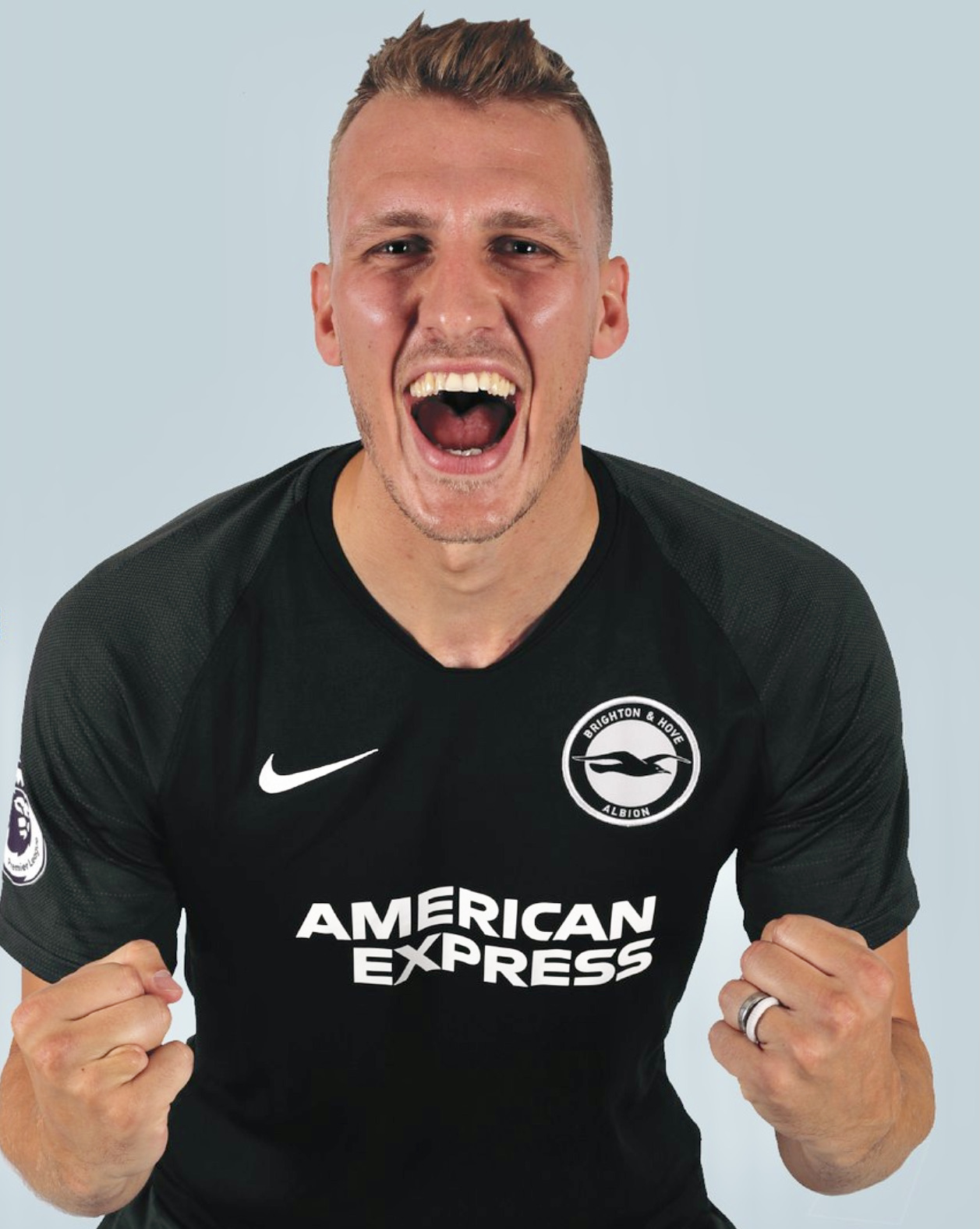
WHEN Albion beat Wigan Athletic 2-1 to win promotion to the Premier League in April 2017, few Brighton supporters were paying much attention to the tall defender lining up for the opposition.

“There was a party atmosphere around the place, with the players and everyone on the pitch – so it was a great time for Brighton, but not such a great time for us as Wigan players,” recalled 6’6” Dan Burn. “We were all but relegated to League One, which was a low point in my career.”

By the time he next stepped out at the Amex, in January 2019, he was wearing Albion’s colours, and making his debut in a 0-0 stalemate v West Brom in the fourth round of the FA Cup.

Signed on a four-year contract towards the end of the Chris Hughton era, to say Burn’s Albion career had a slow start would be an understatement. He joined the Seagulls on August deadline day in 2018, but was immediately loaned back to the Latics while also nursing a foot injury.

He told the Albion matchday programme: “I’m buzzing to get another crack at the Premier League but I know it won’t be easy. The competition within the squad is very good in my position.

“I’m under no illusions that it’s going to be a very tough ask but, when I do get a chance, I’ve got to show what I can do.”

Hughton, a former Newcastle United boss when Burn was a season ticket holder at St James’s Park, said: “Dan has a wealth of experience from his time with Fulham, Birmingham City and Wigan, amongst others.

“He’s an imposing figure and had an excellent season helping Wigan to the League One championship. He also impressed in an excellent FA Cup run to last season’s quarter-finals.” 

Once recovered from his foot injury, Burn played 13 games, plus once as a sub, for Paul Cook’s Latics before arriving at Falmer in January.

He managed just three FA Cup games under Hughton, but his fortunes changed dramatically with the arrival of Graham Potter, initially slotting in on the left of Shane Duffy and Lewis Dunk in a back three, and later showing versatility and no little ability on the ball as a left-back or left wing back.

“Graham had a meeting with the lads, sat us down and told us the past was past and we just had to go out and prove we could play.

“I’m a good trainer; I train as I play and so always felt I had a chance. I also learn best when I’m out of my comfort zone. Playing left of three or left-back or left wing back, I’ve proved a lot of people wrong, which is what I like to do.”

Burn’s Albion Premier League debut came in the impressive 3-0 away win at Watford that opened the 2019-20 season, and, after Albion supporters had voiced their approval, Burn told the matchday programme: “It’s nice to be appreciated by our fans who are tremendous both home and away and for me to prove to people that I can play at this level.”

It was certainly a special occasion for Burn when Albion travelled to St James’s Park on 14 September 2019. He admitted: “Even coming out the tunnel and listening to Local Hero being belted out of the speakers was emotional for me. As a season-ticket holder for years, I could see my old seat.

“All my family were there, dotted around the stadium, people I used to go to school with, parents of friends. On the day I just had to focus solely on the game and then afterwards I could relax a little bit and go up to see my family.”

Burn was born in Blyth, the seaside town 13 miles north of Newcastle, on 9 May 1992. Because his dad was an ardent Newcastle fan, his son was quickly enrolled as a supporter and, having begun playing football with some pals when he was six or seven, he admitted: “Once I started going with him and watching games I never looked back. I was always out on the back field playing football or playing at school.

“Around 99 per cent of people in Blyth supported Newcastle. Everyone dreamed of playing for Newcastle.”

The dream looked like it might become a reality when he was just nine. While playing for the junior side of Blyth Spartans, he was scouted by Newcastle and invited to join their development centre.

“You have the Academy, where the best players went, and the development centre would run alongside that, where you would train Fridays, and they kept an eye on the players’ progress,” Burn recalled in a matchday programme interview.

“It wasn’t that great to be honest. While I was a good footballer when I joined them, as the two or three years went on, I declined quite rapidly. My body shot up, and I didn’t really catch up with myself football-wise until I was 15 or 16.”

He left the Toon at 11 and reflected: “It wasn’t a particularly good experience being let go by the club you support, with the realisation setting in that you’re probably not good enough to play at that level. I got released around Christmas time too, and it knocked my confidence.”

His chance of making it in the game wasn’t lost, though. He played for Blyth Town and Blyth Spartans, as well as New Hartley Juniors, and was spotted by a scout working for an organisation which selected players who weren’t associated with professional clubs.

Still a sixth former at school, he played for an England representative side against the other home nations and did enough to persuade Darlington’s youth team manager Craig Liddle to invite him for a trial. Burn credits Liddle with giving him the belief he could play at a higher level.

He was given a two-year YTS deal in July 2009 and it certainly beat pushing shopping trolleys for ASDA, which he’d been doing to make a bit of money.

In December 2009, with the League Two club in some trouble, Burn suddenly found himself given a first team chance. At just 17, he made his debut as a first half substitute away to Torquay.

“Although we got beat 5-0, I came off the pitch buzzing,” he recalled. “Here I was, a 17-year-old, and I was playing in League Two. We’d been pumped away from home, facing this horrendous journey home, but I was over the moon when I got back to my car – ridiculous really.”

Burn the Quaker

Unfortunately, Darlo were relegated to the Conference at the end of that season. In January the following season, Burn managed to get a foothold in the side.

His performances caught the eye of Premier League Fulham and a £350,000 fee – a lifeline towards keeping the Quakers going for a little while – took him to London. Somewhat ironically, Burn revealed that Newcastle (at the time managed by Alan Pardew) matched Fulham’s offer “but I’d already been down to Fulham, had a tour of the ground and done my medical, so was happy to sign for them”.

Being 18 at the time, he realised staying in the north-east could have made it difficult to avoid the temptations of nights out with his mates, quite apart from the scrutiny that locals give their local football heroes.

Winning a header in Fulham’s colours

“I would have loved to play for Newcastle but, at that age, at that time in my career, it was the best decision for me to get away from that goldfish bowl where everyone’s analysing what you’re doing,” he reflected. “I just wanted to get away and concentrate solely on my football which was the correct decision.”
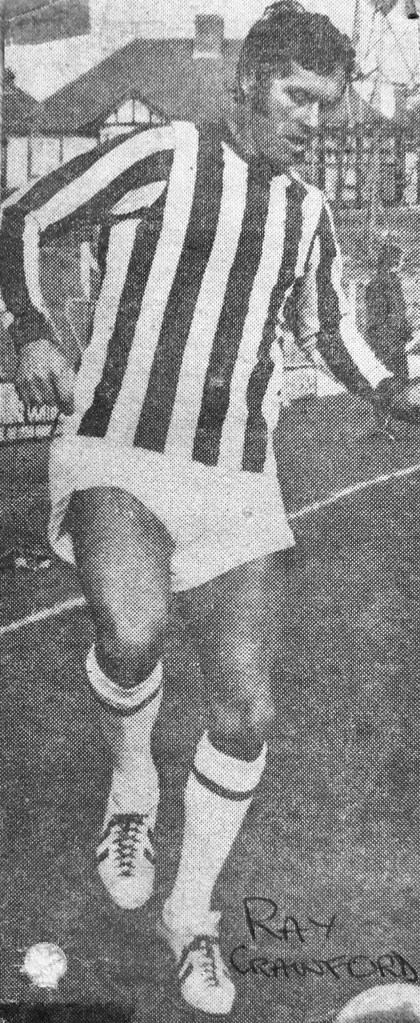
Burn spent five years as a Fulham player but with decidedly mixed fortunes, as managers came and went.

He spent most of 2012-13 on loan at Gary Johnson’s Yeovil Town and scored the winner in the 2013 League One play-off final at Wembley when the Glovers beat Brentford 2-1.

“I remember my header going in and losing all control,” he said. “I was running round like a madman!” He added: “For a club like that to be in the Championship was ridiculous but I’ll forever be thankful for Yeovil taking a punt on me.

Wembley winner with Yeovil Town

“I really grew up as a player and learnt what it really meant to be a footballer.”

Loan spell at Bimingham under Toon legends Lee Clark and Steve Watson

Although he signed a new two-year contract with Fulham, he then went to Birmingham on loan (playing under Toon ‘legends’ Lee Clark and Steve Watson) for six months before returning to the Cottage in January 2014.

With Rene Meulensteen having succeeded Martin Jol as manager, Burn made his Premier League debut in a 2-0 defeat to Arsenal at the Emirates, and retained his place against the likes of Chelsea, Man Utd and Liverpool.

By then he was 21 and was just enjoying playing but, when relegation saw Meulensteen sacked, in the Championship Burn sometimes found himself not even getting into matchday squads under Slavisa Jokanovic.

“It was such an anti-climax; I’d been on top of the world playing and now it was the complete opposite.” He admitted speaking to a psychologist about the situation to help him through.
He played 35 matches in 2015-16 as Fulham narrowly avoided dropping into League One but was not retained at the end of the season. He made the switch to newly-promoted Wigan Athletic whose manager Gary Caldwell said: “He is a powerful defender, but he likes to play as well.”

The 2016-17 season proved to be bittersweet: the Latics were relegated back to League One, but, according to Paul Kendrick of Wigan Today: “After a shaky start, Burn barely put a foot wrong on a personal level, with a series of highly consistent displays that ensured he was the landslide winner of the Player of the Year award.”

Under new manager Paul Cook, Burn was an ever-present for Wigan throughout the 2017-18 season when they bounced straight back, collecting the League One title with 98 points, two ahead of Blackburn Rovers.

Burn’s performances earned him a place in the PFA’s League One team of the year, and the new season was less than a month old when Albion made their move for him.

Of course, a significant part of Burn’s three years with the club covered the period when Covid prevented fans from attending matches but Burn scored a truly memorable first goal for the club when there was a partial return of supporters.

In front of 8,000 noisy fans at the Amex on 18 May 2021, Burn, in his 60th match for the club, sealed a remarkable comeback from 2-0 down to secure a 3-2 win for the Seagulls. His 76th-minute winner came after Leandro Trossard (50th minute) and Adam Webster (72nd) had made it 2-2. It was the Seagulls’ first top-flight win over City since 1981.

“That was a real high point for the team and for me personally,” he said.

Burn’s second goal was pretty special too, coming at Goodison Park on 2 January 2022, sandwiched between Alexis Mac Allister’s brace, as Albion beat Everton on their own turf for the first time ever.

It was towards the end of that month’s transfer window that Albion initially rebuffed newly-Saudi-enriched Newcastle’s attempts to sign Burn, but the lure of a return ‘home’ was too great and on deadline day he eventually departed for a fee said to have been £13million.

In an emotional farewell on the club website, he said: “The transfer came as a surprise. I had no desire to leave, but the opportunity to join my hometown club Newcastle United was the only way I would have wanted to leave. While I am excited to begin this new chapter, I am also sad to be ending another.

“Brighton has been a hugely successful period of my career and it’s been a memorable time for me off the pitch. We had my son down here, and I have loved seeing my family grow up as part of the community and living in Brighton & Hove. 

“Newcastle were the only club who could have tempted me away. Second to Newcastle United, Brighton & Hove Albion, the city and those associated with the club will always have a special place in my heart.”

When Burn scored his first goal for Newcastle in a 2-0 Carabao Cup quarter final at home to Leicester on 10 January 2023, manager Eddie Howe described it as an “incredible moment”, telling the media: “I am so pleased for him. This is his club and he has come back here and he is savouring every moment.”

The goal came when Burn ran on to Joelinton’s pass, beat two defenders and slotted a shot into the bottom corner.

“I used to sit in the east stand,” he said. “You always want to score in front of the Gallowgate end. To do that in front of my family was amazing.

“I like to get forward and it’s entertaining watching a guy my size running into the box.”

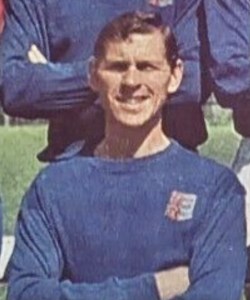
Goalscorer Ray Crawford took on Brighton backroom role

RAY CRAWFORD, one of the foremost goalscorers of the 1960s, came close to a swansong with the Albion and ended up coaching the club’s youngsters.

Crawford had been a key player in Alf Ramsey’s First Division title-winning Ipswich Town side having begun at hometown club Portsmouth and later netted 41 goals in 61 appearances for Wolverhampton Wanderers.

He joined Brighton in the autumn of 1971 after he had read they were struggling to score goals. Earlier the same year, he’d hit the headlines at the age of 35 when he scored twice for Fourth Division Colchester United as they sensationally beat Don Revie’s First Division Leeds United 3-2 in the FA Cup.

After a subsequent short stint playing in South Africa, homesickness brought him and his family back to the UK and the search began for a way to continue his celebrated career in the game.

He got in touch with his former Ipswich teammate, Eddie Spearritt, a key member of Albion’s squad, and the utility player persuaded manager Pat Saward to offer Crawford a trial.

“I did well enough in my trial week for Pat to ask me to stay for another month and to see how things went,” Crawford recalled in his eminently readable autobiography Curse of the Jungle Boy (PB Publishing, 2007).

Crawford found the net for the reserves, but a contractual issue with his last club, Durban City (who wanted a fee the Albion weren’t prepared to pay) prevented him joining as a player.

Meanwhile, the previous goalscoring slump that had first drawn him to the club was remedied by a decent run of goals from Peter O’Sullivan to supplement a revival in the form of strikers Kit Napier and Willie Irvine.

It meant Crawford, at 36, hung up his boots (although he still managed a cameo 15 minutes for the reserves in October 1973) to concentrate on coaching.

In the days before large teams of scouts and analysis tools, he would also run an eye over Albion’s future first team opponents to highlight their strengths and weaknesses.

“His dossiers on opposing styles and individual players have proved of great value in the team talks,” reported John Vinicombe in an Evening Argus supplement celebrating Albion’s promotion from the Third Division.

“When I returned to England after a spell with Durban City my only thoughts were of playing,” Crawford recalled. “Before I went to South Africa, I had a good season with Colchester United scoring 32 goals, and, of course, there were the two goals that I scored against the great Leeds United, knocking them out of the FA Cup, which still made me believe that my career was in playing.

Crawford scores v Leeds in the FA Cup

“But when my month’s loan from Durban City expired, and Pat Saward asked me if I would like to join the staff, I jumped at the chance.”

It didn’t stop Saward continuing to search for someone to supplement the strikeforce as the Albion went neck and neck with Aston Villa and Bournemouth for promotion.

Saward even brought in on trial another former England striker, the ex- Everton, Birmingham and Blackpool striker Fred Pickering from Blackburn Rovers. Like Crawford, he scored for the reserves but he wasn’t deemed fit enough for the first team.

Eventually, in March 1972, Saward found the missing piece of his jigsaw in Ken Beamish, a record transfer deadline day signing from Tranmere Rovers.

Beamish chipped in with some vital late goals to help Albion edge out the Cherries to secure Albion’s promotion as runners up to Villa.

The new man’s contribution earned Crawford’s approval in Brighton & Hove Albion Supporters’ Club’s official souvenir handbook, produced to celebrate the promotion.

Crawford as coach

He said: “I don’t like to single out players because football is a team game, but I must on this occasion. Ken Beamish added the final bite up front, and those vital goals that he scored helped us into Division II. What a player this boy is – he never gives up!”

It emerged in Crawford’s autobiography that he also had a friend in Albion chairman Mike Bamber, having got to know him when the Colchester team stayed at Bamber’s Ringmer hotel before a FA Cup tie.

Ever one for rubbing shoulders with stars, Bamber had subsequently invited Crawford back to Sussex to open a local fete in exchange for a weekend stay at the hotel with his family.

“Since that time, I had regarded Mike as a friend and a man I could trust,” said Crawford.

The former striker’s work with the club’s youngsters was evidently appreciated; for instance by Steve Barrett (below left) who said in 2011: “Ray was my coach when I was an apprentice and a young pro. Always had a great enthusiasm for the game and, even in training at the age of about 40, had a good touch and great eye for goal.

“Was great fun on our annual youth trips to tournaments to Holland or Germany. Was very modest in general but loved to remind everyone of his two goals for Colchester against the then mighty Leeds in the FA Cup. A really nice man.”

When Saward was sacked in the autumn of 1973, Crawford assisted caretaker manager Glen Wilson for the home fixture against Southport, which Albion won 4-0.

As for his relationship with Bamber, it counted for nothing as soon as the chairman astonished the football world by appointing Brian Clough and Peter Taylor to succeed Saward.

Crawford was angered by Clough’s “abrasive and stubborn” shenanigans, for instance being bought a pint in a Lewes hotel bar and then left waiting with Wilson as the former Derby duo disappeared for two hours.

“I wasn’t prepared to be treated like that and I soon found out that the way he spoke to people was as I’d expected,” Crawford recalled. “One day he left the players sitting in the dressing room for two hours before training. I don’t know why. It left a sort of threatening pressure on the players that I didn’t agree with.”

It probably didn’t help matters that Crawford’s outspoken wife Eileen also took issue with Clough when he tried to stop the players’ wives having a smoke while socialising before a match. “I don’t smoke, but if I did, it wouldn’t be anything to do with you!” she told him.

Crawford had heard that his first club, Portsmouth, were looking to revive a youth set-up that had been abandoned under a previous manager, so he applied to take on the role of setting it up and running it and headed back to Fratton Park in December 1973.

Born just a mile away from Portsmouth’s famous home ground, the eldest of four children, on 13 July 1936, Crawford initially looked unlikely to follow the sporting prowess of his dad, who had been a professional boxer, because of asthma.

Nevertheless, his enthusiasm for football was sparked by a display of skill from Pompey player Bert Barlow when he did a coaching session at his school, and he joined a local football club called Sultan Boys.

Then he was taken to see Portsmouth play at Fratton Park and he set his heart on stepping out onto that turf himself.

At 14 he started to fill out in height and weight. “I changed quickly from a skinny, shy, asthmatic youth into a strong, young athlete, representing Hilsea Modern School and Portsmouth Schools in cross country running and in the 440 yards,” he said.

He also excelled at cricket and was offered the chance to have a trial with Hampshire County Cricket Club. But his heart was set on football.

Eventually a break came courtesy of a friend who was already in Portsmouth’s youth team. Crawford was invited to twice-weekly training and, after impressing, was taken on as a junior.

In the meantime, he worked by day for the Portsmouth Trading Company making concrete and breeze blocks, which involved spending around eight hours every day lifting 500 heavy blocks onto pallets to dry. It certainly got him fit.

The football club eventually offered him a contract after two years of training with them, but then (as was the case with all young men at the time) he had to do two years’ National Service in the army.

That’s where the title of his book comes in because he was posted to Malaya where word of his footballing ability had already spread. He was invited to play for Selangor Rangers, the biggest club in Kuala Lumpur, and the army also gave him permission to play for the Malayan Federation on a tour of Cambodia and Vietnam.

“Whilst I took part in many more football matches in Malaya than military exercises, I did go out into the jungle on a few occasions with the battalion,” he recalled.

Back at Portsmouth in the autumn of 1956, Crawford resumed his football career, initially in Pompey’s reserve team. After scoring 33 goals in 39 reserve team games, he finally got a first team call-up, making his debut in a 0-0 draw against Burnley at Fratton Park on 24 August 1957.

In the following game, he scored two in two minutes as Spurs were beaten 5-1 at home, but the following month he suffered a broken ankle that sidelined him for two months.

The beginning of the end of his fledgling Pompey playing career came in December that year when he lost it with the club chairman, Jack Sparshatt, who puzzlingly decided to enter the dressing room at half-time during a game, voicing his disapproval at the performance. Crawford told him to f*** off!

Perhaps not surprisingly he was left out of the side for a month.

He did get selected again in the new year, playing up front with Irishman Derek Dougan, but, that summer, Eddie Lever, the manager who’d given him his debut, was sacked and it wasn’t long before his replacement, Freddie Cox, sold Crawford to Ipswich.

Although he hadn’t wanted to move, future England boss Ramsey was persuasive and Crawford admitted: “I had no idea at the time that this would eventually turn out as one of the best decisions I ever made in life.”

The Hampshire lad adapted well to Suffolk and by the end of his first season at Town had scored 25 goals in 30 league games. Not a bad return but even better was to come and with Crawford and strike partner Ted Phillips rattling in the goals, Ipswich won back-to-back titles, winning the second tier championship in 1960-61 and the elite title in 1961-62.

Crawford scored 40 and Phillips 30 as Ipswich won promotion in 1961 and, at the higher level the following season, Crawford bagged another 37 goals.

Such prolific scoring inevitably brought him to the attention of the international selectors and, at the age of 25, he won two England caps. The mystery was why he didn’t win more.

Crawford made his England debut in a Home International against Northern Ireland at Wembley on 22 November 1961. He was credited with setting up England’s goal, scored by Bobby Charlton in the 20th minute, and the game ended in a disappointing 1-1 draw.

The 30,000 crowd for the Wednesday afternoon match was a record low for Wembley at that time. The prolific Ipswich striker only won one more cap, and then only because of a fractured cheekbone injury to first choice Alan Peacock of Middlesbrough.

Nonetheless, Crawford seized his chance and got on the scoresheet after only seven minutes against Austria in a friendly at Wembley on 4 April 1962.

He turned and buried a shot to give England an early lead which Ron Flowers increased with a penalty before half-time. Roger Hunt scored a third for England in the second half. Hans Buzek pulled one back for the visitors in the 76th minute.

As well as Hunt, future World Cup winners Ray Wilson and Bobby Charlton were also in the England line-up, together with 1966 squad members Jimmy Armfield and John Connelly. The team was captained by Fulham’s Johnny Haynes. Jimmy Melia was part of the squad but didn’t play.

Jimmy Magill, who later joined Brighton from Arsenal, was in the Irish side whose equaliser was scored by Burnley’s Jimmy McIlroy. Spurs’ Danny Blanchflower won his 50th cap for his country that day.

Having scored 33 goals in the First Division, Crawford was gutted not to be selected in the England squad for the 1962 World Cup in Chile and future England boss Ramsey was mystified too. “I just don’t understand it and I will go as far as saying it is downright unfair,” he said.

Crawford reckoned it was because England coach Harold Shepherdson, who also held a similar role at Middlesbrough, always advanced the claims of Boro’s aforementioned Peacock, who was chosen ahead of him despite scoring fewer goals, and in the Second Division.

Although Crawford was selected three times for the Football League representative side, he didn’t win any more full international caps.

Probably more surprising was that his old club boss Ramsey, who had seen him at close quarters for Town, didn’t turn to him after he’d taken charge of England in October 1962. But Ramsey had an embarrassment of riches at his disposal, not least in the shape of Jimmy Greaves and Bobby Smith along with Liverpool’s Hunt and later Geoff Hurst.

Crawford’s first meeting with Jackie Milburn, who took over from Ramsey as Ipswich boss, simply involved the former Newcastle and England centre-forward saying: “Nice to meet you Ray, you won’t be here long.”

Sure enough, he wasn’t. Despite his past successes, Ipswich cashed in and sold him to Wolves for £55,000 in September 1963.

His debut was somewhat ignominious as Wolves succumbed 6-0 at Liverpool (their ‘keeper Malcolm Finlayson was forced off injured) but Crawford scored twice in his second game as Wanderers won 2-1 at Blackpool (for whom Alan Ball scored).

Crawford went on to finish that first season with 26 League goals to his name in 34 games and was named Player of the Year, although Wolves finished in a disappointing 16th place.

Crawford, who is remembered fondly on the website wolvesheroes.com, had been joined at Molineux by Liverpool’s Melia (“a fine passer of the ball”) but when Stan Cullis, the manager who signed them both, was sacked, neither of them saw eye to eye with his successor, Andy Beattie.

Melia was sold to Southampton and the rift with the new boss saw Crawford switch to Black Country rivals West Brom in February 1965 for a £35,000 fee. He later reflected it was a case of jumping out of the frying pan into the fire because he didn’t enjoy a good relationship with Baggies boss Jimmy Hagan.

The striker played only 16 matches for Albion, scoring eight goals, before asking for a transfer in March 1966 and being granted his wish. “I did my best but never had a decent run of games in the first team,” he said. “It never quite worked out but I enjoyed most of my time there and the fans could not have been better.”

It was former club Ipswich, battling at the wrong end of the Second Division, who rescued him and, even though it meant dropping down a division, he was happy to return to Portman Road under Bill McGarry.

Crawford struck up a useful striking partnership with prolific American-born Gerry Baker. By the end of the season, he’d scored eight goals in 13 appearances and Town managed to avoid relegation.

He was part of the Ipswich side that won the Second Division championship the following season, netting 25 goals in 48 appearances, and by then was approaching his 32nd birthday.

The goals continued to flow with Ipswich back amongst the elite, Crawford scoring 21 in 42 games in the 1967-68 season. But more managerial upheaval was around the corner, when McGarry left to become manager of Wolves.

“When McGarry left for Wolves, I had lost my master and mentor, leaving a psychological gap for me that wasn’t going to be filled by anyone else however qualified or good they were as a manager,” said Crawford.

Even before Bobby Robson succeeded McGarry, Crawford started to weigh up his options and he decided he fancied a move to South Africa, where his old Ipswich teammate Roy Bailey had settled.

Although Town chairman John Cobbold initially agreed to give him a free transfer, the Board later changed their mind and decided they wanted some compensation for his services. Instead of going to South Africa, he ended up moving to Charlton Athletic for £12,000.

The move to The Valley turned sour after he refused to join a training camp organised by manager Eddie Firmani because his family were ill and he needed to be at home to look after them. He was sacked after playing just 22 games for the Valiants, during which time he scored seven goals.

Southern League Kettering provided a short-term means of getting back into playing but it was Fourth Division Colchester United who took him on and he repaid their faith by scoring 31 goals in 55 matches under Dick Graham, the most memorable being that pair against Leeds.

Crawford eventually got his move to South Africa in August 1971, joining Durban City, but his family couldn’t settle and they returned to the UK three months’ later.

During his time as youth coach at Portsmouth, he was responsible for signing Steve Foster and, in his autobiography, recalls how a tip-off from Harry Bourne, a local schoolteacher set him on the path of the future Albion and England centre-back.

Foster had been released by Southampton and Crawford went to the family home in Gladys Avenue, Portsmouth, to invite him to train with Pompey. Foster’s mother was at a works disco at Allders and Crawford went to find her there and had to shout above the sound of the music that Portsmouth were interested in signing her son.

The youngster, 18 at the time, got in touch the next day and, before long, was switched from a centre-forward to a centre-back, after Crawford’s former Ipswich teammate Reg Tyrrell told him: “That no.9, he’s no centre-forward, but he’d be a good number 5.”

After he left Portsmouth in 1978, Crawford took over as manager at Hampshire league side Fareham Town and later managed Winchester City before finally retiring from the game in 1984 to become a merchandising rep.

The FA Cup semi-final hat-trick hero who wore red and blue

ALEX DAWSON was even younger than Evan Ferguson when he scored a FA Cup semi-final hat-trick.

The bull-like centre forward who broke through at Manchester United in the wake of the Munich air crash wrote his name in football record books on 26 March 1958.

Dawson was just 18 years and 33 days old when he netted three goals in United’s 5-3 win over Fulham in front of 38,000 fans at Highbury, north London. No-one that young has ever repeated the feat.

Eleven years later, Dawson scored twice for Brighton in a Third Division match against Walsall. It was my first ever Albion game. He followed up the two he got in that game with six more in four other games I saw that 1968-69 season. They were enough to sow the seeds of a lifetime supporting the Albion and the burly Dawson, wearing number 9, became an instant hero to an impressionable 10-year-old.

Dawson scored twice v Walsall in 1969

Dawson is no longer with us but the memory of his goalscoring exploits live on amongst those fans of a certain vintage who had the pleasure of seeing him in action.

A man who played alongside him at Wembley in 1958 – Freddie Goodwin – made Dawson his first signing for Brighton, for £9,000, not long after he had taken over as manager in the winter of 1968.

By then, he was plying his trade with Bury. He had left United in 1961 after scoring a remarkable 54 goals in 93 games, including one on his debut aged just 17 (in a 2-0 win over Burnley).

After losing 2-0 to Bolton Wanderers in 1958, another losing Wembley appearance followed six years later. He scored a goal for Preston North End but the Lancastrian side lost 3-2 to West Ham United.

United pair Freddie Goodwin and Alex Dawson were reunited at Brighton

Nevertheless, Dawson was prolific for Preston scoring 132 goals in 237 league and cup games over six years. The purple patch I saw him have for Brighton saw him find the net no fewer than 17 times in just 23 games, including three braces and four in an away game at Hartlepool. That was only one behind top scorer Kit Napier whose 18 came in 49 matches.

Alex Dawson in snow action at the Goldstone Ground

In a curtain-raiser to the 1969-70 season, Dawson scored four times as Albion trounced a Gibraltar XI 6-0 at the Goldstone. But the signing of Allan Gilliver and, in the New Year, young Alan Duffy, began to reduce his playing time. He got 12 more goals in 28 appearances (plus three as sub) but, when Goodwin left the club, successor Pat Saward edged him out.

Even in a loan spell at Brentford he scored seven in 11 games. Greville Waterman, on bfctalk.wordpress.com in July 2014, recalled: “He was a gnarled veteran of thirty with a prominent broken nose and a face that surely only a mother could love, but he had an inspirational loan spell at Griffin Park in 1970.”

Still smiling and scoring goals at Corby

Released by the Albion at the end of the 1970-71 season, Dawson’s final footballing action was with non-league Corby Town, where he didn’t disappoint either.

In his first season at Occupation Road, he finished top scorer with 25 goals in 60 appearances and by the time he retired from playing on 4 May 1974, his tally for the Steelmen was 44 in 123 appearances.

When the curtain came down on his career, Dawson had scored 212 goals in 394 matches – more than one every two games. A true goalscorer.

It was in the wake of the decimating effect of the Munich air disaster that Dawson found himself thrust into the limelight at a tender age.

The crash claimed the lives of eight of United’s first choice team – Dawson’s pals. Youngsters and fringe players had to be drafted into the side to fulfil the remaining fixtures that season. One was Dawson, another was Goodwin.

Thirteen days after the accident, Dawson took his place beside survivors Bill Foulkes and Harry Gregg and scored one of United’s goals as they beat Sheffield Wednesday 3-0 in the fifth round of the Cup.

He scored again as United drew 2-2 with West Brom in the sixth round, before winning through 1-0 in a replay to go up against Fulham in the semi-final.

Dawson told manutd.com: “In our first game with Fulham (played at Villa Park), Bobby Charlton scored twice in a 2-2 draw, and I was put on the right wing. I was a centre-forward really and, when we played the replay at Highbury four days later, I was back in my normal position.

“Jimmy (Murphy) said before the game: ‘I fancy you this afternoon, big man. I fancy you to put about three in.’ I just said: ‘You know me Jim, I’ll do my best,’ but I couldn’t believe it when it happened.

“The first was a diving header, I think the second was a left-footer and the third was with my right foot.

“It was a long time ago, of course, and it’s still a club record for the youngest scorer of a hat-trick in United’s history. Records are there to be broken and I’m surprised that it’s gone on for over half a century.

“I’m a proud man to still hold this record. Even when it goes, nobody can ever take the achievement away from me.”

While Dawson was my first Albion hero, when he died in a Kettering care home at the age of 80 on 17 July 2020 the esteem in which he was held by others also came to the fore in the tributes paid by each of the clubs he played for.

Born in Aberdeen on 21 February 1940, Dawson went to the same school as United legend Denis Law, but his parents moved down to Hull and Dawson joined United straight from Hull Schoolboys.

Dawson and future Preston and Brighton teammate Nobby Lawton were both on the scoresheet as United beat West Ham 3-2 in the first leg of the 1957 FA Youth Cup Final and Dawson scored twice in the 5-0 second leg win. West Ham’s side included John Lyall, who later went on to manage them.

On redcafe.net, Julian Denny recalled how Dawson once scored three hat-tricks in a row for a United reserve team that was regularly watched by crowds of over 10,000.

After that goalscoring first team debut against Burnley in April 1957, he also scored in each of the final two matches that season (a 3-2 win at Cardiff and a 1-1 draw at home to West Brom) to help United win the title and secure their passage into Europe’s premier club competition.

Obviously, circumstances dictated Dawson’s rapid rise but, with the benefit of hindsight, some say his United career may have panned out differently if he hadn’t been thrust into first team action at such a young age.

He was just short of his 18th birthday when the accident happened. In an interview with Chris Roberts in the Daily Record (initially published 6 Feb 2008 then updated 1 July 2012), he recalled: “I used to go on those trips and had a passport and visa all ready but the boss just told me I wasn’t going this time.

“I had already been on two or three trips just to break me in. I know now how lucky I was to be left in Manchester. The omens were on my side.”

Dawson went on to describe the disbelief and the feelings they had at losing eight of the team, including Duncan Edwards several days later.

“We were all so close and Duncan was also a good friend to me before the accident,” said Dawson. “Duncan was such a good player, there is no doubt about that. He was a wonderful fellow as well as a real gentleman.

“I will never, ever forget him because he died on my birthday, 21 February, and before that he was the one who really helped me settle in.”

Dawson gradually became an increasingly bigger part of the first-team picture at United, making 11 appearances in 1958-59 and scoring four times. The following season he scored 15 in 23 games then went five better in 1960-61, scoring 20 in 34 games.

He was at the top of his game during the last week of 1960 when he scored in a 2-1 away win at Chelsea on Christmas Eve, netted a hat-trick as Chelsea were thumped 6-0 at Old Trafford on Boxing Day, and then scored another treble as United trounced neighbours City 5-1 on New Year’s Eve.

A fortnight later he had the chance to show another less well-known string to his footballing bow…. as a goalkeeper!

It was recalled by theguardian.com in 2013. When Tottenham were on their way to the first ever double and had an air of near-invincibility about them, they arrived at Old Trafford having lost only once all season, and had scored in every single game.

Long before the days of a bench full of substitutes, when ‘keeper Harry Gregg sustained a shoulder injury, Dawson had to take over in goal.

Dawson excelled when called upon, at one point performing, according to the Guardian’s match report, “a save from Allen that Gregg himself could not have improved upon”.

The article said: “Tottenham’s attempts to get back into the game came to nought and Dawson achieved what no genuine goalkeeper had all season: keep out Tottenham’s champions-elect. In the end, there were only two games all season in which Spurs failed to score, and this was one of them.”

Scoring for Preston North End

Tottenham’s north London neighbours, Arsenal, finished a disappointing 25 points behind Spurs in 11th place, but United manager Matt Busby had been keeping tabs on the Gunners’ prolific centre forward David Herd (Arsenal’s top scorer for four seasons), and in July 1961 took him to Old Trafford for £35,000. It signalled the end of Dawson’s time with United.

When the new season kicked off, Dawson had a new apprentice looking after the cleaning of his boots….a young Irishman called George Best. In his 1994 book, The Best of Times (written with Les Scott),

Best said: “Alex Dawson was a brawny centre forward whose backside was so huge he appeared taller when he sat down. To me, Alex looked like Goliath, although he was only 5’10”. What made him such an imposing figure was his girth.

“He weighed 13st 12lbs, a stone heavier than centre half Bill Foulkes who was well over 6ft tall. What’s more, there wasn’t an ounce of fat on Alex – it was all muscle.”

Best’s responsibilities for Dawson’s boots didn’t last long, however, because in October that year, Busby sold the centre forward to Preston for £18,000.

In 1967, Dawson took the short journey to Bury FC where his goalscoring exploits continued with 21 goals in 50 appearances, before he joined Goodwin’s regime at Brighton.

What a career to look back on: Alex Dawson recalling his goalscoring exploits

Teenage prodigy Newhouse quit game to teach maths

AIDAN NEWHOUSE scored twice on his Albion debut but only started two games for the Seagulls!

The former Fulham striker netted two of Brighton’s six goals in the 1999-2000 season opening match at the Withdean Stadium.

He replaced hat-trick man Darren Freeman with the Albion 4-0 up on 7 August 1999 and promptly added two more goals to complete a 6-0 rout of Mansfield Town (pictures below).

Newhouse, wearing the no.25 later worn iconically by Bobby Zamora, was given a start in a 2-0 league cup defeat away to Torquay United. Although he regularly went on as a substitute, often for Freeman, he only began one other game: a 1-0 home league win over Cheltenham Town.

Newhouse had limited opportunities in Albion colours

Newhouse had previously played under manager Micky Adams at Fulham in 1997, and, unluckily for him, Freeman and Gary Hart were the first choice forward choices in those opening months.

Competition for places intensified in the autumn with the arrival of Warren Aspinall and Lorenzo Pinamonte. Newhouse was swiftly on his way to Conference club Sutton United.

When they were relegated at the end of the season, he switched to Northwich Victoria in 2001, but only played one match before quitting and becoming a schoolteacher.

Born in the Wirral town of Wallasey on 23 May 1972, Newhouse showed so much early promise that he made his debut for Chester City before his 16th birthday.

He was just 15 years and 350 days old when he was sent on as a substitute by manager Harry McNally on the final day of the 1987–88 season as Chester won away at Bury 1–0 in the Third Division.

The talented teenager was in David Burnside’s 1988-89 England side for the UEFA Under-18 Championship preliminary matches against Greece (home and away), France and Czechoslovakia, scoring in the 3-0 win away to Greece on 8 March 1989. He played up front with Andrew Cole, later of Manchester United and Newcastle United fame.

The following season he went on as a sub for Cole in a 0-0 draw with Denmark at Wembley; a game which was played at Wembley before the England-Brazil full international. Three weeks later he scored England’s third when he started in a 3-0 win over Poland, another game played before a full international (England v Denmark).

In July the same year, he started all three of England’s matches (a draw and two defeats) when they finished fourth in the UEFA Under-18 Championship in Hungary.

Chester cashed in on their young prodigy, selling him to then First Division Wimbledon for £100,000 in February 1990.

First team opportunities for Wimbledon were few and far between for Newhouse and he is in the same exalted company as former Albion loanee Gary Bull in being one of only four players to have scored on their single Premier League appearance.

Wimbledon scorer

Ironically, it came in a match in 1992-93 against Aston Villa best remembered for Dalian Atkinson’s individual goal that won the BBC’s Goal of the Season award. “It was deflected past the goalkeeper,” Newhouse told premierleague.com. “It was a bit of a low-life goal compared to Dalian Atkinson’s.”

It was Bobby Gould who gave him his Wimbledon debut but a stomach injury halted his progress under Gould’s successor Ray Harford, as well as the form of John Fashanu and Terry Gibson.

In a 1990-91 season matchday programme article, Newhouse said: “I was really looking forward to this season. Bobby Gould had given me a taste of first team action and I felt I was ready to really stake a claim for a place.

“Then I picked up the injury and it took me months even to get back into full training let alone playing well.”

Although he was a Wimbledon player for seven years, he went out on loan on four occasions: to Tranmere Rovers, Port Vale, Portsmouth and Torquay United. He eventually left permanently for Fulham in 1997.

He scored four goals in only 12 league and cup matches for Fulham: three in a two-legged League Cup match against Wycombe Wanderers and one in the league in a 2-0 win away to Bristol City on 2 September 1997 (Richard Carpenter scored the other). But, only a few weeks’ later, Adams was controversially replaced by Ray Wilkins and Kevin Keegan under the new Mohammed Al-Fayed regime.

Scoring for Fulham

Before long, Newhouse was on his way too. A £30,000 fee took him to Swansea City although, by the time he had arrived, Adams’ short tenure as boss was already over, his role filled by his former no.2 Alan Cork.

It’s probably an understatement to say things didn’t work out for Newhouse in South Wales. Indeed, in a FourFourTwo magazine poll inviting supporters to name their club’s worst player, Newhouse earned the tag from Swansea fans.

He failed to score in 17 appearances across two seasons and Steven Carroll, of the SOS Fanzine, cited a particular game in February 1999, when Carlisle visited the Vetch Field, to back up the claim.

“Due to injuries and suspensions, Newhouse was awarded a rare start. Early on, he was put through on goal and fouled by the ‘keeper inside the box – but while the referee looked set to award a penalty, with said goalkeeper on the floor and both Newhouse/the ball free, our hapless striker shot from close range and missed an open goal. No penalty.

“In the second half, Stuart Roberts received the ball on the edge on the box and was about to shoot, only for Newhouse to kick him in the back of the leg. He never played again after that.”

After retiring from the game in 2001, Newhouse became a maths teacher and he told premierleague.com: “Not all of us are Stevie G and the likes of Neymar,” he said. “I played 13 years, made about £250 a week on average.

“It shows you that, you know, we can do all sorts of things and eventually, to do a job that you enjoy, you will need some education. You will need that to give you an option and a choice.

“Teaching…it’s one of those things. It’s like football, there’s a camaraderie between you and the class.

“Once the guys realise they’re part of a team, there are some similarities. You can have a laugh with the lads and they realise you are there to try and help them succeed.”

Lanky Lurgan lad lined up alongside George Best

JOHN NAPIER is still coaching youngsters in America at the age of 75. NICK TURRELL’s In Parallel Lines blog caught up with him for a trip down memory lane.  Here, in the third of five articles, we look at how it all began.

This cracking Bolton News picture shows Napier leading out Bolton’s under 18 side at Bromwich Street in January 1963, during the big freeze of that winter.

JOHN NAPIER was born in Lurgan, 18 miles south west of Belfast, on 23 September 1946.

Napier was football daft from a young age and he said: “Looking back at my childhood, I always wanted it from a young age. It was my dream. I had two uncles that played at pro level in Northern Ireland and they worked with me at a young age.

“I would say they toughened me up. I was never afraid to try new things. I left home at 15 to pursue my dreams, and it worked out. It was not easy – it never is – but you must keep at it. Failure was not an option in those times.”

In another interview, Napier said he adopted Spurs as his favourite side when he was 10 or 12. He had three uncles living in north London who were all avid Tottenham supporters and they would send him programmes, pictures and pennants that the youngster put up on his bedroom wall.

𝗟𝘂𝗿𝗴𝗮𝗻 𝗜𝗻𝘁𝗲𝗿𝗺𝗲𝗱𝗶𝗮𝘁𝗲 – 𝗜𝗿𝗶𝘀𝗵 𝗦𝗰𝗵𝗼𝗼𝗹𝘀 𝗦𝗲𝗻𝗶𝗼𝗿 𝗖𝘂𝗽, 𝗠𝗶𝗱-𝗨𝗹𝘀𝘁𝗲𝗿 𝗟𝗲𝗮𝗴𝘂𝗲 𝗮𝗻𝗱 𝗖𝗮𝗳𝗼𝗹𝗹𝗮 𝗖𝘂𝗽 𝘄𝗶𝗻𝗻𝗲𝗿𝘀 𝟭𝟵𝟲𝟭

Napier was good enough to represent his country at every level. He played for the schoolboy side at under 15 and under 16 level, and was the youngest Irish player, at 17, in the youth side that reached the final of the UEFA European Under-18 Championship tournament in April 1963.

In front of a crowd of 34,582 at Wembley, he had the misfortune to score an own goal with his head after only five minutes and England went on to beat the Irish 4-0 (Ray Whittaker, Jon Sammels and John Sissons scoring the other goals).

Remarkably, Northern Ireland’s greatest ever player, George Best, only played in two youth internationals for his country.

Napier was in the same side as Best when the Irish drew 1-1 with England at Boundary Park, Oldham, on 11 May 1963.

A week later they were selected together again and Best scored his country’s goal as they drew 1-1 with Wales in Aberystwyth.

After winning his only full cap against West Germany in 1966 (see previous article), Napier won two Under-23 caps, also both against Wales. He was in the side that beat Wales 2-1 at Windsor Park, Belfast on 22 February 1967, although the game was abandoned on 72 minutes because of a waterlogged pitch and Welsh and Irish sources differ as to whether the result stood.

Napier had moved to the Albion by the time he made his second appearance; this time the game took place at Ninian Park, Cardiff, on 20 March 1968 and the Irish included the likes of Pat Rice, Tommy Jackson, Dave Clements, Bryan Hamilton and Sammy Todd, who all became established full internationals. But the game was the last of Napier’s international career, at the age of 21.

As Napier said above, he was only 15 when he joined Bolton, choosing them over Everton and Sunderland, who had also shown an interest.

“I really enjoyed my early experience at Bolton,” he told thefootballnetwork.net. “George Taylor and George Hunt, my first coaches at Bolton, and also Nat Lofthouse had a lot to do with my early development. I used to talk to Nat a lot about my game.”

Napier training with Francis Lee and Brian Bromley

Napier rose through the youth ranks alongside the likes of Brian Bromley, Dave Hatton and future England and Manchester City star Francis Lee.

The boots of longstanding centre half Bryan Edwards were big ones to fill but Bolton boss Bill Ridding gave Napier the opportunity to stake his claim. He made his first appearances in the senior side in the final two games of the 1964-1965 season.

Napier helped the side keep clean sheets against Leyton Orient and Cardiff City as the Trotters just missed out on promotion, finishing third, as Newcastle went up as champions along with runners up Northampton Town.

As well as Lee and Bromley, Bolton at that time had a side that included Welsh international striker Wyn Davies (often Napier’s roommate for away matches), England international goalkeeper Eddie Hopkinson and Gordon Taylor, who went on to become chairman of the PFA.

For the following 18 months, Napier was a regular at the heart of the Bolton defence, missing just three games in his first full season and playing a part in the game against Charlton Athletic which saw the Addicks’ Keith Peacock become the first substitute used in English football when replacing goalkeeper Mike Rose in a game at Burnden Park on 21st August 1965.

The Ulsterman himself was involved in the first ever Bolton substitution when, following injury, he was replaced in the 3-2 defeat at home to Southampton by Gordon Taylor.

• In the next instalment of this five-part series of articles, Napier describes the camaraderie that existed amongst the Brighton players during his time at the club, and his approach to the opponents he faced.

Putney printer Pearce went to Wembley with the Albion

HE took a circuitous route back to his hometown club but full-back Graham Pearce eventually made it to Brentford’s first team after Brighton had resurrected his career and given him a chance to play at the top level of the English game.

Pearce was first on Brentford’s books as a teenager between 1971 and 1976, but he didn’t make it as a pro with the Bees and, after also being turned down by QPR, he went non-league, initially with Hillingdon Borough for three years and then Barnet.

When Pearce lined up for Barnet in a FA Cup third round tie on 2 January 1982, it must have been beyond his wildest dreams to imagine just over a year later he’d be playing in that competition’s final at Wembley.

But the steady, assured performances 21-year-old Pearce put in as Alliance Premier League Barnet held Brighton 0-0 before losing 3-1 in a replay at the Goldstone impressed the watching Albion boss Mike Bailey sufficiently to sign him up for the Seagulls.

Although he was itching to join, he had to serve a week’s notice with the Putney printer where he had a full-time job because they weren’t in a position to release him sooner.

Just over a year later, when injuries depleted Jimmy Melia’s cup hopefuls the closer they got to a dream Wembley date, Pearce seized his chance to put his own name in print. Circumstances fell just right for him, but it might not have happened if the experienced left-back Sammy Nelson hadn’t been sidelined.

A packed East Terrace at the Goldstone the backdrop as Pearce faces Newcastle in the FA Cup

Pearce played in the third round 1-1 Goldstone draw with Newcastle – one of six games he played in January 1983 – but he missed the 4-0 demolition of Manchester City in the fourth round and didn’t feature again until 22 March when he was sub for the 2-2 home draw with Liverpool.

Because versatile Gary Stevens was more than capable of playing alongside Steve Foster, normal centre back partner Steve Gatting was preferred at left-back for 14 matches from the end of January.

But when right-back Chris Ramsey was suspended for the semi-final against Sheffield Wednesday, Stevens took his spot, Gatting returned to the middle and Pearce slotted in at left-back.

Because Foster was suspended for the final against Man Utd, Stevens paired up with Gatting in the middle and Pearce retained his place.

Even when Foster returned for the replay, Pearce kept his place because Ramsey had been crocked in the first match and wasn’t fit to play (Melia making the mistake of putting left-footed Gatting at right-back instead of Stevens).

In a pre-match interview with the Daily Mail, Pearce said: “There’s money to be made from appearing at Wembley but the thrill for me is just being there – a player from non-League who thought his chance of playing league football had gone.”

Pearce retained the no.3 shirt at the start of the 1983-84 season back in the second tier but, when Chris Cattlin took over from Melia, he made it clear he wanted someone with more experience in that position.

In his matchday programme notes he wrote: “With Kieran (O’Regan), Eric Young and Graham Pearce all playing together, we have three players who haven’t been long out of non-League football.

“Normally these players would have been blooded slowly into the side, instead of being plunged in the deep end. They have done well and shown the right attitude, but when we play against aggressive sides away from home, some of their inexperience has been exposed.”

Until a suitable replacement could be found, Pearce remained in the side and even poked home his first Albion goal in a 4-3 win away to Cambridge United on 29 October 1983.

But four weeks later, after a 2-2 draw at home to Shrewsbury Town, Cattlin was typically forthright in his next programme notes, declaring: “I was unhappy with our defence and our failings in this department cost us the game.”

Pearce and fellow full-back Ramsey were promptly dropped; the left-back berth going to new signing Chris Hutchings from Chelsea.

Cattlin had high praise for his new recruit as he said: “Chris Hutchings is an enthusiastic, strong and determined defender and has a lot to offer, he’s also a fine footballer.”

After 18 consecutive games, Pearce found himself out of the side for the rest of the season.

It’s interesting to note that the reserve side for the 1 May 1984 fixture at home to Southampton featured five players (Pearce, Ramsey, Gary Howlett, Gerry Ryan and Neil Smillie) who’d been in the FA Cup Final squad a year earlier.

The new season was almost three months’ old before Pearce was seen in the first team again, and, ironically, the opponent was once again Shrewsbury.

The game at the Goldstone finished a goalless draw and, with Hutchings having been switched to right-back, Pearce got a run in the side extending to 19 matches.

Unluckily for him, he was then left out of the side in favour of Martin Keown, who Cattlin managed to bring in on loan from Arsenal, and the future England international quickly proved his calibre.

Pearce made one further appearance, in a 2-1 defeat at Middlesbrough, before the end of the season but in the 1985-86 season he finally cemented his place in the side and played a total of 41 matches.

Three days after Christmas 1985, he scored a rare goal as the Seagulls beat Leeds 3-2 at Elland Road. Ian Baird – later to play for the Albion in the old Fourth Division – missed a penalty but scored one of Leeds’ goals and Pearce clinched the winner on a pitch rutted by a rugby league game played on it only two days earlier.

The matchday programme described the goal thus: “Pearce played a one-two with (Steve) Jacobs and found himself with only Mervyn Day to beat and Leeds screaming for offside. The trusty left foot of the Londoner lobbed goalwards, Day was stranded, and Pearce had scored his first goal in 26 months to give Albion another three valuable points.”

Not such a memorable game came in a 3-0 defeat away to Norwich City on 5 April 1986. The full-back went into the referee’s notebook for a foul on future Albion winger Mark Barham, who was substituted shortly afterwards. Albion had a great chance to pull a goal back when Pearce was through one-on-one with Chris Woods, but the England ‘keeper saved his effort comfortably. Then, eight minutes from time, Pearce fouled Wayne Biggins in the penalty area and Welsh international David Williams buried City’s third from the penalty spot.

Pearce played in Albion’s final game of the season, a 2-0 defeat at Hull City under George Petchey, following Cattlin’s sacking, and it turned out to be his last match in a Brighton shirt.

The returning Alan Mullery explained in his programme notes for the opening game of the new season that he released Jacobs and Pearce because “I felt we had too many defenders”.

Pearce switched to Third Division Gillingham under Keith Peacock and played a total of 48 matches as the Gills narrowly missed out on promotion when losing a play-off final replay against Lou Macari’s Swindon Town in 1987.

Following a disappointing second season with the Gills, when they finished mid-table, Pearce returned to hometown club Brentford where he played 14 times (+ 8 as sub) in Steve Perryman’s 1988-89 side. One of his teammates was fellow former Albion cup star Smillie.

Pearce joined up with Peacock again for Maidstone United’s debut season (1989-90) in the Fourth Division, which culminated in a play-off semi-final defeat at the hands of a Cambridge United side featuring Dion Dublin up front.

The following season, under Phil Holder, Pearce was back at Brentford as first team and reserve coach. He subsequently had spells as player-manager with Isthmian League clubs Enfield and Molesey. He later became a PE teacher at Homefield Preparatory School in Sutton.

Born in Hammersmith on 8 July 1959, Pearce was one of seven children (five boys, two girls) and attended Grove Park Primary School, where he was captain of their under-9 football side. He went on to play for the Middlesex County side and Middlesex Wanderers before his stop-start professional career began.

• Pictures from my scrapbook and matchday programmes.