Unstoppable free kick earned Poco’s place in Albion folklore

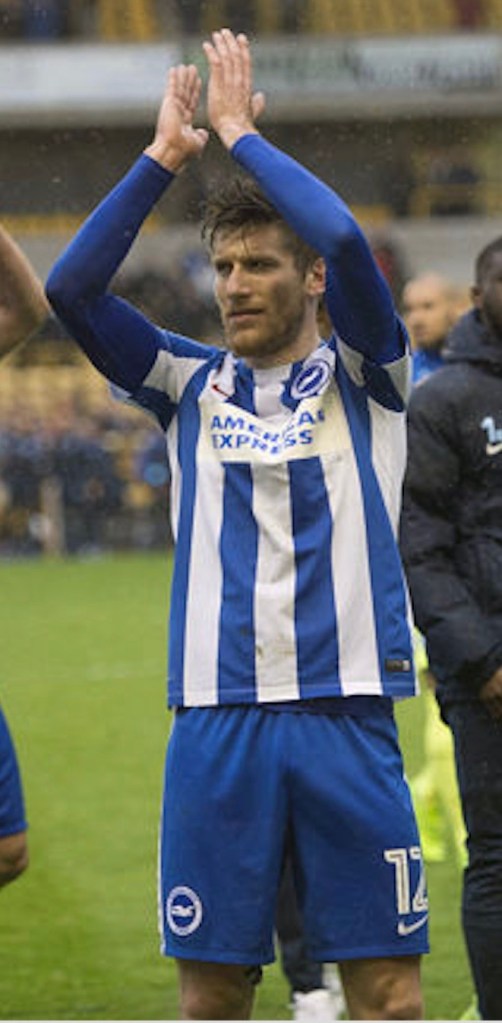
SÉBASTIEN Pocognoli will forever be remembered by Brighton fans for a spectacular free-kick goal he scored against Queens Park Rangers en route to promotion from the Championship.

Glenn Murray had given the Seagulls the lead in the April 2017 encounter at Loftus Road before, as the BBC reported, Pocognoli “executed a pinpoint free-kick with his left foot which flew in off the crossbar for an unstoppable second”.

Although Rangers pulled a goal back, Albion’s advantage gave them their first win at QPR for nearly 60 years and sent them back to the top of the league.

It was Pocognoli’s first competitive goal for six years and such a sweet strike etched his name in Brighton folklore.

Injuries and suspension dogged the left-back slot during that promotion season. Pocognoli had signed on a season-long loan from West Brom in August 2016 as cover for Gaetan Bong; Liam Rosenior having suffered an ankle injury.

But the loanee himself was troubled by a groin injury and made only 18 appearances for the Seagulls (plus three as a sub).

“Sebastien has a vast amount of experience having played in some of the top divisions in Europe,” Brighton manager Chris Hughton said on the day Pocognoli signed. “He is the type of quality player we want to add to the squad, and we are looking forward to working with him.”

The Belgian international came to the UK in 2014 having played top-flight football in Belgium, Holland and Germany.

Injury denied him the chance of going to Brazil to play in that summer’s World Cup for his country, but his disappointment was tempered by securing a move to the Premier League.

Unfortunately for him, his West Brom career barely got off the ground because the head coach who signed him – Alan Irvine – was soon replaced by Tony Pulis, who preferred Chris Brunt, Chris Baird or Joleon Lescott as left-back.

According to the uefa.com website, Pocognoli is a “technically-assured player, primarily a left-back but can also operate in midfield and is a specialist from dead-ball situations”. You can say that again!

Born in Seraing, near Liege, on 1 August 1987, Pocognoli represented Standard Liège at junior level but joined Genk aged 15, making his first team debut a year later, in 2004.

However, he had to be content with reserve team football until the 2006-07 season when he became a first-team regular, helping the club finish second in the Belgian first division.

In June 2007, Pocognoli joined Eredivisie side AZ Alkmaar, and featured in 33 games under Louis van Gaal, later renowned for managing Holland and Manchester United.

“I was 19 years old, and I worked for two years under him,” he told the West Brom website. “He helped my formation as a footballer, pass-control-pass, tactically, because defensively I was not so strong. And also my personality, because he likes players with personality.

“He’s not only a good trainer but he’s also a good human being.”

After three years at AZ, his first club, Standard Liege, bought him and gave him a three-year contract. He became the established left-back for two seasons but in 2012-13 missed lots of games when sidelined by injury.

With only six months of his contract remaining, German club Hannover 96 took the opportunity to sign him in January 2013. He made an inauspicious start, getting sent off on his debut, and faced competition for the left-back spot.

Only 18 months into a three-year deal, he made the switch to the Premier League with West Brom, head coach Irvine telling the club website: “Sébastien is an experienced left-back who has played at a high level for many years.

“After being named in Belgium’s provisional World Cup squad, he just missed out on Brazil, mainly because he hadn’t played enough games towards the end of the season.

“But he’s joined us with a real hunger to prove himself at Albion and get back into the international set-up.

“We’ve done our due diligence on Sébastien in terms of people who have worked with him, including Romelu Lukaku and Kevin Mirallas.

“You make your own mind up about a player’s ability from watching him play but you put these calls in to find out about their personality. The feedback on Sébastien was very positive.”

The defender had gained international recognition from an early age and played for Belgium’s under 16s, under 17s, under 19s and under 21s. He was called up to the senior squad in 2008 and won 13 caps for his country.

After his Brighton loan expired, he returned to West Brom but was not retained. He expected to re-join Standard Liege when interviewed by the expressandstar.com, saying: “It all adds up: I will soon be a free agent, they need new blood and I’m an ex-player of Les Rouches. At the moment there is no contact, but the board is looking for players who are interested in their project.

“If I did go to Standard, I am one of the leaders in the dressing rooms anyway – not by shouting loudly, by setting a good example. I certainly would be an example for the young players.”

The move was duly confirmed and in his third spell with the club Pocognoli made 32 appearances, including, in March 2018, in the Belgian Cup Final, when Liege beat his former club Genk 1-0.

In 2020, Pocognoli switched to Royale Union Saint-Gilloise, the club owned by Albion owner and chairman Tony Bloom.

Glorious home debut as good as it got for Abdul Razak

city action 2A MAN-OF-THE-MATCH home debut was as good as it got when Abdul Razak joined Albion on loan from Manchester City in February 2012.

Already being mentioned as a possible successor to Yaya Toure, there were high hopes for the Ivorian 19-year-old.

He joined originally on a three-month loan with fellow City youngster Gai Assulin (pictured together below), who came on as a substitute for Razak when manager Gus Poyet gave him his debut in a goalless draw away to Hull City.

assulin and razak

With regular midfielder Gary Dicker sidelined through injury, Poyet needed reinforcements in the middle of the park and the promising City youngster looked like he might be a great solution.

He’d already had a month’s loan at Portsmouth earlier the same season, and he was the stand-out performer when the Seagulls beat Ipswich Town 3-0 at the Amex on 25 February 2012.

Two goals from Ashley Barnes and one from Craig Mackail-Smith sealed the win, Brian Owen in the Argus, writing: “Victory extended their unbeaten league run to nine games and was largely inspired by Abdul Razak, who was superb in midfield on his home debut.”

Poyet was concerned about the level of fitness of the City pair, but after that game at Hull told the Argus: “Abdul was better than in training, because of the space, the way he attacks and the ability he has got and strength. He has been missing playing 90 minutes.

“He is stronger than he looks. He can hold the ball, do a trick, have a shot. He is good passing the ball, we just need to make him play the way we play, especially without the ball.”

When signing for the Seagulls, Razak told the official club website: “I like to pass the ball and that’s why I decided to come to Brighton.

“I had a few options, but I chose Brighton because I like the way that they play football. I have seen some of the games and the way Brighton play is different, so I have got to adapt to that. I have spoken to the manager and he is going to give me plenty of information and we will take it from there.”

Unfortunately for him, the more experienced Dicker returned from injury quicker than expected and, after just four starts and two appearances off the bench, the displaced Razak cut short his loan and returned to Manchester.

Wearebrighton.com recently said Razak admitted some while later in a TV interview that he fell out with Poyet, prompting his early departure from the south coast.

There was a similar story when he went on loan to Charlton Athletic later the same year. He joined at the end of September, ostensibly on a three-month deal, but went back to City after a month having made only two first team appearances.

A year later, Razak signed for Russian side Anzhi Makhachkala on a season-long loan deal with the aim of it becoming a permanent arrangement, which it did within a month. He left City having made three starts and seven substitute appearances for the first team.

The following January, Razak moved back to the UK on a short-term contract with West Ham, but he didn’t make an appearance for the first team and left in April.

“It didn’t work at West Ham due to Sam Allardyce, as I like to play football and that’s not his style,” Razak told Will Unwin, in an extended interview in March 2017. “Then my work permit expired, so I had to wait for another one. The Home Office take a long time to reply, so then I was without a club. So I ended up four months without a club.”

Eventually, he moved to Greece and played a handful of games for Crete outfit OFI in 2014-15, and, in the same season, tried his luck back in England when former City legend Paul Dickov gave him a short-term contract with League One Doncaster Rovers, for whom he played nine matches.

After taking advice from Swedish international and former City colleague John Guidetti, Razak started to rebuild his career in Sweden with AFC United in Eskilstuna and, after a dozen games, he was picked up on a three-year deal by leading Swedish club IFK Gothenburg. But in 2018, he moved on again; this time to Uppsala-based IK Sirius.

Born on 11 November 1992 in Bouake, in the south west African country of Ivory Coast, Razak was a youth team player on the books of Crystal Palace initially but joined Manchester City’s elite development squad in July 2010.

Within seven months, he had made his first team debut when manager Roberto Mancini sent him on as a substitute for David Silva in the final minute of a Premier League game against West Brom on 5 February 2011.

city action 1Five days later, he came on as an 80th minute sub for Yaya Toure, and then had a starting spot on 21 September in a League Cup game against Birmingham City. He next appeared in the same competition’s second round, against Wolverhampton Wanderers.

The midfielder played one league game in that 2011-12 season, when City dramatically won the title, beating QPR 3-2 with that Sergio Aguerro goal right at the end of the last game of the season.

In the following season’s curtain-raiser, the FA Community Shield, played at Villa Park, Razak was an unused substitute in City’s 3-2 win over Chelsea.

He has played five times for his country; twice in 2012 and three times in 2013.


Mike Bailey took the Seagulls to their highest-ever finish

ONE OF the all-time greats of Wolverhampton Wanderers led Brighton & Hove Albion to their highest-ever finish in football.

Midfield general Mike Bailey played for Wolves for 11 seasons between 1965 and 1976, leading the team to promotion from the Second Division in 1966-67, helping them to top-flight positions of fourth and fifth in 1971 and 1973, getting to the final of the UEFA Cup in 1972, and lifting the League Cup at Wembley in 1974.

MB WWFCLgeCupMike Bailey holds aloft the League Cup after Wolves beat Manchester City 2-1 at Wembley.

It was perhaps a hard act to follow Alan Mullery as manager of Brighton, particularly as the former Spurs and Fulham captain had led the club from Third Division obscurity to the pinnacle of English football within three years.

But Bailey had just got Charlton Athletic promoted from the Third Division and in the 1981-82 season led Albion to a 13th place finish, a record which was only threatened in 2017-18 by Chris Hughton’s side, who eventually ended up 15th.

Unfortunately, although Bailey’s team was relatively successful, the style of play he adopted to achieve that position was a turn-off to the fans who deserted the Albion in their hundreds and thousands.

Eventually, chairman Mike Bamber felt he had to address the slump in support by sacking Bailey in December 1982. “He’s a smashing bloke, I’m sorry to see him go, but it had to be done,” said Bamber. There are plenty – in particular Bailey! – who feel he acted a little too hastily.

Bailey shared his feelings in an interview he gave to the News of the World’s Reg Drury in the run-up to the 1983 FA Cup Final.

Mike Bailey talks to the News of the World; his often frank programme notes; his assistant, John Collins, a former Luton Town player.

“It seems that my team has been relegated from the First Division while Jimmy Melia’s team has reached the Cup Final,” he began.

Wanting to put the record straight having been hurt by some of the media coverage he’d seen since his departure, he explained: “I found the previous manager Alan Mullery had left me with a good squad, but, naturally I built on it and imposed my own style of play.”

Bailey resented accusations that his style had been dull and boring football, pointing out: “Nobody said that midway through last season when we were sixth and there was talk of Europe.

“We were organised and disciplined and getting results. John Collins, a great coach, was on the same wavelength as me. We wanted to lay the foundations of lasting success, just like Bill Shankly and Bob Paisley did at Liverpool.

“The only problem was that winning 1-0 and 2-0 didn’t satisfy everybody. I tried to change things too soon – that was a mistake.

“When I left, we were 18th with more than a point a game. I’ve never known a team go down when fifth from bottom.”

It was clear from the outset of Bailey’s reign that he didn’t suffer fools gladly and there were numerous clashes with players, notably Steve Foster, Michael Robinson and Neil McNab, the displaced Gordon Smith and Mickey Thomas, a Bailey signing who repeatedly went missing because his wife didn’t like it in the south.

Bailey would vent his feelings quite overtly in his matchday programme notes; he was not afraid to hit out at referees, the football authorities and the media, as well as trying to explain his decisions to supporters, urging them to get behind the team rather than criticise.

Happier times as Mike Bailey becomes Albion manager and signs Tony Grealish to replace outgoing stalwart midfielder and skipper, Brian Horton.

Attempting to shine a light on the comings and goings associated with his arrival, he explained: “The moves we have been making are designed to provide Brighton with a better football team and one that can consolidate its position in the First Division, rather than struggle, such as in the last two seasons.”

By Christmas, the team were comfortably in the top half of the table and in an interview with the Argus, Bailey said: “I must admit that as a player and captain of Wolves I was a bit of a bastard, slagging others off, and that sort of thing. But being a manager, one sees everything in a different light. I am still trying to learn as a manager, especially now that I am with a First Division club.”

Three months later, shortly after he had appeared at a fans forum at the Brighton Centre, he very pointedly said: “It is my job to select the team and to try to win matches.

“People are quite entitled to their opinion, but I am paid to get results for Brighton and that is my first priority.

“Building a successful team is a long-term business and I have recently spoken to many top people in the professional game who admire what we are doing here at Brighton and just how far we have come in a short space of time.

“We know we still have a long way to go, but we are all working towards a successful future.”

As he assessed his first season, he said: “Many good things have come out of our season. Our early results were encouraging and we quickly became an organised and efficient side. The lads got into their rhythm quickly and it was a nice ‘plus’ to get into a high league position so early on.”

He had special words of praise for Gary Stevens and said: “Although the youngest member of our first team squad, Gary is a perfect example to his fellow professionals. Whatever we ask of him he will always do his best, he is completely dedicated and sets a fine example to his fellow players.”

Meanwhile, in his own end of season summary, Argus Albion reporter John Vinicombe maintained: “It is Bailey’s chief regret that he changed his playing policy in response to public, and possibly private, pressure with the result that Albion finished the latter part of the season in most disappointing fashion.

“Accusations that Albion were the principal bores of the First Division at home were heaped on Bailey’s head, and, while he is a man not given to altering his mind for no good reason, certain instructions were issued to placate the rising tide of criticisms.”

Vinicombe recorded that the average home gate for 1981-82 was 18,241, fully 6,500 fewer than had supported the side during their first season amongst the elite.

“The Goldstone regulars, who are not typical of First Division crowds (but neither is the ground) grew restless at a series of frustrating home draws, and finally turned on their own players,” he said.

At the beginning of the following season, off-field matters brought disruption to the playing side. Arsenal’s former FA Cup winner Charlie George had trained with the Seagulls during pre-season and senior players Foster, Robinson and McNab publicly voiced their disappointment that the money wasn’t found to bring such a player on board permanently.

McNab in particular accused the club of lacking ambition and efforts were made to send him out on loan. Similarly, Robinson was lined up for a swap deal with Sunderland’s Stan Cummins, but it fell through.

Meanwhile, Albion couldn’t buy a win away from home and suffered two 5-0 defeats (against Luton and West Brom) and a 4-0 spanking at Nottingham Forest – all in September. Then, four defeats on the spin in November, going into December, finally cost Bailey his job. Perhaps the writing was on the wall when, in his final programme contribution, he blamed the run of poor results on bad luck and admitted: “I feel we are somehow in a rut.”

It would be fair to say Bailey the player enjoyed more success than Bailey the manager. So, where did it all begin?

Born on 27 February 1942 in Wisbech, Cambridgeshire, he went to the same school in Gorleston, Norfolk, as the former Arsenal centre back Peter Simpson. His career began with non-league Gorleston before Charlton Athletic snapped him up in 1958 and he spent eight years at The Valley.
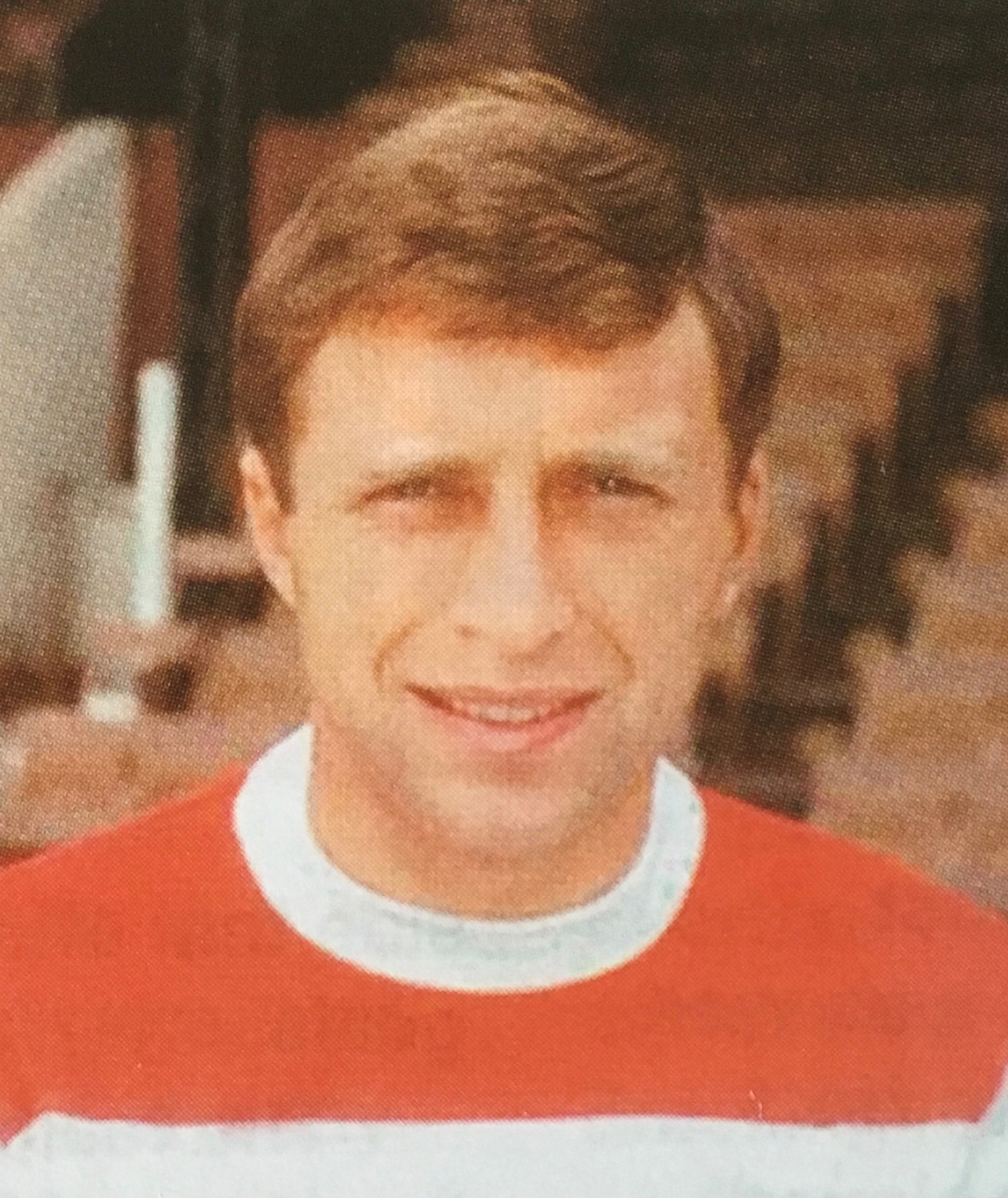
M Bailey charltonDuring his time there, he was capped twice by England as manager Alf Ramsey explored options for his 1966 World Cup squad. Just a week after making his fifth appearance for England under 23s, Bailey, aged 22, was called up to make his full debut in a friendly against the USA on 27 May 1964.

He had broken into the under 23s only three months earlier, making his debut in a 3-2 win over Scotland at St James’ Park, Newcastle, on 5 February 1964.He retained his place against France, Hungary, Israel and Turkey, games in which his teammates included Graham Cross, Mullery and Martin Chivers.

England ran out 10-0 winners in New York with Roger Hunt scoring four, Fred Pickering three, Terry Paine two, and Bobby Charlton the other.

Eight of that England side made it to the 1966 World Cup squad two years later but a broken leg put paid to Bailey’s chances of joining them, even though he got one more chance to impress Ramsey.

Six months after the win in New York, he was in the England team who beat Wales 2-1 at Wembley in the Home Championship. Frank Wignall, who would later spend a season with Bailey at Wolves, scored both England’s goals. Many years later, Wignall was playing for Burton Albion when a certain Peter Ward began to shine!

In 1965, Bailey broke his leg in a FA Cup tie against Middlesbrough and that was at a time when such injuries could be career-threatening.

“I was worried that may have been it,” Bailey recalled in his autobiography, The Valley Wanderer: The Mike Bailey Story (published in November 2015). “In the end, I was out for six months. My leg got stronger and I never had problems with it again, so it was a blessing in disguise in that respect.

“Charlton had these (steep) terraces. I’d go up to them every day, I was getting fitter and fitter. But it was too late to get in the 1966 World Cup side – Alf Ramsey had got his team in place.”

 Bailey missed out on the 1966 England World Cup squad but he won Football League representative honours and enjoyed success as captain of Wolves.

During his time with the England under 23s, Bailey had become friends with Wolves’ Ernie Hunt (the striker who later played for Coventry City) and Hunt persuaded him to move to the Black Country club.

Thus began an association which saw him play a total of 436 games for Wolves over 11 seasons, leading a side with solid defenders like John McAlle, Francis Munro and Derek Parkin, combined with exciting players like forwards Derek Dougan and John Richards, plus winger Dave Wagstaffe.

However, when coach Sammy Chung stepped up to take over as manager, he selected Kenny Hibbitt ahead of Bailey so the former skipper chose to end his playing days in America, with the Minnesota Kicks, who were managed by the former Brighton boss Freddie Goodwin.

Nevertheless, Bailey’s contribution to the team famous for their old gold kit saw him inducted into the Wolves Hall of Fame in 2010.

On his return to the UK, Bailey became manager of Hereford United, then he returned to The Valley as manager of Charlton and, immediately after getting them promoted to the third tier, took over at Brighton in the summer of 1981.

A somewhat extraordinary stat I discovered about Bailey’s management career in England through managerstats.co.uk was that he managed each of those three clubs for just 65 games. At Hereford, his record was W 32, D 11, L 22; at Charlton W 21, D 17, L 27; at Brighton, W 20 D 17, L 28.

In 1984, he moved to Greece to manage OFI Crete, and he later worked as reserve team coach at Portsmouth. Later still, he did some scouting work for Wolves.

Pictures from various sources: Goal and Shoot! magazines; the Evening Argus, the News of the World, and the Albion matchday programme.

Paul McShane wrote his name in Albion’s history in one season

McShane

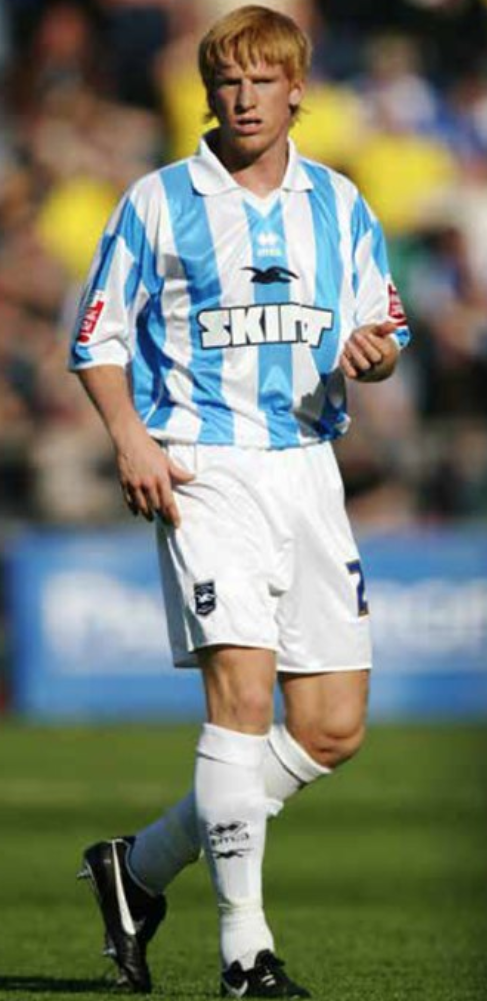
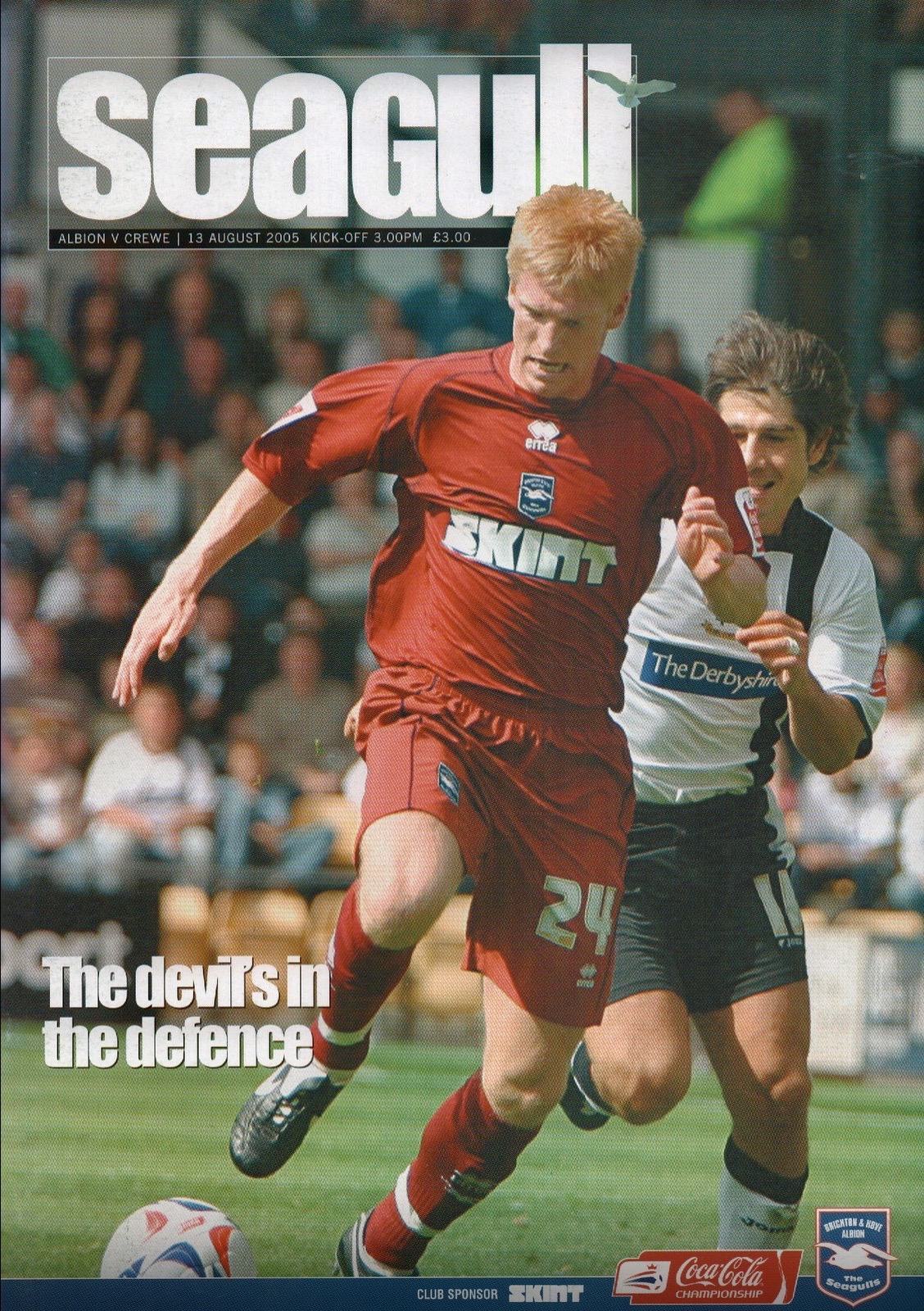
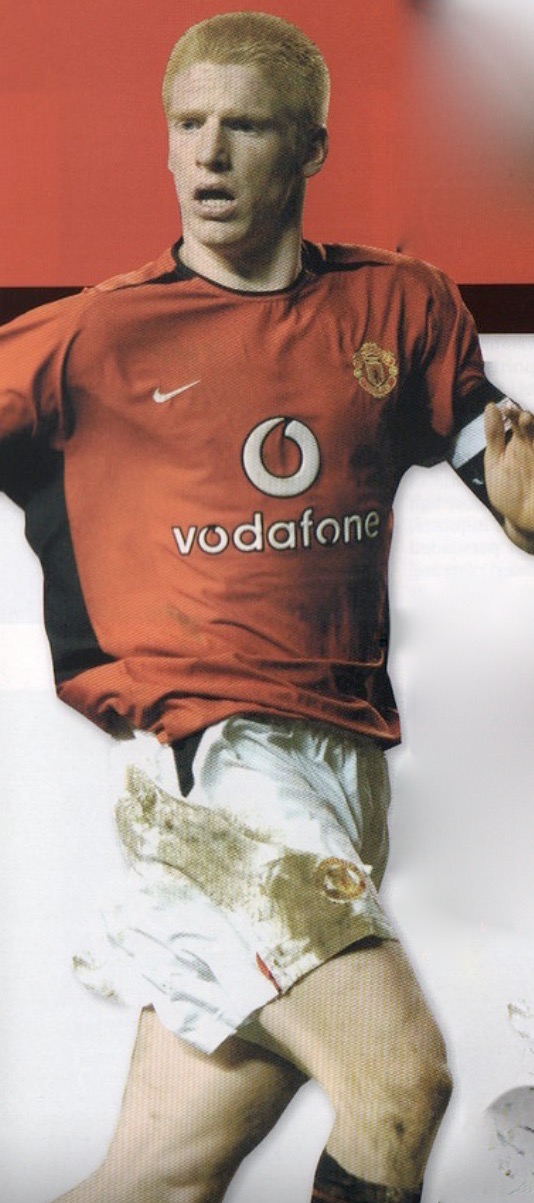
FLAME-HAIRED Irish centre back Paul McShane was a complete revelation during a season on loan to Brighton from Manchester United.

The 2005-06 season ended ingloriously for the Seagulls but McShane was imperious, given a platform to launch a career which saw him play most of it in the second tier of English football, and almost 100 times at the top level, together with earning him 33 full caps for his country.

Although he was given a squad number by United, and had been selected by Sir Alex Ferguson for pre-season matches, McShane didn’t get the chance to play any proper competitive football for United’s first team.

United reserve team manager, Brian McClair, a former Celtic teammate of Albion manager, Mark McGhee, could see the benefit of giving McShane first team football at a decent level and an initial half-season loan was agreed, then, in January, it was extended to the season’s end.

Brighton were missing the long-term injured Adam Hinshelwood and although veteran Jason Dodd had been signed to add experience to the defence, his season was to be plagued by injury, so McShane was a near permanent fixture alongside Guy Butters in the centre of the back four.

The young defender shared a flat in Hove with fellow Republic of Ireland international Wayne Henderson and in an early season profile article, Butters was quick to acknowledge the quality of the youngster. “He is an excellent player. He’s only 19 but you see he’s got that Premiership quality about him,” said Butters. “He’s very confident; he likes to bring the ball down and play.”

The former Spurs and Portsmouth defender said he reminded him of Richard Gough, a former teammate at Tottenham. “He’s strong; not the tallest, but makes up for that with his great leap. Very good on the ball, quick and great in deep positions.”

McShane coverHis passion and aggression sometimes got the better of him and the only reason he wasn’t ever present was a penchant for bookings – 12 over the course of the season – which earned suspensions, and a couple of injury-induced absences. And he was missed when he wasn’t available.

After he’d picked up an ankle injury that required him to return to Old Trafford for treatment, the matchday programme put together an article extolling the merits of the young defender in which it said: “Paul’s cool reading of the game and his ability to overcome some of the most effective attacking players in the division marked him out as a fine prospect, and he proved competitive in the air and on the ground, his pace and positional sense being a real asset.”

In their end-of-season player ratings, the Argus summed up his contribution thus: “Talent and determination in abundance. Rash in the tackle at times but that is a product of his insatiable hunger. Will be sorely missed next season.”

Such was the impact of McShane’s outstanding performances over the course of the season that he was selected as the Player of the Season, the first time a loan player had ever been given the honour.

Butters was convinced it was the right choice and told the Argus: “He’s done really well for us. He’s scored some vital goals. Obviously the one away to Palace springs to mind.

“He has been solid all-round. He is very aggressive, ultra-competitive and hates losing, even in training.”

It’s perhaps inevitable that any player who scores a winning goal against arch rivals Crystal Palace earns a place in Albion folklore. McShane’s scruffy effort, which appeared to go in off his shoulder, at Selhurst Park on 18 October 2005 proved to be the only goal of an intense scrap but how it went in became irrelevant as time passed.

“Crystal Palace was a special night, because of the rivalry,” said McShane. “It was a great atmosphere and scoring that goal was brilliant.”

He scored three other goals over the season, including a crucial opener in a 2-0 win away to Millwall as the Seagulls put up a valiant, but hopeless, fight to avoid the drop, but it will always be the goal at Selhurst that fans remember most.

McShane confessed in an interview with Andy Naylor in the Argus that relegation had hurt, but the season for him had been “brilliant” and “a great experience”.

He said: “It has given me a chance to get out there and make my name in the Championship and I think I have done that well enough.

“It has given me a great opportunity to get the experience I need to take back to Manchester and hopefully give it a good crack there, because I’ve learnt so much this season.

“Brighton have been brilliant to me. They’ve treated me really well. They’ve made me feel very welcome, the fans and the people around. That has helped a lot. It has been great.”

In conclusion, he told Naylor: “The club is part of me now. You never know what will happen in the future but Brighton will always have a place in my heart.”

Perhaps rather presciently, Naylor commented: “McShane’s fierce commitment is unlikely to be seen in an Albion shirt again. If he does not make it at Manchester United, there are sure to be Championship clubs interested in signing him.”

With Rio Ferdinand and Nemanja Vidić United’s regular centre back pairing, and Wes Brown as back-up, it was always going to be a difficult ask to dislodge them, and in August 2006 McShane left Old Trafford together with goalkeeper Luke Steele as makeweights in the deal that took goalkeeper Tomasz Kuszczak to United.

mufcmcshaneMcShane and Steele had both been members of United’s winning FA Youth Cup team of 2003, a side which also included Kieran Richardson and Chris Eagles, who went on to make names for themselves in the game.

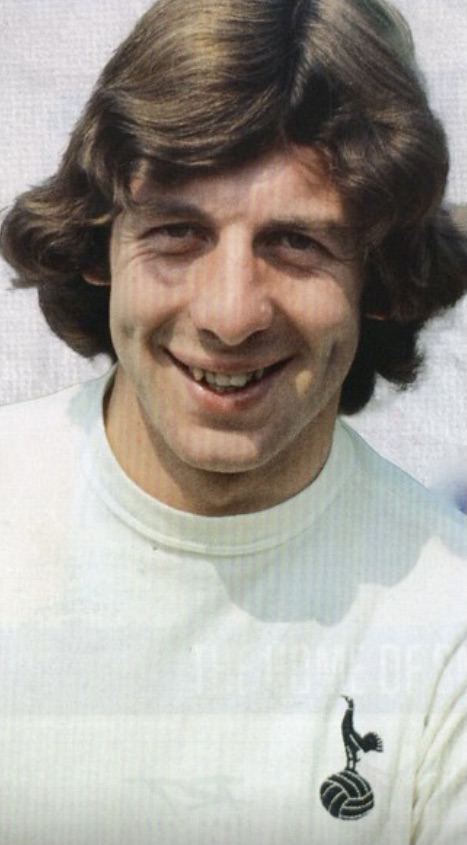
McShane, born in Wicklow on 6 January 1986, played hurling, Gaelic football, rugby and badminton (his dad, Sean, and uncle played Gaelic football for Dublin) in his early years in Ireland but eventually began to demonstrate his soccer prowess with junior clubs and was playing for St Joseph’s Boys AFC in Dublin when United snapped him up in 2002.

“I was 16 when I signed; I wasn’t going to until I went to Old Trafford with my mum and dad,” McShane said. “It was so down to earth for such a big club. I would be getting the best coaching and training, also playing with some of the best players in the world.”

He added: “Alex Ferguson has been brilliant to me and my family; a very nice man. He just cracks jokes all the time.”

After his success with United’s Youth Cup team, McShane’s first senior football came in 2004 during a brief loan spell with Walsall, where he played four games and scored once.

At Championship West Brom, McShane played 42 games in the 2006-07 season as the Baggies finished fourth and agonisingly lost to Derby County in the play-off final.

Before the new season got underway, McShane was one of 12 new signings manager Roy Keane made for Sunderland, newly-promoted to the Premier League.

He scored an own goal in only his second league game but Sunderland salvaged a 2-2 draw at Birmingham and he went on to make 21 appearances (plus one as sub) as the Black Cats finished just three points clear of the drop zone.

In the following season, McShane went on loan to Premier League new boys, Hull City, and having played 19 games for the Tigers made the move permanent the following season. The KFC Stadium would be his home for the next six years, although he was sent out on loan twice, to Barnsley in 2011 and Crystal Palace in 2012.

In the final game of the 2012-13 season, McShane scored a vital goal for Hull which guaranteed them promotion back to the Premier League, and he earned a new two-year contract from manager Steve Bruce.

However, with Curtis Davies, Alex Bruce and James Chester ahead of him, his appearances were limited, although he did get on as a substitute in Hull’s 3-2 FA Cup Final defeat to Arsenal.

McShane featured 23 times as Hull relinquished their Premier League status in 2015, and he was among six players released by the club, including Liam Rosenior, who moved to Brighton, of course, and goalkeeper Steve Harper, who’d had a short loan spell at Brighton from Newcastle.

McShane wasn’t without a club for long, and joined Reading in July 2015, with manager Steve Clarke telling the club website: “I knew that Paul’s contract with Hull City was due to expire and was always monitoring the situation. When we met up earlier in the summer for a chat I knew that Paul would be a good signing for Reading FC and I’m pleased that we managed to get the deal completed.

“As well as his obvious talents as an experienced defender who is aggressive both in the air and on the ground, I felt that he was a good character to bring into our squad.
“Paul has gained good experience at many clubs and, like Stephen Quinn, was an important part of a promotion-winning team. He has a winning mentality and it will be good for our two young central defenders, Michael Hector and Jake Cooper, to train and play alongside Paul.”

After four years at Reading, over which he played 103 games, in 2019 McShane switched to League One Rochdale.

In July 2021, McShane returned to Man Utd as player-coach for the under 23 side and made two appearances for the under 21s in the EFL Trophy as an over-age player. When he retired from playing at the end of the 2021-22 season he took up the role of professional development phase coach (covering under 18s through to under 23s).

“I’m calling it a day playing now,” he told manutd.com .”I’ve had 20 years playing and I’ve come back into the club as a player-coach in the under 23s. It’s been a great year and great experience but now it’s time to fully focus on the next stage of my career, which will be in coaching.

“It’s amazing how things work out. It’s a great way to end my career, to come back here and help the future generation with their careers. It was perfect, to be honest with you, when this role came about, and I’m grateful to the people who made it happen. I think it’s a great way to end my playing days.”

World Cup legend Armstrong too often warmed Albion bench

IMG_3807

IN THE SPACE of 10 weeks, Gerry Armstrong went from 71st minute substitute for Northern Ireland against Brazil at the 1986 World Cup in front of 51,000 in the Estadio Jalisco, Guadalajara, Mexico, to centre forward for Brighton & Hove Albion in front of 13,723 at the Goldstone Ground in a season-opening 0-0 draw against Portsmouth.

That 3-0 defeat to the mighty Brazilians signalled the end of an international career in which Armstrong had written his name in Northern Irish football history at the 1982 World Cup in Spain four years earlier. He had scored 12 goals in 63 appearances for his country but none as important as the one which beat hosts Spain to send the Irish through to the quarter-finals, which I shall come on to.

Screenshot

Four years later, while away with Ireland in Mexico, former Spurs striker Armstrong took a call at the team’s hotel from someone else who had made his name with the North London club – Alan Mullery – who had recently been restored to the managerial chair at Brighton.

“Alan knew I was a free agent and I promised to talk things over with him when I got back from Mexico,” Armstrong said in a matchday programme article. “I was impressed by the manager’s ideas for the future and Brighton appealed to me because I have always liked the club,” he said.

“I always got the impression that there is a good, family atmosphere here and I liked that.

“In many ways, Brighton reminds me of Watford. I had three very happy years there and I’m looking forward to enjoying myself just as much here at Brighton.”

Born in Belfast on 23 May 1954, Armstrong grew up in the Falls Road area and initially played Gaelic football and could have made that his chosen sport. But while he was banned from playing, he took up soccer with junior Irish clubs St Paul’s Swifts and Cromac Albion before beginning a three-year spell playing semi-professionally with Bangor between 1972 and 1975.

Spurs manager Terry Neill had family in Bangor and Tottenham paid a £25,000 fee for Armstrong’s services in November 1975. He made his Spurs debut in a 3-1 defeat at Ipswich Town on 21 August 1976. The season ended in relegation for the North Londoners but the young Armstrong was trying to make his way.GA Spurs

He said: “I was basically big, strong and courageous but that wasn’t enough alone so Spurs made me skilful as well.

“I set myself the task of gradually playing more first team games each season and managed to achieve it.”

After scoring 16 goals in 98 league and cup games for Spurs, Armstrong was sold to Watford for £250,000 in November 1980.

When the Hornets made it to the top division for the first time in their history, Armstrong scored their first goal at that level, against Everton, and they finished the season as runners up.

“Graham Taylor influenced me more than anybody,” he said. “My time at Spurs was going stale because they were using me in all sorts of different positions but, at Vicarage Road, Graham taught me about forward play and then gave me the chance to repay him.”

Nevertheless, it was breaking through at Spurs that helped Armstrong onto the international stage. He made his debut for Northern Ireland playing up front with George Best in a 5-0 defeat to West Germany in Cologne in April 1977. And in November the same year he scored his first goals for his country, netting twice in a 3-0 win against Iceland in Belfast.

His stand-out moment in football which fans still talk about came when Northern Ireland were minnows at the 1982 World Cup in Spain. In front of a crowd of 49,562 – mostly Spanish – packed into Valencia’s Estadio Luis Casanova, on 25 June 1982, Ireland beat the hosts 1-0 and Armstrong fired home the only goal of the game in the 47th minute.

“I cracked it in between a couple of defenders, but couldn’t really believe it because there was this deathly hush. Fifty-five thousand people (a bit of Irish overstatement) all there to see Spain, and we ruined the party!”

He added: “It was a very satisfying one to get for the team, because it was a great win for us. “The odds were against us because there was a huge crowd in the stadium and virtually all of them were backing Spain. Nobody really gave us a chance, but it was a great team performance.

Armstrong Spain

“All the players worked hard for each other and that game summed up the excellent team spirit I have enjoyed with the national side over the years.”

Armstrong also scored Ireland’s only goal in their 4-1 quarter-final defeat to France.

The Spanish climate obviously agreed with Armstrong because in the summer of 1983, having scored 12 goals in 76 league games for Watford, Real Mallorca signed him for £200,000. Although he got stick from certain sections of Spanish supporters who remembered the goal he scored against them, he spent two years with Real Mallorca scoring 13 times in 55 league games.

On his return to the UK in August 1985, he initially signed for West Brom on a free transfer but struggled with travelling to and from London to train and play, didn’t see eye to eye with manager Ron Saunders, and picked up some injuries. He spent the second half of the season at Chesterfield, where former Spurs teammate John Duncan was boss, so he could get some game time to put him in contention to be selected by Northern Ireland for the upcoming World Cup.

irish news gerry arm

A free agent on his return, he joined Mullery’s Brighton having heard good things about the former Spurs captain from his Irish international colleague Pat Jennings, who’d played in the same Tottenham team as Mullery. However, it was 17 games before Armstrong managed to get on the scoresheet – in a 3-1 defeat at Leeds – although he did score again in the very next game, as Shrewsbury were beaten 3-0 at the Goldstone.

When Mullery’s second spell as manager ended rather abruptly, in January 1987, Armstrong was loaned to Millwall. New manager Barry Lloyd did restore him to the Albion line-up for the final eight games of the season, but the side finished in bottom place.

Back in Division 3, Armstrong was transfer listed along with Steve Gatting and Chris Hutchings as Lloyd was forced to shuffle the pack. He stayed with the club, but only got one full game, in a league cup tie, all season: he came off the bench 11 times and was a non-playing sub on 14 other occasions.

He was suitably philosophical about his involvement from the bench, however, and said in another matchday programme interview: “Over the years I’ve gained a bit of a reputation for grabbing goals when it matters most, and I figure that if I only get on for the last 20 minutes then there’s even more reason to take the game by the throat and get stuck in.”

In the 1988-89 season, Armstrong managed four starts but was once more on the bench more often than not and eventually was appointed reserve team player-coach.

But his time with the club ended ignominiously. In a Sussex Senior Cup tie at Southwick in January 1989, following the first ever red card of his career, as he walked off, he took exception to a comment from a supporter, jumped into the crowd and headbutted the person concerned.

The incident is referred to amongst the annals of assaults by players on fans. Armstrong left the club a fortnight after the altercation but the matter ended up in court and the footballer received a conditional discharge.

His final games as a player were at Glenavon back in Ireland after he had spent some time as a player-coach at Crawley Town, who were in the Beazer Homes League at the time.

In November 1991, he became manager of Worthing and led them to a promotion before being appointed assistant manager of Northern Ireland by his former teammate Bryan Hamilton.

He continued to live in Hove, though, and worked as a cable advisor for Nynex Communications. He even carried on playing football for Sussex Sunday League side James Lytle.

Although he left the national assistant role in 1996, he reprised it under Lawrie Sanchez between 2004 and 2006. Then, in 2011, the Irish FA recruited him as an elite player mentor – in essence to try to persuade young Catholic Northern Irishmen considering playing for the Republic of Ireland (a choice made by Shane Duffy, for example) to stick with the country of their birth.

Throughout all of this time, Armstrong has also forged a successful media career and is probably best known for his work with Sky Sports coverage of La Liga.

In 2015, the Belfast Telegraph did an interview with Armstrong and his wife Debbie in which they spoke about running a restaurant in Majorca, and his involvement as part-owner of a football club in Portugal.

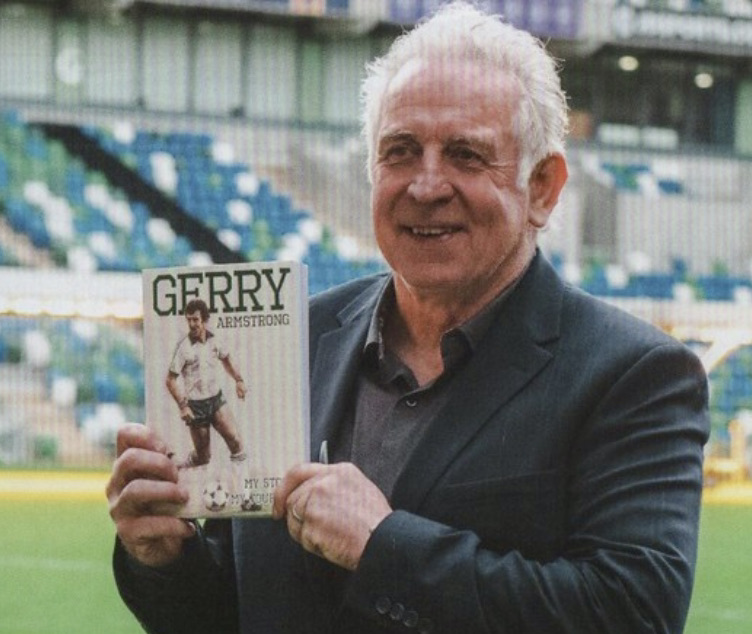
The player’s autobiography, Gerry Armstrong: My Story, My Journey, written in conjunction with Dave Bowler, was published in November 2021 by Curtis Sport.Armstrong autobiog

Pictures from the Albion matchday programme and in the international shirt from the Irish News.

Winger Neil Smillie was a Wembley winner eventually

NS v MU Wemb

AN UNSUNG hero of Brighton’s 1983 FA Cup Final side, winger Neil Smillie, had the distinction of being the first ever apprentice the legendary Malcolm Allison signed for Crystal Palace.

Big Mal had enjoyed league and FA Cup success at Manchester City as Joe Mercer’s sidekick but he swept into Palace in the early 70s as a boss in his own right, courting publicity with his flamboyant fedora hat and giant cigar.

Smillie admitted: “I was going to West Ham but Allison persuaded me to take a look at Palace.

“The place was so alive and vibrant under him that I went there instead.”

Born in Barnsley on 19 July 1958, Neil followed in the footsteps of his dad, Ron, a former professional who played for Barnsley and Lincoln.

After joining Palace in 1974, Smillie turned professional a year later and was on Palace’s books for seven years, although he had three loan spells away from Selhurst.

In 1977, he went briefly to Brentford, who he ultimately would have a long association with later in his career.

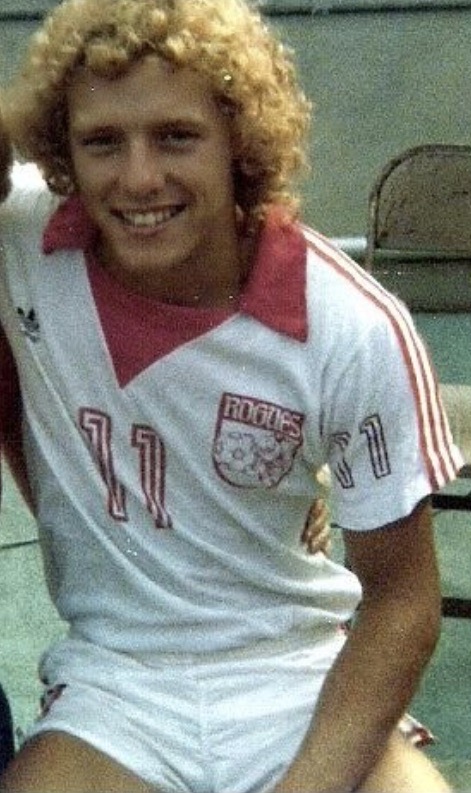
Smillie MemphisThe following two years, he went to play in America for Memphis Rogues (pictured left) where his teammates were players from the English game winding down their careers: the likes of former Albion players Tony Burns and Phil Beal, ex-Chelsea, Leicester and Palace striker Alan Birchenall and former Chelsea winger Charlie Cooke; the side being managed by former Chelsea defender Eddie McCreadie.

At the end of the 1981-82 season, Smillie was denied a pay rise by Palace so he decided to quit and wrote letters to clubs in the top two divisions in England asking for a job!

Brighton had managed to offload the troublesome Mickey Thomas to Stoke City so had a need for a left winger. They were the first to come up with an offer, and with full back Gary Williams surplus to requirements since the arrival of experienced defender Sammy Nelson, Brighton offered him in exchange for Smillie.

The bubble-haired winger gratefully accepted the switch to the Seagulls. While he made the starting line-up for the opening game of the new season, a heavy (5-0) defeat away at West Brom in the next game then saw him dropped and sidelined for months.

It was only once ultra-cautious manager Mike Bailey had left that Smillie got back in contention, and only then – in January 1983 – through someone else’s misfortune.

He said: “I was out in the cold and only got my break when Giles Stille was injured during the Cup game against Newcastle United.”

Smillie seized his opportunity and remained in the side for the rest of the season, culminating in the two Wembley FA Cup Final matches against Manchester United.

Back in the second tier following Brighton’s relegation, Smillie played 28 games plus once as a sub but following new manager Chris Cattlin’s signing of Northern Irish winger Steve Penney, there was competition in the wide areas.

Throughout the 1984-85 campaign, Smillie was more often than not a substitute rather than a starter. He did manage a seven-game run of appearances in the late autumn and began the final three games of the season, but the last game, a 1-0 home win over Sheffield United, proved to be his farewell.

Smillie revealed in a 2003 interview with Spencer Vignes that he’d discovered Manchester City had been keen to take him on loan but Cattlin hadn’t sanctioned it, even though he wasn’t selecting him.

“Chris had turned them down, saying I was a good player and he needed me. Yet he wasn’t even playing me! I just couldn’t believe he’d done it,” he said. Although he and his family were settled in Sussex, he realised he had to move.

Several eyebrows were raised when Cattlin managed to secure a £100,000 fee from Watford for Smillie’s services in the summer of 1985. The winger joined Graham Taylor’s beaten FA Cup finalists but he failed to establish himself in the side and made just 16 first team appearances in a season with the Hornets.

In the summer of 1986, he moved on to Reading for two years and, in 1988, after his disappointment with Brighton, Smillie was finally a winner at Wembley, scoring and setting up two goals as Reading beat Luton 4-1 in the Simod Cup Final.

The Hatters were led by former Albion captain Steve Foster and another of Smillie’s former teammates, Danny Wilson, was in their midfield. Mick Harford scored the opening goal for Luton, but Smillie’s pass allowed Michael Gilkes to bundle home an equaliser.

Smillie then won a spot kick converted by Stuart Beavon, and, in the second half, Mick Tait swept home another Smillie assist. Smillie then rounded off a great afternoon by scoring himself. It was hailed as one of the best days in Reading’s history, witnessed by over 45,000 loyal Royals fans.

Nevertheless, Smillie didn’t hang around and instead joined Brentford, where his former Palace teammate Phil Holder was assisting the manager at the time, Steve Perryman.NS Bees

Nick Bruzon interviewed Smillie in depth for a Where are they now? feature on the Brentford FC website in July 2010.

“Representing Brentford over three different decades, initially on loan in 1977 and then for five years from 1988 to 1993, Neil Smillie combined raw pace with ceaseless energy to make him one of the most popular players to patrol the New Road touchline,” said Bruzon. “Whilst with Brentford he experienced promotion, relegation and play off heartbreak, scoring 18 goals in 185 games.”

Smillie said: “I’ve got to say, the five years I spent at Brentford (and I was 30 when I signed) I thoroughly enjoyed.

“I’d reached a point in my career where I felt comfortable in terms of what I could give on the pitch. I’d always been a hard worker and I got the feeling that the supporters appreciated someone who worked hard.”

In the 1992-93 season, he played alongside Chris Hughton, who, like Smillie, was winding down his playing career.

“I loved taking people on and I loved getting crosses in for people to score so that just seemed to fit in nicely at the time with the team that we had,” he said. “I played my part as well as others who played theirs in getting the ball to me. We all did our bit and for me it was a great part of my career.”

On leaving Brentford, Smillie became a player-coach at Gillingham when his old Palace teammate Mike Flanagan was the manager. When Flanagan was sacked, Smillie took over the managerial reigns on a caretaker basis while the club tried to stabilise during financial troubles.

Smillie told Bruzon: “We were in a fairly precarious position and ended up in a decent position. So there was some enjoyment to it but the situation at a club without any money and struggling was difficult.”

Some names familiar to Brighton fans were at Gillingham at the time. Smillie played up front with Nicky Forster. Paul Watson was in defence and Richard Carpenter in midfield.

His three-month reign came to an end when Gillingham appointed Tony Pulis as the new manager and former Palace manager Alan Smith took Smillie to Wycombe Wanderers to look after their youth team.

When Smith left, Smillie was caretaker manager until former Albion full back John Gregory got the managerial post. Smillie then became Gregory’s successor in the hot seat for a year.

When the inevitable sack came, Smillie stepped outside of day to day running of football to become sports marketing manager for Nike in the UK. His role was to identify emerging talent for Nike to associate themselves with, and, as a result he stayed in touch with the game.

Among the players he signed to Nike were Theo Walcott, Darren Bent, Gabby Agbonlahor, James Milner, Tom Huddlestone, Danny Welbeck and Johnny Evans.

Pictures show (top) Smillie in action on the cover of the Albion programme; walking his dog; in Match magazine, on the cover of Shoot! being tackled by Liverpool’s Sammy Lee; a Simod Cup winner with Reading.

Dennis Burnett – England World Cup trio’s teammate – added finesse to Brighton’s defence

1newhamrecorder.co.uk

WITH all due respect to his predecessors in the number 6 shirt, Dennis Burnett was a classy addition to Brighton’s defence when he signed from Hull City in 1975.

At the end of his first season with Brighton, when they toyed with promotion from Division 3 but just missed out, Burnett was selected in the PFA Third Division Team of the Year, which said everything about his stature amongst his fellow professionals. Albion’s Peter O’Sullivan was also selected while the goalkeeper was Eric Steele, then with Peterborough, and Crystal Palace winger, and, future Brighton manager, Peter Taylor, was also in the XI.

Before 1975, Brighton fans had been used to seeing their centre halves hoof it, but Burnett play more in the style of another famous former West Ham number 6. OK, he might never have reached Bobby Moore’s level but he played alongside the great man for a while and came through the ranks at West Ham when they had a reputation for playing cultured football.

He started off in the West Ham youth team and was in the 1963 FA Youth Cup winning side alongside the likes of Harry Redknapp, Clive Charles, Bobby Howe and John Sissons.

Burnett made his first team debut for the Hammers as a 21-year-old in October 1965, along with Jimmy Bloomfield (the future Orient and Leicester manager), in a 3-0 defeat to Fulham at Craven Cottage. He made 24 league appearances in 1965-66, the most he managed in any one season for the Hammers.

In March 1966, he collected a League Cup runners-up medal playing right back in a side that lost 5-3 over two legs to West Brom. The team was captained by Bobby Moore, and included Martin Peters and Geoff Hurst, just four months before all three played in England’s one and only World Cup win.

Burnett went on to complete 66 league and cup appearances for West Ham.

Born in Southwark on 27 September 1944, perhaps it was no surprise his next stop was Millwall. West Ham sold him to The Lions in 1967 for £15,000, and the vast majority of his football career was spent at The Den, playing in the second tier.

Playing alongside Barry Kitchener at centre half and Harry Cripps at left back, he was part of a team that nearly made it to the First Division, particularly in 1971-72.

In a scene you would never get now in the mobile phone age, Millwall were leading Preston at home and the word went round The Den that rivals for promotion Birmingham were losing at Sheffield Wednesday. It looked like Millwall would be promoted to the elite for the first time in their history and the news spread to the players on the pitch.

Unfortunately, the rumour was completely wrong. Birmingham were leading, not losing. Club skipper Cripps had even gone round the Preston players telling them Millwall were going up but level-headed Burnett didn’t get carried away.

millwall-history.org records: On-the-field skipper Dennis Burnett was less convinced. “I wasn’t going to believe it until I knew for sure,” he said. “Those last few minutes were agonising. We played on in a dream. It was the longest 20 minutes ever for me.”

As the end of the game approached, the crowd jammed the touchline, waiting to cheer off the Millwall players. The pressure behind Millwall’s goal was so great that the woodwork began to buckle.
Centre-forward Barry Bridges
(who would join Brighton five months later) ran back to appeal to the fans to be patient. When the referee blew for the last time – suspiciously early – half the 20,000 crowd stormed on to the pitch. Cripps was carried aloft and some of the other players lost their shirts.

Finally the correct score from Hillsborough was announced and the crowd fell silent and faded away.

The following season, Millwall struggled near the bottom of the table and manager Benny Fenton moved Burnett into midfield.

“As a sweeper I was a bit restricted,” he told Goal’s Ray Bradley, who described him as “one of the most accomplished and stylish players outside the First Division”.

“I had to stay back and wasn’t so involved,” said Burnett. “ Now I find I can express myself more and go up in support of the attack.”

Unlike his illustrious former Hammers teammates, full international recognition eluded him but in April 1973 Burnett was part of an English FA squad managed by Sir Alf Ramsey that thrashed Gibraltar 9-0 in a ‘friendly’. Frank Worthington (of Leicester at the time) scored a hat-trick.

Hankering for another shot at top division football, Burnett went on to the transfer list at The Den. He got his move, but only to a club in the same division.

After clocking up 257 appearances for Millwall, in 1974, Terry Neill paid £80,000 to take Burnett to Hull City, where a young Stuart Pearson, future West Ham, Man Utd and England international was making a name for himself.

However, when Neill left to become manager of Spurs, his replacement John Kaye brought in his own man while Burnett was out of the side suspended. After losing his place, Burnett had a brief loan spell back at Millwall.

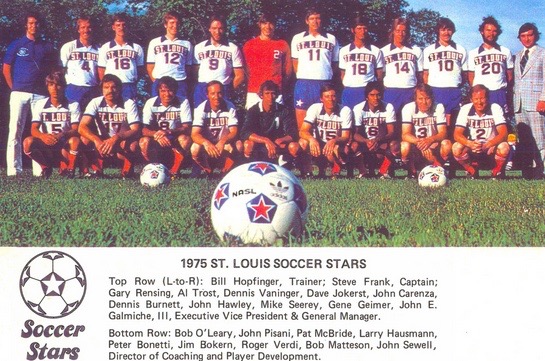
During the summer of 1975, he played 21 games in the States with St Louis Stars (for whom former Chelsea and England goalkeeper Peter Bonetti was playing) before Brighton manager Peter Taylor secured his services for the Seagulls.

In an article in Shoot incorporating Goal, Burnett explained how, although he’d been sidelined for two months with an ankle ligament injury, he’d got back in the side only to be sent off in a game away to Bristol City.

“It was a most unjust decision. Even the opposition seemed flabbergasted,” he said. “Anyway, I never played for Hull again. The signing of Dave Roberts from Oxford United put paid to my chances of a first team recall, following my suspension.

“Eventually, manager John Kaye called me into his office and asked if I wanted a move. A price of £30,000 was put on my head, later reduced to £15,000. No one came for me so in April I went to the United States and played for St Louis Stars in Missouri, a North American Soccer League club.

“While there I received another contract from Hull City, which I refused to sign. I lodged an appeal against it to the Football League Management Committee. Surprisingly they upheld it, and, during July, I received a letter to say I’d been given a free transfer.

“I arrived back in England on August 24th, made and received a number of ‘phone calls which resulted in my being offered a three-year contract by Brighton, plus excellent wages, which at the age of 31 was fantastic for me,

“Added to all this is the potential of Brighton in terms of location, players and attendances. It was a move not to be resisted.”

Burnett told the magazine he felt Brighton were much better prepared for promotion than Millwall had been. “Had we gone up, we would have needed a miracle to survive in the First,” he said. “At Brighton, we are winning matches without being fully stretched. The right blend is there and we can only get better.

“If I look after myself, I can get through another four or five seasons, by which time Brighton could be up amongst the big boys.”

Burnett was obviously a good judge because Brighton certainly got themselves up amongst the ‘big boys’ four years later – although by then he was no longer a part of it.

After a successful first season in which he developed a formidable central defensive partnership with Andy Rollings, and earned that placed in the PFA team of the year, perhaps there were signs that age was catching up with him.

In his end of season review in the Evening Argus, Albion reporter John Vinicombe observed: “Over the course of the season, the most improved player was Andy Rollings who profited by the experience of Dennis Burnett at his elbow.

“There were times when Burnett looked unflappable in the centre of the defence. As time wore on, and situations became more frenetic, that casual style, no doubt a legacy of his West Ham upbringing, now and again landed him in trouble.”

Maybe manager Taylor thought the same because one of the last things he did before quitting and rejoining Brian Clough was to sign veteran defender Graham Cross, which spelled trouble for Burnett.

Under new manager Alan Mullery, in the league at least, Cross was preferred alongside Rollings. Burnett deputised for Rollings when he was injured – for example, he played alongside Cross in the memorable 7-2 demolition of York City – and was given some games in midfield, but mainly in the League Cup he got the chance to shine.

He played in memorable games against First Division opponents Ipswich, West Brom and Derby, and was assured alongside Cross in the memorable narrow 2-1 defeat at the Baseball Ground in November 1976.

Vinicombe reported: “Cross and Burnett played coolly and neither looked out of place among the high-priced cream.”

He kept his place for a league game away to Port Vale five days later, but that 2-2 draw was his last in an Albion shirt.

In early February 1977, together with ex-Spur Phil Beal, he agreed a pay-off with the club and played non league with Ilford for the remainder of the season before returning to the States and another 19 games for St Louis Stars, where he was joined by former Albion teammate Fred Binney.

Mullery explained several years later in his autobiography that he had inherited a squad of 36 professionals and needed to prune the numbers. The older players were the obvious ones to go and, although Beal and Burnett went quietly, he had more truck dispensing with Joe Kinnear’s services – but that’s a story for another day.

On his return to these shores, Burnett headed for Ireland to play for Shamrock Rovers, at that time managed by the legendary Johnny Giles.

The defender subsequently played for three years in Norway, for SK Haugar, and popped up back in Sussex in 1994 as assistant manager of Sussex County League side Lancing, and played in a 2-1 defeat against Horsham YMCA in the FA Cup a month before his 50th birthday!

According to Wikipedia, Burnett ran a painting and decorating business in Sussex after he left football and was working in the hospitality suites at Upton Park before West Ham moved to the Olympic Stadium.

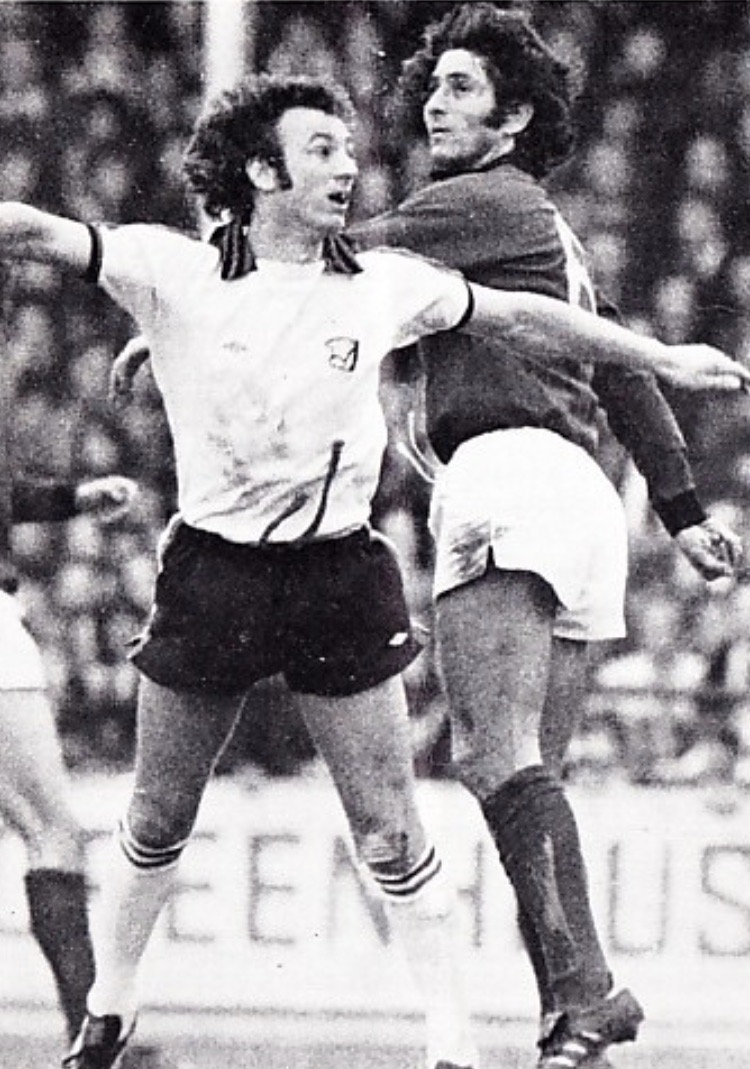
Pictured above are a Newham Recorder shot of Burnett in West Ham colours; in action for Millwall (from Goal), and in Albion’s stripes (from Shoot!). Below, an archive shot of the St Louis Stars side of 1975 with Burnett in the back row wearing the 18 shirt and Peter Bonetti in the centre of the front row.

back row burnett

Man City legend Joe Corrigan played the clown in Brighton

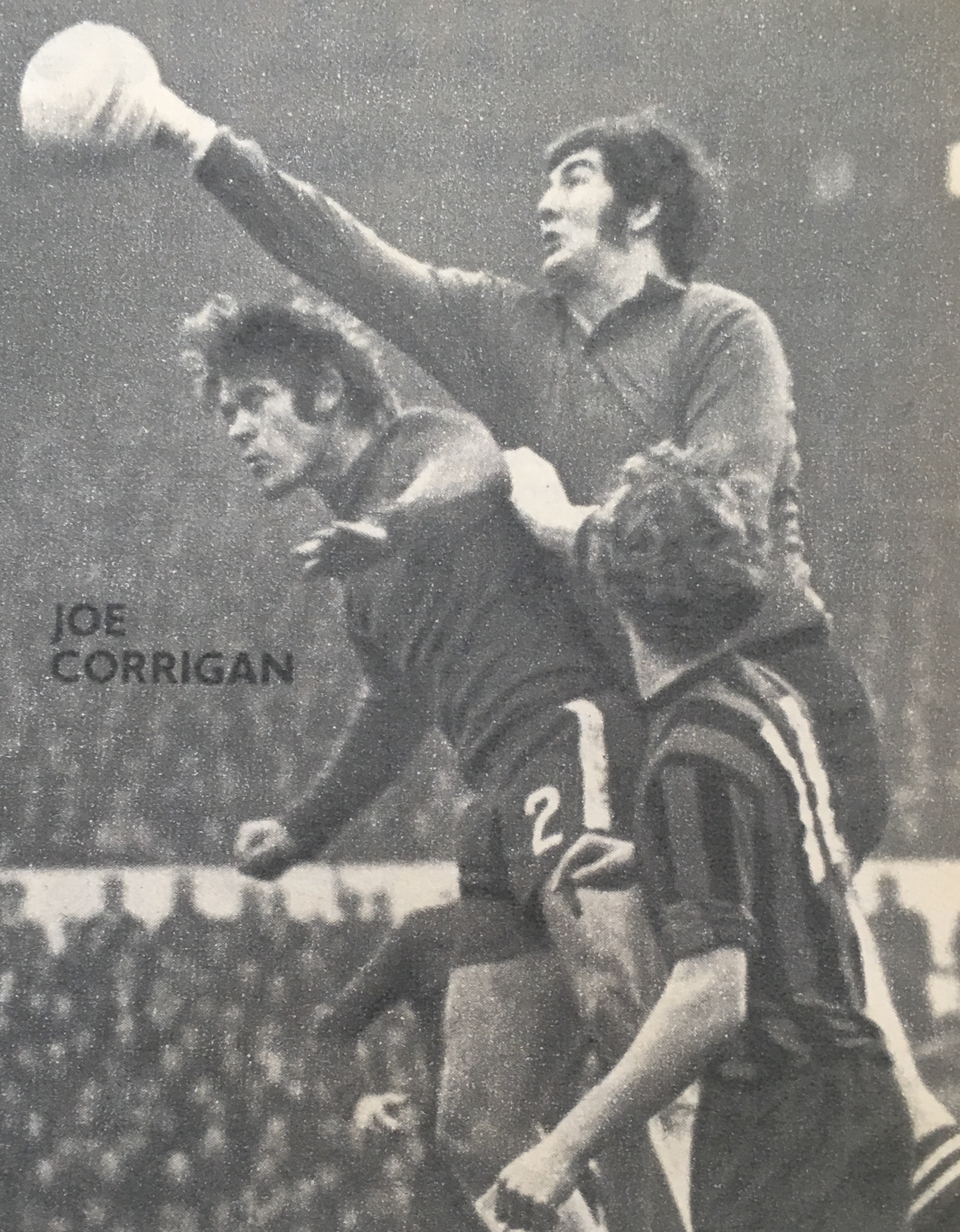
1 Joe punchingBRIGHTON fans often enter into a debate about the best goalkeeper ever to play for the club.
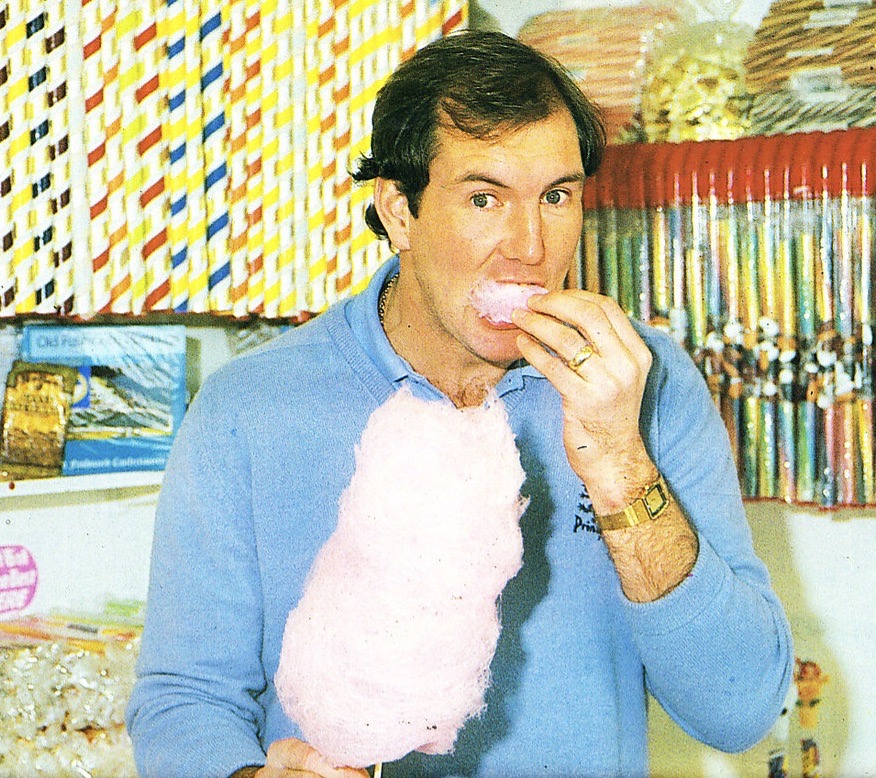
Although he was past his best when he joined the Seagulls, former England international Joe Corrigan would certainly be a contender.

Corrigan was, quite literally, at 6’4” a giant among goalkeepers and a colossus for Manchester City at the highest level before a second tier spell with Brighton towards the end of his playing career.

He subsequently became a top goalkeeping coach and amongst the ‘keepers he worked with was another former Seagulls favourite, Tomasz Kuszczak, when at West Brom.

After taking over from Harry Dowd, Corrigan was a near permanent fixture in goal for Manchester City between 1970 and 1983, winning a European Cup Winners’ Cup medal at the end of his debut season.

But for his career coinciding with Peter Shilton and Ray Clemence, he would surely have won more than the nine England caps he accumulated.

In total Corrigan made 592 appearances for City, a club record for a goalkeeper, and he was City’s Player of the Year three times.

In 1983, at the age of 34, Corrigan was sold to American club Seattle Sounders for £30,000, but he stayed in the US only a few months, and, in September that year, returned to England with Brighton.

Unfortunately for Joe it was at that turbulent time when, although Jimmy Melia was still the manager, chairman Mike Bamber had installed Chris Cattlin as first team coach behind Melia’s back.

Within a matter of weeks of the 1983-84 season starting, Melia was fired and Cattlin took over.

Corrigan was not impressed. In his 2008 autobiography (Big Joe, The Joe Corrigan Story) he declared Cattlin “the worst manager I’d ever played under” although he described his teammates as “a terrific bunch of lads” and he seemed to enjoy a decent social life on the south coast (pictured below for the matchday programme by Tony Norman, tucking into candy floss on the pier).

corrigan candyFor instance, at the annual players Christmas ‘do’ – if the account in Jimmy Case’s autobiography is anything to go by.

Corrigan became big pals with Case during his time at Brighton and the Scouse midfield favourite recounts in Hard Case (John Blake Publishing), a time the players went out on their Christmas ‘bash’ in Brighton wearing fancy dress.

Corrigan wore white tights and a tutu and at one point stood in the middle of the road directing traffic while his teammates crossed –  beckoning cars facing a red light to go and stopping cars that were on a green light. “I am still not sure how he survived that incident without having his collar felt,” said Case.

“Joe is a big, soft lad with a heart of gold but he has a painful way of showing it.”

One of his party pieces was to catch people off guard with a short jab in the ribs or arm. One playful punch landed on physio Mike Yaxley broke two of his ribs!

Case described Joe as “a star performer on the pitch and a bloody clown off it”.

Corrigan played 36 times for the Seagulls, including performing heroics in the famous 2-0 1984 FA Cup win over Liverpool, when goals by Terry Connor and Gerry Ryan meant the Seagulls dumped the mighty reds out of the cup two years in succession (following the 2-1 win at Anfield during the 1983 run to the cup final).

IMG_5197Sadly, as revealed in Big Joe, The Joe Corrigan Story, his time with Brighton ended on a sour note and when Cattlin opted for Perry Digweed as his first choice ‘keeper for the 1984-85 season, it all turned publicly ugly.
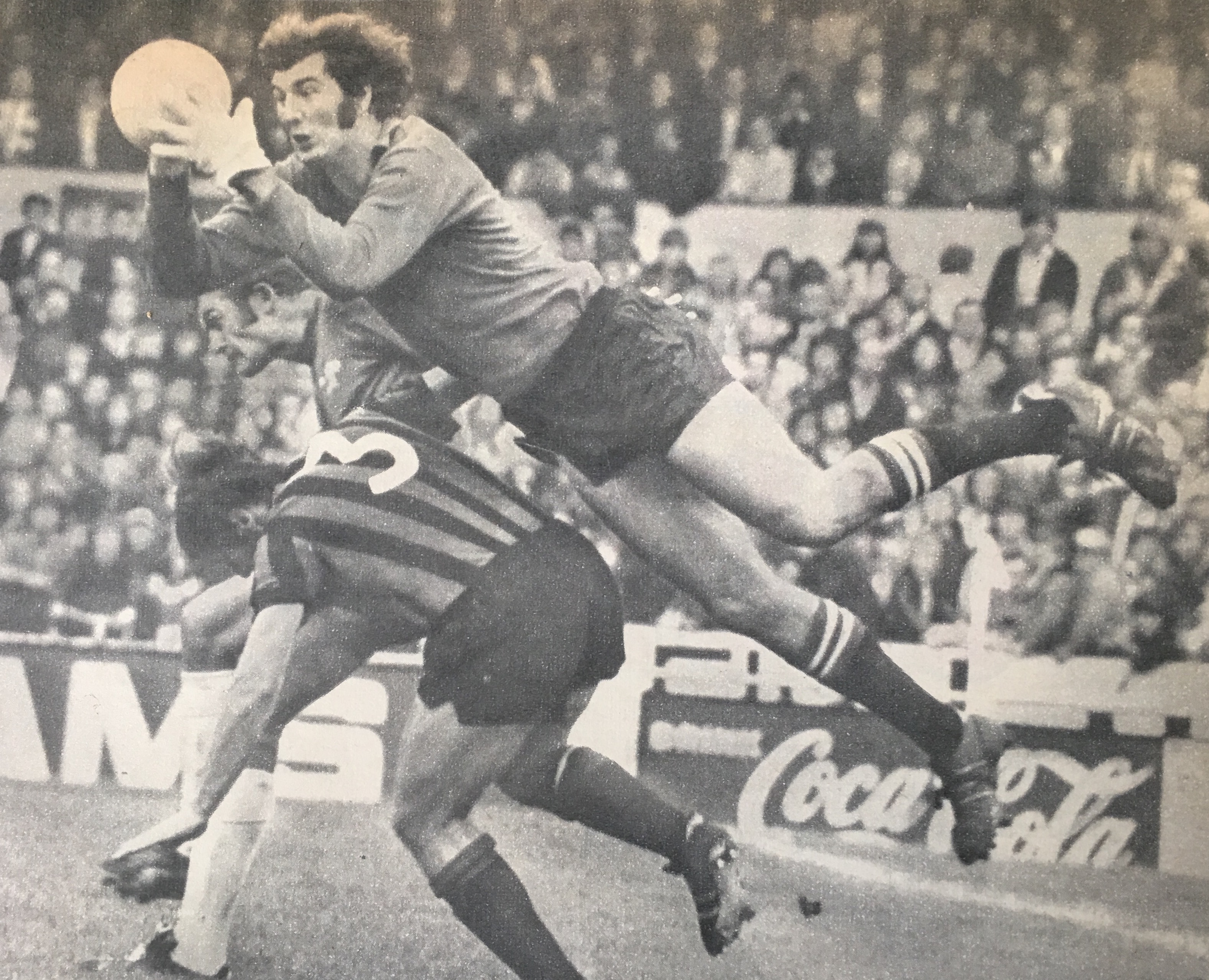
The club fined Corrigan for speaking out of turn to the press but Corrigan successfully got the fine overturned thanks to help from the PFA.

Under a heading ‘Truth’ Cattlin wrote in his matchday programme notes: “Our club made the papers this week for the wrong reasons, when a Football League tribunal upheld an appeal by Joe Corrigan against a club fine imposed upon him recently.

“Obviously I must accept the decision of the tribunal, just as I expect my players to accept a referee’s decision on the field. However, my dispute with Joe was not about his right to say anything to the press, but simply about what he said.

“At this club I don’t mind players speaking to the press in a responsible manner. I must though reiterate that I don’t want them slagging the staff, fellow players, fellow managers or the club.”

As it became clear he would never play for Brighton again, he went out on loan to Stoke City and Norwich but then back in Brighton Reserves sustained an injury to his neck that ended his career.

Corrigan retired from playing and initially helped to run a haulage business back in Manchester. But the lure of goalkeeping drew him into coaching at a number of clubs: City, Barnsley, Bradford, Tranmere and Stoke all on a part-time basis. Most notably, though, he spent 10 years at Liverpool, until the arrival of Rafa Benitez, then had spells at Celtic, Middlesbrough and West Brom.

The seeds for that part of his career were sown at Brighton, courtesy of John Jackson, the former Crystal Palace goalkeeper, who used to coach the Albion ‘keepers once a week.

Corrigan told the Manchester City matchday programme on 29 September 2018: “I got talking to him and it inspired me to look into doing something similar. So it was down to Brighton indirectly that I moved into the next phase of my career.”

When at 60 in 2009 he brought down the curtain on a 42-year career in the game, Tony Mowbray, manager of West Brom at the time, told the Birmingham Mail’s Chris Lepkowski: “Joe has been a pleasure to work with. His knowledge and experience have been a big help to me and I’ll be sorry to see him go.

“He’s a great character, a true gentleman and everyone at the club wishes him a long and happy retirement.”

Corrigan told the Mail: “Everyone says you know when the time is right to retire – and I feel this is mine.

“I’ve had just over four great years at this club and want to say a massive thank you to the Albion fans, who have always been very supportive of me and made me feel really welcome.

“The staff and players – particularly the keepers – have also been a pleasure to work with.

“Ironically, my final home game here will be against Liverpool, a club where I spent ten happy years, and we went to City two weeks ago, which obviously is always a special occasion for me.”

In the 2025 New Year’s honours list, Corrigan received an MBE for services to charitable fundraising.

2 Joe diving3 Joe shouting4 JC w GR SG EY

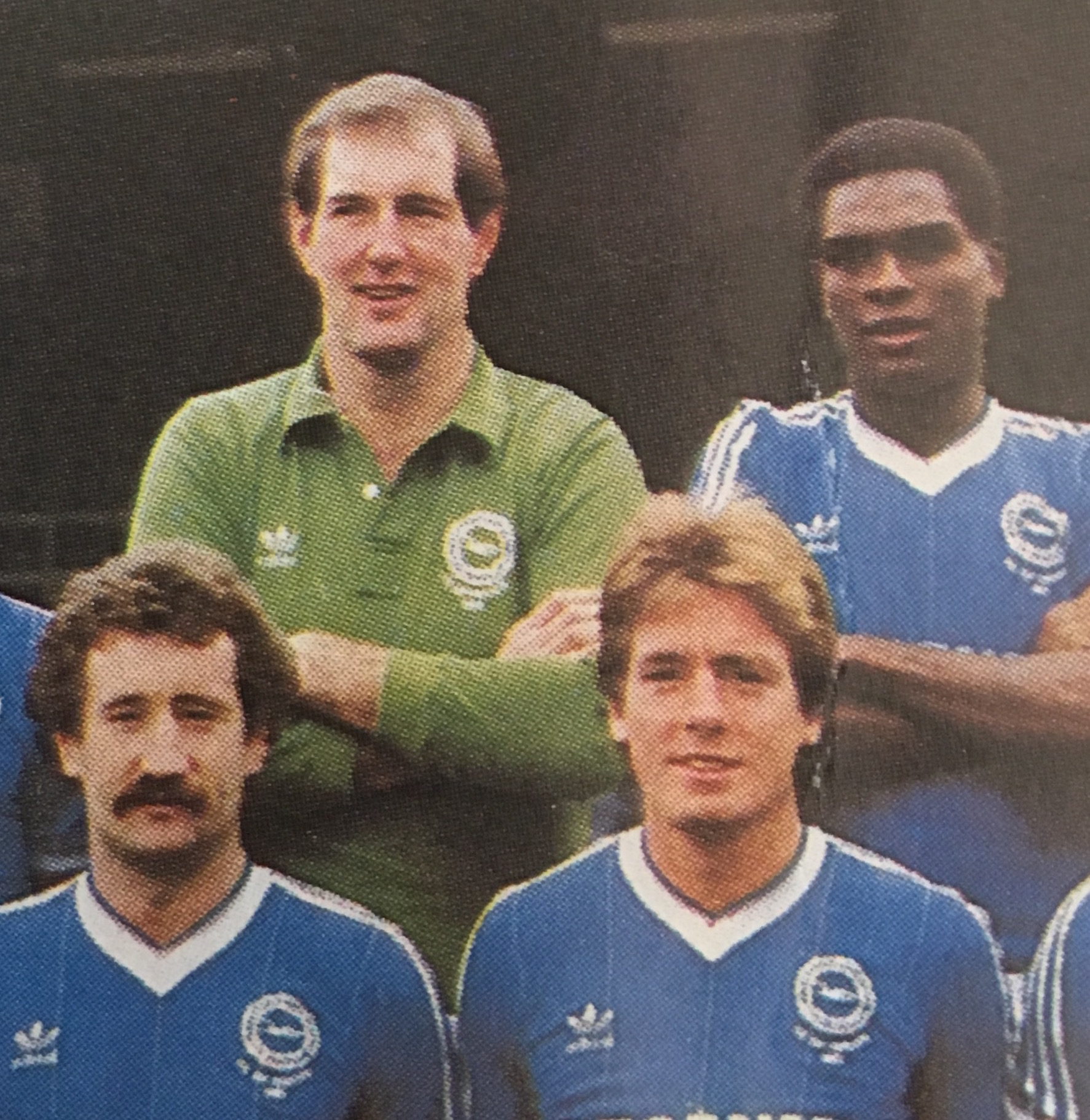
  • Pictures from my scrapbook show Corrigan punching clear of Chelsea’s David Webb, diving headlong to deny Chelsea’s Keith Weller, letting his teammates know his thoughts, and in an Albion squad line-up alongside Eric Young and behind Gerry Ryan and Steve Gatting.

J Cor sept 18

  • Joe pictured in the Man City matchday programme in September 2018.


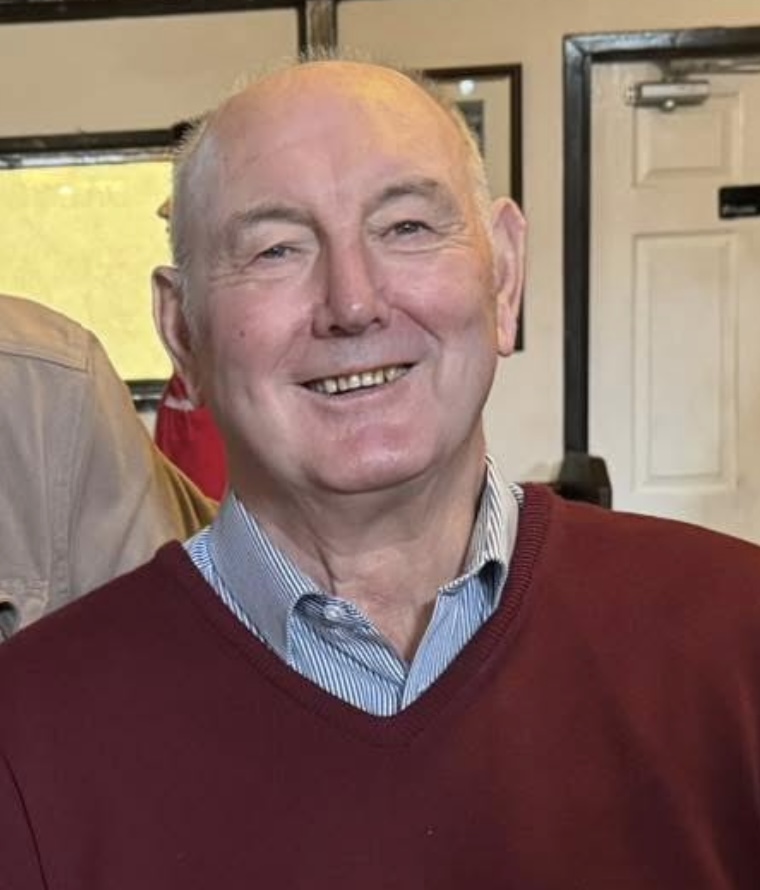
Corrigan in 2025

Winger Mark Barham was no stranger to Wembley

1 Barham progBRIGHTON’S wingers in the 1991 Division Two play-off final had previously been on opposing sides in a Wembley final.

Mark Barham was a winner with Norwich City as they beat Sunderland 1-0 in the 1985 League Cup Final and Clive Walker missed a penalty for the Wearsiders.

Six years on, Barham had levelled for Albion in the first leg of the semi-final at home to Millwall (more of which later) and Walker got the third when the Seagulls upturned the form book and beat Bruce Rioch’s side 4-1.

The 6-2 aggregate victory pitched the Albion against Neil Warnock’s Notts County under the shadow of the famous Twin Towers of Wembley.

Walker saw a Wembley post prevent him from scoring as Brighton’s dream of promotion was ended in a 3-1 defeat.

Folkestone-born Barham joined the Seagulls on a two-year contract after an initial trial and made his debut as a substitute for Kevin Bremner in a 1-0 home defeat to Oxford United on 30 December 1989.

He got his first start two days later in a 3-0 defeat at West Brom, who he’d played for briefly under ex-Ipswich and Arsenal midfielder Brian Talbot earlier that season.

On the second Saturday of the new decade he scored his first Albion goal in a 1-1 draw at home to Barnsley and had played 18 games by the end of the season.

Young John Robinson was beginning to get first team opportunities but Barham managed 42 appearances in 1990-91, culminating in that Wembley appearance against Notts County, although he was subbed off on 10 occasions.

That play-off first leg game against Millwall was Lloyd’s selection in Paul Camillin’s 2009 Match of My Life book (www.knowthescorebooks.com). He said: “Perry Digweed put in one of his incredibly long punts and the ball was about to bounce on the edge of the Millwall box when the centre half (David) Thompson ducked under it, I think intending to allow it to bounce through to Brian Horne in the visitors’ goal.

“But as he took his eye off the ball he also turned his back and the ball actually landed on the back of his head and squirted off right into Mark’s path. The little winger raced in and cracked the ball into the bottom corner. It really was a vital goal so close to the interval and the fans knew it.”

The goal also gave Barham much personal pleasure because he’d not seen eye-to-eye with Millwall boss Rioch when he’d been his manager at Middlesbrough.

With Robinson winning the shirt more frequently in the disastrous relegation season of 1991-92, Barham managed 25 appearances plus two as a sub but he was released at the end of the season and moved on to Shrewsbury Town.

Born on 12 July 1962, Barham’s football career began when he joined Norwich as an apprentice in 1978.

He was part of the City youth team that won the South East Counties League in 1979-80 and in the same season, at the tender age of just 17, manager John Bond gave him his first team debut. No fairytale start, though, as City lost 5-0 to Manchester United at Old Trafford.

However, he went on to make himself a regular in the City first team, making 213 appearances and scoring 25 goals for the Canaries.

Screenshot
Barham in action for England v Australia

He also won two full England caps on the 1983 tour of Australia in a side captained by Peter Shilton and also featuring Trevor Francis and Terry Butcher. Barham spoke warmly of Bond when he died in 2012 telling the local pinkun:

“When I first came up from Folkestone I had what you might call long hair. The first time he played me in a five-a-side in training he told me ‘I’m letting you play this one but if you don’t go out and get your hair cut you won’t be playing another one’.”

Barham continued: “He was my first manager, he gave me my debut at 17 and I went on to play for England so he must have done something right.

“He loved wingers but you had to adhere to certain rules. You had to play wide with your foot on the line, it was your responsibility to score goals, get crosses in and defend at the same time.”

A knee injury suffered in a match against Spurs was a major blow to Barham’s career. He ruptured cruciate ligaments in his left knee and he ended up in plaster for 14 months.

Although he remained at Carrow Road for four more seasons, Dale Gordon and Ruel Fox emerged as challengers for his place and eventually, in July 1987, Barham moved on to Huddersfield Town.

It was there that he teamed up with former Albion full back Chris Hutchings who spoke favourably about his time on the south coast with the Seagulls. Barham only played 27 games for the Terriers and, with former England striker Malcolm MacDonald replacing Steve Smith as manager, found himself released on a free transfer in 1988.

He joined Middlesbrough on an 18-month contract but as Rioch’s Middlesbrough were relegated he only played four games in eight months and was on the move again, ending up at non-league Hythe Town.

Determined he still had what it took to hold down a league career, Barham wrote to all 92 clubs. He joined Division Two West Brom and played four times for them but they didn’t keep him on.

Barham tight crop“I knew I hadn’t suddenly become a bad player and that I could succeed again,” Barham told the Albion matchday programme in March 1990. “So I wrote to all the clubs again and that’s when Barry (Lloyd) contacted me. His was only one of six replies.

“Since being here I’ve found that all Hutch said about the club and the area was right and now I want to prove myself, show that managers were wrong to ignore me and enjoy my time in Brighton in the hope that my two-year contract will be extended.”

After the disappointments elsewhere, Barham certainly got his career going again at Brighton.

He scored once in eight matches for the Shrews but his career was on the wane in 1992-93 and he had short spells in Hong Kong and played non-league with the likes of Sittingbourne, Southwick and Fakenham Town, who he managed for 20 months from April 1996.

According to Mike Davage’s excellent article Canaries Flown From The Nest in the 1998-99 club handbook, Barham joined Mulbarton in February 1998.

At a Norwich centenary dinner in 2002, Barham told Davage he’d had more than 20 operations on his knee. By the time he was interviewed by Spencer Vignes for Albion’s matchday programme in 2015, he’d had 38 operations on it!

After retiring from the game he ran a toolhire business in Norwich and according to his LinkedIn profile he’s now a business development manager with facilities management company, Mitie.

2 Barham stripesBarham 1

  • Pictures show Barham in Albion’s NOBO kit, from the Wembley play-offs programme, a portrait from a matchday programme and in a team line-up wearing the dreadful pyjama kit.

Villa’s European Cup winning captain at the Albion

2-mortimer-in-flightA CULTURED midfielder regarded in many circles as the best ever captain of Aston Villa was almost ever-present in one season with Brighton.
Dennis Mortimer captained Villa when they won the European Cup in 1982 under manager Tony Barton.

Mortimer joined the Seagulls three years later and shone in what was a rather disappointing Division 2 season which saw the Albion finish 11th.

Brighton’s near-promotion form in the season before had prompted Mortimer to try to help the Seagulls to restore their elite status after he’d been released by Villa.

In a programme feature by Tony Norman in November 1985, he said: “I knew this was a good side to come into; a team that wanted to play good football and win promotion.

“They missed it so narrowly last year and I felt I would like to be part of that challenge this year. I knew there would be excitement in the season ahead, and to me that is one of the most important things in football.

“Obviously I’m coming to the end of a long career in the game. I’ve been a professional for 17 years now and I wanted one final challenge. That’s why I came to Brighton.”

In his programme notes for the opening game of the season (against Grimsby Town), manager Chris Cattlin said of his former Coventry teammate: “He is a truly outstanding professional who will give the team steadiness and experience.”

Fans had a taste of what he would bring to the team when he scored a cracker in a pre-season game against Arsenal.

Unfortunately, while Mortimer was a consistent performer in midfield and the team enjoyed a decent run in the FA Cup – losing in the quarter finals to Southampton – Cattlin’s side were beset by injuries to key players and ultimately fell short of the top spots.

Morty BHAmorty writesKnowing his time on the south coast was going to be limited, Mortimer didn’t uproot his family from their Lichfield home and instead lived in the Courtlands Hotel in Hove (above) for a while and also bought a flat where his wife and children could visit during school holidays.

Despite being born in Liverpool, the bulk of Mortimer’s career was connected with West Midlands teams, beginning with Coventry City under the tutelage of Pat Saward, who later managed the Albion, and ending with West Brom where he had a spell as assistant manager after his playing days were over.

He had not been a schoolboy star but was picked up and developed through Coventry’s youth development system. As well as coach Saward, Coventry’s youngsters also benefitted from the experience of Bob Dennison, the man who, at Middlesbrough, brought together as players one of the most famous footballing partnerships in Brian Clough and Peter Taylor.

“As a lad I thought I would be an engineer and, although the whole family were Liverpool mad, and we never missed a home game, it did not enter my head that I might be a professional until I was 14,” Mortimer said in a Goal interview in 1973. Coventry offered him a trial just as he was leaving school and his career built from there.

His initial Coventry boss Noel Cantwell, the former Man Utd and West Ham full back, was sure Dennis was destined for greater things after his first England under-23 call-up. “Dennis will become a big name in football, “ he said. “When he gets in Sir Alf’s side I don’t think he will lose his place easily.”

Although he never won a full cap, in 1971 he went on an end-of-season tour to Australia in an English FA squad that also included Peter Grummitt (then of Sheffield Wednesday) and Barry Bridges (of Millwall at the time). The group played the Republic of Ireland in Dublin, drawing 1-1, before heading Down Under where they won all nine of the matches they played in various locations across a month.

Coventry general manager, Joe Mercer, who was a legendary figure in the game and had a spell as caretaker manager of England, said of Dennis: “He has this great change of pace…he can go into another gear and accelerate out of trouble like all the good ones.”

However, it was after his move to Villa in 1975 that he rose to prominence, culminating in that famous 1-0 win over Bayern Munich in Rotterdam, courtesy of a Peter Withe goal.

As part of a 30th anniversary celebration of the achievement, Mortimer told the Birmingham Mail in 2012: “It was such a momentous occasion for Aston Villa Football Club and for all of us as young men that you never forget it – and I doubt the fans who witnessed it would ever forget it either.

“You only have to see how big the competition is now and how much hype it gets to realise what an amazing achievement it was for us.

“Every year when the final of the European Cup, or Champions League as it is called now, comes around, I get a glimpse of that fantastic trophy and it all comes flooding back.

“I’ll never get bored of talking about it, but I don’t get reminded about it that much any more. It’s usually me telling the younger kids that Aston Villa won the European Cup.

“Some of them don’t believe me, because it was so long ago, and before a lot of them were born, but they go away and Google it and think ‘Wow, yes, they did win it!’”

DM Villa

In 10 years at Villa, Mortimer made 403 appearances and scored 36 goals. A 1977 League Cup winner, he led Villa to the English Division One title on May 2, 1981, and then lifted the European Cup on May 26, 1982.

The Birmingham Post said in 2010: “The Liverpudlian was at the forefront of the club’s finest era of modern times; a driving force from midfield that helped bring a level of success to Villa Park that his successors can only dream of.”

Although capped by England under-23 and England B, a full cap eluded him. That seems extraordinary now, especially after scoring twice in a 3-1 win for the under-23s against the Netherlands at Highbury, when Goal magazine reported he was being “hailed as the new Bobby Charlton”.

Mortimer was subsequently picked for the senior squad but didn’t get a game. “I got as far as the bench in the home internationals when Villa won the league, but never got on,” he said in a 2010 interview. “I always felt I should have done but there were so many good midfield players around at that time.

“I just needed to get on that pitch for five minutes in that home international, but Ron Greenwood wouldn’t put me on.”

After Cattlin allowed Jimmy Case to leave Brighton (telling the board his legs had gone, even though he then had six seasons at Southampton!), the team was crying out for a seasoned cool head in midfield who could put their foot on the ball and spread the ball about.

Cattlin eventually turned to his former Coventry teammate to bring that quality to a squad that was not quite reaching the heights required to restore the elite status lost in 1983.

Sadly, Mortimer spent just the one season at The Goldstone, but his 49 league and cup appearances were the highest number in that season’s squad.

Cattlin had offered him a two-year contract with the chance to start coaching but, following the manager’s sacking close to the end of the season, and his replacement Alan Mullery not fancying the experienced midfielder, he left the club.

“Player-coach would have been great as I had plenty left in the tank,” Mortimer told journalist Spencer Vignes: “He swapped a player with plenty of experience for one with no experience (Dale Jasper) and I was let go. Four months later (it was actually eight), Alan was let go as well.”

Mortimer returned to the Midlands – making the somewhat controversial decision to join Villa’s arch rivals Birmingham.

Funnily enough at the very same time he was heading back to the Midlands, the captain who lifted the European Cup that month also went on to play for the Albion. Romanian international Stefan Iovan was the Steaua Bucharest captain when they beat Barcelona on penalties in Seville; five years later, he was stepping out at Wembley as part of the Seagulls’ line-up in the Division 2 play-off final with Notts County.

But finally back to Mortimer. Now a sports speaker, pundit and coach, he’s not afraid to speak his mind and has been known to upset a few people with his outspoken comments about Villa’s plight in recent years.

  • Pictures from my scrapbook show Dennis Mortimer in action for Coventry against Liverpool, from Goal magazine, and an Albion matchday programme shot of him in full flight for the Seagulls. Also pictured is Mortimer when reserve team coach at West Brom during Ossie Ardiles’ reign as manager. When Ardiles moved to Spurs, Mortimer became new boss Keith Burkinshaw’s assistant. Full grey head of hair picture from 2010.