Head ‘master’ Neil Martin scored hundreds in Scotland and England

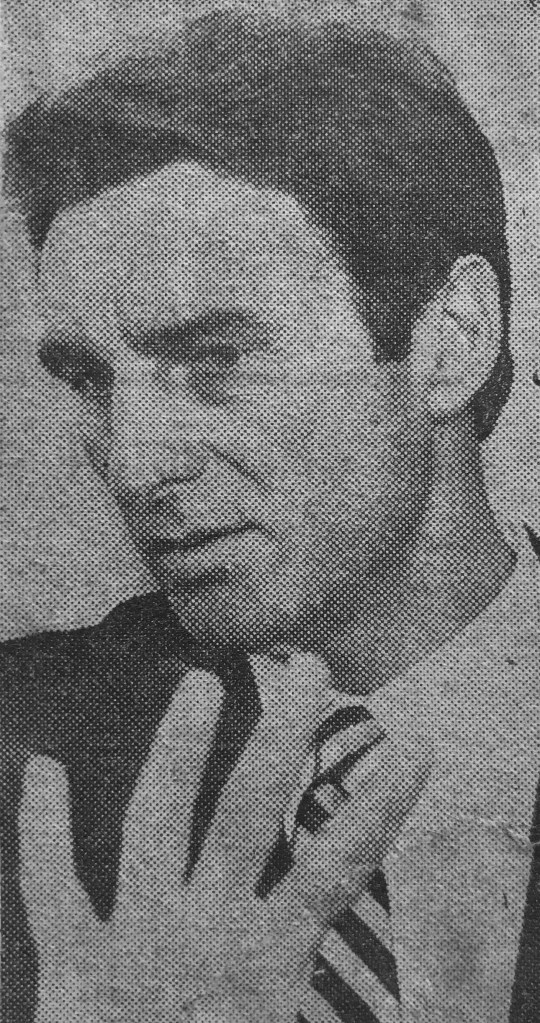
PROLIFIC goalscorer Neil Martin was once considered to be one of the finest headers of a ball in football.

A Scottish international who was among an elite group to net 100 goals in both the Scottish and English leagues, Martin scored 46 of them in 99 top flight appearances for Sunderland.
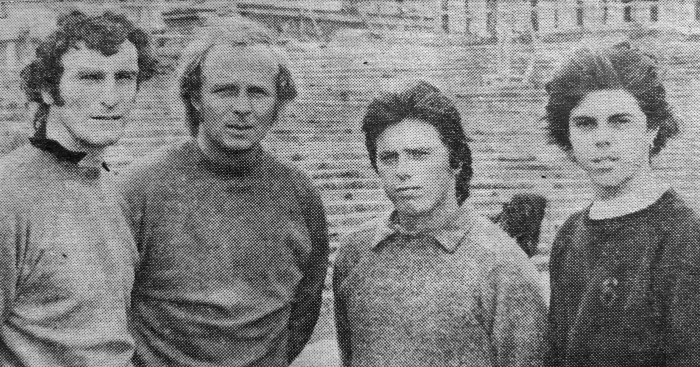
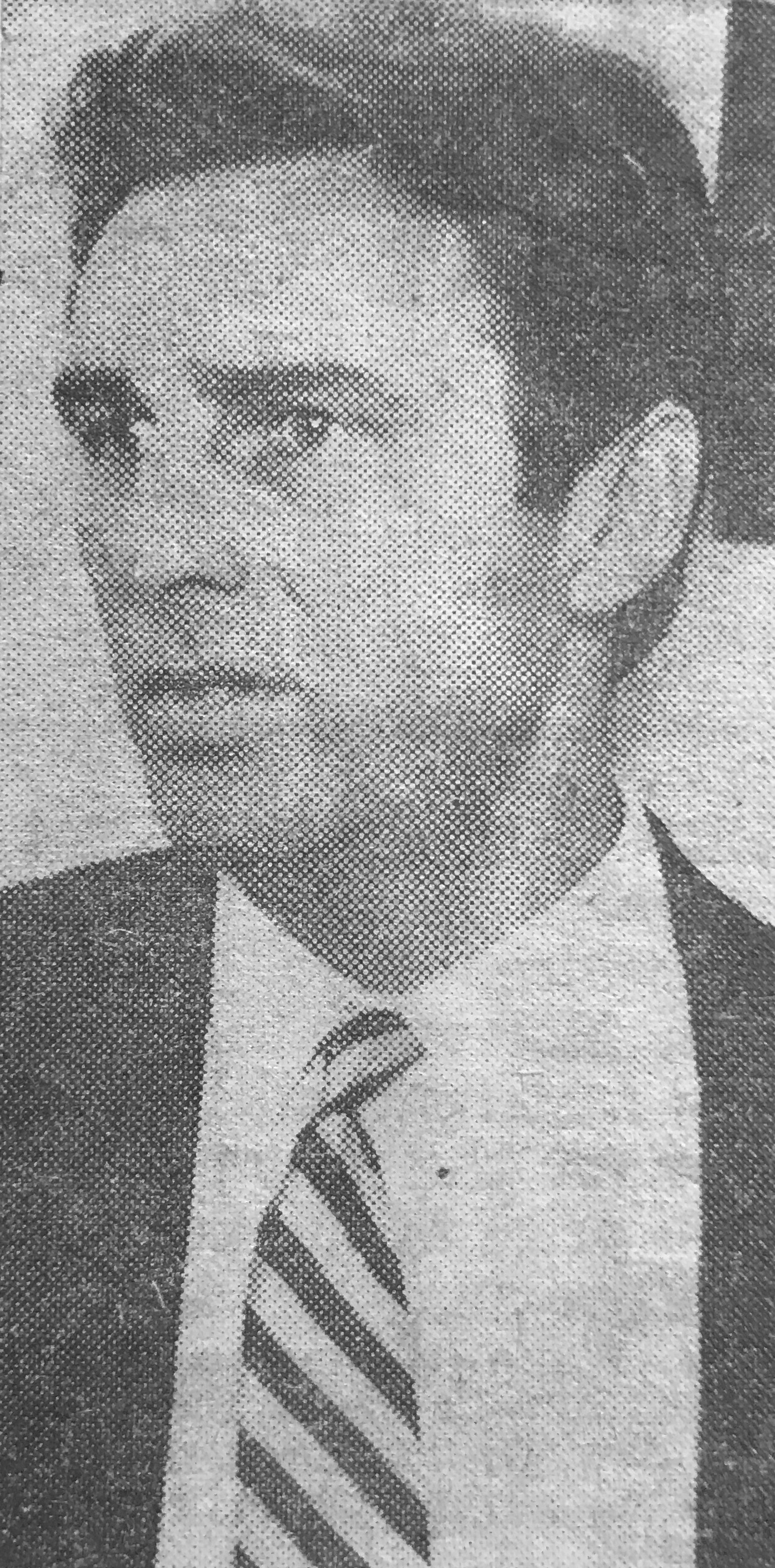
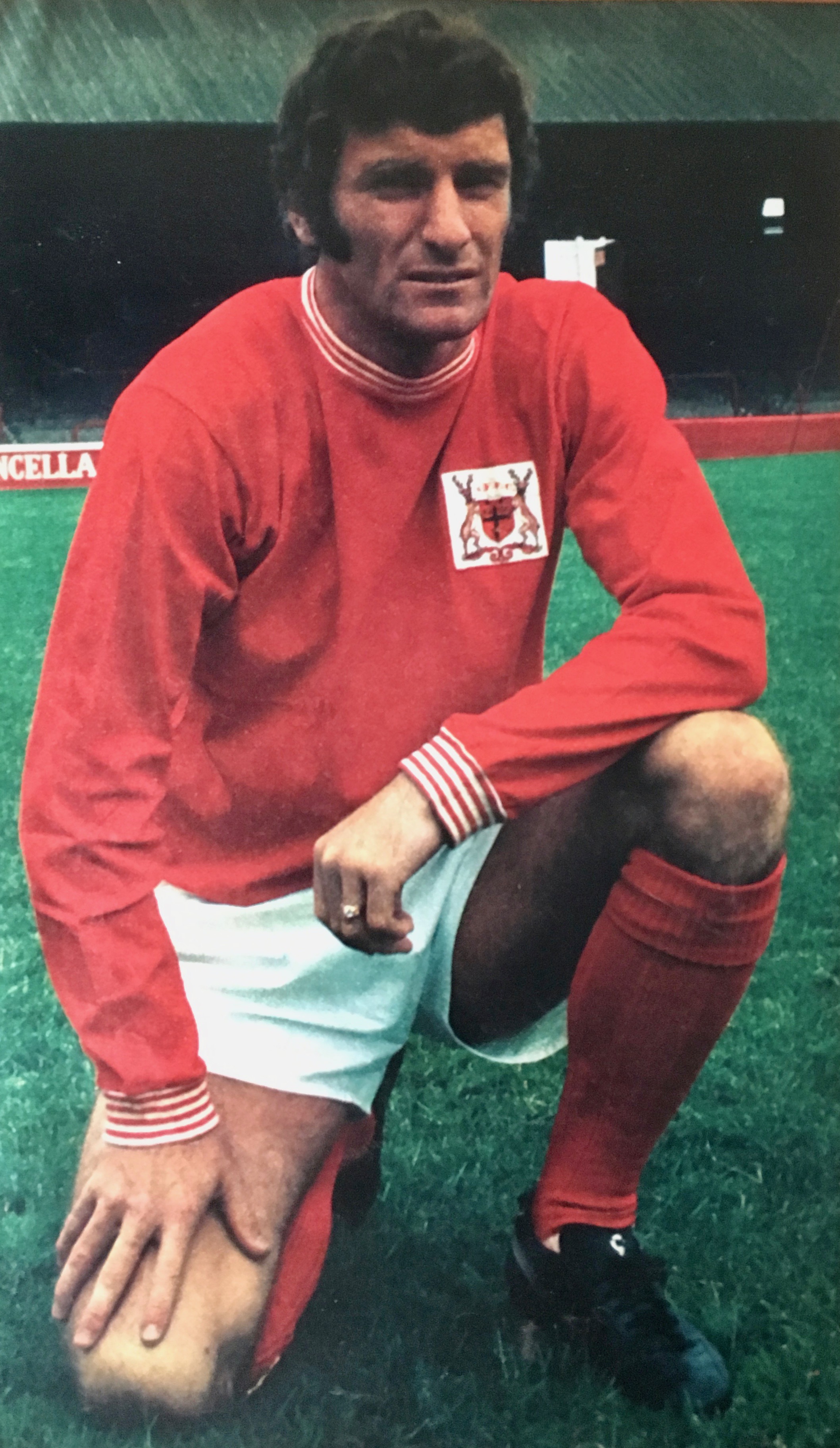
It was 50 seasons ago that he arrived at Brighton towards the end of his career, almost at the same time as Peter Ward (right, above) was starting his. In fact, for a few weeks they shared a club-owned house overlooking the sea (until they each found their own homes) and Martin gave the youngster a lift into training.

Ironically, although Martin scored on his Albion debut and netted nine goals in 18 starts (plus five sub appearances), it was his departure from the club after only eight months that led to Ward’s introduction to first team football.
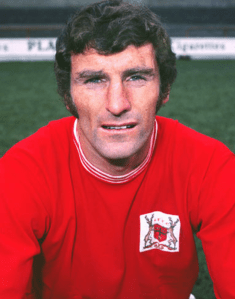
The previous season, Martin had scored the first goal of Brian Clough’s reign as Nottingham Forest manager, the only goal of the game in a FA Cup third round replay win against Spurs at White Hart Lane in January 1975.

The Scot had been at Forest for four years by then and, as if to prove there’s no sentiment in football, he was given a free transfer at the end of the season. That’s when Clough’s former managerial partner, Peter Taylor, picked him up for Brighton.

After a lacklustre first season in sole charge of the Albion (Clough had quit Brighton for his ill-fated 44 days at Leeds), Taylor brought in some experienced old heads to bolster a tilt at promotion with the signings of 34-year-old Martin, Phil Beal (30) and Joe Kinnear (28) from Spurs.

It was Albion’s 75th anniversary season and the popular blue and white striped shirts were reinstated as the first-choice kit having been dropped the previous season for all white with blue cuffs and collar.

Martin played up front with Fred Binney and the pair were on the scoresheet in the opening day 3-0 home win over Rotherham United (his former Coventry teammate Ernie Machin got the other).
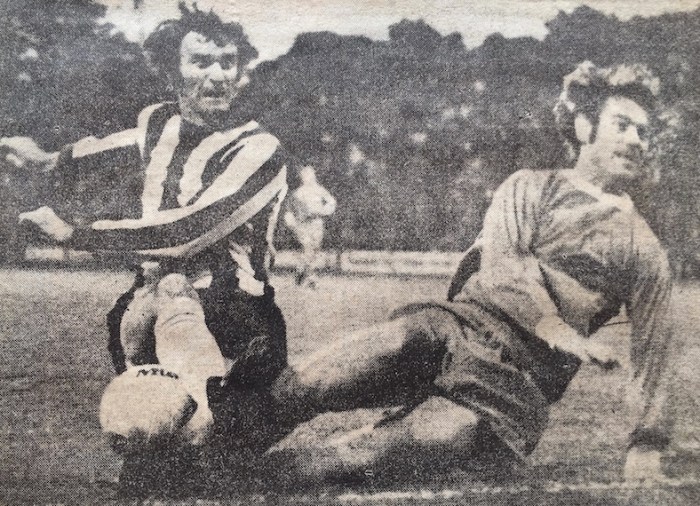
Martin scored twice in his third match, a 3-3 draw at Sheffield Wednesday, but the impatient Taylor soon chose to give Binney a new partner in on-loan Barry Butlin.

Restored to the side after Butlin’s return to parent club Forest, Martin made 11 successive starts and scored six times. But his brace in a 4-2 home win over Hereford United on 6 December 1975 were his last goals for the club.

Taylor seized an opportunity to sign Aston Villa’s out-of-favour Sammy Morgan (who he’d previously tried to sign when he was assistant manager at Derby) and Martin swiftly found himself on the outside looking in.

He only made one more start, replacing the injured Morgan, in a 1-0 win over promotion rivals Millwall at the start of February 1976 and he was then transfer-listed following a disagreement with Taylor when subbed off in a reserve game a week later, and was even banned from the ground by the disciplinarian boss. At the time, he had only just bought a house in Seaford.

The first team squad vacancy meant Ward was moved up the pecking order of strikers and he made his debut in a Goldstone friendly against Ipswich Town (Albion won 3-1, Ian Mellor got two, Andy Rollings the other). The following month, Martin moved to Crystal Palace where he scored just the once in nine appearances.

By then 35, he took a similar journey to lots of other English and Scottish players in their 30s edging towards the end of their careers by going to play in the North American Soccer League (NASL).

He played in the same San Antonio Thunder team as former England captain Bobby Moore, ex-Arsenal and Wolves left-back Bob McNab and former Sunderland teammate Harry Hood, and scored five goals in 19 games for the Texas-based club.

It wasn’t Martin’s first involvement in the NASL though because, in the summer of 1967, he was part of a Sunderland contingent who played as Vancouver Royal Canadians. The 16-man squad also included goalkeeper Derek Forster, who also later played for Brighton.

Born in Tranent, just east of Edinburgh, on 20 October 1940, Martin started out with Tranent Juniors and looked back on his career in a 2020 interview with Ninian Cassidy for Alive & Kicking, published on Facebook.

After leaving school, he began working at the local coal pit but he got his break into professional football with Alloa Athletic.

He described having to make a circuitous near 50-mile bus journey from his home in Tranent to make his debut for Alloa. Hungry after the long journey, he downed pie, beans and chips for lunch before going out and scoring in his first game for the Wasps.

He was still self-training at the local dog track twice a week before meeting up with his teammates to play on a Saturday but after scoring 25 league and cup goals in his first season (1960-61), he earned a move to Queen of the South.

Still remembered fondly as a legend of the club, former teammate Iain McChesney said of Martin: “Neil was a big gem. It didn’t matter what you did to him, he never got involved. He got kicked stupid but still, he picked himself up and got on with the game and scored goals. I remember him saying to me, ‘That’s the best thing you can do, that’s the best reply of the lot, stick the ball in the net and they can’t do anything about it’.”

When Queen of the South were promoted back to the top division as Division 2 runners up in 1961-62, Martin scored 30 league and cup goals. Fan chat group contributor Ronnie Rae said: “Brilliant player. He had a fantastic partnership with Ernie Hannigan playing for Queen of the South, his heading ability was outstanding. We had a great team back in the day.”
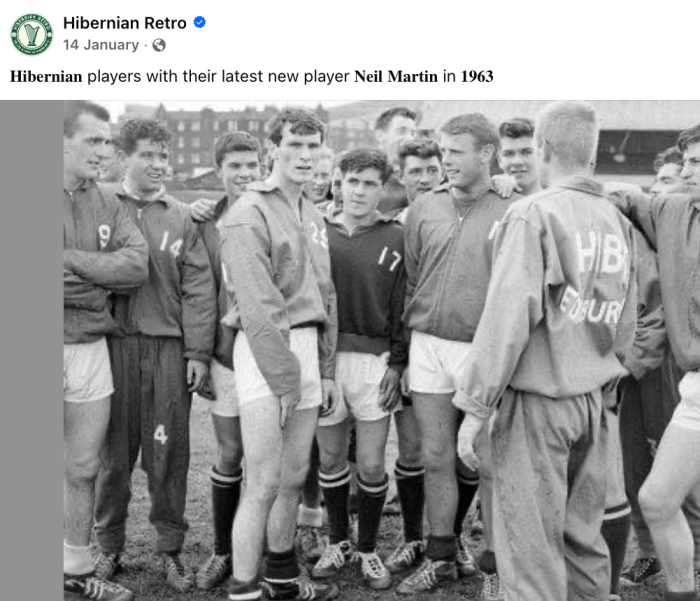
In 1963, he got the chance to move for a £7,500 transfer fee to Hibernian, the club he’d supported as a boy, and the following year the legendary Jock Stein, who he later said had the biggest influence on his career, took over as manager. Martin netted 29 league and cup goals for Hibs in the 1964-65 season.

Supporter Andy Szafer remembered Hibs beating Falkirk 6-0 in 1964 when Martin scored four: “I’ve still to come across anyone who could head a ball like Neil,” he said. “No one comes close…maybe Ronaldo, but Neil tops that list for me.”

During that time, he played and scored for a Scottish League representative side against an English League XI in a 2-2 draw at Roker Park. The following year, in October 1965, that became his home ground when he switched from Edinburgh for a £45,000 fee.
By then, he’d collected two of his three full Scottish international caps. He partnered the legendary Denis Law up front in World Cup qualifiers against Poland (1-1) and Finland (2-1) within four days of each other in May 1965.

In the month after his move to Sunderland, he played alongside Tottenham’s Alan Gilzean in a 1-0 win over Italy in front of 100,000 at Hampden Park.

The blog Roker Report noted that he joined Sunderland in the same season as fellow Scot Jim Baxter who grabbed most of the headlines (not always for the right reasons). “Martin was a coup that we never quite realised,” it said. “Martin was a battler and shied away from no one at a time when every team had cloggers, enforcers and hard men.

“He scored all sorts of goals, though was a danger in the air and in the box from corners and free kicks.”

One particular man-of-the-match performance by Martin came when he scored twice in a 3-2 defeat to high-flying Manchester United at Roker Park on 11 December 1965. This was a Man Utd side with George Best – who scored twice – Denis Law and Bobby Charlton in their line-up.

Roker Report recalled: “On five minutes, Neil Martin beat (Nobby) Stiles to the ball and holding off the challenge of another defender he blasted a left-foot shot from the edge of the box that beat (Pat) Dunne all-ends-up. What a cracking goal this was and Roker Park was bouncing in acknowledgement.

“On seventy-five minutes came probably the best goal of the game. George Herd was strong in the tackle and came through two challenges before sending a glorious cross to Neil Martin standing approximately ten yards out. He towered above his marker and powered a header past a stranded Pat Dunne to lift the net and light a touch paper for the last fifteen minutes.”

After Martin’s 26 goals in 1966-67, no other Sunderland player managed 20-plus in a season for 11 years!

A personal highlight for the player at the end of that season was playing in a combined Newcastle-Sunderland XI alongside Jackie Milburn in the Newcastle legend’s testimonial game against an international XI that included Hungarian and Real Madrid ‘master’ Ferenc Puskas and the World Cup winning brothers (Milburn’s first cousins once removed) Jack and Bobby Charlton.

The blog author noted that when he was sold in 1968 for twice the amount Sunderland paid for him, it might have been regarded as good business but it seemed “short-sighted and an opportunity missed. Neil Martin would always make my top 10 Sunderland strikers.”

Fan chat group contributor Ronnie Scott added: “Great player for Sunderland; had tremendous heading ability. Always remember a bullet header he scored against the Mags (Newcastle) at St James’ in a 3-0 win…absolute quality…and yes l think he was underrated!”
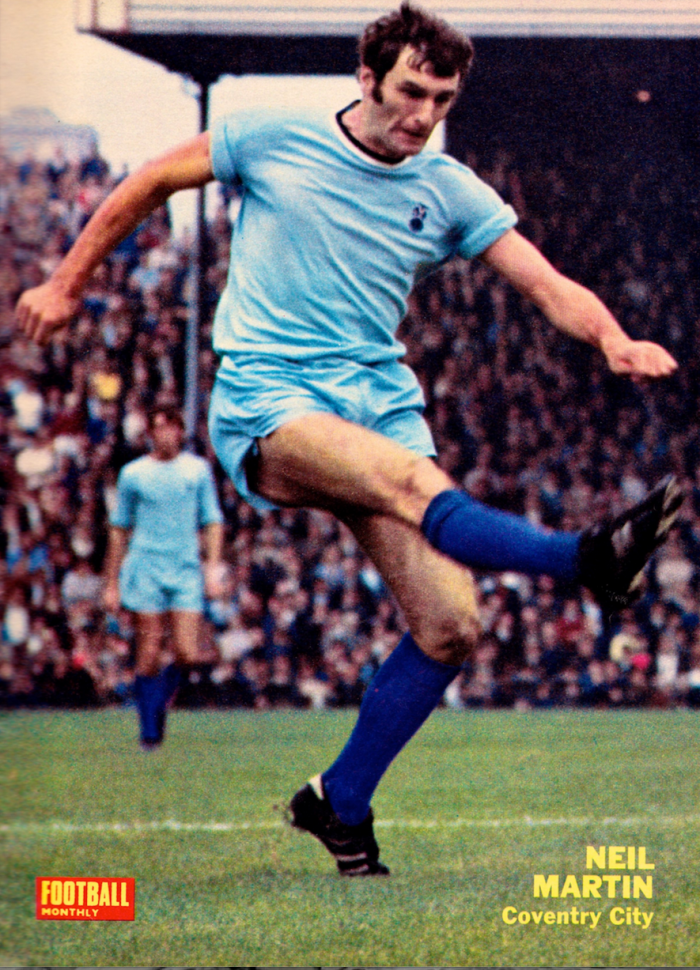
That move in February 1968 was to Coventry City and, in his chat with Ninian Cassidy, he admitted he was “tapped up” by the Sky Blues, taking a ‘phone call about his willingness to make a move while he was in a hotel about to play an away game at Sheffield Wednesday.

Noel Cantwell, who had taken over from Jimmy Hill as manager five months earlier, added Martin to a line-up that already included his former Queen of the South teammate Ernie Hannigan on the wing. Indeed, occasionally he was able to field an all-Scottish front five (the others were Gerry Baker, Willie Carr and Ian Gibson).

Martin certainly answered Cantwell’s need for more goals, netting a hat-trick in only his second game, a 3–0 home victory over Sheffield Wednesday. All three came in 36 first half minutes (a third-minute penalty, 32 and 39). He could have had four but missed a second penalty Coventry were awarded.
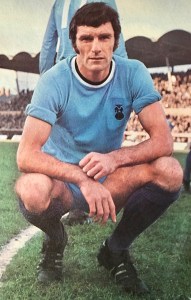
When City played in the Inter-Cities Fairs Cup in 1970, Martin scored the winner in a famous 2-1 victory over Bayern Munich at Highfield Road (unfortunately they’d lost the away leg 6-1).

Over his three years with the Sky Blues, he captained the side for a while and scored 45 goals in 122 first team games.

It was something of a surprise when he moved to Nottingham Forest, under Matt Gillies, in the spring of 1971 but he helped the struggling side stay up. Martin was 30 by then and when Forest were relegated at the end of the following season, it marked the end of his days playing top flight football.

In the 1974-75 season, Martin’s two goals in a 3-2 win over Sheffield Wednesday meant he passed the landmark of scoring 100 goals in English league football as well as in Scotland and he finished the season with 12 goals. He left the City Ground having scored 28 goals in 119 matches.

Martin’s final playing days were in the Republic of Ireland, with Dublin-based St Patrick’s Athletic, interestingly being given a lifeline by another former international striker who’d played for Brighton, Barry Bridges.
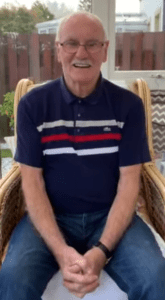
Recounting old times in a 2020 interview

In total, Martin played 248 club games in Scotland netting 161 times, he scored 135 goals in 401 appearances for English clubs and six times in 30 appearances abroad.

After hanging up his boots, Martin spent time as a youth coach at Walsall when Dave Mackay was the manager and the pair later spent 10 years together in Kuwait and Dubai (they won six league titles with Al-Arabi in Kuwait). He also had a difficult spell as joint manager of Walsall with Alan Buckley in the 1981-82 season.

After leaving football, he ran two pubs in Birmingham before retiring back to Tranent.

In 2012 he was in the news when he nearly lost the sight in his left eye through retinal vein occlusion (RVO) – a blockage in a vein which can cause blindness. A drug treatment – new at the time – saved the sight. Martin had initially thought the blurred vision he was suffering was cataracts.
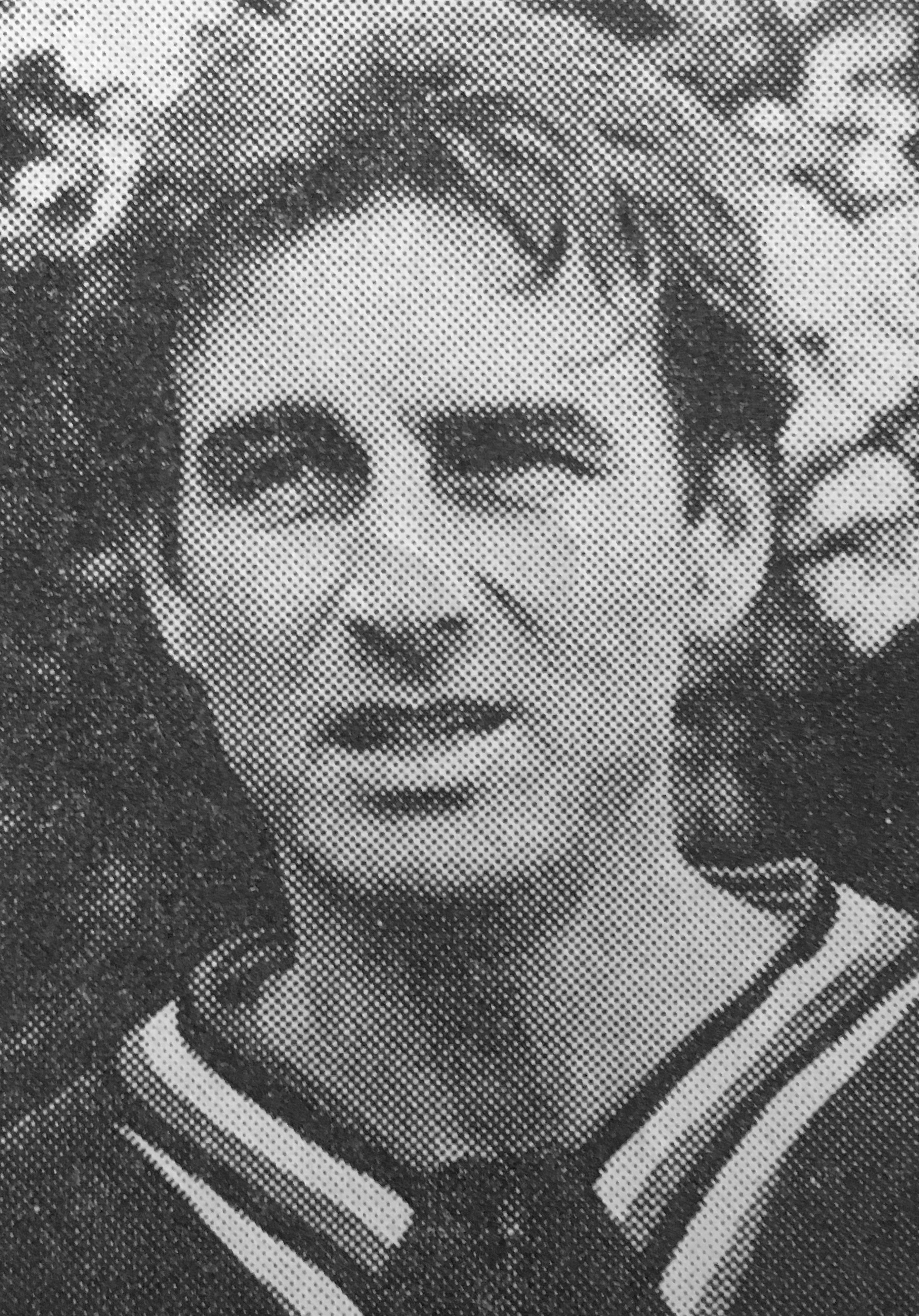
Villa cup winner and captain Pat Saward led Albion to promotion

A FORMER Aston Villa captain and 1957 FA Cup winner steered Brighton to the first promotion I witnessed on my Albion journey.

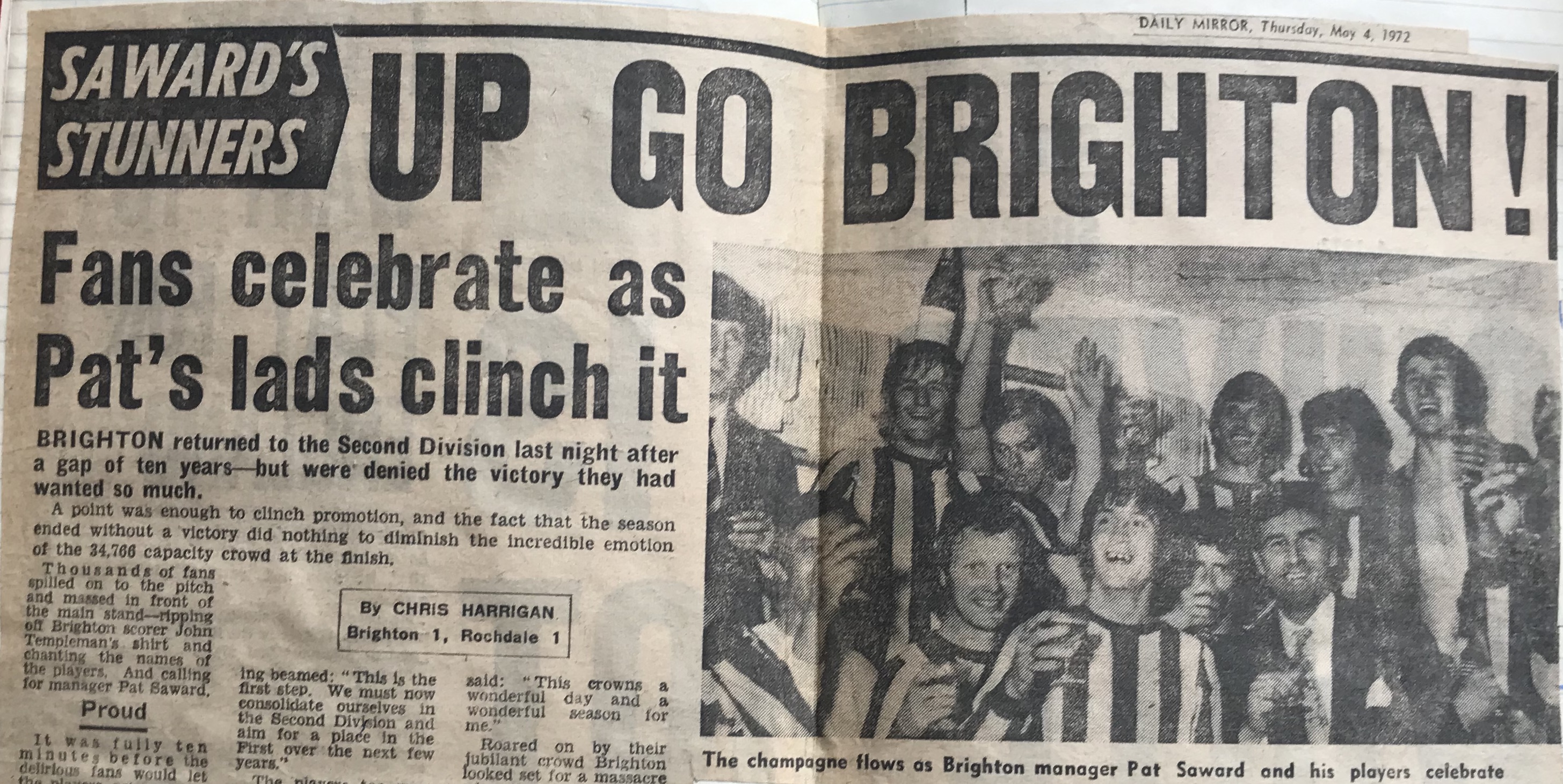
Genial Irishman Pat Saward, who lived in my hometown of Shoreham during his time as Albion boss, galvanised a squad not expected to be promoted from the third tier and took them up as runners up behind his former club in 1972.

As the champagne flowed in the Goldstone Ground home dressing room, Saward took centre stage surrounded by his blue and white stripe-shirted heroes.

When the promotion tilt had looked like faltering, he’d been bold enough to make drastic changes to the side before a top of the table clash with Villa in front of the Match of the Day cameras. After a memorable 2-1 win in which Willie Irvine scored a goal later judged as the third best in the programme’s Goal of the Season competition, Saward added to his squad on transfer deadline day, bringing in Northern Ireland international Bertie Lutton from Wolves and Ken Beamish from Tranmere Rovers, described in the Official Football League Book as “stocky and packed full of explosive sprinting power, a terrific shot and great appetite for the game”.

Saward told the publication: “They were both last ditch signings and Ken made an astonishing difference. I spent only £41,000 in getting my promotion side together so we were very much Villa’s poor relations in that sense.”

The manager put the success down to: “Dogged determination to succeed from all the players. We stamped out inconsistency. I got rid of ten of the players I inherited and got together a team built on character. That’s the key quality, apart from skill of course.”

However, hindsight reveals the club wasn’t really ready for the higher division and some have suggested Saward broke up the promotion-winning squad rather too hastily. Players he brought in who were used to the level now known as the Championship struggled to gel, and the manager turned to rather too many loan signings.

A mid-season run of 13 consecutive defeats was Albion’s undoing and a glamour FA Cup tie at home to First Division Chelsea in early January 1973 gave a welcome respite from the gloom.

Ahead of the match, Saward opened his heart to Daily Mirror reporter Nigel Clarke, revealing that he couldn’t understand why the side had struggled so much.

“I wish I knew. But I’ve learned more about football these last few weeks than at any other time in my career.

“We are five points behind the next club but I must be the luckiest man in the league. There are no pressures on me,” he said, explaining that supporters were still writing to him, backing him and the team.

“When we came up from the Third Division, I was so big-headed, so confident. I thought with the right results we could go straight through to the First Division. I really did.

“There was spirit and ambition here – and there still is….that’s how this club gets you. My heart is in the place.”

Saward revealed that he had turned down two better paid jobs in the First Division to stay at Brighton after the promotion win, telling Clarke: “What I want is importance, appreciation, understanding and love…not being kicked up the backside and put under the lash.

“Adulation is false. I’ve found my oasis at Brighton and I’m wealthy the way I want to be – in feeling.”

Although the Chelsea game ended in another defeat, fortunes eventually changed the following month – but the damage had been done and Brighton went straight back down.

A defiant Saward promised to blood more youngsters like Steve Piper and Tony Towner, who’d done well when drafted in and Piper, in a matchday programme article, said of him: “Saward was more of a coach than a man-manager, very suave and sophisticated. He knew his football from his days at Coventry.”

However, when results didn’t improve on the return to third tier level, and with a new, ambitious chairman – Mike Bamber – at the helm, Saward was sacked and replaced with the legendary Brian Clough.

Albion’s hierarchy had turned to the untried Saward in the World Cup summer of 1970 after Birmingham City poached Freddie Goodwin from Brighton to replace Stan Cullis as their manager. It was second time lucky for Saward, who’d applied to succeed Archie Macaulay two years previously when Goodwin pipped him to the post.

“Give me ten years and I’ll have Brighton in the First Division,” Saward declared when appointed. Prescient words considering they made it within nine – although it came six years after he’d parted ways with the club.

There’s little doubt Saward was an innovative football man and a popular figure during the first two years of his reign.

Apart from success on the pitch in the 1971-72 season, the way he involved fans in helping him to improve the side also proved a winner.

His buy-a-player appeal was a direct attempt to involve the supporters in the affairs of their club and Saward led a sponsored walk on Brighton seafront as one of the initial events geared towards generating funds to help him compete in the transfer market.

“Too many people spend too much time shouting about how hard up their club is, and too little time fighting to improve the situation,” Saward said in an article for the April 1971 edition of Football League Review. “You never get success if you sit around. You must have courage, even audacity, and work hard for survival.”

The first funds generated provided Saward with the money to bring in experienced Bert Murray from Birmingham City, initially on loan, and then permanently. Murray would go on to be voted Player of the Year in 1971-72.

Another player who signed on loan at the same time as Murray was Preston’s Irvine, who recalled in his autobiography, Together Again, how Saward wooed him.

“Pat sold me the place with his charm and persuasive ways,” he said, describing the former male model as “extrovert, infectious and bubbly”.

He added: “Pat Saward was a gem of a manager and a pleasure to play for. He said what he thought, but never offensively; in a matter-of-fact, plain-speaking kind of way, rather than aggressively.”

Irvine continued: “Saward had the knack of making people feel important. He instilled pride and a sense of identity…..Pat loved attacking, entertaining football and worked tirelessly for the club. I would have run through that proverbial brick wall for him.”

As Brighton neared promotion, Irvine said: “Saward, with a joke or a smile, an arm around the shoulder or a bit of geeing up, knew just how to keep a dressing room happy or dispel any tension or nerves.”

Sadly, Irvine’s opinion of Saward shifted dramatically when, during the summer, the manager told him he intended to bring in a replacement – although it was three months before he eventually signed Barry Bridges from Millwall.

Saward and new signings Barry Bridges (left) and Graham Howell

Irvine was in the starting line-up at the beginning of the season and scored six times in 13 league and cup games, but, once Bridges arrived in October, his days were numbered, and, before the year was out, he was sold to Halifax Town in part exchange for Lammie Robertson.

Saward had already dispensed with the services of Albion’s other main promotion season scorer, Kit Napier, along with his former captain, John Napier.

Irvine said that once Albion were promoted, Saward changed. “He seemed to become unapproachable, or at least he did to me, and where once I could see him whenever I wanted, now I seemed to have to book an appointment two or three days in advance. We all had to.”

Teammate Peter O’Sullivan, who had repaired his relationship with Saward after some difficult early exchanges which saw the Welshman transfer-listed, also witnessed a change in the manager.

“We had one or two players who were over the hill and Pat just lost the plot. It was grim,” he told Spencer Vignes in A Few Good Men.

Albion’s tier two fortunes were picked over in some detail in a feature reporter Nick Harling compiled for Goal magazine.

“I didn’t foresee the snags and the type of league the Second Division was,” Saward told him. “It’s the hardest division of the four. Everyone is fighting either to stay in or get out.

“It’s a hell of a hard division. It’s a mixture of the First and Third. It’s good and very hard football. They don’t give you an awful lot of time to play.

“It’s a division governed by fear because to drop out of it is not good, while to get out at the top is fantastic. I didn’t believe the gap would be so different.

“Teams are so well organised and supplement their lack of ability with tremendous defensive play. It’s very hard to get results.”

While open and honest, they didn’t sound like the words of a manager very confident of finding a solution, and Saward sought to explain part of the problem when he said: “To me the most important thing is the attitude of mind. Players should have an arrogant attitude, an attitude that they’re going to do well even when the chips are down. But some types are destroyed. These are the ones who succumb and want to rely on other people.

“Here we’ve got some great boys, but I wish to God some of them had more determination.”

Bamber was resigned to relegation but nonetheless confident of where the club was heading. “There’s no doubting it – First Division here we come,” he told the magazine.

Saward added: “I haven’t lost any enthusiasm. I’ve had my hopes dampened slightly, but one overcomes that.

“This club has got to be built for the future. I want to put Brighton on the map.”

Sadly, when Albion’s poor form at the start of the 1973-74 season continued, Saward publicly admitted: “I haven’t any more answers. I am in a fog.”

Unsurprisingly, the Albion’s directors interpreted it as a loss of confidence and sacked him.

It’s front page news on the Evening Argus as Saward is sacked

Saward never managed in the English game again, although he coached in Saudi Arabia for a while.

Born in Cobh, County Cork, on 17 August 1928, Saward lived in Singapore and Malta during his childhood, before the family moved to south London.

His first club was Beckenham FC before he turned professional with Millwall in 1951. He made 118 appearances for the Lions in the next four years.

Saward was 26 when Eric Houghton signed him for Villa for £7,000 in August 1955. The legendary Joe Mercer took over as Villa manager in 1958.

Pat enjoyed a goalscoring debut with his new club, hitting the final equalising goal in a 4-4 draw with Manchester United at Villa Park on 15 October 1955. But he struggled to oust left half Vic Crowe and made only six appearances that season.

In Crowe’s absence through injury the following season, Saward became a regular, making 50 appearances.

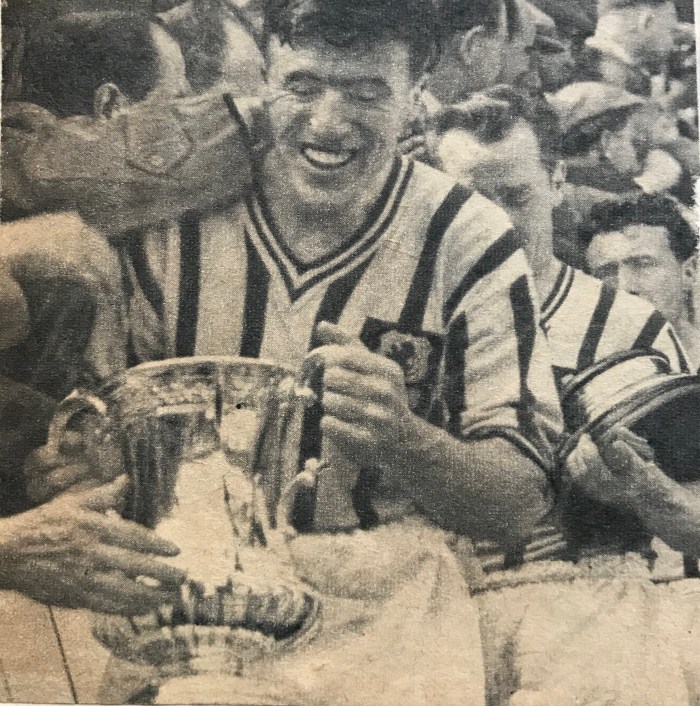
Saward (right) descends the steps at Wembley as a FA Cup winner with Aston Villa

In total, Saward played 170 games for Villa between 1955 and 1960, most notably featuring in their FA Cup winning team in 1957. Villa beat Manchester United 2-1 in the final at Wembley Stadium in front of a crowd of 99,225, Peter McParland scoring twice to win Villa the Cup for a seventh time.

Saward made only 14 appearances as Villa were relegated from the top-flight in 1959 but he was back in harness as captain when they made a swift return as Second Division champions in the 1959-60 season.

In his final season, he made just 12 appearances, his last coming on 22 October 1960 in a second city derby, Villa beating Birmingham 6-2. The following March, he was given a free transfer and moved on to Huddersfield Town.

Saward in the stripes of Huddersfield Town

He had first been selected for the Republic of Ireland on 7 March 1954 in a World Cup qualifier in which Luxembourg were beaten 1-0, and he went on to make 18 appearances for his country, the last, on 2 September 1962, coming when he was 34: a 1-1 draw away to Iceland in Reykjavík.

He played twice against England in World Cup qualifiers in 1957, a 1-1 draw and a 5-1 defeat, when he was up against the likes of Duncan Edwards, Johnny Haynes and Stanley Matthews, and in the same competition against Scotland, in 1961, when the Irish lost 4-1, and his teammates included Johnny Giles.

After 59 appearances for the Terriers, he dropped out of the league but acquainted himself with Sussex when moving to Crawley Town.

Jimmy Hill signed him for Coventry as a player-coach in October 1963 and although he made numerous reserve team appearances, he really made his mark as a coach and was responsible for the rapid development of City’s youth team in the 1960s.

Saward (left) with assistant manager Alan Dicks and Jimmy Hill at Coventry City

Willie Carr and Dennis Mortimer were just two of several first teamers who made it under his guidance. He stepped up to first team assistant manager when his former Eire teammate, Noel Cantwell, was appointed boss in 1967.

Not long after his switch to the Goldstone, Saward picked up one of his former Sky Blues proteges, Ian Goodwin, initially on loan, and then permanently, and eventually made him Albion captain. The rugged defender’s arrival was remembered in an Argus article.

When Saward died on 20 September 2002 following a period when he’d suffered with Alzheimer’s, an excellent Villa website pieced together a detailed obituary. His career is also recorded on the avfchistory.co.uk site.

Saward was laid to rest in the same Cambridge cemetery as his brother Len, a forward who played a total of 170 games for Cambridge United between 1952 and 1958, scoring 43 times. He went on to serve the club behind the scenes in their commercial department.

Pictures from my schoolboy Albion scrapbook and various online sources.

100 goals in Scotland and England for Neil Martin

2 MartinSCOTTISH international Neil Martin remains a legend at one of his homeland clubs but his brief time at Brighton was more like a bad dream after a goalscoring start.
QoS Martin

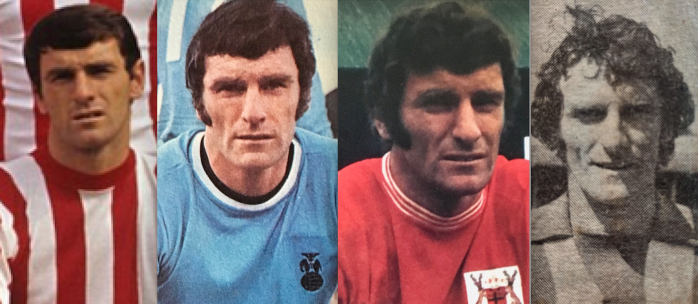
The striker’s youthful picture can still be found on the legends section of Queen of the South FC’s website where it notes he was among the first players to score 100 league goals in both Scotland and England.

It was while playing for the Wearsiders that he gained three Scotland international caps, all in 1965.

IMG_5147Martin scored 28 goals in 119 games for Nottingham Forest having moved down from Scotland in the 1960s and begun his English league career with Sunderland.

Martin partnered the legendary Denis Law up front in World Cup qualifiers against Poland and Finland and his third and final cap was earned in a 1-0 win over Italy playing alongside Tottenham’s Alan Gilzean.

IMG_5146One of his most prolific spells was at Coventry City (above) where, in three years, between 1968 and 1971, he scored 40 goals in 106 appearances.

He was slightly less prolific for Forest (although he was on the scoresheet in Clough’s first game in charge) before Peter Taylor brought him to the Albion on 26 June 1975.

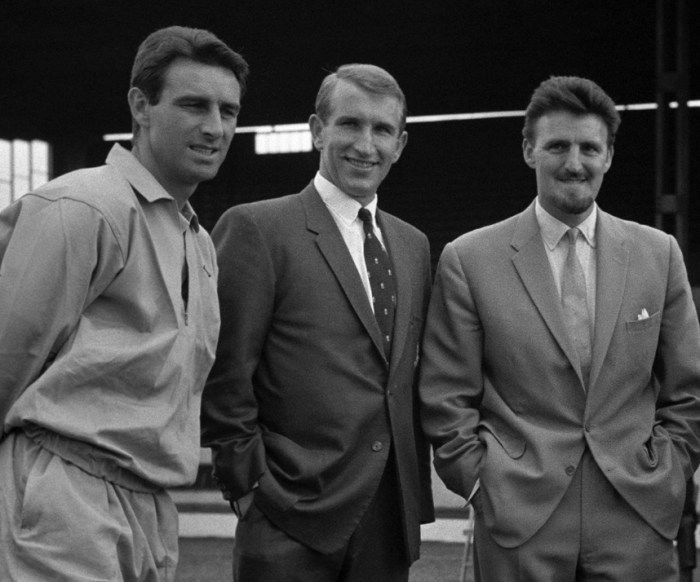
Four new players were presented to the assembled press that pre-season and standing alongside Martin was one Peter Ward.

Martin scored on his league debut for Brighton as Rotherham United were dispatched 3-0 but he didn’t stay in the side long because Taylor brought in loan signing Barry Butlin, also from Forest, for five games to play up front alongside Fred Binney and Gerry Fell.

Martin did get a run back in the side during the autumn, when he added to his goals tally. But Taylor obviously felt the attack needed something extra and the £30,000 arrival of Northern Ireland international Sammy Morgan from Aston Villa spelt the beginning of the end of Martin’s short spell at the club.

He scored eight league goals and one in the FA Cup in 18 starts (plus four substitute appearances) but it all ended somewhat acrimoniously.

The Argus reported on February 13 1976 that the 32-year-old former Scotland international had been transfer listed and banned from the Goldstone.

Words had evidently been exchanged after Martin had been subbed off in a reserves game and, try though he did, reporter John Vinicombe couldn’t find out exactly what had gone on.

Taylor was renowned for his tough stance with players. He suspended six players in the September that season and he had fallings out with Ian Mellor, Joe Kinnear and reserve ‘keeper Derek Forster.

Martin didn’t play for the club again, instead being moved on to Crystal Palace where he scored just the once in nine appearances.

At the end of the season, he joined what was a familiar exodus for ageing English league players at the time and played alongside England’s World Cup winning captain Bobby Moore, and ex-Arsenal full back Bob McNab, for San Antonio Thunder in America.

It wasn’t unfamiliar territory for Martin because, in the summer of 1967, he was part of the Sunderland contingent who played in the NASL as Vancouver Royal Canadians. The 16-man squad also included the above-mentioned Forster.

After Martin’s 1976 stint at San Antonio, he didn’t play in England again. His final playing days were in the Republic of Ireland, interestingly being given a lifeline by another former international striker who’d played for Brighton – Barry Bridges.

The former Chelsea, Birmingham, QPR and Millwall striker had a couple of seasons managing Dublin side St Patrick’s Athletic, where Martin joined him.

The Scot had a brief managerial foray with Walsall, mainly in tandem with Alan Buckley, but it didn’t end well and he left the club in 1982.

Born in Tranent, just east of Edinburgh, on 20 October 1940, Martin’s break into the professional game came at Alloa Athletic. His 25 league and cup goals in the 1960-61 season brought about a move to Queen of the South where he continued to score plenty of goals – 33 in 61 appearances.

A £7,500 transfer fee took him to Hibernian in 1963. He’d supported them as a boy and after Jock Stein took over as manager in 1964, Martin netted 29 league and cup goals in the 1964-65 season. He said later that Stein was the biggest influence on his career.

It was top-tier Sunderland who paid £45,000 to take Martin south of the border. His goalscoring in his first taste of English football wasn’t quite as prolific as it had been in Scotland, mainly due to the Wearsiders not being able to decide on the best strike partner for the Scot.

Eventually, in 1968, he moved on to Coventry City, newly-promoted to the old First Division. He spent three years at Highfield Road, developing good partnerships with Ernie Hunt and John O’Rourke, with the emerging talents of Willie Carr and Dennis Mortimer providing good service from midfield.

His switch to Nottingham Forest towards the end of the 1970-71 season helped them survive the drop, but they went down the following season and that was the last Martin saw of top-flight football.

1 Martin
3 Martin