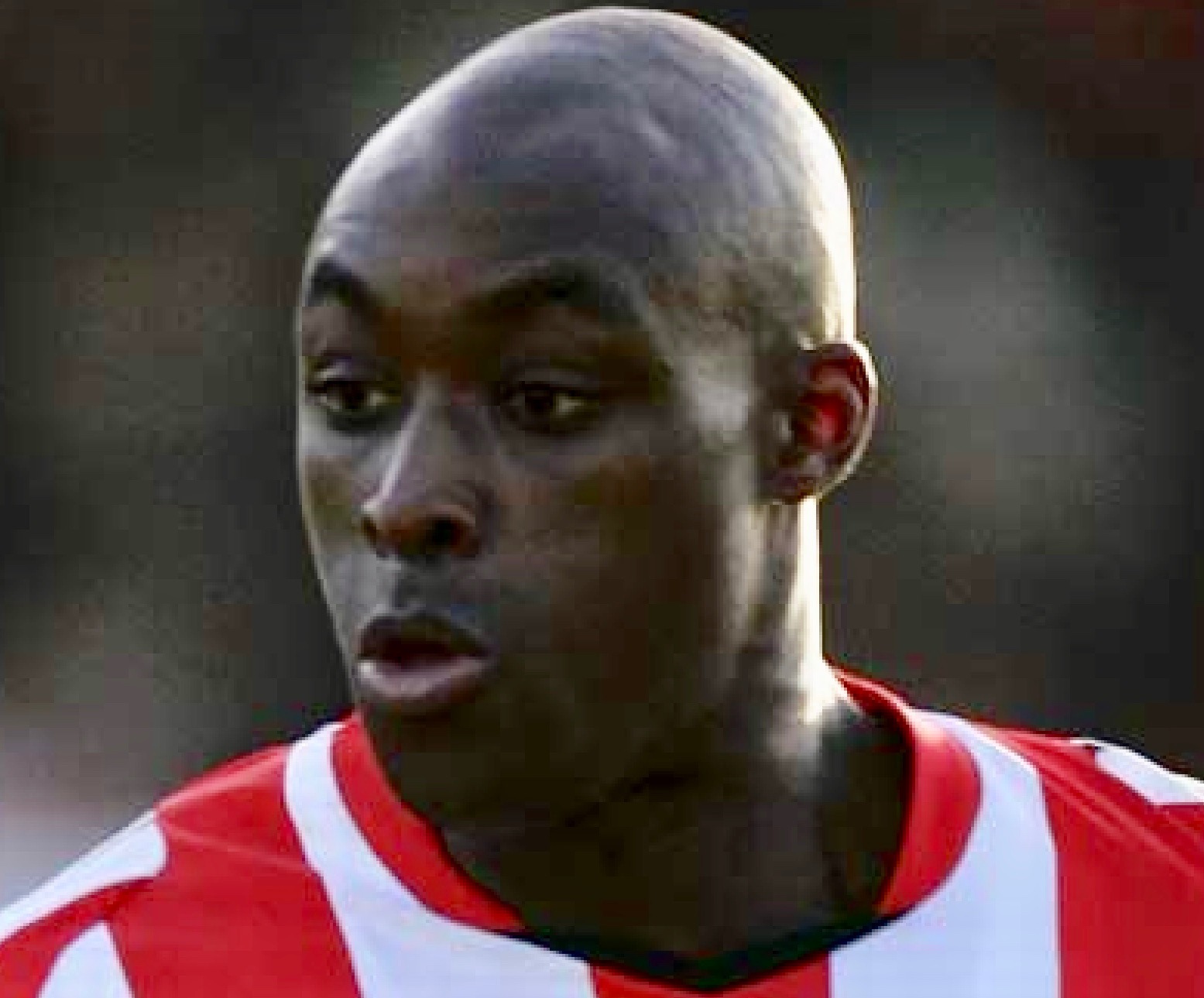
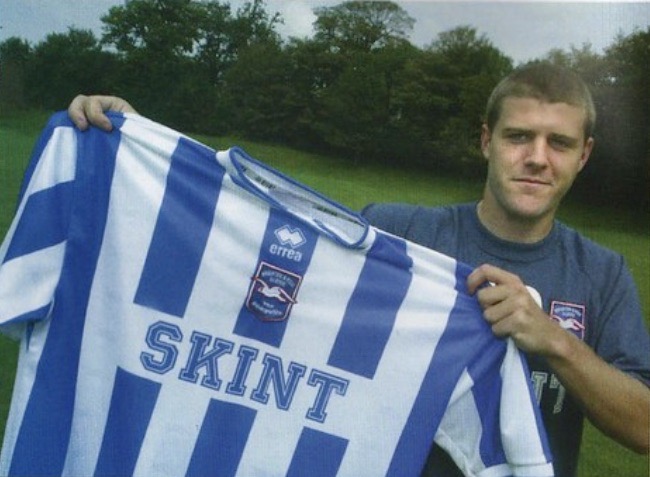
The Withdean visitors’ teenage winger went on to great things

MY FIRST memory of watching James Milner play was at Withdean Stadium when he was on loan to Swindon Town from Leeds United.

Even then, as a seventeen-year-old, he had something about him – but I certainly didn’t imagine I would be watching him playing in the Premier League and Europe for Brighton 20 years later!
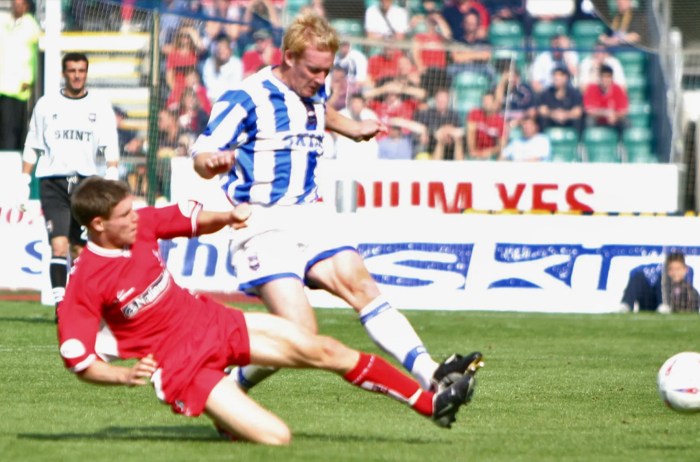
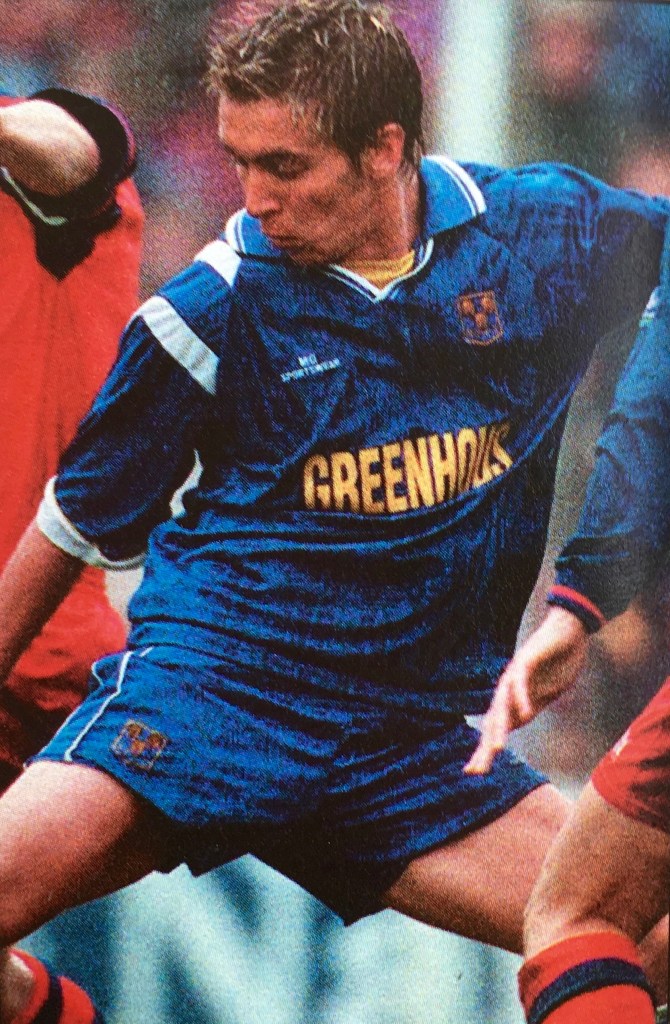
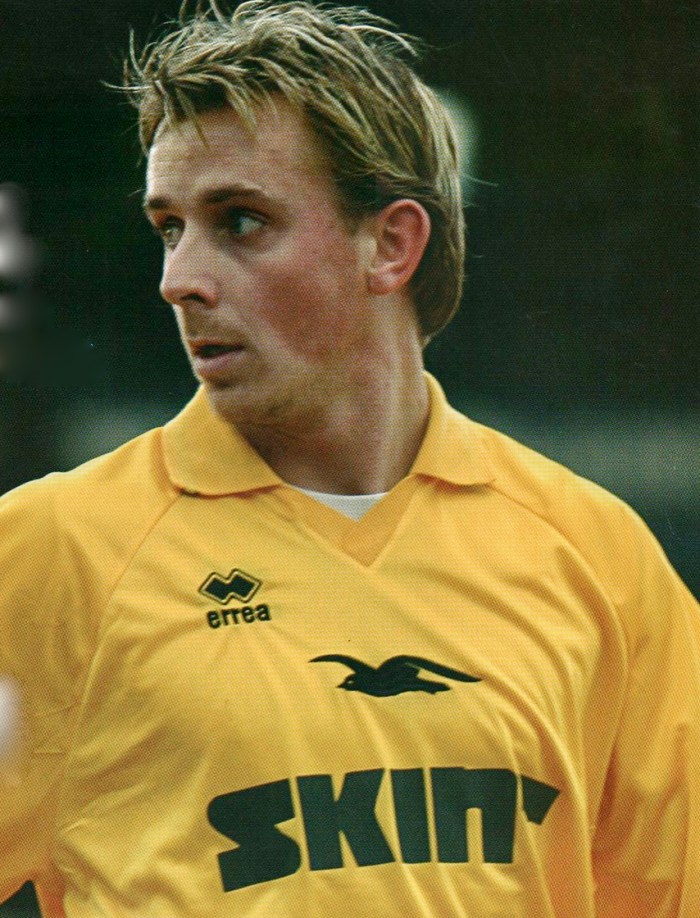
Young Milner tackles Brighton’s Kerry Mayo

That League One game on 6 September 2003 finished 2-2. Sam Parkin scored twice for Town and Albion’s goals came from Gary Hart and a penalty from on-loan Darius Henderson.

The Albion matchday programme subsequently recorded: “Kerry Mayo had a fine match, mainly subduing the impressive teenager James Milner.” (although, as the picture suggests, he wasn’t afraid to launch himself into a tackle).

Swindon’s manager Andy King had persuaded his old Everton teammate, Peter Reid (in charge of Leeds at the time) to loan Milner to the Robins for a month. In just six matches, the young winger scored twice.

“The boy is a terrific talent and everyone has been able to see the skills he has and I have no doubt he will go on to perform in the Premiership,” King told Sky Sports.

Milner already had two goals to his name for his parent club having scored twice in the Premier League in 2002-03 while still only 16.

On Boxing Day 2002, ten days short of his 17th birthday, he became the youngest player to score in the elite division, with a goal in a 2–1 win at Sunderland (the record had been set a couple of months earlier by Wayne Rooney for Everton and was subsequently taken by James Vaughan, also for the Toffees).

Milner had gone on as a 36th-minute sub for Alan Smith, a player he had admired when a boy growing up in Leeds. Terry Venables, Leeds manager at the time, said: “It’s not just a case of him simply coming through and helping out because every day he is getting better and better.”

Milner scored again three days later after going on as a 31st minute sub for Harry Kewell as Leeds beat Chelsea 2-0 at Elland Road.

“Picking up Mark Viduka’s pass in first-half injury time, Milner beat his man before thumping a right-foot shot low into the net with Blues keeper Ed de Goey powerless to stop him,” said the BBC report of the match.

“I am very pleased with him,” said Venables. “He is growing in this group and he has taken advantage of every day’s training to show what he can do.

“He has two good feet, he is courageous and everyone likes him a lot. He also is not only a nice, solid, good, well-mannered boy, he is a very talented player.

“It’s early days for the boy. At the moment he has not achieved anything and he is the first to admit that.

“But I think a lot of people are confident about his development. We have just got to take it easy.”

Wind on the clock more than two decades and Albion are now enjoying the benefit of Milner’s vast experience gained winning trophies galore for two of the country’s top clubs and playing for his country.

Born in Wortley, Leeds, on 4 January 1986, Milner broke through with Leeds United before joining Newcastle United at 18 and having loan and permanent spells at Aston Villa.
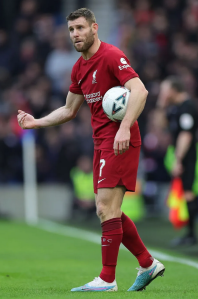
Milner went on to make more than 200 league and cup appearances for Manchester City and more than 300 for Liverpool as well as earning 61 full England caps and a record 46 at under 21 level.

Against Wolves on 22 January 2024, 38-year-old Milner overtook Ryan Giggs to go second outright on the Premier League’s all-time appearance list when he played in his 633rd top-flight match, 20 short of record holder Gareth Barry.

“I’ve had some luck,” Milner told TNT Sports. “I’ve worked hard and you have to enjoy it to put the work in every day. I’ve hopefully got a few more games in me.”

Milner’s free transfer move to Liverpool from Manchester City in the summer of 2015 proved an inspiration that brought him even more medals than he had won with the Sky Blues.

Over eight seasons, he made 332 appearances, scored 26 goals and lifted seven trophies along the way.  

“He’s a role model,” said manager Jürgen Klopp. “Nothing we have achieved in the last few years would have happened without James Milner, it’s as easy as that.

“Whether he was on the pitch or not, he’s set standards in a way not a lot of people can set standards, and it educated all of us.”

In a heartfelt tribute to the player, Klopp added: “From the first moment for me, he was a super-important player reference point.

“When you have a meeting and you look at Millie’s eyes and he’s not shaking his head, you know you’re on the right way. Nothing would have happened here without Millie because he kept it always going.

“From the player who was super-angry when he didn’t play, to the player when he did play, the way he pushed the whole dressing room before a game is absolutely second to none.”

For his part, Milner enjoyed a good relationship with Klopp, apart from once during a half-time flashpoint when the manager lost it, as Milner revealed to The High Performance Podcast.

“We had one moment where he was sharing his thoughts and I was sharing mine and I remember him smashing his hands on down the table and shouting, ‘Will you shut the f**k up!’ But Jurgen was brilliant, we had a great relationship and we were great off the pitch.”

It was Klopp’s predecessor, Brendan Rodgers, who persuaded Milner to make the journey along the M62, and he said at the time he signed him: “He had won the Premier League, he had won cups. His whole ambition was to win the Champions League and he felt that he would have a better opportunity to win it at Liverpool.”

Rodgers revealed that when Liverpool were trying to persuade him to sign, his wife Charlotte spent time chatting to Mrs Milner while he spent time with her husband!

“His actual football talent has probably gone under the radar because he’s played around some outstanding talents, but this is a guy who works tirelessly at his game,” said Rodgers.

“He’s in here at 7.45am making sure he’s prepared for his training, getting all of his food supplements and getting everything correct before training – he’s in two-and-a-half hours before he trains and then does his work, gives his maximum.

“He prepares himself like an elite player should. He’s also got big character and a big mentality.”

Rodgers was effusive in his praise of the new signing even before a ball had been kicked in anger after he scored the winner in a 2-1 pre-season victory over Brisbane Roar. Playing in the central role he preferred, he also provided a pass for Adam Lallana’s 27th-minute equaliser.
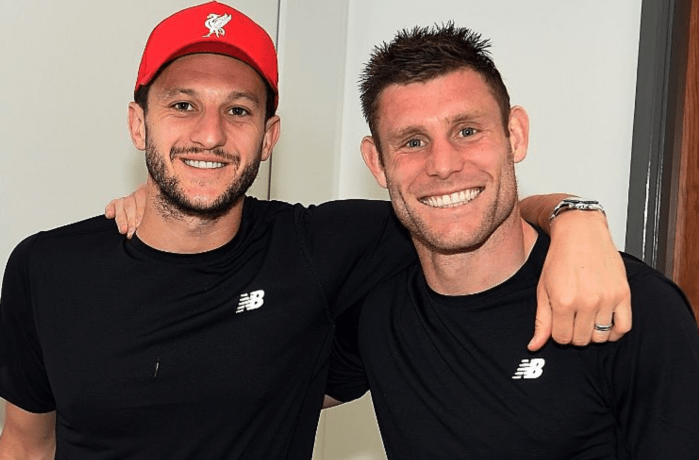
Former Liverpool teammates Adam Lallana and James Milner reunited at Brighton

“James Milner is a class act,” he told reporters. “We had to work very hard to get him in but I think we’ll see over the course of the season how important he is for us.

“He’s a wonderful personality and a top class footballer. When you see him play in his favourite position, you see all these qualities come out.”

Milner in action for Liverpool against Brighton during a lockdown match

Rodgers departed Anfield not long after Milner’s arrival but the player grew in stature under Klopp and, although it wasn’t his favourite position, he spent much of 2016-17, filling in at left-back.

That season he made 40 appearances – 36 in the Premier League – as Liverpool qualified for the Champions League. They made it all the way to the final, only to lose to Real Madrid in Kyiv. But they made amends the following season and returned from Madrid with Liverpool’s sixth European Cup.
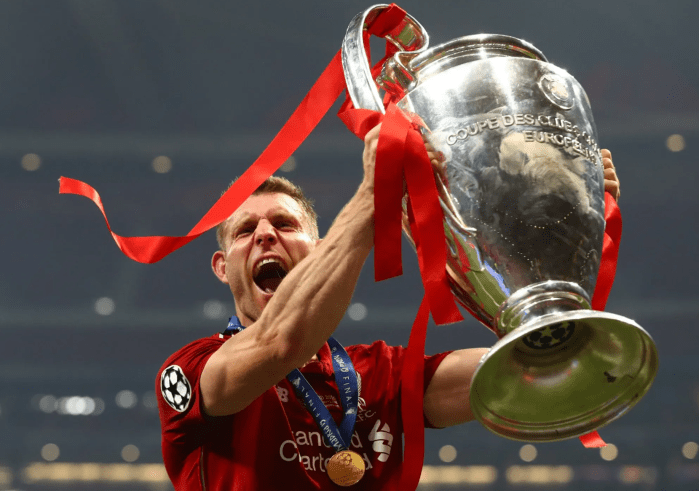
Milner went on as a second-half substitute in the Estadio Metropolitano in the 2-0 win over Tottenham Hotspur. “It will be nice going to Melwood seeing No.6 there,” he said. “Liverpool has a great history and when I signed for the club, I was desperate to add trophies as this club expects to win trophies and it has an amazing history – but we want to create our own history.”

Not only did they add the UEFA Super Cup and FIFA Club World Cup, Milner made 22 appearances as Liverpool clinched the Premier League title in 2019-20 with 99 points.

In 2021-22, Milner scored the first in Liverpool’s 11-10 penalty shoot-out win in Liverpool’s Carabao Cup defeat of Chelsea at Wembley, having gone on as an 80th minute sub, and he repeated the feat (as a 74th-minute sub) when the teams were also goalless at the end of the Emirates FA Cup final three months later. Liverpool won that 6-5 on penalties.

In his final season at Anfield, Milner featured 43 times and moved up to third spot on the Premier League’s all-time appearances list.

“I’m Leeds through and through and always have been and always will be – but I never probably thought that another club would get into me as much as Liverpool has,” said Milner.

The player he followed from Anfield to the Amex, Lallana, told the BBC exactly what Milner brings to a squad, especially in setting an example to younger players.

“He helps the management team in so many ways with the experience he’s built up,” said Lallana. “He knows what it takes to win. He knows what sacrifices need to be made.

“I’m not sure how he got the boring James Milner label, but he couldn’t be further away from that. He’s one of the loudest in the dressing room for sure. Full of life. Full of banter. But he’s definitely old school.”

Lallana added: “Those basics are always there and they’ll never change. I think that’s what’s made him who he is and given him his success. Those values that he’ll always live by. He taught me how to be a better professional and a better role model.”

It all began at Westbrook Lane Primary School in Horsforth and the secondary Horsforth School. He played local amateur football with Rawdon whose coach Graeme Coulson had first noticed Milner as a nine-year-old.

“I first came across him when I was refereeing a junior match involving Westbrook under nines at Horsforth,” Coulson told the Craven Herald and Pioneer. “He was so outstanding then that I asked some of the Horsforth parents who he was.

“I noted his name and it was one not to be forgotten. He was an outstanding talent scoring lots of goals but he was also very strong.”

Horsforth School spokeswoman Fran Morris said: “He was a first class student and he did really well at his GCSEs (he got eleven).

“He was very sporty at school and he won the PE prize which was handed out just before we broke up.

“He was the most wonderful young man and he was very popular, so we wish him all the best in his career. I am very sure he will do well and we are all proud of him at the school.”

Let alone his football ability, the young Milner also played cricket for Yorkshire Schools and excelled as an athlete: he was Leeds Schools’ cross-country champion for three successive years and district 100 metres champion for successive years.

Milner was a season ticket holder at Elland Road along with his parents Peter and Lesley before becoming a ball boy. He joined the Leeds United Academy after being spotted playing for Westbrook in Horsforth.

The sporty youngster was forced to decide between cricket and football, explaining in one interview: “I played for Yorkshire at the ages of 10 and 11 as a wicketkeeper-batsman. It was something I enjoyed but you get to a stage where you have to make a choice.

“I stopped playing cricket at 16 when I moved full time to the Leeds United Academy. They couldn’t take the risk of me getting injured, having my foot broken by a yorker or something like that.

“A couple of months later I made my Leeds debut. I still can’t take the risk for the same reason, but as soon as I retire from football, I’ll look forward to taking up cricket again.”

He completed his formal education at sports college Boston Spa School, which works in partnership with Leeds United, and, as soon as he left school, he was taken on as a trainee.

As he worked his way through United’s youth ranks, he also played for England at under-15 and under-17 levels.
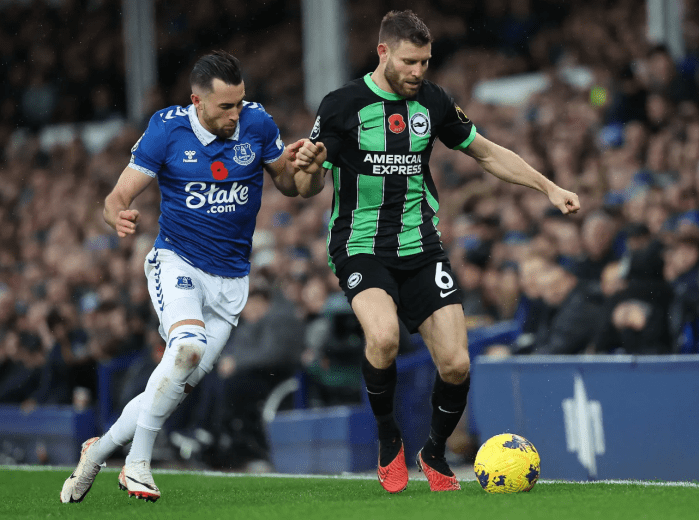
Milner in action for the Albion against Everton at Goodison Park

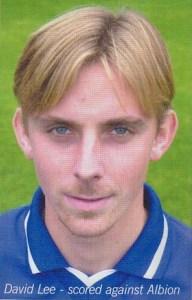
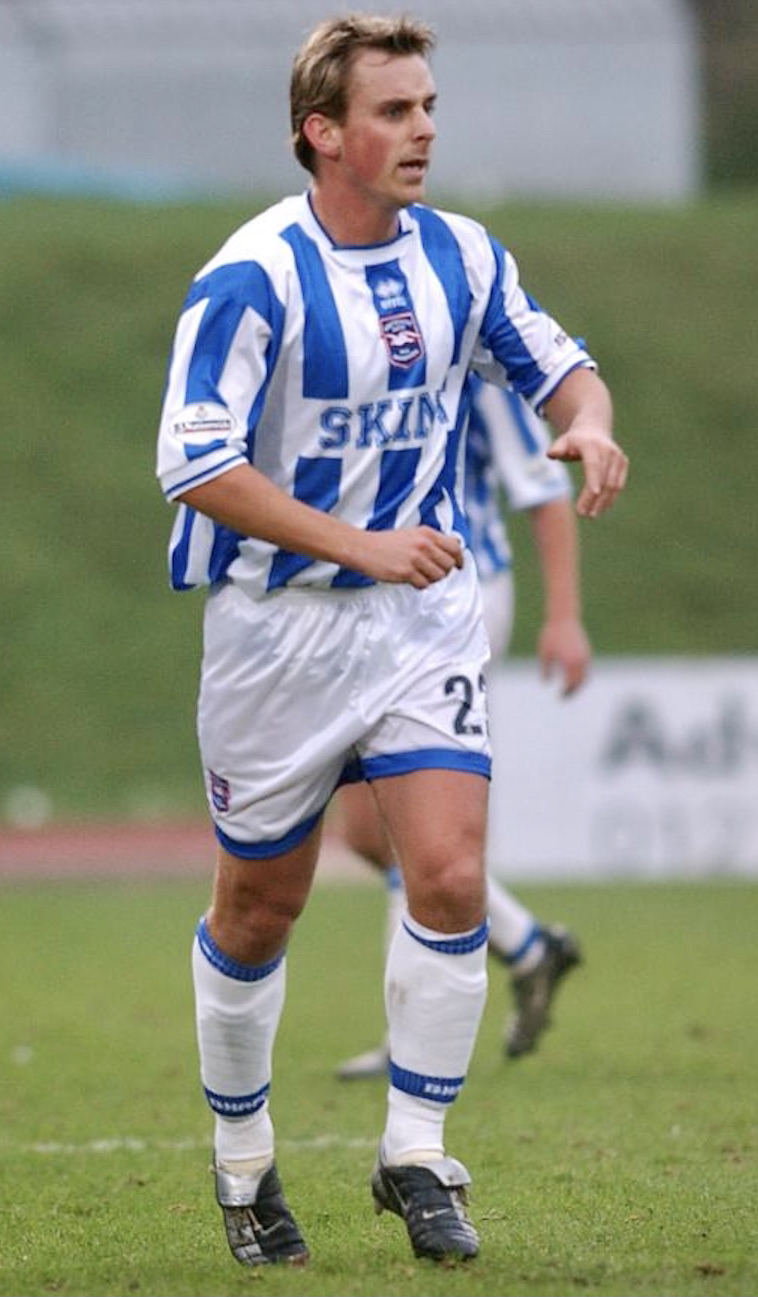
Fate dealt blows throughout Essex lad David Lee’s career

IT MAY simply have been David Lee’s misfortune that he joined Brighton at a time when they weren’t short of decent midfield players.

Nevertheless, a player who had gone through the ranks at Spurs alongside the likes of Peter Crouch and Ledley King might have been expected to make more of an impression.

As it was, the manager who signed him moved on and he ended up starting just one league game in two and a half years with the club.

Ultimately a horror injury brought a premature end to Lee’s career at the age of 28, but he stayed in the game as an agent – Lewis Dunk being one of his clients.

It was in January 2002 that Peter Taylor, a one-time Spurs player himself, brought Lee to the Albion from Hull City in direct exchange for fringe player Matthew Wicks.

Taylor had been close to signing him when he was manager of Gillingham but, after moving on to Leicester City, Taylor recommended him to Southend United instead.

By the time Lee arrived at the Albion, they were already on an upward trajectory towards promotion from the third tier and he had to be content largely with reserve team football and a seat on the first-team subs bench.

The first Albion fans got to see of him came on 23 February 2002 at home to Wrexham when he went on as a 23rd minute substitute for Gary Hart alongside inexperienced Chris McPhee, who was playing in the absence of goal king Bobby Zamora.

Wrexham brought Albion’s run of five straight home wins to an end in what the Argus described as “a dour deadlock” and in the process became the first side to stop the Seagulls from scoring at Withdean Stadium for 13 months.

In fact, sharper-eyed Albion watchers might have recognised the newcomer as a player who’d scored against the Seagulls twice the previous season.

He marked his debut for Southend in the opening match of the 2000-2001 season with an 83rd-minute second goal that sealed a 2-0 win for the home side.

Then, in the reverse fixture, he scored again as United completed the double over the Seagulls on a quagmire of a pitch at Withdean on New Year’s Day 2001. On that occasion, Lee went on as a 77th minute substitute for Ben Abbey and scored five minutes later as the Shrimpers again won 2-0.

Described by Spurs history website ‘My Eyes Have Seen The Glory’ as “a slightly built, but athletic midfielder, who had an eye for an attacking option as he used his passing to try and open up opposition defences”, Lee spent a season at Roots Hall, initially under Alan Little, scoring 10 goals in 52 games. “I played nearly every game so it couldn’t have gone much better really,” Lee told the Basildon Canvey and Southend Echo.

But after just one season with Southend, Lee joined Division Three Hull City, managed by previous manager Little’s brother Brian (better known for his time in charge of Leicester and Aston Villa). It was a decision Lee later rued.

“Looking back, I do regret it,” he said. “I left because the (Southend) manager Dave Webb said he thought I’d had a good season and that Leicester were interested in me.

“My form wasn’t good at the end of the season so he told me they would be coming back to have another look at the start of the next season. Then he told me I’d have to take a pay cut to stay.

“At the same time, Hull offered to double my money for three years.” Hence he ended up with the Tigers.

He made his debut as a substitute in the League Cup and followed up that appearance with brief cameo roles off the bench in the league. One saw him score Hull’s fourth goal in a comprehensive 4-0 thumping of York City for whom Graham Potter was playing!

Lee made a rare start in a 1-1 draw away to Shrewsbury Town and kept his place for the next game (a 1-0 win over Torquay United), but it was back to appearances off the bench after that.

It was Taylor, fired by Leicester but installed as Micky Adams’ replacement at promotion-seeking Albion, who rescued him from Hull, signing him on a two-year contract in January 2002.

Unsurprisingly, Lee saw it as a “massive blow” when Taylor quit the Albion after steering the side to promotion because he didn’t believe enough was going to be spent on investing in the squad to compete at the higher level.

“I’m disappointed because he brought me to the club in the first place,” Lee told the Argus. “When I came, he wasn’t looking for me to get straight into the first team.

“He told me next year he would look to get me more involved. Now he has left it’s going to be difficult. When the new manager comes in, I have got to make sure I am fit and try to impress him.

“It’s a huge stage for a young player in the First Division and I need to be playing.”

Of course, if Lee had hung on at Hull slightly longer, he’d have been joined there by Taylor!

“I should have stayed there for longer but I went to Brighton,” Lee told the Basildon Canvey and Southend Echo. “I did three and a half years there (ed. it was two and a half) and had some great times winning the promotions but I never did hold down a first team place and, when Peter Taylor left, I was well out of it.”

Indeed, in the 2002-03 season, Lee didn’t make a single league or cup appearance for the Albion, although, in October 2002, after Steve Coppell’s appointment as manager, he appeared – and scored – in the first half on a rainy, gale-battered evening alongside trialists Simon Rodger and Dean Blackwell when an Albion XI beat Hassocks 5-0 in a game to mark the opening of a new stand for the County League side. While Blackwell and Rodger subsequently signed up, Lee was sent on loan to Bristol Rovers, but only stayed for a month.

Pretty clear his future didn’t lie with the Albion, on 23 April 2003 he played in a trial match for Cambridge United’s reserves against Gillingham in a 3-0 win. Impressing in another reserve match against Colchester, the U’s manager said he would like to sign Lee on a permanent basis. But nothing came of it, and he remained on Albion’s books.

As if to emphasise what they missed out on, in August 2003 Lee scored against Cambridge in a comprehensive Albion Reserves win. The 3-0 win was the opening fixture for the Seagulls’ second string in the Pontin’s Holidays Combination League.

A short spell on loan to Ryman League Thurrock followed in October 2003 but, in the time he was away, Brighton had a new manager; Mark McGhee replacing Coppell, who had moved to Reading.

And so it was, in December 2003, that Lee finally made his full Albion debut, away to QPR in the LDV Vans Trophy. Albion narrowly lost 2-1, and he was subbed off on the hour mark, being replaced by Gary Hart, but McGhee defended his selection in the following matchday programme.

“I saw the game as an opportunity to find out about players who haven’t had the chance since my arrival,” he said. “The inclusion of David Lee and Dan Harding in particular did not result in us losing the game. Basic defensive errors led to the defeat. However, I did learn a lot about Dan and David and I do believe that both players will continue to make a contribution this season. So, as an exercise, there were positives to take out of the game.”

While Harding would go on to become an established member of McGhee’s side, Lee was a perennial bench warmer and only started one league match: a 2-1 defeat at Sheffield Wednesday on 27 March 2004.

“That was a nice surprise,” he said. “I thought I did okay, apart obviously from the result.”

But Lee realised his Albion future was up in the air, telling the Argus: “I’ve had a meeting with the gaffer and he said he is going to have to wait and see where we are next season, so it’s touch and go for me.”

He admitted he’d been close to moving to Grimsby just before the transfer deadline, but Town boss Nicky Law had chosen alternative options.

Lee was able to join in the celebrations that followed Albion’s promotion via the play-off final win over Bristol City at the Millennium Stadium in Cardiff, but he was only ever on the periphery.

He was given one last chance to prove himself when he was handed a three-month deal in July 2004. But, over that period, Albion brought in Darren Currie and Alexis Nicolas, so, on the expiry of the short term deal, Lee was released.

Assistant manager Bob Booker said: “David worked extremely hard but just fell a little short to make the first team.”

While Lee told the Argus: “I never really got started all the time I was at Brighton. But I worked really hard in the summer, and I did quite well pre-season. That’s why I am disappointed to be going now.”

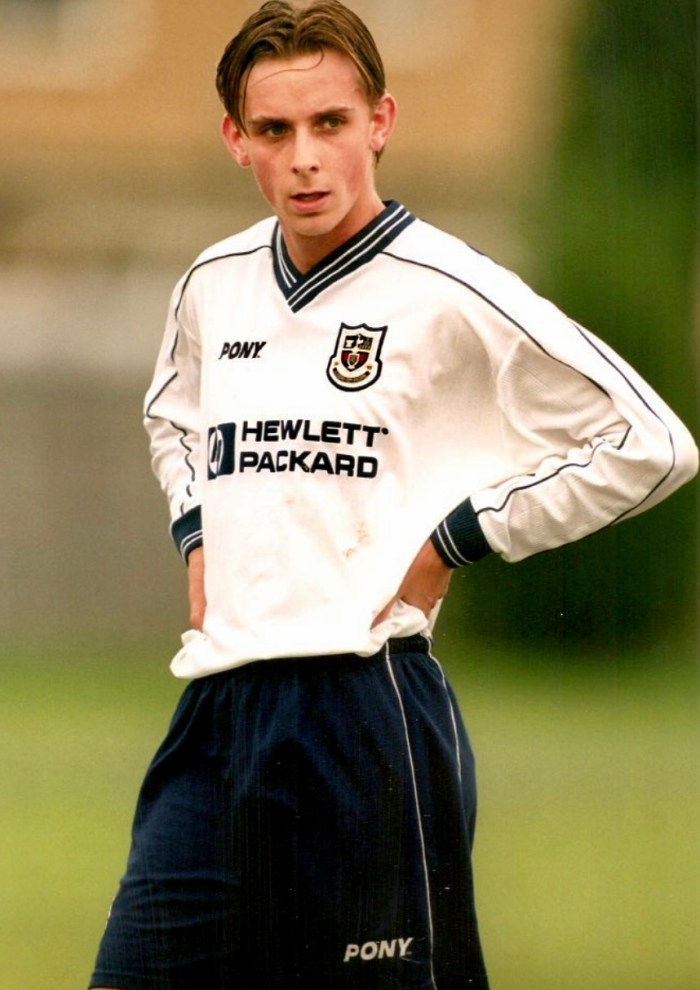
Born in Basildon, Essex, on 28 March 1980, Lee went to Gable Hall School in Thurrock from 1991 to 1996 and his young footballing talent was spotted as an under 10 by Spurs scout Lenny Cheesewright.

Lee talked at length about his career to Lennon Branagan in August 2020 for the excellent SuperHotspur blog.

He developed through the different age groups at Spurs under various coaches, citing in particular Tommy Cunningham really putting him through his paces aged 15-16, then Bobby Arber after he’d signed a scholarship. “He was a real top coach who taught me a lot about tactics and positioning and the ugly side of the game.”

The highlight of his time at Spurs came when he was captain of the 1996 Spurs youth team that won the Northern Ireland Milk Cup, an annual international youth tournament. Spurs beat Blackburn in the final by a single goal scored by John Piercy, who later also moved to Brighton.

Another memorable moment came when Lee, aged only 16, scored the winning goal for Spurs Reserves against Bristol City in a testimonial for Leroy Rosenior (father of Liam).

In Spurs’ youth team, Lee was managed by the former West Ham winger Patsy Holland, who he felt never really rated him. Eventually, in Spurs’ reserve side, he was managed by Chris Hughton – “one of the best coaches that I’ve played for and had the pleasure of working with”.

While contemporaries such as Luke Young progressed to the first team, Lee fell just short and he was honest enough to admit: “Looking back now, I think the thing that you look at was did I really show the coaches that I wanted it enough? And did I really give absolutely everything to be a top player? And probably the answer’s no, if I’m being honest with myself. That’s the biggest regret or the real shame that I have really.”

Ironically, it was when his friend Piercy got a first team call-up instead of him that he decided to move on from Spurs although, once again with the benefit of hindsight, he reckons he was probably too hasty in his decision.

George Graham was manager at the time and Lee reckoned he wasn’t his type of player. Although he still had 18 months left on his contract, he decided to move on because he couldn’t see himself making it at Spurs. But not long afterwards, Glenn Hoddle took over as manager and Lee reckons if he had stayed he might have had a better chance of training with the first team a bit more, and improving as a player.

After the Seagulls released Lee in September 2004, he trained with Oldham Athletic and signed on a non-contract basis for a month but was not retained.

He returned to Thurrock, had a trial at Kidderminster Harriers, signed for Conference side Stevenage Borough in February 2005, but then changed his mind and signed for Aldershot instead.

Football agent Lee

It was during a game for the Shots against Canvey Island in August 2005 that he suffered a horrific injury that doctors told him would end his career.

“I was actually only an hour away from losing my foot and it was all quite worrying as you would expect,” said Lee. “When I was in hospital they told me I would never play again.”

The injury forced him to miss the majority of the 2005-06 season, and, although he extended his contract by a year on 30 May 2006, he eventually left the Shots at the end of January 2007 and signed for Ryman League Division One Harlow Town. That didn’t last long; he had a short spell with Braintree, then AFC Hornchurch and then Canvey Island.

In an interview with Chris Phillips of the Basildon Canvey and Southend Echo in June 2008, Lee said he was pleased to have proved the doctors wrong in managing to get back playing football, but he admitted: “I’ve been playing non-league this season, but my heart hasn’t been in it.”

Lee turned to football agency work that year and has continued in that line ever since. He was with Skillequal for 10 years before switching to ICM Stellar Sports in April 2018.

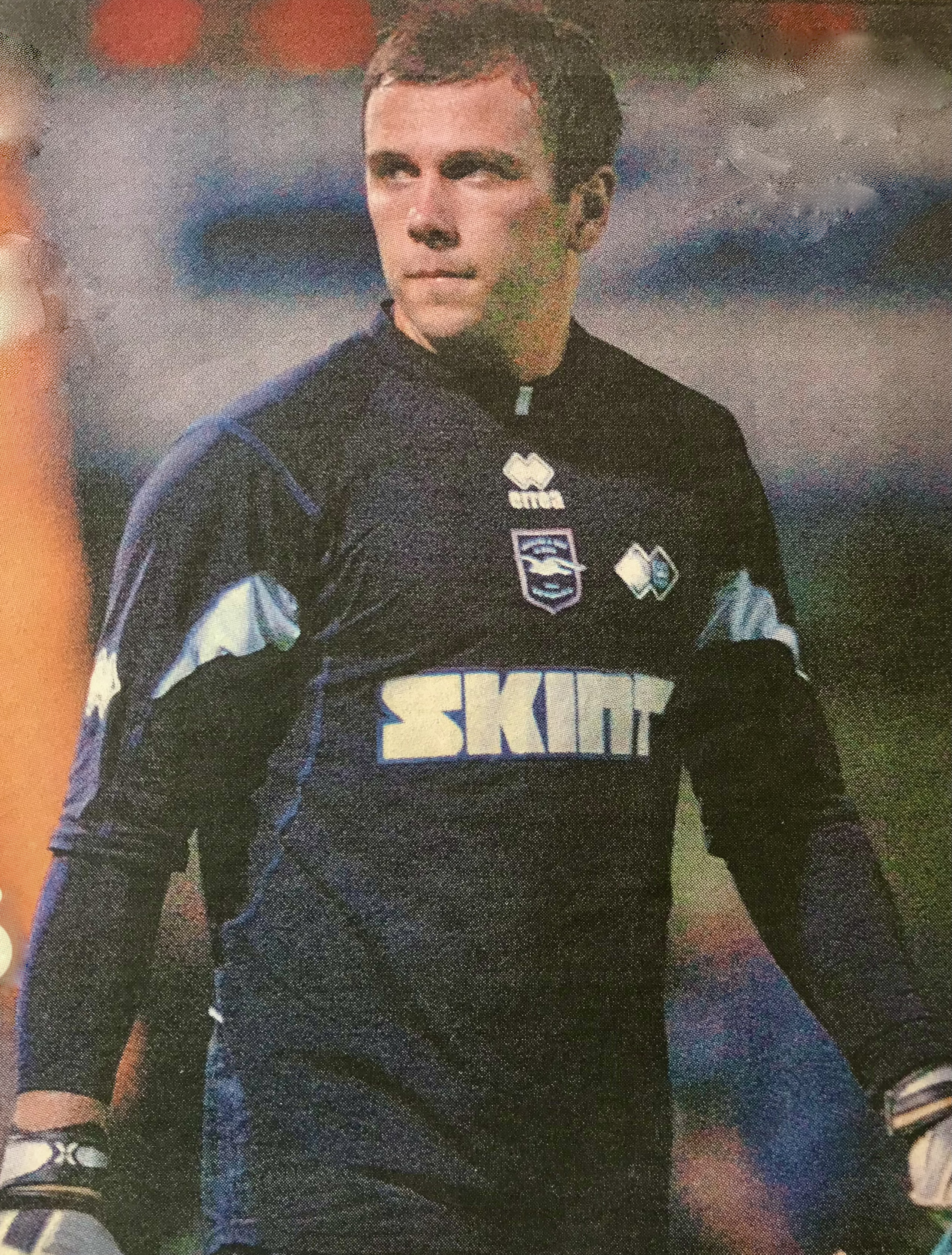
Boo boys saw off international ‘keeper Wayne Henderson

DISGRUNTLED former Albion goalkeeper Wayne Henderson helped Grimsby Town keep their place in the Football League.

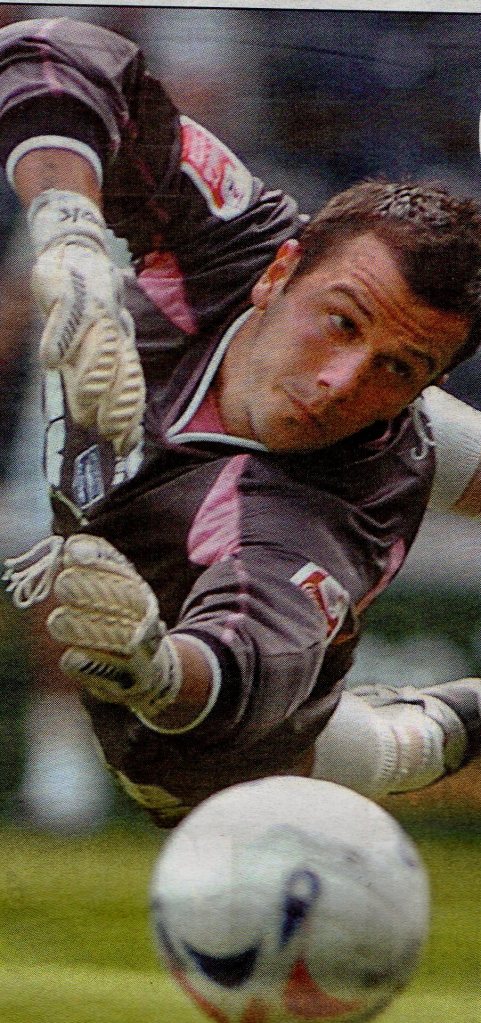
The Republic of Ireland international stopper, forced away from Brighton by a section of voluble supporters, was on loan to the Mariners in 2009 as they desperately tried to avoid the drop.

Although there were Grimsby grumbles on his debut, Henderson’s mission was a success, Town avoiding the drop by four points. But it was only a stay of execution because they finally fell out of the league for the first time in 100 years in 2010.

By then, Henderson was back at parent club Preston North End, who had bought him from the Seagulls for £150,000 on deadline day in January 2007.

He managed only 10 appearances for the Lancashire club – his last game coming in the final match of the 2009-10 season – and in March 2011, when only 27, he was forced to quit the game after two years plagued with spinal injuries.

Much had been expected of the young Irishman at Brighton after an initial loan spell from Aston Villa, where he had been coached by former Seagulls ‘keeper Eric Steele. He made his Albion debut away to Derby County, together with fellow countryman Paul McShane (on loan from Manchester United), in the opening game of the 2004-05 season.

Manager Mark McGhee said the youngster hadn’t put a foot wrong. “His kicking really took the pressure off us,” he said. “He was composed and took a couple of crosses towards the end which also helped relieve the pressure.”

McGhee had first hoped to sign Henderson in January 2005 to help solve a goalkeeping crisis created by a serious shoulder muscle injury to Michel Kuipers in a home match against Nottingham Forest.

Youngster Chris May, son of former Albion defender Larry May, had come off the bench to replace Kuipers in the match but McGhee didn’t see him as experienced enough in the battle to stay in the Championship. The previous season’s first choice ‘keeper, Ben Roberts, was a long-term absentee with a back injury, so McGhee had few options.

The Seagulls hoped a contractual hitch relating to Henderson’s previous loan spell at Notts County could be resolved in time to enable him to make his debut for the Albion at Elland Road. But it couldn’t and Brighton turned to Blackburn’s David Yelldell instead. That was the game where the loan goalkeeper famously wore a bright pink goalkeeper jersey and predictably suffered abuse from the Leeds crowd.

Although Clarke Carlisle put Leeds ahead just before half time, Yelldell had the last laugh when defender Guy Butters prodded home an equaliser in the 81st minute.

When McGhee didn’t see Yelldell as a long-term option, he turned to one-time Arsenal ‘keeper Rami Shabaan, who hadn’t played a competitive game for two years, but he let in 13 goals in six games. The manager brought in Southampton’s Alan Blayney, and he was between the posts for the last seven games of the season when Albion just managed to cling on to their tier two status.

McGhee finally managed to bring in Henderson ahead of the new season and, perhaps mindful of the goalkeeping headache he’d had the previous season, found he suddenly had an embarrassment of riches in that department.

Promising youngster Richard Martin appeared as a back-up on the bench, as did season-long French loanee Florent Chaigneau. In September, Southampton’s Blayney also returned for another loan spell and eventually took over the gloves when Henderson’s three-month loan from Villa came to an end.

Intriguingly, Henderson’s penultimate game on loan was a 1-1 draw with Ipswich at the Withdean when another Villa loanee, Stefan Postma was in goal for the visitors.

It had been Henderson’s understanding that a permanent move would follow soon after he’d featured in a 1-1 draw at home to Wolves on 1 November. But a two-month on-off saga began which, according to McGhee and chairman Dick Knight, was largely down to demands made by Henderson’s agent.

Albion agreed a fee with Villa of £20,000, plus £15,000 if he helped avoid relegation from the Championship. He didn’t.

The Argus sought the opinion of former Albion no. 1 Steele who felt Henderson had a chance to make a name for himself with the Seagulls.

“With Thomas Sorensen as the no. 1 and Stuart Taylor bought in from Arsenal, Wayne’s route in terms of playing first team football was always going to be limited,” Steele told the paper. “Our problem is that we only need one goalkeeper to play in one position and it’s just been a question of what level he would make his mark.

“He’s 22 now and he really had to be looking to move on and I wish him all the best. I’ve worked with him now for four and a half years and always thought he would make a good living from the game.

“I think that’s summed up by the fact that Brighton are going to pay a small fee and we’ll also get sell-ons. He’s the same height, he’s got the same build and he has got the same attributes as Shay Given (Newcastle and Republic of Ireland). And he just needs the chance to go and play.
“He’s been away at Wycombe and been away at Notts County, who would have signed him had they had the money. He’s done it in the Second Division and the First, now he’s got the chance to do it in the Championship.”

Even if supporters of the club he’d just joined had doubts about his merits, the Republic of Ireland selectors were confident enough to give him a first senior call up in February 2006, and he made his full international debut on 1 March 2006, as a second half substitute in a 3–0 win over Sweden.

After the Albion had forfeited their tier two status that season, and the omitted Kuipers had been transfer-listed after falling out with McGhee, Henderson opened his heart to the Argus.

“Michel is liked by the fans and hopefully one day I will get the respect of the fans I feel I deserve,” he told Andy Naylor. “Michel has that because he has been at the club for a long time. I have mixed feelings about him being on the transfer list because it’s good to have someone with his reputation at the club pushing me, but sadly he fell out with the manager.

“Hopefully, I can prove the fans who are criticising me wrong but if they are set in their ways there is nothing I can do about that. It’s a shame if that is the way they feel but I couldn’t care less. I am not going to worry about it.

“I know myself how well I have done, and I am an international player because of that.”

Although he started the new season as first choice ‘keeper, three defeats on the spin saw McGhee sacked and Kuipers back in the starting line-up.

New boss Dean Wilkins restored the Irishman to the team in October which was enough to convince Eire manager Steve Staunton, a former Aston Villa colleague, to put him into a Euro 2008 qualifier against the Czech Republic, when first choice Shay Given and back-up Paddy Kenny were unavailable.

“I knew Stan from Villa, yes, but I like to think I’m being picked on merit not just because he knows what I’m capable of,” said Henderson. “I’ve got a long way to go in all aspects but being at Brighton and playing first-team football means I’m developing under pressure and getting a chance to show Stan (Staunton) what I can do.”

The Irish drew 1-1 and, having been to Dublin to watch the match, Albion goalkeeping coach John Keeley believed Henderson could be Albion’s ‘keeper for 10 years.

“I’m so pleased for Wayne. It proves what a good goalkeeper he is,” said Keeley. “He has taken some stick but people should appreciate him.”

The coach praised his handling at Lansdowne Road, the way he had made himself available for back-passes from his full-backs, and his composure. Highlighting a fine one-handed save he made to deny Milan Baros, Keeley said: “The save that he made just before half-time was world class.”

He added:“I honestly believe that Wayne is a better ‘keeper than Paddy Kenny. His all-round game is more suited to international football.”

Henderson makes his Eire debut, replacing Shay Given

Keeley reckoned: “He’s 22 and we’ve got a world-class player. With Wayne being so young we’ve got a goalkeeper now for the next ten years. That’s the way I look at it.”

The following month, Henderson even made the headlines when he wasn’t playing! Injury ruled him out of Albion’s side to face Bradford City at Valley Parade on 4 November and he decided to watch from the seats behind the goal.

When Dean Bowditch scored an 89th-minute winner for the Seagulls, the exuberant ‘keeper jumped over the hoardings – and was promptly escorted out of the ground by a steward!

“It was over-zealous stewarding,” he said afterwards. “Alex Revell made the goal and he was celebrating right in front of where I was sitting in the front row of the stand.

“The natural thing was to go and celebrate within him but one of the Bradford stewards – who knew I was one of the non-playing squad members – took exception to my celebration.

“I think he was a Bradford supporter and perhaps he thought I was trying to rub his nose in it – but I wasn’t. I was just pumped up to see the lads score a last-minute winner.

“The next thing I was being grabbed by a steward and then I was marched out of the ground where the police took my name and address, but I think they saw the funny side of it.”

Henderson wasn’t laughing a few weeks later. He’d returned from injury but the side was on a losing streak in December. Away to Bournemouth on New Year’s Day, it looked like Albion might come away with a point but in stoppage time the ‘keeper lost his footing and gifted the Cherries a win, and a section of Brighton supporters booed him off the pitch.

After a 3-0 defeat to West Ham in the FA Cup third round, the Seagulls entertained Millwall at Withdean and a mix-up between Henderson and Joel Lynch led to the visitors winning by the only goal of the game.

Manager Dean Wilkins dropped him and it was the last time he played for the club. The barracking had got to him to the extent he had submitted a second transfer request of the season and, referring to the fans who’d got on his back, he told the Argus: “They love their football as much as anyone else but the way they reacted was pathetic really.”

After securing a deadline day move to Preston, he said: “It was disappointing the way it finished. I was devastated at being left out of the team. The mistake I made against Bournemouth could have happened to anybody and the Millwall game was a mistake by someone else that caught me out.”

Now free to air his feelings about the series of events, he said: “A lot of fans have certain opinions of players. For me the whole experience at Brighton was more like the X Factor.

“It just seemed to be a personality contest and I couldn’t enjoy my football.”

He continued: “I’ve never felt welcome at the club, except by the coaching staff and the players. The coaching staff have been magnificent, and I wish them all the best, because, if anyone is going to get anything out of the kids, it is Dean (Wilkins) and Dean (White), so I hope they are given a fair crack of the whip.

“Outside of them and the lads, a handful of fans have backed me lately and I really respect that but there were an awful lot of fans who didn’t and other people at the club who, for some reason, made it more difficult than it should have been.”

Within the tight confines of the small capacity Withdean Stadium, perhaps it was always going to be a tall order for Henderson to supplant crowd favourite Kuipers.

The ‘former Dutch marine – chef’ Kuipers, as he was serenaded by the singing section, had endeared himself to the Albion crowd after Micky Adams brought the previously unknown shot-stopper to the club in 2000. Subsequent managers brought in their own alternatives but Kuipers, always a reliable shot-stopper, had a habit of bouncing back.

If Henderson was perturbed by unfavourable crowd opinion at Brighton, it seems there was similar mood music when he made his debut for Grimsby.

Manager Mike Newell brought him in along with three other loan players (Joe Widdowson, Peter Sweeney and Barry Conlon) and, in 14 games he played through to the end of the season, five wins and three draws were enough to give them a finish four points above the relegation trapdoor (Chester City and Luton Town went out of the league).

The excellent Cod Almighty fans website observed some fans booed and jeered Henderson on his home debut because the gale force wind kept blowing his goal kicks into touch.

Pete Green, on the same website, later wrote: “These temporary Mariners have played an enormous part in preserving the club’s status in the Football League – even as repeated mistakes by experienced, longer-term Town players such as Phil Barnes and Tom Newey continued to jeopardise it. Henderson has already gone back to Preston, and we stand no chance of signing him permanently.”

While the other three loan players did sign permanently, Newell brought in another Irish international goalkeeper in Nick Colgan the following season.

Born in Dublin on 16 September 1983, Henderson followed in the goalkeeping footsteps of his father and brothers. Dad Paddy played for Shamrock Rovers; brothers Dave and Stephen played in the League of Ireland. Even his nephew, Stephen, was a goalkeeper – most notably for Portsmouth, Charlton and Nottingham Forest after also going through the youth ranks at Villa.

Wayne played for the same Cherry Orchard club in his home city that also spawned the likes of Mark Yeates, Dave Langan, Andy Reid and Stephen Quinn.

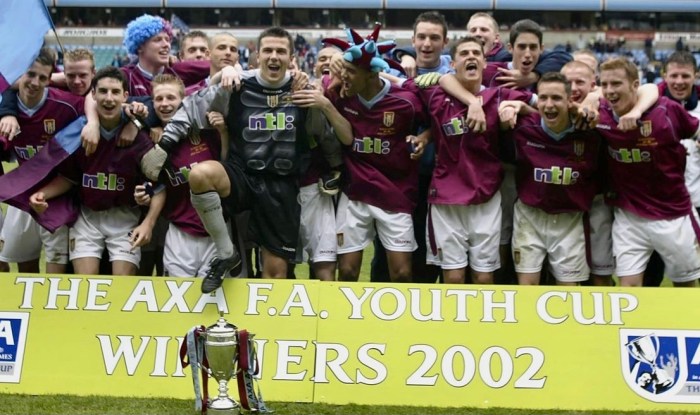
John Gregory was in charge at Villa Park when Henderson joined Aston Villa in July 2001. A year later, he was in goal when Villa won the FA Youth Cup (below), beating Everton – with Wayne Rooney playing up front – 4-2 on aggregate over two legs. Also in the Villa side that day was Liam Ridgewell, who later had a brief loan spell at Brighton, and Peter Whittingham, who went on to play more than 500 professional games and died in tragic circumstances aged just 35.

Joy for Henderson as Aston Villa win the 2002 FA Youth Cup

Although Henderson was chosen on Villa’s first team bench occasionally, he didn’t play any competitive fixtures for the first team. Those opportunities came via loans.

After a month at non-league Tamworth in the spring of 2004, he spent a month on loan at Second Division Wycombe Wanderers under Tony Adams towards the end of the 2003-04 season, when their last place finish meant they were relegated to the newly formed League Two.

The following season he joined Notts County, another of the clubs who’d been relegated with Wycombe, and had two loan spells, three months under Gary Mills and then a month under his successor, caretaker boss Ian Richardson.

Paul Simpson signed Henderson for Preston but when injuries forced him to retire at just 27, he told skysports.com: “I’ve decided to actually step out of football and give my body time to heal for once.

“It is exciting for me though because I’m looking to go into a completely different environment from playing but stay within football at the same time.

“I’ve been trying to get back fit for a few years now with injections and operations, but I’ve decided that rest is the way forward for it now.

“I’ve not signed anything yet, but there are a good few options for me to choose from, which I am really excited about.”

Henderson, who married 2010 Apprentice winner Liz Locke, now works as a licensed intermediary for agency YMU, who, among plenty of other elite footballers, represent Albion’s Evan Ferguson and Andrew Moran.

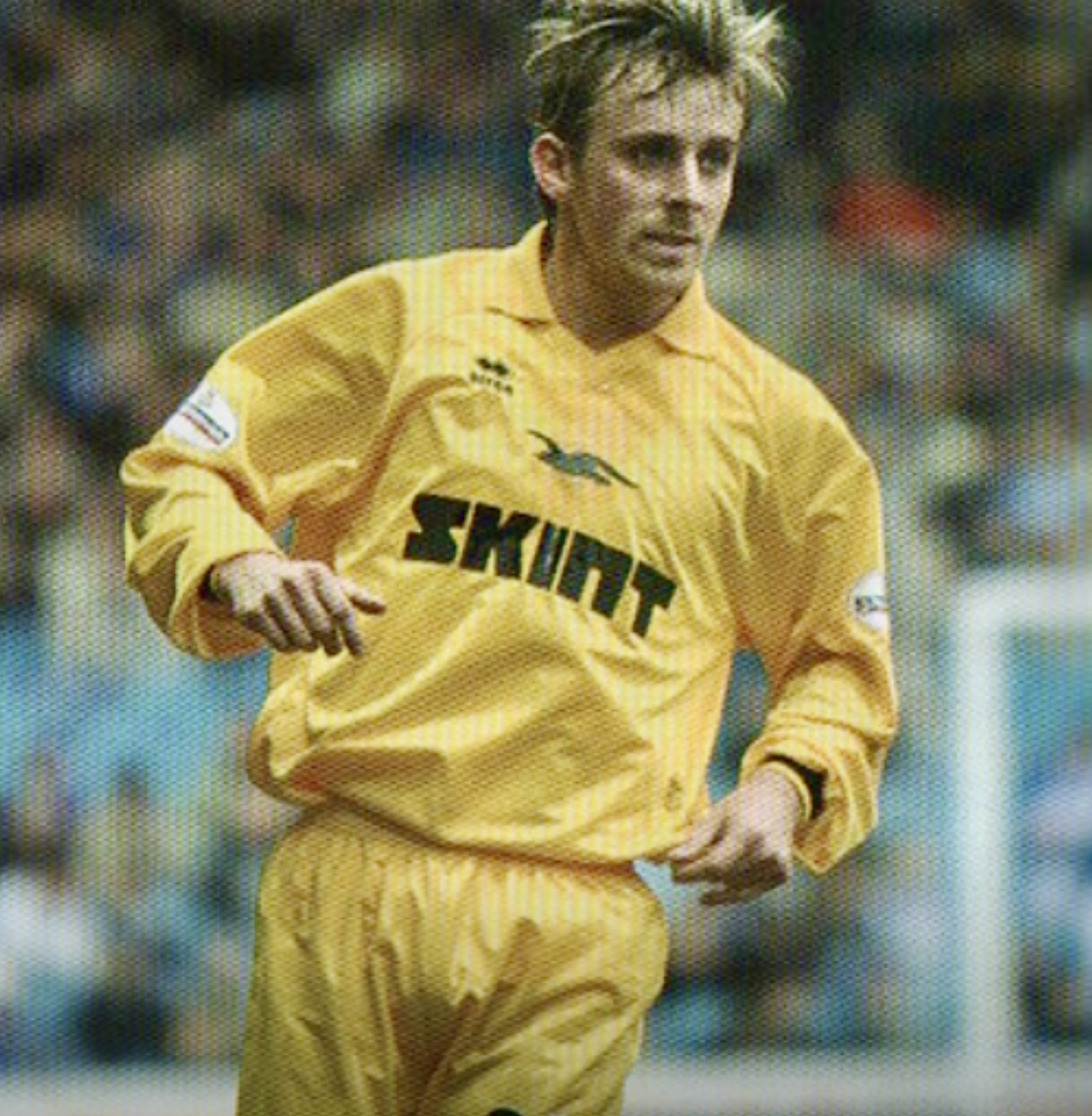
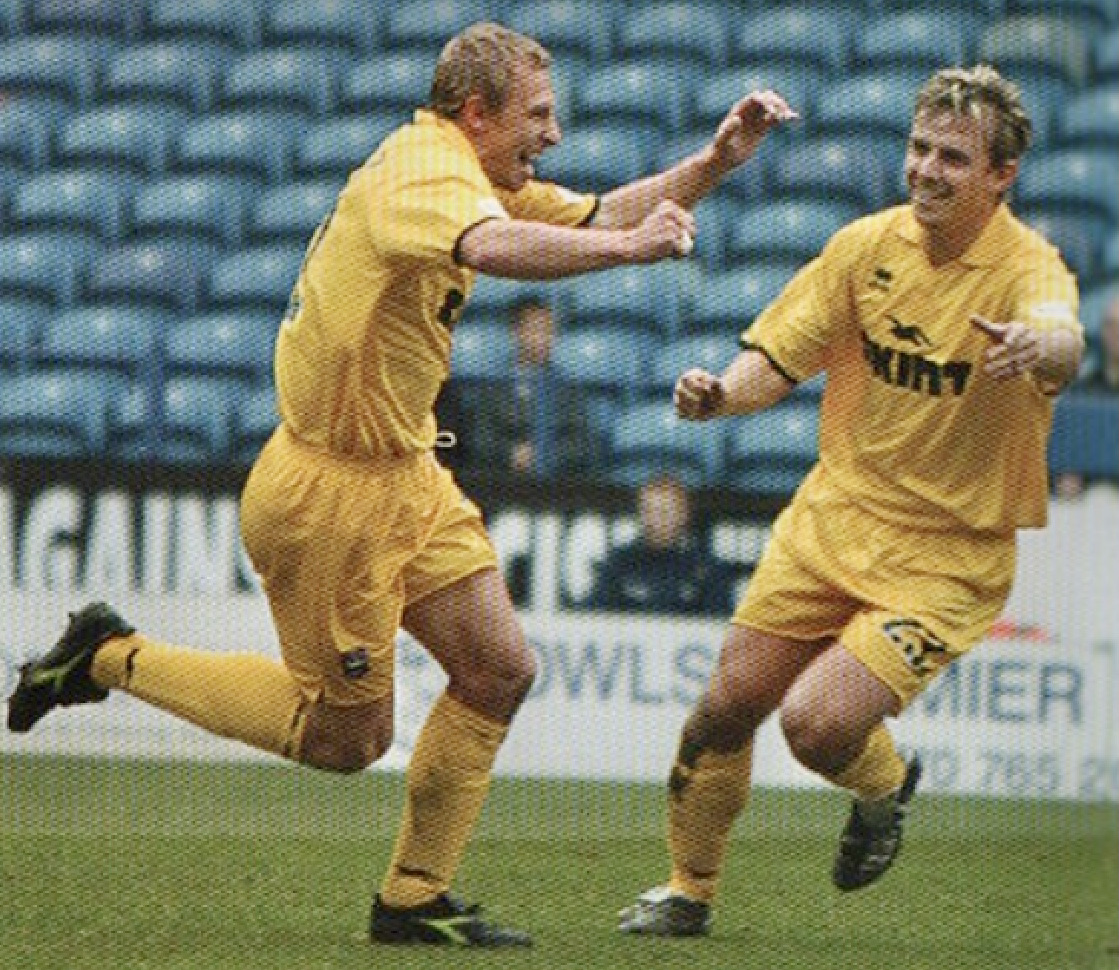
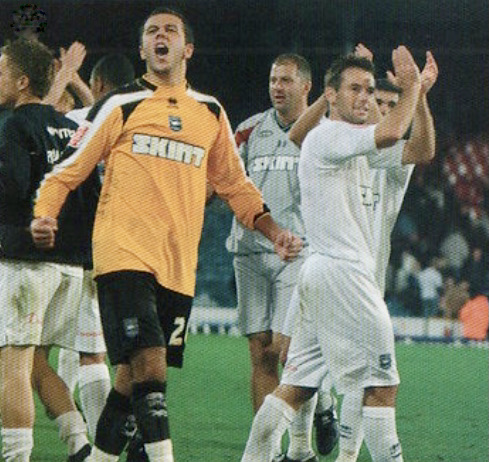
Ooh la la: Seb Carole was a history-maker

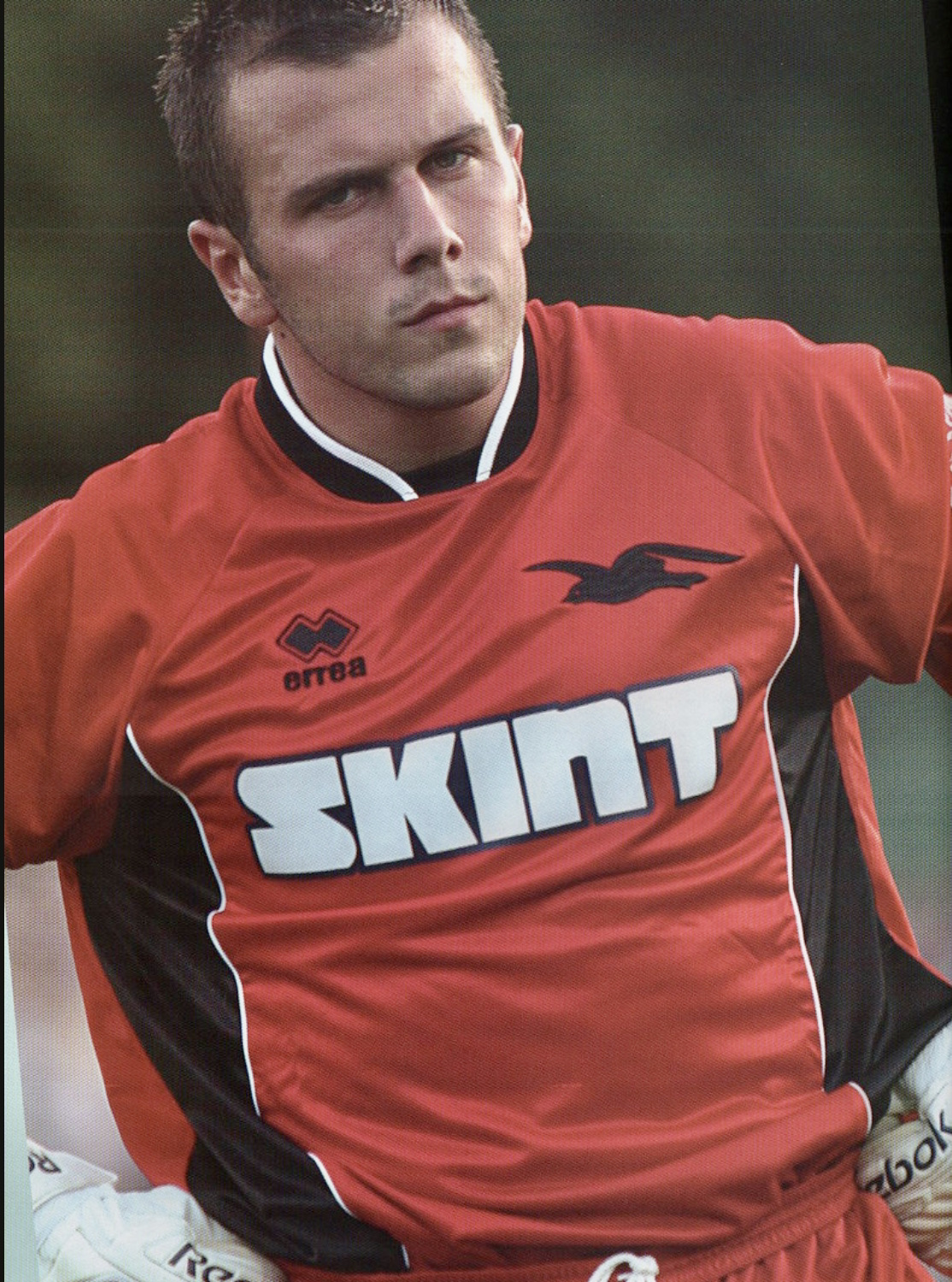
DIMINUITIVE winger Sébastien Carole has a double entry in the history of Brighton and Hove Albion.

Not only was he the first Frenchman to play for the club, he was also the first to play under three completely separate contracts for Brighton’s first team.

As well as three different spells with the Seagulls (2005-06, 2009 and 2010), he spent two years at Leeds United where his son is now in their under 18 side.

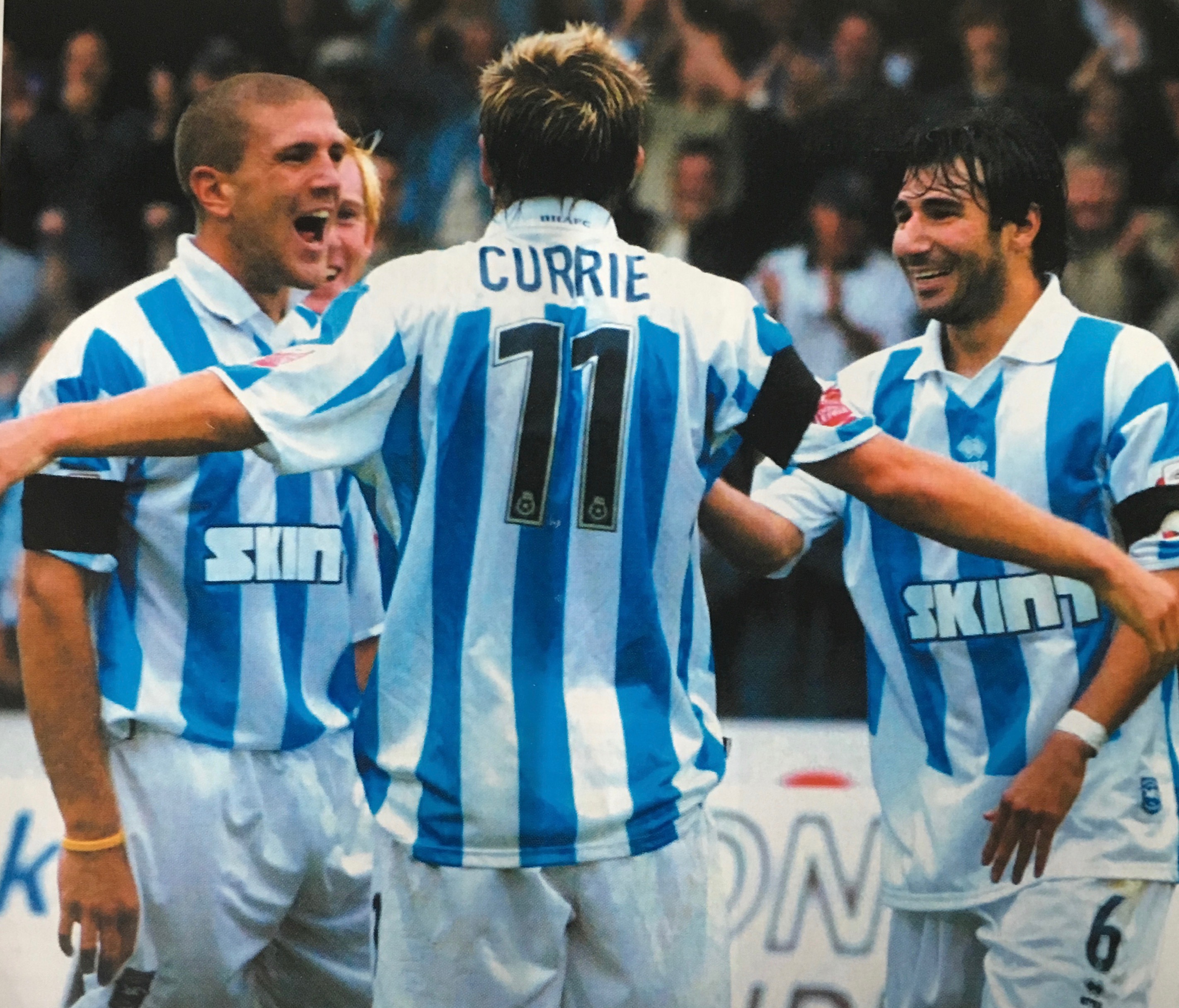
Ironically Carole scored his first goal for Albion against Leeds, but his first Brighton manager, Mark McGhee, thought the player’s ability should have yielded far more goals.

“He’s got to get more goals,” McGhee told the Argus in November 2005. “He’s a great finisher, a great ball striker and he can manipulate the ball.

“He is going to get himself in scoring positions, because he makes space for himself when he comes inside, and in training he scores.”

That goal against Leeds came in a memorable 3-3 draw at Elland Road on 10 September 2005 but Carole’s only other goal that season came in a rare victory, 2-1, over Hull City on 16 December (Charlie Oatway got the other).

An eleven-game winless run from January to the end of March, in which only four points were picked up, pretty much sealed Albion’s fate and the promise of Carole on one wing and fellow Frenchman Alexandre Frutos on the other didn’t live up to expectations. Albion lost their Championship status with only seven wins across the whole campaign.

To cap it off, a disappointed McGhee saw Carole exercise a clause in his contract that meant he could leave Brighton on a free transfer if they were relegated.

“We gave Seb the opportunity to come here and be part of the team,” McGhee told the Argus. “Regardless of that clause, the decent thing for him to do would have been to stay, at least at the start of the season.”

Seagulls chairman Dick Knight explained the clause had to be inserted into Carole’s contract to ensure he’d join from Monaco in the first place.

“If that clause hadn’t gone in then Seb’s wages over the two years would have been higher and the signing-on fee would have been more, so it was a no-brainer,” he said. “We fought hard to keep him, but the agent has persuaded Seb to go.”

The winger chose to move to Leeds, beginning the first of several occasions he’d link up with manager Kevin Blackwell. But Blackwell was sacked after only three months and his eventual replacement, Dennis Wise, told the Frenchman he wouldn’t be part of his plans.

“I had a think about it, had a chat with my wife and I said that I would stay and fight for my place,” said Carole. “I had signed for three years and I wanted to prove I could be a good player for Leeds.

“That summer, Leeds were relegated, and I could have gone back to France and joined Le Havre but I chose to stay and fight for my place. Then, by a twist of fate, the left winger got injured, I got on, played well and after that Dennis Wise told me he didn’t want me to go.”

Wise’s assistant at Leeds was of course Gus Poyet – and the winger’s relationship with the Uruguayan would later be of use back on the south coast.

Unfortunately, when Wise left Leeds for Newcastle, replacement Gary McAllister wanted to bring in his own players so once again Carole found himself sidelined, and there was a mutual agreement to cancel his contract.

He was without a club for a few months although his old boss Blackwell, by now at Sheffield United, invited him to train with them and he played a few games for their reserve side, and he spent a short while training with Bradford City.

However, in December 2008 and January 2009 he linked up with League Two Darlington, where he played seven matches. “It was not far from where I was living and I needed some games for fitness,” he said. “I signed a monthly contract and left a week before I came back to Brighton on trial.”

Micky Adams, back at Brighton for what turned out to be an unsuccessful second spell, tried all sorts of permutations to try to turn round a string of disappointing results and the invitation extended to the Frenchman was one of the last avenues he explored before the Albion parted company with him.

He scored twice and created two more in a practice match against the youth team as Adams ran the rule over him at a trial. “He’s not somebody I’ve worked with before, but everyone at the club speaks highly of him so we will take a look,” said the manager.

The early signs for Carole under Adams were good: he went on as a 56th-minute substitute for Chris Birchall at home to Hartlepool on 2 February, putting in a cross for Nicky Forster to convert.

Sections of the Withdean faithful voiced their disapproval of Adams’ choice of change, but the manager was typically forthright in his response, telling the Argus: “We can all sit in the stands sometimes and play football manager.

“I decided Seb Carole would give us an impetus. That was no reflection on what Chris Birchall had done. I can’t be worried about what the fans are thinking. I’ve got to do what I think is best and stand there and be as brave as I can be.

“Seb travels well with the ball, delivered a couple of great crosses and put one on a plate for Fozzie.”

It wasn’t long before Adams was on his way and although Carole liked what he heard from incoming boss Russell Slade, the new man preferred Dean Cox as his wide option.

Carole told Brian Owen of the Argus: “I love the way he talks. He’s got so much passion and he has tried to do something different.

“He wants us to play a bit of football at times when it’s possible because obviously the pitch doesn’t allow you to play that much. We can see something has happened since he came here.”

However, Carole’s part in ‘the great escape’ was somewhat peripheral, making only five starts plus seven appearances off the bench.

He later said: “Micky Adams signed me and I think I did well under him, then he left and Russell Slade came and I wasn’t really in his plans.

“I wasn’t really involved in the team. I was on the bench most of the time and I didn’t understand why, because I thought I could bring something to the club.

“I was a little bit upset about the whole situation. I didn’t get the chance to do well in that second spell.”

Released by the Albion in June 2009, Carole was attracted by the prospect of playing under the legendary John Barnes at Tranmere Rovers and signed a short-term deal at the start of the 2009-10 season.

However, once again managerial upheaval would be Carole’s downfall. Rovers won only three of their first 14 matches and Barnes was shown the Prenton Park door.

“I was disappointed when he was sacked,” Carole told the Argus. “When I went there we had a long chat about how he wanted to play and I signed because of him, because I knew what he was like as a player and would play the way I like.

“I think it was a little bit unfair and a little bit early for him to be sacked, because he didn’t get the finance to make the signings he wanted.

“I definitely think if he had stayed then I would have stayed longer. When they put the physio (Les Parry) in charge, I just felt it wasn’t that good for me.”

The third coming of Carole at the Albion, on a week-to-week deal, was as a direct result of his having played under Poyet at Leeds, the winger telling the Argus: “He knew what to tell me in a certain way to get the best out of me. That is what he was good at when he was at Leeds.

“He was only the assistant manager to Dennis Wise but, more than anyone else, he was talking to the players in the right way and players were listening to him.

“He brings you confidence and you trust him and he will bring a togetherness to Brighton, which is important to get the team back on track.

“He is exactly the same as when he was at Leeds. He is really relaxed and wants to play a certain system. Obviously, that will take time. I think what he is trying to put in place here will bring the club back to where it deserves to be.”

Poyet was equally positive about taking on the Frenchman. “I know Seb better than anyone,” he said. “Seb’s a winger, not just right or left. People say he’s right-footed but he did a terrific job for us at Leeds on the left.

“We’ve been playing without a natural left-sided winger. People look at Dean Cox out there but I see him a bit more inside. I don’t think we have another player like Seb.

“People will compare him to Elliott (Bennett) but he’s a different type of player. Elliott is more direct, more about speed, more going past people with his speed. Seb is about checking in and out and dummies, taking players out of position with his skills. We don’t have that player. That’s why he is coming in.”

It was six weeks before he got his first start and he fancied his chances of getting a longer deal, especially when a hamstring injury forced Kazenga LuaLua to return to Newcastle.

“With Kaz injured for the rest of the season, I think I have got a massive chance now,” he said. “It’s up to me and how I perform.

“I was pleased to be back in the starting eleven. You always get frustrated when you are not playing but I trust Gus and I know exactly what he wants.

“I kept my head down and kept working hard and knew I would get another chance.”

His best run in the side saw him feature in four games on the trot: a 2-0 win at Oldham, a 3-0 home win over Tranmere, a 2-2 draw at home to Southampton and a 2-0 defeat at Hartlepool.

Carole certainly felt pumped up for the game against Rovers, reckoning he had a point to prove to Parry. “He didn’t play me at all. I want revenge and to show him,” he told the Argus before the match. “If I could score and just kill them I’d be happy.”

Carole didn’t score but he did put in an inviting cross that Andrew Crofts seized on to score a second goal for the Albion on the half hour. Glenn Murray had opened the scoring in the seventh minute and debutant Ashley Barnes went on as a sub to score the third.

Dropped after the Hartlepool defeat in favour of on-loan Lee Hendrie, Carole was a non-playing substitute for four matches and, although he played in the season’s finale, a 1-0 win at home to Yeovil, that was his last game in an Albion shirt.

Born in Cergy-Pontoise, a suburb of Paris, on 8 September 1982, Carole’s first memories of football were as a five-year-old having a kickabout with his dad, Jean-Claude, who had played for Paris Saint Germain’s academy but whose career didn’t take off because of an accident.

Carole went to La Fiaule school in Vaureal from the age of three to 10 where he played football every Wednesday. Apart from football, he also had an aptitude for maths. He went on to La Bussie and joined Monaco at the age of 14. He progressed through the ranks before eventually playing 11 times for the first team, including once in the Champions League.

Carole was 21 when he first came to the UK in January 2004, joining Alan Pardew’s West Ham on loan at the same time that Bobby Zamora joined the Hammers from Tottenham Hotspur.

But the young Frenchman only made one substitute appearance, going on in the 87th minute for Jobi McAnuff as the Hammers beat Crewe Alexandra 4-2 at the Boleyn Ground on 17 March.

The following season he was sent on loan to French Ligue 2 side Châteauroux where he scored once in 11 matches.

It was truly the long and the short of it when in August 2005 Albion announced the joint signing of 5’7” Carole and 6’5” Florent Chaigneau, a French goalkeeper on loan from Stade Rennes. Describing them as “exciting additions to the squad”, Albion chairman Knight said: “The fact that we have been able to attract these young players who have already represented France at various levels, is a measure of the progress we are making at this club. We will give them the stage to make their names in England.”

Carole made his debut in the third game of the season, rather ironically once again Crewe Alexandra were the opponents, in a 2-2 home draw, and Chaigneau played his first match 10 days later as Albion bowed out of the League Cup 3-2 away to Shrewsbury Town. While Carole established himself in the side, Chaigneau only made two more appearances.

Although Carole played for France through the age groups up to 19, in 2010 he played three games for Martinique, the Caribbean island side, in the Didgicel Cup.

After failing to get the hoped-for longer contract at Brighton, Carole spent the 2010-11 season with French Ligue 1 team OGC Nice. He subsequently returned to the UK and spent six months at League One strugglers Bury, managed by his old boss Blackwell, but was released having made just five substitute appearances. He then proceeded to drift around various non-league sides in Yorkshire.

He later set up his own football school, which he ran for a year, and has since been an agent (C & S Football Management). His son Keenan is currently playing for the Leeds under 18 team.

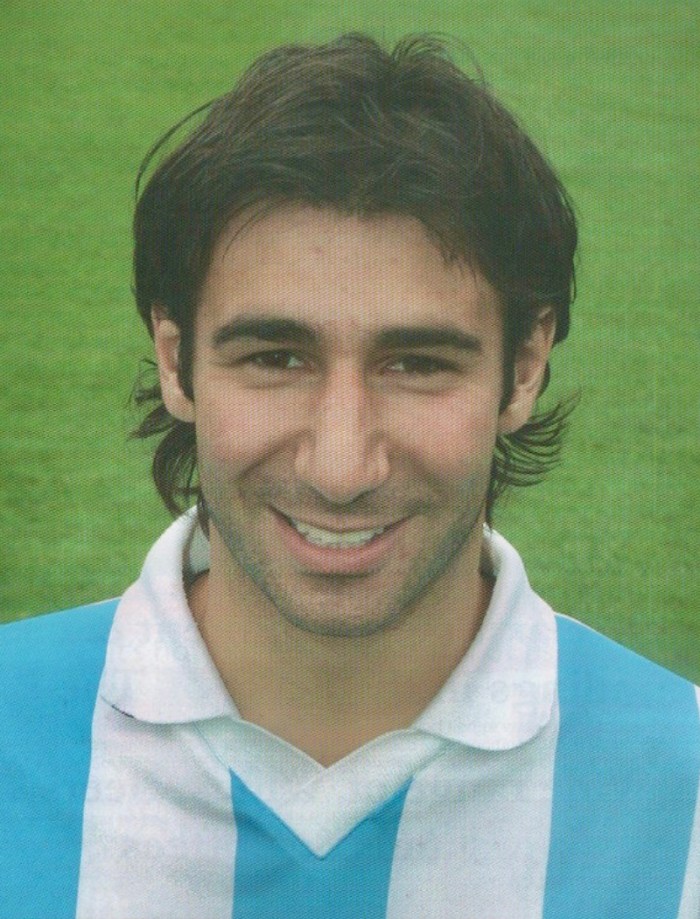
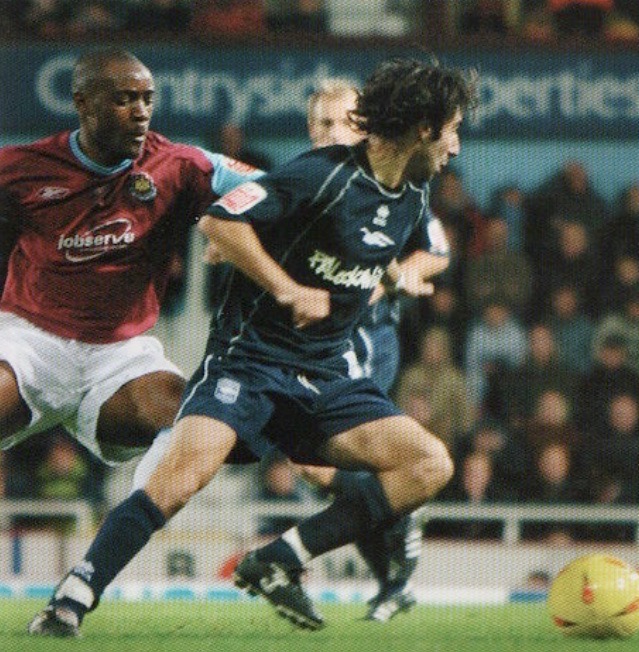
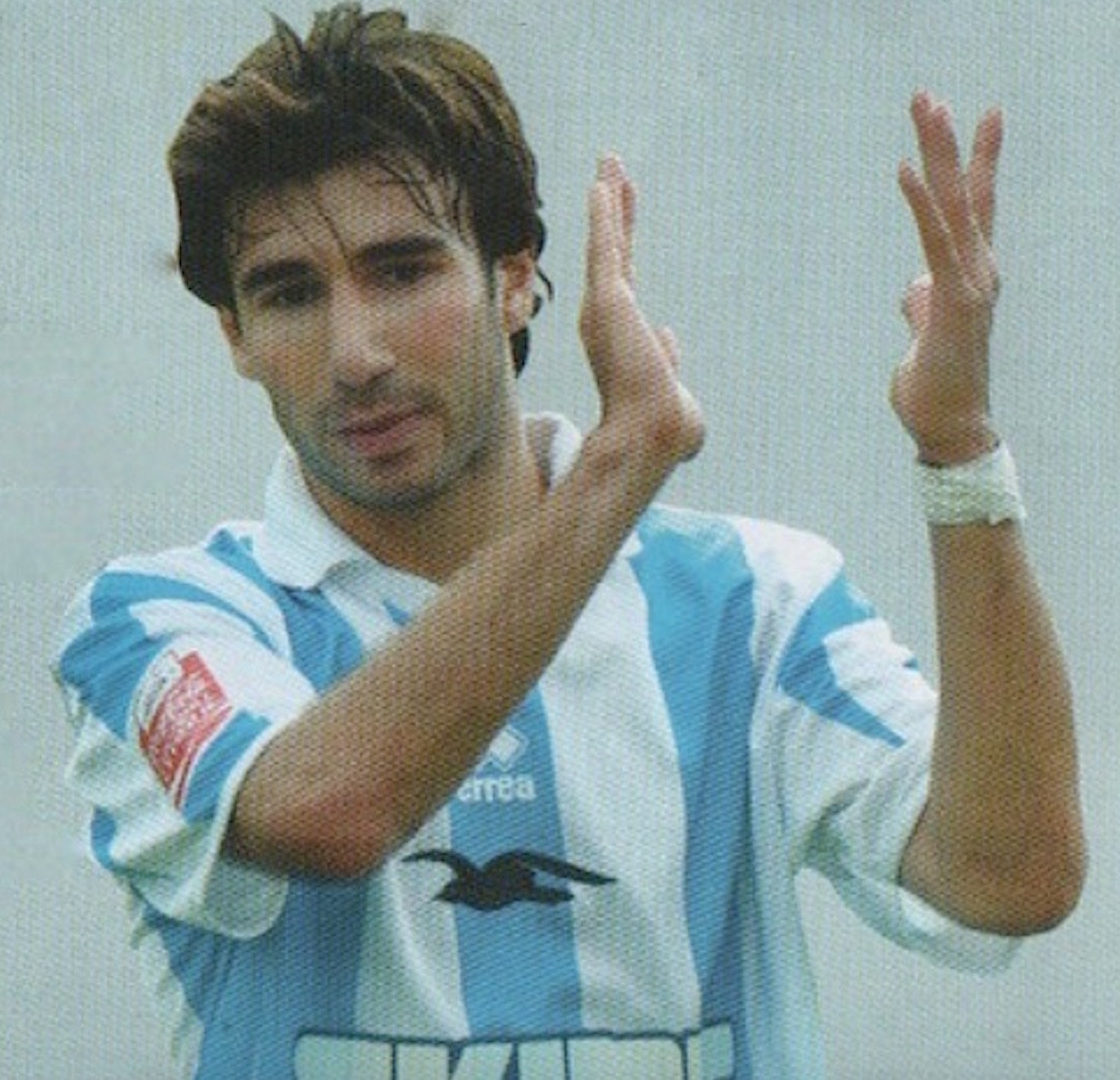
Why Roman’s roubles spelled bad news for Alexis Nicolas

A PROMISING young midfielder edging towards first team football at Chelsea had his dreams extinguished when Roman Abramovich arrived with lorry loads of cash.

Manager Claudio Ranieri had let Alexis Nicolas know that he was heading in the right direction after he’d broken through to the fringes of the first team.

But when Abramovich took over at Stamford Bridge, big name signings started to arrive and Nicolas was left way down the pecking order behind the likes of Juan Sebastián Verón, Claude Makélélé, Geremi and Scott Parker.

New boss Jose Mourinho informed the youngster he should look elsewhere to make progress, and Brighton, newly promoted to the Championship, offered a refuge for the talented London-born Cypriot under-21 international.

Albion’s midfield options were depleted at the beginning of the 2004-05 season with Simon Rodger a long-term absentee, stalwart Richard Carpenter recovering from close-season knee surgery, and Charlie Oatway also sidelined through injury.

It meant Nicolas had a chance to show what he was made of and he played 15 games on loan from the start of the season through to October.

Enthusiastic Albion boss Mark McGhee said: “He has brought energy and he has got quality. He is a certain type of player, similar in many ways to Charlie Oatway.

“He is not a box-to-box goalscoring midfielder but what he does brilliantly is that he is always in the area around the ball where you need him.

“He breaks things up quickly and, when we win possession, we go more quickly from defence into attack with Alexis in there than we did previously.”

Nicolas clearly relished the opportunity he’d been given and, as the prospects of a permanent move grew stronger, he told the Argus: “It’s flattering that Brighton want to keep me. I like it here. I am happy with the club and the manager and I don’t see why it can’t be permanent.

“If everything can come together, and I think it will be a good move, then I don’t see why it won’t go ahead.”

He added: “There is a lot of stuff to be sorted out with a lot of different people.

“All I can say is I am happy here and I like the club. They are good people and the fans are great. Anyone with an offer to come here has got to be chuffed with that, because it is a great set-up.”

McGhee made no secret of his admiration for the 21-year-old, saying: “He’s been a fixture in the team and that says it all. He is improving week in and week out and I think he has got a good future.

“He has a terrific little engine and attitude. He quietly goes about his job and he has been really important for us so far this season.

“The boy himself is modest and unassuming. He loves Chelsea, he loved being there and I am sure he will be very disappointed to leave, but he wants to be a footballer more than he wants to be a Chelsea player. That is the important thing for us.”

McGhee explained the difference Nicolas made to the side. “He has that knack of being in the right place at the right time; he seems to cover such a big area. For a physically small lad, he is everywhere.

“He anticipates where the next ball is going and gets there early, puts people under pressure, wins the ball back and activates us going forward. He wins it and, before you know it, we’re going forward.”

When he signed permanently, Nicolas said: “It feels great. You are always sad to leave a club and I have been at Chelsea for a while, but I am excited and glad that I have signed for Brighton.

“The role I play is similar to Claude Makélélé’s and I used to speak to Claude regularly. He used to give me a lot of good advice. I’ve learned from all of the players at Chelsea, but now it’s time for me to open another chapter in my life and learn some other stuff.”

Nicolas said breaking into the Chelsea first team had whetted his appetite to return to that level and he told the Albion matchday programme: “Having played in the Premiership, I would like to achieve it here at Brighton and I don’t see why one day Brighton can’t be a club in the Premiership.”

Unfortunately, he joined an injury and suspension hit squad that couldn’t compete with better-resourced clubs in the second tier because of crowd-restricted home gates at the Withdean Stadium.

While Nicolas impressed in his first season, playing in a further 19 games, McGhee was forced to sell star players Danny Cullip and Darren Currie to bolster the club’s perilous finances, and the side only just managed to avoid the drop.

The following season, with Dean Hammond and Carpenter the mainstays in central midfield, Nicolas too often watched on from the bench and missed several weeks because of ankle and knee injuries.

Asked about his watching brief from the sidelines, he said in a matchday programme article: “It’s been very frustrating for me this season and I’m upset about it. I’d like to think that a lot of the fans would like to see me out there. The manager can only pick eleven players and he’s the boss – what he says goes and I respect that.”

His frustration was barely disguised in an interview with the Argus on 23 Feb 2006, after a reserve match he was due to play in was called off.

“It seems impossible for me to get 90 minutes at the moment,” he said. “I was out for six weeks injured and have only managed 60 minutes football against Millwall in a reserve match since because of postponements.

“Before that I was mostly on the bench. I have hardly played this season.

“Even though I am not fully match fit, I have been training hard and have enough about me to be able to cope. I am not thinking of myself when I say this. I have put personal goals to one side.

“After all, I pulled out of international squads with Cyprus earlier in the season even if it meant I could just be on the bench for Brighton. I feel I have a lot to offer.”

The midfielder added: “What matters is Albion. I love the club, the lads and the fans and want to do my best for them.”

Unfortunately, after playing only 12 matches in 2005-06, he wasn’t kept on after the Seagulls were relegated on 30 April 2006, and he never played league football again.

Born in Westminster on 13 February 1983, Nicolas went to Trent CE Primary School in Cockfosters, where he first showed a talent with a football. He also enjoyed long distance running and tennis.

He played football for a decent Sunday League side in Colliers Wood alongside two other future professionals, Steve Sidwell and Leon Britton, and eventually became part of Arsenal’s youth set-up. But he ended up as an apprentice at Aston Villa, and got taken on as a professional. He was in the same under-19s squad as future Albion goalkeeper Wayne Henderson and defender Liam Ridgewell.

But in December 2001, he joined Chelsea on a free transfer, and with 24 starts plus one as a sub, he missed only one of the reserves side’s 26 matches in the 2002-03 season.

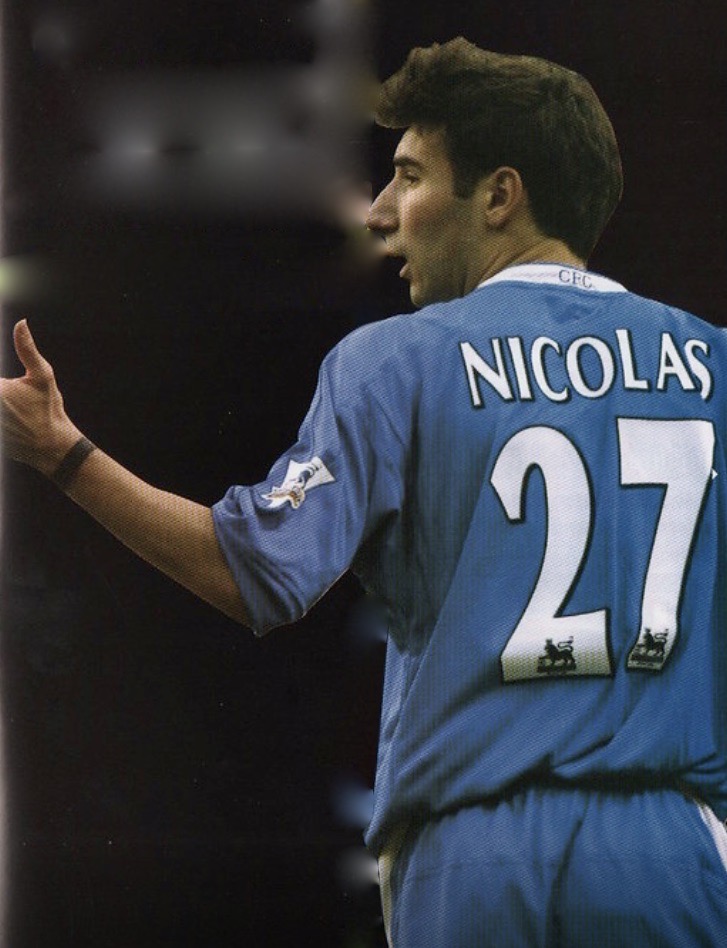
He was handed the no.27 shirt for the 2003-04 season and made his Chelsea first team debut in their 1-0 FA Cup win away to Scarborough on 24 January 2004.

John Terry scored the only goal of the game and Nicolas played in midfield alongside Frank Lampard and Emmanuel Pettit in a side also featuring Joe Cole and Wayne Bridge.

Guardian football reporter, Paul Wilson, noted: “Alexis Nicolas made an encouraging debut, but time and again Cole, in particular, would attempt something complicated when a simpler option was available.”

Nicolas made his Premiership debut a week later in a 1–0 win over Charlton Athletic. His only other appearance was as a 90th minute substitute for Lampard as the Blues rounded off the season with a 1-0 home win over Leeds United.

Nicolas spoke about those early years at Chelsea in an interview with Simon Yaffe of planetfootball.com.

“Ranieri called me into his office at the end of 2002-2003 and told me the club didn’t have a lot of money to invest and that he didn’t have too many midfielders at his disposal, so I would be in his plans for the following season,” Nicolas said.

Even as the oligarch’s takeover was going through in the summer of 2003, the youngster was part of Ranieri’s team which beat Newcastle United 5-4 on penalties in the final of the FA Premier League Asia Cup in front of a crowd of 41,500 in Kuala Lumpur’s national Bukit Jalil stadium. It was the first piece of silverware of the Abramovich era.

“It maybe wasn’t the most glamorous of trophies, but it was still the first of many under the new owner,” Nicolas said.

It wasn’t long before a flurry of big-name signings soon changed the picture for Nicolas; the arrival of five midfielders in particular being somewhat ominous.

“I had planned to go out on loan because I had fallen so far down the pecking order,” Nicolas added. “But some of the midfielders, like Makélélé and Petit, were picking up injuries, so I stuck around.

“Looking back, it was easy to think, ‘He’s signed, so that is why I am not playing,’ but it was really a turning point in Chelsea’s history, and it was nice to have been part of it.

“I was pleased for the club when Abramovich took over but also a little bit disappointed for myself.”

After relegated Brighton released him, Nicolas tried to continue his league career and had a trial with Bradford City, but after an unremarkable game for their reserves side, manager Colin Todd told the Bradford Telegraph & Argus: “At the moment I can’t guarantee him anything. His fitness levels aren’t the best but if he wants to continue to train with us and try to improve on that then it’s up to him.”

In fact, he decided to join St Albans City on 26 September 2006 and made his Nationwide Conference debut in a 2-1 defeat at Weymouth four days later.

On 12 November, the St Albans City website noted: “A knee injury restricted Alexis to just six appearances for St Albans City but, with a number of League One and League Two sides showing an interest, the player has decided to move on.”

Nicolas said he was grateful to manager Colin Lippiatt for giving him the opportunity and added: “I was not in the best of states when I joined the club but everyone has been a great help and when fully fit I hope to join one of the League One or League Two sides who are showing an interest in me.”

But it was a career in property investment that opened up for him instead and in 2012 he set up his own business in partnership with Ryan Springer.

He wasn’t completely done with football, though, and, also in 2012, Nicolas had a spell as player-manager of Hadley FC, a Spartan South Midlands League Premier Division side, and in 2014-15 he was part of the club’s management team under former Spurs and Chelsea player Micky Hazard.

Pictures as featured in the Albion matchday programme and from various online sources.

Set-piece expert Darren Currie earned Uncle Tony’s approval

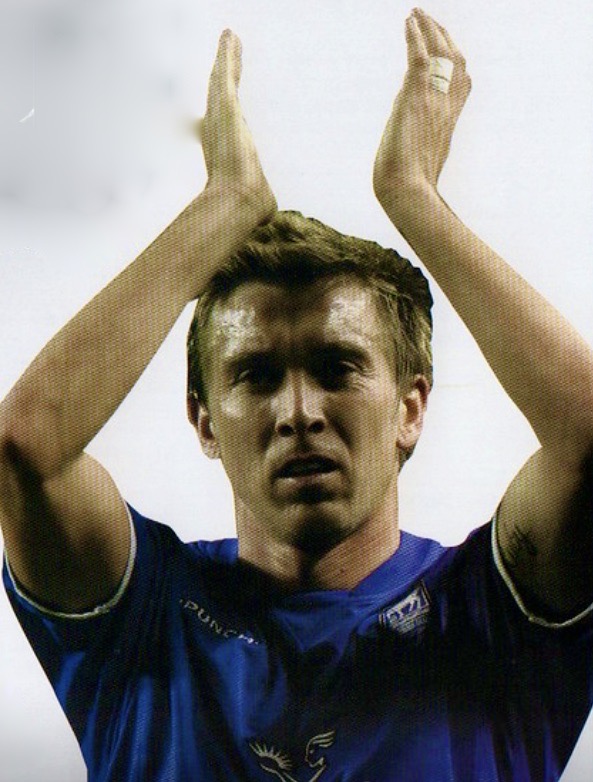
THE PINPOINT accuracy of Darren Currie’s passing and shooting was a joy to watch, even though a lack of pace stopped him being as good a player as his famous uncle.

Currie was a decent player in his own right, making nearly 700 appearances for 15 different clubs, but wherever he went he was always known as the nephew of the former Sheffield United, Leeds, QPR and England creative midfielder Tony Currie.

Perhaps with a hint of family bias, Uncle Tony said in an interview for ITV Digital: “Darren is, without doubt, the best crosser of the ball, after Beckham, in the country. He’ll produce nine times out of ten, right foot or left foot.”

The young Currie attributed his crowd-pleasing skills to the start he was given in the game by West Ham. After 10 years stuck in the lower leagues, Currie was given a platform to perform in the Championship by Brighton, and he very nearly made it to the top when transferred for £250,000 to high-flying Ipswich Town.

As if by a cruel twist of fate, Ipswich lost to the Hammers in the 2004-05 Championship play-off semi-finals having just missed out on automatic promotion.

“Playing for West Ham at youth and reserve levels was a terrific way to start a career,” Currie told the Ipswich Star. “They gave me everything but my debut.”

He certainly came close though, featuring alongside recognised first-teamers like Lee Chapman and Frank Lampard in friendlies and testimonials, but he had to move elsewhere to gain competitive first-team action.

Initially he had loan spells with Shrewsbury Town and Leyton Orient, and when the Shrews bid £70,000 for him in 1996, he chose to drop down a couple of divisions to get regular football.

“The difference in money was only about £50. The then West Ham manager Harry Redknapp called me in and said that I was an adult and had to think about continuing to play regular first team football,” Currie explained. “I was given the opportunity to have a new contract at West Ham or moving permanently to Shrewsbury.

“I was a young pro at West Ham and I had been out on loan a couple of times and I got the buzz for playing at three o’clock on a Saturday afternoon. There was no other feeling like it.

“I thought to myself I’ll go to Shrewsbury and I’ll play really well for a year and I’ll get a move back up to the top.

“My naivety kicked in then because it didn’t quite happen. I thought I’d done OK and I was linked with a couple of moves but the route back to the top wasn’t as simple as I thought it would be in my head.”

Indeed, it was a decade in which, after three seasons with the Shrews, he moved on briefly to Plymouth Argyle, then to Barnet (three seasons) and Wycombe Wanderers (three seasons).

Currie said it got to a point where Wycombe couldn’t afford to keep him, and boss Tony Adams made it clear he was free to look elsewhere.

Mark McGhee invited him to Brighton for a trial and was impressed with the way he knuckled down in training to get himself fit following a programme devised by McGhee’s deputy, Bob Booker.

Currie was offered a 12-month contract but it was more about the opportunity to play at a higher level that prompted him to sign.

“It wasn’t a fantastic offer – put it this way, Peterborough offered me three years – but it wasn’t about the money,” Currie told Spencer Vignes in an Albion matchday programme article.

“It was about the football and playing in the Championship. I was determined to do well and to prove myself, which I did. That’s when people began to sit up and take notice.”

Currie’s ability on the ball carved him out to be a crowd-pleaser and the first of two goals for the Albion typically came from a free kick in a 3-2 home defeat to QPR that left Argus reporter Andy Naylor purring over its execution.

“Currie, having shaved a post and hit the bar with two earlier free-kicks, made it third time lucky from 20 yards just before the break. It was a sumptuous effort from the set-piece expert which rendered Rangers’ keeper Chris Day motionless.”

His other goal came in a 1-1 draw at home to Sheffield United, more noted for Albion wearing the limited-edition Palookaville strip to help publicise backer Fatboy Slim’s latest album.

Injury-hit Albion considered it a point gained rather than two dropped and Naylor complimented Leon Knight for “superbly crafting” Currie’s goal by evading his marker and threading a square pass through the legs of Leigh Bromby.

“Currie, with time as well as room, picked his spot to score, which meant even more to him because of the opposition,” wrote Naylor, informing readers that the Yorkshire side had rejected him as a 16-year-old following a fortnight’s trial.

Unfortunately for Currie, he was only on the bench when the Albion travelled to Upton Park on 13 November 2004. After three successive defeats, McGhee confessed he set the side up not to lose rather than go for a win.

Somewhat ironically, the Seagulls blagged a 1-0 win courtesy of a Guy Butters goal, in a real backs-to-the-wall match, with veteran striker Steve Claridge ploughing a lone furrow up front.

It was only in the 90th minute of the match that McGhee introduced Currie in place of Claridge to play out the final few minutes of the game.

Currie only played 22 games for Brighton over four months but the fee they received for him from Ipswich gave a vital boost to club funds when they were struggling to compete in the division because of the restricted crowd numbers at Withdean. Having signed him on a free transfer, the deal was a no-brainer for the Albion hierarchy, even if it weakened a squad who subsequently only avoided relegation back to the third tier by a single point.

McGhee wasn’t that surprised to see Currie go, telling the Argus: “He was obviously happy here, but I thought he was doing so well that he would keep his options open.

“I cannot see Darren being a regular for Ipswich in the Premiership if they are promoted, but his skills and touch are good enough to justify him making a contribution to a squad in the Premiership.”

It didn’t pan out like that, but Currie was nonetheless grateful to the Albion, and told Vignes: “I am so pleased I had the chance to be a part of it all down there, to see what the support is like and to play with a group of lads who stick together through thick and thin.

“I played at the Goldstone when I was a kid, playing youth team football with West Ham, so I know how important the stadium issue is for everyone. I always will be extremely grateful to the Brighton fans and Mark McGhee because without a doubt without their help this opportunity wouldn’t have come along.”

Currie explained in a matchday programme article how McGhee had helped to develop his game and to add other dimensions which improved him. “I owe a helluva lot to Mark and Bob Booker,” he said.

Currie became an instant hit with the Tractor Boys fans earning the man of the match accolade in two of his first four games.

“I tend to build up a rapport with supporters wherever I go,” he told the Ipswich Star. “I am my own biggest critic and I know when I have done well, and I am very satisfied with my contribution so far.”

After his brief cameo for the Seagulls at West Ham, he got the chance to play against his boyhood club three times that season with Ipswich.

He was in the Town side that lost 2-0 at home to the Hammers on New Year’s Day 2005. Then, in the first leg of the play-off semi-final, Currie and Matt Richards (later a loanee with the Albion) were half-time substitutes who helped Ipswich to recover a deficit to draw 2-2.

Currie started the second leg and had Ipswich’s best opportunities with a shot straight at James Walker, then a long-range drive 10 minutes before the interval which the goalkeeper hopelessly misjudged but fumbled to safety. But they failed to make the final when Bobby Zamora scored two second half goals for West Ham to earn them a 2-0 second leg win. West Ham beat Preston in the play-off final.

Born in Hampstead on 29 November 1974, Currie’s early footballing talent drew interest from Watford and Chelsea, but he decided to join West Ham’s academy.

“The facilities were great, the training for us there as kids was first class and I really enjoyed my time there,” Currie said.

“A lot of the player I became was what I was taught as a kid at West Ham,” he told twtd.co.uk. “It was all about the ball and all about the technical skill and how to manipulate the ball. It was a way I enjoyed playing anyway so it was a really good fit for me.”

After signing professional in 1993, he was a regular in the West Ham reserve side and a trawl through the excellent archive website whu-programmes.co.uk records show he played in a Football Combination game away to Brighton on 1 April 1994, and later the same month was up against Guy Butters in Portsmouth’s reserve side at the Boleyn Ground. Mark Flatts and Paul Dickov were in opposition when the Hammers stiffs entertained their Arsenal counterparts at home on 11 May.

In an Avon Insurance Combination match at the Goldstone Ground on 30 November 1994, Currie scored the only goal of the game from the penalty spot in a West Ham side also featuring Lee Chapman and Frank Lampard.

The following summer, Currie played in four matches when he was part of West Ham’s squad on a centenary tour of Australia.

Shrewsbury boss Fred Davies, a former playing colleague of Redknapp’s at Bournemouth, took Currie on full time after his two loan spells at Gay Meadow.

He moved on to Plymouth Argyle in 1998 but only played five matches in three months, then switched to Barnet where he made 136 appearances, plus seven as a sub, in three years.

Wycombe Wanderers paid £200,000 to sign him in the summer of 2001 and manager Lawrie Sanchez told BBC Three Counties Radio: “He’s obviously a quality player. He gets crosses in and that’s an area where we weren’t very good last year. He’s come to add that to our game and his free kicks will trouble the ‘keeper as well.

“It was quite a lot of money for our club to spend but I’ve got to back my judgement. I’d looked at him for a while and quite liked him. He gives us something we haven’t got, he’s a great technician. He hasn’t got particularly great pace but what he does with the ball is tremendous. We’re hoping he does all the things he was doing at Barnet and a little bit more for us.”

Sanchez added: “A lot of people looked at him for a long time. He’s always been considered one of the best players in the Third Division and hopefully we’ll give him the stage where he can prove he’s one of the best players in the Second Division.”

After Currie’s flirtation with promotion to the Premier League ended in disappointment, Joe Royle left Portman Road and his replacement Jim Magilton axed Currie from the side in the 2006-07 season. He was sent on loan to fellow Championship sides Coventry City and Derby County, for whom he made a play-offs appearance as a substitute, although he wasn’t involved in the final when County beat West Brom 1-0.

That summer, on the expiry of his Ipswich contract, Currie moved on a free transfer to League One Luton Town. He made 38 appearances for the Hatters but when they went into administration, were deducted 10 points and relegated, he was among several players given a free transfer.

Micky Adams, back in the hotseat at the Albion, was hopeful of getting Currie back to Brighton for a second spell, telling BBC Southern Counties Radio on 11 July: “He’s a player I’ve admired for a long, long time. We want him, and he wants to come back. He’d offer competition for places and fantastic delivery from set pieces.”

But at the end of the month the player rejected the terms on offer and took up a three-year contract at Chesterfield instead.

While the first year at Saltergate went OK, in the second season, the manager who signed him, Lee Richardson, had been replaced by John Sheridan, and Currie was out of the picture. He went on loan to fellow League Two side Dagenham & Redbridge and the deal was made permanent in January 2010. Currie played in 16 matches as the Daggers won promotion to League One.

They went straight back down the following season, and Currie departed for Conference South outfit Borehamwood as player assistant manager. He was there less than three months before moving to Isthmian League Hendon for a year as a player.

In October 2012, Currie returned to Dagenham & Redbridge, initially as a development coach and later as assistant manager under John Still.

In June 2018, Currie was appointed assistant manager at National League side Barnet, working under Still. He succeeded Still in December 2018, initially as caretaker, before landing the role permanently in January 2019.

Currie, assisted by former Albion loanee midfielder Junior Lewis, came close to getting Barnet promoted to League Two but, having missed out, and the club struggling financially because of the Covid-related lack of fan revenue, both left the club in August 2020.

Ups and downs of medal-laden Mark McGhee’s career

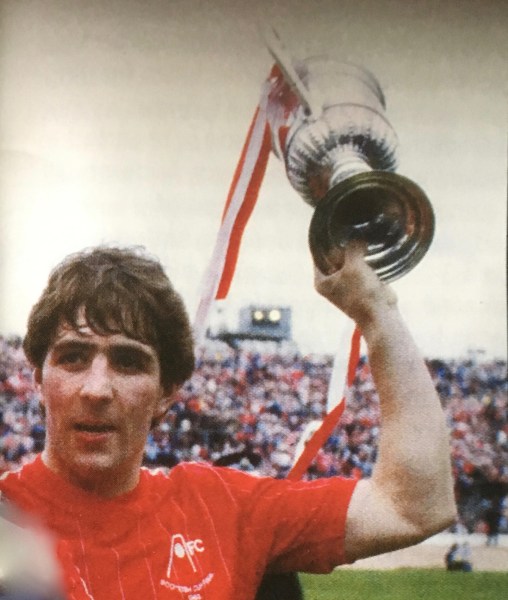
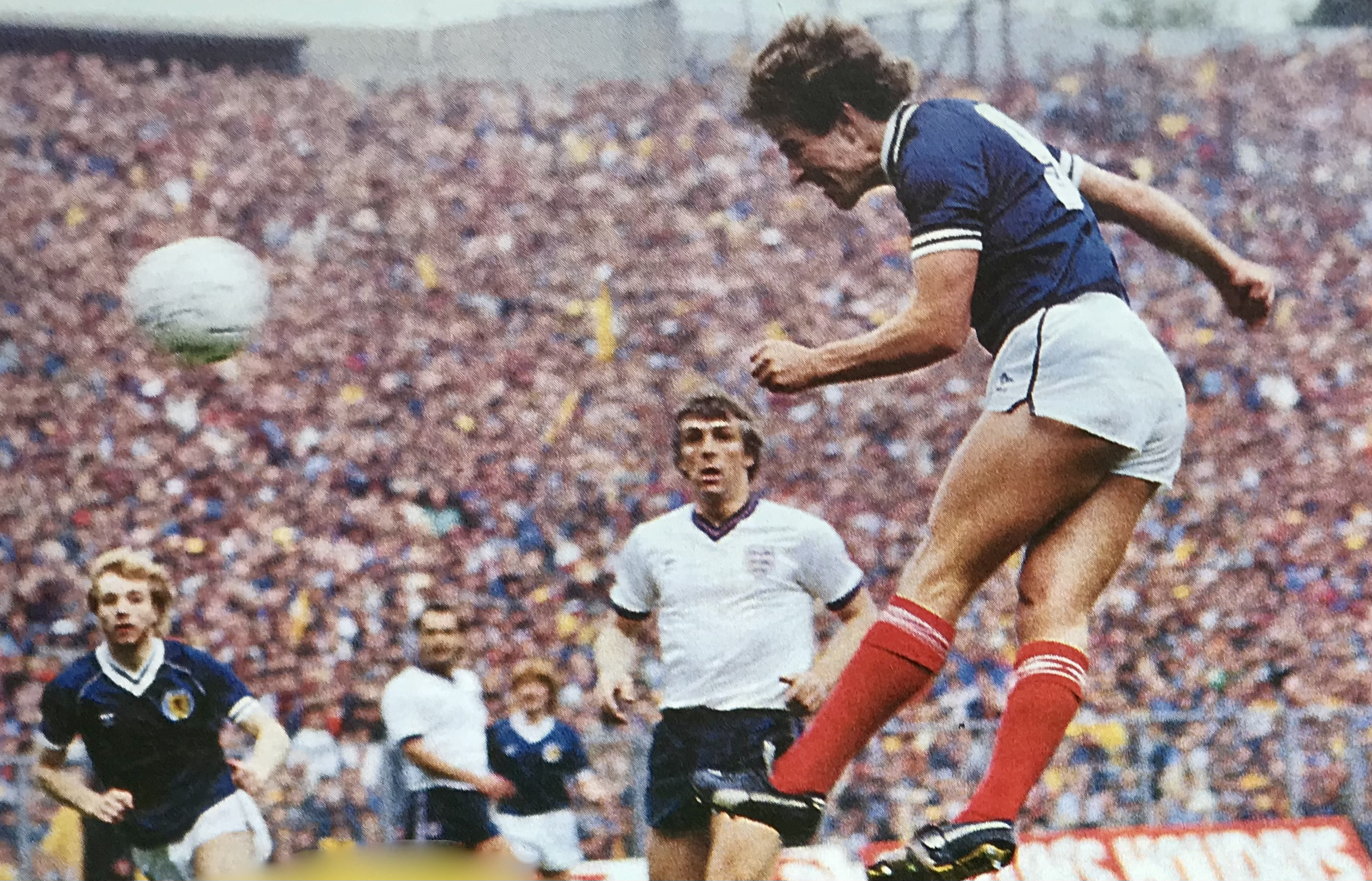
MARK McGHEE saw highs and lows as Brighton & Hove Albion manager after a medal-laden playing career that took him from his native Scotland to England and also to Germany.

McGhee was in charge when the Seagulls memorably won the 2004 play-off final to gain promotion from the third tier, beating Bristol City at the Millennium Stadium, Cardiff.

Play off final boss

Keeping the Seagulls up the following season was arguably an even greater achievement considering at the time playing home games at the crowd-restricted Withdean Stadium meant the club was at a huge disadvantage compared to most clubs in the division.

With the Amex still a distant dream, relegation came at the end of the 2005-06 season, and it wasn’t long into the following season that Dick Knight wielded the axe on the Glaswegian’s time in charge.

“It was hard to sack Mark, but we had to have a change,” Knight wrote in his autobiography, Mad Man: From the Gutter to the Stars. “Everyone recognised what he had done in taking up and keeping up a team that was not that great, to be honest. Hats off to him, he had done a terrific job. And he is a very intelligent, personable guy.”

Knight took decisive action when part of the crowd became vociferous in wanting McGhee out, and the chairman also felt some of the young players drafted into the team weren’t responding to him.

He was finally toppled over lunch at Topolino’s, and Knight admitted: “It was a difficult decision. There was strong vocal opposition to McGhee, but also a large, less noisy element who were behind him.”

McGhee liked Brighton so much he made it his home despite subsequently taking on a series of other roles the length and breadth of the country.

It’s probably fair to say the Scot has never been afraid to speak his mind, which his former Newcastle boss Bill McGarry mentioned to him. McGhee recounted in an interview with theleaguepaper.com: “I was managing Wolves at the time. He said ‘Mark, you talk too much. Tone it down a bit’. I tried to take his advice, give nothing away in media briefings. Then, somebody would say something interesting and I wasn’t able to stop myself.”

It’s probably what helped him gain a place on the Sky Sports Soccer Saturday panel when he was in between management jobs.

McGhee would most likely look back on some jobs he’d perhaps have been wiser to stay away from, for example taking temporary charge of Eastbourne Borough in 2018, although his enthusiasm was undimmed as he revealed in an interview with thenonleaguefootballpaper.com.

Born in Glasgow on 20 May 1957, his father was an electrical engineer and his mother a fertility consultant at Glasgow Royal Infirmary. McGhee was on the books of Bristol City at the start of his long career but he returned to Scotland and became a part-timer with Greenock Morton while also training to be an architect.

Aforementioned manager McGarry signed him for Newcastle for a £150,000 fee on 30 December 1977 and he made his debut on 2 January 1978.

His face didn’t fit after Arthur Cox took over as boss, but Alex Ferguson took a punt on him in March 1979 and signed him for Aberdeen, and it proved to be one of many shrewd decisions the esteemed Scot would make in his career.

McGhee was named Scottish PFA Players’ Player of the Year in 1982, and the following year was part of the Aberdeen side who beat Real Madrid 2–1 to lift the 1983 European Cup Winners’ Cup in Gothenburg.

mcg cup

He also scored the second goal as Aberdeen defeated Hamburg 2-0 to win the UEFA Super Cup in the same year.

Asked about the best goal he scored, he said: “Probably the winning goal in my last game for Aberdeen.”

McGhee reckoned his best moment in football came on 26 May 1984 when he scored against England at Hampden Park. He headed in a cross (as pictured) from his great pal Gordon Strachan past Peter Shilton.

McG v Eng

“It put us 1-0 up but Tony Woodcock equalised to make the final score 1-1.”

It was one of four caps he won for his country. Nearly two decades later, in January 2013, Strachan appointed him as his no.2 with the Scottish national side.

M McGhee Old Football PhotosBut back to those playing days, and with two Scottish league titles and three Cup wins behind him, McGhee tried his hand at European football and spent 16 months at Hamburg. The spell was probably more of an education than a success, with injuries limiting his game time.

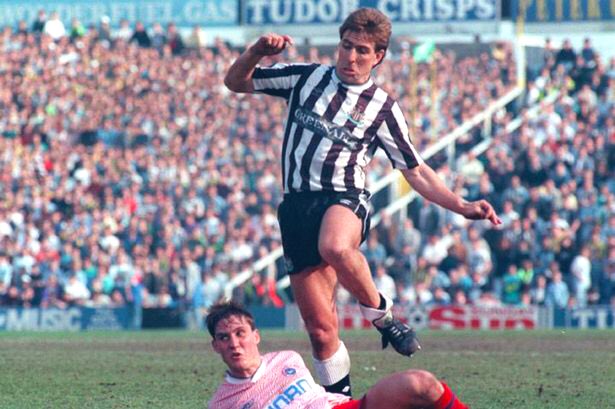
A £170,000 fee took him back to Scotland, to Celtic, where he had mixed fortunes during four years with the Glasgow giants. He was, though, part of the squad that won a League and Cup double in their centenary season.

After winning another Scottish Cup winners’ medal in 1989, he was on the move again, back to Newcastle.

Now with Jim Smith in charge, Newcastle paid £200,000 to take McGhee back to St James’ Park, where he formed an impressive strike partnership with the legendary Micky Quinn as Toon finished third in the old Division Two.

“We were good friends, but we didn’t blend on the pitch like Toshack and Keegan, Quinn told theleaguepaper.com. “Mark was a free spirit. He’d get the ball and drift left or right and drop deep.

“He’d turn defenders and drag them out of position. He would hold the ball up well for me to get into the box and score goals. He went where he wanted, but it worked.”

football back then McGhee

This Football Back Then picture shows McGhee in action for Newcastle against Albion’s Nicky Bissett.

His farewell performance came on 6 April 1991, not long after Ossie Ardiles had taken over as manager, and McGhee departed having scored a total of 36 goals in 115 appearances for the Magpies.

Next stop was Sweden, where he played briefly for IK Brage, but he seized the opportunity to try his hand at management by taking up the role of player-manager at Reading in the summer of 1991.

He’d been recommended for the role by his old boss Ferguson, and, after quitting playing through injury in 1993, he led the Royals to promotion from the third tier the following year.

A struggling Leicester City gave him a chance to manage in the Premier League but he was unable to keep them up and, less than a year after joining, decided to switch to Wolverhampton Wanderers, to succeed Graham Taylor.

Wolves just failed to gain promotion in 1996-97 (they lost in the play-off semi-finals) and were ninth the following campaign. Four months into the 1998-99 season, following a string of poor results, McGhee was fired.

It would be 20 months before he gained his next opportunity, this time at Millwall where he enjoyed initial success, leading them to promotion from the third tier, and then narrowly missing out on another promotion when they lost in the play-off semi-finals to Birmingham City.

McGhee apptWhen he parted company from Millwall in October 2003, he wasn’t out of work long because Brighton needed a replacement for Steve Coppell, who’d been wooed to take over at Reading (pictured above, with chairman Dick Knight, at his unveiling as Albion manager).

Those Albion fans who stuck by the team in the humble surroundings of the Withdean Stadium enjoyed some good moments during McGhee’s time as manager, in particular promotion via the play-off final in 2004.

He certainly found a formula to get the best out of certain players, as Adam Virgo, converted from defender to goalscorer, observed in that theleaguepaper.com article. “Mark is a very good communicator and very experienced,” he said. “He can make you feel ten feet tall. He’s very good at being honest, at analysing your game and telling you what you’re good at.”

After his departure from the Albion, McGhee was out of the game for nine months but got back in at Motherwell, turning them from near relegation candidates to qualifiers for European competition.

The lure of his old club, Aberdeen, proved too strong in the summer of 2009, but his tenure proved to be disastrous – and brief.

He spent the majority of 2012 as manager of Bristol Rovers, where one of the squad he inherited was former Brighton defender-turned-striker, Virgo. The following year, his old pal, Strachan, appointed him as assistant coach to the Scottish national side.

He later combined the role part-time when he returned to Motherwell but there were mixed fortunes second time round, and he left them again in early 2017. Towards the end of that year, he popped up at League Two Barnet, but the arrangement lasted only two months before he was moved to a ‘head of technical’ role, and then dismissed in March 2018.

McGhee was ‘slaughtered’ on Twitter when he took over as interim manager of National South side Eastbourne Borough in the spring of 2019, after being beaten 3-0 by Wealdstone in his first match in charge, his new side reduced to nine men after two players were sent off. Borough won just once in 11 matches.

When Albion under 23s coach Simon Rusk was appointed manager of Vanarama National League side Stockport County in January 2021, McGhee was appointed as one of his assistants.

His final managerial post was at Dundee in February 2022 when he took temporary charge of the Scottish Premiership side until the end of the season (with Rusk as his assistant), but they couldn’t avoid them being relegated, overseeing just one win in 13 matches.

McGhee finally announced his retirement from the game in September 2022 at the age of 65, telling the Sunday Post: “I won’t be pursuing any other managerial vacancies, and nor would I want to be a director of football or a head of recruitment. That’s not what I am – I’m a manager.

“I feel that players now deserve a young manager who can give them the energy I was able to when I started out. They don’t need a 65-year-old with a dodgy ankle.”

Great strike rate at Brighton but journeyman Benjamin had 29 clubs!

T Benj BTNSELDOM in his remarkable 29-club career did Trevor Benjamin enjoy such a successful spell as the 10 games he spent on loan at Brighton.

The bustling striker who had thrived under Micky Adams at Leicester City the season before scored five times for Mark McGhee’s promotion-chasing side in 2004.

McGhee was keen to keep him through to the end of the season but because of the timing of the three-month deal he wouldn’t have been eligible to play in the play-offs.

As a result, he went back to Leicester and McGhee brought in Chris Iwelumo instead, and, with a goalscoring debut in an away win at Chesterfield, there was no looking back.

Born on 8 February 1979 in Kettering, Benjamin was brought up in Wellingborough, Northants, and, having done well for Wellingborough Colts, was picked up by Kettering Town, playing for their youth team and reserves.

Cambridge United took him on as a trainee and he made his first team debut aged only 16 against Gillingham and went on to score 46 goals in 146 appearances.

Such a scoring record caught the eye of Leicester boss Peter Taylor and, on 12 July 2000, Benjamin joined the Foxes for a fee of £1.3 million.

However, he managed only a single goal in the 2000-01 season and the following season was sent out on loan to Crystal Palace, Norwich City and West Bromwich Albion.

He returned to Leicester for the whole of the 2002-03 season, including playing against the Albion at Withdean.

He said in a matchday programme article for that season’s return match against Brighton on 19 April 2003: “Brighton are a very similar team to ourselves. They have got a good work ethic and never give up.

“I came on as a substitute for the last 10 minutes when we played against them at the Withdean Stadium just before Christmas and that was a tough night.

TBenj Lei action“The conditions were terrible and both sides had to work hard to beat the elements. But I think our quality shone through on the night.” (Leicester won 1-0).

The following season, Benjamin was back on his travels, initially to Gillingham, then Rushden & Diamonds and, in January 2004, to Brighton.

Benjamin’s first Brighton goal came after just 12 minutes of Albion’s home game against Plymouth Argyle, who were then top of the league table. Leon Knight added a second goal before a jubilant celebration in front of the Sky cameras and Albion prevailed 2-1.

He followed that up by netting Albion’s goal in a 1-1 draw away to Wycombe Wanderers, and was again on the scoresheet in the 2-1 away defeat to Grimsby Town.

A 3-0 home win over AFC Bournemouth saw Benjamin score the second of Albion’s three goals at Withdean. When Tranmere Rovers were dispatched by the same score, he once again scored the second goal.

Back at Leicester, when Craig Levein was installed as boss, he cancelled Benjamin’s contract in January 2005. Benjamin initially dropped down a couple of divisions to play for Northampton but, three months later, his old Leicester boss, Adams, took him to Championship side Coventry City. He helped to set up both goals on his debut for the Sky Blues as they beat Reading 2-1.

In Coventry’s matchday programme for their home game against Brighton on 2 April 2005, he talked about how he had been settling in and the efforts he’d been making to try to improve his game.

“I’ve been training quite hard with Alan Cork on my finishing since I got here and he’s great to work with. He’s trying to get me to focus on what I am best at and hopefully when the games start again the practice will pay off.”

Benjamin’s arrival at Coventry may have seen him make a leap of two divisions but he was by no means unfamiliar with football at that level having played with Leicester for five years in both the Premiership and the Championship.

David Antill wrote: ‘During his time with the Foxes he was loaned out to no fewer than seven clubs before eventually signing permanently with Northampton Town but he is delighted to be back in a league he enjoys playing, for a manager he believes can get the best out of him.

“I’ve always believed in my own ability and thought I could play at this level and it was great to be given the chance to return to this league with Coventry,” said Benjamin. “My confidence never really slipped – I never had a doubt about coming here and being able to deliver the goods.

“I know what Micky Adams is all about and he knows what I’m all about so I enjoy working with him. What he’s brought here is exactly what he brought to Leicester and that’s what brought him success there. He’s a hard-working manager and he wants exactly the same thing from all of his players and I think he’s getting that.”

After scoring only once for the Sky Blues, in the summer of 2005 the burly forward linked up with Peterborough United, where he signed a three-year deal. However, he was loaned out several times, appearing for Watford, Swindon Town, Boston United and Walsall.

There was some stability and a return to goalscoring when he moved to Hereford United. He scored 10 in 34 games for the Bulls but was released in May 2008 and ended up drifting across the non-league scene for the next four years, popping up at no fewer than 13 different clubs.

It was all a far cry from the heady days of 2001 and 2002 when he briefly reached the international arena.

He went on as a substitute for Howard Wilkinson’s England under 21s as they beat Mexico 3-0 in a friendly at Filbert Street on 24 May 2001. Because he hadn’t played in a competitive fixture, he was then able to swap allegiances and played two matches for the full Jamaica international side in 2002.

Owusu raised the roof as Albion escaped the drop

Owusu stripes

FEW Brighton players have made such an impact in such a short time as Lloyd Owusu, a Ghana international who in 2009 struck seven goals in 14 appearances to help Russell Slade’s Albion retain their League One status.

The popular Slough-born goalscorer also earned legendary status amongst Sheffield Wednesday fans even though his playing time for the Owls was similarly fairly limited. His most prolific time as a striker came in two spells at Brentford, but he was happy to travel and ended up playing in Australia.

Born in Slough on 12 December 1976, Owusu started his career with local GM Vauxhall Conference club Slough Town, managed at the time by future Reading boss Brian McDermott.

Owusu rose through the ranks at youth and reserve team level before breaking into the first team in September 1996. Owusu marked his full league debut for Slough with four goals in a 6-0 win over Telford United.

In 1998, after netting 18 goals in 59 appearances for Slough, Brentford, then managed by former Palace chairman Ron Noades, took him to Griffin Park for a fee of £25,000, but it was under future Albion boss Steve Coppell that saw the majority of his best playing days.

Owusu BrentOwusu scored 76 goals in two spells with the Bees, and, in the 1998-99 season, his 24 goals in 53 games in all competitions saw him lead the scoring charts in Nationwide Division Three (now Football League Two) with Brentford crowned champions.

While two below par seasons followed, in 2001-02 he was back on top form, scoring 22 goals to help Brentford reach the Division Two play-off final at the Millennium Stadium. However, the Bees lost 2-0 to Stoke City and Owusu’s contract was not renewed.

Sheffield Wednesday, then in the Championship, signed him on a free transfer and he became an instant Wednesday legend. Coming on as a substitute in a typical fierce Steel City derby match against Sheffield United, he headed a goal with his first touch.

“Scoring with my first touch for Wednesday was a dream come true. I actually dreamt that I was going to score on my debut with my first touch,” Owusu told beatsandrhymesfc.com. “All I remember was the ball coming off the cross bar from a (Shefki) Kuqi header and me being there to put it in the net past Paddy Kenny.”

Although the Owls went on to win the match 2-0, Owusu subsequently had limited game time, starting only 13 games out of a possible 34 in all competitions in that 2002-03 season.

“I missed pre-season due to a knee operation so I was always on the backburner and could never reproduce my best performances,” Owusu explained.

When a similar story followed in 2003-04, he went on loan to Reading, and then moved permanently to the Royals in the summer of 2004. In the 2004-05 season, Owusu scored six goals in 14 league starts.

The striker rejoined Brentford on a free transfer in the summer of 2005, the same year he won his first cap for Ghana. Unfortunately, he tore a groin muscle in a friendly match playing for Ghana in April 2006 and was sidelined for nearly a year.

He finally made his comeback in March 2007, but he was released by Brentford two months later and signed on a free transfer for Russell Slade’s Yeovil Town in July 2007.

In September that year, he was a scorer at the Withdean Stadium as the Glovers left with all three points courtesy of a 2-1 win. But on transfer deadline day, 1 September 2008, Owusu joined Coca-Cola League 1 side Cheltenham Town on a one-year deal.

It was in March 2009, with Cheltenham looking to cut costs, that Owusu linked up with the Seagulls on loan until the end of the season. “Going to Brighton was one of my best memories of my career,” Owusu told gloucestershirelive.co.uk.

Owusu grabbed the headlines as he scored seven goals in 14 League appearances for Brighton, helping Russell Slade’s side to avoid relegation from League One. He was even named Powerade League One player of the month for April 2009.

On the strength of his performances, Owusu was offered an extended contract by the Seagulls but he chose to try his luck in Australia, where he has since returned to work.

He initially joined A-League side Adelaide United on a two-year deal but was struck by swine flu and pneumonia, and struggled to make an impact on the pitch. He had a short spell at Chinese Super League club Guangzhou Evergrande, but his contract was terminated by mutual consent at the end of December 2010.

Back in the UK, he linked up with Luton Town, at the time trying to get back into the Football League. He scored seven in 13 games but the team missed out on promotion after losing on penalties to AFC Wimbledon in the play-off final at the City of Manchester Stadium (as it was then).

After spending pre-season with Cypriot side AEP Paphos in the summer of 2011, Owusu returned to the UK to make a handful of appearances for Barnet and Hayes & Yeading United (on loan), but picked up an injury and left Barnet after his contract expired.

In February 2012, he re-signed for Slough to help manager, and former teammate, Steve Bateman achieve promotion, before returning to Adelaide with White City. He has since developed a coaching and acting career Down Under.

Owusu took his coaching badges in Australia and, as well as coaching at some of the top private schools in Sydney, has launched his own coaching company, XL Soccer.

“There has also been a bit of modelling, TV commercials and the odd appearances in a documentaries and movies,” he told gloucestershirelive.co.uk. “I was in Gods of Egypt with Gerard Butler and also appeared in the TV shows Danger5 and Deadly Women along with ads for OPSM (opticians) and HomeAway (holiday rentals).”

His LinkedIn profile says his current role is general duties master at Cranbrook School in Sydney.

Illness put paid to John Piercy’s promising career

A FIVE-YEAR professional football career bookended by 3-1 results against Crewe Alexandra almost certainly wouldn’t have been the path John Piercy would have chosen for himself.

One saw him make a promising debut for Tottenham Hotspur on 13 October 1999, subbed off to a terrific ovation from a 25,000 crowd at White Hart Lane on 74 minutes as they progressed in a League Cup game against the lower league opposition.

The other was a League One defeat for Brighton & Hove Albion at humble Withdean Stadium on 6 November 2004, subbed off ignominiously only 12 minutes into the second half with many in the crowd of 6,163 unaware that the hereditary bowel disease afflicting him was putting paid to his hopes of a football career.

Born in Forest Gate, east London, on 18 September 1979, Spurs first spotted Piercy as a stand-out 12-year-old, talented enough to represent England Schoolboys.

He became a trainee with Spurs at the age of 16 and signed as a professional in July 1998.

It was George Graham who gave him his first team debut for Spurs in that game against Crewe, starting him up front alongside Chris Armstrong in a side that featured future Brighton player and assistant manager Mauricio Taricco in defence.

The Spurs goals were scored by Oyvind Leonhardsen, David Ginola and Tim Sherwood, but spursodyssey.com was full of praise for the young Piercy.

“One young man who will remember this night more than most is 20-year-old debutant John Piercy, who won the home fans’ hearts with two terrific efforts on goal, and an eye-catching performance all round,” it said. They even went as far as to suggest he might be ‘the new Ginola’.

The performance was good enough to earn him a place on the bench for the following Saturday’s Premier League game away to Derby County and he was called into action in the second half to replace Armstrong as Spurs won 1-0.

He made two more league appearances that season and an excellent Spurs archive website said of him: “The solidly built East Londoner had the ability to lead the line and to make chances for his team-mates, by going wide and taking people on.

“Some work was needed on his first touch and his pace, but he was strong, direct and knew where the goal was.  Preferred to play wide on the left of midfield, but was deployed at full back in the reserves to good effect.”

Chris Hughton was the Spurs reserve team manager at the time and said of Piercy: “John is able to adapt well to different roles which is why we’ve played him at full-back in pre-season when we’ve been stretched in those areas.  But I’d say his best position is definitely right or left of midfield.”

On 4 April 1999, he started for England under 20s against the USA in the World Youth Championships in Nigeria, but was subbed off in a game England lost 1-0. His teammates that day included future full international Ashley Cole, and the side was managed by former Albion full-back Chris Ramsey.

john piercyFrustrated by the lack of first team opportunities at Spurs, Piercy, by then based in Eastbourne, opted to join Brighton in September 2002 during Martin Hinshelwood’s brief reign as manager.

Hinshelwood told the BBC: “He’s a player who can play in a variety of positions. That will give us plenty of options.”

A first team breakthrough at Brighton was slow to happen, however, with Hinshelwood’s successor, Steve Coppell, opting for experience in the ultimately unsuccessful battle to avoid relegation from the second tier. Piercy top-scored for the reserves that season, netting 13 goals from midfield.

However, shortly after Mark McGhee’s appointment, he did get some game time and in December 2003 also registered his first league goal in a 1-0 win at home to Wrexham.

Later the same month, he went one better playing up front in place of the suspended Leon Knight and scored twice in a resounding 4-0 home win over Wycombe Wanderers.

More often than not, though, he was brought on as a substitute rather than starting games. He made just eight league starts and in six of them was subbed off.

His other appearances (16) were all from the bench and that was the role he found himself in at the 2004 play-off final at the Millennium Stadium in Cardiff, although his contribution was certainly effective.

Piercy replaced Nathan Jones in the 77th minute. “He (McGhee) made a change with just over 10 minutes left and we went on to win the game, so no one is going to complain, are they?” Jones told walesonline.co.uk.

Reports also recorded how Brighton threatened Steve Phillips’ goal moments after Piercy replaced Jones, Iwelumo glancing the substitute’s cross wide of the far post.

Sadly for Piercy, while he showed promise on the football pitch, he began to suffer the horribly debilitating effects of colitis, as he described in an interview with the Argus.

He praised the support he got from McGhee and reserve team boss Dean White but it reached a point where it was evident the illness was simply sapping too much energy from him to continue a full-time professional football career.

That defeat at home to Crewe proved to be his last game for the Albion and he announced his retirement aged 25 shortly afterwards.

“He knows his capabilties and I know his capabilities,” said McGhee in a matchday programme article. “He’s a player that could easily cope with the standard of the Championship but this illness has just affected him in a way that he just can’t get fit enough to do himself justice.”

Chairman Dick Knight added: “It is a great shame that such a skilful player, with such tremendous natural ability, has seen his career curtailed in such a cruel way. All at the club are devastated for him to be hanging up his boots at the relatively young age of 25.”

Piercy subsequently regained sufficient fitness to play a season with non-league Eastbourne Borough and then took up a coaching role with the club.

Nowadays he is a sports coach at Ocklynge Junior School in Eastbourne where he teaches youngsters football and PE, and is also a coach at CACL Sports in the town.

Piercy Ocklynge Sch