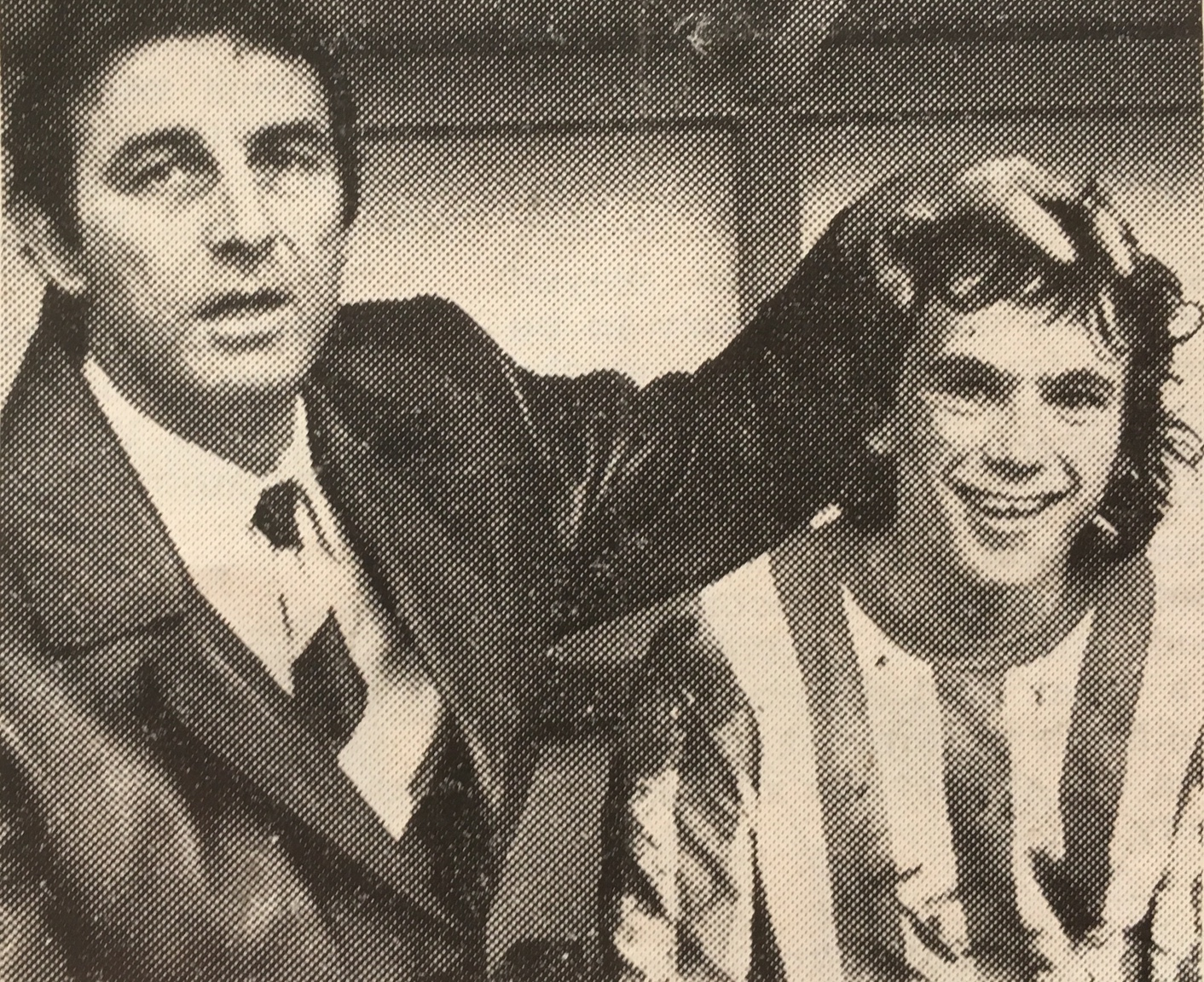
Spanish TV star Michael Robinson followed in dad’s footsteps to play for Brighton

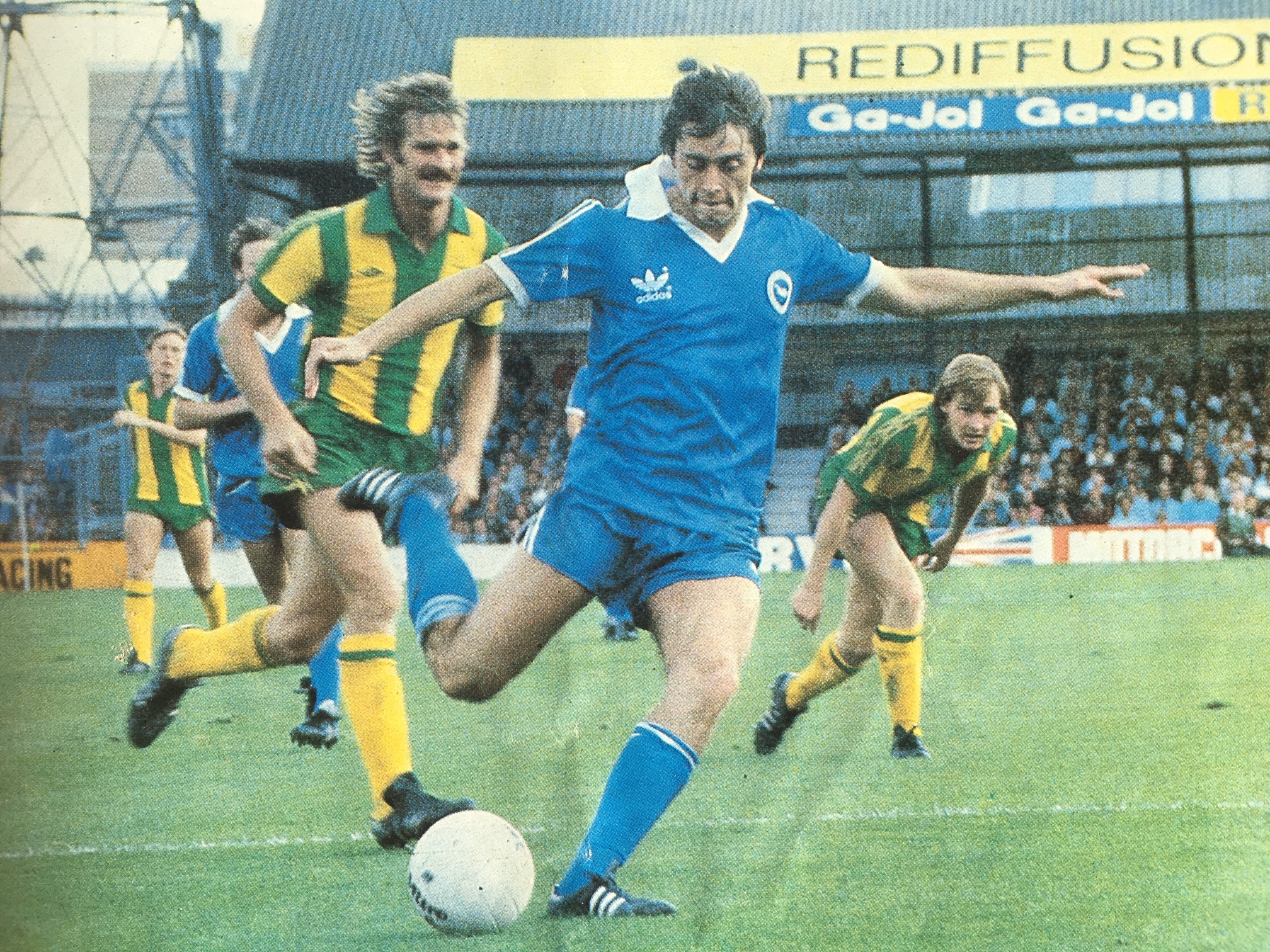
Robinson v WBA

WHEN Michael Robinson died of cancer aged 61 on 28 April 2020, warm tributes were paid in many quarters to the former Brighton, Liverpool and Republic of Ireland international who became a big TV celebrity in Spain.

“We have lost a very special guy, a lovely person and someone I’m proud to have known both on and off the pitch,” his former teammate Gordon Smith told Spencer Vignes. “He was one of the boys, one of the good guys.”

It seemed like half a world away since Robinson had charged towards Gary Bailey’s goal in the dying moments of the 1983 FA Cup Final only inexplicably to pass up the opportunity of scoring a Wembley winner to lay the ball off to Smith.

“With Michael bursting forward and having turned the United defence inside out, I was genuinely expecting him to shoot and had put myself in a position to pick up any possible rebound,” Smith recounted. “Instead he squared it to me and we all know what happened next.”

Robinson’s next two competitive matches also took place at Wembley:

  • He once again led the line for Brighton when the Seagulls were crushed 4-0 by Manchester United in the cup final replay on 26 May. It turned out to be his last game for the Albion.
  • Three months later he was in the Liverpool side who lost 2-0 to United in the FA Charity Shield season-opening fixture between league champions and FA Cup winners, following his £200,000 move from relegated Brighton.

It was hardly surprising Robinson didn’t hang around at the Goldstone: the Seagulls had given him a platform to resurrect a career that had stalled at Manchester City, but the striker had several disputes with the club and the newspapers were always full of stories linking him with moves to other clubs.

robbo livPerhaps it was surprising, though, that champions Liverpool were the ones to snap him up, particularly as Ian Rush and Kenny Dalglish were in tandem as first choice strikers.

But at the start of the 1983-84 season, Joe Fagan’s Liverpool had several trophies in their sights and Robinson scored 12 times in 42 appearances as the Merseyside club claimed a treble of the First Division title, the League Cup, and the European Cup.

It took him a while to settle at the Reds because by his own admission he was in awe of the players around him but advice from Fagan to play without the metal supports he’d worn in his boots for six years previously (to protect swollen arches) paid off.

“It made a hell of a difference,” he said. “I felt a lot sharper and so much lighter on my feet.” In the first game without them, Robinson scored twice in a European game at Anfield, then he got one in a Milk Cup tie versus Brentford and scored a hat-trick in a 3-0 league win at West Ham.

robbo semi hatNevertheless, asked many years later to describe his proudest moment in football, he maintained: “Scoring the winning goal in the FA Cup semi-final that meant that a bunch of mates at Brighton were going to Wembley in 1983.”

One of two sons born to Leicester publican Arthur Robinson on 12 July 1958, Michael followed in his father’s footsteps in playing for Brighton. Arthur played for the club during the Second World War when in the army, and also played for Leyton Orient.

When he was four, Robinson moved to Blackpool where his parents took over the running of a hotel in the popular seaside resort. The young Robinson first played football on Blackpool beach with his brother.

After leaving Thames Primary School, it was at Palatine High School that he first got involved in organised football, and, before long, he caught the eye of the local selectors and represented Blackpool Schools at under 15 level, even though he was only 13.

Amongst his teammates at that level was George Berry, who ironically was Robinson’s opponent at centre half in his first Albion match, against Wolverhampton Wanderers.

The young Robinson also played for Sunday side Waterloo Wanderers in Blackpool and when still only 13 he was invited for trials at Chelsea, by assistant manager Ron Suart, who had played for and managed Blackpool.

Although he was asked to sign schoolboy forms, Robinson’s dad thought it was too far from home. Coventry, Blackpool, Preston and Blackburn were also keen and the North West clubs had the edge because he wouldn’t have to leave home.

Eventually he chose Preston and on his 16th birthday signed as an apprentice. At the time, Mark Lawrenson was also there, training with the youngsters, and Gary Williams was already on the books.

After two years as an apprentice, he signed professional and began to push for a first team place with the Lillywhites. With former World Cup winner Nobby Stiles in charge, in 1978-79, Robinson scored 13 goals in 36 matches, was chosen Preston fans’ Player of the Year and his form attracted several bigger clubs.

In a deal which shocked the football world at the time, the flamboyant Malcolm Allison paid an astonishing £756,000 to take him to Manchester City. It was a remarkable sum for a relatively unproven striker.

The move didn’t work out and after scoring only eight times in 30 appearances for City, Robinson later admitted: “I’d never kicked a ball in the First Division and the fee was terrifying. If I had cost around £200,000 – a price that at that time was realistic for me – I would have been hailed as a young striker with bags of promise.”

It was Brighton manager Alan Mullery, desperate to bolster his squad as Albion approached their second season amongst the elite, who capitalised on the situation.

“I received the go ahead to make some major signings in the summer of 1980,” Mullery said in his autobiography. Mullery, had the support of vice-chairman Harry Bloom – current chairman Tony Bloom’s grandfather – even though chairman Mike Bamber was keener to invest in the ground.

“I could see he’d lost confidence at City and I made a point of praising him every chance I got,” said Mullery. “I asked him to lead the line like an old-fashioned centre forward and he did the job very well.”

Robinson told the matchday programme: “When Brighton came in for me, I needed to think about the move…12 months earlier I had made the biggest decision of my life and I didn’t want to be wrong again.”

In Matthew Horner’s authorised biography of Peter Ward, He shot, he scored, Mullery told him: “When I signed Michael Robinson it was because I thought Ward was struggling in the First Division and that Robinson could help take the pressure off him. Robinson was big, strong, and powerful and he ended up scoring 22 goals for us in his first season.”

The first of those goals came in his fourth game, a 3-1 league cup win over Tranmere Rovers, and after that, as a permanent fixture in the no.9 shirt, the goals flowed.

With five goals already to his name, Robinson earned a call up to the Republic of Ireland squad. Although born in Leicester, his mother was third generation Irish and took out Irish citizenship so that her son could qualify for an Irish passport. It was also established that his grandparents hailed from Cork.

He made his international debut on 28 October 1980 against France. It was a 1982 World Cup qualifier and the Irish lost 2-0 in front of 44,800 in the famous Parc des Princes stadium.

Nevertheless, the following month he scored for his country in a 6-0 thrashing of Cyprus at Lansdowne Road, Dublin, when the other scorers were Gerry Daly (2), Albion teammate Tony Grealish, Frank Stapleton – and Chris Hughton!

In April 1982, Robinson, Grealish and Gerry Ryan were all involved in Eire’s 2-0 defeat to Algeria, played in front of 100,000 partisan fans, and for a few moments on the return flight weren’t sure they were going to make it home. The Air Algeria jet developed undercarriage problems and had to abort take-off. Robinson told the Argus: “I thought we were all going to end up as pieces of toast. But the pilot did his stuff and we later changed to another aircraft.”

Although not a prolific goalscorer for Ireland, he went on to collect 24 caps, mostly won when Eoin Hand was manager. He only appeared twice after Jack Charlton took charge.

But back to the closing months of the 1980-81 season…while only a late surge of decent results kept Albion in the division, Robinson’s eye for goal and his never-say-die, wholehearted approach earned him the Player of the Season award.

As goal no.20 went in to secure a 1-1 draw at home to Stoke City on 21 March, Sydney Spicer in the Sunday Express began his report: “Big Mike Robinson must be worth his weight in gold to Brighton.”

However, the close season brought the shock departure of Mullery after his falling out with the board over the sale of Mark Lawrenson and the arrival of the defensively-minded Mike Bailey.

Bailey had barely got his feet under the table before Robinson was submitting a written transfer request, only to withdraw it almost immediately.

He said he wanted a move because he was homesick, but after talks with chairman Bamber, he was offered an incredible 10-year contract to stay, and said the club had “fallen over themselves to help me”.

Bamber told the Argus: “I have had a very satisfactory talk with Robinson and now everybody’s contracts have been sorted out. It has not been easy to persuade him to stay.”

Even though Bailey led the Seagulls to their highest-ever finish of 13th, it was at the expense of entertainment and perhaps it was no surprise that Robinson’s goal return for the season was just 11 from 39 games (plus one as sub).

The 1982-83 season had barely got underway when unrest in the club came to the surface. Steve Foster thought he deserved more money having been to the World Cup with England and Robinson questioned the club’s ambition after chairman Bamber refused to sanction the acquisition of Charlie George, the former Arsenal, Derby and Southampton maverick, who had been on trial pre-season.

Indeed, Robinson went so far as to accuse the club of “settling for mediocrity” and couldn’t believe manager Bailey was working without a contract. Bamber voiced his disgust at Robinson, claiming it was really all about money.

The club tried to do a deal whereby Robinson would be sold to Sunderland, with Stan Cummins coming in the opposite direction, but it fell through.

Foster and Robinson were temporarily left out of the side until they settled their differences, returning after a three-game exile. But within four months it was the manager who paid the price when he was replaced in December 1982 by Jimmy Melia and George Aitken.

Exactly how much influence the managerial pair had on the team is a matter of conjecture because it became a fairly open secret that the real power was being wielded by Foster and Robinson.

On the pitch, the return of the prodigal son in the shape of Peter Ward on loan from Nottingham Forest had boosted crowd morale but didn’t really make a difference to the inexorable slide towards the bottom of the league table.

Ward scored a famous winner as Manchester United were beaten 1-0 at the Goldstone a month before Bailey’s departure, but he only managed two more in a total of 20 games and Brian Clough wouldn’t let him stay on loan until the end of the season.

Albion variously tried Gerry Ryan, Andy Ritchie and, after his replacement from Leeds, Terry Connor, to partner Robinson in attack. But Connor was cup-tied and Ryan bedevilled by injuries, so invariably Smith was moved up from midfield.

Robinson would finish the season with just 10 goals to his name from 45 games (plus one as sub) – not a great ratio considering his past prowess.

The fearless striker also found himself lucky to be available for the famous FA Cup fifth round tie at Liverpool after an FA Commission found him guilty of headbutting Watford goalkeeper Steve Sherwood in a New Year’s Day game at the Goldstone.

The referee hadn’t seen it at the time but video evidence of the incident was used and the blazer brigade punished him with a one-match ban and a £250 fine. Robinson claimed it had been an accident…but it was one that left Sherwood needing five stitches. The ban only came into effect the day after the Liverpool tie, and he missed a home league game against Stoke City instead.

In the run-up to the FA Cup semi-final with Sheffield Wednesday, Robinson was reported to be suffering with a migraine although he told Brian Scovell it was more to do with tension, worrying about the possibility of losing the upcoming tie.

Nevertheless, he told the Daily Mail reporter: “When I was with Preston, I suffered a depressed fracture of the skull and have had headaches ever since. This week it’s been worse with the extra worry about the semi-final.”

Manager Melia, meanwhile was relieved to know Robinson would be OK and almost as a precursor to what happened told John Vinicombe of the Evening Argus: “Robbo is a very important member of our team and he’s the man who can win it for us.

“It is Robbo who helps finish off our style of attacking football and I know he’ll do the business for us on the day.”

Reports of the semi-final were splashed across all of the Sunday papers, but I’ll quote the Sunday Express. Under the headline MELIA’S MARVELS, reporter Alan Hoby described the key moment of the game.

“In a stunning 77th minute breakaway, Case slipped a beauty forward to the long-striding Gordon Smith whose shot was blocked by Bob Bolder.

“Out flashed the ball to Smith again and this time the cultured Scot crossed for Mike Robinson to rap it in off a Wednesday defender.”

Other accounts noted that defender Mel Sterland had made a vain attempt to stop the ball with his hand, but the shot had too much power.

When mayhem exploded at the final whistle, a beaming Robinson appeared on the pitch wearing a crumpled brown hat thrown from the crowd to acknowledge the ecstatic Albion supporters.

In one of many previews of the Final, Robinson was interviewed by Shoot! magazine and sought to psyche out United by saying all the pressure was on them.

“That leaves us to stride out from that tunnel with a smile and a determination to make everyone proud of us,” he said.

“Nobody seems to give us a prayer. They all seem glad that ‘little’ Brighton has reached the Final, but only, I suspect, because they expect to see us taken apart by United.”

Everyone knows what happened next and quite why the normally-confident Robinson didn’t take on his golden opportunity to win the game for Brighton in extra time remains a mystery.

However, as mentioned earlier, within months ‘little’ Brighton was a former club and Robinson had taken to a much bigger stage. This is Anfield reflected on his short time at Anfield as “a golden opportunity for him” and recalls that it turned out to be “the best and most successful season of his career”.

RobFozBWHe had yet more Wembley heartache during a two-year spell with Queen’s Park Rangers, being part of their losing line-up in the 3-0 league cup defeat to Oxford United in 1986.

The move which would lay the foundations for what has become a glorious career on TV arose in January 1987 when Robinson moved to Spain to play for Osasuna, scoring 12 times in 59 appearances before retiring through injury aged 31.

Robinson completely embraced the Spanish way of life, learned the language sufficiently to be an analyst for a Spanish TV station’s coverage of the 1990 World Cup, and took Spanish citizenship.

His on-screen work grew and the stardom Robinson achieved on Spanish TV attracted some of the heavyweight English newspapers to head out to Spain to find out how he had managed it.

For instance, Elizabeth Nash interviewed him for The Independent in 1997 and discovered how he had sold his house in Windsor and settled in Madrid.

Meanwhile, in a truly remarkable interview Spanish-based journalist Sid Lowe did with Robinson for The Guardian in 2004, we learned how that FA Cup semi-final goal was his proudest moment in football and that Steve Foster was his best friend in football.

In June 2017, his TV programme marked the 25th anniversary of Barcelona’s first European Cup win at Wembley, with some very studious analysis. On Informe Robinson (‘Robinson Report), he said: “Wembley was a turning point in the history of football. Cruyff gave the ball back to football.”

Flying winger Tony ‘Tiger’ Towner immortalised in children’s TV programme

2-towner-takes-on-argusIF ART is the sincerest form of flattery, Tony Towner can count himself amongst the privileged few to be forever remembered on film.

That it was done by two of Rotherham United’s most ardent celebrity fans is neither here nor there – it’s not everyone who can say their prowess has been portrayed in an episode of Chucklevision.

Towner and fellow Millers hero Ronnie Moore were at the centre of a classic knockabout episode of the children’s TV series in which Rotherham supporters Paul and Barry Chuckle constantly get involved in slapstick scrapes.

In Football Heroes, made in 1996, the Chuckle Brothers meet Towner and Moore (actors playing them rather than the footballers themselves!) on their way to a game and accidentally end up with their invitation cards to play in a veterans match, leading to them ending up on the pitch.

Towner earned plaudits for his Rotherham performances in this Shoot magazine feature – pipping one Danny Wilson!

It was Towner and Moore’s starring performances in the Rotherham side that won promotion from the old Division 3 as champions in 1980-81 that earned them cult status.

Over three seasons, Towner appeared over 100 times for the Millers and even all these years later is still remembered with affection.

Take, for example, comments made on the Millers Mad website a couple of years ago. Ivor Hardy said: “Tony (Tiger) Towner was one of the best and most talented footballers ever to play for us.

“He was instrumental in us winning the league in 80/81, along with doing the double over our near neighbours Sheffield United in the same season.

“We were lucky to get the services of Towner and Seasman from Millwall, and only did so because the Lions were in financial turmoil that season and had to get some money in fast. He will always be a legend with the older fans, along with team mates Seasman, Moore, Fern, Breckin, Mountford etc.

“Tiger gave us some great memories.”

Meanwhile, kevthemaltbymiller said: “Great player for us, very tricky winger with lightning pace. Happy memories.” And sawmiller added: “Tiger was a super player – good winger who created a real buzz in the crowd when he got the ball and ran at players.”

Towner himself considered his time at Rotherham to have been his best playing days. In an Albion matchday programme article, he told Roy Chuter: “They were probably my best years, my most consistent, anyway. I was 26, 27 years old – at my peak. I had three tremendous years.”

Initially playing under Sunderland’s 1973 FA Cup Final hero Ian Porterfield, he also enjoyed working with the former Liverpool legend Emlyn Hughes, when he took over as manager.

Brighton fans also have good memories of the local boy made good. Sussex youngsters making the grade with the Albion have been pretty few and far between over the years, but Towner and defender/midfielder Steve Piper were two who did it in the 1970s.

In Albion’s 1972-73 season in the second tier, Piper had already been blooded in the first team in the November. Towner signed professional on 29 December 1972 and, with Albion having been knocked out of the FA Cup by Chelsea in the third round, manager Pat Saward arranged a friendly against Stoke City on fourth round day, 3 February 1973 (Stoke had been beaten 3-2 by Man City) and gave Towner his first team debut in a 2-0 defeat at the Goldstone.

The following Saturday he made his league debut aged just 17 at home to Luton Town. Albion went into the game having suffered 14 defeats on the trot (12 in the league plus the games against Chelsea and Stoke) and, rooted to the bottom of the table, relegation was inevitable.

Saward gave the side a shake-up, dropping three established players – goalkeeper Brian Powney in favour of loan signing Tommy Hughes from Aston Villa, right back Graham Howell (to the bench), and experienced striker Barry Bridges.

Piper made only his sixth first team appearance and he was joined by winger Towner and forward Pat Hilton. It was Towner’s brilliant display on the wing that really caught the eye as Albion finally mustered a win, beating the Hatters 2-0.

Towner kept the shirt until the end of the season and it was the launchpad for a 15-year professional career in which he made over 400 appearances. After that Luton debut, he scored his first goal in a 2-1 home win against Huddersfield on 10 March.

“I was an Albion fan as a kid, in Bevendean, and I joined them straight from school at 15, as an apprentice,” he said. “I already had the ‘Tiger’ nickname when I got into the team in 1973 – I think it was one of Alan Duffy‘s. I must have tackled him a bit too hard in training, or something. Tiger was a great nickname, and I loved it.”

One of the few survivors of the great Brian Clough cull of the playing staff in 1974, Towner was a speedy, skilful winger who could put in terrific crosses for his teammates. The fact he was a local lad endeared him greatly to the crowd.

In five years, he had plenty of challengers for his place. In the early days, Gerry Fell competed for the wide berth and later Eric Potts, but Towner still managed 171 games (+ 12 as sub) for the Albion and scored 25 goals.

“Gerry was the opposite of me, though still a winger – he had loads of pace, though not too much skill,” Towner recalled. “He’d knock the ball ahead of him and run past the defender to get it, a bit like Stuart Storer. I’d try to trick my way past.”

In John Vinicombe’s end of season assessment of Peter Taylor’s first season in sole charge (1974-75), he said: “It is with no disrespect to Taylor that I suggest that the three most consistent players were those he inherited – O’Sullivan, Towner and Piper.

“Towards the end, Towner tailed off a little but he struck up an intuitive partnership with Fred Binney.”

In fact Towner was third highest in the squad for appearances that season, playing 47 games in total plus four as sub and with 10 goals was second highest goalscorer behind Binney.

It was the arrival of Gerry Ryan from Derby in September 1978, which finally prompted his departure. George Petchey, who later joined Chris Cattlin’s backroom team at the Goldstone, took him to Millwall for £65,000.

Unfortunately, while Brighton won promotion to Division 1 in 1979, Millwall went the opposite way out of Division 2, and Towner found himself back in the third tier.

After 68 appearances for the Lions, in 1980 he was sold to Rotherham along with teammate John Seasman for a combined fee of £165,000.

Towner scored once for Rotherham’s near neighbours Sheffield United in a 10-game loan spell in 1983 and although he had missed out on Brighton’s eventual elevation to the top tier, he managed it with Wolves in 1983-84 having been signed by the Black Country side for £80,000.

He then joined Charlton Athletic but in the 1985-86 season was loaned to Rochdale where he once again linked up with his former Rotherham teammates, Moore and Seasman. He made five appearances for Rochdale and MikeMCSG on clarkechroniclersfootballers.blogspot.co.uk recalls: “He came on as sub in a home game and made an instantly good impression by beating the full back with his first touch.

“He went on to play a blinder in the draw at Halifax on Boxing Day. Unfortunately Tony didn’t want to uproot to the North and couldn’t be persuaded to make his stay permanent. When Cambridge came in with an offer he signed for them instead although he only made eight appearances for them in total.”

Towner’s final Albion appearance had been in a 4-1 defeat away to Leicester in September 1978 but his final appearance at the Goldstone came in a memorable FA Cup 3rd round tie on 4 January 1992.

Albion beat then Southern League Crawley 5-0 and Towner earned a rousing reception from the 18,031 packed into the Goldstone when, at the age of 36, he came on as a substitute for the visitors.

Crawley were one of several non-league clubs he played for: he also turned out for Gravesend, Fisher Athletic, Lewes, Newhaven and Saltdean.

Interestingly, Towner reflected: “I could definitely have played for a few more years at league level, and perhaps I should’ve done. I’d got a bit disillusioned with it though.”

After his playing days ended, Towner ran his own Brighton-based removals business and watched the Albion as a fan. In October 2015, Brian Owen interviewed him for an Argus piece ahead of a game against Cardiff when former Albion winger Craig Noone was in opposition.

Towner reckoned Albion made a mistake letting him go but added: “It’s good to see Brighton making good use of wingers.

“That’s the way I was brought up, using the wide men.

“It’s all right having midfield men or attack-minded full-backs. But what gets the crowd on its feet is a winger going past the full-back and crossing.

“You can have all the formations you like but, if you see a winger getting past his full-back, it excites people.”

Tony Towner certainly came into that category.

1-sawar-towner
3-towner-crosses-argus-prog
4-argus-shot-towner-on-wing

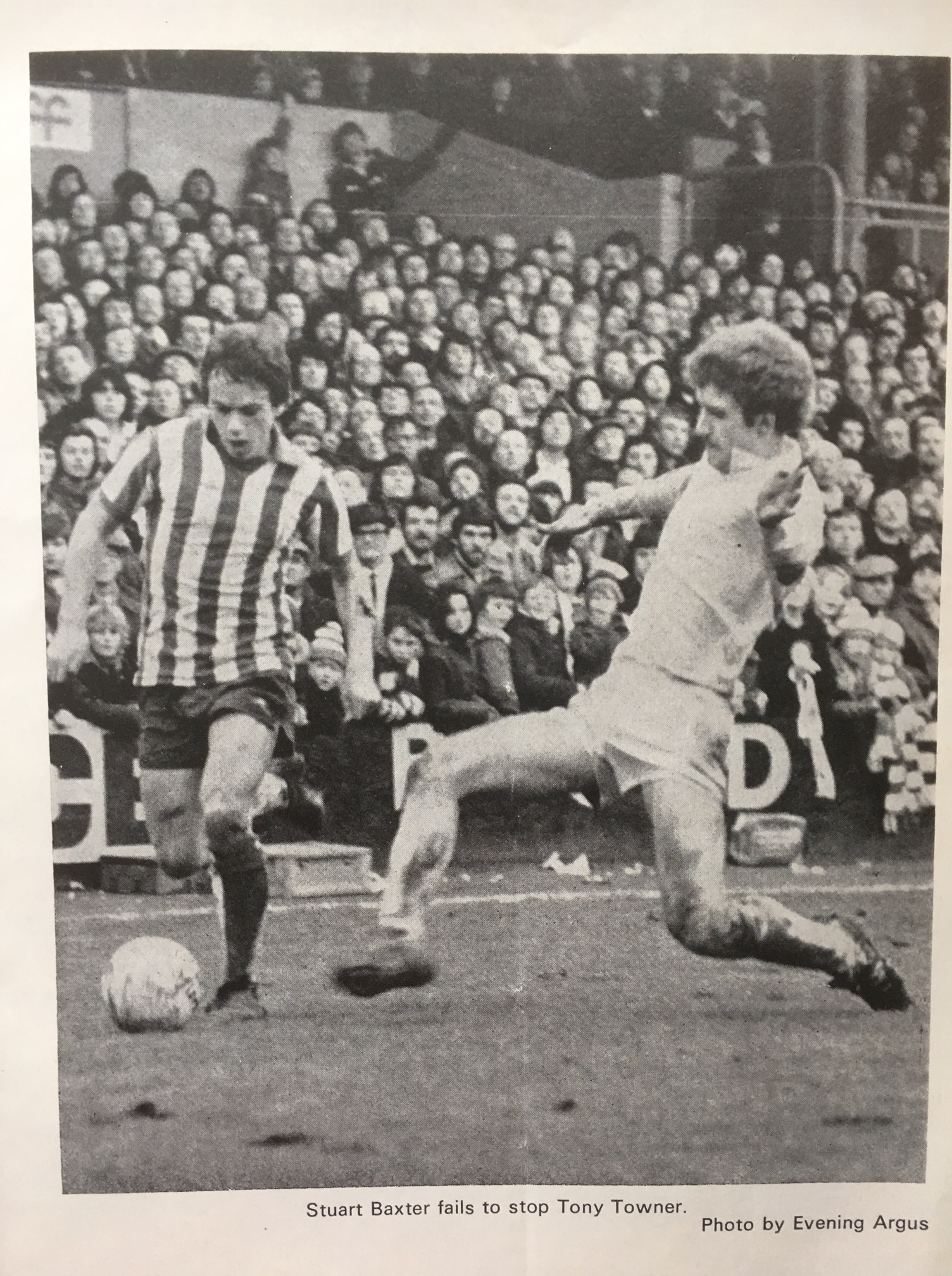
Pictures mainly shot by Evening Argus photographers and then reproduced in the Albion matchday programmes show a happy Towner congratulated by manager Pat Saward after his league debut, in familiar pose taking on a full back, getting in a trademark cross, in full flight on the wing, and finally on a Wolves album sticker.

Terry Connor had an eye for goal for Leeds and Brighton

Connor action 1TERRY CONNOR is a familiar face to today’s football fans as a loyal assistant manager to Mick McCarthy.
But Leeds United and Brighton fans of a certain vintage remember him as a pacy striker with an eye for goal.

His time with the Albion saw him at his most prolific with a record of almost a goal every three games (51 in 156 appearances) – form which earned him a solitary England under 21 cap as an over-age player.

Relegation-bound Brighton took the Leeds-born forward south in exchange for Andy Ritchie shortly after they had made it through to the semi-final of the 1983 FA Cup, but the new signing could take no part because he’d already played in the competition for Leeds.

If Brian Clough had allowed Peter Ward to have remained on loan to the Seagulls that spring, who knows whether Connor would have joined, but, when the former golden boy sought an extension of his loan from Nottingham Forest, which would have enabled him to continue to be part of the progress to Wembley, according to Ward in He Shot, He Scored, the eccentric Forest boss told him: ‘Son, I’ve never been to a Cup Final and neither will you’.

So the Connor-Ritchie swap went ahead and, with the rest of the team’s focus on the glory of the cup, the new arrival scored just the once in five appearances, plus two as sub, as the Seagulls forfeited the elite status they’d held for four seasons.

lpool goalConnor would have his moment of cup glory (celebration above) in the following season, though, as the TV watching nation saw him and Gerry Ryan score in a 2-0 win over Liverpool at the Goldstone; the second successive season Albion had dumped the mighty Reds out of the FA Cup.

Connor was best man when teammate Hans Kraay got married. Frank Worthington (right) was there too.

Born in Leeds on 9 November 1962, Connor went to Foxwood School on the Seacroft estate in Leeds. He burst onto the football scene at just 17, scoring the only goal of the game after going on as a sub for Paul Madeley to make his hometown club debut in November 1979 against West Brom.

connor leeds

“I got such an early break at Leeds because the club were rebuilding their side after those days when they were riding high,” Connor told Shoot! magazine. “Eddie Gray was still in the team when I came in. He was the model professional. It was terrific to have someone with his experience alongside you.”

Connor went on to make a total of 108 appearances for Leeds over four seasons, scoring 22 goals, before the by-then manager Gray did the swap deal with Ritchie.

In February 2016, voice-online.co.uk carried an interview in which Connor recalled racial abuse he received as a player.

“It was difficult for black players to thrive. I can remember going to many away games and there were bananas thrown on the pitch and `monkey’ chants from the stands,” he said.

“I remember receiving mail from Leeds fans telling me not to wear the white shirt, even though I was born and bred in Leeds. I had bullets sent to me and the police were called on a couple of occasions.”

Even so, the move to Brighton still came as a bit of a shock to him.

“‘I’d never imagined myself playing for anyone else but Leeds,” he told Shoot! at the time. “I was born and bred in the city. My parents and friends live there, and really Elland Road was a second home to me.”

Unfortunately for Connor, manager Jimmy Melia gave him the impression he was going to be forming a double spearhead with Michael Robinson. But after relegation, Robinson and several others from the halcyon days were sold, in Robinson’s case to Liverpool.

TC phoenixThe man who bought him didn’t last long either; Melia making way for Chris Cattlin in the autumn of 1983. It didn’t stop Connor making his mark in the second tier and despite having several different striking partners of varying quality, his goalscoring record was good at a time when the side itself was struggling to return to the top with the Cup Final squad being dismantled and under investment in replacements.

In his first full season, he missed only two first team games all season and was top scorer with 17 goals as Albion finished ninth in the league. His main strike partner Alan Young scored 12.

Connor got only one fewer in the 1984-85 season when the side finished sixth; the veteran Frank Worthington chipping in with eight goals in his only season with the Seagulls.

TC v Sunderland

In 1985-86 Connor had two different strike partners in Justin Fashanu and the misfiring Mick Ferguson but still managed another 16 goals, including four braces.

The disastrous relegation season of 1986-87 contained a personal high for Connor when, in November 1986, he was selected as an over-age player (at 24) for England under 21s and scored in a 1-1 draw with Yugoslavia.

He had formed a useful partnership with Dean Saunders but, as money issues loomed, Saunders was sold to Oxford and soon, after being voted player of the season, Connor also left as the Albion were relegated; Barry Lloyd being unable to halt the slide back to the third tier.

Reflecting on his time at Brighton in a matchday programme interview, Connor said: “I really enjoyed my football, playing on the south coast. We also loved the lifestyle and my eldest daughter was born there, I loved playing in the atmosphere created at the Goldstone. There was a bond with the players and their partners, with Jimmy Melia and Mike Bamber, and it was like one big happy family.”

As Lloyd was forced to sell players, Connor returned to the top flight via a £200,000 move along the coast to newly-promoted Portsmouth. A terrible run of injuries plagued his Pompey career meaning he only managed 58 appearances and scored 14 goals over the course of three seasons.

A £150,000 transfer fee saw him join then Third Division Swansea City for the 1990-91 season and although he managed 39 appearances, he scored only six times.

Next stop was Bristol City in September 1991 for £190,000 but he scored only once in 16 games for the Robins. By the summer of 1993 he dropped out of the league to play for Conference side Yeovil Town and when he retired from playing he became a coach at Swindon Town.

John Ward took Connor as a coach to three clubs he managed, Bristol Rovers and City and then Wolverhampton Wanderers, where, across the reigns of several managers, he remained for the next 13 years. He worked at youth, reserve and first team level before becoming McCarthy’s assistant in 2008. He briefly took the reigns himself after McCarthy was sacked in early 2012 but, unable to halt the team’s relegation from the Premiership, reverted to assistant under the newly-appointed Ståle Solbakken for just four games of the new season before leaving Molineux.

Within three months, he resumed his role as McCarthy’s assistant when the pair were appointed at Portman Road. When McCarthy took over as the Republic of Ireland boss in November 2018, Connor once again was his assistant and in 2020 the pair found themselves at the top Cypriot side APOEL. In early 2021, McCarthy and Connor were back in tandem at Championship side Cardiff City.

In the 2018-19 season, Connor had the chance to work with the England under 21s when the FA decided to provide placements for BAME coaches

Bertie Lutton’s memorable Easter goal at Bournemouth

STANDING amongst the writhing crush of Albion fans squeezed in behind the goal at Dean Court on the afternoon of Easter Saturday 1972, I struggled to get a clear view of the frenzied action on the pitch.

Brighton equalised, that much was evident from the eruption and movement of the swaying masses, but who applied the finishing touch was anybody’s guess as far as I was concerned.

I later discovered it was none other than Bertie Lutton, the £5,000 Northern Irish international winger signed only three weeks previously from Wolverhampton Wanderers.

Lutton had got himself into the penalty area and with a centre forward-like instinct headed Peter O’Sullivan’s cross past Fred Davies in the Bournemouth goal to cancel out the lead Ted MacDougall** had given the promotion-chasing Cherries.

It was Lutton’s second Albion goal in two days. On Good Friday at the Goldstone, he was on the scoresheet with Bert Murray and Ken Beamish as a bumper crowd of 27,513 (remember this was the third tier of English football) saw Albion beat Torquay United 3-1.

It’s difficult for modern day fans to contemplate but literally 24 hours later, the Albion had travelled nearly 100 miles west to take on Third Division promotion rivals Bournemouth and 22,540 fans crammed into the stadium.

In what was a classic game of two halves, the Cherries dominated the opening 45 minutes and took the lead through MacDougall, a prolific scorer of that period who went on to play for Manchester United, West Ham, Norwich City and Scotland.

Albion threw everything at them after the break and Lutton’s equaliser was fully deserved on the balance of play in the second half.

The goal was enough to keep him in the side for the following three games. After that he reverted to the bench to the end of the season, but was on the pitch, having replaced Kit Napier, when the whistle blew at the end of the 1-1 Goldstone draw with Rochdale that earned Albion promotion as runners up behind Aston Villa…..with Bournemouth three points behind in third place (there were no play-offs in those days).

Raising a glass of promotion-winning champagne in the dressing room with his Brighton teammates after that game must have felt good, but that Dean Court moment was probably as good as it got for the blond-haired Ulsterman in his time on the south coast.

Born in Banbridge, County Down, on 13 July 1950, Bertie’s brief footballing career began with his hometown club, Banbridge Town, and it’s reported just £50 exchanged hands to take him to then English elite side Wolves in 1967.Lutton WWFC

At a time when Wolves were blessed with some outstanding players like Derek Dougan, Hugh Curran, Dave Wagstaffe, Jim McCalliog and Mike Bailey, Bertie managed just 25 matches for Wolves between 1967 and 1971.

Brighton manager Pat Saward, nicknamed The Loan Ranger because of the number of players who he brought in on loan, first acquired Bertie’s services on a temporary basis between September and November in 1971.

He made his debut in a 2-0 defeat at Aston Villa and scored twice in seven games before returning to his parent club.

Then, on 9 March 1972, with the clock ticking down to what in those days was the 5pm transfer deadline, Saward completed a double transfer swoop, securing Lutton’s permanent signing for £5,000 together with Beamish from Tranmere for £25,000 (plus the surplus-to-requirements Alan Duffy).

A delighted Saward declared to Argus reporter John Vinicombe: “Bertie can do a job for us anywhere. This can’t be bad for us. At 21 and with two caps for Ireland he has a future and played very well for us while on loan.

“He can play right or left, up the middle, or midfield and Beamish can fit into a number of positions.”

Maybe it was the versatility Saward referred to that worked against Lutton. When Brighton began the 1972-73 season in the second tier, Lutton was still on the bench. He came on in three games, then got four successive starts before going back to the bench.

Albion were finding life tough at the higher level and although Saward switched things around and brought in new faces, the results went from bad to worse.

bertieluttonLutton started three games in December which all ended in defeat and the 3-0 Boxing Day reverse at Oxford United turned out to be his last appearance for the Albion.

It fell in the middle of a spell of 12 successive defeats during which only five goals were scored – and two of those were penalties, another an own goal!

Saward couldn’t put his finger on the reason for the slump and declared himself dismayed by the attitude of certain players: Lutton was one of three put on the transfer list.

Astonishingly he stepped up a division and went on loan to West Ham. He did well enough to secure a full-time switch to Upton Park and almost a year to the day of his arrival at the Goldstone, he was gone and the shrewd Saward turned a £10,000 profit on the enigmatic Irishman.

Those two caps Saward referred to had come while on Wolves’ books in April 1970 against Scotland and England in the old end-of-season Home International tournament. After his move to West Ham, he gained four more. Indeed, in the history books, he became the first Hammer ever to represent Northern Ireland. He came on as sub in three games in May 1973 and his final appearance was in November that year as a starter in a 1-1 draw away to Portugal.

His only goal for West Ham came in a 1-1 draw away to Derby County on 21 April 1973, where one of his teammates was the aforementioned MacDougall. Sadly Lutton’s West Ham career lasted just 12 games. He was forced to quit English football in 1974 at the age of just 23.

He emigrated to Australia and played semi-professional football in the Australian Soccer League for a number of years and settled in Melbourne.

The ‘where are they now’ website reveals he most recently worked as a supervisor for a logistics company.

  • The website wolvesheroes.com tracked down Lutton in March 2010 and reported a fascinating tale about what happened to a 1970 Mexico World Cup England shirt Bobby Moore had given his old West Ham teammate.

** MacDouGoal! the striker’s autobiography.

Pictures from my scrapbook show Bertie Lutton

  • celebrating a goal for the Albion
  • appearing for Wolves
  • heading the equaliser in the Easter Saturday draw at Bournemouth

3-lutton-stripes

luttoningoal

Lutton alongside George Best during Northern Ireland training
Lutton pictured in 2010 on wolvesheroes.com