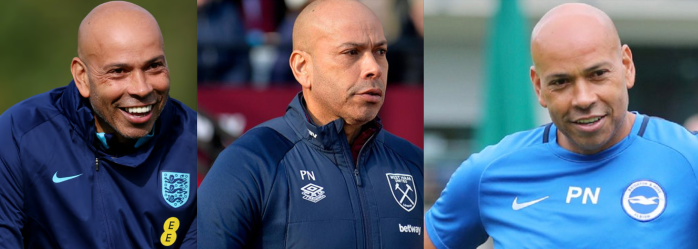
Tigana ‘disciple’ Paul Nevin the respected analytical coach

PAUL NEVIN didn’t rise to great heights as a player but he became “one of the most respected and most widely experienced coaches in the country”.

He was a Premier League coach at Brighton and West Ham, not to mention being part of Gareth Southgate’s coaching team for England.

They were just three of a broad variety of coaching jobs he has filled in different corners of the world – and, interestingly, Jean Tigana, one of the top French footballers of his generation, influenced Nevin the most (more of which, later).

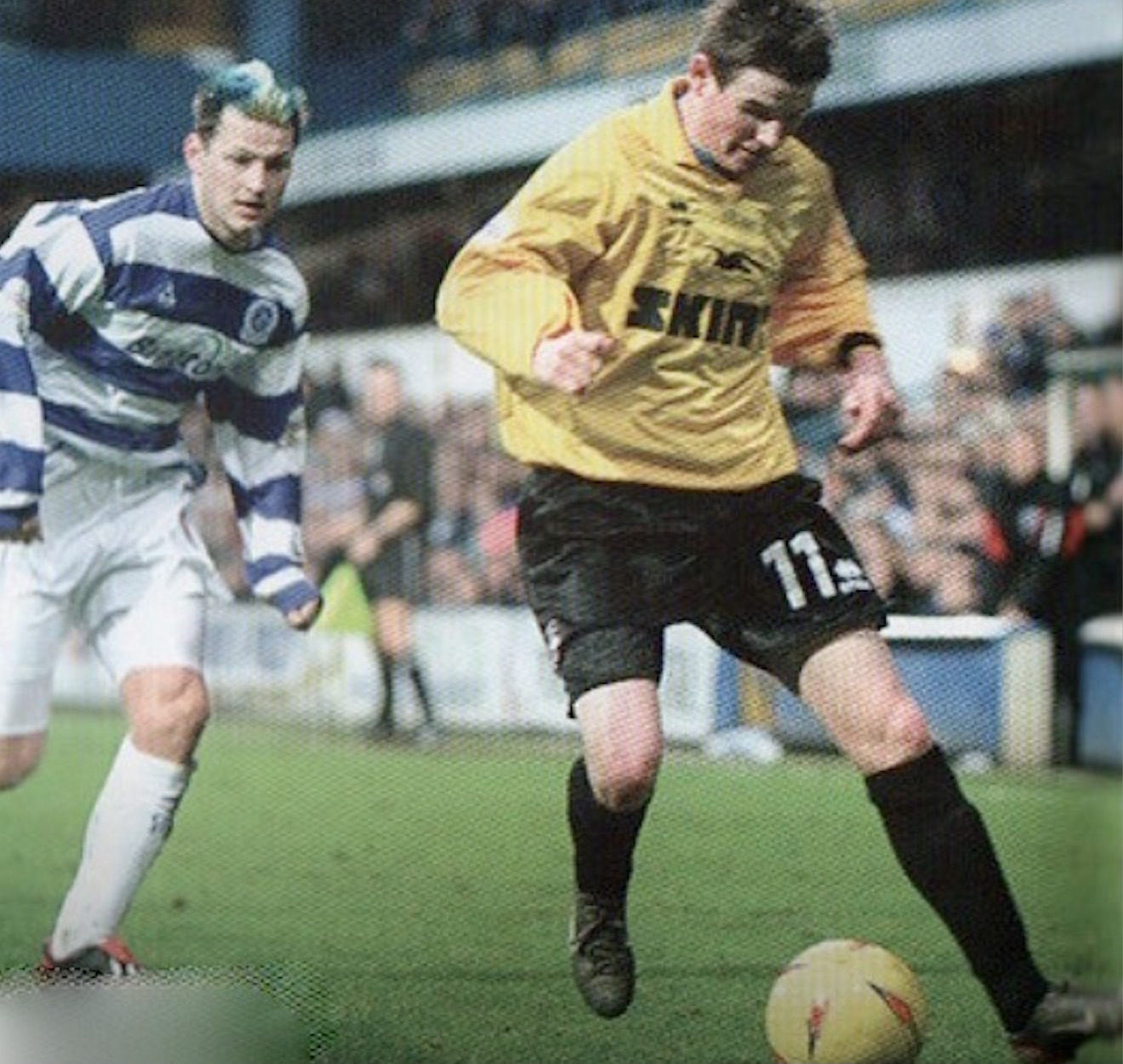
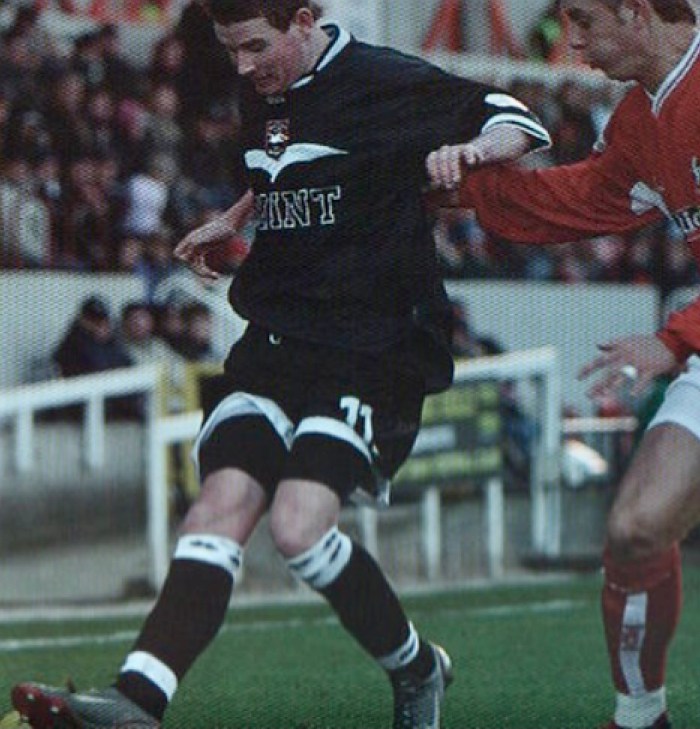
All a far cry for a lad born in Lewisham, south east London, on 23 June 1969 who had a humble playing career that began at Division Two Shrewsbury Town and later involved short spells at Carlisle United and Yeovil Town.
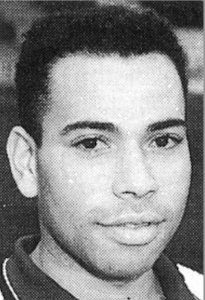
Nevin the player

He was a former teammate of Albion’s head of football David Weir for three years when both played for the University of Evansville’s Purple Aces team in Missouri, America.

Having taken his A-levels while playing for Shrewsbury reserves, Nevin wanted a back-up career in case football didn’t work out and he took a scholarship to gain a bachelor’s degree in communications while playing for the American college team.

After gaining his degree, he returned to the UK and spent the 1991-92 season with Fourth Division Carlisle before moving south to join then Conference side Yeovil. He was there for two years but suffered a bad back injury that forced him to retire from playing when still only 24.

Nevin picked up the story in an interview with the Albion matchday programme. “While I was playing at Yeovil, I also volunteered at a children’s home and as a result I was soon offered a job as a social worker in Wandsworth, south London.”

He later explained: “That gave me the opportunity to develop a lot of skills that transcend into coaching – counselling skills, working with young people, trying to build self-esteem and motivation – which I can take into a sporting arena.”

He kept in touch with football, though, by working part-time for Fulham’s Centre of Excellence.

It was during the period when since-disgraced Mohamed Al Fayed took over Fulham, sacked Micky Adams and appointed Ray Wilkins and Kevin Keegan.

In the shake-up, Nevin worked his way up the academy system, eventually becoming youth team coach and then reserve team manager working alongside Chris Coleman. Within a year he had become full-time and by 2000 was working under Fulham boss Tigana.

“He had a major influence on my coaching career and my philosophy towards football,” said Nevin.

“The methodology of training, his highly technical approach, working with sports scientist and nutritionists, it was all new in this country and made a big impression on me.”

Together with Christian Damiano, the pair’s methods had been nurtured at the French national academy in Clairefontaine and had a profound effect on Nevin.

“We had a core of good young players coming through the club, the likes of Liam Rosenior, Zat Knight, Sean Davies, Zesh Rehman and Mark Hudson, who all went on the have successful careers in the game.”

In 2006, by which time he already held the Uefa Pro Licence as a coach, he moved with his wife and two children to Auckland to become manager of the New Zealand Knights, who played in the Australian A League.

That lasted a year before he moved to the Middle East and spent five years as football performance manager at the Aspire Academy in Qatar working with young players and coaches.

Chris Hughton brought him back to the UK to become first team coach at Norwich City when they were in the Premier League in the 2013-14 season.
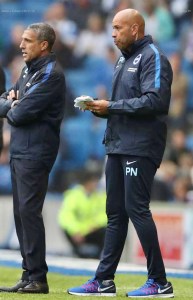
Nevin was reunited with Chris Hughton at Brighton having worked with him at Norwich.

From Carrow Road, he then worked as head of coaching for the Premier League, a role that saw him run a diploma course to develop coaches with great potential as well as acting as a sounding board for coaches working in Premier League academies.

Nevin was reunited with Hughton at Brighton just ahead of the club’s debut season in the Premier League, replacing Simon Rusk who had stepped up temporarily from being under 21 coach when Nathan Jones left to become manager of Luton Town.

Hughton said: “Paul is an excellent coach and a good appointment for the club. I’m delighted he is on board and looking forward to working with him again.”

Asked whether his lack of high level playing experience was a hindrance to working as a Premier League coach, Nevin replied: “Coaching and playing are very different things. While I might not have played Premier League football, I am a real student of the game and have worked alongside some great coaches and managers. I have developed a healthy understanding of top-level football from a coaching perspective.”

On England duty with Gareth Southgate

When Lewis Dunk made his England debut in a 3-0 friendly win over USA at Wembley in October, 2018, Nevin was part of the coaching team supporting Gareth Southgate as part of an initiative to place black, Asian and minority ethnic coaches in all England squads. Formally known as the Elite Coach Placement programme, it was a key strand of the FA’s Pursuit of Progress strategy, designed to increase diversity in coaching roles.

However, Nevin and Southgate were already known to each other. At Fulham, he was assistant academy manager to former Crystal Palace boss Alan Smith, who had managed Southgate at Selhurst. Nevin got to know Southgate through Smith.

“I was a little unsure as to what the setup would be like, but to get the opportunity to work with Gareth Southgate, Steve Holland (the assistant manager) and the rest of the senior men’s setup was something I couldn’t turn down,” Nevin told the FA’s in-house media.

“The biggest challenge I found was that, if working inside a club, you get to work with the players and other coaches on ideas each day. You start preparing for a match at the weekend at the beginning of the week, with days to get the clarity of message through.

“But on the international stage, there’s a finite amount of time to get critical information across and to develop strong harmony across the squad. It’s a challenge that makes you acutely aware that every moment during an international camp counts.”

It wasn’t the first time that Nevin had worked for the FA, though. When he was head of coaching at the Premier League, between August 2014 and April 2016, he coached England’s under-16s who at the time included Phil Foden and Jadon Sancho.

Nevin, by then 49, said: “When I got the call, I was absolutely delighted and feel it’s a very privileged position. First and foremost, I’m very thankful to Gareth and The FA for the opportunity.”
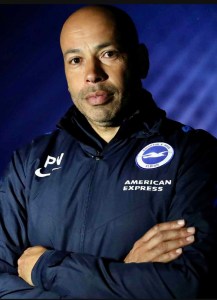
Albion happy to see Nevin develop with England

He appreciated Brighton giving him the time to do something which was a development opportunity and added: “This is a chance to work with the best players in the country. Obviously, I see them week-to-week in the Premier League but working with them en-masse in a squad setting is going to be immense.

“Having had a brief experience of working at international youth development levels, it’s a chance to see the final product that’s coming through the system while working alongside the top coaches in the country.

“Being a part of that environment at the highest level of international football and looking at how they work and function will have the biggest impact on me. I previously had a spell working in coach development at the Premier League so I’m aware of the need to give opportunities to the quality BAME coaches out there.”
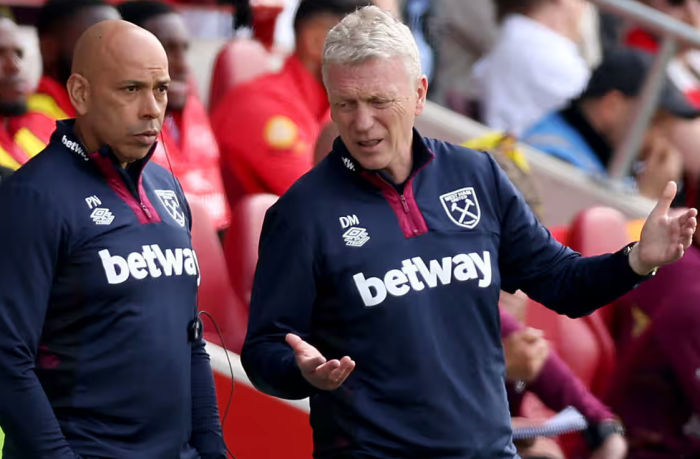
Nevin parted company with the Seagulls when Hughton was relieved of his duties at the end of the 2018-19 season but he wasn’t away from football’s top table for long because in February 2020 he joined West Ham along with former Hammers captain Kevin Nolan to work with David Moyes and his assistant Alan Irvine.

In October 2022, Malik Ouzia in The Standard wrote: “Nevin is one of the most respected and most widely experienced coaches in the country, a key lieutenant under David Moyes, as well as Gareth Southgate at England.”

According to Roshane Thomas, writing for The Athletic in December 2022, Nevin’s role at West Ham was to focus on creation and delivery in attacking set-plays and analysing opponents’ set-plays.

“I’m fluent in analysis tools so I can do my own analysis, I have done that for 20-odd years,” Nevin explained in an interview with premierleague.com.

Hammering home a point

The Hammers achieved European qualification in each of Nevin’s three seasons with them and he left shortly after they won the UEFA Europa Conference League trophy. Manager Moyes said: “Paul has played an important role for us during his time here and I would like to thank him for all his support and hard work during his time at West Ham United.
“He is highly ambitious as a coach and is keen to test himself in a new environment and we wish him well in doing so.”

Nevin said: “I’ll always look back on my time and the opportunity I had to work at West Ham with great fondness.

“In the three and a half years, we enjoyed a period of great success in West Ham’s history, culminating in the Europa Conference League win last season, which gives the club a fantastic opportunity and platform to go on to even greater levels in the future.”

From West Ham, he moved to French Ligue 1 side Strasbourg, where he worked as first-team coach under Patrick Vieira, who was appointed head coach by the club’s new owners, BlueCo, who also own Chelsea. Nevin didn’t stay on when Vieira left after one season to be replaced by former Albion player Liam Rosenior.

Last minute instructions for Cole Palmer at the 2024 Euros

Nevin had rejoined the senior England men’s team coaching staff in August 2021 and was part of Southgate’s support team through to the 2024 Euros in Germany. In August 2024, he took charge of England’s Elite League Squad on an interim basis when Ben Futcher stepped up to Under-21s manager following Lee Carsley’s temporary rise to take the full England team.

When asked whether he held ambitions to become a manager in his own right, Nevin told The Standard: “I owe it to myself and the people I’ve worked with.

“If the right opportunity came at the right time, then I need to give it a go because maybe with that nudge at the door, if I’m successful, it can allow me to bring others in and give others opportunities.”

Expanding on his experience in that premierleague.com interview, he said:“I’ve worked with young people outside of football, within social work, trying to study languages as well. When I’ve worked with French players and Spanish players – and I’m not saying I’m fluent by any means – but just a little bit of connection there, those little things help.

“I’ve worked in this game around the globe as well, so it’s not like I’ve just been at domestic level. I was a manager in the Australian League, I’ve worked in Qatar with the junior national teams. It’s just getting that variety and taking opportunities when they come.

“It may not necessarily be the thing you want at that particular moment, but if it opens an opportunity to show what you can do and to learn, then I think it’s always worth grasping that.”

And on a philosophical note about the art of coaching, he said: “A coach, first and foremost, has to have the knowledge and credibility to deliver, but you’re dealing with human beings.
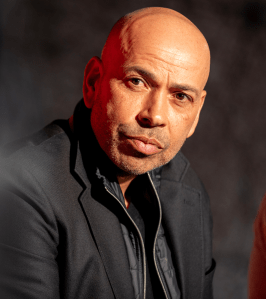
“A lot of people can have the knowledge, but it’s about transmitting that, making the players feel valued and being able to develop relationships which help them reach their fullest potential.

“It’s probably that aspect, really getting into the human being that drives the performance, which is my strongest.”

Nevin returned to club football in January 2025 when he was appointed as one of two assistant managers to Mark Robins at Stoke City. He stood down from his role as interim England under-20s manager, where he was undefeated in six matches, to take the job.
McGhee provided Albion platform for playmaker Mark Yeates

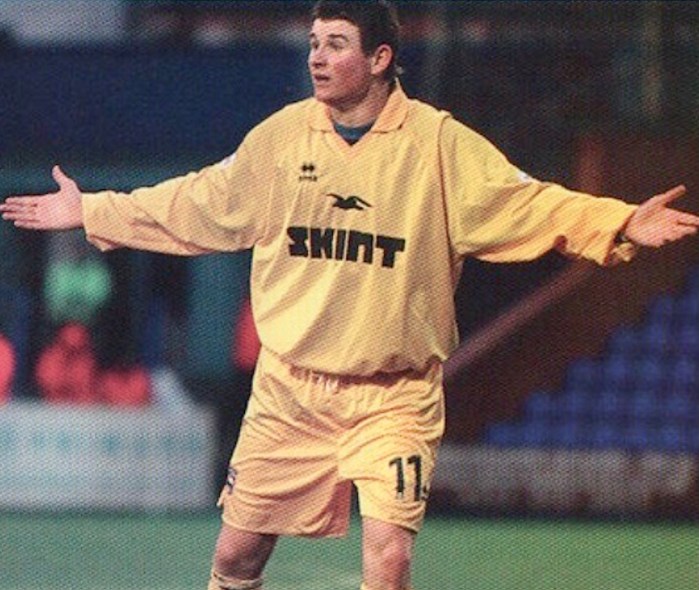
TRICKY playmaker Mark Yeates spent five years as a Tottenham Hotspur player but it was with Brighton that he played his first competitive football.

Yeates looked like a useful loan signing when he joined new manager Mark McGhee’s Albion squad in November 2003. He drew plenty of admirers and featured in 10 games over two months.

It wasn’t long before McGhee was talking about the possibility of signing him on a permanent basis, but Spurs had other ideas. He eventually had to leave north London to pursue his career but he ultimately made nearly 500 professional appearances.

Eighteen-year-old Yeates arrived on the south coast shortly after Zesh Rehman had also signed on loan (from Fulham), Albion having lost midfield duo Charlie Oatway and Simon Rodger to injuries.

The diminutive Irishman made his debut in McGhee’s first match in charge: a 4-1 defeat to Sheffield United at Withdean.

The matchday programme’s assessment was thus: “The second half was better. Mark Yeates moved into the centre of midfield and so had an opportunity to show what he can do. He could beat players, look up, and try a perceptive through ball. Wide on the left in the first half, he’d been exposed and given the ball away too often.”

On the day England won the Rugby World Cup, Yeates was one of six Albion players booked as the Seagulls beat Notts County 2-1 at Meadow Lane; an eventful game which saw Adam El-Abd make his league debut, Leon Knight score twice and John Piercy sent off for two bookable offences.

After only his third game, Yeates was off on international duty, playing for the Republic of Ireland under 19s away to France.

It was in early December that McGhee spoke about wanting to take Yeates on a permanent basis, telling the club’s website: “I’ve said already that I knew before he came here what a good player he is and I imagined he would do well in this team, and he has done that.”

McGhee told the Argus: “He has a kind of Gaelic confidence. Robbie Keane had it and Mark is similar in that respect.

“His character is perfect really for the way he plays. It goes with the ability and flair.”

Yeates hailed from the same Tallaght district of Dublin as Keane – a player McGhee knew well having given him his English football debut at 17 when manager of Wolves.

After extending his stay at the Albion to a second month, Yeates told the Argus: “Before I came here I had never really played in the centre of midfield. I usually play up front off a big man.

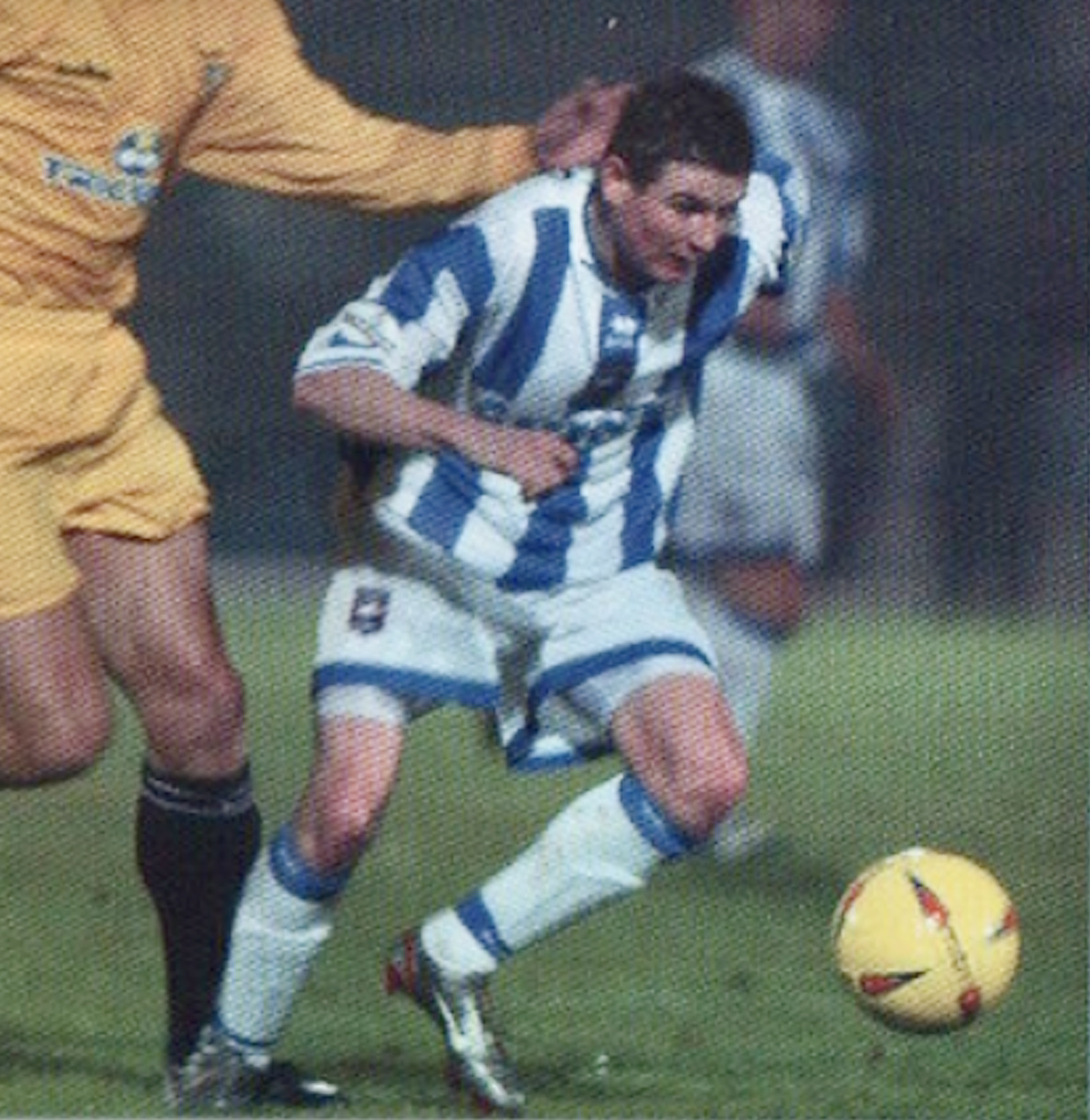
Yeates takes control watched by Adam Hinshelwood

“The gaffer tried me up front in the first half at QPR (in the LDV Vans Trophy) but we didn’t get the ball into mine and Leon’s feet, and with two little men you are not going to get much joy.

“At Tottenham we play with wingbacks and two holding midfielders and I am allowed a free role.

“I have to be a bit more disciplined here. Sometimes I can go running about a bit, it’s just up to the lads to call me back in to help out.”

Yeates appreciated the opportunity Albion had given him to taste senior football, telling the newspaper: “It’s great for me just to be getting first team football, plus the reason I am staying here is because they are a good bunch down here.”

He observed: “It’s a lot more fast and furious because everyone is playing for their living. You have to give a bit more and get more out of yourself which you probably wouldn’t get in a reserve game.

“In reserve football, players are going through the motions. It’s just a matter of playing a game.”

After he’d played his final game on loan, a 0-0 home draw with Oldham Athletic, the matchday programme observed: “Yeates showed some neat touches and was Albion’s most creative outlet once again.”

When Albion struggled to beat Barnsley 1-0 in the FA Cup, the matchday programme noted: “The passing abilities of Mark Yeates, and his desire to get into the penalty area, were sorely missed.”

Back at Spurs, Yeates had to wait until the very last game of the season to make his Premier League debut. He’d previously been an unused substitute when Glenn Hoddle’s Tottenham were thrashed 5-1 by Middlesbrough at the end of the 2002-03 season.

But in May 2004, David Pleat selected him to start in a side also featuring Ledley King, Jamie Redknapp, Christian Ziege, Jermain Defoe and Robbie Keane.

The fixture at Molineux ended in a 2-0 win for the visitors and Yeates helped Spurs take the lead against the run of play, laying on a cross for Keane to score against his former club. Defoe netted a second to seal the win.

Born in Tallaght on 11 January 1985, Yeates was the eldest son of former Shelbourne, Shamrock Rovers, Athlone Town and Kilkenny City striker Stephen Yeates, who died aged just 38 following a tragic accident, just as Mark was making his way through the youth ranks at Spurs.

The young Yeates first played competitive football with Greenhills Boys, a club who his grandfather and father had been involved with, and then moved on to Cherry Orchard, a Dublin side renowned for producing a number of players who went on to have successful professional careers.

In an extended interview with Lennon Branagan for superhotspur.com, Yeates recalled how Tottenham scout Terry Arber did a two-day coaching course at Cherry Orchard, after which he, Willo Flood (later to play for Manchester City and Dundee United) and Stephen Quinn (who went on to play for Sheffield United) were invited to London for a trial with Spurs.

Yeates was only 15 but he was taken on and had to up sticks from home and move into digs in London.

“As a skilful dribbler who was regularly a source of assists and goals in the youth set-up, Yeates quickly demonstrated to the coaching staff at Tottenham that he possessed the raw materials required to graduate to the next level,” wrote Paul Dollery in an October 2021 article for the42.ie.

Sadly, his progress through the youth ranks was interrupted by the shock news of his father’s death in an accident. Yeates told Dollery how it could have all gone the wrong way, but he thankfully remained focused.

“It was really tough, but you’d ask yourself what else you could do if you didn’t keep going – go home to your estate in Tallaght, drink cans every weekend and get roped into whatever else? 

“I could have done that, or I could look at the three-year contract that was on the table at Tottenham and get my head down to go after that.

“It was hard, but a bit of willpower and the desire to be a footballer – which I had since I started kicking a ball – got me through it.”

In his interview with Branagan, Yeates said: “I started to train with the first team at a decent age and really being involved quite a bit as well as being a regular with the reserves group with Colin Calderwood and Chris Hughton at the time.

“I’ve just got so many unbelievable things to say when I look back now and I can only say so many good things about Spurs because it sort of built me and gave me so much.”

It was in January 2005 when Yeates next appeared for the Spurs first team, Martin Jol sending him on as a sub in the third round FA Cup tie against Brighton at White Hart Lane when Tottenham edged it 2-1.

The following week he once again replaced Pedro Mendes as a sub when a star-studded Chelsea side won 2-0 on their way to winning their first Premier League title under Jose Mourinho. He also got on in the next game, as Spurs crashed 3-0 at Crystal Palace,

While he could have continued to bide his time at Spurs, he preferred to go out on loan again to get some games under his belt. He played four times for League One Swindon Town and then had a season-long loan at Colchester United, helping them to promotion from League One in 2005-06 in a squad which included Greg Halford and Chris Iwelumo.

Further loan spells followed at Hull City and Leicester City but, in the summer of 2007, he joined Colchester on a permanent deal.

Yeates scored 21 goals in 81 games for United drawing him to the attention of future England manager Gareth Southgate who took him to Middlesbrough (who had just been relegated from the Premier League) for a £500,000 fee.

On signing a three-year deal, Yeates said: “This is massive for me. There was interest from other clubs but there was only one thing on my mind once my agent told me Middlesbrough had been in touch.

“This club belongs in the Premier League, the fans deserve to be there and I can’t wait to play in front of them. It’s a Premiership club in my mind – all you have to do is look around the facilities, the training ground, the stadium, everything is spot on.”

Yeates reckoned his versatility would suit Boro. “I can play on the right or the left,” he said. “I played a full season’s Championship football on the right for Colchester, while I played most of last season on the left. But then, in probably eight of the last 10 games, I played behind the front two.

“For a winger, I think my goals record is quite good,” he added. “I got 14 last season and nine by Christmas the season before I got injured.

“I like to get on the ball and take on defenders. The number one job of being a wide man is creating chances and I certainly like to do that, but scoring goals isn’t a bad habit to have either. I promise the fans I’ll give 110 per cent. I’m hungry to prove that I deserve to be here.”

Fine words but it didn’t pan out well for him because Southgate was sacked in October 2009 and his successor Gordon Strachan shunned the Irishman. By January 2010, Yeates was on the move again, this time to Sheffield United.

Blades boss Kevin Blackwell told the club’s website: “He’s a player we have looked at before, I’ve had my eye on him for a year or two but we couldn’t agree terms with Colchester. I’m delighted to finally get my man, although I was surprised that Boro would let him go.”

Yeates was reunited with Stephen Quinn and another former Albion loanee, Darius Henderson, was up front for the Blades. Yeates reckoned he had his best ever spell playing under Blackwell’s successor, Gary Speed.

“He was just an unbelievable man and, going back to when I was at Tottenham as a young lad, he was the prime example of the player you should aspire to be like,” he said. “He had faith in me.”

Unfortunately, when Speed left to manage Wales, former Albion boss Micky Adams took charge and the pair didn’t see eye to eye, as he explained to watfordlegends.com.

“I was at Sheffield United and it was the season when we went from the Championship to League One. Micky Adams was the manager and we weren’t getting on. In the summer Micky was sacked and Danny Wilson came in as manager.

“I trained for the full pre-season with the club, but I was aware that there were a couple of clubs keeping an eye on my situation throughout the summer. It was Blackpool and Watford who put in offers for me, and I spoke with both clubs, but when I met Dychey (Sean Dyche) I decided to sign for Watford.

“I still had a house in Loughton so overall it was a good opportunity to get back down south, and everything that Sean said to me on the phone really appealed to me.”

Yeates was at Watford for two seasons, initially under Dyche and then Gianfranco Zola, but his contract wasn’t renewed in the summer of 2013 and he decided to link up once again with his former Colchester and Hull boss, Phil Parkinson, at League One Bradford City.

He was one of the goalscorers for Bradford when they completed a massive upset by beating Premier League table toppers Chelsea 4-2 at Stamford Bridge in the fourth round of the 2015 FA Cup.

However, released that summer, he switched across the Pennines to join Oldham Athletic and six months later was on the move again, this time to Blackpool.

“Since leaving Hull it’s been a bit up and down,” he told Branagan. “I was on a short term deal at Oldham which went alright before then deciding to go to Blackpool because of a longer contract which was put in front of me which I don’t regret, as I’ve been living around the St Annes area now for five years and my children have grown up here and are at school and it’s a great area to raise a family in.”

His final league club as a player was Notts County, who he joined on a short-term deal in January 2017, and he appeared in 11 games plus three as a substitute as new manager Kevin Nolan’s side turned what at one point looked like relegation from the league into a 16th place finish (although two years later County lost the league status they’d held for 157 years).

After playing non-league for Eastleigh, in 2019 Yeates moved closer to home and signed for AFC Fylde. In September 2021, he became an academy coach at Fleetwood Town, although he continued to keep his hand in as a player at Bamber Bridge.

Reflecting on the player’s career, Dollery wrote: “With a ball at his feet, Yeates was one of the most technically accomplished Irish players of his generation, cut from the same cloth as the likes of (Wes) Hoolahan and Andy Reid.

“That such a claim isn’t backed up by international achievements can perhaps be partly explained by his own admission that he didn’t marry his talent with a devotion to other aspects of the game that were beginning to play a more prominent role in the life of a professional footballer.

“If fitness coaches scheduled a gym session, Yeates felt his time would be better spent by staying on the training pitch to perfect his free kicks. A predilection for crisps, fizzy drinks and nights out didn’t aid his cause either.”

Yeates recognised he could have done things differently and said: “The reality was that I didn’t live like a saint.

“Everyone who knows me would know that that’s just not my personality. I’ve always been a fella who likes a bit of craic; just a normal Irish lad from an estate who happened to love playing football.”

• Pictures from the Albion matchday programme and various online sources.

Seagulls kick-started lengthy career for trailblazer Zesh

ZESH REHMAN became the first British Asian of Pakistani origin to play for Brighton.

He played in two separate spells three years apart and his 20 Albion appearances spanned four different managers: Steve Coppell, Bob Booker, Mark McGhee and Dean Wilkins.

His first action in Seagulls colours came in September 2003 and the experience he gained during a three-month loan provided him with the experience to return to parent club Fulham and make his Premier League debut.

Before his temporary move to Brighton he had played one first team game in the League Cup for FuIham, and, only a matter of days later, Coppell signed him for the Seagulls.

“It’s an opportunity to get some first team football,” said Rehman. “This season I’ve been in central midfield, but it doesn’t matter what position I play, I just hope I can do a job for Brighton.

“(Fulham boss) Chris Coleman told me it would be good to come and learn here,” he added.

I can remember being at the Nene Park home of Rushden & Diamonds (above left) to see 19-year-old Rehman mark his debut in the centre of midfield with a goal to seal a 3-1 win for the Seagulls. He scored with an exquisite lob over ‘keeper Billy Turley to add to goals from Guy Butters and Leon Knight. Incidentally, Paul Kitson, released by Brighton that summer after an injury-wrecked 2002-03 season, came on as a sub for Rushden.

Rehman had only played twice before Coppell vacated the manager’s chair at Withdean to take over at Reading, but in Booker’s first game in charge, Rehman was once again on the scoresheet as the Seagulls beat Grimsby Town 3-0.

The utility player stayed with the Seagulls after McGhee’s appointment as manager but after 13 matches he returned to Craven Cottage in January 2004.

Born in Birmingham on 14 October 1983, Rehman was brought up a stone’s throw from Villa Park in the Aston area of the city. The promise he showed in schools, district and county football was soon spotted and at the tender age of 12 he signed up to Fulham’s academy, with the family moving to London.

He progressed through the junior, youth and reserve sides, mainly as a centre back but also able to play full-back or as a holding midfielder.

The spell at Brighton gave him his first extended run in a first team environment and, three months after his return to Fulham, he made his Premier League debut as a late substitute at Anfield. He went on to make a total of 30 appearances for Fulham (26 starts, plus four as a sub), but with first team opportunities limited he had another loan spell away, joining Norwich City in January 2006.

He was at Carrow Road until the end of the season, making just five appearances as defensive cover, and on his return to London opted to leave Fulham in search of regular football.

Gary Waddock gave him a three-year contract at Queens Park Rangers and he made 27 appearances for the Rs but one of the club’s many managerial changes saw the arrival of former Albion defender John Gregory, and he was happy to send Rehman out on loan.

Lo and behold, Albion, by then with Wilkins at the helm, seized on the opportunity because Adam El-Abd was on the brink of a suspension, and Dean Hammond and loan full-back Joe O’Ceaurill were struggling with injuries.

“Zesh gives us a degree of versatility, as well as the experience he has picked up playing at Premiership level for Fulham, so he is a good addition for us,” Wilkins told the Argus.

For his part, Rehman said: “As soon as I found out Brighton wanted me, I thought I owe the club because they were the first to give me regular first team football.

“I’ve got great memories of my time here before. The club and the fans have had a special place in my heart ever since, so I couldn’t really turn it down.”

His second Albion debut saw him playing right-back in a disappointing 0-0 draw at home to Huddersfield Town, but Rehman was just grateful to be playing competitively again.

He told Andy Naylor: “Being out there on a Saturday is a buzz, whether it is at Brighton, Fulham or QPR. I had that at QPR for the first six months of the season but then a new manager came in and I didn’t play for a little while so, rather than just getting stale, I’ve come to Brighton and hopefully I can kick on again when I get back there.”

Rehman played eight games during his second spell at the club, his last marked by picking out striker Nathan Elder who slotted Albion’s goal in a 1-1 draw at Cheltenham on 5 May 2007.

The following season, a six-month loan at Blackpool didn’t work out as he’d hoped for, featuring in only three games under Simon Grayson, and he went back to QPR. However, by the end of January he was on the move again, this time to link up with bottom-tier side Bradford City, initially on loan, and then making the move permanent.

Rehman details his various career moves on his own website, and at Bradford his involvement took on a lot more importance than just playing games. He said:

“Hopefully I can inspire some local Asian people to start coming to games and really feel a part of the club. I want Asian kids to feel they have someone to look up to. Bradford is a big city with a big Asian population and if I can inspire one or two local kids to go on and make it as professionals, I’ll know I’ve made a positive difference to someone’s life and that’s good enough for me.”

Born in the UK, Rehman represented England at under 18, 19 and 20 levels, but opted to play for his parents’ home country of Pakistan, and he captained them at the 2013 Peace Cup in the Philippines.

Between 2011 and the start of 2017, Rehman spent six years playing in Asia, initially for Muangthong United in Thailand, then Kitchee SC in Hong Kong and lastly Pahang in Malaysia.

But the lure of the English game saw him spend four months at Gillingham between February and May 2017, helping the relegation-threatened Gills to retain their League One status.

The following month he headed back out to Hong Kong to play for Southern District FC where, in May 2020, he became player-manager.

In March 2023, Rehman was promoted to first team development coach by Portsmouth having moved to Fratton Park in the summer of 2022 as the academy’s lead professional development phase coach.

He stepped up to help the first team temporarily when Danny and Nicky Cowley left the club in January 2023 and remained in post when John Mousinho took over as head coach.

Rehman set up training on Mousinho’s first day and the head coach said: “Since that day he’s been absolutely brilliant. He’s incredibly diligent and the lads and staff at the club all really like him.

“He adds something different to me and Jon (Harley), providing a different angle, and is an influential presence on the bench.

“Development is a key part of what we’re trying to do here and when we talk about the complementary skillsets of the coaching staff, that’s something he can bring to the fore.”

Rehman said: “I believe continual development is needed by players of all ages and at all stages of their careers. Every player is a work in progress and never the finished article.

“There is no better feeling than assisting an individual, partnership or a unit to improve and then see that work transferred to a matchday, helping the team win.”