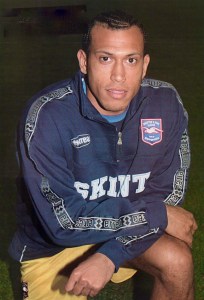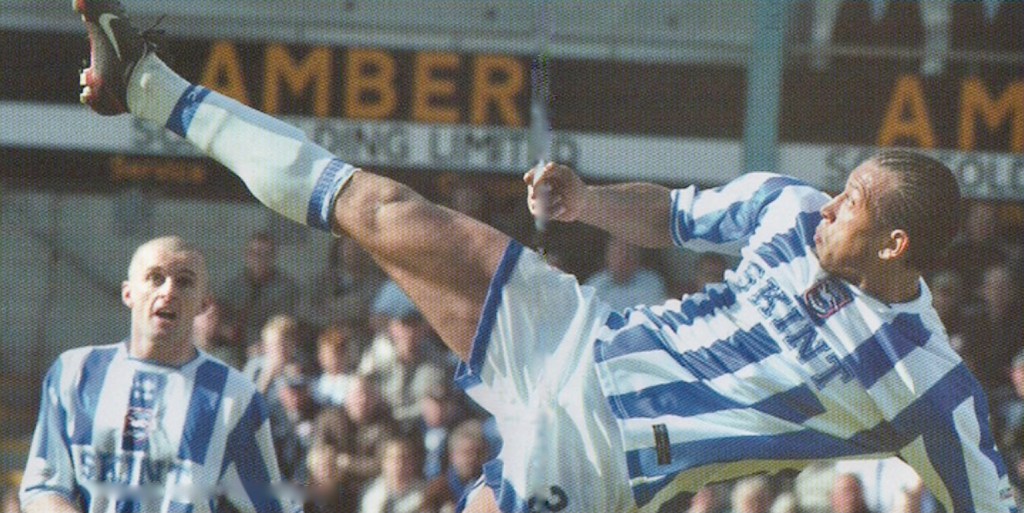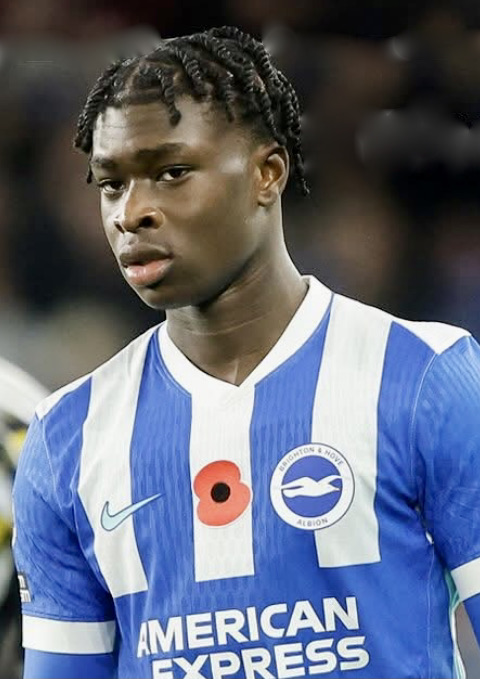
Ex- Man U teenager Miah Oriola getting among the goals for Brighton

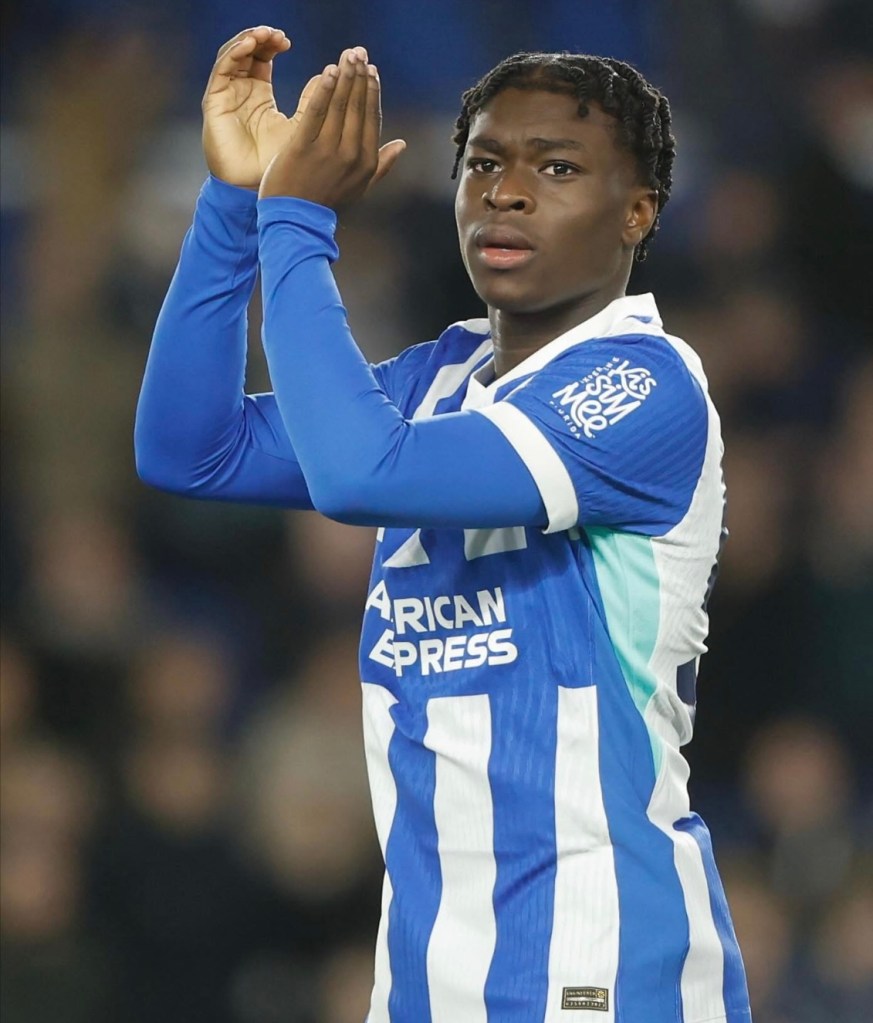
ONE-TIME Manchester United youth Nehemiah Oriola has been earning rave reviews with Brighton’s under 21s in the season just ending.

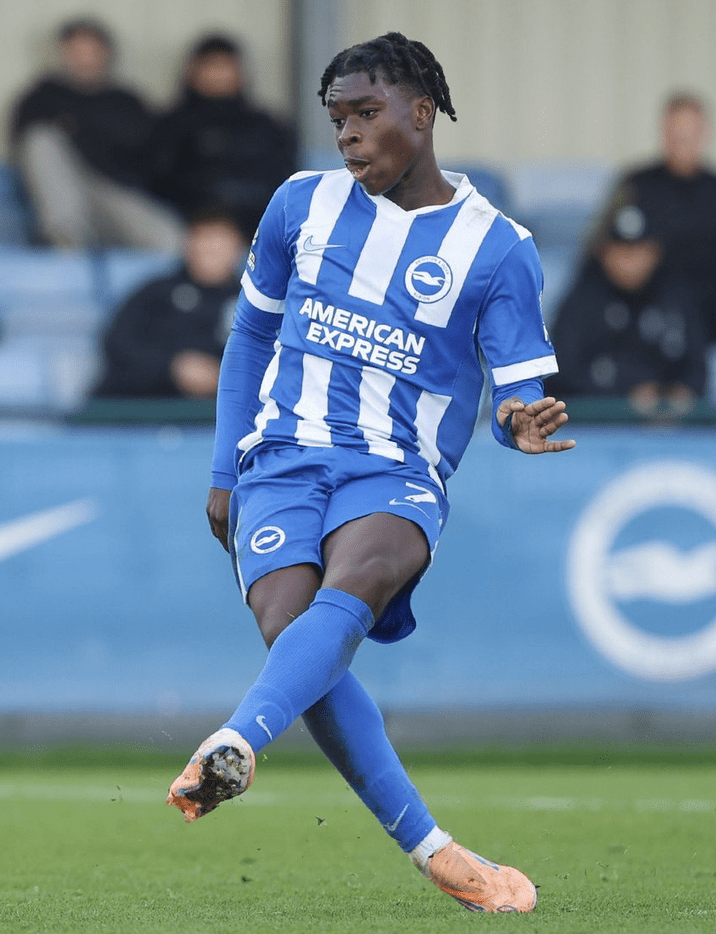
The diminutive teenager has got well into double figures scoring for Albion’s second string and earlier in the season made his first team debut.

Oriola was a constant threat in the under 21s’ Premier League 2 play-off final win over his old club at the Amex last Saturday (16 May). Tyler Silsby’s 57th minute goal secured the trophy for the Albion.

Oriola was only 13 when he moved from West Ham to the north west and after three years with Man Utd he switched to the Seagulls in 2023.

After selection as a non-playing sub for first team games at home to Newcastle and away to Manchester United, Oriola went on to make his debut as a late sub for Georginio Rutter when Albion beat Leeds United 3-0 at the Amex on 1 November 2025.

His Albion under 21s coach, Shannon Ruth, said at the time: “He’s a player that possesses a real threat, but he’s also a wonderful team player.

“He’s dangerous in wide areas, he’s dangerous one v one, he can create, he can score, but he’s also got some wonderful teammate traits, where he’ll defend for the team when he has to.

“That gives him a really good chance because he’s an all-rounder, high-level offensively but really reliable defensively.”

In the under 21s 4 May Premier League 2 3-0 win over West Ham, reporter Nick Szczepanik declared: “Oriola was unplayable down the left” and purred: “Oriola was looking the player most likely to open up the visitors’ defence”. 
Going for the spectacular

The youngster was given his first team breakthrough at a time when Karou Mitoma and Brajan Gruda were struggling with injuries.

Head coach Fabian Hurzeler told Sussex World Oriola was an “unbelievable talent”, explaining: “That’s what we saw so far, that’s why he was in the squad, because he deserved it.

“He’s part of the first-team environment, he’s doing really well in training, he shows some really good things.

“It’s important for him to adapt to the intensity, but he seems to do it quite smoothly.

“He’s a very good left-footed player, he’s very good one-against-one, he shows good reactions when he loses the ball. We’re very pleased.”

Oriola netted a brace (one a penalty) in a 2-1 under 21s win away to Wolves on 16 February and a month later again scored twice when the side hammered Everton 5-0 in Lancing.

He was also on the scoresheet in a 2-2 draw at Newcastle on 27 February and a 2-0 win at Burnley on 16 March. Those goals led to him being shortlisted for the Premier League 2 player of the month award and The Argus interviewed him in early April 2025.
“The first team are all nice people, they bring you into the group,” he said. “I learned a lot from it and then coming back down to the 21s, it’s trying to just implement that and I feel like I’m developing and improving every day.”

The youngster enjoyed the challenge of taking on the likes of Joel Veltman and Ferdi Kadioglu, telling reporter Brian Owen: “It just feels like it’s a good full-back to go up against, professional, so it’s a good test for me.

“I like the challenge whoever I go against in training, which again helps me develop and improve.”

He added: “Going up against them, they are aggressive and they are smart because they played the game at the highest level. That just allows me to develop and say I could do this better now, or now I’m going to do this.”

Hurzeler, who appreciates the youngster’s ability to play on either wing, told Sussex World: “He’s left-footed, but he can also play on the left wing, he’s quite flexible. He’s very good in coming out of tight and narrow space and good in decision-making.

“There are a lot of things he can improve, but I think it’s very important to not focus too much on the weaknesses he has.
“It’s really important to focus on the strength a player has. To give him an understanding of what he needs to do to play for us.”

Hurzeler added: “It’s about him, I said it to him. It’s about how hard he works, it’s about how humble he stays. What does it mean for him to be in the first-team environment?

“Is it like, all right, I’m satisfied now, or is it more like extra motivation to do more, to invest more, to sacrifice more, to make the next step?

“We support and try to give advice, but it’s a decision every player has to make on their own.”
A regular for United’s under 16s

Born on 11 June 2007, Oriola was on West Ham’s books at a tender age but switched to Manchester United in August 2020.

He featured for United’s under 16s and when still only 15 played once for the under 18s as a substitute in a win over Derby County.

He joined Brighton’s academy in September 2023 and his progress was rewarded with a first professional contract in the summer of 2025.

In a January 2026 article for The Athletic, Hurzeler told reporter Andy Naylor how the ball was in the player’s court with regards the next steps.

“It can go this path or that path, the path for a great career, (or) the path where they might end as a great talent, but not (have) a great career. And this decision we can’t do for them. That’s a decision the players have to do on their own.”

Recognising that road ahead, Oriola told Brian Owen: “Mentality is a big thing, a lot of hard work. Not dwelling on the past and just having the momentum to keep going. And just trying to have that personality; if the team needs someone or if the team needs something, trying to step up.”
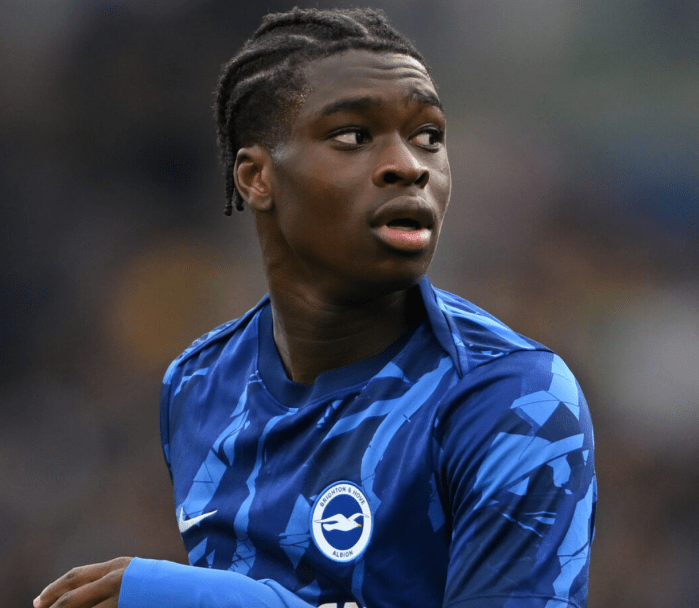
Looking ahead to a bright future?

Play-offs seeking Seagulls just missed out in spite of Westlake’s guile

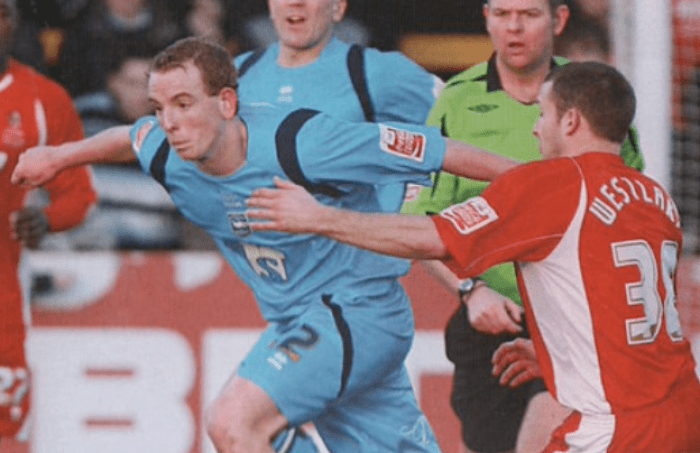
LEFT-SIDED midfielder Ian Westlake almost pushed a buoyant Albion into the third-tier play-offs when on loan from Leeds United.

He scored twice in 11 games for Dean Wilkins’ Seagulls in the spring of 2008 but Albion missed out, finishing the season in seventh place, seven points adrift of the play-off places. Westlake’s parent club came fifth (having been deducted 15 points for failing to comply with insolvency rules) and lost 1-0 to Doncaster Rovers in the play-off final.

His Albion goals came in away wins at Luton Town (2-1) and Bristol Rovers (2-0) and Wilkins was full of praise for his contribution, telling the Argus: “He has got good energy and quality on the ball and we have got a good character as well.”

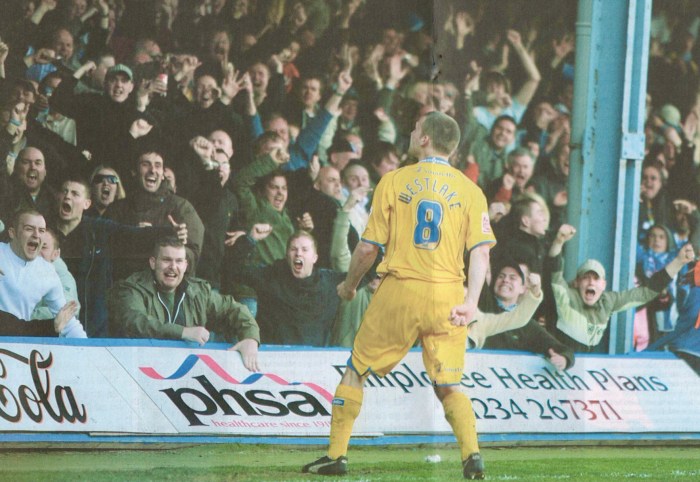
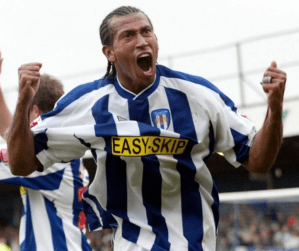
Westlake celebrates with Albion fans at Kenilworth Road

After extending his loan beyond the initial month, the manager added: “He has brought balance to the side by being left-footed but he has also brought his enthusiasm and personality as well.”

The player himself said: “I am contracted to Leeds but now I am a Brighton player and everything is about Brighton for me and that is what I am concentrating on.

“The team have done really well in the month I’ve been here, so it’s nice to be a part of the next one.

“It has been really enjoyable. I want to play, so I am a lot happier at the moment and the boys have made me feel really welcome.”

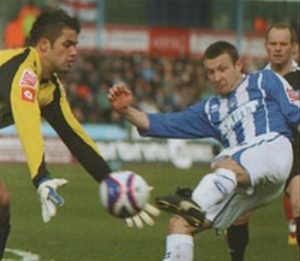
Swindon Town’s Peter Brezovan blocks this Ian Westlake shot

In a matchday programme interview, Westlake declared: “I really like it down here and I grew up on the coast (he was born in Clacton-on-Sea), so it is nice to get back by the sea.

“If I am here winning games and pushing for the play-offs I would love to stay.”

Westlake was among familiar faces at the Withdean because former Ipswich Town teammate Nicky Forster was among the goals up front and close friend Matt Richards was in defence.

“It’s nice to be in a team with some guys I know and some new guys who are friendly and wanting to win games,” he said.

Westlake’s family were prominent in water sports and, as well as being a talented swimmer, he represented England Schools at water polo.

However, football won out and he joined the Ipswich school of excellence in the early 1990s, signing associated schoolboy forms with Town in September 1998. He progressed to join their academy in 2000 and signed a two-year scholarship.

Tractor Boy Westlake

He signed his first professional contract in the summer of 2002, shortly after George Burley’s side dropped from the Premier League to the Championship, and he has since spoken about how that relegation helped launch his career.

“I might never have played professional football had it not been for relegation,” Westlake reflected in a March 2109 interview with the Colchester Daily Gazette. “Administration meant the club were forced to sell players and that opened the door for people like myself, Darren Bent and Darren Ambrose.

“It gave us our chance and, as odd as it sounds, I personally feel I owe my career to relegation.”

Westlake made his debut in a 1-0 home defeat against Gillingham in October 2002 but spent most of the rest of that season in the reserves. In the first half of the 2003-04 season, he was more often than not a sub but he cemented a starting place from January through to the end of that campaign and was voted Player of the Year.

He was twice a Championship play-off semi-finals loser playing for Joe Royle’s Ipswich against West Ham, in 2004 and 2005, when Bobby Zamora was among the goals for the Hammers.

“Overall, though, I’ve got great memories and was lucky to be part of Royle’s side,” Westlake told the Gazette’s Matt Plummer. “We were so attacking and always tried to outscore sides.

“It was a great way to play football and it’s not something I experienced anywhere else in my career.

“At other clubs we were endlessly drilled on defending and being solid but it was more fun at Ipswich. As players, our freedom levels were through the roof and it makes me smile just thinking about it.

“Don’t get me wrong – we trained hard and were super-fit. But it was all about attacking and in Darren Bent and Shefki Kuqi we had two of the top scorers in the Championship.

“Jim Magilton was so creative in midfield and then players like myself and Tommy Miller had legs and could get from box to box. It was a great team to be part of.”

Westlake racked up 100 appearances (+ 25 as a sub) for the Tractor Boys before joining Leeds in August 2006 for a fee of £400,000 + former Albion left-back Dan Harding in part exchange.

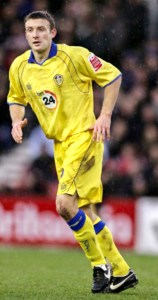
Ian Westake played under Gus Poyet at Leeds United

Westlake made 21 starts + eight appearances off the bench playing alongside the likes of Shaun Derry, Kevin Nicholls and Jonathan Douglas but a groin injury sidelined him for a while and Leeds, by then with Dennis Wise in charge, assisted by Gus Poyet, were relegated to the third tier.

Even so, Westlake enjoyed being coached by Poyet, as he told Andy Naylor shortly after the Uruguayan was appointed Albion manager in November 2009. “Everyone liked him at Leeds,” he said. “He is one of those people that you want to play for.

“Gus did nearly all of the coaching at Leeds so I would imagine he will be quite a hands-on manager. It was always enjoyable. They were good sessions, hard work but fun.”

Although Westlake was a regular in the first half of the 2007-08 season, he found himself on the outside looking in when Gary McAllister replaced Wise in the dugout, and the move to the Albion got him back playing first team football.

As it turned out, any hopes that the move might have been made permanent were quashed by the elbowing of Wilkins as manager in favour of the returning Micky Adams, who had other – ultimately unsuccessful – options to try.

Westlake was loaned out again in the 2008-09 season, linking up with Cheltenham Town. When the Robins entertained the Seagulls in January 2009, as sure as eggs is eggs, Westlake opened the scoring for the home side. However, Albion turned round a 2-0 deficit to salvage a point with a Forster goal and an injury-time equaliser by Adam Hinshelwood.

Westlake at Cheltenham in a midfield tussle with Albion’s Tommy Fraser

Westlake made the move to Cheltenham permanent that month but the same financial problems that led to Lloyd Owusu being freed to join Russell Slade’s Albion rescue mission that spring saw Westlake join Oldham Athletic on loan until the end of the season.

He joined Wycombe Wanderers on a two-year contract in July 2009 but injuries curtailed his appearances to just eight starts and two games off the bench, and he eventually needed surgery on an ankle.

In 2011 he moved to Canada to play for Montreal Impact, scoring twice in 13 games for the NASL side. Future Leeds boss Jesse Marsch said on signing him: “Ian’s soccer qualities and competitive nature make him a very good fit for our team moving forward. I know Ian will come into work every day and give everything he has. He is a real competitor and an excellent player on the field.” 

Ian Westlake in action for Montreal Impact

They re-signed him as they prepared to switch to Major League Soccer but he was released in February 2012 after a new ‘six foreigners only’ ruling came into force.

Disillusioned with football, Westlake returned to Suffolk and started his own lettings and property development business although 18 months later he pulled his boots back on to play non-league for Needham Market, of the Ryman League North.

In an interview with Mike Bacon of the East Anglian Daily Times in June 2013, he said: “I moved to various clubs after Leeds, but it seemed every time I went somewhere within a few months a new manager came in.

“Invariably, you are regarded as ‘a previous boss’ man’, and the new manager moves you on.

“It doesn’t matter what you do, new managers want their own men in. Quite honestly there is only so much of that you can take.

“When the new MLS ruling about six foreigners came into force and the manager at Montreal released me, that was it for me to be honest.”

But he got back in the groove with Needham Market and made 77 appearances across two seasons, even though he was dogged by knee and hamstring problems at times.

A matchday pundit at Portman Road

He hung up his boots at the end of the 2014-15 season, when the side won the Ryman Division One North title, and he subsequently returned to Portman Road as a matchday pundit for the club’s TV coverage of games alongside lead commentator Glenn Wheeler.

In that 2019 Gazette interview, Westlake said: “I don’t really miss football, to be honest. I’ve managed to fill the void with a million other things, including playing table tennis.

“I have my own lettings company and project manage new builds across Ipswich. I always wanted to get out and do other things.

“I had coaching opportunities but never saw myself in that world. It was weird sitting exams again and felt like going back to school but it was satisfying learning something new.

“I’m putting everything into my work and thankfully it’s going very well, but I’ll always be thankful for my years as a professional footballer. They were great memories.”

Goal-getting Chris Iwelumo knew the way to promotion

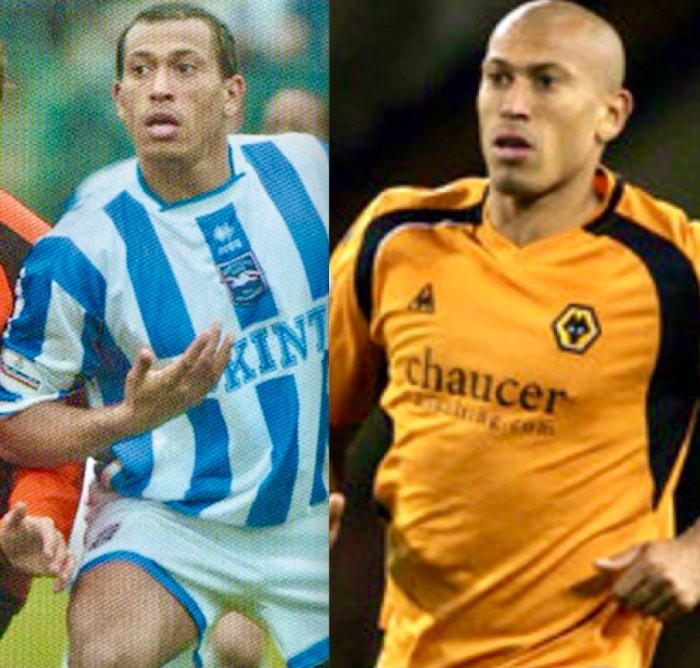
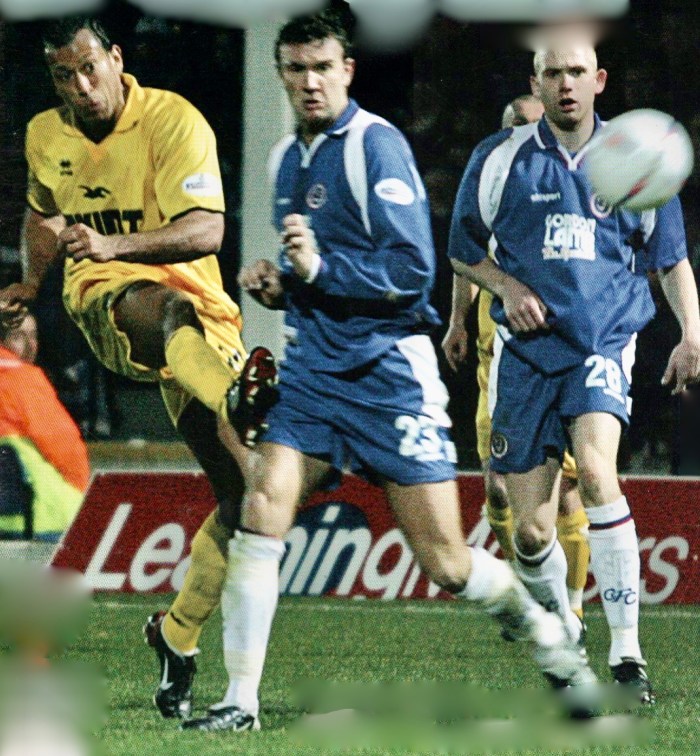
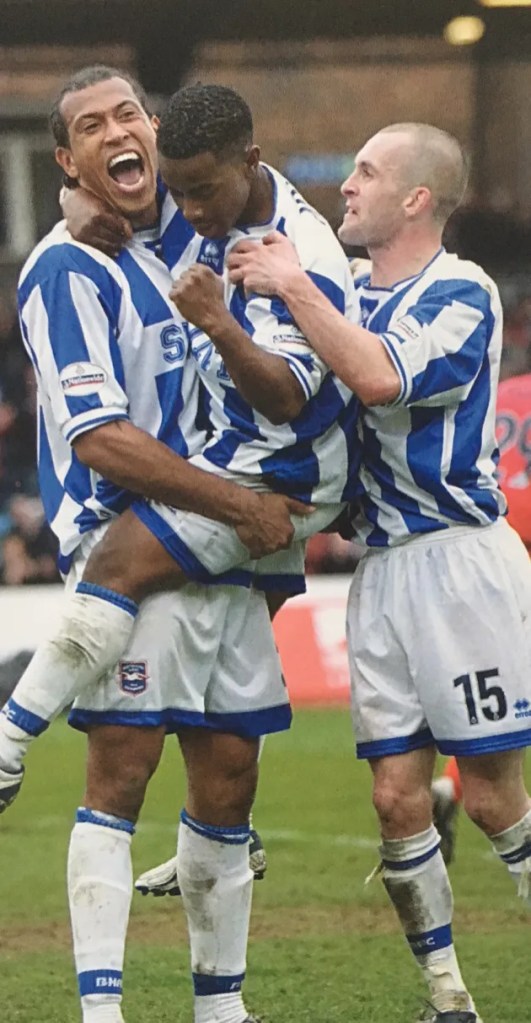
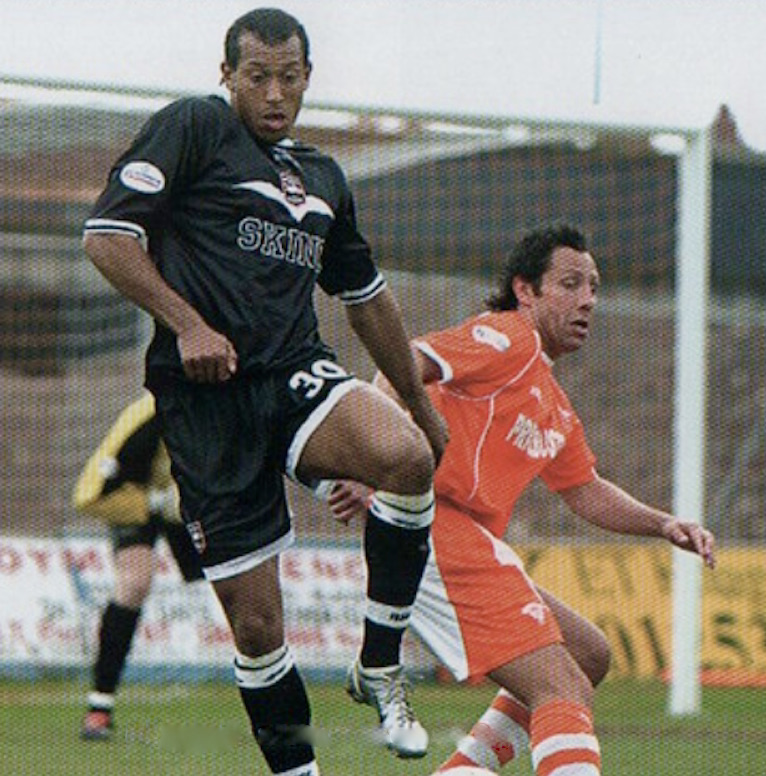
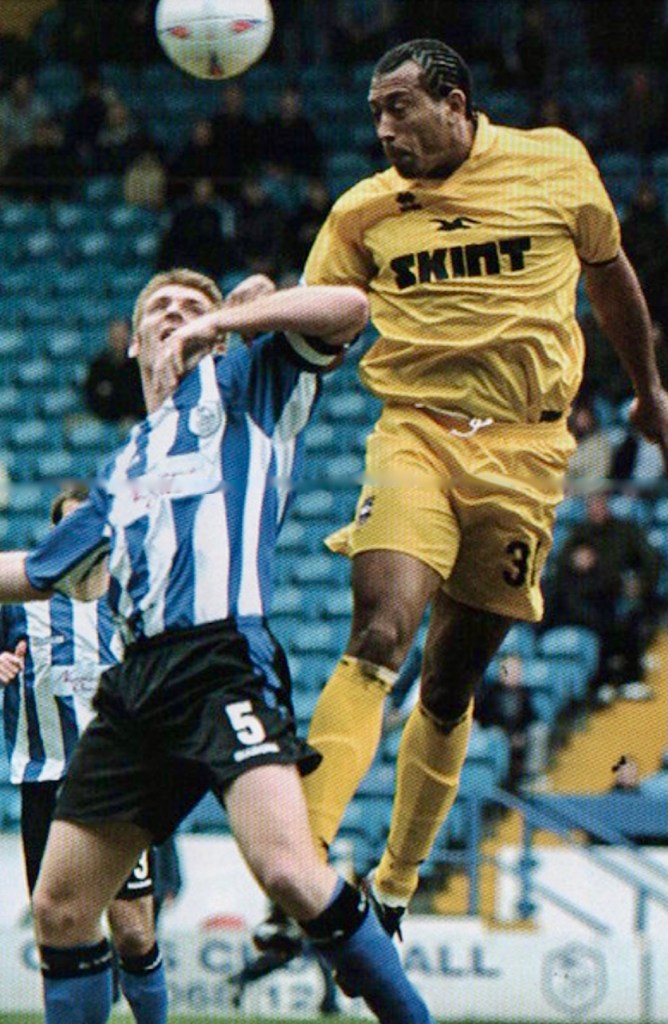
CHRIS IWELUMO was a promotion-winner with Brighton and Wolves, helping the Seagulls to third tier play-off final success in 2004 and scoring 14 league goals when the Molineux side won the Championship in 2009.

They were two of five promotions he was part of in a remarkable 18-year, 18-club career.

I was at Saltergate on 16 March 2004 when the 6’3” Scot rifled home a 30-yard shot on his debut to extend Albion’s lead to 2-0 over Chesterfield, adding to Guy Butters’ 49th-minute opener.

Iwelumo scores from distance on his Albion debut away to Chesterfield

He’d arrived on loan from Stoke City to replace Leicester loanee Trevor Benjamin, who manager Mark McGhee had hoped to keep until the end of the season, but the terms of his deal didn’t extend to the play-offs.

After that great start against the Spireites, Iwelumo was also on target in home wins over his future employer Colchester United (2-1) and Hartlepool United (2-0) and he got the opener in a 2-0 win at Wrexham.

When Albion did indeed reach the play-offs, it was Danny Coles’ foul on Iwelumo as he charged into the penalty area at the Millennium Stadium, Cardiff, that earned the penalty from which Leon Knight scored the only goal of the final.

Released by Stoke at the end of the season, his four goals in 13 games for the Seagulls resulted in the offer of a two-year contract to stay in Sussex, but the deal was never signed.

“I loved it there, I absolutely loved it,” Iwelumo told Spencer Vignes, in a matchday programme interview. “I think everyone knew I loved it there and maybe that was used against me contract-wise.

“I was devastated at the time because the whole club was perfect for me,” he said.

The sticking point was Iwelumo’s request for relocation expenses; house prices in Sussex being a lot higher than in the Potteries. Manager McGhee was holidaying in America and not contactable, and, during the impasse, German side Alemannia Aachen steamed in and offered the Scotsman the chance to play UEFA Cup football, which he snapped up.

That adventure didn’t last long, though, and he was back in England lining up for League One Colchester for the 2005-06 season and he top-scored with 19 goals as they were promoted in second place behind Southend United. At the higher level, he bagged 18 before moving on and spending a season at Charlton Athletic, where he scored 10 in a mid-table finish.

Happy days at Colchester United

He remained in the Championship when, as he was about to turn 30, he moved on to Wolves under Mick McCarthy. On signing him, McCarthy said: “I’m delighted. He adds a physical presence and he’s scored goals. His experience will help. He’s a good character and while it’s nice to have youth and desire it’s important to have that experience.”

Iwelumo certainly repaid that faith quickly, scoring 15 goals in his first 16 games. He scored twice on his full debut in the League Cup against Accrington Stanley and twice more on his first league start against Sheffield Wednesday four days later.

But it was a September 2008 game against Preston in which he scored a hat-trick – an overhead kick, a close-range finish and a penalty – but was also sent off that was his favourite Wolves memory.

Enjoying his time with Wolves

The dismissal came after a clash with Sean St Ledger, who he shared an agent with at the time, and even though St Ledger joined him in the ref’s room after the game to say it was all accidental, Iwelumo was banned for three games.

Within a month, an unbelievable miss after he’d gone on a substitute to make his Scotland international debut in a World Cup qualifier on 11 October 2008, went down in footballing history. The Daily Record reported: “On his debut in a 0-0 draw v Norway at Hampden, he missed from two yards out. Manager George Burley turned away in disbelief.”

A reflective Iwelumo told the Terrace Scottish Football podcast years later: “That miss against Norway was a low which ultimately, I like to think, represented a bump in the road of an otherwise successful journey through professional football lasting over two decades.”

Back at Wolves, he only added four more goals after his early season burst and a medial ligament injury curtailed his involvement as the Black Country side went up to the Premier League as champions.

His Premier League appearances for Wolves only amounted to 15 because his start was delayed after breaking his metatarsal on a pre-season tour of Australia, plus competition arrived in the shape of Kevin Doyle, a club record signing.

He had a loan spell at Bristol City looking for game time after another spell out injured, and in June 2010 he was on the move again.

Iwelumo has been asked several times about how things subsequently panned out and in one interview he admitted: “I always go through life saying not to have regrets – only regret the things you don’t do – but my own regret in football is that I left Wolves.”

He was faced with the dilemma of only occasional involvement at Premier League Wolves or a regular playing slot on a three-year contract at then-Championship Burnley under Brian Laws.

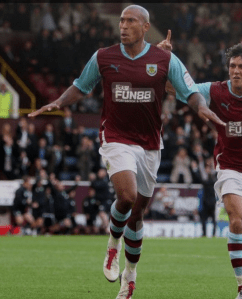
On target for Burnley

“The regret is whether I should have stayed and fought for my place at Wolves,” he told Paul Berry, of the Express and Star in April 2022. “Maybe it would have been different, but at the same time I had a family to support and had been offered three years at a good club on the same money as the year I had remaining at Wolves, in a league where I knew I could still do well.

“I loved my time at Wolves though, and the group of players and staff at that time were unbelievable.”

Born in Coatbridge, Scotland, on 1 August 1978 of a Nigerian father and Scottish mother, Iwelumo joined St Mirren as a youngster, and worked his way through the youth ranks before heading to Denmark and spending two years at Aarhus Fremad.

It was from there that he joined Stoke in 2000. His four-year stay on their books was the longest spell at any of his clubs, although he had three loan spells away, as well as his stint at Brighton he’d previously been to York City and Cheltenham Town.

But he was part of the Stoke side who beat Steve Coppell’s Brentford 2-0 in the League One play-off final in Cardiff in 2002. Brentford included Ivar Ingimarsson, Lloyd Owusu and Steve Sidwell, with Mark McCammon a sub.

Proud Preston must have had nightmares facing Iwelumo because after he’d got that Wolves hat-trick against them, he repeated the feat for Burnley in a 4-3 Lancashire derby win in 2010.

A change in management at Turf Moor brought his time there to a premature end; new boss Eddie Howe preferred Martin Paterson and Charlie Austin when they were fit. Next stop for Iwelumo was Watford, managed at the time by subsequent Burnley boss Sean Dyche.

Leaner times at Watford

By then he was 32 and in his first season he played 39 games but managed only three goals, enduring a five-month barren spell in front of goal. The following season he played just eight times for the Hornets and was sent on loan to two League One sides, Notts County and Oldham Athletic, only managing one goal in a total of 14 games at that level.

At Oldham, Iwelumo found himself playing under a manager – and a former Bristol City teammate – who was three years younger. Lee Johnson, at 31, had become the youngest permanent manager in English football in 2013 when he was appointed by the League One Latics.

“Chris actually wanted the job as well when I went to Oldham, so we were having discussions about the job and the club,” Johnson told The Athletic. “One of my first conversations with Chris — remembering he was my friend and helped me get the job — was literally to say: ‘Listen mate, I think your legs have gone, I’m not going to play you’.

“He was saying, ‘This guy has got a bit of b******s to tell me that’. I asked him to effectively be one of my assistants, still come on, still make a difference. He did that fantastically well. That was important. I had to get him onside.”

On his release from Watford, he once again linked up with Brian Laws, who in the 2013-14 season was managing League Two Scunthorpe United. Iwelumo scored twice in 14 games for the Iron in the first half of that season, and looked back on that time in an interview with scunthorpe-united.co.uk, describing how that spell had him making a five-hour round trip from his Midlands home each day.

“There was a lot of things going on at that time, personally as well. I was going through a divorce and that took priority over football to be honest. Understandably, it wasn’t a successful time, or a great time in my career. I was just disappointed that Scunthorpe fans didn’t see the Chris Iwelumo that a lot of other clubs saw. The divorce lasted for about two years and I retired two months after that. “

His last two clubs were Scottish Premiership St Johnstone, where he played eight matches, and English Conference Premier Chester, where he turned out 10 times.

It was some career for a player who’d had an operation at 18 and been told he’d only play football until he was 26 or 27. “I retired when I was 36, but when I signed my contract with Charlton turning 29, I knew I was on borrowed time,” he said. “I had ten operations on my knee in total, and I knew any years beyond that was a blessing.”

Football supporters hadn’t seen or heard the last of him either because he has become a regular pundit on televised football and a familiar voice on talkSPORT.

He earned a Professional Sports Writing and Broadcasting degree at Staffordshire University, set up a property company with a close friend, worked on a weekly podcast with Wolves and also worked with Stoke City.

“It’s been hard, but it’s been great,” he said. “I’m still a little bit envious of those guys who go into jobs and work 9-5 because they know what they’re doing every day. The property portfolio gives me a lot of free time to do what I want to do, including the media stuff. It’s very different week-to-week.”