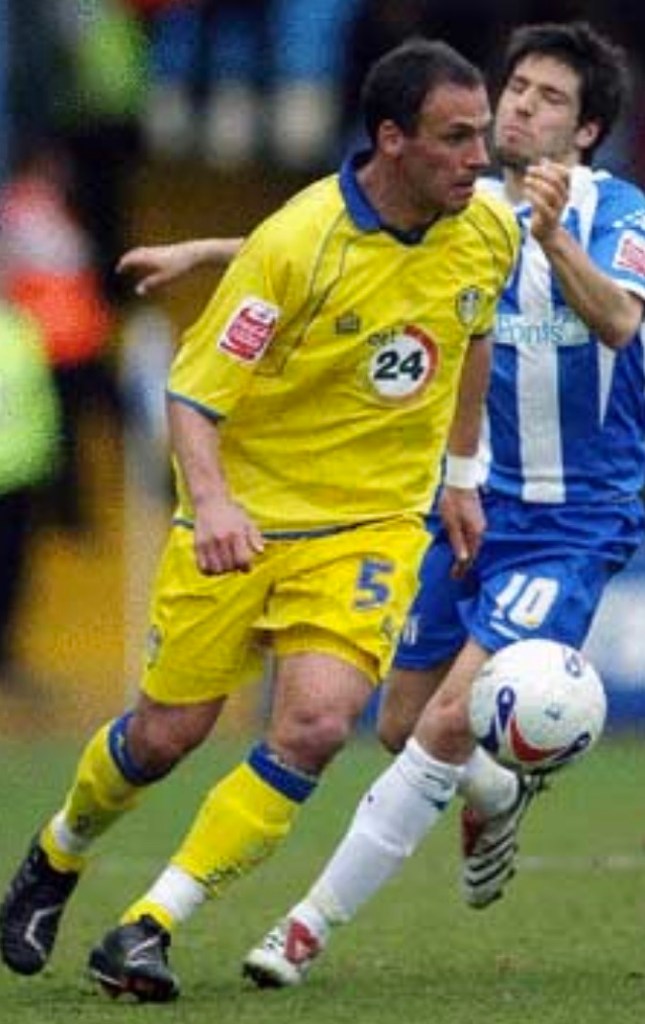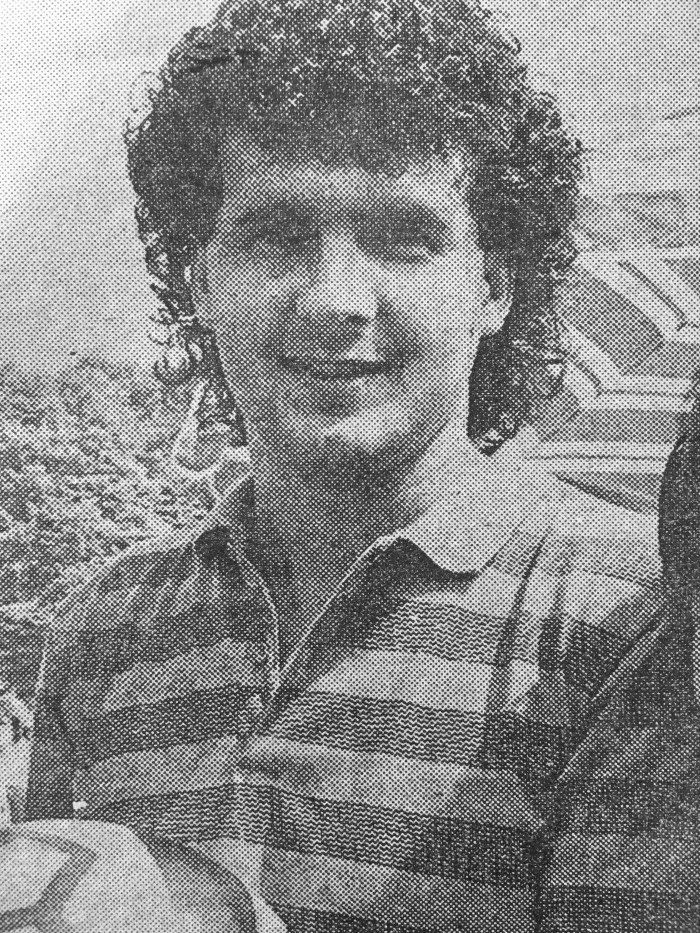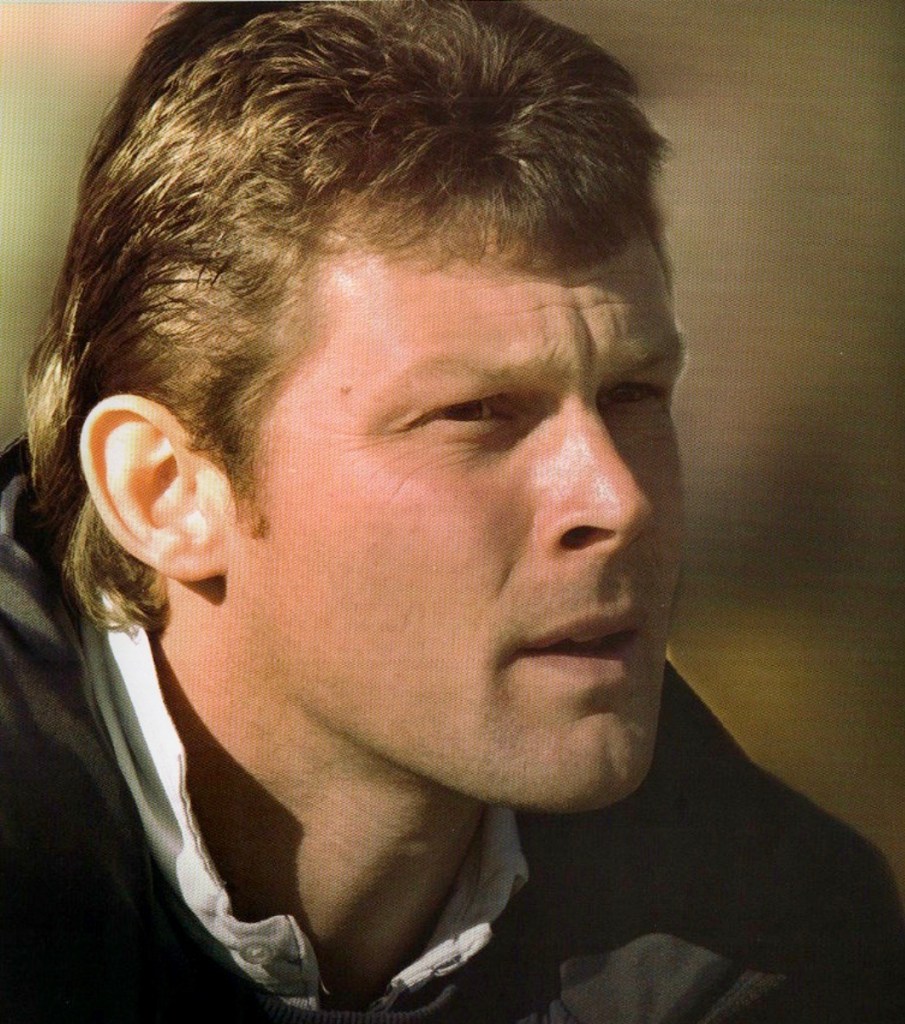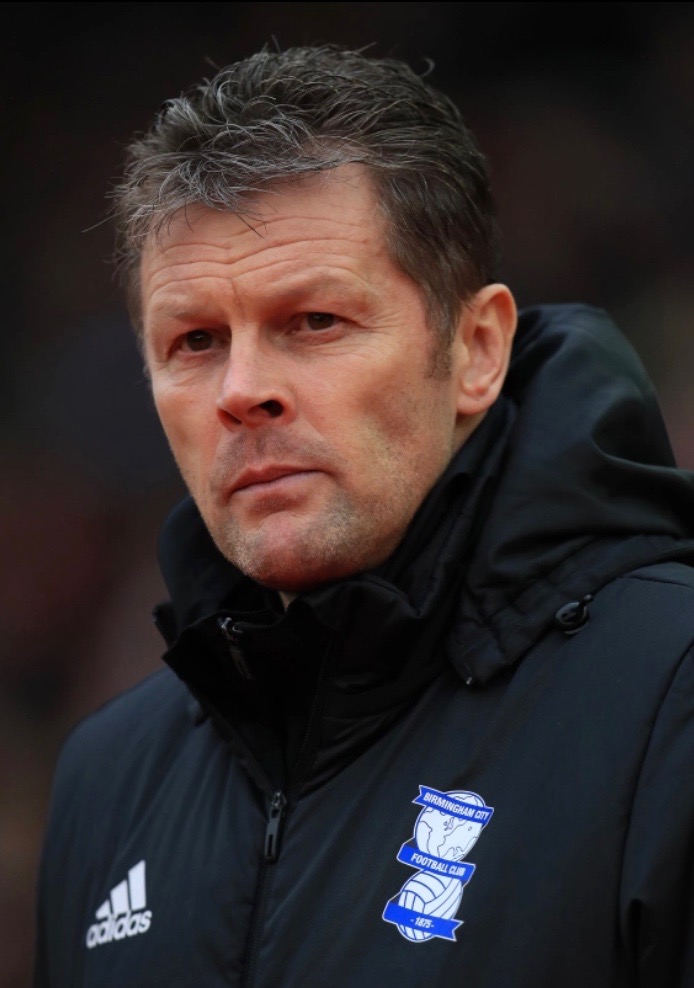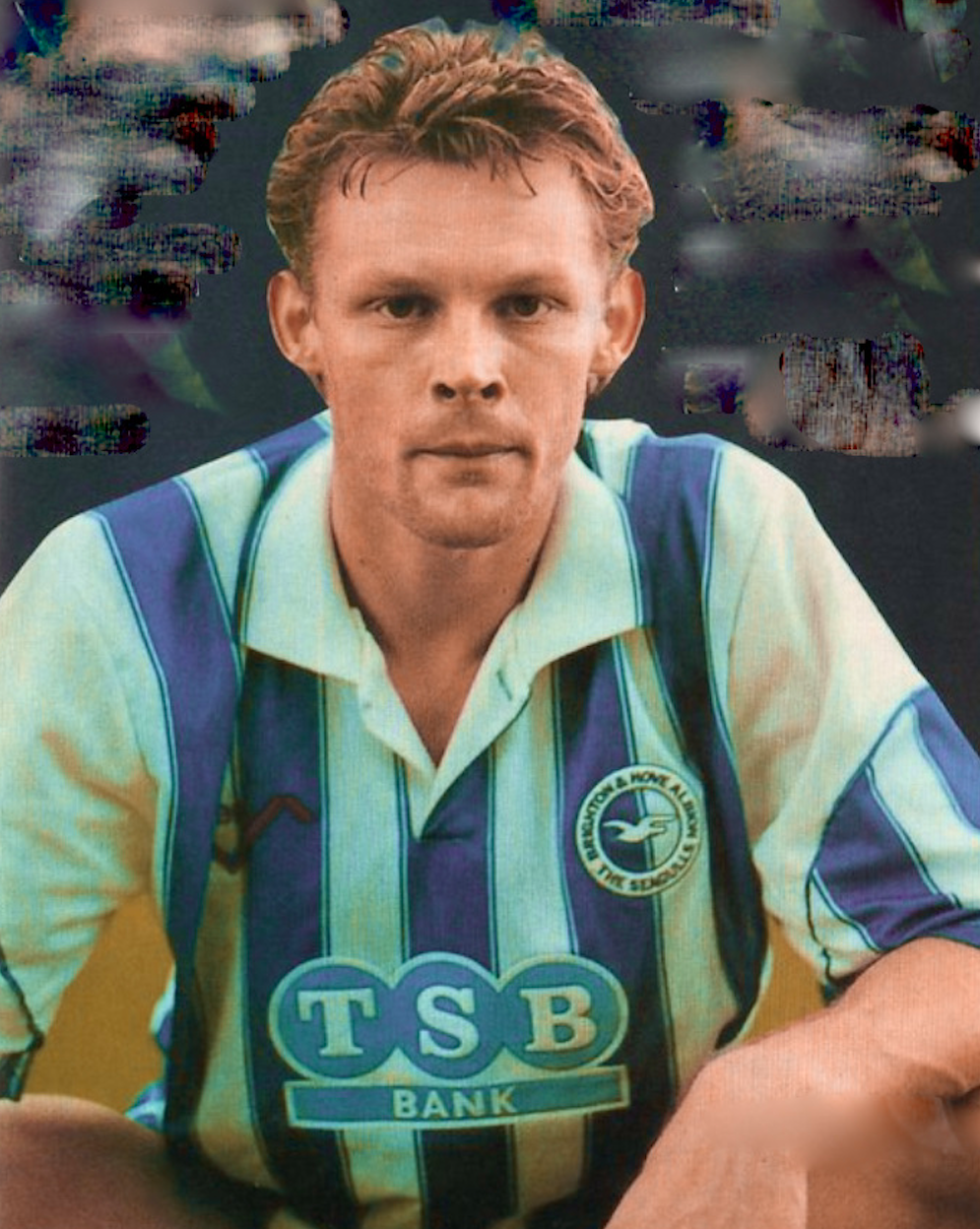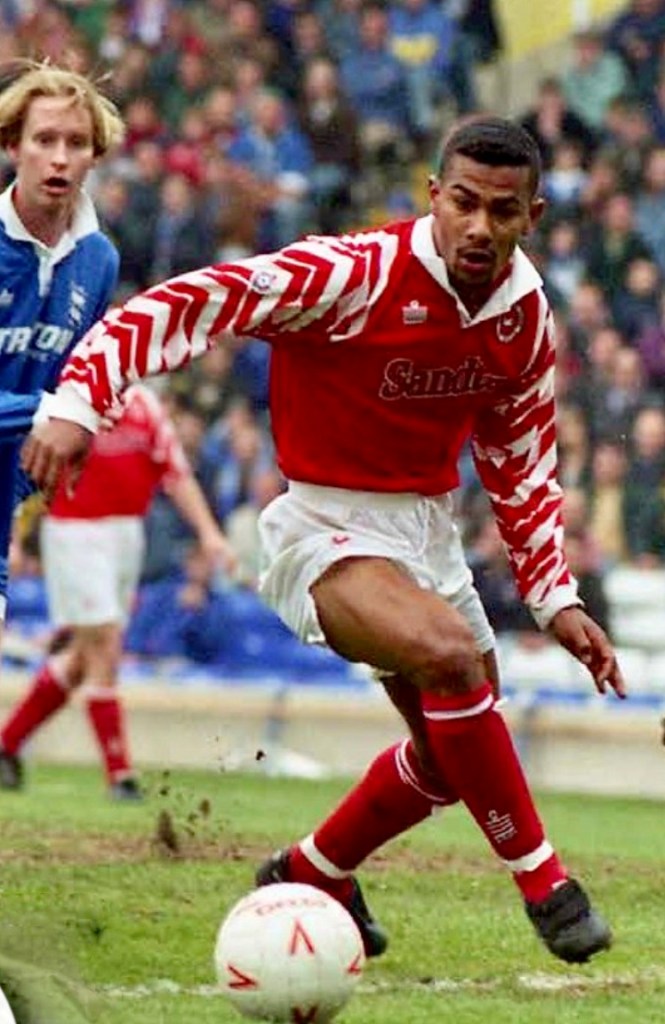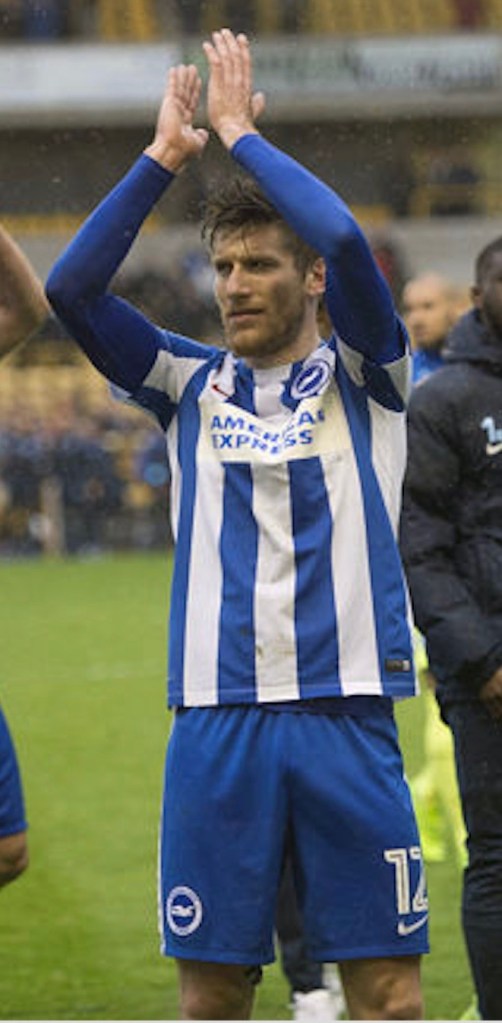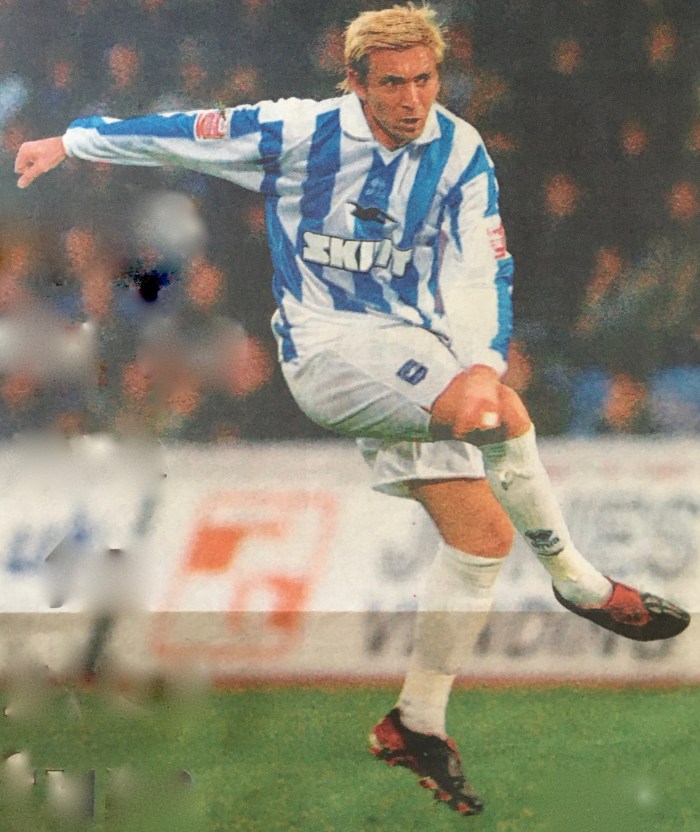
Set-piece expert Darren Currie earned Uncle Tony’s approval

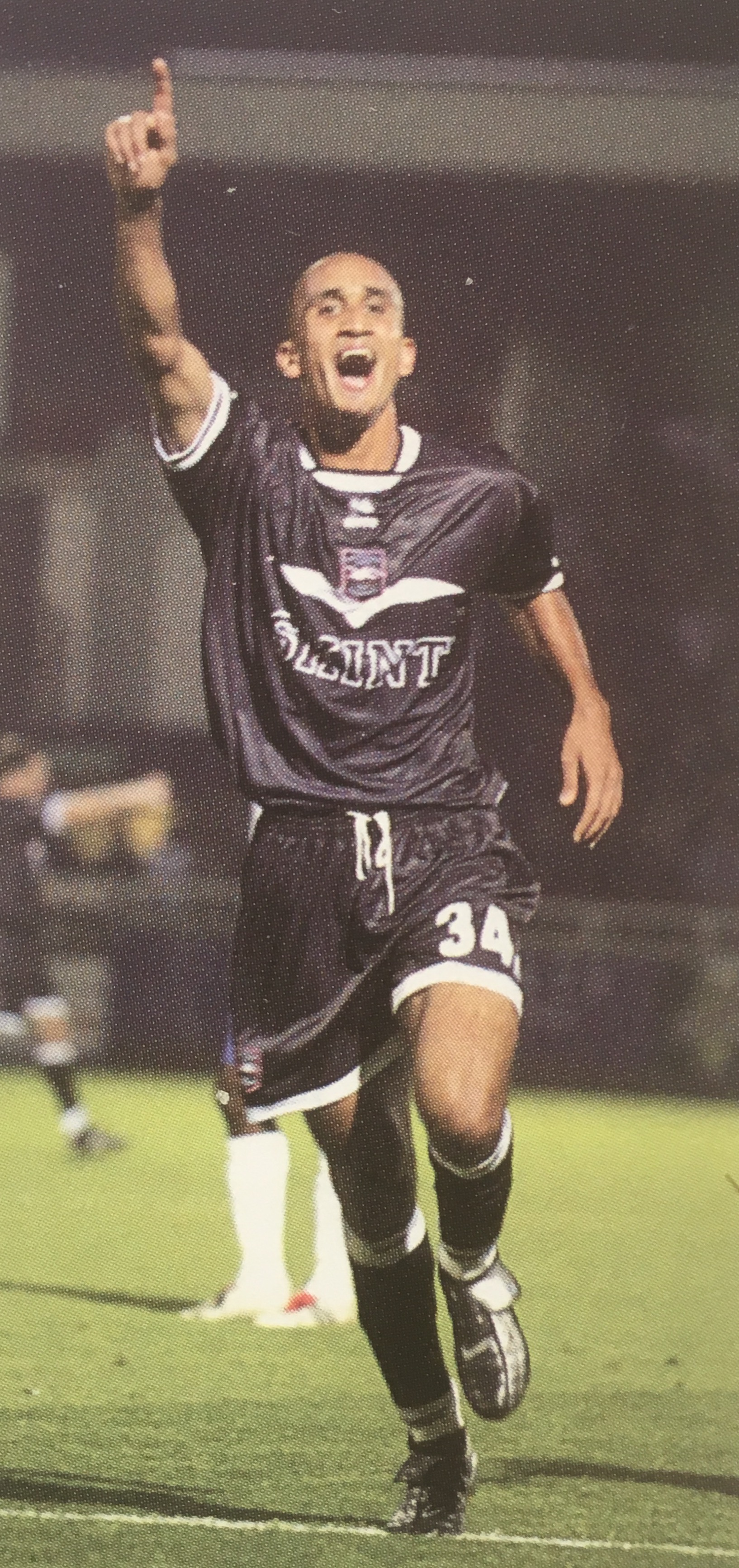
THE PINPOINT accuracy of Darren Currie’s passing and shooting was a joy to watch, even though a lack of pace stopped him being as good a player as his famous uncle.

Currie was a decent player in his own right, making nearly 700 appearances for 15 different clubs, but wherever he went he was always known as the nephew of the former Sheffield United, Leeds, QPR and England creative midfielder Tony Currie.

Perhaps with a hint of family bias, Uncle Tony said in an interview for ITV Digital: “Darren is, without doubt, the best crosser of the ball, after Beckham, in the country. He’ll produce nine times out of ten, right foot or left foot.”

The young Currie attributed his crowd-pleasing skills to the start he was given in the game by West Ham. After 10 years stuck in the lower leagues, Currie was given a platform to perform in the Championship by Brighton, and he very nearly made it to the top when transferred for £250,000 to high-flying Ipswich Town.

As if by a cruel twist of fate, Ipswich lost to the Hammers in the 2004-05 Championship play-off semi-finals having just missed out on automatic promotion.

“Playing for West Ham at youth and reserve levels was a terrific way to start a career,” Currie told the Ipswich Star. “They gave me everything but my debut.”
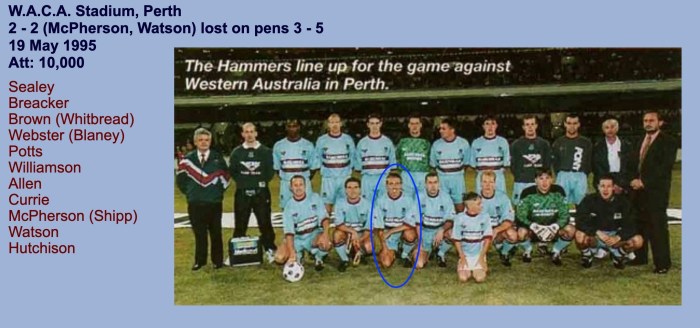
He certainly came close though, featuring alongside recognised first-teamers like Lee Chapman and Frank Lampard in friendlies and testimonials, but he had to move elsewhere to gain competitive first-team action.

Initially he had loan spells with Shrewsbury Town and Leyton Orient, and when the Shrews bid £70,000 for him in 1996, he chose to drop down a couple of divisions to get regular football.

“The difference in money was only about £50. The then West Ham manager Harry Redknapp called me in and said that I was an adult and had to think about continuing to play regular first team football,” Currie explained. “I was given the opportunity to have a new contract at West Ham or moving permanently to Shrewsbury.

“I was a young pro at West Ham and I had been out on loan a couple of times and I got the buzz for playing at three o’clock on a Saturday afternoon. There was no other feeling like it.

“I thought to myself I’ll go to Shrewsbury and I’ll play really well for a year and I’ll get a move back up to the top.

“My naivety kicked in then because it didn’t quite happen. I thought I’d done OK and I was linked with a couple of moves but the route back to the top wasn’t as simple as I thought it would be in my head.”
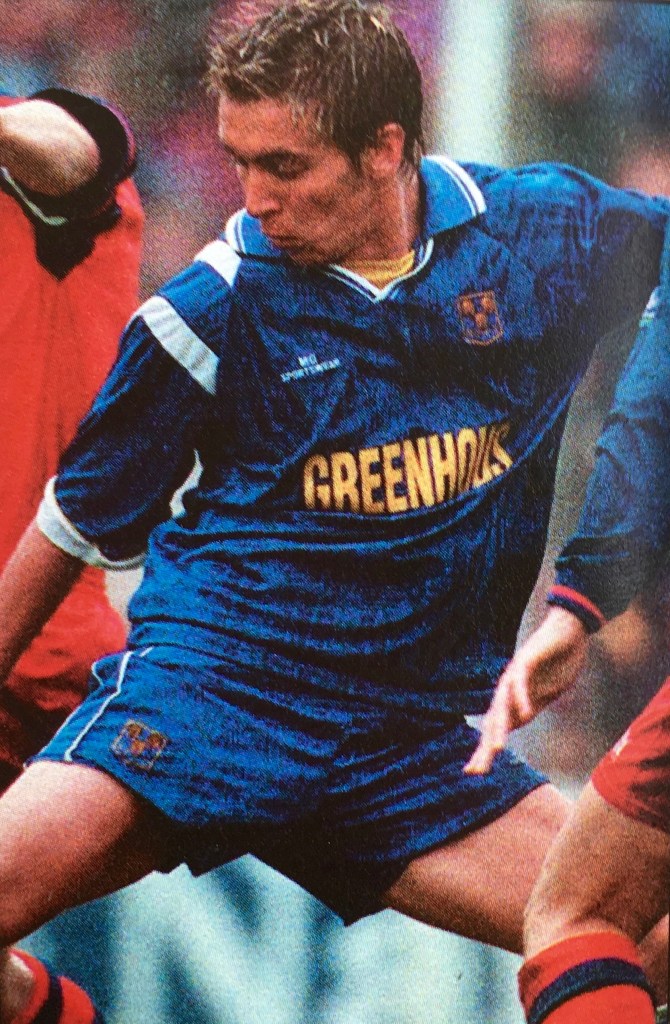
Indeed, it was a decade in which, after three seasons with the Shrews, he moved on briefly to Plymouth Argyle, then to Barnet (three seasons) and Wycombe Wanderers (three seasons).

Currie said it got to a point where Wycombe couldn’t afford to keep him, and boss Tony Adams made it clear he was free to look elsewhere.

Mark McGhee invited him to Brighton for a trial and was impressed with the way he knuckled down in training to get himself fit following a programme devised by McGhee’s deputy, Bob Booker.
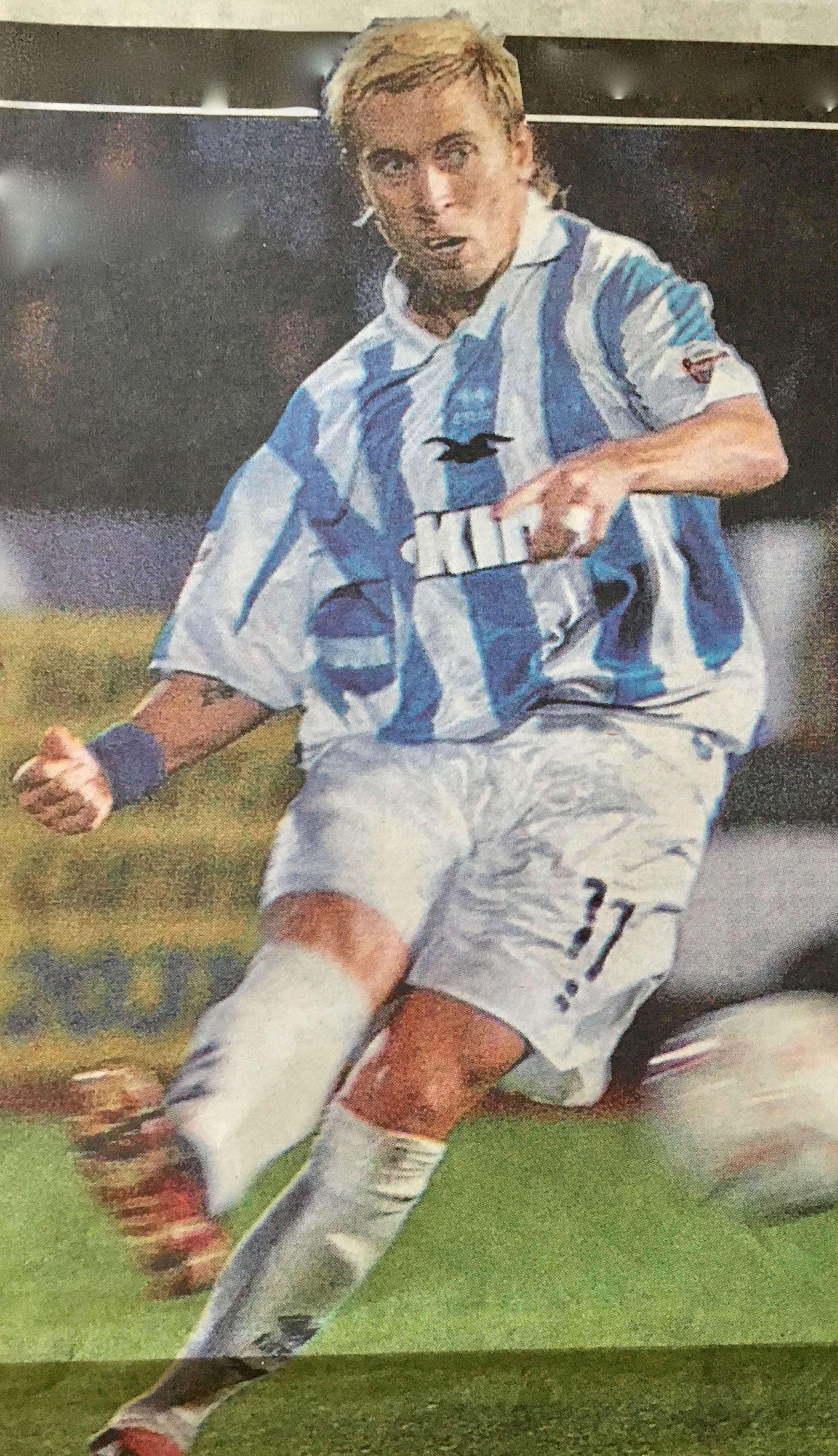
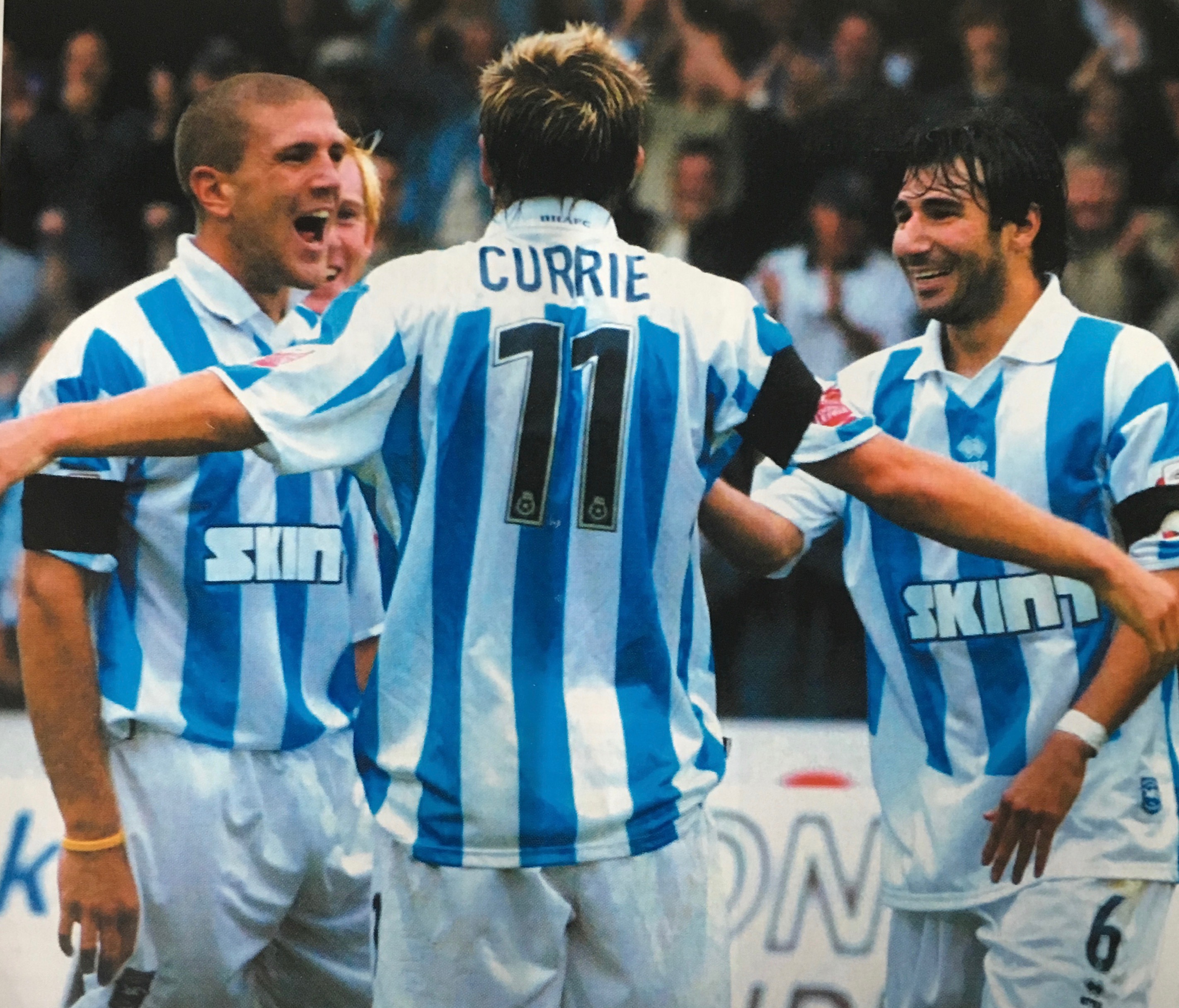
Currie was offered a 12-month contract but it was more about the opportunity to play at a higher level that prompted him to sign.

“It wasn’t a fantastic offer – put it this way, Peterborough offered me three years – but it wasn’t about the money,” Currie told Spencer Vignes in an Albion matchday programme article.

“It was about the football and playing in the Championship. I was determined to do well and to prove myself, which I did. That’s when people began to sit up and take notice.”

Currie’s ability on the ball carved him out to be a crowd-pleaser and the first of two goals for the Albion typically came from a free kick in a 3-2 home defeat to QPR that left Argus reporter Andy Naylor purring over its execution.

“Currie, having shaved a post and hit the bar with two earlier free-kicks, made it third time lucky from 20 yards just before the break. It was a sumptuous effort from the set-piece expert which rendered Rangers’ keeper Chris Day motionless.”

His other goal came in a 1-1 draw at home to Sheffield United, more noted for Albion wearing the limited-edition Palookaville strip to help publicise backer Fatboy Slim’s latest album.

Injury-hit Albion considered it a point gained rather than two dropped and Naylor complimented Leon Knight for “superbly crafting” Currie’s goal by evading his marker and threading a square pass through the legs of Leigh Bromby.

“Currie, with time as well as room, picked his spot to score, which meant even more to him because of the opposition,” wrote Naylor, informing readers that the Yorkshire side had rejected him as a 16-year-old following a fortnight’s trial.

Unfortunately for Currie, he was only on the bench when the Albion travelled to Upton Park on 13 November 2004. After three successive defeats, McGhee confessed he set the side up not to lose rather than go for a win.

Somewhat ironically, the Seagulls blagged a 1-0 win courtesy of a Guy Butters goal, in a real backs-to-the-wall match, with veteran striker Steve Claridge ploughing a lone furrow up front.

It was only in the 90th minute of the match that McGhee introduced Currie in place of Claridge to play out the final few minutes of the game.

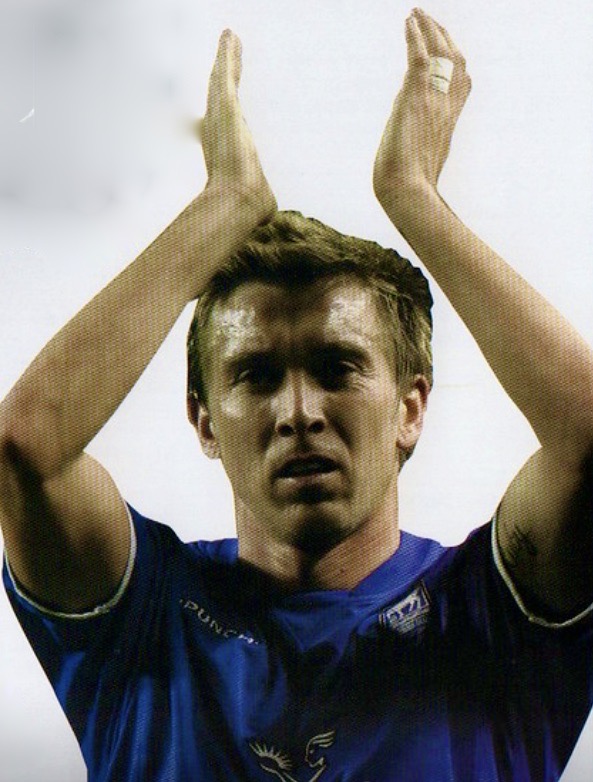
Currie only played 22 games for Brighton over four months but the fee they received for him from Ipswich gave a vital boost to club funds when they were struggling to compete in the division because of the restricted crowd numbers at Withdean. Having signed him on a free transfer, the deal was a no-brainer for the Albion hierarchy, even if it weakened a squad who subsequently only avoided relegation back to the third tier by a single point.

McGhee wasn’t that surprised to see Currie go, telling the Argus: “He was obviously happy here, but I thought he was doing so well that he would keep his options open.

“I cannot see Darren being a regular for Ipswich in the Premiership if they are promoted, but his skills and touch are good enough to justify him making a contribution to a squad in the Premiership.”

It didn’t pan out like that, but Currie was nonetheless grateful to the Albion, and told Vignes: “I am so pleased I had the chance to be a part of it all down there, to see what the support is like and to play with a group of lads who stick together through thick and thin.

“I played at the Goldstone when I was a kid, playing youth team football with West Ham, so I know how important the stadium issue is for everyone. I always will be extremely grateful to the Brighton fans and Mark McGhee because without a doubt without their help this opportunity wouldn’t have come along.”

Currie explained in a matchday programme article how McGhee had helped to develop his game and to add other dimensions which improved him. “I owe a helluva lot to Mark and Bob Booker,” he said.

Currie became an instant hit with the Tractor Boys fans earning the man of the match accolade in two of his first four games.

“I tend to build up a rapport with supporters wherever I go,” he told the Ipswich Star. “I am my own biggest critic and I know when I have done well, and I am very satisfied with my contribution so far.”

After his brief cameo for the Seagulls at West Ham, he got the chance to play against his boyhood club three times that season with Ipswich.

He was in the Town side that lost 2-0 at home to the Hammers on New Year’s Day 2005. Then, in the first leg of the play-off semi-final, Currie and Matt Richards (later a loanee with the Albion) were half-time substitutes who helped Ipswich to recover a deficit to draw 2-2.

Currie started the second leg and had Ipswich’s best opportunities with a shot straight at James Walker, then a long-range drive 10 minutes before the interval which the goalkeeper hopelessly misjudged but fumbled to safety. But they failed to make the final when Bobby Zamora scored two second half goals for West Ham to earn them a 2-0 second leg win. West Ham beat Preston in the play-off final.

Born in Hampstead on 29 November 1974, Currie’s early footballing talent drew interest from Watford and Chelsea, but he decided to join West Ham’s academy.

“The facilities were great, the training for us there as kids was first class and I really enjoyed my time there,” Currie said.

“A lot of the player I became was what I was taught as a kid at West Ham,” he told twtd.co.uk. “It was all about the ball and all about the technical skill and how to manipulate the ball. It was a way I enjoyed playing anyway so it was a really good fit for me.”

After signing professional in 1993, he was a regular in the West Ham reserve side and a trawl through the excellent archive website whu-programmes.co.uk records show he played in a Football Combination game away to Brighton on 1 April 1994, and later the same month was up against Guy Butters in Portsmouth’s reserve side at the Boleyn Ground. Mark Flatts and Paul Dickov were in opposition when the Hammers stiffs entertained their Arsenal counterparts at home on 11 May.

In an Avon Insurance Combination match at the Goldstone Ground on 30 November 1994, Currie scored the only goal of the game from the penalty spot in a West Ham side also featuring Lee Chapman and Frank Lampard.

The following summer, Currie played in four matches when he was part of West Ham’s squad on a centenary tour of Australia.

Shrewsbury boss Fred Davies, a former playing colleague of Redknapp’s at Bournemouth, took Currie on full time after his two loan spells at Gay Meadow.

He moved on to Plymouth Argyle in 1998 but only played five matches in three months, then switched to Barnet where he made 136 appearances, plus seven as a sub, in three years.

Wycombe Wanderers paid £200,000 to sign him in the summer of 2001 and manager Lawrie Sanchez told BBC Three Counties Radio: “He’s obviously a quality player. He gets crosses in and that’s an area where we weren’t very good last year. He’s come to add that to our game and his free kicks will trouble the ‘keeper as well.

“It was quite a lot of money for our club to spend but I’ve got to back my judgement. I’d looked at him for a while and quite liked him. He gives us something we haven’t got, he’s a great technician. He hasn’t got particularly great pace but what he does with the ball is tremendous. We’re hoping he does all the things he was doing at Barnet and a little bit more for us.”

Sanchez added: “A lot of people looked at him for a long time. He’s always been considered one of the best players in the Third Division and hopefully we’ll give him the stage where he can prove he’s one of the best players in the Second Division.”

After Currie’s flirtation with promotion to the Premier League ended in disappointment, Joe Royle left Portman Road and his replacement Jim Magilton axed Currie from the side in the 2006-07 season. He was sent on loan to fellow Championship sides Coventry City and Derby County, for whom he made a play-offs appearance as a substitute, although he wasn’t involved in the final when County beat West Brom 1-0.

That summer, on the expiry of his Ipswich contract, Currie moved on a free transfer to League One Luton Town. He made 38 appearances for the Hatters but when they went into administration, were deducted 10 points and relegated, he was among several players given a free transfer.

Micky Adams, back in the hotseat at the Albion, was hopeful of getting Currie back to Brighton for a second spell, telling BBC Southern Counties Radio on 11 July: “He’s a player I’ve admired for a long, long time. We want him, and he wants to come back. He’d offer competition for places and fantastic delivery from set pieces.”

But at the end of the month the player rejected the terms on offer and took up a three-year contract at Chesterfield instead.

While the first year at Saltergate went OK, in the second season, the manager who signed him, Lee Richardson, had been replaced by John Sheridan, and Currie was out of the picture. He went on loan to fellow League Two side Dagenham & Redbridge and the deal was made permanent in January 2010. Currie played in 16 matches as the Daggers won promotion to League One.

They went straight back down the following season, and Currie departed for Conference South outfit Borehamwood as player assistant manager. He was there less than three months before moving to Isthmian League Hendon for a year as a player.

In October 2012, Currie returned to Dagenham & Redbridge, initially as a development coach and later as assistant manager under John Still.

In June 2018, Currie was appointed assistant manager at National League side Barnet, working under Still. He succeeded Still in December 2018, initially as caretaker, before landing the role permanently in January 2019.

Currie, assisted by former Albion loanee midfielder Junior Lewis, came close to getting Barnet promoted to League Two but, having missed out, and the club struggling financially because of the Covid-related lack of fan revenue, both left the club in August 2020.
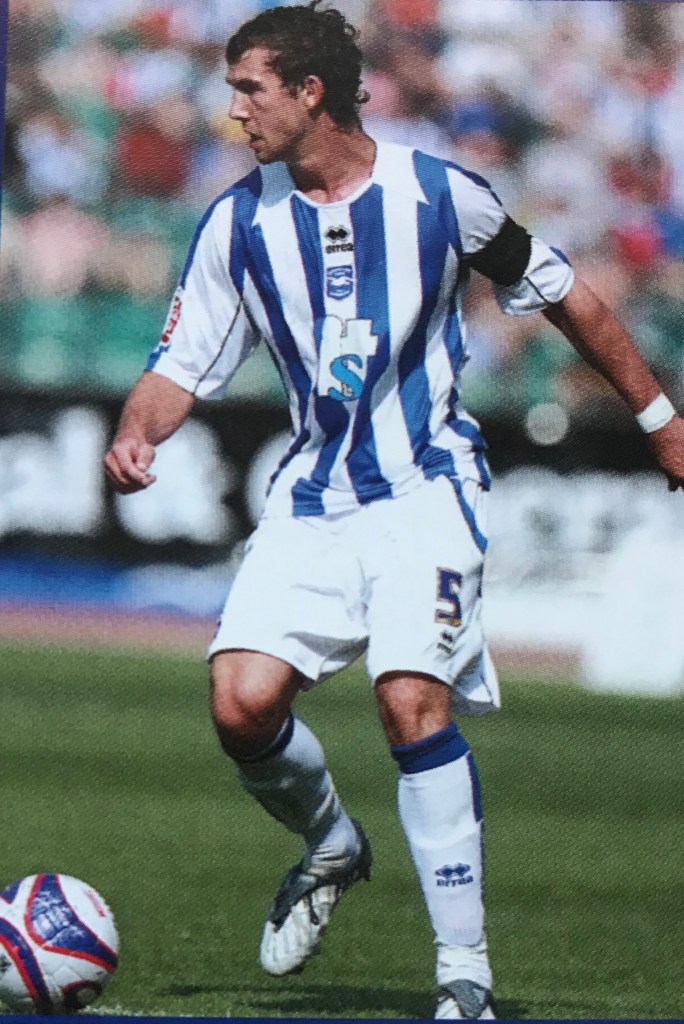
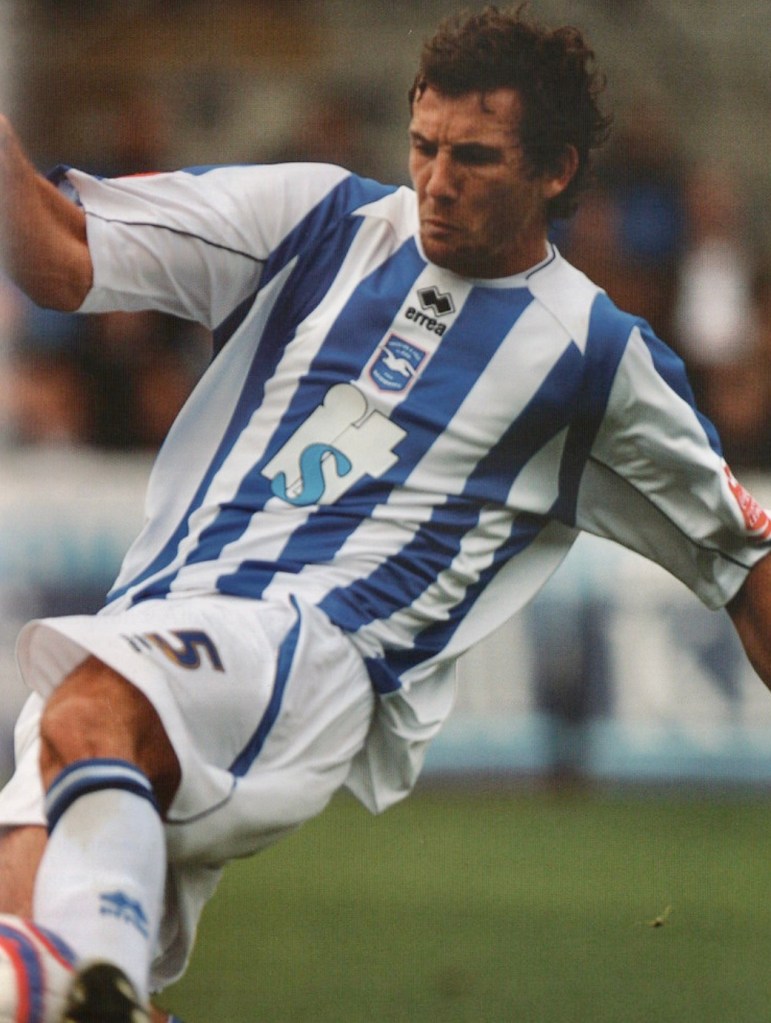
Wright player, wrong place but Jake was United with Wilder

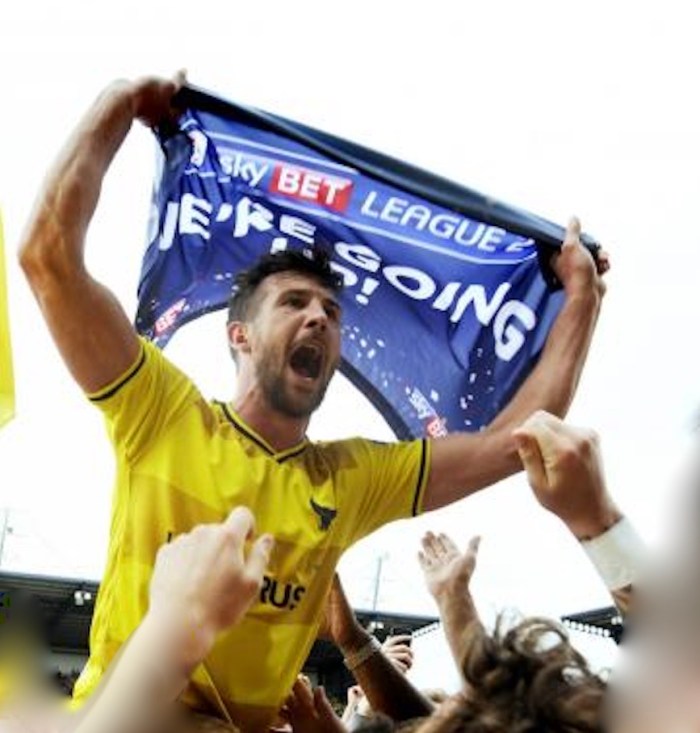
LEFT-SIDED centre back Jake Wright had limited chances to show his mettle for Brighton but Chris Wilder liked what he saw – and was his manager at three different clubs.

Wright played for Wilder at Halifax Town, Oxford United and Sheffield United so was in a good position to assess the terrific job the Blades boss had done at Bramall Lane for a BBC Sport article on 10 January 2020.

“He’s not changed at all,” said Wright. “I don’t think his training sessions or his intensity have changed. As he’s progressed, he’s got better players in, so the quality’s changed. But how he goes about the day-to-day running of a football club hasn’t really changed.

“He’s always been hands-on. He’s always taken a lot of sessions himself. He knows what it takes to win and he knows how to motivate his players to be ready for a game.

“He’s ruthless. He’s got no qualms about dropping a player – no matter how long you’ve known him or how well you’ve done for him – he makes decisions to benefit the club.”

The article featured a number of players who played for Wilder over the years, and Wright added: “His CV’s incredible – one of the best in the country for how well he’s done at certain teams.

“I can’t compliment him enough as a manager. I’ve probably played more games for him than any other player and he hasn’t changed the way he is. He’s kept his philosophy.”

Born on 11 March 1986 in Keighley, Wright began his footballing journey eight miles away at Bradford City. Former England and Derby defender Colin Todd was manager at the time, and he awarded Wright his first professional contract, but it was away from Valley Parade that he gained first team experience.

Wilder was cutting his managerial teeth at Halifax and took Wright and fellow Bantam Danny Forrest to The Shay, initially on loan. The pair eventually joined on a permanent basis and Wright made 88 appearances for them but opted to move on when financial issues saw them demoted two divisions.

He moved to Crawley Town, then in the Conference Premier, and some solid performances at that level drew attention from various league clubs, including nearby Albion, who had recently narrowly escaped relegation to the fourth tier.

Manager Russell Slade took him on a trial basis for a pre-season friendly against Torquay United in July 2009, and, although Albion lost the game 1-0, Wright did enough to earn himself a two-year deal.

Slade said: “He has done very well, both in training and in the game at Torquay. He is a left-sided defender who can play at full-back or centre-half. He is also an excellent athlete, a good talker and I am expecting that he will prove himself as a quality player.”

Wright started the season in the no.5 shirt in the centre of the back four alongside Tommy Elphick but there was plenty of competition for places and Adam El-Abd and James Tunnicliffe were drafted in as Slade tried to address a four-game winless start.

He had a couple more starts in October but, with Brighton struggling towards the foot of the table, Slade was axed as boss that autumn, and Wright didn’t feature in new manager Gus Poyet’s plans.

On 31 December 2009, he was allowed to join Oxford United on loan until the end of the season. He’d only made eight appearances for the Seagulls.

“I wasn’t playing at Brighton and I want to be playing games,” Wright told the BBC. “I am coming to a club that is basically a league club and is going in the right direction. I want to be playing football.”

Wilder said: “I had Jake at Halifax and took him out of Bradford City reserves and he was superb for me.”

By the end of that season, Oxford had won promotion back into the league and Wright’s move was made permanent, courtesy of a free transfer.

The following summer he was appointed Oxford’s captain, and his stay at the Kassam Stadium extended to six seasons over which he made a total of 278 appearances.

After leading the U’s to promotion from League 2 as runners-up in the 2015-16 season, Wright left the club that summer having been told he wouldn’t be guaranteed his place in the higher division.

“Michael Appleton said I wasn’t in his plans and he’d give me the opportunity to move on,” Wright told the Oxford Mail. “It was a shock to be told, especially after we got promoted with the best defensive record in the league.”

Wright wasn’t without a club for long, moving back to Yorkshire to link up with Wilder once more, this time at Sheffield United.

“Jake brings a calmness to the team,” Wilder told the Sheffield Telegraph. “He’s one of those players I enjoy watching because he wants to win. In training and in games.

“He’s never played at this level and, with respect, he views this as an opportunity to do something at the back end of his career. I love players like that. People who get the maximum out of their careers. It’s not been a glittering career with medals littered all over the place. But every manager he’s had will tell you what Jake is like.”

He featured in 30 matches as they gained promotion from League One and played a further 22 games in their 2017-18 season in the Championship. Not involved in United’s Premier League side, in 2019-20 Wright switched on loan to League One Bolton Wanderers, where he played 12 matches.

Wright signed for Hereford at the start of the current season, with manager Josh Gowling saying: “Jake is a very big signing for us, he’s a very commanding centre half.

“He’s got a great attitude; he’s got hunger and desire and he still wants to push on and win things.”

Seagulls kick-started lengthy career for trailblazer Zesh

ZESH REHMAN became the first British Asian of Pakistani origin to play for Brighton.

He played in two separate spells three years apart and his 20 Albion appearances spanned four different managers: Steve Coppell, Bob Booker, Mark McGhee and Dean Wilkins.

His first action in Seagulls colours came in September 2003 and the experience he gained during a three-month loan provided him with the experience to return to parent club Fulham and make his Premier League debut.

Before his temporary move to Brighton he had played one first team game in the League Cup for FuIham, and, only a matter of days later, Coppell signed him for the Seagulls.

“It’s an opportunity to get some first team football,” said Rehman. “This season I’ve been in central midfield, but it doesn’t matter what position I play, I just hope I can do a job for Brighton.

“(Fulham boss) Chris Coleman told me it would be good to come and learn here,” he added.

I can remember being at the Nene Park home of Rushden & Diamonds (above left) to see 19-year-old Rehman mark his debut in the centre of midfield with a goal to seal a 3-1 win for the Seagulls. He scored with an exquisite lob over ‘keeper Billy Turley to add to goals from Guy Butters and Leon Knight. Incidentally, Paul Kitson, released by Brighton that summer after an injury-wrecked 2002-03 season, came on as a sub for Rushden.

Rehman had only played twice before Coppell vacated the manager’s chair at Withdean to take over at Reading, but in Booker’s first game in charge, Rehman was once again on the scoresheet as the Seagulls beat Grimsby Town 3-0.
The utility player stayed with the Seagulls after McGhee’s appointment as manager but after 13 matches he returned to Craven Cottage in January 2004.

Born in Birmingham on 14 October 1983, Rehman was brought up a stone’s throw from Villa Park in the Aston area of the city. The promise he showed in schools, district and county football was soon spotted and at the tender age of 12 he signed up to Fulham’s academy, with the family moving to London.

He progressed through the junior, youth and reserve sides, mainly as a centre back but also able to play full-back or as a holding midfielder.

The spell at Brighton gave him his first extended run in a first team environment and, three months after his return to Fulham, he made his Premier League debut as a late substitute at Anfield. He went on to make a total of 30 appearances for Fulham (26 starts, plus four as a sub), but with first team opportunities limited he had another loan spell away, joining Norwich City in January 2006.

He was at Carrow Road until the end of the season, making just five appearances as defensive cover, and on his return to London opted to leave Fulham in search of regular football.

Gary Waddock gave him a three-year contract at Queens Park Rangers and he made 27 appearances for the Rs but one of the club’s many managerial changes saw the arrival of former Albion defender John Gregory, and he was happy to send Rehman out on loan.

Lo and behold, Albion, by then with Wilkins at the helm, seized on the opportunity because Adam El-Abd was on the brink of a suspension, and Dean Hammond and loan full-back Joe O’Ceaurill were struggling with injuries.

“Zesh gives us a degree of versatility, as well as the experience he has picked up playing at Premiership level for Fulham, so he is a good addition for us,” Wilkins told the Argus.

For his part, Rehman said: “As soon as I found out Brighton wanted me, I thought I owe the club because they were the first to give me regular first team football.

“I’ve got great memories of my time here before. The club and the fans have had a special place in my heart ever since, so I couldn’t really turn it down.”

His second Albion debut saw him playing right-back in a disappointing 0-0 draw at home to Huddersfield Town, but Rehman was just grateful to be playing competitively again.

He told Andy Naylor: “Being out there on a Saturday is a buzz, whether it is at Brighton, Fulham or QPR. I had that at QPR for the first six months of the season but then a new manager came in and I didn’t play for a little while so, rather than just getting stale, I’ve come to Brighton and hopefully I can kick on again when I get back there.”

Rehman played eight games during his second spell at the club, his last marked by picking out striker Nathan Elder who slotted Albion’s goal in a 1-1 draw at Cheltenham on 5 May 2007.

The following season, a six-month loan at Blackpool didn’t work out as he’d hoped for, featuring in only three games under Simon Grayson, and he went back to QPR. However, by the end of January he was on the move again, this time to link up with bottom-tier side Bradford City, initially on loan, and then making the move permanent.

Rehman details his various career moves on his own website, and at Bradford his involvement took on a lot more importance than just playing games. He said:

“Hopefully I can inspire some local Asian people to start coming to games and really feel a part of the club. I want Asian kids to feel they have someone to look up to. Bradford is a big city with a big Asian population and if I can inspire one or two local kids to go on and make it as professionals, I’ll know I’ve made a positive difference to someone’s life and that’s good enough for me.”

Born in the UK, Rehman represented England at under 18, 19 and 20 levels, but opted to play for his parents’ home country of Pakistan, and he captained them at the 2013 Peace Cup in the Philippines.

Between 2011 and the start of 2017, Rehman spent six years playing in Asia, initially for Muangthong United in Thailand, then Kitchee SC in Hong Kong and lastly Pahang in Malaysia.

But the lure of the English game saw him spend four months at Gillingham between February and May 2017, helping the relegation-threatened Gills to retain their League One status.

The following month he headed back out to Hong Kong to play for Southern District FC where, in May 2020, he became player-manager.

In March 2023, Rehman was promoted to first team development coach by Portsmouth having moved to Fratton Park in the summer of 2022 as the academy’s lead professional development phase coach.

He stepped up to help the first team temporarily when Danny and Nicky Cowley left the club in January 2023 and remained in post when John Mousinho took over as head coach.

Rehman set up training on Mousinho’s first day and the head coach said: “Since that day he’s been absolutely brilliant. He’s incredibly diligent and the lads and staff at the club all really like him.

“He adds something different to me and Jon (Harley), providing a different angle, and is an influential presence on the bench.

“Development is a key part of what we’re trying to do here and when we talk about the complementary skillsets of the coaching staff, that’s something he can bring to the fore.”

Rehman said: “I believe continual development is needed by players of all ages and at all stages of their careers. Every player is a work in progress and never the finished article.

“There is no better feeling than assisting an individual, partnership or a unit to improve and then see that work transferred to a matchday, helping the team win.”

Kish and caps invaluable experience in promotion season

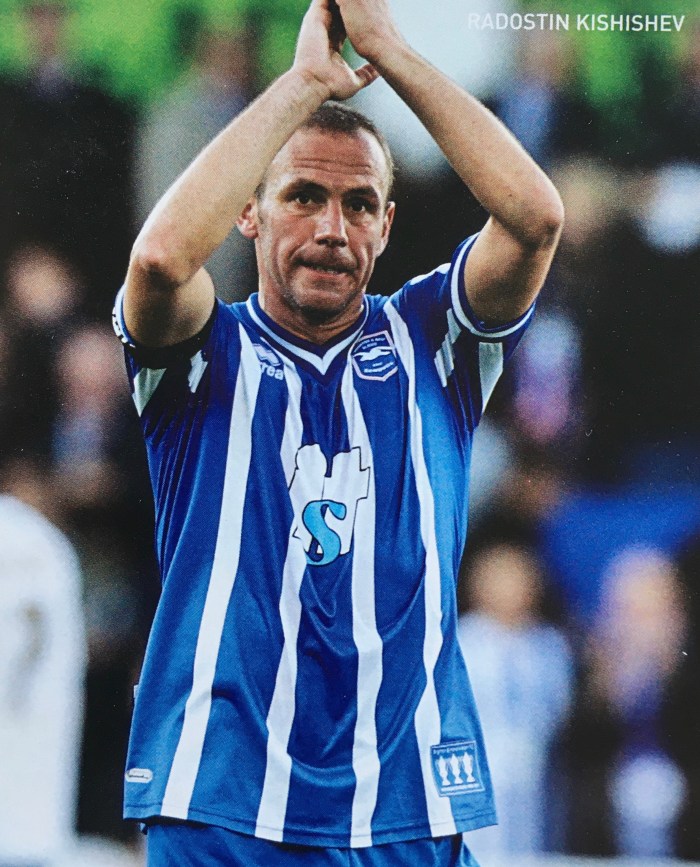
WHEN RADOSTIN Kishishev signed for the Albion in the summer of 2010, they acquired the services of an experienced international footballer to help in their push for promotion from the third tier.

That ‘Kish’ was 35 at the time might have been a concern but the nous he brought to the side more than compensated for the inevitability that his best years were behind him.

As manager Gus Poyet told the Argus: “He is an excellent professional and has kept himself in superb shape throughout his career.

“His quality is obvious, there is no doubt about that, but we had to be sure about his fitness. But he has proved that age is no barrier.

“That experience and quality will bring a lot to the team and will also help our younger players in their development.”

With 88 caps for Bulgaria to his credit (he was in his country’s Euro ’96 squad for the tournament in England, then played in the 1998 World Cup in France and was involved up to 2009), Kishishev had seen Premier League action with Charlton Athletic, mainly as a right-back, as well as playing for Leicester City and Leeds United, when Poyet was assistant manager to Dennis Wise.

Kishishev expressed his gratitude to Poyet for rescuing his English football career at Brighton. “I thought I was going to retire after moving back to Bulgaria,” he said. “I thought I would stay there and finish my career.

“I am very pleased with the way things have worked out and I really appreciate the chance I have been given to play for Brighton.”

In a matchday programme article, he said: “My desire for football is still so strong. As a footballer you should keep plying for as long as you can because you are a long time retired.”

However, in the autumn of 2010, Kishishev was indicating his stay on the south coast would only be for the one season because of the wear and tear he was feeling.

After being part of the side in season-defining away wins 3-0 at Peterborough and 4-0 at his old club Charlton, he told the Argus: “It is becoming harder and harder every year. My legs are getting tired and painful so it’s difficult to continue playing.”

Nonetheless, Kishishev was heavily involved throughout the season, starting a total of 25 games and coming on as a substitute in 11 others.

He missed a couple of months of action when allowed compassionate leave to return to Bulgaria, but Poyet was glad to welcome him back in March 2011 to bring a steadying influence to the final run-in.

For instance, after coming on as a sub when Albion eventually overcame Carlisle 4-3, Poyet said: “Kish came on and understood the game better than anyone else on the pitch.

“He knew where the danger was, how to pass it, when to make a foul. That is down to experience and quality, so I’m pleased to have him back.”

Kishishev was released in May 2011 and he returned to Bulgaria to play one last season with the club where it all began for him 20 years earlier: Chernomorets Burgas.

He started 16 League games for them, came on as a substitute in three more, and played his final game on 19 May 2012 in a 1-1 home draw with Locomotiv Sofia.

The background to his compassionate leave became public a few months later when in October 2012 his wife died of cervical cancer aged just 38. She had first been diagnosed with the illness while Kishishev was in the UK playing for the Albion.

Born in the Black Sea coastal city of Burgas on 30 July 1974, Kishishev also made 75 appearances for the city’s Neftochimik side and although he subsequently moved to Turkey to play for Bursapor, after only 20 games in six months there he returned to Bulgaria in January 1998 to join Litex Lovech, who he helped to win two league titles (1998 and 1999).

The bulk of his English career was spent in the top flight with Charlton under Alan Curbishley, and on a return visit to The Valley in 2017, Kishishev told the Charlton website: “It was always good when we beat the best teams. Arsenal; we beat them 1-0 on New Year’s Day and I think Graham Stuart scored. Chelsea; we beat them in their first year of Roman Abramovich on Boxing Day. 

“I have great memories of games first of all, and then the crowd. The warmness they gave me all the time is one of the first things I remember. 

“When I look back, I was one of Curbs’ favourite players. He always picked me and believed in my skills and ability, and I was so glad to have been part of that great team.”

Towards the end of his Charlton days, he joined Leeds United on loan and Leeds fan site ozwhitelufc.net details Kishishev’s career and explains his popularity at Elland Road, where he made 10 appearances as they unsuccessfully battled against relegation from the Championship.

When released by the Addicks in June 2007, he chose to join Leicester City on a two-year contract, with boss Martin Allen telling the BBC: “I watched him play against Belarus recently. I wanted to check he still had energy and enthusiasm – and he played well.

“I’m delighted that he has agreed to come here. He gives us some steel in the centre of midfield.”

Unfortunately, the move came during the reign of Milan Mandaric as chairman and managers came and went with alarming regularity. Allen was replaced by Gary Megson, but he only lasted nine games, and then Ian Holloway took over.

Just four months after signing for the Foxes, and having made only six starts plus five appearances as a sub, Kishishev headed back on loan to Leeds.  He told the Leeds website: “I signed a two-year at Leicester and the start wasn’t very good, for the team and myself as well.

“Life changes all the time and I’ve got another spell here and I hope it will be for longer. Once I knew that Gus and Dennis wanted me to come, I agreed 100 per cent.

“I’m happy and I hope I can play some part for Leeds and keep the same standards.”

Just six days after he signed, Poyet quit Leeds to become first team coach at Tottenham and five days after his three-month loan came to an end, Wise moved on to become a director at Newcastle.

Kishishev made only seven appearances in that second spell and it seemed his time in England was over when he chose to move back to Bulgaria and rejoin Litex Lovech.

That was until he was reunited with Poyet once more at Brighton. He was already studying for his UEFA A coaching licence at that time and he has since managed and coached in Bulgaria.

Cards came up trumps for ex-Saints full-back Kevan Brown

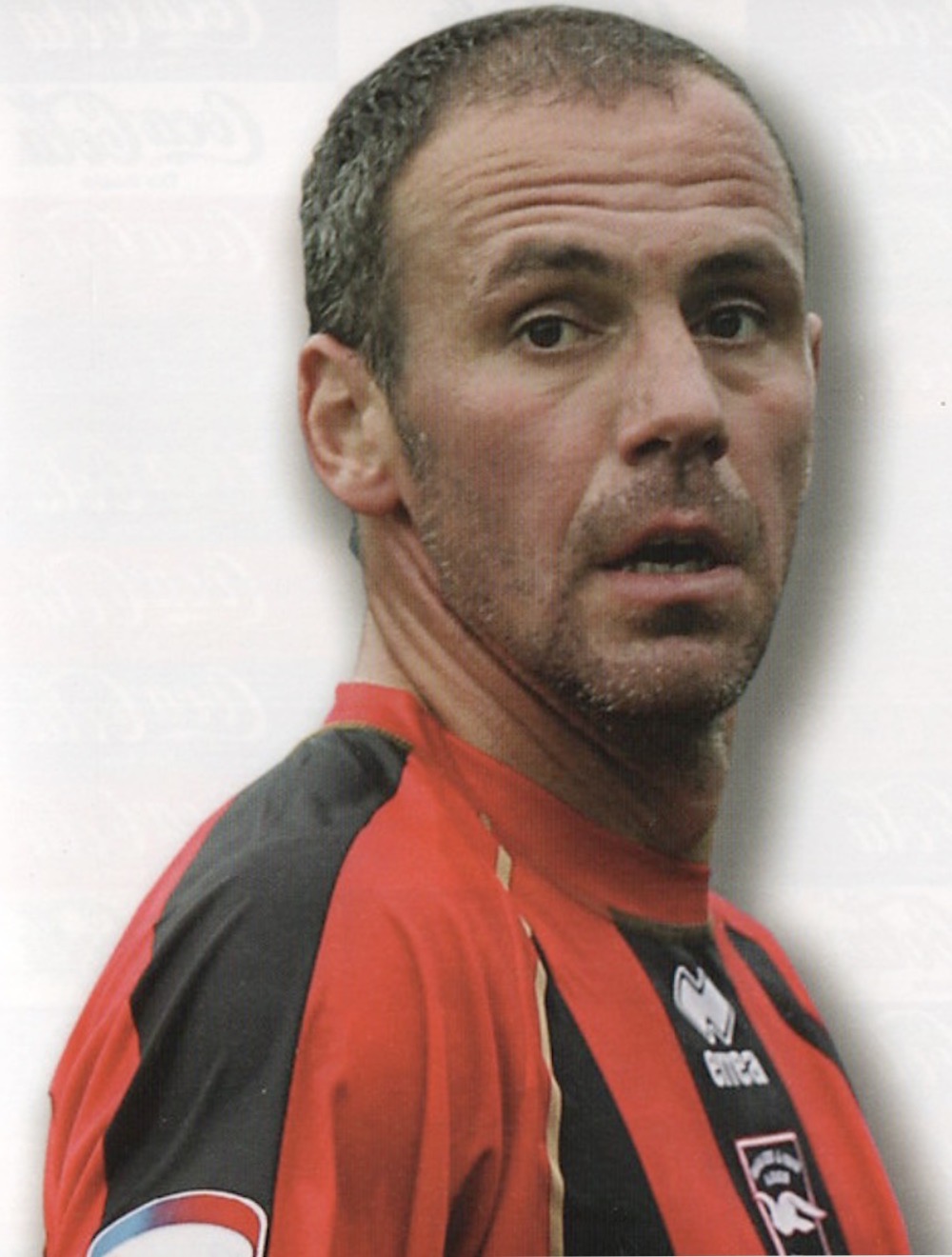
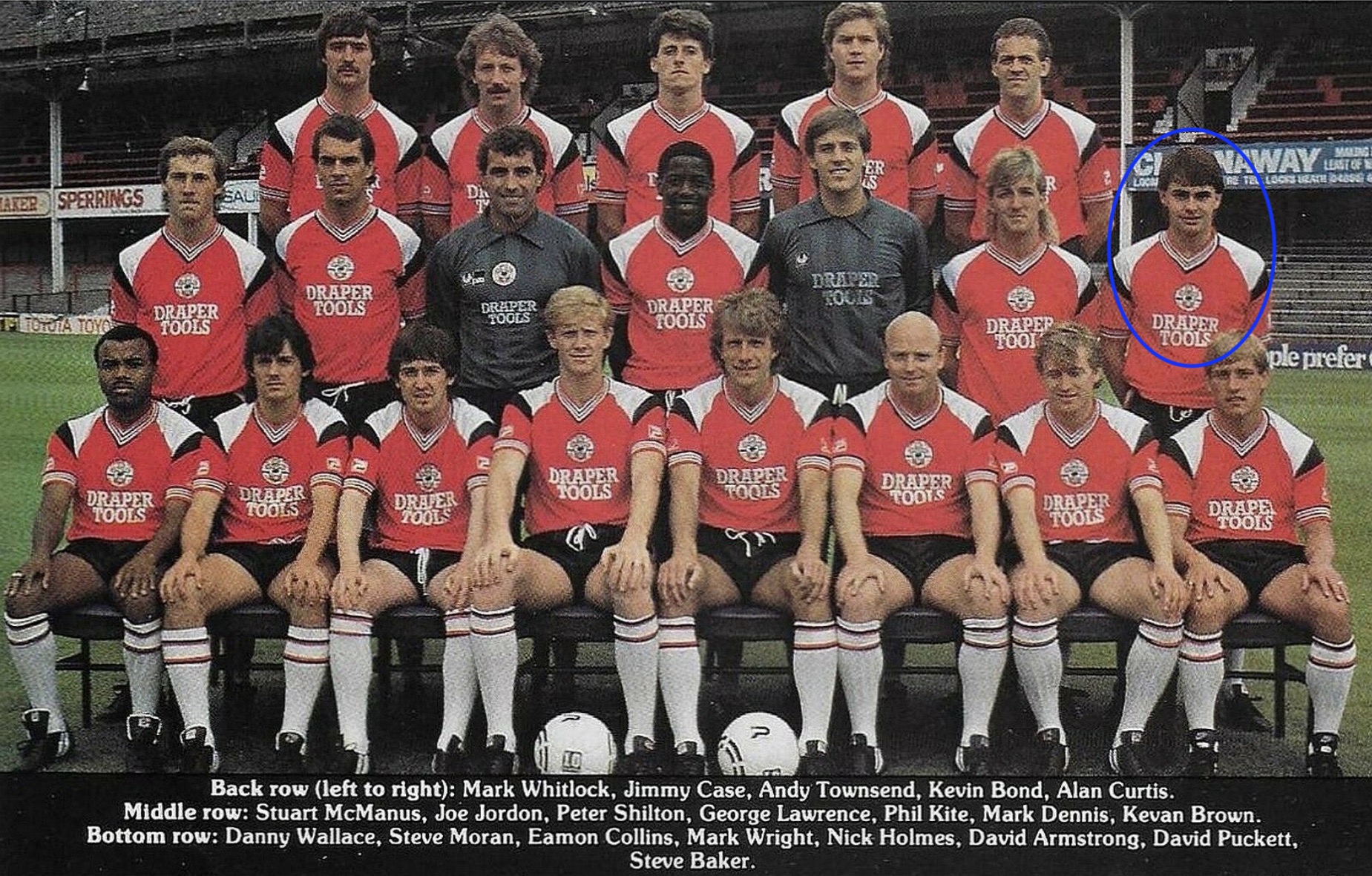
FULL-BACK Kevan Brown made more than 120 appearances for Southampton reserves during three years as a young professional but it took a move east along the coast to Brighton to play league football.

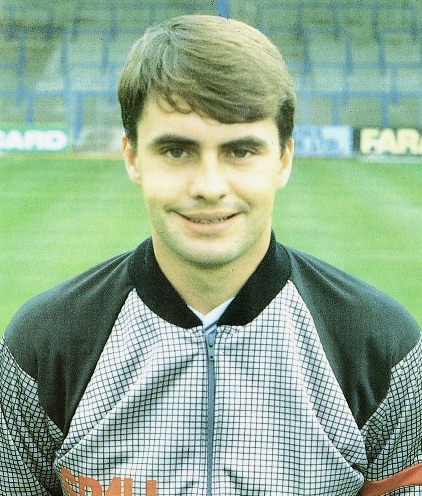
Brown arrived at the Goldstone Ground for a fee of £7,500 shortly after Barry Lloyd had taken over from Alan Mullery early in 1987.

Lloyd preferred the youngster from Andover as right-back to the ageing Les Berry, who’d joined on a free transfer the previous summer.

The club put Brown into digs in Hove (run by Val and Dave Tillson) with another young player who had moved away from home, former Everton youngster Darren Hughes.

In a programme profile feature, Brown said Hughes had been a big help in him settling into his new surroundings. “He has been showing me around the area and we’ve become good friends,” he said. “I’m glad I wasn’t put in a hotel on my own.”

Unfortunately, Brown was only on the winning side twice in the 15 matches he played that season and Albion were relegated from the second tier in rock bottom place.

Brown was a permanent fixture in the no.2 shirt for 46 league and cup matches in the 1987-88 season until the arrival of experienced defender Gary Chivers from Watford.

With promotion in sight, while Lloyd dropped the experienced captain Doug Rougvie in favour of the relatively untried Robert Isaac in the centre of defence, he saw Chivers rather than Brown as the better option at right-back.

Chivers went straight into the side for the promotion run-in and the 2-1 home win against Walsall on 12 March 1988 was the last time Brown appeared that season.

He played in the opening two games of the following season but Chivers on the right and Keith Dublin on the left were Lloyd’s preferred full-back pairing, and Brown found himself on the outside looking in.

Born on 2 January 1966, Brown was an associate schoolboy with Southampton at the age of 13, following in the footsteps of his father Peter, who had played for Saints in the late 1950s.

Brown said in an Albion profile feature that his father and Saints youth development officer Bob Higgins had been the biggest influences on his career, although Higgins later drew opprobrium.

Lawrie McMenemy awarded Brown a professional contract but neither he nor his successor Chris Nicholl elevated the young full-back to the first team, although he did get to play against Manchester United in Trinidad and Tobago while on tour with Southampton.

Having had his fill of reserve team football at Saints, rather than repeat the experience at Brighton, he moved on to Aldershot in the autumn of 1988.

He spent four years there and made quite a few more appearances than the 175 that the record books show: the 1991-92 season records having been expunged  after the club went out of business.

Aldershot found themselves in a worse financial situation than the Albion were to suffer later that decade and the club was finally wound up owing £1.2m on 25 March 1992.

Five days earlier, Brown played in a match – alongside future Albion hero Robbie Reinelt – that was the last game Aldershot would play.

Although his next career move saw him drop out of the league, he enjoyed huge success in terms of silverware and recognition.

He joined Geoff Chapple’s Woking in the Football Conference and captained The Cards to three FA Trophy wins – in 1994, 1995 and 1997 – with veteran former Albion winger Clive Walker the side’s talisman.

In addition to leading his team up the steps at Wembley to lift the silverware, Brown’s performances with Woking earned him international recognition with the England semi-professional ‘C’ side.

He made his debut in a 1-0 win over Wales at Huish Park, Yeovil, on 28 February 1995. He made three more appearances that year: away to Netherlands (0-0) on 11 April, home on 19 May (played in St Albans) against the Highland League (3-4), then away to Gibraltar (3-2) on 31 May.

His fifth and final appearance was on 2 April the following year as England beat the Netherlands 3-1 at the Nene Park home of Rushden & Diamonds.

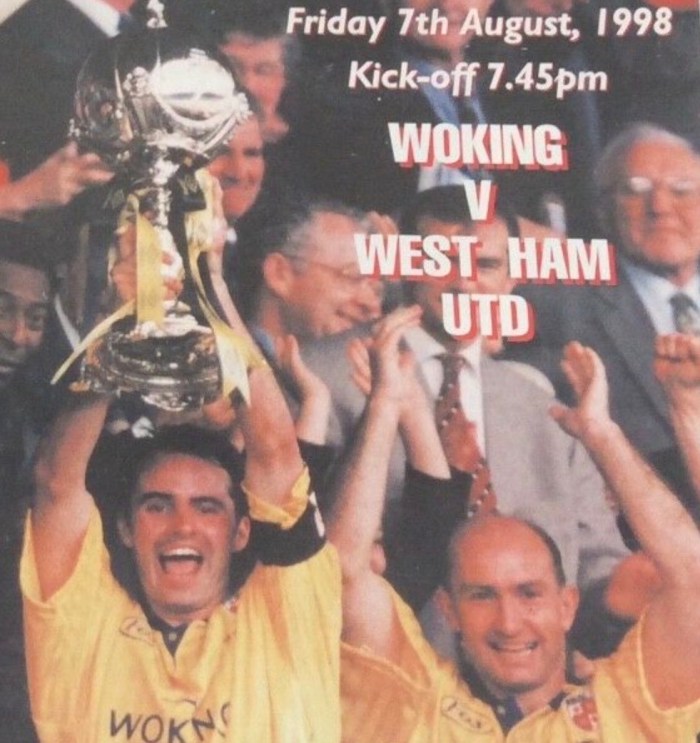
Brown’s loyalty to Woking – he made more than 350 appearances across six years – was rewarded with a testimonial game at home to West Ham United in August 1998.

More than 5,500 turned out at the Kingfield Stadium to see the Hammers edge it 2-1 with goals from Frank Lampard and Steve Lomas. Rio Ferdinand limped off early in the match and Ian Wright played up front for West Ham.

The game took place five months after Brown had moved on from Woking to Yeovil Town.

Chapple’s former assistant, Colin Lippiatt, had taken charge at Huish Park in January that year, having joined three months earlier as a coach under Graham Roberts.

One of his first moves was to sign Brown and teammate Steve Thompson (who ended up staying with The Glovers for ten years). Brown stayed for two years, making a total of 88 appearances, latterly playing under Thompson when he took over as caretaker manager following Lippiatt’s departure.

The arrival of former Chelsea defender David Webb as manager in March 2000 spelled the end of Brown’s time at Yeovil and he returned to Woking to play a further 25 games as they battled against relegation from the Conference in the 2000-2001 season.

Playing part-time had enabled Brown to pursue a teaching career and in April 2007 he was appointed director of sport at independent co-educational St Francis School in Pewsey, Wiltshire.

Brown’s devotion to the club who set him on the road remains undimmed and on his Twitter account @KevanBrown05 he declares himself a Saints season ticket holder.

Let down by ‘little’ Sammy, ‘big’ Sami struggled from the start…

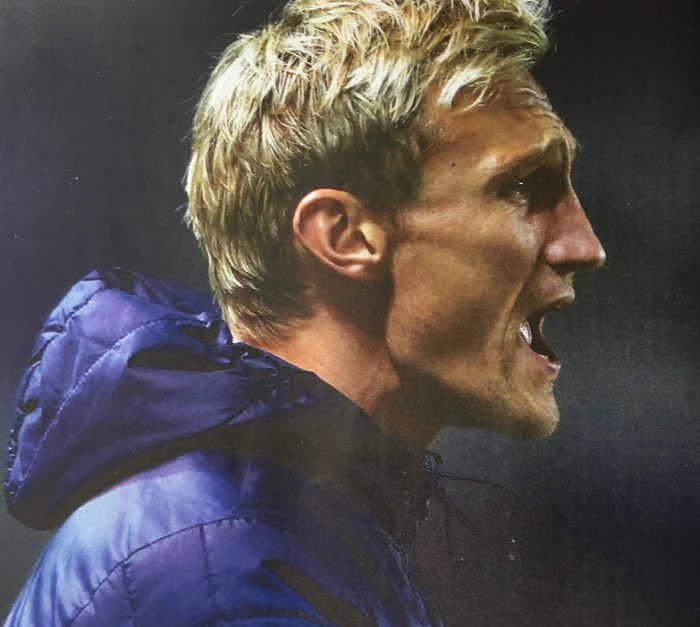
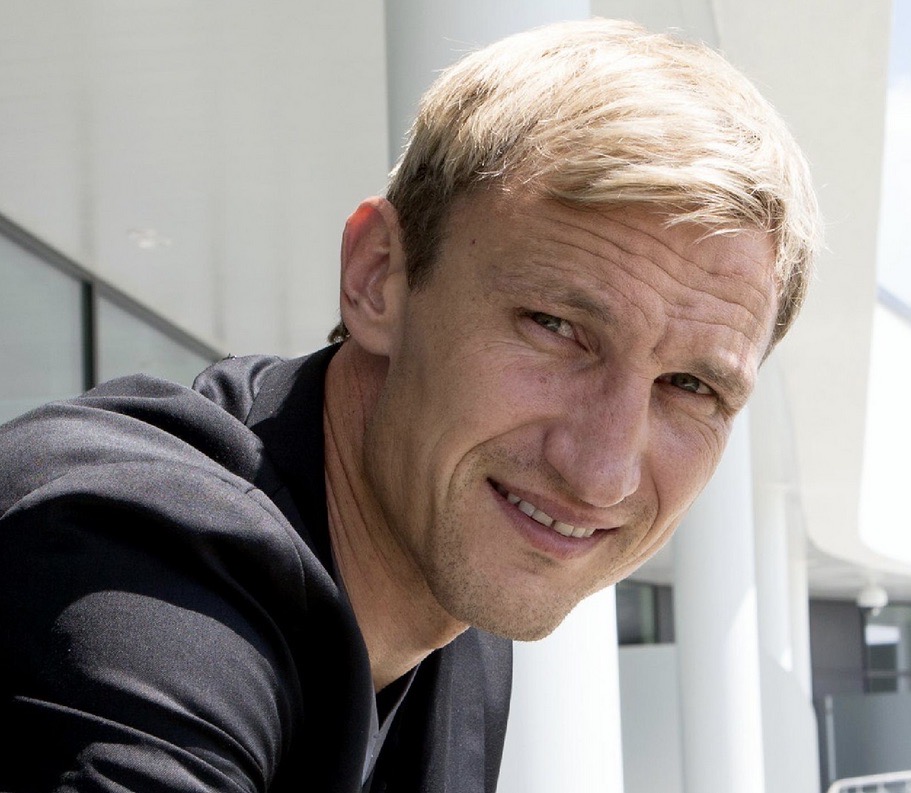
HINDSIGHT is a wonderful thing but few would disagree that Sami Hyypia’s reign as Albion manager was doomed almost from the start.

Inexperienced boss Hyypia had barely got his feet under the table at the Amex before former Liverpool assistant manager, Sammy Lee, pulled the rug from under his proposed new regime.

Hyypia, not unreasonably, had thought the former no.2 to Rafa Benitez would bring vital experience to his backroom team because the Albion position was only the former Reds central defender’s second managerial job.

Lee, despite accepting the position on 27 June 2014, decided two days later to reject the deal because he’d agreed to become Ronald Koeman’s deputy at Southampton instead.

Hyypia had only been in post three weeks, so, it would be fair to say, Lee’s decision must have been a hammer blow – especially as his first choice for no.2 said ‘no’ too! Jan Moritze Lichte, who’d been at Bayer Leverkusen when Hyypia made his managerial bow – which lasted only nine months – had already declined to join him in the UK for “personal reasons”.

Thus, Hyypia had to rely on two of previous boss Oscar Garcia’s coaching staff, Nathan Jones and Joaquin Gomez, to assist on the coaching side, although his fellow countryman, Antti Niemi, did accept the offer to become goalkeeping coach.

On the playing side, there had been a large turnover of personnel in the wake of Garcia’s departure – and, it emerged, the players coming in weren’t being signed by Hyypia but were the picks of head of football operations, David Burke.

It was always going to be a tough ask to replace Leonardo Ulloa up front – and journeyman Chris O’Grady certainly didn’t provide an answer.

There was a sense of excitement when Hyypia’s Liverpool links saw the arrival on loan of Joao Teixeira, but the number of players only at the club on a temporary basis should have been something of a wake-up call.

The permanent signing of one-time West Ham forward Sam Baldock looked like a sound investment – he’d hit the net regularly enough at Bristol City in the division below – but he found goals hard to come by at the higher level.

As if to highlight the player upheaval and shaky managerial team foundations, Albion lost the first two games of the season, single goal defeats at home to Sheffield Wednesday and away to Birmingham City.

If a 2-0 win away to Leeds United followed by a 2-1 home win over Bolton suggested a corner had been turned, Albion then went on an 11-game winless run.

If he hadn’t been aware beforehand, Hyypia would have quickly realised the calibre of player Burke provided him with fell way short of what was required if the side were going to repeat the previous two seasons’ achievement of finishing in the play-off positions.

Not only was there a lack of consistency in personnel on the pitch, those who were selected appeared to be confused as to exactly how Hyypia wanted them to play.

Andy Naylor tried to analyse Hyypia’s philosophy early on in the season, reporting: “We have already seen 4-1-2-3, 4-1-2-2-1, 4-4-1-1. Hyypia is combining Southern European technical accomplishment in possession and mobility with a more Northern European tempo and directness.

“The width is provided by advanced full-backs, the chances for a narrower strike force by the players who like to operate, in modern coaching speak, ‘between the lines’, exploiting pockets of space in the area dividing the opposition defence and midfield.”

The theory might well have been sound but the practice was found wanting.

Having won only one game in 18 matches, and after only six months in charge, Hyypia resigned shortly before Christmas.

At his last home game in charge – a 1-0 defeat to Millwall – the Albion faithful demonstrated they’d had enough, calling for him to go and, in the North Stand, unfurling a banner making that message loud and clear.

Hyypia himself admitted the atmosphere had been tough to handle but, in an interview with the Argus, had vowed to turn things round.

It was an unseemly end for someone who as a player had been rated one of the best defenders ever to pull on a Liverpool shirt. But Hyypia was by no means alone in not being able to continue the prowess he’d shown on the playing side into management.

Liverpoolway.co.uk charts the player’s career succinctly; a Gerard Houllier signing in 1999, over the course of a decade he collected winners medals across several competitions: the Champions League, the FA Cup (twice), the UEFA Cup, the UEFA Super Cup (twice), the League Cup (twice) and the Charity Shield.

Born on 7 October 1973 in Porvoo, Finland, Hyypia’s football career blossomed with now dissolved Kuusankosken Kumu before switching to MyPa, where he stayed four years, helping them to win the Finnish Cup in 1992 and 1995. He moved to Holland to play for Willem II for four years where for a time his defensive partner was Jaap Staam, who subsequently played for Manchester United. Liverpool signed Hyypia for £2.6m in 1999, ironically following up a tip from a TV cameraman!

After being capped 27 times by Finland under 21s, he earned his first full cap in 1992 and, with 105 caps for Finland, he is second only to Jari Litmanen as his country’s highest capped player.

After his Liverpool playing days came to an end, Hyypia went to play in the Bundesliga for Bayer Leverkusen and two years later joined the club’s coaching staff.

In a rather unusual arrangement, Hyypia and former under19s coach Sascha Lewandoski jointly replaced Robin Dutt as head coach but Hyypia took sole charge in June 2013. He was sacked in April 2014.

After his brief time in charge of Brighton, it was another eight months before he found another head coach role, this time taking charge of FC Zurich in August 2015. But with the club heading for relegation in May 2016, he was sacked.

The Finn has yet to re-appear in the dugout, although he has pulled on his boots again to play for a Liverpool Legends side. It remains to be seen whether he’ll give coaching or management another go, although he told BT Sport in February 2019: “I will coach and manage again one day but not yet. I get some enquiries quite regularly, but nothing has yet been that interesting I would jump into it.”

He added: “I wouldn’t change any decision to go so quickly into coaching. A lot of people said I made a mistake going into it so early, but I learned a lot.

“You learn a lot more from the bad moments than the good moments. Those years when things were not going my way, I learned so much and I am much better and more ready now.”

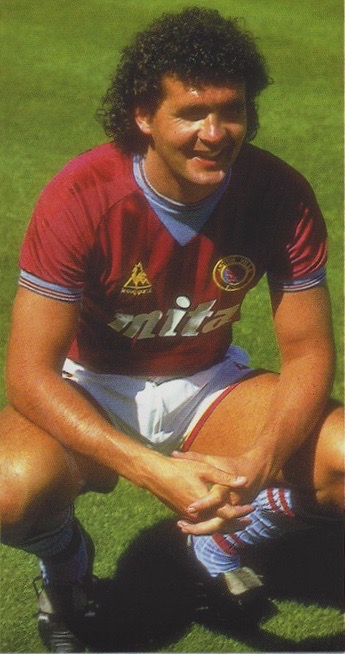
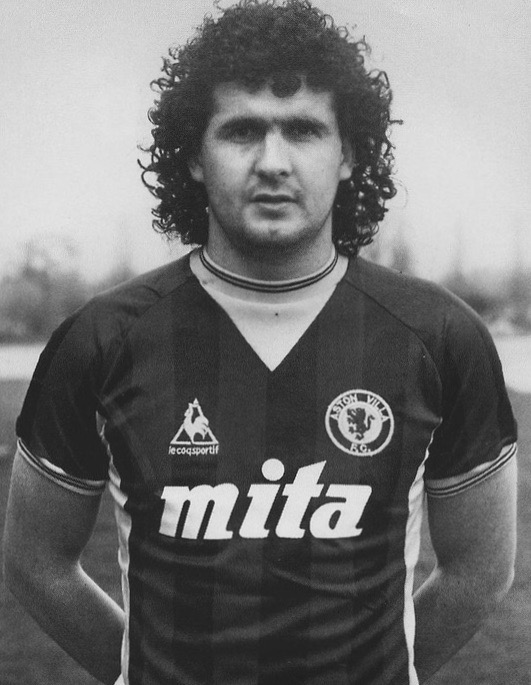
The Albion legend whose face didn’t fit at Aston Villa

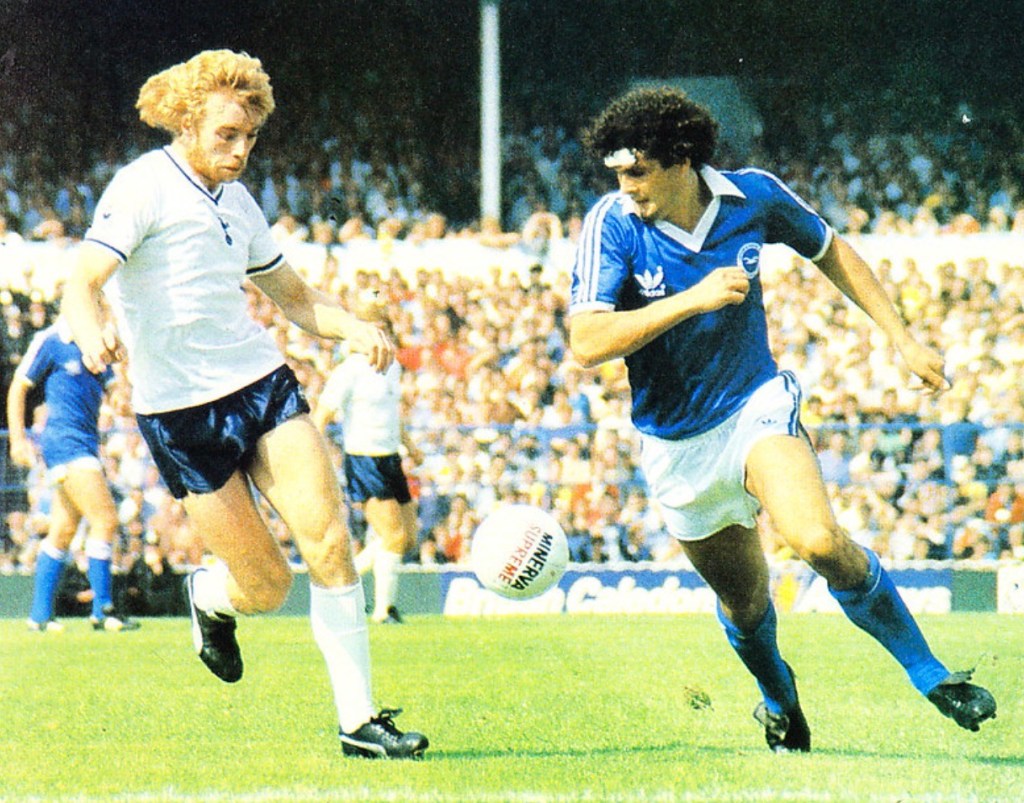
Steve Foster challenges Spurs’ Steve Archibald at White Hart Lane

LEGEND is overused far too much in football circles but, in some circumstances, it is justified. That applies to Steve Foster.

He played 800 games in a 21-year career which included nine years with Brighton in two separate spells.

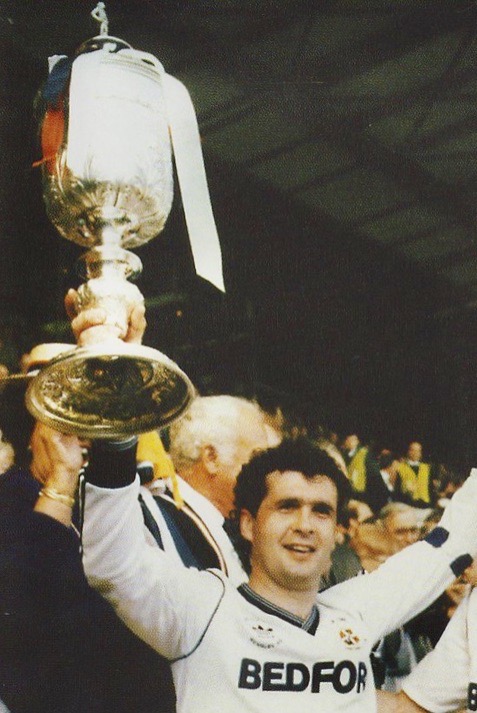
His performances in the top-flight for Brighton led him to play for England at the 1982 World Cup and he lifted the League Cup in 1988 as the captain of Luton Town.

He might have enjoyed a longer spell at Aston Villa if the European Cup-winning manager who signed him hadn’t been unceremoniously dumped by ‘Deadly’ Doug Ellis.

Foster became – and, to older fans, still is – synonymous with Brighton & Hove Albion, and football followers the world over could readily identify the captain with the white headband.

In several interviews over the years, he has explained how the distinctive headpiece was actually a piece of padded white towel designed to protect a forehead split open in collisions with centre forwards Andy Gray and Justin Fashanu.

I wonder if physio Mike Yaxley’s wife Sharon, who made up the dressing before every game, realised at the time the key role she played in helping to make Foster one of the most identifiable characters in football.

Foster’s illustrious career is warmly documented in Spencer Vignes’ excellent 2007 book A Few Good Men (Breedon Books Publishing), featuring an interview with the player himself and those who played with him.

For example, Gerry Ryan told Vignes: “Fozzie was a huge player with a huge personality, a real leader and deceptively quick for a big man.

“When he played against the best, like Ian Rush and Kenny Dalglish, he was the best. People talk about giving 100 per cent, but Fozzie gave 150 per cent in everything he did, and I mean off the field as well.”

Gordon Smith added: “He was a fantastic person, great fun and a terrific centre half.”

Vignes himself observed: “Steve’s willingness to put his neck on the line for the cause earned him hero status among the fans, together with the complete respect of the dressing room.”

Unsurprisingly, Foster pulls no punches in describing the various characters and events surrounding his colourful career, for instance describing Chris Cattlin as “definitely the wrong man. I told him the truth and what I thought of him.” And, of predecessor Jimmy Melia: “When Jimmy took over it was more like a circus than a football club.”

Foster said the two biggest influences on his career were Frank Burrows, the manager of his first club, Portsmouth, who taught him about balance as the key to strength on the pitch, and Brian Horton, the dynamic midfield driving force he succeeded as Albion captain.

“He shouted and screamed for 90 minutes to help us get results, and to keep everyone on their toes,” said Foster. “If he made a mistake, 10 other people would shout and scream at him, and he would take it. When I was captain at Brighton, and my other clubs, that’s how I tried to be.”

Such a recognisable figure as Albion’s centre-half

Fortunately, sufficient archive film footage remains for fans of different generations to see what a dominant force Foster was at the heart of Brighton’s defence, while I retain plenty of now-yellowing cuttings from the numerous columns of newsprint he filled during his pomp.

Born on 24 September 1957 in Portsmouth, Foster went to St Swithin’s Junior School before moving on to St John’s College. A centre-forward in the early days, he played for the Portsmouth Schools under-12s side but it was Southampton who took him on as an associate schoolboy.

He played in the same youth team as Steve Williams and Nick Holmes, who both went on to have long careers.

But Saints boss Lawrie McMenemy let Foster go at 16, urging him to go elsewhere and prove him wrong. After Foster won his first England cap, McMenemy sent him a congratulatory telegram. “That was class, nothing but class,” Foster told Vignes.

Southampton’s loss was Portsmouth’s gain, courtesy of a tip off from local schoolteacher Harry Bourne to Pompey youth team coach Ray Crawford (who’d previously held a similar role under Pat Saward at Brighton). Bourne ran the Portsmouth and Hampshire schools teams.

Crawford describes in his excellent autobiography Curse of the Jungle Boy (PB Publishing 2007) how he called at the family’s house in Gladys Avenue, Portsmouth, but Foster’s mother was at a works disco at the local Allders store. Wasting no time, he immediately went in pursuit and, against a backdrop of deafening music and flashing lights, shouted above the din that they were interested in signing her son.

Foster called the club the following day and he was invited to play in a youth team game for Portsmouth – against Southampton! “I scored twice because I was playing as a centre-forward then, and they ended up offering me an apprenticeship on £5 per week which was my entry into the professional game,” said Foster.

Reg Tyrell, a respected former chief scout from Crawford’s time at Ipswich, watched the young striker in a youth team training game and declared: “That no.9, he’s no centre-forward but he’d make a good number 5.” A few weeks’ later, manager Ron Tindall’s successor, Ian St John (later Saint and Greavsie TV show partner of Jimmy Greaves), gave Foster his debut as a centre half!

Foster played more than 100 games during Pompey’s slide down through the divisions, and, at 21, had developed something of a fiery reputation. But Brighton boss Alan Mullery saw him as “big and brave, strong in the tackle and good in the air” providing “much-needed stability at the back” as the Seagulls began their first adventure into the top-flight of English football in 1979. He was signed for £150,000.

A couple of disciplinary issues in the early days of the new season looked like proving the doubters right to have warned Mullery off signing him, but an injury to first choice centre back Andy Rollings forced the manager to backtrack on a temporary ban he’d handed out. Foster made the most of his reprieve and never looked back.

By the end of a season in which the side grew collectively Foster was named Player of the Year and he earned international recognition, gaining an England under 21 cap as a substitute for Terry Butcher in a 1-0 defeat against East Germany in Jena on 23 April 1980 (Peter Ward was playing up front).

While the 1980-81 season saw Albion struggle and flirt with relegation, Foster’s tussles with some of the top strikers in the game saw his reputation grow, and he even chipped in with a vital goal in the final home game of the season against Leeds.

When Horton and Mullery departed at the end of that season, Foster took over the captaincy under new boss Mike Bailey, and, even though fans didn’t much like the way Bailey set up his side, Foster thrived with the emphasis on defence first.

England boss Ron Greenwood, who lived in Hove, was in the process of shaping his squad for the 1992 World Cup in Spain and, with injuries affecting some of the other centre backs in contention, Foster was given a chance to prove himself.

I can remember travelling to Wembley on 23 February 1982 to watch him make his debut against Northern Ireland, a game England won 4-0 courtesy of goals from Ray Wilkins, Kevin Keegan, Bryan Robson and Glenn Hoddle.

I had been to the stadium 10 years before to watch another Albion player – Willie Irvine – make his international comeback in a 1-0 win for the Irish, but it was something special – and rare – to see a Brighton player line up for England.

To break through to the senior team in a World Cup year was a notable achievement, although, by his own admission, he accepted his good fortune directly correlated to injuries ruling out other players.

Although the record books show Foster earned three caps, in fact he represented the country four times that year.

A month after his debut against Northern Ireland, on 23 March, Foster played for an England XI in Bilbao against Athletic Bilbao. The game finished 1-1 with Keegan scoring for England. It didn’t qualify for a cap because it was a testimonial match for retiring Bilbao player Txetxu Rojo, but Greenwood used the fixture to familiarise the players with what was the venue for England’s opening round matches at the World Cup.

Foster also featured in a 2-0 friendly win over the Netherlands (goals by Tony Woodcock and Graham Rix) on 25 May as Greenwood continued to assess his options.

Foster (circled) in Ron Greenwood’s 1982 World Cup squad

When it was clear neither Alvin Martin nor Dave Watson would be fit for the tournament in Spain, Foster was selected as back-up to first choice centre back pairing Terry Butcher and Phil Thompson. Ahead of the third group match, Greenwood didn’t want to risk a ban for the already-booked Butcher, so Foster played alongside Thompson and England won 1-0 against Kuwait; Trevor Francis getting the England goal.

When England didn’t progress past the second phase, Greenwood’s spell as boss came to an end and he was replaced by Bobby Robson who, for his first game in charge, partnered Russell Osman with Butcher – both having played under him at Ipswich Town.

Foster didn’t play for England again.

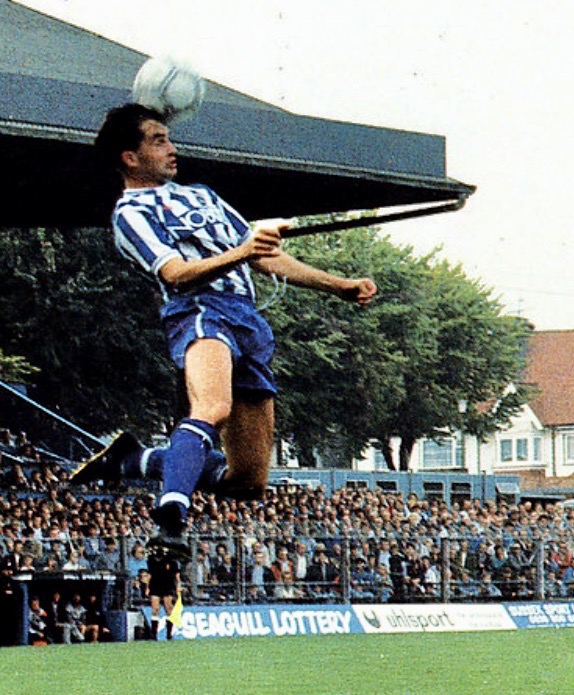
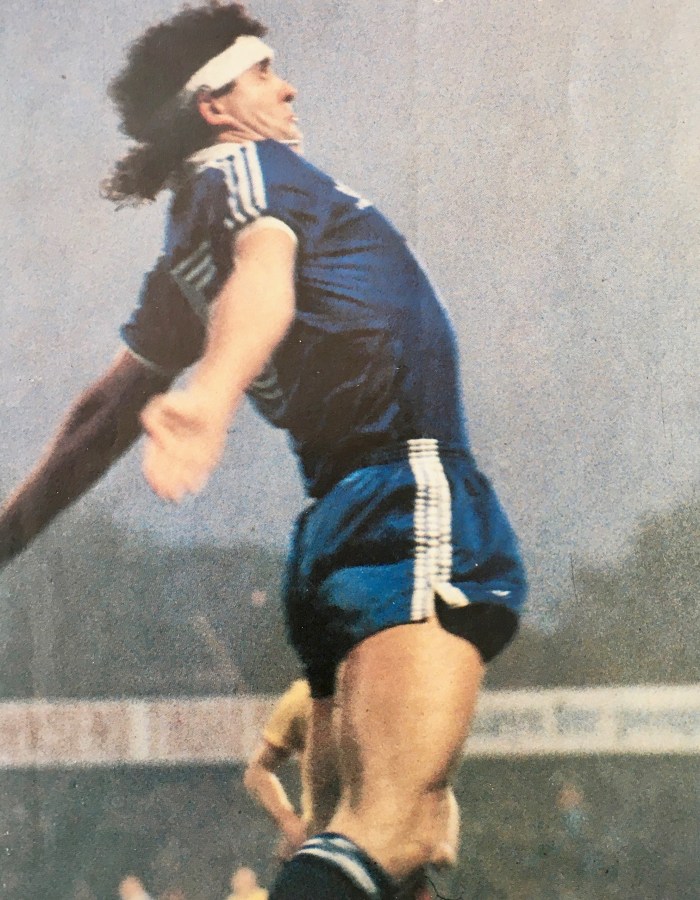
Much has been written already about the 1982-83 season and Albion’s path to the FA Cup Final. Foster demonstrated real heroism in the semi-final at Highbury, playing through the pain of a septic elbow, and, memorably, towards the end of the game, launched into an overhead kick to clear a goal-bound shot to safety (pictured above).

History records Foster being suspended for the Cup Final – a well-documented appeal to the High Court against a two-game ban for accumulated bookings couldn’t get the decision reversed – but, as is often the case in football, his misfortune presented a golden opportunity for stand-in Gary Stevens who capped a man-of-the-match performance with the equalising goal. What he did that day persuaded Spurs to sign him.

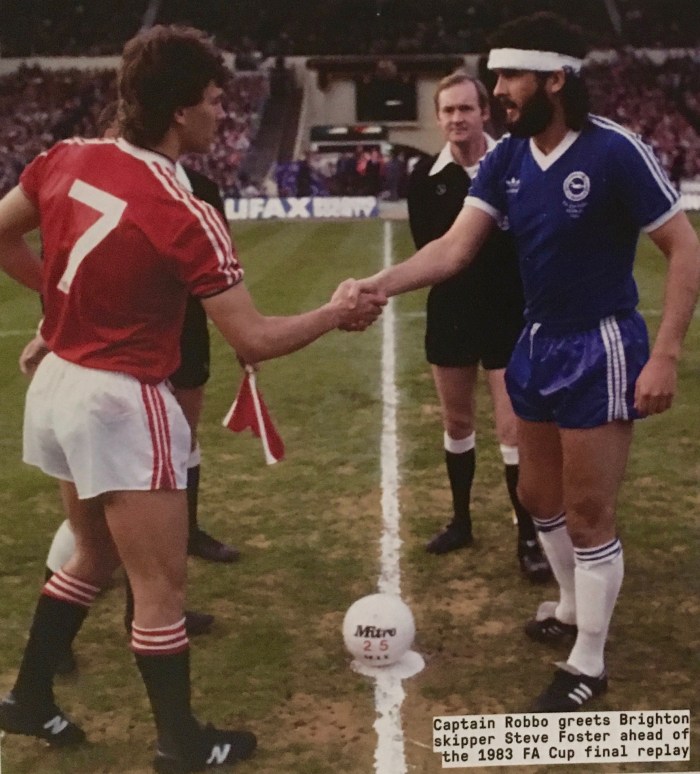
Foster, of course, eventually got his Wembley chance in the replay but with a rampant Manchester United running out easy 4-0 winners, their fans also rather cruelly derided the Albion skipper with the chant I can still hear ringing around Wembley that evening: “Stevie Foster, Stevie Foster, what a difference you have made!”

In truth the whole defence lacked balance in the replay because manager Melia had elected to fill the right-back berth vacated by injury to Chris Ramsey with the left-footed Steve Gatting. He figured Stevens couldn’t be moved from the centre where he had performed so well on the Saturday, but it was a mistake, especially as Stevens had often played right back previously.

The relegation that went in tandem with Albion’s Wembley loss sparked the beginning of a big clear-out of the best players. First to go was Stevens, closely followed by Michael Robinson.

It wasn’t until the following March that Foster followed them through the exit, although, according to Foster, he might have gone sooner – even though he didn’t want to leave; a point he made clear in an interview with Match Weekly shortly after he signed for Villa for £150,000.

“I never wanted to move,” he said. “I had nearly seven years of my contract to run at Brighton and would have quite happily played out my career there. It’s a great little club.

“But economies dictated otherwise and, although manager Chris Cattlin wanted to keep me, he was under pressure to sell me and help ease the club’s financial problems.

“It was a wrench to leave Brighton because the club has treated me tremendously well and I’ve had some great times there – not least the FA Cup run last season.”

Cattlin had a slightly different take about the transaction in his matchday programme notes. “I feel that Steve Foster has been a fine player during his four-and-a-half years at the Goldstone, but I felt that the time was right and the offer good enough to let him go,” he said.

“I hope the move will benefit both Steve and the club. I hope it rejuvenates his career because he has been unlucky with injuries this season. It gives me breathing space for Eric Young to develop and it will also allow me to strengthen other positions if necessary.”

In a rather oblique reference to the need to get rid of high-earning players, Cattlin added in another matchday programme article: “Certain players have left Brighton in moves which I feel are important for our future. Salaries and bonuses of individual players are confidential and obviously I cannot disclose details, but the moves I have made I am certain are right.”

He added: “I can’t explain all the matters that have been considered but I will once again emphasise that we are building for the future and every move I make in the transfer market is being made with this in mind.”

Foster revealed that Villa boss Tony Barton, a former coach at Foster’s first club, Portsmouth, had tried to sign him twice before, but the clubs hadn’t been able to agree on a fee. Eventually, the transfer saw defender Mark Jones (who’d made seven top-flight appearances for Villa that season) move in the opposite direction, in addition to a £150,000 fee.

Barton wanted Foster to tighten up a leaky defence, to fill the position previously occupied by former European Cup winning centre-half Ken McNaught, who had moved to West Brom.

The relatively inexperienced Brendan Ormsby had been playing alongside McNaught’s former partner, Allan Evans, and the signing of Foster put his nose well and truly out of joint. “It’s obvious that I’m just going to be used as cover for Steve Foster or Allan Evans now and so it’s probably in my best interests to try and find another club,” he told Match Weekly.

As it turned out, it was Barton who was ousted; Ormsby stayed, and new manager Graham Turner decreed it would be Foster who was the odd one out. But I jump ahead too soon.

Foster’s arrival at Villa Park as featured on a matchday programme cover

A picture of Foster being introduced to the Villa faithful appeared on the front cover of the programme for the 17 March home game against Nottingham Forest although he didn’t make his Villa debut until 14 April 1984, away to Leicester City, which ended in a 2-0 defeat.

Foster made seven appearances by the end of the season and he got on the scoresheet in only his third game, netting together with future Albion player Dennis Mortimer, in a 2-1 win over Watford on 21 April.

Villa finished the season in 10th place but it wasn’t good enough for the erratic chairman Ellis. Suddenly Foster found the man who signed him had been sacked, and the side Barton had led to European Cup success was gradually dismantled.

To the astonishment of the Villa faithful, Barton was succeeded by former Shrewsbury Town boss Turner.

Foster played 10 games under the new boss, and scored twice, once in a 4-2 win over Chelsea on 15 September and then again the following Saturday in a 3-3 draw away to Watford.

He’d started the season alongside Evans but Turner then offered a way back to Ormsby. While Foster played a couple of games alongside Ormsby, Turner preferred Evans and Ormsby together, making the new man surplus to requirements.

His last game for Villa was away to Everton on 13 October and the following month he was sold to Luton for £70,000 – less than half the fee Villa had paid for him eight months earlier. Foster simply put it down to his face not fitting with the new man.

It was a completely different story with Luton boss David Pleat and Foster’s time at Kenilworth Road coincided with the club’s most successful period in their history, even though Pleat left to manage Spurs.

Alongside representing his country, Foster said the best moment of his career was captaining the Hatters as they won the League Cup (then sponsored by Littlewoods) at Wembley in 1988 with a 3-2 win over Arsenal, his former Brighton teammate Danny Wilson scoring one of their goals (Brian Stein got the other two).

They reached the final of the same competition the following year too, but on that occasion lost 3-1 to Nottingham Forest. By then Foster was assistant manager to Ray Harford, and it looked like he was on a path to become a boss in his own right.

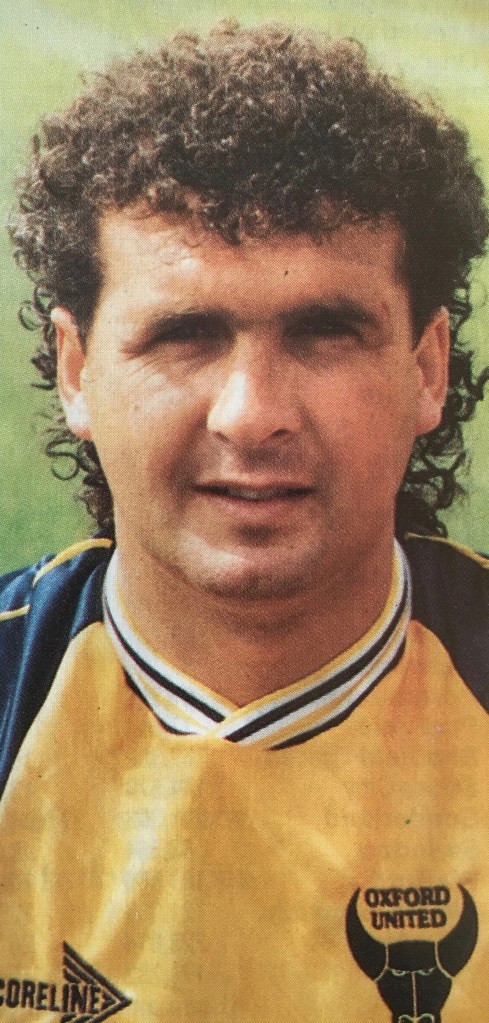
But that summer, when his old Albion captain, Horton, who had taken over from Mark Lawrenson as the manager of Oxford United, asked him to join him as a player at the Manor Ground, he was unable to resist and a new chapter in his career began.

It meant a drop down a division but Foster accepted the challenge and went on to play more than 100 games for United, many being quite a struggle as the side fought for survival at the foot of the second tier.

In the autumn of 1991, injury sidelined Foster from the U’s team and he believed it could have been the end of his career.

However, when the following summer he was contemplating whether or not to retire, he gave Brighton boss Barry Lloyd a call and asked if he could keep his fitness going by joining in pre-season training with the Seagulls.

Lloyd could see that the former skipper was still able to perform and, although the club was in a downward spiral, Foster seized the opportunity to extend his career and help out his old side.

Another veteran of that side, Clive Walker, told Vignes for A Few Good Men: “Fozzie might not have been so mobile then but his positional sense was absolutely brilliant, as was his ability in the air.”

Foster said: “Funnily enough during that second period I played probably some of my best football. I had to because of the position the club was in. There was no money so you had to pull out all the stops.”

Foster continued to play after Lloyd had departed, and he vented his anger publicly about the off-field shenanigans new boss Liam Brady was having to operate under.

Foster eventually called it a day at the end of the 1995-96 season, saddened at the club’s plight. He was granted a testimonial match against Sheffield Wednesday, played as a pre-season friendly in July 1996. Throughout Foster’s career he had continued to live in Hove and he retains his affection for the Albion to this day.

During his second spell at the club, Foster was the PFA rep and he had to deal with the heartbreak of telling the parents of a young player (Billly Logan) that an ankle injury was going to end his career. The youngster got just £1,500 compensation.

As a result, after his own playing days were over, Foster set up an insurance business (Pro-Secure) which continues to this day, making sure players are properly covered and get suitably recompensed if things don’t turn out as they’d hoped.

Although Foster hasn’t always been popular with the Albion’s hierarchy (courtesy of suggested involvement in potential takeovers), his association with the club hasn’t dimmed and Seagulls fans of two generations took him to their hearts for his on-field performances and leadership spanning a total of 332 games.

Pictures from my scrapbook, the Albion matchday programme over several seasons, and some online sources.

Ex-Clarets boss Steve Cotterill not always ‘Mr Popular’

FORMER Burnley manager Steve Cotterill hasn’t always been popular during a nomadic football career that’s taken him the length and breadth of the country.

But he made a lasting connection with Brighton fans after impressing during an all-too-brief playing spell in 1992.

“I thoroughly enjoyed my time at Brighton and, whenever we’ve gone there, I’ve always had a great reception from their supporters. They’ve been terrific,” he wrote in his programme notes prior to a Cheltenham v Brighton fixture.

Injury curtailed Cotterill’s playing career – he endured 18 knee operations – but he made up for it by taking charge of nine different clubs over a period spanning more than 20 years.

His three years and seven months keeping Burnley in the second tier while seeing key players sold or injured was largely recognised as a decent achievement in the circumstances. Many of his other appointments were a lot shorter, and at times acrimonious.

Starting out as a player on the non-league circuit, it was Cotterill’s prolific scoring for Burton Albion (44 goals in 74 games) that prompted Wimbledon to snap him up in 1989.

Unfortunately, he sustained a serious cruciate ligament knee injury that halted his progress with the Dons and Albion boss Barry Lloyd gave him a lifeline to try to resurrect his career with the Seagulls.

Against a backdrop of financial instability, Lloyd had struggled to find adequate replacements for the prolific Mike Small and John Byrne in the 1991-92 season. Mark Gall, signed from Maidstone, offered a glimmer of hope, but Raphael Meade and Mark Farrington were disappointing to say the least, and Albion had been relegated back to the third tier a year after being one game from winning their place back amongst the elite in a play-off final against Notts County.

As the 1992-93 season got under way, Gall was unavailable due to a knee injury that eventually forced him to retire, Meade had departed and questions continued over Farrington, so Lloyd turned to loan signings Cotterill and Paul Moulden from Oldham Athletic.

It looked like he’d cracked it as the pair combined well and started scoring goals. Indeed, Cotterill scored four in 11 games, which was a promising start. Unfortunately, parent club Wimbledon wanted the sort of fee for him that cash-strapped Albion couldn’t afford, so he returned to south west London and eventually moved on to Bournemouth the following summer for £80,000.

In an interview with the Argus in October 2016, Moulden told Brian Owen: “One of the reasons I loved playing for Brighton was Mr Banter himself, Steve Cotterill. We met up like we had never been apart. I’d start the banter and he’d finish it or vice versa.

“We destroyed many a centre-half partnership during that three months. I was gutted to leave. I mean that very sincerely – absolutely gutted. I couldn’t believe nobody would have bought me and Steve as a pairing.

“We were both out of favour with our clubs and we hit it off so well. But it wasn’t to be – at Brighton or at any club.”

Born in Cheltenham on 20 July 1964, Cotterill’s injury-ravaged playing career came to a close at Dean Court. He’d won the player of the year title three times and scored 18 goals in 55 starts for the Cherries, but another knee injury finally put paid to his playing career, and he turned his attention to managing.

His first assignment was in Ireland where he succeeded his former Wimbledon teammate Lawrie Sanchez at League of Ireland’s Sligo Rovers. But his hometown club Cheltenham Town offered him a management opening back in England in 1997, and he steered them from Southern League football into the Conference and then into the bottom tier of the Football League. He twice won the Manager of the Year title and earned another promotion, to the third tier, via a play-off final victory over Rushden & Diamonds.

After leaving Cheltenham, Cotterill had a controversial five-month, 13 game stay as Stoke City boss at the start of the 2002-03 season before quitting to join Sunderland as Howard Wilkinson’s no.2. In May 2020, Cotterill endeavoured to explain to the Stoke Sentinel the circumstances surrounding his tenure, and the board interference regarding players.

The stay on Wearside was also short lived, with the pair being dismissed after only 27 games in March 2003.

The collapse of ITV Digital coincided with Cotterill taking over from Stan Ternent as Burnley manager in the summer of 2004. When he joined, they had only eight players on the books and, despite reassurances to the contrary, within six months Robbie Blake and Richard Chaplow, who he’d hoped to build a team around, had been sold.

When Blake’s replacement Ade Akinbiyi started scoring on a regular basis, he too was sold, and when he returned to the club later, he wasn’t the same player in front of goal.

Even after Cotterill had left, Burnley directors acknowledged the platform he’d provided for their eventual elevation to the Premier League under Owen Coyle.

The excellent uptheclarets.com, summed up his time at Turf Moor, thus: “He kept us in the second tier of English football for three years and that, looking back, was some achievement in, at times, difficult financial circumstances.”

It probably said something about the Championship that when Cotterill finally departed Turf Moor in the autumn of 2007, he’d been its longest serving manager at three years and seven months.

The following year, Cotterill was offered the opportunity to try his hand in America with Minnesota Thunder but work permit issues meant it never materialised. He didn’t resurface in the English game until 2010, when he enjoyed a short but successful reign – five months in charge of Notts County. He took charge on 23 February 2010 and they were crowned League Two champions on 27 April. A month later Cotterill was on his way, appointed in June 2010 as the manager of Portsmouth.

He helped to stabilise the then Championship club against a background of financial troubles and other clubs began to cast eyes on his achievements. The persistence of Nottingham Forest finally paid off and he moved there in October 2011, but a change of ownership of the club spelled the end of his time by the Trent.

In July 2012, he was only nine months into a three-and-a-half-year contract at Nottingham Forest when the owning Al-Hasawi family decided to relieve him of his duties and go in a different direction.

He was out of the game for six months but in January 2013 accepted Harry Redknapp’s offer to join the coaching team at Queens Park Rangers until the end of the season.

He turned down the chance to stay in post the following season and in December 2013 took charge of League One Bristol City, signing another three-and-a-half-year contract.

In his second season at Ashton Gate, he steered City to promotion from League One as champions and they won the Football League Trophy. It earned Cotterill the League One Manager of the Year award.

As with other times in his career, Cotterill found his club’s better players were sold, ultimately weakening the squads he was in charge of. For example, when Sam Baldock moved from Bristol City to Brighton. Cotterill told bcfc.com: “He was a very good captain and very good goalscorer; we were sorry to see him go…that happens in football.”

Ultimately, as City struggled to attain the same level of success in the Championship as they’d experienced in the division below, Cotterill was sacked in January 2016.

Perhaps to prove the point about Cotterill not always being everybody’s cup of tea, former Albion defender Adam El-Abd vented his feelings in September 2020, explaining why he fell out of love with football following a bust-up with the manager only a short time after he moved to Bristol City.

With only three matches of the 2016-17 season left to play, Cotterill once again was grateful to Redknapp, by now manager at Birmingham City, and he joined him there as first team coach.

He subsequently left in the close season in the hope of landing a manager’s role in his own right. Ironically, that opportunity arose back at St Andrews when Redknapp was sacked in October 2017.

Cotterill told The Sun’s Graham Hill how he felt he had mellowed after 20 years in the hotseat at various clubs, although, at the time, he probably didn’t expect to be out of work again five months later.

After leaving Birmingham in March 2018, Cotterill ruptured a disc in his neck while trying to keep fit but in an interview with gloucestershirelive.co.uk declared himself fit and ready for the next challenge.

That challenge emerged in November 2020 when Cotterill took charge of League One Shrewsbury Town but he faced a bigger fight – to his health – after contracting Covid-19 and he was twice admitted to Bristol Royal Infirmary, spending some time in intensive care, suffering badly from the virus and pneumonia. He was released from hospital in March 2021 to recover at home.

He left the Shrews job in June 2023 and was out of work until January 2024, when he took charge of Forest Green Rovers.

He was unable to stave off relegation from the Football League, but he rebuilt the side during the summer of 2024 to push for promotion back to League Two. When Southend United visited The New Lawn on 15 March 2025, the 2-2 draw was Cotterill’s 1,000th game as a manager. At the time, Rovers were joint-second in the National League.

Spurs’ Junior acted the Dream after scoring for the Seagulls

JUNIOR MCDOUGALD played professional football for 23 years and managed to combine it with acting, featuring in Sky 1’s Dream Team series.

Brighton fans of a certain vintage will remember him as a nippy, diminutive forward who scored 22 goals in 88 matches (+ seven as sub) during a difficult period for the club.

By his own admission (in an interview with the Argus), he left too soon, and a move to Rotherham United didn’t work out.

Born in Big Spring, Texas, on 12 January 1975, McDougald grew up in the UK and his early potential saw him associated with Tottenham Hotspur from the age of nine.

He was subsequently chosen as part of a group of the country’s top 25 14-year-old footballing prospects to be nurtured at the FA’s National School at Lilleshall.

On his graduation from Lilleshall in 1991, he joined Spurs as a trainee. Alongside McDougald both at Lilleshall and Tottenham was Sol Campbell, the defender who went on to star for Spurs and Arsenal, as well as England. Campbell told tottenhamhotspur.com: “I’ve some fond memories of Junior. We used to play against each other when we were 13, then we were at Tottenham and Lilleshall when we were 14.

“He’s a smashing lad and I can’t speak highly enough of him. He’s a good bloke, a good man and a fabulous footballer.”

McDougald joined the full professional ranks at White Hart Lane in the summer of 1993, but when he didn’t make the breakthrough to their first team, he made the switch to Brighton.

He described his time at Spurs as “a dream come true” and, in an article on tottenhamhotspur.com, said: “I know it’s an old cliché but I’d always supported Spurs.

“I think it’s well documented now that I even wrote to Jim’ll Fix It to ask to go training with them!”

He added: “It was a great experience, a positive experience and it was always my dream to play for the club.”

Spurs fanzine My Eyes Have Seen The Glory (mehstg.com), recalled him as “a young striker who scored a large number of goals for the Tottenham junior sides, but progressed no further than the reserves at White Hart Lane. Blessed with good pace, but a little on the short and light side.”

Unfortunately, while his contemporary Campbell went on to superstardom, McDougald was released at the age of 19.

“It was very disappointing to leave,” he said. “But at the same time, I was ambitious and, when Liam Brady at Brighton called me, I saw it as a great opportunity. I wanted first team football.

“Any disappointment was hidden by excitement. It was a new start.”

I can remember seeing McDougald make his debut in the opening game of the 1994-95 season, away to Swansea City at their old Vetch Field ground; Albion resplendent in the turquoise and black striped shirts in the style of the kit once worn by boss Brady at Inter Milan.

McDougald’s subsequent one-in-four scoring ratio with the Seagulls was set against the backdrop of financial turmoil at the club and he was there when the club was relegated to the fourth tier.

“There was no stability off the field and that could transfer itself on to it,” he told the Argus. “I was very young and Liam Brady was a great help. I was pleased to have played with legends like Steve Foster, although he was coming to the end of his career.

“The supporters were fantastic and really good to me as a young player. Overall, I had two enjoyable years there and I’m delighted to see them doing so well now. They’ve always had the potential and the fans deserve the success.”

Towards the end of his second season with the club, he was loaned to Chesterfield, where he scored once in nine games, and he then chose to move to Rotherham United for £50,000 in August 1996.

“It is only when you leave somewhere sometimes that you realise how good a club it was,” he told the Argus. “I have fantastic memories of Brighton. The support was so good and they have such potential.

“I thought I was doing the best thing for my career when I left. I wasn’t to know I would go to Rotherham, score on my debut, get injured in the same game and not play for three months.”

He had a relatively successful six-month spell at Toulon in France but efforts to re-establish himself back in the UK with Cambridge, Millwall and Orient didn’t work out.

“With the gift of hindsight maybe I would have stayed at Brighton for another season or two and established myself,” McDougald said in the Argus interview.

It was only when he signed for Dagenham & Redbridge in 1999 that he got back in the headlines, in particular when, in January 2001, he scored in the FA Cup 3rd round as the non-league Essex side held Alan Curbishley’s then Premier League Charlton Athletic to a 1-1 draw.

The 4th round draw paired the winners of the tie with Spurs, so it looked like it would be a perfect match for the former Spurs youngster, but the Addicks edged the replay 1-0 in extra time to spoil his dream.

Nevertheless, his form for Dagenham saw him selected for the England semi-professional side at a Four Nations Trophy tournament in 2002, where he was up against his clubmate Tony Roberts, the former Spurs goalkeeper.

Alongside the serious business of earning a living from playing football, McDougald also appeared for the fictional Harchester United side in Sky’s Dream Team, together with former Albion players Peter Smith and Andy Ansah.

“It was through Andy who actually recruits the players,” he said. “Pete Smith told me it was fun and it is. We just do what footballers do and are filmed playing, in changing rooms and night clubs. It is a good little avenue.”

By the time Dagenham made it into the Football League, McDougald had moved on to St Albans and, in the 2003-04 season, he was part of a Canvey Island squad that also included former Brighton players Mickey Bennett, the aforementioned Peter Smith, and Jeff Minton.

He later played for Kettering Town, Histon, and Cambridgeshire side St. Ives.

McDougald, a Born-again Christian, has since become the co-founder and director of children’s charity Sports Connections Foundation which uses sport to help and inspire children.

Unstoppable free kick earned Poco’s place in Albion folklore

SÉBASTIEN Pocognoli will forever be remembered by Brighton fans for a spectacular free-kick goal he scored against Queens Park Rangers en route to promotion from the Championship.

Glenn Murray had given the Seagulls the lead in the April 2017 encounter at Loftus Road before, as the BBC reported, Pocognoli “executed a pinpoint free-kick with his left foot which flew in off the crossbar for an unstoppable second”.

Although Rangers pulled a goal back, Albion’s advantage gave them their first win at QPR for nearly 60 years and sent them back to the top of the league.

It was Pocognoli’s first competitive goal for six years and such a sweet strike etched his name in Brighton folklore.

Injuries and suspension dogged the left-back slot during that promotion season. Pocognoli had signed on a season-long loan from West Brom in August 2016 as cover for Gaetan Bong; Liam Rosenior having suffered an ankle injury.

But the loanee himself was troubled by a groin injury and made only 18 appearances for the Seagulls (plus three as a sub).

“Sebastien has a vast amount of experience having played in some of the top divisions in Europe,” Brighton manager Chris Hughton said on the day Pocognoli signed. “He is the type of quality player we want to add to the squad, and we are looking forward to working with him.”

The Belgian international came to the UK in 2014 having played top-flight football in Belgium, Holland and Germany.

Injury denied him the chance of going to Brazil to play in that summer’s World Cup for his country, but his disappointment was tempered by securing a move to the Premier League.

Unfortunately for him, his West Brom career barely got off the ground because the head coach who signed him – Alan Irvine – was soon replaced by Tony Pulis, who preferred Chris Brunt, Chris Baird or Joleon Lescott as left-back.

According to the uefa.com website, Pocognoli is a “technically-assured player, primarily a left-back but can also operate in midfield and is a specialist from dead-ball situations”. You can say that again!

Born in Seraing, near Liege, on 1 August 1987, Pocognoli represented Standard Liège at junior level but joined Genk aged 15, making his first team debut a year later, in 2004.

However, he had to be content with reserve team football until the 2006-07 season when he became a first-team regular, helping the club finish second in the Belgian first division.

In June 2007, Pocognoli joined Eredivisie side AZ Alkmaar, and featured in 33 games under Louis van Gaal, later renowned for managing Holland and Manchester United.

“I was 19 years old, and I worked for two years under him,” he told the West Brom website. “He helped my formation as a footballer, pass-control-pass, tactically, because defensively I was not so strong. And also my personality, because he likes players with personality.

“He’s not only a good trainer but he’s also a good human being.”

After three years at AZ, his first club, Standard Liege, bought him and gave him a three-year contract. He became the established left-back for two seasons but in 2012-13 missed lots of games when sidelined by injury.

With only six months of his contract remaining, German club Hannover 96 took the opportunity to sign him in January 2013. He made an inauspicious start, getting sent off on his debut, and faced competition for the left-back spot.

Only 18 months into a three-year deal, he made the switch to the Premier League with West Brom, head coach Irvine telling the club website: “Sébastien is an experienced left-back who has played at a high level for many years.

“After being named in Belgium’s provisional World Cup squad, he just missed out on Brazil, mainly because he hadn’t played enough games towards the end of the season.

“But he’s joined us with a real hunger to prove himself at Albion and get back into the international set-up.

“We’ve done our due diligence on Sébastien in terms of people who have worked with him, including Romelu Lukaku and Kevin Mirallas.

“You make your own mind up about a player’s ability from watching him play but you put these calls in to find out about their personality. The feedback on Sébastien was very positive.”

The defender had gained international recognition from an early age and played for Belgium’s under 16s, under 17s, under 19s and under 21s. He was called up to the senior squad in 2008 and won 13 caps for his country.

After his Brighton loan expired, he returned to West Brom but was not retained. He expected to re-join Standard Liege when interviewed by the expressandstar.com, saying: “It all adds up: I will soon be a free agent, they need new blood and I’m an ex-player of Les Rouches. At the moment there is no contact, but the board is looking for players who are interested in their project.

“If I did go to Standard, I am one of the leaders in the dressing rooms anyway – not by shouting loudly, by setting a good example. I certainly would be an example for the young players.”

The move was duly confirmed and in his third spell with the club Pocognoli made 32 appearances, including, in March 2018, in the Belgian Cup Final, when Liege beat his former club Genk 1-0.

In 2020, Pocognoli switched to Royale Union Saint-Gilloise, the club owned by Albion owner and chairman Tony Bloom.