Injury-hit Albion among six to borrow Borrowdale

DEFENDER Gary Borrowdale couldn’t have been more aptly named for a loanee which is just as well because he found himself in that situation half a dozen times over five years.

He made a temporary switch to Brighton from QPR in March 2009 to fill the spot vacated when Albion’s regular left-back Jim McNulty suffered a shocking injury in a 4-0 home defeat to Crewe Alexandra.

While McNulty needed an operation to remove a kidney, former England under 20 international Borrowdale had the chance to resurrect his flagging career with the Seagulls.

For a player who’d clocked up 100 appearances for Crystal Palace by the time he was 21, there was the inevitable ‘noise’ about helping out the arch rivals, but Borrowdale just wanted some game time, and he was one of five debutants who pulled on Albion’s sky blue second kit for the game at Brisbane Road on 7 March 2009.

Brighton lost that match 2-1 but, under Russell Slade’s astute stewardship, Borrowdale acquitted himself well during 12 matches through to the end of the season and the Albion just managed to retain their third-tier status.
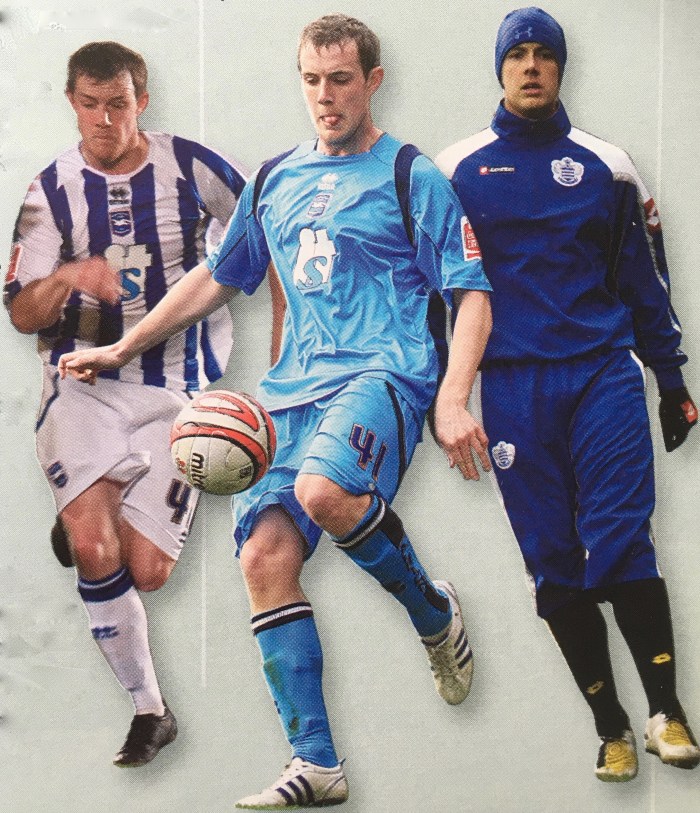
Borrowdale montage“I made my debut for Palace at 17 and played my first game in the Premiership at 18, so it was a great start and Palace will always be dear to me as a result,” Borrowdale told Spencer Vignes for a matchday programme article.

“The highlight of my career would be the promotion I had with Palace when we went from the Championship to the Premiership,” he said, referring to the play-off win over West Ham, the day before Albion beat Bristol City in their own divisional play-off.

Borrowdale returned to west London after his spell on the south coast but in March 2010 he went on loan to Charlton Athletic and the following year had temporary spells at Carlisle United and Barnet.

His league career seemed to be over when QPR released him in June 2012 and he went over to Northern Ireland to join second tier outfit Carrick Rangers.

In January 2014, he looked to have got a foothold back in the English professional game when loaned by Margate to Gillingham, but he didn’t play any first-team games and was released at the end of the season.

Former Albion boss Peter Taylor told the club’s official website: “He’s done very well, lost weight every week and looked fitter every week.

“I just don’t think he’s ready for League One football, especially considering if we have to play Saturday and Tuesday. As a result, I have decided to let him go.”

Borrowdale then linked up with Greenwich Borough, initially as a player, before becoming a coach.

Born in Worcester Park, south London, on 16 July 1985, Borrowdale came through the youth ranks at Selhurst Park and Trevor Francis handed him his debut for Crystal Palace in December 2002.

When Iain Dowie took over as manager, Borrowdale quickly became a regular in the first team. He also represented England at each of the age groups from 16 to 20, playing alongside the likes of Gary Cahill in defence.

In a 2-2 draw with the Netherlands, played at Turf Moor, Borrowdale’s teammates included fellow Palace youngster Scott Flinders in goal and future Albion player Will Hoskins.

Borrowdale won Palace’s Young Player of the Year award in 2006-07, but, when Dowie moved on to manage Coventry City, Borrowdale joined him there, a tribunal fixing the transfer fee at £650,000.

The move didn’t work out, though, and, with Dowie gone, Borrowdale was sidelined, eventually being sent out on loan to Colchester United and then QPR.

Paulo Sousa took him on loan in November 2008 and, although he didn’t feature, made the move permanent in January 2009 on a three-and-a-half-year deal. He made just 22 appearances for QPR during that time.

Borrowdale stripes

Pictures as featured in the Albion matchday programme.

Halford’s timely role in helping Albion avoid the drop

TIME was of the essence when utility player Greg Halford agreed to make a temporary move to Brighton.

He penned a deal to join the Seagulls temporarily at Nottingham Forest’s training ground at 12.30pm and then got in his car to drive to Brighton for 6pm in time to be involved in the squad for that evening’s game at the Amex against Wigan Athletic.

It was 4 November 2014 and he was Sami Hyypia’s sixth loan signing – even though only five were eligible to play in any matchday squad (emergency loan goalkeeper Ali Al-Habsi only played one game).

Regular centre backs Gordon Greer and Lewis Dunk were perilously close to suspension and deputy Aaron Hughes was sidelined with an ankle injury, so Hyypia moved to bring in an experienced back-up.

Albion hadn’t registered a win in the previous 11 league matches but the 29-year-old Halford proved to be a lucky charm as the side finally reacquainted themselves with the taste of victory. Fellow loanee Gary Gardner got the only goal of the game and Halford made an appearance off the bench towards the end of the game.

“I wasn’t really expecting to get any game time. I thought I’d just be in and around the lads, to get a feel for how everything works,” he told the club programme. “But I’m glad I got a few minutes at the end.”

Halford explained how he’d agreed to join the Seagulls because he’d been frozen out at Forest after Stuart Pearce took over as manager.

The player said he was familiar with the south coast having previously played for Portsmouth.

Asked what he could bring to the side, he added: “I can add a bit of height, I can score goals and obviously I can defend, which is my main attribute. I’m here to help the team and manager in any way I can.”

It wasn’t long before he was helping out a different manager as the side’s run of poor form brought a premature end to Hyypia’s brief time in charge.

Halford, though, hung around at the Amex, his loan extended by Hyypia’s successor, Chris Hughton, and he had made 14 starts and five substitute appearances by the season’s end, when the Seagulls narrowly escaped the drop back to the third tier.

Born on 8 December 1984 in Chelmsford, Essex, Halford began his professional career at nearby Colchester United. I well remember a Chelmsford-based work colleague telling me about this talented young footballer who’d been head and shoulders the best player in a local schoolboy football team his son had played for.

That player was Halford, who progressed from Colchester’s youth team and made his first team debut in April 2003. Loan spells at non-league Aylesbury Town and Braintree Town were part of his development, but he eventually made his mark at Colchester and was named in the PFA League One team of the year in 2005-06.

Played mainly at right-back, Halford’s speciality was his ability to deliver searching long throws which led to a good proportion of goals for Colchester.

After playing more than 150 games in five years for the Us, Halford wanted to prove himself at the highest level. He got a move to Premier League Reading in January 2007 but he couldn’t make the breakthrough there and ended up switching to Sunderland, signed by Roy Keane.

Just six months later, Sunderland made him available on loan and he joined Championship side Charlton until the end of the season. Then he spent the whole of the 2008-09 season on loan to Sheffield United, featuring in 49 of their 56 games that season.

His personal highlight was scoring the only goal of the game as United beat Preston to reach the 2008-09 play-off final.

Unfortunately, United lost the final 1-0 to Burnley, and that summer Halford was on the move again, this time to newly-promoted Wolverhampton Wanderers. Although he featured in 20 games, a regular starting berth eluded him and, in October 2010, he joined Championship side Portsmouth. Initially on loan, he eventually joined Pompey on a permanent basis but relegation to the third tier brought with it the need to trim budgets and in July 2012, they offloaded Halford to Nottingham Forest.

GH ForestUnder Billy Davies, Halford was generally deployed as a striker but when Pearce took over at the City Ground, he didn’t get close to the first team. On his return from Brighton at the end of the 2014-15 season, he was released by Forest and joined Rotherham United on a free transfer.
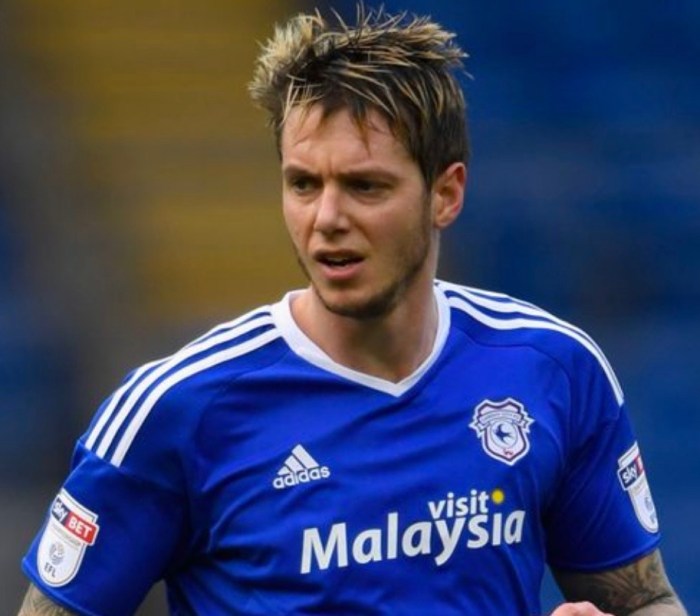
Manager Steve Evans appointed him captain but, after a winless run of five games, he was deposed and only played one more game for the Millers before joining Birmingham City on loan.

GH CardThat spell was also brief and although he returned to Rotherham and played 15 games for them in the 2016-17 season, he then joined Cardiff City and made 33 appearances in two seasons for Neil Warnock’s side.

Without a club for six months, in February 2019, he joined Scottish Premiership side Aberdeen as defensive cover but only made two appearances.

Relegation scrap was chicken feed for troubled Bangura

IN THE TUMULTUOUS days after Albion dispensed with the services of Micky Adams in early 2009, virtually half the side was made up of loan players.

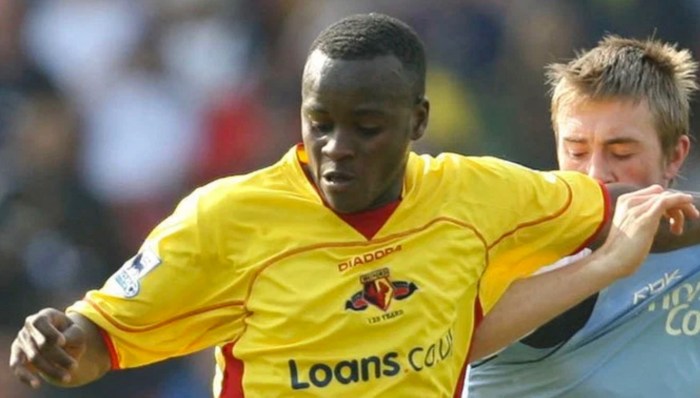
Away to Leyton Orient on 7 March 2009, five loanees were involved, including Al Bangura, a 21-year-old midfielder from Watford.

Goalkeeper Mikkel Andersen was on loan from Reading, QPR’s Gary Borrowdale was left-back and Lloyd Owusu, released by Cheltenham, was up front.

Colchester United’s Matt Heath scored Albion’s only goal in a 2-1 defeat, as well as conceding a penalty, while Bangura was considered fortunate to escape with just a yellow card for a high challenge on Charlie Daniels.

The game saw new boss Russell Slade take charge for the first time, inheriting signings authorised by caretaker manager Dean White, who said of Bangura: “Al is someone we have been aware of for some time. He is a lively, energetic and tenacious midfielder.”

Bangura was just grateful to be playing in the UK having come close to being deported back to his native Sierra Leone the previous year.

Six years later, he revealed to the BBC that he was originally brought to Europe from Guinea by a human trafficker in order to be used as a male prostitute.

He had a lucky escape but the experience prompted him to take action to work with the Premier League to prevent other vulnerable young people being similarly caught up.

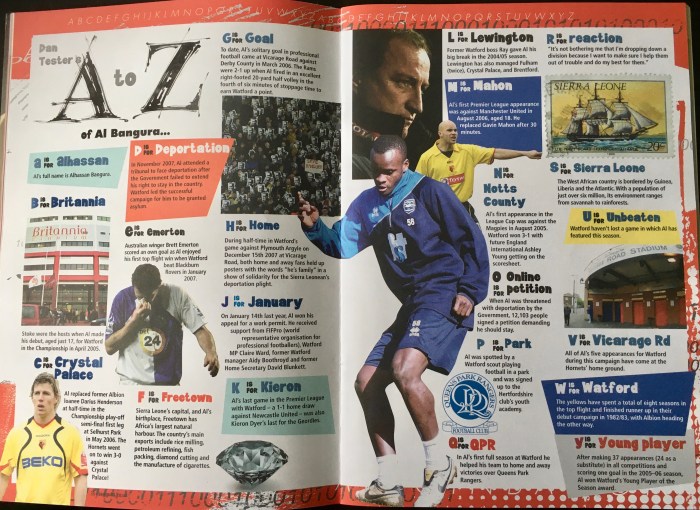
prog spreadBangura was profiled in the matchday programme
Bangura started six games for the Albion, and he said: “It’s not bothering me that I’m dropping down a division because I want to make sure I help them out of trouble and do my best for them.”

In his third game, he was alongside Jason Jarrett in the centre of midfield when Albion thrashed Yeovil Town 5-0 at Withdean, threading through a pass for Nicky Forster to score.

However, at the expiry of his loan, he returned to Watford but was released at the end of the season and joined Blackpool who were in the Championship at the time.

Limited to just 10 games for the Tangerines, Bangura headed for Turkey to play for Mersin Idmanyurdu and then played five games for Azerbaijani team Gabala, managed by the former Arsenal captain Tony Adams.

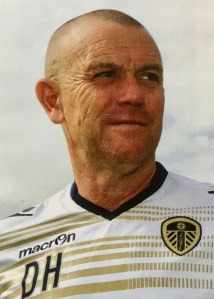
Hockaday w Al BHis former youth coach at Watford, Dave Hockaday (left, who briefly managed Leeds United) signed him for Conference Premier outfit Forest Green Rovers in 2011, and he completed 91 appearances for them before getting a chance to return to league action with Coventry City.
The aforementioned Hockaday had become under 21 manager at the Sky Blues and Bangura won a short-term contract after a successful trial, although he didn’t feature in Tony Mowbray’s league side.

After spending time working with the Premier League on the issue of the growing number of African boys being tricked into leaving their home for the promise of a football career in Europe, he returned to playing in the National League, initially with St Albans City and then Nuneaton Town.

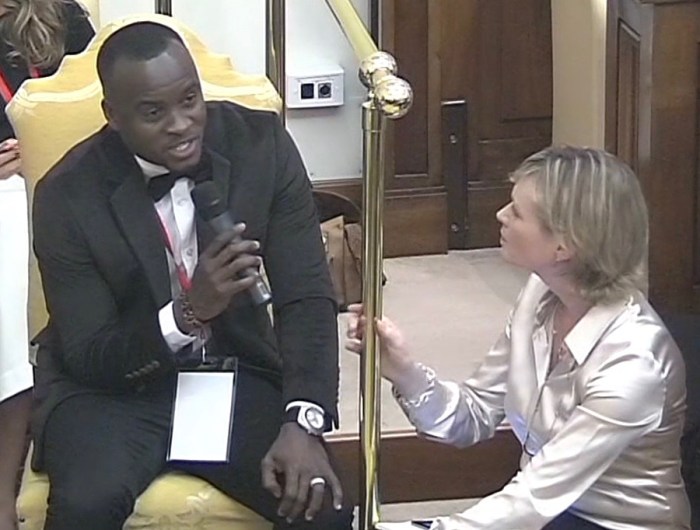
Bangura talksIn October 2016, Bangura spoke to the Santa Marta Group – an alliance of international police chiefs, bishops, religious communities and NGOs – at an international conference in Rome to tackle human trafficking and modern slavery.

Born in Freetown, Sierra Leone, on 24 January 1988, Alhassan Bangura sensed trouble when his family expected him to get involved in some kind of secret society at the age of 14 so he ran away to Guinea where he met a Frenchman who promised to help him realise his dream of pursuing a football career in the UK.

That dream very nearly turned into a nightmare when he realised on arrival in England aged only 15 that he was being lined up as a male prostitute. Luckily, he screamed out, escaped the room where he was being held, and pleaded for help from a Nigerian passer-by who directed him towards the Home Office to get official assistance.

Bangura WatThe ’system’ thankfully came to his aid and before long a Watford scout spotted him playing football in a park and signed him up to the Hertfordshire club’s youth academy, where he was nurtured by assistant academy director Chris Cummins, who was also recognised for helping Hameur Bouazza, Adrian Mariappa and Lloyd Doyley to make it through to the first team.
Bangura was just 17 when then Watford boss Ray Lewington, better known as Roy Hodgson’s loyal assistant, gave Bangura his first team debut in April 2005, away to Stoke City at the Britannia Stadium.

Eleven months later he scored his first goal. It came at Vicarage Road v Derby County – a right-footed 20-yard half-volley in the fourth of six minutes of stoppage time to earn Watford a point in a 2-2 draw.

Bangura was voted Watford’s Young Player of the Season in 2005-06, a year in which he made 37 appearances (24 of them as substitute).

After Watford won promotion in May 2006, Bangura made his first Premier League appearance against Man Utd in August 2006. He was still only 18, and came on as a sub for Gavin Mahon on 30 minutes.

While everything seemed to be going well, Bangura faced a bombshell in November 2007 when a deportation tribunal failed to extend his right to stay in the country.

Al B on TV

Watford led a successful campaign for him to be granted asylum and, on 14 January 2008, Bangura won his appeal for a work permit, receiving support from FIFPro (world representative organisation for pro footballers), Watford MP Claire Ward, Sir Elton John, former Watford manager Aidy Boothroyd and former Home Secretary David Blunkett.

FA Youth Cup winner McPherson shored up leaky Seagulls defence

CENTRAL defender Keith McPherson made just one top division appearance for West Ham’s first team but went on to have a lengthy professional career, with a swansong at Brighton & Hove Albion.

Born of Jamaican parents in Greenwich on 11 September 1963, McPherson signed as an apprentice for the Hammers in 1980 and was a member of the FA Youth Cup winning side in 1981 (they beat Spurs 2-1 over two legs).

It was only the second time in the club’s history they had won the trophy and the excellent theyflysohigh.co.uk faithfully records the details on its website; headlined by the fact young Paul Allen had played in the Hammers FA Cup winning side the year before but was still eligible to play for the youth team.

WHU K McPMcPherson’s single first team appearance came at home to Liverpool on 20 May 1985, the last game of the season, which finished 3-0 to the visitors.

Unable to break through again, he had an 11-game loan spell with Cambridge United before a fee of £15,000 took him to Northampton Town in January 1986. He went on to play 216 times for the Cobblers over the next four and a half years.

In the summer of 1990, he joined then First Division Reading where he played for nine years.

Royals’ manager Ian Porterfield signed him having been impressed when the defender scored twice against Reading in previous visits to Elm Park.

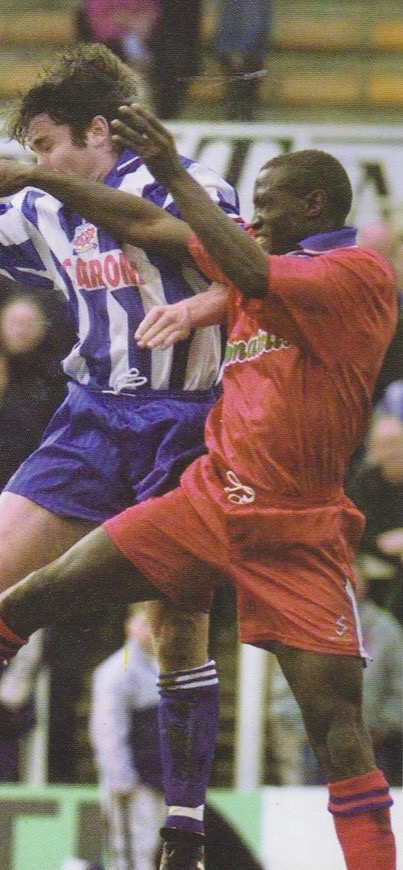
McPherson ReadMcPherson was a regular at the heart of the Royals defence at Elm Park and the Madejski Stadium, and was a key part of the Mark McGhee side that won the Division 2 Championship in 1994.

After spending nine years at Reading, many as captain, and making 317 league and cup appearances, he joined the Albion at the age of 35 shortly before the March transfer deadline in 1999 as beleaguered manager Jeff Wood tried to shore up the centre of a defence which had been leaking goals at an alarming rate.

He made his debut in a hard-fought 0-0 draw away to relegation-threatened Hartlepool which registered Albion’s first point for seven games and first clean sheet since the start of November.

King, McPherson, Doherty and trainee Duncan McArthur all made debuts at Hartlepool

The game also saw Wood give debuts to another experienced defender in former Swindon full-back Phil King together with young Charlton loanee Lee Doherty.

With Albion up against it in the league, McPherson even played with a broken nose, manager Wood telling the Argus: “He is happy to play. It doesn’t affect his breathing and his nose is not the prettiest anyway.

“He is very important to us. I brought him in for his experience and if he didn’t play it would weaken us considerably.”

Before the season was out, the experienced defender had played 10 games under three managers and ended up as captain!

Caretaker manager Martin Hinshelwood handed him the armband for his one match in charge, at Plymouth, and McPherson carried on as captain when Micky Adams took over as manager for the final five fixtures.

One of Adams’ first moves once the season had ended was to secure McPherson’s signature for the following season. Adams told the Argus: “Keith is an older and experienced professional who has still got a bit of life in him.”

For the veteran defender, it was all something of a whirlwind. He said: “It has been very eventful. Jeff brought me down and when the chairman decided he had to go that made my position precarious. When something like that happens, all you can do is play well.”

He continued: “I’m delighted. Micky Adams must have liked what he has seen.”

Having helped Reading to promotion from the old Fourth Division in 1987, McPherson pointed out: “I know all about the hustle and bustle at this level. It’s a matter of being organised. The gaffer has made it clear he wants promotion, which is good for the club and the fans.

“We are going to be playing back in Brighton next season and he wants winners.”

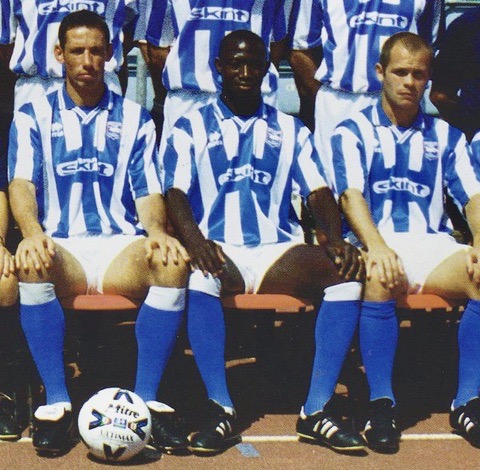
McPherson in the 1999-00 squad photo with Gary Hobson and Charlie Oatway

McPherson went on to play 25 times that season but, having turned 36, it was his last season in a professional career that saw him play more than 500 games.

The emergence of Danny Cullip curtailed his appearances but, when released on a free transfer at the end of the season, together with Warren Aspinall, Adams said: “The door is not closed on them. They have been good lads, model pros.

“They have done well for us this season, but their appearances have been restricted because of other people’s good form.”

When McPherson decided to move to non-league Slough Town to wind down his playing days, Adams told the Argus: “We are sorry to see him go. He is a good pro who always works hard and tries his best.”

After 75 appearances for Slough, McPherson went back to Reading as a coach.

According to getreading.co.uk, he now lives in Surrey and does computing at a private school.

McP in 2017

Pictures: various online sources, and Albion matchday programmes.

It was chirpy Chiv of the Cherries after six years with the Seagulls

THESE DAYS Gary Chivers is a familiar face around the hospitality lounges at Brighton’s Amex Stadium and Chelsea’s Stamford Bridge, the two clubs where he spent most of his playing days.

His association with Chelsea goes back to the tender age of 10, when he joined their academy, and he went on to play in their first team for five years. After six years with Brighton, he played out the final two years of his 16-year career at AFC Bournemouth under fledgling boss Tony Pulis. Among his teammates were Mark Morris, Warren Aspinall, Paul Wood and Steve Cotterill, all of whom also played for the Seagulls.

Born in Stockwell, London, on 15 May 1960, Chivers started supporting Chelsea at the age of eight, and, like many future professionals, got a foothold in the game at Stepney-based development club Senrab.

He told journalist Nick Szczepanik in a 2018 Backpass magazine article (below): “My brother had been training with Chelsea and my dad took me along when I was ten, and I went into their academy about two years before I should have.”

Chiv in BackpassAlthough initially a midfielder, coach Ken Shellito turned him into a defender and Chivers’ versatility in defence meant he could play centrally or in either full-back berth. Among his early contemporaries were John Bumstead, Colin Pates and Micky Fillery: Pates would later join him at Brighton.

With Chelsea already relegated, Chivers made his first team debut on 21 April 1979, aged 18, as he recounted in a December 2017 interview on the Chelsea website. Irish legend Danny Blanchflower was the manager who handed him his debut, at Stamford Bridge against Middlesbrough, which finished in a 2-1 win in front of just 12,007.

Chivers did enough to keep his place for the last four games of the season, and he told Szczepanik how in one he had to mark Arsenal’s Malcolm Macdonald and another Manchester United’s Joe Jordan.

In the second tier the following season, an injury to first choice right-back Gary Locke gave Chivers a chance to establish himself under new manager Geoff Hurst, and he retained the shirt for much of the season.

In total he made 148 appearances for Chelsea, scoring four goals, one of which was voted runner-up in Match of the Day’s Goal of the Season competition in 1980-81.

He got on the end of a Clive Walker cross following a delightful flowing move as top-of-the-table Newcastle were beaten 6-0 by second-placed Chelsea.

Chivers deputised at left-back for the injured Chris Hutchings towards the end of the 1982-83 season, by which time John Neal had taken over as manager. Chelsea were at a low ebb and only a point from a goalless draw against Middlesbrough on 14 May 1983 saved from them from relegation to the old Third Division. Neal overhauled the playing staff, and Chivers was amongst the casualities.

Explaining how he didn’t see eye to eye with Neal, he added: “I didn’t want to go, but you have to play games.”

He briefly switched to relegated Swansea City, under John Toshack, but only stayed six months as managers came and went in rapid succession. Seeking a move back to London, he joined QPR under Terry Venables – “the best manager I ever played for” – where he played alongside John Byrne, another player he’d be reunited with at the Albion.

At the end of his contract, he moved on to Watford during the uncomfortable spell when former Wimbledon boss Dave Bassett was in charge, but he got the feeling he didn’t fit in. Brighton boss Barry Lloyd, himself a former Chelsea player, agreed a £40,000 fee with the Hornets as Chivers dropped down a division to third-tier Albion, where he linked up with some familiar ex-Chelsea faces in Doug Rougvie, Robert Isaac and Keith Dublin.

He explained to Szczepanik: “I decided to go to Brighton because I had a look at their fixtures and I even asked for a promotion bonus because I was so confident they would go up.”

The confidence was well-placed because promotion was duly gained, and Chivers went on to become part of the furniture for the next six years, including playing in the play-off final at Wembley in 1990-91.

An incident that led to a Notts County goal still rankles with Chivers. “At 0-0, I played the ball off Tommy Johnson for a goal kick and David Elleray, the referee, gave a corner that they scored from. I saw him a few years ago and went over to set the facts straight. He said: ‘You’re not still going on about that from 20 years ago?’ and I said: ‘Too right I am!’ I walked away from him because it was winding me up, but it was because of how much it would have meant to the club.

“We would have gone on from there if we had got into the First Division but instead we ended up having to sell Mike Small and Budgie (John Byrne) and we went down at the end of the next season.”

Albion played a  benefit match for Chivers against Crystal Palace just before the start of the 1992-93 season and Chivers left the club in 1993, not because he wanted to, but because players on “decent money” had to go.

His enthusiasm for the club continues to this day, bantering with supporters in corporate hospitality and the Albion club website carried an article about the former defender’s divided loyalties when the Albion entertained Chelsea on New Year’s Day.


  • Pictures mainly from the club programme.

The multi-million pound striker who scored on his Albion debut

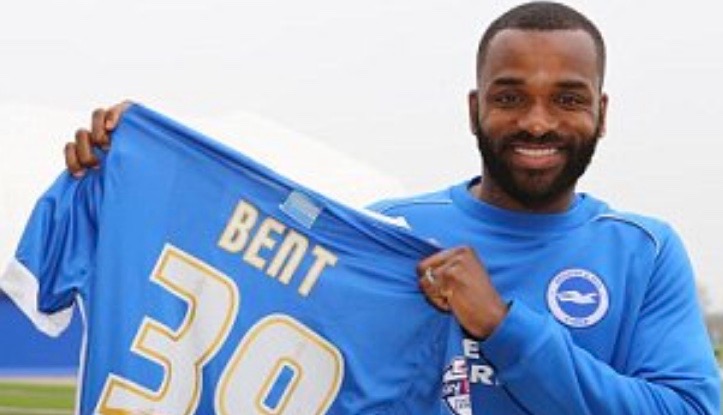
STRIKER Darren Bent spent the last month of 2014 with Championship-struggling Brighton as the hapless Sami Hyypia tried to bring a halt to a dismal run of form.

Unable to command a regular starting spot at Aston Villa, Bent made an encouraging enough start, scoring on his debut against Fulham.

But the game ended in a 2-1 defeat and his only other goal came at Molineux two days before the axe fell on Hyypia’s time in the hotseat as Albion drew 1-1 with Wolves.

Bent told BBC Radio Sussex he’d reached “boiling point” in his frustration at the lack of starts under Paul Lambert at Villa. Previous boss Gerard Houllier had smashed Villa’s transfer fee record to take Bent from Sunderland for an initial £18m in January 2011, but, after Lambert became manager in 2012, he made just 13 Premier League appearances.

albion D BentAt the time he headed to the Amex, Bent had scored 184 goals in 464 career appearances, not to mention scoring four while winning 13 caps for England.

“I hope he will score plenty of goals for us during his time with us,” Hyypia had told the club website. “His record speaks for itself. He is a top-class striker with more than 100 Premier League goals with Charlton, Spurs, Sunderland and Aston Villa.

“Three years ago, he was a regular in the England squad under Fabio Capello; there is no doubting his ability to score goals.

“He also wants to play regular games and that is evident in his willingness to step down from the Premier League to the Championship.”

Bent told the matchday programme: “It doesn’t bother me that I’ve had to drop down a division to play football. Anyone who knows me knows that all I care about is football.

“It has never been about money or anything like that. It has always been about playing football. I’m always at my happiest when I’m playing.”

At least Bent found some familiar faces in the Albion dressing room in fellow Villa loanees Joe Bennett and Gary Gardner and former Fulham teammates David Stockdale and Aaron Hughes.

“Brighton felt like the perfect place to come and play football, especially for someone like Sami Hyypia, who I’ve played against many times over the years,” Bent added. “As a manager, I think he is the right man. He is the kind of guy I want to play for.”

Bent goalBent returned to Villa after playing in five games and although new boss Chris Hughton indicated a willingness to bring him back, the striker was soon on his way to Derby County for the remainder of the season.

He scored 12 in 17 games for Steve McLaren’s Rams and subsequently joined them on a permanent basis in the summer of 2015. After two seasons in the Championship with Derby, scoring 14 in 67 matches, a hamstring injury sidelined him for the start of the 2017-18 season and in January 2018 he went on loan to Championship strugglers Burton Albion.

Having been without a club since released by Derby in the summer of 2018, he announced his retirement at 35 in July 2019.

Since then, he has joined the football pundit circuit, although not everyone is convinced he’s making that good a job of it!

pundit D BentNevertheless, Talksport and Sky Sports are happy to give him a platform and, in an interview with Metro, he suggested what might be the most difficult aspect of it. “I played with some of these guys and regard them as friends so, when they have had a bad game, will I be able to dig them out? It’s finding the line between being objective and respectfully constructive.”

Only in January 2020, Bent could be found arguing the case for Lewis Dunk to be recalled by England. The former striker is also active on Twitter with @DarrenBent attracting just short of 492,000 followers.

Born in Tooting, south London, on 6 February 1984, Bent was probably destined to be a footballer because his dad Mervyn had been on the books of Wimbledon and Brentford as a youngster.

The family moved to Cambridgeshire when the young Bent was only 10 and his early football career was nurtured at Godmanchester Rovers.

Ipswich Town picked him up as a 14-year-old and nurtured him through their youth ranks until he eventually made it to the first team in November 2001.

In four seasons with Ipswich, he scored 56 goals in 141 appearances before then Premier League Charlton Athletic paid a fee of £2.5m to take him to The Valley.

After two successful seasons in which he bagged 37 goals in 79 games for the Valiants, he made another big money move, this time to North London to join Spurs.

It was in June 2007 they paid a club record £16.5m and he scored 25 in 79 games for them before a similar fee saw him move to Sunderland, then in the Premier League, in the summer of 2009.

After 18 months in the North East, Bent put in for a transfer and Aston Villa paid £24m to sign him on a four-and-a-half year contract. He marked his debut with the only goal of the game in a win over Manchester City.

In his second season with Villa, Bent took on the captaincy for a while but managerial changes meant his face didn’t always fit and he spent the whole of the 2013-14 season on loan to Fulham, where he scored six in 30 matches.

Seagulls gave Martin Keown first team football opportunity

MARTIN KEOWN, who was born in Oxford six days before England won the World Cup in 1966, made his breakthrough into what became an illustrious playing career with Brighton.

The TV pundit football fans see today was famously a stalwart defender for Arsenal, Everton and Aston Villa, not to mention England.

But as an emerging player yet to break through at the Gunners, he got the chance of first team football courtesy of Brighton boss Chris Cattlin, who negotiated with Arsenal boss Don Howe to secure his services on loan.

“He is a young player with plenty of potential,” Cattlin wrote in his Albion matchday programme notes. “He is still learning and will make the odd mistake, but these are all part of learning and I feel he will be a very good player in the very near future.”

MK BWHe made his debut away to Manchester City in February 1985 and, in two spells, stayed a total of six months with the Seagulls, making 23 appearances. It wasn’t long before he earned the divisional young player of the month award and Cattlin said: “Martin has done very well and done himself great credit in coming into the heat and tension of a promotion battle and coping well.”

He made such a great impression, it wasn’t long before the Albion matchday programme went to town with a somewhat gushing feature about the young man.

“Fans and Albion players alike have been impressed by the character and maturity displayed by the 18-year-old English Youth International,” said Tony Norman. “No less a judge than former England manager Ron Greenwood was instrumental in Martin’s recent Robinson Young Player of the Month award.

Keown prog front“So, the young man from Oxford must have something special going for him. On the field he is a sharp, decisive player, but away from the game he is quietly spoken and unassuming.”

Some things obviously changed!

“His progress in football has not gone to his head and he is quick to thank the special people who have helped him find success,” Norman continued.

Keown told him: “Going back to the early days in Oxford, I think my parents were the greatest help of all. I played for several different teams, so there was never a particular coach who helped me. But my family were always there giving me their full encouragement and support.”

At Highbury, he credited the scout who took him to Arsenal, Terry Murphy, as his greatest help in his early years, helping him to settle into the professional game.

“He was very good to me,” said Keown. “I was only 15 when I joined Arsenal as an apprentice. I was in digs in North London and it was all quite a change from life in Oxford. It took a bit of getting used to.”

The former Chelsea midfield player John Hollins, who played for Arsenal between 1979 and 1983, was also an influence.

“He always had a word of encouragement for the youngsters,” said Keown. “He is the kind of man who can make a club happier just by being there. I liked and respected him a great deal. He was a model professional.”

During his time with Brighton, young Keown lived with physiotherapist Malcom Stuart and his family. “They have made me feel very much at home,” he said. “It has been a happy time for me.”

M Keown ArseUnfortunately for Brighton, Keown returned to Highbury and it wasn’t long before Howe, the former coach who’d become Arsenal manager, gave him his first team debut on 23 November 1985 in a 0-0 draw away to West Brom.

In much the same way he has become something of a Marmite pundit on the TV, Keown wasn’t every manager’s flavour. When George Graham was appointed Arsenal boss in 1986, Keown didn’t figure in his plans and he sold him to Aston Villa (see picture below) for £200,000.

M Keown villaThree years later, he became what Colin Harvey described as his best signing during his time as boss of Everton. A fee of £750,000 took him to Goodison.
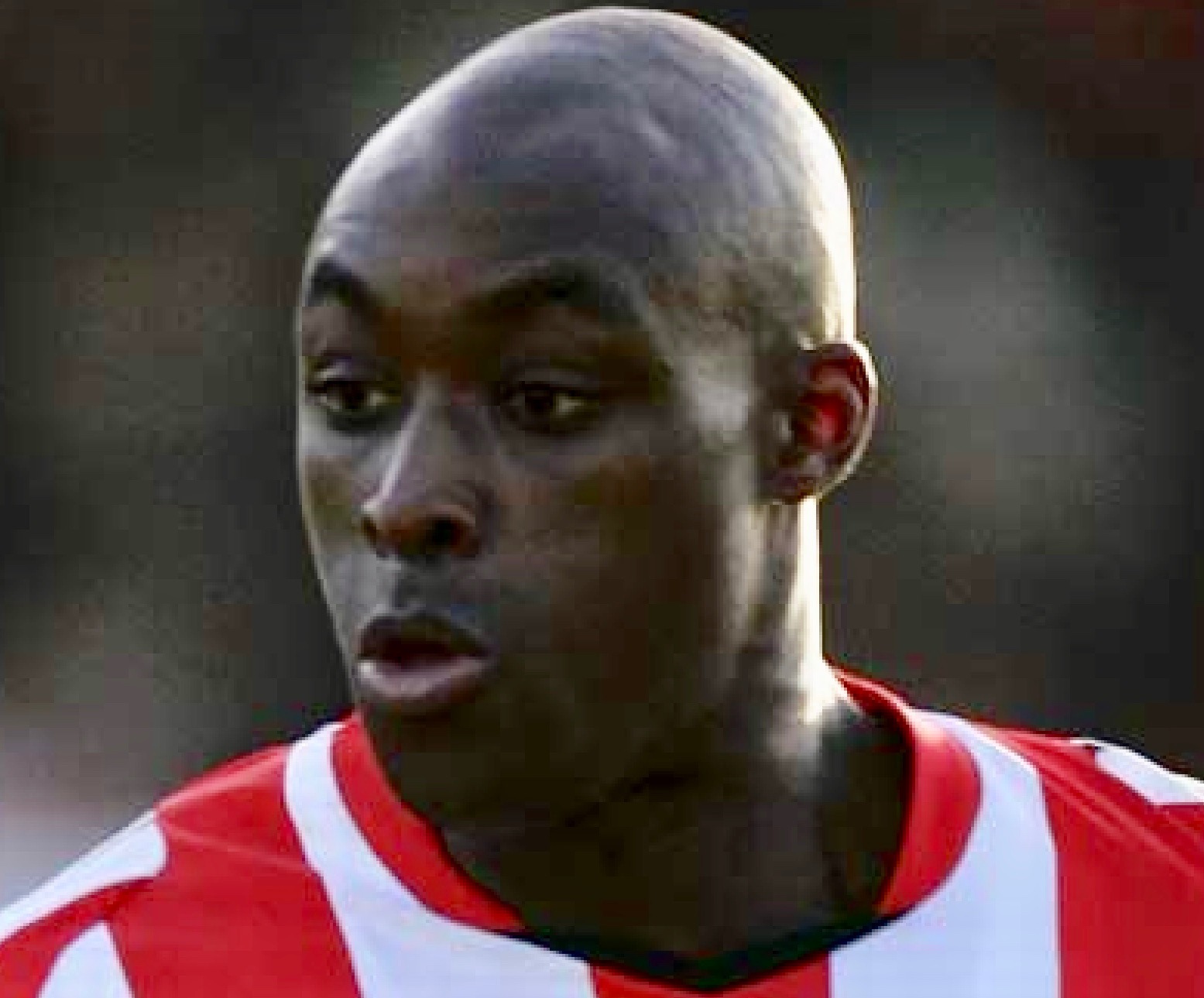
In an interview with the Liverpool Echo back in 2013, Keown declared: “I thoroughly enjoyed my time at Everton. The only disappointment was that I couldn’t contribute to the club winning anything tangible in my four years there.

“I played under Colin Harvey and Howard Kendall and I was eternally grateful to them for the opportunity to play at a club like Everton.

“Looking back, in hindsight it was probably a bit much to ask a young lad, which I was then, to step into the boots of a club legend like Kevin Ratcliffe. But I always gave absolutely everything.”

Keown added: “The atmosphere was always superb at Goodison. Even though I played a lot of my career at Highbury, I loved Goodison.”

It was during his time at Everton that he won the first of his 43 England caps, getting the call-up from Graham Taylor to join the squad in 1992 to replace Mark Wright. When Terry Venables took over, he didn’t get a look-in.

But Glenn Hoddle restored him to the squad in 1997 and, although he was part of the 1998 World Cup squad, he didn’t get a game. He was a regular under Kevin Keegan and, in a game against Finland, had the honour of captaining the side. Age began to count against him by the time Sven-Goran Eriksson took charge of England and, although he was part of the 2002 World Cup squad, he wasn’t selected for any games.

His return to Arsenal in February 1993 meant he was the first player since the days of the Second World War to rejoin the Gunners, and it went on to become a 10-year spell in which he helped the club to win three Premier League titles and the FA Cup three times.

Arsenal paid a £2m fee to bring back their former apprentice and he and Andy Linighan were more than able deputies who kept established first choices Steve Bould and Tony Adams on their toes.

“Martin was deployed most frequently at centre-half where his formidable pace and thunderous tackling combined to thwart both target men and strikers running in behind,” declared an article on arsenal.com, lauding the merits of the ‘50 greatest Arsenal players’. “It meant, too, that he was vastly capable in an anchoring midfield role; something utilised by his manager.”

While not always a regular, Keown became an integral part of Arsene Wenger’s double-winning sides of 1998 and 2002 and remained a part of the set-up through to the winning of the FA Cup against Southampton in Cardiff in 2003.

The following season included the much-repeated TV moment when Keown mocked Ruud van Nistelrooy for missing a late penalty in a 0-0 draw at Old Trafford, an incident still being discussed only last summer.

Although Arsenal went on to win the title, Keown played only 10 league games and was given a free transfer at the end of the season.

He joined Leicester City, where he played 17 games but moved on to Reading six months later, ending his league career with five games at the Madejski.

Since calling time on his playing career, Keown has, of course, become known for his TV punditry with both the BBC and BT Sport, as well as being a newspaper columnist and contributor to many different media.

On Twitter, @martinkeown5 has 278,000 followers! He has also coached back at Arsenal and been a regular on the football speaker circuit.

Owusu raised the roof as Albion escaped the drop

Owusu stripes

FEW Brighton players have made such an impact in such a short time as Lloyd Owusu, a Ghana international who in 2009 struck seven goals in 14 appearances to help Russell Slade’s Albion retain their League One status.

The popular Slough-born goalscorer also earned legendary status amongst Sheffield Wednesday fans even though his playing time for the Owls was similarly fairly limited. His most prolific time as a striker came in two spells at Brentford, but he was happy to travel and ended up playing in Australia.

Born in Slough on 12 December 1976, Owusu started his career with local GM Vauxhall Conference club Slough Town, managed at the time by future Reading boss Brian McDermott.

Owusu rose through the ranks at youth and reserve team level before breaking into the first team in September 1996. Owusu marked his full league debut for Slough with four goals in a 6-0 win over Telford United.

In 1998, after netting 18 goals in 59 appearances for Slough, Brentford, then managed by former Palace chairman Ron Noades, took him to Griffin Park for a fee of £25,000, but it was under future Albion boss Steve Coppell that saw the majority of his best playing days.

Owusu BrentOwusu scored 76 goals in two spells with the Bees, and, in the 1998-99 season, his 24 goals in 53 games in all competitions saw him lead the scoring charts in Nationwide Division Three (now Football League Two) with Brentford crowned champions.

While two below par seasons followed, in 2001-02 he was back on top form, scoring 22 goals to help Brentford reach the Division Two play-off final at the Millennium Stadium. However, the Bees lost 2-0 to Stoke City and Owusu’s contract was not renewed.

Sheffield Wednesday, then in the Championship, signed him on a free transfer and he became an instant Wednesday legend. Coming on as a substitute in a typical fierce Steel City derby match against Sheffield United, he headed a goal with his first touch.

“Scoring with my first touch for Wednesday was a dream come true. I actually dreamt that I was going to score on my debut with my first touch,” Owusu told beatsandrhymesfc.com. “All I remember was the ball coming off the cross bar from a (Shefki) Kuqi header and me being there to put it in the net past Paddy Kenny.”

Although the Owls went on to win the match 2-0, Owusu subsequently had limited game time, starting only 13 games out of a possible 34 in all competitions in that 2002-03 season.

“I missed pre-season due to a knee operation so I was always on the backburner and could never reproduce my best performances,” Owusu explained.

When a similar story followed in 2003-04, he went on loan to Reading, and then moved permanently to the Royals in the summer of 2004. In the 2004-05 season, Owusu scored six goals in 14 league starts.

The striker rejoined Brentford on a free transfer in the summer of 2005, the same year he won his first cap for Ghana. Unfortunately, he tore a groin muscle in a friendly match playing for Ghana in April 2006 and was sidelined for nearly a year.

He finally made his comeback in March 2007, but he was released by Brentford two months later and signed on a free transfer for Russell Slade’s Yeovil Town in July 2007.

In September that year, he was a scorer at the Withdean Stadium as the Glovers left with all three points courtesy of a 2-1 win. But on transfer deadline day, 1 September 2008, Owusu joined Coca-Cola League 1 side Cheltenham Town on a one-year deal.

It was in March 2009, with Cheltenham looking to cut costs, that Owusu linked up with the Seagulls on loan until the end of the season. “Going to Brighton was one of my best memories of my career,” Owusu told gloucestershirelive.co.uk.

Owusu grabbed the headlines as he scored seven goals in 14 League appearances for Brighton, helping Russell Slade’s side to avoid relegation from League One. He was even named Powerade League One player of the month for April 2009.

On the strength of his performances, Owusu was offered an extended contract by the Seagulls but he chose to try his luck in Australia, where he has since returned to work.

He initially joined A-League side Adelaide United on a two-year deal but was struck by swine flu and pneumonia, and struggled to make an impact on the pitch. He had a short spell at Chinese Super League club Guangzhou Evergrande, but his contract was terminated by mutual consent at the end of December 2010.

Back in the UK, he linked up with Luton Town, at the time trying to get back into the Football League. He scored seven in 13 games but the team missed out on promotion after losing on penalties to AFC Wimbledon in the play-off final at the City of Manchester Stadium (as it was then).

After spending pre-season with Cypriot side AEP Paphos in the summer of 2011, Owusu returned to the UK to make a handful of appearances for Barnet and Hayes & Yeading United (on loan), but picked up an injury and left Barnet after his contract expired.

In February 2012, he re-signed for Slough to help manager, and former teammate, Steve Bateman achieve promotion, before returning to Adelaide with White City. He has since developed a coaching and acting career Down Under.

Owusu took his coaching badges in Australia and, as well as coaching at some of the top private schools in Sydney, has launched his own coaching company, XL Soccer.

“There has also been a bit of modelling, TV commercials and the odd appearances in a documentaries and movies,” he told gloucestershirelive.co.uk. “I was in Gods of Egypt with Gerard Butler and also appeared in the TV shows Danger5 and Deadly Women along with ads for OPSM (opticians) and HomeAway (holiday rentals).”

His LinkedIn profile says his current role is general duties master at Cranbrook School in Sydney.

Goalkeeper John Phillips – the ‘unenviable understudy’

JOHN PHILLIPS was a Welsh international goalkeeper who played for Chelsea and Aston Villa before becoming a back-up at Brighton under Alan Mullery.

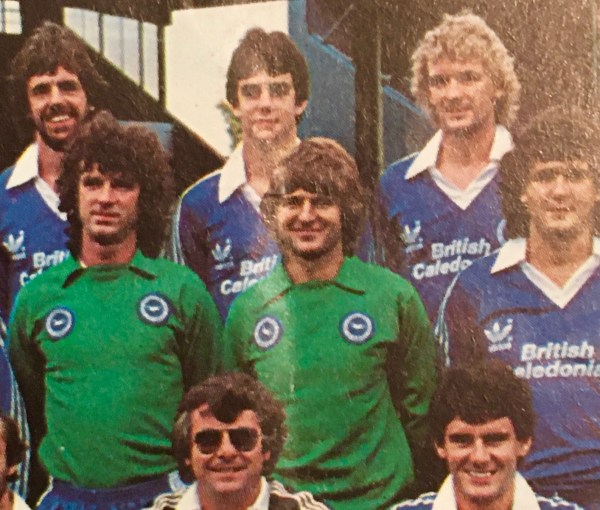
A £15,000 fee took him to the Goldstone Ground as no.2 to Graham Moseley in 1980 and, possibly the most interesting thing about his time at Brighton was his appearance in the centre of the pre-season team photo (see below) alongside Moseley in which both ‘keepers rather oddly wore green jerseys sporting two Seagulls badges!

JP 2 badge colourPreviously an understudy to the legendary Chelsea goalkeeper Peter Bonetti, Phillips did have occasional first team spells at Stamford Bridge, including playing in earlier rounds of the successful European Cup Winners’ Cup campaign of 1970-71.

When he died aged 65 on 31 March 2017, the Chelsea website paid a warm tribute to his contribution.

JP prog notes

At Brighton he featured 19 times for the reserves but only played one first team game. That came in front of a bumper festive season Goldstone crowd of 27,387 on 27 December 1980 (as seen above on my amended programme teamsheet) as the Seagulls beat traditional rivals Crystal Palace 3-2; a brace from Michael Robinson and Peter O’Sullivan with the Albion goals.

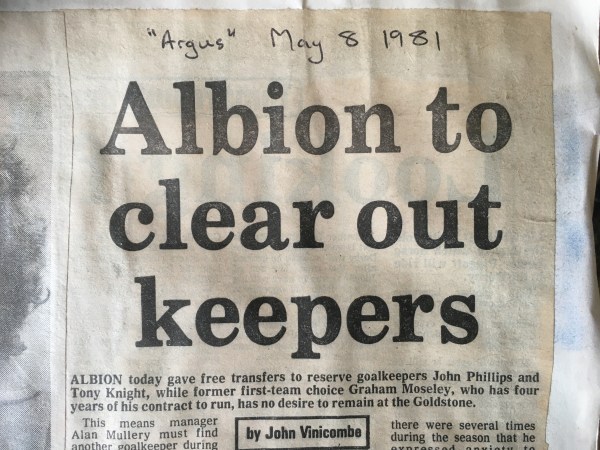
IMG_6433The following month, it looked like he might get a second game after Mullery publicly blamed first-choice Moseley for the side losing six points, and told the Argus Phillips would come in for the next match unless he could sign another ‘keeper.
Mullery promptly went back to his old club, Fulham, and splashed out £150,000 on unknown youngster Perry Digweed – pushing Phillips further down the pecking order.

IMG_6431At the end of the season, Phillips and Tony Knight, a young ‘keeper who didn’t progress to the first team, were released on free transfers. It was also reported that Moseley was on his way, but Mullery’s shock departure that summer gave him a stay of execution.
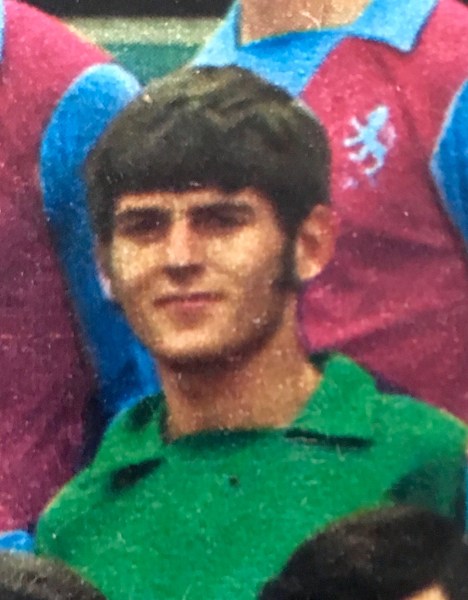
Disgruntled Mullery swapped managerial seats with Mike Bailey, who’d just led Charlton Athletic to promotion from the old Third Division,

Phillips was one of his first signings. However, he only played two games for Charlton, so he was to endure another frustrating spell of being the understudy.

Contributor Richard J on charltonlife.com remembered how Phillips replaced first choice Nicky Johns in the first away game of the 1981-82 season – a 3-0 defeat at Luton Town.

“Nicky returned for the next game and Phillips’s only other game was away at Leicester. Unfortunately, we lost that game as well, 3-1.”

But Richard continued: “I work with Tony Lange who took over from the Welsh international as Charlton’s number two keeper. He felt that John was a big influence on his career.

“Apparently, Phillips was exceptionally good at distribution and this was one of the reasons he had played so much for Chelsea and Tony credits him as a big influence on that part of his game.”

He moved from Charlton to Crystal Palace but he didn’t feature for their first team at all. He then tried his luck in Hong Kong, with See Bee.

Born in Shrewsbury on 7 July 1951, Phillips went to the Grange School in Shrewsbury and, because both his father and grandfather played league football for Shrewsbury Town, it was no surprise when he also signed for Town. He made his debut in 1968 at the age of 17.

A big influence on him was the former Manchester United and Northern Ireland goalkeeper, Harry Gregg, who was manager at Gay Meadow between 1968 and 1972.

In an early edition of Goal magazine, Gregg said: “He’s the finest goalkeeping prospect I have seen. He seems to have every asset in the book and his temperament really stands out.”

J Phil VillaPhillips played 51 times for the Shrews before being bought in 1969 by Tommy Docherty, the former Chelsea boss who’d taken over as Aston Villa manager.

After only 15 games for Villa, in August 1970, Chelsea paid a fee of £25,000 to take Phillips to Stamford Bridge.

The regular back-up ‘keeper, Tommy Hughes, who went on to have a loan spell at Brighton in the 1972-73 season, was out injured with a broken leg at the time and Chelsea needed someone to deputise for Bonetti, who only two months earlier had been criticised when having to take over in goal from ill Gordon Banks as England lost 3-2 to West Germany in the 1970 World Cup quarter final in Mexico.

Phillips stayed with Chelsea for 10 years and played a total of 149 games for the club. He managed 23 league and cup games during the 1972-73 season owing to Bonetti’s absence through injury and illness.

In October 1973, Goal ran a series called The Understudies and featured the rivalry between Phillips and Bonetti. Bonetti said of him: “John is a first-class ‘keeper and has pushed me more than anyone. It’s nice to know you have to play well to keep your place.”

Phillips told the magazine’s David Wright: “We are rivals, yes, but friends as well.”

It was only in the 1974-75 season that Phillips had an extended run of games as the no.1.

Although kind things were said of him when he died, not all recollections were favourable. The footballnetwork.net, for instance, said: “Phillips always conceded a lot of goals. Is this because he was awful or his defence and midfield were woeful? I suspect that it was a bit of both. Phillips did assist Chelsea in reaching the 1971 European Cup Winners Cup final, but he conceded seven at mediocre Wolverhampton as Chelsea sloped off into a long decline.

“Funnily enough, he shared goalkeeping duties for Wales with one Gary Sprake, a notoriously erratic Leeds goalie, as the late Peter Houseman could have testified!

“Obviously in the early seventies, while the Welsh rugby team had an embarrassment of riches, there was no such luxury in the goalkeeping department.”

Although English by birth, Phillips played for Wales at a time when qualification to play for countries beyond the one in which a player was born was extended to include the homeland of their parents or grandparents. He won four caps in 1973-74, making his debut in a 3-0 defeat to England in front of 38,000 at Wembley on 15 May 1973.

A none-too-flattering recollection can be found in a book charting the history of Welsh international football. Red Dragons – The Story of Welsh Football says: “Sadly a nervy performance by Chelsea goalkeeper John Phillips was responsible for a grim 0-2 defeat at home to England in May 1974.”

Bonetti saw off many pretenders to his throne, but Phillips went closer than anyone to taking his place, according to gameofthepeople.com, which described him as “the unenviable understudy” in an article charting his Blues career.

In the summer of 1975, Chelsea had been relegated and Bonetti given a free transfer, so Phillips was expected to start the new season as first choice ‘keeper.

But he fractured his right leg in training and badly damaged knee ligaments, opening the door for Steve Sherwood to take over between the sticks.

In the 1979-80 season, Phillips was loaned to Crewe Alexandra. Even there, he only played six times for the league side, having to be content with 23 games for their reserves.


  • Pictures mainly sourced from Goal magazine or Shoot! Also the Argus and matchday programme.

Goal-shy journeyman striker Leon Best drew derision

FOR SOMEONE purporting to be a striker, Leon Best fired blanks at a good many of the clubs he played for.

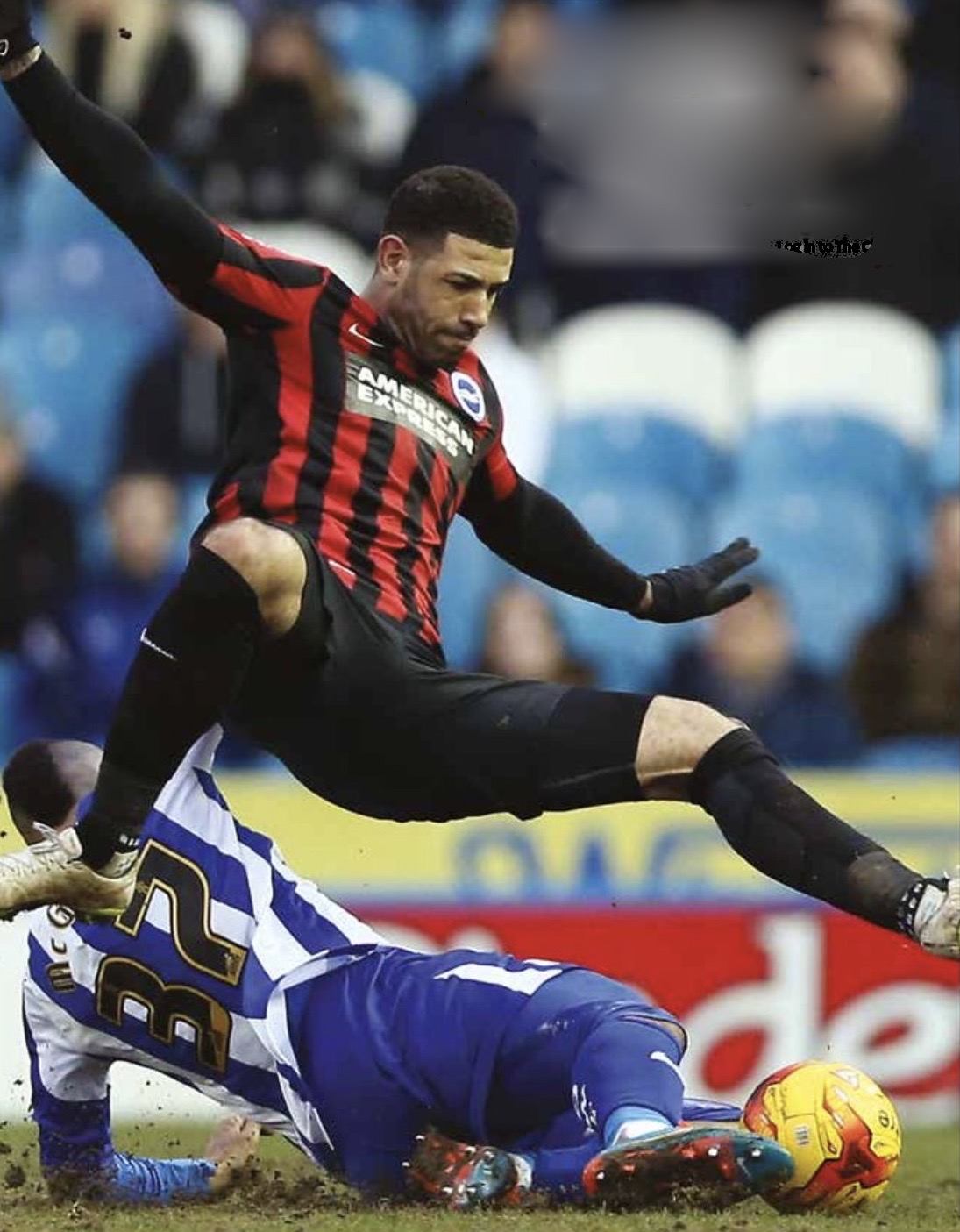
Such was his time at Brighton where he failed to get on the scoresheet in 13 games (six as a starter, seven as a substitute).

When he featured for AFC Bournemouth in the third tier, he fared slightly better. He managed three goals in 14 starts plus three as a substitute when on loan from Premier League Southampton during the 2006-07 season.

The somewhat derogatory phrase ‘journeyman’ was tailor-made for the likes of Best, who appeared for 13 different league clubs, failing to score for five of them and only registering double figure tallies at three.

Brighton supporters, on the whole, are normally supportive of anyone who appears for their team, but feelings boiled over at Best’s apparent lack of desire when pulling on the Seagulls stripes.

He was part of the struggling 2014-15 side which narrowly avoided the drop from the Championship, and I recall him being booed when he came on as a substitute at the Amex. On reflection, of course, such derision was unlikely to improve his demeanour.

The keyboard warriors of North Stand Chat weren’t slow to vent their anger, with one correspondent suggesting: “We’ve not seen much in the way of desire, endeavour, hunger or appetite from someone you would hope feels he has something to prove.”

Chris Hughton had not long been in the manager’s chair when he was casting around for players to help Albion climb away from the foot of the table.

Perhaps not unreasonably, he turned to a player who’d scored goals for him in the Premier League during his time at Newcastle United.

Hughton told the Argus: “I know Leon very well, having signed him during my time at Newcastle and I am delighted to have him here.

Screen Shot 2021-06-10 at 14.55.50“He is a strong, physical presence, he knows the Championship and knows the position we are in. We wanted new faces, to freshen up the squad, and Leon will add competition alongside our existing strikers.

“I signed him previously at Newcastle. I know he can be a very good player and he did very well for me both in the Championship and Premier League. He also had a very good spell with Newcastle after I left the club.”

Best scored 10 in 46 games for the Magpies but, at his next club, Blackburn Rovers, he managed only two in 16, hence them sending him out on loan.

While Best had scored five in 16 playing on loan at Sheffield Wednesday in 2013-14, he scored a big fat zero in 20 games for Derby County earlier in the 2014-15 season so perhaps expectations should not have been high when he arrived at Brighton on 20 January 2015.

Nevertheless, Hughton told Brian Owen: “I am very pleased he is here. He gives us another attacking option and I hope he can produce the same form he did for me when we worked together at Newcastle.” In short, he didn’t.

Born in Nottingham on 19 September 1986, his first steps into the professional game came with his local side Notts County. When international recognition came calling, he chose to represent his mother’s birth country, the Republic of Ireland, and was capped at under 17, under 19 and under 21 levels before gaining seven full caps in 2009-10.

Southampton snapped up Best in 2004 and gave him his league debut aged 18, ironically against his future employer, Newcastle.

But opportunities were limited with the Saints and over the course of three years on their books they loaned him out to QPR, Sheffield Wednesday, Bournemouth and Yeovil Town.

In 2007, Best transferred to then Championship side Coventry City for £650,000 and arguably his most successful goalscoring spell came during his time there, as he netted 23 goals in 104 appearances over three seasons.

It prompted Hughton to spend £1.5m of Mike Ashley’s money to take Best to Tyneside on 1 February 2010.

Maybe the warning bells should have been sounding in those first few months on Tyneside when he didn’t register a goal in 13 Championship appearances and fell behind Andy Carroll and Peter Lovenkrands in the pecking order.

Although he managed a couple of goals in pre-season matches, the early part of the 2010-11 season was marred by a cruciate knee ligament injury. Nevertheless, when he returned to action in the January, he did it in some style, bagging a hat-trick in a 5-0 win over West Ham. He got a further three goals before injury ruled him out once again.

3490663In the following season, he went 12 games without scoring but in the summer of 2012, Blackburn Rovers paid £3m to take him to Ewood Park – only for him to pick up an anterior cruciate knee injury one month into the season, ruling him out of action for six months.

The temporary move to Brighton was one of three loans away from Blackburn before they finally released him by mutual consent in July 2015.

It wasn’t until November 2015 he managed to find another club, pitching up for six months at Championship side Rotherham United. When he couldn’t agree terms on a new deal with the Millers, he instead moved to Ipswich Town, ostensibly as a replacement for Daryl Murphy.

He made six starts and six appearances as a substitute without scoring and, by January 2017, manager Mick McCarthy had lost patience with him and declared he wouldn’t play another game for the club.

Released by Town in the summer of 2017, Best managed to secure a two-month deal with Charlton Athletic in November 2017 but he sustained a knee injury on New Year’s Day 2018 and hasn’t played since.