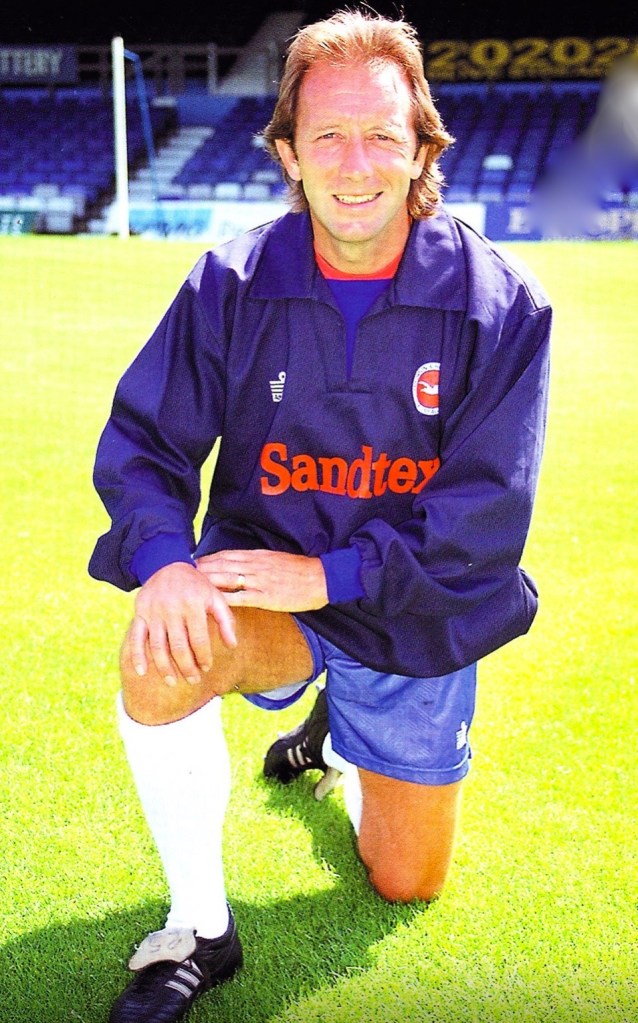
Goal machine Frank Stapleton ended his playing days in a Brighton shirt

stapleton stretch

FRANK STAPLETON hit the heights as a goalscorer for Arsenal and Manchester United but his prize-winning playing days came to an end in a Brighton & Hove Albion shirt.

Stapleton was the scorer of the first top flight goal at the Goldstone Ground – unfortunately, it was the opener in Arsenal’s 4-0 win in 1979! He was also one of the Manchester United scorers in the 1983 FA Cup Final against Brighton, having moved to Old Trafford two years earlier (above, however, he just fails to connect for Arsenal against Brighton with Steve Foster and Gary Williams looking on).

His two appearances for Brighton came in 1995 when his old pal Liam Brady brought him in to try to improve the front line of an ailing side.

Born in Dublin on 10 July 1956, the promising young Stapleton was rejected by United as a teenager but the Gunners reaped the benefit of that decision by snapping him up at the tender age of 15 on chief scout Gordon Clark’s recommendation.

Arsenal’s confidence in the prospects for the promising young Irish duo were reflected in a Goal magazine article of 7 October 1972 in which boss Bertie Mee talked about them as future first team players. At the time, they were still part of the club’s junior ranks, aged just 15 and 16.

goal cutting

Mee said: “Brady is almost established as a regular in the reserve side. He needs building up but has the potential to become a first-team player. Stapleton has made quite an impact in his first season and, providing he maintains a steady improvement, he could also follow the path of Brady.”

It was only Brady’s second season and Clark, the Arsenal chief scout who unearthed him, said, at first, he thought he would be better suited to becoming a jockey because he was so small and frail!

He quickly changed his mind when he saw his ability with a football. “He was like a little midget but he had so much confidence. He’s really shot up now and although he’s still not very tall, he’s strong enough to hold his own,” said Clark.

Stapleton, at 15, joined Arsenal in the summer of 1972 and quickly developed a reputation as a goalscorer, netting 11 goals in seven games.

“Frank is tall and very good in the air,” said Clark. “He seems to get up and hang for the ball. He is also very good on the floor and reads the game intelligently for a youngster.”

As expected, Stapleton progressed to the first team and made his debut in 1975 against Stoke City. He initially formed an impressive partnership with England striker Malcolm Macdonald and in three successive seasons was Arsenal’s leading goalscorer.

Such prowess brought him to the attention of the Republic of Ireland international selectors and player-manager Johnny Giles gave him his full debut aged just 20 in 1976 against Turkey in Ankara.

It was the first of a total of 71 caps for his country, during which time he became their captain and scorer of 20 goals. He led Eire when they famously beat England 1-0 at the Euro 1988 finals in Germany. Although he was part of the 1990 World Cup squad – alongside former Albion boss, Chris Hughton –  he was by then behind Niall Quinn, John Aldridge and Tony Cascarino in the pecking order.

Stapleton was part of Arsenal’s three successive FA Cup final teams (1978, 1979, 1980), scoring against United in Arsenal’s 3-2 win in 1979.

When the Gunners sold Brady to Juventus in 1980, Stapleton started to question the club’s ambition and, the following year, on expiry of his contract, decided he would move on himself.

He had scored 108 goals in 300 appearances for Arsenal – some strike rate! – and it wasn’t a popular move to join a major rival in the same division, but he wasn’t the first or last player to have done so.

In the Sixties, United had taken David Herd from the marble halls of Highbury to lead their line and, of course, in more recent times, United signed Alexis Sanchez.
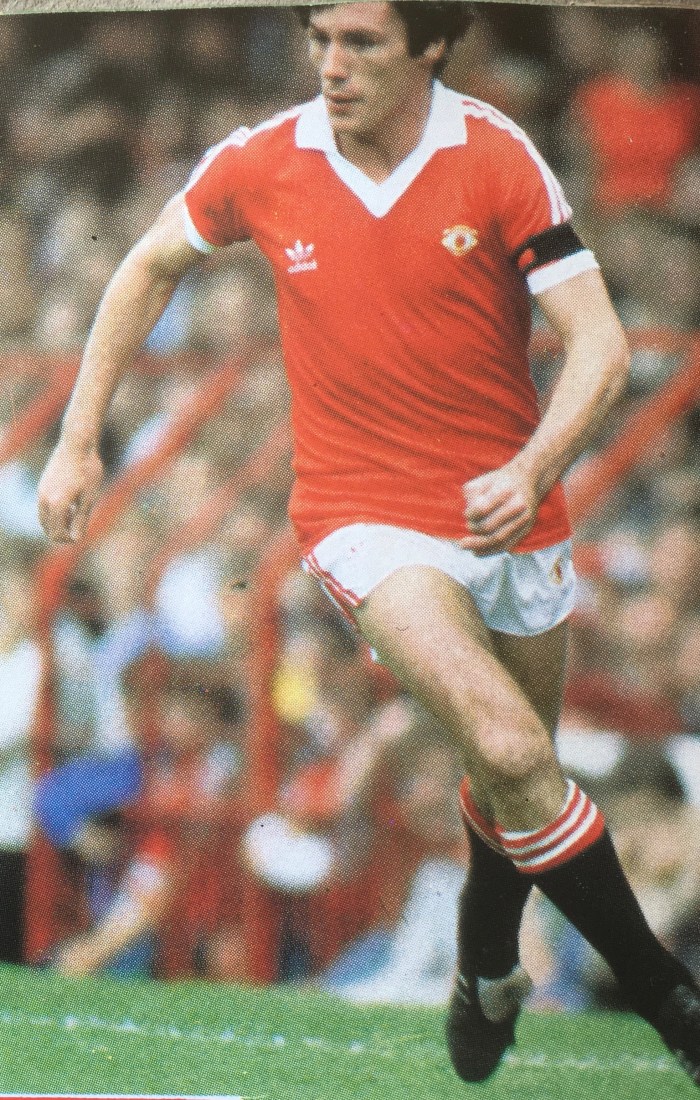
stapleton utd

When Robin van Persie made the same transfer switch from Arsenal to Manchester United in 2012, the Daily Mail took Stapleton back 30 years to talk about the circumstances of his own move.

Stapleton was Ron Atkinson’s first major signing for United and in his first season was partnered up front with Garry Birtles. Stapleton was the leading scorer for United in that first season, with 13 goals in 41 league games.

Subsequently, his main strike partner was the Northern Ireland international, Norman Whiteside.

img_4637

Stapleton scored United’s first goal, a 55th minute equaliser, in the 2-2 Cup Final draw against Brighton: one of 19 he notched during the 1982-83 season in which he played in 59 of United’s 60 games.

By the end of the following season, Stapleton’s regular strike partner was Mark Hughes and he scored in the 1985 FA Cup semi-final against Liverpool to set up yet another Wembley appearance, this time collecting his third winners’ medal when Whiteside’s winner beat Everton.

Despite a good start to the following season, with Stapleton once again amongst the goals, poor league form eventually cost Atkinson his job and his successor, Alex Ferguson, began rebuilding the side.

After six years at United, Stapleton, by then 30, was amongst those to be let go, and he was sold to Ajax of Amsterdam, lured by the fact they were managed by Johan Cruyff. But the move failed to live up to expectations, as detailed by the42.ie, and he ended up having a spell on loan at Anderlecht.

It was the first of a series of moves which didn’t really work out for him, although in the 1988-89 season he found himself playing in France alongside fellow Irish international – and future Brighton striker – John Byrne for Le Havre.

stapleton 4 derby

Derby County offered him a platform back in the UK game and he featured 10 times for them in 1987-88 and, after his stint in France came to an end, he spent two seasons with Blackburn Rovers.

He played once for lowly Aldershot and five times for Huddersfield Town before landing a player-manager’s post with Bradford City. In three years at Valley Parade, he made 68 appearances before the axe fell, and he answered Brady’s call for help at the Goldstone Ground.

The brilliant The Goldstone Wrap detailed his brief involvement in a March 2015 post, explaining how he featured as a substitute in a 0-0 draw at home to Bournemouth and started in a 3-0 defeat away to Cardiff City.

It was a final swansong for his playing career, as he looked to get back into coaching or management. He had two stints working under his former United teammate Ray Wilkins: at QPR and, in 2014, with the Jordan national side.

Stapleton spent eight months in 1996 as the first head coach of American Major Soccer League side New England Revolution, of Massachusetts.

His last appointment in the English game was briefly as a specialist striker coach at Bolton Wanderers, appointed during Sam Allardyce’s reign, in 2003-04.

Nowadays, Stapleton is more likely to be found talking about his illustrious career, his availability for bookings listed by football-speakers.com.
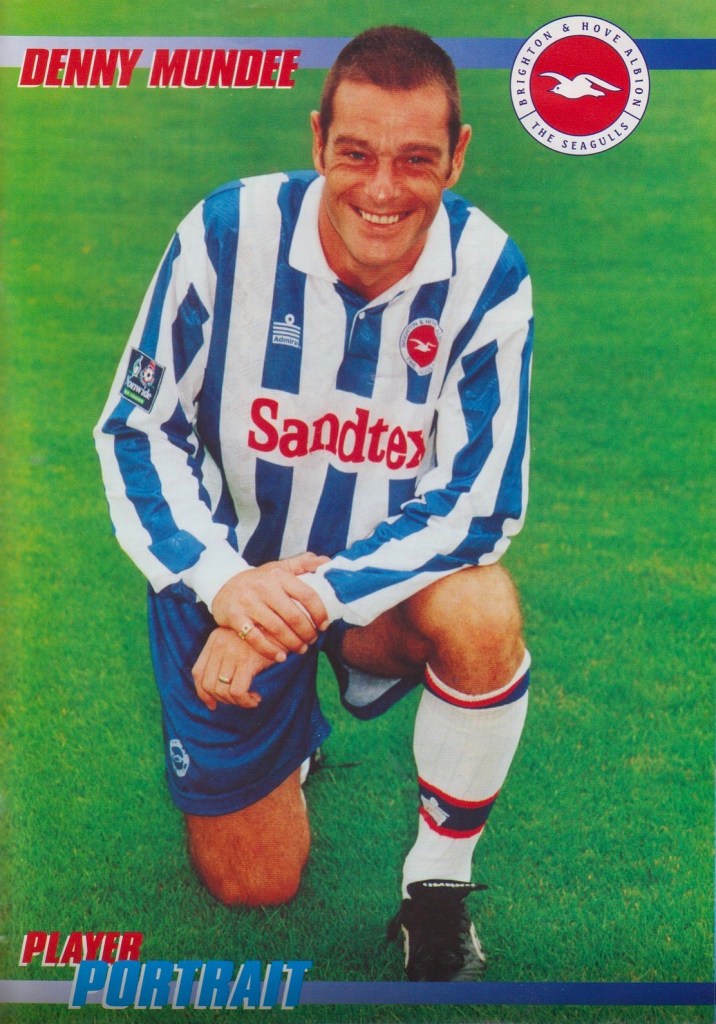
The spot kick highs and lows of penalty king Denny Mundee


SPOT KICK specialist Denny Mundee played for the Seagulls during the dark days when they nearly dropped out of the league having enjoyed better times with Bournemouth and Brentford.

His older brother, Brian, also played for the Cherries and another brother, Barry, was forced to quit football at 18 because of injury. It was a case of third time lucky when young Denny finally broke through into league football. Previous attempts to make it, at QPR and Swindon, had got nowhere.

Born Dennis William John Mundee in Swindon on 10 October 1968, Denny first showed his footballing talent at his local primary school (Liden), as a contemporary wrote some years later on the Brentford fans forum, Griffin Park Grapevine.

The poster, called ‘SmiffyInSpain’ said: “Went to primary school with Denny in Swindon and he was a class act then. Went to separate secondary schools, but still kept in contact with him as an opponent at school level football.

“Of all the players of the same age, Denny stood out by far. Of all the penalties he took against me, he never missed.”

Indeed, Mundee was noted for his success rate from the 12-yard spot, taking on the penalty taker duties at whichever side he played for.

The young Mundee was first offered an apprenticeship at Third Division Bournemouth but decided to join First Division QPR as a junior, where he spent a year.

Released in the summer of 1986, he joined home town team Swindon for a season, but again failed to make the grade. It took a drop down to Southern League Premier side Salisbury before things began to click. Scoring 20 goals in 34 appearances brought him back to the attention of Bournemouth, who snapped him up in March 1988.

Although he made his Bournemouth debut towards the end of the 1988-89 season, he had loan spells with Weymouth, Yeovil Town and Torquay United before establishing himself with the Cherries.

It was in 1991-92 that he laid claim to a regular place, and, as right-back, made 41 league appearances that season.

His winning spot-kick in a 4-3 penalty shoot-out decider in the third round of the FA Cup against Newcastle United in January 1992 earned Mundee hero status in a Cherries’ Legends Gallery put together by BBC Dorset.

United, managed at the time by Argentine legend Ossie Ardiles, were floundering at the bottom of the old Second Division, while Harry Redknapp’s Third Division Cherries had already held the Magpies 0-0 at Dean Court before taking the tie to penalties after the replay at St James’ Park had ended 2-2 on 90 minutes.

However, by the end of the following season, Mundee had become something of a utility player, slotting in to various positions, and, in August 1993, he chose to leave the south coast club on a free transfer.

In just over five years, he had started 93 games for the Cherries and come on as a sub in another 29 games.

Former Chelsea and QPR defender David Webb had taken over as manager at Brentford and Mundee was among his first signings.

Bees fans remember him being signed as a full back but, on being ‘thrown up top’, he was a revelation and finished his first season at Griffin Park with 11 goals.

Perhaps ironically, Brentford, in 16th, finished a point and a place above Bournemouth that 1993-94 season. Mundee scored 11 times, including a memorable hat-trick in a 4-3 defeat at home to Bristol Rovers.

DMHSSix of his goals that season came in a run of four consecutive games between 27 November and 27 December, four of them penalties.
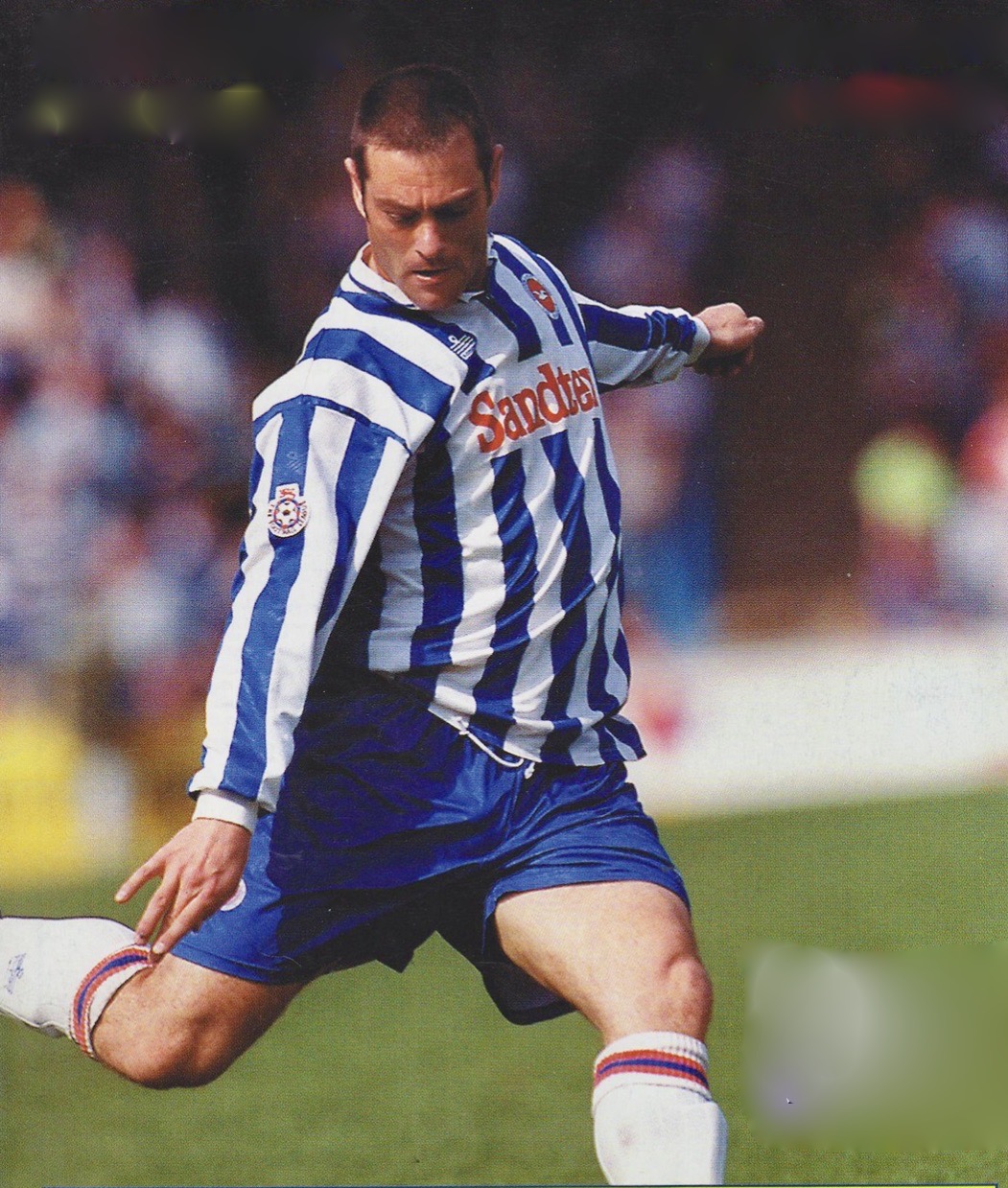
Mundee found himself part of a side that featured the free-scoring Nicky Forster in attack alongside Robert Taylor.

Described as “whole-hearted” and “a crowd pleaser”, Mundee earned something of a reputation for a shuffle, or a twiddle, he would deploy to get past opponents. ‘Brickie Chap’ on griffinpark.org said of him: “A player that always tried his best. Not the most gifted we have ever had down here but deffo one for providing quality entertainment.”

Unfortunately for a player normally so reliable from 12 yards, it was a penalty he failed to convert that Brentford fans have never really got over.

Mundee’s miss in a 1995 Division Two play-off match against Neil Warnock’s Huddersfield came in what was apparently the first-ever televised penalty shoot-out featured on Sky.

It was all the more galling because Mundee had scored twice from the spot past Town’s Steve Francis the previous season but, on this occasion, he blew the chance to put Brentford two goals ahead when he was outguessed by the ‘keeper. When Jamie Bates missed too, Brentford’s season was over.

Any other year, as runners-up, Brentford would have been promoted automatically, but, because of a reorganisation of the Premier League that year, only the top team went up automatically, hence their participation in the play-offs.

Mundee’s erstwhile primary school teammate wrote: “I watched the Huddersfield match in ‘95 and I would have put my mortgage on him netting like he did for Bournemouth at Newcastle a few years earlier.”

mundeeIn two years with the Bees, Mundee made 73 starts plus 25 appearances as a sub but, when his old Bournemouth teammate Jimmy Case took over the Albion’s managerial reins from Liam Brady, he and another ex-Cherry, Mark Morris, headed to the Goldstone Ground to try to help the Seagulls’ cause.
With the poisonous off-field developments at the club an ugly backdrop to the playing side, neither could do anything to halt Albion’s slide into the bottom tier.

Things went from bad to worse and on 1 February 1997, bottom of the league Brighton drew 1-1 at Mansfield Town, Mundee scoring for the Seagulls with a follow-up after his initial penalty was parried. Albion were nine points adrift and relegation from the league was looking virtually certain.

However, as we all now know, the drop was averted courtesy of that nail-biting draw at Hereford.

Although Mundee remained on the books for the following season, in December 1997 he, Morris, Craig Maskell, Paul McDonald and John Humphrey were all released to save money.

Mundee had played 58 games plus four as sub for the Albion, chipping in with eight goals.

Also burdened by ankle and back injuries, it spelled the end of his professional career although he did manage a handful of games with various non-league outfits.

Ten years ago, a cousin of Denny’s confirmed that he had moved to Throop, a village on the outskirts of Bournemouth, and was working for the same plastering business as brother Brian.

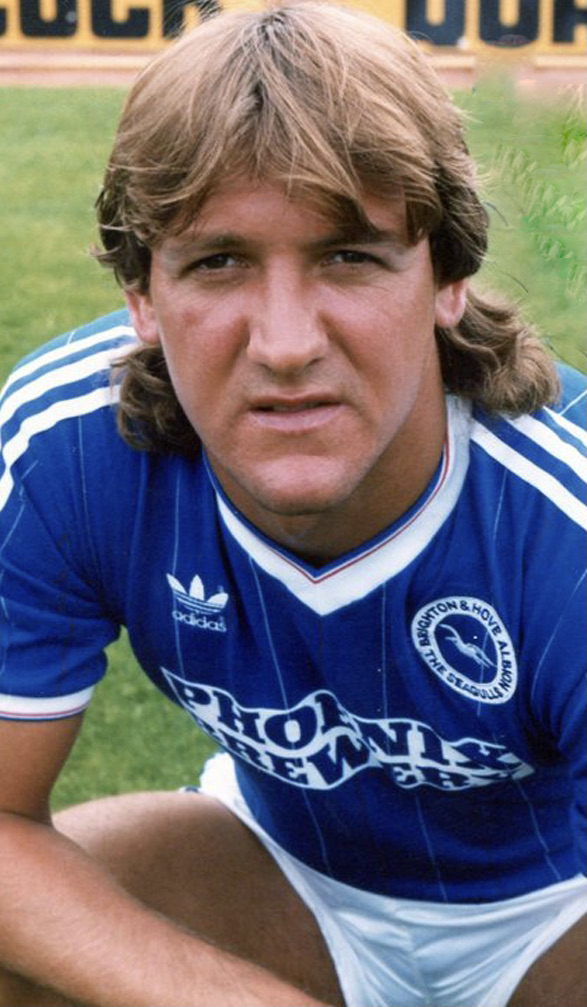
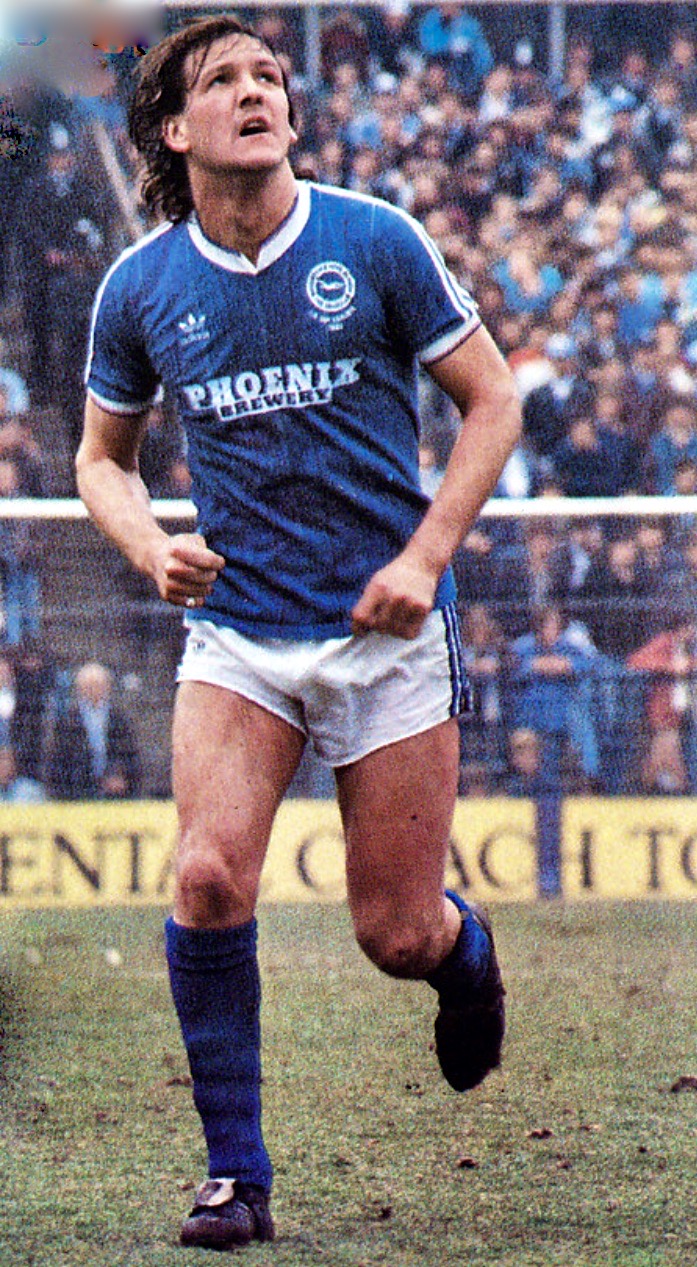
Liverpool legend Jimmy Case became a Seagulls favourite too

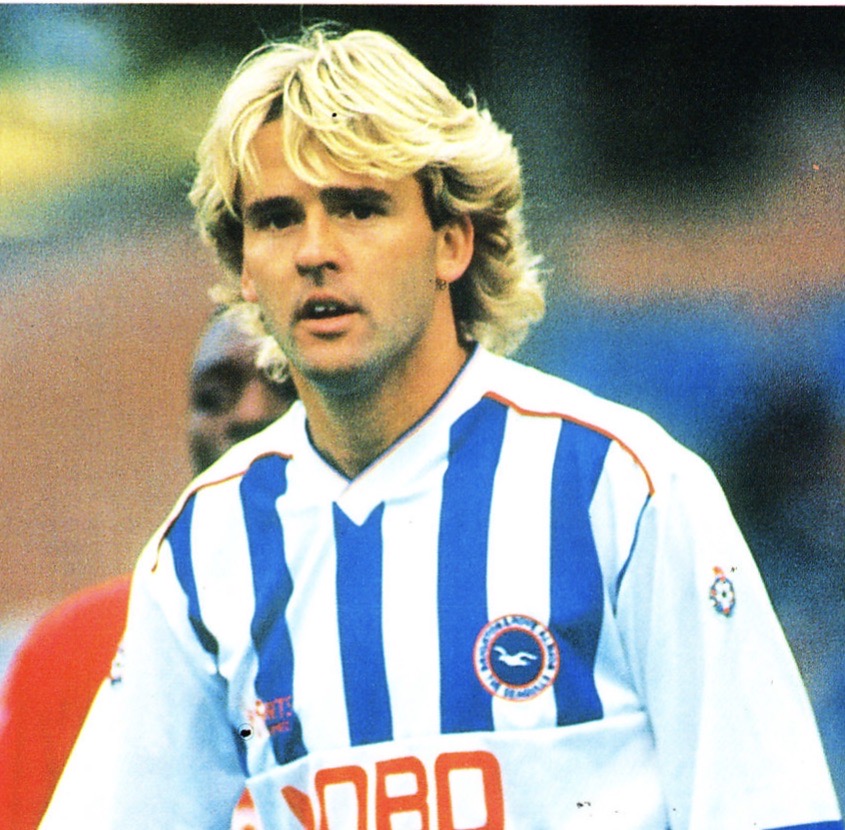
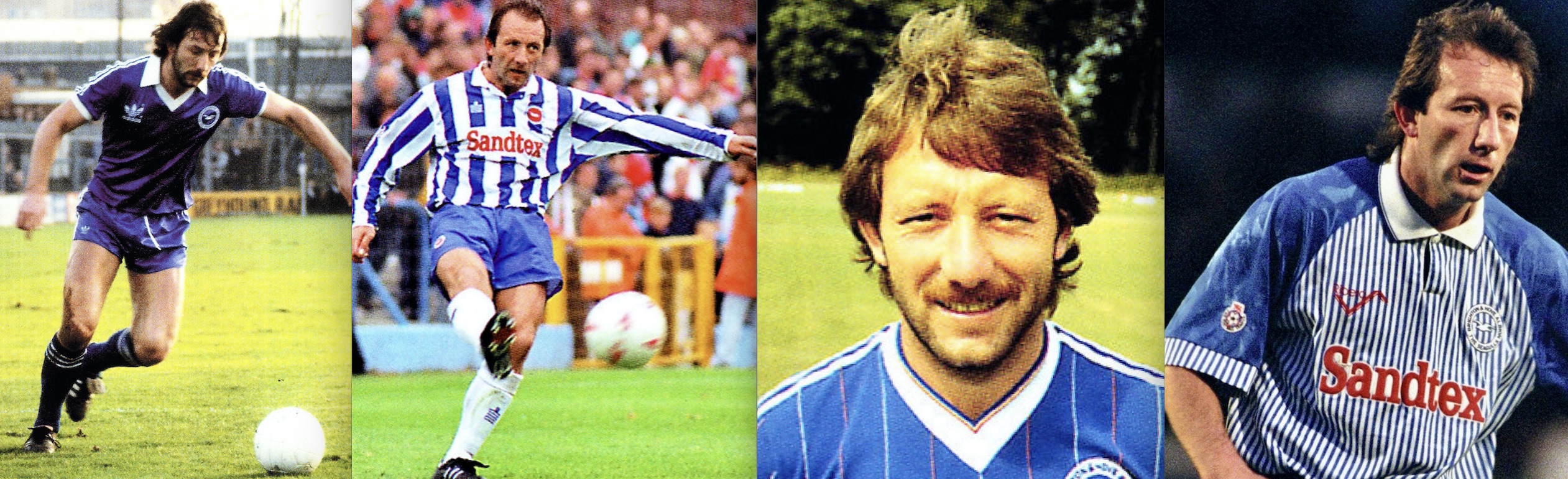
Case 4 imagesJIMMY Case remains one of my all-time favourite Albion players.
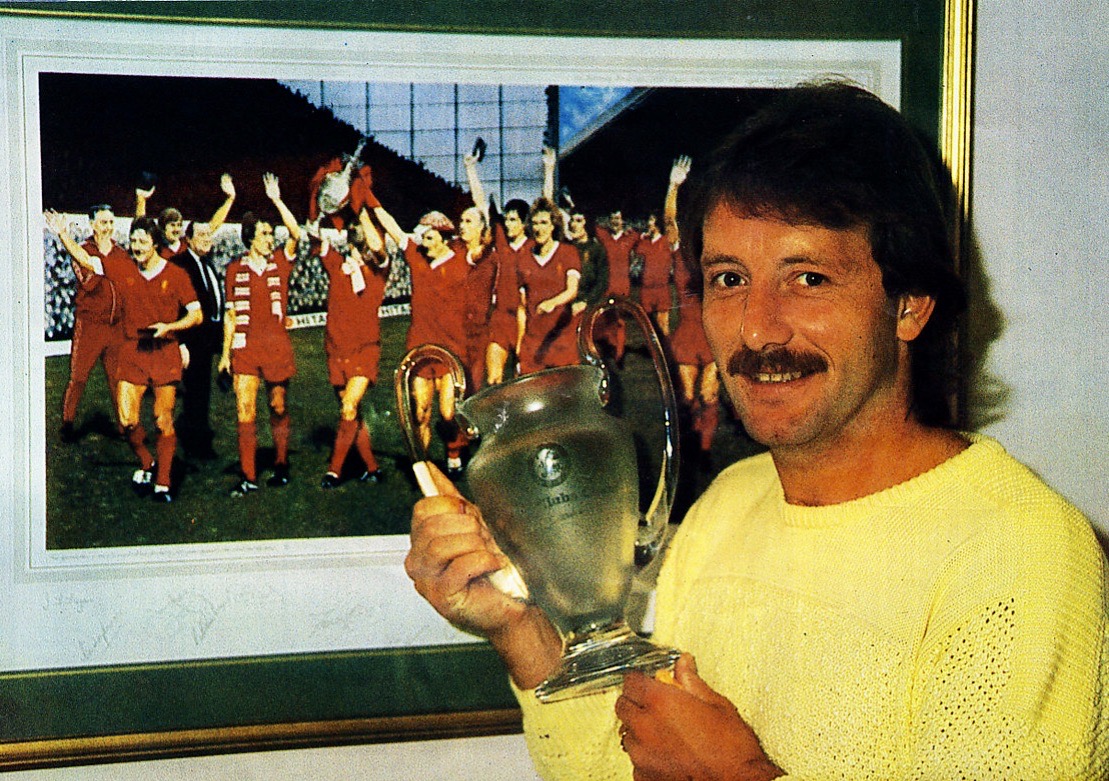
Several of the best moments I can recall as an Albion supporter involve Case: the 1983 FA Cup semi-final belter against Sheffield Wednesday at sunny Highbury perhaps the most memorable.

The biggest disappointment was that Albion let him go so easily.

Younger readers may only remember his unhappy stint as manager when the misdirected club was in turmoil, and he ended up holding the reins when Liam Brady just couldn’t take any more.

But rather than remember him as the man who took Brighton down to Division 3 in 1996, I remember the class act who arrived at the Goldstone in 1981 with a trophy cabinet the envy of many a footballer.

Although Brighton lost the sublime Mark Lawrenson to Liverpool as part of the deal that saw Case move to Brighton, they gained a player who had already got three European Cup winners’ medals, four Division 1 (Premiership equivalent) winners’ medals plus one each for winning the UEFA Cup, European Super Cup and the League Cup.

Case, born in Liverpool on 18 May 1954, was one of four children David and Dorothy Case raised in a council house in the city’s Allerton district.

He learned how to handle himself on a football field playing in a tough dockers’ team but Liverpool picked him up from the local non-league club, South Liverpool. By then, Case had left school and was training to be an electrician.

He carried on those studies but after two years on Liverpool’s staff he made his first team debut in April 1975 in a 3-1 win over QPR.

He scored his first goal in a 3-2 home win over Spurs at the beginning of the following season and, in what must have seemed a dream start, completed his first full season as part of a championship winning team, as well as scoring in the two-legged UEFA Cup Final win over FC Bruges.

Case EuropeThe triumphs and trophies kept coming with Case enjoying the ride but by 1980-81 he was beginning to be edged out by Sammy Lee, and manager Bob Paisley didn’t look kindly on some of the off-field escapades Case was involved in with fellow midfielder Ray Kennedy.

Paisley said: “He had lost his appetite for the game in his last year at Anfield. It’s a hard stint working the right flank in our team and Jimmy had stopped getting forward and was looking to play early passes from deep positions. I think his legs had become tired.”

The move to Brighton might never have happened if Alan Mullery had got his way because he had already done a deal with Ron Atkinson to sell Lawrenson to Manchester United in exchange for two of their players.

But when chairman Mike Bamber pulled rank and forced through the Liverpool deal he had negotiated, Mullery quit and Case arrived on a five-year contract to find a new manager in charge in Mike Bailey.

It felt to me that Brighton were stepping up to a whole new level bringing in someone of Case’s stature, and so it proved.

In his first season at the Goldstone, Albion recorded their highest-ever finish among the elite – 13th.

I recollect heading to Upton Park for the opening game of the season to see Case make his debut against West Ham and Albion earned a 1-1 draw despite having Gerry Ryan sent off.

Case found himself in trouble with referees on way too many occasions that season. Although he came to the club with a hard man image, amazingly he had never previously been suspended for accumulating bookings.

But by December he had to sit out a two game ban, and when his bookings total reached eight by March, he missed another three games.

Case told John Vinicombe of the Evening Argus: “I am a face, and there is nothing I can do about that. I am known, and that might explain some of the things that have happened to me on the pitch.

“The last thing I wanted on coming to Brighton was to get suspended. Brighton didn’t give me a contract to miss games.”

For anyone who has not yet read it, Case’s autobiography, Hard Case (John Blake Publishing) is well worth a read, detailing through writer Andrew Smart a fascinating career.

Disappointingly, it has a few factual errors that doubtless the distance of time brought about. Nevertheless, Case says: “I enjoyed every minute of my time with Brighton.”

Particularly pleasing for him was to score with a thumping header past Bruce Grobelaar in a 3-3 draw with Liverpool at the Goldstone, and to be on the right end of Albion’s 1-0 win at Anfield that season.

Case enjoyed life off the field as well and admits in his book: “The inhabitants of Brighton and Hove were just a little more sophisticated than the Allerton of the 1970s and I was introduced to the many and varied attractions of decent food and fine wine. It was an education I really appreciated.”

His second season was to end in relegation, but, more famously, with Brighton’s one and only appearance in an FA Cup final. Case scored goals in the fourth, fifth and sixth rounds, as well as the semi-final.

The newspapers had a field day when Case’s winner for Brighton in the fifth round of the Cup at Anfield denied his old boss Bob Paisley the chance to wipe the board with trophies that season.

It seemed every national and local newspaper headline revolved around the likeable Scouser: ‘It’s Case for Champagne’, ‘Jimmy sets out his case’, ‘Old boy Case kills off Liverpool hopes’, ‘Amazing Case’, ‘Killer Case’, ‘Case packs a super Cup punch’, ‘Case for Cup win’.

The Daily Mirror made him their footballer of the month for February on the back of that goal with reporter Harry Miller declaring: “No single act did more to capture the imagination of the public than midfielder Case’s dramatic 71st minute winner on Sunday, February 20.”

Case himself had mixed emotions about it all, saying: “I had ten fantastic years at a remarkable club. That’s something that goes deep down.”

He also revealed how a good friend of his had been out of the country at the time of the game and sent him a postcard with only two words as its message: ‘You bastard’.

When he scored the only goal of the game in the quarter final win over Norwich, the headlines continued: ‘Case of bubbly’, ‘The odd Case of hero and villain’, ‘Seagulls have landed with champagne Jim’.

That belting free kick in the Highbury sunshine set Albion on their way to the 2-1 win over Sheffield Wednesday, earning a first ever  – and only – place in the FA Cup final.

He was no stranger to Wembley, of course, having previously scored Liverpool’s goal in the 1978 2-1 defeat to Manchester United, but unfortunately he didn’t repeat his earlier goalscoring feats in the 1983 final.

He played a key part in Albion’s brave effort to earn a draw against Man U and then had the agony of returning home that Saturday evening to discover his mother, who had been a visitor, had died in her sleep at the age of just 63.

It was to Case’s immense credit that he took his place in the side for the replay just five days later.

While relegation brought the inevitable break-up of the team, with Gary Stevens and Michael Robinson departing before the new season began, Case publicly declared his intention to stay and try to get the team back up to the elite.

However, once fellow Scouser Jimmy Melia had been replaced by Chris Cattlin, there was probably only going to be one outcome and eventually Case was sold to Southampton for £30,000 in March 1985.

For him, it was a great move because he was returning to the top division again. It turned out that he was Lawrie McMenemy’s last signing for Saints, but, on this occasion, the change of manager was to cement his place in the side. Chris Nicholl made him the club captain the following season.

In 1985-86, Saints reached the semi-final of the FA Cup (beating Brighton 2-0 in the quarter-final!) losing 2-0 to Liverpool after extra time. If Saints had won, Case would have been the first player to appear in three FA Cup finals with different clubs.

Over his six years at The Dell, Case played alongside Glenn Cockerill and Barry Horne and helped to bring on the careers of youngsters such as Matt Le Tissier, Alan Shearer and Jason Dodd.

But when Ian Branfoot took over as manager in June 1991, he dispensed with Case’s services within a matter of days and transferred him to Bournemouth, who were managed by Harry Redknapp.

After 40 league games for Bournemouth in 1991-92, he moved to Halifax Town managed by former Saint and, one-time Albion loanee, John McGrath, who was being assisted by another ex-Albion man, Frank Worthington.

But Case only played there for six months, moving on to Wrexham, where he helped them gain promotion from the 3rd Division at the end of the 1992-93 season.

He then turned out for non-league side Sittingbourne until, at the ripe old age of 39, Liam Brady brought him back to Brighton in December 1993, as a player/coach. It was during that spell that he played in his 600th league game, the club chief executive David Bellotti presenting him with a silver salver on reaching that milestone

As a mark of the esteem in which Case was held, a testimonial game for him at the Goldstone Ground on 17 October 1994 had to be delayed 10 minutes because so many people wanted to get in to pay tribute. The capacity of the grand old ground was much reduced by then but still 15,645 packed in to see Case’s old club Liverpool do him the honour of providing the opposition.

Albion featured Matt Le Tissier in their line-up and even Ryan and Brady made substitute appearances as Liverpool emerged 2-1. The result, of course, was immaterial, and an emotional Case said afterwards: “I can’t thank the supporters enough. This was the only game I’ve ever been nervous about. I’ve never really asked for anything from the game, I just wanted everyone to enjoy it.

“It’s all been quite embarrassing really. I like to go to parties, I just don’t like them being my own.”

After his unhappy time as Albion manager, Case later managed non-league Bashley but is more often seen and heard these days on the after dinner speaking circuit or on regional football programmes. He also contributes to Southampton’s in-house radio station “The Saint”.

In July 2007, he once again donned a Brighton shirt, playing a cameo role alongside other past heroes in a brief curtain-raiser to Kerry Mayo’s testimonial game against Reading.

Twelve goals in 26 games for Scottish striker Alan Young

GARY LINEKER’S former strike partner at Leicester City had a good goals to appearances ratio for Brighton & Hove Albion.

Sadly, Scotsman Alan Young only managed 26 appearances in his one season (1983-84) with the Albion, although his 12 goals meant he finished second top goalscorer behind Terry Connor.

His brief Brighton career got off to a great start with a memorable debut goal, an overhead kick to net against Chelsea at the Goldstone. Young twice scored braces for the Seagulls but his season was injury-hit and, with manager Chris Cattlin bringing in his old pal Frank Worthington for the 1984-85 season, Young was sold to Notts County.

In more recent times, Young courted controversy as a radio pundit sharing his opinions about Leicester, and in 2014 BBC Radio Leicester dropped him from his role supporting commentator Ian Stringer.

alanyoung6 2

Back in September 2013, Young was berated online for his criticism of winger Anthony Knockaert. Foxello, on ja606.co.uk, wrote: “If there’s one thing that annoys me more than just about anything else at this football club, it is that grumpy, nasty egotist Alan Young and his never-ending agenda against certain members of the football club.”

The correspondent bemoaned: “Knocky is now the butt of every joke, and the object of every jibe Young throws out…. It’s almost as if he doesn’t want us to have skilful players who occasionally misplace a pass due to their advanced vision, and just have hoofers and cloggers like in his day.”

So let’s take a look back at ‘his day’. Born in Kirkcaldy on 26 October 1955, Young was football-daft and showed sufficient promise to earn Scottish schoolboy international honours.

His boyhood favourite team was Raith Rovers, whose star player at the time was Ian Porterfield, who famously scored the winning goal when Second Division Sunderland beat Leeds in the 1973 FA Cup Final.

Surprisingly overlooked by Scottish professional clubs, Young also experienced early disappointment in England when Nottingham Forest rejected him. “Nottingham Forert didn’t want me and I left there thinking I was no good,” he told Shoot! magazine.

Nonetheless, when he was playing as an unattached player for Scotland Schoolboys against England at Old Trafford, Oldham Athletic scout Colin McDonald, a former Burnley and England international goalkeeper, noted his promise and persuaded the young forward to head south of the border to begin his professional career.

In five years at Boundary Park he scored 30 goals in 122 games, and, to a large extent, learned his trade from old pro Andy Lochhead, a prolific goalscorer in his day for Burnley, Leicester and Aston Villa.

In the 1978-79 season, Young netted a hat-trick against Leicester which caught the eye of fellow Scot and former Rangers boss, Jock Wallace, who had taken over at Filbert Street and was building a team with his fellow countrymen at its core.

When Young joined Leicester, and played alongside his boyhood pal Martin Henderson, it began a love affair with Leicester that endures to this day.

In three years at Leicester, Young scored 26 times in 104 games, eventually forming a partnership with the emerging Lineker. TV’s favourite football frontman was generous enough to pen the foreword to Young’s 2013 autobiography, Youn9y (written in conjunction with Simon Kimber and published by the historypress.co.uk) and said of him: “He was an old-fashioned, aggressive centre forward. He possessed, though, a delicate touch and finesse that belied his big target man status – the perfect partner for a nippy little goalhanger trying to make a name for himself.”

Screenshot
Leicester strike partner for Gary Lineker

Young scored on his full debut for City in a league cup game v Rotherham and followed it up with two on his league debut at home to Watford.

The only time Young was sent off while playing for Leicester was, ironically, at the Goldstone Ground in 1981, at Easter, which was the second of four games at the end of the season that Albion won to stay in the top division.

Young was dismissed for two bookable offences, the first for clattering into goalkeeper Graham Moseley and the other a clash with Steve Foster, although, in his autobiography, he says Foster play-acted a knee injury, which the referee bought. Foster even teased him about it when he joined the Seagulls two years later. In that Easter 1981 fixture, Young’s teammate Kevin McDonald was also sent off, Brighton won 2-1 – and Leicester ended up being relegated together with Norwich and bottom-placed Crystal Palace.

Back in the old Second Division, Young did his cartilage in a game on QPR’s plastic pitch which he says was the beginning of the end of his career, because his knee was never the same afterwards (years later he had a knee replacement).

He also had the disappointment of losing to Spurs in the 1982 FA Cup semi final, although he maintains if a certain Chris Hughton had been sent off for two fouls on Lineker, it might all have been a different story.

Before the next season kicked off, Jock Wallace, the manager he idolised, decided to move back to Scotland to manage Motherwell and his successor at Filbert Street, Gordon Milne, swiftly chose to pair the emerging Alan Smith up front with Lineker, signalling the exit for Young.

Managerial upheaval was to become a familiar cause of Young’s departures in the years that followed, too. But I am getting ahead of myself.

Ian Porterfield, his footballing hero from yesteryear, had taken over as manager at Fourth Division Sheffield United and, although he didn’t really want to drop down the leagues, the Blades were a big club so Young moved to Bramall Lane.

A year later, though, after Brighton’s relegation from the elite in 1983, striker Michael Robinson was sold to Liverpool so there was a centre forward vacancy – and manager Jimmy Melia chose Young to fill it.

The fee was either £140,000 or £150,000 depending on which account you believe, but Young was happy because he pocketed a £20,000 signing on fee (four times what he had received only a year earlier when moving to Sheffield).

His first involvement with the squad was on a close-season tour of the Balearic Islands (with associated eye-opening tales recalled by thegoldstonewrap.com) but he also picked up an injury that was to dog his season on the south coast.

While Young had a lot of time for Melia, when Cattlin took over it was a different story and, in his book, there are plenty of colourful expletives used to describe exactly what he thought! He also castigates physio Mike Yaxley – “the most useless physio I have ever worked with” – although he says the team spirit was very good…seemingly fuelled by long post-training ‘sessions’ in Woody’s wine bar.

A youngHe said: “The football was very enjoyable there and never more so than when Jimmy Case and I were playing together; I loved playing with Jimmy.”

For a short time in that 1983-84 season, Albion had three Youngs in their squad, none of whom were related. Along with Young the forward, there were centre backs Eric Young and on-loan Willie Young.

When Cattlin decided to bring in his old Huddersfield teammate Worthington the following season, Young was on his way, this time to Notts County. The manager who signed him was the former Liverpool and Nottingham Forest defender Larry Lloyd, but his tenure in the managerial chair was very short so, once again, Young found himself playing for a manager who hadn’t chosen him.

In two years at Meadow Lane, Young scored 12 in 43 games for County. He moved on to Rochdale where the Leeds legend Eddie Gray was in charge, but injury took its toll and he only scored twice in 28 games in the 1986-87 season before retiring at 31. He had scored a career total of 89 goals in 349 appearances.

While there were a few non-league appearances, he eventually landed a job back at Notts County in the early days of community football schemes. He made a success of the job, obtained his coaching qualifications and eventually they combined the community scheme with the centre of excellence.

Brighton fans will be interested to know that among the young lads who emerged during Young’s time there were Will Hoskins and Leon Best. The star player, though, was Jermaine Pennant.

Young has fond memories of Neil Warnock’s time as County manager, because of his interest in the work being done at grassroots level. However, the mood changed when Sam Allardyce took over.

Allardyce initially cut Young’s salary and then showed him the door. “I can’t and I never will forgive Sam Allardyce,” he said.

Away from football, Young has had a tempestuous love life – read the book to gather the detail – and has three sons and a daughter. While he also had spells working for Chesterfield and Leeds, he dropped out of the game and then had a very dark period dominated by heavy drinking in isolation, including a time living alone in a caravan on the banks of Loch Lomond.

Eventually a return to England and his break into radio punditry brought him back from the brink.

In 2013, his autobiography Youn9y was published, the sleeve notes describing the story of “a talented, brave striker who played at the highest level of the domestic game but also experienced human misery at its lowest once his playing career was over”.

The notes add: “Youngy doesn’t just recount the good times of his playing career; he also offers valuable insight and moments of perception and understanding of some of the darkest days of his life.”

After four years as match summariser, in 2014 BBC Radio Leicester dispensed with his services and replaced him with another former Fox, Gerry Taggart.

However, Young still gives his opinions about Leicester on the community radio station Hermitage FM.

Pictures show a shot of Alan on Brighton seafront from an Albion matchday programme; the front cover of his autobiography; other matchday programme action shots, and in the Hermitage FM radio studio from Twitter.

Eire striker John Byrne’s three spells at the Albion

FOOTBALL things came in threes for striker John Byrne. He had three different spells playing up front for the Albion and he featured for three different clubs under manager Denis Smith.

Add to that, on three occasions, he was signed by clubs who he’d played well against. And, for QPR fans, he was also the third no.10 who got the crowd off their feet at Loftus Road, following in the footsteps of Rodney Marsh and Stan Bowles.

Ironically, it was former Albion boss Alan Mullery who took Byrne to Rangers, in 1984, during his six turbulent months as manager. Mullery took over from his former Spurs teammate Terry Venables, who’d left to manage Barcelona.

While Mullers’ reign at Loftus Road was brief, the skilful forward he brought in stayed four years and won plenty of admirers amongst the Hoops supporters.

Alongside former Albion striker Michael Robinson, he was part of the QPR team that lost to Oxford (a club he would play for later in his career) in the 1986 League Cup Final (QPR’s sub that day was Liam Rosenior’s dad, Leroy).

Wembley wasn’t to be a happy hunting ground for Byrne, though. That 1986 defeat was the first of three occasions he made it onto the iconic turf, each time ending up on the losing side.

Byrne’s career had begun with basement side York City at 16 after Mike Walker, a taxi driver pal of York’s boss, the former Manchester United manager Wilf McGuinness, spotted him playing local football in Manchester (he was born on 1 February 1961 and raised in Wythenshawe).

Charlie Wright, the former Bolton and Charlton goalkeeper took over as manager and gave Byrne his first pro contract but it was his successor, Denis Smith, the ex Stoke City stopper, who arrived in 1982, together with his coach, former striker Viv Busby, who set Byrne on the road to success.

He scored an impressive 55 goals in 175 appearances for York between 1979 and 1984 and his signing by Mullery for QPR came after he did well in a two-legged Milk Cup tie against the Hoops.

In an odd symmetry, his later move from QPR to Le Havre came after the sides had met in a friendly, and the pattern continued when his eventual move to Brighton came after they too had played Le Havre pre-season.

But back to London where, in his four years at Loftus Road, he scored 30 times in 126 appearances.

QPR fans recall fondly a game when Byrne scored twice in a 6-0 thrashing of Chelsea and, some years later, in an interview with QPRnet, he explained how the drubbing riled the Chelsea, and later Brighton, defender Doug Rougvie to the extent that Byrne and fellow striker Gary Bannister finished the game playing out wide to avoid getting a kicking!

He also scored a winner against Manchester United, the team he’d followed as a boy, and in an interview with Sussex Life in 2010, he said: “I felt a bit like a traitor!”

It was in the year following his move to QPR that he made his international debut for the Republic of Ireland – he qualified to play for them because his dad, Jim, was from County Carlow.

He was an international teammate of Chris Hughton and Mark Lawrenson and between 1985 and 1993 collected a total of 23 caps, scoring four goals, two of which came in a 3-1 win over Turkey.

JB Eire

Although part of Eire’s Euro 88 and 1990 World Cup squads, he didn’t play a game.

Byrne had three spells with Brighton but undoubtedly the most memorable was in the season that ended in heartbreak in the Wembley play-off final against Neil Warnock’s Notts County.

Manager Barry Lloyd had brought him back to the UK from Le Havre for £125,000, shortly after he had been to the World Cup in Italy with the Republic, and successfully partnered him up front with the prolific Mike Small.

Byrne admitted in a 2010 matchday programme interview how he thought he was joining Sunderland that summer but his agent Paul Stretford’s demands put off the Wearsiders and the striker ended up writing to all the English First and Second Division clubs looking for an alternative club.

Surprisingly, he didn’t get many replies, but Brighton did. “Barry Lloyd got in touch and the rest is history,” said Byrne.

It turned out Lloyd had long been an admirer. He wrote in the matchday programme: “I first tried to sign him two years ago, before he went to Le Havre. He was at QPR then and I was vying with Sunderland for his signature when he finally decided to broaden his footballing experience by moving to France.”

Lloyd revealed how he had consulted with Republic of Ireland boss Jack Charlton to check Byrne had lost none of his old skills and ambition. “He is an intelligent player who moves well across the line and I am sure he is looking on his move to us as an ideal opportunity to regain his place in the Republic’s squad for the European Championships in two years’ time,” said Lloyd.

Albion have had some decent striking partnerships over the years but not since Ward and Mellor in the Seventies had a pair captured the imagination in quite the same way as Byrne and Small. Between them they spearheaded Albion’s push for promotion to the elite.

J ByrneThe climax to the season was a classic case of ‘if onlys’ where ‘Budgie’ was concerned: if only he hadn’t been injured in that final game against Ipswich, he would have been fit to play from the start in the final.
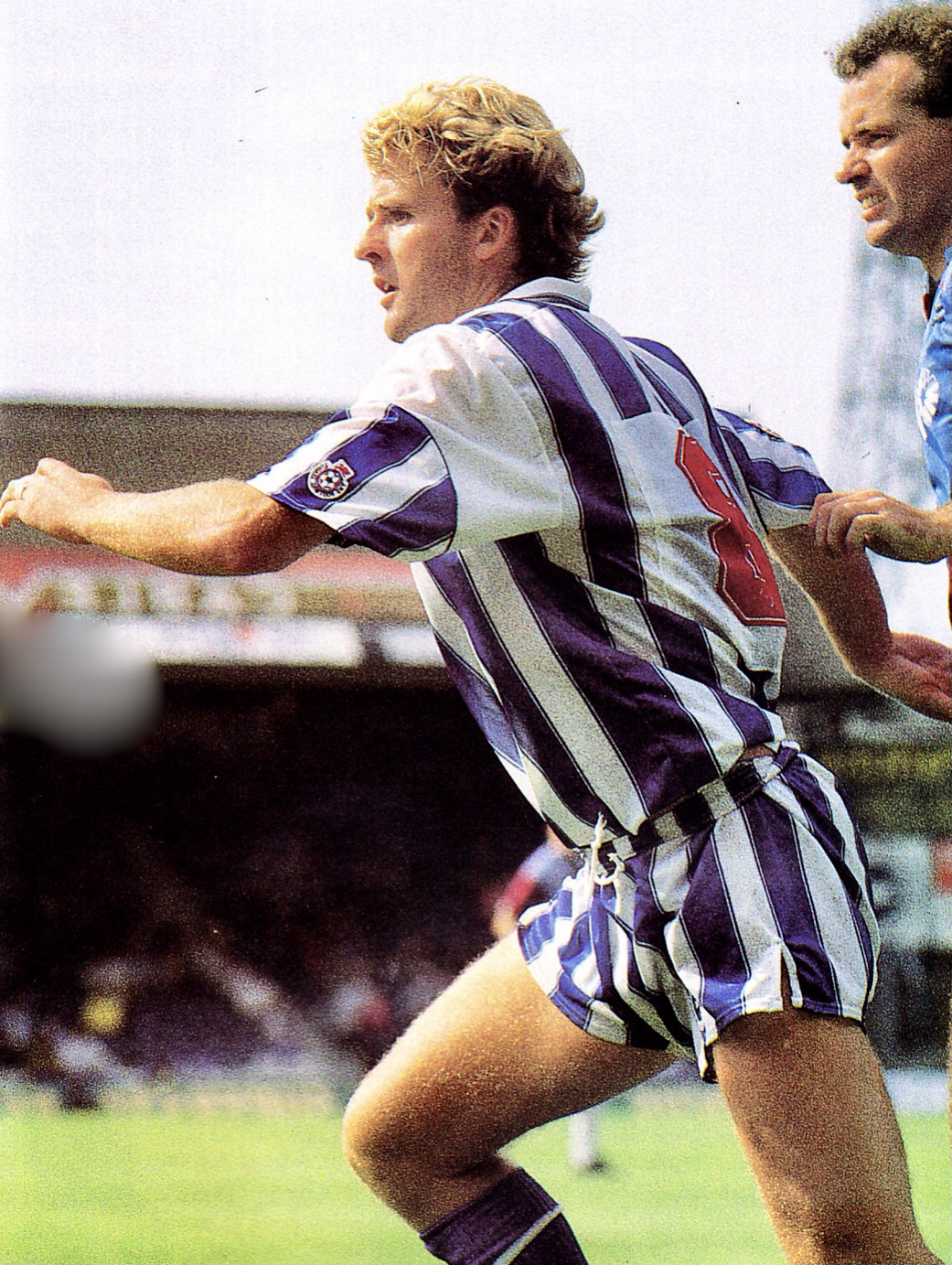
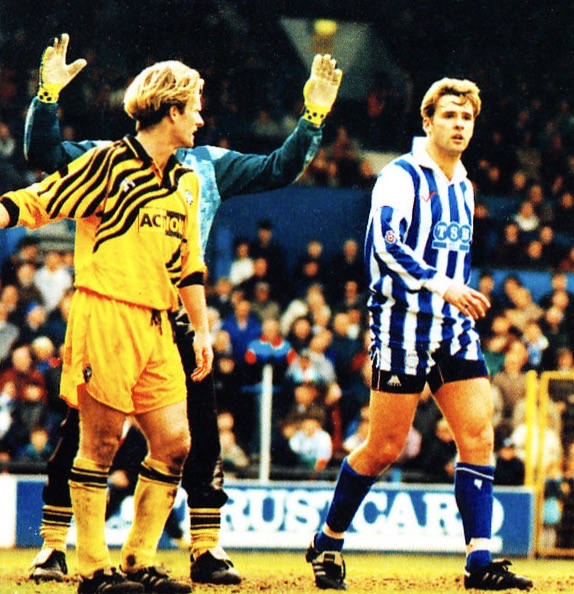
There again, if he hadn’t been fouled on the edge of the box, Albion wouldn’t have won the free kick from which Dean Wilkins scored to earn Albion the play-off spot!

With his right leg heavily strapped, Byrne appeared as a substitute in the final. When the Albion story came to an unhappy ending, and the expected financial boost of playing in the top division didn’t materialise, Lloyd had to cash in his prize assets: Small went to West Ham for £400,000 and Byrne was sold to Sunderland for twice what Brighton had paid for him.

Reflecting on Byrne’s impact, Lloyd told Albion’s matchday programme: “He was outstanding for us, he really was. His workrate was excellent.

“He could pass a ball, cross a ball and he knew where the back of the net was. We didn’t have a lot of money to spend but we got something special with him which very nearly got us into what is now the Premier League.”

Byrne famously scored in every round of the FA Cup as Sunderland marched to the final in 1992, and, almost as famously, missed a great chance from six yards as the Wearsiders lost to Liverpool.

After a season at Sunderland, Byrne moved to Millwall, where things didn’t work out for him, and in 1993 he returned to Brighton on loan for a brief seven-game spell in which he scored twice.

He then had two seasons at Oxford, when he scored 18 times in 55 appearances, before returning once more to the Albion to play 39 games in the 1995-96 season. He scored six times, but, it would be fair to say, he was a shadow of the player who graced that 1990-91 season.

Byrne didn’t let the grass grow under his feet when he packed up playing – he learned how to take care of other people’s by becoming a podiatrist.

Followers of the Albion also got to hear his dulcet Mancunian tones on the radio as a summariser on the local radio station’s coverage of Brighton games.Byrne close action

Byrne pictured in 2010