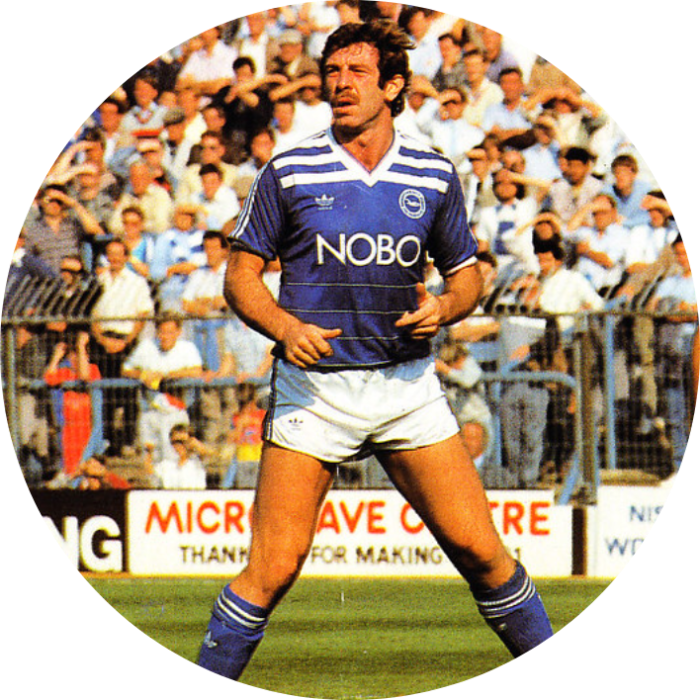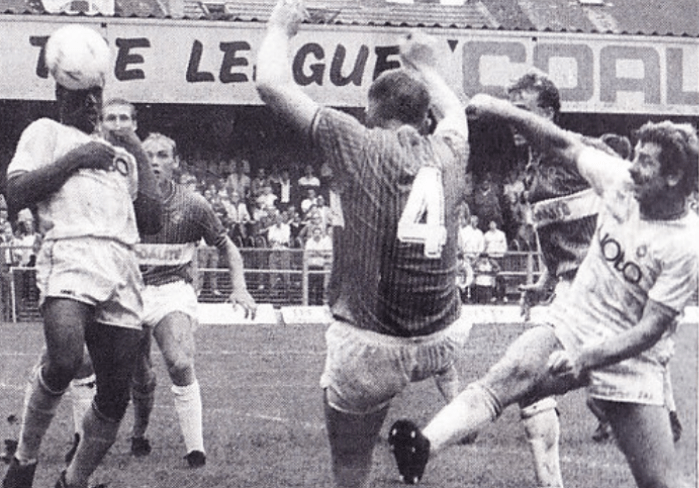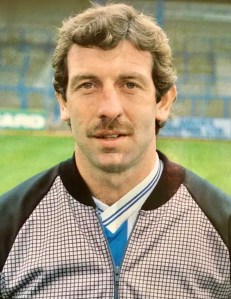
Goal-getting Chris Iwelumo knew the way to promotion

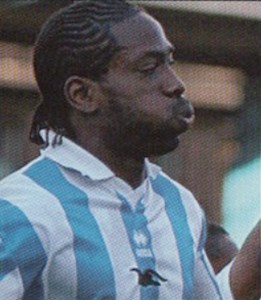
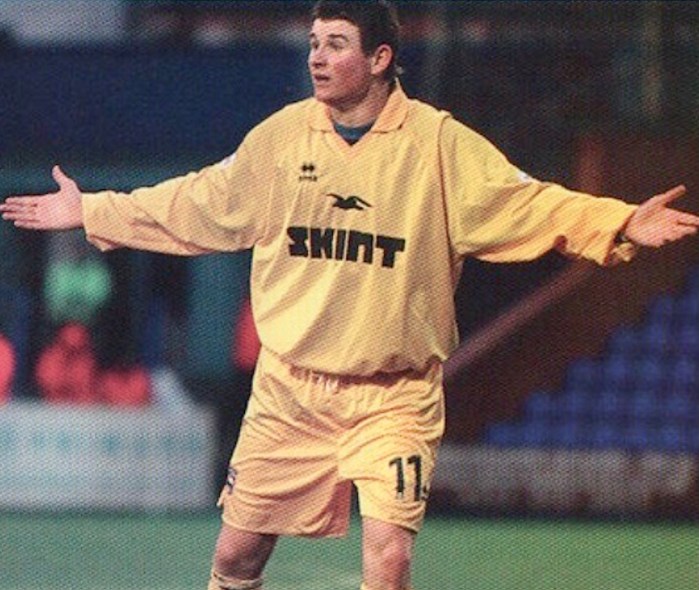
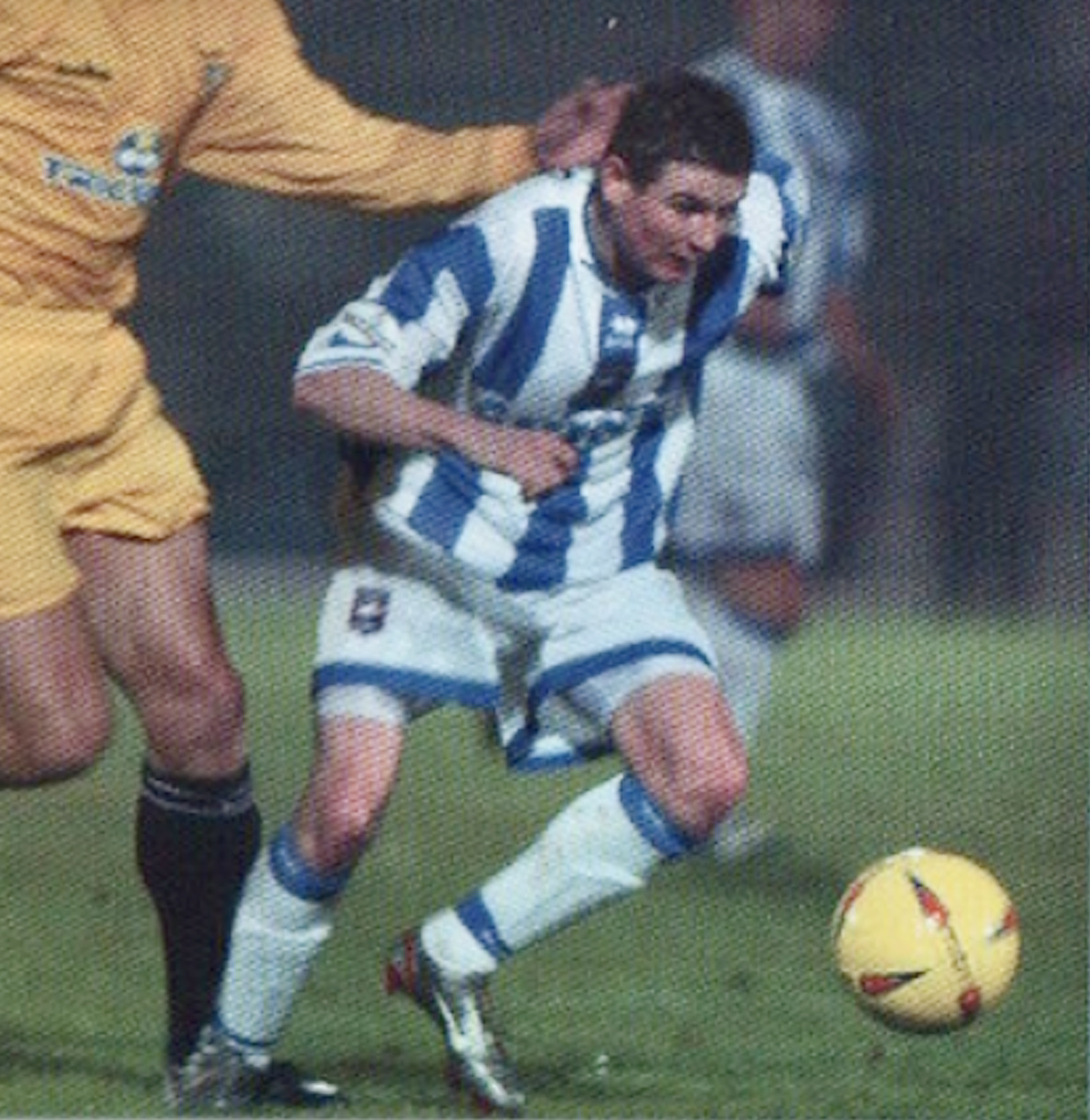
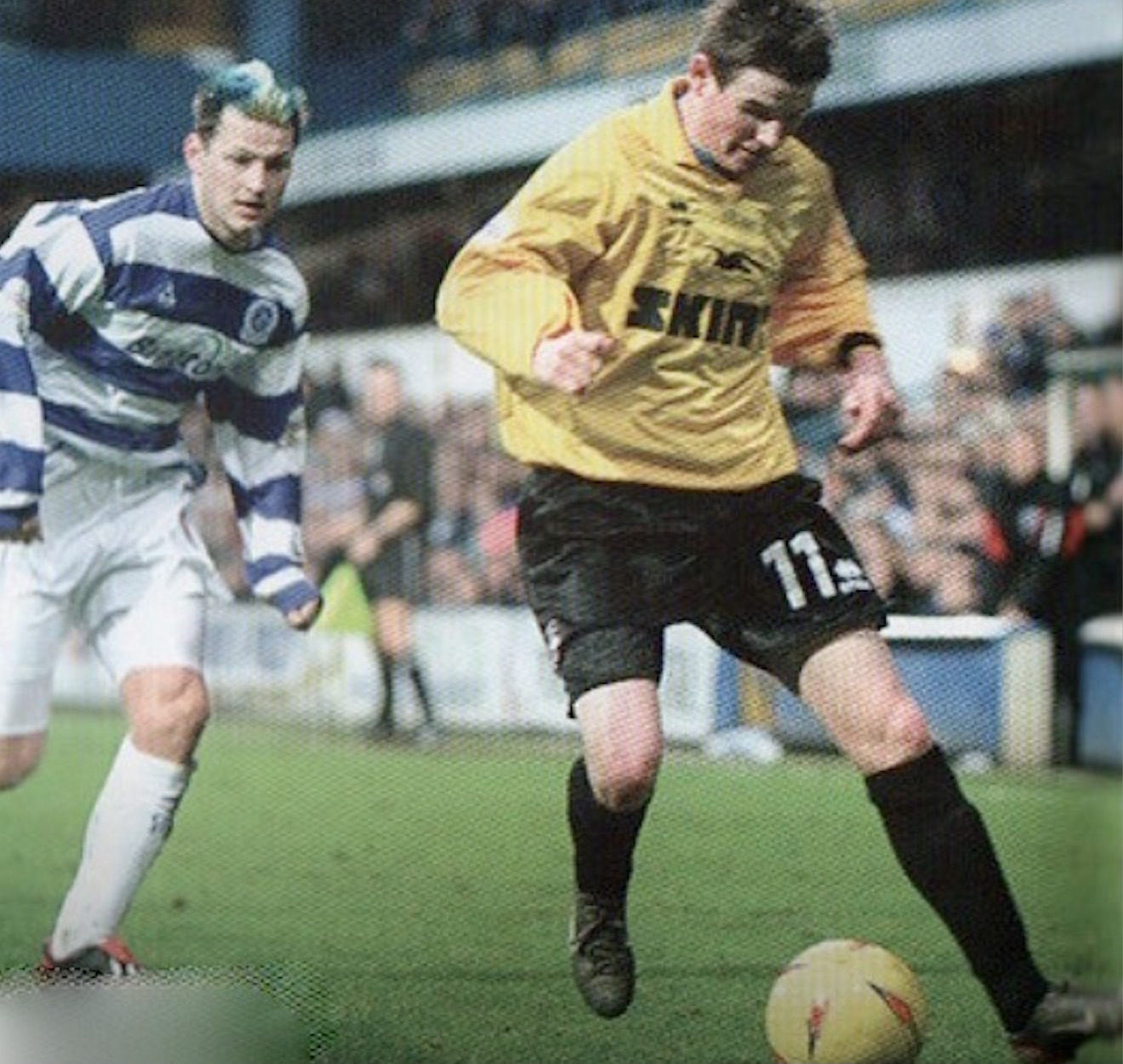
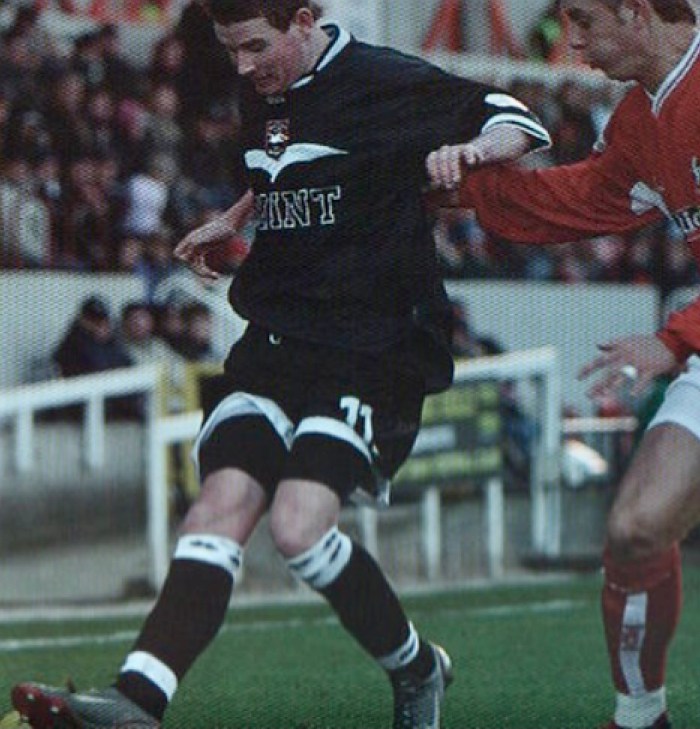
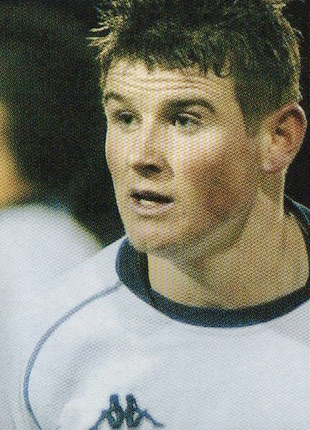
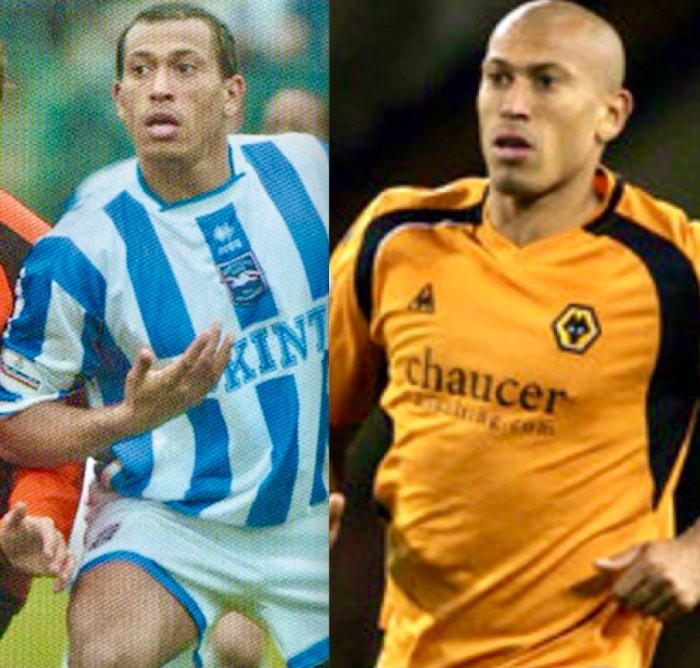
CHRIS IWELUMO was a promotion-winner with Brighton and Wolves, helping the Seagulls to third tier play-off final success in 2004 and scoring 14 league goals when the Molineux side won the Championship in 2009.

They were two of five promotions he was part of in a remarkable 18-year, 18-club career.

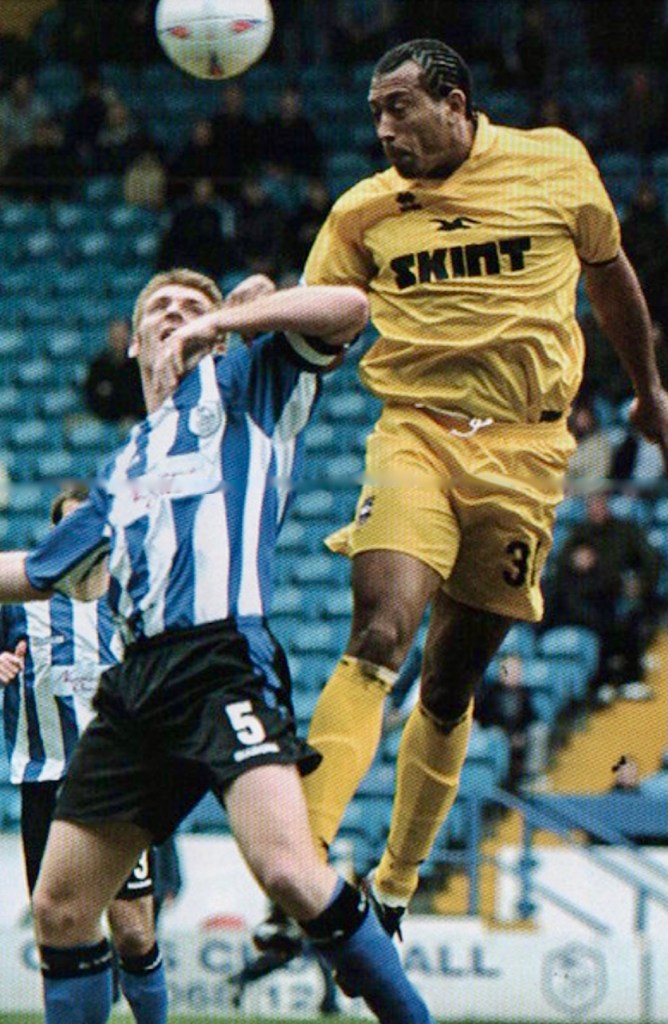
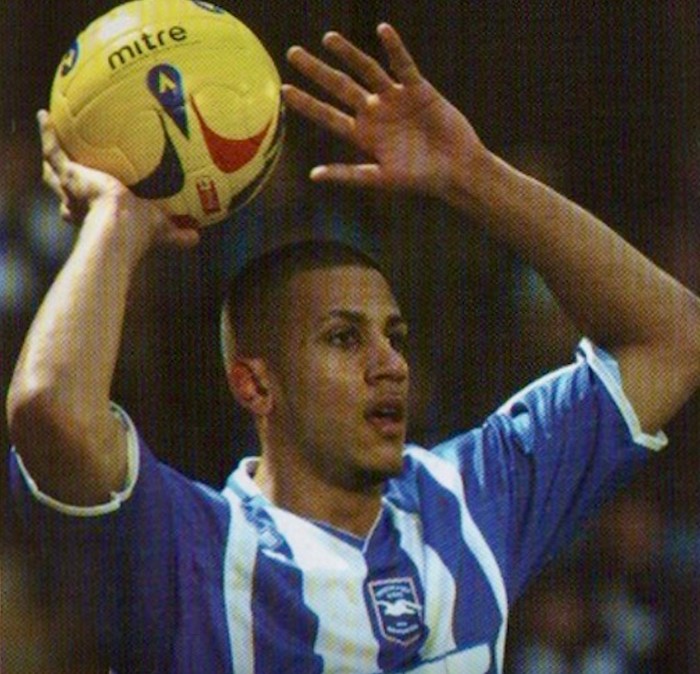
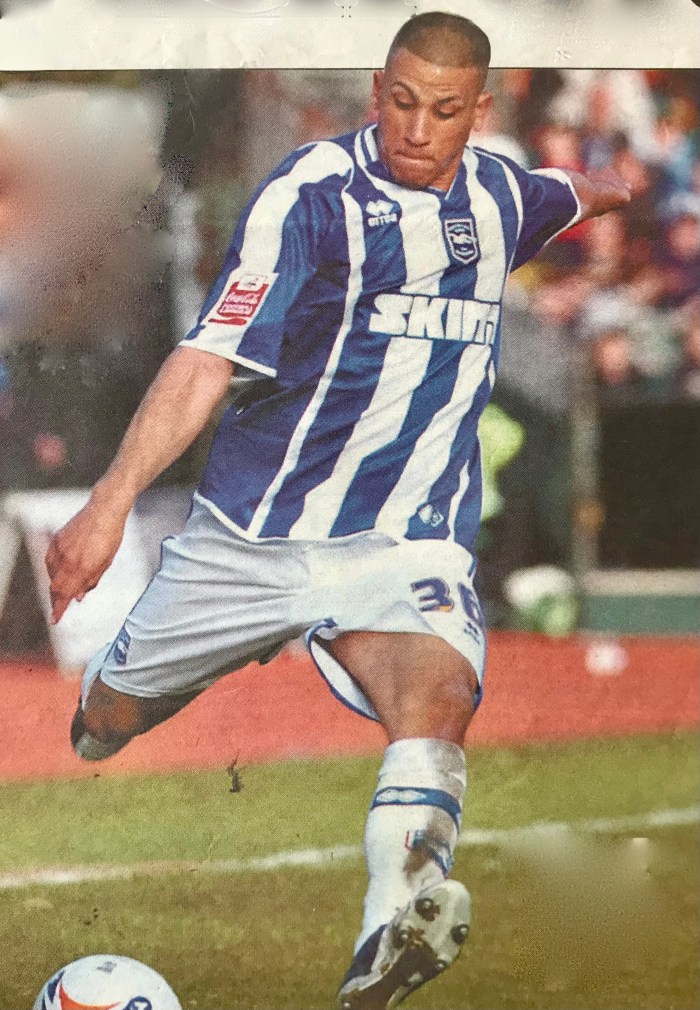
I was at Saltergate on 16 March 2004 when the 6’3” Scot rifled home a 30-yard shot on his debut to extend Albion’s lead to 2-0 over Chesterfield, adding to Guy Butters’ 49th-minute opener.
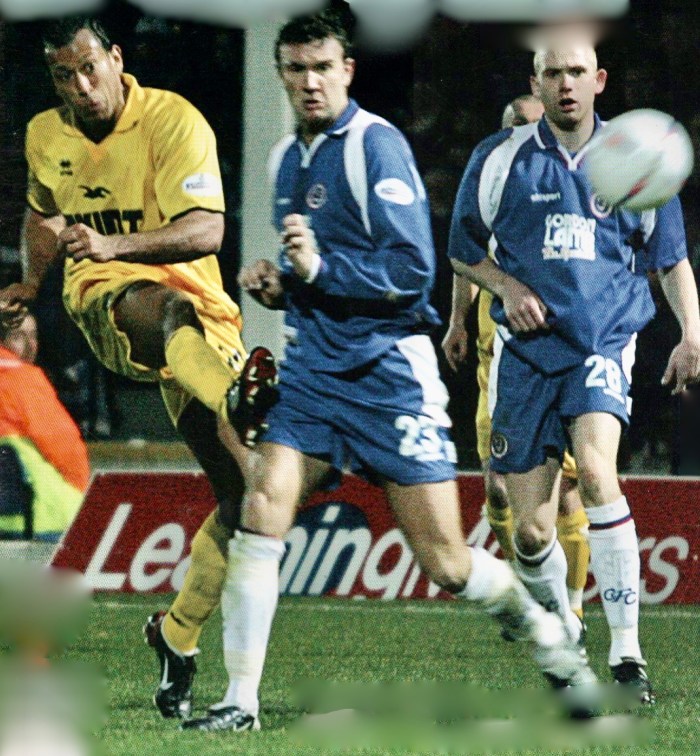
Iwelumo scores from distance on his Albion debut away to Chesterfield

He’d arrived on loan from Stoke City to replace Leicester loanee Trevor Benjamin, who manager Mark McGhee had hoped to keep until the end of the season, but the terms of his deal didn’t extend to the play-offs.

After that great start against the Spireites, Iwelumo was also on target in home wins over his future employer Colchester United (2-1) and Hartlepool United (2-0) and he got the opener in a 2-0 win at Wrexham.
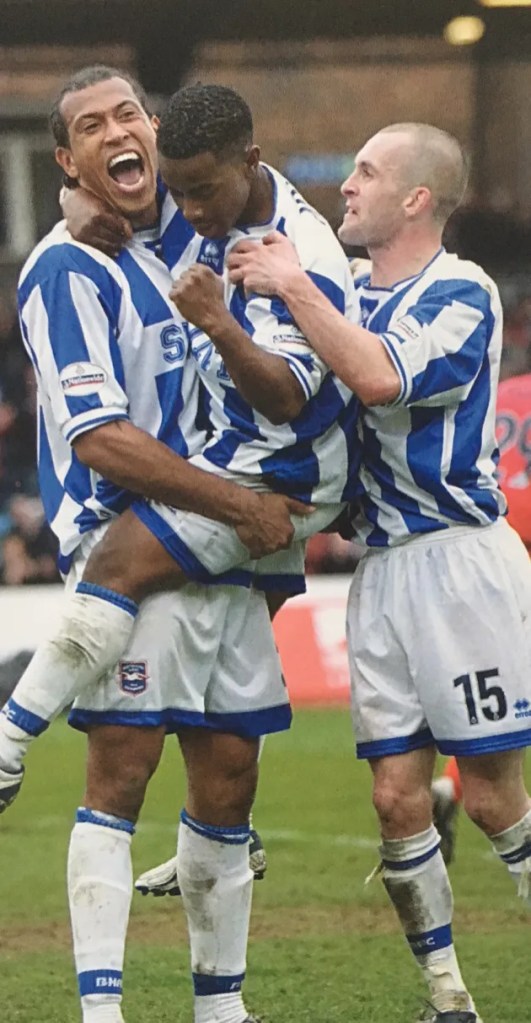
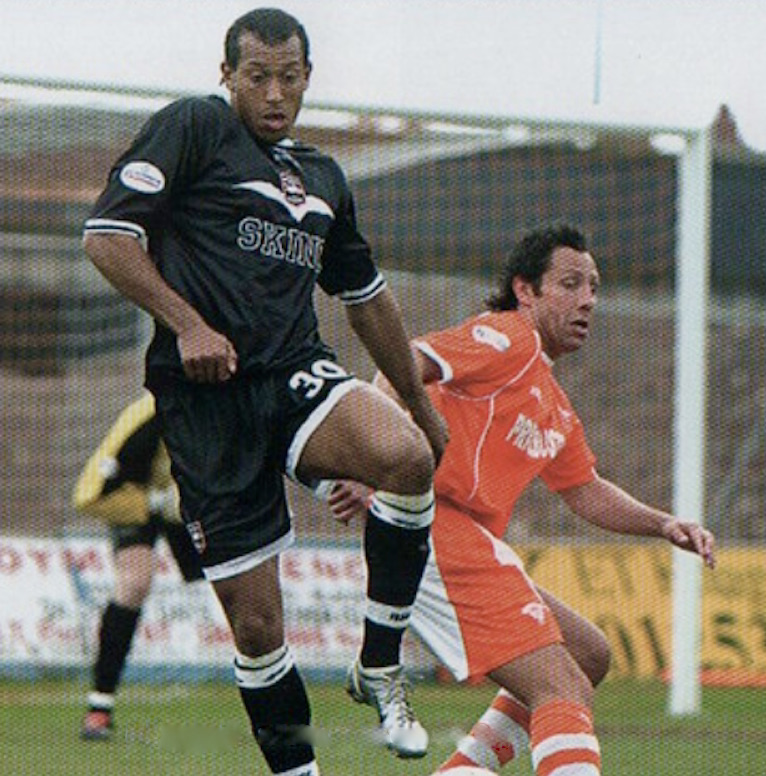
When Albion did indeed reach the play-offs, it was Danny Coles’ foul on Iwelumo as he charged into the penalty area at the Millennium Stadium, Cardiff, that earned the penalty from which Leon Knight scored the only goal of the final.
Released by Stoke at the end of the season, his four goals in 13 games for the Seagulls resulted in the offer of a two-year contract to stay in Sussex, but the deal was never signed.

“I loved it there, I absolutely loved it,” Iwelumo told Spencer Vignes, in a matchday programme interview. “I think everyone knew I loved it there and maybe that was used against me contract-wise.

“I was devastated at the time because the whole club was perfect for me,” he said.

The sticking point was Iwelumo’s request for relocation expenses; house prices in Sussex being a lot higher than in the Potteries. Manager McGhee was holidaying in America and not contactable, and, during the impasse, German side Alemannia Aachen steamed in and offered the Scotsman the chance to play UEFA Cup football, which he snapped up.

That adventure didn’t last long, though, and he was back in England lining up for League One Colchester for the 2005-06 season and he top-scored with 19 goals as they were promoted in second place behind Southend United. At the higher level, he bagged 18 before moving on and spending a season at Charlton Athletic, where he scored 10 in a mid-table finish.
Happy days at Colchester United

He remained in the Championship when, as he was about to turn 30, he moved on to Wolves under Mick McCarthy. On signing him, McCarthy said: “I’m delighted. He adds a physical presence and he’s scored goals. His experience will help. He’s a good character and while it’s nice to have youth and desire it’s important to have that experience.”

Iwelumo certainly repaid that faith quickly, scoring 15 goals in his first 16 games. He scored twice on his full debut in the League Cup against Accrington Stanley and twice more on his first league start against Sheffield Wednesday four days later.

But it was a September 2008 game against Preston in which he scored a hat-trick – an overhead kick, a close-range finish and a penalty – but was also sent off that was his favourite Wolves memory.
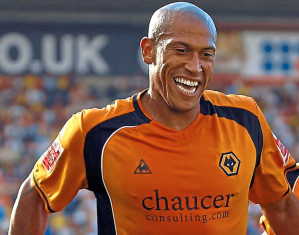
Enjoying his time with Wolves

The dismissal came after a clash with Sean St Ledger, who he shared an agent with at the time, and even though St Ledger joined him in the ref’s room after the game to say it was all accidental, Iwelumo was banned for three games.

Within a month, an unbelievable miss after he’d gone on a substitute to make his Scotland international debut in a World Cup qualifier on 11 October 2008, went down in footballing history. The Daily Record reported: “On his debut in a 0-0 draw v Norway at Hampden, he missed from two yards out. Manager George Burley turned away in disbelief.”

A reflective Iwelumo told the Terrace Scottish Football podcast years later: “That miss against Norway was a low which ultimately, I like to think, represented a bump in the road of an otherwise successful journey through professional football lasting over two decades.”

Back at Wolves, he only added four more goals after his early season burst and a medial ligament injury curtailed his involvement as the Black Country side went up to the Premier League as champions.

His Premier League appearances for Wolves only amounted to 15 because his start was delayed after breaking his metatarsal on a pre-season tour of Australia, plus competition arrived in the shape of Kevin Doyle, a club record signing.

He had a loan spell at Bristol City looking for game time after another spell out injured, and in June 2010 he was on the move again.

Iwelumo has been asked several times about how things subsequently panned out and in one interview he admitted: “I always go through life saying not to have regrets – only regret the things you don’t do – but my own regret in football is that I left Wolves.”

He was faced with the dilemma of only occasional involvement at Premier League Wolves or a regular playing slot on a three-year contract at then-Championship Burnley under Brian Laws.
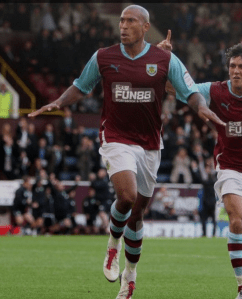
On target for Burnley

“The regret is whether I should have stayed and fought for my place at Wolves,” he told Paul Berry, of the Express and Star in April 2022. “Maybe it would have been different, but at the same time I had a family to support and had been offered three years at a good club on the same money as the year I had remaining at Wolves, in a league where I knew I could still do well.

“I loved my time at Wolves though, and the group of players and staff at that time were unbelievable.”

Born in Coatbridge, Scotland, on 1 August 1978 of a Nigerian father and Scottish mother, Iwelumo joined St Mirren as a youngster, and worked his way through the youth ranks before heading to Denmark and spending two years at Aarhus Fremad.

It was from there that he joined Stoke in 2000. His four-year stay on their books was the longest spell at any of his clubs, although he had three loan spells away, as well as his stint at Brighton he’d previously been to York City and Cheltenham Town.

But he was part of the Stoke side who beat Steve Coppell’s Brentford 2-0 in the League One play-off final in Cardiff in 2002. Brentford included Ivar Ingimarsson, Lloyd Owusu and Steve Sidwell, with Mark McCammon a sub.

Proud Preston must have had nightmares facing Iwelumo because after he’d got that Wolves hat-trick against them, he repeated the feat for Burnley in a 4-3 Lancashire derby win in 2010.

A change in management at Turf Moor brought his time there to a premature end; new boss Eddie Howe preferred Martin Paterson and Charlie Austin when they were fit. Next stop for Iwelumo was Watford, managed at the time by subsequent Burnley boss Sean Dyche.
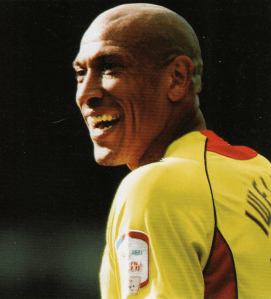
Leaner times at Watford

By then he was 32 and in his first season he played 39 games but managed only three goals, enduring a five-month barren spell in front of goal. The following season he played just eight times for the Hornets and was sent on loan to two League One sides, Notts County and Oldham Athletic, only managing one goal in a total of 14 games at that level.

At Oldham, Iwelumo found himself playing under a manager – and a former Bristol City teammate – who was three years younger. Lee Johnson, at 31, had become the youngest permanent manager in English football in 2013 when he was appointed by the League One Latics.

“Chris actually wanted the job as well when I went to Oldham, so we were having discussions about the job and the club,” Johnson told The Athletic. “One of my first conversations with Chris — remembering he was my friend and helped me get the job — was literally to say: ‘Listen mate, I think your legs have gone, I’m not going to play you’.

“He was saying, ‘This guy has got a bit of b******s to tell me that’. I asked him to effectively be one of my assistants, still come on, still make a difference. He did that fantastically well. That was important. I had to get him onside.”

On his release from Watford, he once again linked up with Brian Laws, who in the 2013-14 season was managing League Two Scunthorpe United. Iwelumo scored twice in 14 games for the Iron in the first half of that season, and looked back on that time in an interview with scunthorpe-united.co.uk, describing how that spell had him making a five-hour round trip from his Midlands home each day.

“There was a lot of things going on at that time, personally as well. I was going through a divorce and that took priority over football to be honest. Understandably, it wasn’t a successful time, or a great time in my career. I was just disappointed that Scunthorpe fans didn’t see the Chris Iwelumo that a lot of other clubs saw. The divorce lasted for about two years and I retired two months after that. “

His last two clubs were Scottish Premiership St Johnstone, where he played eight matches, and English Conference Premier Chester, where he turned out 10 times.

It was some career for a player who’d had an operation at 18 and been told he’d only play football until he was 26 or 27. “I retired when I was 36, but when I signed my contract with Charlton turning 29, I knew I was on borrowed time,” he said. “I had ten operations on my knee in total, and I knew any years beyond that was a blessing.”

Football supporters hadn’t seen or heard the last of him either because he has become a regular pundit on televised football and a familiar voice on talkSPORT.

He earned a Professional Sports Writing and Broadcasting degree at Staffordshire University, set up a property company with a close friend, worked on a weekly podcast with Wolves and also worked with Stoke City.

“It’s been hard, but it’s been great,” he said. “I’m still a little bit envious of those guys who go into jobs and work 9-5 because they know what they’re doing every day. The property portfolio gives me a lot of free time to do what I want to do, including the media stuff. It’s very different week-to-week.”
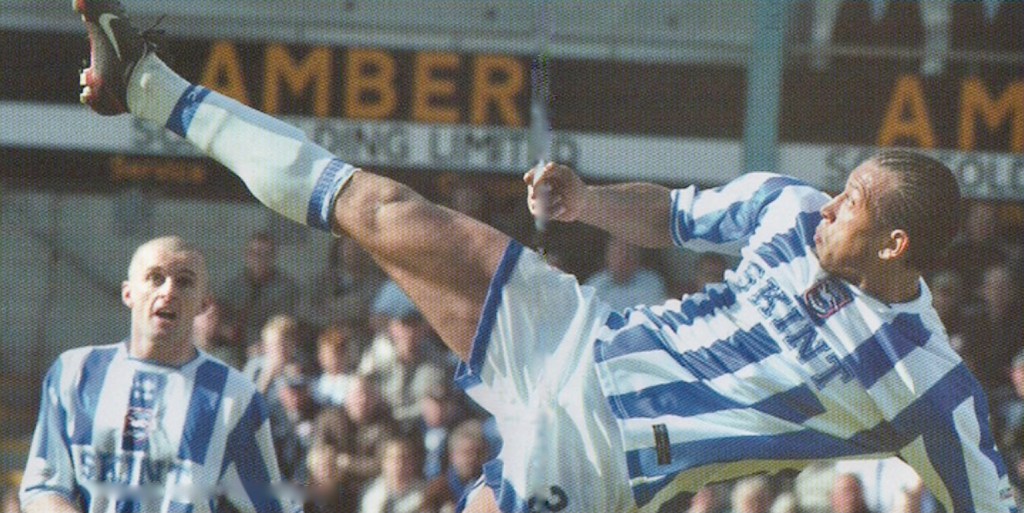
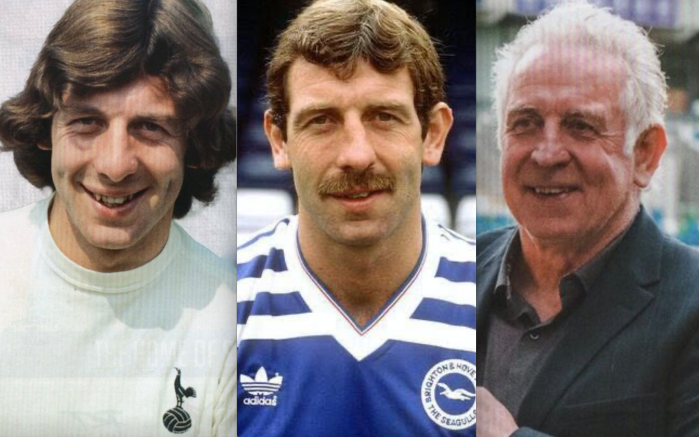
Irish goalscoring legend who knew football’s ups and downs

GERRY ARMSTRONG was a raw youngster not long over from Ireland when he was part of a Spurs team relegated from the top division.

“We were playing poorly. People kept telling us we were too good to go down but what a load of rubbish that was. You don’t want to believe that sort of nonsense,” Armstrong told Neale Harvey in a tottenhamhotspur.com interview.

“We started thinking they were right but you had to earn the right to stay up and we lost too many games, simple as that.”

It was 49 years ago when Armstrong suffered that fate, and Spurs bounced straight back courtesy of a mightily convenient last day 0-0 draw at second-placed Southampton (Brighton finished on the same number of points but were edged into fourth spot on goal difference).

Eight years later, Armstrong, fresh from playing for Northern Ireland at the 1986 World Cup in Mexico, joined Brighton during Alan Mullery’s unhappy second spell in charge, and endured a turbulent season.

He went 17 games before scoring, joined Millwall on loan when Mullery was unceremoniously shown the door in January 1987, and was then recalled by new manager Barry Lloyd  for the final eight games of the season. He only managed one goal (in a home 1-1 draw with Plymouth) to add to the three he scored earlier in the season, and he experienced relegation again, this time from second to third tier, as Albion finished bottom of the league.

Like Spurs, Albion bounced straight back up but by then Armstrong’s involvement was as a perennial substitute (in the days of two subs). In 1987-88, with Kevin Bremner and Garry Nelson on fire up front, he started one League Cup game early in the season and was a sub on no fewer than 25 occasions, only getting off the bench 11 times.

Albion’s Armstrong gets stuck in at Chesterfield, one of his former clubs

He scored twice, once on the last day of August, when he scored away at Northampton after going on as a sub for John Crumplin and, six months later, he went on for the injured Kevan Brown and netted the only goal of the game in extra time as Albion beat Hereford United in an away Sherpa Van Trophy tie.

Chances of a starting berth in the 1988-89 season were limited because Bremner, Nelson and Paul Wood were regulars, but Armstrong managed four starts and went on three of the seven times he was a sub.

He was eventually appointed reserve team player-coach but his time with the club ended ignominiously. Playing for the reserves in a Sussex Senior Cup tie at Southwick in January 1989, he was shown a red card and, as he walked off, he took exception to a comment from a supporter, jumped into the crowd and headbutted the person concerned.

Armstrong left the club a fortnight after the altercation but the matter ended up in court and the footballer received a conditional discharge.

It wasn’t the first time the red mist had descended, though, as Armstrong explained in an interview with Lionel Birnie for watfordlegends.com. He originally played Gaelic football for St John’s GAC and the Antrim senior team.

“I only started playing soccer at 17. I’d played Gaelic football and hurling. I got suspended for an altercation in Gaelic,” he said. “It’s an amazing game but fights used to break out all over the pitch. It was fun, I loved it but it was a very confrontational game.

“There was an incident where I broke a guy’s jaw in several places and got suspended. I didn’t mean to break it but I caught him one.”

It was while he was suspended from playing Gaelic football that he was picked up by Bangor and in no time at all he found trouble in football too.

“I made my debut for Bangor, came on as a sub with 20 minutes to go, got sent off with 10 minutes to go for whacking the centre- half,” Armstrong told Birnie. “I went past him and put the ball in the net to make it 2-1 and he said, ‘Next time you do that I’m going to do you.’

“When he said he was going to do me, I decided to do him first and I whacked him. The manager, Bertie Neill, gave me a bollocking. He chewed a couple of strips off me and I learned that soccer wasn’t a fighting game.”

It was another three years before he signed for Spurs and, by his own admission, “a load of clubs came to watch me but no one took me on because I was very inconsistent, still learning about the game, really didn’t get to grips with the offside”.

The Gaelic game helped him build stamina and strength and soccer made him sharper. After Bangor won some trophies, Spurs invited him for a week’s trial and he told Harvey: “I thought I did okay but I heard nothing for weeks.

“Arsenal were trying to sign me but, out of the blue, Terry (Neill) came over (in November 1975) and signed me on a one-year contract, with a one-year option. It was an opportunity I couldn’t turn down.

“I was overawed. I’d never been to London before, so it was like ‘Paddy’ coming to the big city and being lost. But all the lads were great and there were a lot of Irish boys, like Chris McGrath, Noel Brotherston and, of course, the legendary Pat Jennings.”

Armstrong was a late starter at 21 but he lapped it all up, enjoying training and working on his ball skills in the gym in the afternoons with Peter Shreeves. After six months, he broke into the first team.

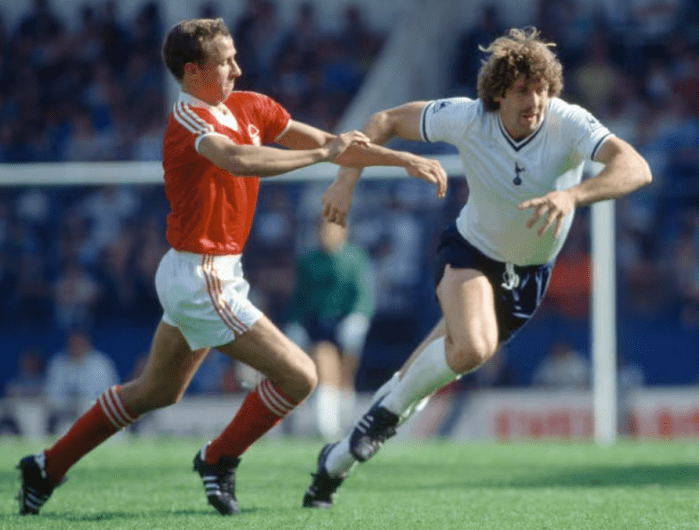
Armstrong in Spurs action against Nottingham Forest’s John McGovern

He made his debut on the opening day of the 1976-77 season, in a 3-1 defeat at Ipswich and lost his place after only three matches. He was restored to the first team in February for the final 18 games but Spurs slid all the way to relegation.

Armstrong reckoned with hindsight that it was a five-week pre-season tour that took its toll on the squad. They travelled to Canada, USA, Hawaii, Fiji, New Zealand, Australia and India and, he said: “When I got back, I was absolutely knackered. But we only had 10-12 days to recuperate before pre-season began.”

After Neill left for Arsenal, his replacement, Keith Burkinshaw, often played Armstrong as a central defender having liked what he saw in a pre-season game.

Armstrong told Birnie: “He wanted me to play there because I was quick, strong, good in the air. It was nice in one sense but I didn’t want to play at centre half, I wanted to be up front where the action is.” Even so, he also played at right-back, in midfield and wide on the right.

Brighton fans of a certain vintage remember all too painfully how Spurs managed to gain promotion on the last day of the season.

Armstrong recalled: “We nearly lost it three games from the end when we lost 3-2 at home to Sunderland after I made a mistake playing at centre-half. But then we beat Hull and went to Southampton needing a point.

“It was tense, obviously, but they needed a point as well and it was one of those games where nobody really tried to push on because of the fear factor. We got our point and went off to Cornwall for four days to celebrate!”

For a while, Armstrong and Chris Jones were a forward pairing for Spurs but he admitted that neither of them scored enough goals and the beginning of the end for both of them came when Tottenham bought Steve Archibald for a million and Garth Crooks for £650,000.

Armstrong dropped down a division to join Watford in November 1980 for a £250,000 fee – at the time, a record sale for Spurs, and a record buy for the Hornets. He signed in the same week that Graham Taylor also signed Armstrong’s fellow countryman Pat Rice from Arsenal.

He was part of their promotion-winning squad of 1981-82 and said: “Graham Taylor taught me so much about movement and he took my level of fitness up another notch.

“I was fit and strong but I hadn’t tapped into all my resources. The two years at Watford prior are one of the reasons I had such a good World Cup [in 1982].”

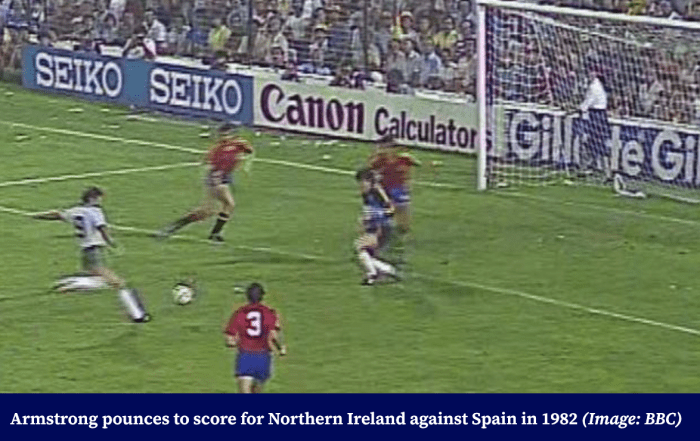
Indeed, it was his winning goal for Northern Ireland against Spain at the 1982 World Cup that he is most remembered for and Armstrong later told The Argus: “If I had to pick one moment in football to relive again it would be that. It would be the highpoint of any player’s career to perform in the World Cup finals. But to score the winning goal against the home nation would be a dream. It was for me.”

In an interview with Andrew French of the Watford Observer, he recalled: “The goal came early in the second half. I was playing as a right-sided midfield player, and I won the ball off the Spanish left-back Gordillo.

“I went on a run for about 60 yards, went past a couple of players – I remember Xavi Alonso’s father, Joaquin, tried to clip my heels – but I then played the ball out wide to Billy Hamilton and kept my run going.

“Billy put in a great cross which the keeper, Luis Arconada, came for and palmed straight out to me. I was about 12 yards out and I just got my head and my knee over the ball and hammered it as hard as I could, and it hit the back of the net.

“It was actually a funny one as the ground went silent because the Spaniards weren’t going to celebrate, and the South American referee had been so poor and given us nothing. I was worried and I remember thinking ‘why isn’t anybody cheering?’

“But then I saw Norman Whiteside and Sammy McIlroy throwing their hands in the air, and then I looked at the ref and he was pointing to the centre. Once I knew he’d given the goal, that’s when the celebrations started.”

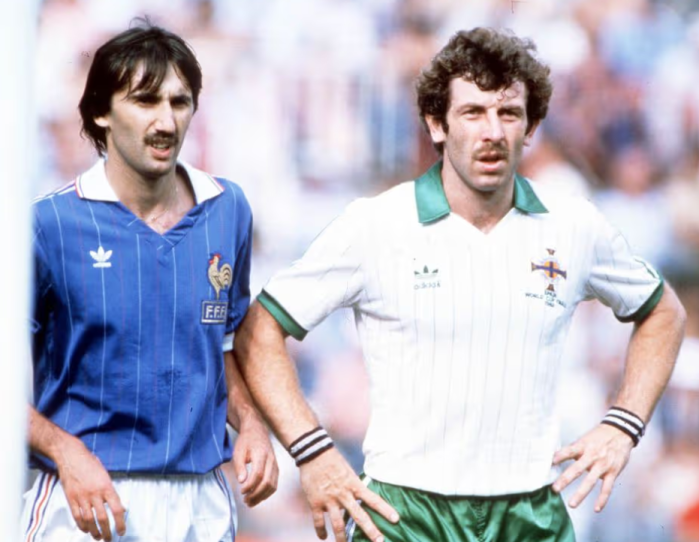
Armstrong had already netted in a 1-1 draw with Honduras and in the next round he scored in Ireland’s 4-1 defeat against France (pictured above); those goals were enough to earn him a golden boot (right) for best British Player of the Tournament.

On his return to the UK, he was back in the top flight but was sidelined for several weeks with a broken ankle sustained when he fell awkwardly in a reserves match.  Towards the end of the season, Real Mallorca bid £200,000 for him and he spent two seasons playing in the Spanish league.

Armstrong told Birnie: “I didn’t want to leave. It was a case of Mallorca coming in. It was 200 grand so the club would get almost all their money back on me after three years, which was not a bad deal at all.

“When you go to talk to them and see the money they are going to offer and you realise the tax situation is very different there suddenly it is very attractive. You realise you can make in two years at Mallorca what you could make in six or seven years at Watford or any other English club.

“There was a challenge in Spain, playing in a different country, learning a different language and it did appeal to me in ways other than the money. I was 30, 31, so I thought I’d give it a go because I knew the opportunity would probably not come up again.”

The experience served him well because after his playing days were over he was a TV co-commentator on Spanish football.

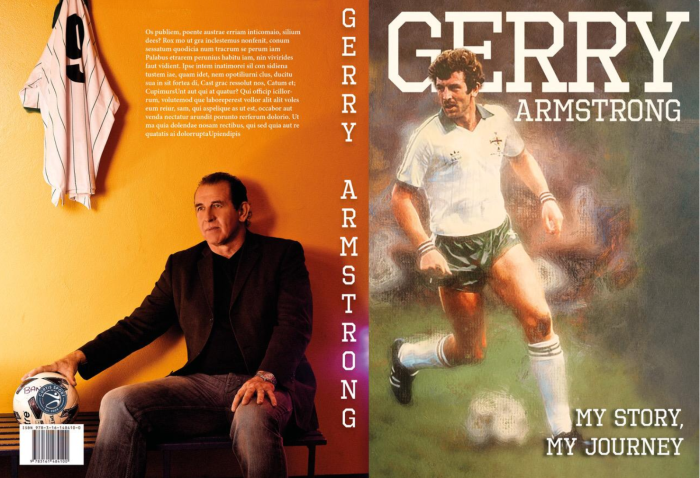
In that respect, Armstrong’s typically Irish gift of the gab long made him an ideal pundit for broadcasters and a journalist’s dream interviewee: tales from his playing days have filled plenty of columns and air time over a good many years, and in 2021 Curtis Sport published his autobiography, Gerry Armstrong: My Story, My Journey.

Born in the County Tyrone village of Fintona on 23 May 1954, Armstrong was a teenager in Belfast at the height of Northern Ireland’s sectarian and political conflict. “There were bombs going off, paramilitaries burning buses and it was a horrific time,” he said.

“At times it felt as if you were living in a movie set, but it was real life. The book isn’t just about the highs, it also paints a picture of what it was like growing up back then.”

Armstrong won 63 caps for Northern Ireland and scored 12 goals, making his debut in 1977 at the age of 22 alongside George Best and Pat Jennings in a 5-0 friendly defeat to West Germany in Cologne.

His first two international goals were scored in a 3-0 World Cup qualifying win over Belgium at Windsor Park seven months later.

Without a doubt, though, 1982 was when he was at the pinnacle of his career. While he’ll forever be remembered for the winner against Spain, he also fondly remembered scoring against Portugal and Israel in qualifying.

“We had to beat Portugal at Windsor Park and we only got one chance that night. Terry Cochrane crossed and I managed to head it into the roof of the night,” he said.

“That win set us up and it then came down to the last game at home to Israel which we had to win to reach Spain. I managed to score the winner and the noise was unbelievable.

“There were 43,500 people inside Windsor. It was only supposed to hold 40,000, so I don’t know how everyone got in. But that’s one of a lot of very special memories.”

By the time of the 1986 World Cup, Armstrong had been in a bit of limbo. He’d returned to the UK the previous August and signed for West Brom on a free transfer but he struggled with travelling to and from London to train and play, didn’t see eye to eye with manager Ron Saunders, and picked up some injuries.

It was former Spurs teammate John Duncan who rode to his rescue. Duncan was in charge of Division Three Chesterfield and he took Armstrong on loan and then signed him permanently, giving him a dozen games, which were enough to put him in contention to be selected by Northern Ireland for the upcoming World Cup in Mexico.

Billy Bingham’s side didn’t make it past the group stage (drawing 1-1 with Algeria; losing 2-1 to Spain and 3-0 to Brazil) and Armstrong only saw action as a 71st minute sub in the Brazil game. Albion winger Steve Penney started the first two matches and was subbed off in each.

It was while Armstrong was away with the Irish squad that Mullery made contact with an offer for the following season.

Although Brighton was the last professional English club Armstrong played for, he lived in the area for several years afterwards. His second wife, Caron, came from Brighton and although his final games as a player were at Glenavon, back in Ireland, he spent some time as a player-coach at Crawley Town, who were in the Beazer Homes League at the time.

In November 1991, he became manager of Worthing and led them to a promotion before being appointed assistant manager of Northern Ireland by his former teammate Bryan Hamilton. He reprised that role for two years under Lawrie Sanchez between 2004 and 2006.

Pole in goal Tom experienced Cup highs and lows

THERE’S plenty of FA Cup history between Brighton and Manchester United and a goalkeeper who played for both has his own memories of the competition – not all of them good!

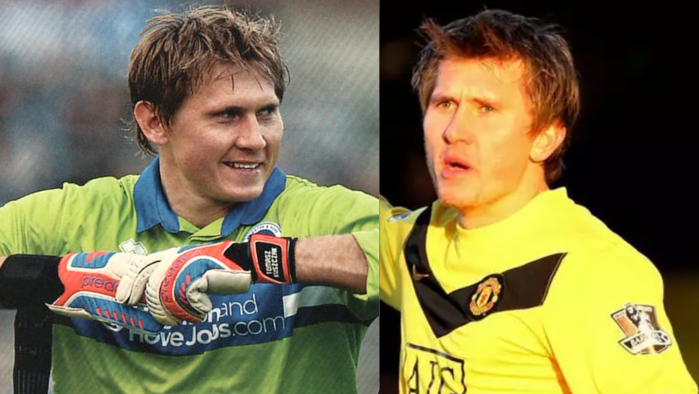
Although Tomasz Kuszczak played 32 league games for United, as a back-up at Old Trafford rather than first choice, he often found himself called upon in cup matches (eight FA Cup, 10 League Cup – including collecting a winners’ medal in 2010 – and 11 European games).

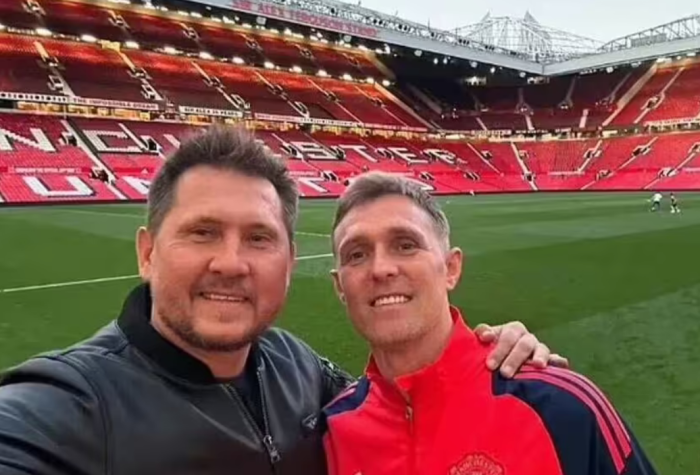
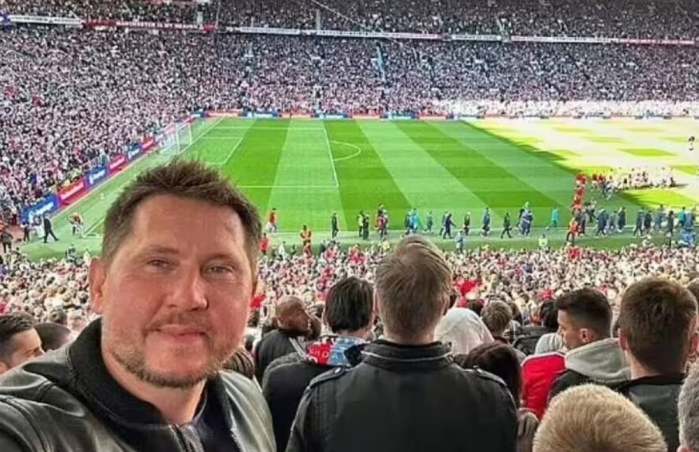
In April 2025, Kuszczak paid a return visit to Old Trafford to watch United’s 0-0 draw with Man City and snapped some selfies watching from the stands and (above) on the pitch with former teammate Darren Fletcher, now in temporary charge at United following the dismissal of Ruben Amorim.

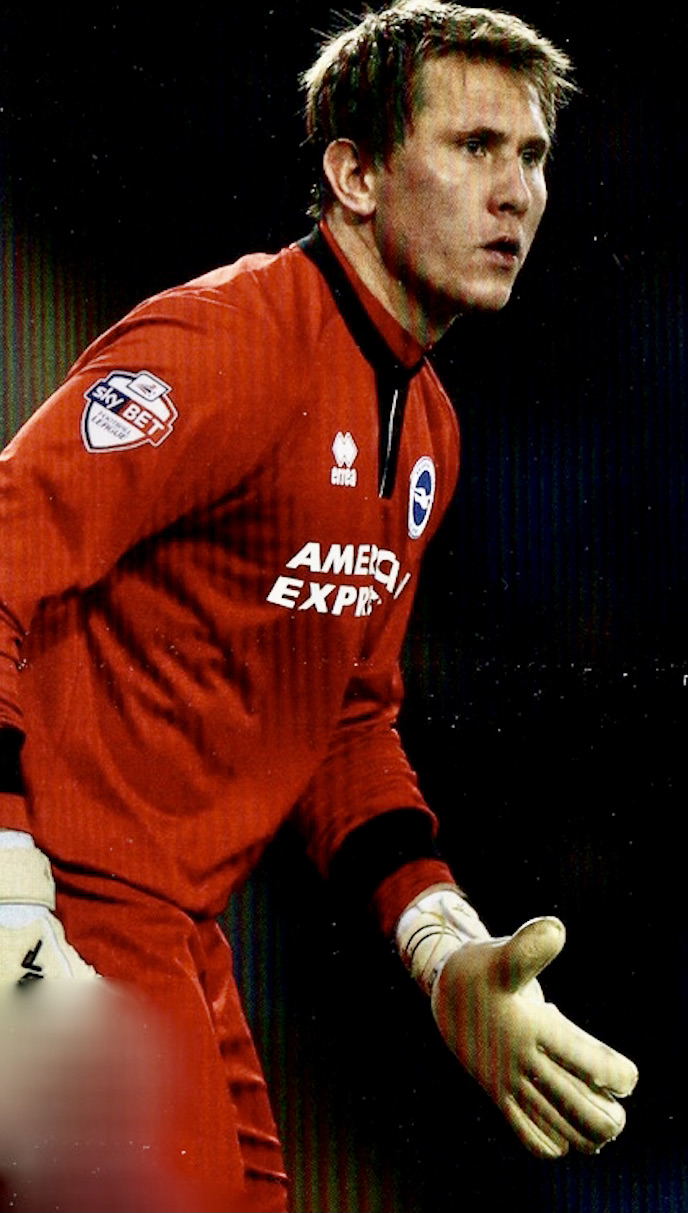
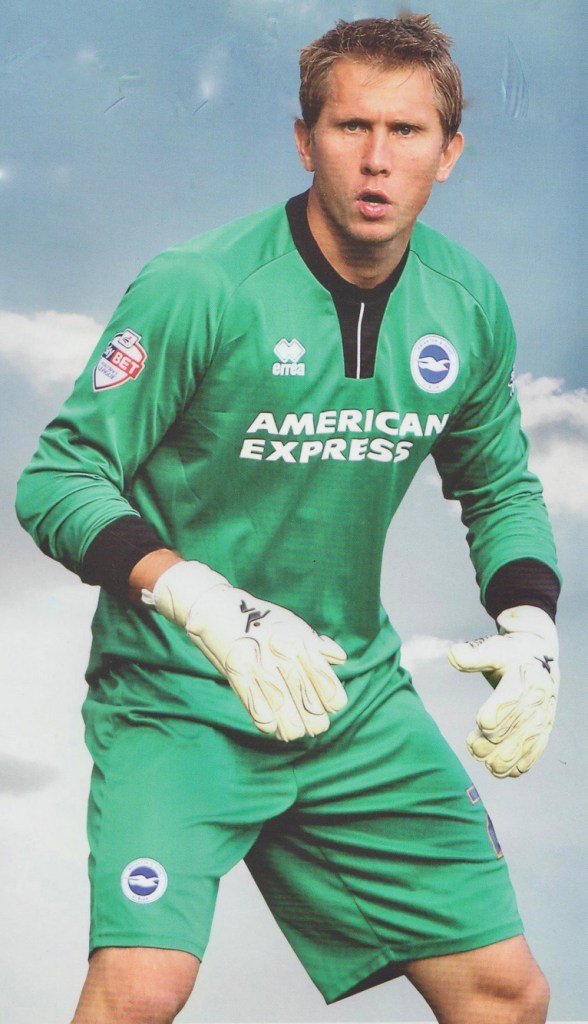
At Brighton, where Kuszczak was the first choice for two seasons, he found the goalkeeping duties reversed for FA Cup ties and he gave way to either Casper Ankergren or Peter Brezovan.

Signing the Polish international for Gus Poyet’s Championship Brighton side was something of a coup and the boss told the club website: “There were clubs in England and abroad interested in Tomasz, but it says a lot for the ambition of this club that he wanted to sign for Brighton.”

Poyet later told The Argus: “When we had the chance, we got him. You don’t have too many chances sometimes to sign this sort of player, so it was very important.”

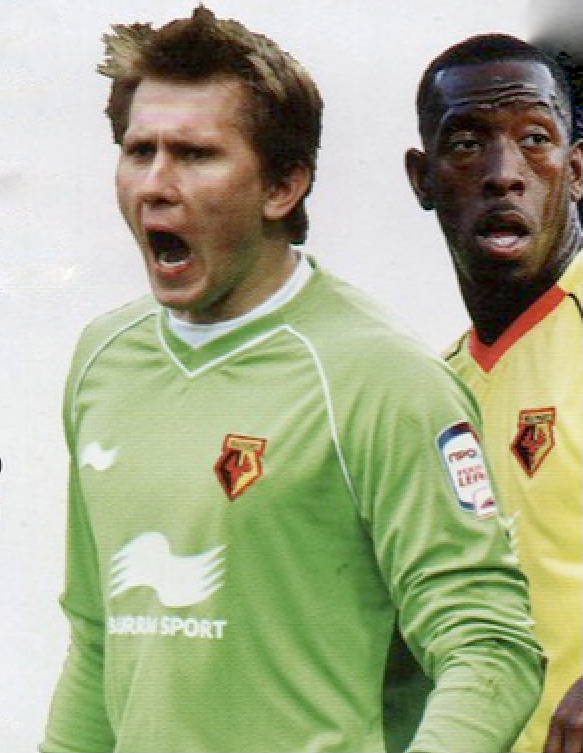
Kuszczak said one of the reasons he chose to join the Seagulls was because of what he’d seen when playing against them the previous season, while on loan at Watford.

“I was very impressed with the way the team played – it was totally different to the rest of the Championship and more like what I was used to at Manchester United.

“This team likes to pass the ball, they like to create, they are attractive to watch. The way Brighton play is the future of football.

“I had other clubs who wanted to sign me but my heart told me that this was the right choice.”

Kuszczak continued: “I have played Premier League football for eight years, with West Bromwich Albion and Manchester United, and I believe the structure is in place here to join them.

“The manager and coaching staff, the team, stadium, crowds, through to the plans for the new training ground, everything is geared up for playing at the highest level and I could sense that ambition to be a top club straight away.

“The Premier League is where I want to be again and I believe I can get there with Brighton. This club is heading in only one direction, and I want to play my part in helping us get there.”

During his time at Manchester United, five of Kuszczak’s eight FA Cup appearances were in the 2007 competition when United reached the final – although first choice Edwin van der Sar took over between the sticks for that game, when Chelsea won it 1-0.

The 2008 competition certainly wasn’t one Kuszczak remembered fondly. In a quarter-final against Portsmouth at Old Trafford on 8 March 2008, he went on as a sub for the injured van der Sar at half-time, but 30 minutes later was handed a straight red card for fouling Milan Baros.

Rio Ferdinand took over in goal but failed to save Sulley Muntari’s penalty, the only goal of the game.

In 2010, Kuszczak was in goal when League One Leeds United, with Ankergren in goal, pulled off a shock third round win at Old Trafford – United’s first exit at that stage of the competition since 1984 (the year they went into it as holders after beating Brighton in a replay in 1983).

Jermaine Beckford’s 19th minute goal clinched it for the Yorkshire side against a United who had Danny Welbeck playing up front alongside Dimitar Berbatov and Wayne Rooney.

There was some consolation the following month when United won the League Cup at Wembley, beating Aston Villa 2-1. James Milner opened the scoring from the penalty spot for Villa, sending Kuszczak the wrong way. But goals from Michael Owen and substitute Rooney clinched it for United.

The following year, Kuszczak was again in goal for United’s FA Cup third round tie at home to arch rivals Liverpool which United edged with an early goal by Ryan Giggs. Liverpool captain Steve Gerrard was sent off just past the half-hour mark for a two-footed tackle on Michael Carrick.

But Anders Lindegaard was chosen ahead of Kuszczak as United marched to the semi-finals, where they were beaten 1-0 by Manchester City. In the fifth round, United only narrowly overcame Crawley Town, who had former Albion ‘keeper Michel Kuipers in goal.

By the time the 2011-12 season came round, Kuszczak had slipped down the list of United custodians, with David de Gea first choice, and Lindegaard and Ben Amos also ahead of him.

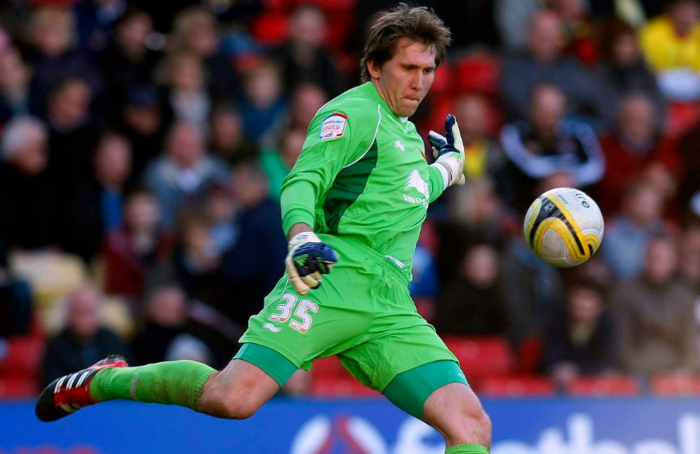
In February 2012, Kuszczak was loaned to Championship side Watford, where he made 13 appearances, including that third-to-last game of the season at the Amex, which finished 2-2. Former Seagulls promotion-winner Chris Iwelumo was in Sean Dyche’s Hornets side that day when goals from Troy Deeney and Sean Murray (penalty) put the visitors ahead at half-time and second half replies from Inigo Calderon and Will Buckley, against his former club, ensured a share of the points.

It was on Kuszczak’s release from United in June 2012 that he moved to Brighton.

Born in Krosno Odrzańskie in western Poland on 20 March 1982, the son of a Polish army colonel, Kuszczak grew up in Wroclaw, the city on the River Odra whose Tarczyński Arena was a host stadium for the 2012 Euros.

When he was 11, Kuszczak fancied himself as a striker but soon realised he wasn’t quick enough.

“I was always taller than everyone else, a bit like my father and brother, and I loved climbing, jumping from trees, taking a risk, so the position of goalkeeper seemed idea to me,” he said in a matchday programme interview.

“My father and brother would take shots at me, hard shots as well, and I enjoyed trying to stop them.”

He began his career with one of his country’s top teams, Śląsk Wrocław, and a year after earning his first pay packet at the age of 16 crossed over the border to Germany to play for KFC Uerdingen 05 and Hertha Berlin.

Although he made 87 appearances for the Berlin side’s reserves, he was unable to dislodge ex-Palace ‘keeper Gabor Kiraly and Christian Fiedler to claim a first team spot.

He was capped at under 16, under 18 and under 21 level (14 caps) by Poland and, while never first choice ‘keeper for the senior international side, he made his debut in 2003, in a 4-0 win over Malta, and played 11 times for his country, the last time in 2012. He initially took over from Liverpool keeper Jerzy Dudek but, invariably, Artur Boruc and Wojciech Szczesny were picked ahead of him.

He moved to the UK in 2004 when Gary Megson signed him for West Brom. He was reserve ‘keeper behind Russell Hoult in his first season at The Hawthorns but managed 28 league appearances when competing for the gloves with the often-injured Chris Kirkland in his second season.

In one of those appearances, against Wigan Athletic in January 2005, he pulled off a spectacular save to deny Jason Roberts which was subsequently voted Save of the Season by Match of the Day viewers.

Four months later he went on for an injured Hoult at Old Trafford after only 19 minutes and he recalled: “I had a fantastic game, saving everything that came my way and we ended up drawing 1-1. It was a game which ultimately got me my move to United.”

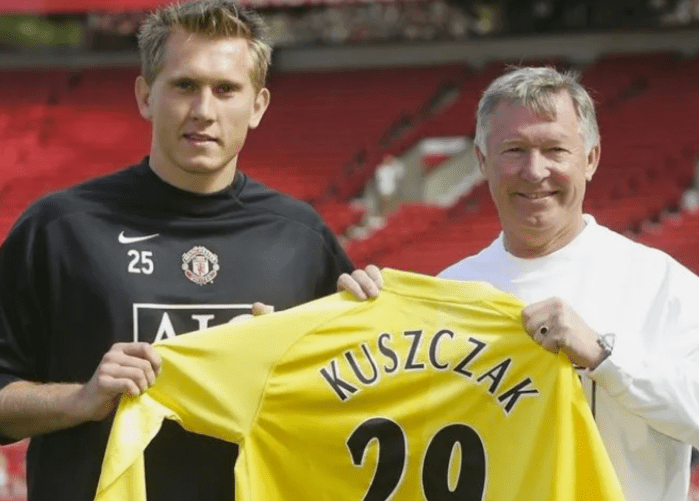
Sir Alex Ferguson captured Kuszczak from West Brom

In a somewhat complicated transfer deal, Man U signed Kuszczak in the summer of 2006 in exchange for United’s former Albion loanee, Paul McShane, and young goalkeeper Luke Steele, but the first year of the arrangement was on a loan basis. In five seasons at United, he played a total of 61 games.

After he retired from playing Kuszczak completed a degree in sports journalism and he had already shown his writing ability during his time with the Seagulls, compiling a piece for The Footballers’ Football Column in December 2013 which appeared in the Daily Mail.

Perhaps he also showed his true colours regarding dropping down into the Championship when he wrote: “I miss the Premier League a lot. The idea around moving to Brighton was to get more games and put myself on the market.”

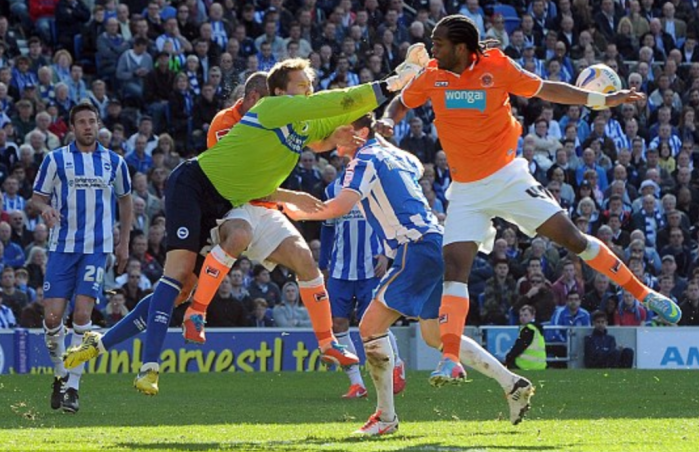
Kuszczak in the thick of it for Brighton against Blackpool

Although he added: “This move was all about giving me the opportunity of playing in the Premier League in the future. I would love to go with Brighton – that’s the aim. We’re ambitious and want promotion.

“It may sound arrogant but my place is in the Premier League. I came to England with West Bromwich Albion and enjoyed my time there, as I did at United. I want to be back in business in front of great crowds.

“I want my friends to be watching me on TV every week and have a chance of challenging the best in the world.”

Kuszczak certainly addressed the issue of more playing time during his two seasons with the Albion, completing 89 appearances across the two successive play-off promotion campaigns, initially under Poyet and then Oscar Garcia.

But within days of Garcia’s resignation after the play-off semi-final defeat to Derby, it was announced Kuszczak was being released.

There were a number of unsubstantiated and colourful reasons as to why he wasn’t retained by Brighton, but Andy Naylor in The Argus said neither Garcia nor his replacement, Sami Hyypia rated his ability with his feet or his distribution skills.

For around six months, Kuszczak was unable to find a new club but then Kenny Jackett took him to Wolverhampton Wanderers where he played 13 games deputising for the injured Carl Ikeme.

Midlands rivals Birmingham City swooped to sign him in the summer of 2015. Even though Harry Redknapp signed Brighton’s David Stockdale as first choice ‘keeper at St Andrew’s in 2017, Kuszczak found himself back in the first team after Steve Cotterill arrived as manager.

He spent four years at St Andrews, finally leaving in 2019 having made 89 appearances for the Blues.

After hanging up his gloves, he returned to Poland and started up his own construction company building houses and apartments.

He also completed his journalism studies and obtained his UEFA A coaching licence. He coached the Polish national team goalkeepers for six months between September 2023 and March 2024.

Kuszczak took a selfie as he watched from the Old Trafford stands in April 2025

Jamie Moralee’s pitfalls a valuable lesson for future prosperity

IT WOULD BE an understatement to say striker Jamie Moralee had mixed fortunes during his time with Brighton.

A one-time £450,000 signing, the former Crystal Palace player joined the lowly Seagulls on a free transfer when they were playing home games in exile at Gillingham in 1998-99.

His lack of goals earned a certain amount of derision from the handful of Albion followers who supported the club in those dark days.

And on one infamous occasion, in March 1999, he managed to get himself sent off within a minute of going on as a late substitute, without touching the ball.

Moralee sees red at Scunthorpe

To make matters worse, the punch he threw didn’t even catch the opponent, John Eyre, who promptly added to Albion’s woes by completing his hat-trick in a 3-1 home win for Scunthorpe United.

The Argus put Moralee’s “moment of madness” down to frustration at so regularly being on the subs bench (16 times – and only sent on in eight of them).

“He did not actually connect, but the intent was obvious and the resulting red card inevitable,” the newspaper reported.

Signed at the start of the season on a month-to-month contract, Moralee had a run of 14 starts under Brian Horton but after scoring just the one goal (in a 3-1 defeat against Mansfield), he was dropped to the bench.

Just before Horton quit to move to Port Vale, he gave Moralee a contract until the end of the season and in January, after Jeff Wood briefly took charge, the player hoped his impact as a sub when laying on a winning goal for Paul Armstrong against Scarborough would help change supporters’ views of his contribution.

“It was nice to be a bit of a hero for a change,” he told The Argus. “I was a bit unlucky with a goal which was disallowed at Chester in the game before and I just want to get on with Brighton and do my best.

“I’ll take the credit because I’ve not had much this season. Hopefully the corner has turned for me.”

Moralee said he had been asked to play several different roles and reckoned much of the criticism aimed his way was unjustified.

Moralee gets stuck in

“I feel I have done all right,” he maintained. “I don’t think the supporters really appreciate me and they let me know that when I came on, but I will just keep doing my job.

“The players give me all the support I need and I am confident enough to go out and do the business. I certainly won’t hide.”

Having missed several matches after the red mist descended at Scunthorpe, a third manager arrived in the shape of Micky Adams, and Moralee started the last seven matches of the season under the new boss, scoring once.

Moralee slides in

But it wasn’t enough to earn a new deal and Moralee was one of eight players released at the end of the season. Having played under three managers in one season for the Albion, there was swift change in the dugout at his next port of call too.

He began the next season up a division with Colchester United, whose manager Mick Wadsworth said: “I remember him as a very outstanding young player with Millwall. We watched him several times during last season.

“He is very sharp in and around the penalty box and his hold-up play is exceptional – a quality we were sadly lacking in the season just gone.

“Jamie was an outstanding prospect as a young player with Millwall and was sold on to Watford for £450,000 around five years ago before his career became blighted by injuries.

“Last season was his first full season for some time as he battled to shrug off a string of injuries and has probably used Brighton to get back to full fitness and match sharpness.”

The season was only three games old when Wadsworth resigned and was replaced by Steve Whitton who saw his United side beat Reading 3-2 in his first match (Warren Aspinall scored twice and Nicky Forster scored one for the visitors). Moralee, making his league debut for Colchester, was subbed off on 76 minutes.

After that, Colchester went on an 11-game winless run and other than a positive spell in January, had a forgettable season and finished third from bottom. Moralee made 21 starts plus eight as a sub.

Born in Wandsworth, London, on 2 December 1971, Moralee joined Palace as a YTS trainee, working his way through the levels alongside Gareth Southgate. He was a regular in the Palace reserves playing up front with Stan Collymore.

But after just two first team starts and four sub appearances under Steve Coppell, he was traded as a makeweight in exchange for Millwall’s Chris Armstrong.

Happy days in the Lions’ Den

When unveiled to Lions fans in a matchday programme article, Moralee boldly declared: “Having broken though into first team football with Palace last season and learned from strikers like Mark Bright and Garry Thompson, I feel I’m ready to come to a club like Millwall and score twenty goals a season.”

Amongst the goals for Millwall

Of the player he swapped places with, he even went as far as to say: “Chris was quick and by all accounts did very well here in the opening games this season, but I’ll score more goals than him.”

Continuing in a similar vein, he added: “I’m most effective in the box, I like the ball into my feet and, at the risk of sounding over confident, if I get the chances I’ll score goals for you.”

True to his word, Moralee did get amongst the goals for Mick McCarthy’s side and 20 goals in 63 appearances (plus 13 as a sub) over two seasons earned him a £450,000 move to Watford.

Moralee made a big money move from Millwall to Watford

But the Glenn Roeder signing had a tough time with the Hornets, only seeing his fortunes change after Graham Taylor returned to the club as manager. He explained the circumstances in a full-page piece in the Wolves v Watford matchday programme of 30 March 1996.

“Glenn bought me to play up front with a big target man, which I was used to at Millwall. But the partners I had were all smaller than me and I was now the big target man, a role that did not suit me and one that I do not enjoy.

“I had always been used to scoring, something that wasn’t happening, and this resulted in a loss of confidence.

“The intentions were there, but I needed a big target man to feed me the ball. It just did not work out.”

When Taylor took over from Roeder, Moralee got back the starting place he’d lost and learned how to play as a lone striker. “It is a lot of work but I believe I have developed into a better all-round player,” he said. “It is nice to have a manager with a little faith in me.”

After Watford were relegated to Division Two, in the summer of 1996 he moved on a free transfer to Crewe Alexandra where he didn’t register any goals and made just 13 starts and six sub appearances.

He ended the 1997-98 season with Royal Antwerp in Belgium and spent pre-season with Fulham before Horton took him on at the Albion, initially on a monthly contract basis, at the start of the 1998-99 season.

After his season at Layer Road, he linked up with former Crystal Palace colleague Peter Nicholas at Welsh Premier League side Barry Town. He spent three seasons with Barry, winning the Welsh Premier-Welsh Cup double each season. He was also involved in three Champions League campaigns with the club and netted 59 goals in 96 appearances.

Financial problems at Barry led to Moralee moving on and he had spells with Forest Green Rovers, Newport County and Chelmsford City before ending his playing career in 2006.

After retiring from playing, Moralee set up his own football agency, New Era, in conjunction with former Albion teammate Peter Smith, with Rio Ferdinand as its highest profile client.

In an interview for a webinar, Moralee said the agency aims to teach up and coming talented footballers how to avoid the pitfalls that affected his own playing career.

Describing his own “very up and down career with a couple of highs and many, many lows”, he explained to The Player, The Coach, The Person webinar: “When I got a few quid, I was spending it on all the wrong things. Buying cars and watches and going out too much; drinking too much. I wasn’t investing it.”

Hard work, application and a ruthlessness to succeed in life are aspects he’s now passing on having realised they were attributes that would have made a difference to his own career as a player.

“I needed to stay in football in some capacity,” he said. “I didn’t want to be a coach or manager.I knew that young players, if they got to the edge of the pitfalls I fell down, I could help them.”

He is particularly pleased to have helped players who had rejection in their early days who went on to have successful careers, such as Welsh internationals Chris Gunter, Neil Taylor and Ashley Williams.

Moralee spoke openly about his 20-year friendship with Rio Ferdinand in a 2018 film for the ‘Best Man Project’ of The Campaign Against Living Miserably (Calm): an initiative to celebrate the power of friendships which supports men in looking out for their mates.

Opening up on the power of friendships in football

Welbeck – “something really exceptional you don’t find in many players”

DANNY WELBECK was still at school when he made his senior football debut in the League Cup.

A first-year scholar at Man Utd, and just 17 in September 2008, Welbeck made his bow against Middlesbrough in front of a 53,000 crowd at Old Trafford. United won 3-1 with goals from Ronaldo, Giggs and Nani. And they went all the way that season, beating Tottenham on penalties in the final at Wembley.

Although Welbeck had been subbed off 10 minutes into the second half, it was the first of many medals he collected and in five years at Arsenal, after his £16m 2014 transfer deadline day move from Old Trafford, he twice collected FA Cup winners’ medals (even though he missed the 2015 final through injury when Aston Villa were humbled 4-0).

When Welbeck scored the decisive quarter-final goal for Arsenal that knocked United out of the 2015 competition, manager Arsene Wenger praised the player and said: “We all want to do well when we play against our former club, to show that you are a great player, but it’s not easy to deal with the mental situation of it. 

“He focused just on his game, didn’t do anything special. He just played football like we wanted him to play. He has shown mental strength because it’s not always easy to deal with that. You have a little bit of a psychological consideration.”

Wenger continued: “Overall, I think he had a great game. He just wants to win. He’s a team player, that’s what I like about Danny. He’s intelligent and he always wants to do well for the team. 

“He’s a great talent and he has shown again that he can produce such a complete performance, defensively and offensively as he did today – he has a great future.”

Welbeck played in the 2017 final when the Gunners edged it 2-1 against favourites Chelsea, and it was a highlight of his injury-plagued five years at Arsenal.

“It was a great performance,” he said. “Every single one of us on the pitch performed really well that day. It was a deserved win.”

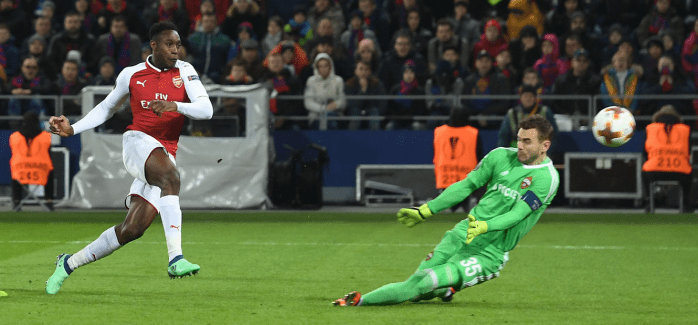
Welbeck scoring one of his three against Galatasary

Another highlight was scoring the first senior hat-trick of his career in a 4-1 Champions League home win over Galatasary in October 2014.

Injuries to each of his knees and a serious broken right ankle severely limited Welbeck’s availability during his time with the Gunners and he admitted in a matchday programme interview: “When I look back, the injuries I suffered really hindered my progress.

“That really disappoints me to this day because I know that if I had managed to stay fit I would have done a lot more at the club, scored more goals and made more appearances.”

Even so, he pointed out: “I look back on my time at Arsenal as a great experience; a great club. There were lots of positives, despite the negatives with the injuries.

“The fans always treated me well, showed me love, and I will always respect and remember that.”

Welbeck opened up about the impact of his many injuries in a July 2020 interview with Adam Bate of Sky Sports. “You go through a load of emotions,” he said. “There are times when you are there sat in your hospital bed and you are crying. You are just overthinking things.”

He continued: “Once you have had the surgery and your head is straight, you know what has happened, it is behind you and you have got to look forward. You try to build from where you are that day. Every single day there are steps to overcome. You just have to come through them and you find that you are getting better and better and feeling in a better state of mind.”

He also explained how the time wasn’t entirely wasted. “There are football games on TV, you can watch different players who are playing in your position, you can watch your own clips to see what you can improve on,” he explained.

“There are little apps that can help you, people who you can talk to. I think there are so many extra percentages you can gain and if you can get that extra one per cent it is always going to be a help.”

Welbeck buries one of his 32 goals for Arsenal

Wenger was certainly an admirer of what Welbeck was able to contribute. For example, speaking in February 2018 ahead of a shock 2-1 Europa League second leg home defeat against Graham Potter’s Ostersunds, Wenger said: “I want to keep him because I believe he has gone through a torrid time.

“He has come out well. I see signs in training now that are positive. If he can stay on the pitch and not be injured, I want him to stay here.”

And after the striker scored his fifth goal in five appearances to clinch a Europa League quarter final v CSKA Moscow, he said: “The qualities of Danny Welbeck… when your back’s against the wall, he looks like he has that extra special motivation in his body and in his head, that can give you something special.

“That’s something really exceptional and that you do not find in many players.”

Welbeck made 126 appearances for the Gunners (78 starts + 48 as sub) and scored 32 goals. As he had at United, he once again found himself at a club when there was an end of an era moment as Wenger left the Gunners after 22 years in 2018.

A badly-broken right ankle sustained in a Europa League match against Sporting Lisbon in November 2018 proved to be the end of his Arsenal career – he only made one Premier League start (out of seven appearances in total, plus seven off the bench) under Wenger’s successor Unai Emery.

Released at the end of that season, he joined Watford, who train next to Arsenal’s training ground in Hertfordshire, but injury struck early into his time with the Hornets, a hamstring problem putting him out for four months. After they’d got through four managers in the Covid-hit season, and been relegated from the Premier League, he left in October 2020 having scored three goals in 20 appearances (10 starts + 10 as a sub).

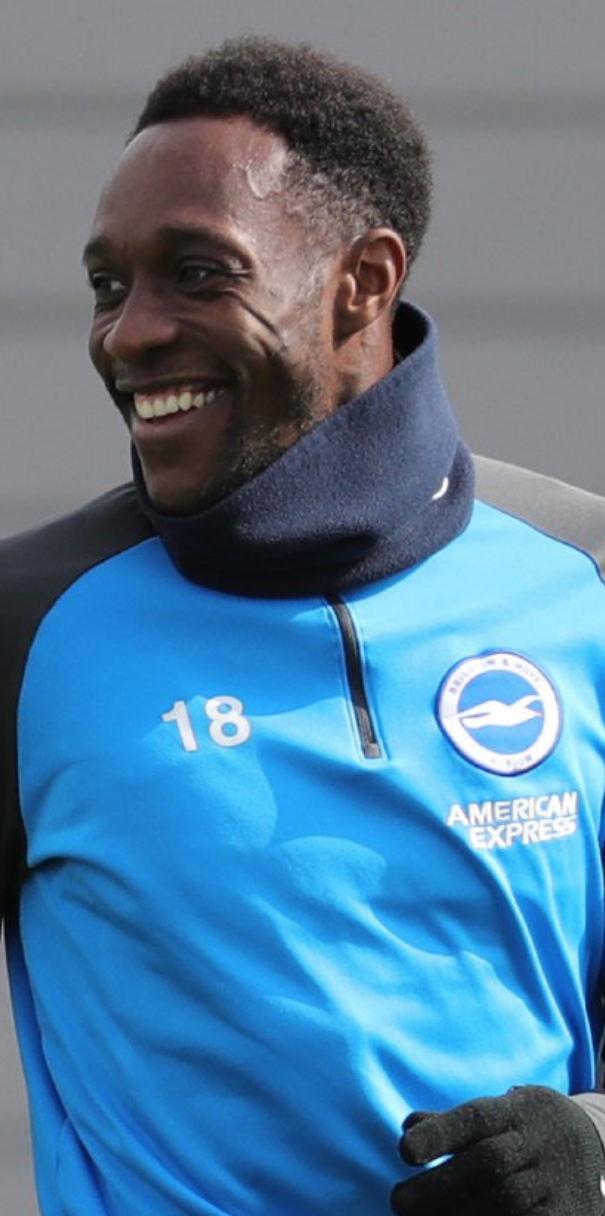
When Welbeck linked up with Brighton that autumn, few supporters would have imagined five years later he would still be making a huge contribution to the club.

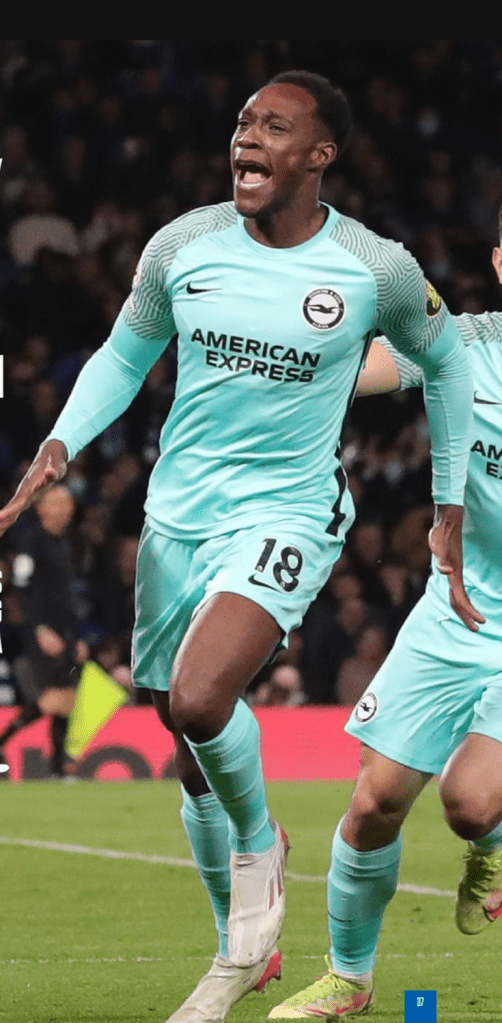
There were a few murmurings at the beginning of the 2025-26 season but a brace in Albion’s comeback 3-1 win at Chelsea in September once again saw him grabbing headlines for all the right reasons. Two more followed at home to Newcastle and he once again scored against his first club at Old Trafford on 25 October. And long may it continue!

Speaking to The Athletic in February 2025, Welbeck said of his longevity: “I can probably thank my mum and dad for the genes. I work hard to keep myself in good condition and I am feeling fit and strong.”

Reporter Andy Naylor said: “He does not have a strict diet regime but watches what he eats, snacking on fruits or an occasional bar of chocolate between a normal three meals a day. His idea of a takeaway is a mixed grill with rice and salad.

“Another secret of Welbeck’s long-running success is a desire and determination to be the best he can be for as long as he can. He focuses on his football, turning down invites to take part in podcasts and punditry, preserving his energy for the training pitch and matchdays.”

After four seasons at Brighton in each of which he scored six or seven goals, in 2024-25 his 11 goals made him joint top scorer with Karou Mitoma from 26 starts + 10 as sub.

With five on the board before Halloween in 2025-26, the signs are looking positive for his best-ever haul.

Welbeck himself declared: “As long as I feel good, that’s how long I will go on for. If I feel good, feel like I can impact games, then I will just keep on going.”

Dat guy Danny Welbeck “a top player and a top person”

INJURY has undoubtedly caused Danny Welbeck to miss more games of football than he would have wished but the game is full of admirers for the longevity of his career.

As Gabby Logan said on Match of the Day, like a good wine, Welbeck seems to be getting better with age. He has scored more Premier League goals per game in his thirties than he did in his twenties or teens.

His 10 Premier League goals for Brighton last season was his best goalscoring campaign in the top flight and in the autumn of 2025 he has already scored two goals apiece against Newcastle and Chelsea, opponents competing in the Champions League.

“I have the passion and love for football,” he told Match of the Day after scoring the pair against Newcastle. “It’s what I want to do. I feel good. I feel strong and fit so I won’t be stopping soon.”

And as BBC Sport reporter Ciaran Kelly pointed out, Welbeck has the knack of scoring crucial goals for the Seagulls: 11 of his last 12 Premier League goals for Brighton have either put the side ahead (eight) or drawn the game level (three).

Welbeck has now played more matches for Brighton than Manchester United, the club he joined aged eight and where he spent 15 years, rising from the club’s academy, making his way through the junior sides and going on to play 142 first team games (90 starts + 52 as sub) between 2008 and 2014.

The 29 goals he scored along the way played a big part in him earning selection for the England national team for whom he collected 42 caps between 2011 and 2018 having also won 42 caps across the various junior England levels. Welbeck netted 16 times for the full England side.

That there have been calls in certain spheres for United to try to take him back to Old Trafford as he approaches his 35th birthday are a mark of the man and the quality he still exudes.

Striker-turned-pundit Tony Cascarino even urged Thomas Tuchel to recall him for England as back-up for Harry Kane. He told talkSPORT: “Welbeck contributes in various ways beyond scoring. His goal tally isn’t huge, but it’s a decent level and, above all, he is an excellent team player.

“I’ve never seen anyone speak ill of his attitude or professionalism. He is truly an exemplary veteran,”

Cascarino added: “Poland still uses superstars like Robert Lewandowski. If a team needs a veteran, I think there’s absolutely no problem calling Welbeck back,”

Graham Potter was in charge when Welbeck arrived at the Albion in October 2020 on a free transfer, signing a one-year contract.

Welbeck scores for Albion at Old Trafford

Potter moved on but in October 2024 he couldn’t speak highly enough of what the player had brought to the Seagulls, in particular as an influence on others.

“Somebody like Danny is a role model. He can teach you how to act, how to be, how to condition yourself and how to interact with your team-mates at the highest level,” said Potter, speaking on BBC Sounds’ Planet Premier League podcast.

“He is a top player and a top person. Credit to the club – they didn’t just recognise that it is about signing young players, it is also about understanding what older players can do for the environment and for the collective.

“To have someone [in your squad] that has been there and done it, and can just handle it well, I think is priceless as a coach.

“If you see what Danny has had to go through, I think he is also a resilient character. He is a good human being, so he doesn’t get carried away too much with the nonsense of football.”

Potter’s successor Roberto De Zerbi was equally effusive. “Great player, great guy,” said the Italian. Speaking in April 2024, when his own Albion future was in doubt, he said of Welbeck: “We have to keep him for a lot of years. He is playing very well and he is important for the young players, for the dressing room.”

A couple of months earlier in the season, De Zerbi’s assistant, Andrea Maldera, told Andy Naylor of The Athletic: “Danny is one of the best teachers on the pitch.

“He is always positive and he is not only a teacher on the pitch. He can speak with a young player when he is eating with them or when he is on the bus.

“He always gives a lot of advice to everybody. He is a big teacher, he has the soul of a teacher. I don’t know what he wants to do in the future in his life, but he is always very clear-minded. On the pitch, it is the same. He doesn’t speak a lot, but he’ll go close to the players, sometimes work a little with them on the training ground.”

Welbeck himself appreciated the influences of more experienced players in his own early days and told BBC Sport’s Simon Stone: “At Manchester United there were lots of players to guide me and give me advice. It meant a lot back then hearing that sort of stuff, listening to people who had been through certain situations and different experiences, who have a lot of knowledge in the game.

“I am always happy to help with the other players. It is pretty easy for them to come and talk to me. It’s nice to pass on a bit of knowledge and experience.”

Born in the Longsight suburb of Manchester on 26 November 1990, Welbeck’s first games of football were played with his older brothers Wayne and Chris when he was just four or five.

Wes Brown, who was already on United’s books, and his brothers lived nearby and the young Welbeck was inspired to follow in Brown’s footsteps.

He actually had a trial for City when he was eight but they didn’t have an age group side for him. It was while he was playing for local side Fletcher Moss Rangers that United seized the opportunity to offer him a two-week trial, and he didn’t look back.

After progressing though the academy schoolboy squads, he made his debut for the youth team in December 2006, debuted for the reserves the following October and was United Young Player of the Year for the 2007-08 season, going on to sign as a professional in July 2008.

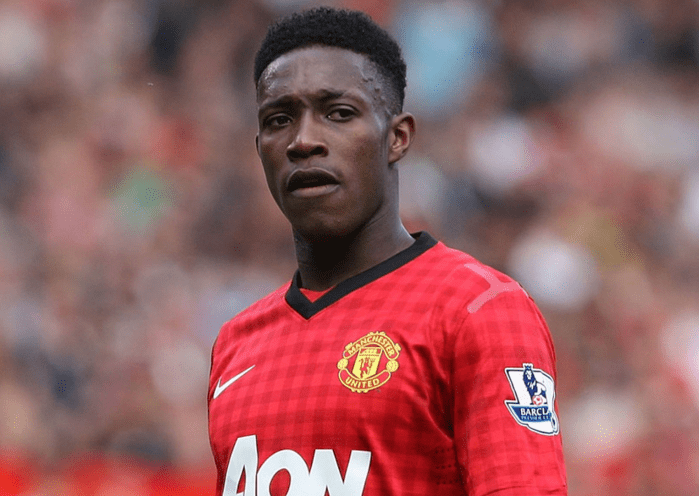
On the ball for United

Three months later, Sir Alex Ferguson gave him his first team debut, starting up front alongside Cristiano Ronaldo at home to Middlesbrough in the third round of the League Cup, when United won 3-1.

In November, he went on as a substitute to make his Premier League debut and scored United’s fourth goal in a 5-0 thumping of Stoke City, unleashing a swerving shot from 30 yards.

Welbeck was winning his first significant medal before that season was over after he had started for United in the League Cup final, when they beat Tottenham on penalties at Wembley (although Welbeck had been subbed off 10 minutes into the second half, the BBC match report noting “youngster Welbeck was having a tough time making an impact in the face of the physical presence of Dawson and King”).

He scored twice in eight matches on loan to Preston North End in 2010 and then spent the 2010-11 season on loan to Sunderland, scoring six in 28 matches (23 starts plus five as sub) for ex-United skipper Steve Bruce’s Premier League side.

“He has always had ability but made slow progress because he had a bit of a knee growth problem, so we knew we had to wait for him,” said Ferguson in August 2011. “We put him on loan to Sunderland last season and that is when he became a man. He has grown up.”

Dat Guy (Mancunian slang for The Man), the nickname given to him by former United teammate Ravel Morrison, was part of the 2012-13 Premier League title-winning squad (23 starts plus 17 as sub) which turned out to be Ferguson’s last in the hotseat.

He scored 10 in 24 starts plus 12 as sub under David Moyes, but Dutchman Louis van Gaal preferred to bring in Colombian striker Radamel Falcao and, after only three games at the start of the 2014-15 season, Welbeck was sold to Arsenal for £16m (Ferguson putting in a good word with Gunners boss Arsene Wenger).

Plenty of iconic United names, such as Rio Ferdinand, Paul Scholes and Bryan Robson, voiced their disapproval of the decision and former coach Rene Meulensteen was adamant Ferguson wouldn’t have sold him if he’d still been in charge.

Meulensteen told talkSPORT: “We were always keen on bringing young players through and giving them a chance. I had him from when he was 8, 9 years of age and I think the best of Danny is yet to come.

“He is a very versatile player and I’m 100 per cent sure he will do very, very well for Arsenal. Danny is a perfect match for Arsenal. He is such a versatile player.

“He is very good in short, creative, combination play, showing for the ball, passing and moving, picking up different positions. At the same time, he has the pace and power to break away if they break from their own half.”

Robson said: “He came through the ranks, he has a great attitude, he’s a great lad.” And Wayne Rooney told The Mirror: “Danny’s great to play alongside. If I’m completely honest, I’d probably like to still see him here, playing for Manchester United.”

Saying United let him go too quickly, Gary Neville added: “He’s actually perfect for how Manchester United should play. Threatening space in behind, playing off front players. This idea that he’s not good enough for Manchester United is absolutely rubbish.”

In a January 2025 interview with the Manchester Evening News, Welbeck remembered: “At the time I was playing on the left-wing a lot and in a 4-4-2, which is very difficult for me because I can’t make an impact on the game.

“I can play it to the best of my ability but that’s not best for the team, and I could make a bigger impact playing in my preferred position.

Welbeck and Ashley Young at United

“You start to have thoughts but at that time you’re still going to training and I was still giving 100 per cent and giving my all in every single game – that’s just me, I’m not going to change that. But you do start to think about what’s best for you.”

Apart from anything else, Welbeck was an established member of the England set-up by then.

He had been on loan at Sunderland when he was first called up to the England senior squad (following the withdrawal of Aaron Lennon) only days after scoring for England Under-21s in a win over Denmark.

Ironically, the opponents at Wembley on 29 March 2011 were Ghana – the country his parents came from – and Fabio Capello sent him on in the 81st minute as a sub for Ashley Young. The game ended 1-1.

He ultimately featured under four different England managers (albeit Stuart Pearce only managed one game) with the majority (29) under Roy Hodgson. His final England game was as a sub for Trent Alexander-Arnold at the 2018 World Cup in a 1-0 defeat to Belgium.

When Welbeck suffered a badly broken night ankle in a Europa League match for Arsenal in November 2018, and was forced to withdraw from the England squad, Gareth Southgate revealed how the squad showed their strong bond with him by placing his photo on a TV they were watching ahead of a Nations League match.

And after he’d left Arsenal in the summer of 2019, but was still recovering from the ankle injury, the FA helped his comeback by allowing him to use all of the facilities he needed at the St George’s Park national centre.

Welbeck nets in the FA Cup against Newcastle

Another illustration of the enduring relationships Welbeck has built during his career came after he’d scored an extra-time winner for Brighton at St James’ Park in March 2025 to book an FA Cup quarter-final against Nottingham Forest.

Ferguson phoned the player after the game, and Welbeck told BBC Football Focus: “He talked about the goal and the performance. He was buzzing and to have that sort of connection, he is a manager who is always looking out for his players, always wants the best for them, and still to this day is in contact.”

At Arsenal, Welbeck played under another great manager and he told the programme: “Sir Alex Ferguson got success in his own way, Arsene Wenger had success in his way. There’s different ways to reach success. Those two managers played a huge part in my life, not just my career.”

• More about Welbeck’s time at Arsenal in my next blog post.

O’Cearuill treated cruel on strange football odyssey

O’Cearuill given a run of games at Brighton

TEENAGE Arsenal defender Joe O’Cearuill certainly had a baptism of fire when he moved to the Albion on loan in early 2007.

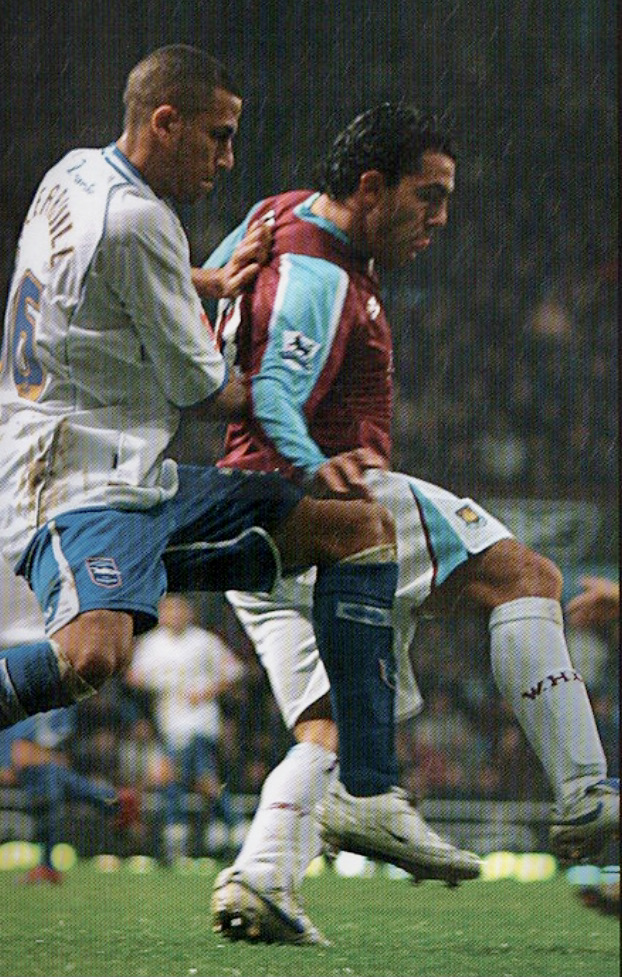
The youngster was played out of position at right-back in a third round FA Cup tie away to West Ham.

The match at the old Boleyn Ground on 6 January 2007 pitched the Premier League Hammers under Alan Curbishley up against his old Seagulls teammate Dean Wilkins, who had taken over the reigns at League One Brighton just four months previously.

West Ham, FA Cup finalists the previous season, were just too good for the mainly young lower league side on the day and, with big-money Argentine striker Carlos Tevez up front, comfortably won the tie 3-0 (Mark Noble, Carlton Cole and Haydn Mullins the scorers).

Albion put up a reasonable fight in a goalless first half although O’Cearuill was fortunate not to concede a penalty when he put in a clumsy challenge on debutant Luis Boa Morte which referee Mark Halsey chose not to penalise.

The second half was only four minutes old when Noble scored his first ever West Ham goal, Cole added a second nine minutes later before being replaced by former Albion favourite Bobby Zamora, and Mullins struck in injury time to round off the win.

Wilkins had turned to the Arsenal youngster when Jack Hinshelwood’s dad Adam suffered a cruciate ligament injury in a Boxing Day match against Yeovil that ruled him out for nine months.

O’Cearuill’s stay on the south coast lasted three months during which he made seven starts and three sub appearances. His final Seagulls match came in a 1-1 home draw against Scunthorpe United.

The Argus reckoned his form was “patchy” and at one point he was dropped to the bench “after a below-par performance” in defeat at Brentford.

Only on a couple of occasions did he get the chance to play in his favoured centre back position; those positions were occupied most of the time by Joel Lynch and Guy Butters.

But after he’d gone on for the injured Lynch in the centre away to Gillingham, he helped the visitors to a 1-0 win and Wilkins said: “I thought he fitted in well. He went into the game at a difficult period. There were a lot of high balls to deal with, which he coped with well.”

That first half of 2007 was pretty much the highlight of his career because on an end of season tour of America he won two full caps for the Republic of Ireland.

Although born in Edmonton on 9 February 1987, he elected to represent the Republic of Ireland and having played for them at under-17, under-19 and under-21 level,

A senior cap for the Republic of Ireland

His first senior cap came when he was one of six substitutes made by manager Steve Staunton in a 1-1 draw against Ecuador at the Giants Stadium, New Jersey, on 23 May 2007.

He replaced Stephen O’Halloran in the 73rd minute and managed to pick up a yellow card in his short time on the pitch. Kevin Doyle headed the Irish equaliser a minute before half time.

O’Cearuill then started at right-back three days later in the Republic’s 1-1 draw with Bolivia in Boston. Shane Long scored his first goal for his country and in the second half former Albion goalkeeper Wayne Henderson took over in goal from Barnsley’s Nick Colgan. The side was captained by Kevin Kilbane.

Curiously, O’Cearuill had been let go by both Leyton Orient and Watford before he was given a chance by Arsenal. He played 27 youth team games for the Os in 2004-05 but was released in August 2005.

Watford picked him up and he played for their youth and reserve teams for a season, but again found himself released. Then, in the summer of 2006, after impressing Arsenal’s reserve team coach Neil Banfield in a trial game against Watford, he joined the Gunners.

He made his debut in a goalless pre-season friendly at Barnet on 15 July and a week later played in half of Dennis Bergkamp’s testimonial against Ajax of Amsterdam.

On a tour of Austria, he played another half as Arsenal beat Mattersburg 2-1 and got 30 minutes as a sub when the Gunners trounced Schwadorf 8-1.

The closest he came to competitive first team action was when he was on the bench for Arsenal’s Carling Cup match away to West Bromwich Albion on October 24, 2006, although he did not get on in the 2-0 win in which Jeremie Aliadiere scored both the goals.

Released by Arsenal, O’Cearuill’s career then drifted from one non-league club to another: Barnet, St Patrick’s Athletic (Dublin), Harlow Town, Borehamwood, Forest Green Rovers (pictured left), Bishop’s Stortford, Tooting & Mitcham United, Haringey Borough, Enfield and Heybridge Swifts.

When he sought to resurrect his career with Conference Premier side Dover Athletic in 2015, he was suitably phlegmatic in an interview with Kent Online.

“It’s certainly been a journey,” he said. “From getting everything on a plate at Arsenal and then for Ireland, to then be washing your own kit and boots.

“I took being a professional for granted and I wasn’t really ready for it – I was too young to take it all in.

“When Arsenal released me, I discovered there was a lot more to life than playing football and I lost the motivation to play at a decent level. I even gave the game up for a while.

“I was then happy to play wherever and go with the flow. I had a couple of great years playing with my mates at Haringey Borough. But that’s all in the past now. The days for playing for fun are behind me.

“I am ready for the next chapter in my life because I’ve got the hunger and desire back to play the game at a level I know I am capable of.”

Released by Dover at the end of the season, former Albion striker Nicky Forster, by then manager of Staines Town, took him on for the Isthmian League Premier Division team.

“We are delighted to have secured the services of Joe this season, he has a great attitude for success and will sit well alongside Darren Purse at the back,” he told the club website.

His last port of call was back at Haringey in the summer of 2016 and he retired from playing in October that year.

In his LinkedIn profile, O’Cearuill describes himself as a senior manager for The Elms Sport in Schools programme.

Pace and panache of marauding left-back Pervis Estupiñán

ECUADOR international Pervis Estupiñán stepped comfortably into the boots of Marc Cucurella when Albion signed him from Villarreal in the summer of 2022.

Rampaging runs down the left wing, pinpoint crosses and the occasional spectacular goal unleashed from distance all endeared the player to the Albion faithful.

A terrific goal he scored away to Crystal Palace in February 2023 was ruled out by VAR – and to compound the injustice, the referees body PGMOL subsequently admitted the strike had mistakenly been ruled out when John Brooks drew the offside line against the wrong Palace player.

“I was very sad about that disallowed goal because I don’t score a lot,” Estupiñán said later. “I remember it was a very equal game, but we played well.” The game finished 1-1.

One that did count, though, sealed Albion’s impressive 3-0 win away to Arsenal on 14 May 2023.

It was a fitting end to what was an impressive first season with the Seagulls during which he made 35 starts and six appearances off the bench.

His performances as the straightforward replacement for the previous season’s player of the year meant Albion could glow in the warmth of having trousered £62m for Cucurella and replaced him with a top quality defender for whom they paid £14.9m.

After he had scored his second goal for the Seagulls in a 4-1 win at Wolves at the beginning of the 2023-24 season, Brighton manager Roberto De Zerbi said he believed the defender had the potential to become one of the best left-backs in the world if he continued to improve his first touch and his passing.

“Pervis is one of the most crucial players for us because he started from left-back, but you can find him in a striker position,” he said. “He’s very smart, he’s one of our secrets I think.”

Praising Albion’s recruitment department for “yet again delivering another masterstroke” in signing Estupiñán, The Professional Football Scouts Association declared: “Full of determination, tenacity, energy and running power, his impact has been felt heavily on both ends of the pitch, as his all-round contribution has been a major asset for Roberto De Zerbi’s Seagulls.

“While his defensive work has been solid, with him feisty in his duels, aggressive in the press, good at tracking runners and positionally sound, it’s been his offensive impact that’s really caught the eye.”

The organisation talked about his “devastating and varied movement” and highlighted the way he dovetailed with Kaoru Mitoma in front of him. “The pair’s astute interchanges and ability to create space for each other by drawing or pinning adversaries has been a joy to watch,” it said.
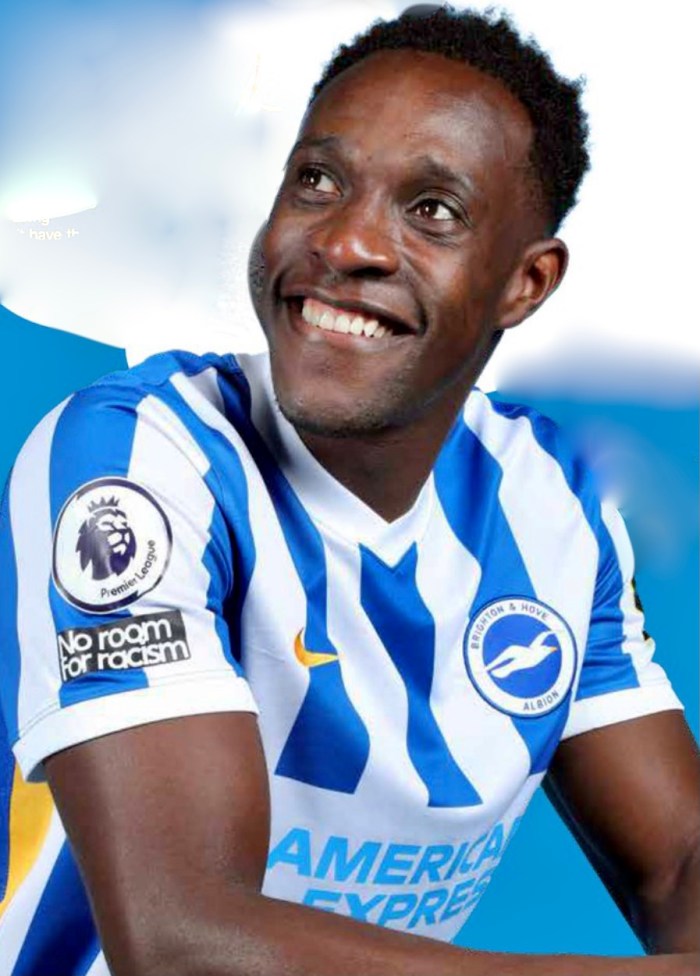
“Be it making headway with wicked infield underlapping runs, blistering overlaps or making room for his colleagues by acting as a decoy, his movement has been a huge source of inspiration going forward for Brighton.”

Brighton certainly felt his loss with a muscle injury over the course of several months in the 2023-24 season, with The Athletic maintaining: “None of the replacements who tried to fill the void created by his absence possess the adventurous Estupiñán’s blend of athleticism, power and stamina.”

In a detailed analysis of his stats, the platform suggested in January 2024 that Estupiñán had a strong claim to be considered the best left back in the Premier League, comparing him favourably against Liverpool’s Andy Robertson, Man Utd’s Luke Shaw and Arsenal’s Oleksandr Zinchenko.

Although he scored two stunning goals (in a 4-2 home win over Spurs and a 4-2 win at Stoke City in the FA Cup) within a matter of nine days mid-season, too often on his return to the Albion side in the second half of the season, Estupiñán didn’t look anything like the player fans had enjoyed watching the previous campaign.

And then his season ended too early when he was subbed off in the first half of the 1-1 draw at Burnley in April with an ankle injury that subsequently required surgery, ruling him out of playing for his country in the Copa America summer competition.

De Zerbi reckoned Estupiñán would not be fit enough to start the new season and it remains to be seen when Albion fans might see him return to the starting line-up. In the meantime, another south American, Valentin Barco, has slotted into that position with aplomb.

Born in the coastal Ecuadorian city of Esmeraldas on 21 January 1998, Estupiñán’s footballing journey began aged 13 in the youth set up at Liga Deportiva Universitaria de Quito, in the country’s capital.

Given his professional debut shortly after his 17th birthday in 2015, he made 40 appearances in Ecuador’s top division and represented his country in the 2015 South American under-17 Championship and the FIFA under-17 World Cup. He was also given an early taste of international club competition in the Copa Sudamericana and the Copa Libertadores.

Not long after being selected in the best XI of the 2015 Ecuadorian Serie A season, Estupiñán joined the Pozzo-family-owned Watford, although he didn’t actually play a game for the Hornets in four years on their books. At the time, the Pozzos also owned Granada in Spain where Estupiñán spent the 2016-17 season on loan.

Subsequent season-long loans were also spent in Spain at Almeria, Mallorca and Osasuna, as detailed by Zach Lowy on breakingthelines.com.

It was said he would return to be part of Watford’s side for the 2020-21 season but their relegation from the Premier League led to him being sold instead.

In action for Villarreal

When Villarreal’s regular left-back Alberto Moreno was sidelined for six months after rupturing his ACL in pre-season, they signed Estupiñán for £15m to plug the gap. Lowy described him as “an athletic, technically sound left back who marauds up the flank with pace and panache and can deliver a deadly cross like few others”.

Lowy said Estupiñán excelled under Unai Emery as Villarreal finished seventh and won the Europa League for the first time in the club’s history (although Estupiñán was an unused substitute when they beat Manchester United on penalties in the final). He went on to make 74 appearances for them, including helping them to reach the semi-finals of the Champions League.

Having played at under 17 and under 20 levels for his country, Estupiñán made his first senior start for Ecuador in a 6-1 defeat to Argentina in 2019 but he went on the same year to play in that year’s Copa America when they reached the quarter finals and he played in all three Ecuador matches at the 2022 World Cup (together with fellow countrymen and Albion teammates Moises Caicedo and Jeremy Sarmiento).

‘Super’ Mark – ‘The Fridge’– didn’t always stay cool

MUCH-MALIGNED Mark McCammon was not afraid to stand his ground, answer his critics directly and to challenge injustice when he felt aggrieved.

Fans of Brentford, Brighton and Millwall voiced some strident – nay, downright offensive – opinions of his ability as a footballer.

Remarkably, the Barnet-born striker played in a FA Cup final and Europe for the Lions before Mark McGhee signed him a second time – for Brighton – having previously taken him to Millwall from the Bees on transfer deadline day in 2003.

McCammon and Neil Harris at the 2004 FA Cup Final in Cardiff

When his suitability to contribute to the Seagulls’ flagging cause in the Championship was called into question in a post-match radio phone-in, McCammon took umbrage and called the show himself to argue the toss with presenter Ian Hart.

Also, in what was something of a landmark case, McCammon took a subsequent employer, Gillingham FC, to courtand won a claim that he had been racially victimised.

It certainly wasn’t uncommon for McCammon to be at odds with the people running whichever club he was playing for.

He first joined the Seagulls on loan when he was out of favour and on the transfer list at Millwall.

He made his debut in a 1-0 home defeat to Stoke City in December 2004 and said: “I just want to get back playing and enjoying my football again.

“I have been in and out at Millwall and my fitness has dipped a little bit because I haven’t played. I’m happy to be playing under Mark again and I want to show what I can do.”

Although he didn’t get on the scoresheet in five matches, when McGhee made it a permanent move in February 2005 he told BBC Southern Counties Radio: “Not everyone understands the contribution Mark makes. We have become a much more effective team with him in the squad.”

McGhee was a great believer in the ‘one big one, one little one’ striking line-up, and was sure McCammon’s presence would help pint-sized Leon Knight to score goals.

Because of what followed, it is easy to forget McCammon scored three goals in his first two home games after signing on a permanent basis.

He scored a brace and won the man of the match award in a 3-2 defeat to Derby County and he got 10-man Albion’s second in a surprise 2-1 win over promotion-chasing Sunderland (Richard Carpenter scored the other, and Rami Shabaan made his debut in goal).

The Argus enjoyed building up the visit of McCammon’s old side Millwall to the Withdean, interviewing the player and the manager, who we learned called his new signing ‘The Fridge’.

McGhee urged McCammon to stay cool if he managed to score against his old club, but it was fellow striker Gary Hart who got the only goal of the game, in the 89th minute.

Ahead of the game, McCammon told the newspaper: “It would mean a lot to me to score the winning goal against them. I wasn’t given a chance there, but I’ve got a fresh start here. I’ve got a lot to prove.”

In the following game, he was subbed off at half-time in a 2-0 defeat at Stoke when he gave away a penalty. He underwent blood tests and McGhee said: “Mark is seeing a specialist to find out why he was feeling lethargic. It wasn’t the back injury he suffered against Millwall, he was just feeling ill and weak.”

That game was the first of a run of six defeats and Albion only won once in 11 matches – form which saw them avoid relegation by a single point.

One of several infamous McCammon incidents occurred following the Seagulls’ 1-1 draw at Turf Moor on 16 April.

After a lucklustre first half display when Albion went in 1-0 down, McGhee ripped into the team at half-time and McCammon and fellow striker Chris McPhee were told they weren’t holding the ball up well enough.

According to an account in the Daily Telegraph, McCammon argued back in a fiery exchange with the boss, claiming a lack of service from midfield was the issue. He didn’t reappear for the second half, being replaced by fired-up teenager Jake Robinson and Albion managed to salvage a point courtesy of an equaliser from Dean Hammond.

A delighted McGhee said of Robinson: “We say when people get their chance they have to take it and I thought he took it absolutely brilliantly. He was different class.”

But McGhee’s ire with McCammon hadn’t cooled at the final whistle – he ordered him off the team bus and told him to return south in the kit-carrying vehicle instead.

Not fancying a tight squeeze alongside sweaty shirts, shorts and socks, McCammon chose to return by train.

“After the match I told him I didn’t want him travelling back on the team bus with the rest of us and that he was to return home with two other members of staff in another club vehicle,” McGhee told Sky Sports News.

McCammon apologised to McGhee afterwards but any subsequent first team opportunities were few and far between after that.

At the start of the 2005-06 season, he managed a recall for a Carling Cup match away to Shrewsbury Town and pleased his manager by scoring a goal and laying one on for Robinson, even though the Albion went down 3-2.

“I thought Mark was much better. That type of performance is what we expect of him and it’s what he can do,” said McGhee. “Now he’s got to reproduce that in the Championship.

“He set his standard tonight in terms of his effort and the simple way he played the game. He didn’t complicate things; he laid it off, held it up, laid it off, then got in the box; he won a lot of headers; took a lot of stick and kept going. He got a goal, made a goal and I thought he was terrific.”

But McGhee, with other forward options in the shape of Colin Kazim-Richards, Robinson, Knight and Gary Hart only called on McCammon for three starts and five sub appearances.

“He (McGhee) asked me to go out on loan to a lower league team and I think I’m better than that,” said McCammon when, incensed by criticism of him on the BBC Southern Counties Radio post-match phone-in after a game in February, called in and took issue with show host Hart.

“I went on trial at Watford and I got called back to train for no apparent reason. I think I was hard done by there, a bit unlucky. I’m back but I’m not in the squad but I don’t think I’ve been given a long enough chance.”

Once again suggesting the team’s issue was service through to the front players, he responded to Hart’s personal criticism of him saying: “When you kick a ball in professional football you can tell me whether I’m good enough for this standard.

“You don’t know anything about me. What you said is very disrespectful.

“I’ve been out since the beginning of the season with ankle and knee injuries. I had surgery on both. I came back and made three first-team starts but it takes about seven or eight games to get your rhythm back. I think it’s a bad comment you have made.”

The striker also took aim at the Withdean faithful, claiming: “All we hear is supporters whingeing.

“If they get behind the team it will give the players an extra boost. All the first team players at Brighton listen to the radio and they hear the supporters being 100 per cent negative.

“It’s a team game, it’s not about individuals. The supporters need to get behind the team a bit more.”

If the player didn’t think much of the fans, it would be an understatement to say they were none too impressed by the player.

Amongst a veritable litany of abuse from Albion supporters, this from ‘The Full Harris’ on North Stand Chat encapsulated the opinions of many.

“Mark McCammon is the worst player to have played for us in this division … he just simply doesn’t have a clue. He is unfit, he doesn’t know where he is meant to be running, he can’t shoot. For a man of his size, he is pathetic in the air.

“He is clumsy, he has the touch and control of a Sunday league centre half, he is about as prolific as an impotent monk, he is an embarrassment, he is a disgrace, he is lazy and, personally, I object in the extreme to my paying his wages when I believe many of the crowd around me could do a better job and they would do it for free.”

Long before Dominic Cummings referred to his erstwhile boss, Boris Johnson as “a shopping trolley smashing from one side of the aisle to the other”, supporters voiced something similar of McCammon. The song went like this:

Super, super Mark
Super, super Mark
Super, super Mark
Supermarket Trolley.

Perhaps it was no surprise that McCammon was allowed to leave Albion on loan, linking up with League One Bristol City, where he scored four goals in 11 appearances.

He didn’t play another game for the Albion and, in the summer of 2006, joined Doncaster Rovers after impressing boss Dave Penney on trial.

Although born in Barnet on 7 August 1978, McCammon qualified to play for Barbados through his mother and he won five caps for the Caribbean country. He scored on his debut against Antigua and Barbuda in a 3-1 win in September 2006 and two days later hit a hat-trick when Barbados beat Anguilla 7-1.

Two years later he returned to international action for two World Cup qualifiers against the United States. Barbados lost 8-0 in California and 1-0 in Bridgetown.

McCammon was with QPR as a teenager but it was Cambridge United who took him on as a YTS and he joined Cambridge City on loan at 19 to gain experience.

He played just six games for United between 1997 and March 1999 but was signed by Premier League Charlton, managed by Alan Curbishley.

After relegation to the old First Division, McCammon played five times for the Addicks as they won the title with a squad that included John Robinson, Steve Brown and Paul Kitson on loan from West Ham. McCammon also spent time on loan at Swindon Town in January 2000.

That summer, McCammon left The Valley to sign for Second Division Brentford for a fee said to be £100,000. He scored six times in 33 appearances in his first season at Griffin Park. He scored 10 in a total of 75 appearances for the Bees but it seems their supporters were also unconvinced about his merits.

Stan Webb, on the excellent BFCTalk website, said: “Mark McCammon was yet another misfit who cost a significant fee. Despite looking every inch a footballer, he signally failed to deliver.

“He is best remembered for his cataclysmic miss from a free header at Loftus Road which might have changed our recent history had he scored, as he surely should have done.

“And yet for all the criticism he faced, he eventually became a sort of anti-hero as fans recognised that he was always giving everything he had and appreciated his efforts even though he was just not up to scratch.”

By contrast, McCammon’s time in south Yorkshire was relatively successful, although if he felt he was dogged by bad luck, in November 2006 he had a headed goal away to Brentford chalked off after the ref didn’t notice the ball went through a hole in the back of the net. Thankfully Donny still won 1‑0.

Across two seasons, he scored 13 goals in 70 matches for the south Yorkshire side and went on as a 71st minute sub for Richie Wellens in the 2008 League One play-off final at Wembley when Donny beat Leeds United 1-0. Leeds had Casper Ankergren in goal and Bradley Johnson in their line-up.

However, McCammon chose to head south that summer and signed a three-year contract with recently relegated League Two Gillingham.

He scored five goals in 35 matches in his first season at Priestfield but 2009-10, when the Gills were back in League One, was a different story.

By February 2010, a lack of starts saw him seek a loan to get some match fitness. Gills boss Mark Stimson told BBC Radio Kent: “Going out on loan will be good for him and the club. He needs games and if he comes back fit in four weeks that would be great.”

He added: “We want him sharp and scoring goals then he could come back because we might need someone like him. Last season he stepped in and put in a good shift.

“At the moment he’s frustrated, like all the other boys who are not playing. He didn’t want to drop down to League Two. Now he’s seriously thinking about it because it might get his career back on track.”

McCammon joined Bradford City for a month, playing four games, before returning to the Gills. But the following season, when Andy Hessenthaler had returned as manager, saw the final dismantling of McCammon’s league playing career.

The club dismissed him in 2011 for alleged misconduct but he didn’t go quietly and took them to an employment tribunal claiming he had been unfairly sacked and ‘racially victimised’. He won £68,000 in compensation and Gillingham and chairman Paul Scally were subsequently each fined £75,000 by the FA “for failing to act in the best interests of the game and bringing the game into disrepute”.

Furious Scally appealed the fines, which were set by an independent regulatory commission, saying they were “manifestly excessive, totally disproportionate and completely unjust” and, although the board reduced the club’s fine to £50,000, the sanction against Scally was upheld.

McCammon told the original hearing in Ashford, Kent, that he and other black players at the club were treated differently from white players. For example, he said, he was ordered to attend the ground amid ‘treacherous’ snowy driving conditions or be fined, while some white players were told they were not required.

The club tried to “frustrate him out” by refusing to pay private medical bills for injury treatment, while a white teammate had been flown to Dubai for treatment at the club’s expense, he claimed.

McCammon, who, on £2,500 a week, was the club’s highest-paid player, was also told not to blog while others were permitted to, he said. During an injury spell, he had to stay behind at the club for four hours longer than other injured and non-injured players, he claimed.

The tribunal heard he was dismissed after a disciplinary hearing following a confrontation in which he accused club officials of being “racially intolerant” regarding the decision to order him in during the heavy snow.

The tribunal found in McCammon’s favour and his solicitor, Sim Owalabi, said it was believed to be the first time a footballer had successfully brought before an employment tribunal a case of race victimisation against a professional football club.

After all the legal to-ing and fro-ing, the player himself, by then aged 35, said: “It was traumatising and it sort of sabotaged my career in the football world, my progress.

“I had football clubs after me and that just deteriorated. It’s very, very unfortunate.”

He dropped down to Conference level with Braintree Town in October 2011 and later played for Lincoln City, on loan and then on a permanent basis, when they were in the same division.

McGhee provided Albion platform for playmaker Mark Yeates

TRICKY playmaker Mark Yeates spent five years as a Tottenham Hotspur player but it was with Brighton that he played his first competitive football.

Yeates looked like a useful loan signing when he joined new manager Mark McGhee’s Albion squad in November 2003. He drew plenty of admirers and featured in 10 games over two months.

It wasn’t long before McGhee was talking about the possibility of signing him on a permanent basis, but Spurs had other ideas. He eventually had to leave north London to pursue his career but he ultimately made nearly 500 professional appearances.

Eighteen-year-old Yeates arrived on the south coast shortly after Zesh Rehman had also signed on loan (from Fulham), Albion having lost midfield duo Charlie Oatway and Simon Rodger to injuries.

The diminutive Irishman made his debut in McGhee’s first match in charge: a 4-1 defeat to Sheffield United at Withdean.

The matchday programme’s assessment was thus: “The second half was better. Mark Yeates moved into the centre of midfield and so had an opportunity to show what he can do. He could beat players, look up, and try a perceptive through ball. Wide on the left in the first half, he’d been exposed and given the ball away too often.”

On the day England won the Rugby World Cup, Yeates was one of six Albion players booked as the Seagulls beat Notts County 2-1 at Meadow Lane; an eventful game which saw Adam El-Abd make his league debut, Leon Knight score twice and John Piercy sent off for two bookable offences.

After only his third game, Yeates was off on international duty, playing for the Republic of Ireland under 19s away to France.

It was in early December that McGhee spoke about wanting to take Yeates on a permanent basis, telling the club’s website: “I’ve said already that I knew before he came here what a good player he is and I imagined he would do well in this team, and he has done that.”

McGhee told the Argus: “He has a kind of Gaelic confidence. Robbie Keane had it and Mark is similar in that respect.

“His character is perfect really for the way he plays. It goes with the ability and flair.”

Yeates hailed from the same Tallaght district of Dublin as Keane – a player McGhee knew well having given him his English football debut at 17 when manager of Wolves.

After extending his stay at the Albion to a second month, Yeates told the Argus: “Before I came here I had never really played in the centre of midfield. I usually play up front off a big man.

Yeates takes control watched by Adam Hinshelwood

“The gaffer tried me up front in the first half at QPR (in the LDV Vans Trophy) but we didn’t get the ball into mine and Leon’s feet, and with two little men you are not going to get much joy.

“At Tottenham we play with wingbacks and two holding midfielders and I am allowed a free role.

“I have to be a bit more disciplined here. Sometimes I can go running about a bit, it’s just up to the lads to call me back in to help out.”

Yeates appreciated the opportunity Albion had given him to taste senior football, telling the newspaper: “It’s great for me just to be getting first team football, plus the reason I am staying here is because they are a good bunch down here.”

He observed: “It’s a lot more fast and furious because everyone is playing for their living. You have to give a bit more and get more out of yourself which you probably wouldn’t get in a reserve game.

“In reserve football, players are going through the motions. It’s just a matter of playing a game.”

After he’d played his final game on loan, a 0-0 home draw with Oldham Athletic, the matchday programme observed: “Yeates showed some neat touches and was Albion’s most creative outlet once again.”

When Albion struggled to beat Barnsley 1-0 in the FA Cup, the matchday programme noted: “The passing abilities of Mark Yeates, and his desire to get into the penalty area, were sorely missed.”

Back at Spurs, Yeates had to wait until the very last game of the season to make his Premier League debut. He’d previously been an unused substitute when Glenn Hoddle’s Tottenham were thrashed 5-1 by Middlesbrough at the end of the 2002-03 season.

But in May 2004, David Pleat selected him to start in a side also featuring Ledley King, Jamie Redknapp, Christian Ziege, Jermain Defoe and Robbie Keane.

The fixture at Molineux ended in a 2-0 win for the visitors and Yeates helped Spurs take the lead against the run of play, laying on a cross for Keane to score against his former club. Defoe netted a second to seal the win.

Born in Tallaght on 11 January 1985, Yeates was the eldest son of former Shelbourne, Shamrock Rovers, Athlone Town and Kilkenny City striker Stephen Yeates, who died aged just 38 following a tragic accident, just as Mark was making his way through the youth ranks at Spurs.

The young Yeates first played competitive football with Greenhills Boys, a club who his grandfather and father had been involved with, and then moved on to Cherry Orchard, a Dublin side renowned for producing a number of players who went on to have successful professional careers.

In an extended interview with Lennon Branagan for superhotspur.com, Yeates recalled how Tottenham scout Terry Arber did a two-day coaching course at Cherry Orchard, after which he, Willo Flood (later to play for Manchester City and Dundee United) and Stephen Quinn (who went on to play for Sheffield United) were invited to London for a trial with Spurs.

Yeates was only 15 but he was taken on and had to up sticks from home and move into digs in London.

“As a skilful dribbler who was regularly a source of assists and goals in the youth set-up, Yeates quickly demonstrated to the coaching staff at Tottenham that he possessed the raw materials required to graduate to the next level,” wrote Paul Dollery in an October 2021 article for the42.ie.

Sadly, his progress through the youth ranks was interrupted by the shock news of his father’s death in an accident. Yeates told Dollery how it could have all gone the wrong way, but he thankfully remained focused.

“It was really tough, but you’d ask yourself what else you could do if you didn’t keep going – go home to your estate in Tallaght, drink cans every weekend and get roped into whatever else? 

“I could have done that, or I could look at the three-year contract that was on the table at Tottenham and get my head down to go after that.

“It was hard, but a bit of willpower and the desire to be a footballer – which I had since I started kicking a ball – got me through it.”

In his interview with Branagan, Yeates said: “I started to train with the first team at a decent age and really being involved quite a bit as well as being a regular with the reserves group with Colin Calderwood and Chris Hughton at the time.

“I’ve just got so many unbelievable things to say when I look back now and I can only say so many good things about Spurs because it sort of built me and gave me so much.”

It was in January 2005 when Yeates next appeared for the Spurs first team, Martin Jol sending him on as a sub in the third round FA Cup tie against Brighton at White Hart Lane when Tottenham edged it 2-1.

The following week he once again replaced Pedro Mendes as a sub when a star-studded Chelsea side won 2-0 on their way to winning their first Premier League title under Jose Mourinho. He also got on in the next game, as Spurs crashed 3-0 at Crystal Palace,

While he could have continued to bide his time at Spurs, he preferred to go out on loan again to get some games under his belt. He played four times for League One Swindon Town and then had a season-long loan at Colchester United, helping them to promotion from League One in 2005-06 in a squad which included Greg Halford and Chris Iwelumo.

Further loan spells followed at Hull City and Leicester City but, in the summer of 2007, he joined Colchester on a permanent deal.

Yeates scored 21 goals in 81 games for United drawing him to the attention of future England manager Gareth Southgate who took him to Middlesbrough (who had just been relegated from the Premier League) for a £500,000 fee.

On signing a three-year deal, Yeates said: “This is massive for me. There was interest from other clubs but there was only one thing on my mind once my agent told me Middlesbrough had been in touch.

“This club belongs in the Premier League, the fans deserve to be there and I can’t wait to play in front of them. It’s a Premiership club in my mind – all you have to do is look around the facilities, the training ground, the stadium, everything is spot on.”

Yeates reckoned his versatility would suit Boro. “I can play on the right or the left,” he said. “I played a full season’s Championship football on the right for Colchester, while I played most of last season on the left. But then, in probably eight of the last 10 games, I played behind the front two.

“For a winger, I think my goals record is quite good,” he added. “I got 14 last season and nine by Christmas the season before I got injured.

“I like to get on the ball and take on defenders. The number one job of being a wide man is creating chances and I certainly like to do that, but scoring goals isn’t a bad habit to have either. I promise the fans I’ll give 110 per cent. I’m hungry to prove that I deserve to be here.”

Fine words but it didn’t pan out well for him because Southgate was sacked in October 2009 and his successor Gordon Strachan shunned the Irishman. By January 2010, Yeates was on the move again, this time to Sheffield United.

Blades boss Kevin Blackwell told the club’s website: “He’s a player we have looked at before, I’ve had my eye on him for a year or two but we couldn’t agree terms with Colchester. I’m delighted to finally get my man, although I was surprised that Boro would let him go.”

Yeates was reunited with Stephen Quinn and another former Albion loanee, Darius Henderson, was up front for the Blades. Yeates reckoned he had his best ever spell playing under Blackwell’s successor, Gary Speed.

“He was just an unbelievable man and, going back to when I was at Tottenham as a young lad, he was the prime example of the player you should aspire to be like,” he said. “He had faith in me.”

Unfortunately, when Speed left to manage Wales, former Albion boss Micky Adams took charge and the pair didn’t see eye to eye, as he explained to watfordlegends.com.

“I was at Sheffield United and it was the season when we went from the Championship to League One. Micky Adams was the manager and we weren’t getting on. In the summer Micky was sacked and Danny Wilson came in as manager.

“I trained for the full pre-season with the club, but I was aware that there were a couple of clubs keeping an eye on my situation throughout the summer. It was Blackpool and Watford who put in offers for me, and I spoke with both clubs, but when I met Dychey (Sean Dyche) I decided to sign for Watford.

“I still had a house in Loughton so overall it was a good opportunity to get back down south, and everything that Sean said to me on the phone really appealed to me.”

Yeates was at Watford for two seasons, initially under Dyche and then Gianfranco Zola, but his contract wasn’t renewed in the summer of 2013 and he decided to link up once again with his former Colchester and Hull boss, Phil Parkinson, at League One Bradford City.

He was one of the goalscorers for Bradford when they completed a massive upset by beating Premier League table toppers Chelsea 4-2 at Stamford Bridge in the fourth round of the 2015 FA Cup.

However, released that summer, he switched across the Pennines to join Oldham Athletic and six months later was on the move again, this time to Blackpool.

“Since leaving Hull it’s been a bit up and down,” he told Branagan. “I was on a short term deal at Oldham which went alright before then deciding to go to Blackpool because of a longer contract which was put in front of me which I don’t regret, as I’ve been living around the St Annes area now for five years and my children have grown up here and are at school and it’s a great area to raise a family in.”

His final league club as a player was Notts County, who he joined on a short-term deal in January 2017, and he appeared in 11 games plus three as a substitute as new manager Kevin Nolan’s side turned what at one point looked like relegation from the league into a 16th place finish (although two years later County lost the league status they’d held for 157 years).

After playing non-league for Eastleigh, in 2019 Yeates moved closer to home and signed for AFC Fylde. In September 2021, he became an academy coach at Fleetwood Town, although he continued to keep his hand in as a player at Bamber Bridge.

Reflecting on the player’s career, Dollery wrote: “With a ball at his feet, Yeates was one of the most technically accomplished Irish players of his generation, cut from the same cloth as the likes of (Wes) Hoolahan and Andy Reid.

“That such a claim isn’t backed up by international achievements can perhaps be partly explained by his own admission that he didn’t marry his talent with a devotion to other aspects of the game that were beginning to play a more prominent role in the life of a professional footballer.

“If fitness coaches scheduled a gym session, Yeates felt his time would be better spent by staying on the training pitch to perfect his free kicks. A predilection for crisps, fizzy drinks and nights out didn’t aid his cause either.”

Yeates recognised he could have done things differently and said: “The reality was that I didn’t live like a saint.

“Everyone who knows me would know that that’s just not my personality. I’ve always been a fella who likes a bit of craic; just a normal Irish lad from an estate who happened to love playing football.”

• Pictures from the Albion matchday programme and various online sources.